Bio Antrho Exam 2 part 1
 Call Kai
 Learn
Learn Practice Test
 Spaced Repetition
 Match
Match Flashcards
 Knowt Play
1/24

There's no tags or description
Looks like no tags are added yet.
Name | Mastery | Learn | Test | Matching | Spaced | Call with Kai |
|---|
No analytics yet
Send a link to your students to track their progress
25 Terms
Paleoanthropology
Study of ancient humans (biology and behavior)
Trace Fossils
remnants of past organisms- evidence of an organism
ex: footprints, coprolites
Casts or Molds
when an original materal is cast or molded from surronding rock
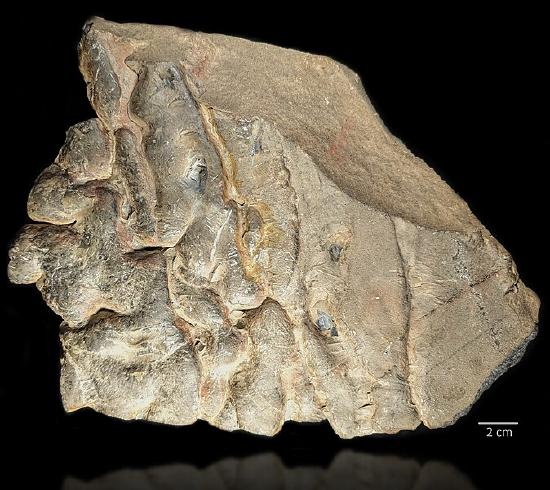
Replacment
mineral replace the hard part of the original organic material
What is the most common rock to cover bones
sedimentary- soft of the fossils
What is the processes that occur after an organism dies?
Taphonomy
3 taphonomic biases
incomplete fossil record
factors leading to preservations are by chance and luck
choise of searching area, when and where
What are the two dating methods catagories
relative dating and absolute dating
Stratigraphy
Adding layers can give us an idea of time.
Law of Superposition
The oldest the layer the lower it is, newer is higher up.
provenience
the original location or context of the artifact or fossil
Biostratigraphic dating
fauna used to date the layers
2 types of Relative Dating
Cultural and Fluroine
Cultural Dating
being able to use artifacts to determine how much older/younger things are
Fluorine Dating
when a bone underground looses nitrogen and gaines flourine
bad for providing absolute dates, good for providing realtive dates for things found together.
Piltdown Man
a skull that looks like a Orangutan and human, they were able to tell it was put together based on the fluorine levels
Absolute Dating
relies of radioactive isotopes
Radioactive Decay
radioactive isotopes of one element that are unstable, then disinagrate, to form an isotope variation of another element.
NOT stable → wanting to change into another element
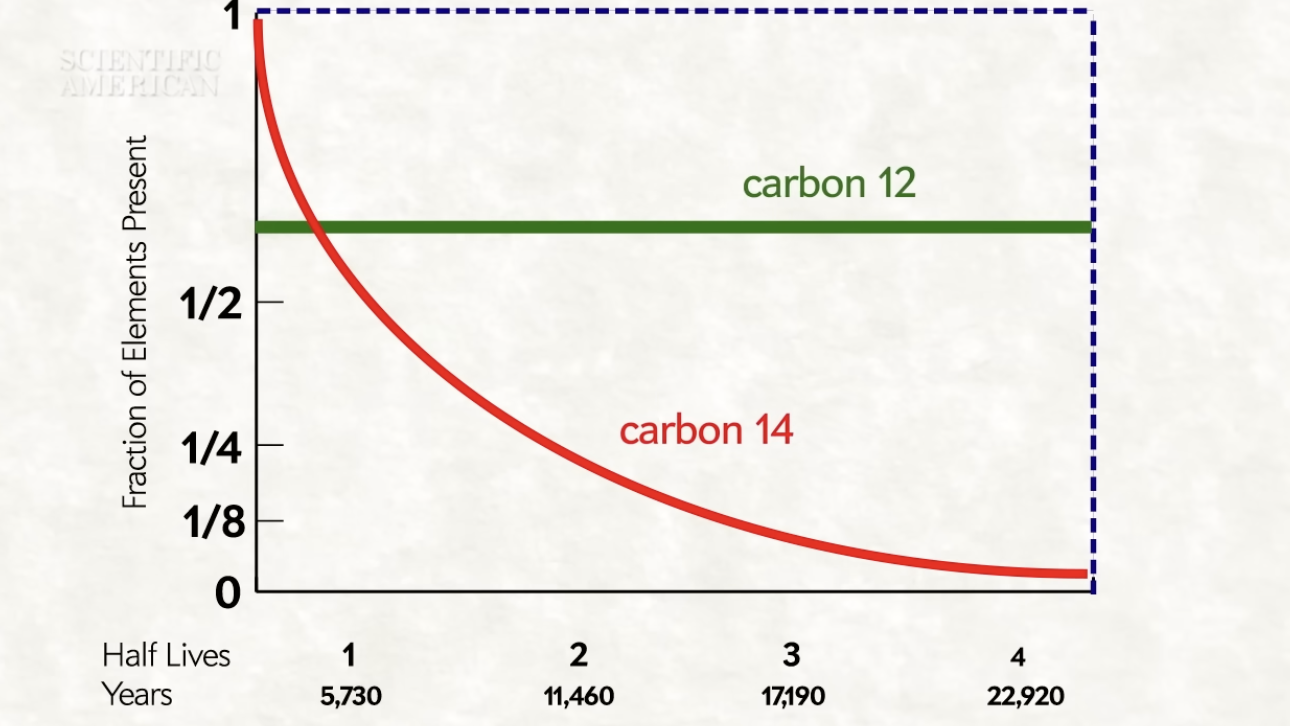
Radiocarbon Dating
Carbon 14 is unstable. Carbon 12 is not
So when an organism dies, carbon-14 decays. 12 stays the same
We can compare the 14 and 12 to see how many years ago
**only organic material contains carbon
Radiopotassium Dating
used to date igneous rocks (volcano) → not the fossil directly
Potassium 40 decays in Argon 40
very very old sites only
macroevolution
changes that lead to speciation
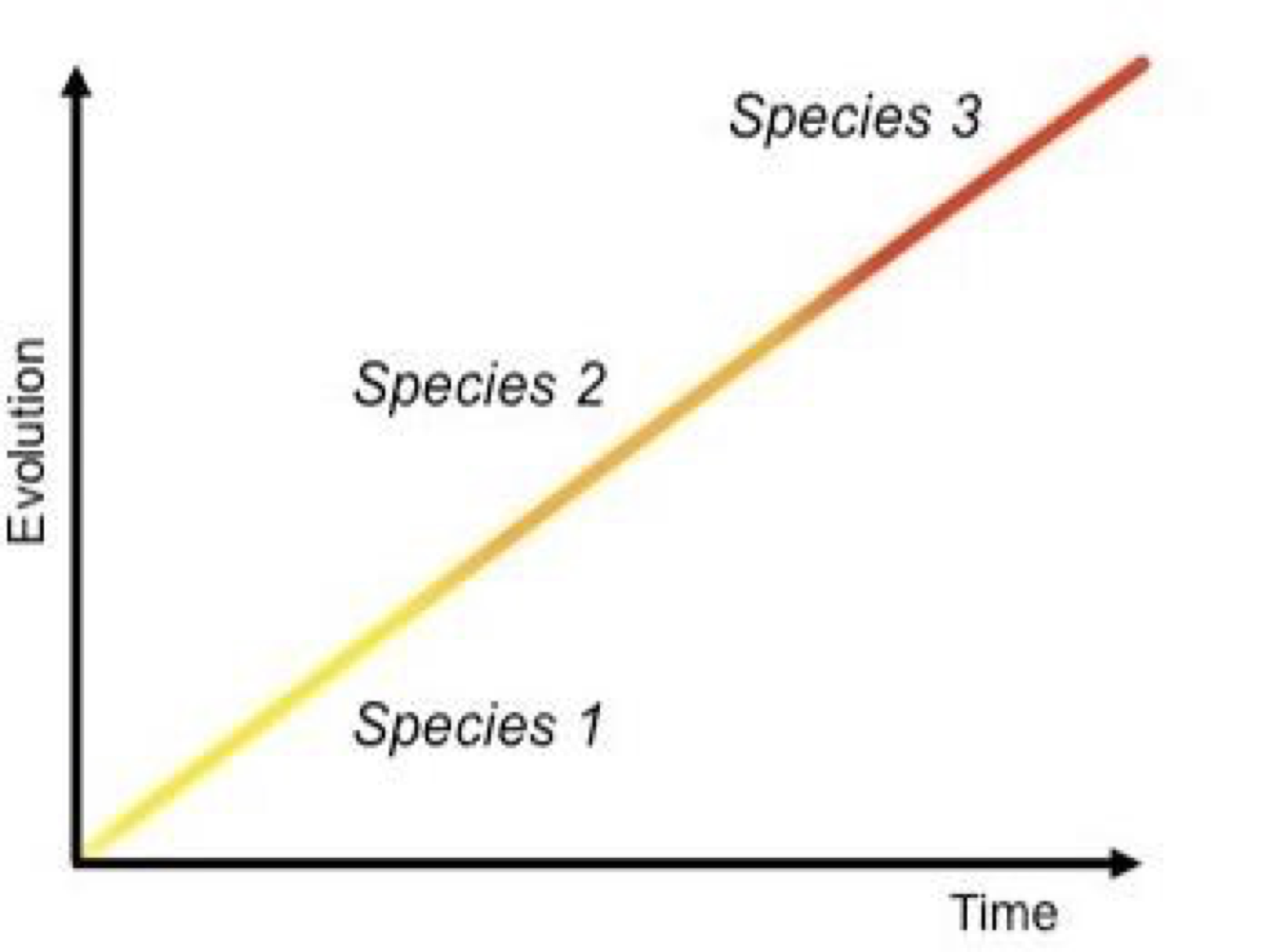
Pyletic Gradualism
Slow, gradual changes over time resulting in speciation
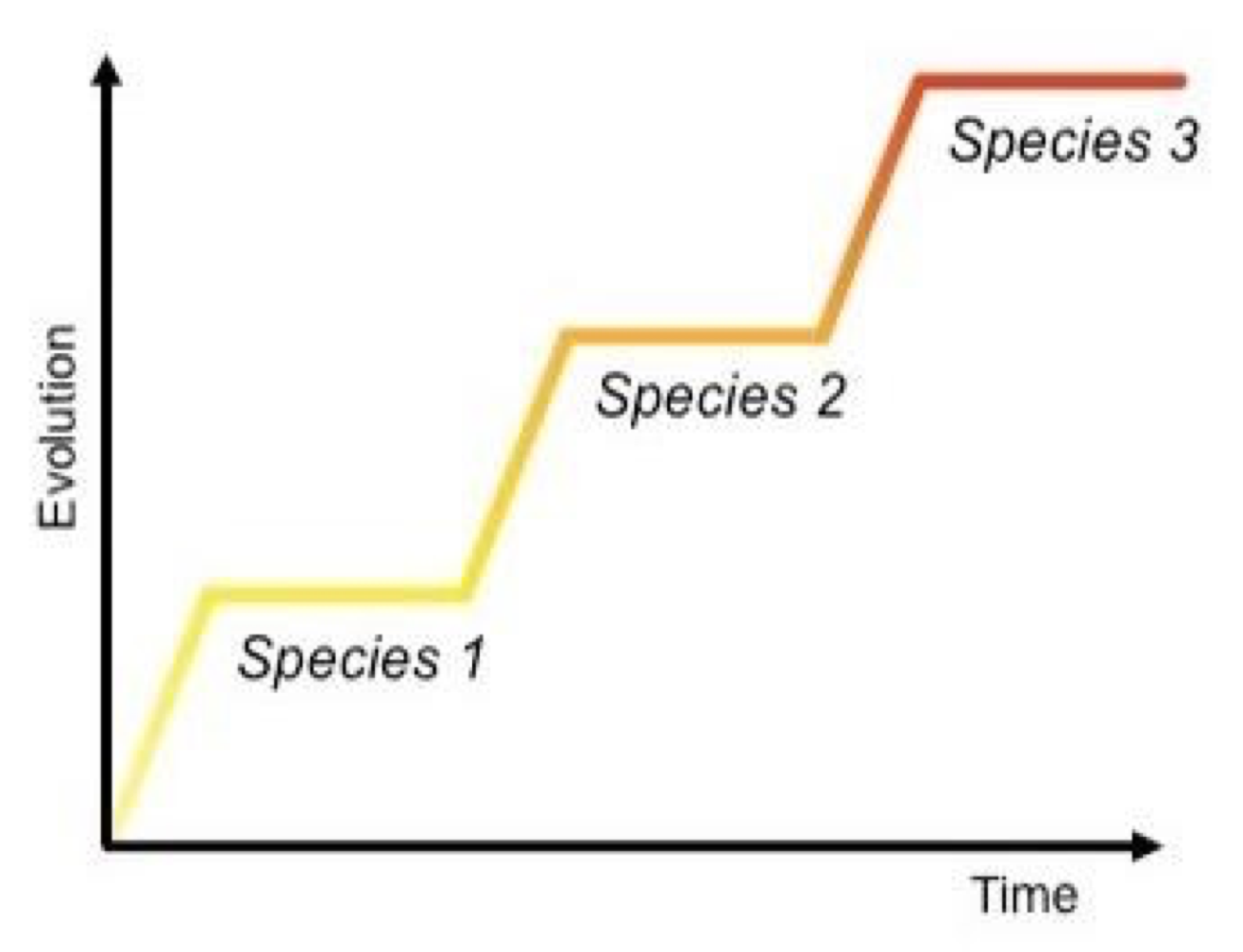
Puntuacted Equilibrium
Period of statis punctuated by rapid periods of change
Phylogeny
evolutionary relationships, how they are related to eachother
Geological Time scale Eras
Pre-Cambrian
Paleozoic
Mesozoic
Cenozoic

