Storage vessels and drinking vessels - Homeric World
 Studied by 1 person
 Call Kai
 Learn
Learn Practice Test
 Spaced Repetition
 Match
Match Flashcards
 Knowt Play
1/29

Earn XP
Description and Tags
Name | Mastery | Learn | Test | Matching | Spaced | Call with Kai |
|---|
No analytics yet
Send a link to your students to track their progress
30 Terms
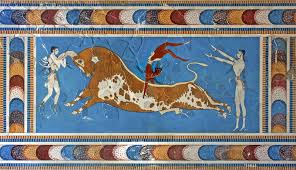
Who were the Mycenaeans inspired by ?
The Mycenaeans were talented at pottery as they imitated Minoans who were excellent potters in their own regard.
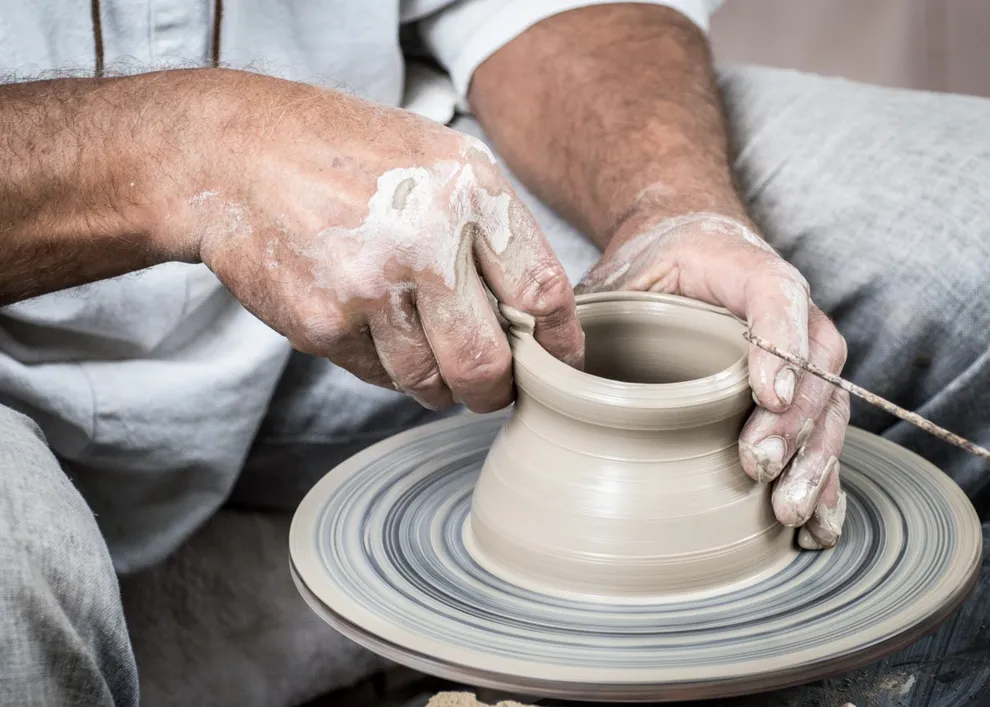
How were they made ?
The basic shape was made on a potter’s wheel
patterns were applied later
An iron-rich slip ( made from water and clay ) was added and depending on the temperature of the kiln, it would turn red or black.
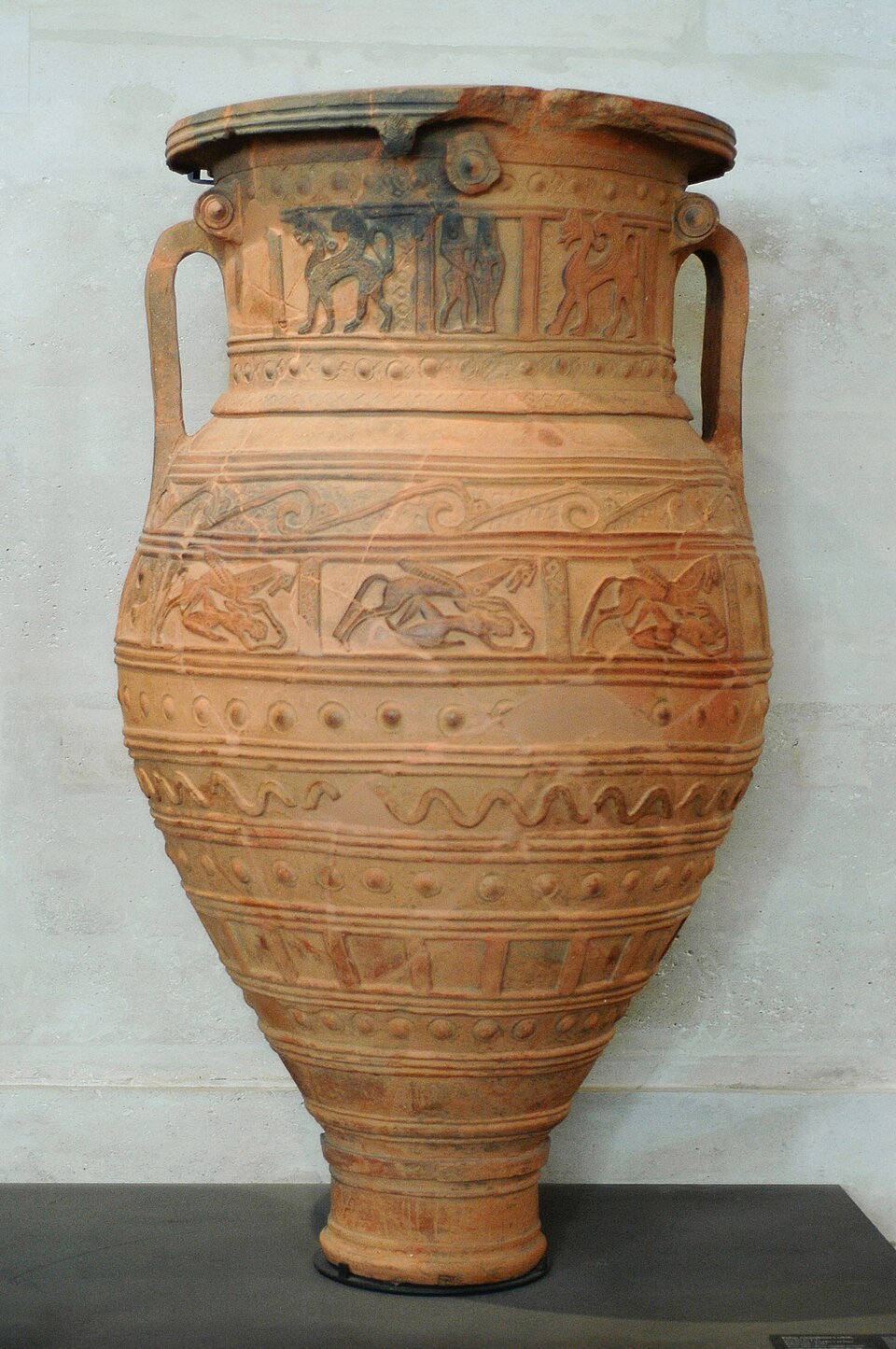
Pithos - plu. Pithoi
Dimensions and size :
over 1.5m high
weighing over 2 tonnes when filled
purpose :
contain liquid or food
be partially buried into the ground to keep contents cool and fresh.
Contain oil ( fire hazard ) - many ancient cities suffered from huge fires.
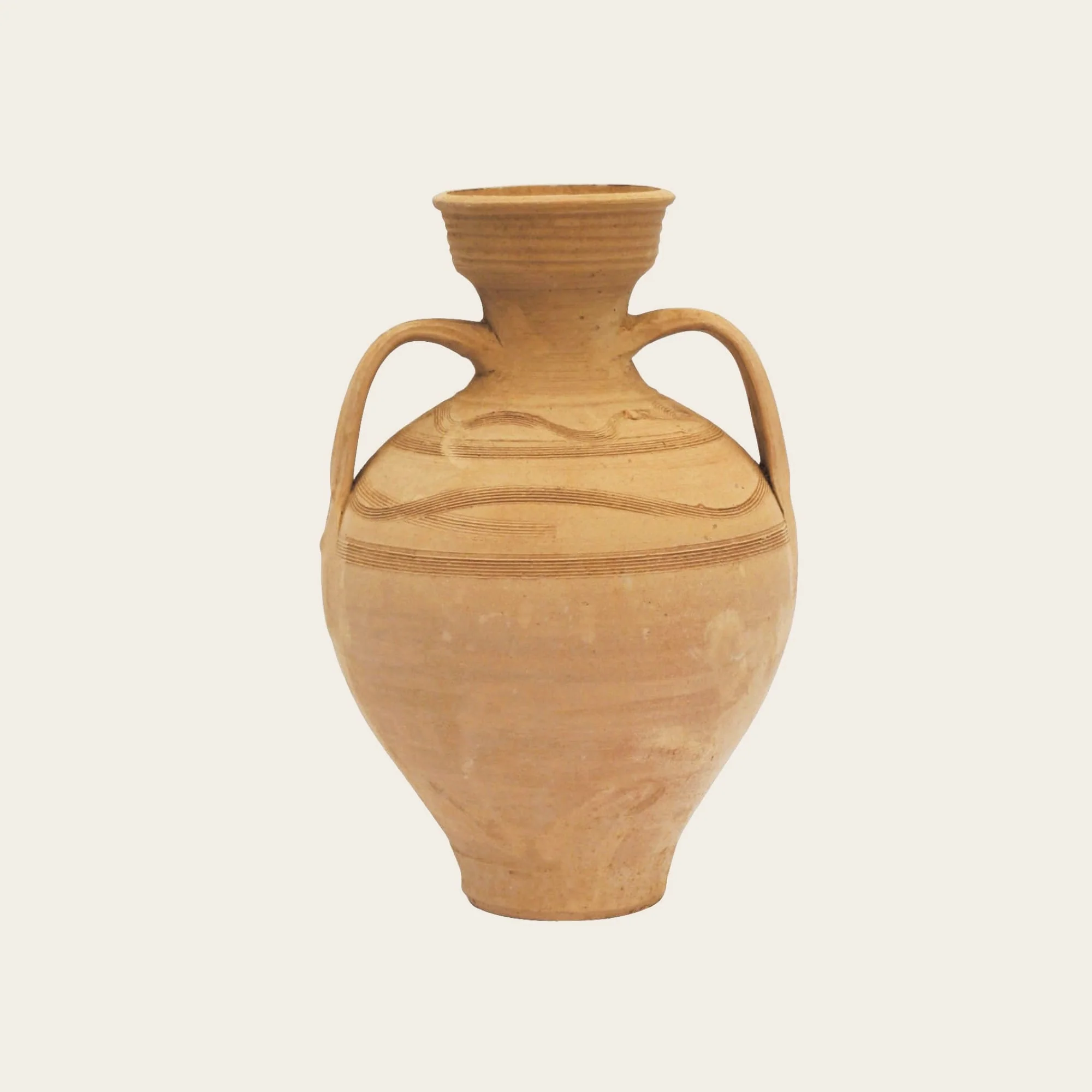
Amphora - plu. Amphorae
Dimensions and size :
Much smaller than Pithos
narrower neck
most were 45cm tall
They were often painted with elaborate geometric patterns or images from nature
Purpose :
storing wine/olive oil
What did Amphoras show us about Mycenaean art ?
showed us that the Mycenaeans liked to decorate their pots.
common style of decoration included :
marine life
plant life
geometric patterns
The neck and the lower part of the amphora was painted in lines or a solid block - forcing eyes to focus on the main imagery.
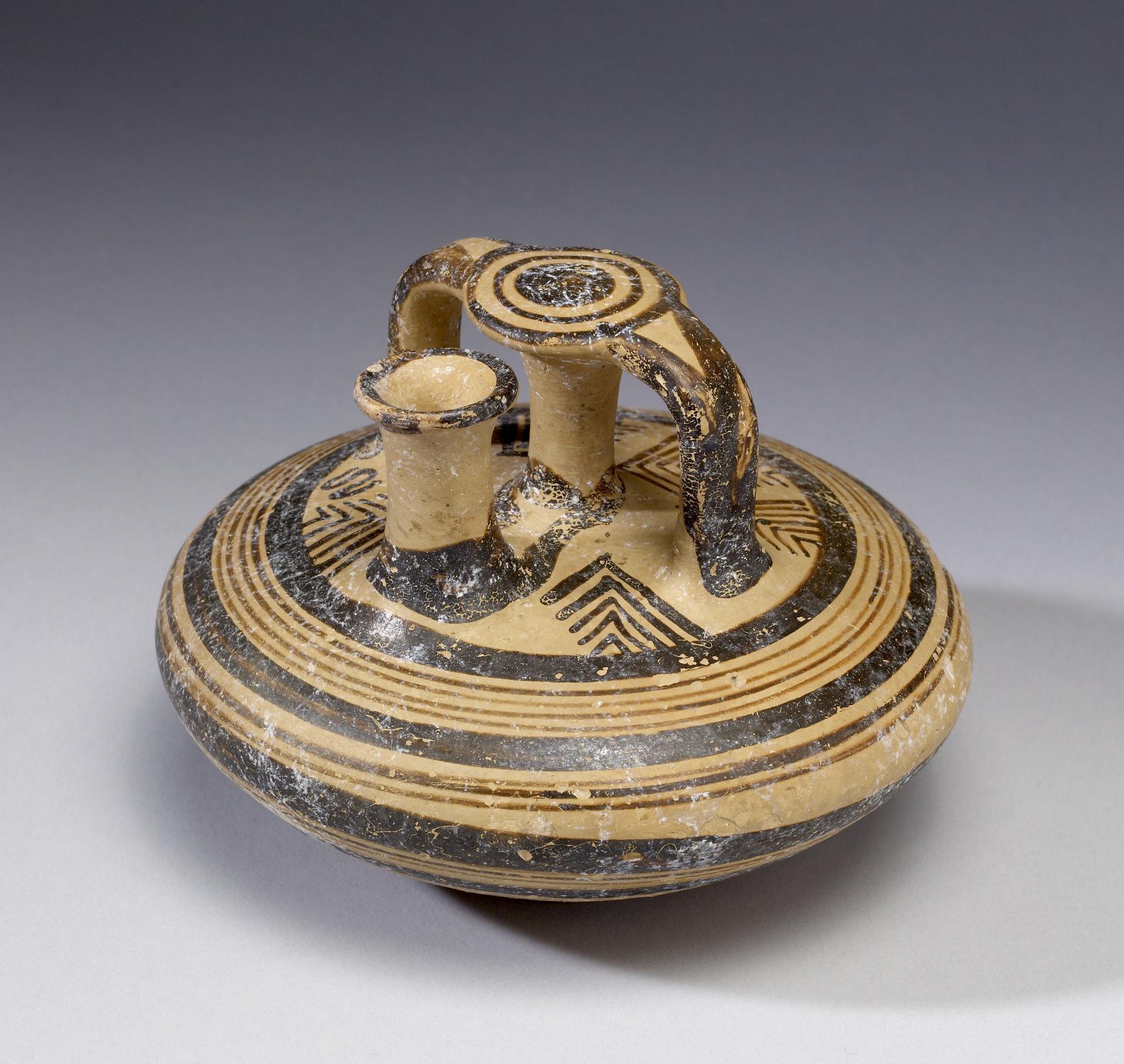
Stirrup jar
Common ?
Yes, it was the most common vessel in Mycenaean times
Details :
The jar gets its name from the handle which resembles stirrups on a horse.
Purpose :
storing oil or wine
What designs were on Stirrup jars ?
precise geometric designs that influenced later Greek pottery.
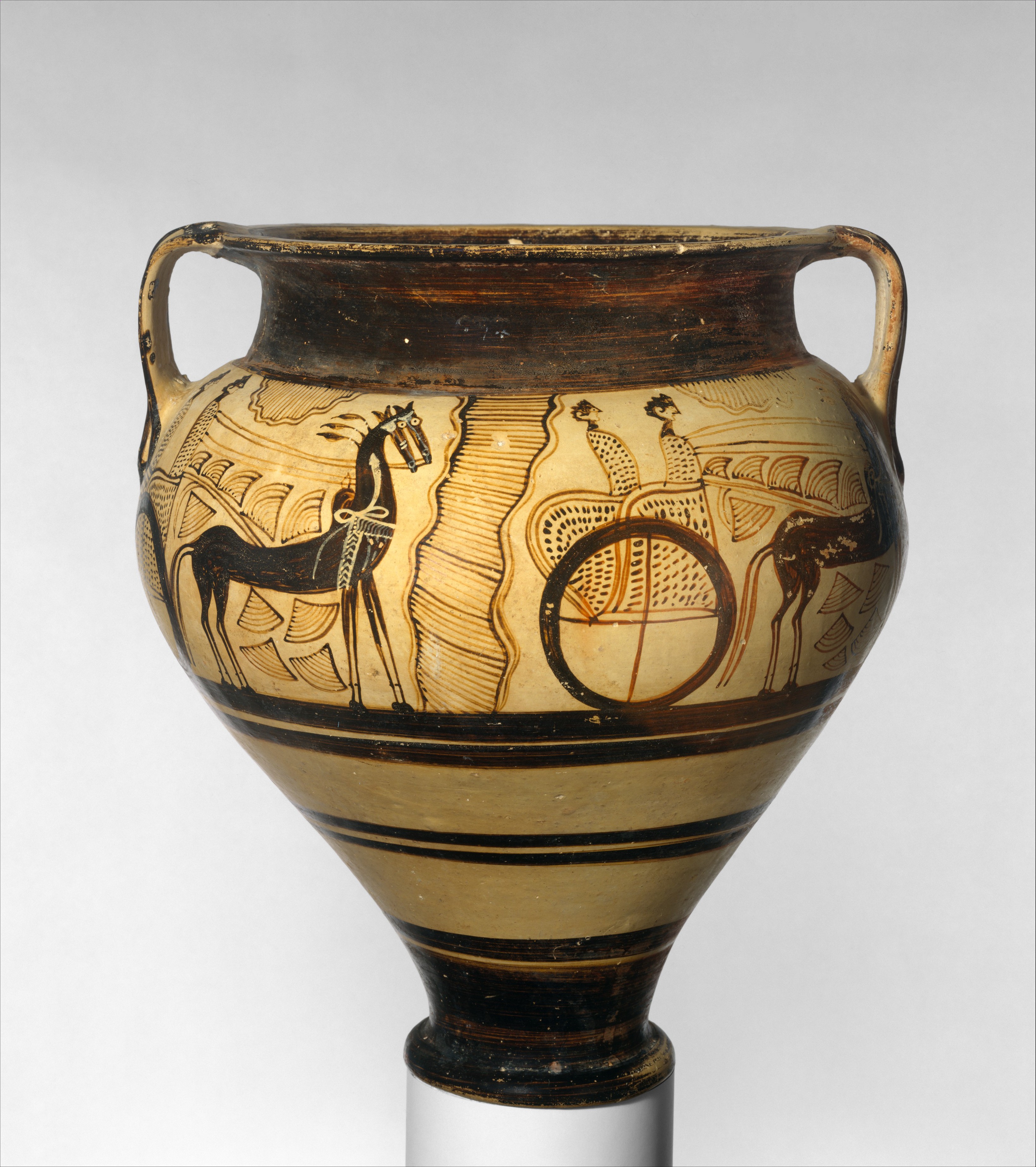
Kraters
Size : quite big
Use :
mixing water and wine
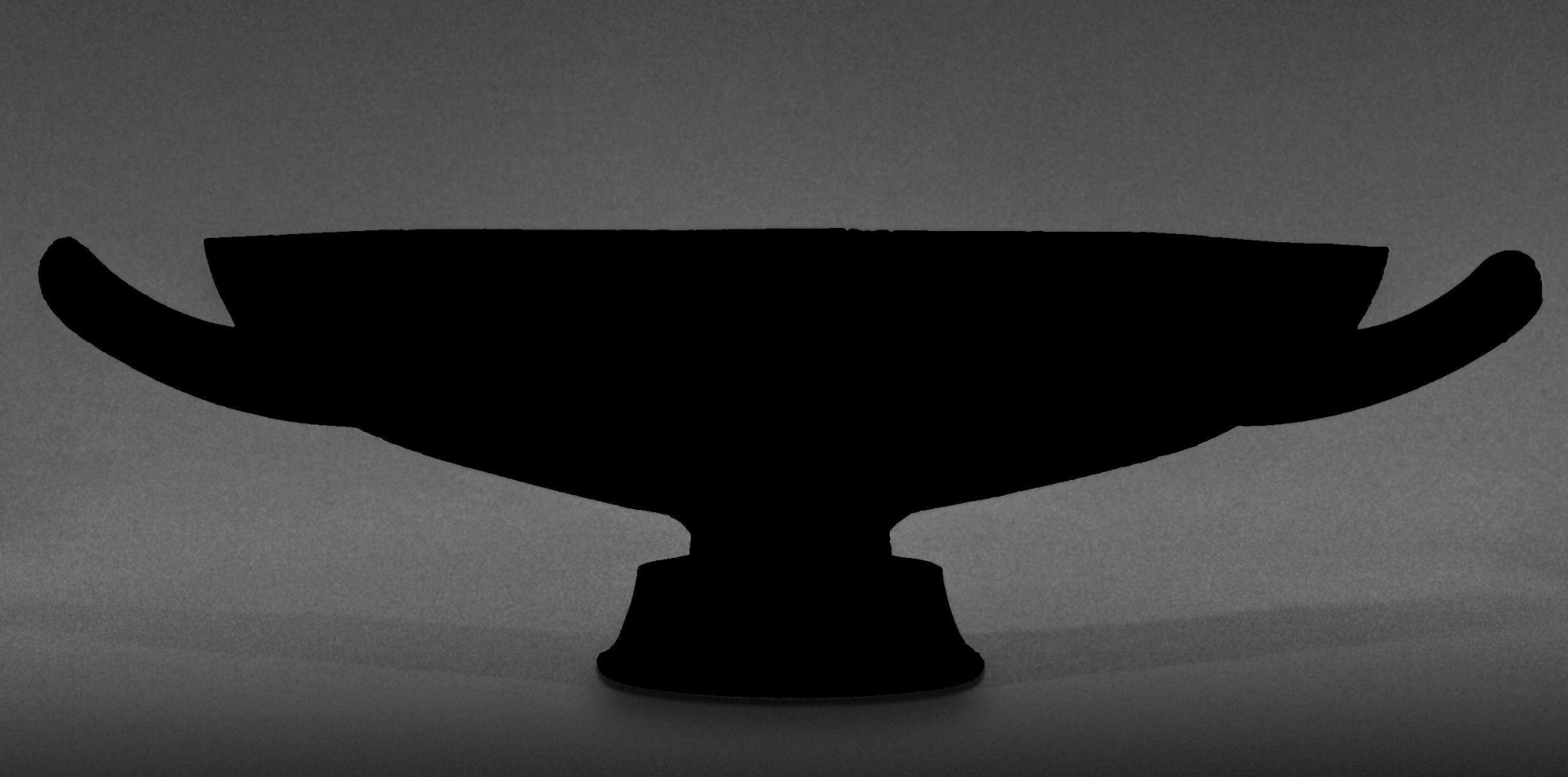
Kylix
Details :
long stem
two small handles
use :
drinking cup - wine
Notable example : Theseus Kylix
Rhyton - plu. Rhyta
Size :
differs depending on the shape of the Rhyton ( i.e normal vessel/ animal head/ other figure
roughly cone shaped
Materials :
pottery or metal
Use :
containing and pouring liquid ( wine )
most likely used at banquets, feasts
liquid designed to fall from the bottom or the mouth of animal head.
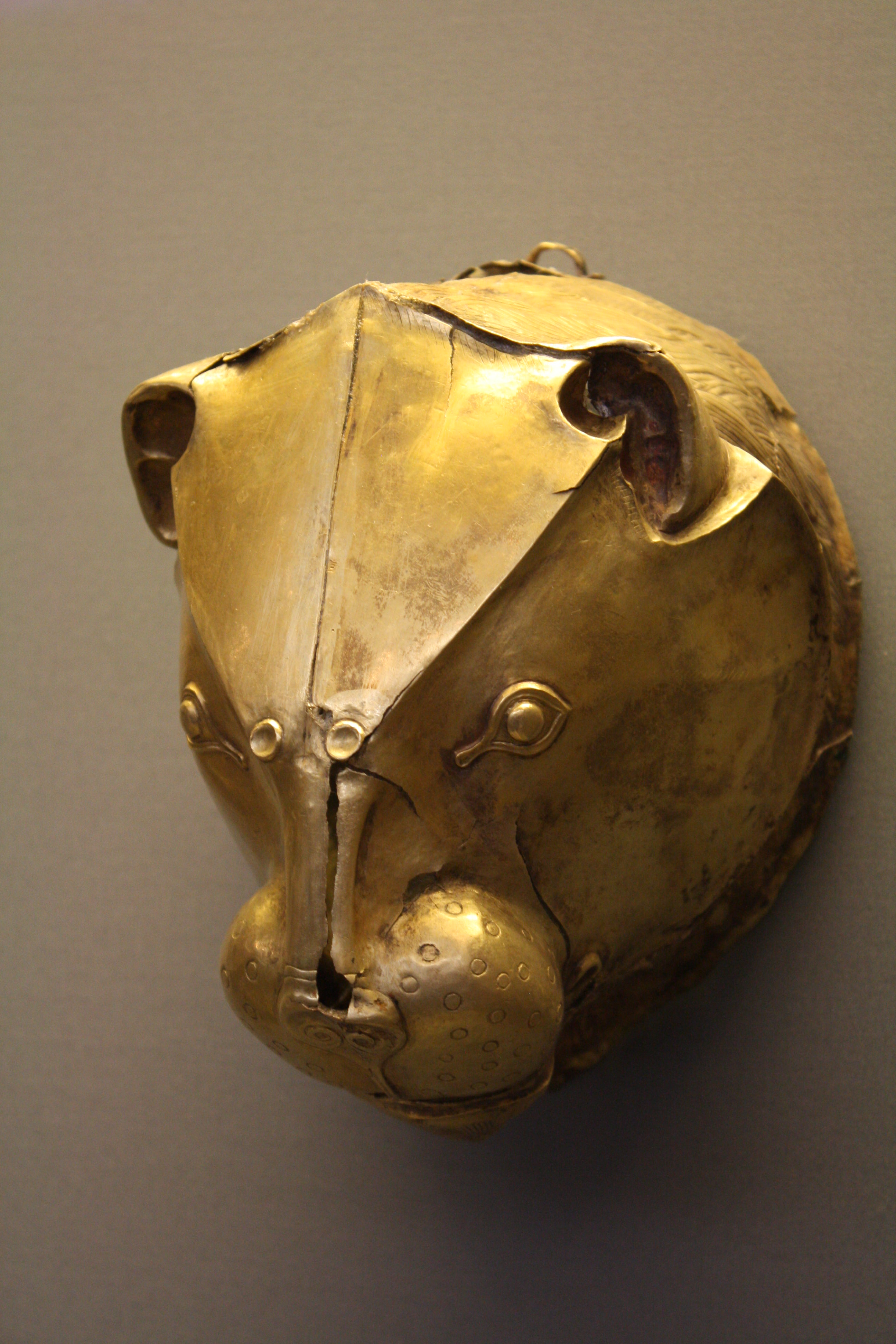
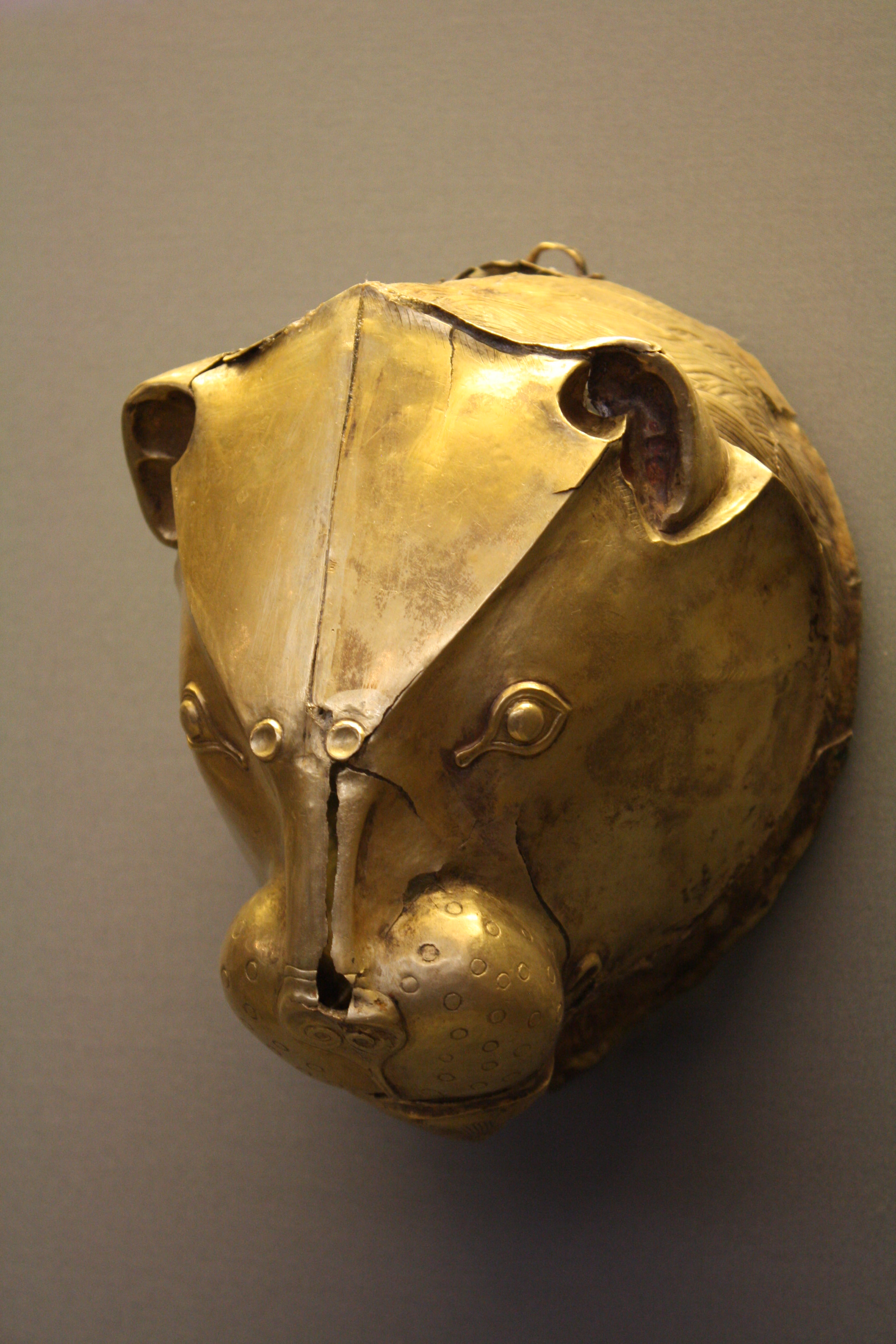
Lion Head Rhyton
Significance :
Rhtyon is in the form of a lion’s head
fitting imagery for rulers of Mycenae - suggests it might have been used by royals.
liquid would poured in through the top of the head.
poured out through the muzzle.
impressive as it is both very beautiful and intricate but functional - impressive craftsmanship and wealth of Mycenae
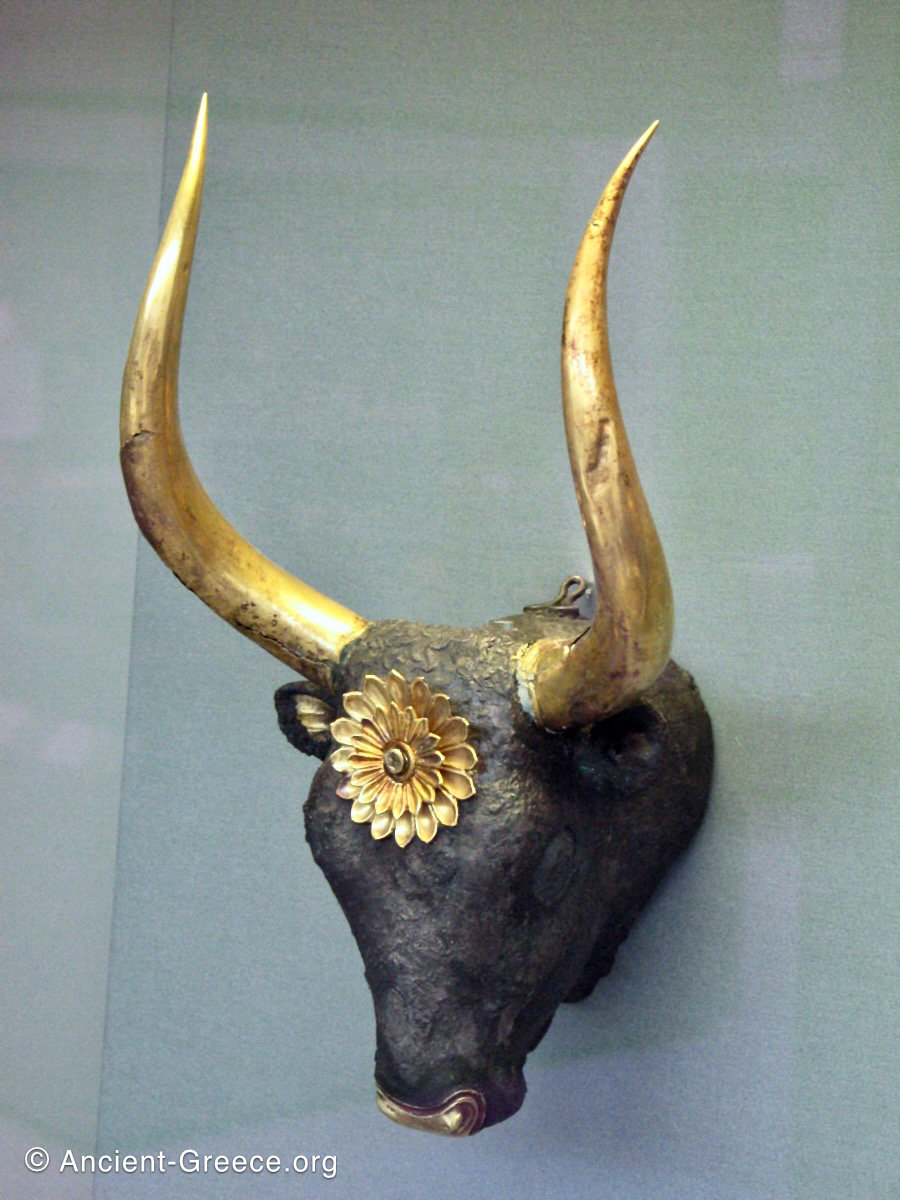
Bull Head Rhyton ( Mycenae )
Date : 15th Century BC
Material : Silver with gold horns
Significance :
silver head - wealth, nobility
gold horns, multilayered gold rosette on the top of its head and gold plating on nose - sign of wealth and nobility perhaps
one hole between the horns ( for filling the rhyton )
one hole at the mouth ( for pouring )
evidence of high levels of craftsmanship - hammering, repoussé, inlay
What was early Mycenaean Age pottery decorations like ?
earliest :
double axes
spirals
leaves
Later :
Chariot racing
bulls
human figures
Even later :
flowers
spiralled whorl shells
zig zags and vertical lines.
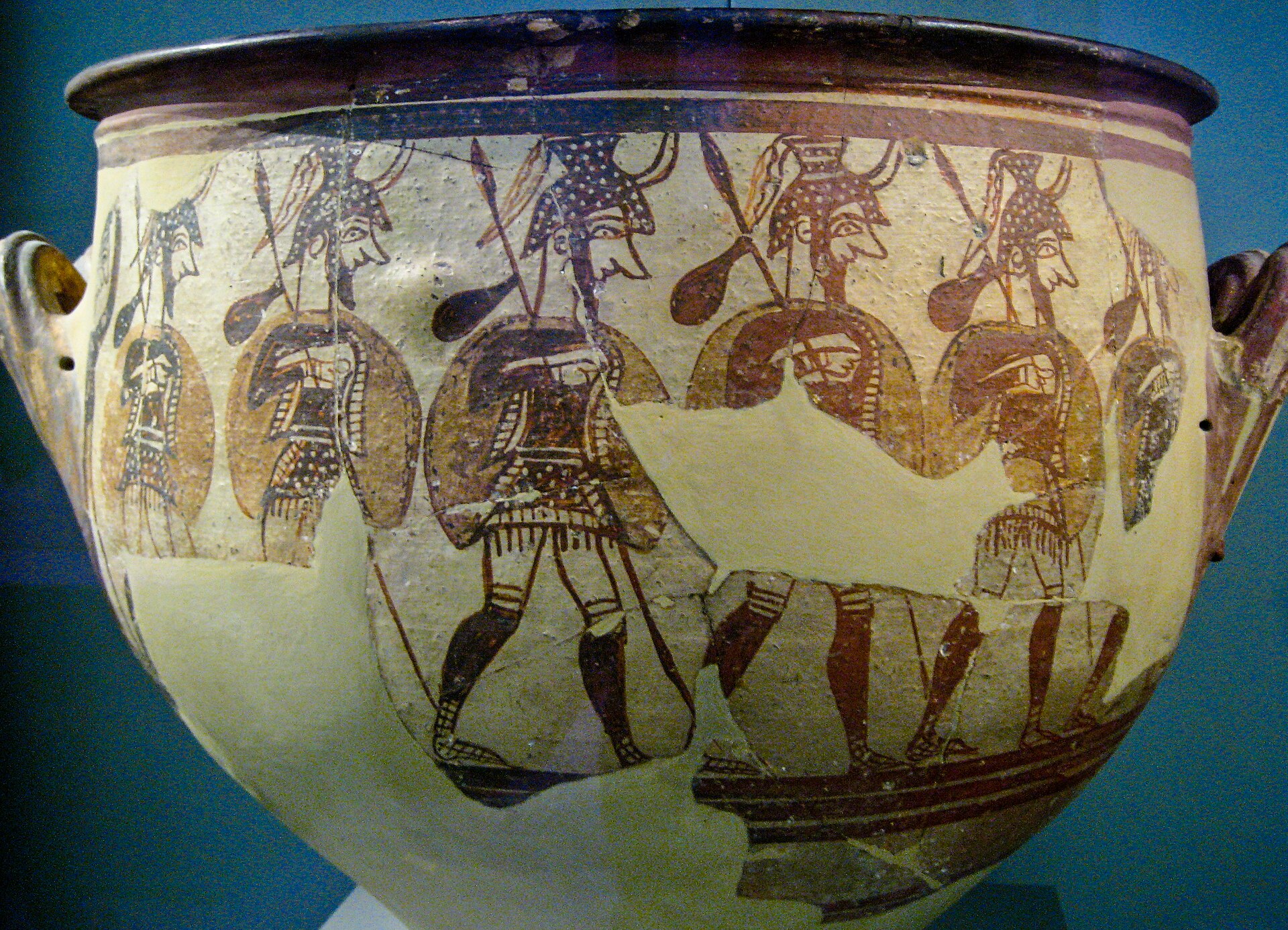
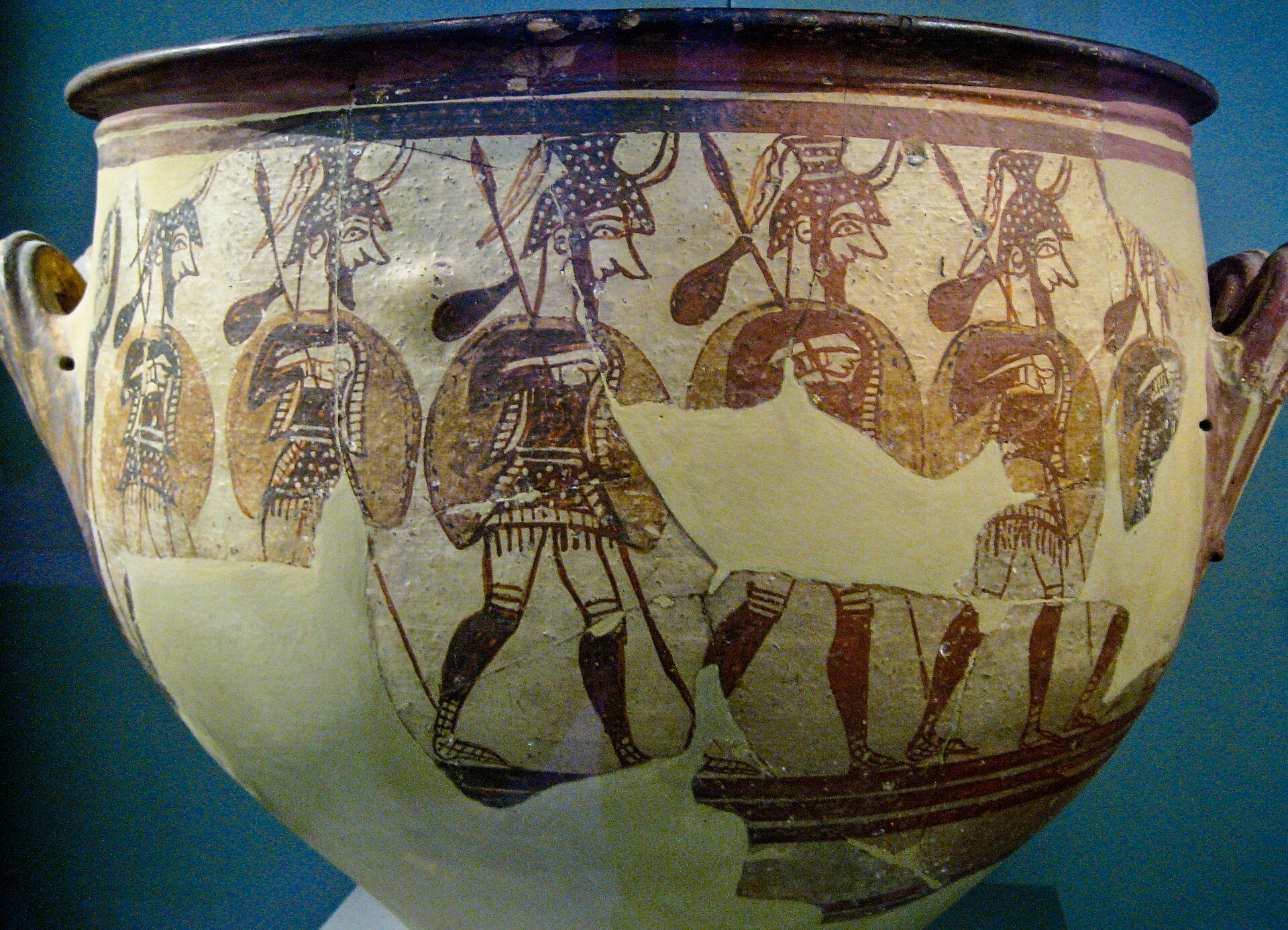
Warrior Vase ( Mycenae )
Date : 13th Century BC
Location : House of the Warrior, Mycenae
Material : clay
details :
soldiers departing for war
women on the side waving goodbye, lamenting their departure.
Handles are horned animals with eating ducks
Significance :
evidence of weaponry and armour
pottery skill and artistic technique ( iron-rich slip )
evidence of Mycenaean war culture and importance
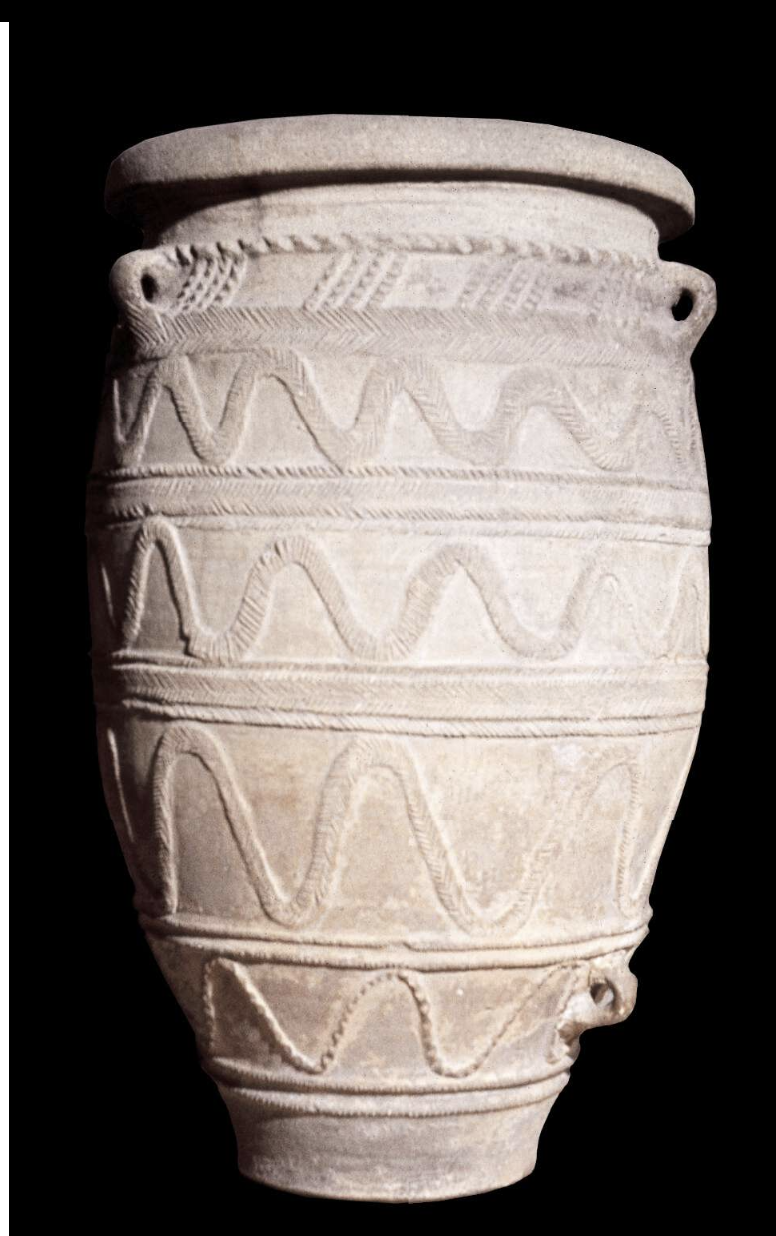
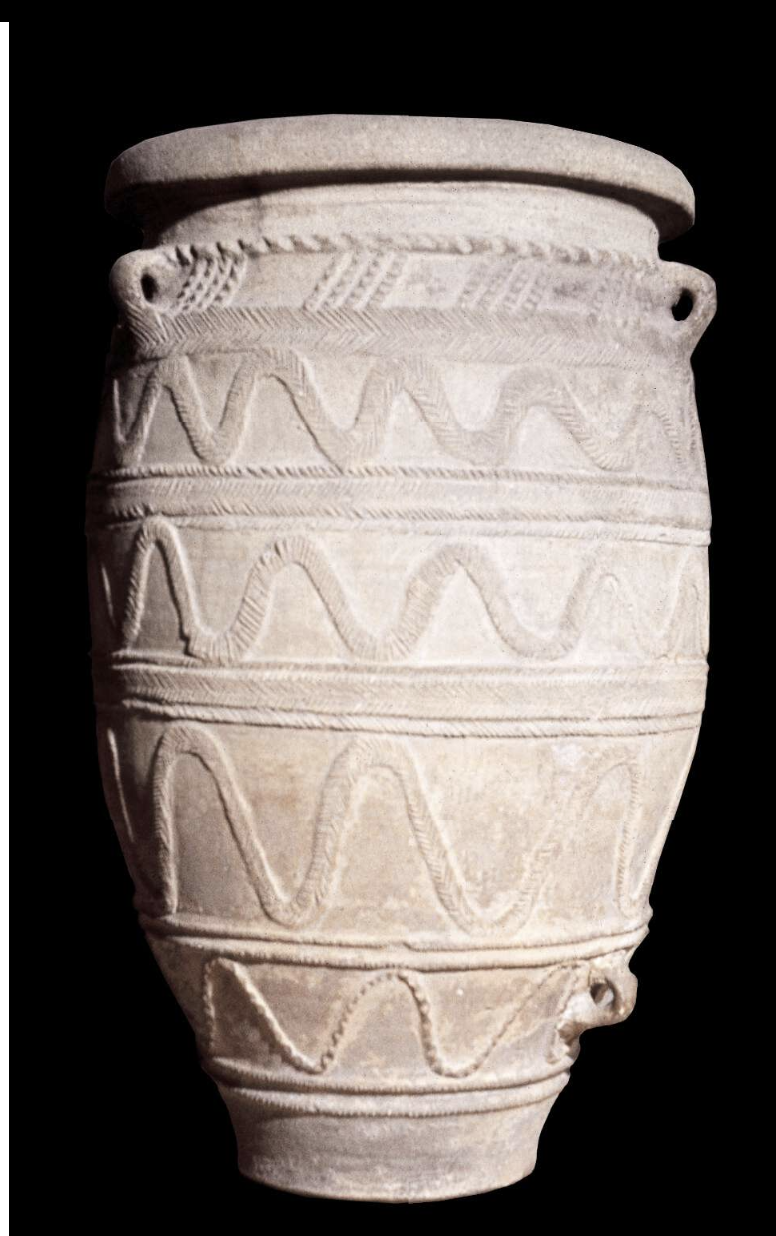
Pithos
Location : Crete
Mycenaean style - craftsmanship
Significance :
evidence of trade
evidence of skilled craftsmanship - geometric patterns
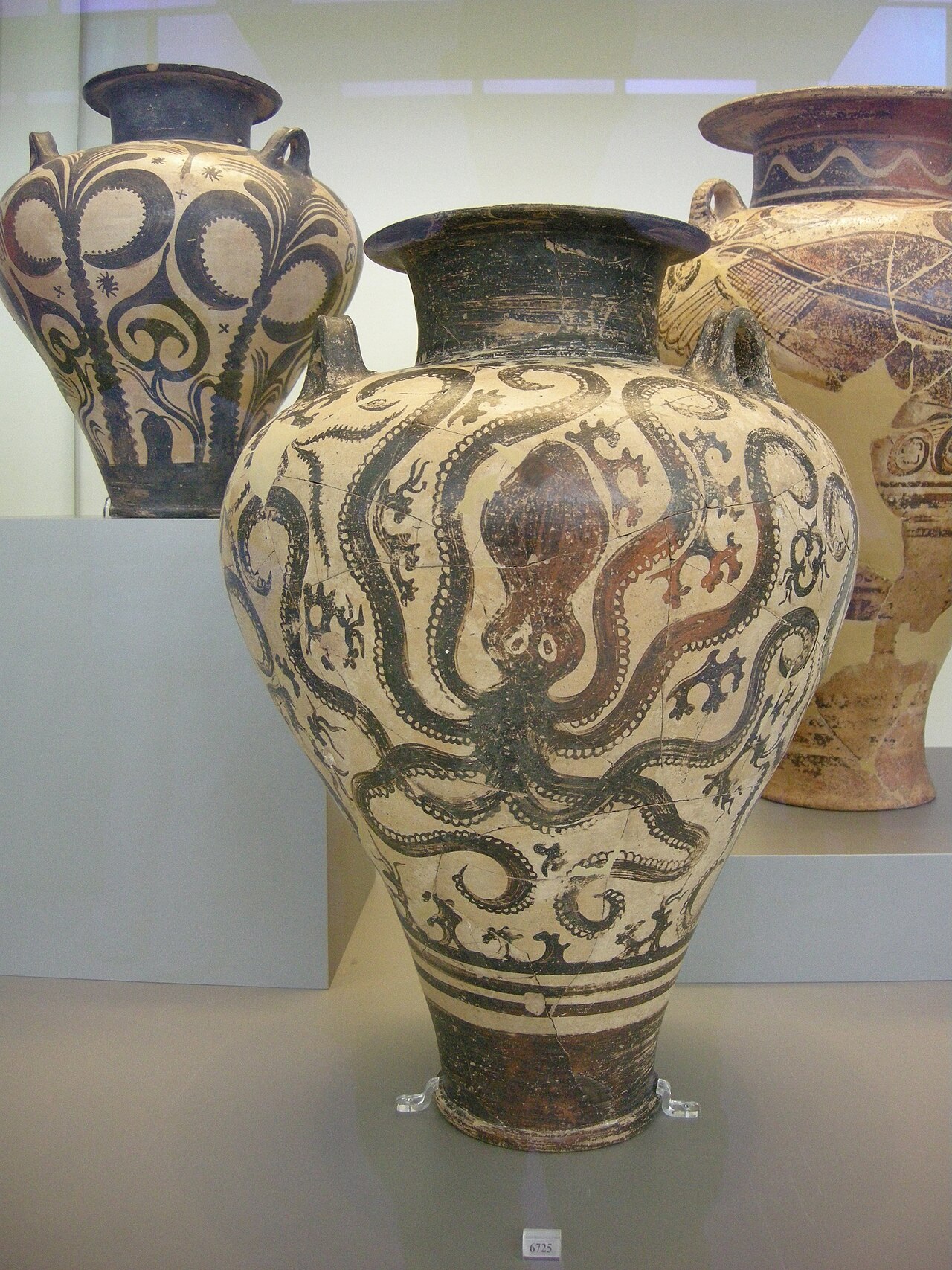
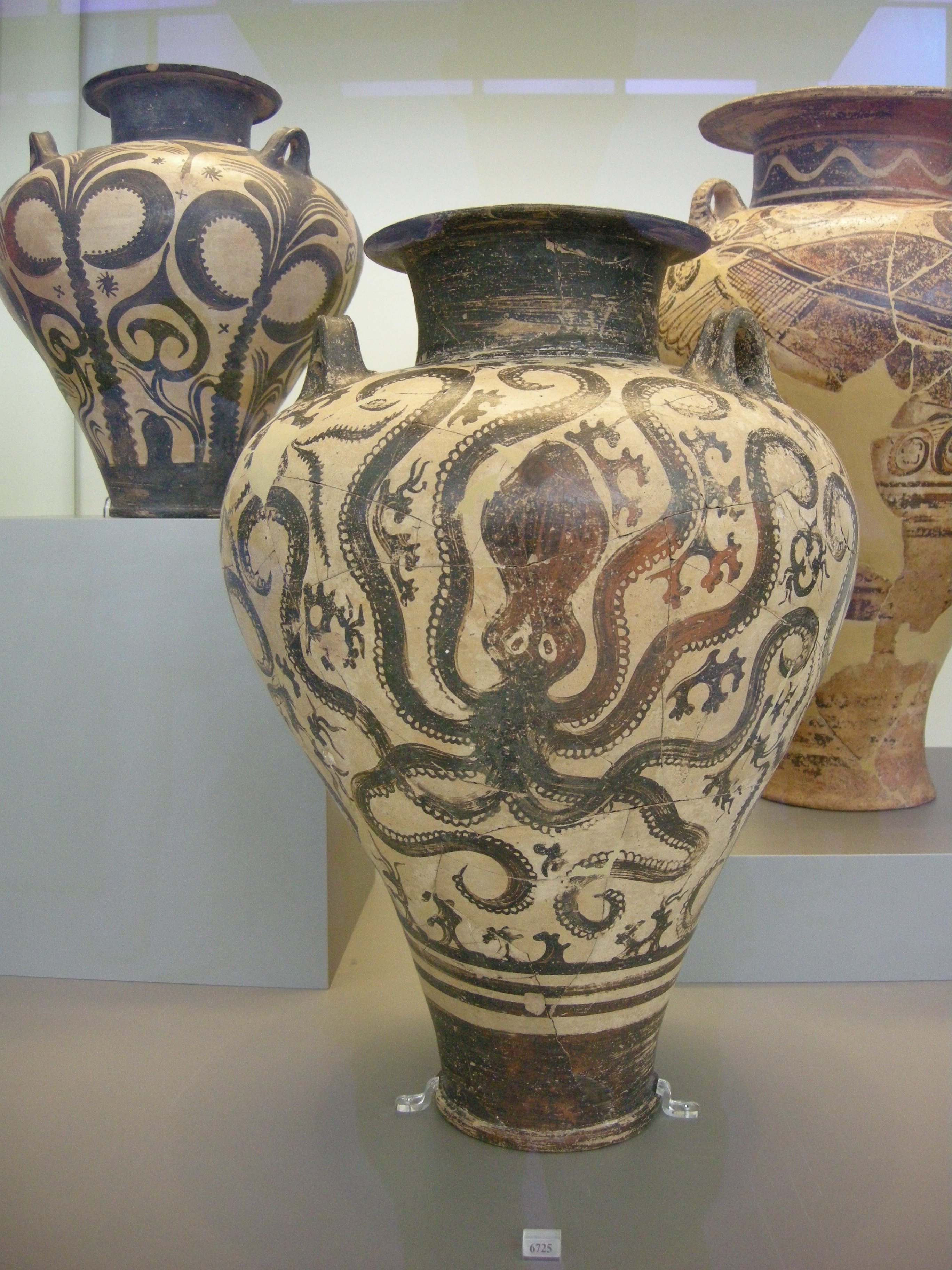
Octopus Amphorae ( Mycenae )
Date : 15th century BC
Location : Mycenae palace
Significance :
evidence of vase shape and decoration of Mycenaean period
evidence of aquatic life then
evidence of craftsmanship and skill - detailed octopus image,
technique - using iron-rich slip and control of temperature
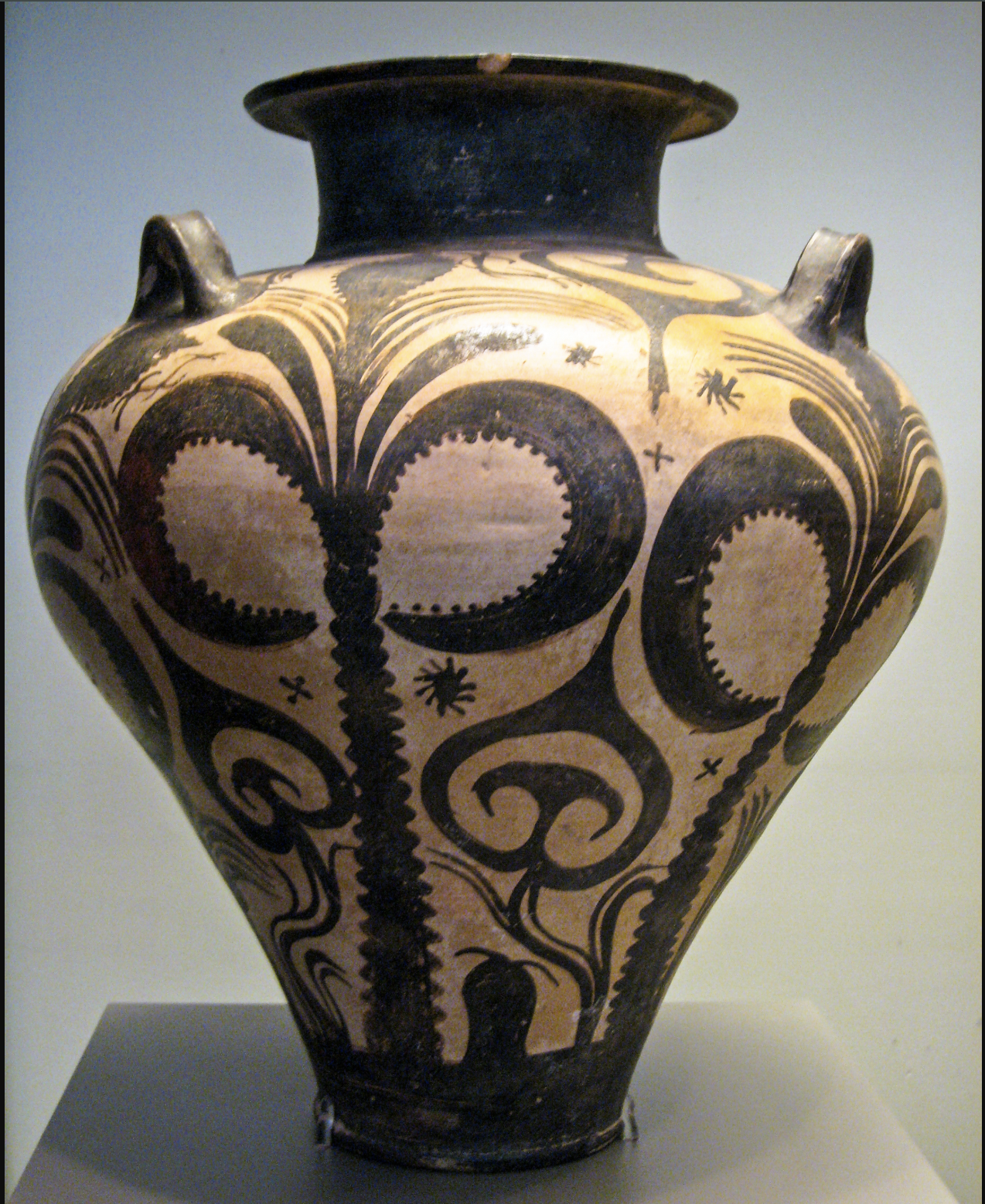
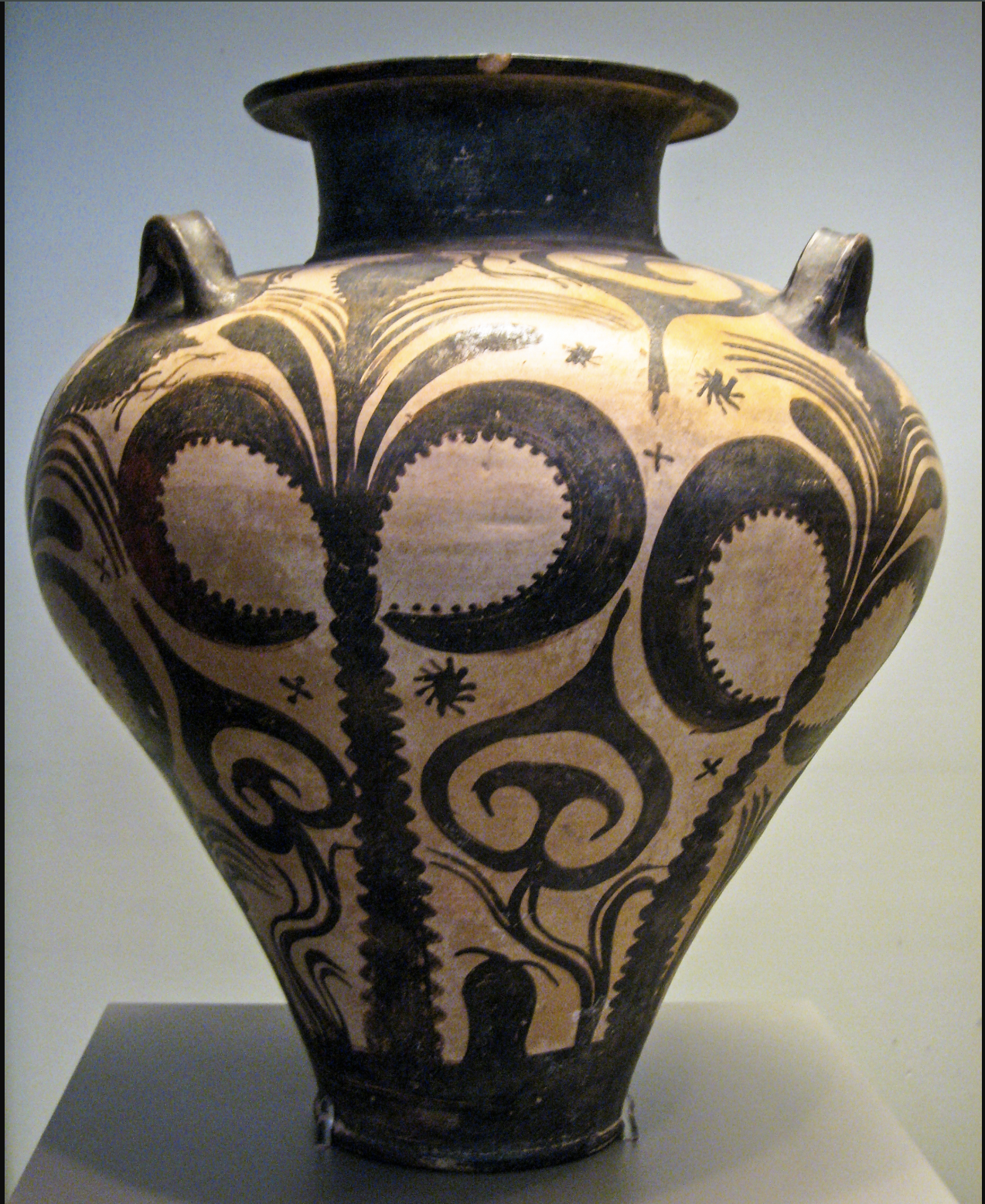
Plant Amphorae of palms ( Mycenae )
Mycenaean craftsmanship - evidence of artistic skills
evidence of variation of different imagery ( nature in this one )
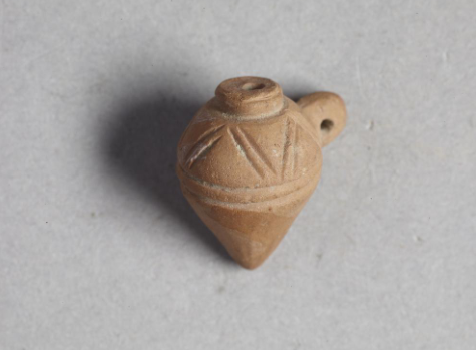
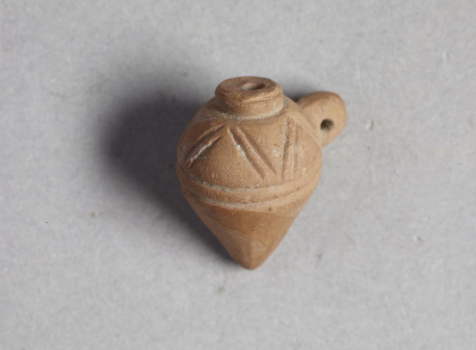
Miniature perfume vessel
Mycenaean craftsmanship - artistic skills, very small - quite impressive that the Mycenaeans were able to create this.
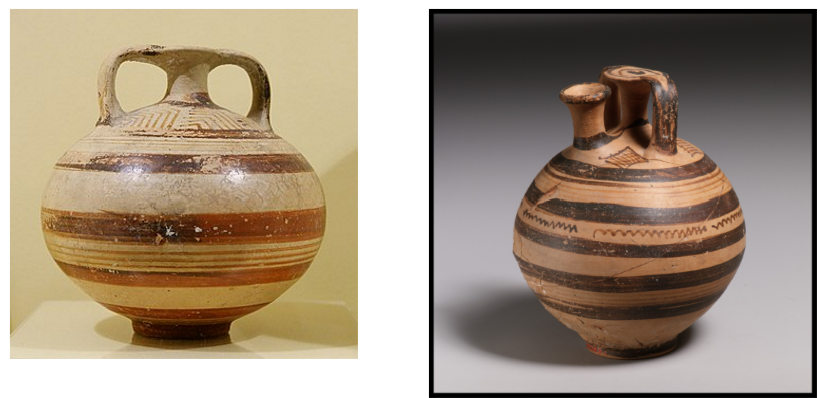
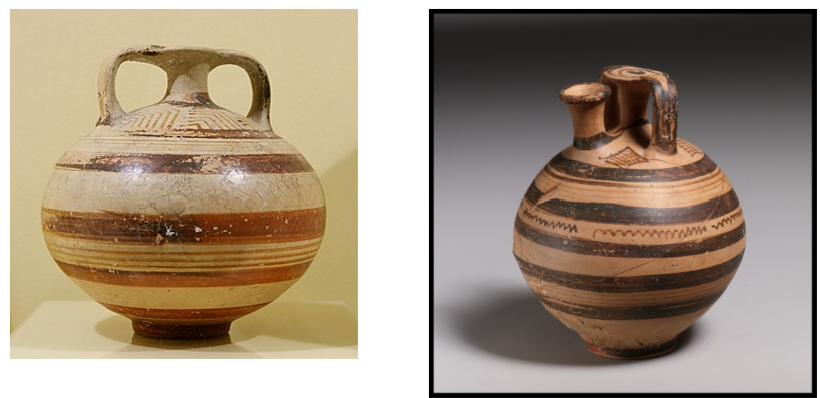
amphorae with bands and geometric patterns ( Mycenae )
evidence of variation in patterns - stripes on this one
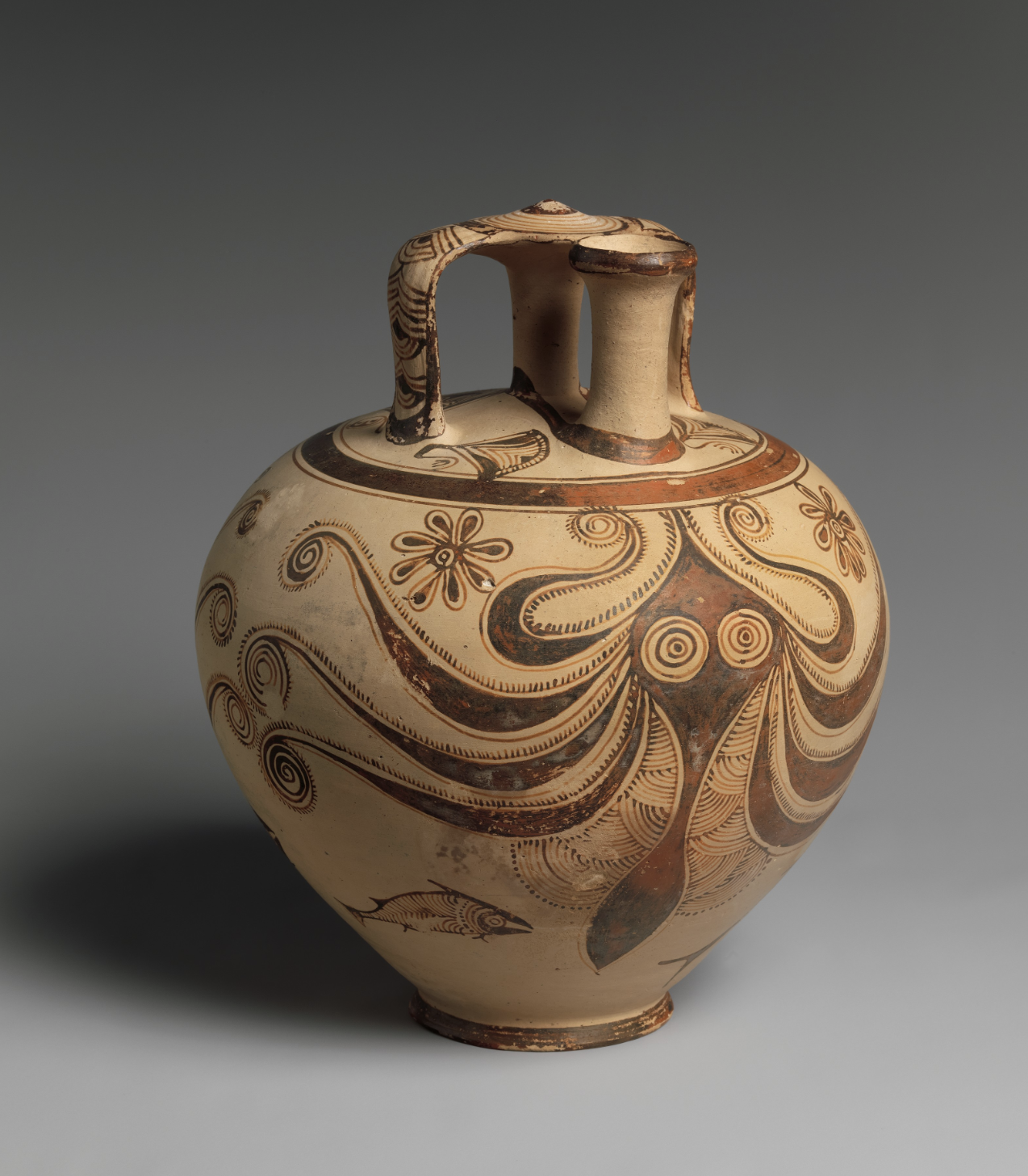
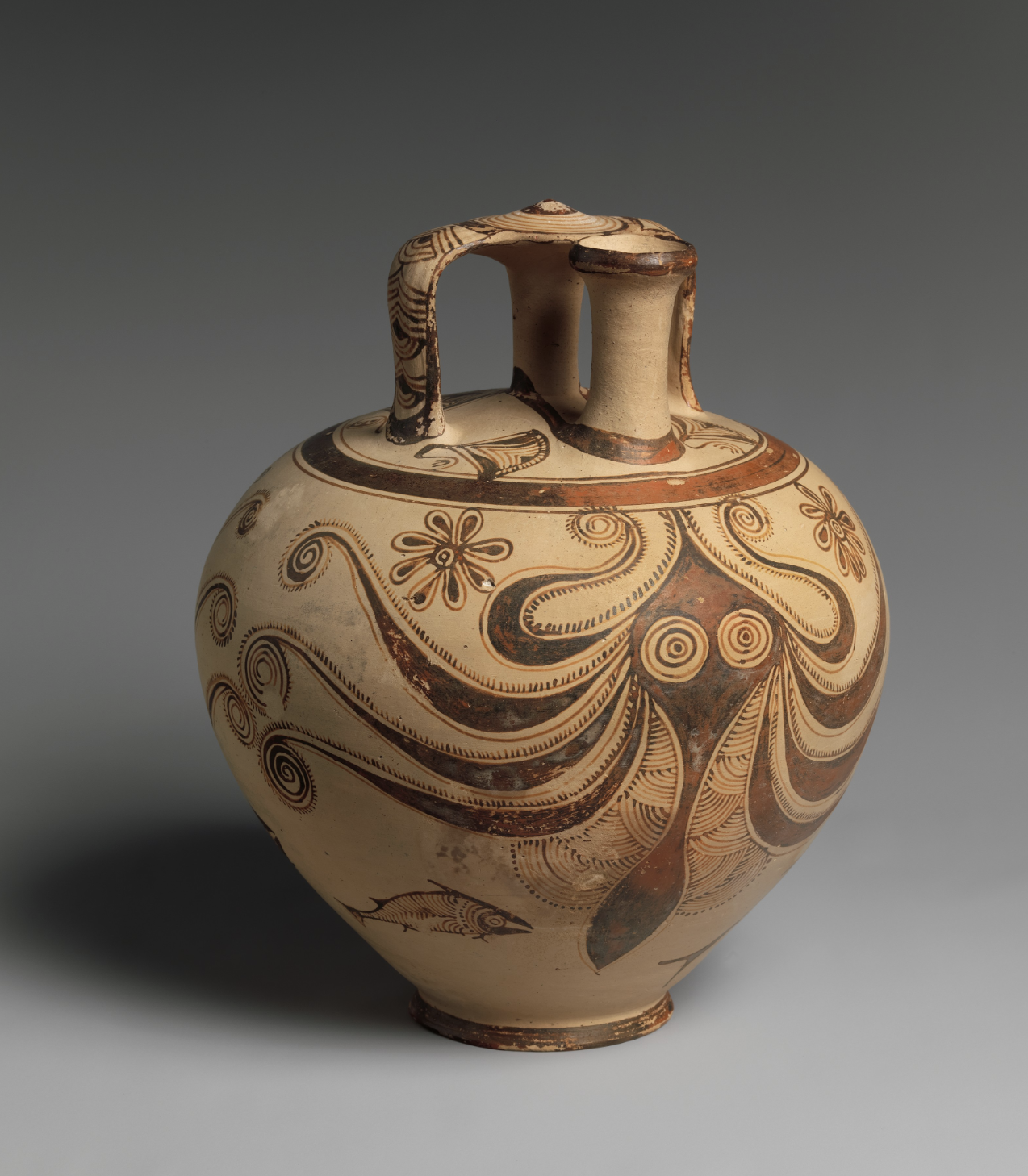
Octopus stirrup jar ( Mycenae )
evidence of variation in pottery types and imagery
octopus imagery is again used
skilled craftsmanship - detailed octopus image, fish on bottom with some floral patterns.
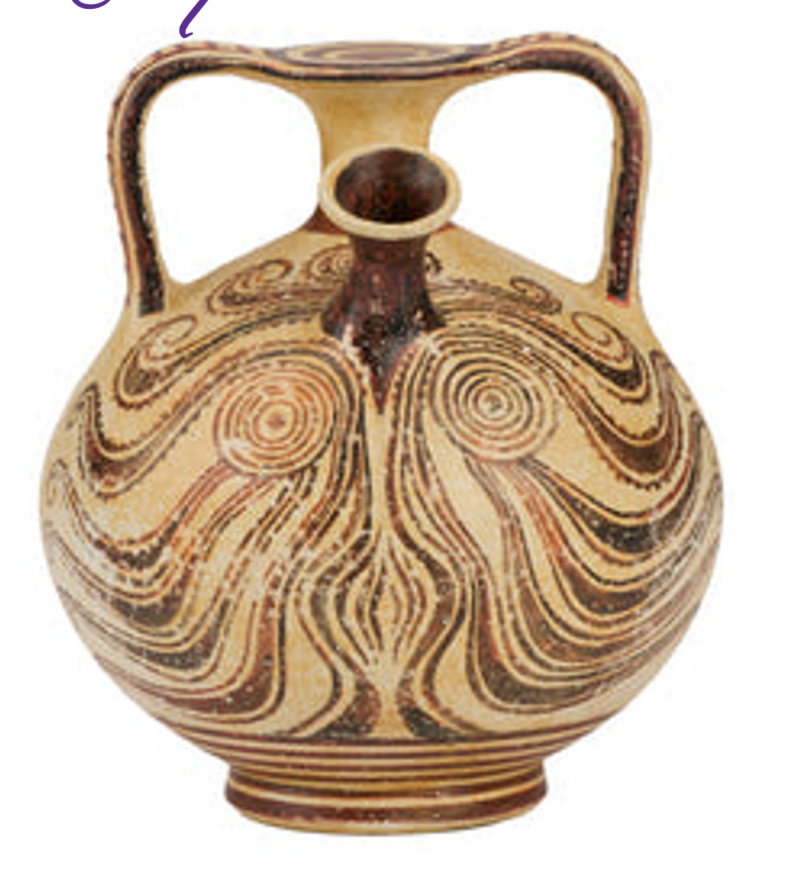
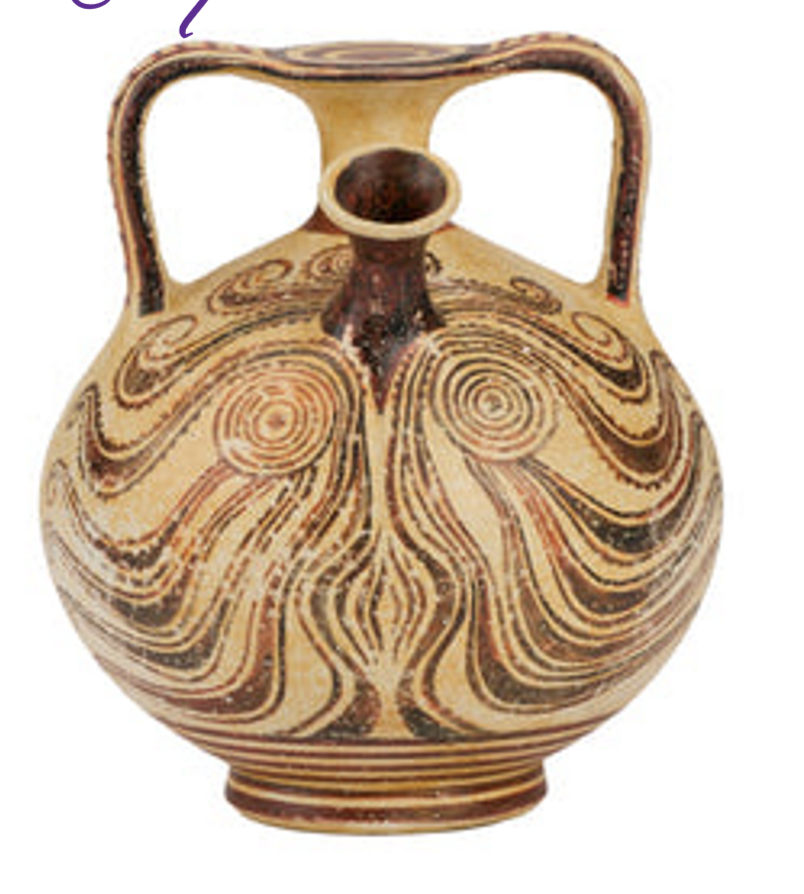
Swirl Stirrup Jar ( Mycenae )
evidence of skilled craftsmanship - detailed spiralling patterns
relatively symmetrical and orderly.
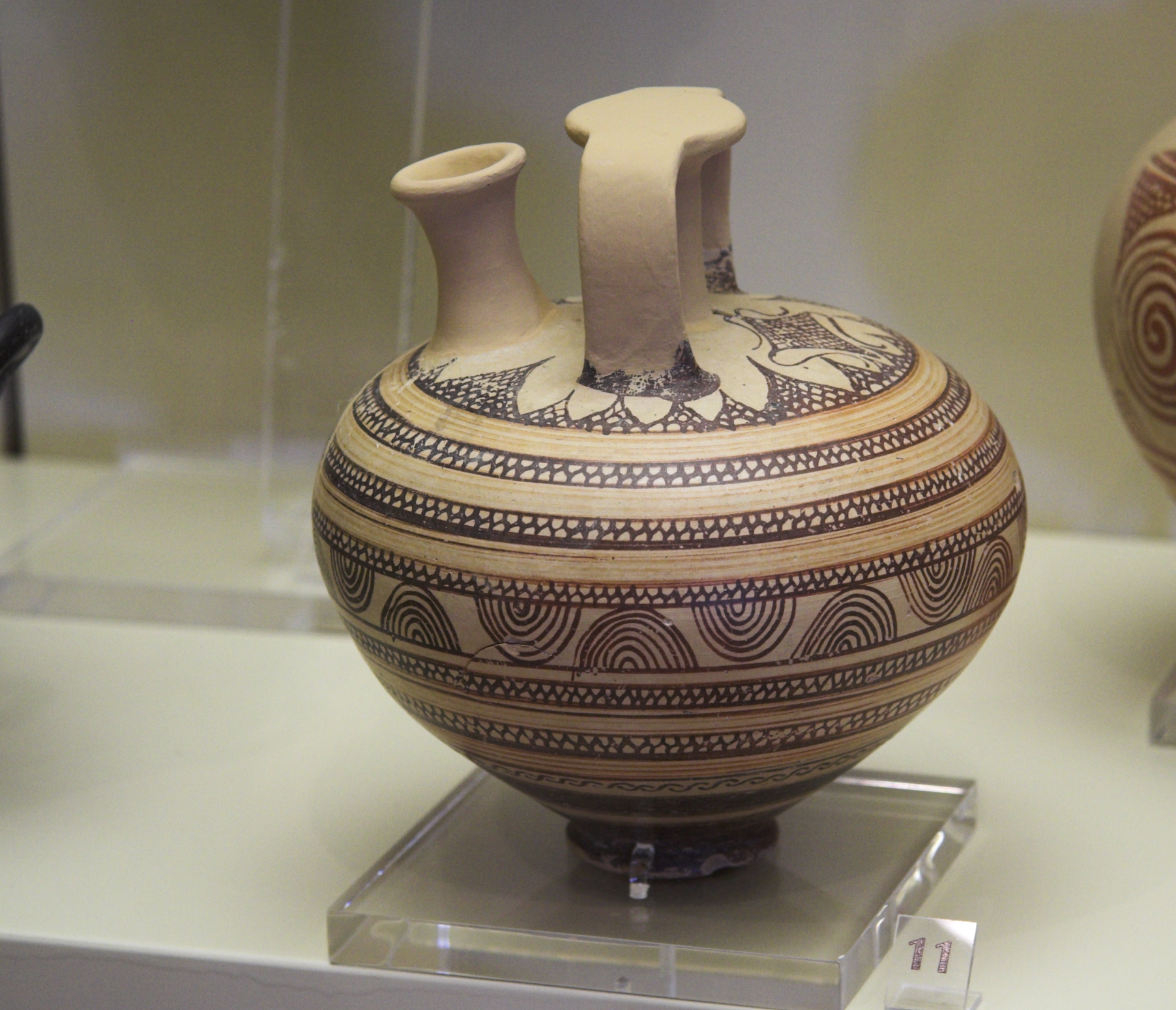
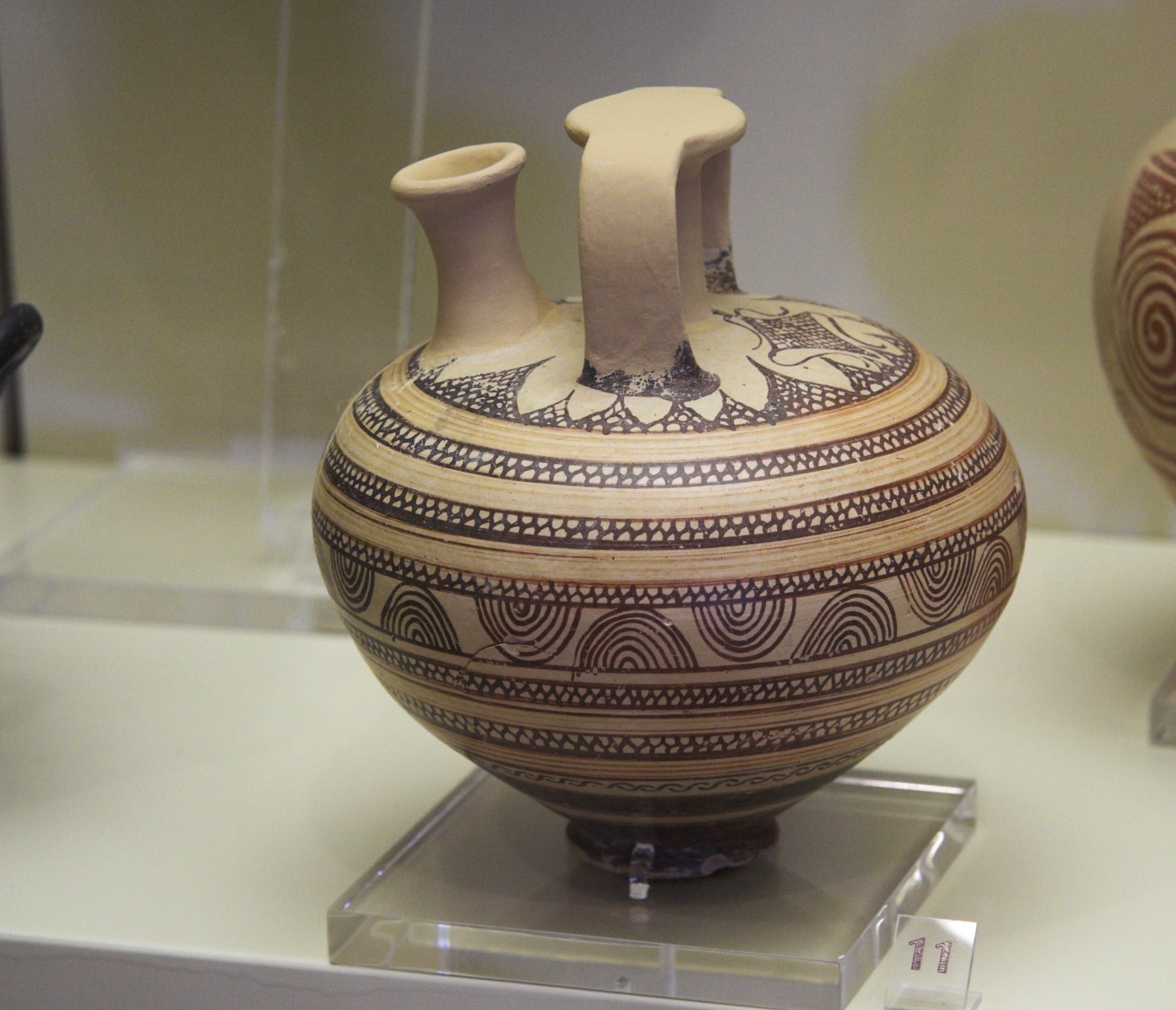
Stirrup jar with geometric patterns
Date : 12th century BC
Location : Mycenae
Material : Clay
Significance :
evidence of good craftsmanship
iron-rich slip used to create intricate pattern
range of colours ( red-brown )
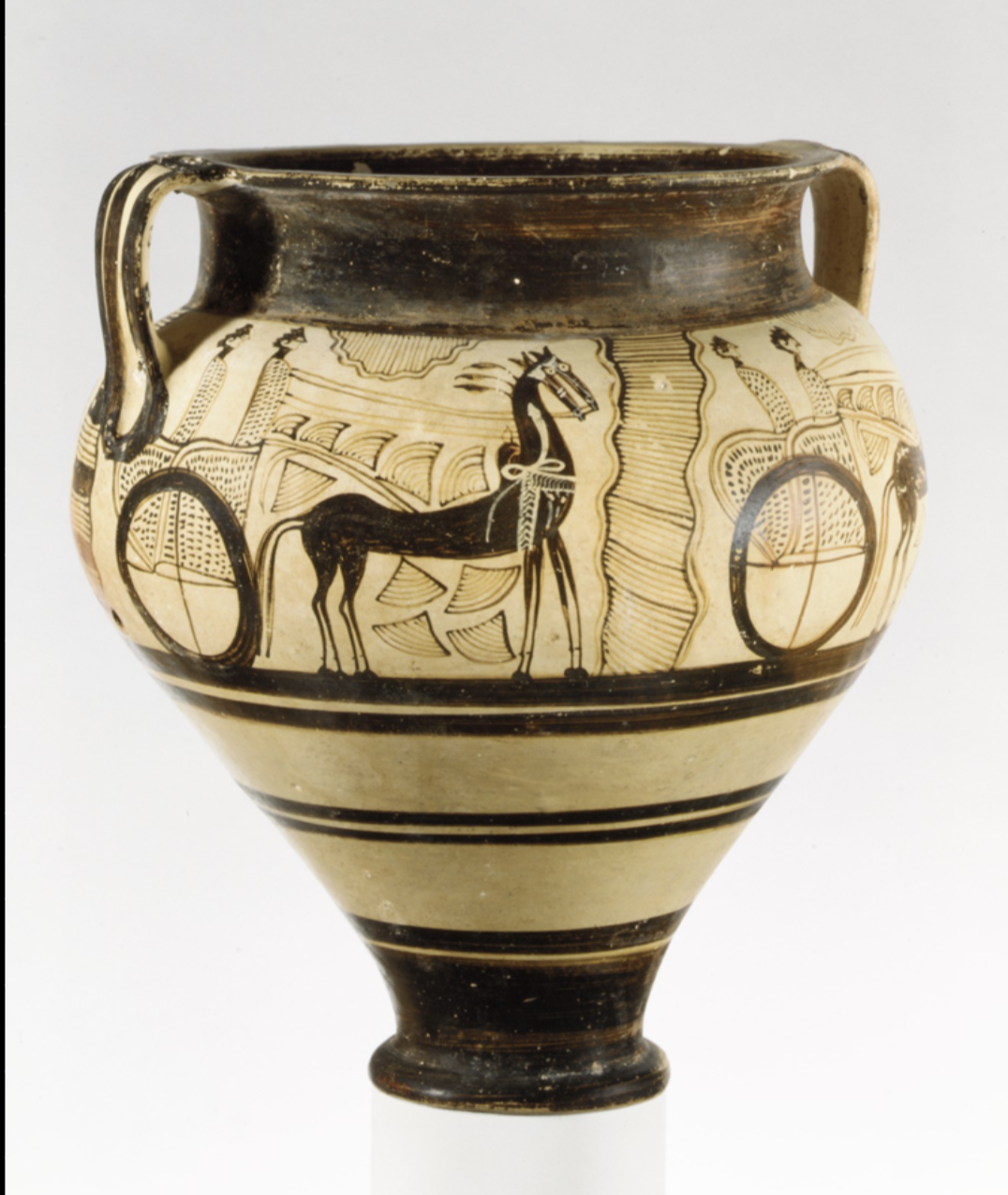
Chariot race krater ( Mycenae )
Evidence of chariots and usage - race is depicted on the krater.
Evidence of variation in imagery - chariots and humans ( later period )
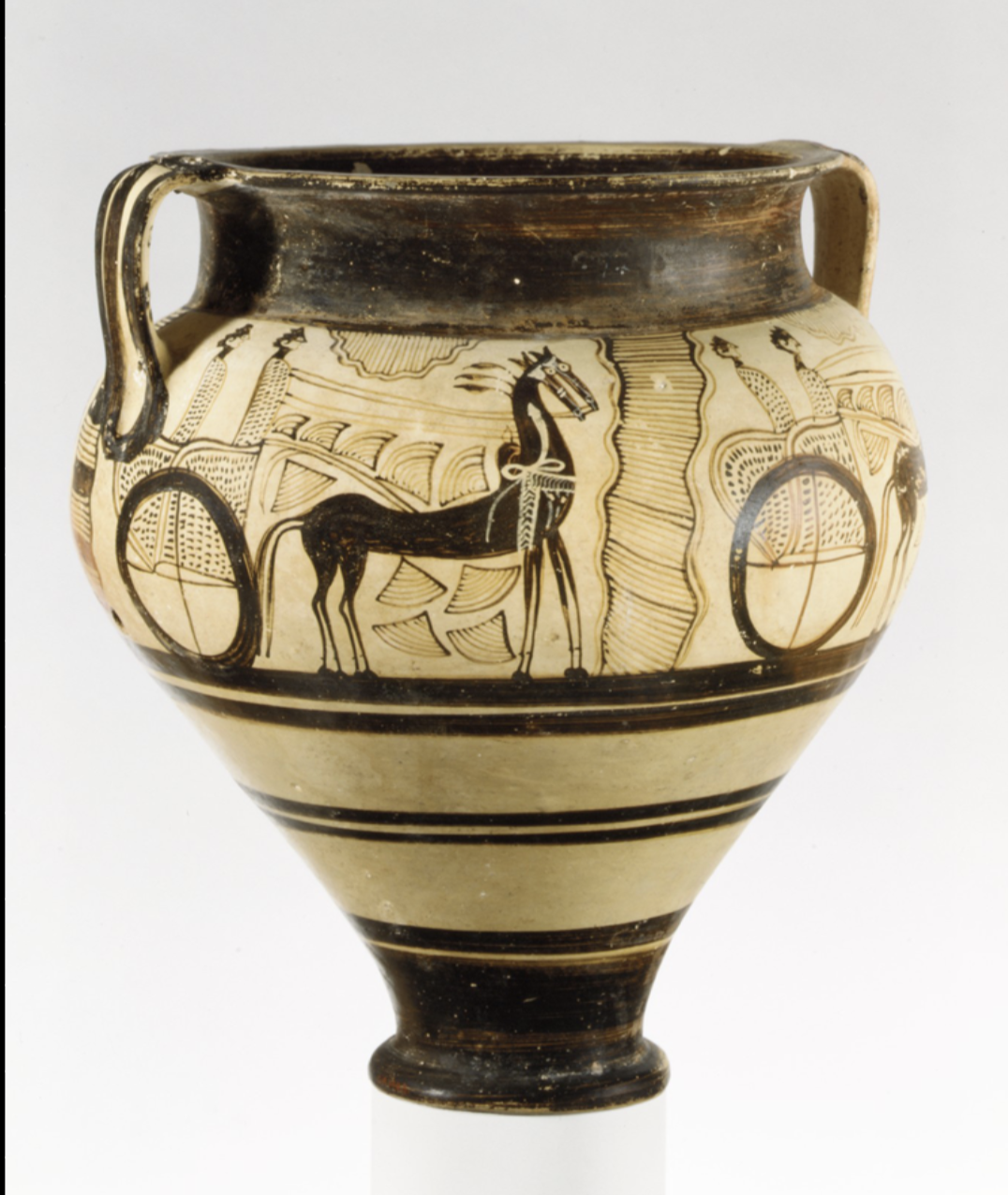
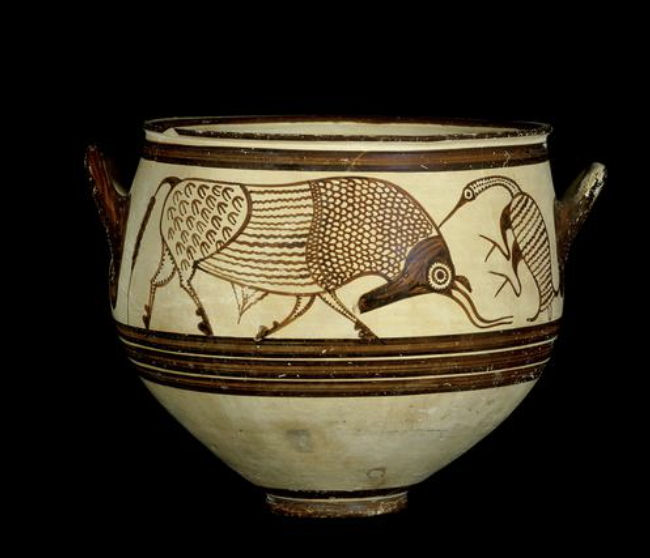
Bull Krater ( Mycenae )
evidence of skilled craftsmanship - iron rich slip is used to create different shades of red, brown, black.
evidence of different animals in Mycenaean culture ( i.e bull and bird/crane )
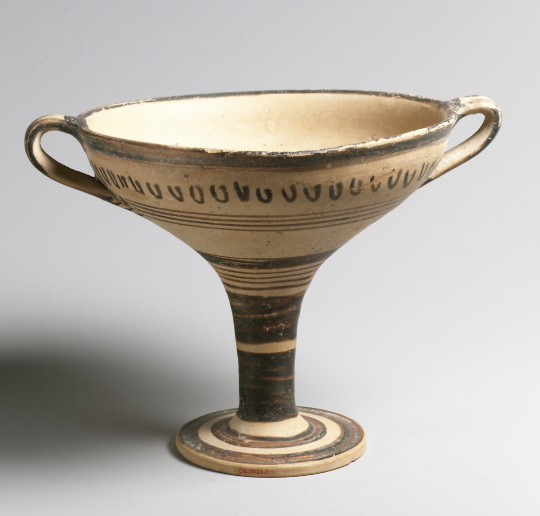
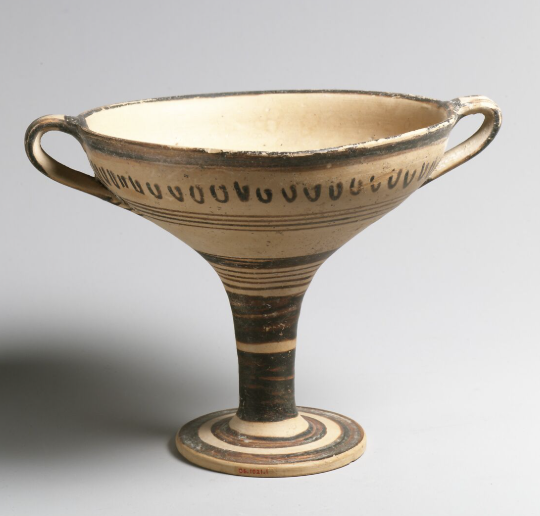
Kylix with tongues
evidence of variation in decorations - i.e there’s narrow, semi-circular tongue like figures depicted now.
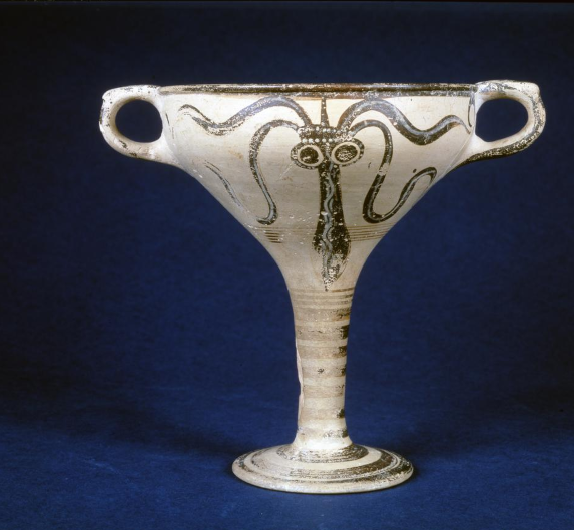
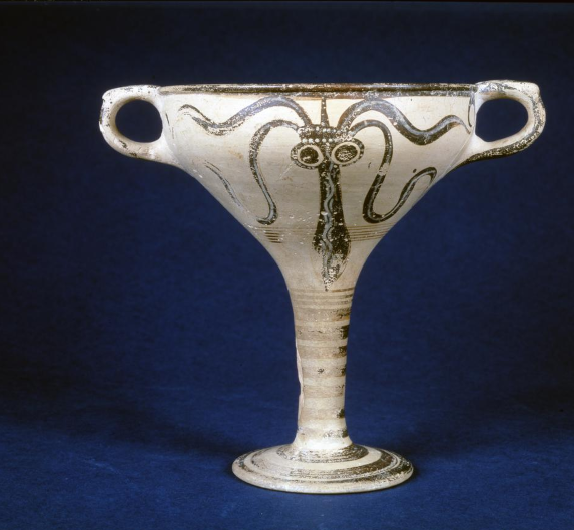
Octopus Kylix
evidence of marine life in Mycenaean times
evidence of craftsmanship good or bad - octopus imagery and rims.
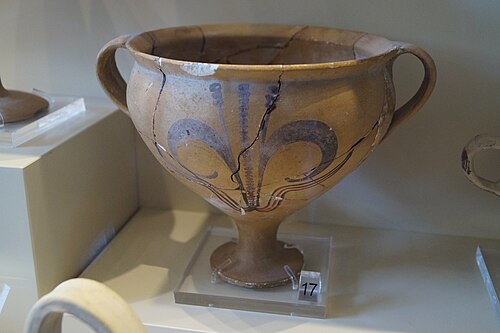
Ephyraean Vase
Date : 14th - 15th century BC
Location : Found in Crete
Material : Clay
Significance :
Mycenaean workmanship - evidence of trade in pottery from Mycenae.
evidence of skilled craftsmanship - Mycenaean pottery was sought after…
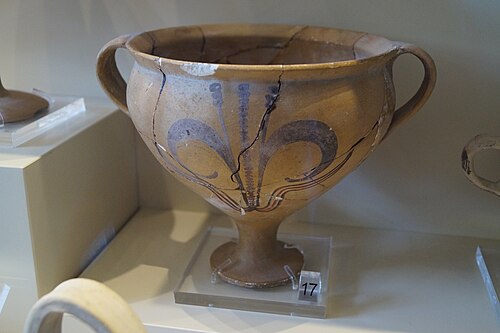
Aside from pottery, what other vessels were found ?
Vessels like jugs, cups made of gold from Mycenaean times were also found
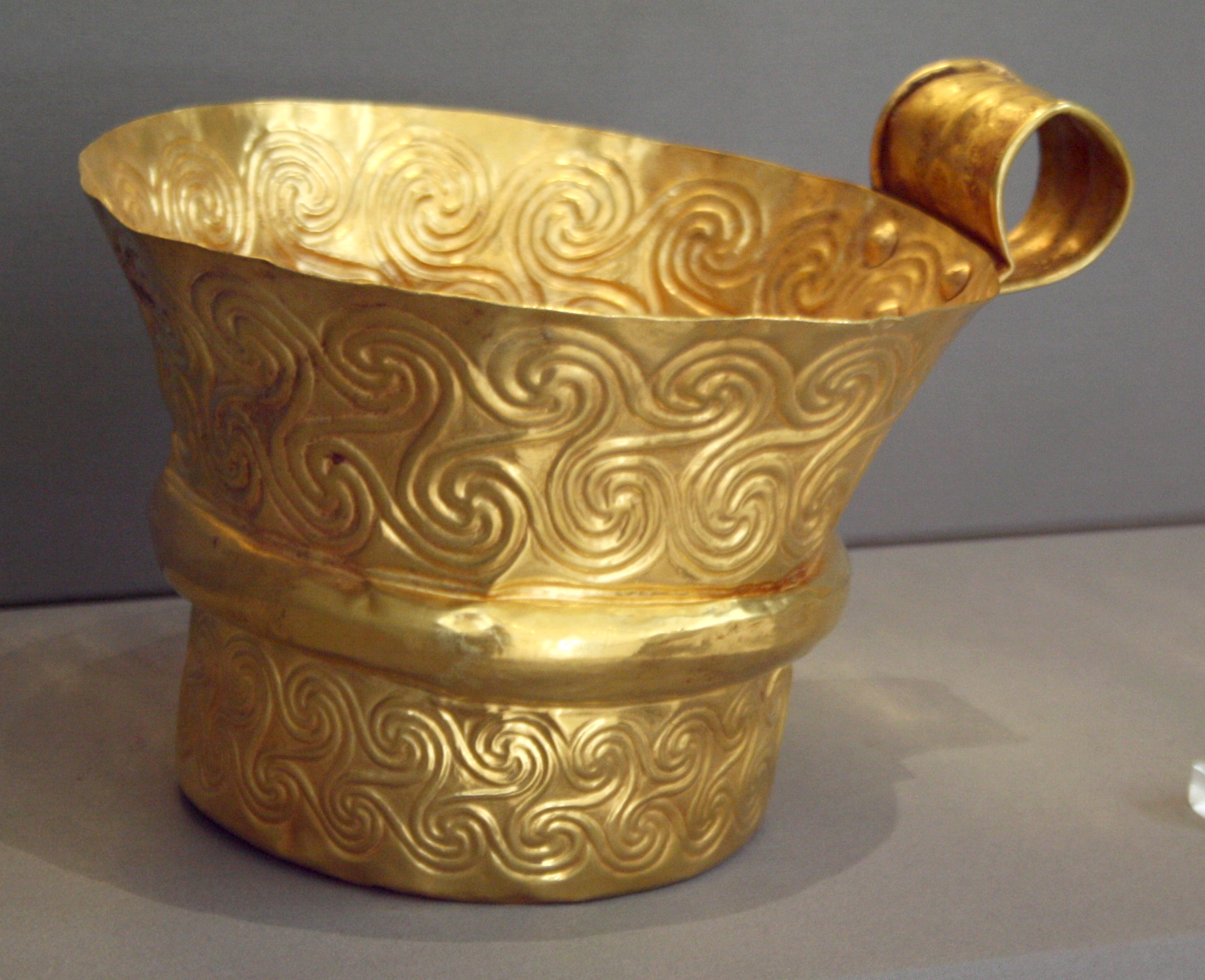
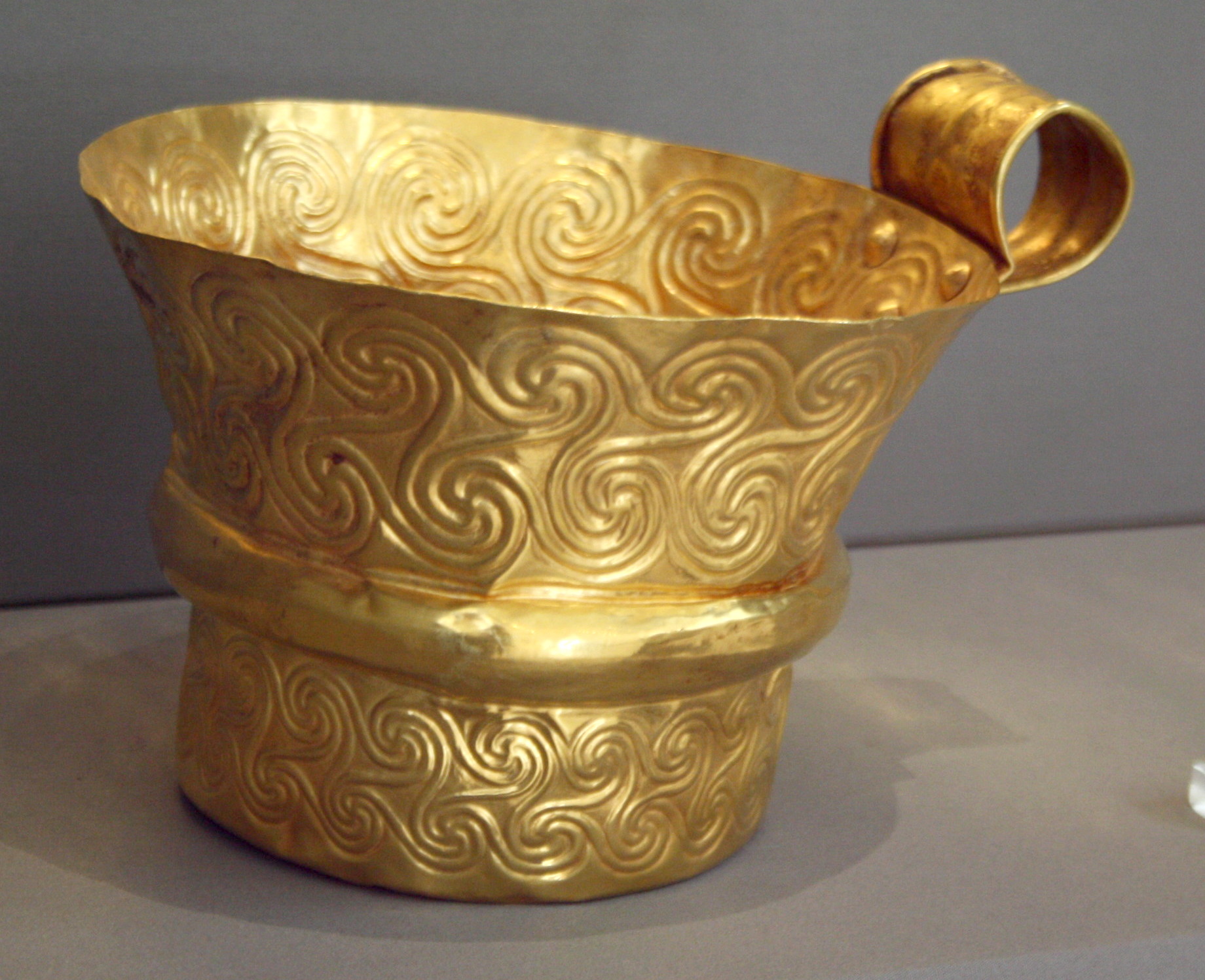
Gold swirl cup
Date : 16th century BC
Location : Grave Circle A, Mycenae
Material : Gold
Significance :
evidence of metalworking skills ( repousse swirls )
evidence of drinking culture - what types of vessels were used ?
wealth of Mycenae ( gold cup )
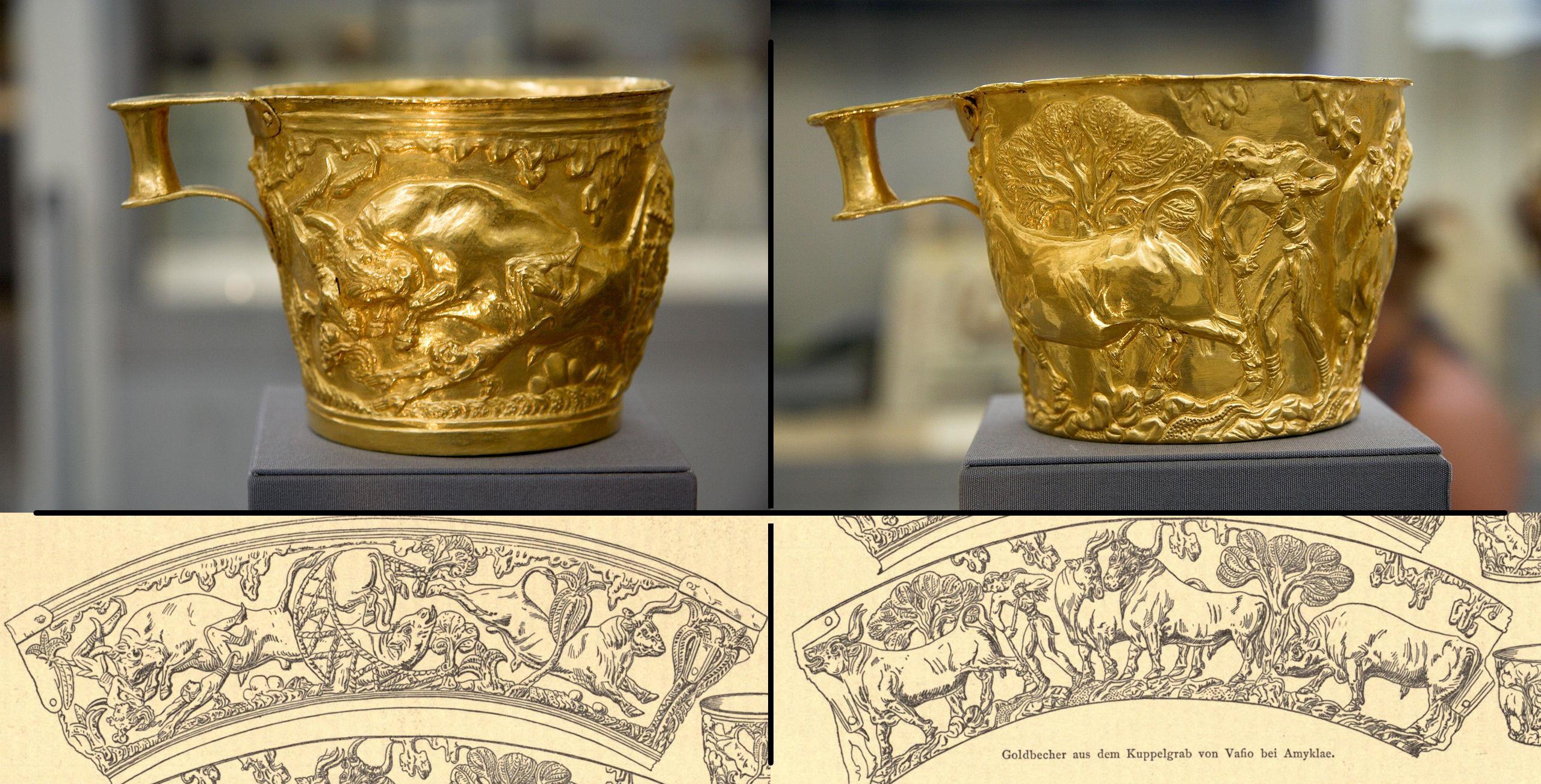
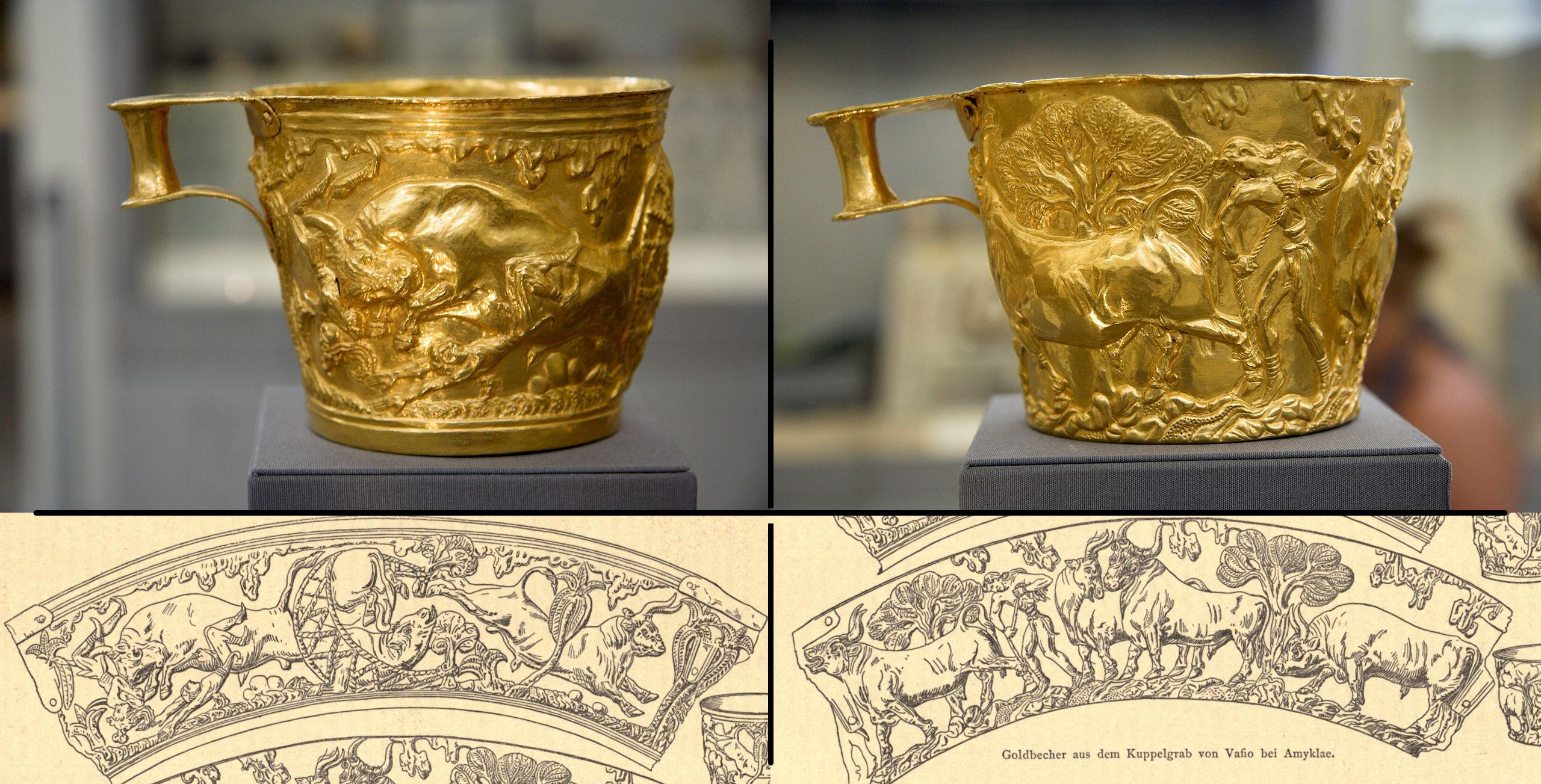
Vapheio cups x2 - bull hunt
Date : 15th century BC
Location : Vapheio, near Sparta
Material : Gold
Details :
one cup shows a man tying a rope around bull’s leg without struggling
second cup shows bull caught in net while another two attack hunters, one is fleeing '
Significance : evidence of hunting
one handled, no stems and aren’t curved
Probably not Mycenaean as the quality much higher and is too detailed be of Mycenaean craftsmanship.
Possible that these cups were made in Crete in Minoan times
provides us with detail on hunting but not for Mycenae or the Mycenaean Age
could be used in a 8 marker/15 marker to disapprove of something about Mycenae…
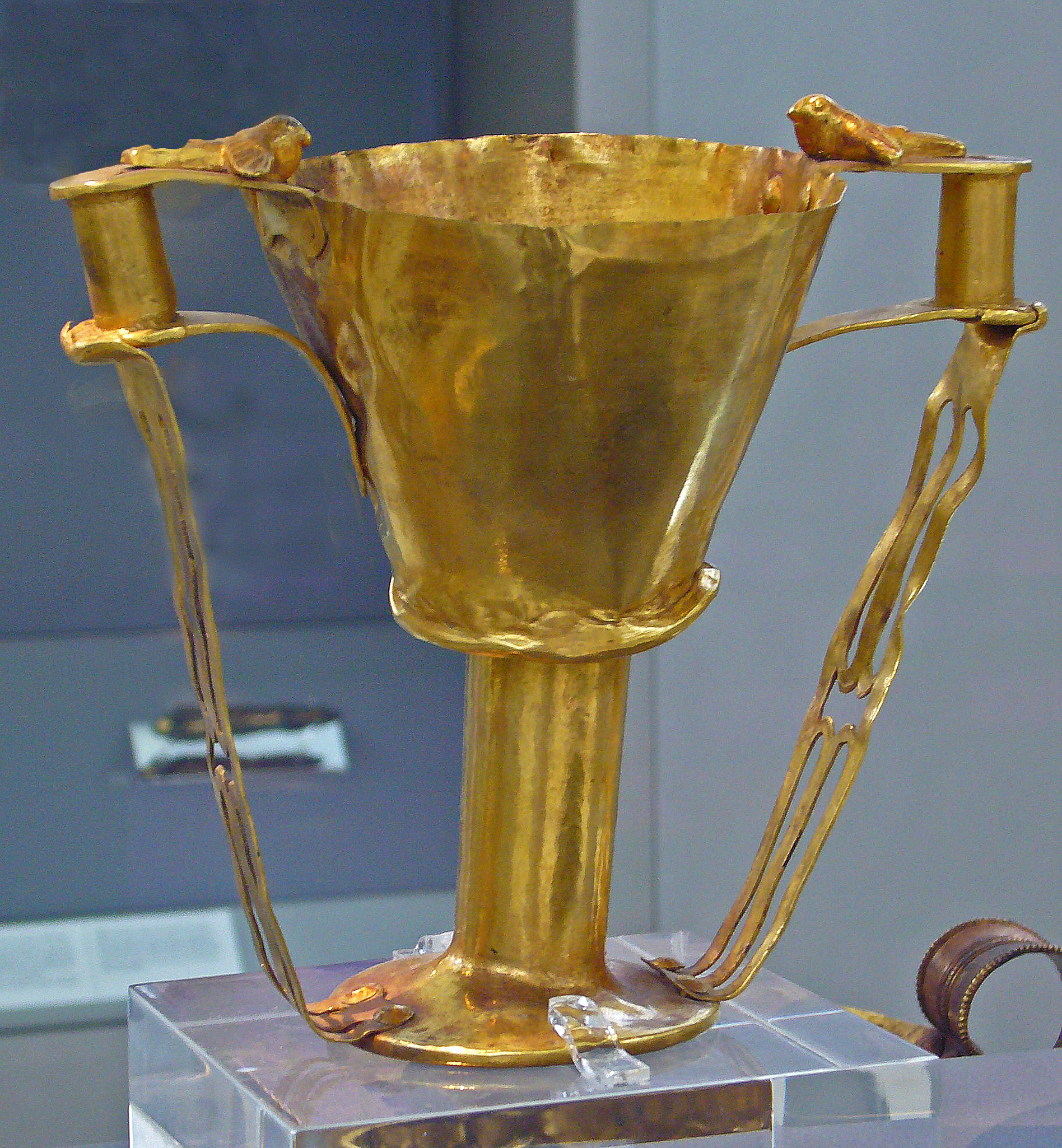
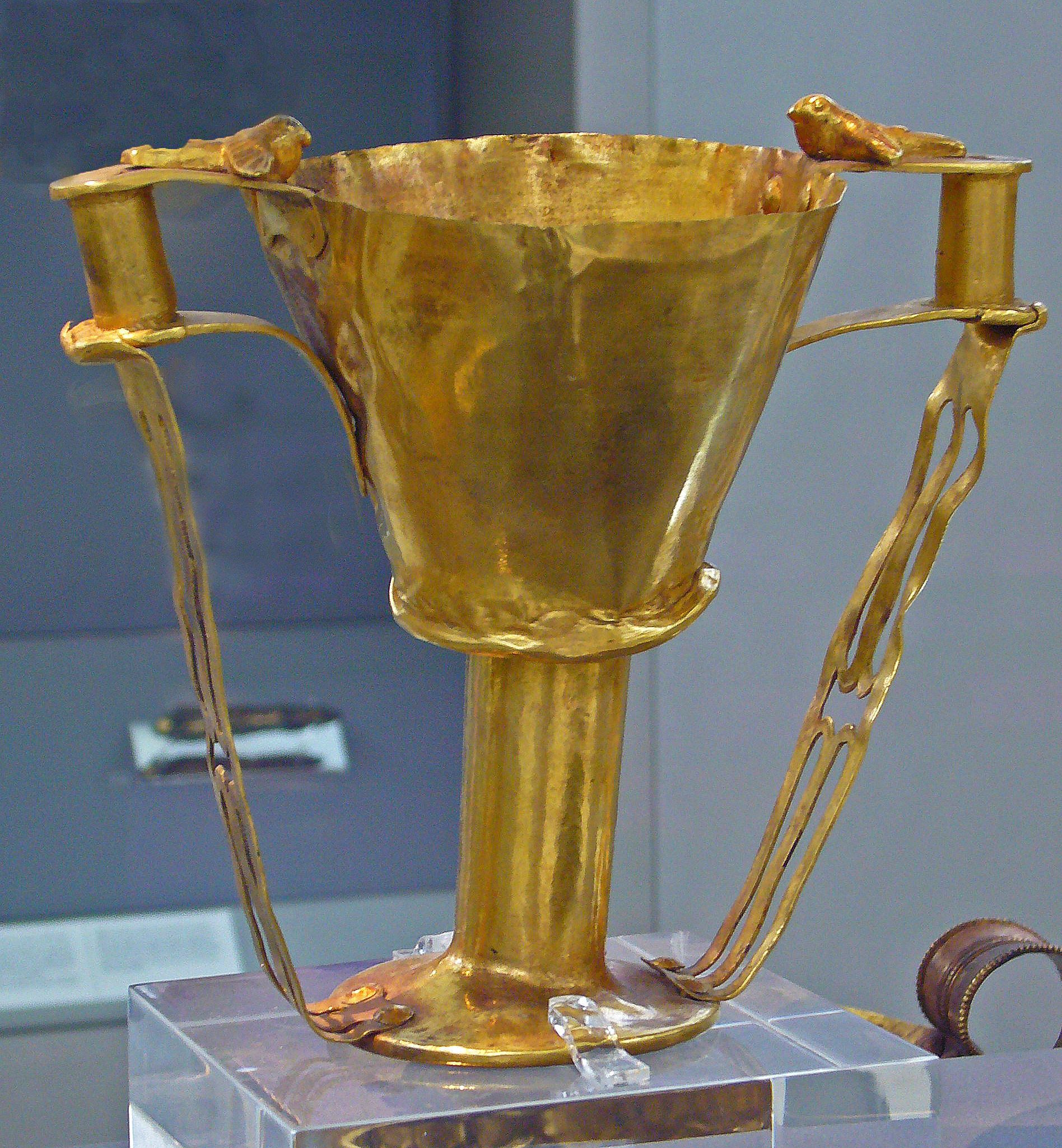
Cup of Nestor ( Mycenae )
Date : 16th Century BC
Location : Grave Circle A Mycenae
details :
two eagles on the handles
so heavy when full that it probably wouldn’t be able to be picked up easily.
Material : Gold
Significance :
Similar to cup of Nestor described in the Iliad ( that cup had two doves on the handles )
wealth of Mycenae - golden cup