Audiology
5.0(1)
 Studied by 16 people
 Call Kai
 Learn
Learn Practice Test
 Spaced Repetition
 Match
Match Flashcards
 Knowt Play
Card Sorting
1/145

There's no tags or description
Looks like no tags are added yet.
Last updated 7:08 PM on 5/4/23
Name | Mastery | Learn | Test | Matching | Spaced | Call with Kai |
|---|
No analytics yet
Send a link to your students to track their progress
146 Terms
1
New cards
frequency
= pitch
in Hz
in Hz
2
New cards
DB
= lousness
in decibles
in decibles
3
New cards
Loudness measure
dB
dB- loudness in decibels
HL- hearing level
The higher the dB HL value, the louder the sound is perceived to be.
dB- loudness in decibels
HL- hearing level
The higher the dB HL value, the louder the sound is perceived to be.
4
New cards
SPL
Sound pressure level
5
New cards
Loudness scale of dB HL
0 to 130
6
New cards
Threshold =
Quietest level of hearing
7
New cards
1k frequency level
Can detect all vowels at this level but cannot differentiate them
* cannot develop intelligible speech from this level
* cannot develop intelligible speech from this level
8
New cards
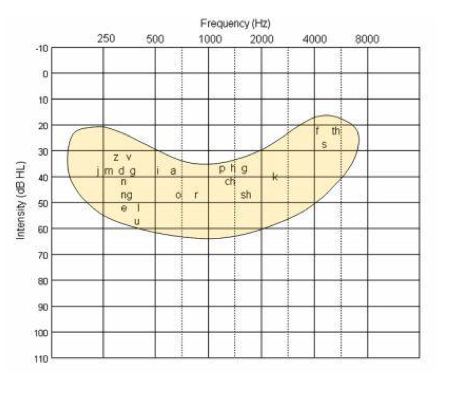
String bean line=
Demonstrates the area of highest probability for receiving the most information
9
New cards
Air conductive testing symbols
O X
\
\
10
New cards
O air conductive symbol
Means the right ear
Demonstrated by red colour
Demonstrated by red colour
11
New cards
X conductive testing symbol
Testing in left ear
Demonstrated by blue colour
Demonstrated by blue colour
12
New cards
Air conduction testing areas
Test middle and outer ear
13
New cards
Bone conductive testing areas
Tests cochlear only
14
New cards
Types of hearing loss
Conductive
Mixed
Neuro
Mixed
Neuro
15
New cards
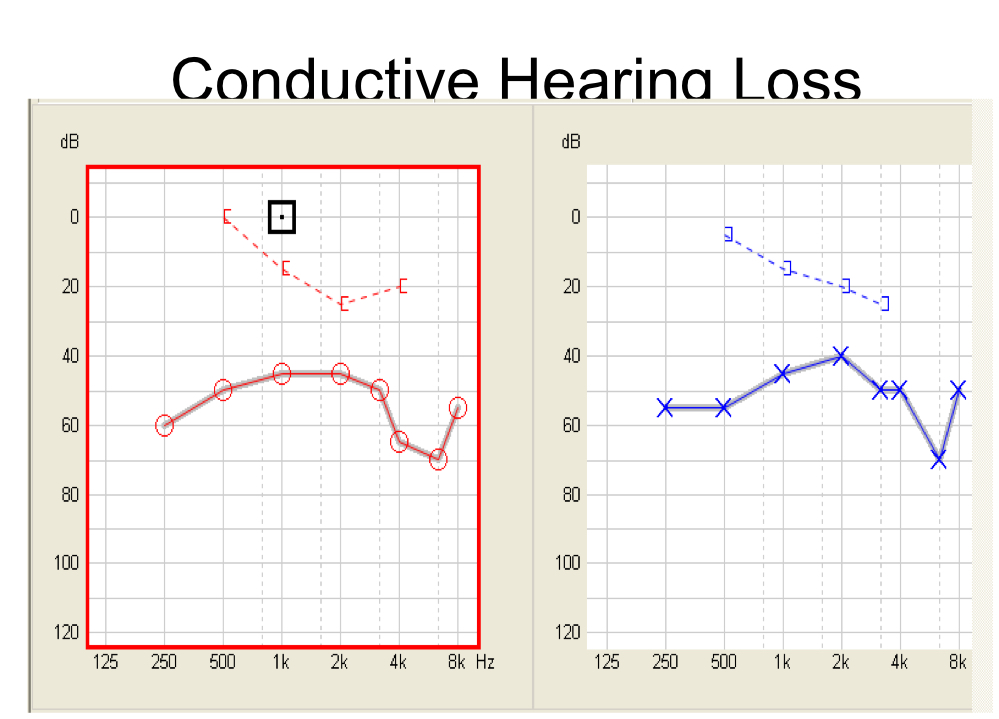
conductive hearing loss
Middle or outer ear problems- air conduction testing
\
Conductive hearing loss is a type of hearing loss that occurs when sound waves are blocked from reaching the inner ear. This can be caused by a variety of factors, such as earwax buildup, fluid in the middle ear, or damage to the eardrum or middle ear bones.
\
Conductive hearing loss is a type of hearing loss that occurs when sound waves are blocked from reaching the inner ear. This can be caused by a variety of factors, such as earwax buildup, fluid in the middle ear, or damage to the eardrum or middle ear bones.
16
New cards
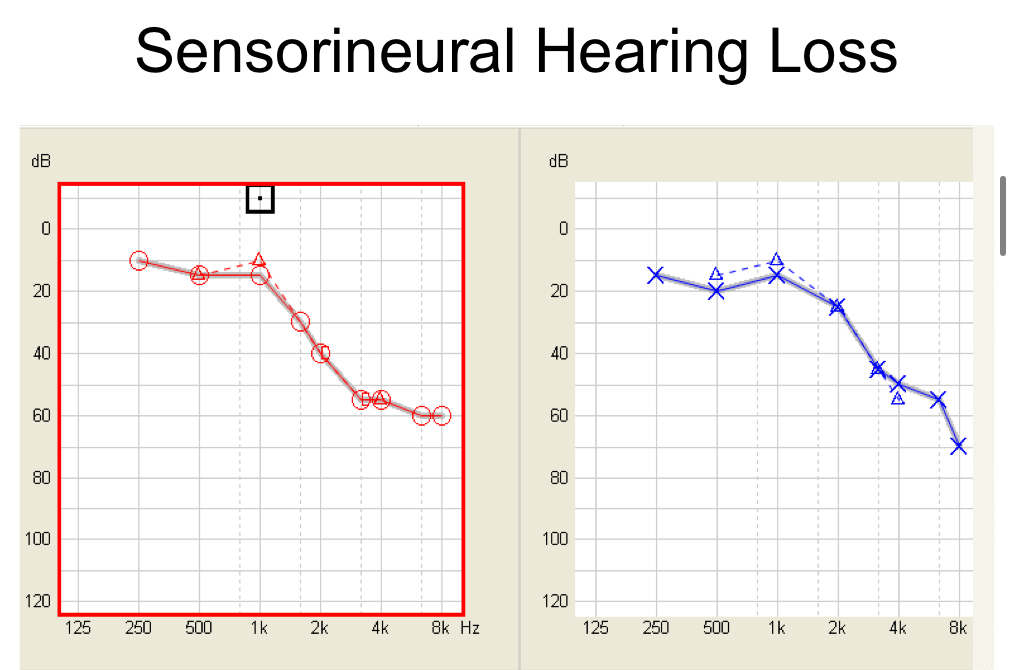
Sensory-neural hearing loss
Neuro hearing loss refers to hearing loss caused by damage to inner ear or VIIIth nerve - air conductive testing
air conductive testing in line with bone conductive testing results
\
damage to the auditory nerve or the brain's ability to process sound. It can result from a variety of factors, including genetics, infections, head trauma, and exposure to loud noise. Treatment options may include hearing aids, cochlear implants, or auditory training.
air conductive testing in line with bone conductive testing results
\
damage to the auditory nerve or the brain's ability to process sound. It can result from a variety of factors, including genetics, infections, head trauma, and exposure to loud noise. Treatment options may include hearing aids, cochlear implants, or auditory training.
17
New cards
Profound hearing loss definition
No spoken language
Can hear unidentifiable sounds
Can hear unidentifiable sounds
18
New cards
Bar-0 hz
Within normal limits
19
New cards
0-40 hz
Mild hearing loss
20
New cards
40-70 hz
Moderate hearing loss
21
New cards
70-90 hz
Severe hearing loss
22
New cards
90-130 hz
Profound hearing loss
23
New cards
Illnesses affecting hearing
Ototoxicity drugs given during cancer
Rubella
CVM disease - herpes virus type -cytomegalovirus
Lack of oxygen - hypoxia
Premature baby - antibiotics can damage hair cells in ear
Rubella
CVM disease - herpes virus type -cytomegalovirus
Lack of oxygen - hypoxia
Premature baby - antibiotics can damage hair cells in ear
24
New cards
Cortical reorganisation
Without auditory information sound- the brain reassembles to rely predominantly on visuals
25
New cards
Hierarchy of listening skills- Erber,1988
Detection
Conditioned/spontaneous awareness of sound
Discrimination of same or different sounds
Identification
Comprehension
Conditioned/spontaneous awareness of sound
Discrimination of same or different sounds
Identification
Comprehension
26
New cards
Conductive areas
Middle and outer ear
Fixable
Fixable
27
New cards
Sensory-neural areas
Cochlear
Unfixable
Unfixable
28
New cards
Linguistic sound detection
Aaaa
Ooo
Eee
Shhh
Ssss
Mmmm
\
Say these sounds whilst covering mouth to see if child can detect them- demonstrated by hair NVC
Ooo
Eee
Shhh
Ssss
Mmmm
\
Say these sounds whilst covering mouth to see if child can detect them- demonstrated by hair NVC
29
New cards
Linguistic sound imitation
* identification early stages
* Occurs after detection
Cover mouth/sit behind child
See if they can imitate- Aaaa, Ooo, Eee, Shhh, Ssss, Mmmm
* Occurs after detection
Cover mouth/sit behind child
See if they can imitate- Aaaa, Ooo, Eee, Shhh, Ssss, Mmmm
30
New cards
3 main areas of the ear
Outer
Middle
Inner
Middle
Inner
31
New cards
Outer ear function
Included The pinna, tympanic membrane and external auditory ear canal
Sound funnelling areas
Protection of the ear drum
Sound path to the ear drum
Collection of sound Localisation
Is S-Shaped
Sound funnelling areas
Protection of the ear drum
Sound path to the ear drum
Collection of sound Localisation
Is S-Shaped
32
New cards
Middle ear function
Tympanic membrane
Ossicles chain
Eustachian tube
Mastoid spaces
* is the mechanical areas
* Increases the energy transferred from the tympanic membrane to the cochlea.
* Matches the impedance of the energy in the air to the impedance needed in fluids in the middle ear.
* Barrier between outer and middle ear.
Ossicles chain
Eustachian tube
Mastoid spaces
* is the mechanical areas
* Increases the energy transferred from the tympanic membrane to the cochlea.
* Matches the impedance of the energy in the air to the impedance needed in fluids in the middle ear.
* Barrier between outer and middle ear.
33
New cards
Inner ear function
Contains the Cochlear and vestibular organ( urticaria and saccule)
* sensory area
* sensory area
34
New cards
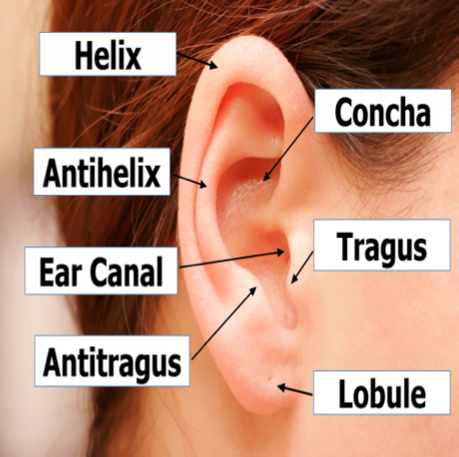
Pinna function
Part of the outer ear
• Elastic fibro-cartilage shell
• Lobule of fatty tissue
• Both covered by epidermis with fine hairs
• Extrinsic muscles to skull (controlled by VIIth nerve
• Intrinsic muscles to different parts of pinna (controlled by VIIth nerve)
\
Physiology:
Collects sound an increases intensity for high frequencies (up to 6dBSPL). Directional effect
\
Disorders :
Dermatitis/psoriasis
Malformed or absent Pinna
Collapsed ear canal
Injury e.g. ‘cauliflower ear’
Rodent ulcers/moles
• Elastic fibro-cartilage shell
• Lobule of fatty tissue
• Both covered by epidermis with fine hairs
• Extrinsic muscles to skull (controlled by VIIth nerve
• Intrinsic muscles to different parts of pinna (controlled by VIIth nerve)
\
Physiology:
Collects sound an increases intensity for high frequencies (up to 6dBSPL). Directional effect
\
Disorders :
Dermatitis/psoriasis
Malformed or absent Pinna
Collapsed ear canal
Injury e.g. ‘cauliflower ear’
Rodent ulcers/moles
35
New cards
External auditory meats canal
Part of the outer ear
Approximately 25mm long in adults
• Tends to be oval in shape
• Cerumen glands in lateral third of canal
• Lateral third of canal is cartilaginous
• Inner two thirds is bony
• Slight constriction between the cartilaginous and bony section
• Bends and narrows along the length
\
Physiology :
Funnels sound onto tympanic membrane Amplifies certain frequencies. Natural resonance of around 2.5kHz
\
Disorders:
Wax
Otitis external
Artesian
Swimmers ear- osteomalacia
Polyps
Trauma –use of foreign object – cotton buds/hairpins/ objects inserted into ca
Approximately 25mm long in adults
• Tends to be oval in shape
• Cerumen glands in lateral third of canal
• Lateral third of canal is cartilaginous
• Inner two thirds is bony
• Slight constriction between the cartilaginous and bony section
• Bends and narrows along the length
\
Physiology :
Funnels sound onto tympanic membrane Amplifies certain frequencies. Natural resonance of around 2.5kHz
\
Disorders:
Wax
Otitis external
Artesian
Swimmers ear- osteomalacia
Polyps
Trauma –use of foreign object – cotton buds/hairpins/ objects inserted into ca
36
New cards
Tympanic membrane
Part of the middle ear
Pars Tensa –main area of membrane – 4 layers, 2 fibrous and 2 continuous membranes – taut.
• Pars Flaccida – upper portion – 2 layers, non- fibrous, thin. • Opaque appearance with cone of light (light reflex) originating from Umbo
• Handle of malleus visible
Pars Tensa –main area of membrane – 4 layers, 2 fibrous and 2 continuous membranes – taut.
• Pars Flaccida – upper portion – 2 layers, non- fibrous, thin. • Opaque appearance with cone of light (light reflex) originating from Umbo
• Handle of malleus visible
37
New cards
Middle ear disorders
• Otitis Media with Effusion
• Eustachian Tube Dysfunction
• Otosclerosis
• Mastoiditis (risk of meningitis)
• Glomus tumour
• Ossicular discontinuation
• Perforation
• Cholesteatoma
• Eustachian Tube Dysfunction
• Otosclerosis
• Mastoiditis (risk of meningitis)
• Glomus tumour
• Ossicular discontinuation
• Perforation
• Cholesteatoma
38
New cards
Ossicles
Part of the middle ear
• Ossicular chain acts as a piston, held taut by muscles. Amplifies sound
The muscles and tendons attached to the ossicles also help to protect the ear from very loud noises but also improves the sound by attenuating it
• Malleus – attached to tympanic membrane.
• Tensor tympani muscle attached to handle (manubrium) of malleus.
• Incus attached to malleus and stapes.
• Stapes attached to Incus at it’s head and the footplate of the stapes embedded in the oval window.
• Stapedius muscle attached to neck of stapes.
• Both the trigeminal and VIIIth nerve pass through the middle ear.
• Ossicular chain acts as a piston, held taut by muscles. Amplifies sound
The muscles and tendons attached to the ossicles also help to protect the ear from very loud noises but also improves the sound by attenuating it
• Malleus – attached to tympanic membrane.
• Tensor tympani muscle attached to handle (manubrium) of malleus.
• Incus attached to malleus and stapes.
• Stapes attached to Incus at it’s head and the footplate of the stapes embedded in the oval window.
• Stapedius muscle attached to neck of stapes.
• Both the trigeminal and VIIIth nerve pass through the middle ear.
39
New cards
Mastoid cavity
Part of the middle ear
Is air filled
Honeycomb like air cells in upper part of cavity
Set in temporal bone
Connects to the middle ear
Increases volume of middle ear space
Is air filled
Honeycomb like air cells in upper part of cavity
Set in temporal bone
Connects to the middle ear
Increases volume of middle ear space
40
New cards
Eustachian tube
Part of middle ear
Connect middle ear to nasopharynx
• Equalises middle ear pressure
• Mucous membrane
• Lateral third is bony (and held open)
• Medial two thirds is cartilage – normally closed and opens by reflex (yawning, swallowing, sneezing)
Connect middle ear to nasopharynx
• Equalises middle ear pressure
• Mucous membrane
• Lateral third is bony (and held open)
• Medial two thirds is cartilage – normally closed and opens by reflex (yawning, swallowing, sneezing)
41
New cards
Cochlear and vestibular organ
Part of inner ear
• Bony and membranous labyrinth
• Shell like structure
• 2.5 turns – flattens towards apex
• 3 chambers – scala tympani, scala media, scala vestibuli all filled with fluids.
• Basilar membrane in middle chamber with organ of corti. Basilar membrane increases in width from base to apex.
• Organ of corti includes inner and outer hair cells
• Bony and membranous labyrinth
• Shell like structure
• 2.5 turns – flattens towards apex
• 3 chambers – scala tympani, scala media, scala vestibuli all filled with fluids.
• Basilar membrane in middle chamber with organ of corti. Basilar membrane increases in width from base to apex.
• Organ of corti includes inner and outer hair cells
42
New cards
Cochlear
Part of inner ear
Cochlea fluids:
• perilymph, similar to CSF (extra cellular), high in Na, low in K ions.
• Endolymph, similar to intra- cellular fluids (although extra cellular). Low in Na and high in K ions.
• Rows of stereocilia – tallest outermost; rigid actin filaments. • OHC (Outer Hair Cells) – in contact with tectorial membrane and supported at base.
• Inner hair cells – 1 row, with supporting cells
\
Physiology:
Stapes acts like a plunger into the Scalia vestibuli
Round window allows release of pressure
Difference of pressure between these results in a deflection of the Basilar Membrane
Basilar Membrane vibrates
Vibration travels down the Basilar Membrane (due to shape/ anchor point at apex)
Maximum deflection results from travelling wave dynamics.
Cochlea fluids:
• perilymph, similar to CSF (extra cellular), high in Na, low in K ions.
• Endolymph, similar to intra- cellular fluids (although extra cellular). Low in Na and high in K ions.
• Rows of stereocilia – tallest outermost; rigid actin filaments. • OHC (Outer Hair Cells) – in contact with tectorial membrane and supported at base.
• Inner hair cells – 1 row, with supporting cells
\
Physiology:
Stapes acts like a plunger into the Scalia vestibuli
Round window allows release of pressure
Difference of pressure between these results in a deflection of the Basilar Membrane
Basilar Membrane vibrates
Vibration travels down the Basilar Membrane (due to shape/ anchor point at apex)
Maximum deflection results from travelling wave dynamics.
43
New cards
Basilar membrane
Part of the inner ear
•Place frequency –
High frequencies causes a greater response near the base
Low frequencies near the apex
All due to stiffness of Basilar Membrane
Tuning curve of the cochlear can be determined from place frequency
•Place frequency –
High frequencies causes a greater response near the base
Low frequencies near the apex
All due to stiffness of Basilar Membrane
Tuning curve of the cochlear can be determined from place frequency
44
New cards
Turning curve
In the inner ear in the cochlea
Determines frequency where travelling wave has peak intensity.
Tuning curves can be used to detect any ‘dead regions’ in the cochlea.
Determines frequency where travelling wave has peak intensity.
Tuning curves can be used to detect any ‘dead regions’ in the cochlea.
45
New cards
How the ear detects sound
The vibration of eardrum causes the ossicles to vibrate, moving sound along them And transferred into the cochlea when the stapes moves the vibration to the oval window
This causes the fluid in the cochlea to move, creating a wave that passes along the length of the cochlea
The movement of the fluid in the hearing nerve (cochlea) makes the long membrane (basilar membrane) move. This has the hearing nerve cells embedded in it (these are called hair cells) they are lined up along this membrane.
When the hair cells are stimulated by this movement of fluid they release an electrical impulse along the hearing nerve (VIIIth Auditory nerve). These impulses are sent to various parts of the brain to be ‘translated’
High frequencies are detected from the first turn of the cochlea and low frequencies at the apex.
This causes the fluid in the cochlea to move, creating a wave that passes along the length of the cochlea
The movement of the fluid in the hearing nerve (cochlea) makes the long membrane (basilar membrane) move. This has the hearing nerve cells embedded in it (these are called hair cells) they are lined up along this membrane.
When the hair cells are stimulated by this movement of fluid they release an electrical impulse along the hearing nerve (VIIIth Auditory nerve). These impulses are sent to various parts of the brain to be ‘translated’
High frequencies are detected from the first turn of the cochlea and low frequencies at the apex.
46
New cards
Brains function in hearing
Hair cells stimulate VIIth nerve
Auditory pathway stimulated from cochlear nucleus to auditory cortex
Brain interprets sound and filtering mechanisms in neurological centres help to distinguish type of sound, localisation, intensity etc.
Auditory pathway stimulated from cochlear nucleus to auditory cortex
Brain interprets sound and filtering mechanisms in neurological centres help to distinguish type of sound, localisation, intensity etc.
47
New cards
Vestibular organ
Has semicircular canals
Includes the urticaria and saccule
\
Nerves in the saccule and utricle detect rotational movement and linear acceleration when the fluid moves over them.
Feedback to the neural system makes it possible to keep your eyes fixated on something whilst the head/body is moving
There is a connection between the semi circular canals and the muscles controlling eye movements
Includes the urticaria and saccule
\
Nerves in the saccule and utricle detect rotational movement and linear acceleration when the fluid moves over them.
Feedback to the neural system makes it possible to keep your eyes fixated on something whilst the head/body is moving
There is a connection between the semi circular canals and the muscles controlling eye movements
48
New cards
Conductive hearing disorders
Anything that stop sounds from the outer to middle ear
49
New cards
Sensory hearing loss
Anything stopping sound being detected in cochlea
50
New cards
Neural hearing disorders
Anything that stop sound getting to brain
51
New cards
Conductive problems in outer ear
wax, foreign bodies (e.g. beads, insects), collapsed ear canal atresia, microtia, infections, perforations of the tympanic membrane, bony growths or polyps.
52
New cards
Conductive problems in middle ear
Eustachian tube stops functioning due to infections and irritations such as nicotine or pollen, bony growth on stapes (usually adults -Otosclerosis)
53
New cards
Sensory problems
Hair cells be one damaged due to
Hair cells be one damaged due to
• Noise – high sound pressures over a long period of time, or a sudden very strong sound like a blast.
• Measles, mumps, meningitis and some viral infections that affect balance as well.
• Lack of oxygen • Wear and tear – some people have damaged nerve cells as they become elderly thought to be caused by vascular problems or can be genetic.
• Chronic health problems - heart disease, diabetes, stress. • Certain types of medication and drugs (ototoxic)
• Measles, mumps, meningitis and some viral infections that affect balance as well.
• Lack of oxygen • Wear and tear – some people have damaged nerve cells as they become elderly thought to be caused by vascular problems or can be genetic.
• Chronic health problems - heart disease, diabetes, stress. • Certain types of medication and drugs (ototoxic)
54
New cards
Inner ear disorders
Age related hearing loss
• VIIth nerve tumours
• Trauma – noise exposure/ head trauma
• Labyrinthitis
• BPPV
• Menieres disease
• VIIth nerve tumours
• Trauma – noise exposure/ head trauma
• Labyrinthitis
• BPPV
• Menieres disease
55
New cards
Congenital hearing loss
• Main causes of congenital hearing loss occur in the first trimester when the ear is still developing. Development can be disrupted during this stage.
• Main causes tend to be viral infections caught by the mother – CMV, syphilis, chickenpox, measles.
• genetic factors
• Main causes tend to be viral infections caught by the mother – CMV, syphilis, chickenpox, measles.
• genetic factors
56
New cards
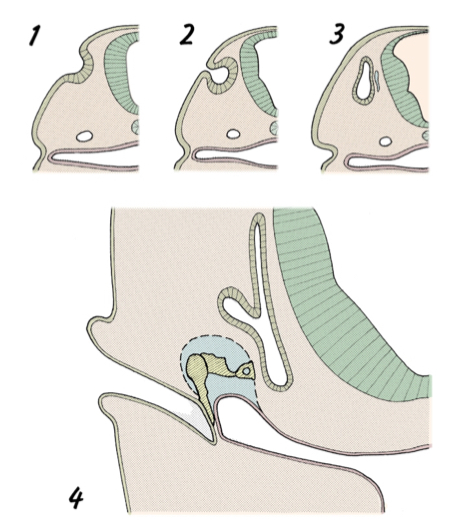
Development of the ear
7th week of gestation= vestibular system, external auditory canal, middle ear cavity, Eustachian tube and Ossicles are almost fully developed.
20 weeks= the pinna is adult shaped, EAM fully formed, TM formed from 9 weeks, Ossicles fully formed, inner ear is mature and of adult size.
20 weeks= the pinna is adult shaped, EAM fully formed, TM formed from 9 weeks, Ossicles fully formed, inner ear is mature and of adult size.
57
New cards
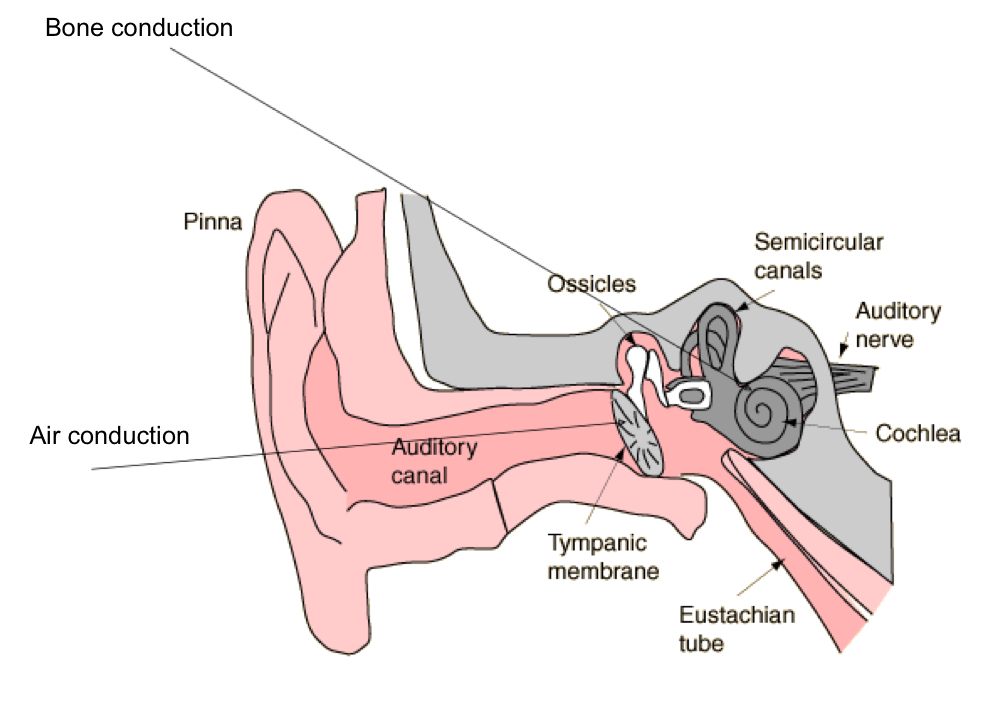
Air conduction
A mechanism of hearing
Sound passes through the outer middle and inner ear
Sound passes through the outer middle and inner ear
58
New cards
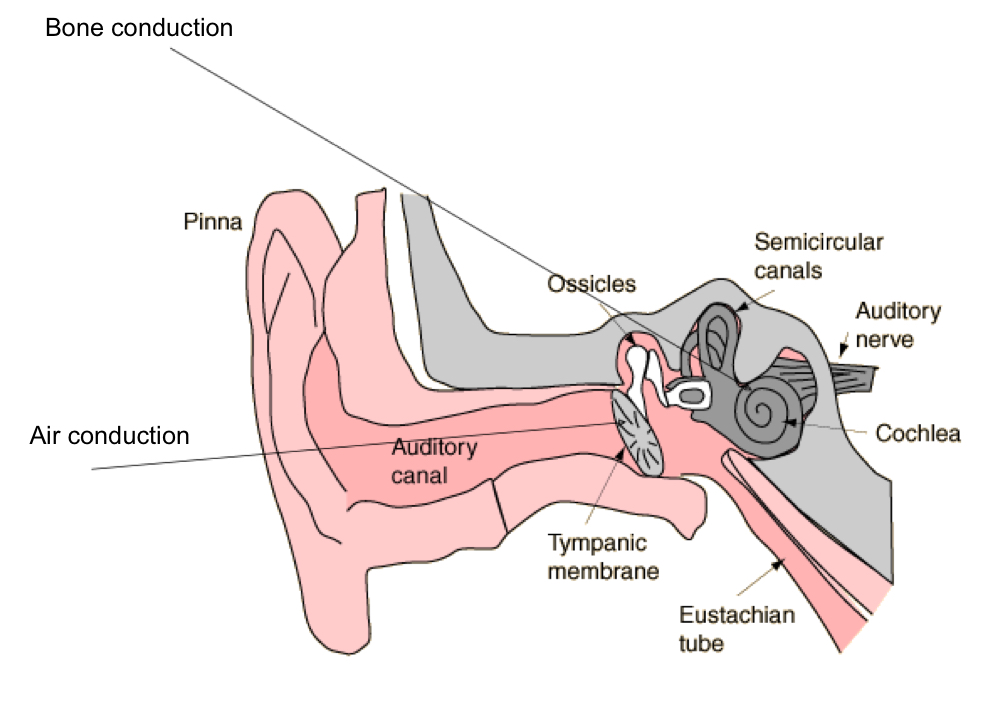
Bone conduction
A mechanism of hearing
Bone vibration stimulates the cochlear directly
Bone vibration stimulates the cochlear directly
59
New cards
Pure tone audiometry
Measure of hearing sensitivity at different frequencies using different transducers
It is the single most sensitive measure that can identify pathology
Relatively cheap and quick to administer
It is the single most sensitive measure that can identify pathology
Relatively cheap and quick to administer
60
New cards
Hearing threshold
Quietest sound heard by an individual
61
New cards
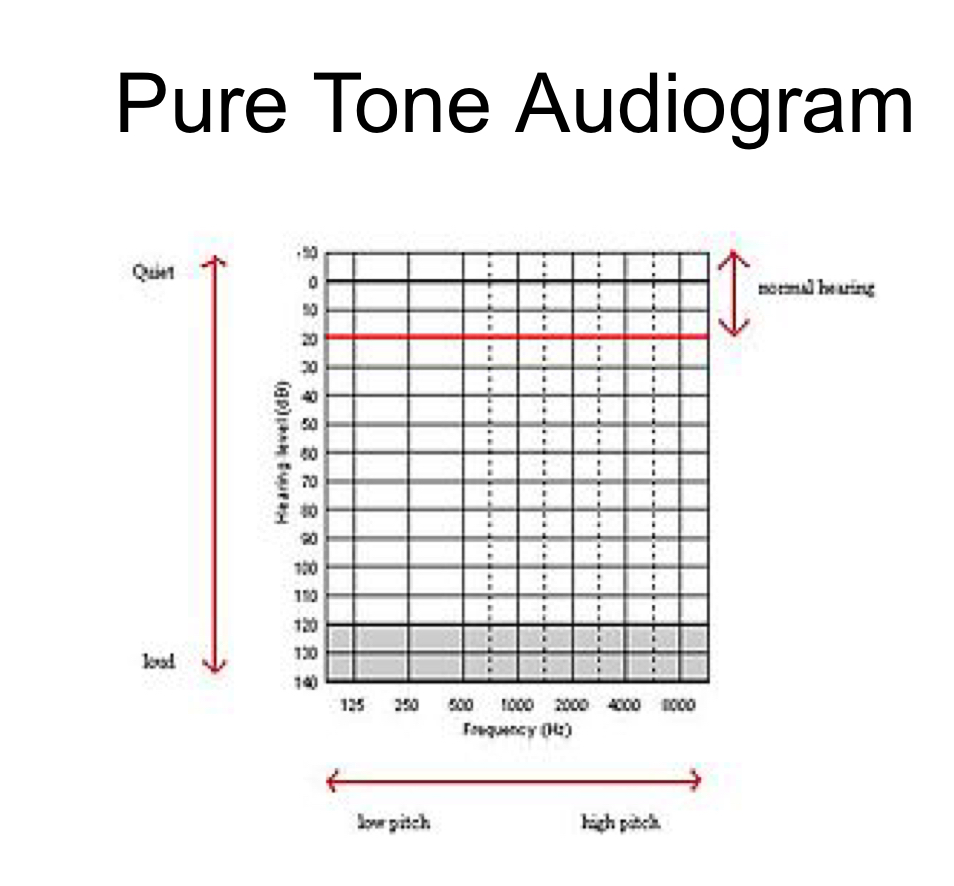
Pure tone audiogram
Used to measure somebody’s ability to hear sounds we usually want to compare them to “normal” thresholds
Uses adiometer consists of 4 controls:
Frequency adjustment
Attenuation adjustment
Presentation switch
Response button
Uses adiometer consists of 4 controls:
Frequency adjustment
Attenuation adjustment
Presentation switch
Response button
62
New cards
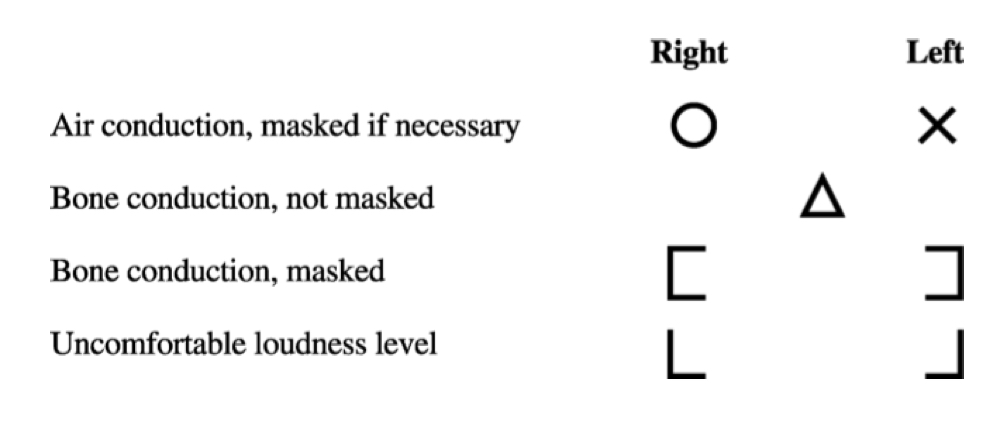
Bone conduction masked
Right ear symbol
Right ear symbol
\[
63
New cards
Bone conduction masked
Left ear symbol
Left ear symbol
\]
![\]](https://knowt-user-attachments.s3.amazonaws.com/ba8e9bbe2f4d48d0ad661fe431981b09.jpeg)
64
New cards
Uncomfortable loudness level
Right to left ear
Right to left ear
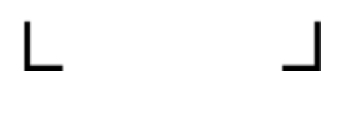
65
New cards
Performing a pure tone audiogram to obtain hearing thresholds
there will be an intensity above which the person will respond and an intensity below which the person will not respond = Threshold lies between these two intensities
Method:
Start at an appropriate level
Reduce by 10dB after a positive response
Increase by 5dB after a presentation is not detected
Threshold: Lowest level at which responses are obtained 2 out of 3 times on ascending trials = (Hughson and Westlake method).
With children, other methods can be used – play audiometry using pegs on board, balls on stick, men in boat or other suitable objects.
Method:
Start at an appropriate level
Reduce by 10dB after a positive response
Increase by 5dB after a presentation is not detected
Threshold: Lowest level at which responses are obtained 2 out of 3 times on ascending trials = (Hughson and Westlake method).
With children, other methods can be used – play audiometry using pegs on board, balls on stick, men in boat or other suitable objects.
66
New cards
Air conduction testing HZ order
Start at 1 kHz
2,4,8 kHz
500,250 Hz
Retest at 1 kHz before moving to next ear
2,4,8 kHz
500,250 Hz
Retest at 1 kHz before moving to next ear
67
New cards
Bone conduction Hertz test order
Start at 1 kHz .
2,4 kHz .
500 Hz
2,4 kHz .
500 Hz
68
New cards
Masking
Used when there is a difference in either AC threshold in each ear of 40dBHL or more
(due to transcranial transmission – cross over),
or BC thresholds of 10dBHL or more
(transcranial transmission for BC is 0 – 5 dBHL).
(due to transcranial transmission – cross over),
or BC thresholds of 10dBHL or more
(transcranial transmission for BC is 0 – 5 dBHL).
69
New cards
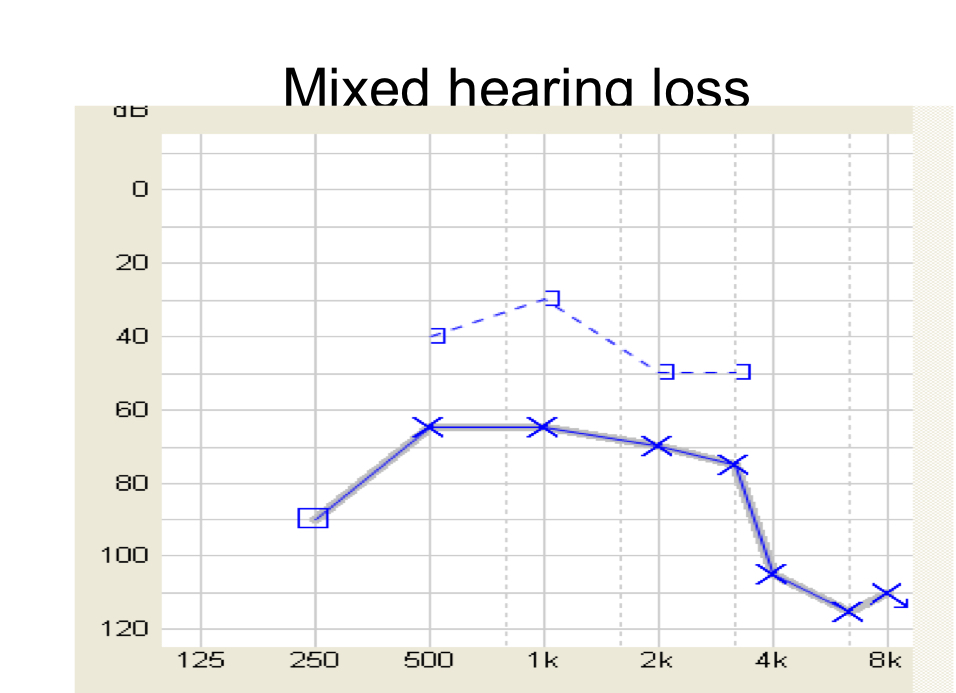
Mixed hearing loss
Both conductive and sensory neural elements lost
bone and air conductive losses at differing degrees
\
bone and air conductive losses at differing degrees
\
70
New cards
Auditory Brainstem Response ABR and Evoked response Audiometry ERA
used in neonatal screening and also for difficult and medico legal cases. Involves looking at the brain response to stimuli (clicks or pure tones). Electrodes placed on the head pick up the responses along the nerve pathway.
71
New cards
Methods for determining hearing levels
• Evoked response Audiometry (ERA or ABR)
• Cortical Evoked Response Audiometry (CERA) - for 13yo+
• Otoacoustic Emmissions (OAE) • Subjective – Speech Audiometry- acoustic signals generated from the normal inner ear, either in the absence/response of acoustic/electrical stimulation
• Cortical Evoked Response Audiometry (CERA) - for 13yo+
• Otoacoustic Emmissions (OAE) • Subjective – Speech Audiometry- acoustic signals generated from the normal inner ear, either in the absence/response of acoustic/electrical stimulation
72
New cards
Supra-threshold test
A speech test
Speech discrimination threshold will be higher than detection threshold
Requires speech comprehension rather than just detection of sound
Speech discrimination threshold will be higher than detection threshold
Requires speech comprehension rather than just detection of sound
73
New cards
Paediatric speech tests function
– Developmental level of speech understanding
– Child’s ability to produce speech sounds
– Confirmation of how well a child can hear with hearing aids or show which speech sounds the child is missing out on
– If a child presents with a non-organic hearing loss NOHL
– Child’s ability to produce speech sounds
– Confirmation of how well a child can hear with hearing aids or show which speech sounds the child is missing out on
– If a child presents with a non-organic hearing loss NOHL
74
New cards
Adult speech test function
To confirm the audiogram results (for NOHL) To determine any auditory processing disorders. As an additional test to determine if a hearing loss is conductive, sensory or neural
75
New cards
Calibrated speech test function
an estimate of broadband hearing thresholds
• diagnosing site of dysfunction (conductive, sensory or neural)
• A measure of disability (PTA does not always do this effectively)
• A means of measuring benefit (when fitting hearing aids)
• diagnosing site of dysfunction (conductive, sensory or neural)
• A measure of disability (PTA does not always do this effectively)
• A means of measuring benefit (when fitting hearing aids)
76
New cards
Consonants frequency range- Initial
Nasal
Fricative
Stop
Approximants
Voiced
Fricative
Stop
Approximants
Voiced
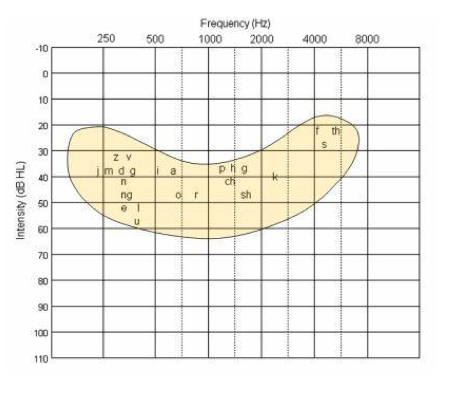
77
New cards
Consonants frequency range- final
Nasal
Voiced
Plural marker
Past principle
Voiced
Plural marker
Past principle
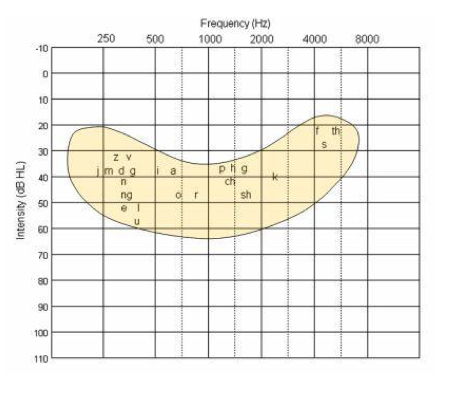
78
New cards
Consonant frequency range- place contrasts
prosodic shape and stress pattern,
syllables/syllable structure,
manner categories in consonant clusters
syllables/syllable structure,
manner categories in consonant clusters
79
New cards
Congenital hearing loss syndromes
Ushers syndrome
Neurofibromatosis type 2
Muscopolysaccharidosis- hurler syndrome
Down’s syndrome - trisomy 21
Pierre-robin sequence
Treacher Collins’s
Waardenburg syndrome
Branchio-too-renal syndrome
CHARGE- gene mutation disorder
Foetal alcohol syndrome
Neurofibromatosis type 2
Muscopolysaccharidosis- hurler syndrome
Down’s syndrome - trisomy 21
Pierre-robin sequence
Treacher Collins’s
Waardenburg syndrome
Branchio-too-renal syndrome
CHARGE- gene mutation disorder
Foetal alcohol syndrome
80
New cards
Factors affecting hearing in pregnancy
Chickenpox
CMV - herpes
Group B streptococcus
Infections from animals- cats, sheeps, pig
Hepatitis B+C
HIV
Parvovirus B 19
Rubella
STI
Toxoplasmosis
Zika virus
CMV - herpes
Group B streptococcus
Infections from animals- cats, sheeps, pig
Hepatitis B+C
HIV
Parvovirus B 19
Rubella
STI
Toxoplasmosis
Zika virus
81
New cards
Factors affecting ability to perceive, interpret and produce sound
\
•The degree of hearing ability
•How well the brain interprets, filters and attenuates the sounds detected and the use of visual and proprioceptors to further aid interpretation.
•The sound environment – intensity of the sound, reverberation, signal to noise ratio, harmonic distortion, distance to the sound source, head shadow effect/ interaural difference.
•How we interact with the sound environment – tolerance of sound, the ability to produce sound ourselves.
•The degree of hearing ability
•How well the brain interprets, filters and attenuates the sounds detected and the use of visual and proprioceptors to further aid interpretation.
•The sound environment – intensity of the sound, reverberation, signal to noise ratio, harmonic distortion, distance to the sound source, head shadow effect/ interaural difference.
•How we interact with the sound environment – tolerance of sound, the ability to produce sound ourselves.
82
New cards
how is sound presented
variations in air pressure then vibrates in vocal cords
83
New cards
trough
area of low concentration of wave
84
New cards
loudness is affected by
amplitude , distance from source, density of item, presence of resonating body
85
New cards
larger the surface area \=
the larger the sound
86
New cards
denser the item\=
the more sound
87
New cards
frequency means the
number of waves
88
New cards
small area \=
small sound and amplitude
89
New cards
more wave cycles\=
higher the pitch
90
New cards
pitch remains the same regardless of
size
91
New cards
what is the only thing that changes depending on size
loudness
92
New cards
sinosoidal
any wave having the shape of a sine wave \= S
93
New cards
cps\=
cycles per second (same as HTZ)
94
New cards
Frequency equation \=
cycle % time taken
95
New cards
frequencies tell us \=
if wave is a vowel or consonant
96
New cards
vowel and consonant wave form together to make-
complex wave (played at same time)
97
New cards
complex wave\=
any wave that is not a sine wave
98
New cards
sound at audible level production\=
vibrations move back and forwards- causing waves- waves enter eardrum vibrating it and moving cochlear
99
New cards
crest
area of highest concentration of wave
100
New cards
frequency\=
number of cycles in a second
 Note
Note  Flashcards (24)