Anatomy and Physiology Lab Practical 2
 Call Kai
 Learn
Learn Practice Test
 Spaced Repetition
 Match
Match Flashcards
 Knowt Play
1/84

There's no tags or description
Looks like no tags are added yet.
Name | Mastery | Learn | Test | Matching | Spaced | Call with Kai |
|---|
No analytics yet
Send a link to your students to track their progress
85 Terms
What is tidal volume (TV)?
The amount of air inhaled or exhaled during normal breathing
What is breathing period?
The time it takes to complete one full breath (inhale +exhale)
What is tidal flow rate?
the amount of air moved per minute
What is inspiratory reserve volume(IRV)?
The extra air that can be inhaled after a normal inhale
What is expiratory reserve volume(ERV)?
The extra air that can be exhaled after normal exhale
What is residual volume (RV)?
The air remaining in the lungs after maximum exhalation
Why is residual volume important?
It prevents lung collapse and allows continuous gas exchange
What is vital capacity (VC)?
The total amount of air that can be moved voluntarily in and out of the lungs
What is the formula for vital capacity?
VC=TV+TRV+ERV
What is total lung capacity (TLC)?
The total amount of air the lungs can hold
What is the formula for total lung capacity?
TLC=VC+RV
How do you calculate breathing rate from breathing period?
Breathing rate = 60/breathing period (in seconds)
What are the units used for tidal flow rat?
Liters per minute (L/min)
How do athletes’ lung volume compare to non-athletes?
Typically athletes have high TV,IRV,ERV, and VC
Why do athletes have higher lung capacities?
Stronger respiratory muscles and improved efficiency
How does regular exercise affect tidal volume?
Increases tidal volume
How does exercise affect IRV and ERV?
Both increase with training
How does exercise affect vital capacity?
It increases vital capacity
How does a sedentary lifestyle affect lung function>
Decreases lung efficiency and volumes
How does smoking affect lung capacity?
It decreases lung capacity and airflow
Can residual volume be measured with a basic spirometer?
No
What is the full formula for total lung capacity including all volumes?
TLC= TV +IRV+ ERV+ RV
What does a normal resting spirometry graph look like?
Regular waves with smaller amplitude and slower rate
What happens to breathing during exercise?
It increases
What happens to tidal volume during exercise?
It increases (deeper breaths)
What happens to graph amplitude during exercise?
It increases
What happens to the spacing between breaths during exercise?
It decreases (breaths more frequently)
What factors influence lung volumes?
Fitness level, age, gender, lifestyle and disease
Why doe the body increase breathing during exercise?
To meet increased oxygen demand and remove CO2
What happens to lung function with long-term training?
Efficiency and capacity improve
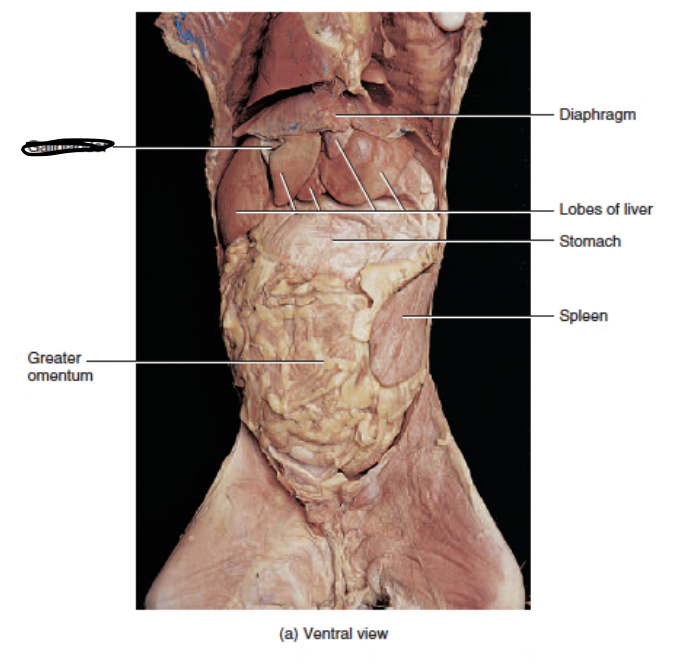
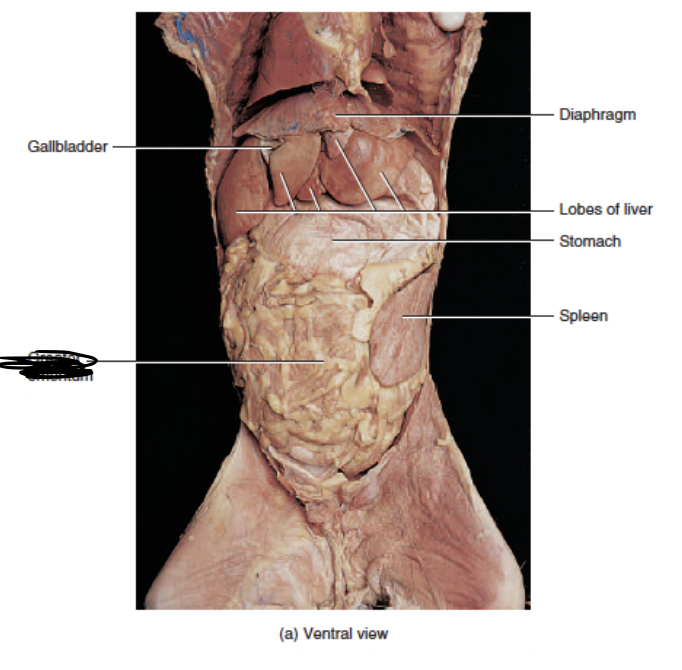
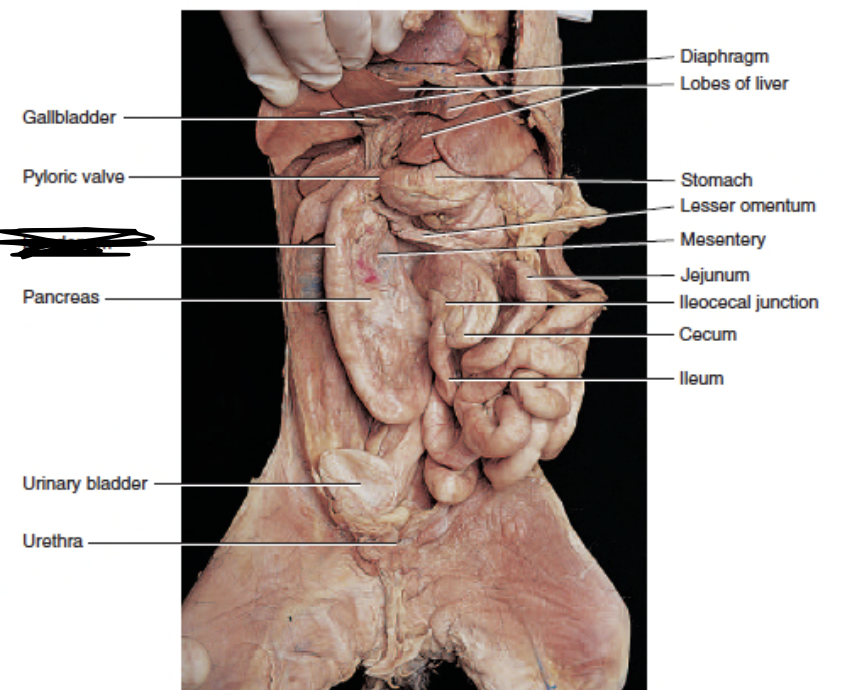
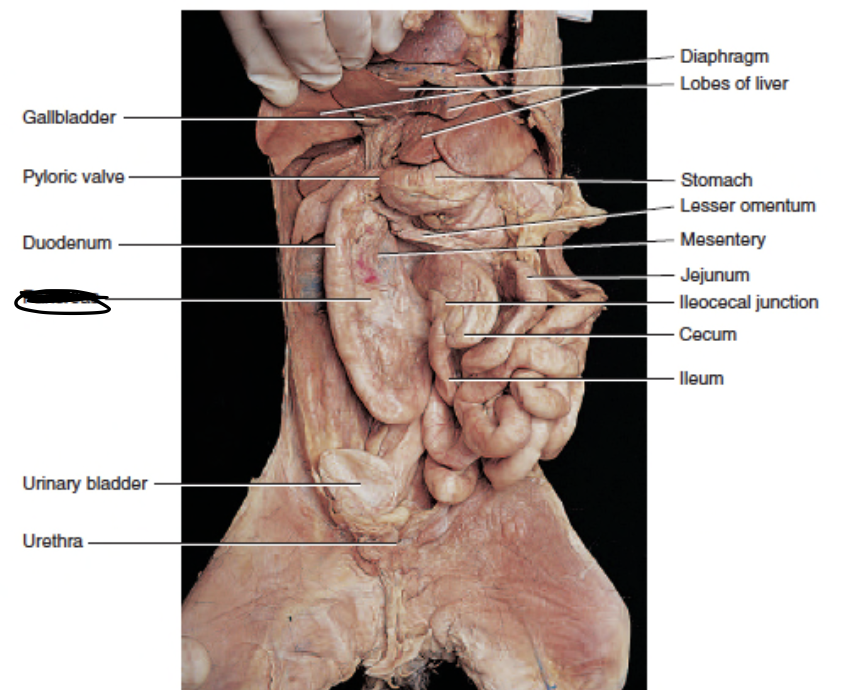
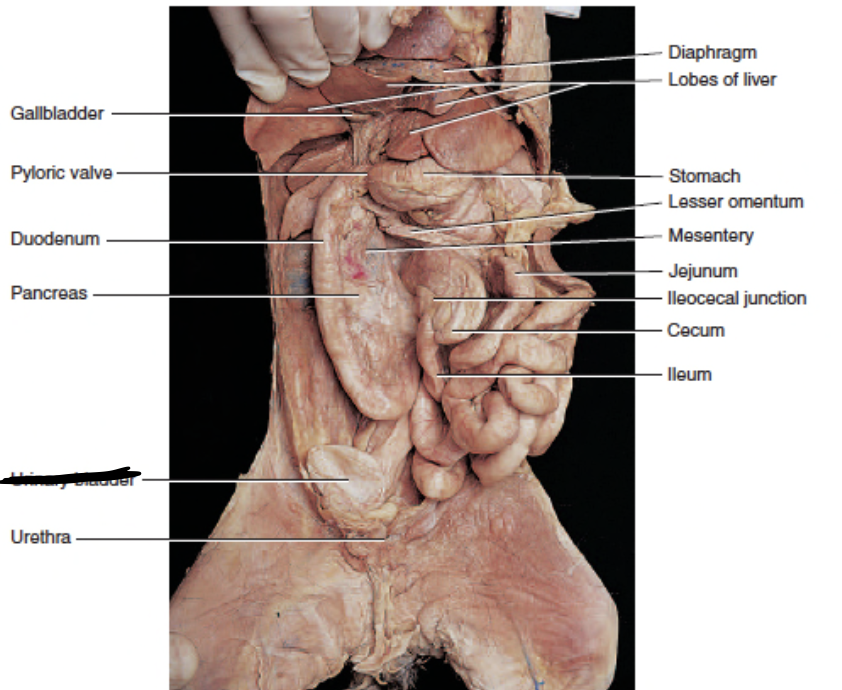
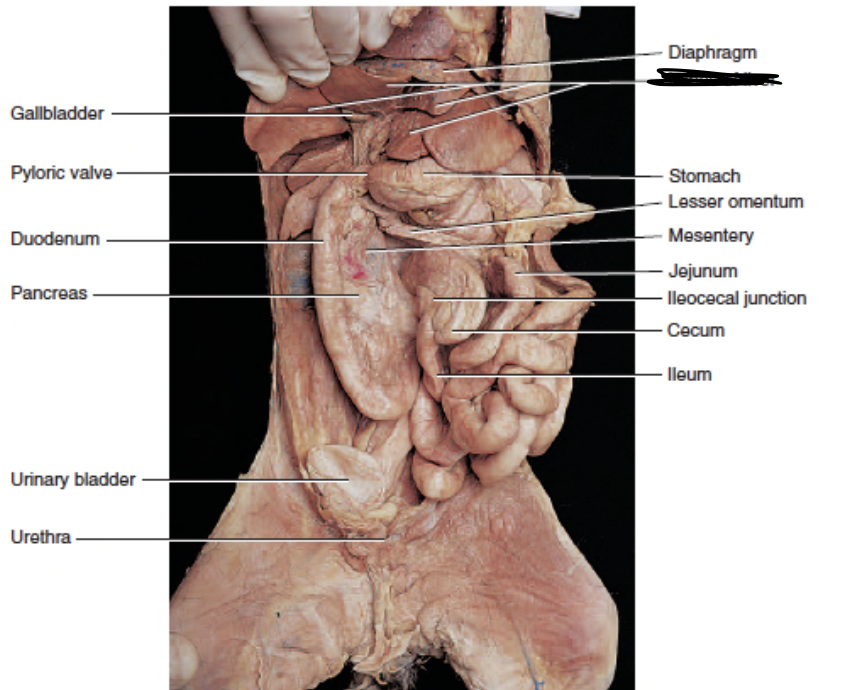
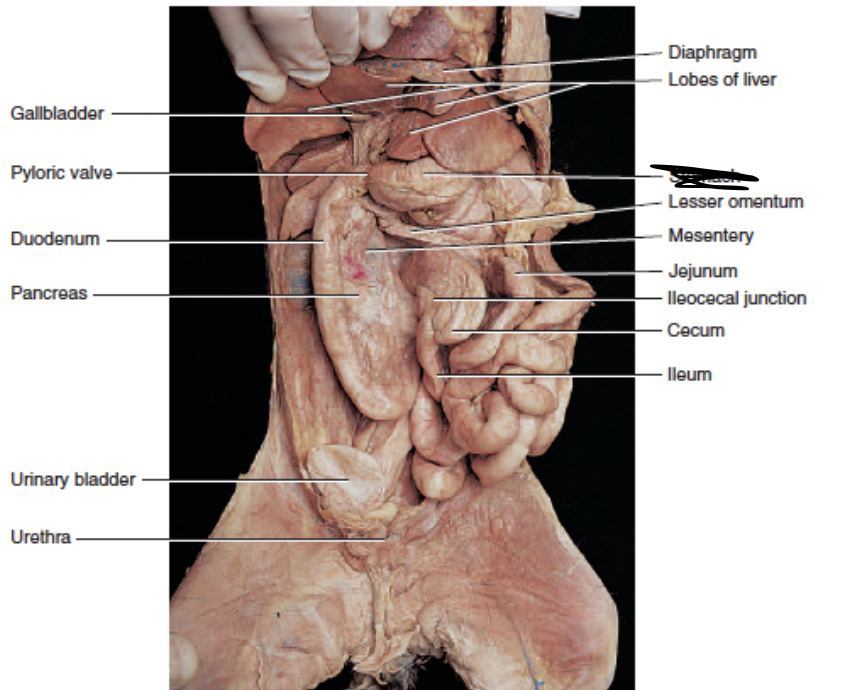
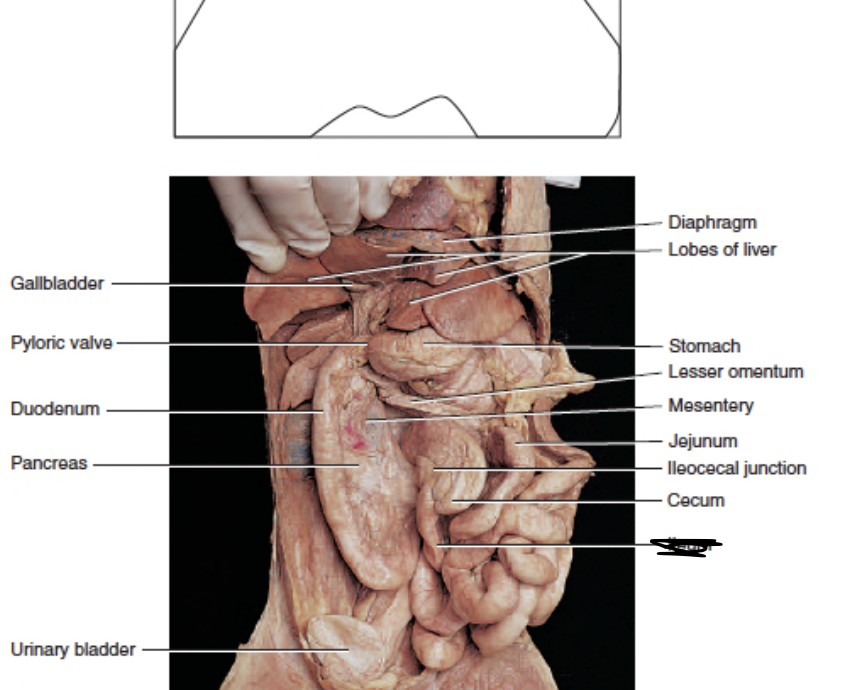
Gallbladder abdomen closed
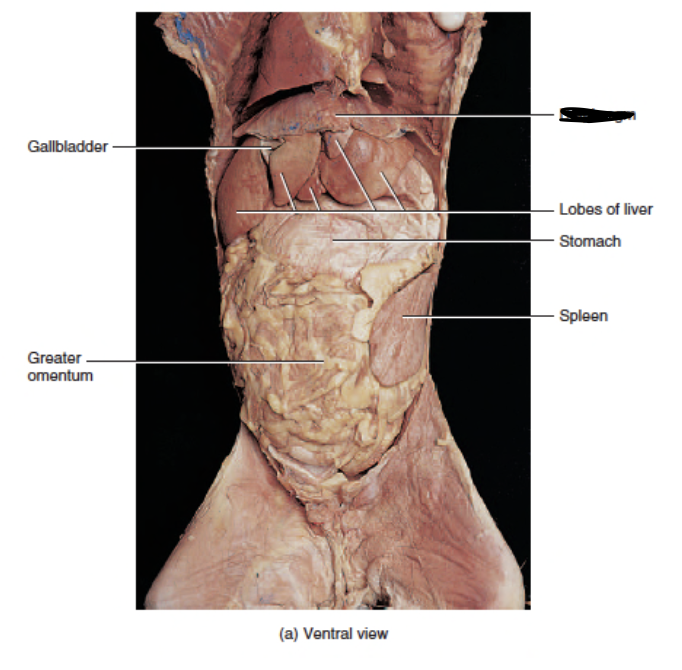
Diaphragm abdomen closed
Lobes of liver abdomen closed
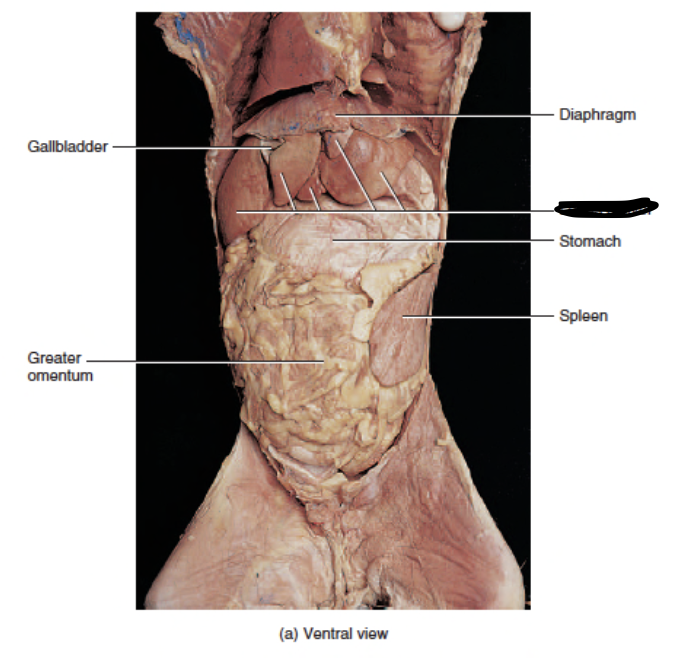
Spleen
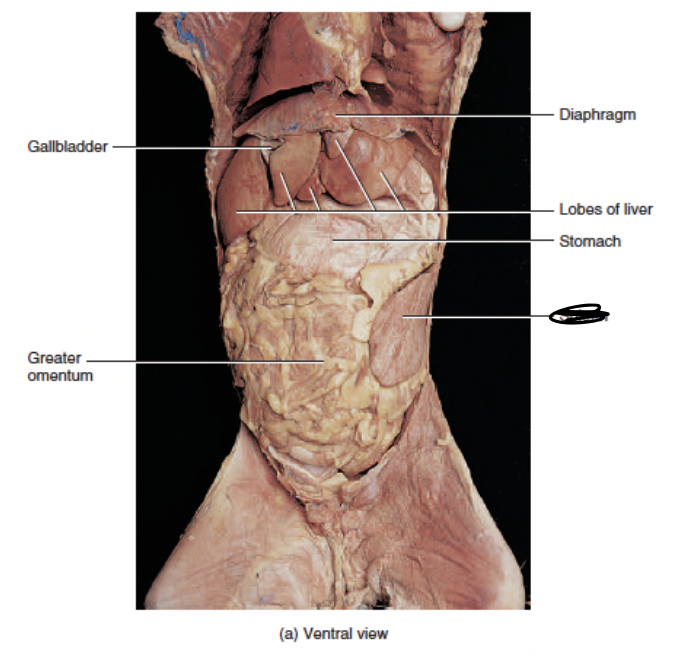
Greater Omentum
Gallbladder abdomen open
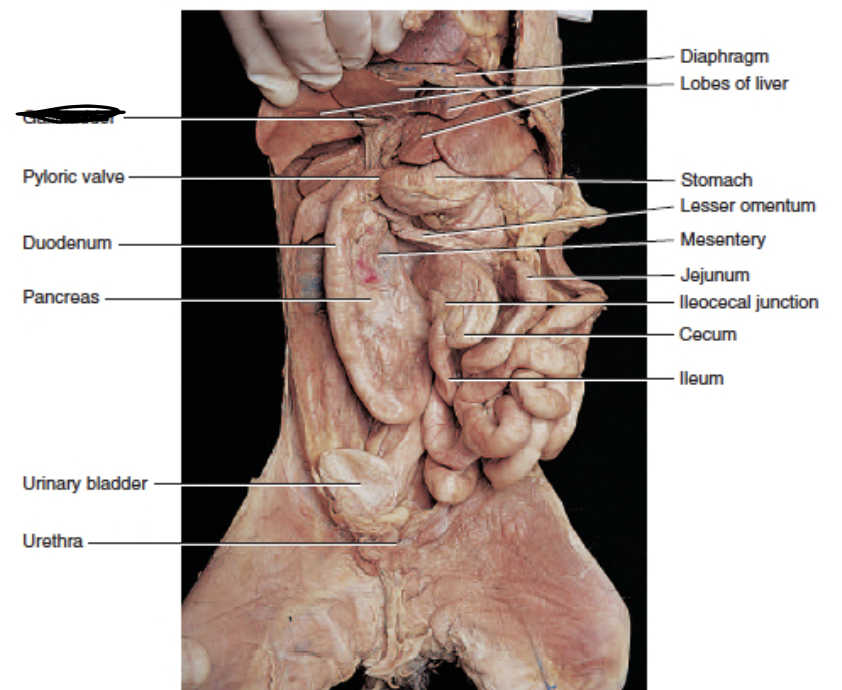
Pyloric valve
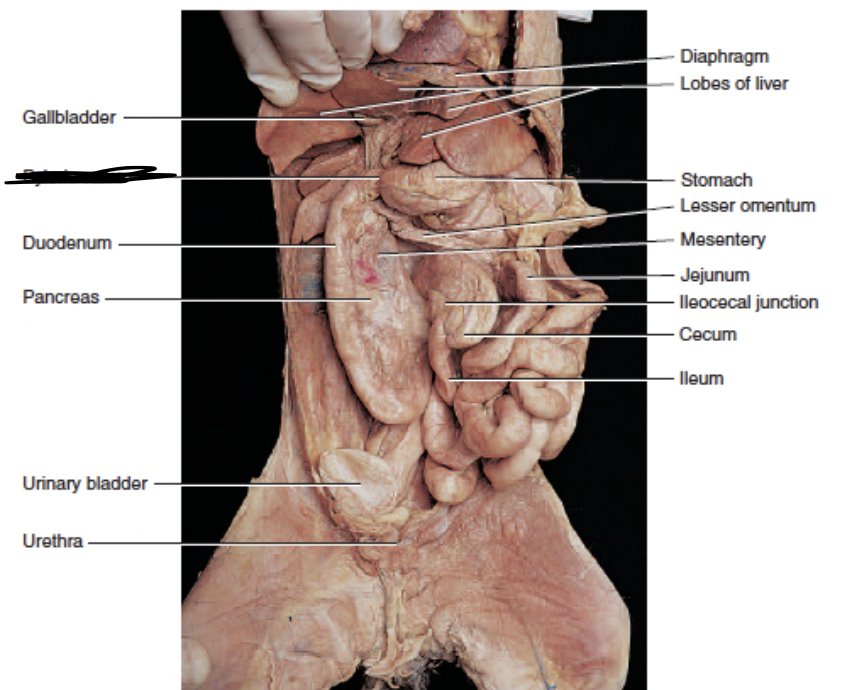
Duodenum
Pancreas
Urinary Bladder
Urethra
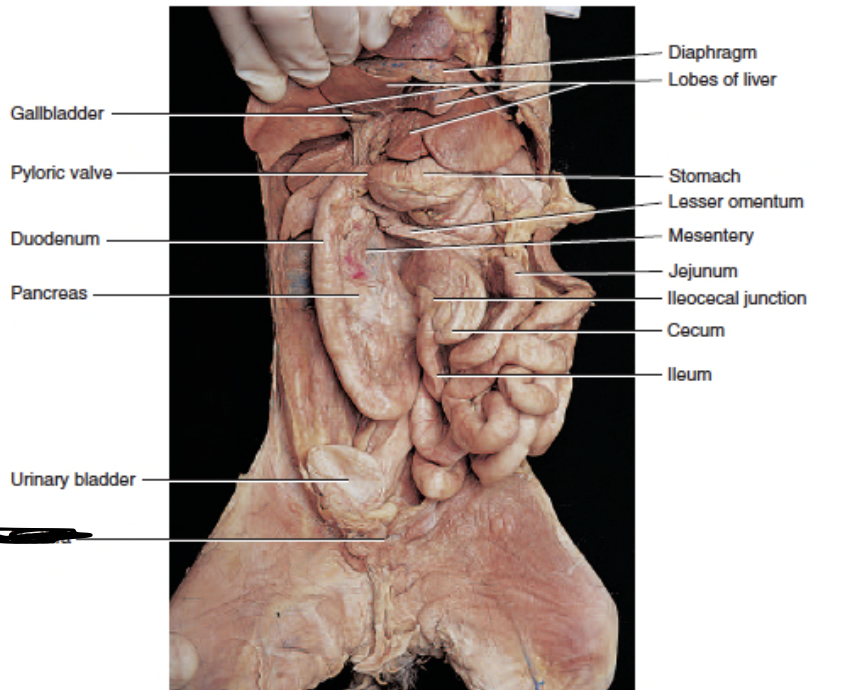
Diaphragm abdomen open
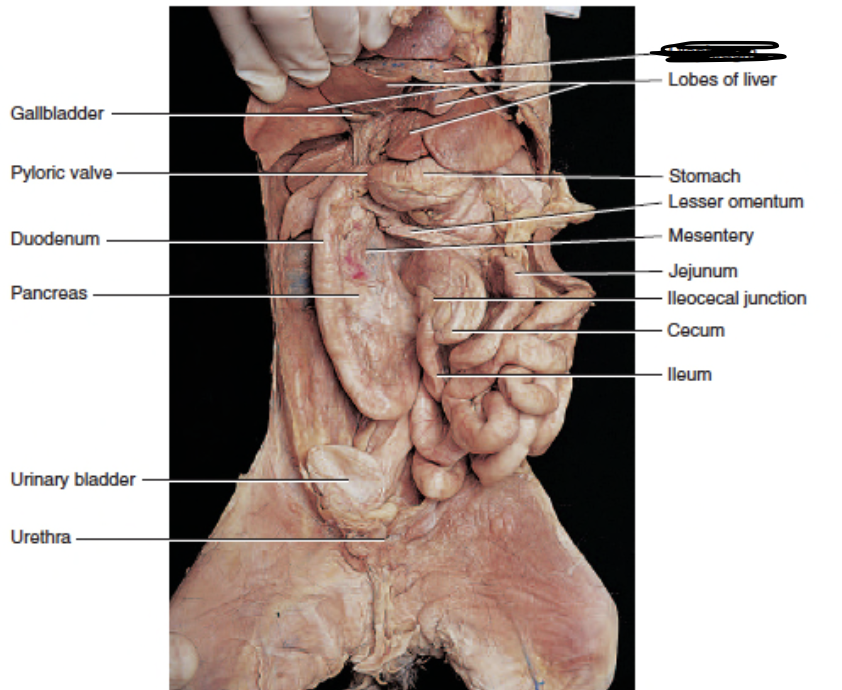
Lobes of the liver abdomen open %
Stomach
Lesser Omentum
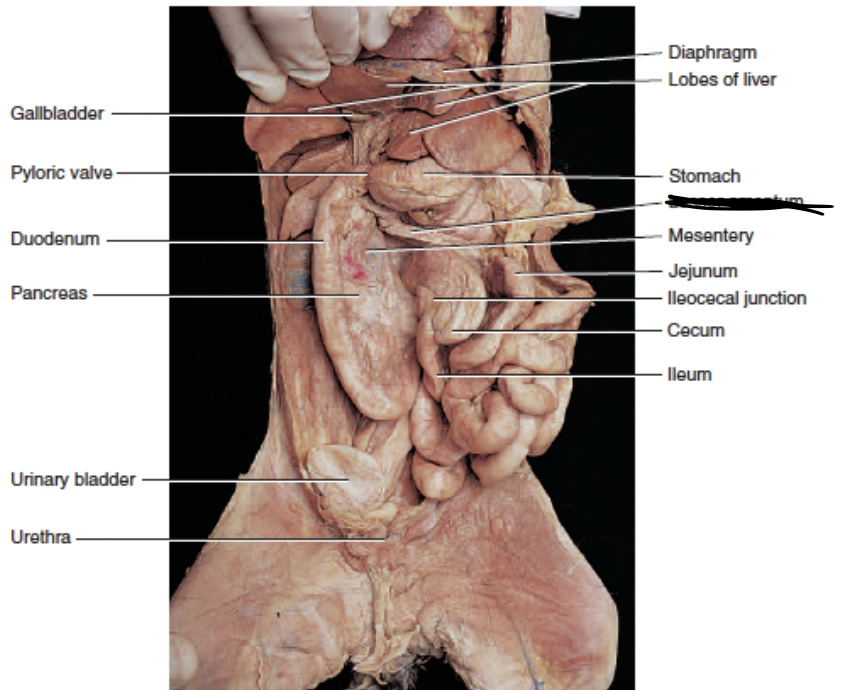
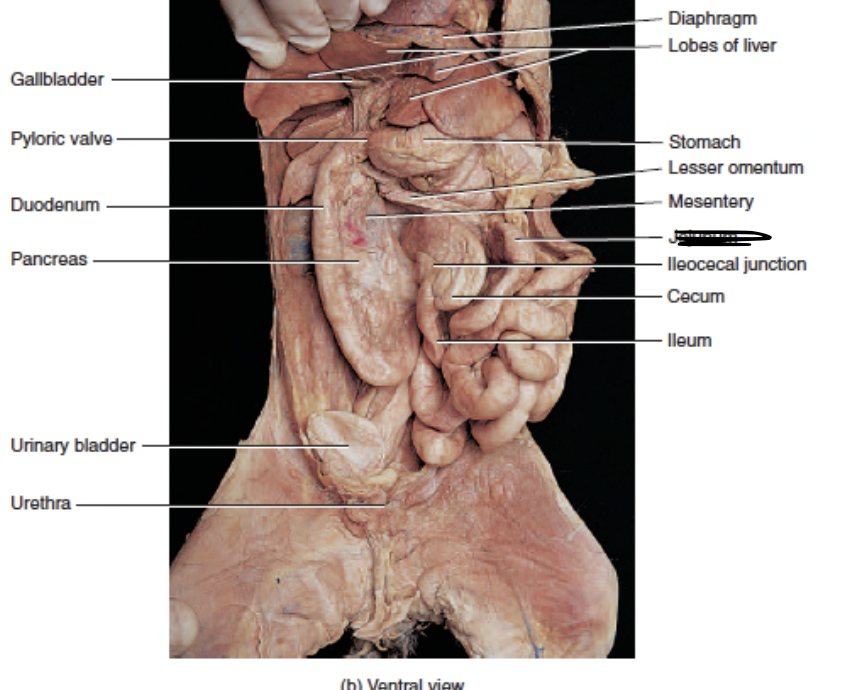
Mesentery
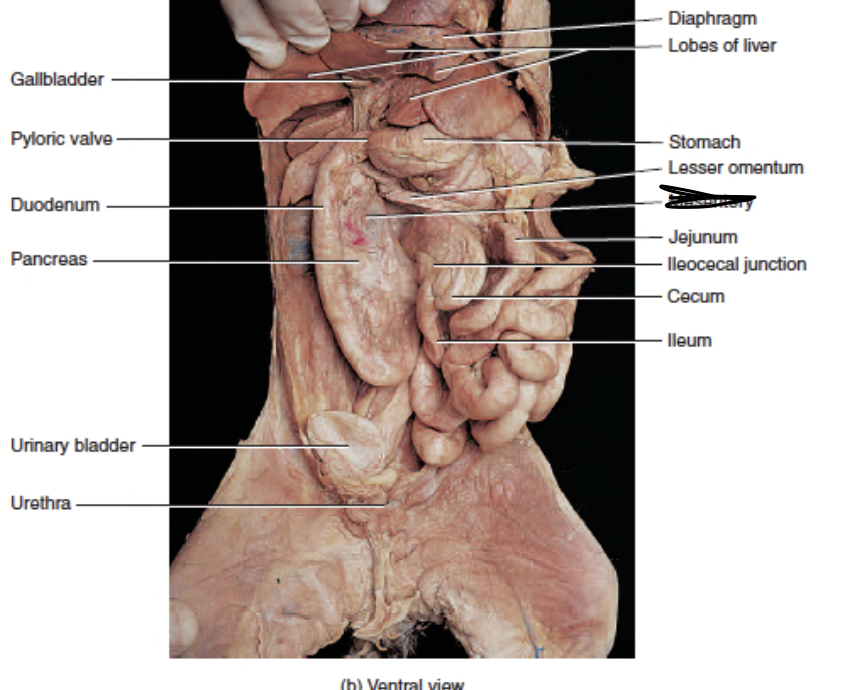
Jejunum
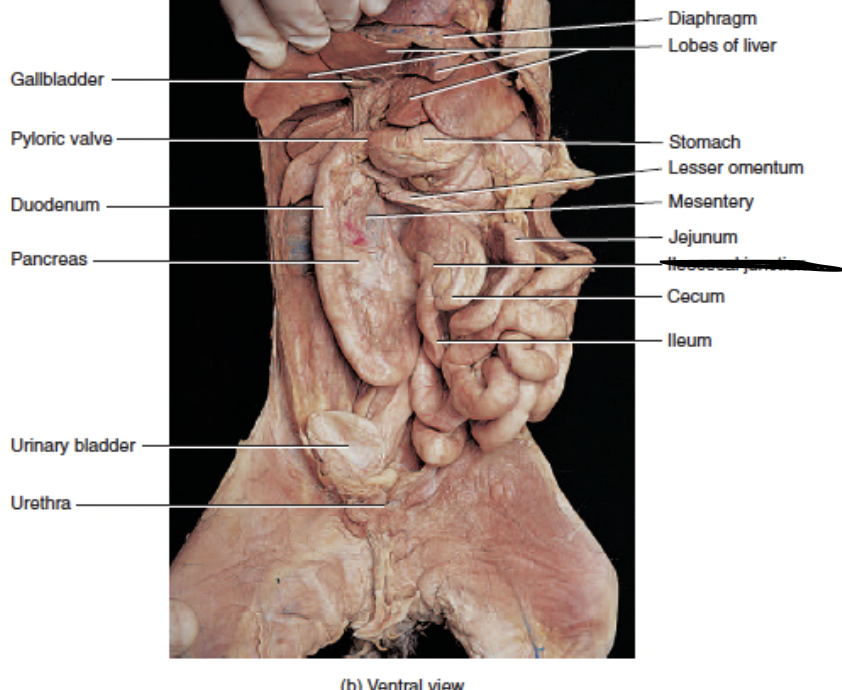
Ileocecal junction
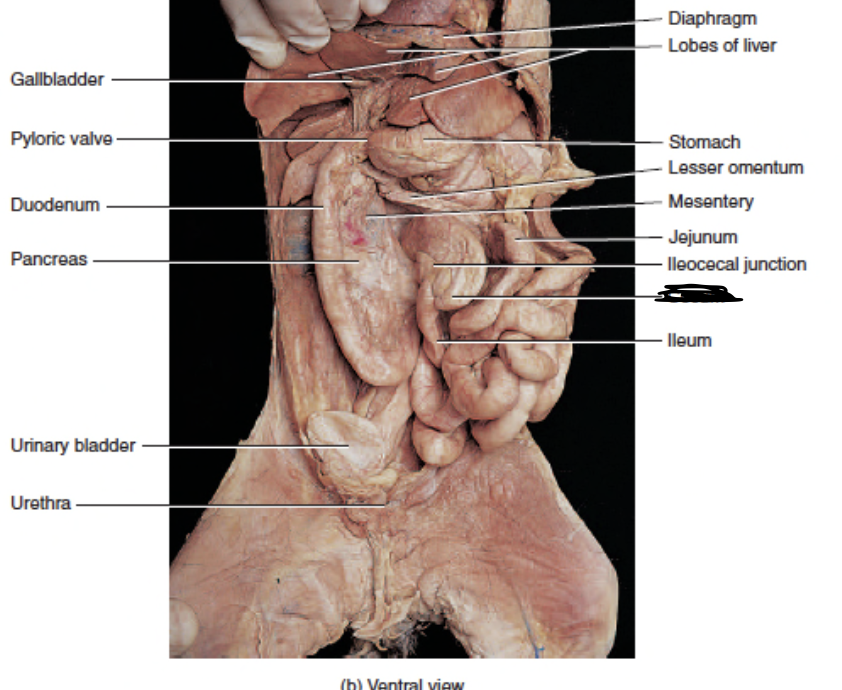
Cecum
Ileum
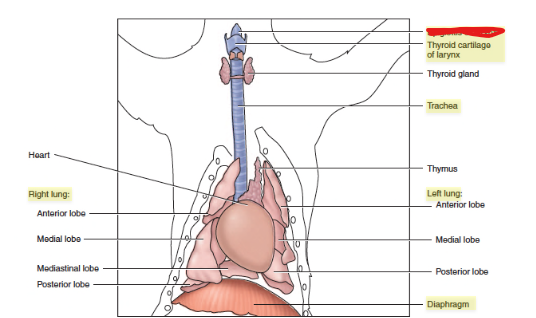
Epiglottis of Larynx Cat
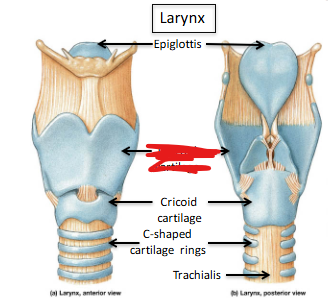
Thyroid Cartilage of Larynx Cat
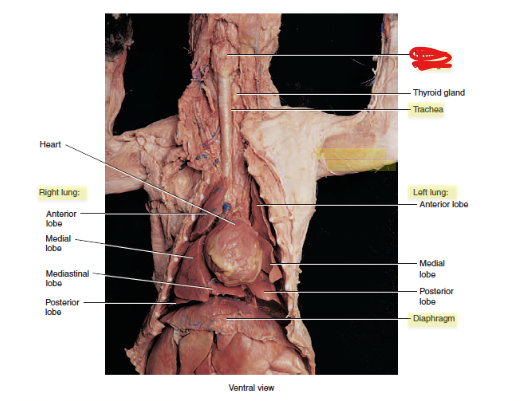
Thyroid Gland Cat
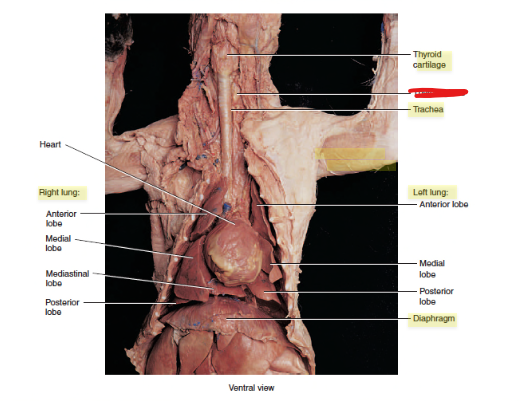
Trachea Cat
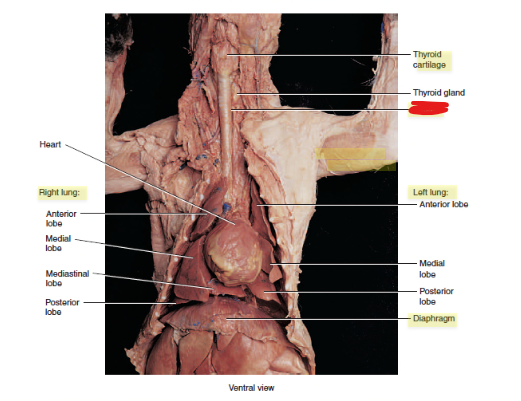
Thymus Cat
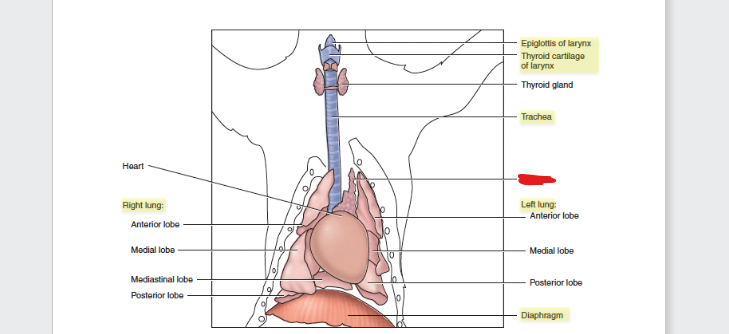
Left Anterior Lobe Cat
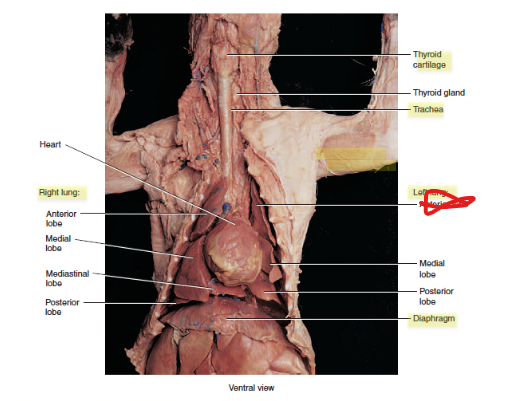
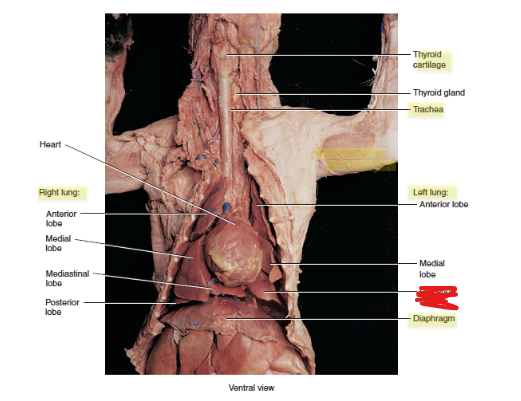
Left Medial Lobe Cat
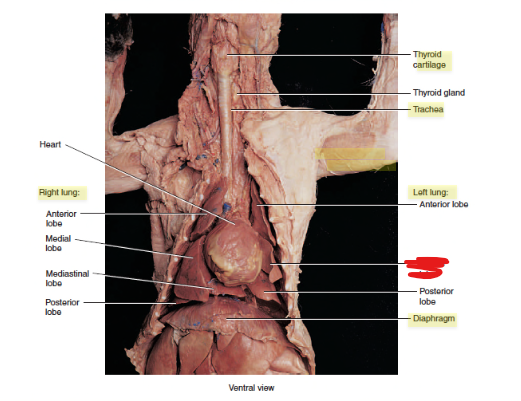
Left Posterior Lobe Cat
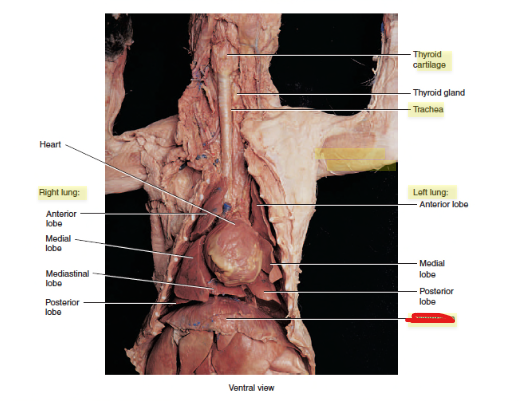
Diaphragm Cat
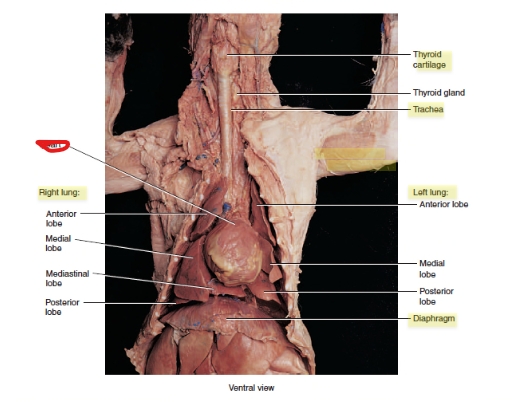
Heart Cat
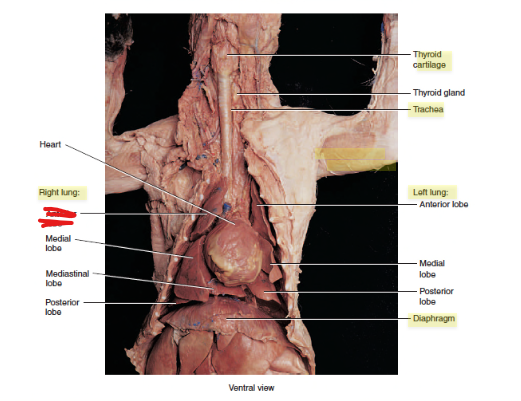
Right Anterior Lobe Cat
Right Medial Lobe Cat
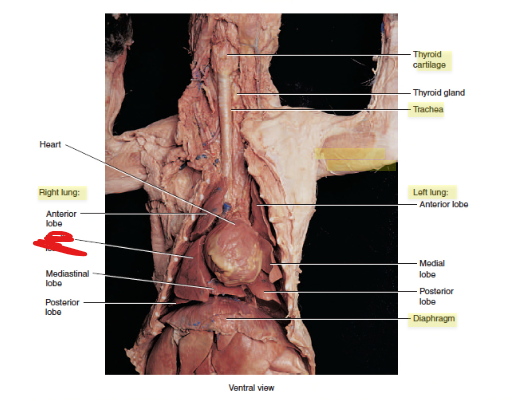
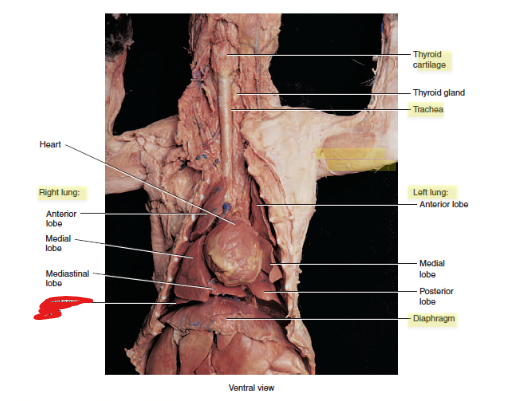
Right Mediastinal Lobe Cat
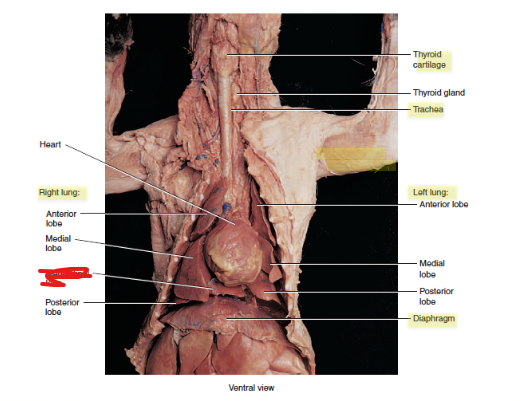
Right Posterior Lobe Cat
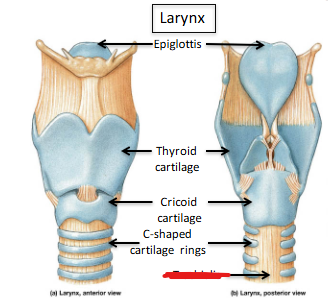
Larynx Human
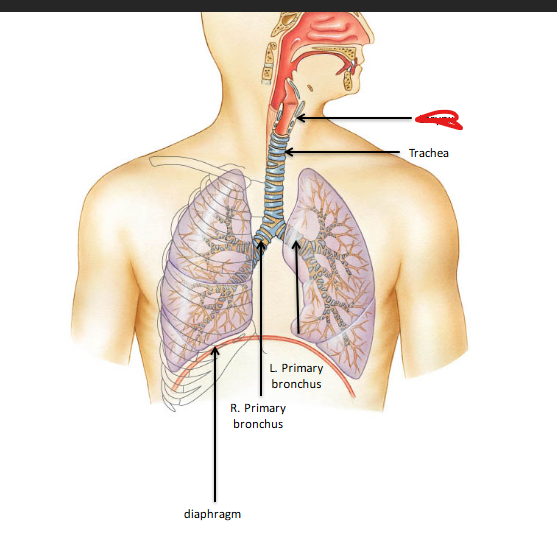
Trachea Human
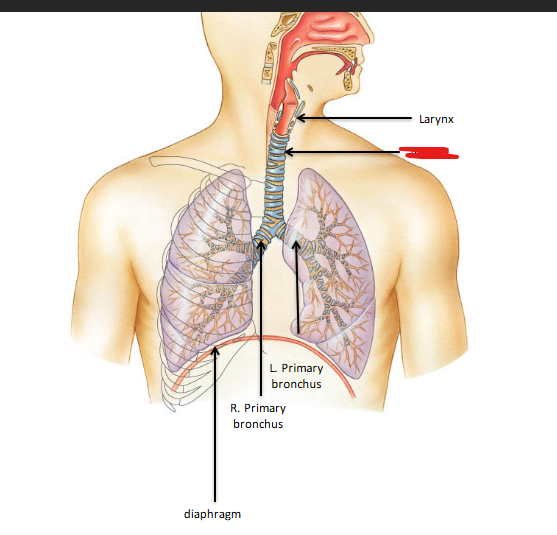
L. Primary Bronchus Human
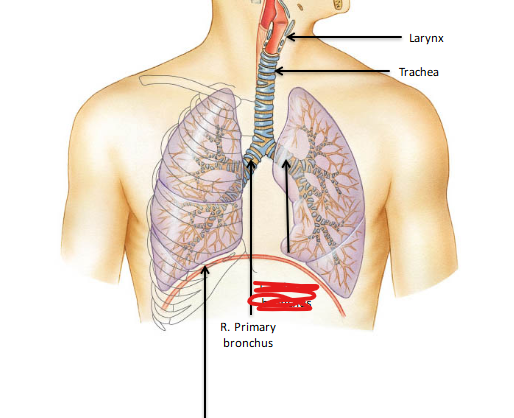
Right Primary Bronchus Human
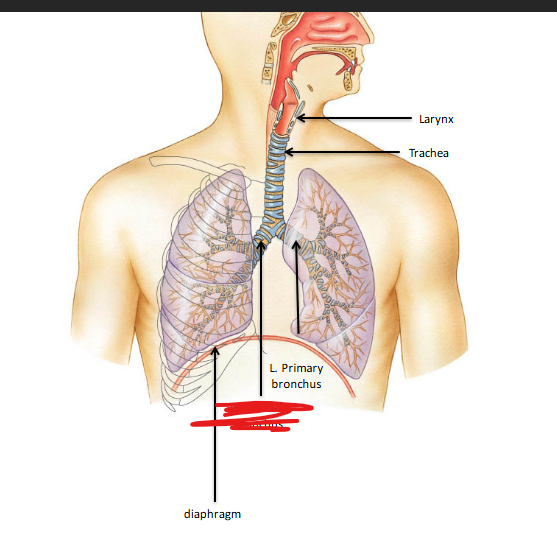
Diaphragm Human
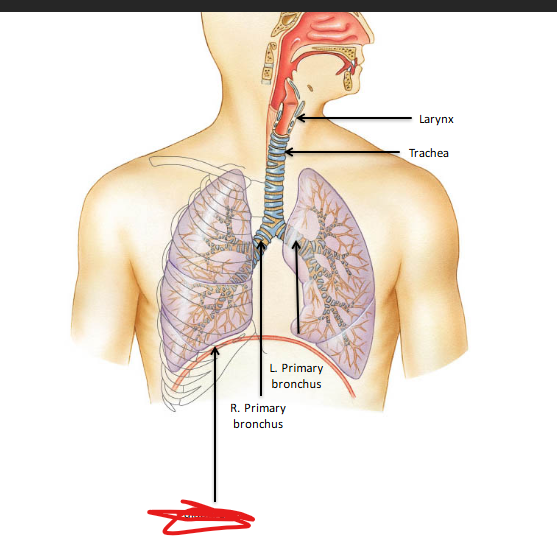
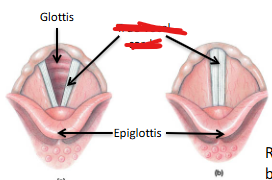
Epiglottis Human
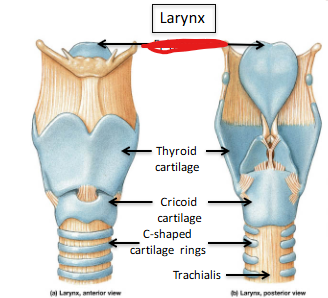
Thyroid Cartilage Human
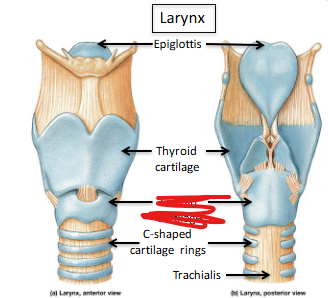
Cricoid Cartilage Human
C-Shaped cartilage rings human
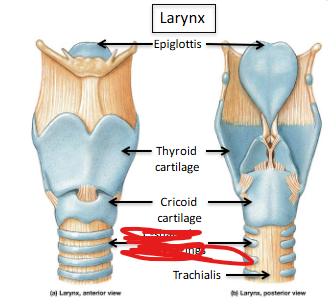
Trachialis Human
Glottis Human
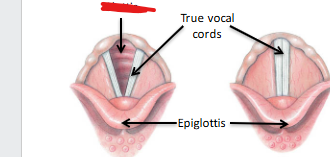
True Vocal Cords Human
Superior Lobe Right Human
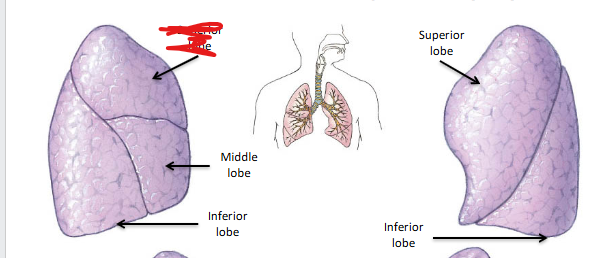
Superior Lobe Left Human
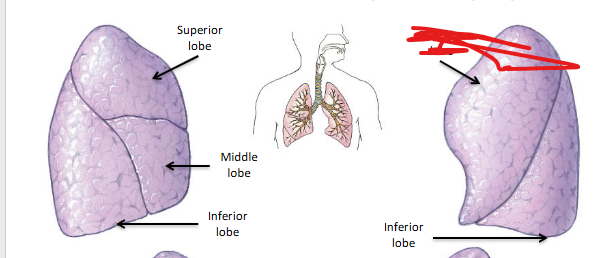
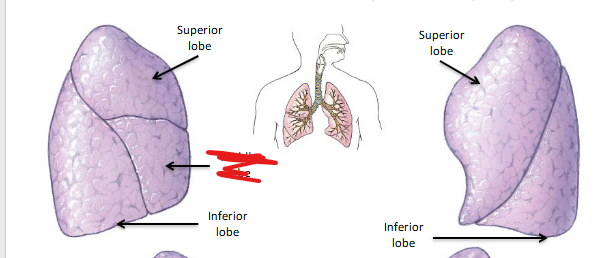
Middle Lobe Human
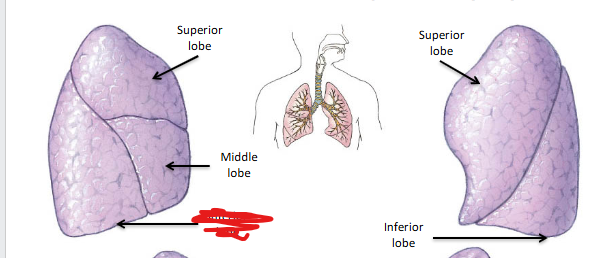
Inferior Lobe Right Human
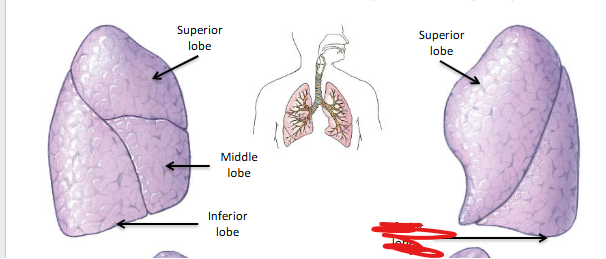
Inferior Lobe Left Human
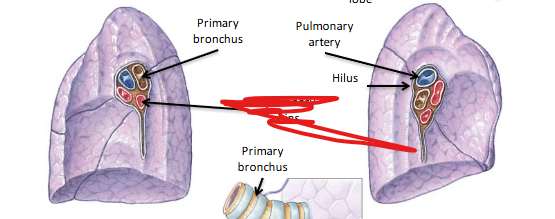
Primary Bronchus Human
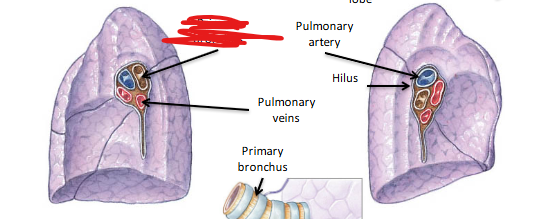
Pulmonary Artery Human
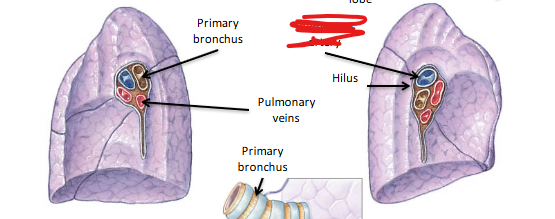
Hilus Human
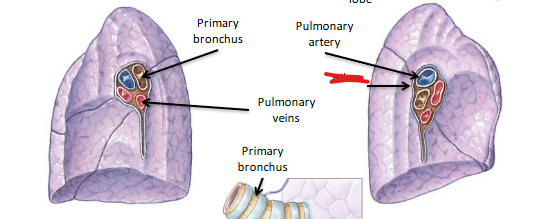
Pulmonary Veins Human