chapter 25 - seedless plants
 Call Kai
 Learn
Learn Practice Test
 Spaced Repetition
 Match
Match Flashcards
 Knowt Play
1/30

There's no tags or description
Looks like no tags are added yet.
Name | Mastery | Learn | Test | Matching | Spaced | Call with Kai |
|---|
No analytics yet
Send a link to your students to track their progress
31 Terms
more light, more CO2 and minerals, less competition/herbivory
what are the advantages of plants moving to land?
desiccation, no water support, harder reproduction
what are the disadvantages of moving to land?
desiccation
when plants dry out due to the evaporation of water
waxy cuticle
prevents water loss by forming a waterproof layer on plant
secondary compounds
chemical compounds produced by plants strictly for repelling or attracting predators or pollinators (defense mechanism)
mycorrhizae
ecological relationship between the mycelium of a fungus and the roots of certain plants -> helps plants absorb nutrients
apical meristems
localized regions of cell division at the tips of roots and shoots that facilitate growth
sporopollenin
walled spores that facilitate dispersal
gametangia
a reproductive organ that houses and protects the gametes of a plant
alternation of generations
the alternation between the haploid gametophyte and the diploid sporophyte in a plant's life cycle
bryophytes
non-woody, small, ground-covering plants that requires water for reproduction
- gametophyte dominant
- no vascular tissue
- have rhizoids
- grow w/in archegonium of gametophyte and sporangium makes many haploid spores
rhizoids
a thin, rootlike structure that anchors a moss and absorbs water and nutrients
liverworts
aka "marchantiophyta"
- a type of bryophyte
- flat (thalloid) or leafy miniature trees
- simple or very small sporophytes
hornworts
aka "anthocerotophyta"
- a type of bryophyte
- long horn-shaped sporophyte
- good colonizers of moist soils
- symbiotic relationship w/ nitrogen fixing cyanobacteria
moss
aka "bryophyta"
- most common type of bryophytes
- sporophyte grows up from female gametophyte to gain elevation for spore dispersal
- major primary producers in cold or high altitude regions
- fertilization occurs for this group when the flagellated sperm enters the archegonium
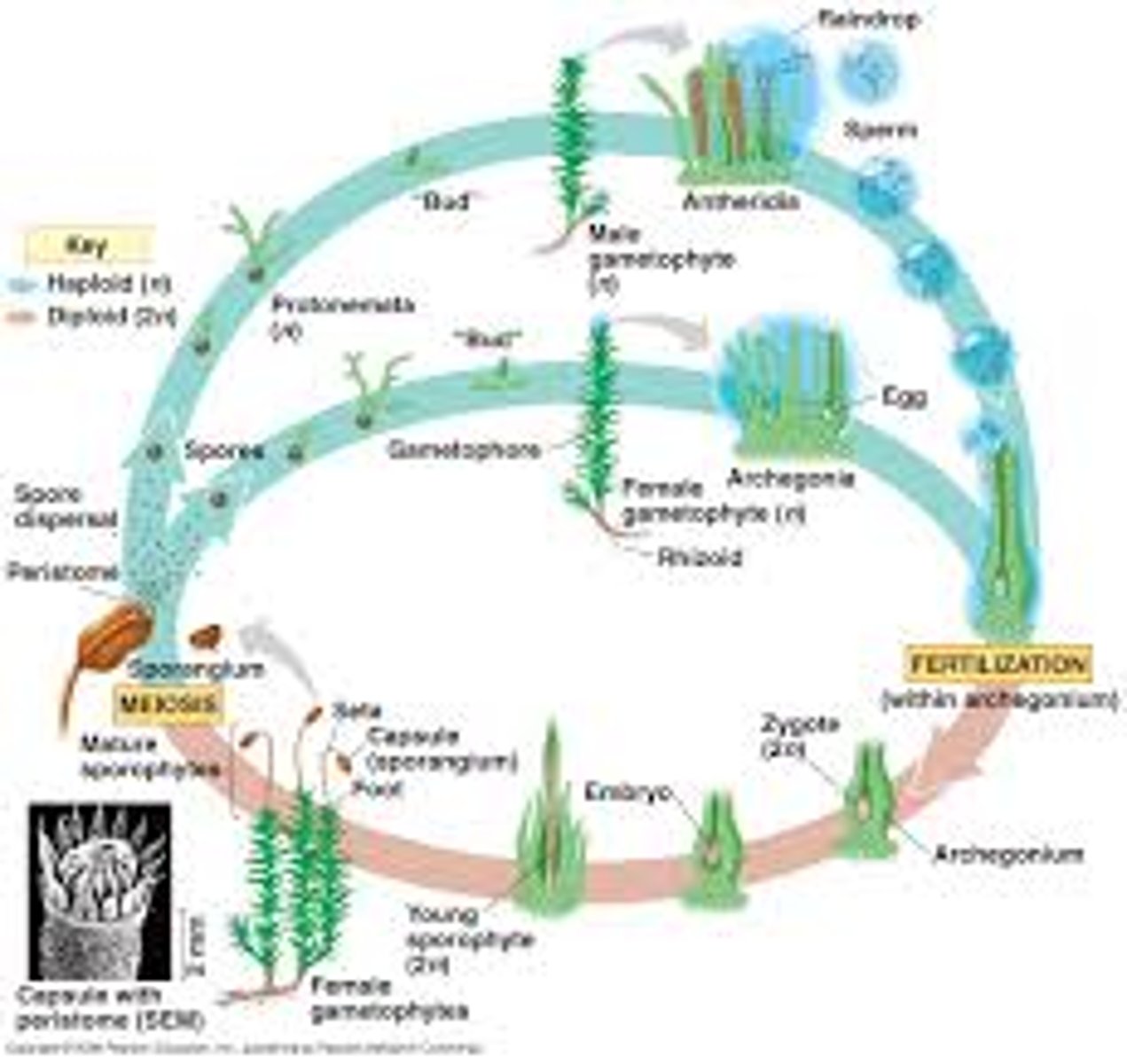
moss life cycle
- a sporophyte has a specialized capsule that holds the spores which grow into separate male and female gametophytes.
- antheridia produce sperm on the male gametophytes and the archegonia produce eggs on the female gametophyte
- antheridium fertilizes the egg of the archegonia which grows into a new sporophyte
seedless vascular plants
plants that have vascular tissue but reproduce by spores
- sporophyte dominant
- rely on vascular tissue to transport water and nutrients
xylem
vascular tissue that carries water upward from the roots to every part of a plant
phloem
vascular tissue in plants that conducts sugars and other metabolic products downward from the leaves
microphyll leaves
small, spine-shaped leaves supported by a SINGLE strand of vascular tissue
- only lycophytes have these
megaphyll leaves
leaves w/ highly branched vascular system
- have greater photosynthetic productivity
- all other vascular plants have these kind of leaves
sporophyll leaves
modified leaves that bear sporangia which produce haploid cells via meiosis
- in ferns these are called sori and generate spores on the underside of leaf
- in lycophytes these are called strobilus and appear in a cone like structure
homosporous
referring to a plant species that has a single kind of spore, which typically develops into a bisexual gametophyte
heterosporous
referring to a plant species that has two kinds of spores: microspores (male gametophytes) and megaspores (female gametophytes)
lycophytes
small microphylls that live in tropical and temperature areas
- a type of seedless vascular plants
- encompasses club mosses, spike mosses, and quillworts
- club mosses are homosporous while quillworts and spike mosses are heterosporous
monilophytes
group that includes ferns, horsetails, and whisk ferns and their relatives
- a type of seedless vascular plants
whisk ferns
aka "psilophyta"
- a type of monilophyta
- homosporous plants w/o true leaves or roots
- dichotomous branching
- photosynthesis occurs in the stem
horsetails
aka "equisetum"
- a type of monilophyta
- homosporous plants w/ joined stems and tiny leaves
- have strobili
- photosynthesis occurs in the stem
ferns
aka "pterophyta"
- most widespread and diverse monilophyta
- homosporous w/ large megaphylls
- sori on underside of sporophylls
- mostly in understory or as epiphytes
epiphytes
plants that grow on the surface of other plants
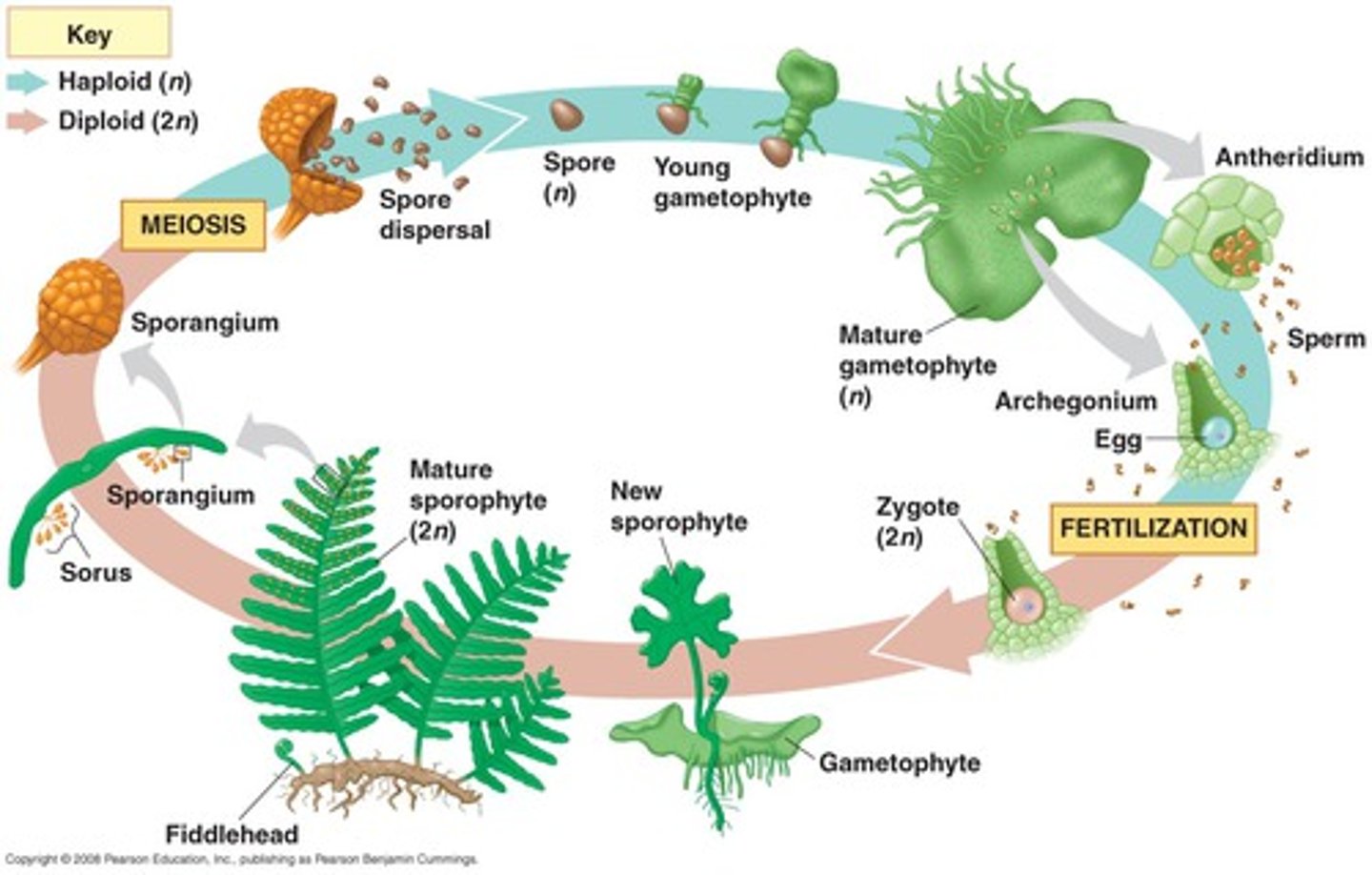
fern life cycle
1) zygote develops into leafy adult plant
2) spores are released from spore cases and grow into tiny, heart-shaped gametophytes. each gametophyte has both male and female structures.
3) sperm swim to another gametophyte to fertilize eggs
Explore top notes

Explore top flashcards
