RO14 1.2.3 Forming processes
 Call Kai
 Learn
Learn Practice Test
 Spaced Repetition
 Match
Match Flashcards
 Knowt Play
1/8

There's no tags or description
Looks like no tags are added yet.
Name | Mastery | Learn | Test | Matching | Spaced | Call with Kai |
|---|
No analytics yet
Send a link to your students to track their progress
9 Terms
Forging, Definition:
Hot forging is a forming process that uses force to reshape heated metal, which is now malleable, into a desired shape. These forged components are both stronger and tougher than equivalent cast components.
Forging, Types:
Hand forging
Industrial hot press forging
Forging, Hand, Definition:
A type of forging that has been used for centuries where blacksmiths heat steel until it becomes malleable and can be reshaped with a hammer
Forging, Hand, Tools and equipment(3):
Forge(coal/charcoal fire with bellows to add air, reaching temperatures over 1000 °C)
Anvil
Hand tools like tongs, forging hammer, chisels, punches, and drifts
Forging, Industrial, Definition:
It creates the required component shape in a single operation by taking a heated black or billet of metal and squeezing it between shaped dies. The excess material is squeezed out between the dies and forms a flash that must then be trimmed or ground off.
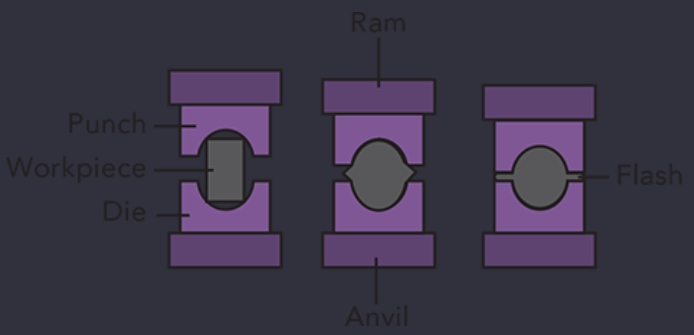
Forging, Industrial, Tools and equipment(2):
Flywheel or hydraulic press (able to exert hundreds or thousands of tonnes, depending on the size of the component being forged)
Forging dies (the two-piece hardened steel dies with a cavity in the shape of the component being forged)
Forging, Safety measures(7):
Fireproof clothing
Gauntlets
Leather apron
Safety glasses
Foundry boots
Hearing protection
Guards to prevent trapping or impact injuries from industrial forging presses that exert extremely high forces
Press forming, Definition:
It is a cold forming process that bends or shapes sheet metals into components like car body panels, white goods body panels(such as washing machines, fridges or tumble dryers) or desktop computer cases

