PHY 131 EXAM 1 (ASU)
 Studied by 0 people
 Call Kai
 Learn
Learn Practice Test
 Spaced Repetition
 Match
Match Flashcards
 Knowt Play
1/62

There's no tags or description
Looks like no tags are added yet.
Name | Mastery | Learn | Test | Matching | Spaced | Call with Kai |
|---|
No analytics yet
Send a link to your students to track their progress
63 Terms
Electric charge is quantized.
A positive charge and a negative charge attract each other.
Two negative charges repel each other.
Electric charge is conserved.
true statements
Two charged objects are separated by some distance. The charge on the first object is greater than the charge on the second object. How does the force between the two objects compare?
The charged objects exert electrostatic forces on each other that are equal in magnitude and opposite in direction.
The strength of the electric field at a certain distance from a point charge is represented by E. What is the strength of the electric field at twice the distance from the point charge?
At twice the distance, the strength of the field is E/4
Two charged objects separated by some distance attract each other. If the charges on both objects are doubled with no change in distance between them, what happens to the magnitude of the force between the objects?
The force between them quadruples
Is it possible for the electric field between two positive charges to equal zero along the line joining the two charges?
Yes, regardless of the magnitude of the two charges.
When a point charge of +q is placed on one corner of a square, an electric field strength of 2 N/C is observed at the center of the square. Suppose three identical charges of +q are placed on the remaining three corners of the square. What is the magnitude of the net electric field at the center of the square?
The magnitude of the net electric field at the center of the square is 0 N/C.
A positive charge moves in a direction opposite to that of an electric field. What happens to the energy associated with the charge?
The electric potential energy of the charge increases, and the kinetic energy decreases.
The figure shows the electric potential V at five locations in a uniform electric field. At which point is the electric potential the largest?
Va
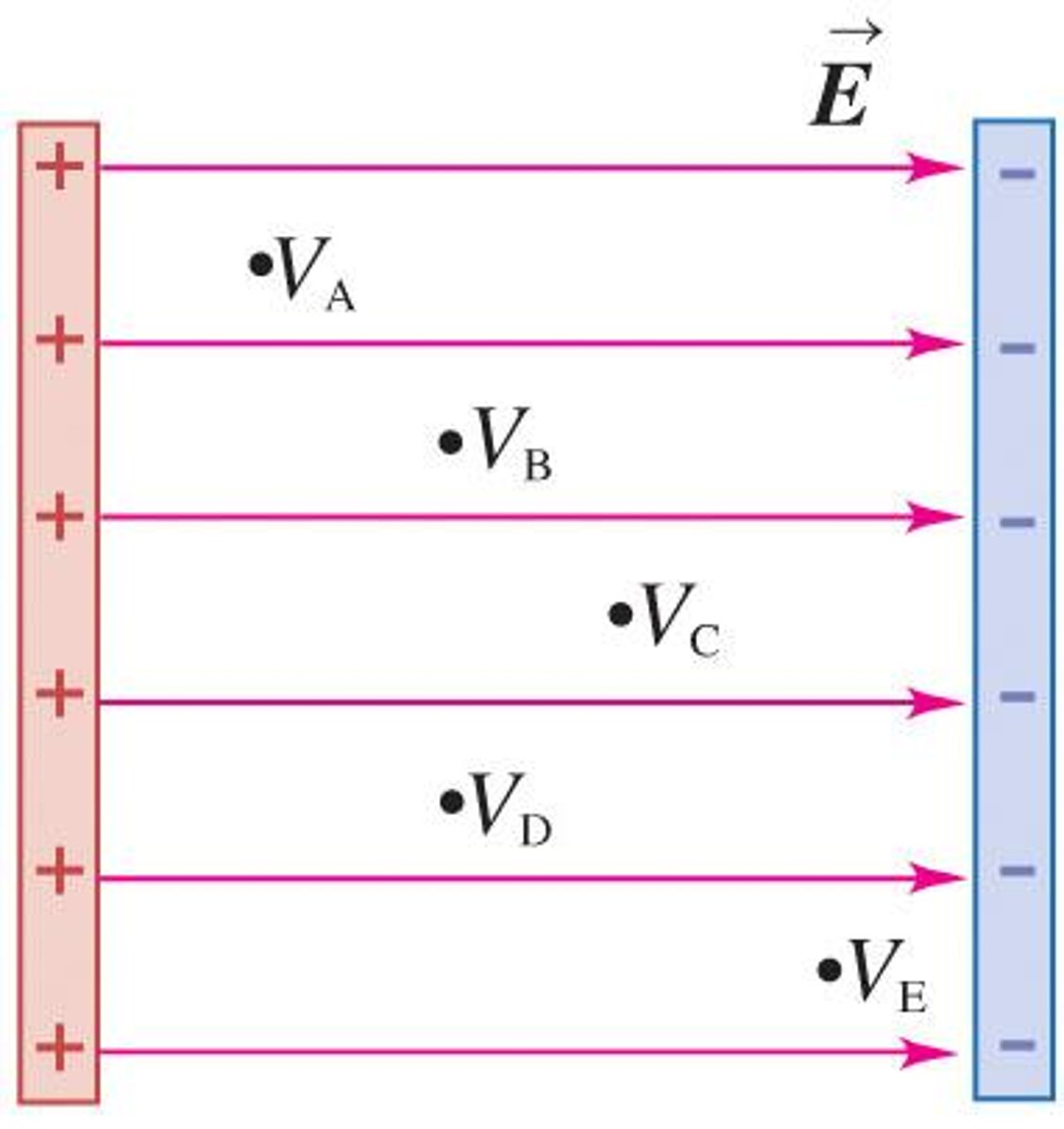
Electric field lines and equipotential surfaces are always mutually perpendicular.
An equipotential surface is a three-dimensional surface on which the electric potential is the same at every point.
When all charges are at rest, the surface of a conductor is always an equipotential surface.
true statements
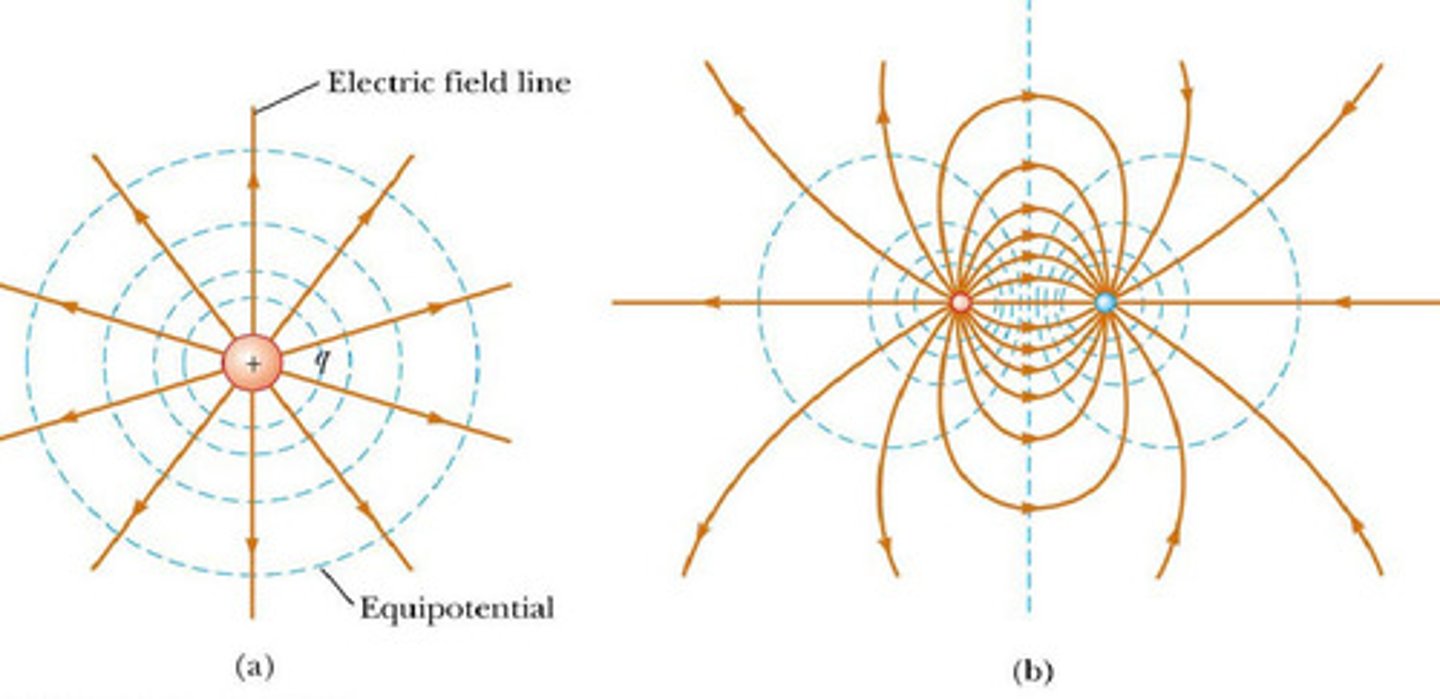
Electric field lines near positive point charges radiate outward.
The electric force acting on a point charge is proportional to the magnitude of the point charge.
In a uniform electric field, the field lines are straight, parallel, and uniformly spaced.
true statements
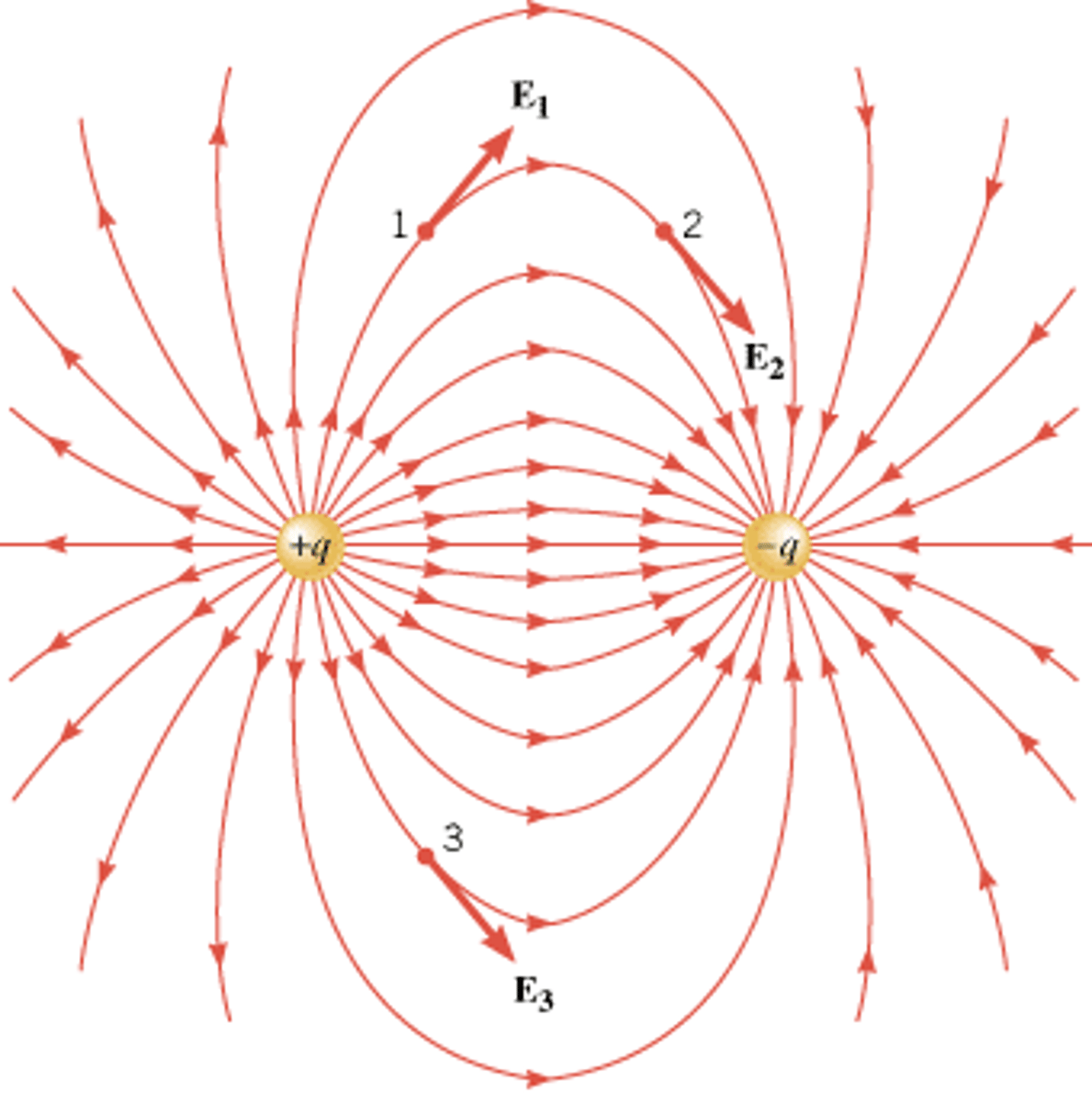
true statements about electric field lines
At every point in space, the electric field vector at that point is tangent to the electric field line through that point.
Electric field lines can never intersect.
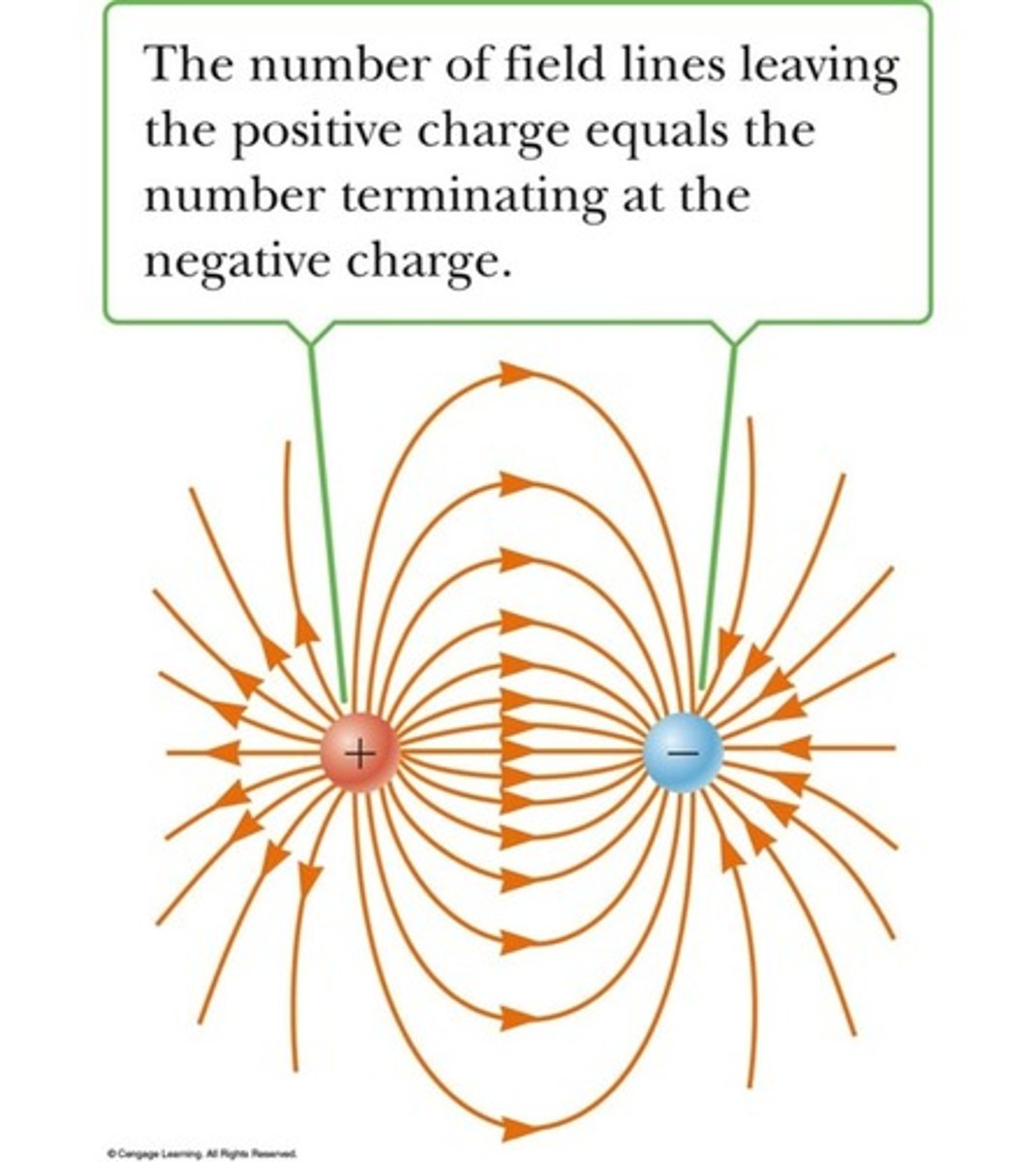
Electric field lines point away from positive charges and toward negative charges.
The electric potential at a certain distance from a point charge can be represented by V. What is the value of the electric potential at twice the distance from the point charge?
At twice the distance, the electric potential is V/2.
The figure shows the electric potential V at five locations in a uniform electric field. At which points is the electric potential equal?
Vb and Vd
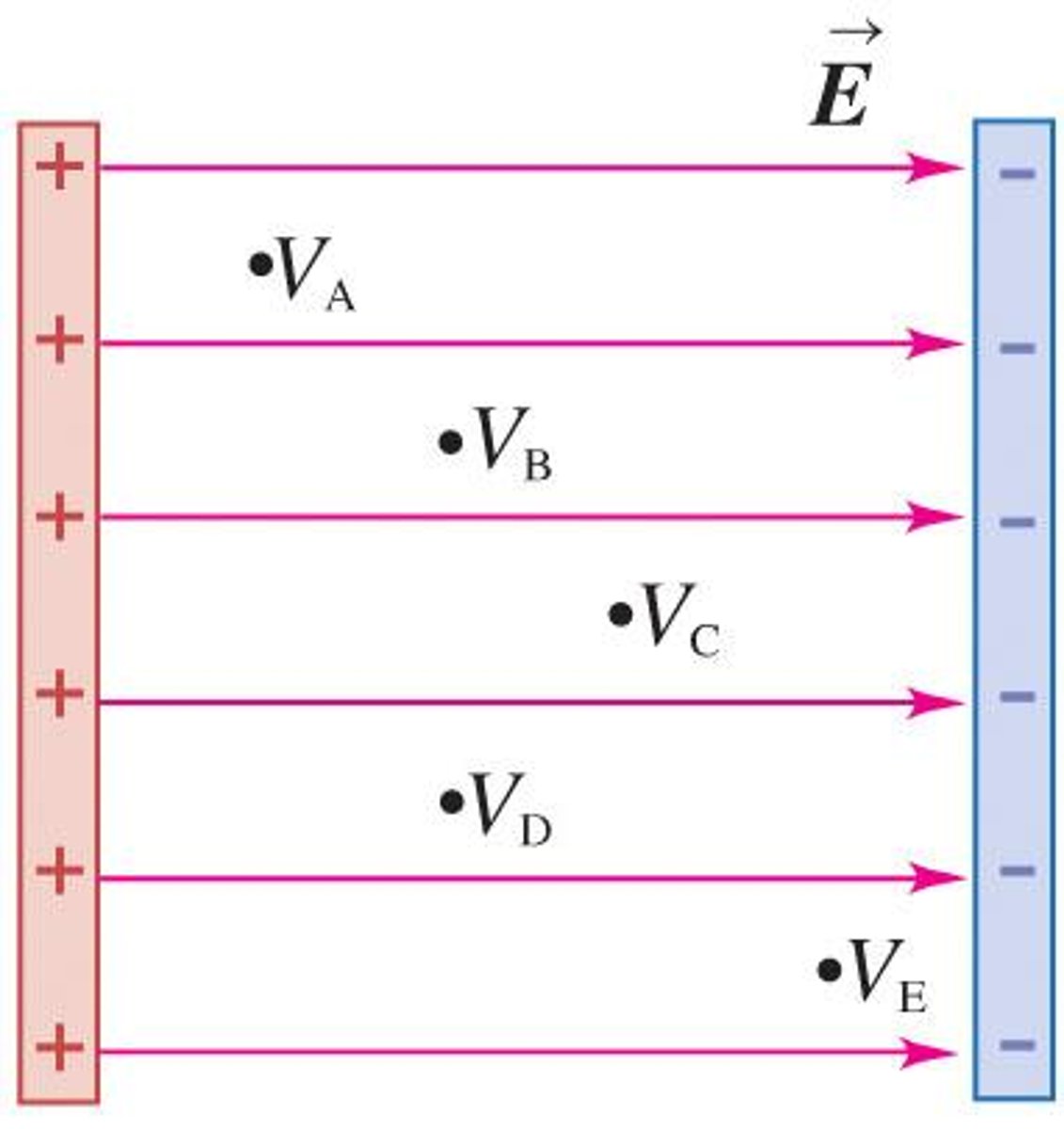
The electric potential at a certain location from a point charge can be represented by V. What is the value of the electric potential at the same location if the strength of the charge is tripled?
If you triple the value of the charge, the electric potential is 3V.
A charge Q is uniformly spread over one surface of a very large nonconducting square elastic sheet having sides of length 49 cm . At a point P that is 5 mm outside the sheet, the magnitude of the electric field due to the sheet is E. If the sheet is now stretched so that its sides have twice the original length, but same charge Q, what is the magnitude of the electric field at point P?
E/4
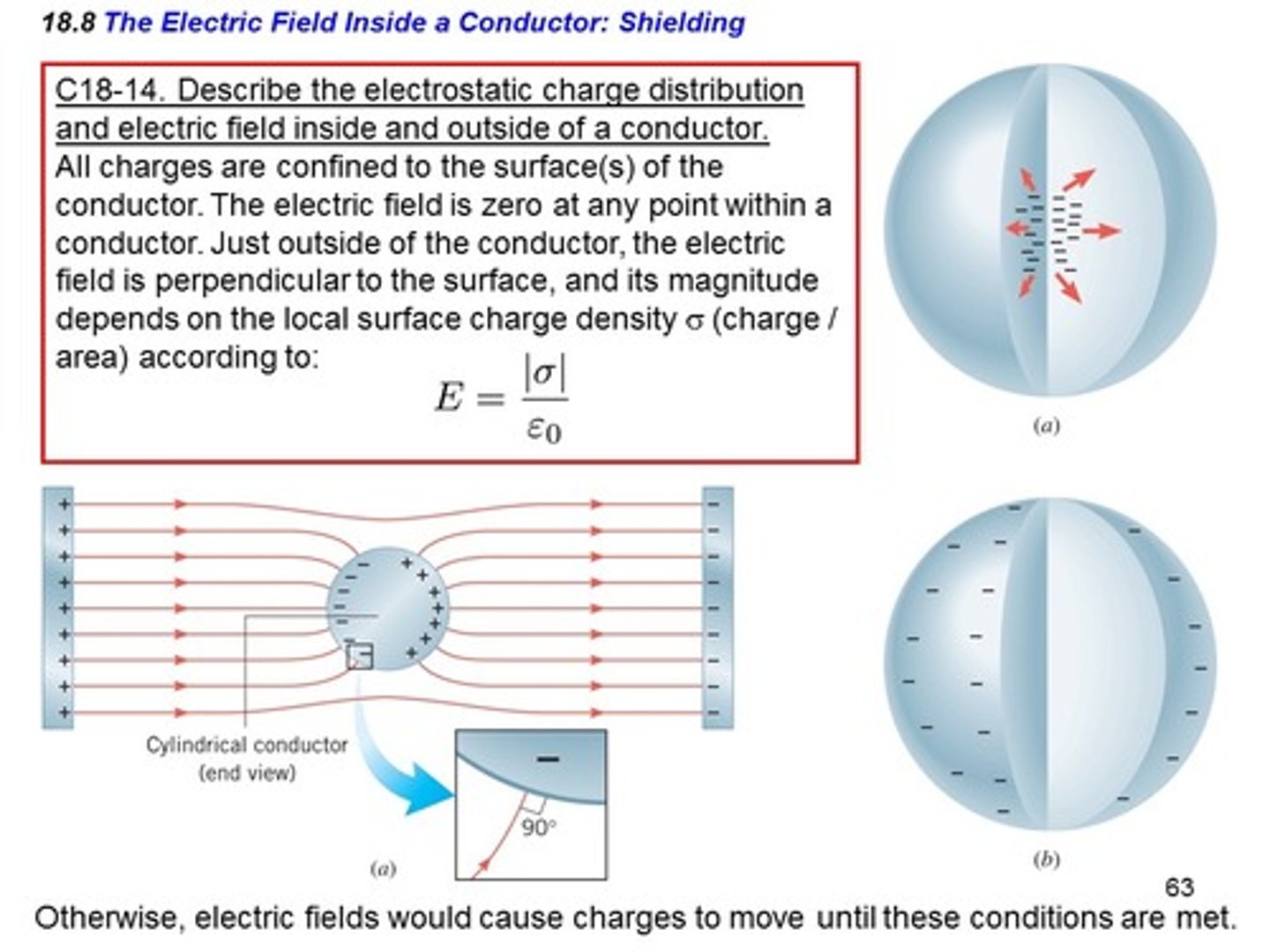
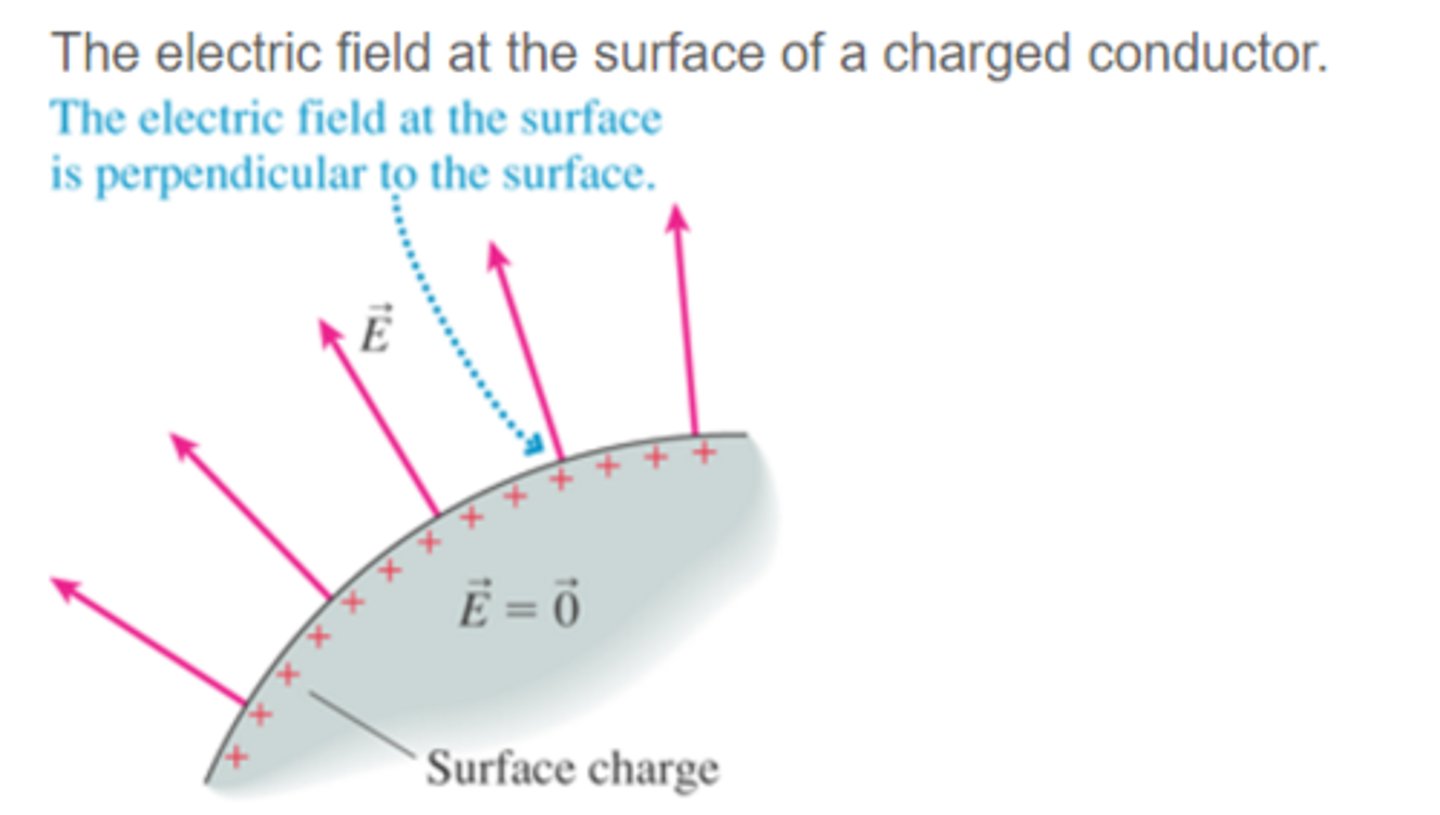
Under electrostatic conditions, the electric field just outside the surface of any charged conductor
is always perpendicular to the surface of the conductor.
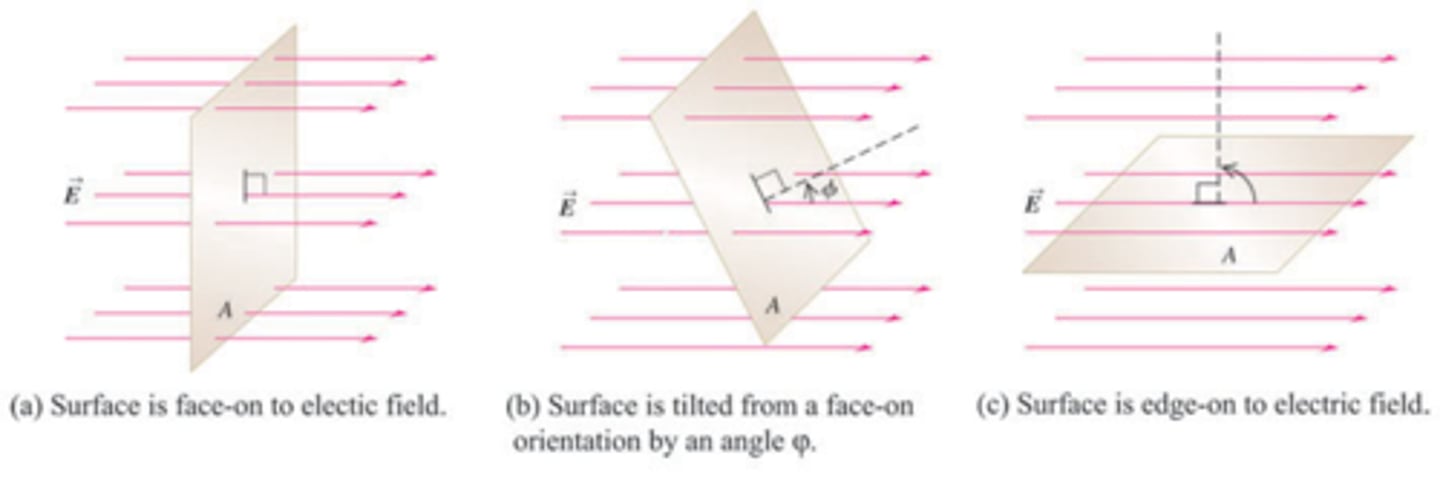
In the figure, a uniform electric field is shown passing through a flat area A.
(a), the surface of area A is perpendicular to the electric field.
(b), the surface is tilted by an angle θ with respect to the electric field.
(c), the surface is parallel to the electric field. In which orientation is the electric flux through the surface the equal to zero?
The electric flux is the zero through the surface shown in (c).
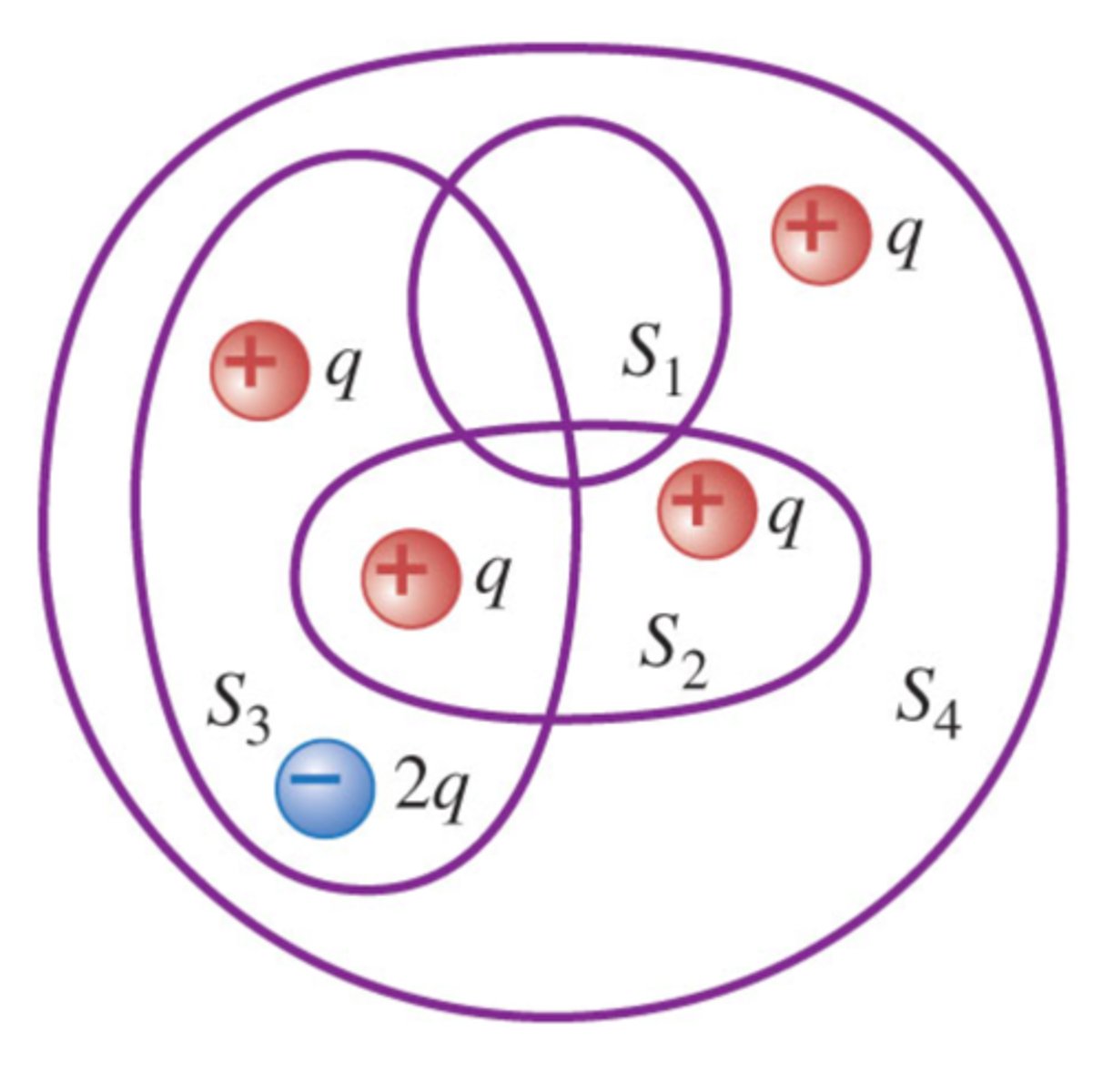
Five point charges q and four Gaussian surfaces S are represented in the figure shown. Through which of the Gaussian surfaces are the total electric flux zero?
S1 and S3
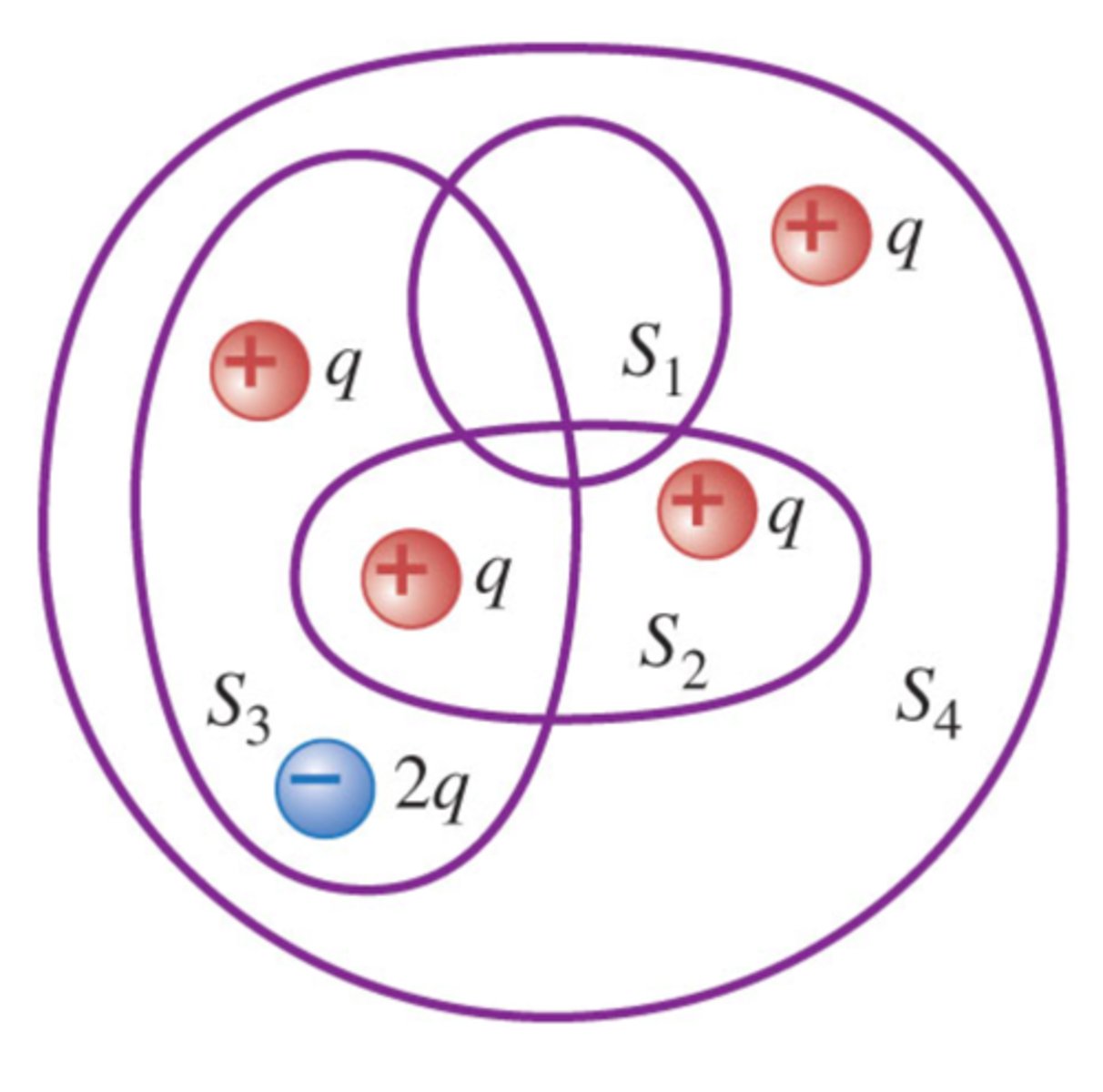
Five point charges q and four Gaussian surfaces S are shown in the figure. What is the total electric flux through surface S2?
2q/ε0
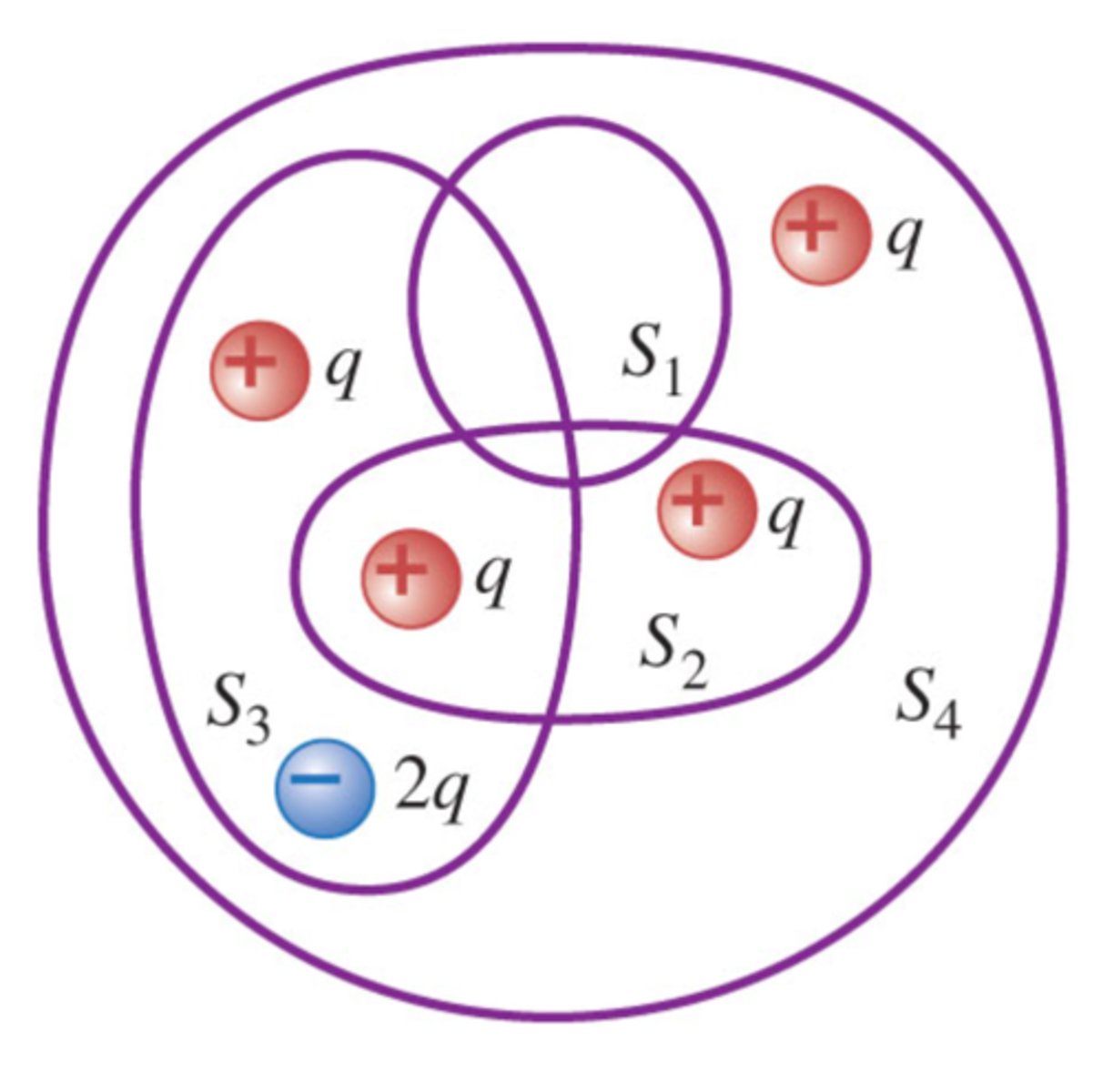
Five point charges q and four Gaussian surfaces S are shown. What is the total electric flux through surface S4?
2q/ε0
Gaussian surfaces A and B enclose the same positive point charge. The area of surface A is two times larger than that of surface B. How does the total electric flux through the two surfaces compare?
The total electric flux through the two surfaces is equal.
A net charge is placed on a hollow conducting sphere. How does the net charge distribute itself?
The net charge uniformly distributes itself on the sphere's outer surface.
True statements about Gauss's Law
The electric flux passing through a Gaussian surface depends only on the amount of charge inside that surface, not on its size or shape.
If a Gaussian surface is completely inside an electrostatic conductor, the electric field must always be zero at all points on that surface.
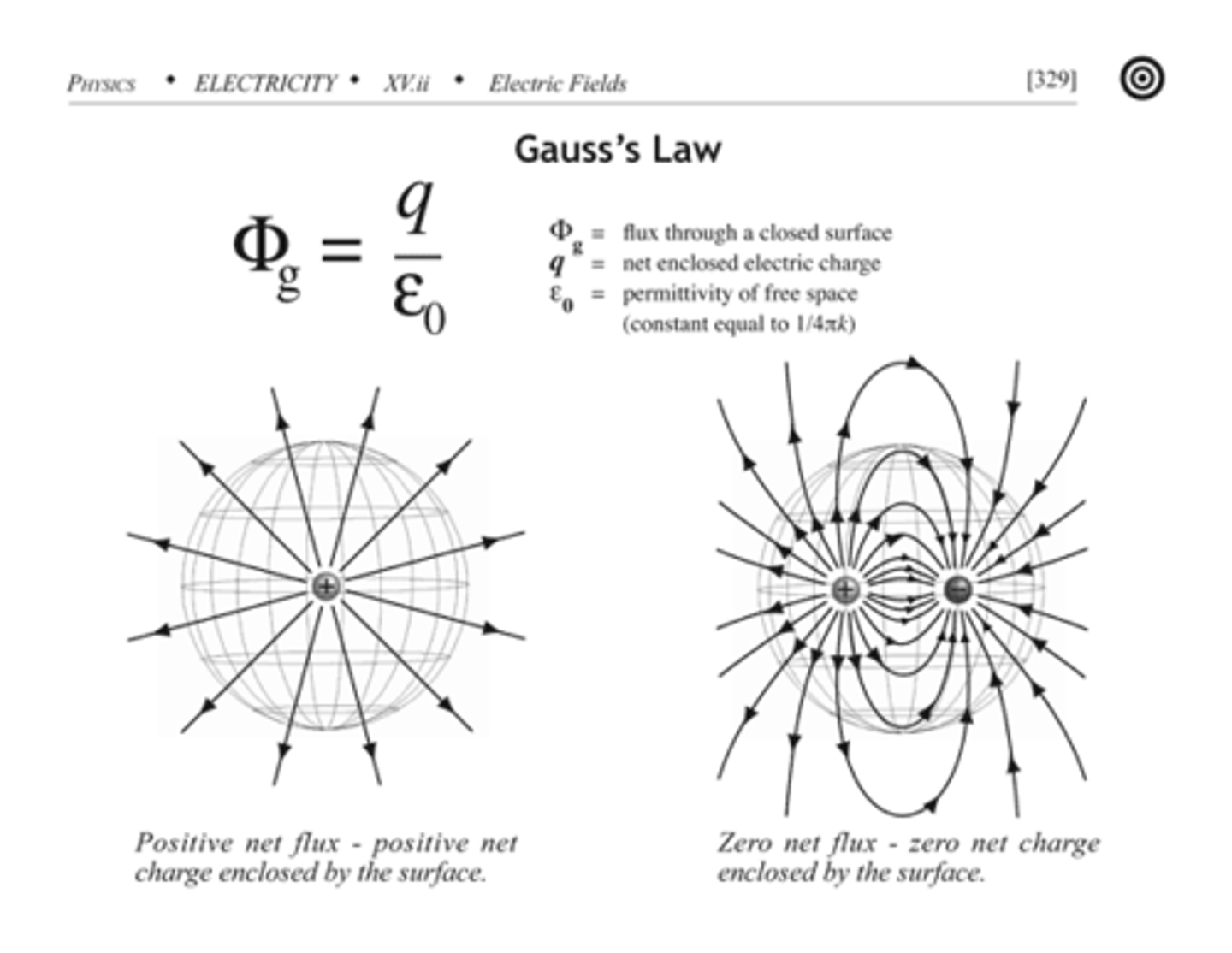
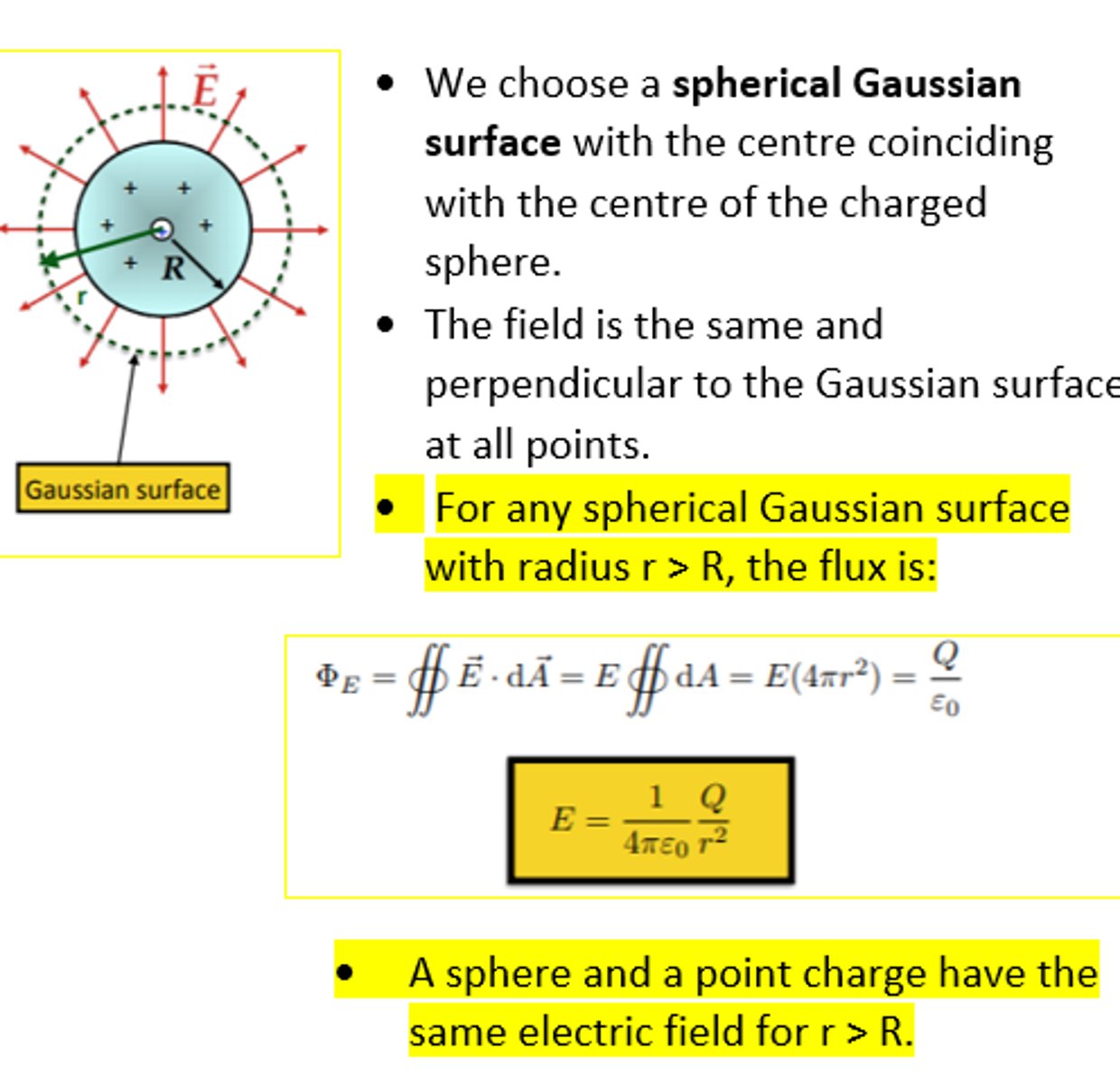
Consider a spherical Gaussian surface of radius R centered at the origin. A charge Q is placed inside the sphere. To maximize the magnitude of the flux of the electric field through the Gaussian surface, the charge should be located
The charge can be located anywhere, since flux does not depend on the position of the charge as long as it is inside the sphere.
The figure shows two unequal point charges, q and Q, of opposite sign. Charge Q has greater magnitude than charge q. In which of the regions A, B, C will there be a point at which the net electric field due to these two charges is zero?
fig.
--A--(G)---B---(q)--C--
C
A negative point charge Q and two unknown point charges, q1 and q2, are placed as shown in the figure. The net electric field at the origin O is equal to zero. What is the sign of each of the point charges q1 and q2?
q1=(0,2)
Q=(3,1.5)
q2=(-3,0)
q1>0
q2<0
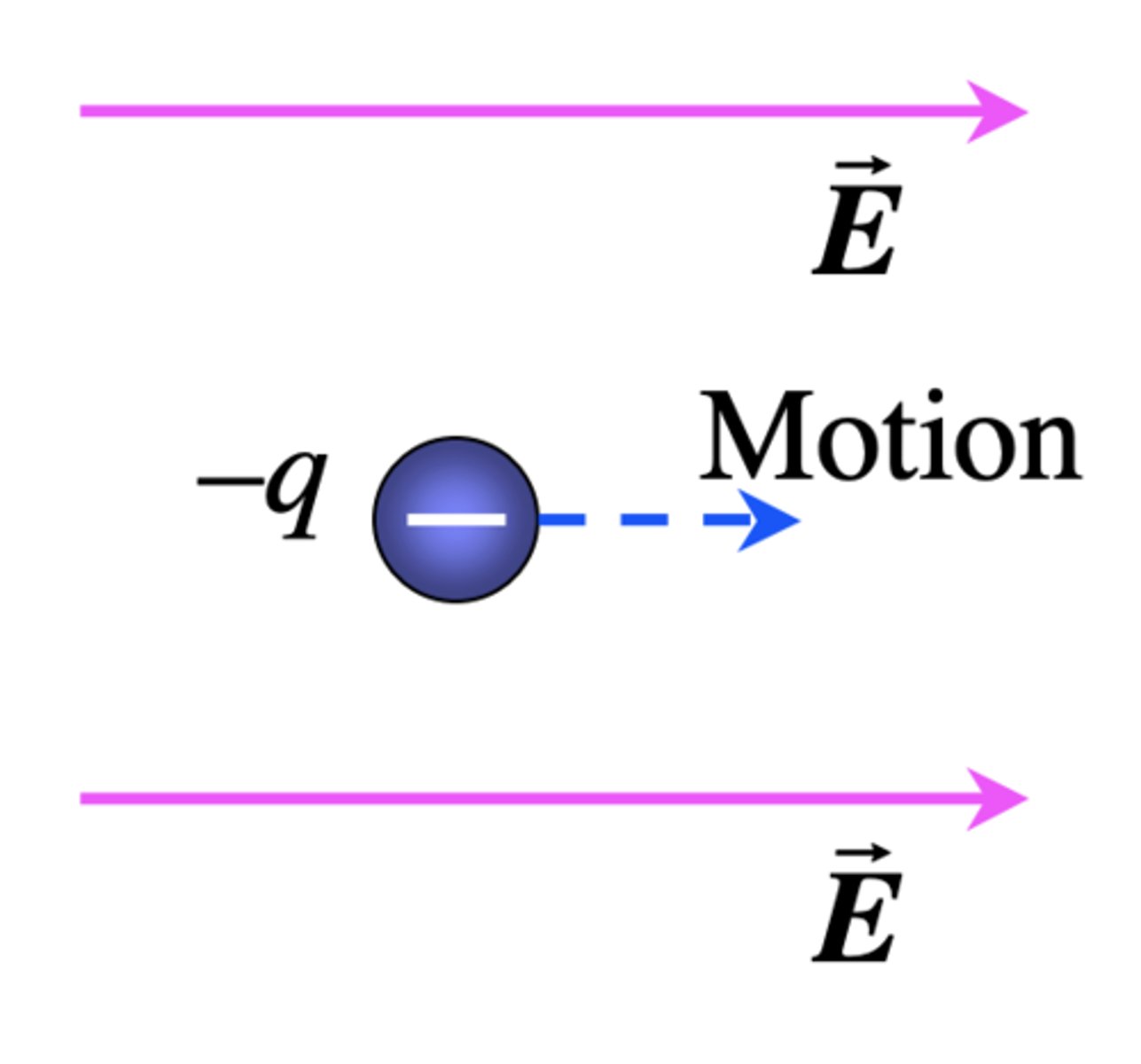
A negative charge is moving in the direction of an electric field. What can you say about the potential energy of the system?
the potential energy increases
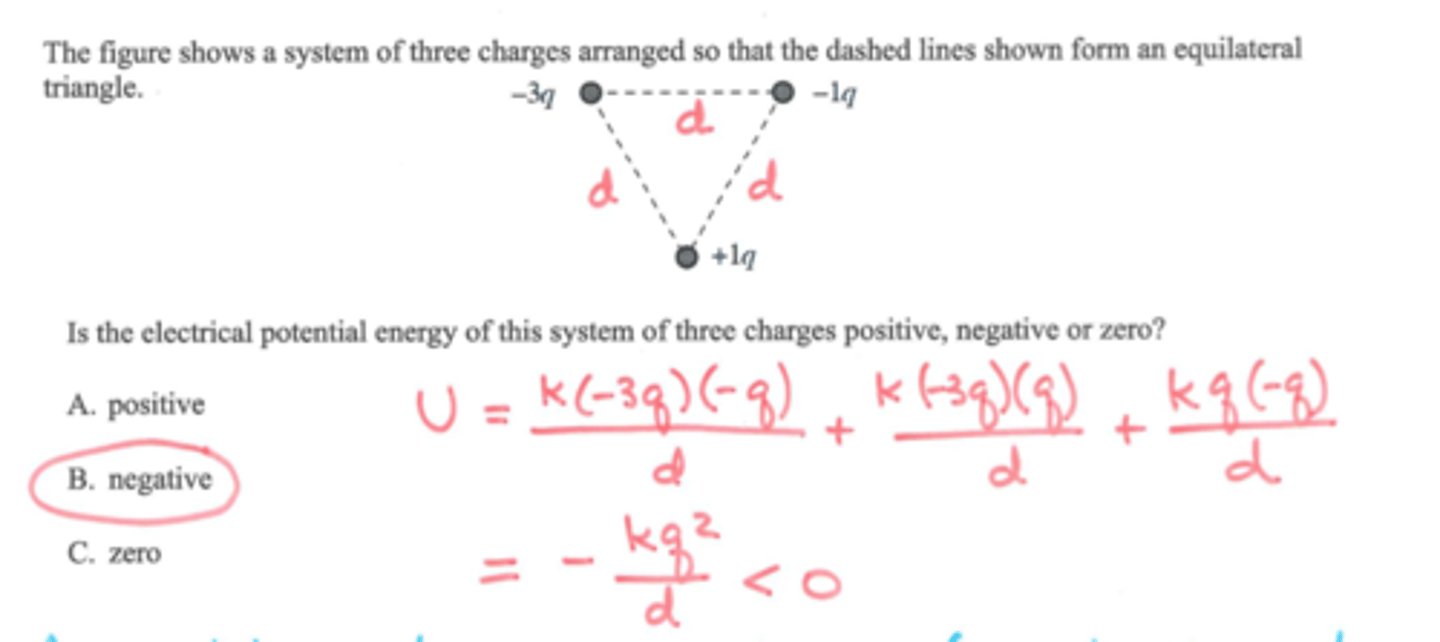
Two positive charges and a negative charge with equal magnitude q lie at the vertices of an equilateral triangle with side a. What is the electric potential energy of the system of the three charges in terms of k, q, and a?
-(kq^2)/a
An electric dipole is shown. The five points shown and the two point charges all lie in the same plane. Which point has the most positive potential value.
fig.
C (+q) D (-q) *E
C
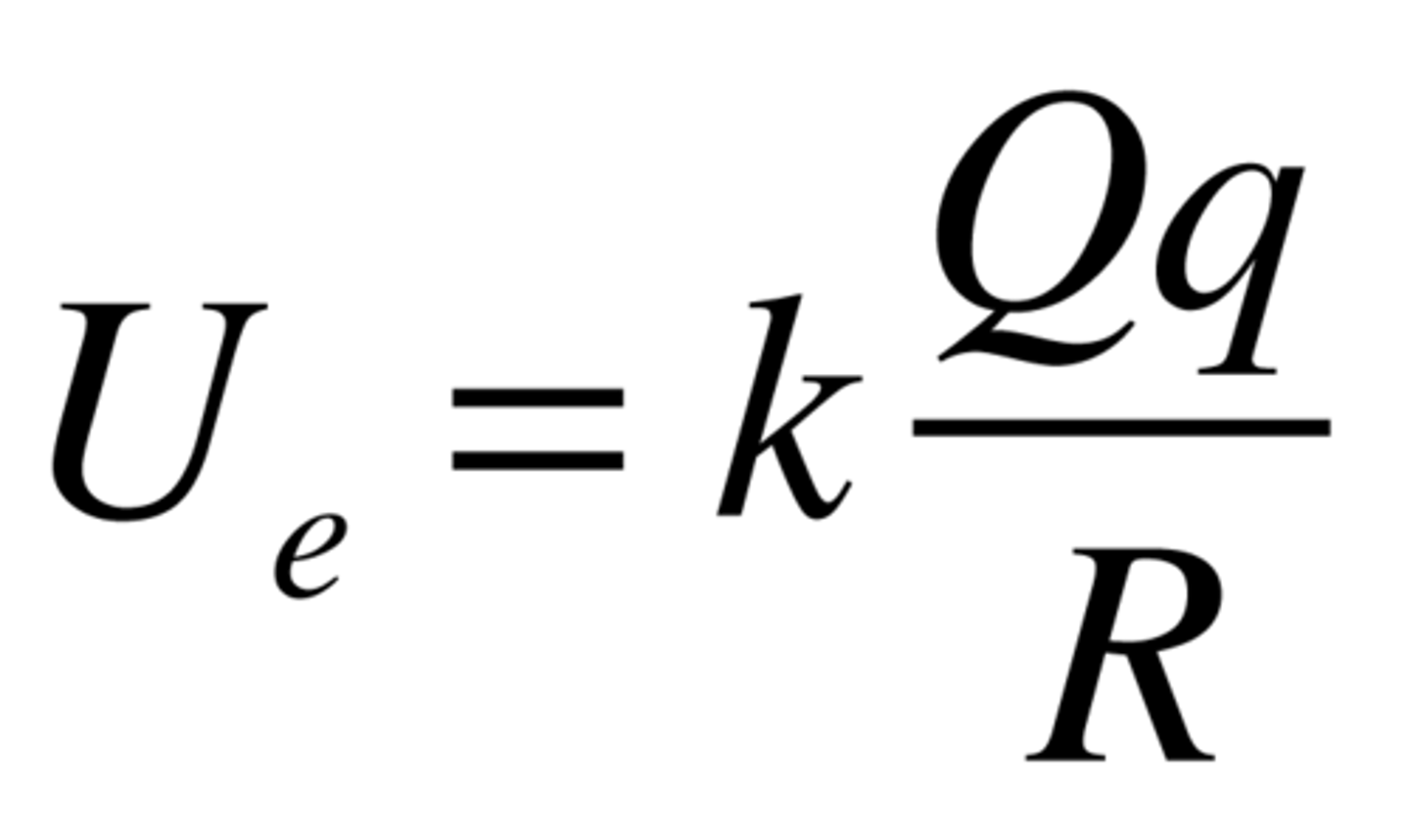
Suppose you have two opposite point charges. As you move them farther and farther apart, what happens to the potential energy of this system relative to infinity?
increases
Find the approximate location of the negative charge on the electric field lines map shown
Answer can be located to where all the lines point to a specific location
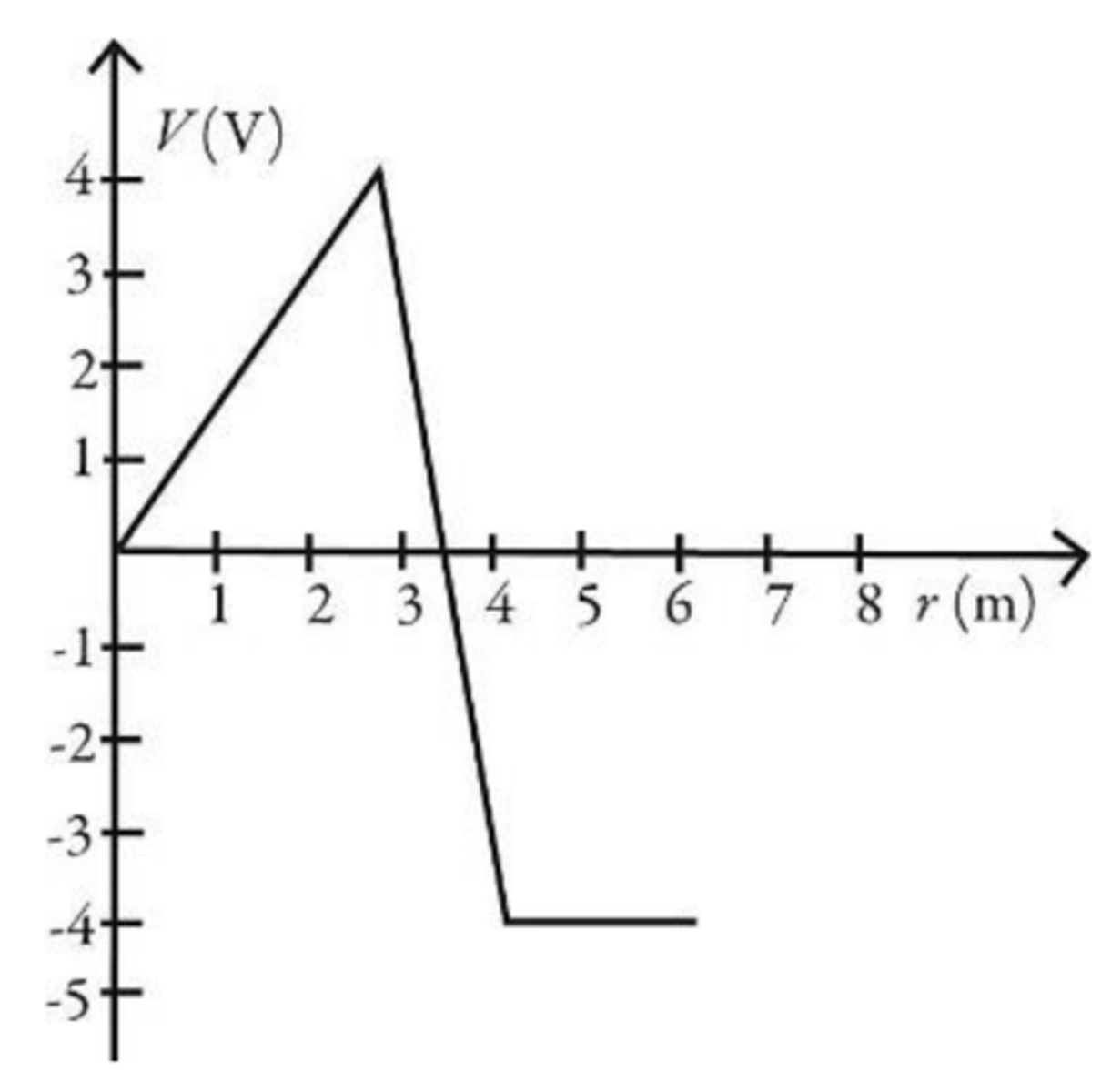
The graph in the figure shows the electric potential as a function of the radial direction r. Rank the positions given from the largest magnitude of the electric field in the negative radial direction to the largest magnitude in the positive radial direction.
r = 1m, r = 2m, r = 3m, r = 5m
1m = 2m < 5m < 4m
Draw the direction of the electric field at point D if an electron is placed at that point.
straight to the left of D
If a positive charge moves from point A to point C in the electric field shown, what happens to the potential energy of the charge-field system?
does NOT change
Consider the semi-circular line of charge pictured above, which has a negative uniform charge density. Point P is at the center of the semicircle. Draw the electric field vector due to this charged arc at point P.
straight down the middle
A positively charged ring lies in the xz-plane. Draw the electric field of the ring at point P along the axis of symmetry of the ring.
Straight up
Two large flat plates are parallel to each other, a distance d apart. They are charged oppositely but with the same charge density σ. Halfway between the two plates the electric field has magnitude E. If the separation of the plates is reduced to d/2 what is the magnitude of the electric field halfway between the plates now?
E
distance does not matter in this context
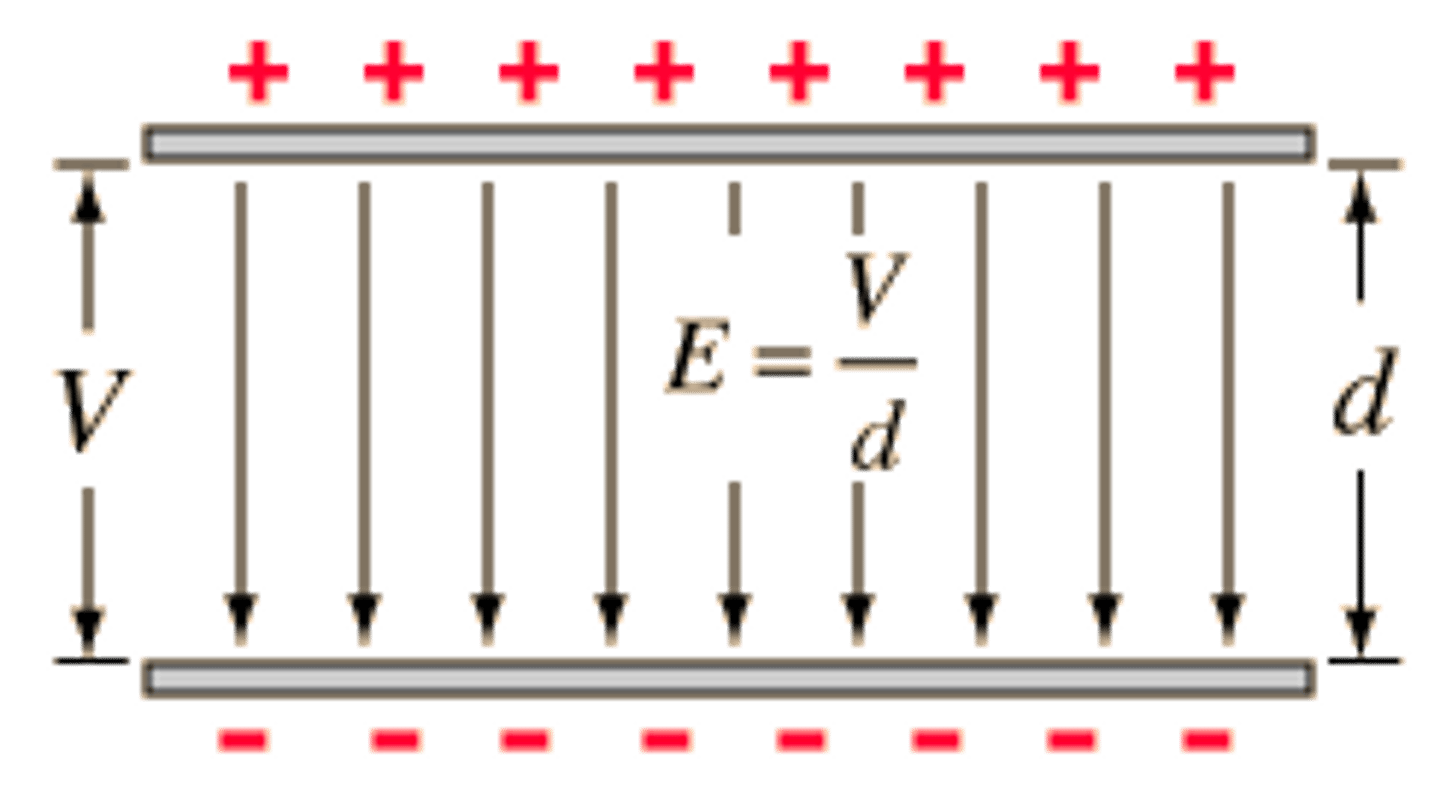
Two large flat plates are parallel to each other, a distance d apart. They are charged oppositely but with the same charge density σ. Express the potential of the negative plate relative to that of the positive plate (V- - V+) in terms of d, σ, and any known constants.
-(σd) / (ϵ0)
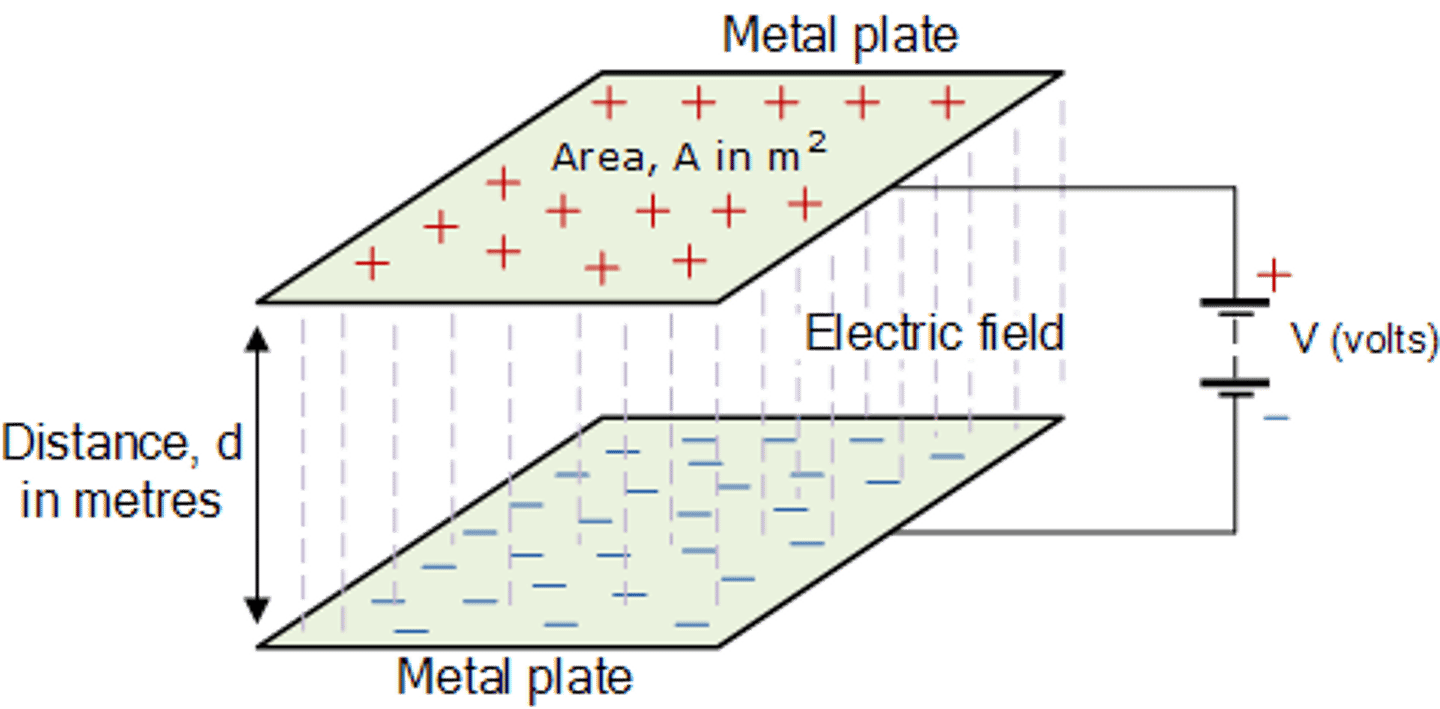
Which of the cases below represents zero electric flux through the circular area?
C
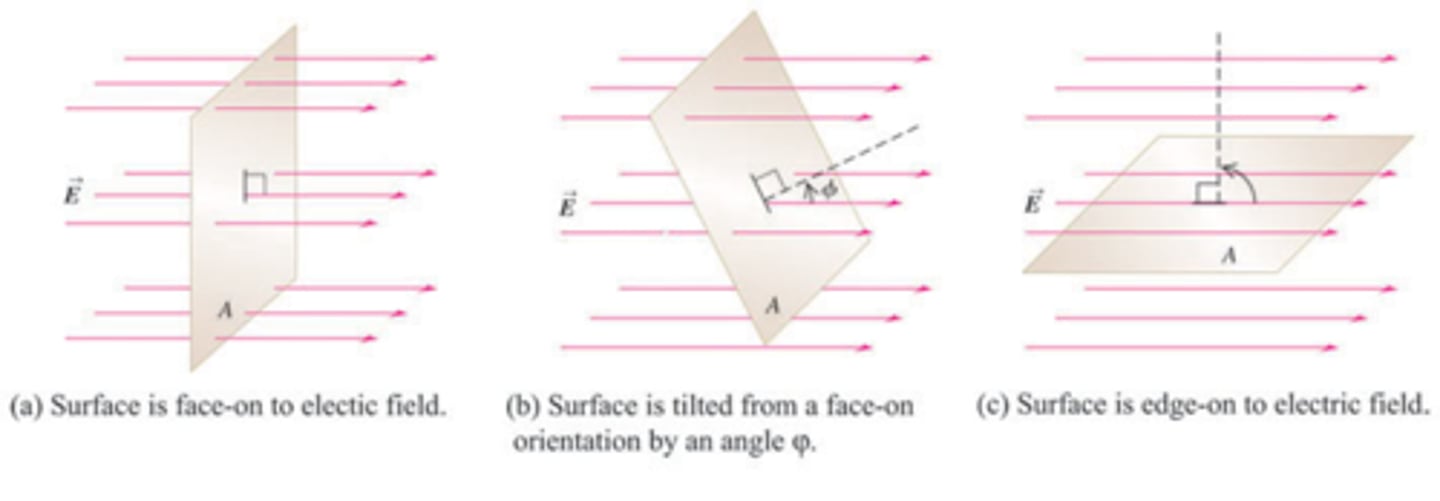
The cube has sides with length d = 2m. The electric field is uniform with magnitude E = 5 N/C in the negative x-direction. What is the net electric flux through the cube's surface?
0
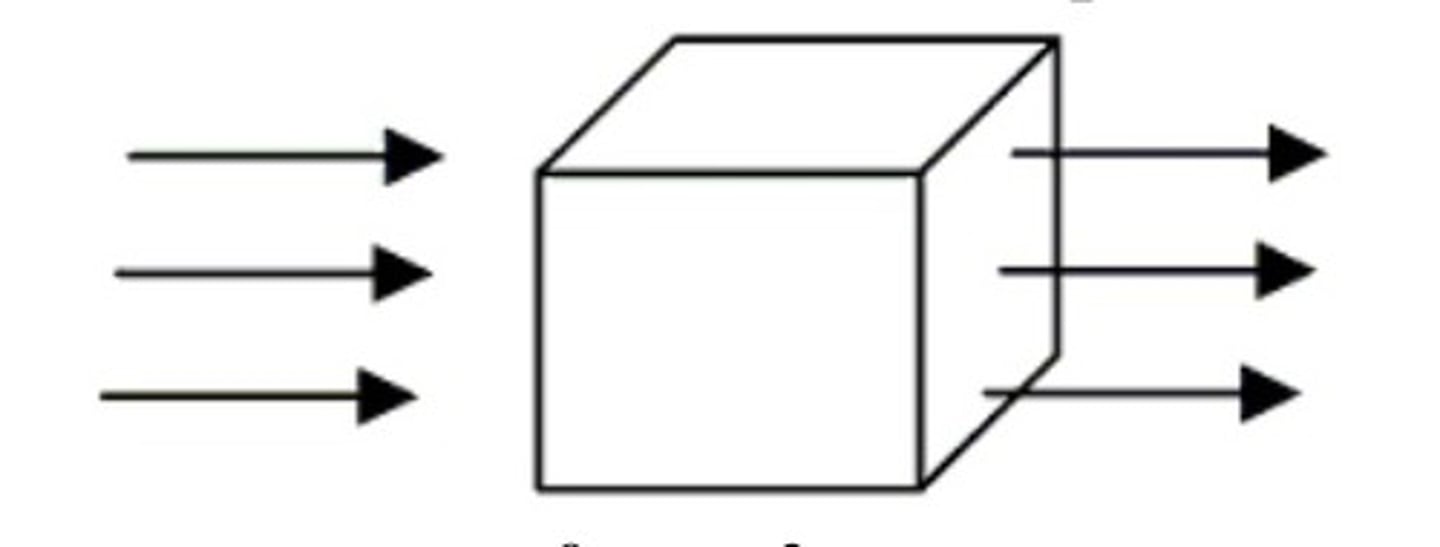
Consider a point charge q at the center (point O) of a spherical Gaussian surface. If the charge is moved from point O to point P, which of the following will change?
The electric field at the surface
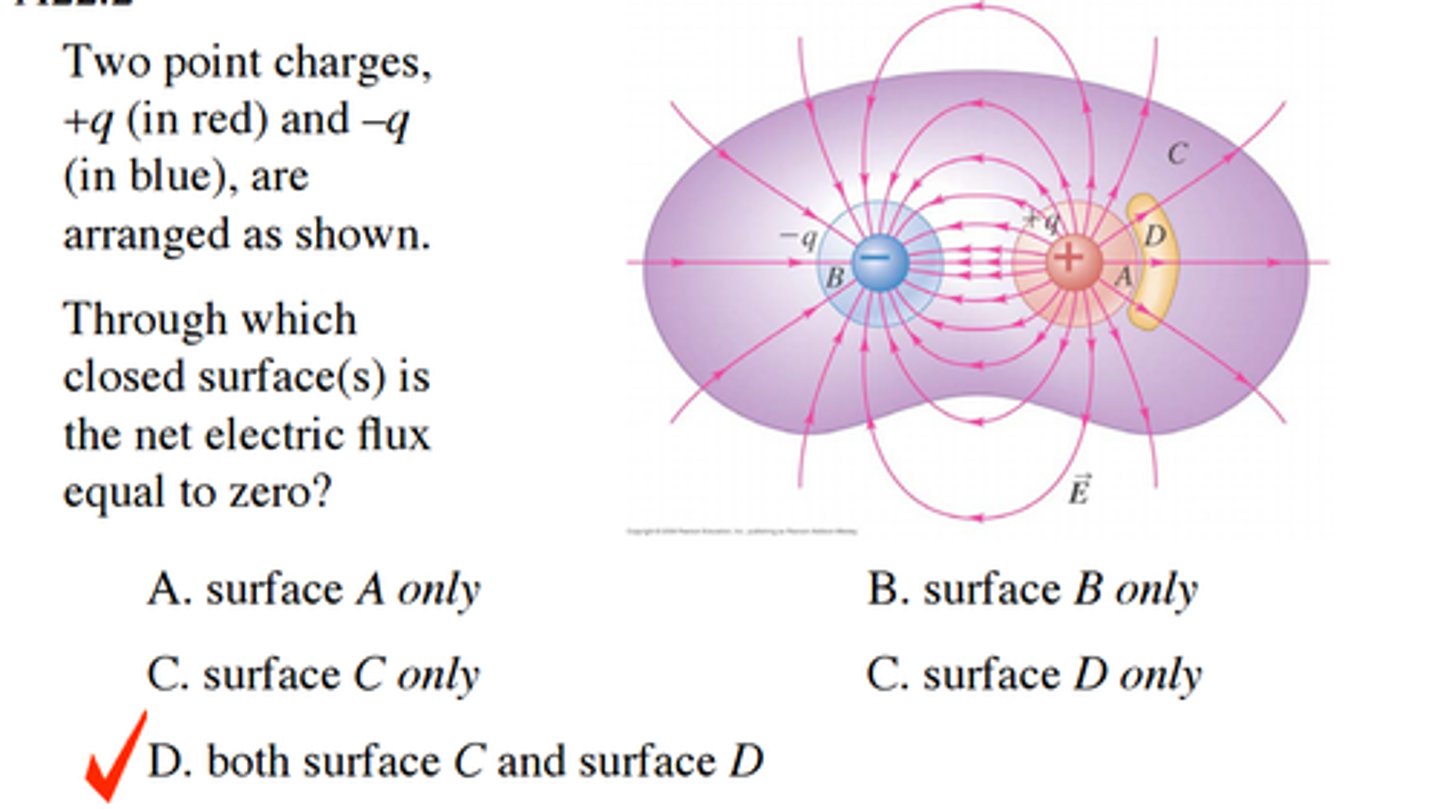
(T/F) If the net electric flux through a closed surface is zero, the electric field at every point on that surface must be zero.
FALSE
Two solid spheres, both of radius 30 cm, have the same charge of +20 mC. Sphere A is a conductor, while sphere B is an insulator with its charge distributed uniformly throughout its volume. Compare the magnitudes of the electric fields of each sphere separately at a distance 10 cm from their center.
Ea < Eb
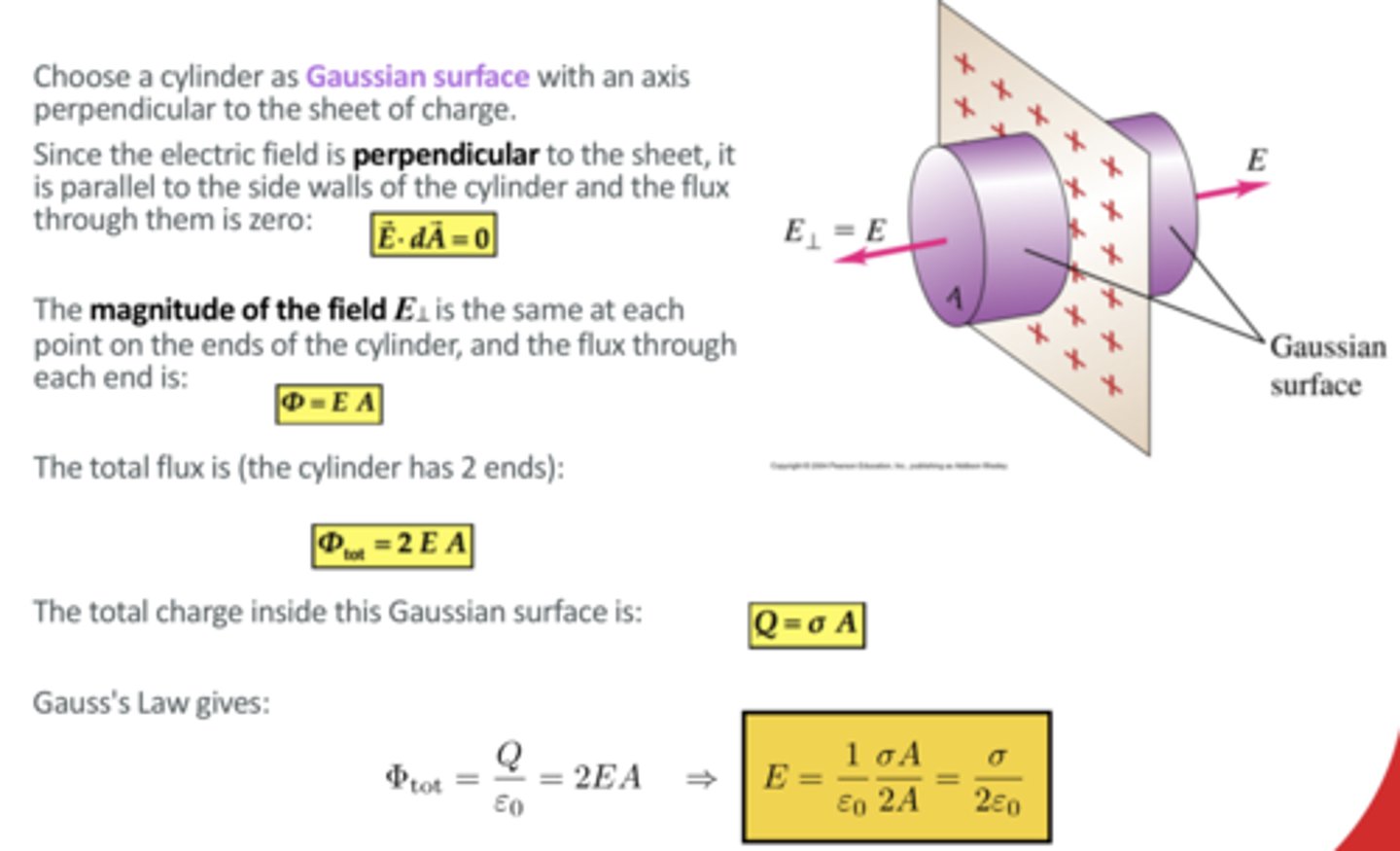
An infinite sheet of charge with uniform charge density σ is shown along with a cylindrical Gaussian surface with its axis perpendicular to the sheet. The bases have an area A. What is the net electric flux through the Gaussian surface?
(σA) / (ϵ0)
Rank the net electric flux through each Gaussian surface shown from most negative to most positive.
A = Q inside a sphere
B = 4Q outside a sphere
C = Q inside a cube
D = -3Q inside a cylinder
D < B < A = C
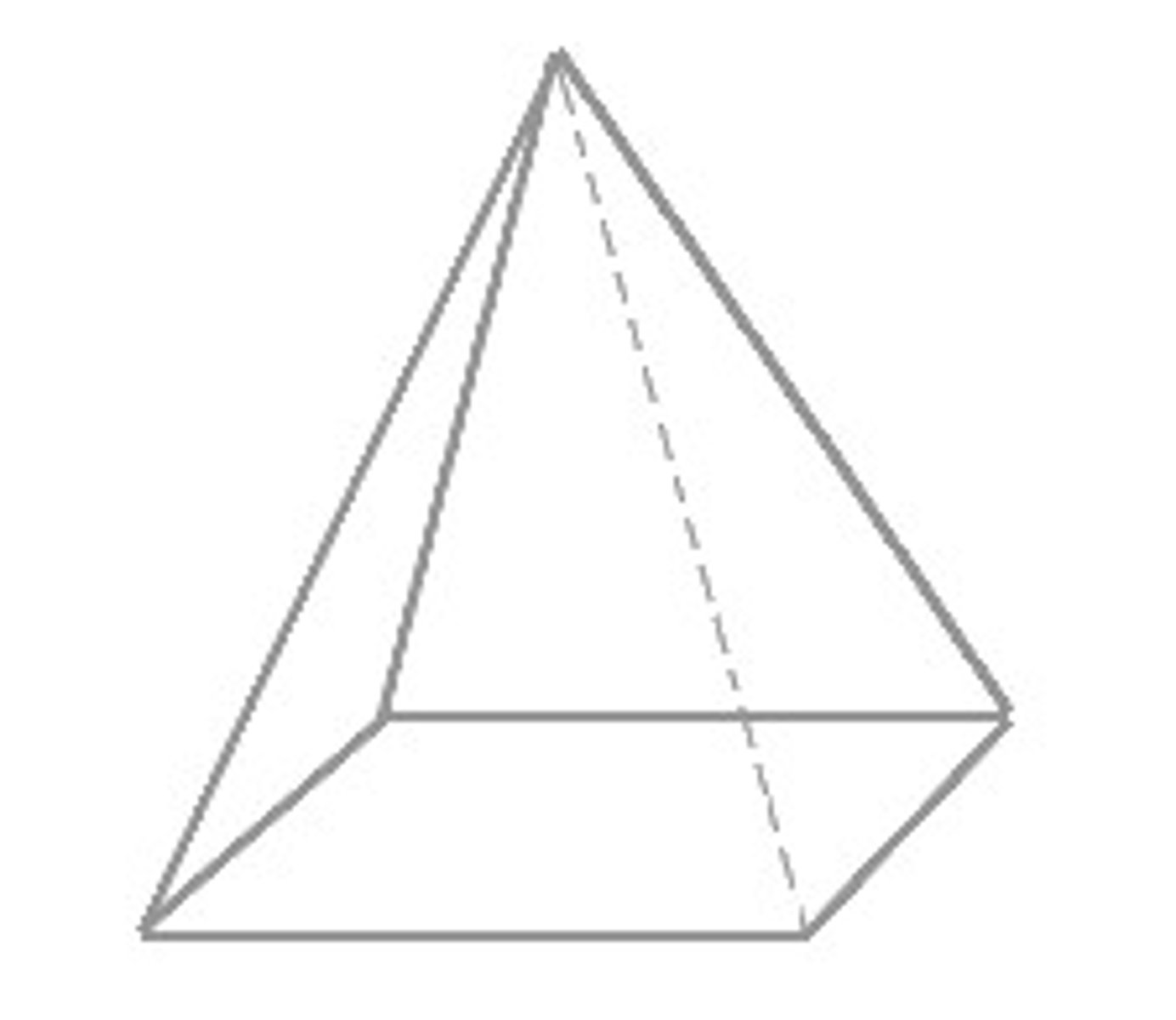
A (6.00m x 6.00m) square base pyramid with height 3.00 m is placed in a uniform electric field of 10.0 N/C as shown. The pyramid encloses no charge. What is the electric flux through one of the four slanted faces?
90
Φf = -1/4(10)(36)cos(180)
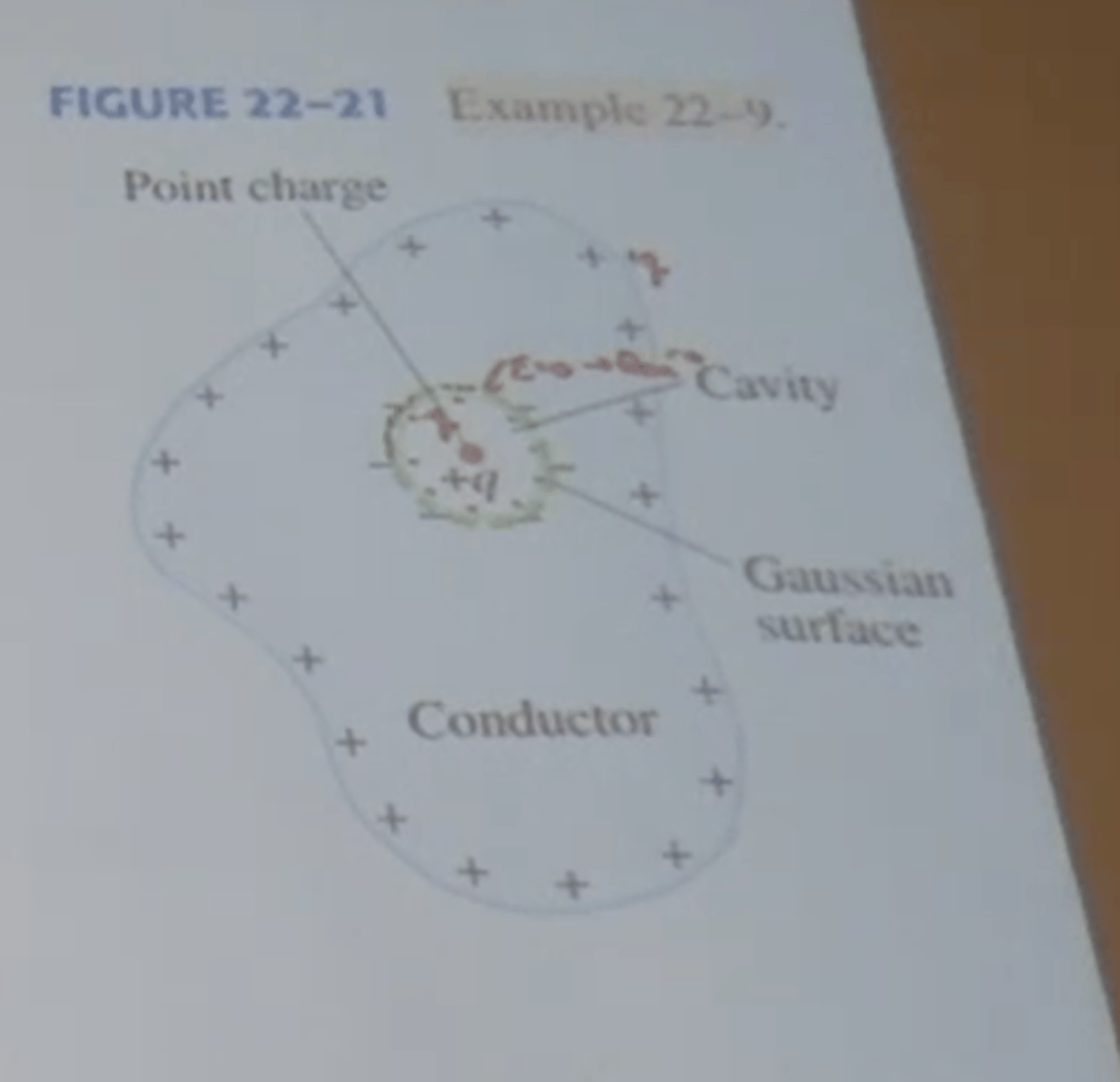
Which equation represents the electric field in region 1 (cavity with -Q point charge)?
E =−Q / (4πϵ0r^2)r^
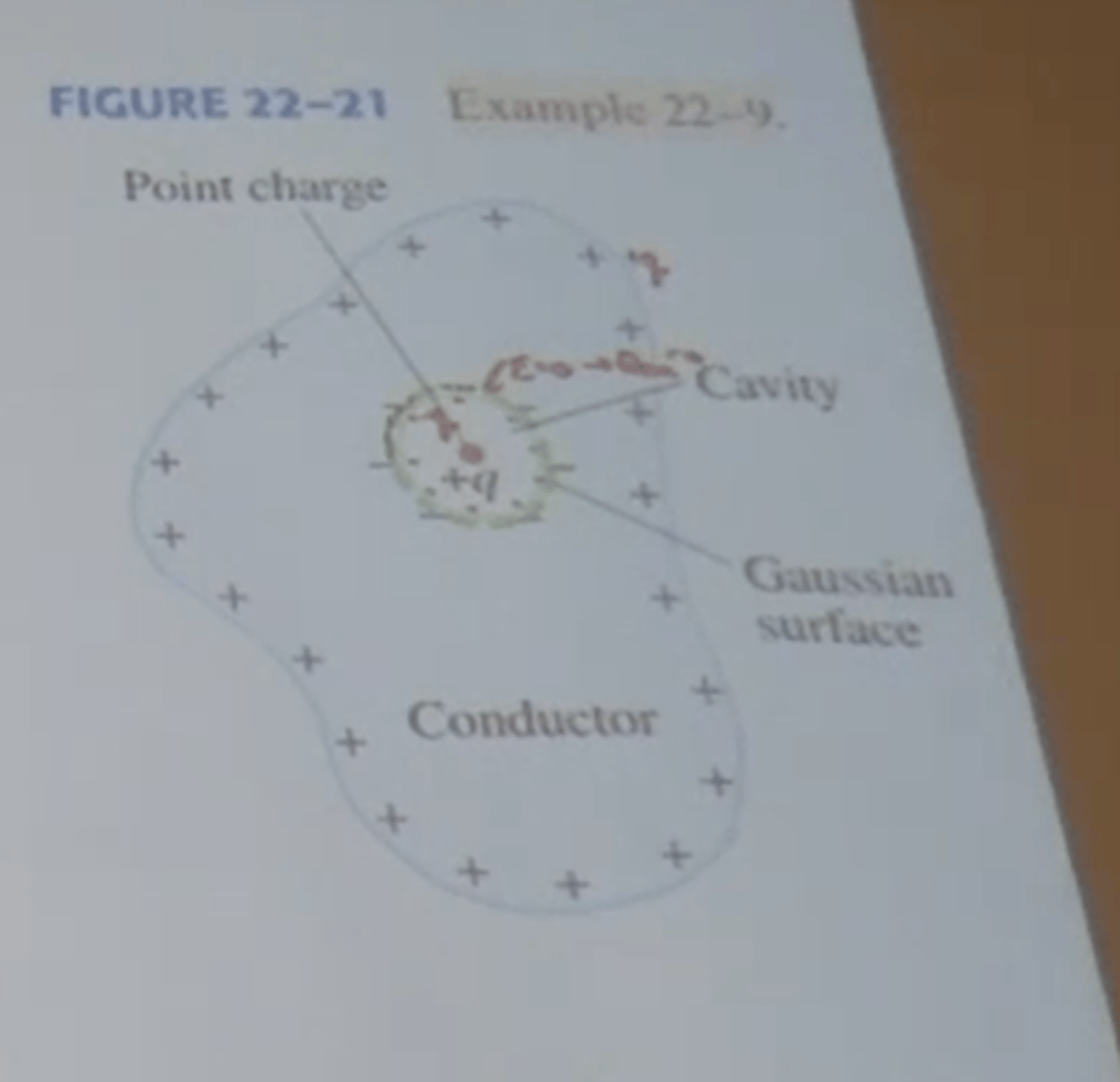
Which equation represents the electric field in region 3 (outside of conducting shell?
E= (2Q) / (4πϵ0r^2)rˆ
A capacitor stores charge 6.0 μC at a voltage of 3.0 V. What is the charge on this capacitor if the voltage applied to it becomes 4.0 V?
8x10^-6 C or 8μC
C=Q1/V1 = (6 μC)/(3 V)=2μF
C=Q2/V2 -> Q2=CV2=(2μF)(4V)
After a parallel plate capacitor with plate separation 3.0 mm is fully charged by a battery, the battery is removed and the plates hold the charge without leaking it. What happens to the magnitude of the electric field between the plates if the capacitor plates are moved to a separation of 6.0 mm?
it doesn't change
An air-filled parallel-plate capacitor is connected to a battery and allowed to charge up. While the capacitor is still connected to the battery, a slab of dielectric material is placed between the plates of the capacitor. After this is done, which of these quantities has increased?
-capacitance
-charge on the capacitor
-energy stored in the capacitor
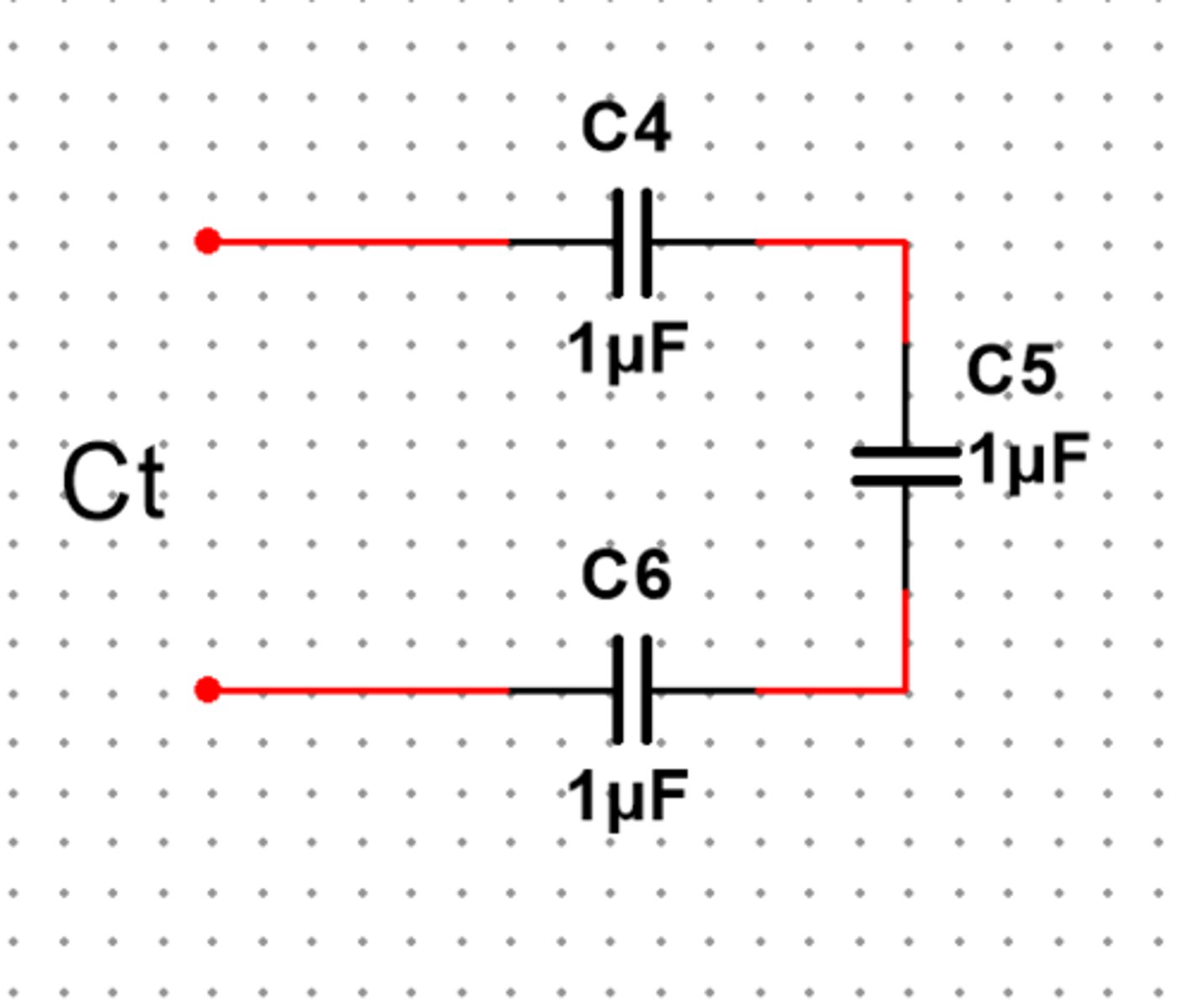
How should you connect a 12-μF capacitor and a 6-μF capacitor, so that when they are charged the 12-μF capacitor has a greater amount of stored energy than the 6-μF capacitor?
in series
value of constant k
k = 9x10^9 Nm^2/C^2

value of constant ϵ0
ϵ0 = 1/4πk = 8.85x10^-12 C^2/Nm^2

charge of an electron (e)
e = 1.6x10^-19 C

mass of an electron
me = 9.11x10^-31 kg
mass of a proton
mp = 1.67x10^-27 kg
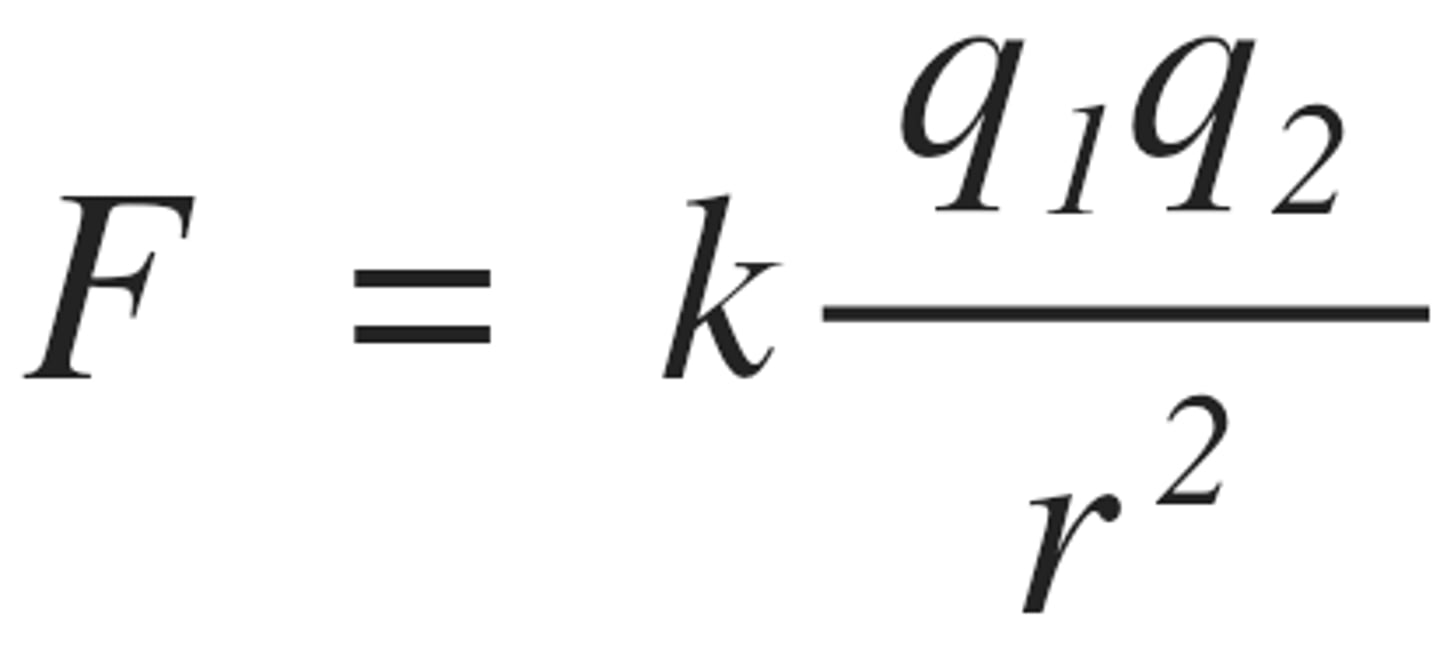
Electric Force and Field
F=k*|q1q2| / r^2
E = F / q
E = ((kq) / r^2 )r^
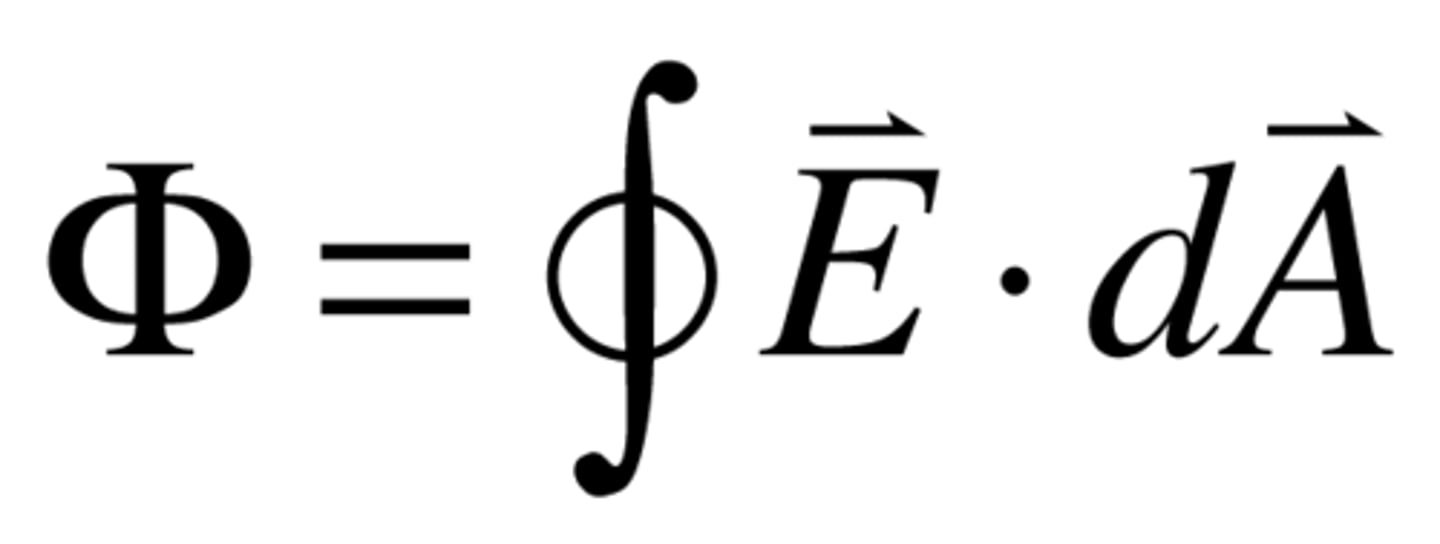
Electric Flux
ΦE = SS E→ *dA→
ΦE,net = (qin) / ϵ0
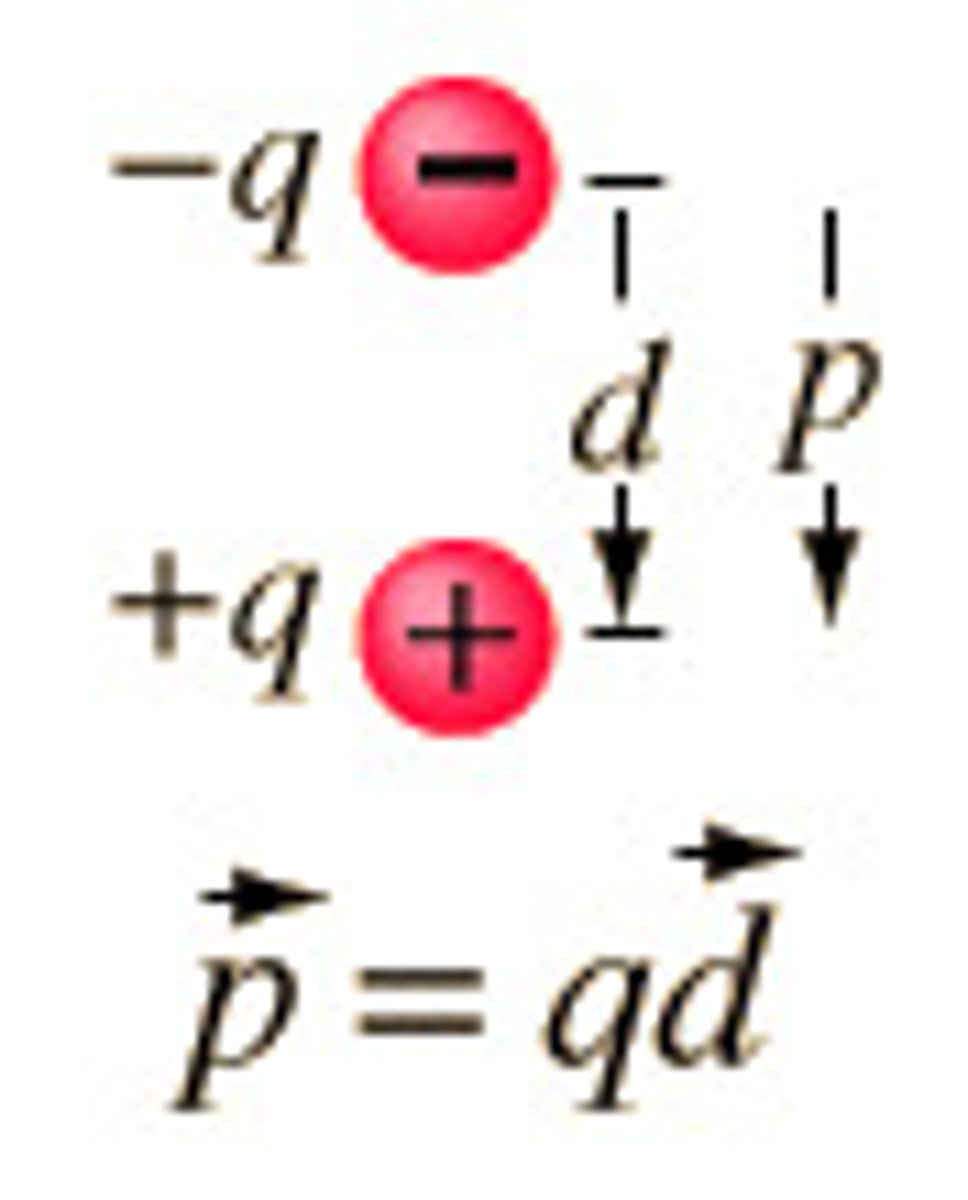
Electric Dipole
p = |q|*d
τ→ = p→ x E→
U = -p→ * E→
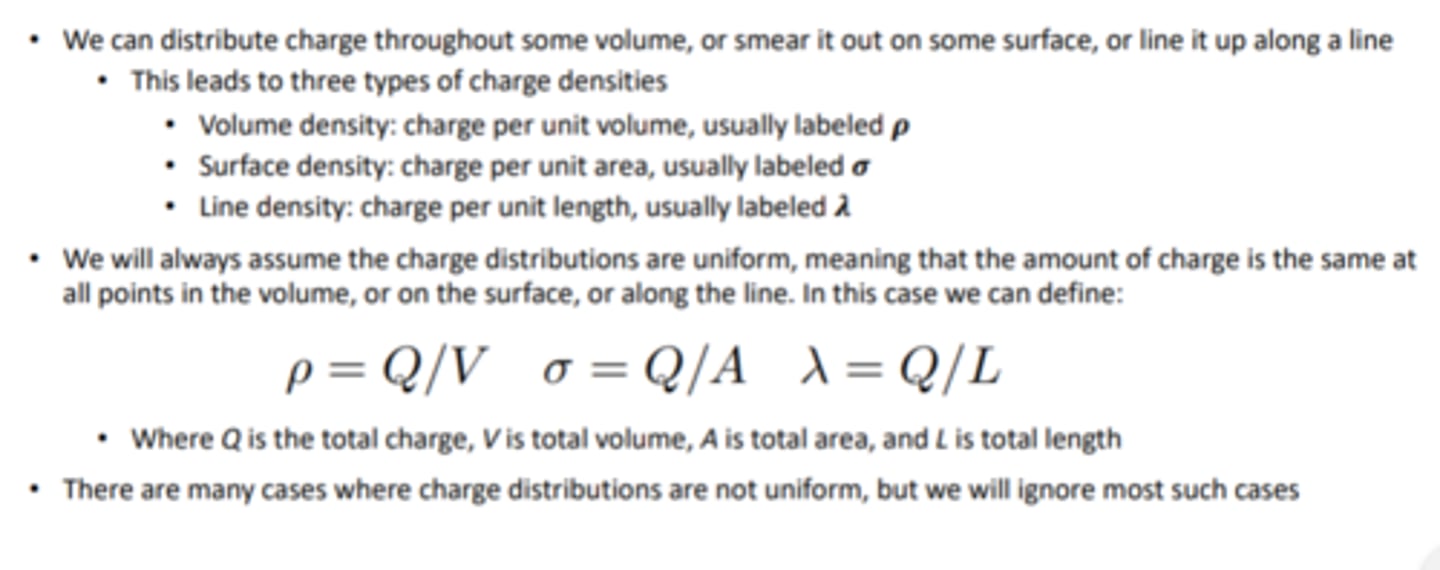
Charge Densities
p = Q/volume
σ = Q/area
λ = Q/length
Electric Field and Charge Distributions
Eline = (2kλ)/r
Ering = (kqx)/(x^2+a^2)^1.5
Esheet = σ/(2ϵ0)
Econd = σ/(ϵ0)
Capacitors
C = Q/V
Uc = (1/2)CV^2
C = Kϵ0
ϵ = Kϵ0
 Note
Note  Flashcards (63)