ARCHITECTURE EXAM 2
 Call Kai
 Learn
Learn Practice Test
 Spaced Repetition
 Match
Match Flashcards
 Knowt Play
1/120

There's no tags or description
Looks like no tags are added yet.
Name | Mastery | Learn | Test | Matching | Spaced | Call with Kai |
|---|
No analytics yet
Send a link to your students to track their progress
121 Terms
Law of Indies - 1573
A comprehensive set of regulations for Spanish colonization. They replaced violent "conquest" with "pacification," aiming to regulate town planning and protect indigenous populations, while enforcing strict grid layouts centered on a central plaza. Regulated social, political, religious, and economic life in the Spanish territory.
Plan of Santo Domingo
1486-1506
Name
Date
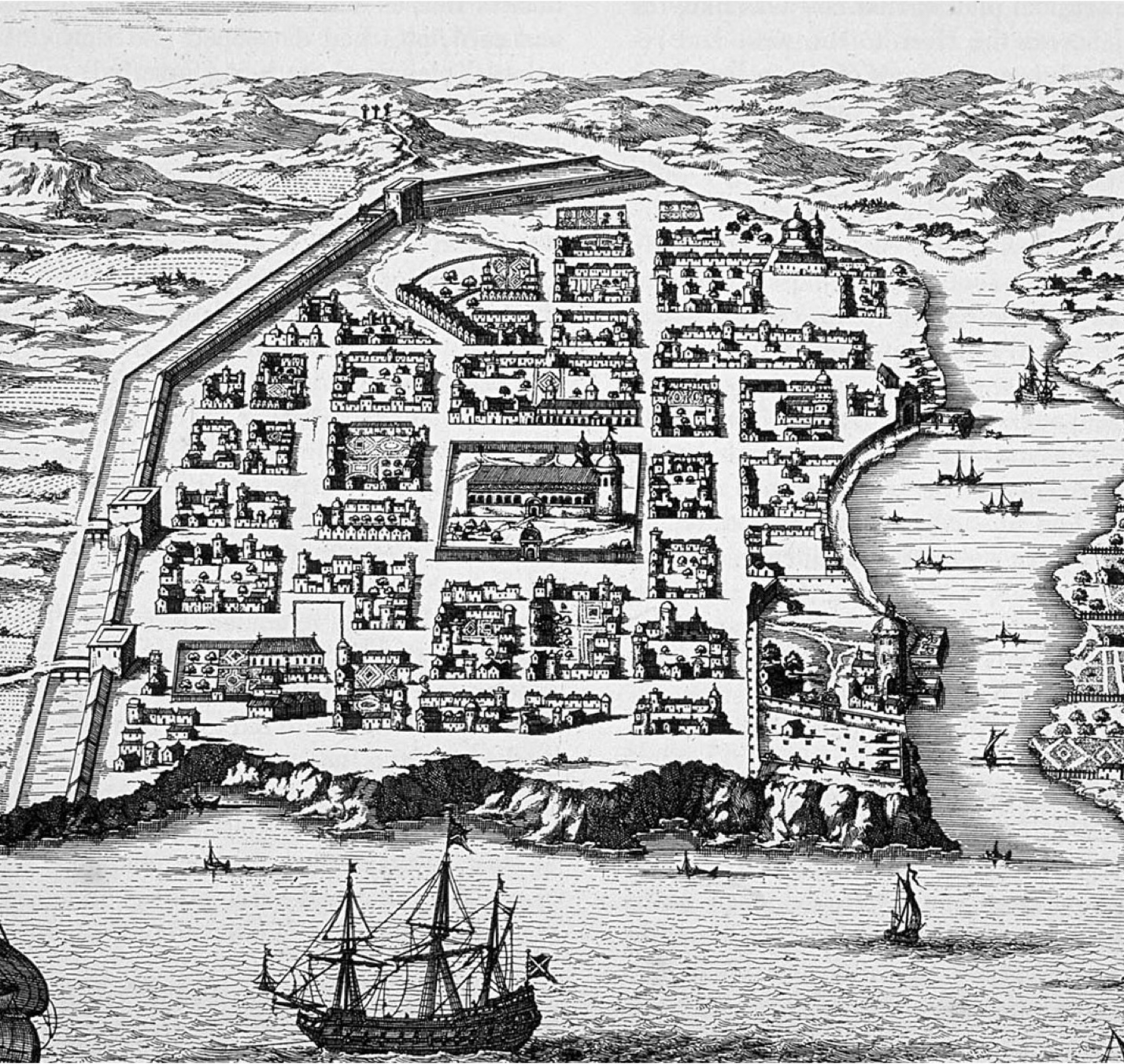
Plan of Santo Domingo, 1496
Dominican Republic
Destroyed by a hurricane in 1500
Early goals of laws of Indies:
Grid system (orthogonal)
Church is at the center of the plan
Sense of importance of religion
Easily accessible, spreading of religion (Catholic faith)
River and water access (ports)
Organized, neat, well-developed
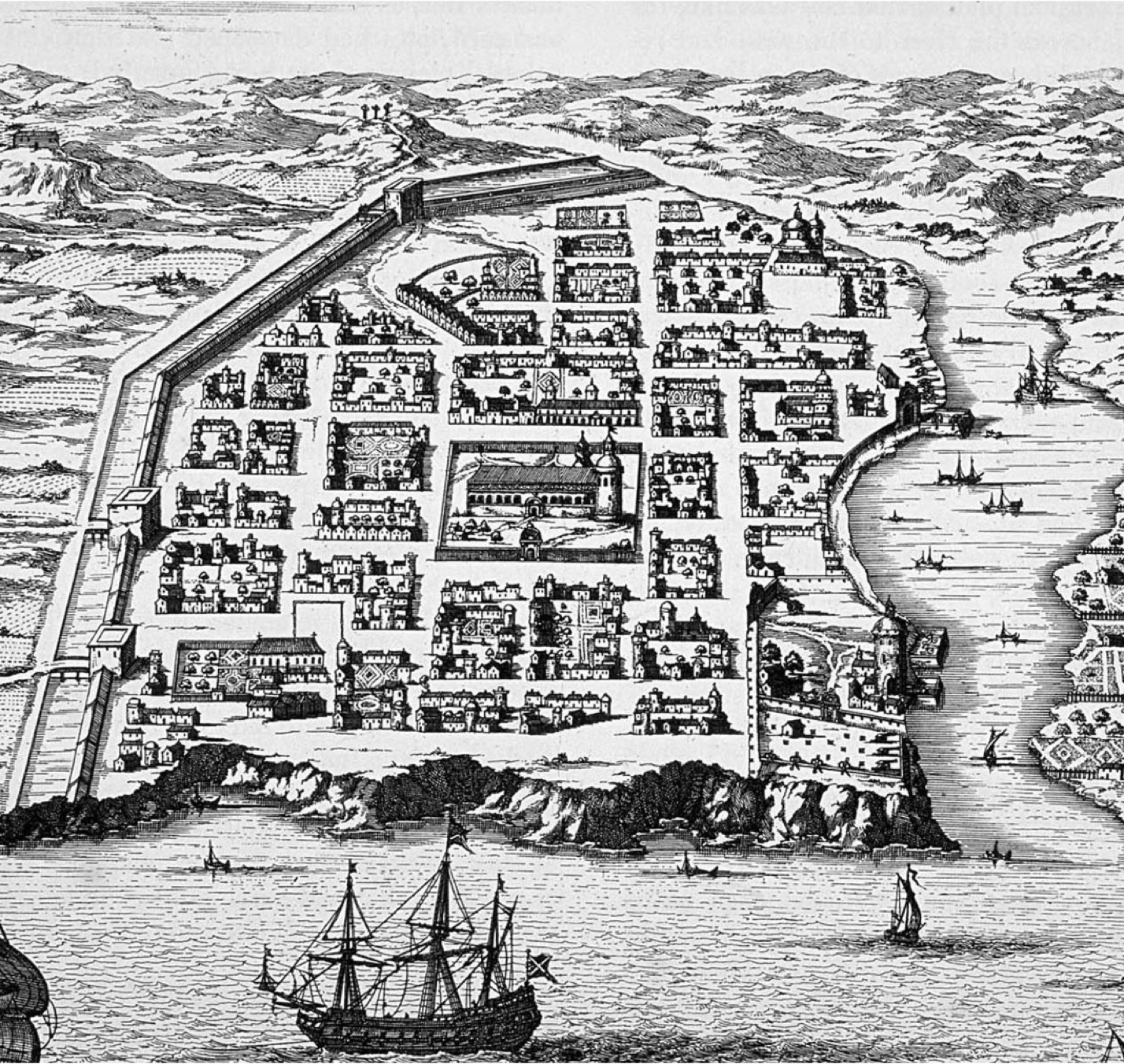
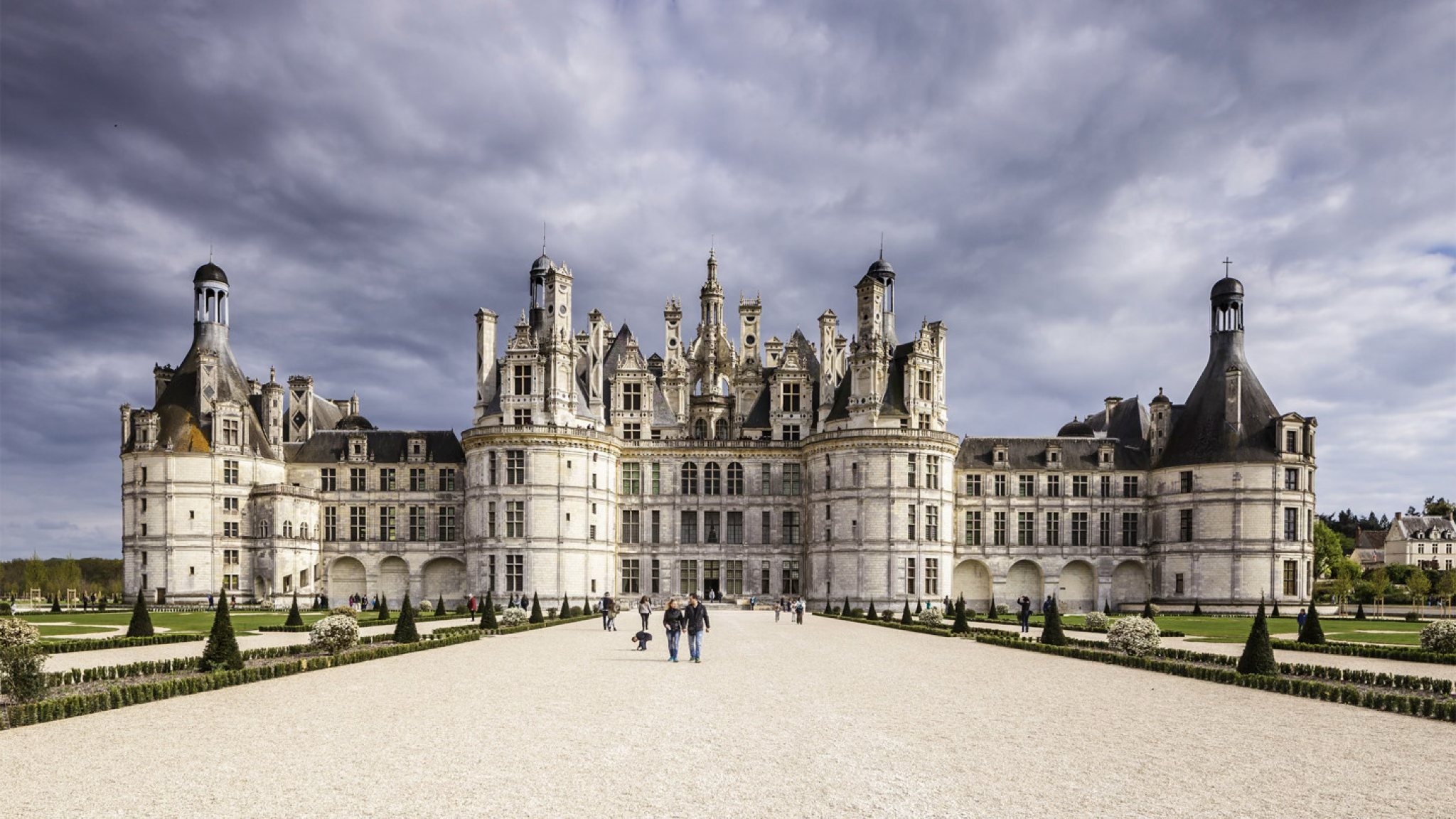
Château de Chambord
Domenico da Cortano
Chambord, France
1509-1560
Name
Architect
Location
Date
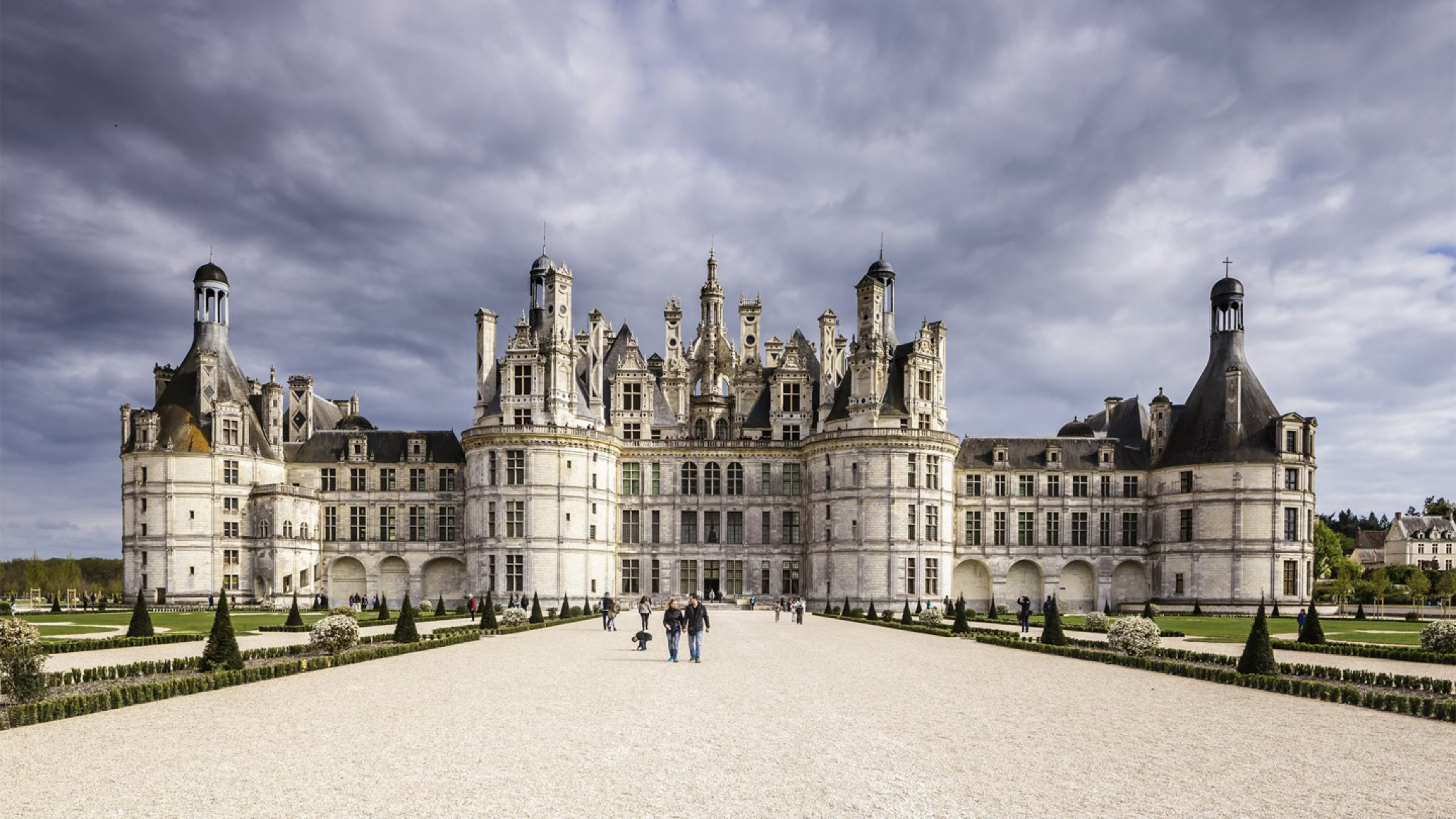
Château de Chambord - Domenico da Cortano
Renaissance: Rounded arches, cornices, balustrades, pedimented entrance, plasters
However, they do not fully understand the orders (plaster ratios)
Gothic: Elongated and stretched out, flying buttresses, spiky ornamented roof line
Not only reflects the King, but the whole country of France
Francis I of France
Interested Italian art and architecture
Patron of Leonardo Da Vinci
Died in Francis I arms
Captured by Italians
Opened the doors to new cultures and ideas when returned to France
Does not abandon French architecture completely
Big windows show it is not built for attack (it is not a medieval castle)
First time Greek Cross was included
Renaissance ideas on a Medieval type building
Double Helix Staircase — Leonardo Da Vinci
Da Vinci was dead before this building was built
Da Vinci had a drawing exactly like the staircase, shows his influence
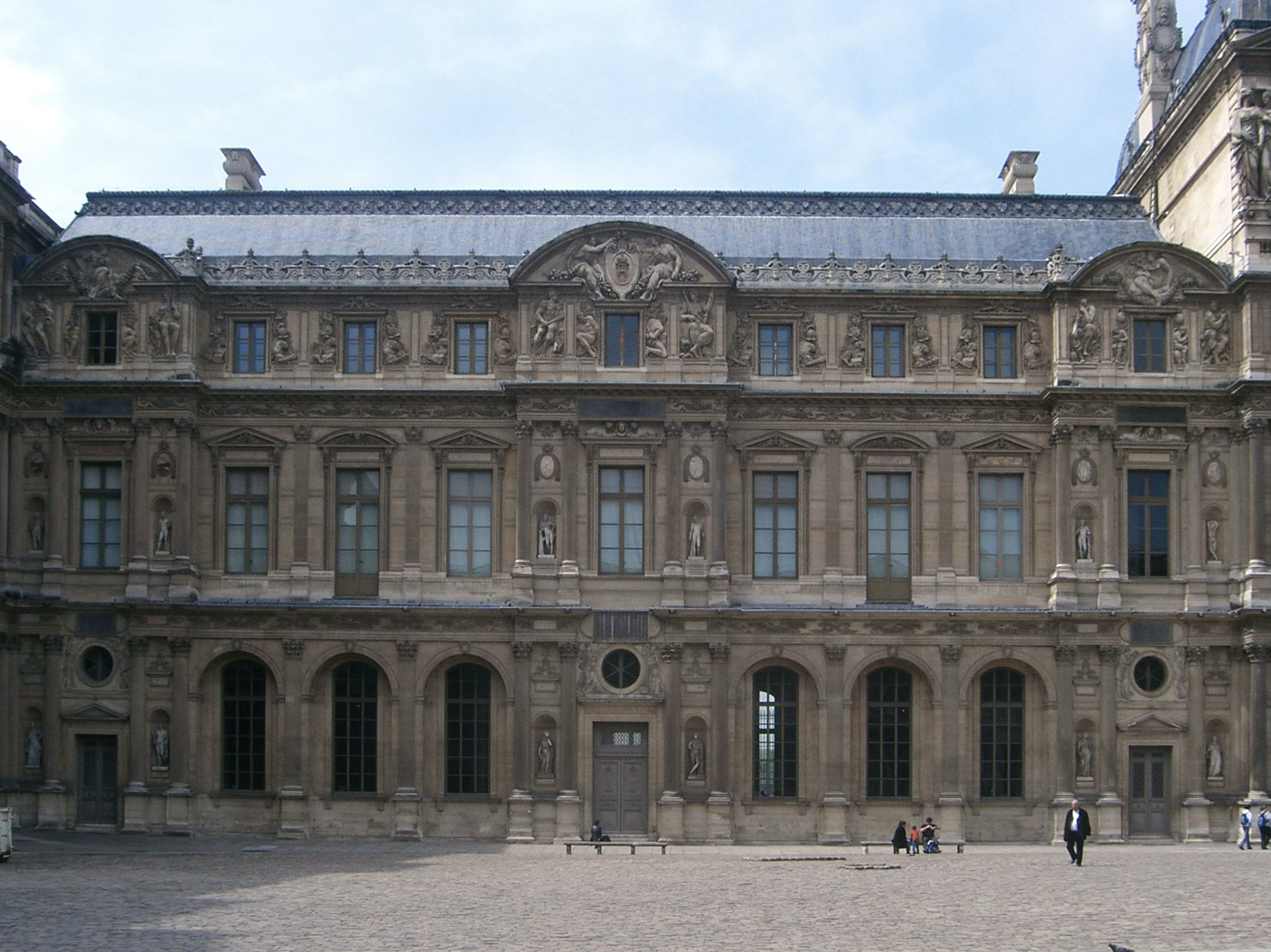
Square Court, Palace of the Louvre
Pierre Lescot
Paris, France
1536-1556
Name
Architect
Location
Date
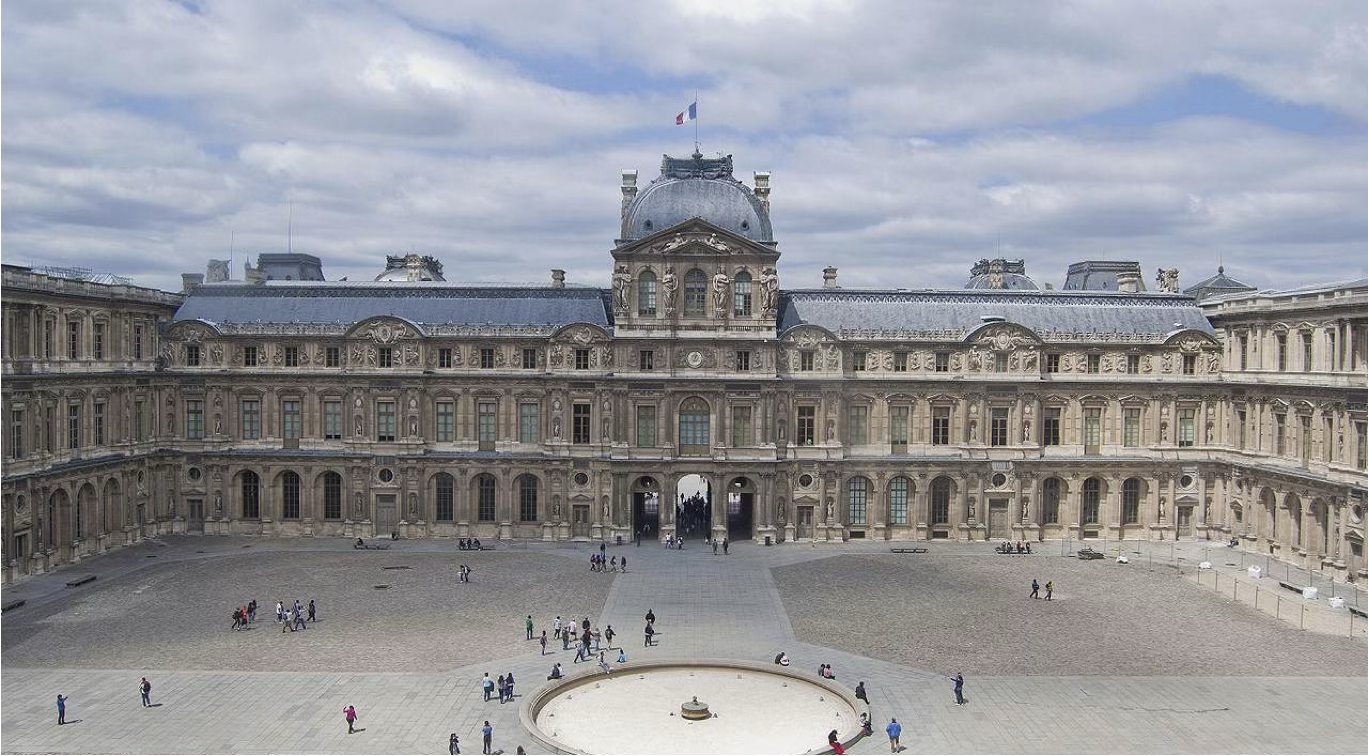
Square Court, Palace of the Louvre - Pierre Lescot
Began to make it more modern in 1545 under Henry II
Sculpture by Jean Goujan
Connects both Italian and French architecture
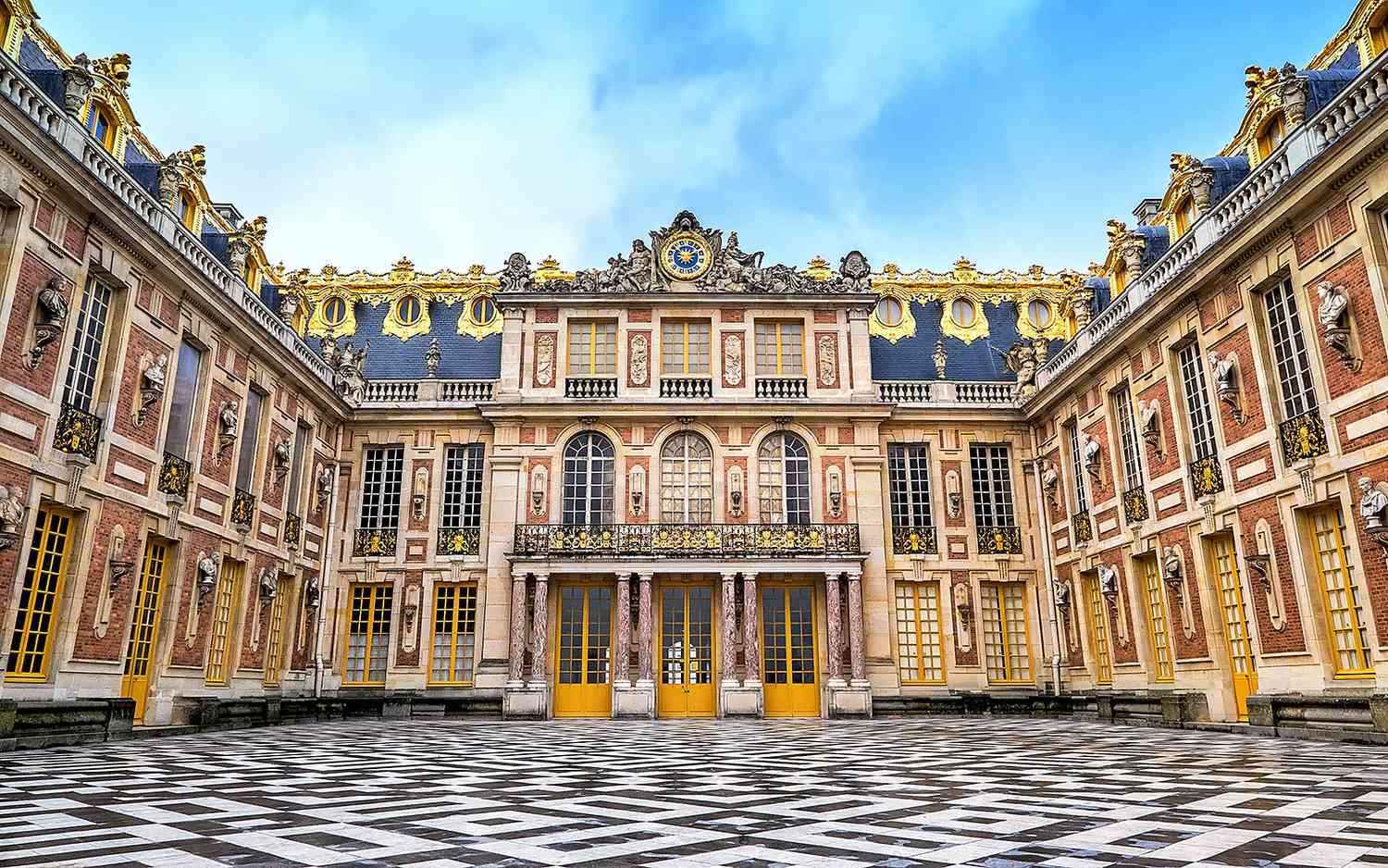
Palace and Gardens of Versailles
Louis Le Vau (Architect), André Le Nôtre (Gardens), Charles Le Brun (Interior Decorator)
Versailles, France
1651-1671
Name
Architect
Location
Date
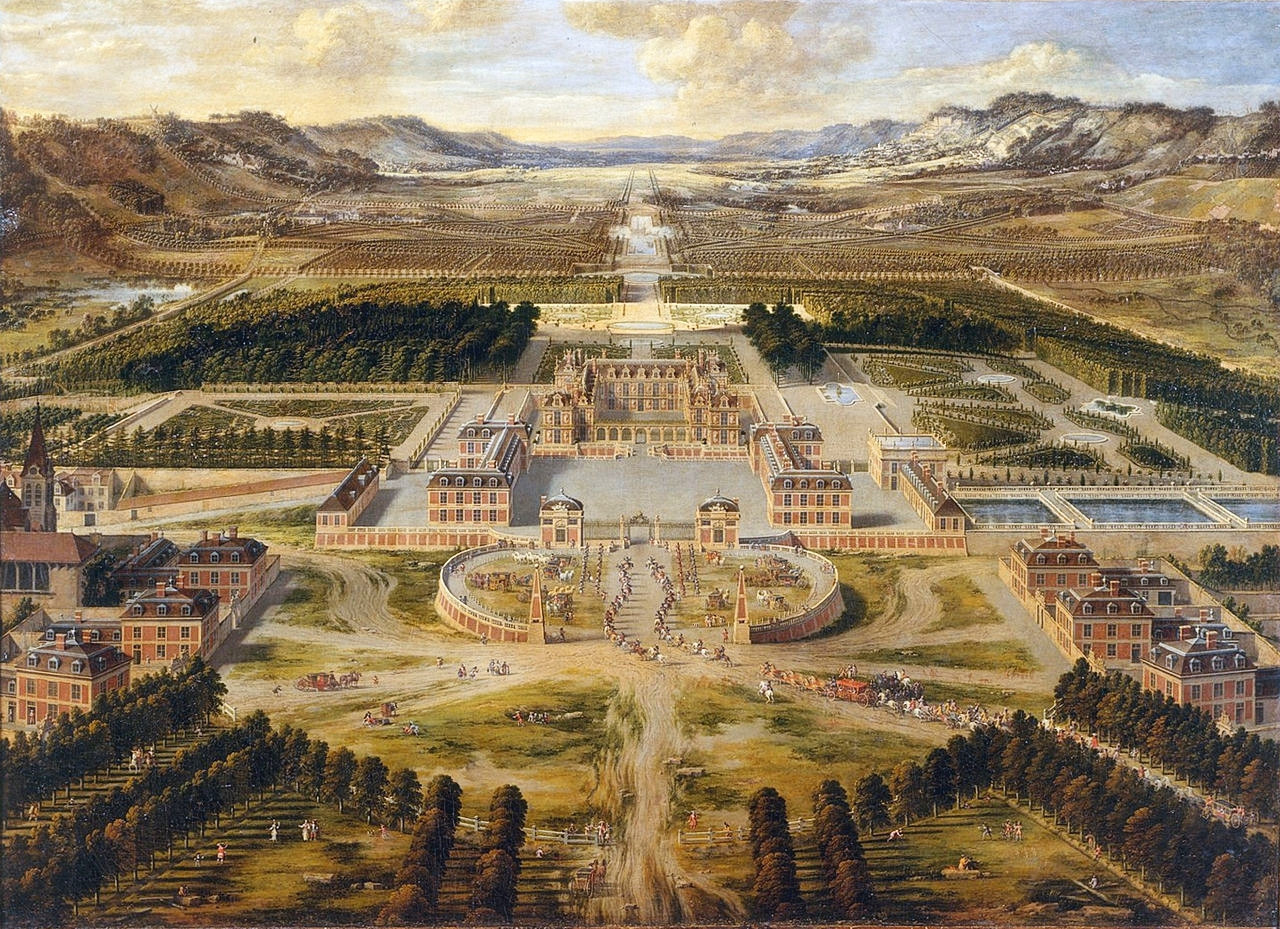
Palace and Gardens of Versailles
Versailles, France — 1661
Architecture as propaganda
Everything has to work together, needs to glorify the King Louis XIV, because if you glorify Louis XIV, you glorify the territory of France
King Louis XIV bedroom is in the center
Mansard Roof
Louis XIV had called himself the Sun King, so there are Sun emblems all around the building (center of the universe)
Still has Renaissance elements while glorifying Louis XIV
All Versailles was a theater, and King Louis XIV was a show
Baroque frescos and art, displays power of the throne
Overwhelming decoration
The front is very French-like, while the back is very boxy and Renaissance-like
Trivium grand entrance
Baroque planning is the planning of control
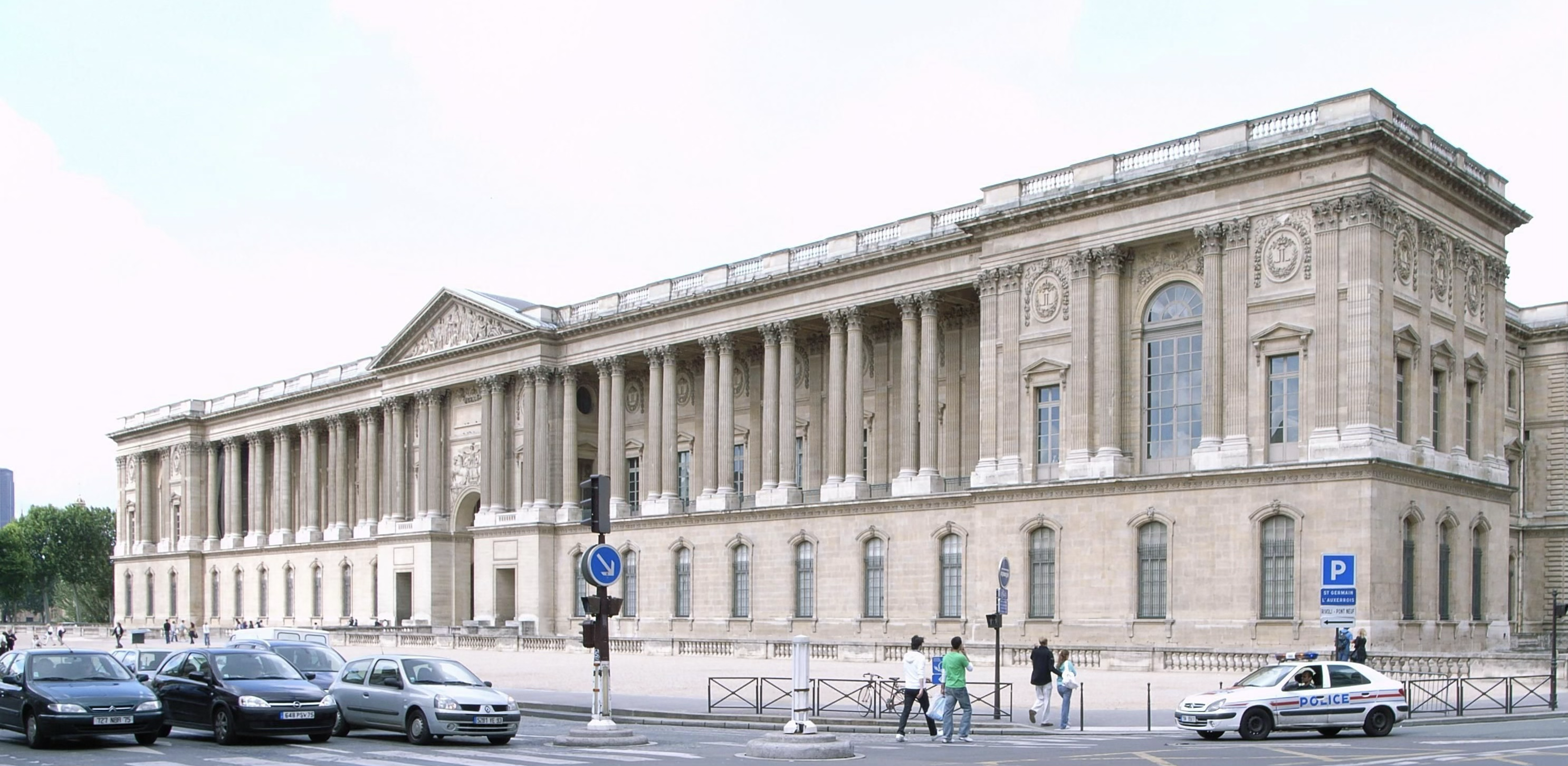
East Facade of the Louvre
Claude Perrault
Paris, France
1657-1680
Name
Architect
Location
Date
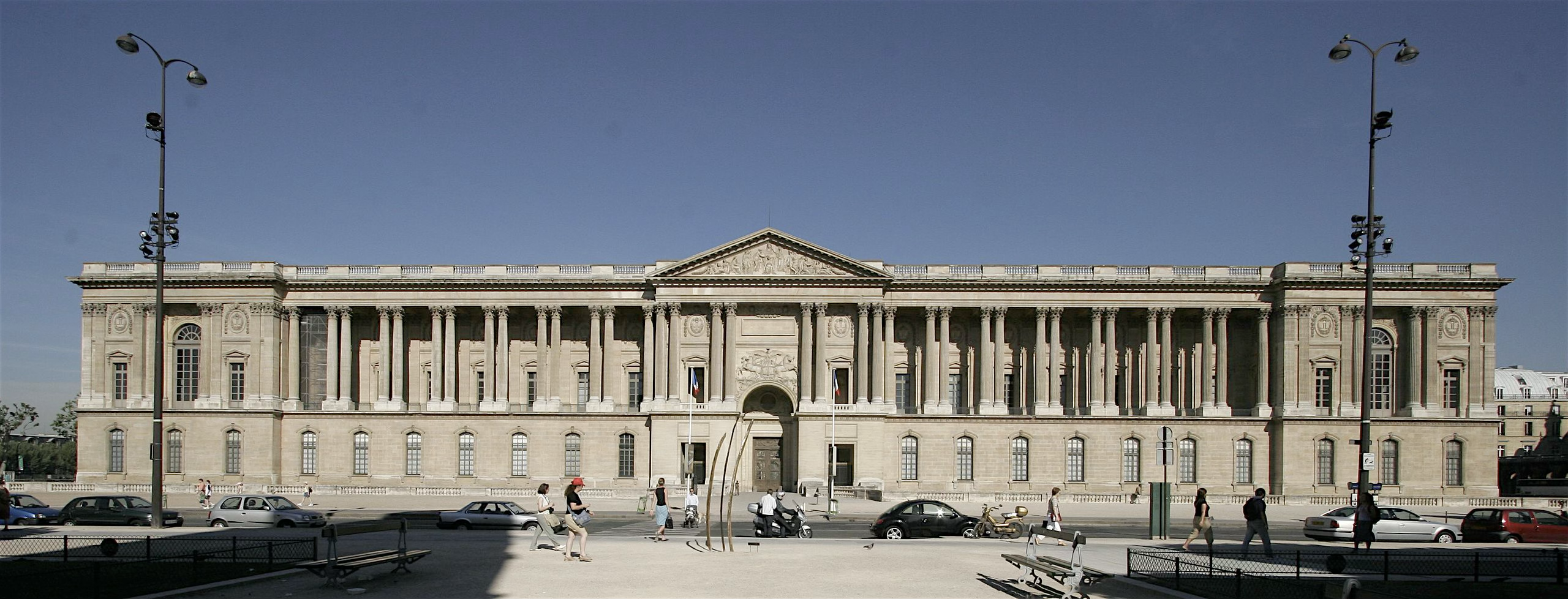
East Facade of the Louvre - Claude Perrault
1667-1670 - King Louis XIV starts construction again
Much longer than anything the French would’ve done at the time
Paired-columns = french device
Triumphal arches, pediments
Simplified Baroque = calm, linear, not theatrical
Gianlorenzo Bernini’s idea for the East facade of the Louvre was rejected, as it was too theatrical and too Italian
Building concave and convexed
Hardwick Hall
Robert Smythson
Derbyshire, England
1581-1607
Name
Architect
Location
Date
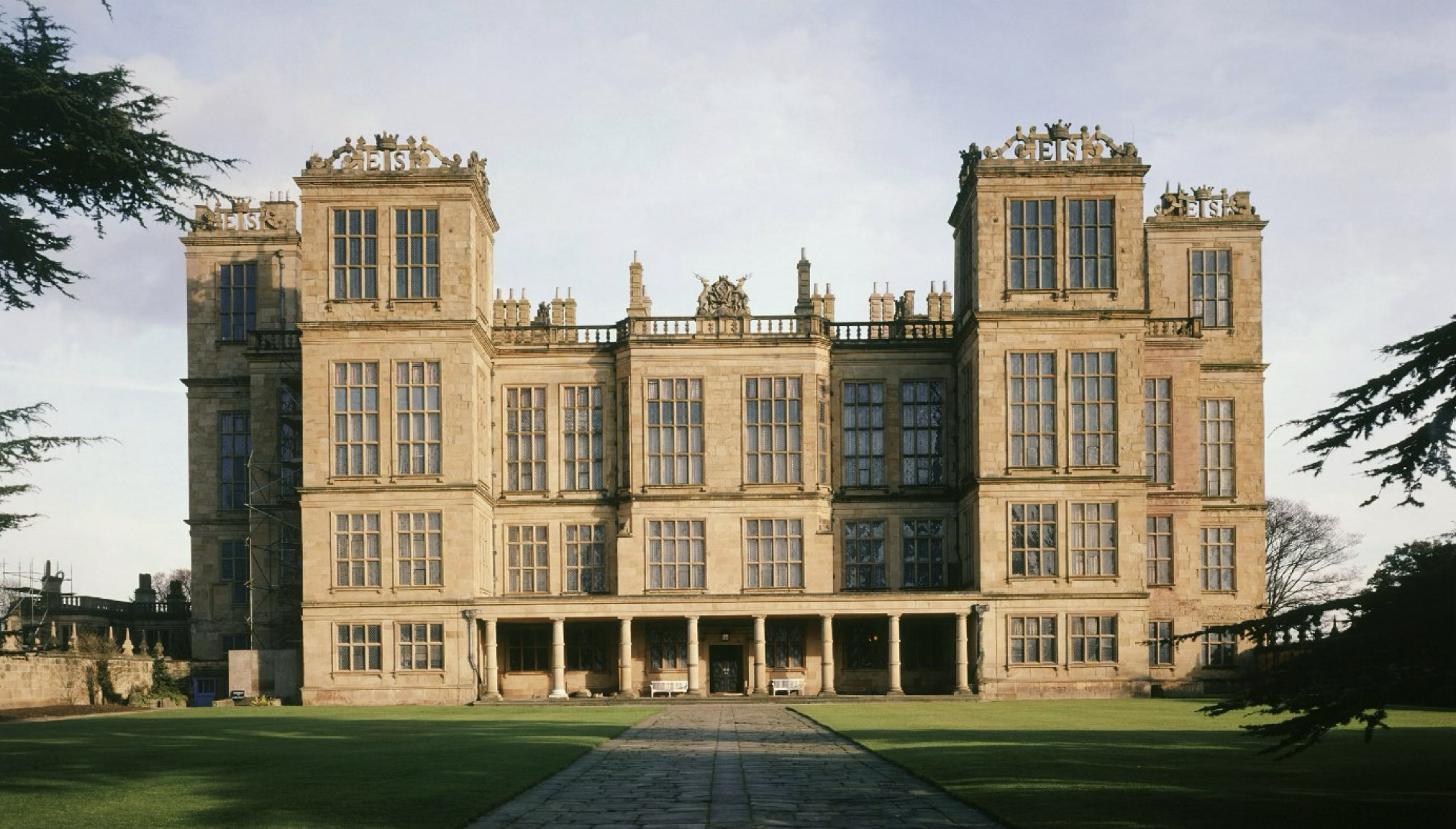
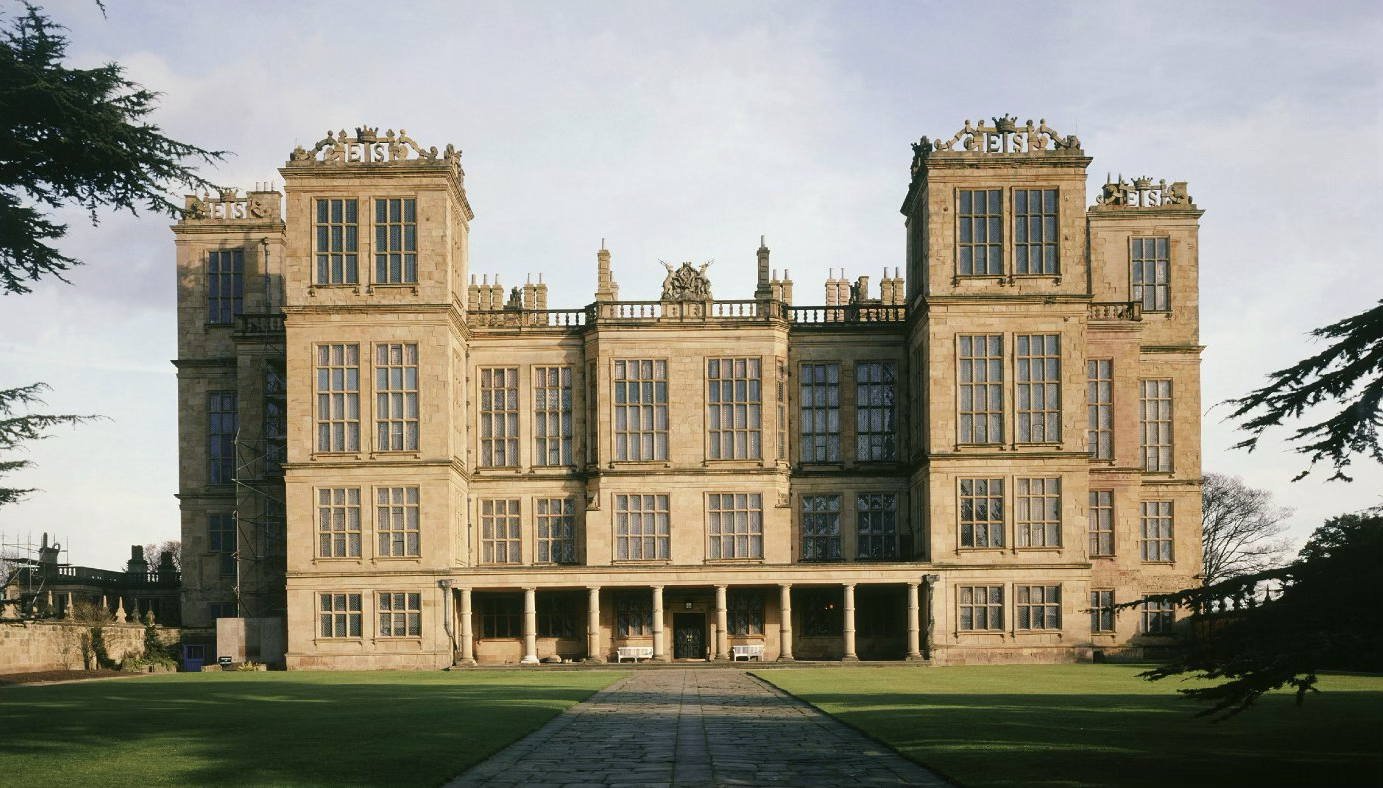
Hardwick Hall - Robert Smythson
Very vertical, eyes are pulled up (associated with gothic style)
Decorative roof line (Gothic style)
More blocky and uniform, planned and built as one (Renaissance approach)
Balustrade, colonnade, A-B-A rhythm (Renaissance aspects)
Banded columns, strong course that stops on side of building (hybridization of architecture)
Bigger windows = more important spaces
Defensive look with the corner towers, however, larger windows show it is not for defense
Awareness of Italy
Built for Elizabeth Shrewsbury, very wealthy and businesswomen (glass business)
“Hardwick Hall more glass than wealth”
Glass is expensive and she's showing it off
E.S. initials on the top of the building along with a crown
Bess of Hardwick, Countess of Shrewsbury Rowland Lockey, 1592
Hardwick (Old) Hall, 1587-1596 — Elizabeth’s first plan for Hardwick Hall, very irregular building plan
Very thick stone walls to support glass
Classical details inside of the house
Important spaces are toward the top of the building, bottom spaces are for work spaces
Massive gallery in the house filled with family portraits
Queen’s House
Inigo Jones
Greenwich, England
1606-1626
Name
Architect
Location
Date
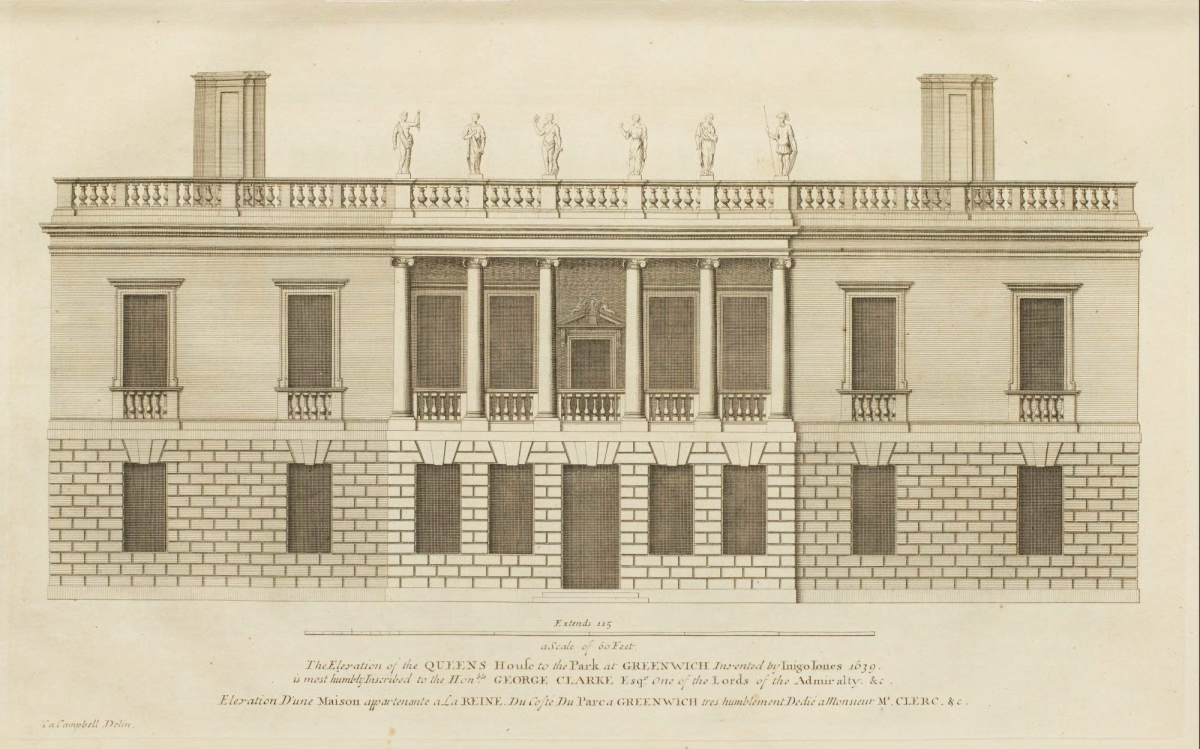
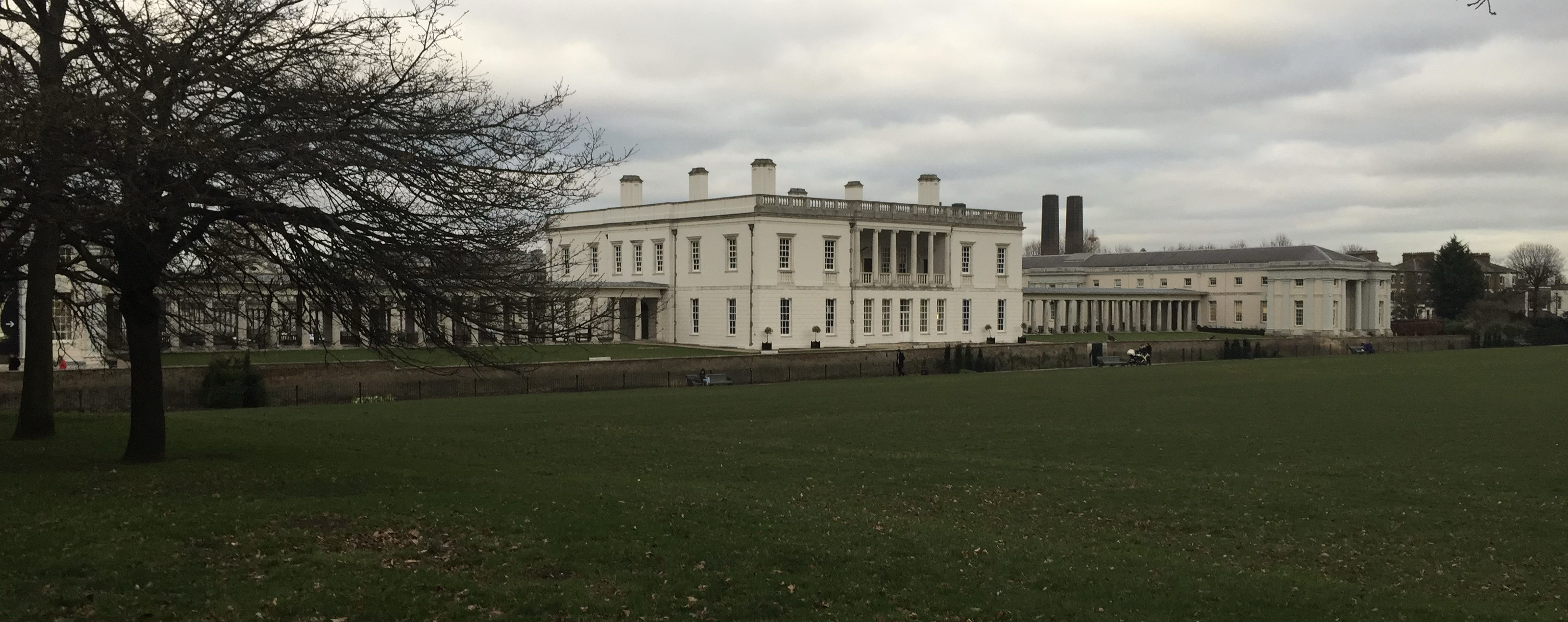
Queen’s House - Inigo Jones
Inspired off of Andrea Palladio's work — A-B-A format
Boxy, follows A-B-A format, blocky, balustrades
Andrea Palladio wrote books with building plans, easily spreadable through countries
England had a different climate, so there are less outside elements like balconies and extra elements like chimneys
Inigo Jones brought Italian Renaissance and architecture to England
Studied Palladio’s art, including his four books
Made the Renaissance architecture English
Cube room in the building — same length, width, and depth
Jones is inspired by Palladio but DOES NOT copy him
Jones found favor for the royal family
Resembles Andrea Palladio’s, Palazzo Chiericati
Vicenza, Italy, begun c. 1550
Banqueting House
Inigo Jones
London, England
1609-1632
Name
Architect
Location
Date
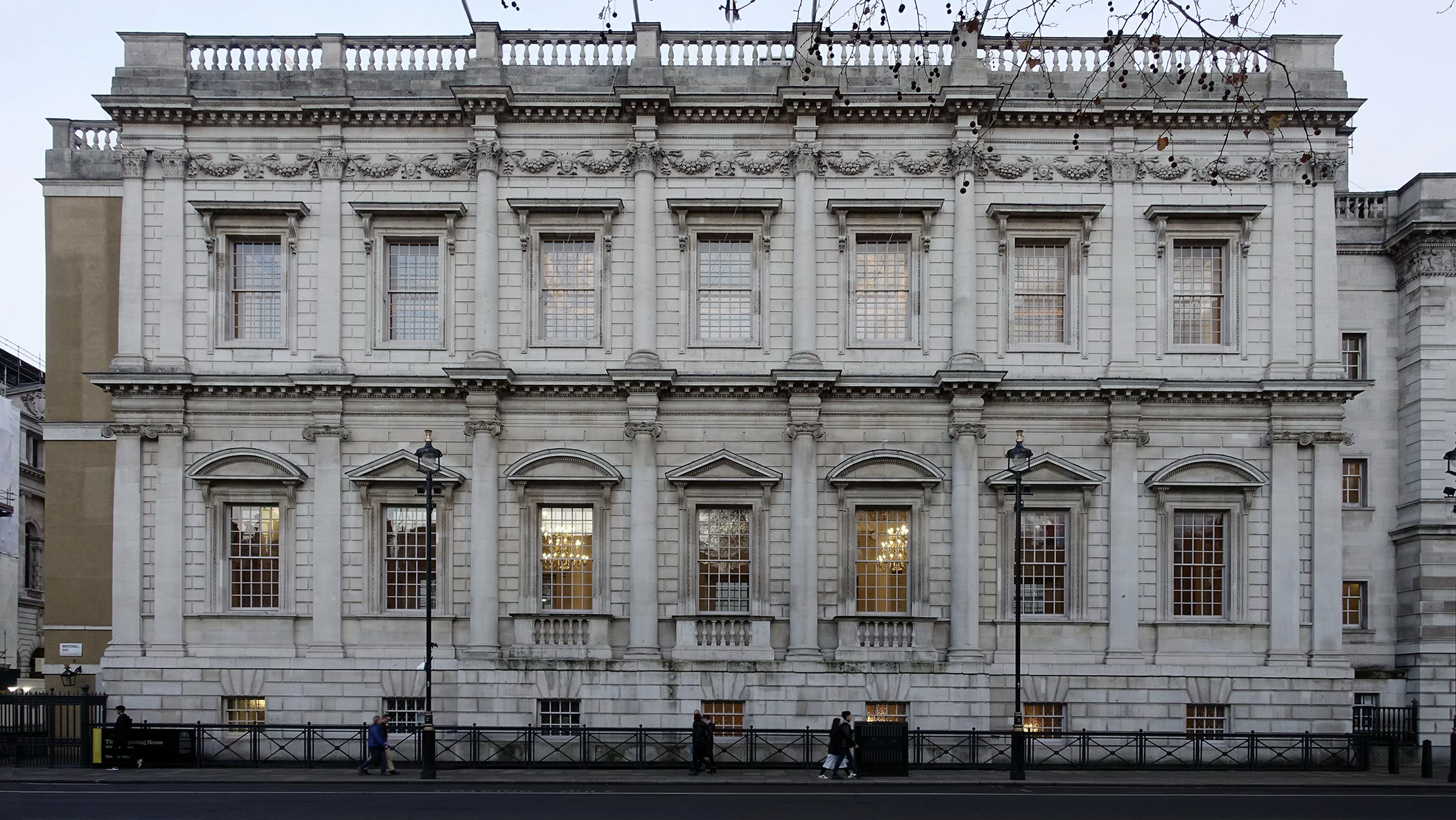
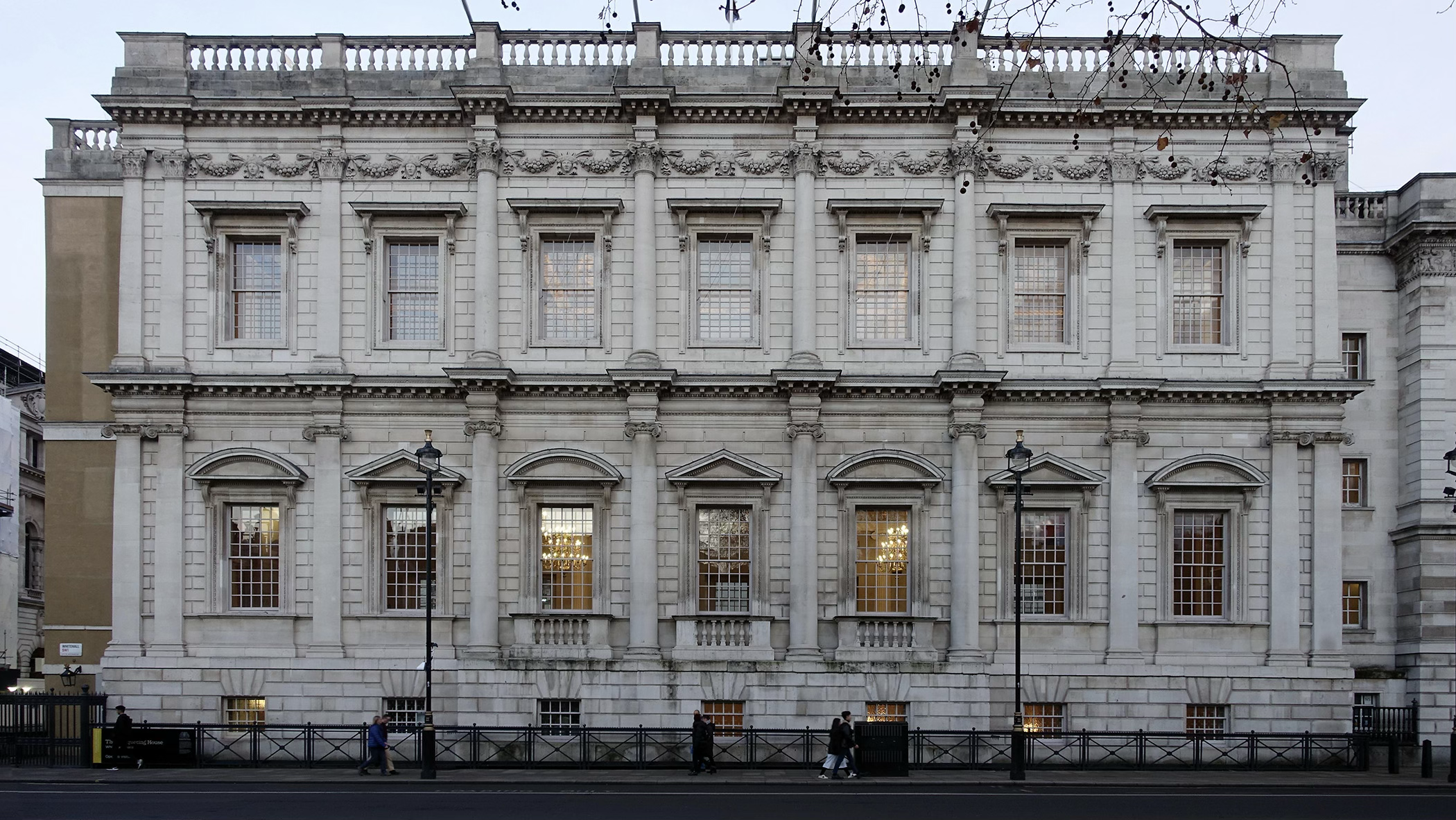
Banqueting House - Inigo Jones
Visual glossary of classical and renaissance views
Resembles Andrea Palladio’s Palazzo Iseppo
Porto, Vicenza, Italy, c. 1545
Plan for London
Sir Christopher Wren
London, England
1656-1676
Name
Architect
Location
Date
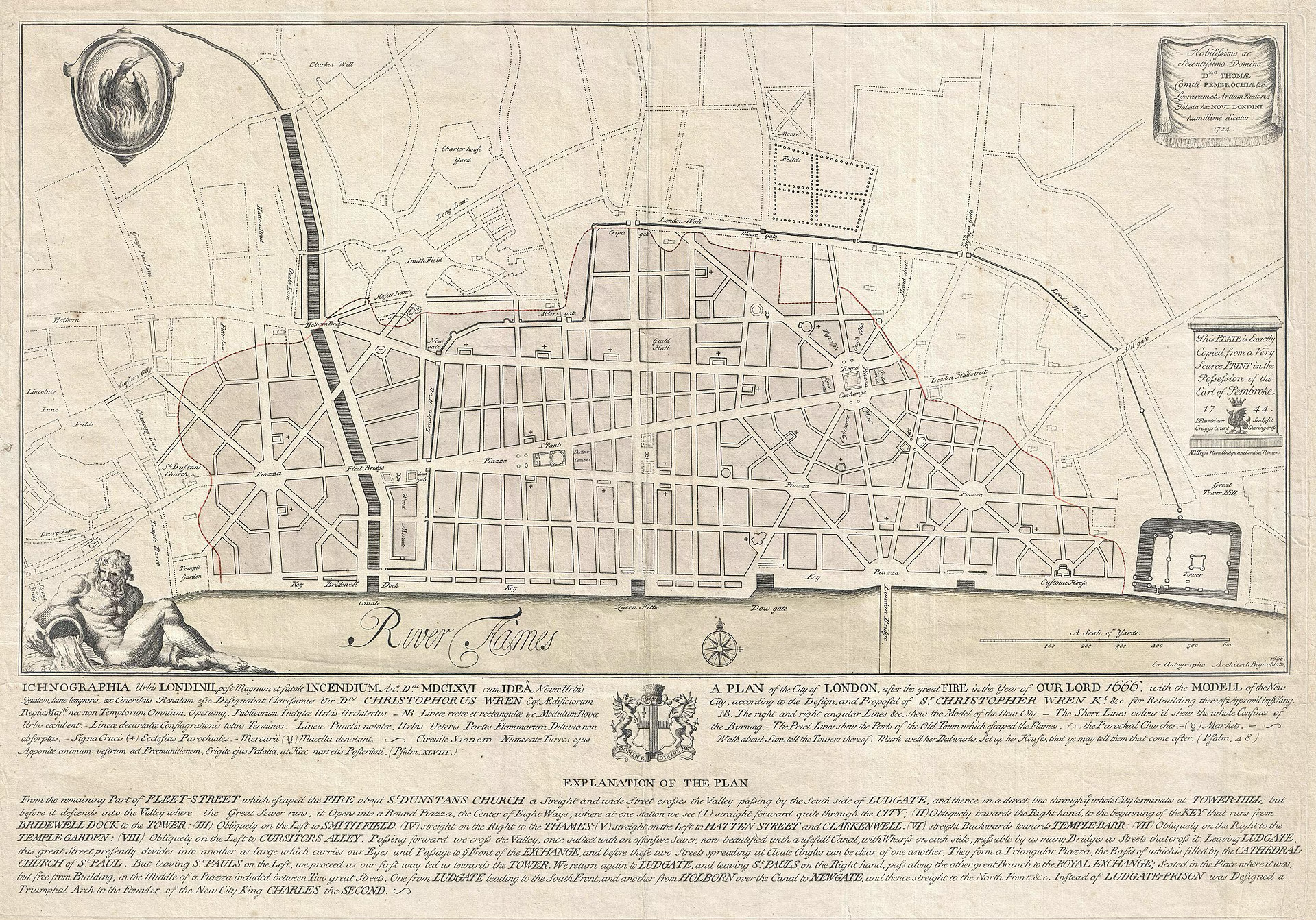
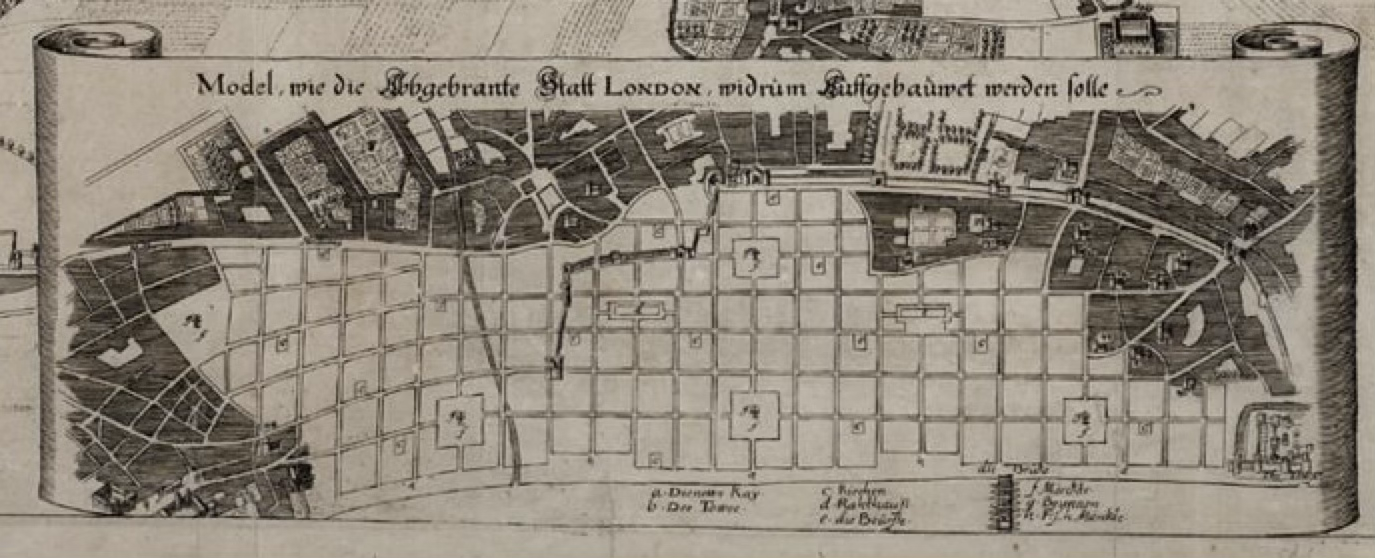
Plan for London - Sir Christopher Wren
Selected for the new plan of London
Plan For London, 1666 — 9 days after fire
Centralized around Church, business and money markets,
Baroque approach with orthogonal grid — clear avenues leading to important places, triviums
Wren and Bernini had met so it makes sense that it has Baroque aspects
Make London a pleasure to experience, meets the goals and values of their leaders to make an impressive capital city
However, the roads ended up being rebuilt like before the fire
The king was restrained and controlled by the wealthy, so contractors had to build based on the rights of property owners
Wren will go on to create 15 new churches in England
Resembles Pope Sixtus’ V plan for Rome with triviums leading to important elements of the city
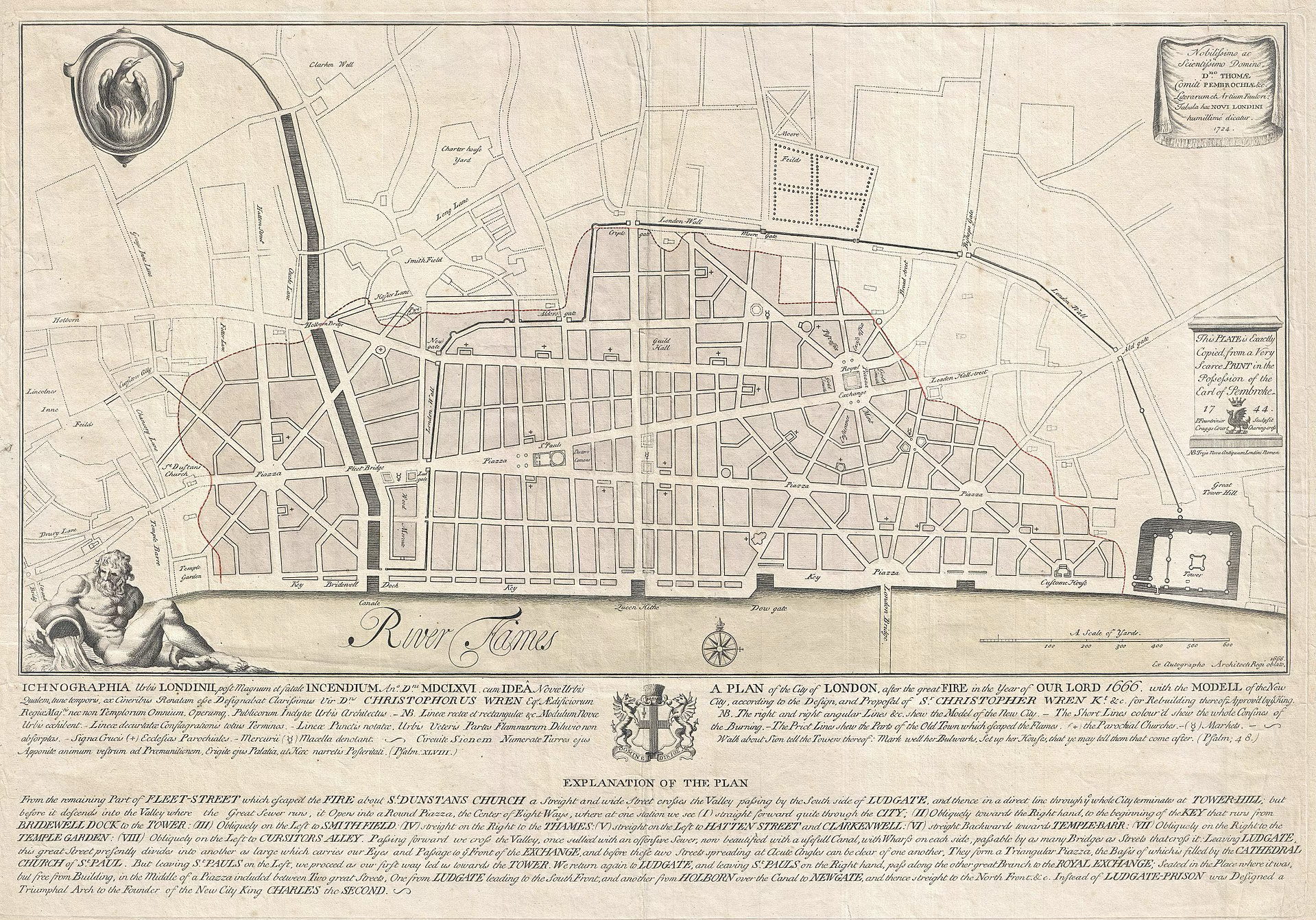
Plan for London
Valentine Knight
Name
Architect
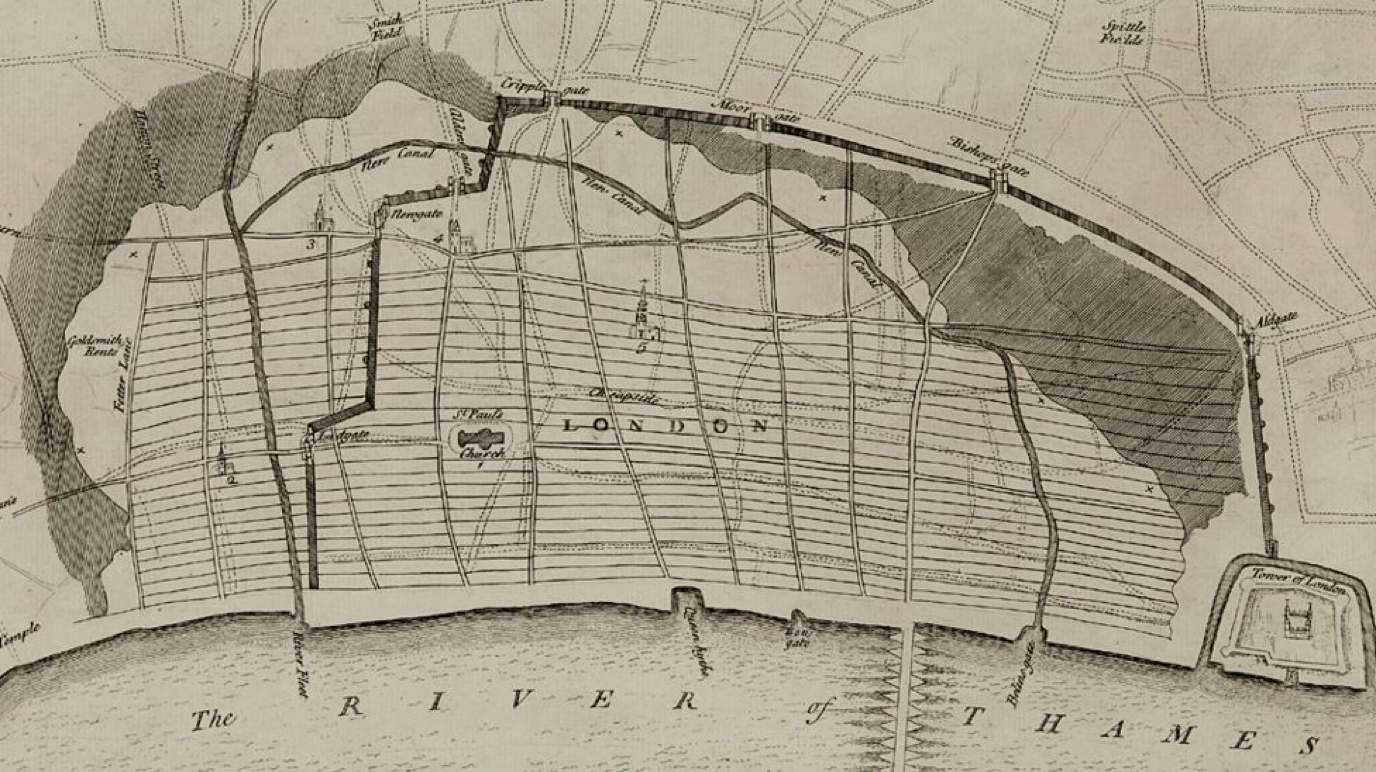
Plan for London
Robert Hooke
Name
Architect
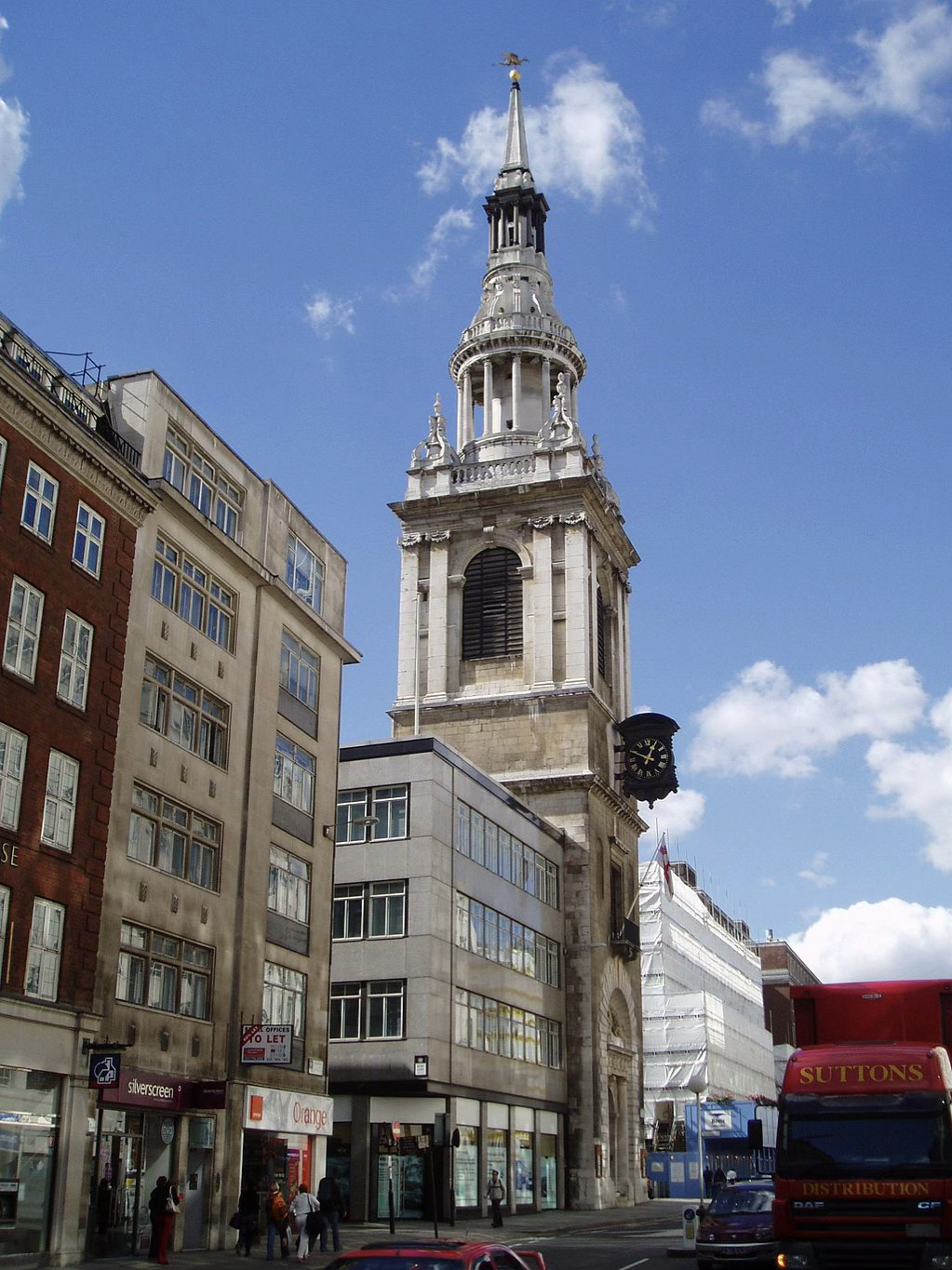
St. Mary-le-Bow
Sir Christopher Wren
London, England
1660-1680
Name
Architect
Location
Date
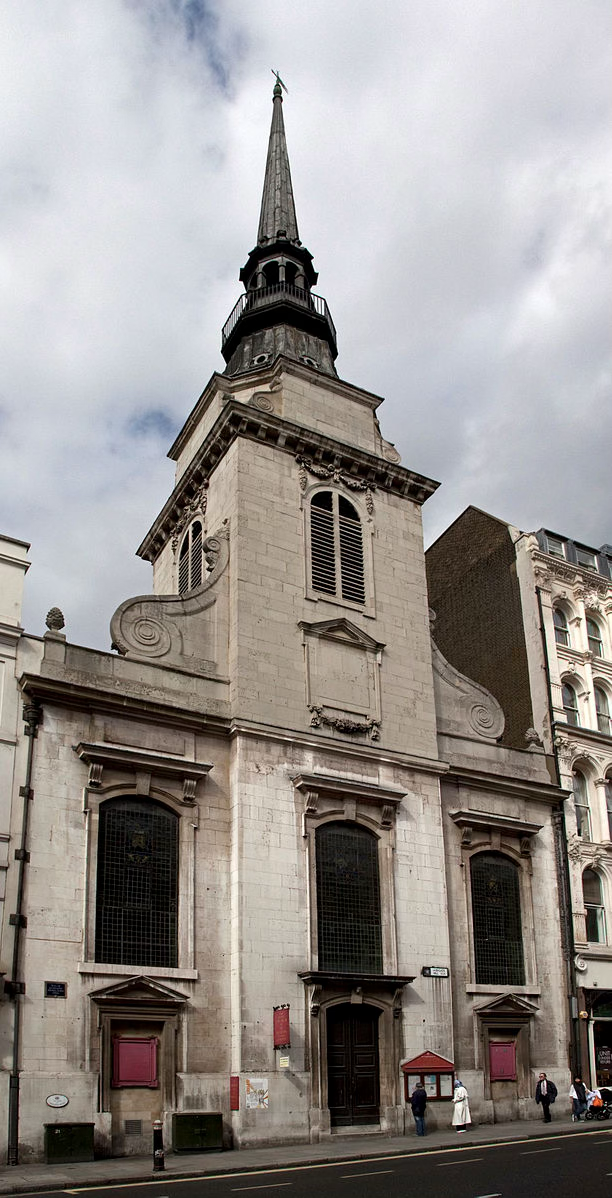
St. Martin Ludgate
Sir Christopher Wren
London, England
1660-1680
Name
Architect
Location
Date
St Paul’s Cathedral
Sir Christopher Wren
London, England
1662-1719
Name
Architect
Location
Date
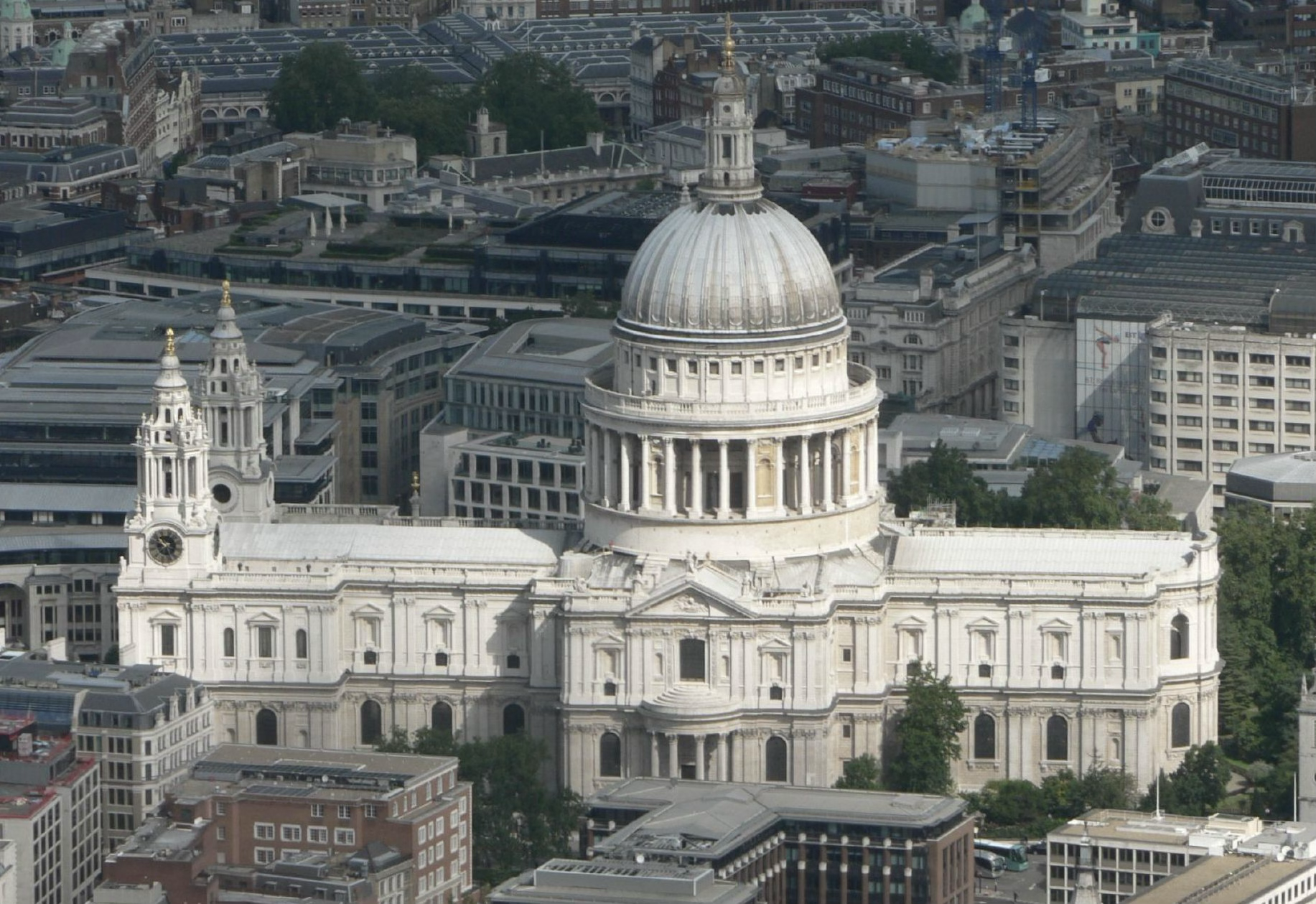
St Paul’s Cathedral - Sir Christopher Wren
Gothic church that was burned down during the London fire
Fire spread easily because of crammed houses and tight roads
“Greek Cross Design” c.1672 — turned away
“The Warrant Design” c.1675 — latin cross, longer nave, skinnier and more vertical dome
Looks like a mix of Michelangelo's plan for St. Peters and the Tempietto mixed into one building
Low flat roofline concealed by a balustrade → conceals references of flying buttresses
From a distance, the building looks very classical, but close-up you can see the gothic elements
Facade has paired columns, raised pediments, temple fronts, paired plasters
Wren is learning about the Italian Renaissance
The inside is very simple — feels light and airy inside, not dramatic or theatrical
This church shows that something new is happening, areas with long gothic history, architecture is shifting
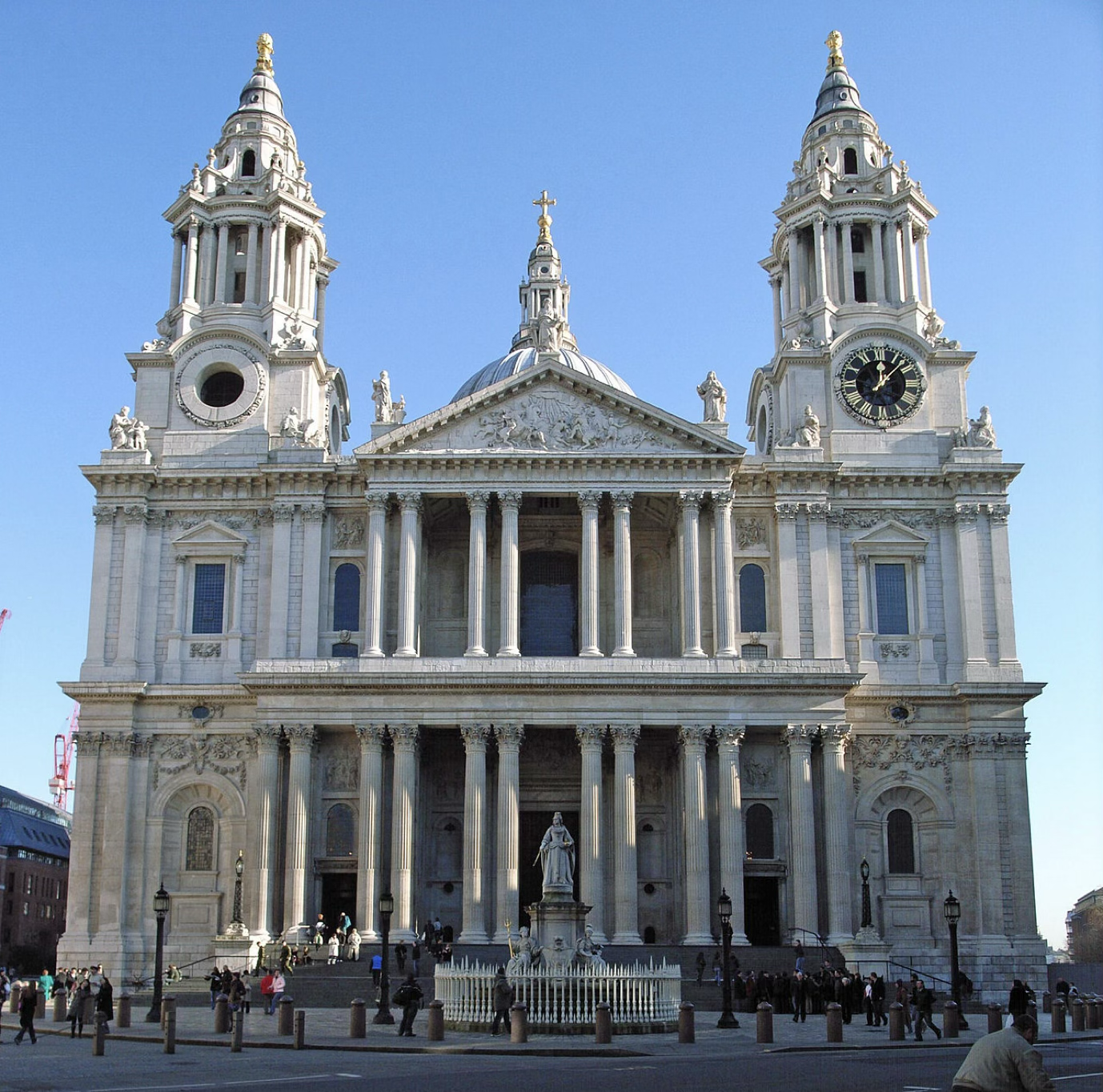
New facade of Old St. Paul’s Cathedral
Inigo Jones
London, England
1620-1640
Name
Architect
Location
Date
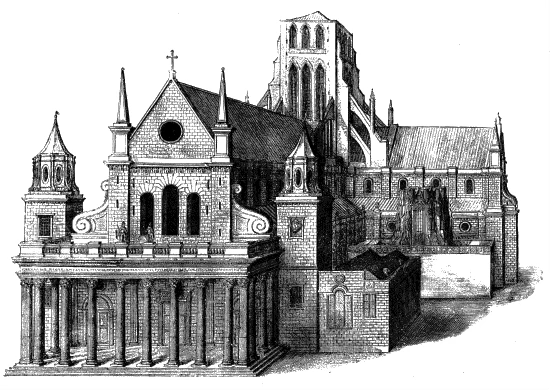
Blenheim Palace
John Vanbrugh and Nicholas Hawksmoor
Oxfordshire, England,
1695-1732
Name
Architect
Location
Date
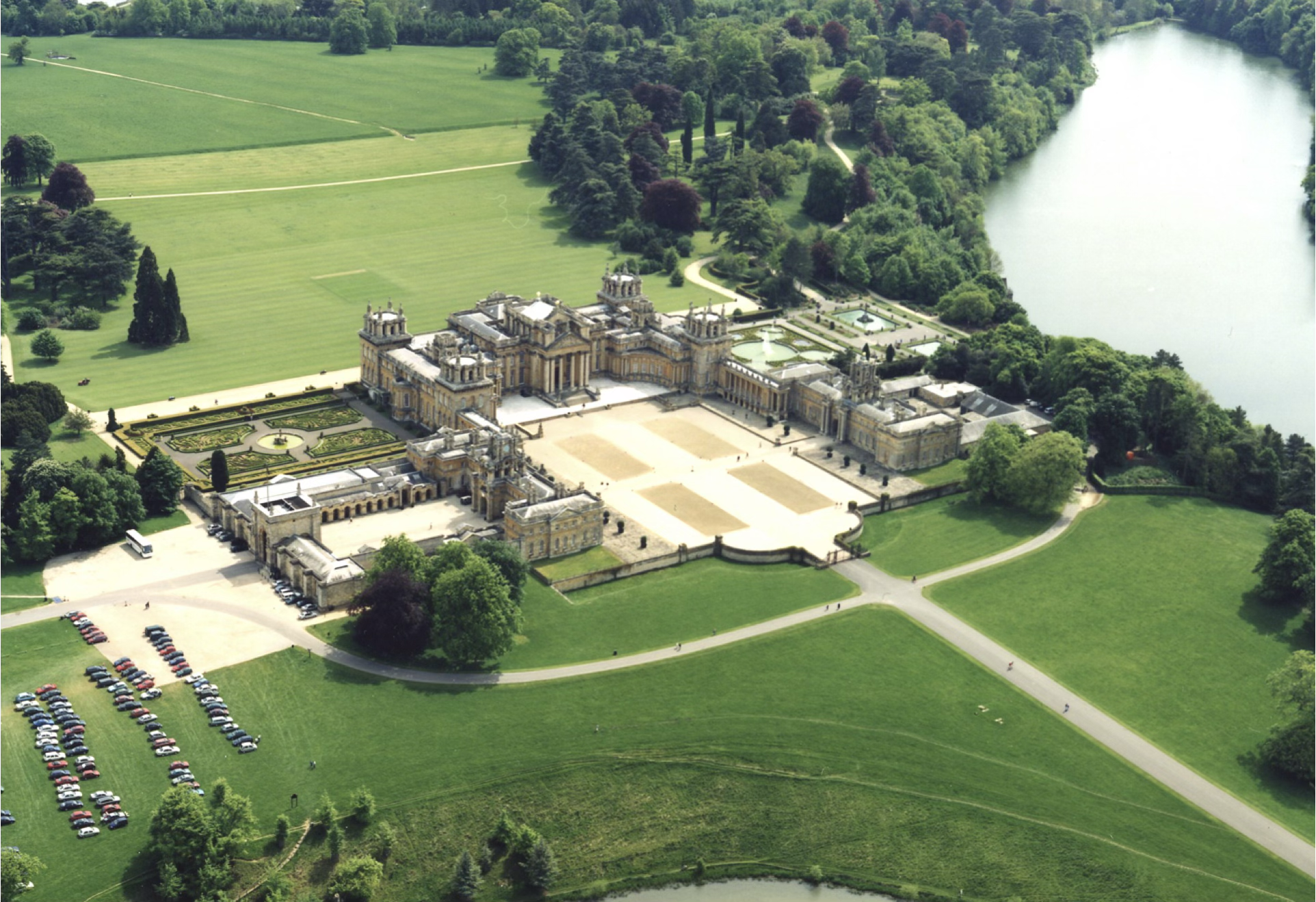
Blenheim Palace - John Vanbrugh and Nicholas Hawksmoor
Built for the Battle of Blenheim: English vs. French
English Won
John Churchill got new title Duke of Marlboro and lots of money along with it
Building comes out towards you, nod to France (Versaille)
Baroque building because it displays power, and after winning a battle you want to show the power you have
The scale of the building and gates overwhelm you
Lions sit atop of the gates
Lions are the symbol of england
The lion is holding onto the chicken (symbol of French)
Symbol of English conquering the French
English adapt the ideas of French baroque in the building
The center of the palace is a Great Hall
Nod to English tradition
Exterior outline is symmetrical
Grand Tour
An 18th-century educational rite of passage where young European elite—primarily British aristocrats—traveled through France and Italy to study classical art, architecture, and culture.
Chiswick House
Richard Boyle
Chiswick, England
1715-1735
Name
Architect
Location
Date
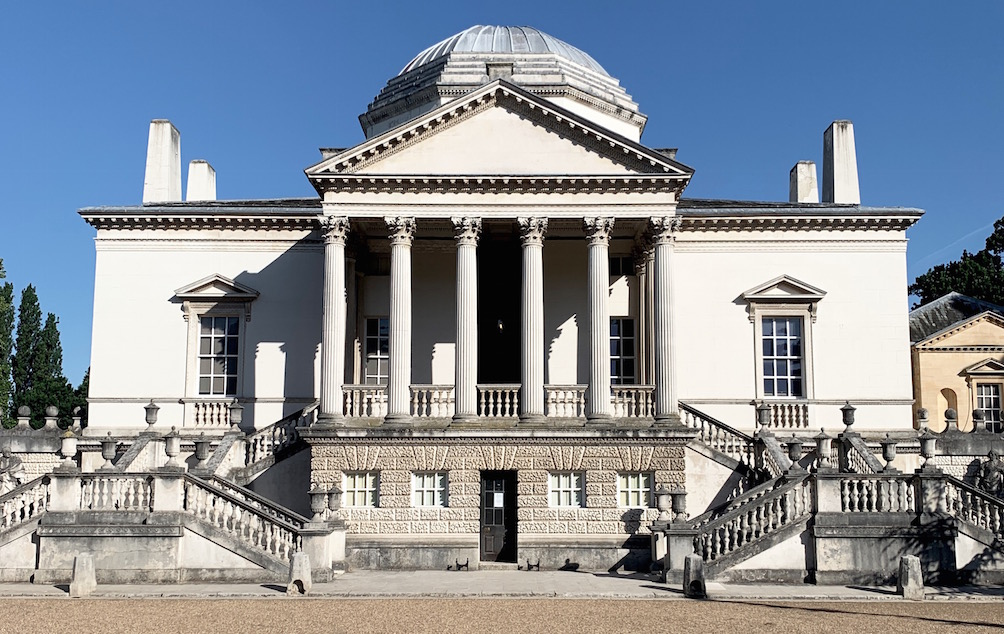
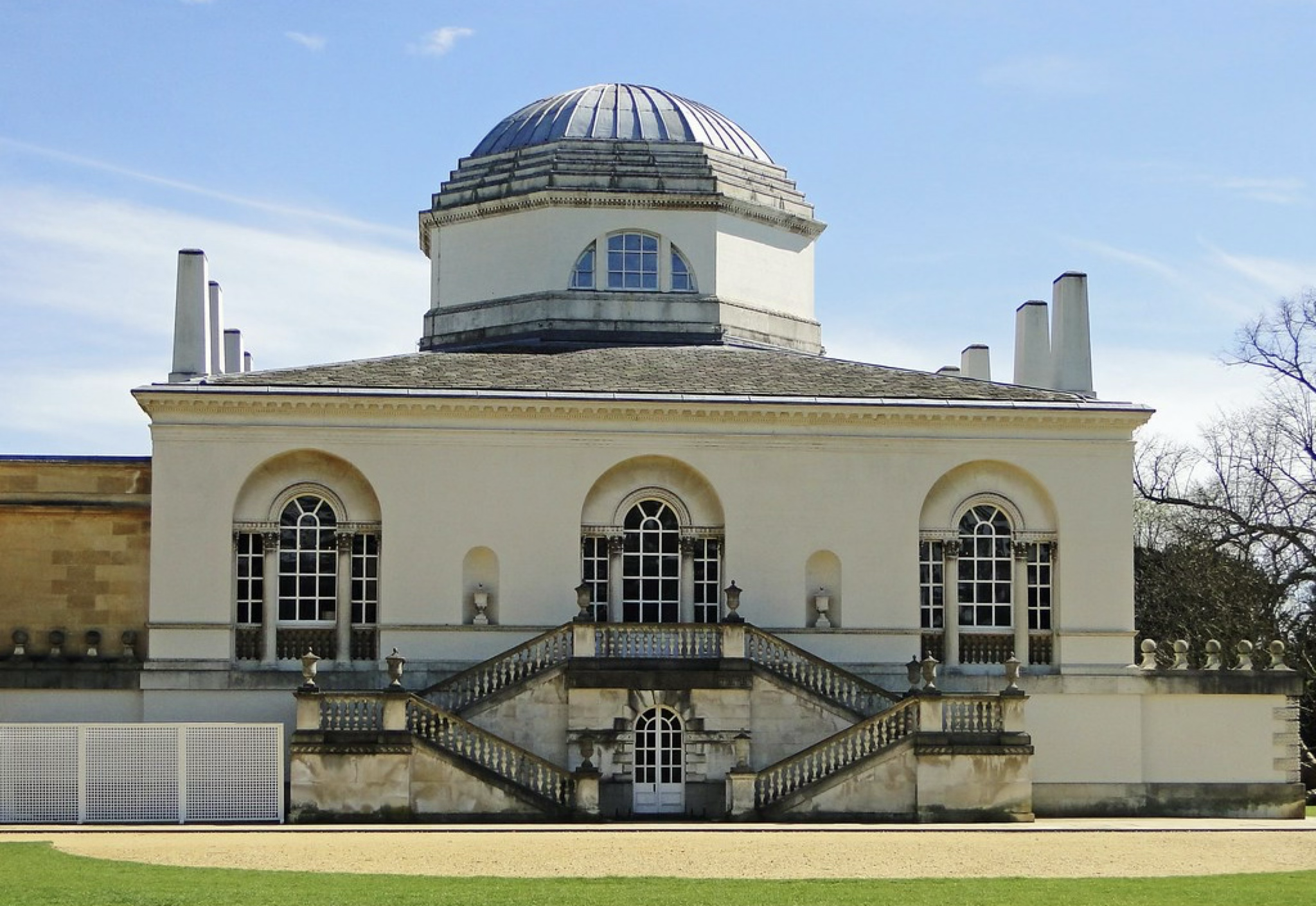
Chiswick House - Richard Boyle
Built by Richard Boyle (Lord Burlington)
Wealthy enough to take three Grand Tours
Had books of Vitruvis, Palladio, and Alberti
Studied Palladio and compared Palladios books through viewing Palladios buildings
Gentleman amateur
Very similar to Palladio's work — temple front, cubic features, A-B-A format
Resembles Andrea Palladio’s, Villa Rotonda
Vicenza, Italy, 1566-1571
England sees this kind of architecture by relating to their politics
Appendage of a larger house, party house
Central plan shaped by geometry
The back of the building is simpler than the front, with Palladian windows
Gardens by William Kent, 1730s
Triviums — controlled (like Baroque)
Wilderness area with windy roads — picturesque landscape design, celebrates the individual experience
Garden Follies = playful discoveries (tourist stops)
The Cascade (Waterfall)
Inigo Jones Gateway from Beauford House, Chelsea, 1621 moved to Chiswick 1738
Obelisk and Ionic Temple (Italian Architecture)
Like souvenirs and reminders of things in the past
Allee = straight path flanked with trees
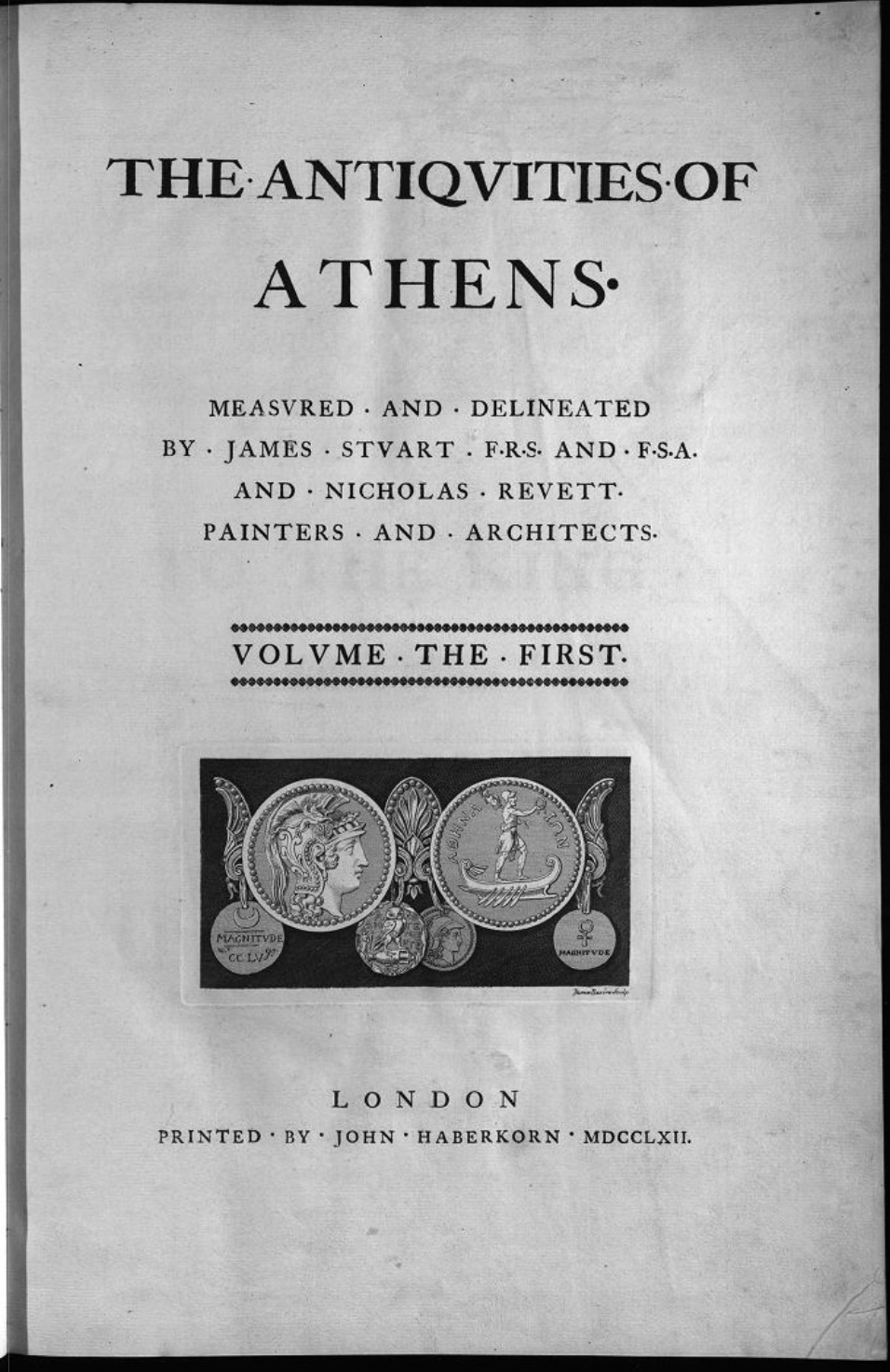
The Antiquities of Athens - James Stuart & Nicholas Revett (1762)
Two architects went to Greece and draw what they saw
Enlightenment thinkers value Greek architecture because it is seen as simplistic
Authors give people empirical evidence and facts about the buildings
The Pantheon, reconstructed, from Stuart & Revett, The Antiquities of Athens, 1762
Allowed people to know the proportions and how to re-build Greek architecture
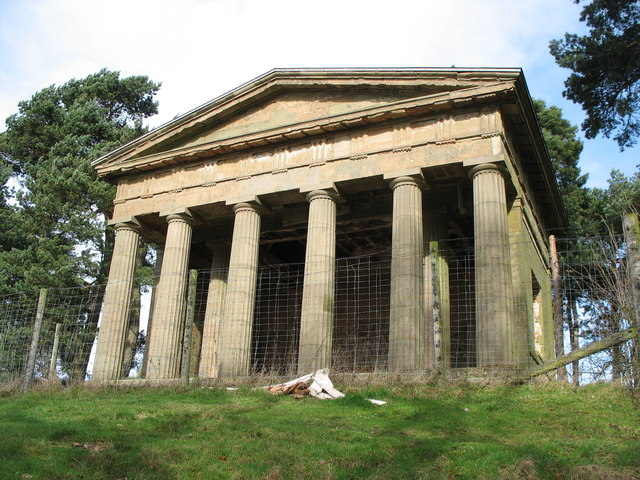
Temple of Theseus Folly
James Stuart
Worcestershire, England
1748-1768
Name
Architect
Location
Date
Park at Stourhead
Henry Filtcroft and Henry Hoare
Wiltshire, England
1734-1775
Name
Architect
Location
Date
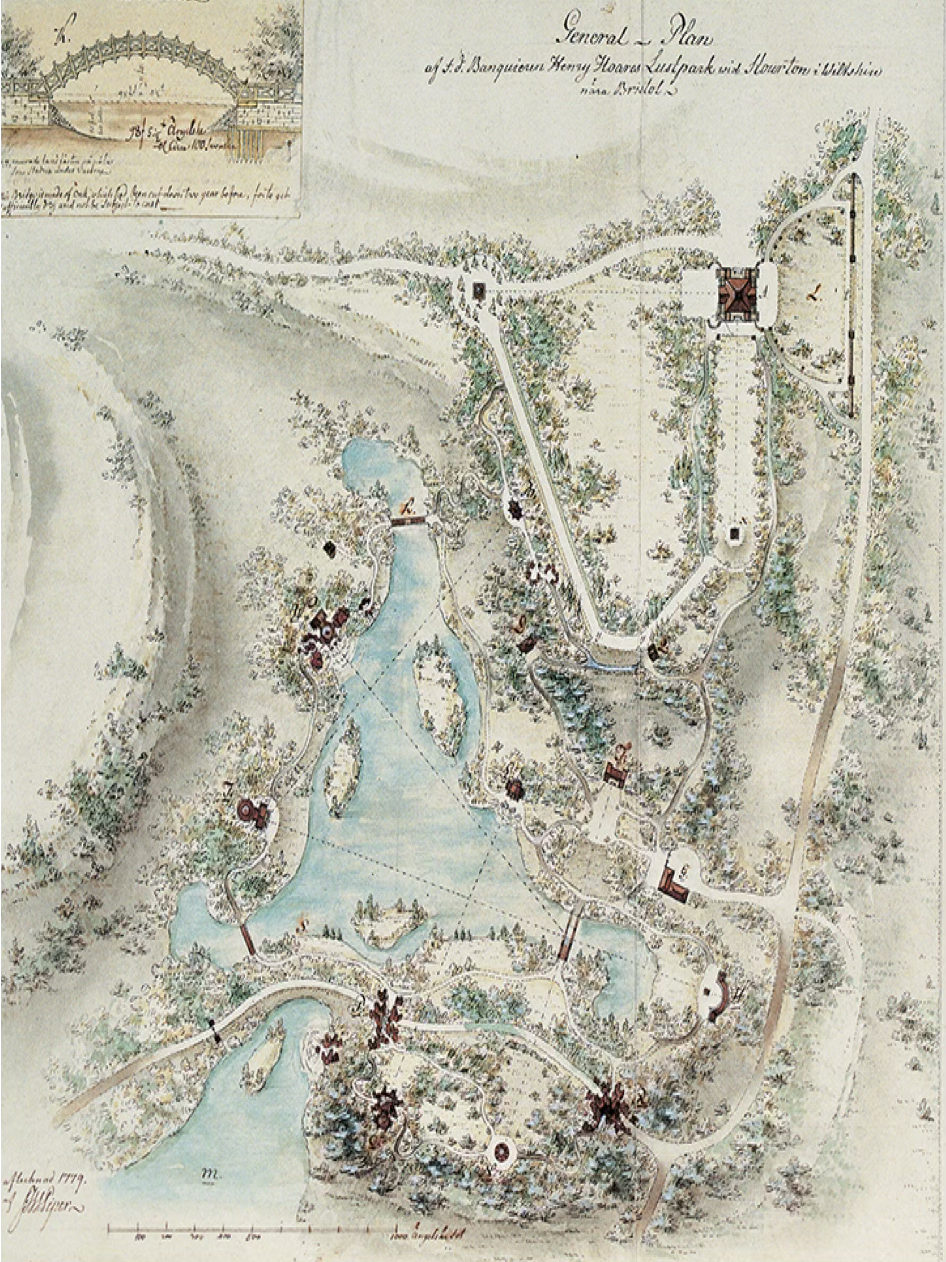
Park at Stourhead - Henry Filtcroft and Henry Hoare
Henry Hoare was a banker (wealthy but not a pope/monarch)
Follies represent his interests
Picturesque (fit to be made into a picture) design — everything feels natural
About personal experience
Pantheon Folly
You can join nature and experience it
However, everything is designed and altered, so it is romanticized
The visitor gets what THEY want
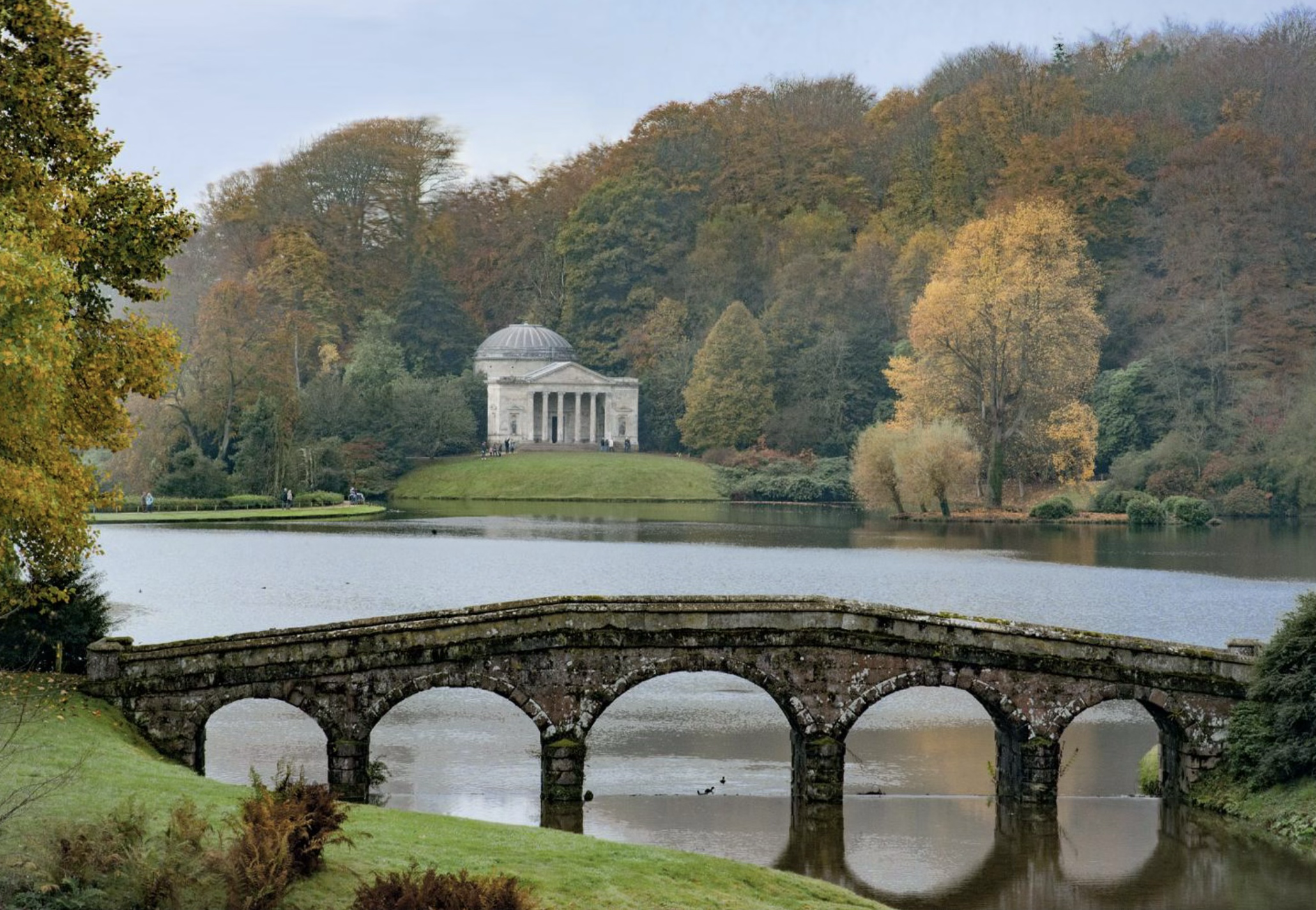
Picturesque Planning
Type of planning where eyes are constantly moving to places you are able to travel. Celebrate irregularities, looks uncontrolled, unbalance, looks like it has been changed over time
Baroque Planning
The type of planning that is very controlled — you are always thinking of the main character (monarch)(central control).
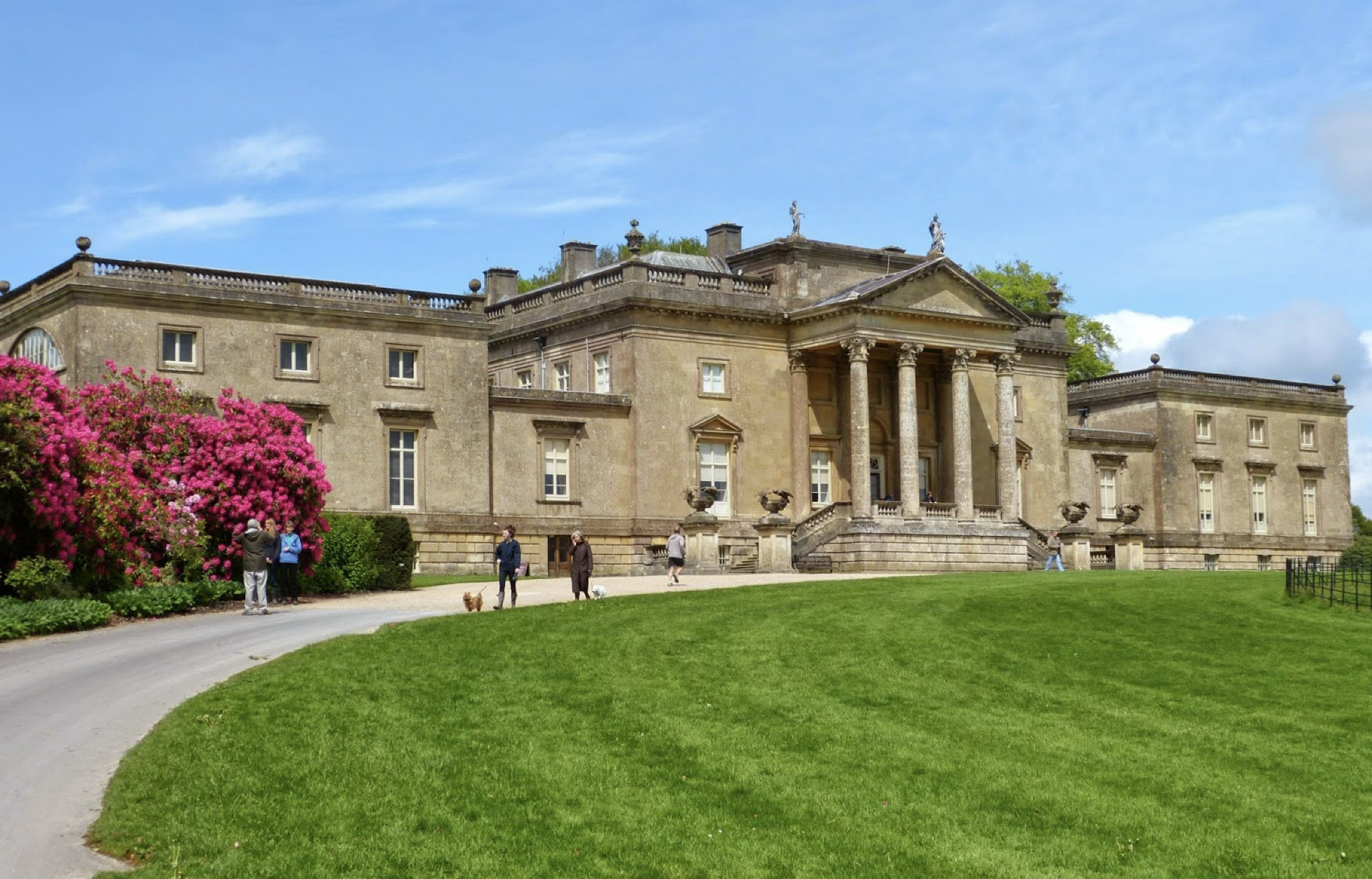
Stourhead
Colen Campbell
Wiltshire, England
1711-1735
Name
Architect
Location
Date
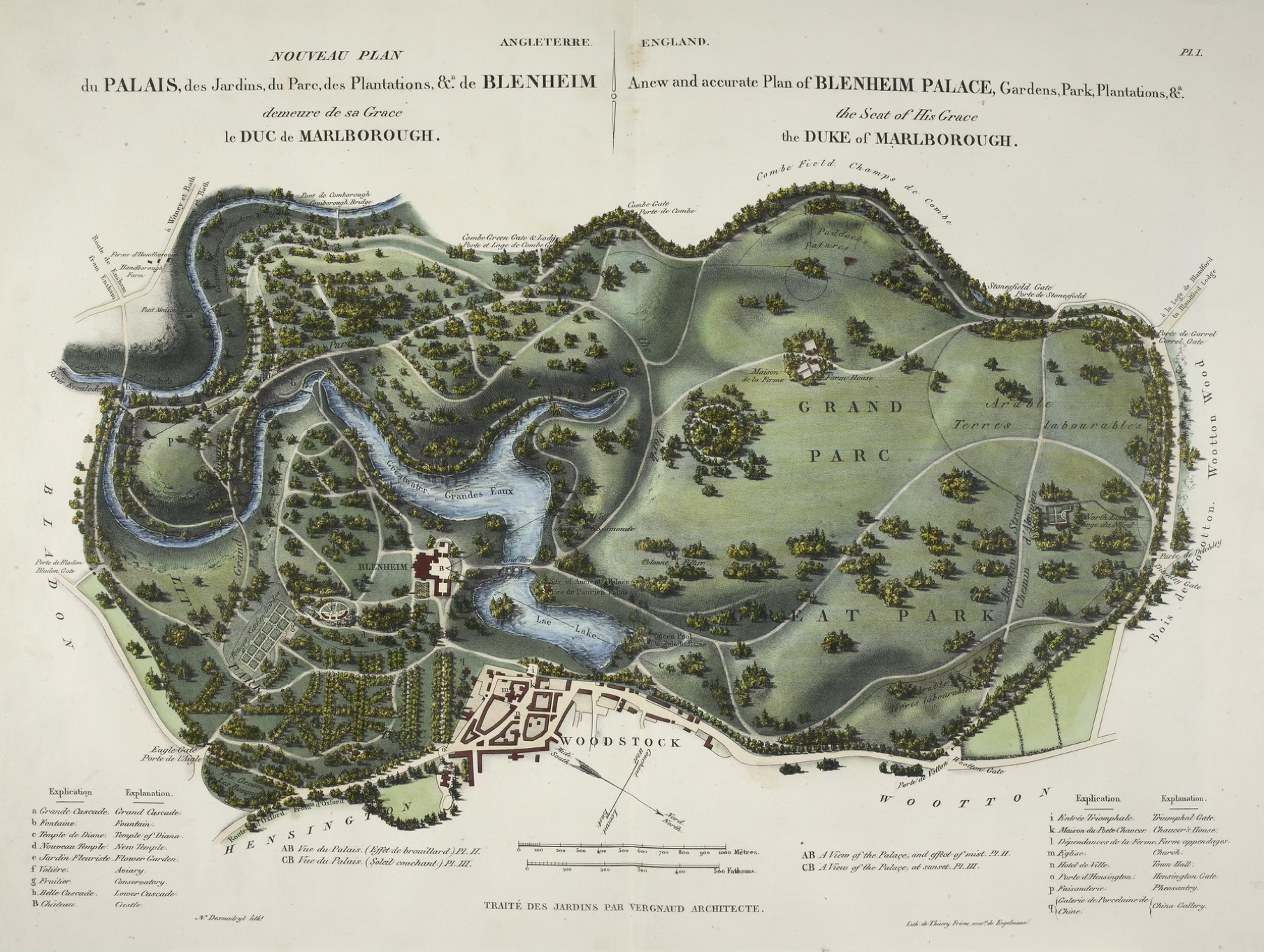
Gardens at Blenheim Palace
John Vanbrugh and Nicholas Hawksmoor
Oxfordshire, England
1695-1734.
Name
Architect
Location
Date
Essay on Architecture - Marc-Antoine Laugier
Architecture should involve more critical thinking instead of blind imitation
“Architecture owes all that is perfect to the Greeks” — Romans copied the Greeks
Columns - Pediments
Criticizes Baroque and Mannerism styles for being too much
Beauty arises from essentials
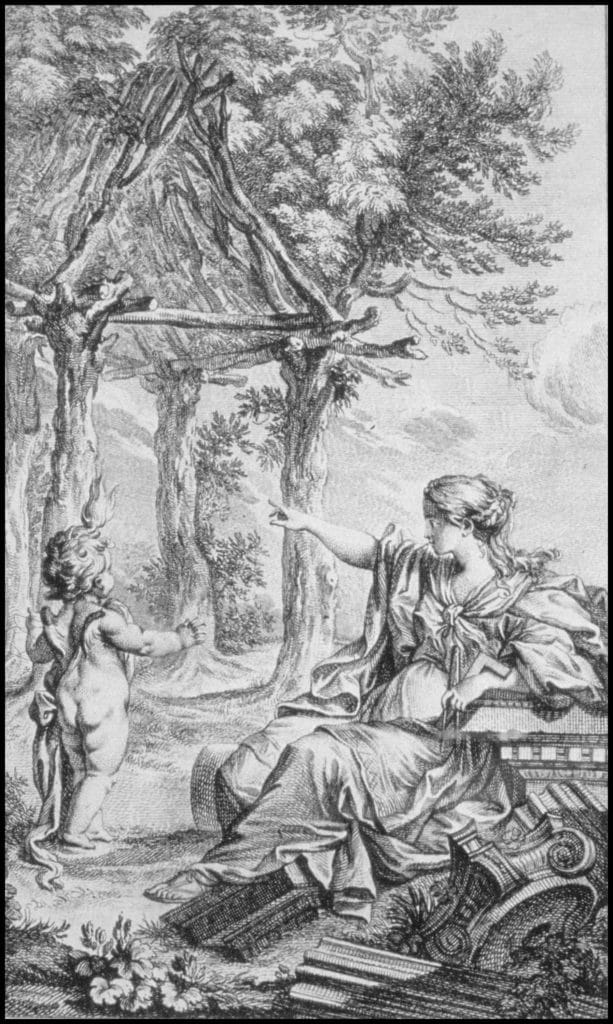
“The Primitive Hut” — All you need is structure, ornament in architecture is unnecessary
Vertical support, inclined roofs
All buildings should be tectonic
Good buildings can exist without the orders
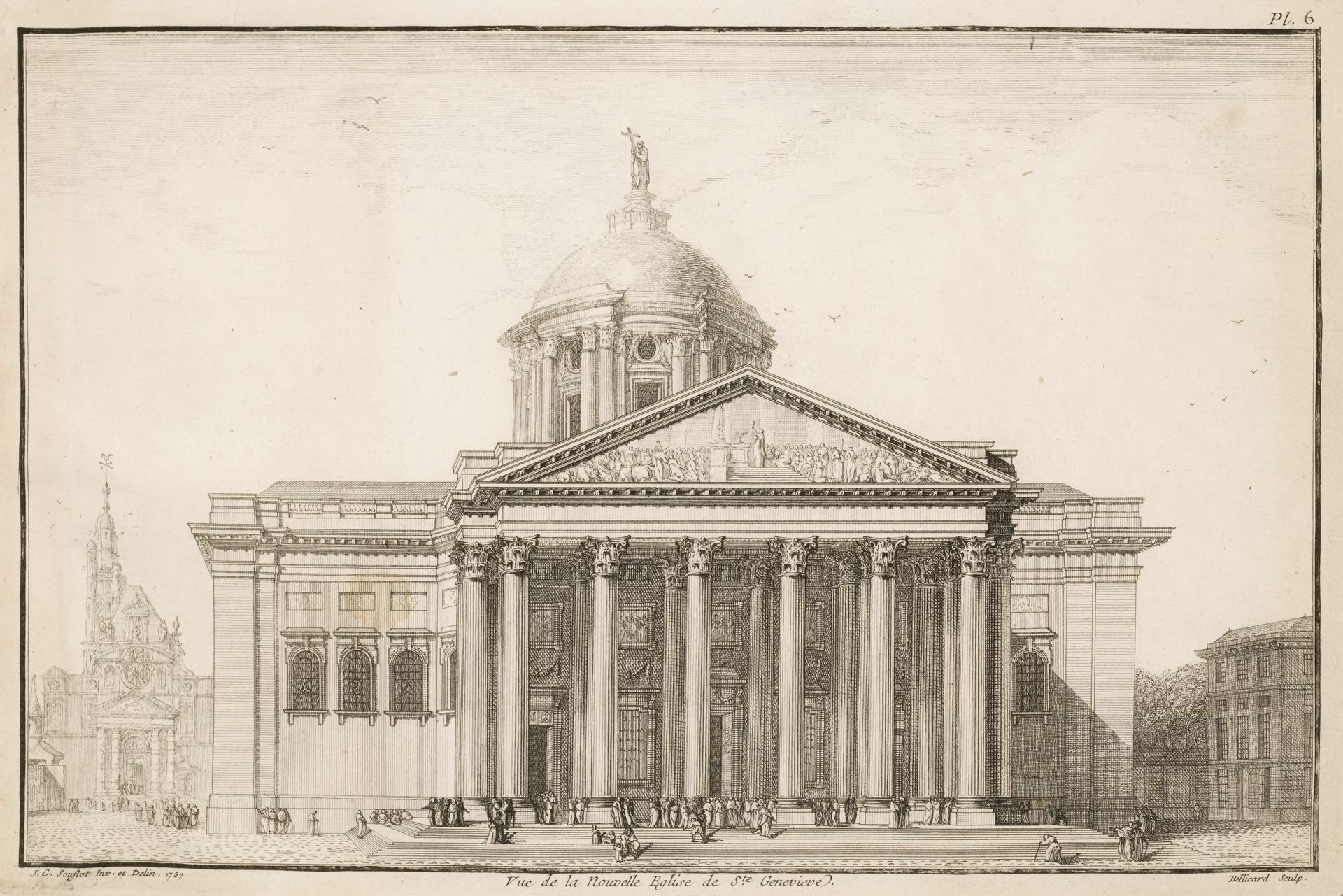
Church of Ste. Geneviève
Jacques-Germain Soufflot
Paris, France
1745-1802
Name
Architect
Location
Date
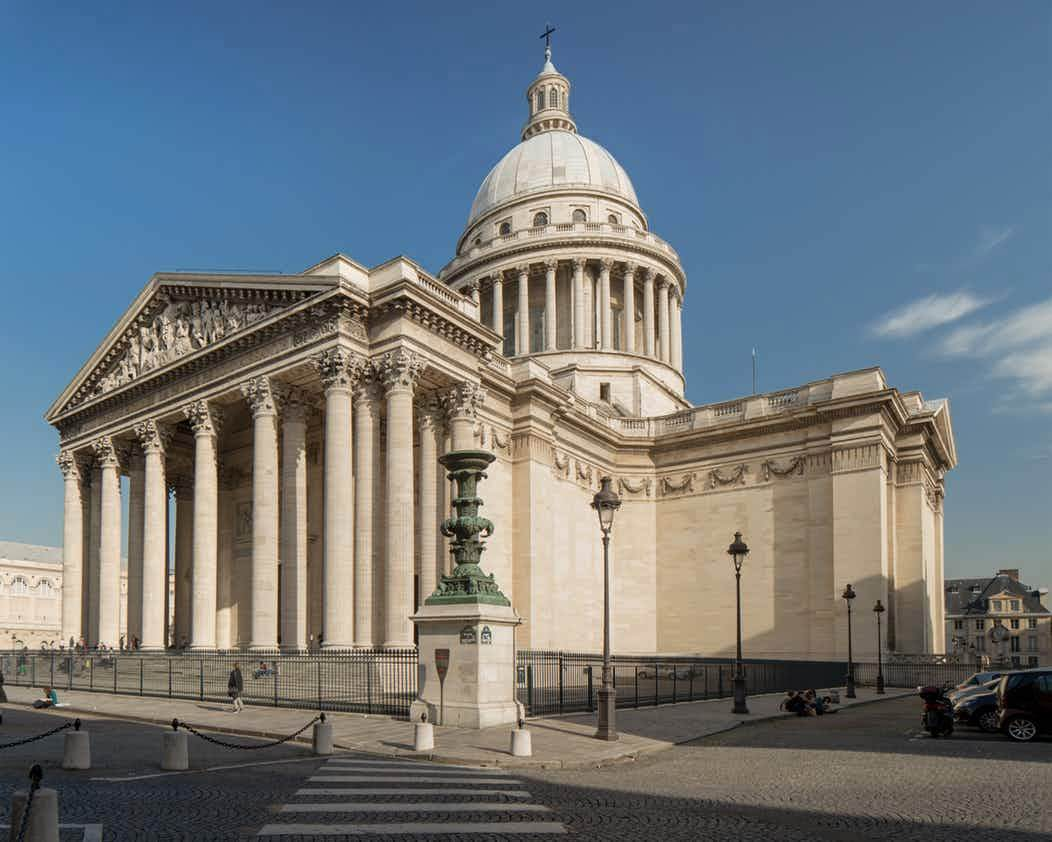
Church of Ste. Geneviève - Jacques-Germain Soufflot
Combines architecture of Ancient Greece and Ancient Rome
Much simpler than Baroque buildings
Greek Cross Plan — characterized by columns inside the building, emphasizes how the building is held up
Flying Buttresses used as support inside, but hidden to display honesty of Neoclassical architecture that the columns are supporting everything
Metal is also used to support the building
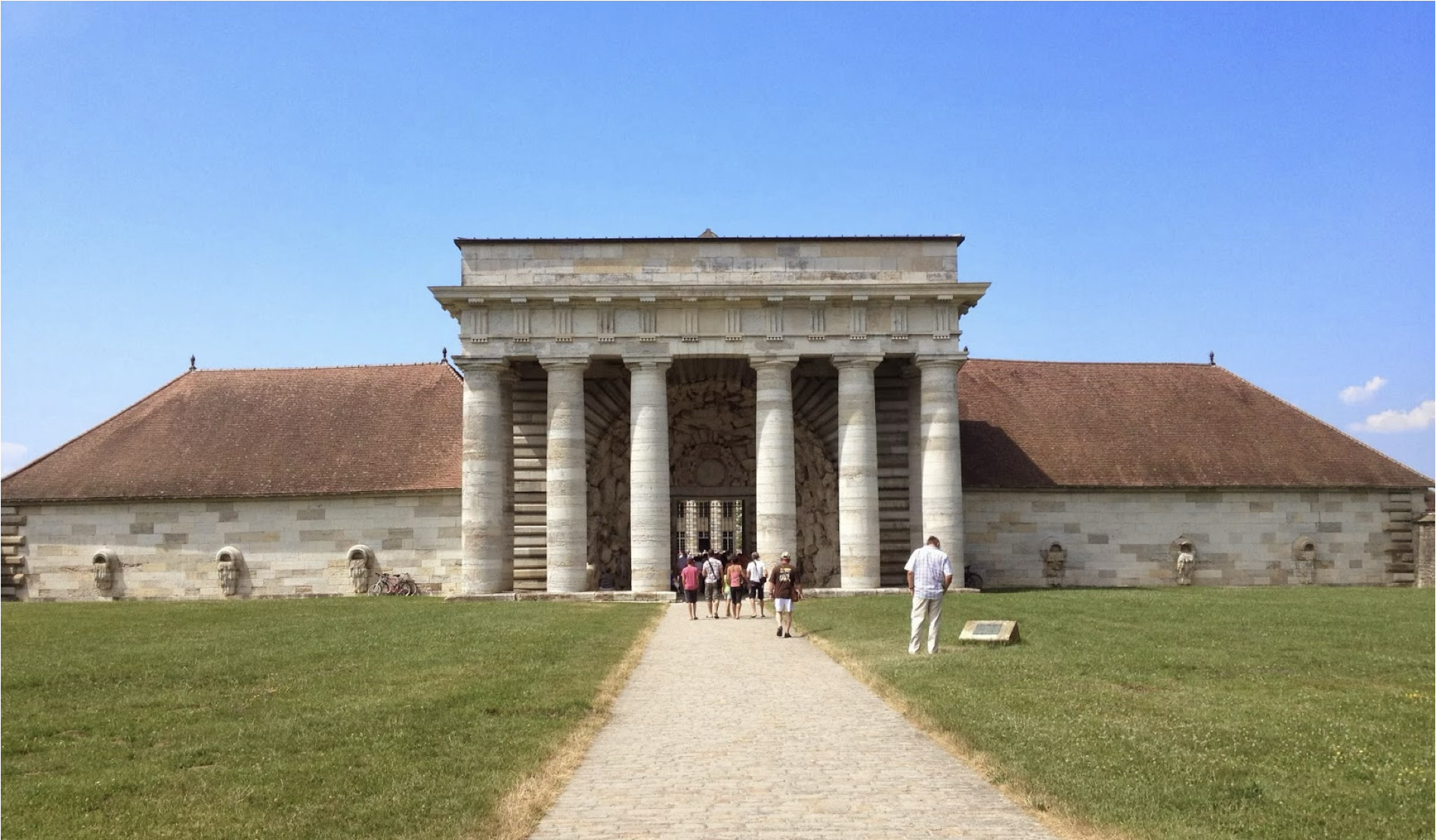
Royal Saltworks
Claude-Nicolas Ledoux
Arc-et-Senans, France
1763-1789
Name
Architect
Location
Date
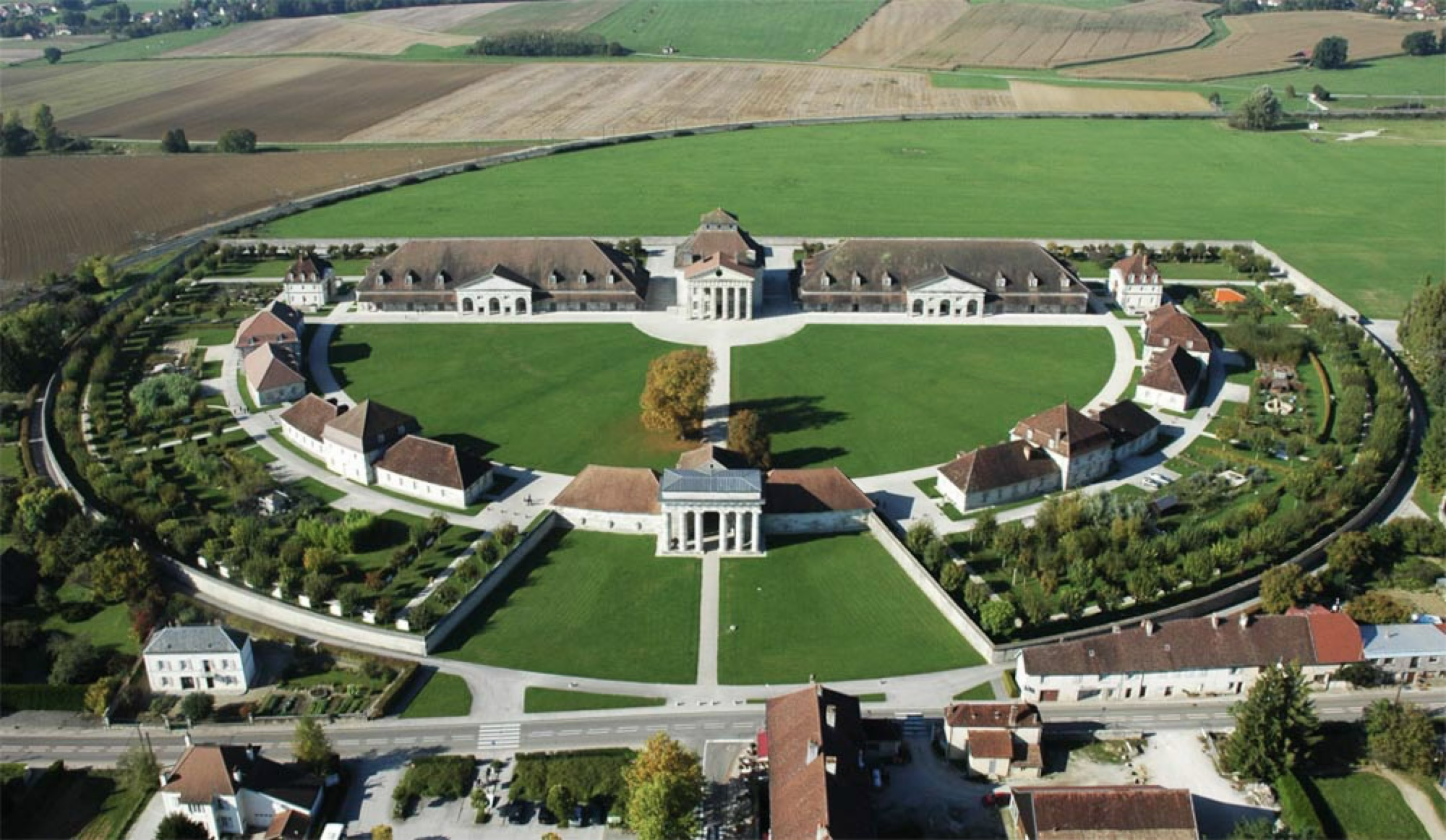
Royal Saltworks - Claude-Nicolas Ledoux
Salt factory — salt was important for various foods
Why are architects interested in a salt factory?: Reformed to be efficient
France controlled by absolute monarch until 1789
Directors building at the center of the plan, with dorms for workers on the outside
Entrance is simple, massive doric greek columns with a thick entablature. Very simple walls, fort-like.
Architecture Parlante — (literally speaking architecture) - when architecture explains its identify or function
Director’s House — Massive building, columns alternate between round and squared styles
Ideal City of Chaux
Claude-Nicolas Ledoux
1770-1814
Name
Architect
Date
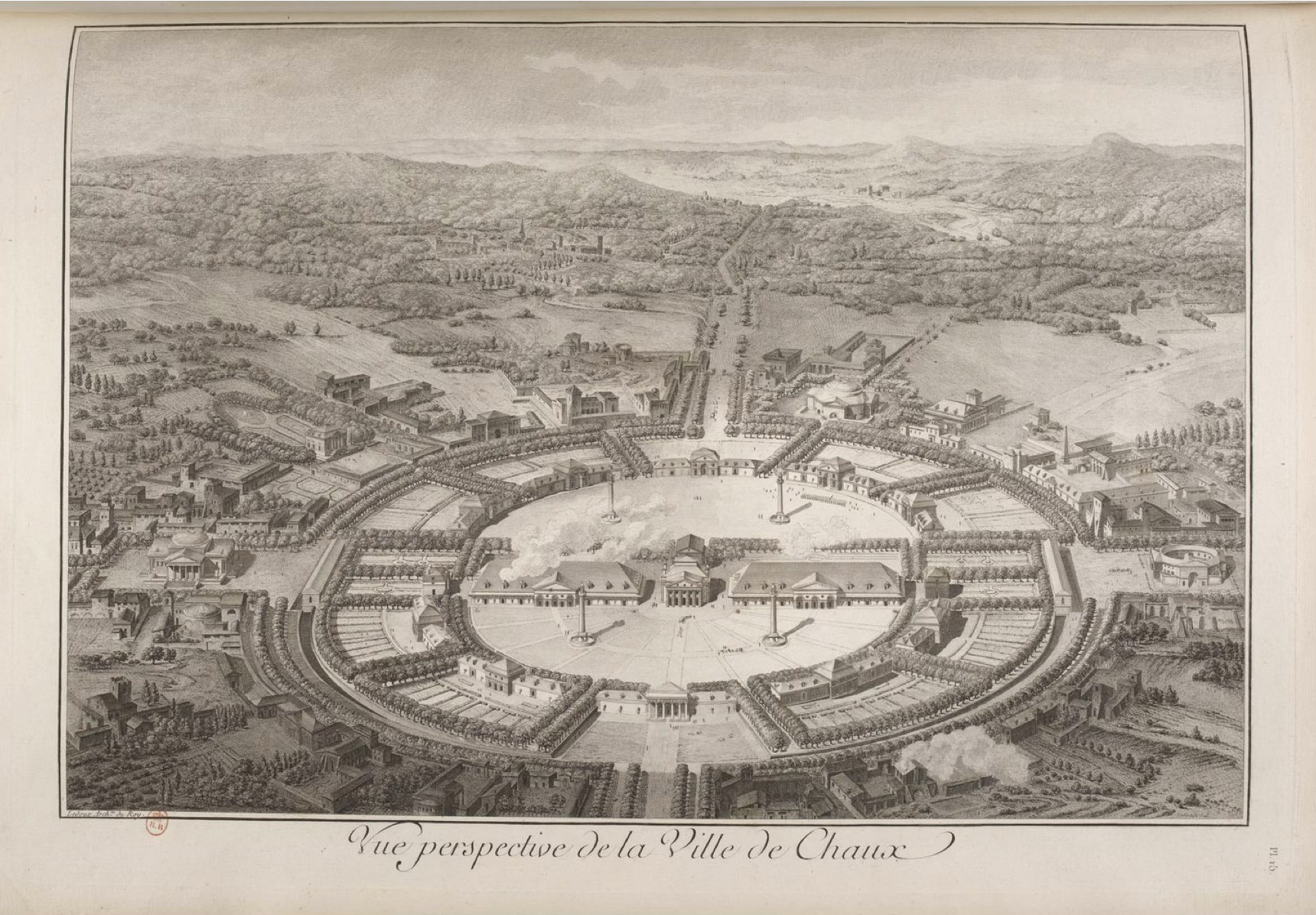
Ideal City of Chaux - Claude-Nicolas Ledoux
Enlightenment thinking in Architecture
Main building (directors house) in the center able to overlook everything that is going on
Panoptic — all-seeing
Inclined to do better if you are always being watched
Made to house workers
If you’re living next to another person, you are less-likely to be messy and less productive
Meant to respond to the needs of society
Every needs has to be considered
Whatever your job is, your house will be shaped like it
Barrel workers house will be shaped like a barrel
Somerset House
William Chambers
London, England
1766-1806
Name
Architect
Location
Date
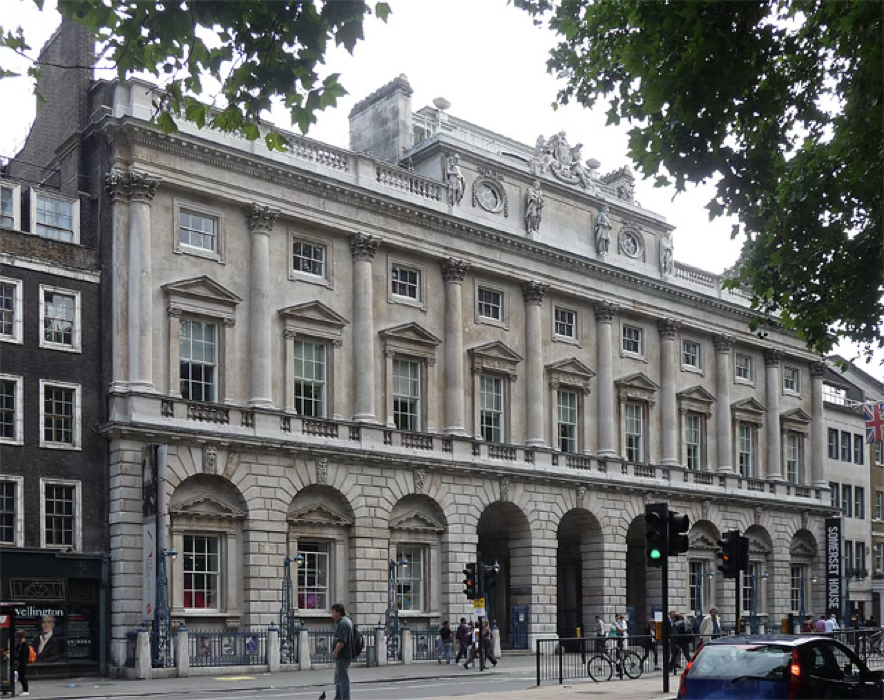
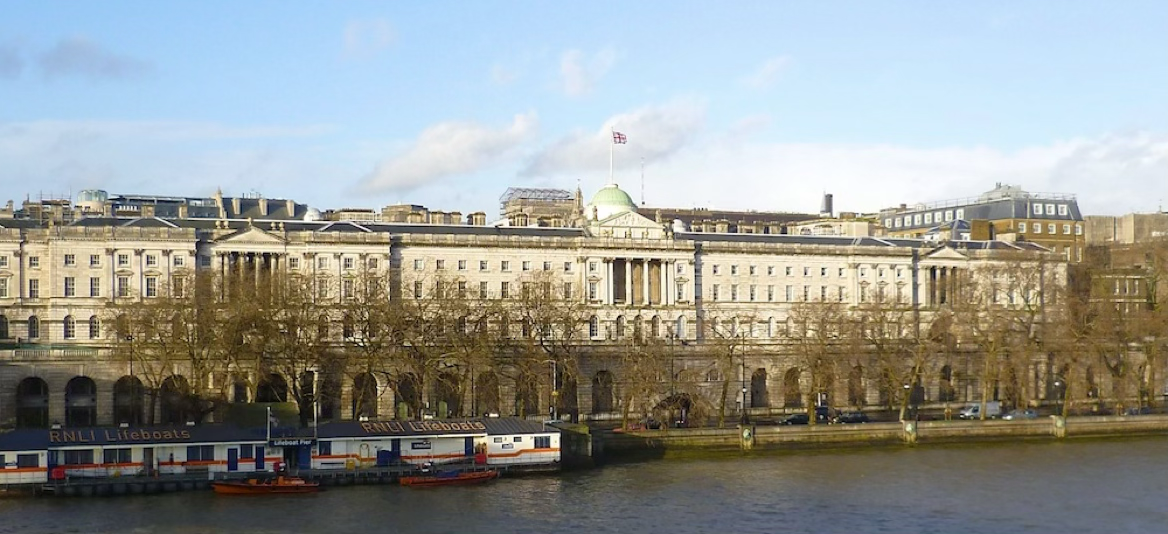
Somerset House - William Chambers
Wanted new buildings to represent greatness
Chambers was the head architect of England
Classical architecture should ornament a city
Courtyard in the middle allows light into all of the office buildings
Church of the Madeleine
Pierre Vignon
Paris, France
1796-1846
Name
Architect
Location
Date
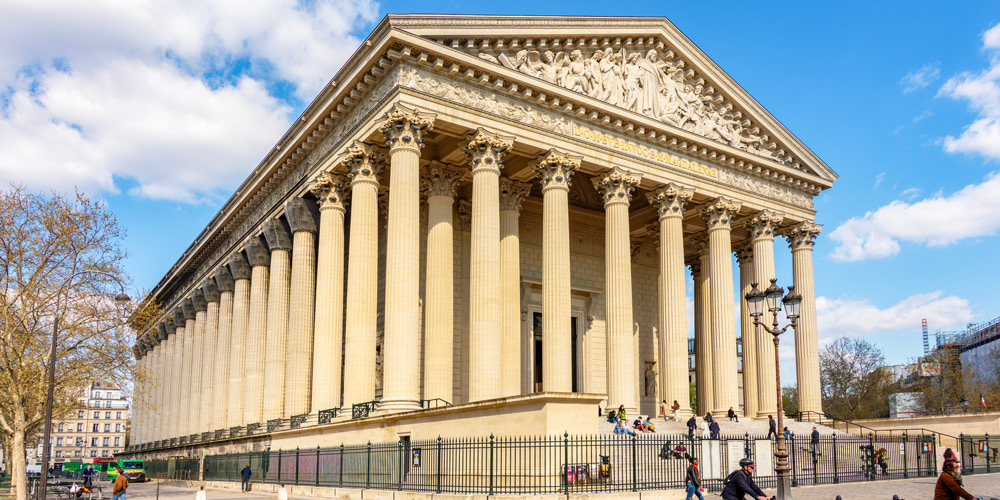
Church of the Madeleine - Pierre Vignon
Peripteral — building with a single row of columns on all sides
Pseudoperipteral — building with a single row of columns on three sides but engaged columns on the back
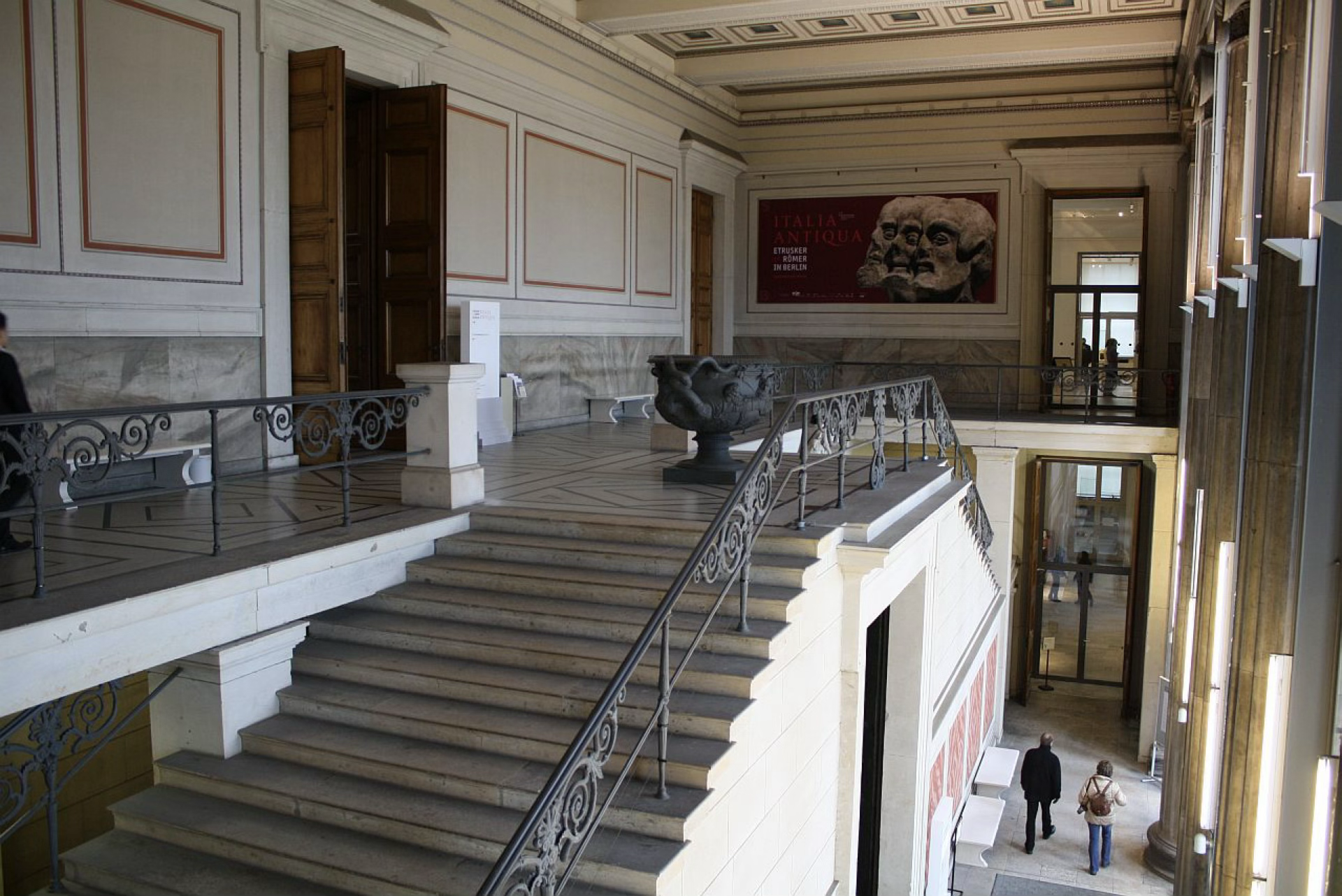
Altes Museum
Karl Friedrich Schinkel
Berlin, Germany
1813-1838
Name
Architect
Location
Date
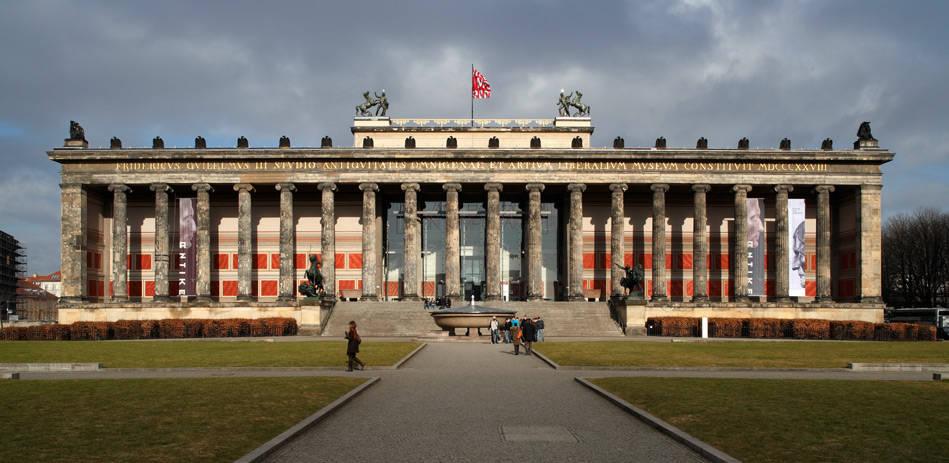
Altes Museum - Karl Friedrich Schinkel
Germany is the root of art history as a field
Ionic columns are holding up the entablature
No precedent for art museum buildings so it does not have a pediment
Not exclusive or elite, feels open
In the plan, you can see what is holding up the building
Thinking about Greece
Architecture is being used to educate everyone inside of the building
Learning is important in society; no longer limited to the upper class
First time exposed cast-iron was used in architecture (railing for stairs)
Historicism: the reference to, or use, of historical styles or motifs in architecture
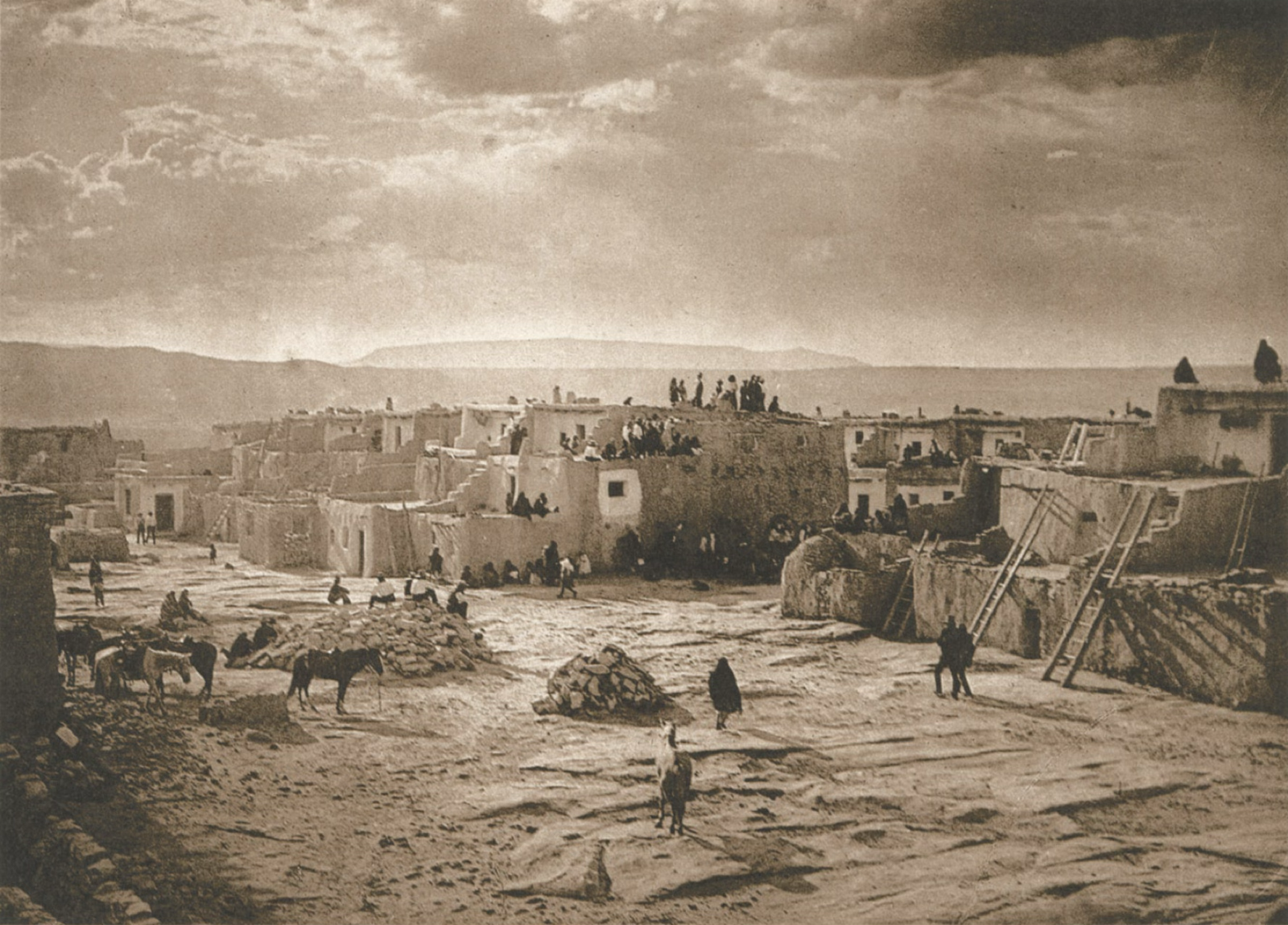
Acoma Pueblo
Albuquerque, New Mexico
1140-1160
Name
Location
Date
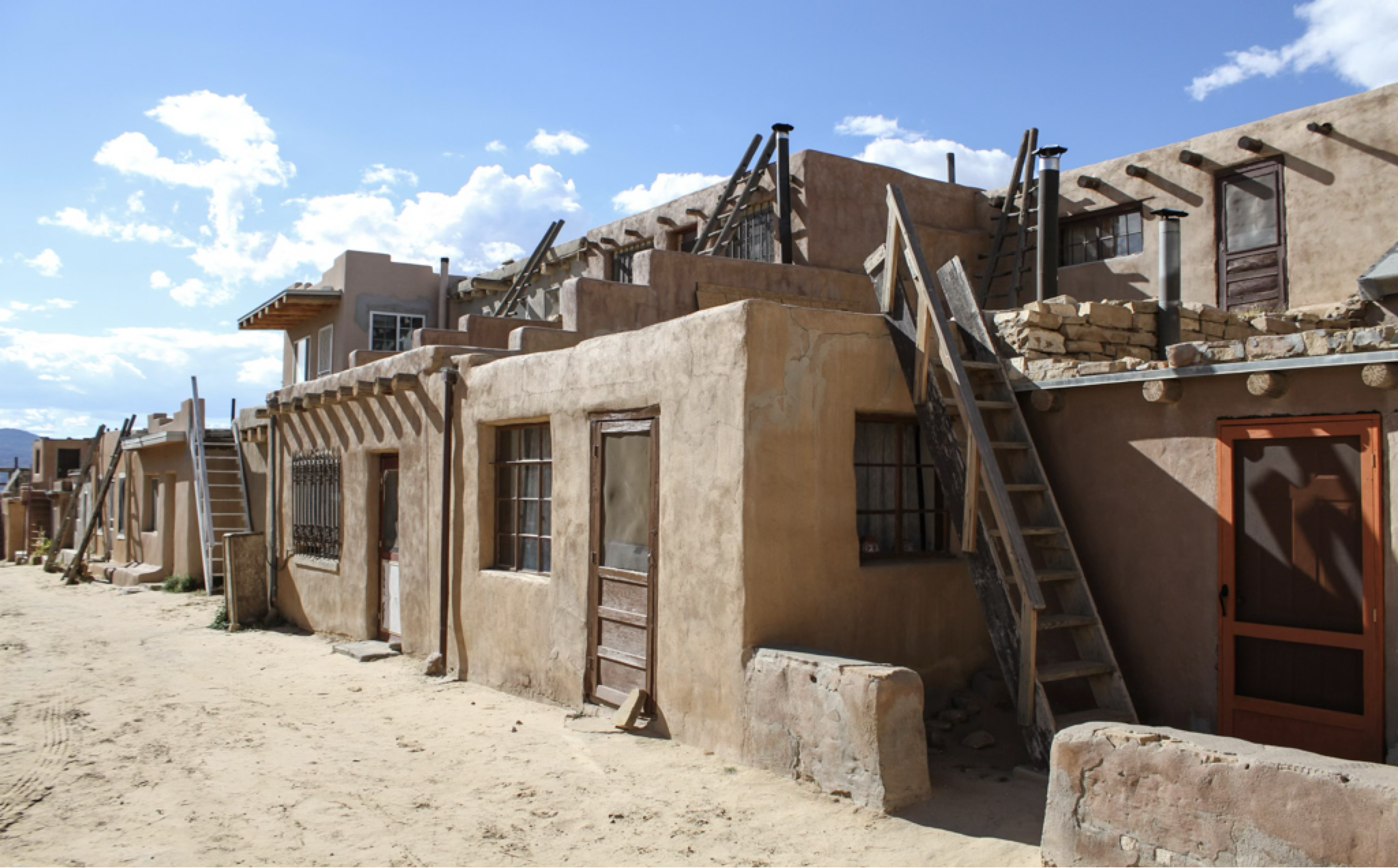
Acoma Pueblo
Made of clay, smaller windows to let in less heat (responds to climate)
Lower levels = storage area, higher level = during attacks they are allowed to take high ground
Built on top of a mesa, mesa — isolated, flat-topped elevation with steep sides
Response to materials, environmental conditions, and cultural traditions
Adobe — dried brick made of earth mixed with straw and water
The Spanish attacked the Acoma Pueblo in attempt to convert them to Christianity
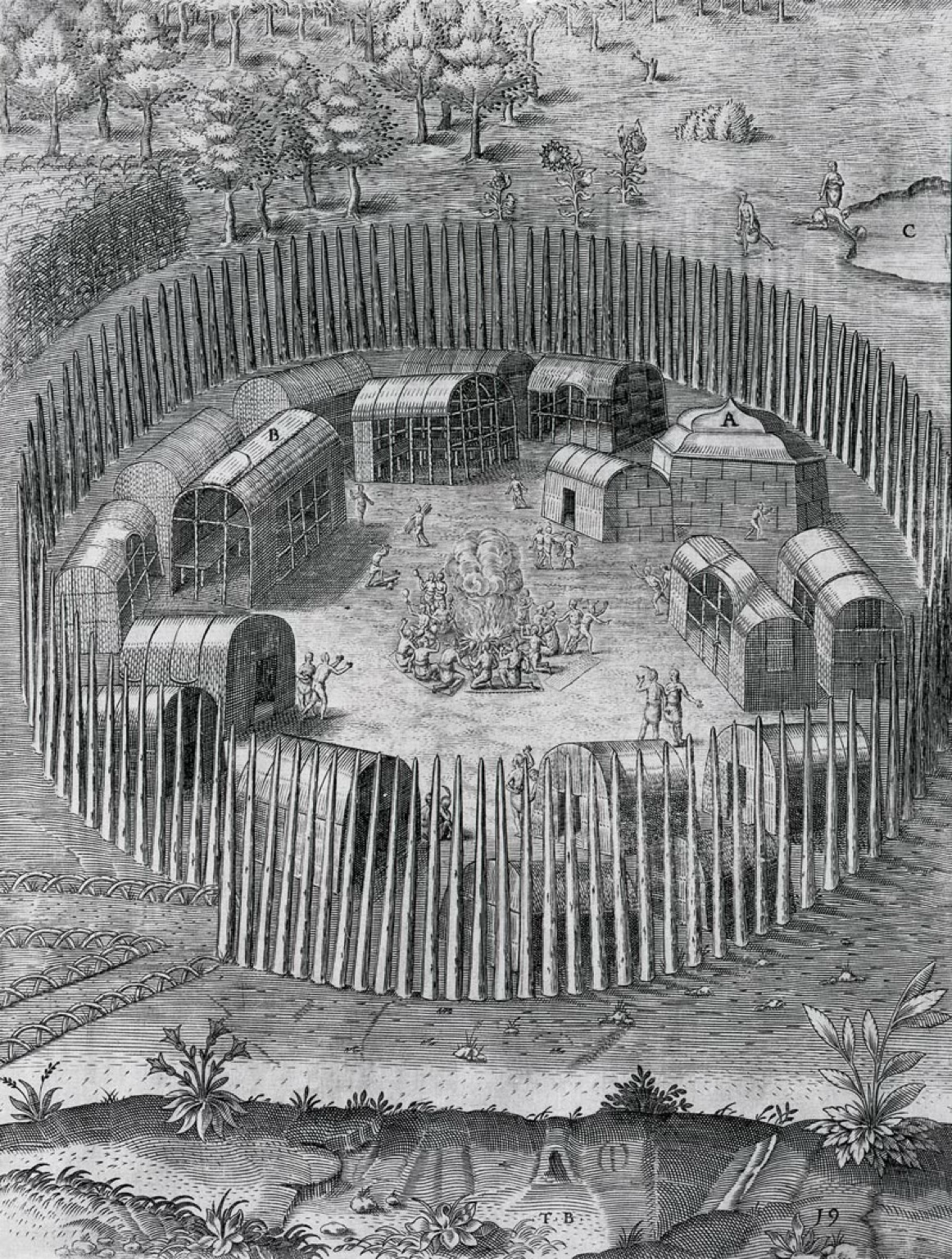
Algonquin village
Pomeioc, present day North Carolina
Name
Location
Plan of Philadelphia
William Penn and Thomas Holme
Philadelphia, Pennsylvania
1672-1692
Name
Architect
Location
Date
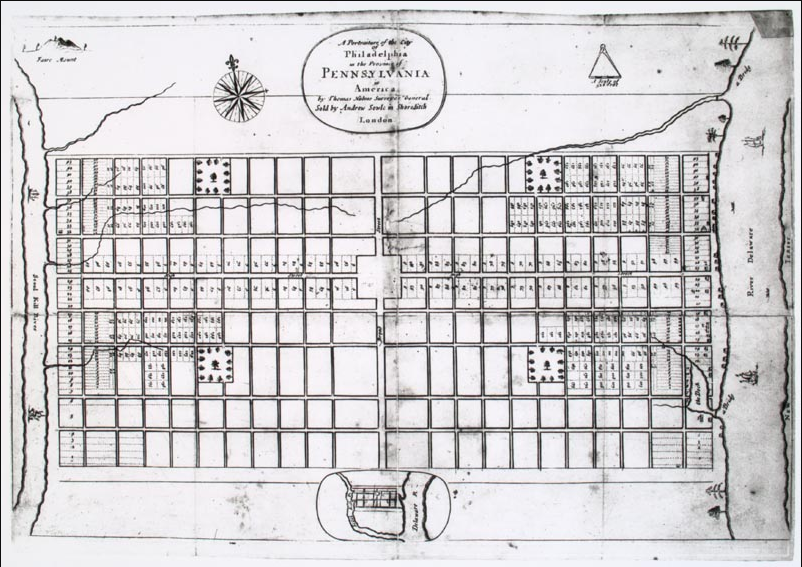
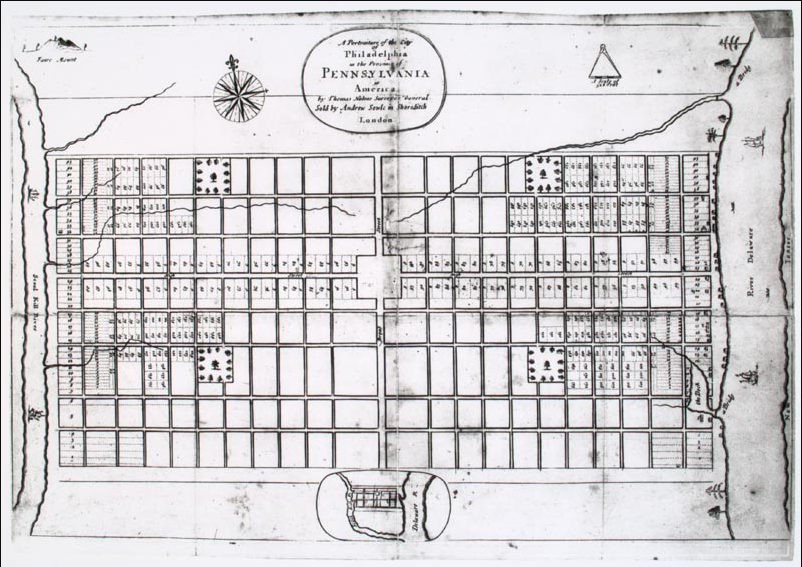
Plan of Philadelphia - William Penn and Thomas Holme
Europeans thought they would use the American land better than the Native Americans
William Penn got this land from Charles II to pay off a debt
Orthogonal grid plan — city hall placed in the middle, and four other squares placed in the corners
The land was already inhabited by Native tribes but Europeans claimed it
John Whipple House,
Ipswich, Massachusetts,
1657-1677
Name
Location
Date
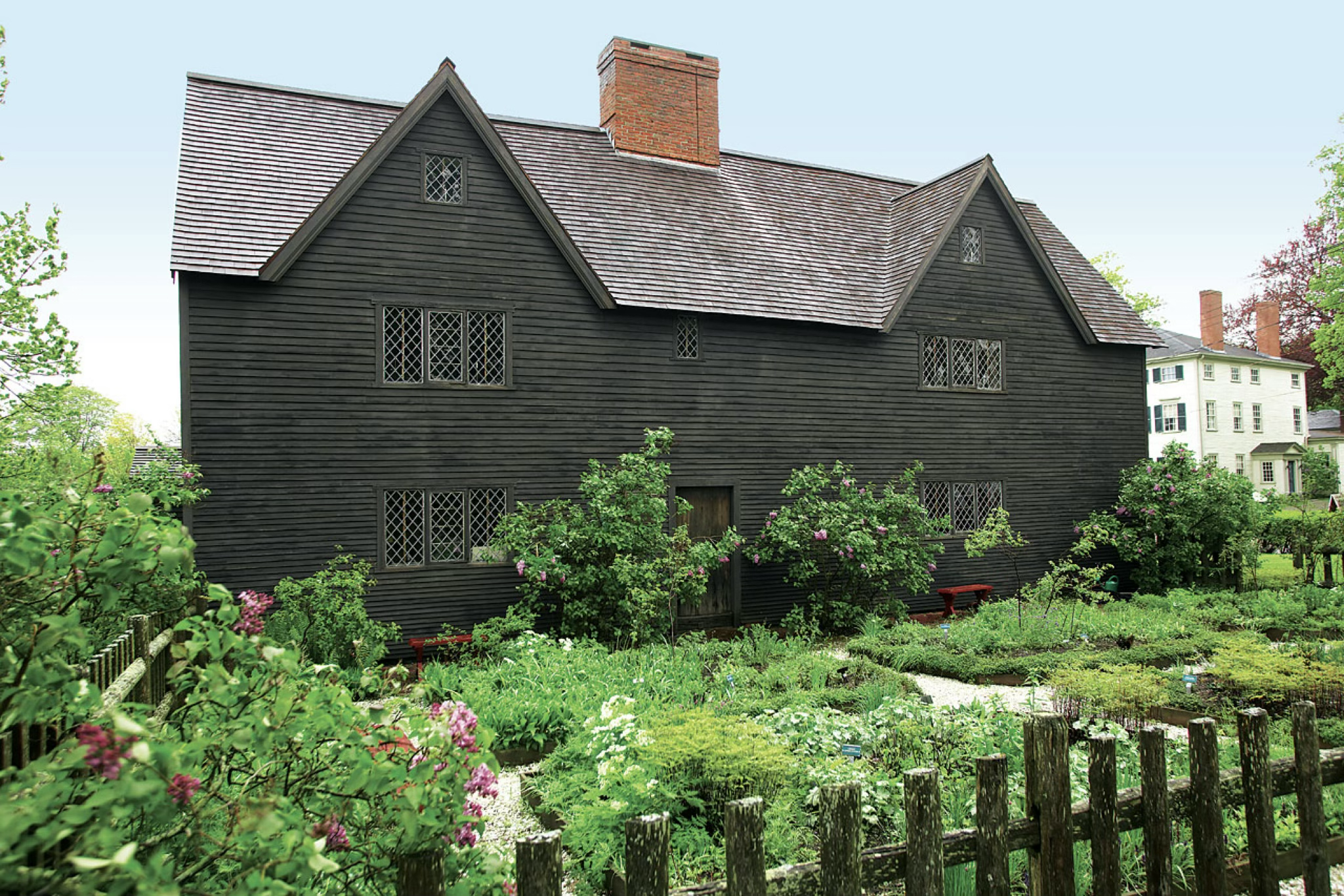
John Whipple House
Contractors from 17th century American were trained in Europe
Salt-box roof — Steep-pitched roof so rain and snow can fall off
Window opens out to the side, instead of up and down
Every pane of glass had to be imported (expensive), therefore, smaller windows
Building out of wood (excess of trees in New England)
Clapboard — long, thing, flat piece of wood, laid horizontally on walls as cladding - overlaps with others
Casement windows — hinged windows that swing out
Central chimney
Hall-parlor plan — rectangular, two-room configuration. One room is the “Hall” - one is the “parlor”
“Hall” — where activities took place
“Parlor” — more formal
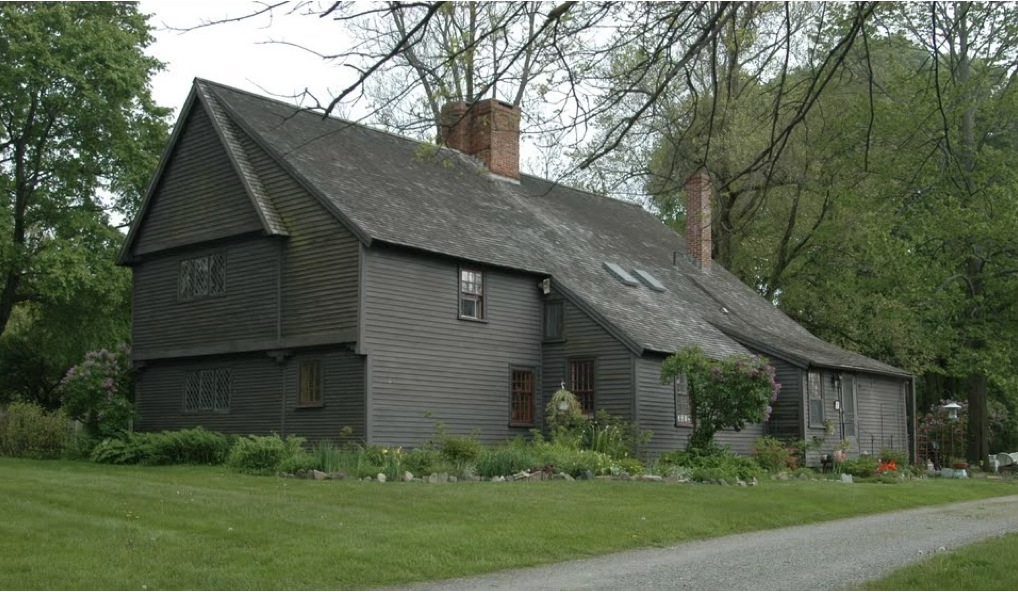
Resembles a Mayflower Cottage
Colne Engaine, England, c. 1620
MacPheadris–Warner House
Portsmouth, New Hampshire
1706-1726
Name
Location
Date
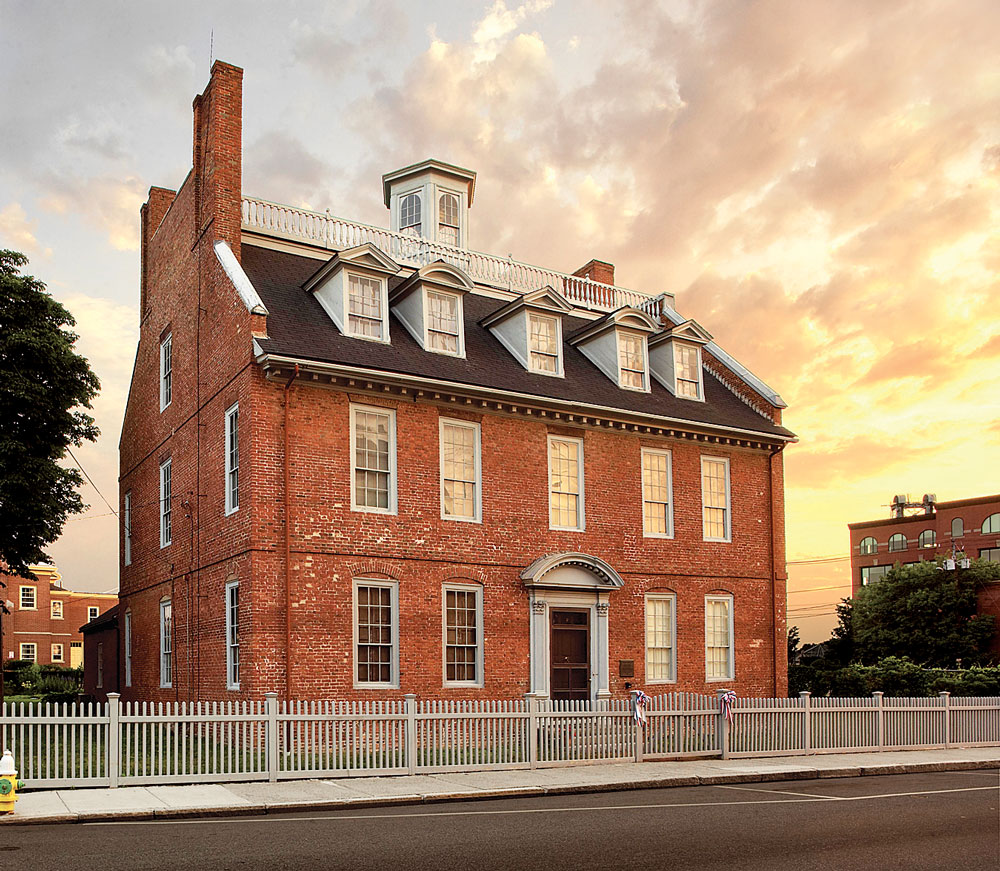
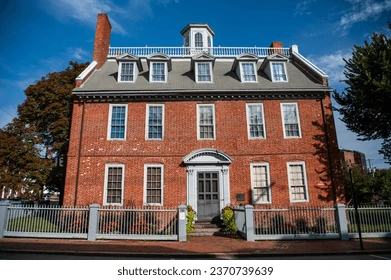
MacPheadris–Warner House
Shows homage to Renaissance architecture now
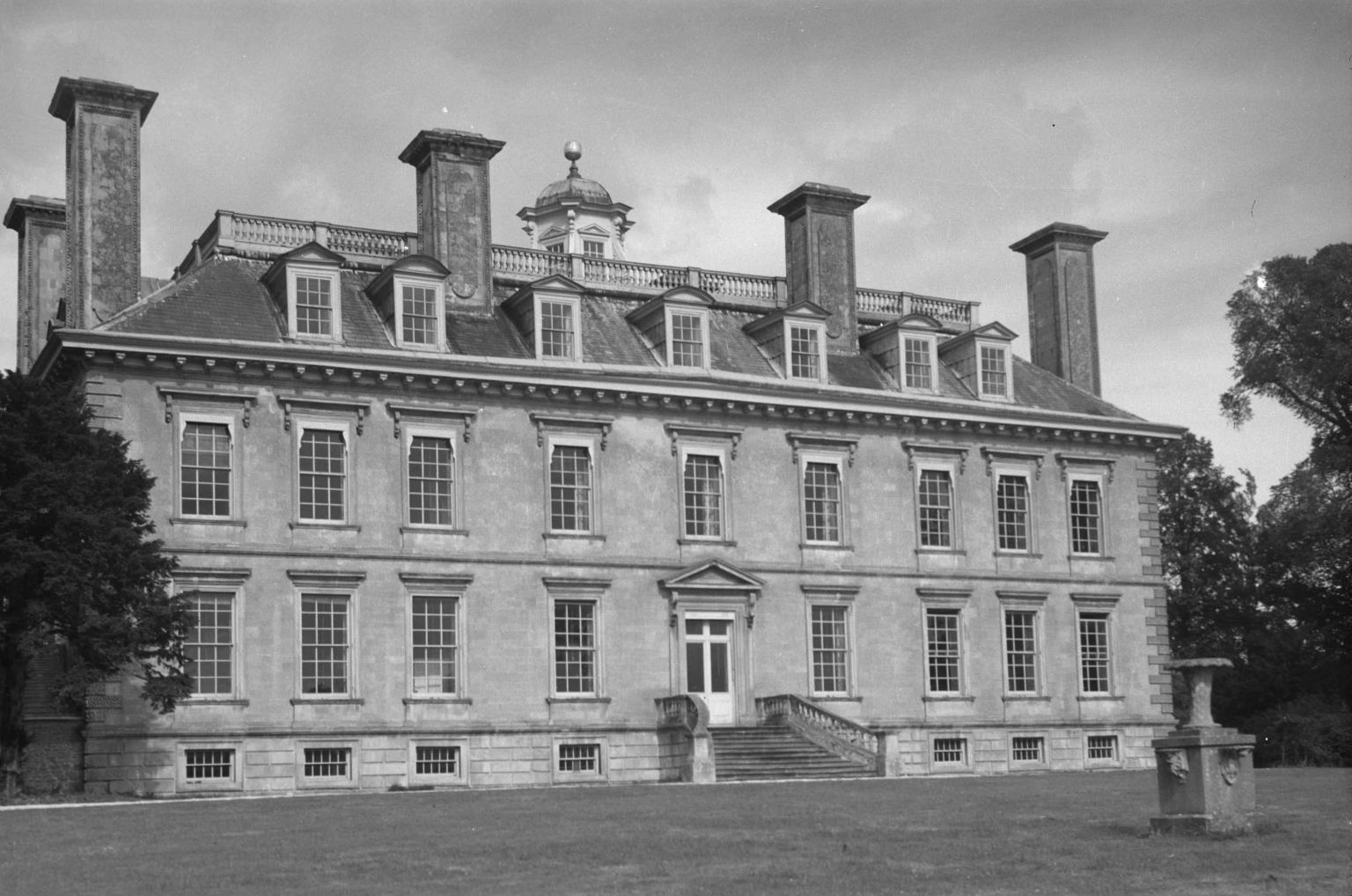
Balustrade, symmetrical, pediments, plasters
Influenced by Roger Pratt, Coleshill House, Berkshire, England c.1680
Coleshill House
Roger Pratt
Berkshire, England
1650-1670
Name
Architect
Location
Date
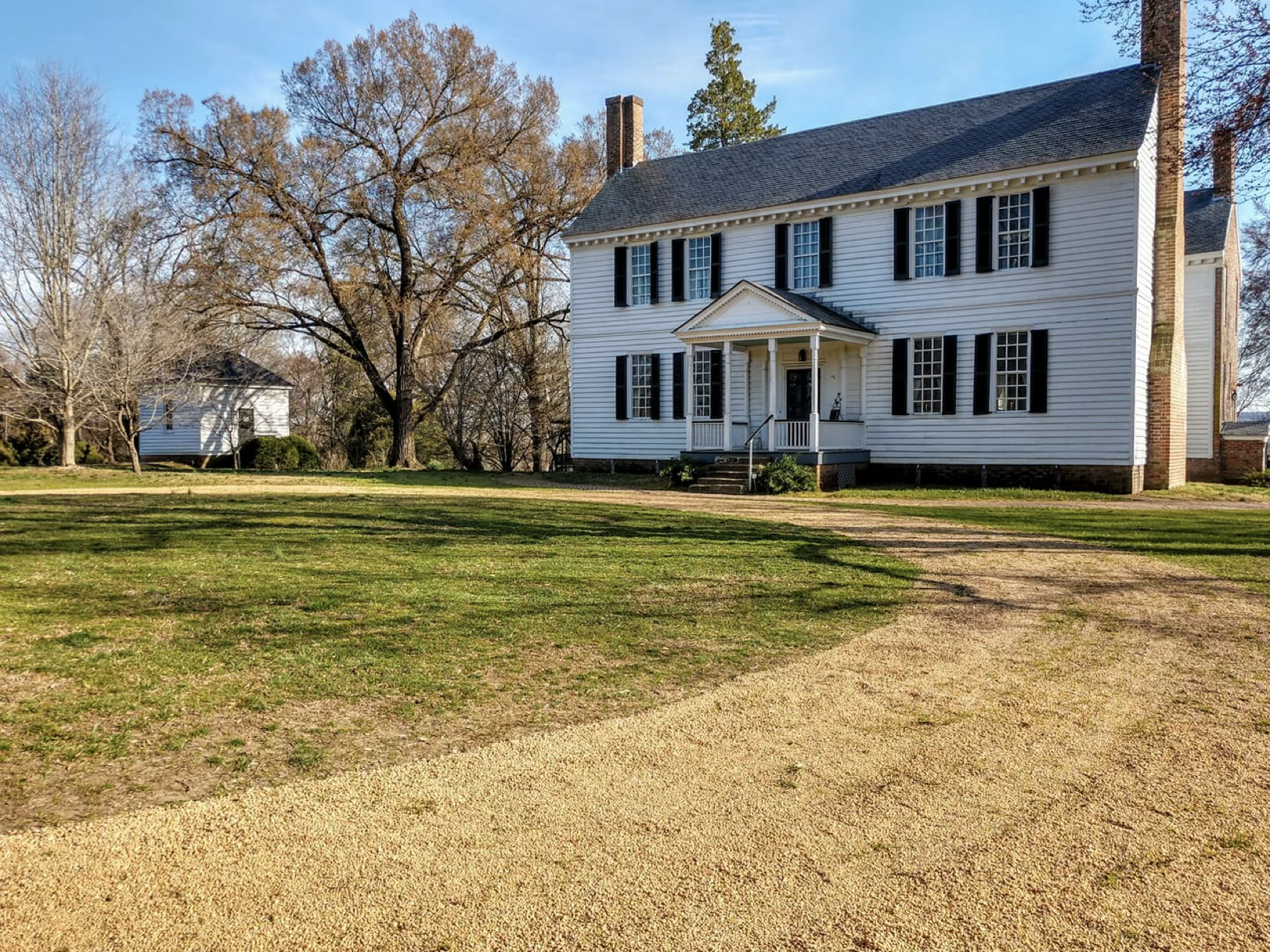
Tuckahoe Plantation
Richmond, Virginia
1723-1743
Name
Location
Date
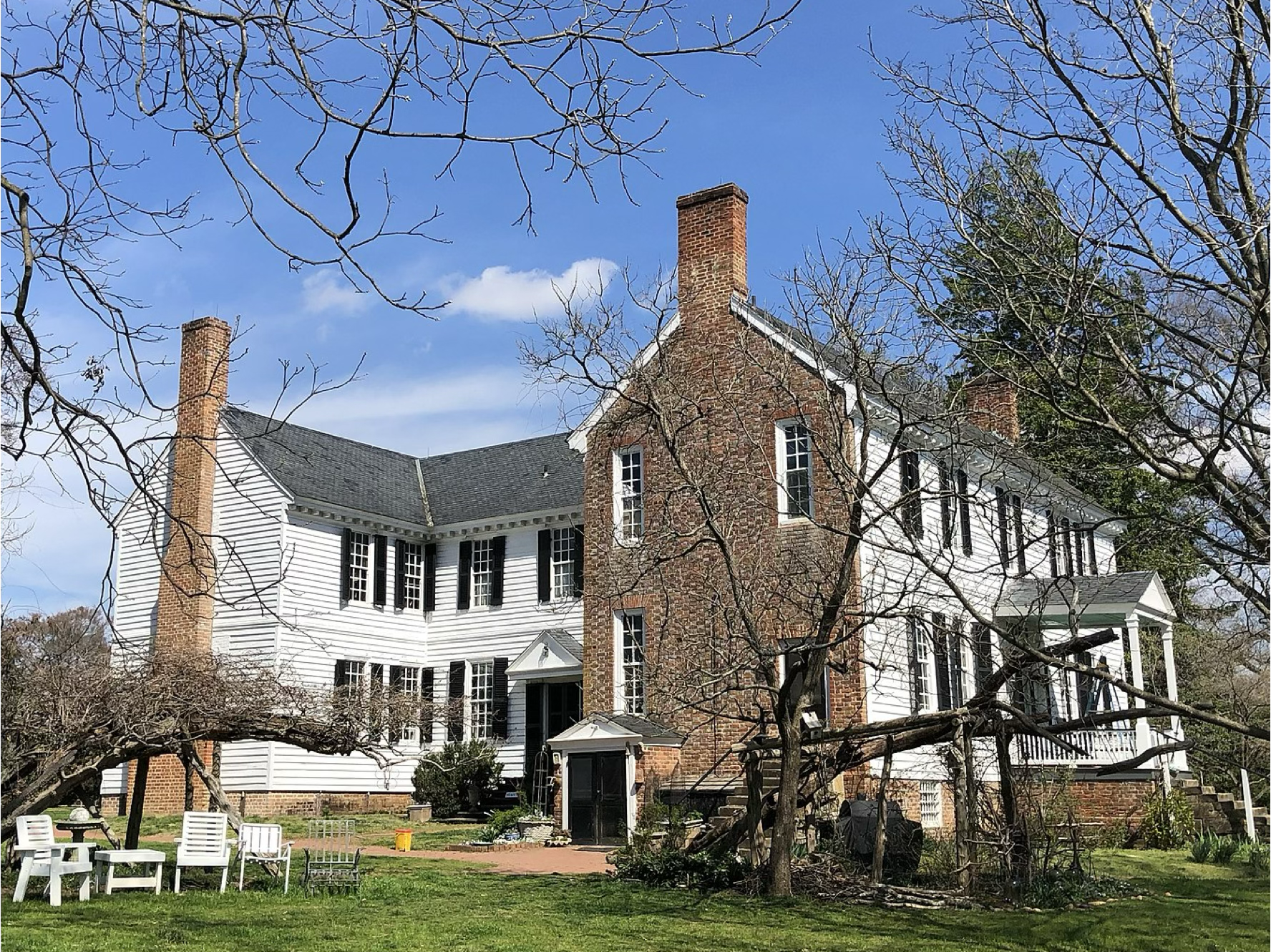
Tuckahoe Plantation
Not many people wanted to stay in the south, wanted to make money and return to England
These architectural buildings in the South were not meant to last
But some people never ended up making enough money and needed to stay
Pediments
Chimneys are on the ends of the house, South is hotter so you don't want the center of the house to get hot
House is raised on a higher foundation so the wood does not rot
“H” shaped house (weird design)
You can see that when you walk in you will be welcomed with a Hall
No kitchen in the building — fear of house burning down, so it is built with brick and kept separate from the actual house
The kitchen was run by indentured servants
Slave Quarters — used to show how wealthy you were, more enslaved - more wealthy
Lived in small buildings that represented the taste of their owners
Comfort was not of concern
Monticello
Thomas Jefferson
Charlottesville, Virginia
1758-1819
Name
Architect
Location
Date
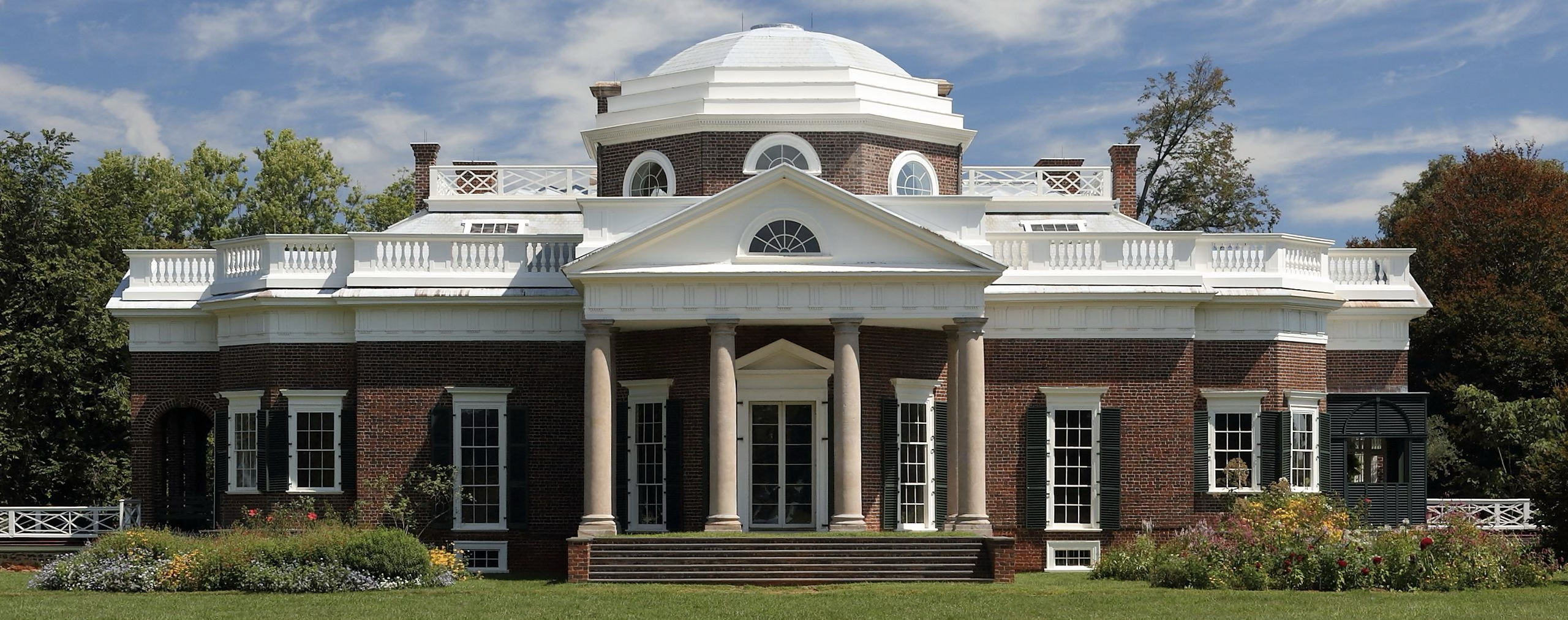
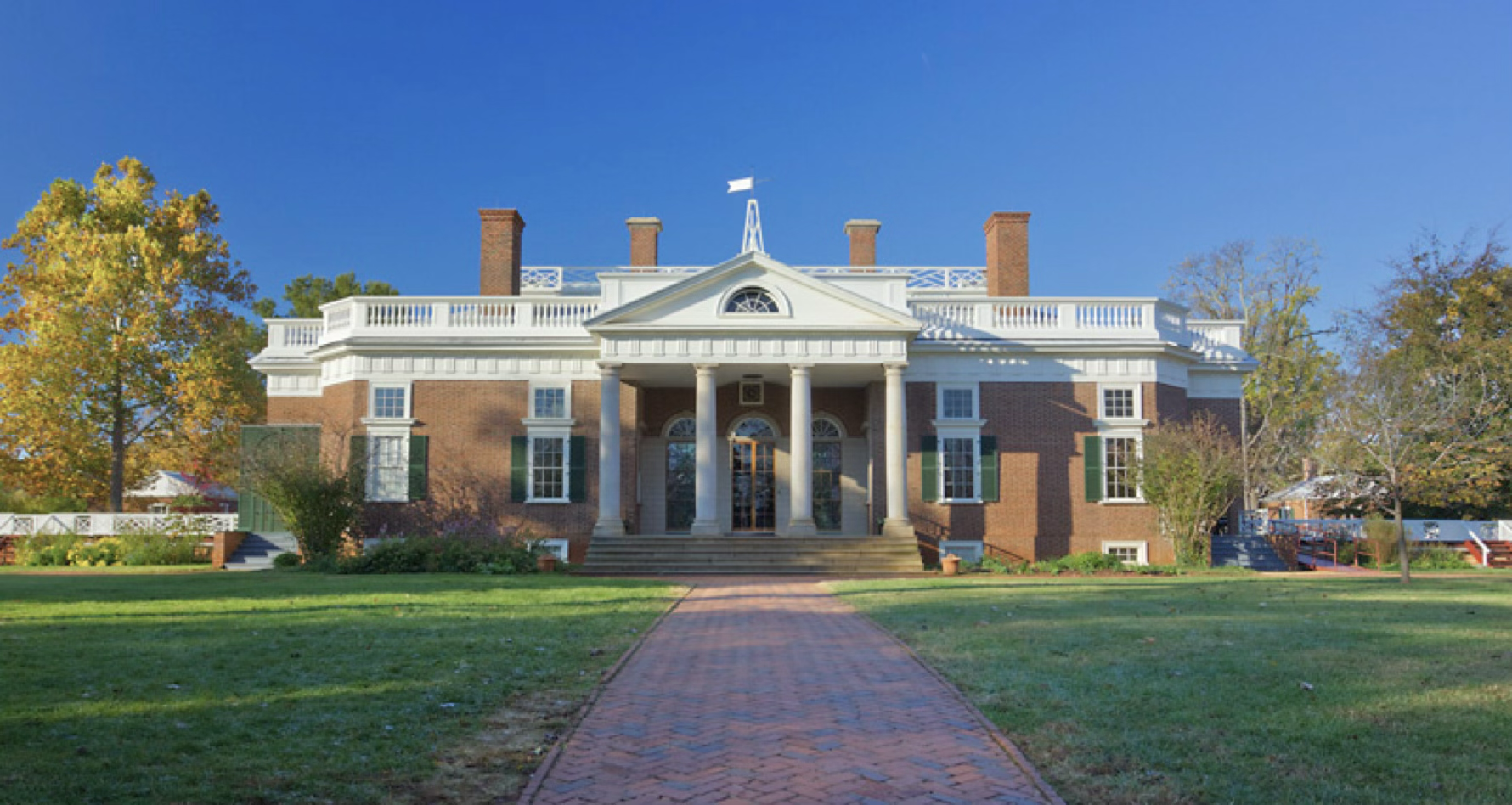
Monticello - Thomas Jefferson
Jefferson loved Palladio, had access to Palladio's books
Monticello was basically built as a villa
Built of brick, lot of clay available
First blueprint had A-B-A format with a temple front, very cubic and simple
Influenced by Pierre Rousseau, Hotel de Salm, Paris, France, 1782-1787
Jefferson liked the idea of the dome
From the plan of the house, as you go further back, you enter more private areas
Jefferson is an Enlightenment thinker
Shows off Native American collectibles, sculptures of people he admired, and the clock he made
Sash windows — windows that slide open and down
Triple sash window — three in a row, can all be pulled down to make a massive door
Lined up doors and windows for access to breezes (important)
Cryptoporticus — covered corridor or passageway (subterranean at Monticello)
Does not want to be seen as someone who owns a lot of slaves
Chimneys coming out of the balconies to show the smoke from kitchens while slaves are working
Wants to cultivate the image of a gentleman, farmer, scholar .. not a slave owner
Virginia State Capitol
Thomas Jefferson
Richmond, Virginia
1775-1799
Name
Architect
Location
Date
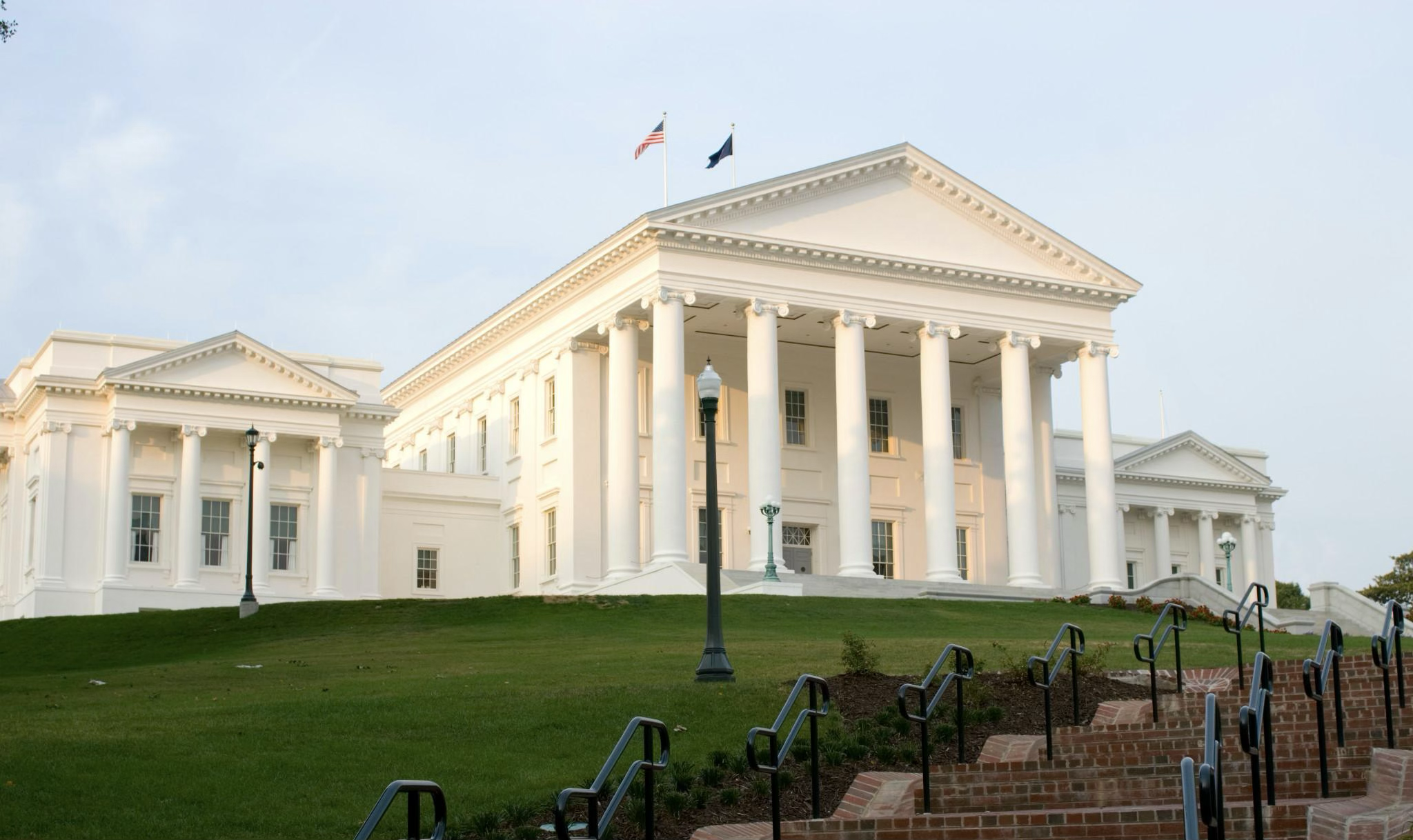
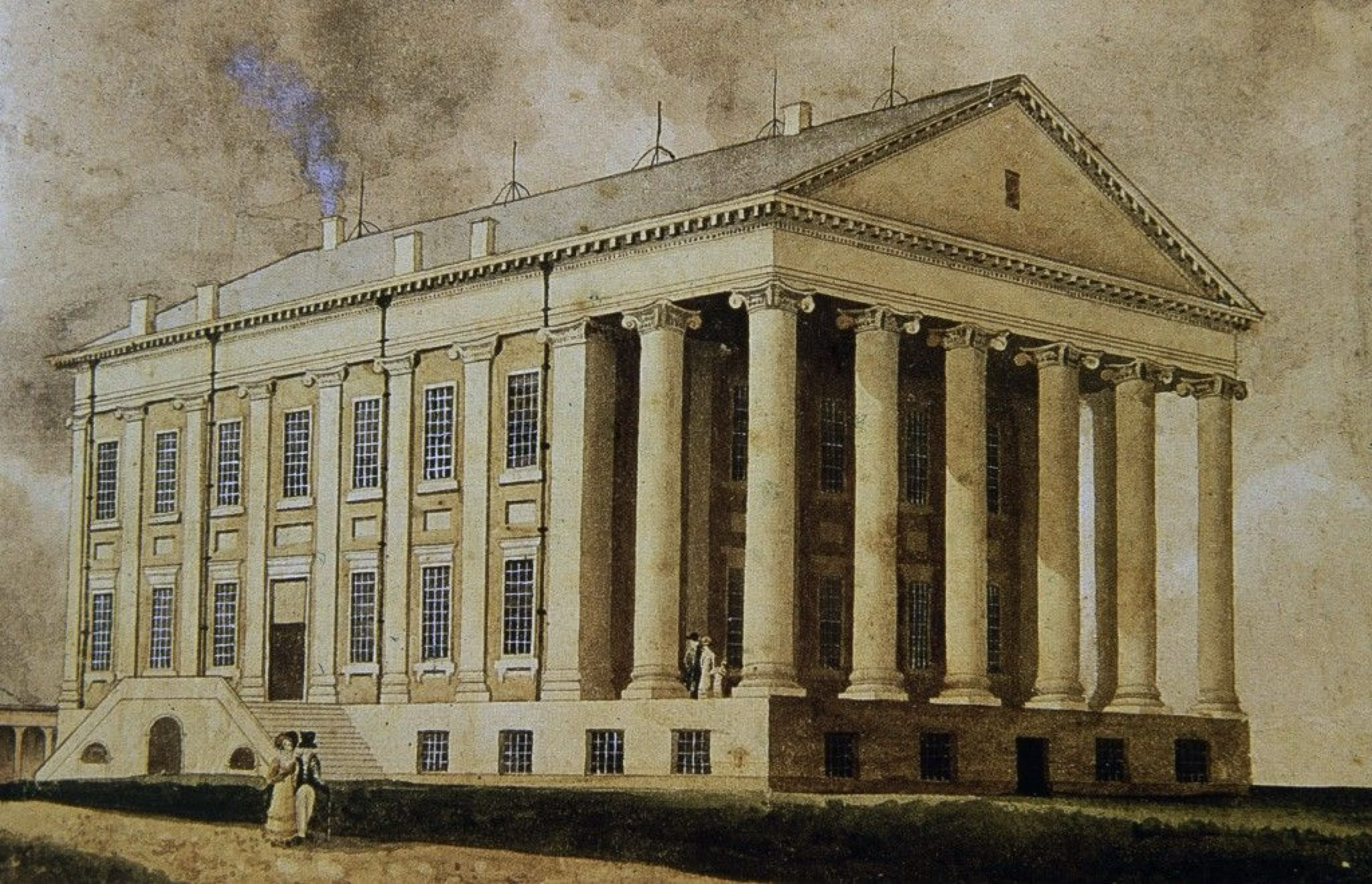
Virginia State Capitol - Thomas Jefferson
Jefferson only completed the middle portion of the capitol
Jefferson thought he could improve American society by improving Architecture
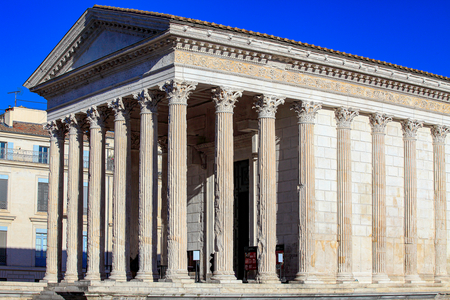
Jefferson copied the Maison Carrée, Nîmes, France, c.1-10 CE for
Simplifies it — two columns instead of three on the side, no engaged columns on the side of the building
One of the first temple fronted buildings in American
He loved Roman architecture, and he wants to carve American republic after the Roman republic
Plan for the City of Washington
Pierre-Charles L’Enfant
Washington D.C.
1781-1801
Name
Architect
Location
Date
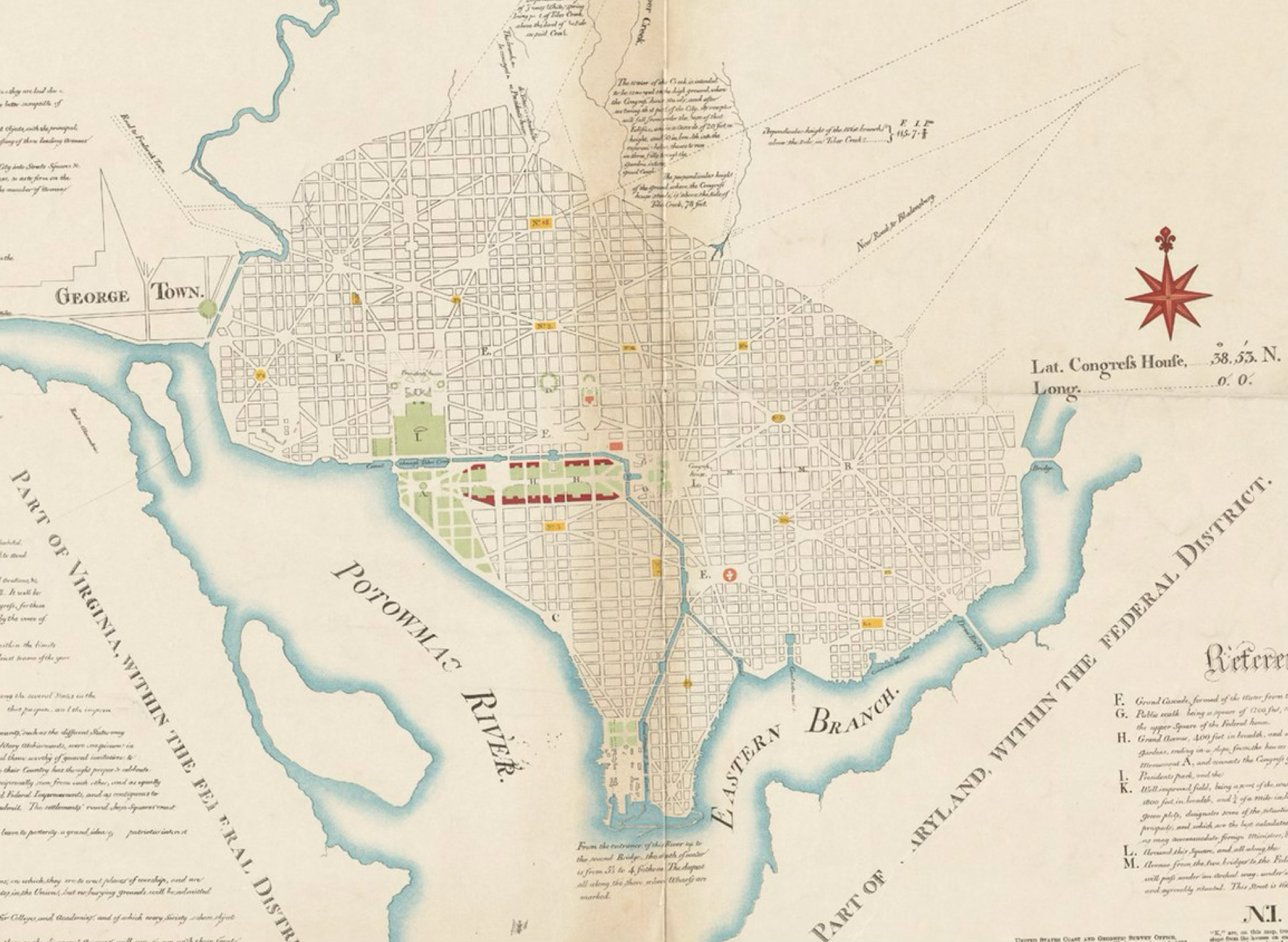
Plan for the City of Washington - Pierre-Charles L’Enfant
Jefferson suggests an orthogonal grid, but Washington didn’t want that
Uses triviums and long broad roads to connect monuments and major buildings (Baroque planning)
Capital building was on the highest point of land and was considered the most important building
Iron Bridge
Abraham Darby III and Thomas Pritchard
Coalbrookdale, England
1766-1789
Name
Architect
Location
Date
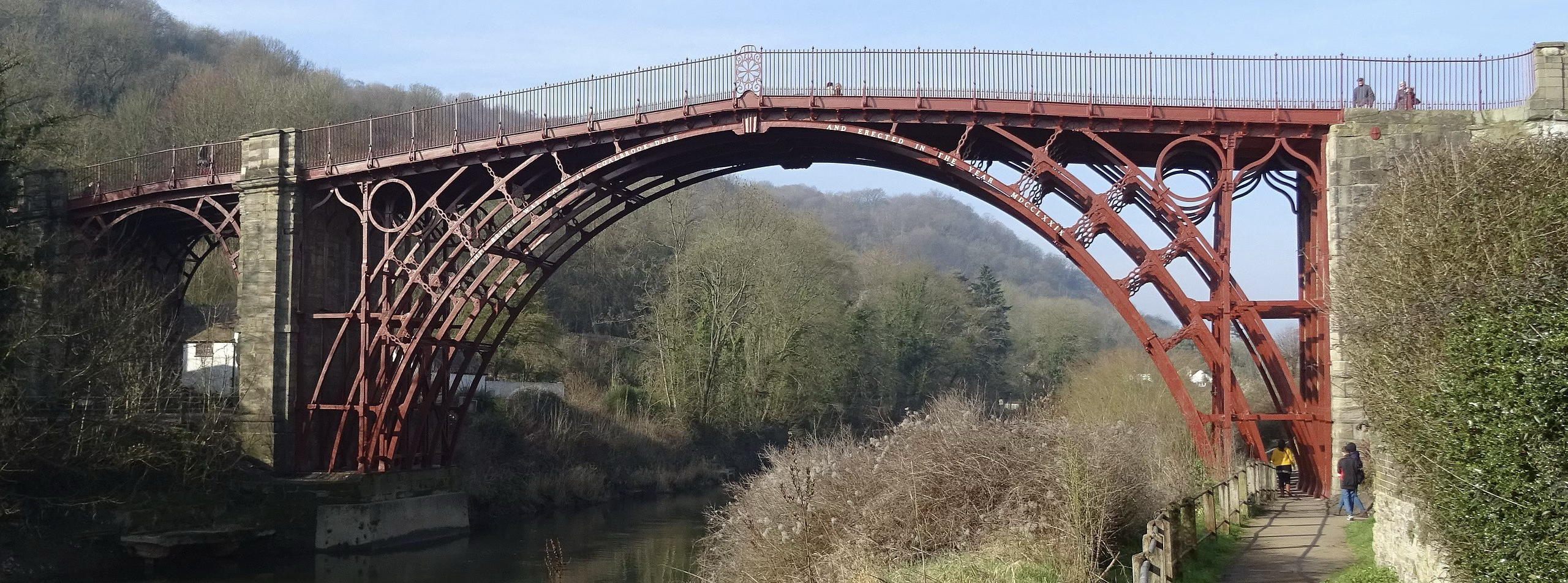
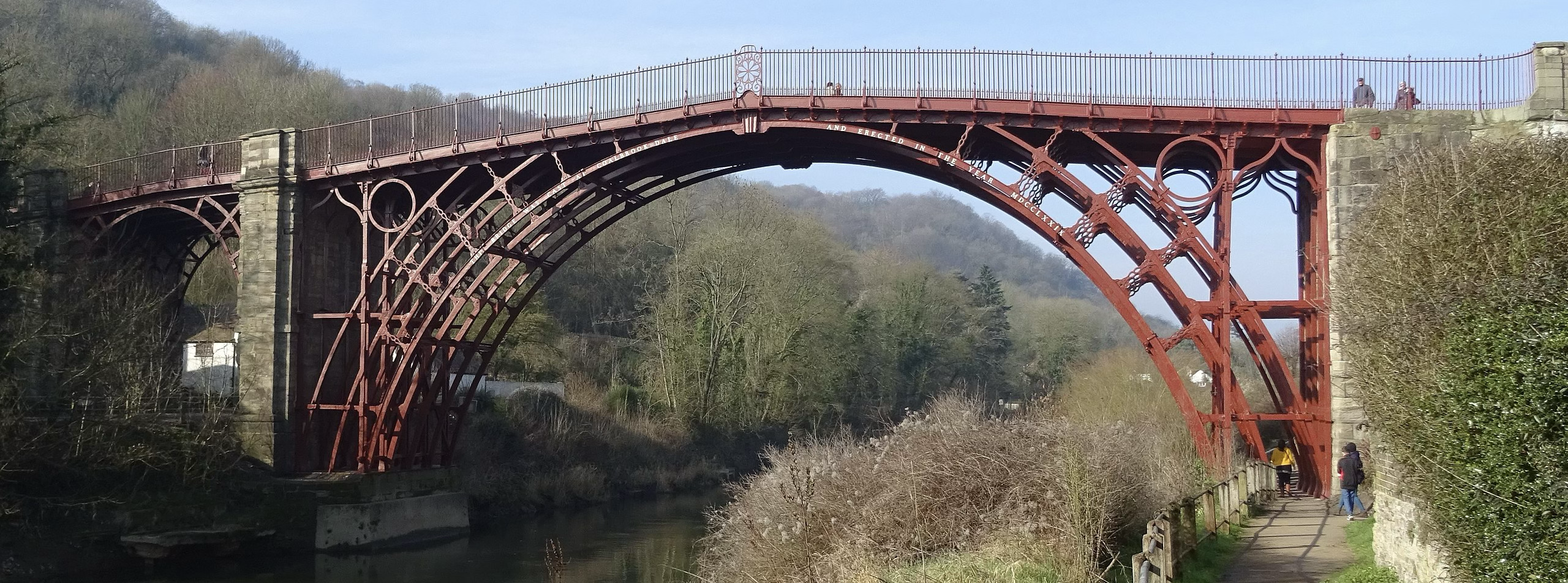
Iron Bridge - Abraham Darby III and Thomas Pritchard
Cast-iron is good for compression - pushing down on elements
Limited when using it horizontally
Instead of the bridge being straight across, it is slightly heightened with a rounded arches below for support - to mitigate the deficiencies of cast iron
Expression of modern construction of the 1980s
Identical pieces — architects had to only use a few molds, cheaper construction
Shift from the solid aqueducts of Pont du Gard
St. Genevieve Library
Henri Labrouste
Paris, France
1828-1860
Name
Architect
Location
Date
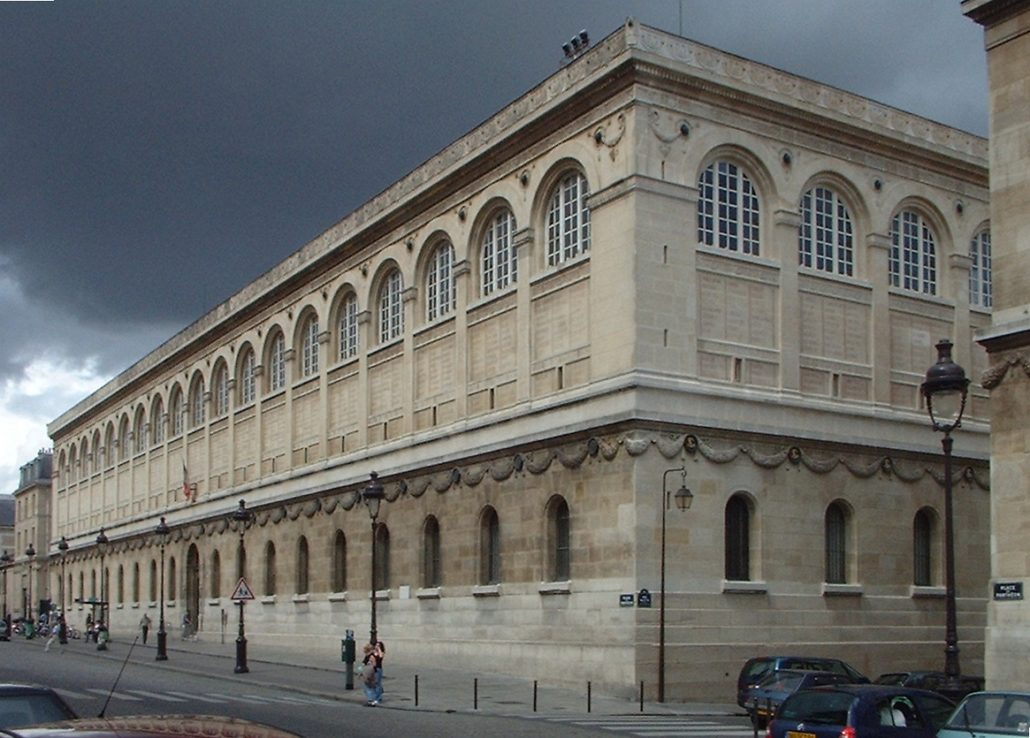
St. Genevieve Library - Henri Labrouste
Rectangular, bulky, horizontal, two-stories, smaller windows on first floor, bigger windows on second floor (reading is done on second floor; more light)
Resembles a Roman Palazzo
You can copy old ideas and make it into something new
The decoration relates to the goals of the building
Exterior of the building has names on it; authors featured in the library
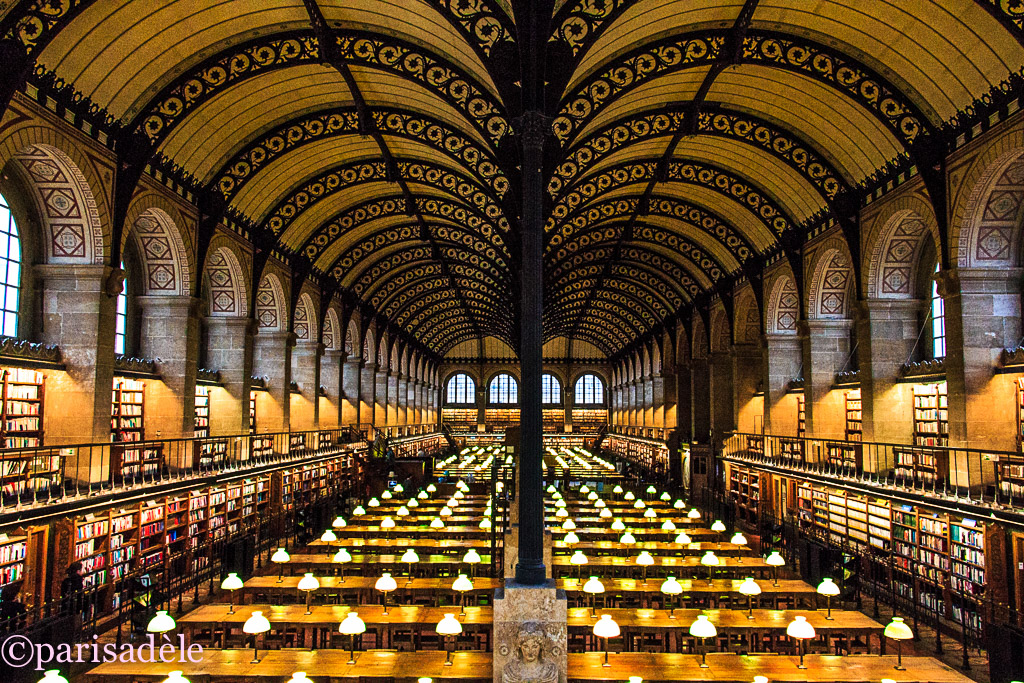
The building tells us that metal is being used - more honest
Industrial revolution makes cast-iron available and cheaper
Metal becomes part of the aesthetic
Ecole planned building = plan of building is clear and logical - most important (you know where you are going)
Cast-iron allows light to seethe through it, unlike blocky architecture that blocks like
Also less likely to burn
Classical ideas: arch, column — but being realized in cast-iron
Used to go to great lengths to conceal iron, now it is on great display
Crystal Palace
Joseph Paxton
London, England
1840-1861
Name
Architect
Location
Date
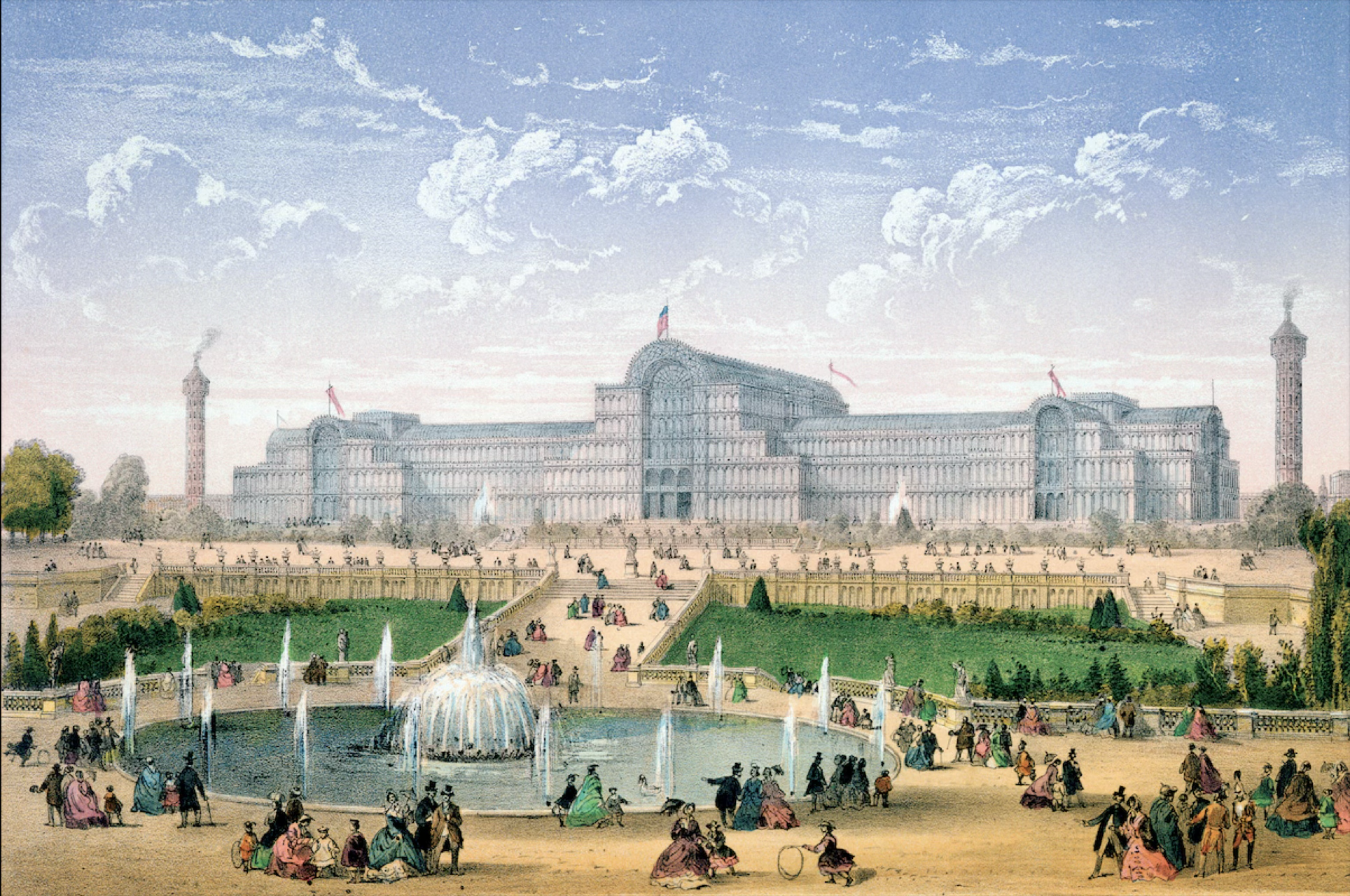
Crystal Palace - Joseph Paxton
Built of iron and glass; Britain can make these products in bulk
Architects believed that this could be more of the work of engineers, not architects
Ferrovitreous - ferro (iron) and vitreous (glass) construction
This combination is new; it is light and open - no one ever saw walls this open before
Machine created: Sculptures, textiles, fountains were on display
Americans sent over engines
Hartford sent over guns
First useable exhibition of flushing toilets
This building was meant to be temporary; built over a park and kept trees
The building would become extremely hot
New style of architecture
The building was destroyed because the inside had caught fire
The building was created in 6 months (18 acres) because everything was pre-fabricated and pre-made
Tensile strength vs. compression strength
Cast-iron is very strong with compression
Cast-iron is very weak with tensile strength
Solution: Uses webs and circles to move the weight outward
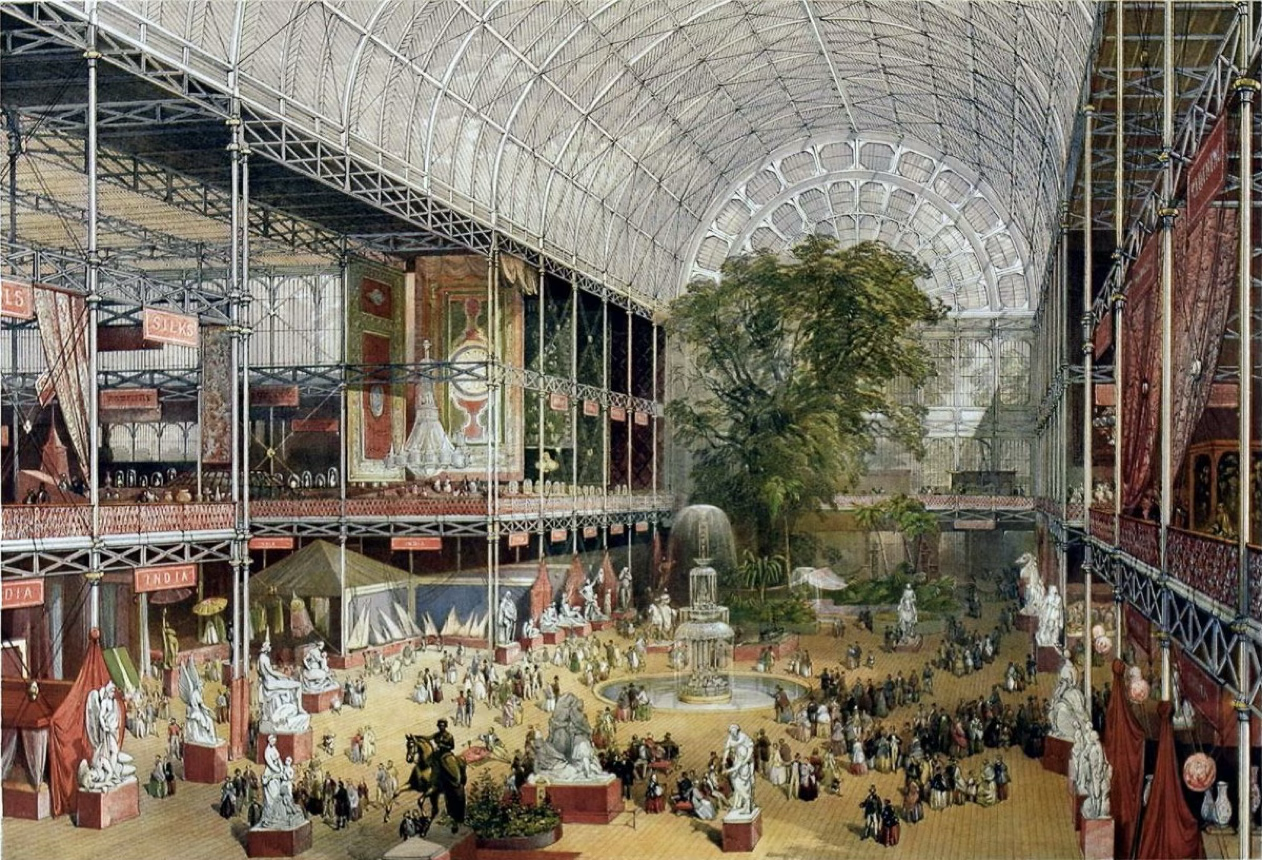
Ferrovitreous
a building style combining iron (ferro) and glass (vitreous) enabled by industrial mass production
Great Conservatory
Charles Fowler
London, England
1812-1836
Name
Architect
Location
Date
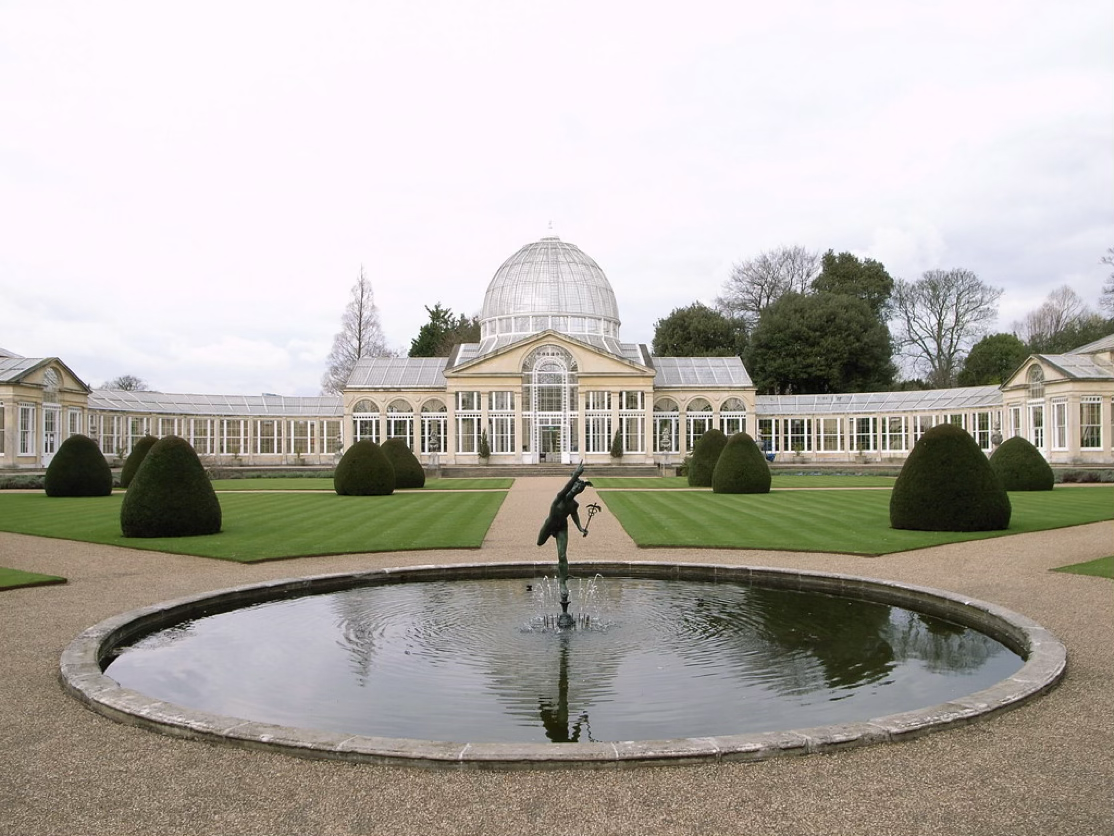
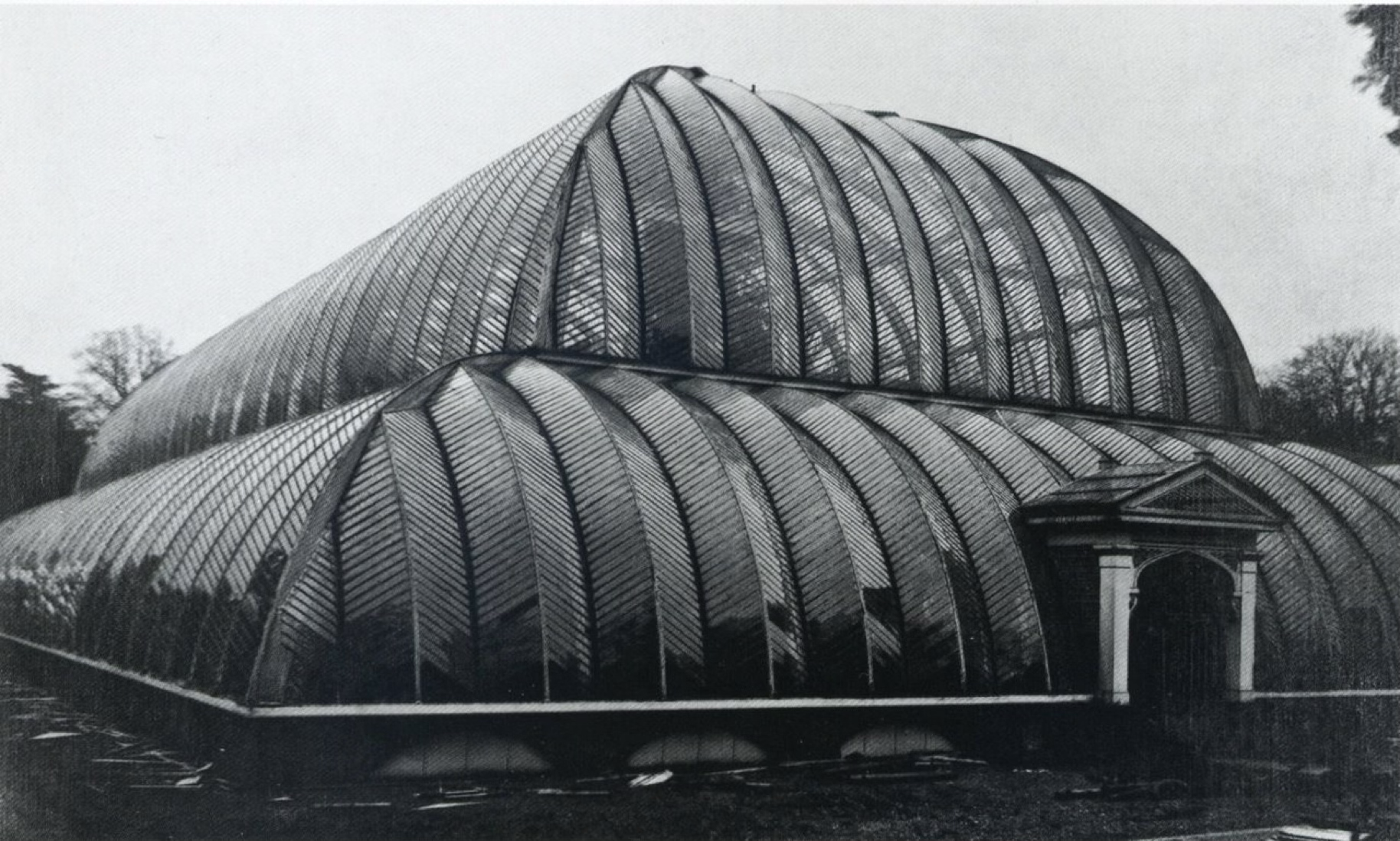
Great Conservatory
Joseph Paxton
Derbyshire, England
1826-1851
Name
Architect
Location
Date
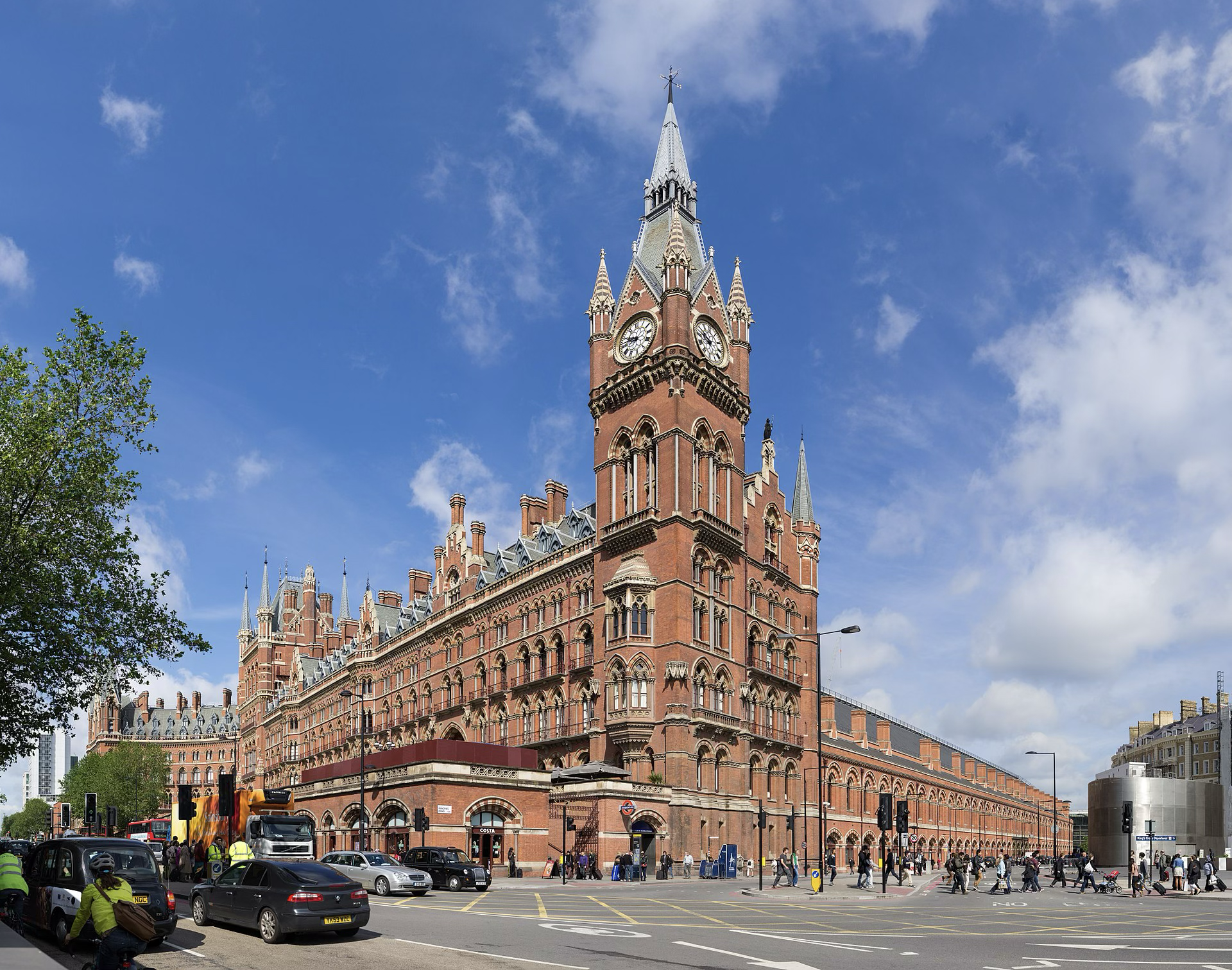
St. Pancras Station and Midland Hotel
George Gilbert Scott
London, England
1862-1876
Name
Architect
Location
Date
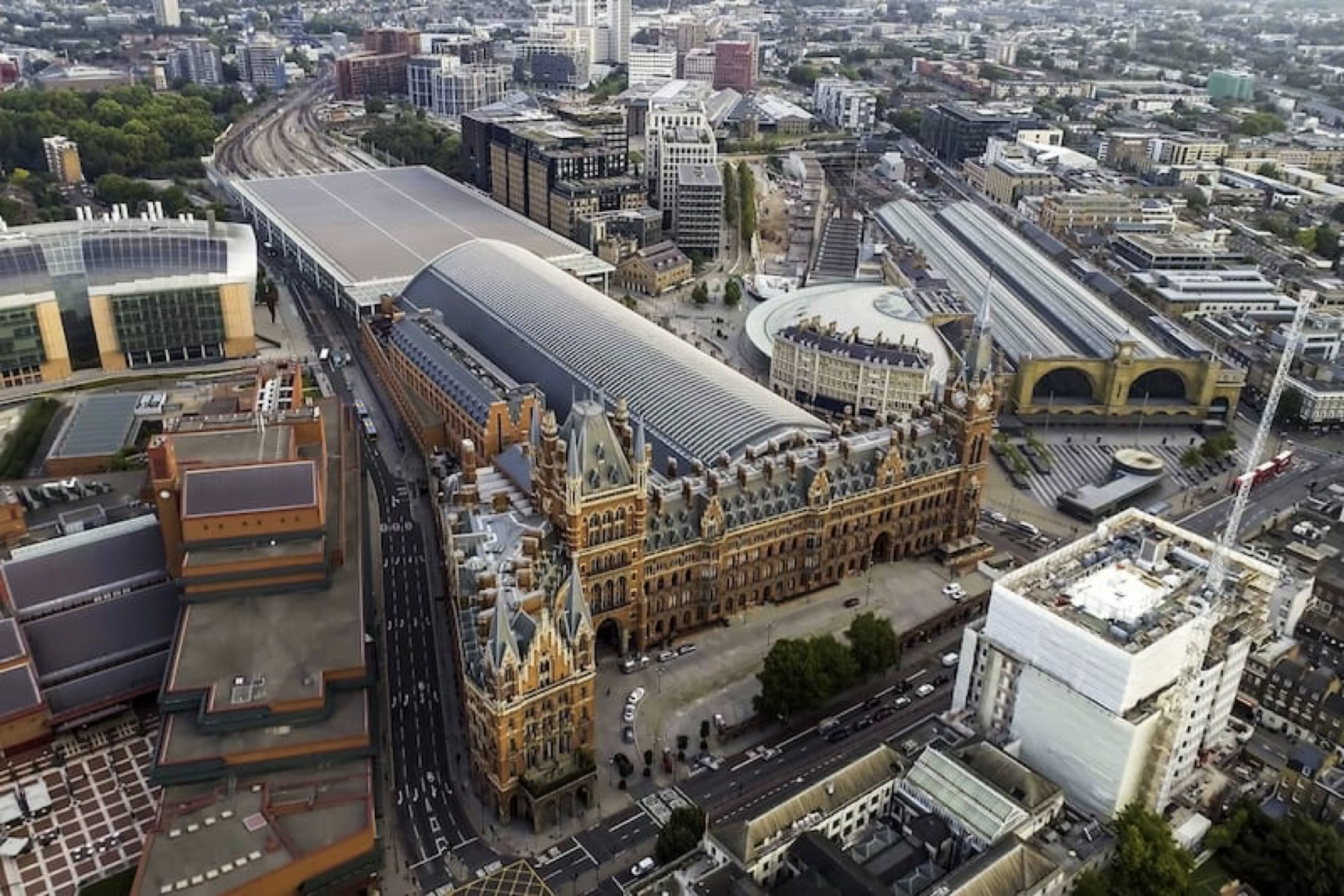
St. Pancras Station and Midland Hotel
No precedent for how train stations should be designed
Resembles a Gothic-arch - deflects the weight outwards
Cast-iron and glass Gothic arch
Midland Hotel is made out of brick and masonry construction
Gothic revival building
Polychromy - many colors
Everything is wrapped in a gothic skin
People were not sure yet if they were ready to accept the new architectural aspects of the Industrial Revolution
Glass and cast-iron train station hidden by a medieval gothic building
Renovations and Alterations to Paris
Georges-Eugène Haussmann
Paris, France
1844-1899
Name
Architect
Location
Date
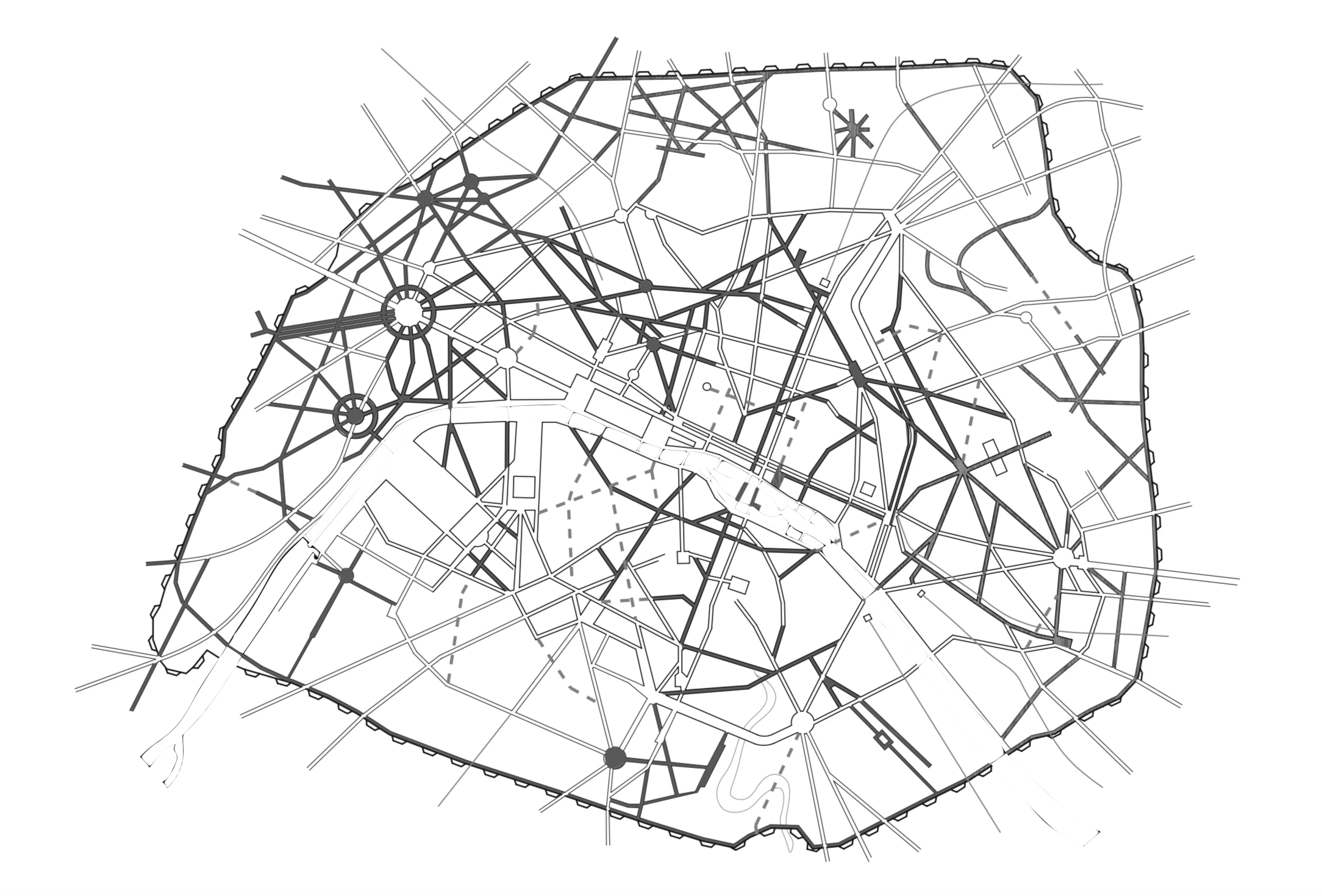
Plan for the city of Paris - Georges-Eugène Haussmann
Big broad roads trace back to landmarks (triviums) – Baroque planning
Uses a lot of structural boulevards to connect monuments, provides easier access
Adds parks, trees, sidewalks
Government thought this layout would prevent uprising; people would want to live in this city
Cities demolished whole blocks and buildings – this displaced people
Not only physical displacement, but social displacement as well
Took away old buildings that people would identify with
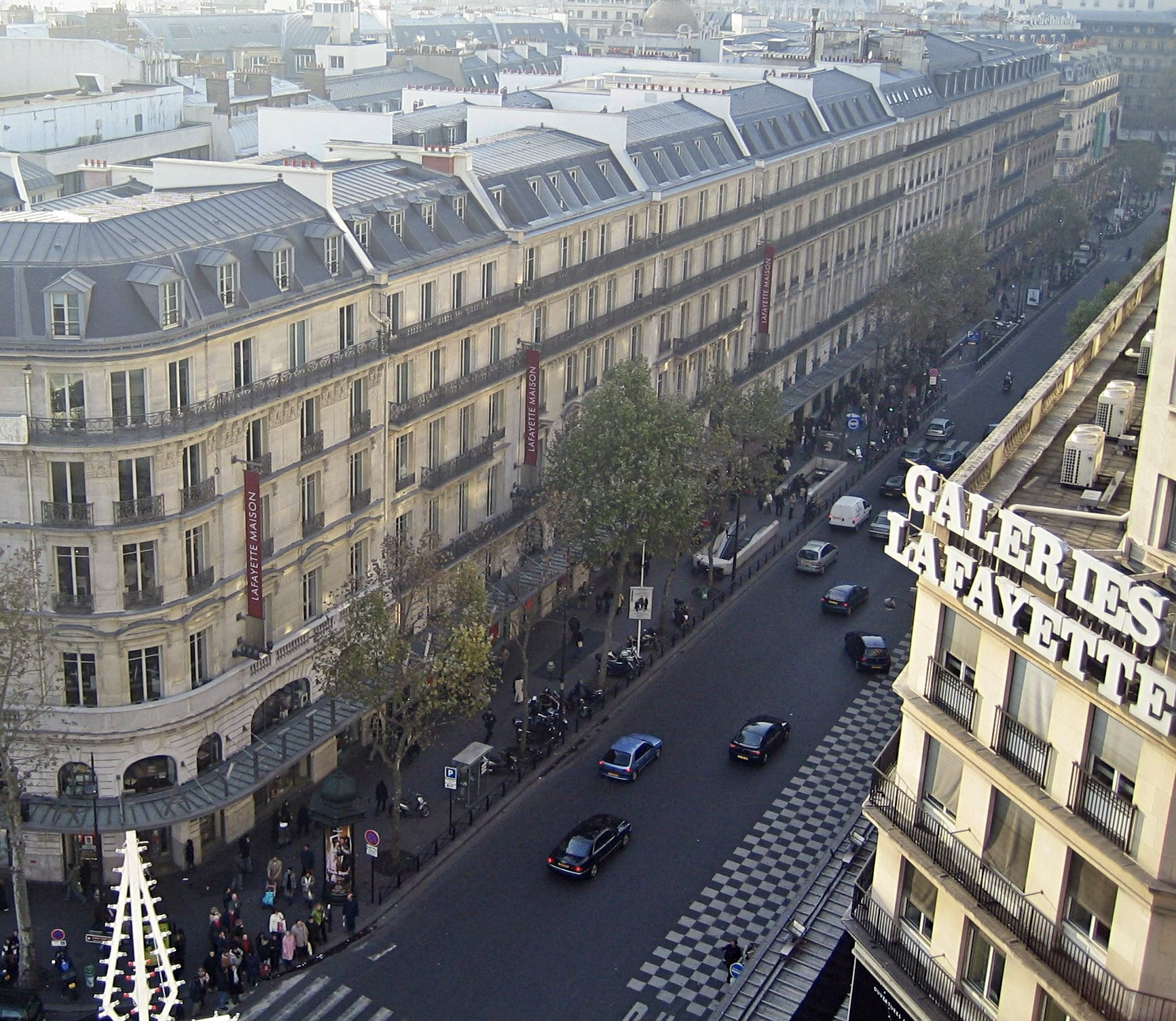
Typical “Haussmannized” Buildings, Boulevard Haussmann
All structures should follow a typical format
Bottom structures were filled with shops; and upper levels were used as residential homes
Cast-iron balconies
The city created a new sewer system; cleaner
This city was characterized by parks and open spaces
Camille Pissarro, Place du Theatre Francais: Rain effect, 1898
Economic goals shape this plan → goals of raising taxes
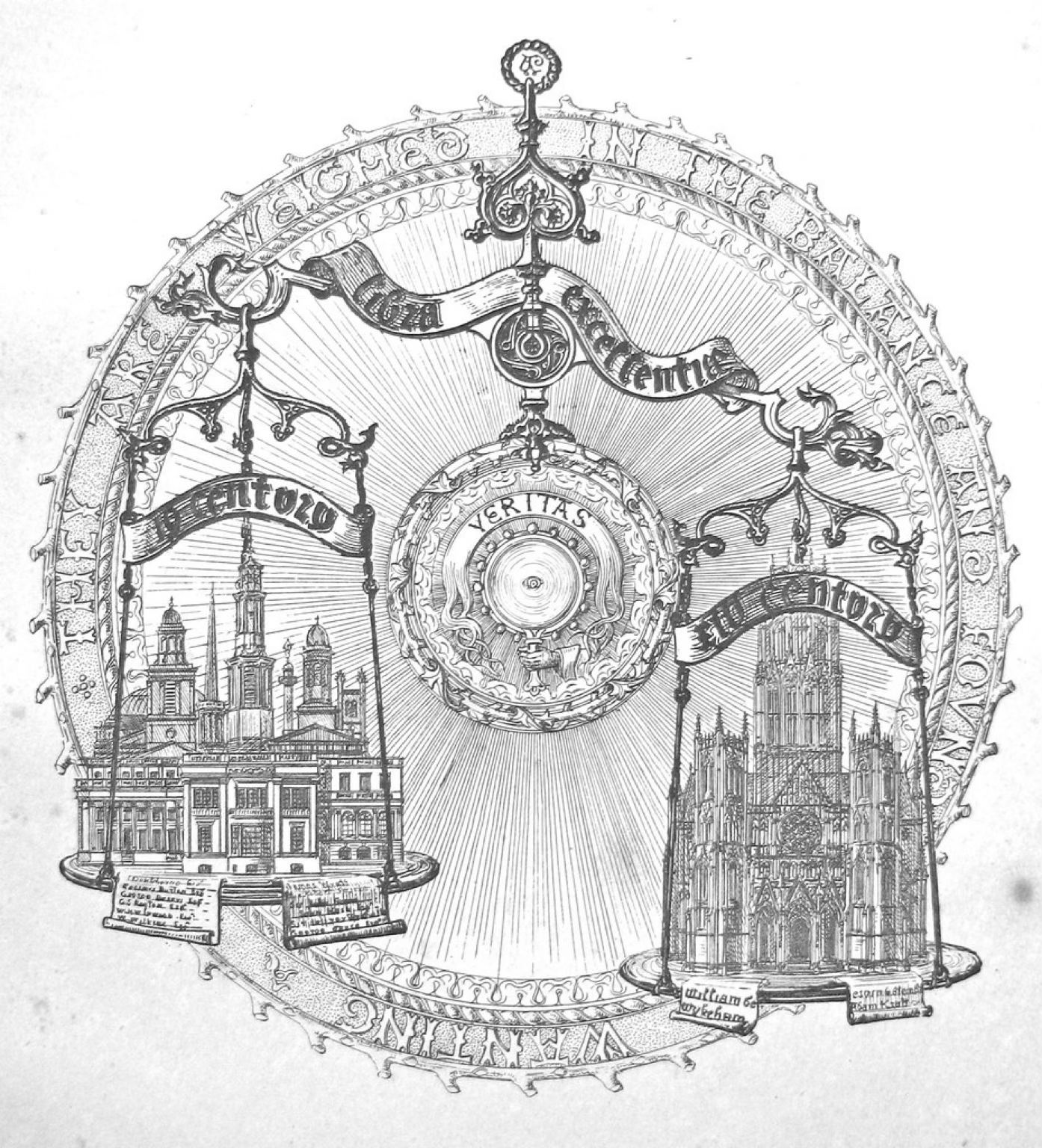
Augustus Pugin, Contrasts
His belief that architecture has decayed, and with it as well as taste
14th century and 19th century buildings on scale
14th century weighs more, holds more value
Puts the name of the architects and their buildings on blast
Gothic architecture is wavyer so it is better
“Contrasted Residence for the Poor”
If you are poor in modern times you go to jail, if you are poor in ancient times you go to a monastery.
If you go to a monastery, you will be given fresh foods, education about faith; uplifting, charitable, good
If you go to a jail, you will be given scummy food, isolation; negativity
“Catholic Town in 1440; The Same Town in 1840
Shift from religion in 1440 → to productivity in 1840
Tallest buildings are the churches in 1440 → in 1840 the tallest buildings are the factories
Front and center of the 1840 town is the prison; center of attention
Pugin prefers the 1440s where the only religious belief is Catholic; in 1840 there are many other religion Churches
“A healthy society makes good architecture”
Offers a lens of gothic revival
“Contrasted College Gateways”
In 1840, the gateway blocks off education and restricts it for the wealthy
In 1440, the gateway is Gothic and open; education is welcomed
Neoclassical architects are using the Gothic style, but are hiding it within the structure (not being honest)
Houses of Parliament
Charles Barry and Augustus Pugin
London, England
1825 -1880
Name
Architect
Location
Date
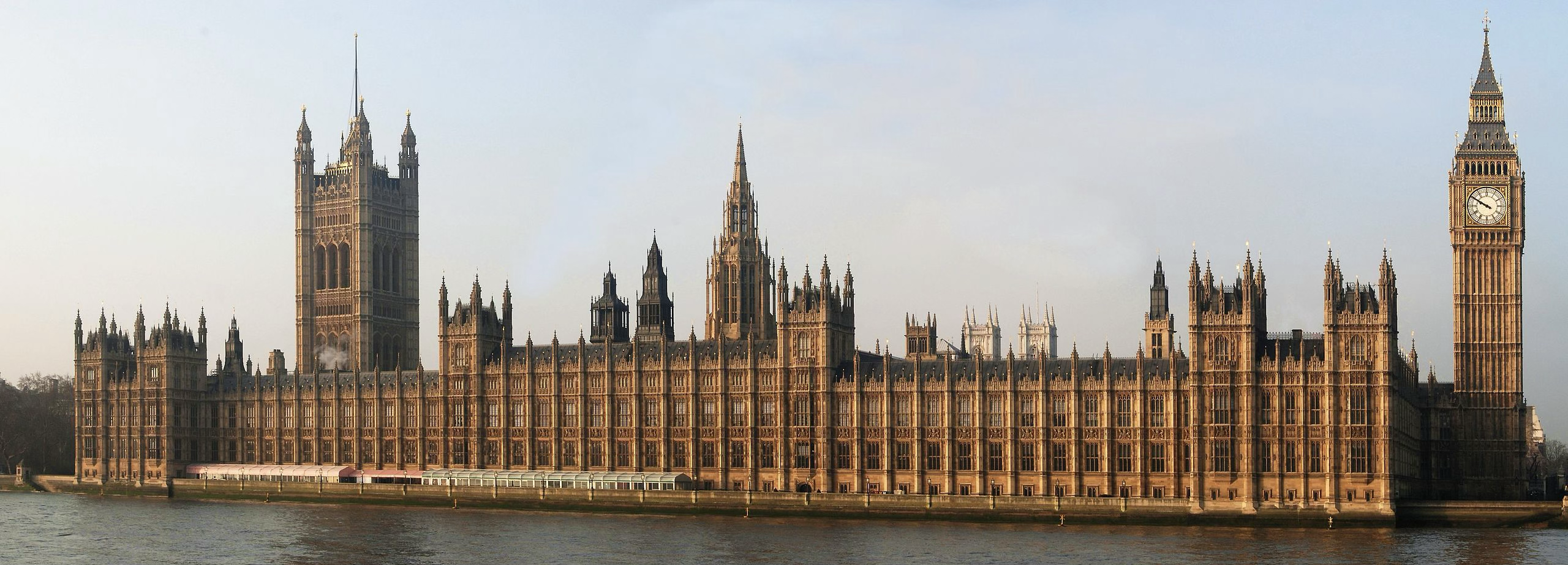
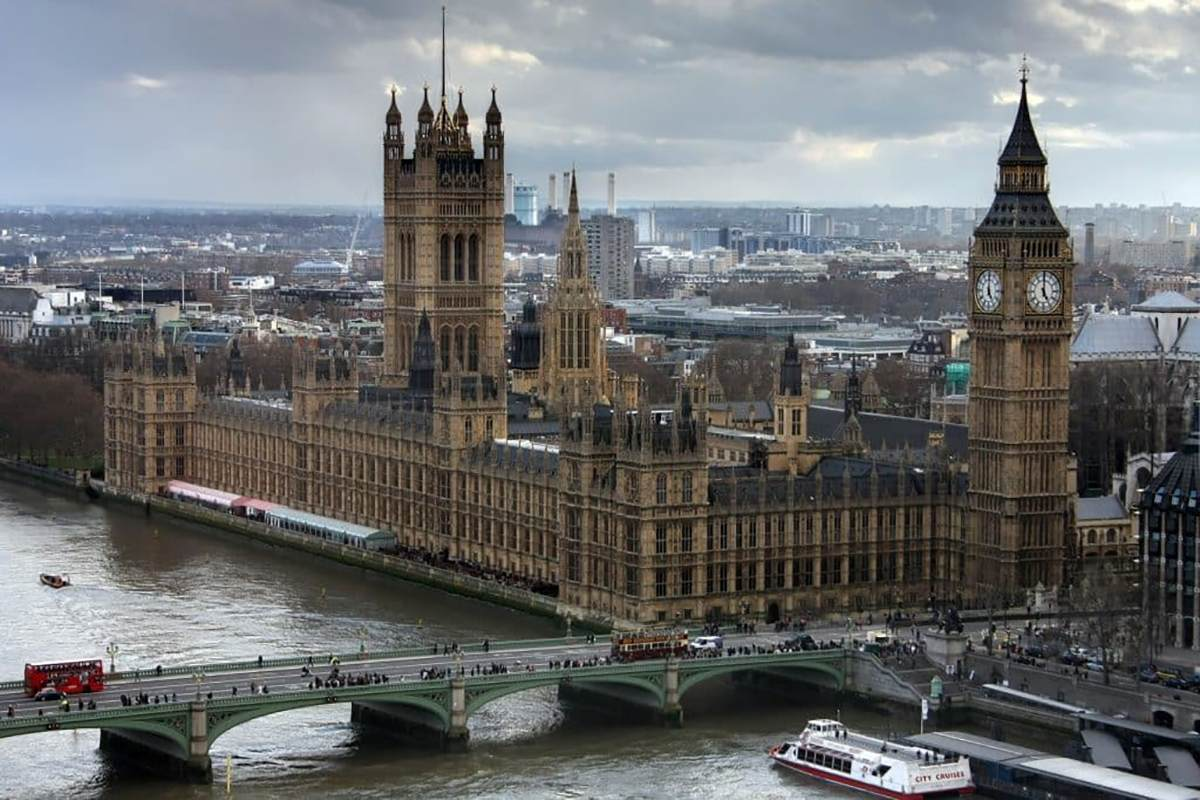
Houses of Parliament - Charles Barry and Augustus Pugin
Augustus Pugin was the expert in Gothic revival architecture — that's why he was chosen as the architect as this building
J.M.W. Turner, The Burning of the Houses of Lords and Commons, 1835
Two options: rebuild in neoclassical or build in Gothic
Gothic revival would ease the loss of this original building
Charles Barry had designed this building.
The three tower buildings skew your perception of the building being symmetrical
Pugin would not have been able to design this building as it was too large — but his historical knowledge prevails over most
Westminster Hall survives and is incorporated into the building
John Ruskin, Seven Lamps of Architecture, 1849
Medieval buildings are far better than modern buildings
Lamp of Sacrifice = evidence of your devotion to God, your carving is your showing of obedience
It is okay to be comforted by past architecture; look at the past, think about the present, think about what is being lost over time.
Factories are robbing people the ability for them to think for themselves
Neoclassical = unnatural, unfruitful, unenjoyable; it removes all thought
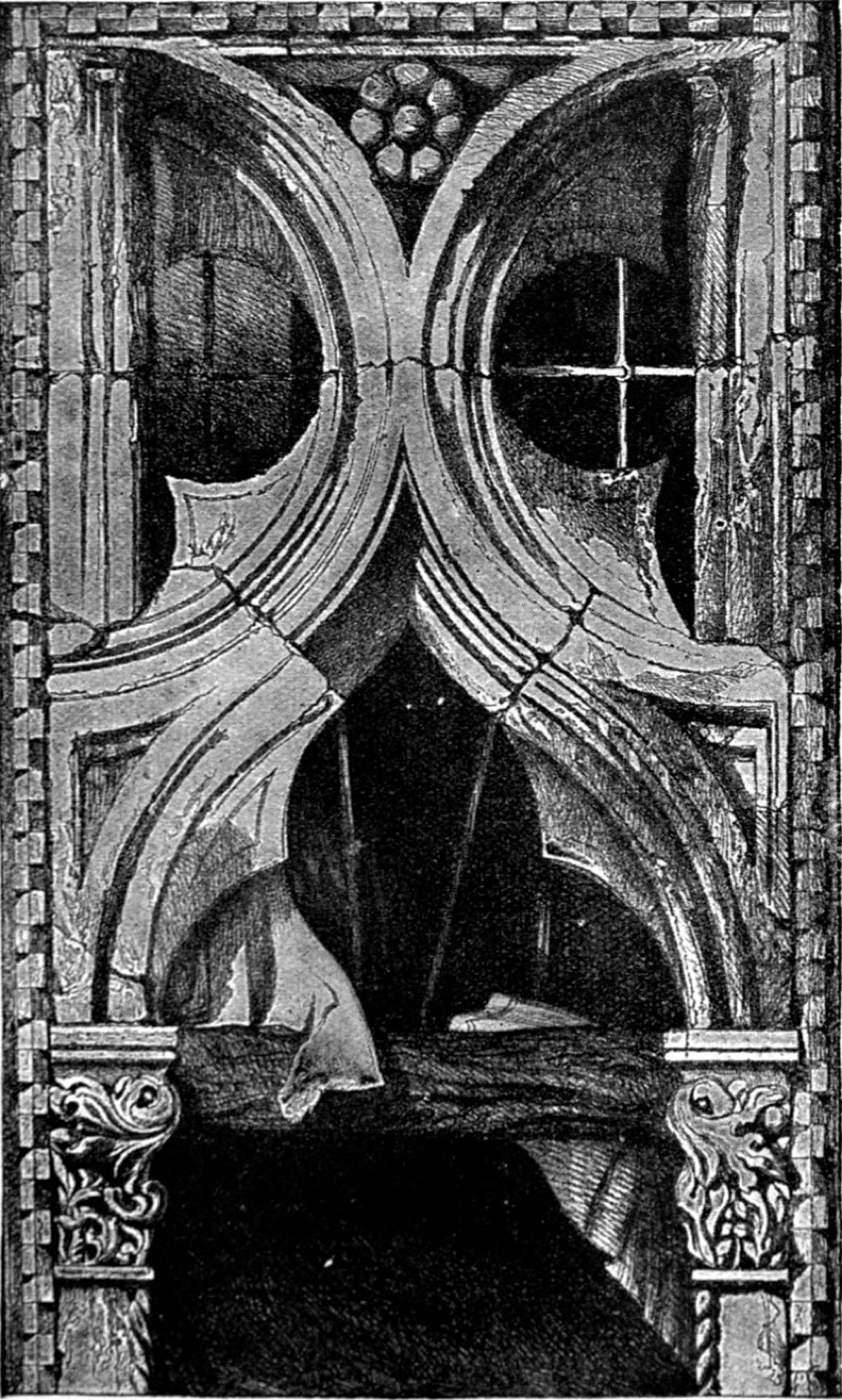
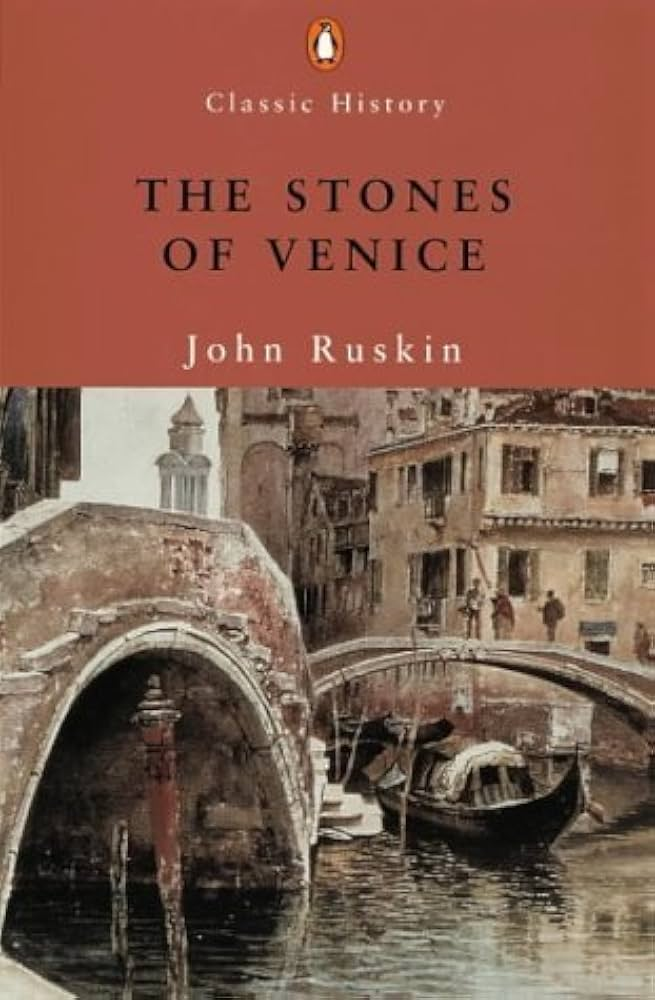
John Ruskin, Stones of Venice, 1841-1863
People build for themselves instead of God; society has gone to Hell
People are relying on machines to construct buildings, not looking at the past
Red House
William Morris and Philip Webb
Bexleyheath, England
1849-1870
Name
Architect
Location
Date
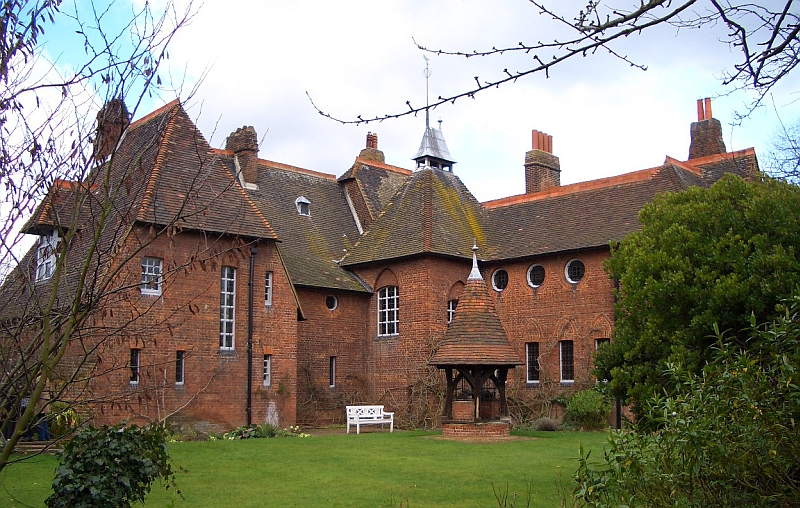
Red House - William Morris and Philip Webb
Resembles quaint cottages of the English countryside
Not symmetrical; windows and roof line do not align
It feels undesigned, but it was built all at one
Gothic revival arch at the entrance
10 years after the Crystal palace, but looks nothing like it
Openly reviving the past
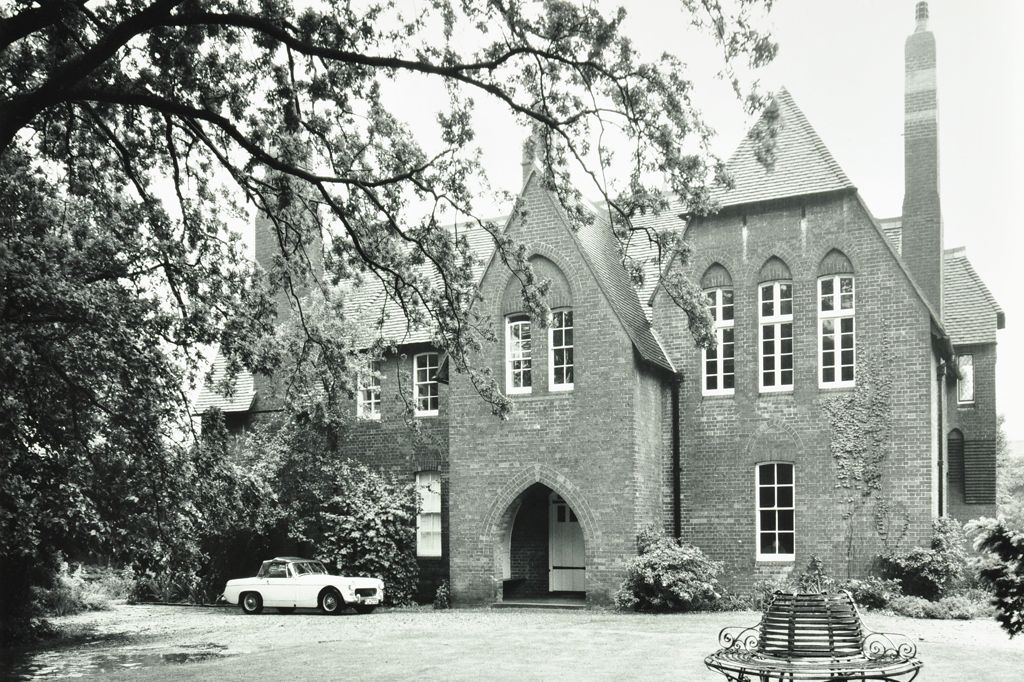
Ruskinian Gothic
Uses color to call to attention to certain parts of structure, Gothic revival
Arts & Crafts Movement
Movement that sparked a return to a handmade, craftmade form of architecture
William Norris and Phillip Webb believe art and nature should be connected; wallpapers
Norris insinuated that wallpapers are becoming too decorated and furniture is becoming more ornamented.
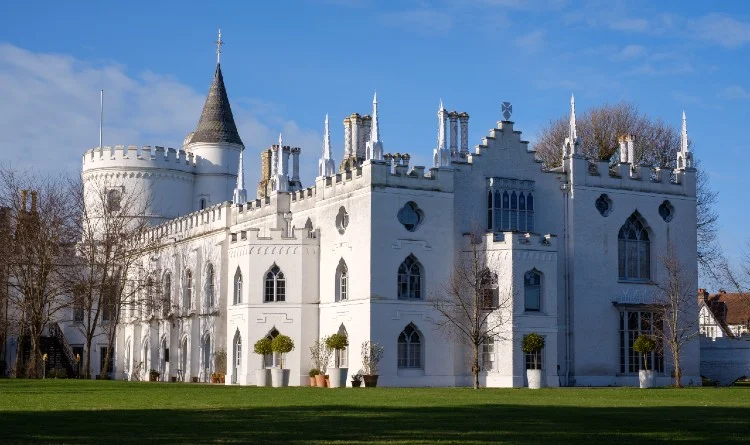
Strawberry Hill
Horace Walpole
Twickenham, England
1738-1786
Name
Architect
Location
Date
Tassel House
Victor Horta
Brussels, Belgium
1882-1903
Name
Architect
Location
Date
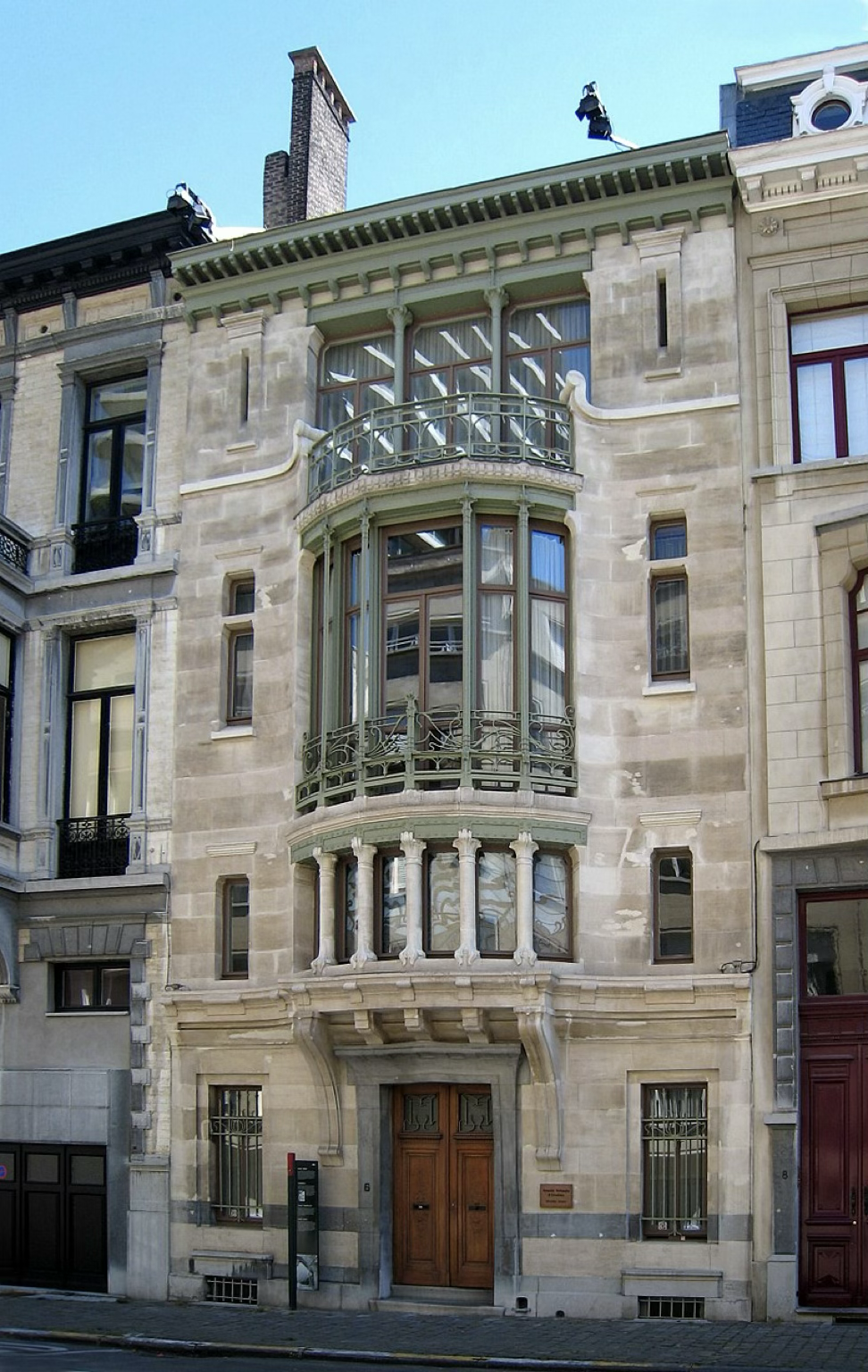
Tassel House - Victor Horta
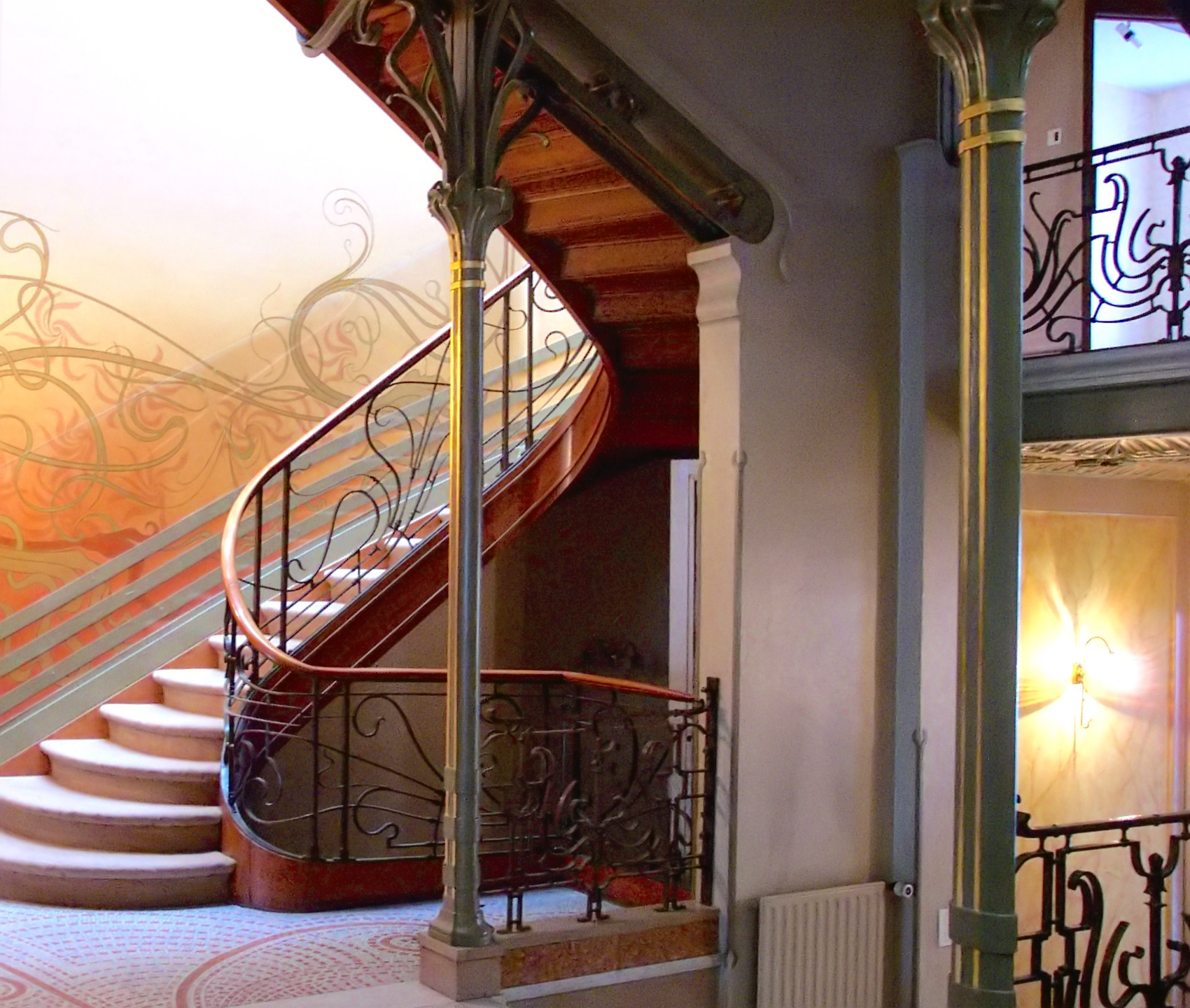
Uses cast-iron for decoration (floral, vegetation elements)
Art Nouveau — “New Art”
Uses tile for floor decorations, and hand-rails made of cast-iron shows designs
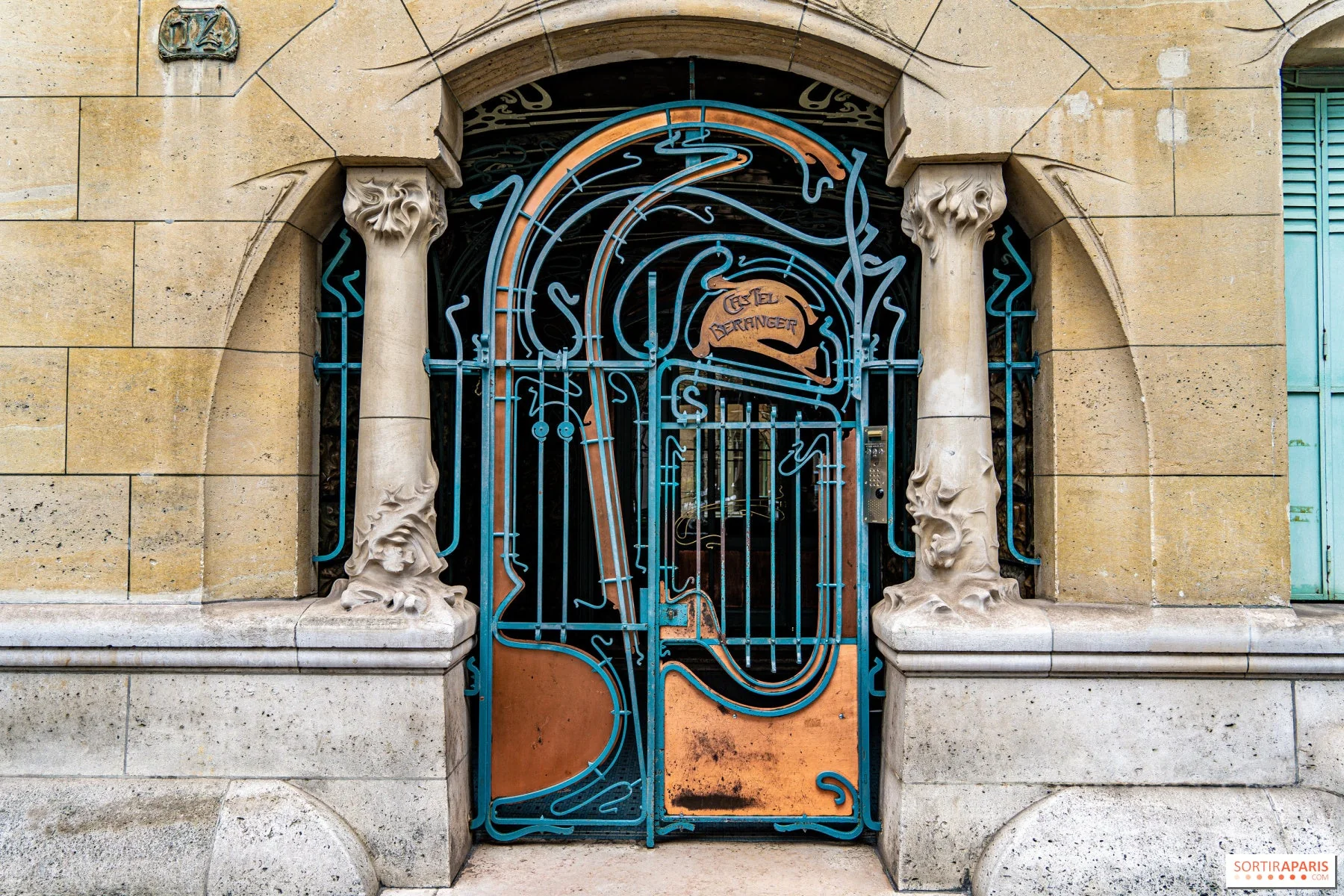
Symbolized by whiplash lines, swirls on the floors and walls, impressive growing of floral elements (made of cast-iron), lots of movement
Art Nouveau
A decorative, organic style inspired by natural forms, featuring sinuous curves, "whiplash" lines, and floral motifs
Designs for the Paris Métro
Hector Guimard
Paris, France
1890-1910
Name
Architect
Location
Date
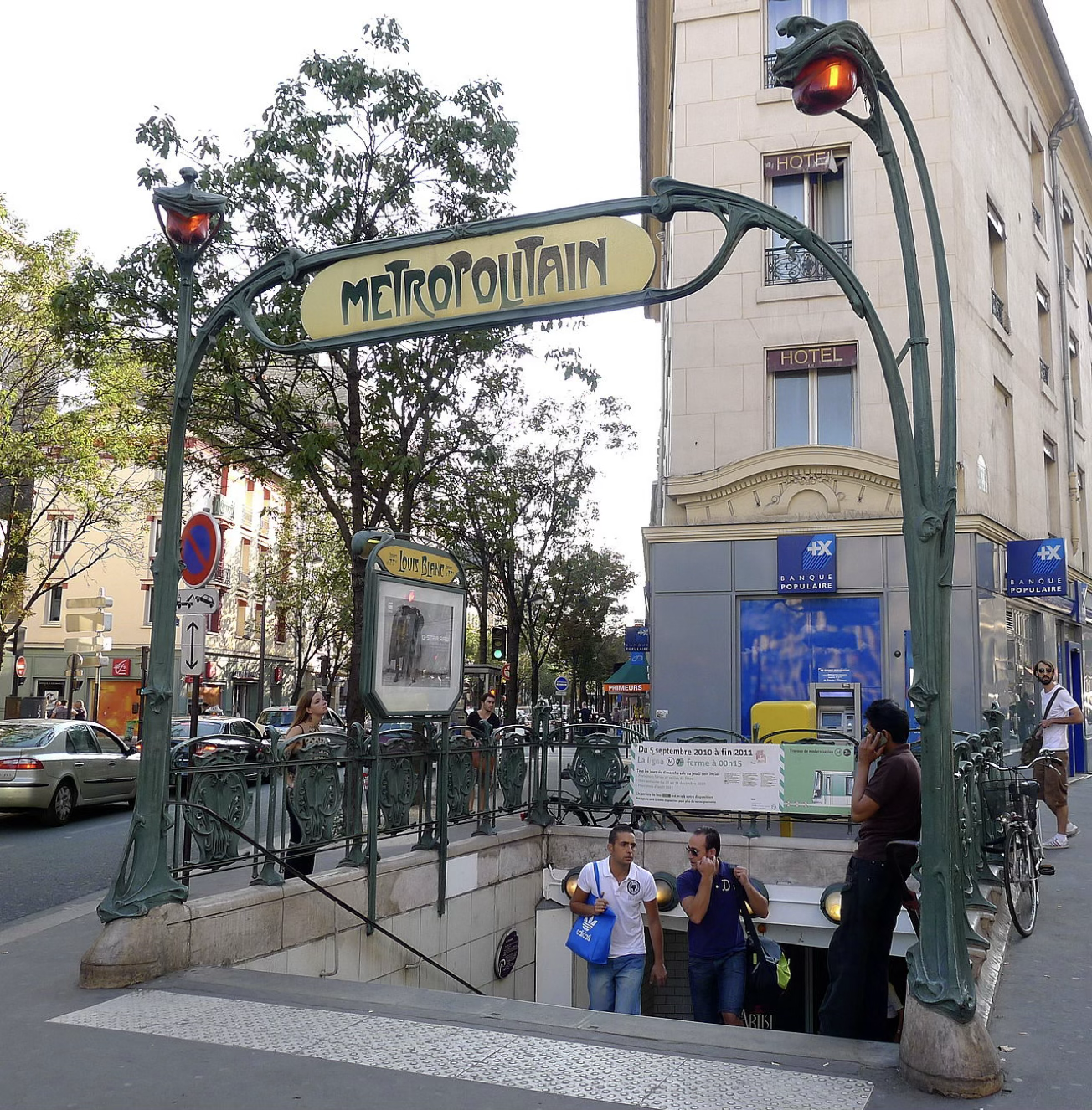
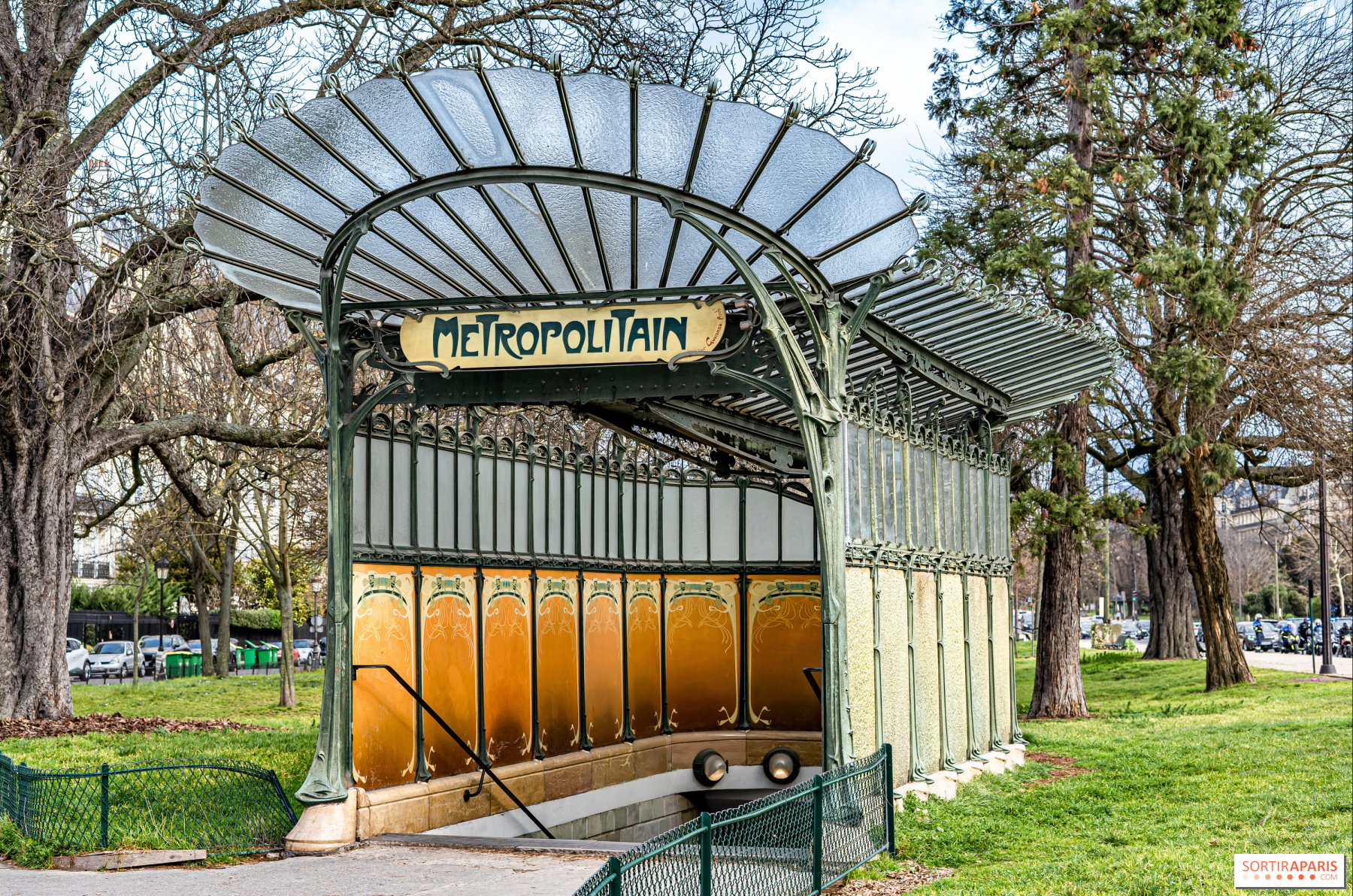
Designs for the Paris Métro - Hector Guimard
Worked with Horta, and became immediately influenced
Very whiplash and wavy
Feels both industrial and vegetal
Uses the same cast-iron pieces, cheaper because only have to use the same couple molds
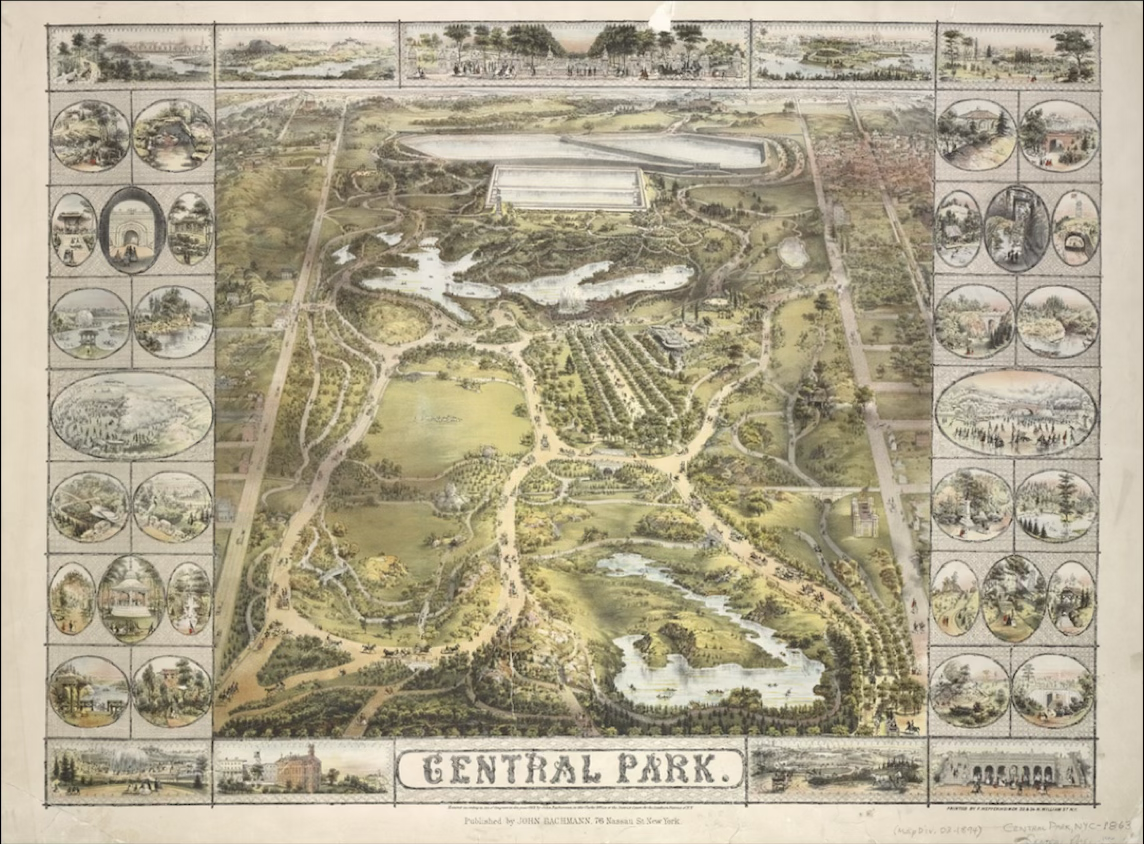
Central Park
Frederick Law Olmsted and Calvert Vaux
New York City, New York,
1848-1868
Name
Architect
Location
Date
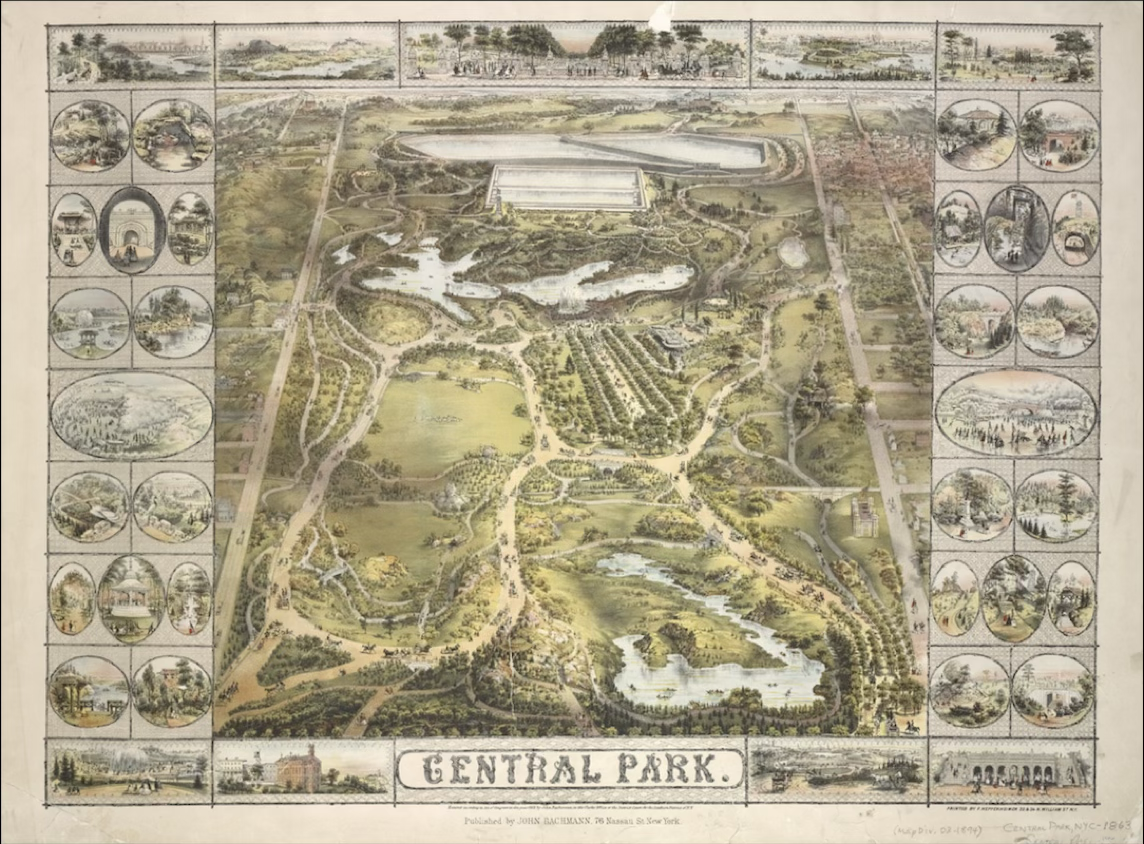
Central Park - Frederick Law Olmsted and Calvert Vaux
Competition for the design of Central Park
Big drawing
Picturesque design — looks natural, windy paths, big pond in the middle
Big lake in the middle — man-made, but made to look very natural
Hard to tell what was naturally pre-existing and was was made
Calvert Vaux was from England and was trained in England, Olmstead was born in Hartford but went to England
This picturesque design was created as a push-back to preserve nature
You enter Central Park diagonally — escape the city as quickly as possible
The Terrace — most formal architectural aspect of this plan
Makes you aware of the natural parts of the rest of the park
Park was meant to be the lungs of the city, breathe fresh air surrounded by nature
Follies were placed all around Central Park — bridges, little structures
Ramble Arch — Half natural and half man-made
79th Street Transverse — Street that goes below the park
If you are in the park, you are not intruded by the sounds of cars and traffic
Create a naturally-felt space within a fast growing city — will enrich New York’s inhabitants
Seneca Village, 1825-1857
There was community in New York City, taken away from them