Ch11: Art of Early South America (before 600 CE)
 Studied by 0 people
 Call Kai
 Learn
Learn Practice Test
 Spaced Repetition
 Match
Match Flashcards
 Knowt Play
1/30

There's no tags or description
Looks like no tags are added yet.
Name | Mastery | Learn | Test | Matching | Spaced | Call with Kai |
|---|
No analytics yet
Send a link to your students to track their progress
31 Terms
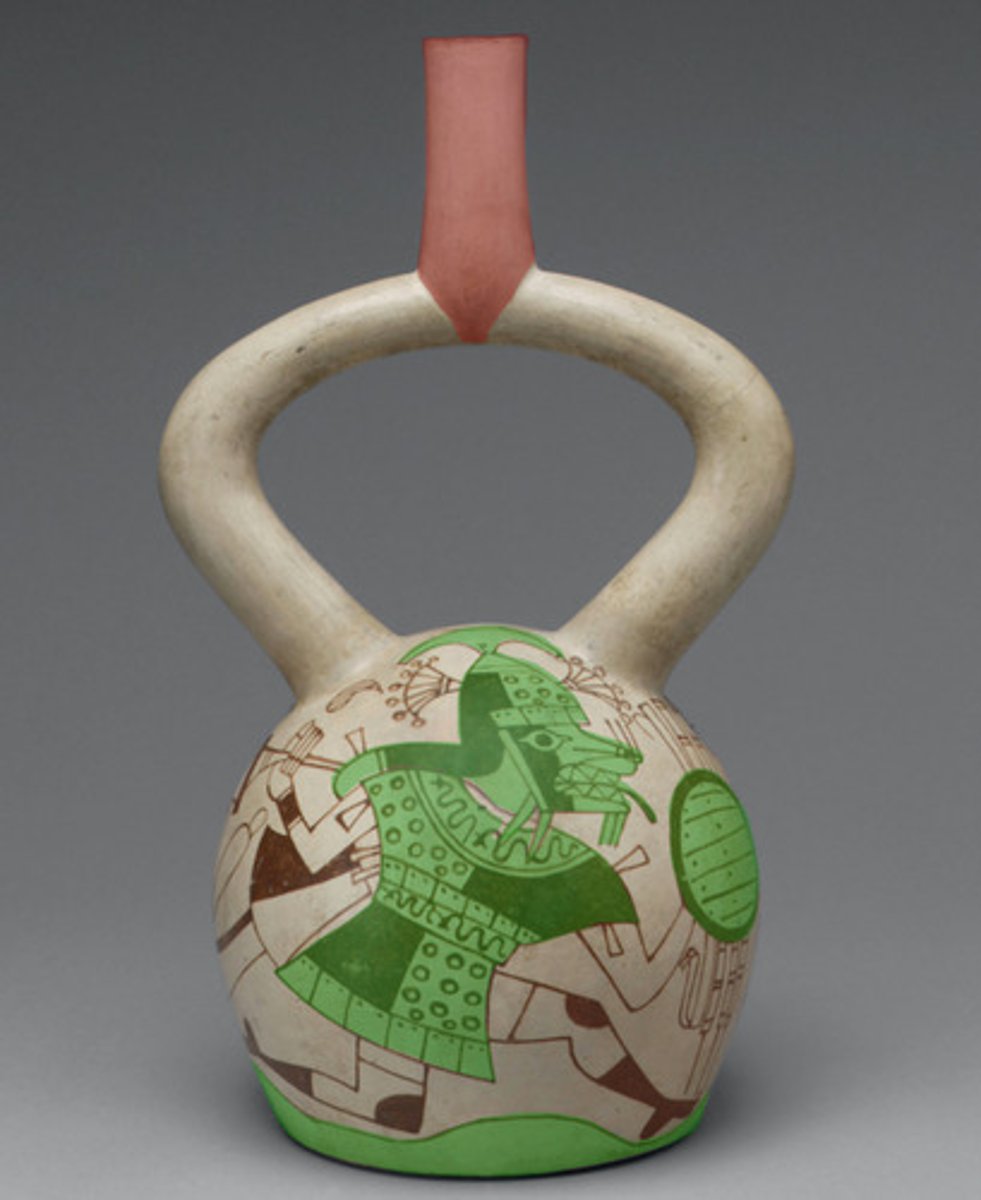
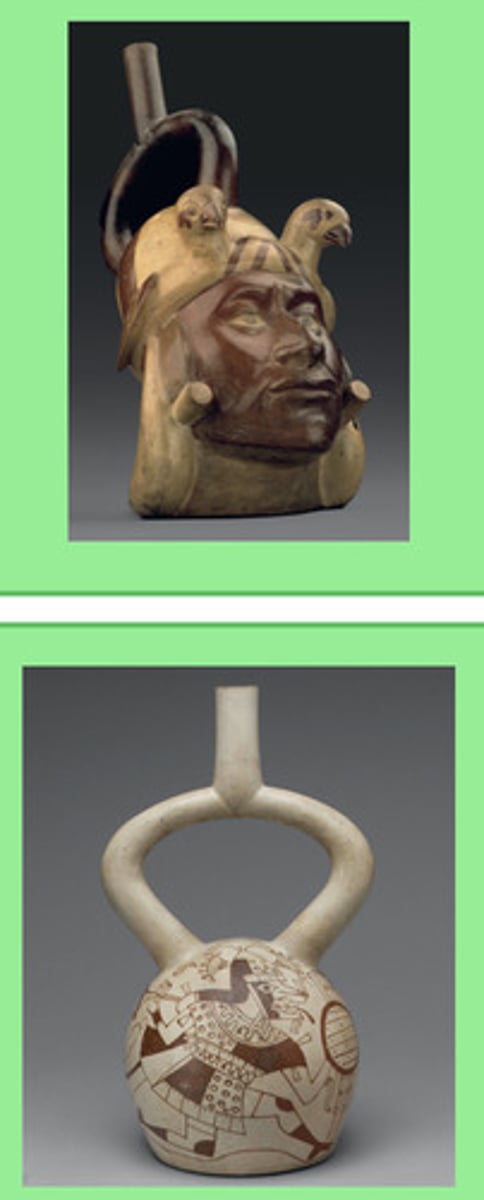
Select the significant iconographic features visible in the stirrup-spout vessel.
Fill in the blanks to complete the passage.
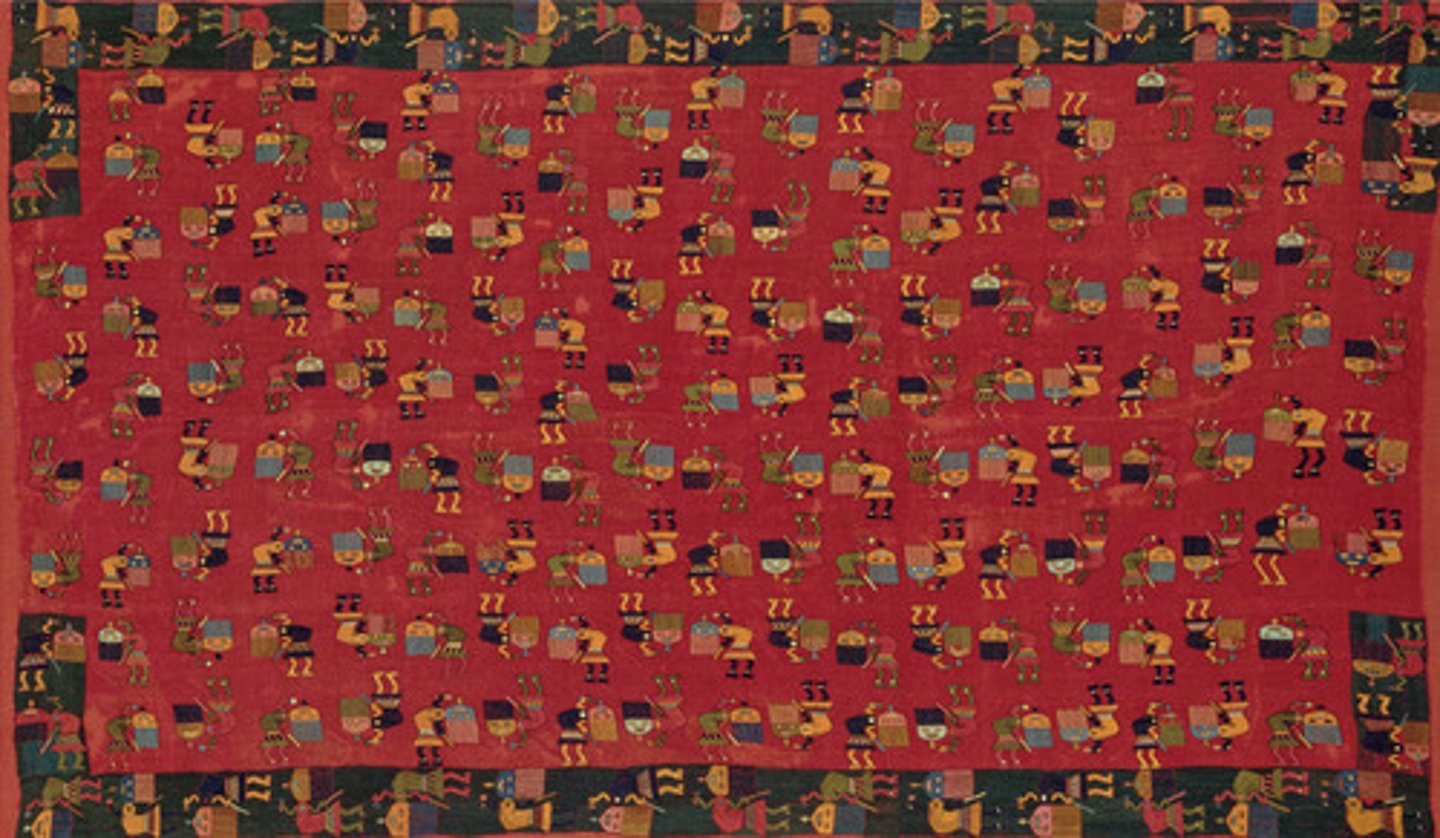
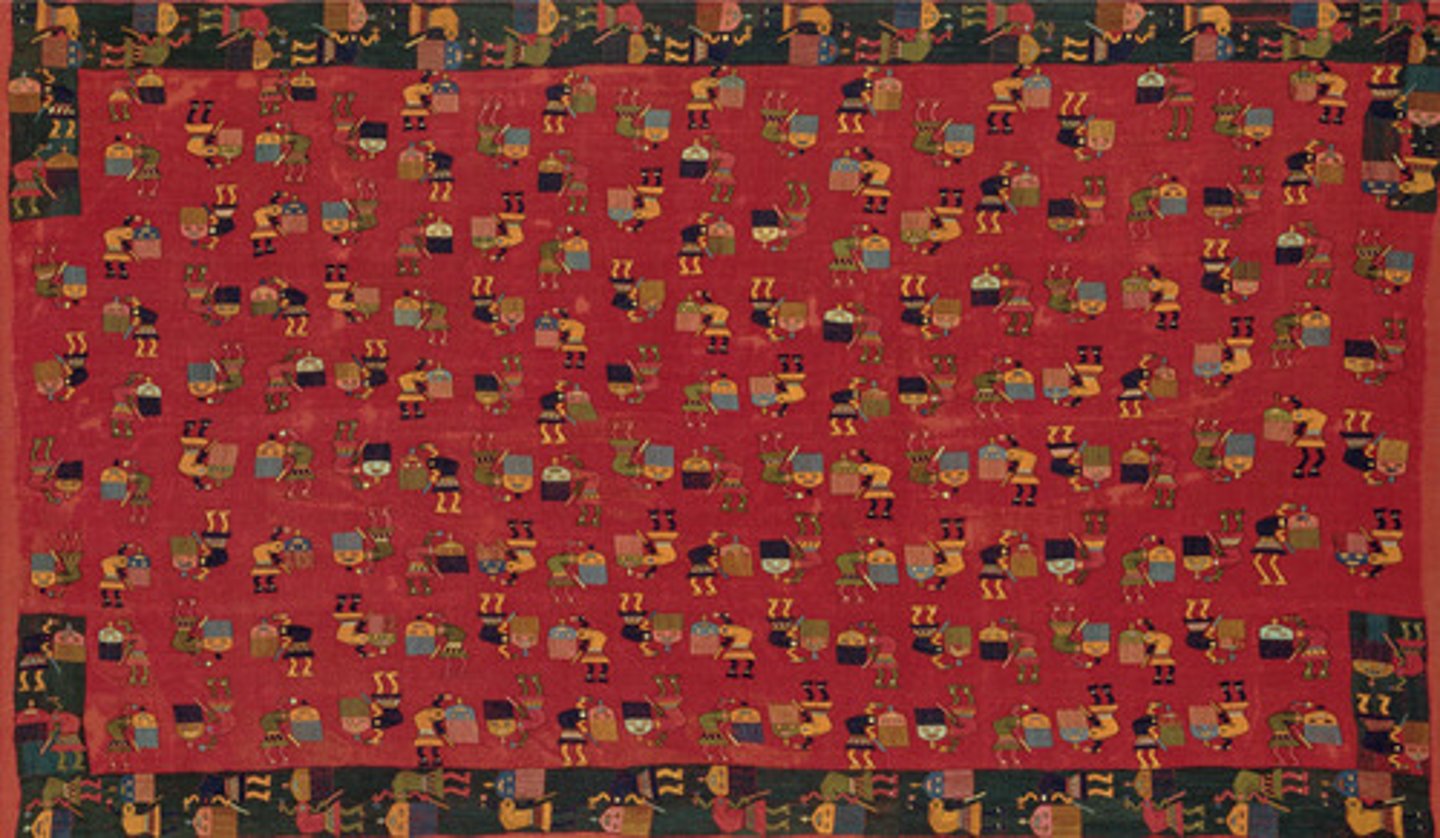
Ancient Andean weavers used a backstrap loom to weave thread into cloth. Early Andean weaving was highly geometric, but was completed by applying more curved designs in paint or embroidery. Later on, geometric motifs were favored by Andean weavers and even replicated with some difficulty onto curved pottery
Fill in the blanks to complete the passage.
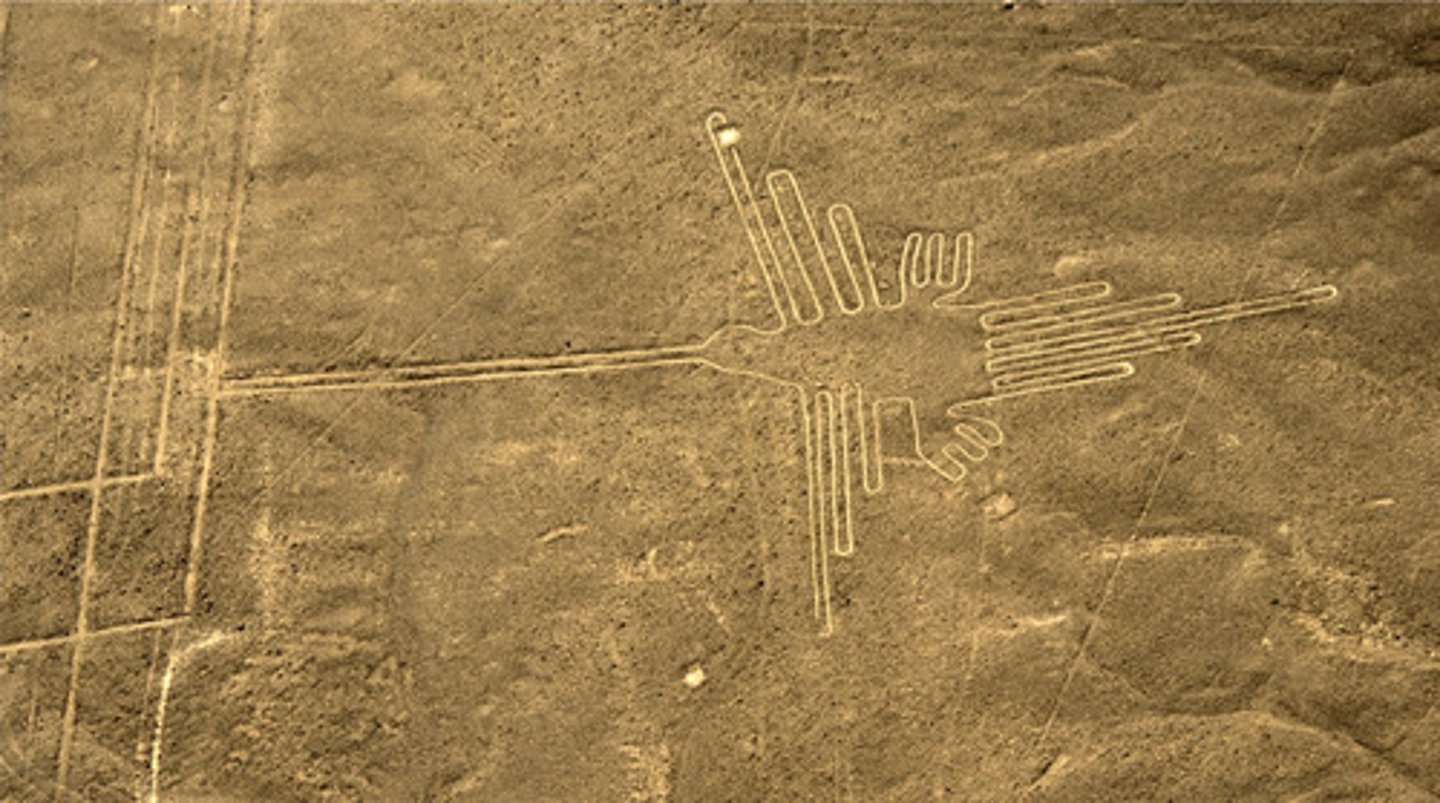
These Nasca lines were made by rearranging rocks to reveal the lighter color of the soil beneath. The patterns and forms of the lines echo those found in the ceramics and textiles of the same culture.
Match each descriptive title to the art object it represents.
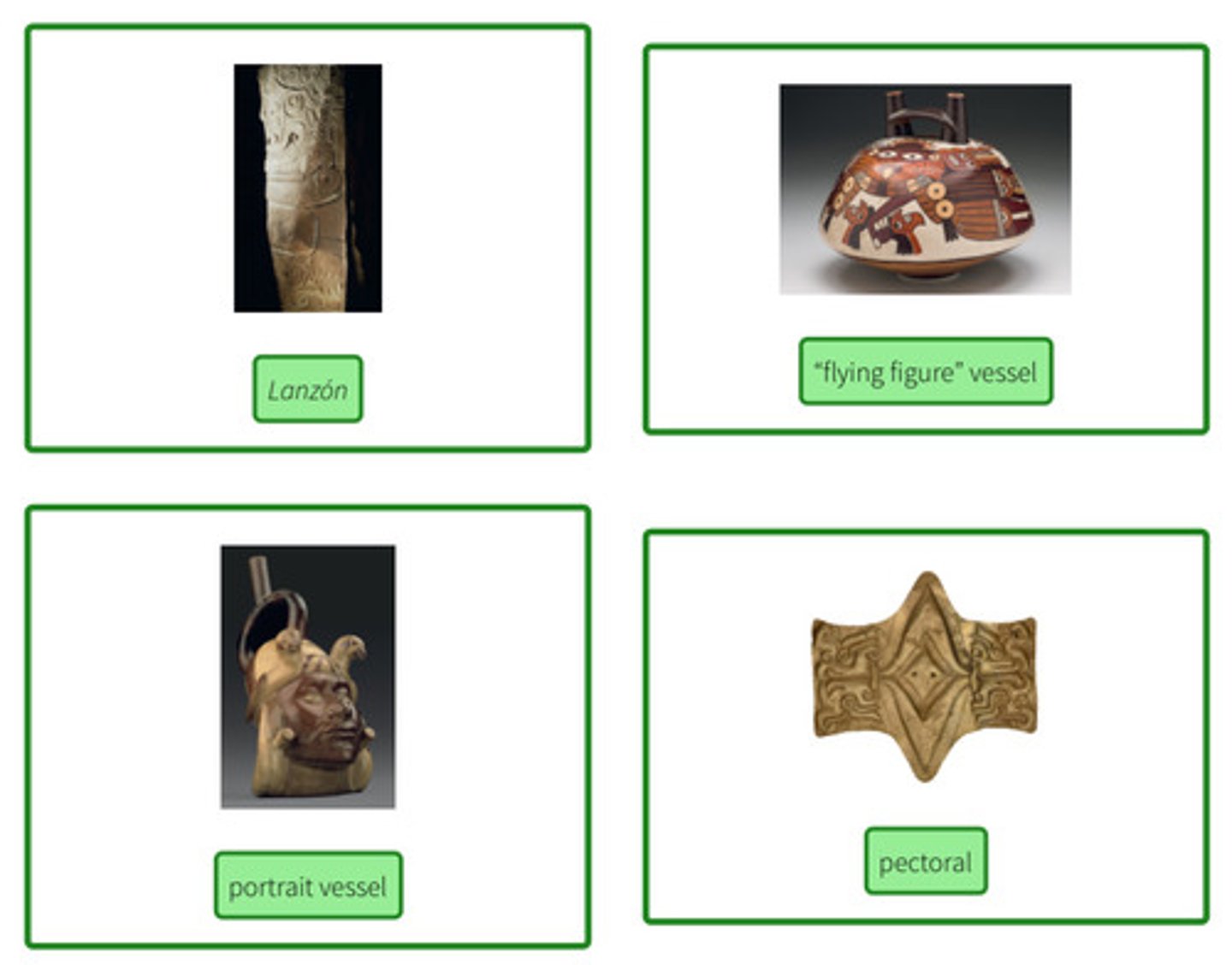
Which of the following art objects feature high relief?

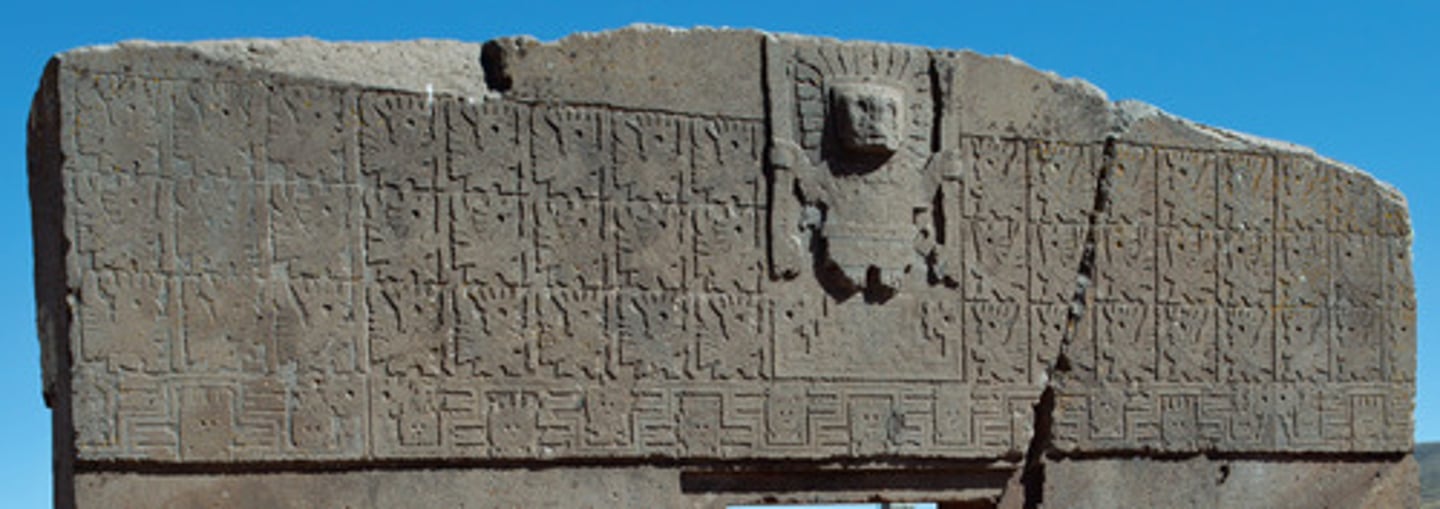
The closest parallel to the organization of the winged figures that flank the central deity on this Tiwanaku gateway can be found in which culture?
Paracas
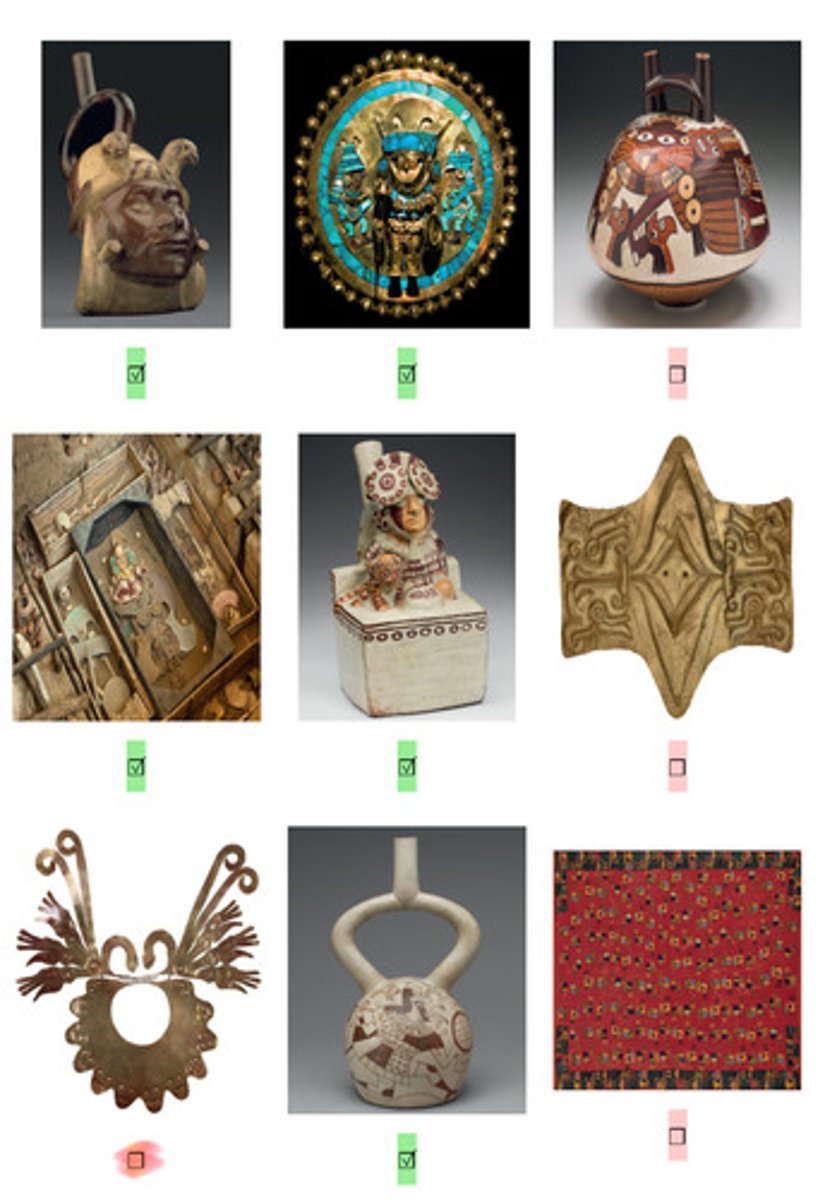
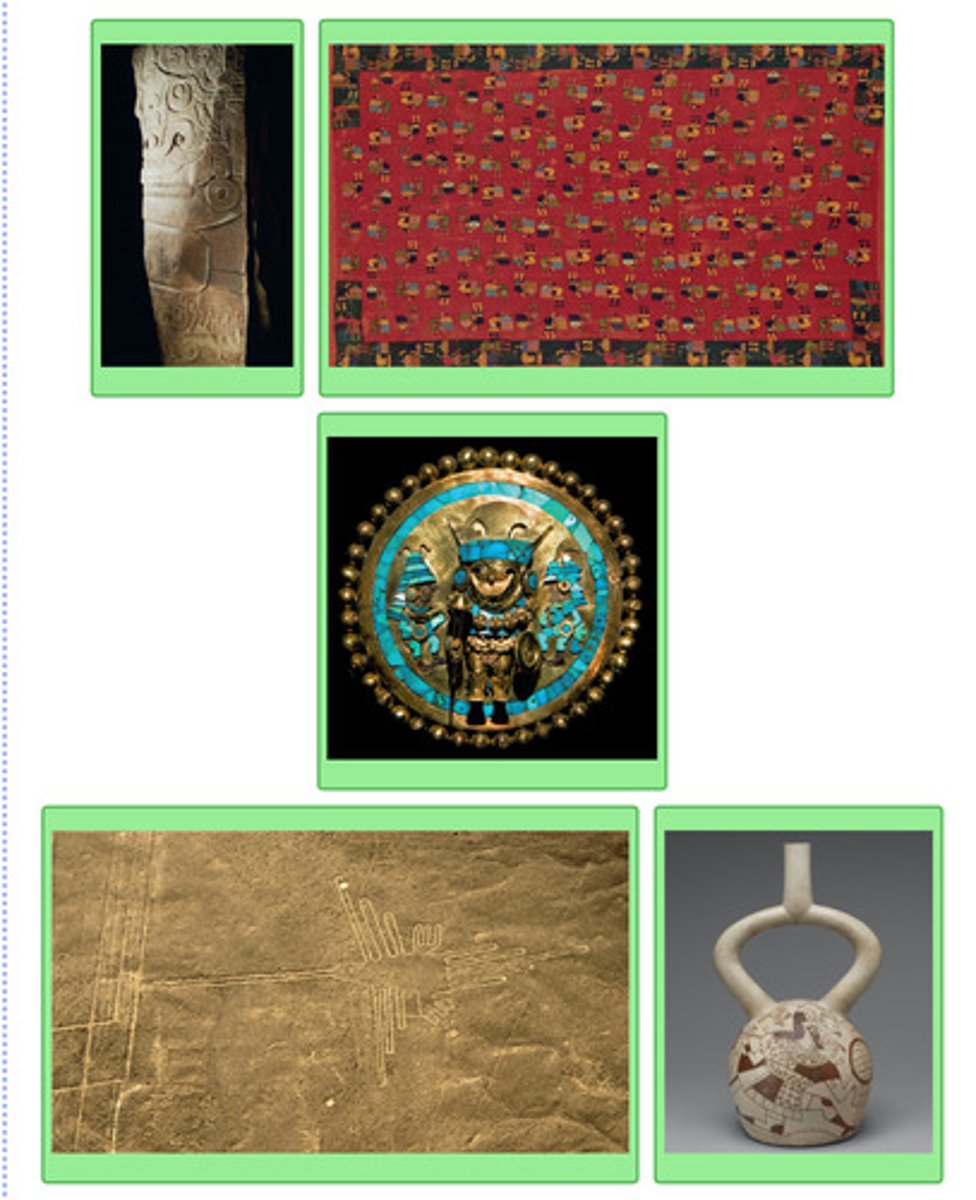
Which of the following images are examples of artworks produced by the Moche culture?
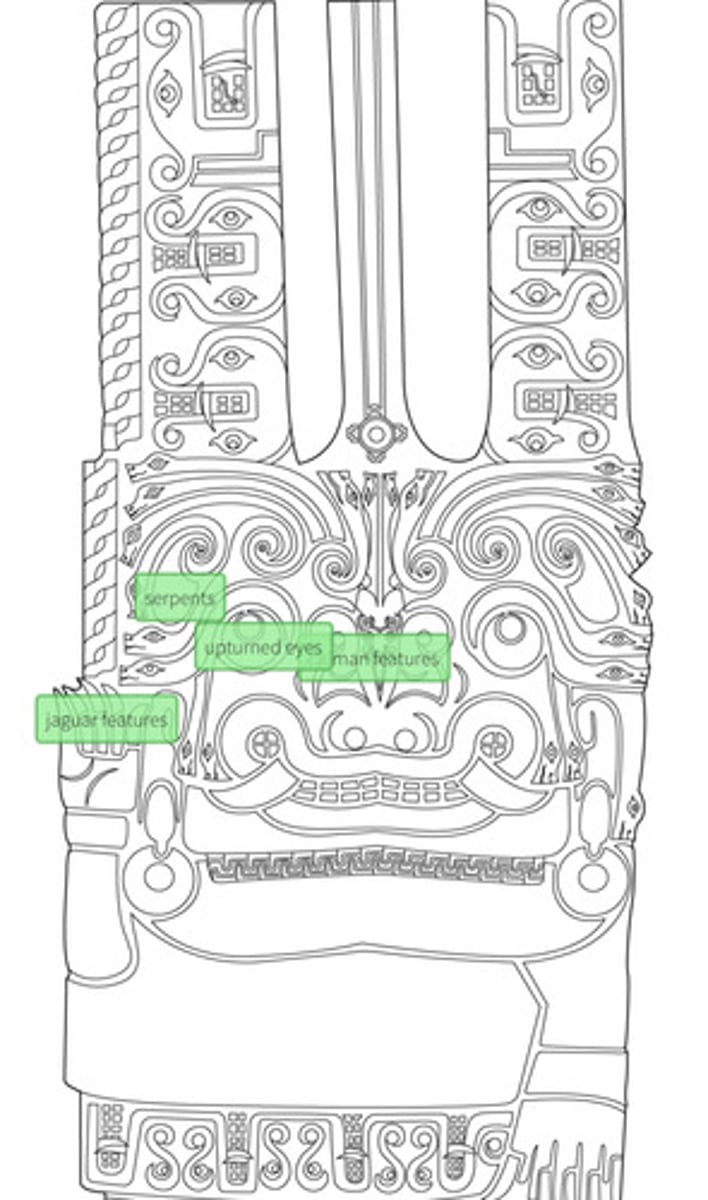
Identify the iconographic elements of the Lanzón by placing the correct labels onto the corresponding areas on the image.
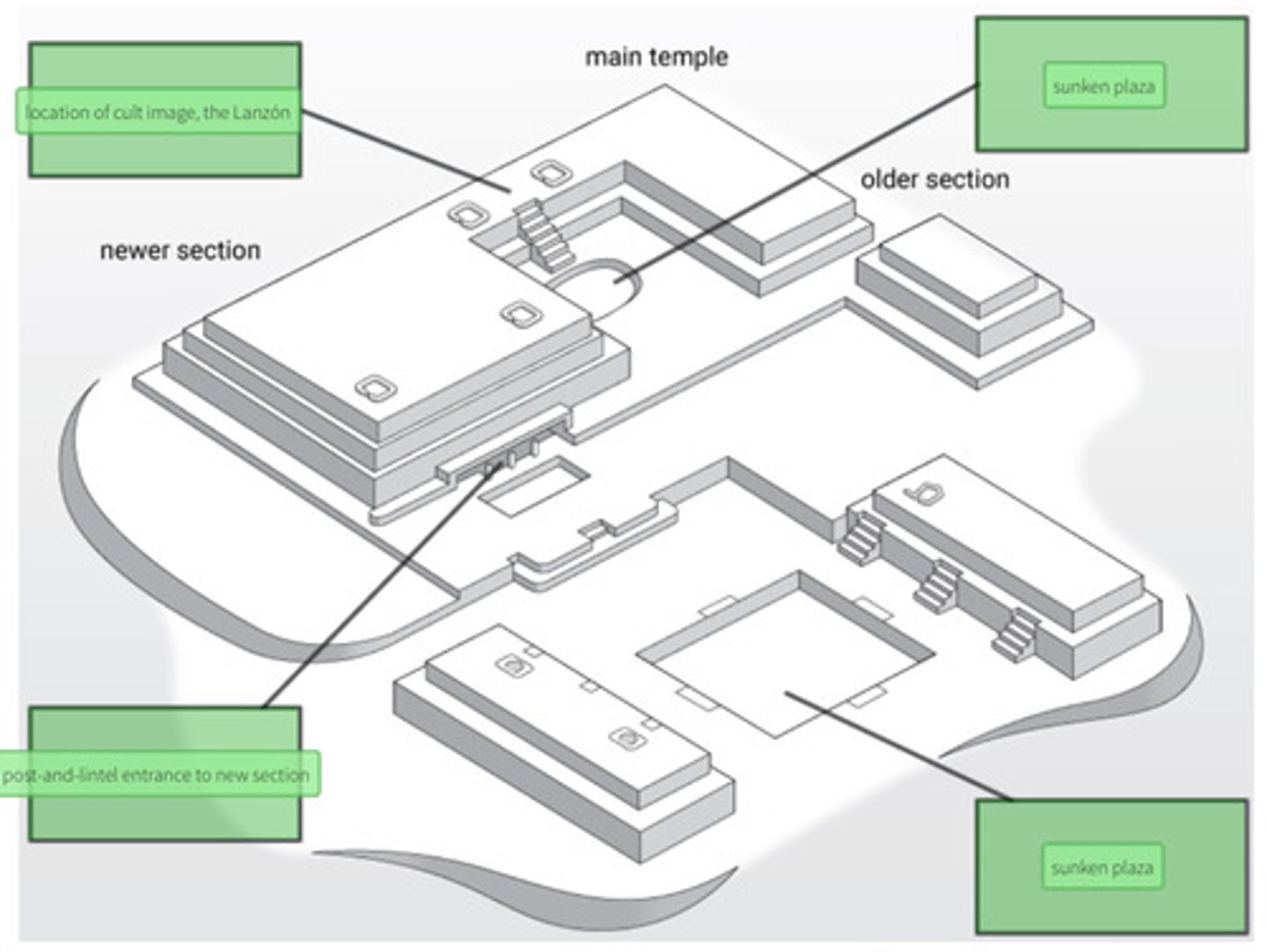
Place the labels onto the correct area on the drawing of the Chavín de Huántar temple complex.
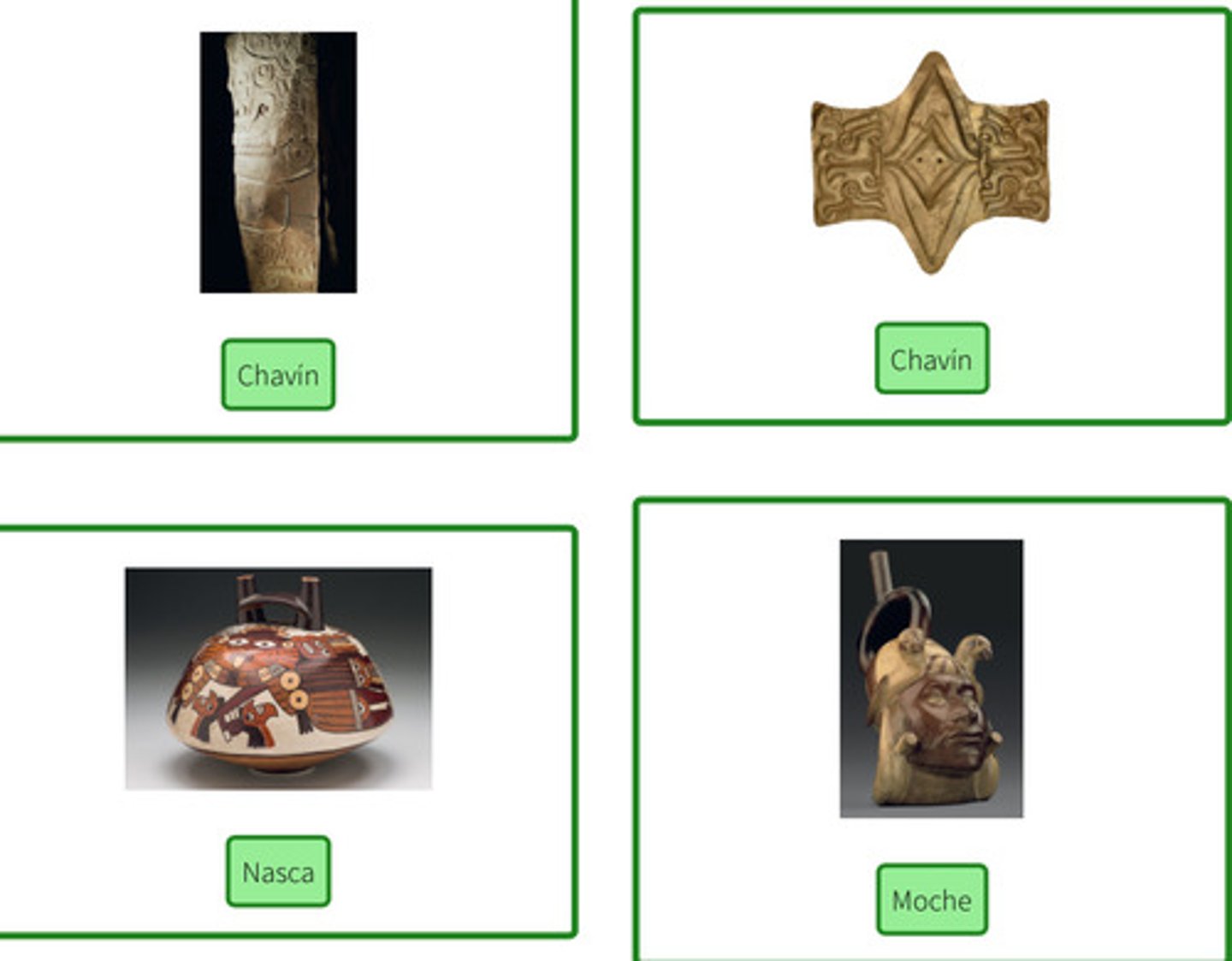
Match each culture to the corresponding art object. Note that some cultures will match with multiple objects.
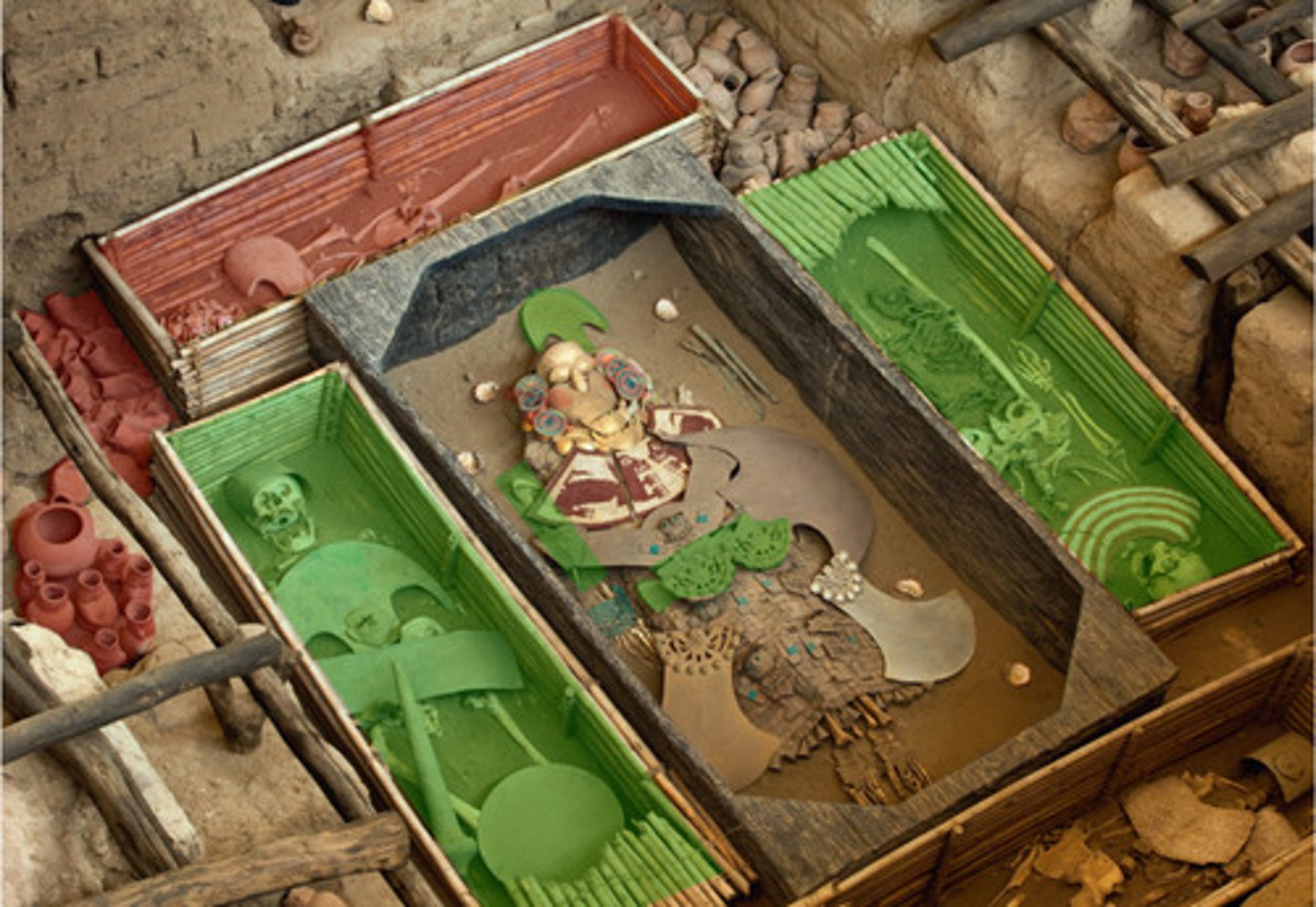
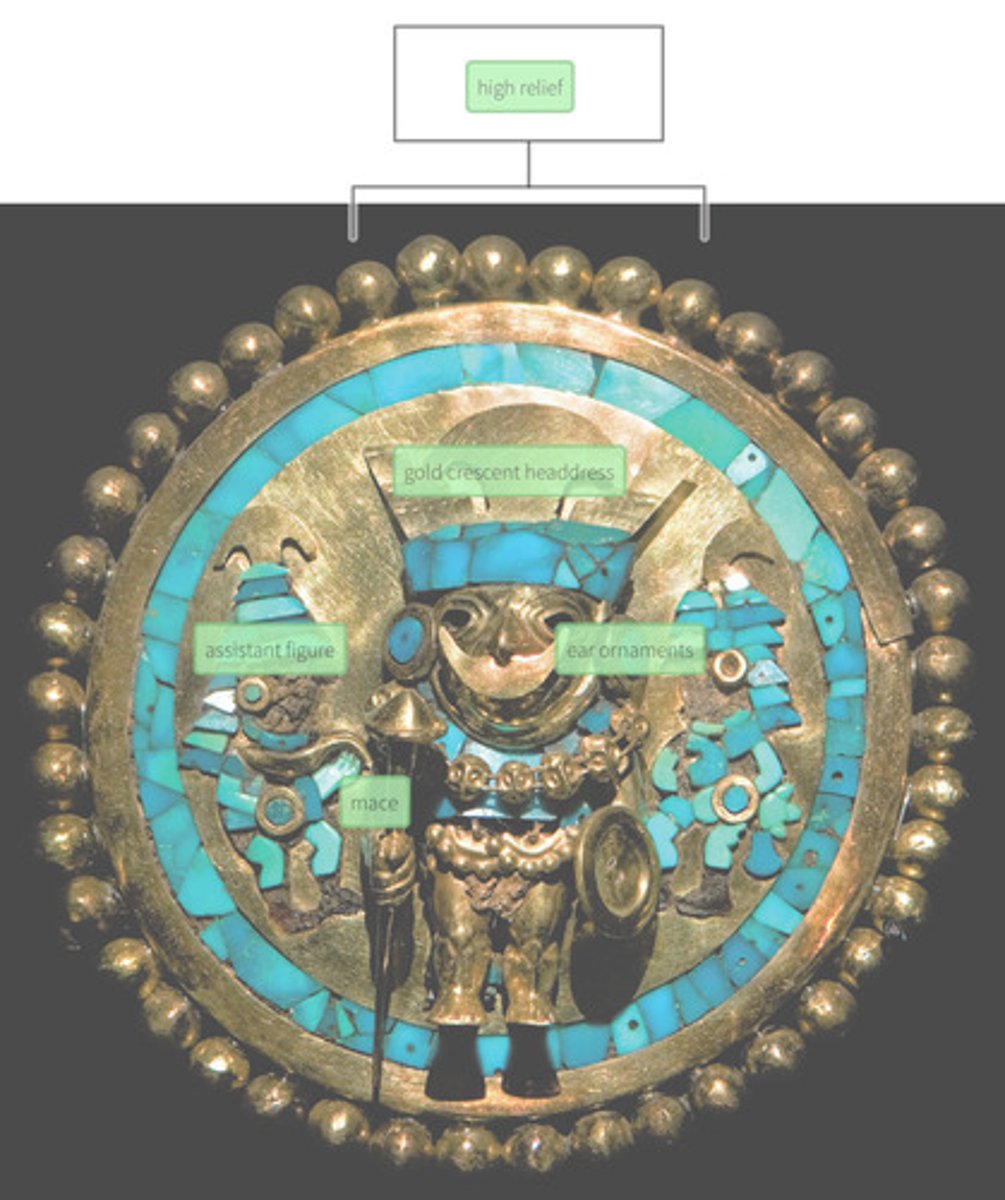
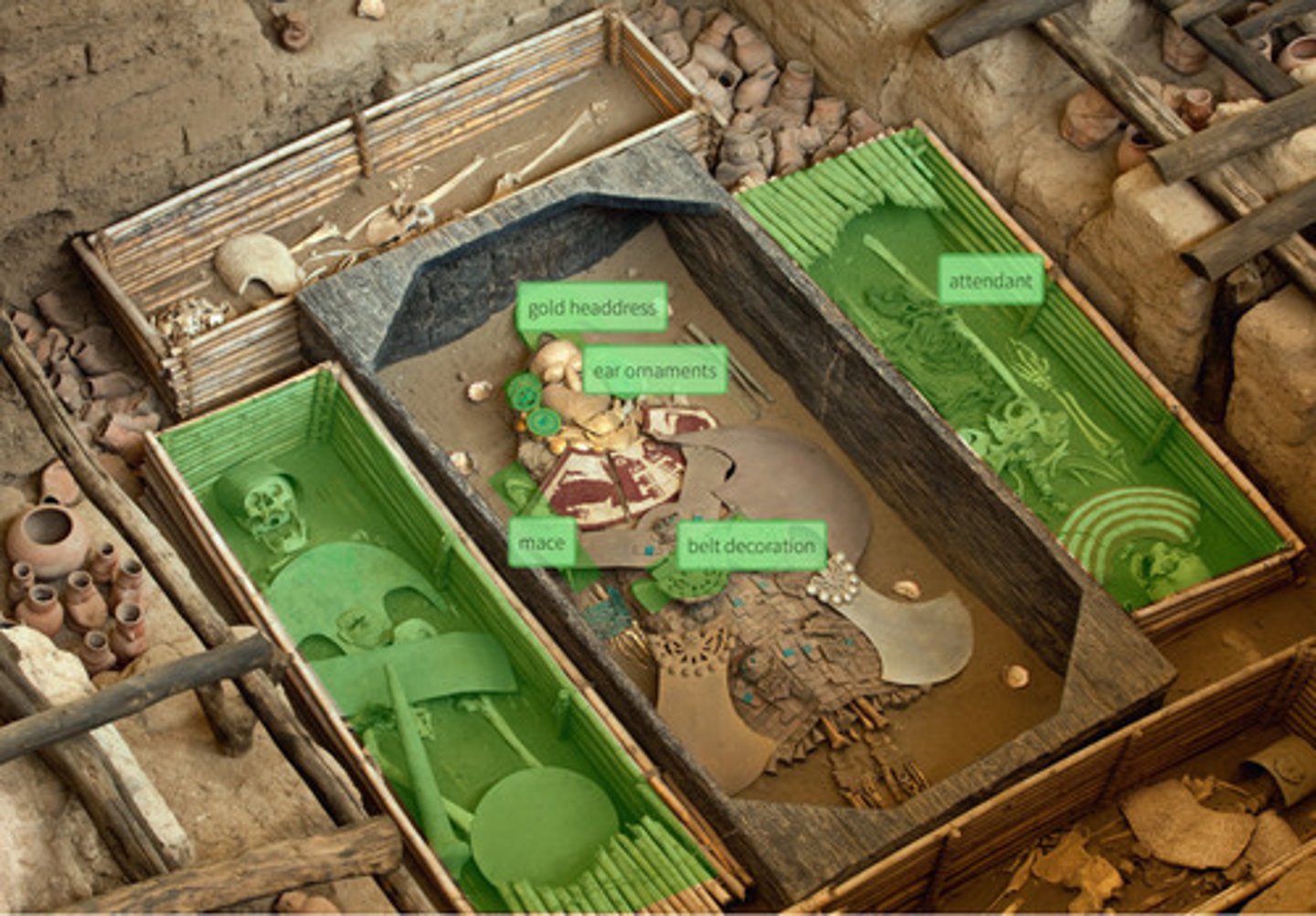
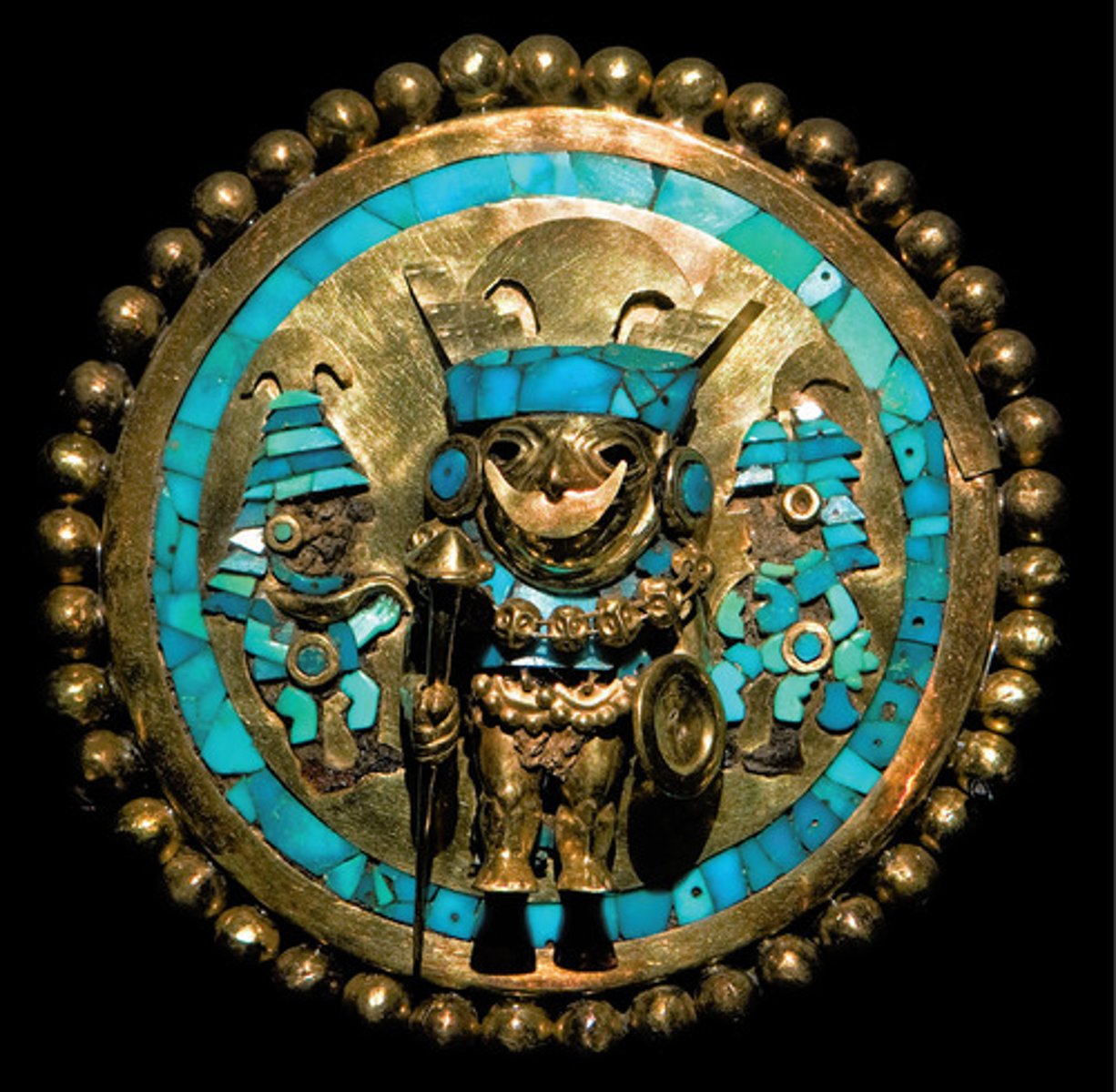
Select the features of the burial of a Moche lord at Sipán that are shared with the Moche ear ornament.
The Paracas culture built grandly in an architectural style similar to that of the Chavín people
False
Which of the following characteristics of ceremonial buildings were found across multiple regions in the Andes?
sunken plaza
U-shaped building
Rammed-earth platforms
Match each culture to the corresponding art object.
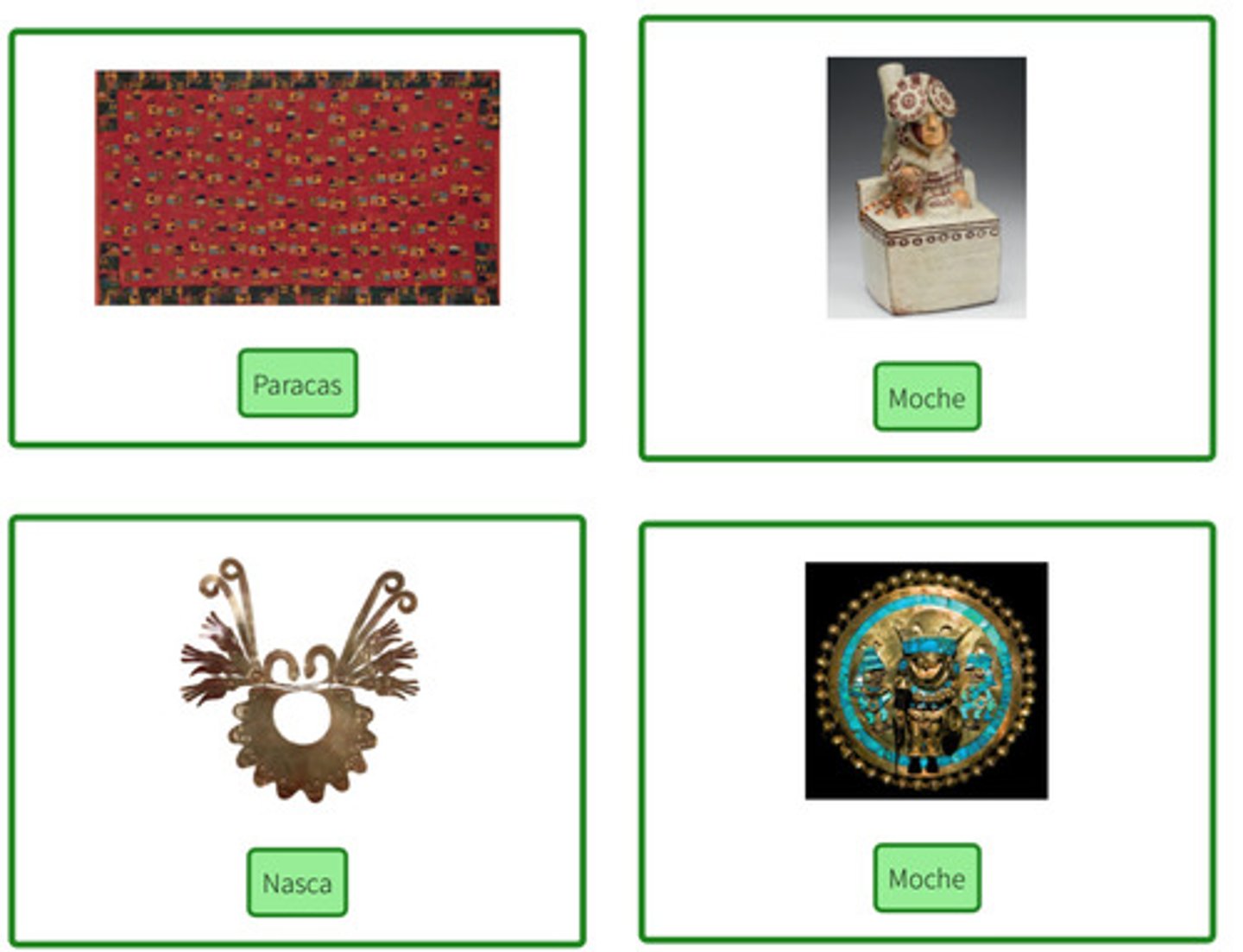
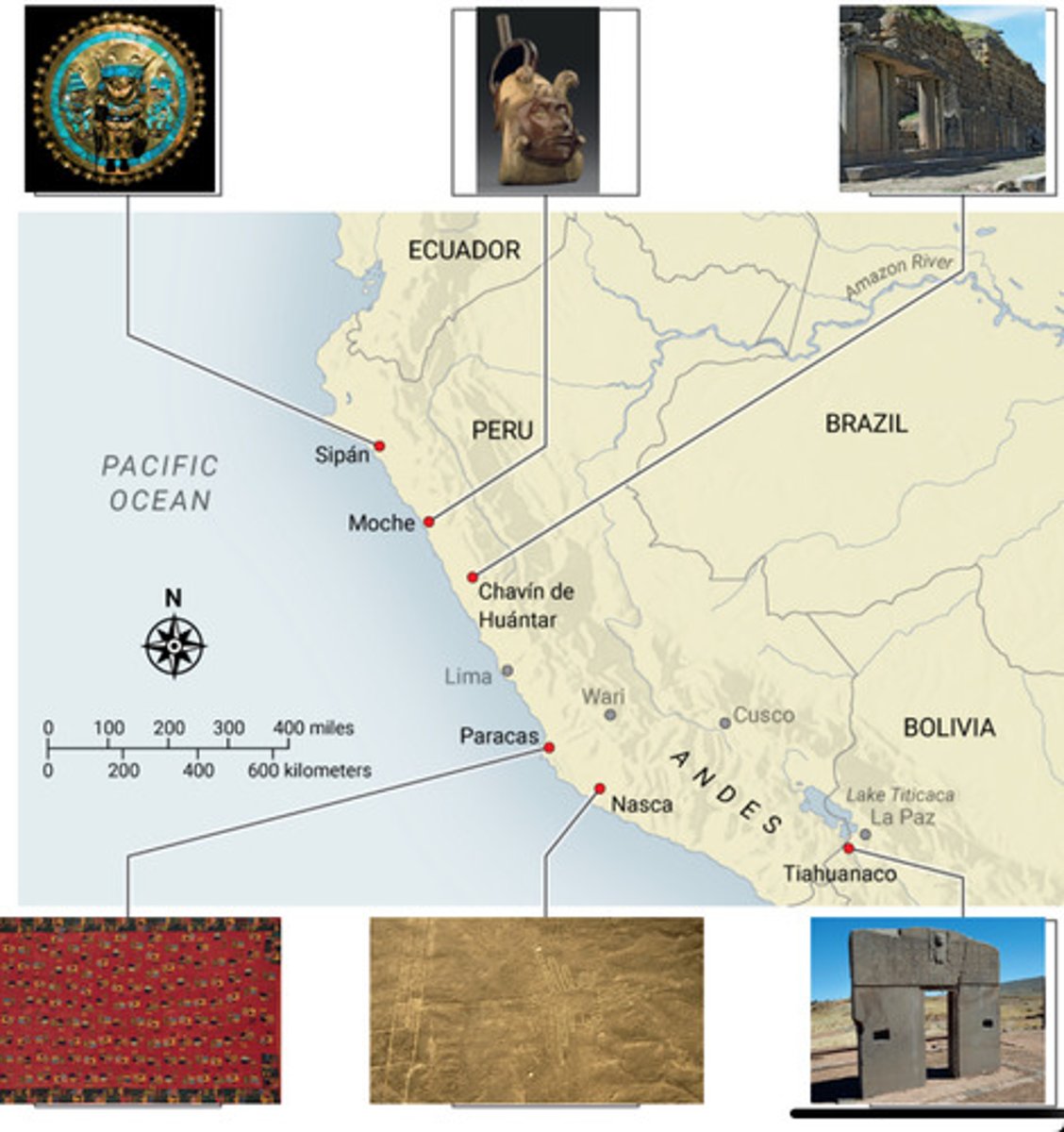
Place the works of art and sites of importance onto the correct areas on the map of the Andean region.
Match each culture to the corresponding art object. Note that some cultures will match with multiple objects.
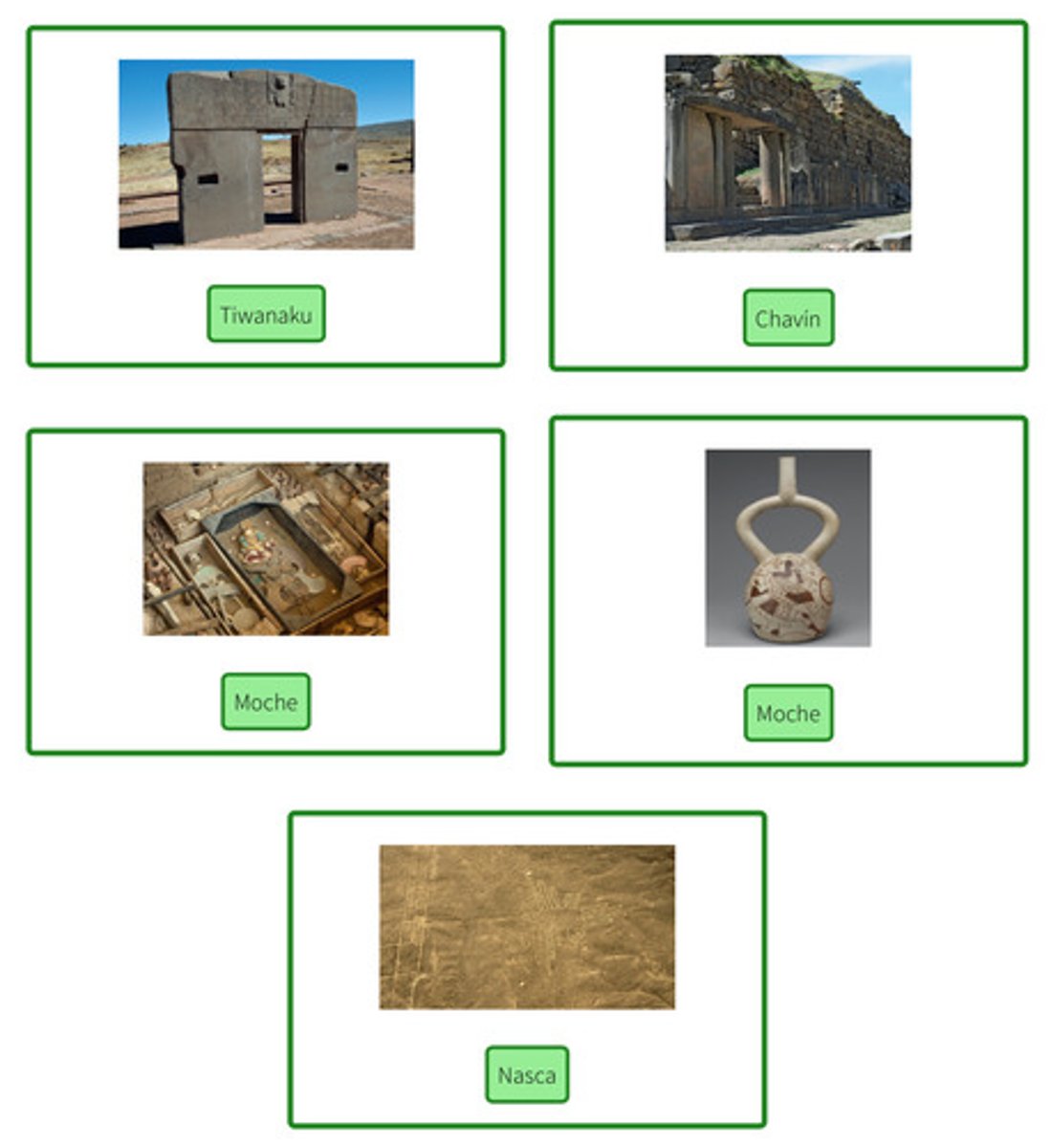
Which of the following features are found at both the Gateway of the Sun at Tiahuanaco and the temple complex of Chavín de Huántar?
- decorative focus on entrances
- sacred iconography
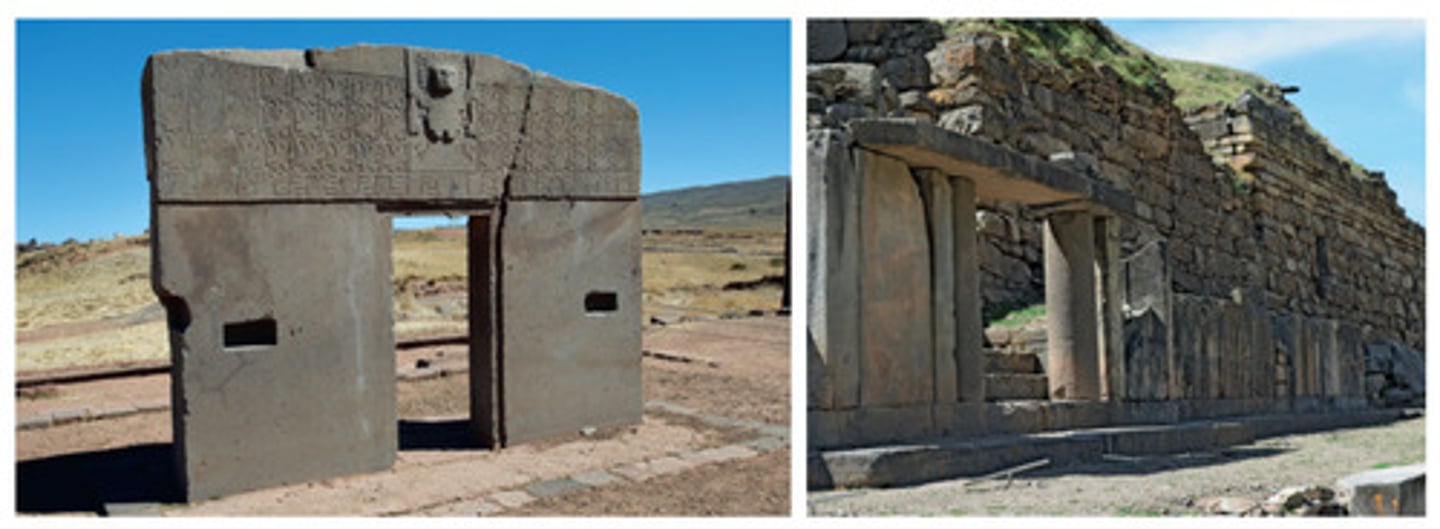
Match each term to the corresponding art object in which it is visible. Note that some terms may match more than one object.
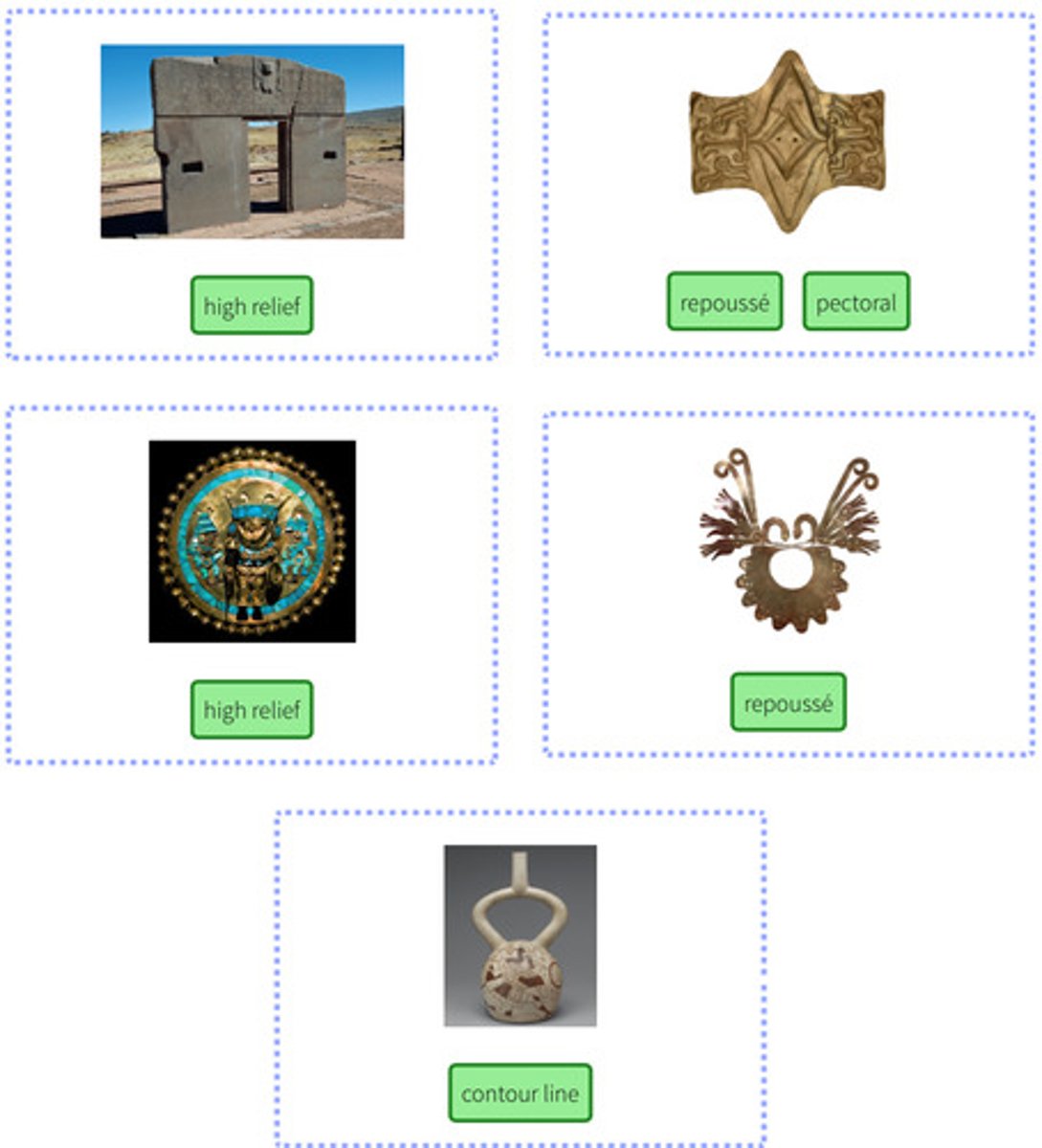
Which of the following works were made by the Chavín people?
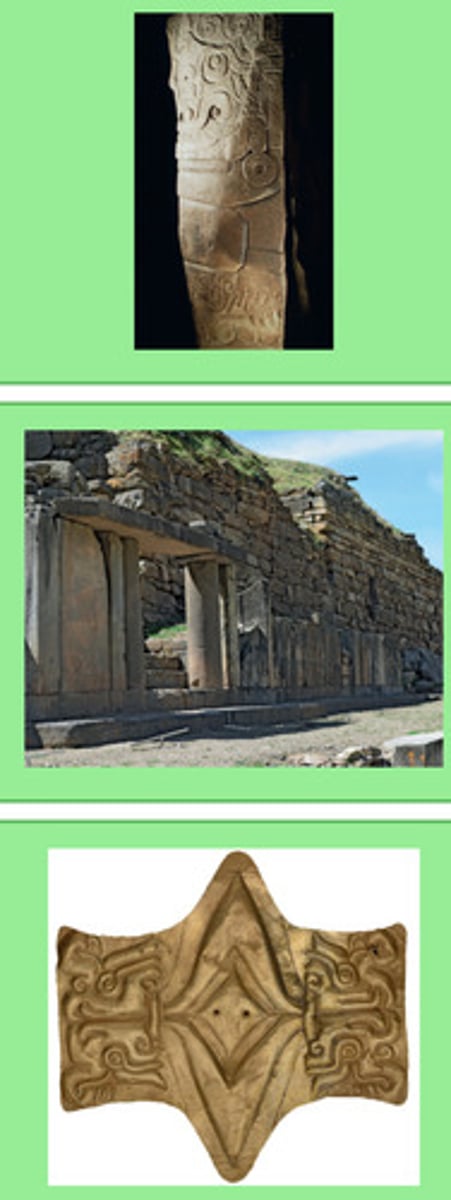
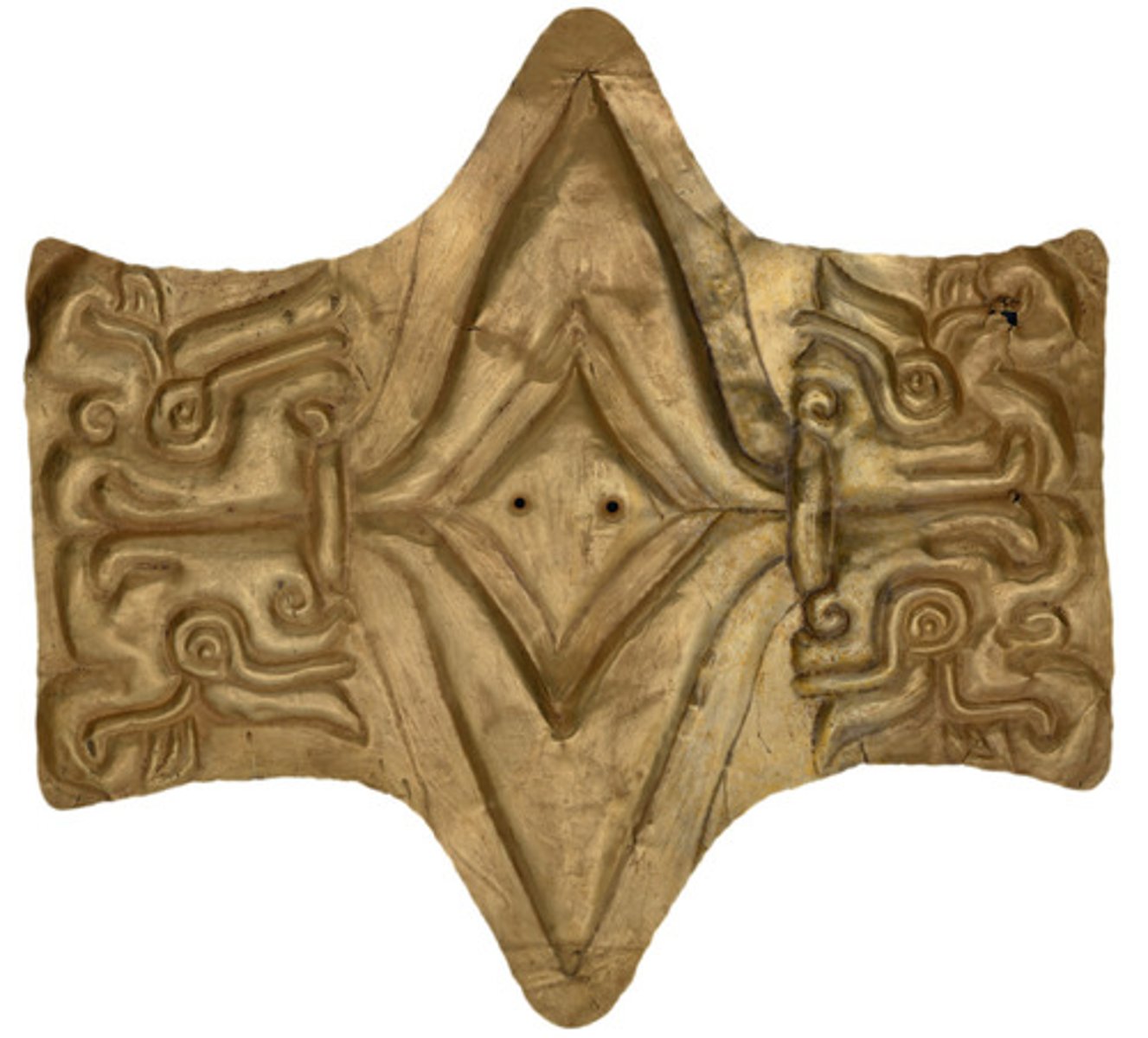
What does this pectoral depict?
Four bird heads with curving beaks
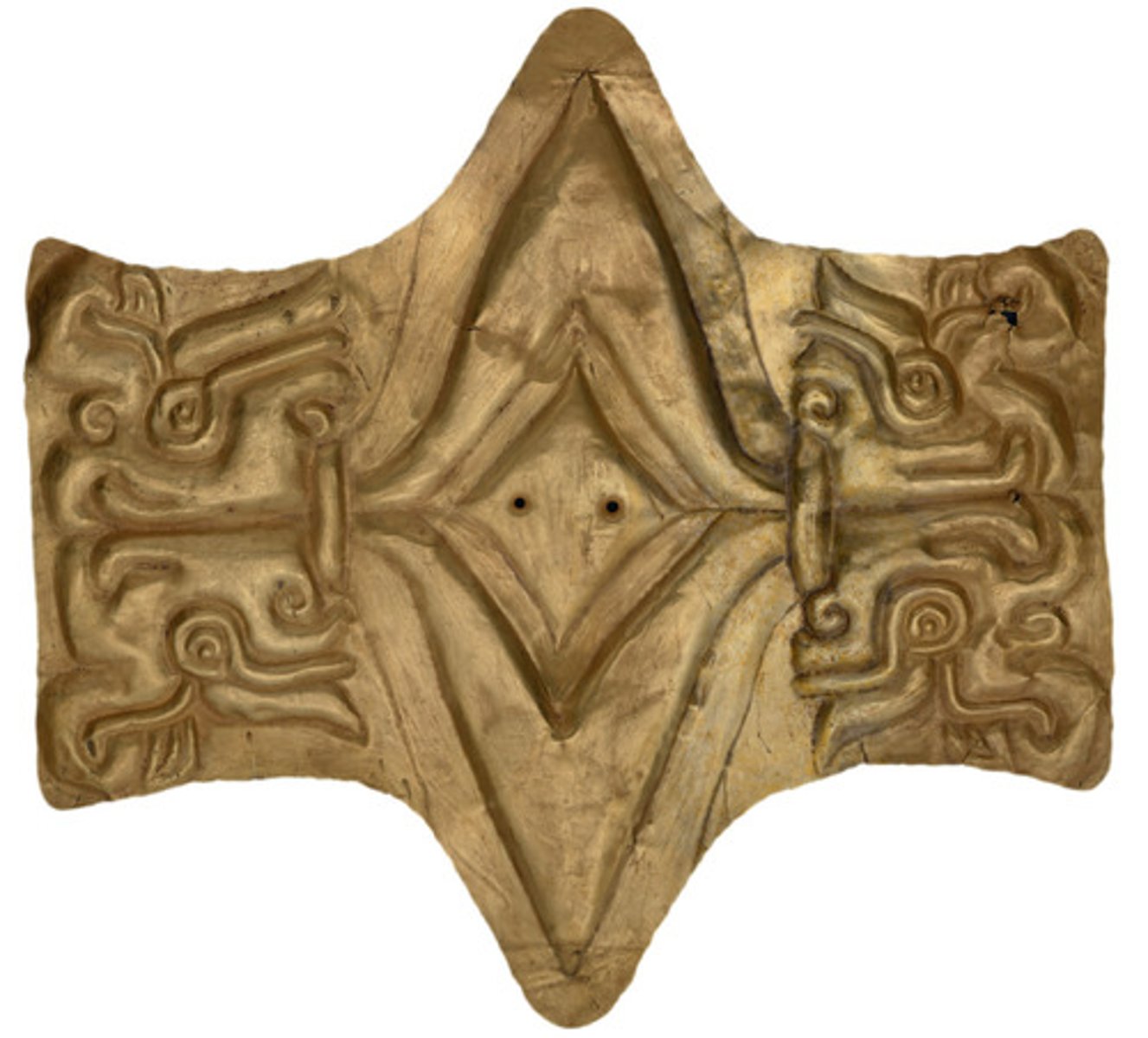
Fill in the blanks to complete the passage.
The large size of the Chavín pectoral was uncommon in the gold jewelry of the ancient Andes. The artist used the technique of repoussé to create a motif of supernatural beings.
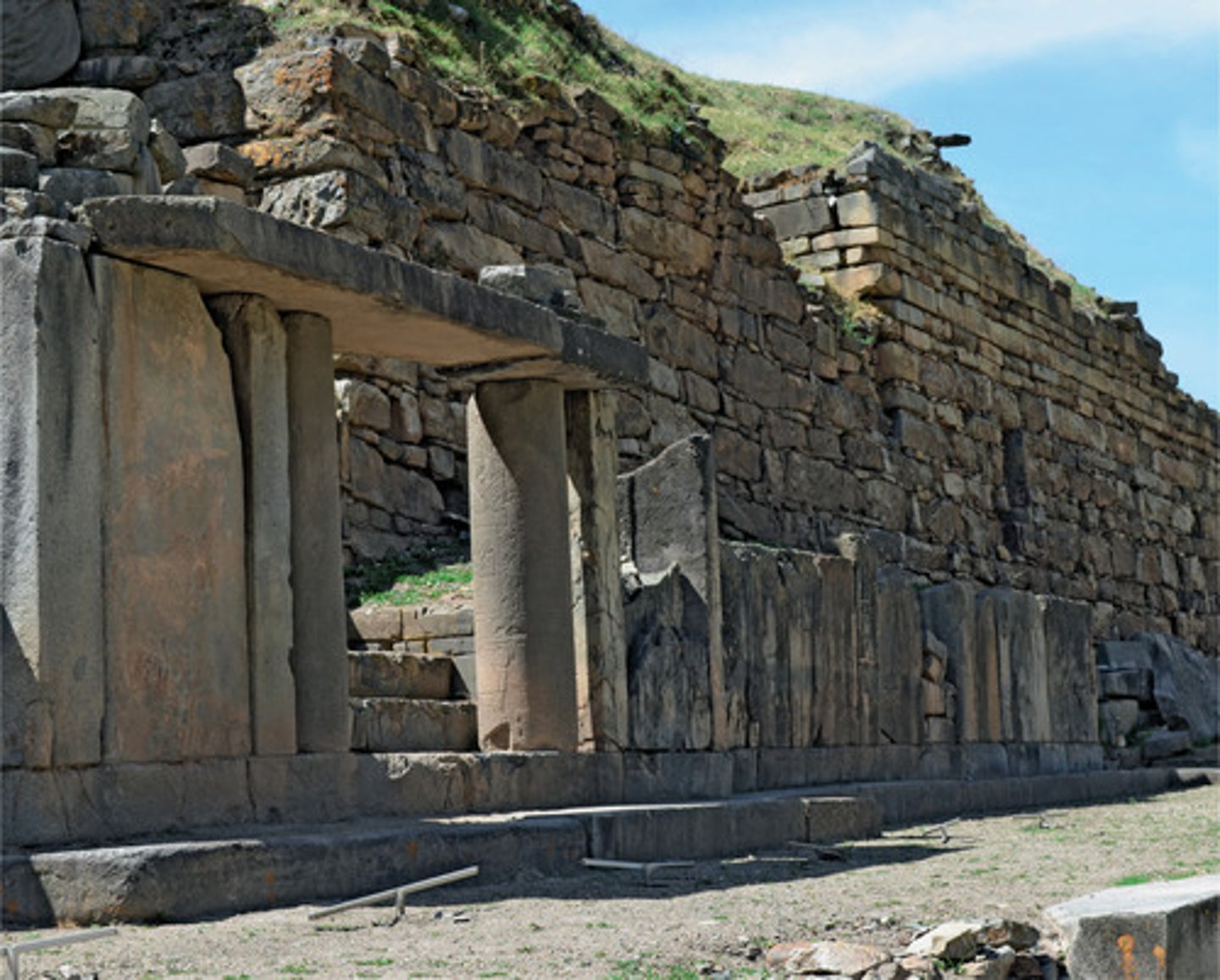
Which of the following decorative and architectural techniques are featured in the Chavín de Huántar temple complex?
- ashlar masonry
- post-and-lintel
- low-relief sculpture
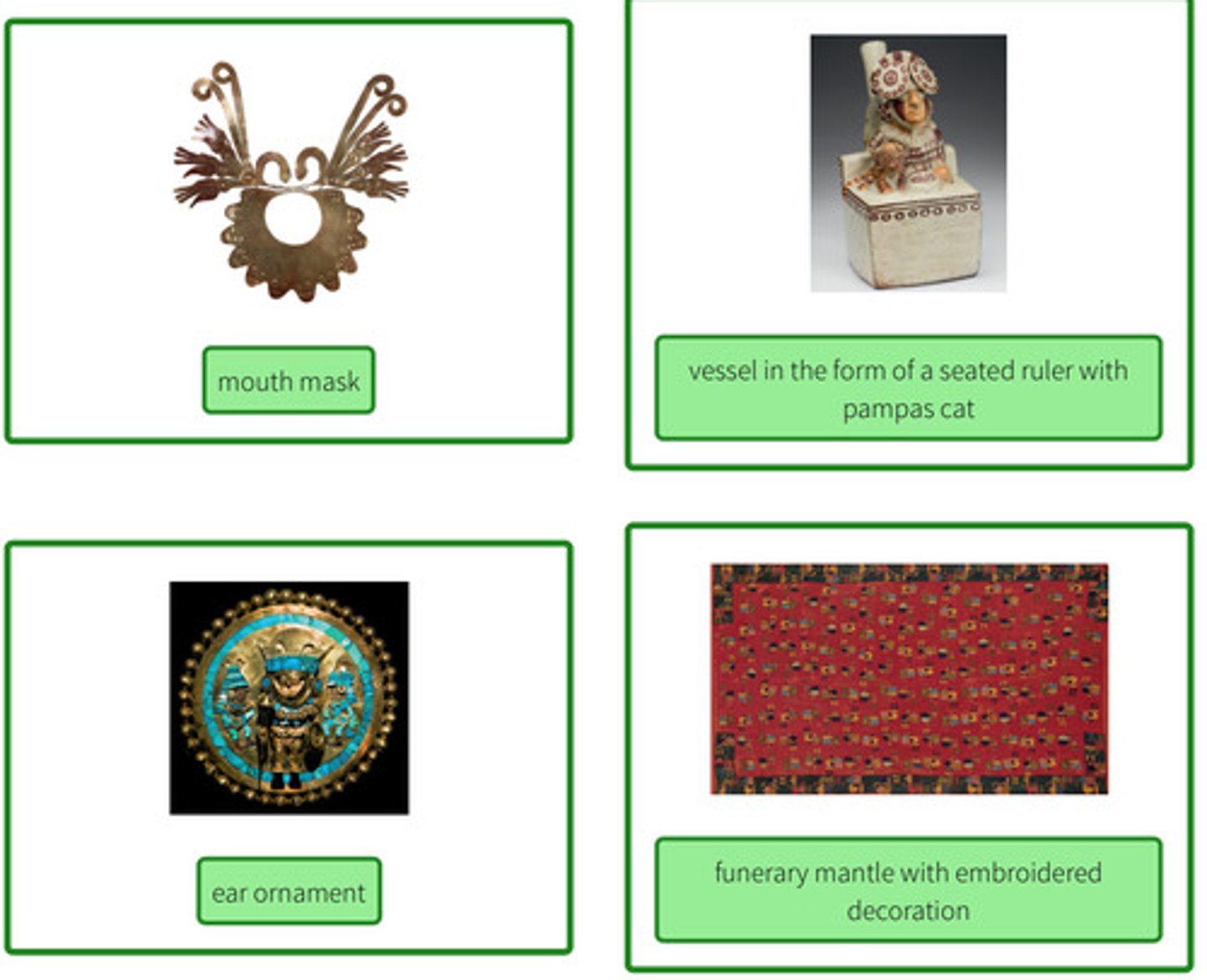
Match each descriptive title and culture to the art object it represents.
Fill in the blanks to complete the passage.
Once the center of Andean religion, Chavín de Huántar attracted pilgrims from their homes across the Andes. These pilgrims left ceramic offerings and also took the Chavín style back to integrate into their own local traditions.
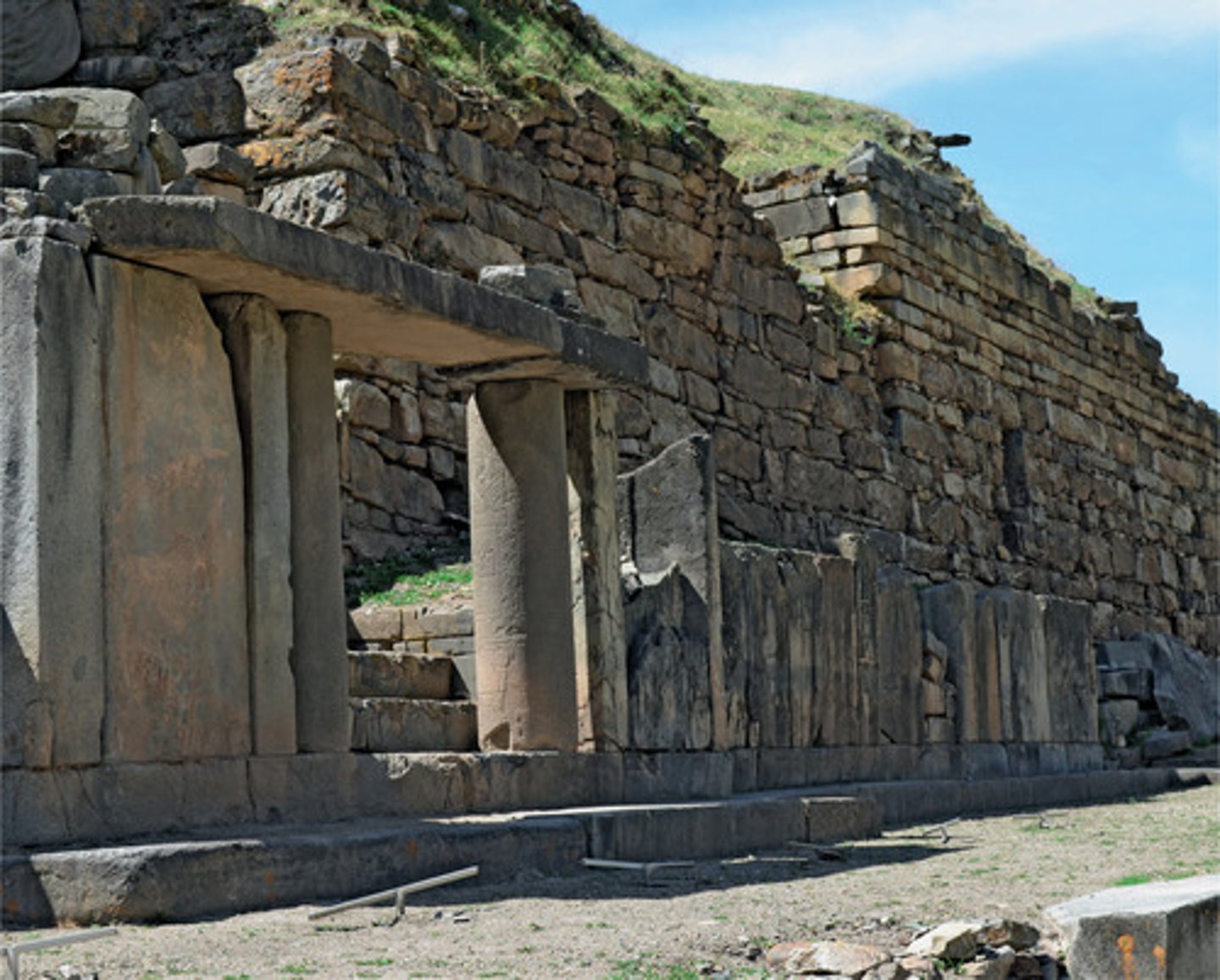
Place the labels onto the correct areas on the image.
Place the labels onto the correct areas on the image of the tomb of a Moche lord.
Match each descriptive title to the art object it represents.
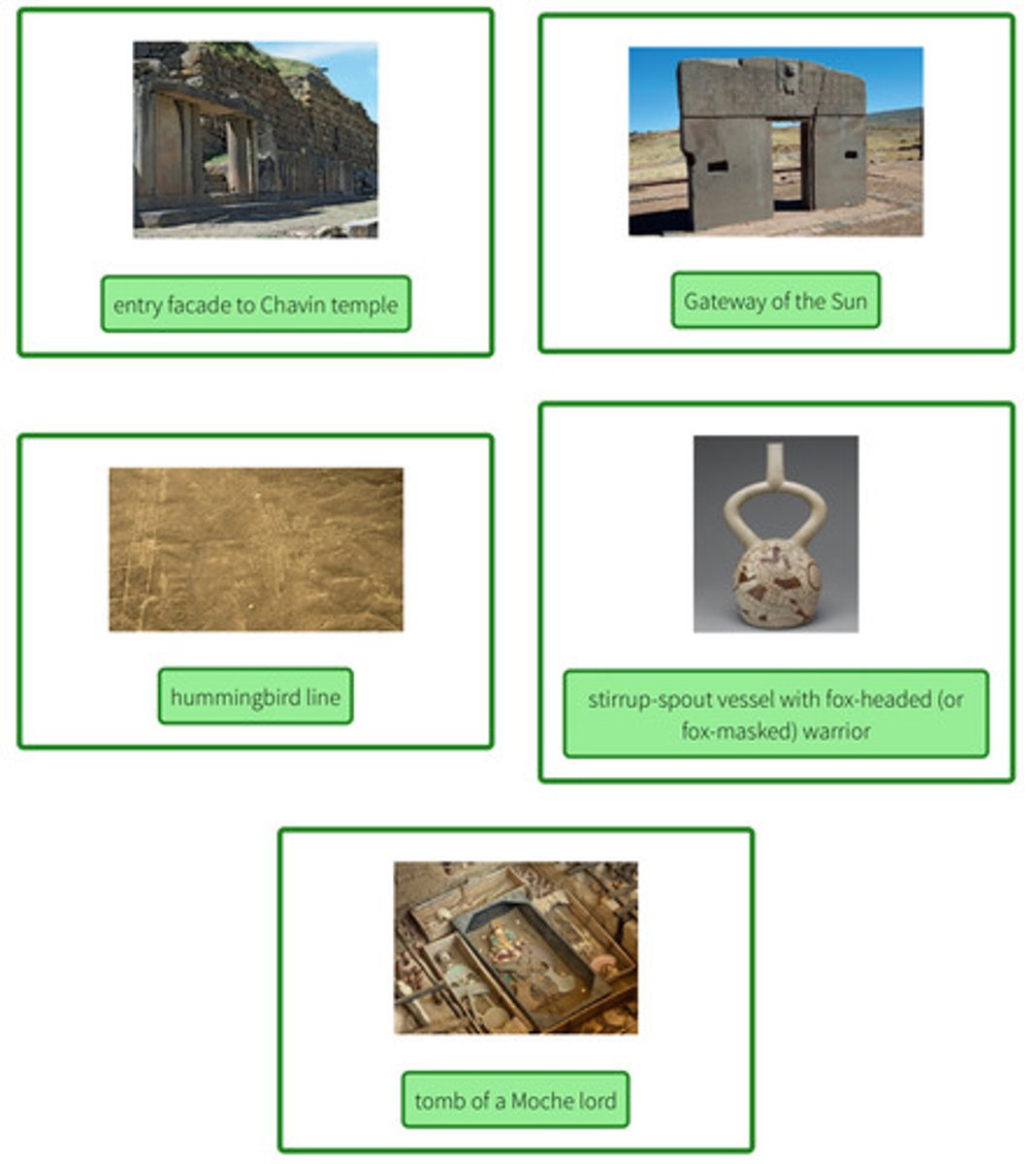
Place the following works in chronological order, from earliest to latest.
What technique is employed in this Moche ear ornament?
high-relief
Which of the following works relate to the religious rituals of the Moche culture?
Fill in the blanks to complete the passage.
Ancient Andean weavers used a backstrap loom to weave thread into cloth. Early Andean weaving was highly geometric, but was completed by applying more curved designs in paint or embroidery. Later on, geometric motifs were favored by Andean weavers and even replicated with some difficulty onto curved pottery.
 Note
Note  Flashcards (82)