BIOL Chapter 28
 Call Kai
 Learn
Learn Practice Test
 Spaced Repetition
 Match
Match Flashcards
 Knowt Play
1/20

There's no tags or description
Looks like no tags are added yet.
Name | Mastery | Learn | Test | Matching | Spaced | Call with Kai |
|---|
No analytics yet
Send a link to your students to track their progress
21 Terms
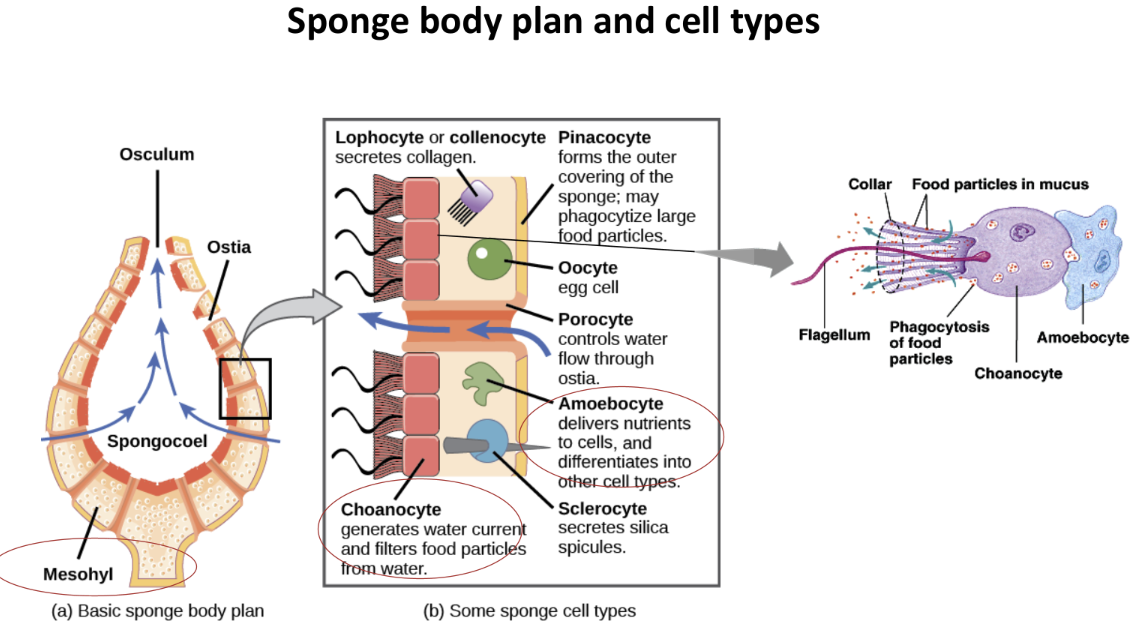
Sponge body plan and cell types
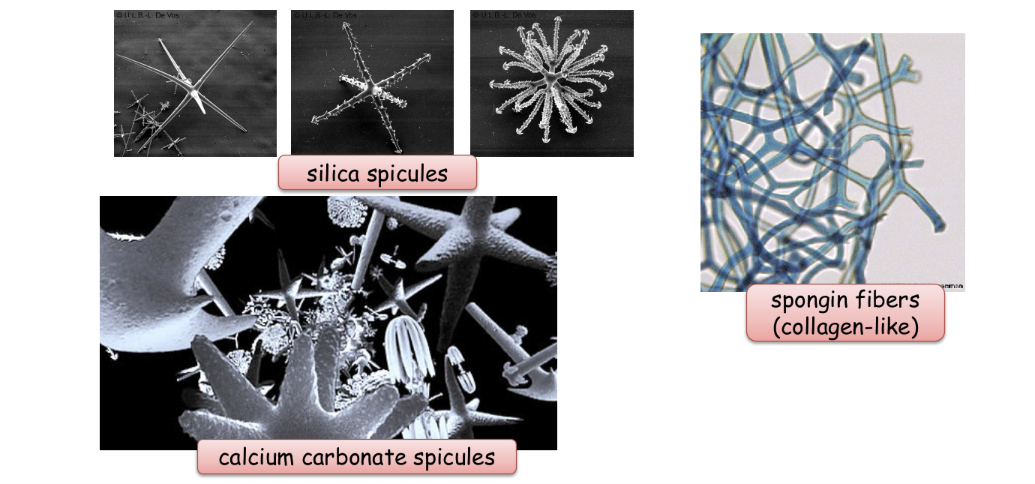
spicules and spongin
spicules - made of silica or calcium carbonate
spongin- protein fibers (collagen like)
made by amoebacytes in mesohyl
asexual reproduction of sponges
fragmentation or budding
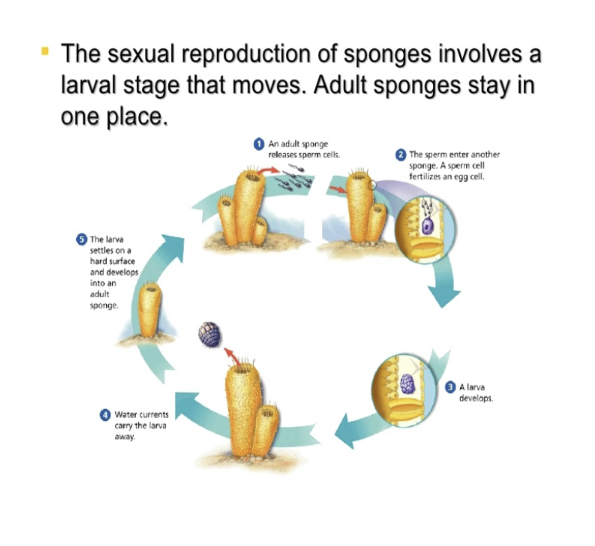
s*xual reproduction of sponges
hermaphroditic (M or F at diff times)
no gonads: gametes form in mesohyl
flagellated larvae disperse, then settle
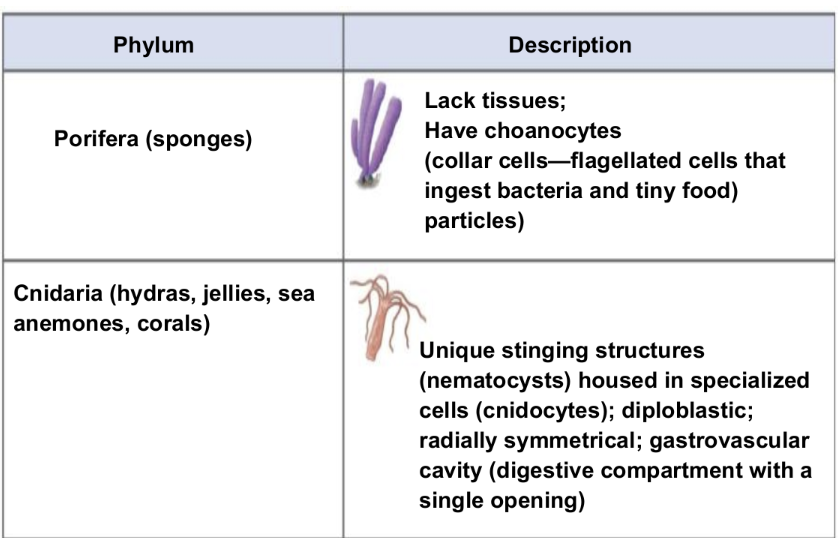
phylum cnidaria
jellyfish, hydra, anemones, corals
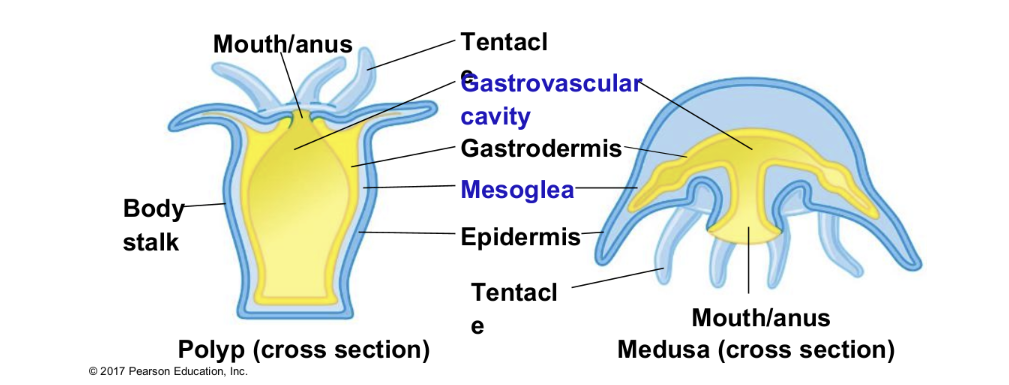
Radial symmetry, diploblastic
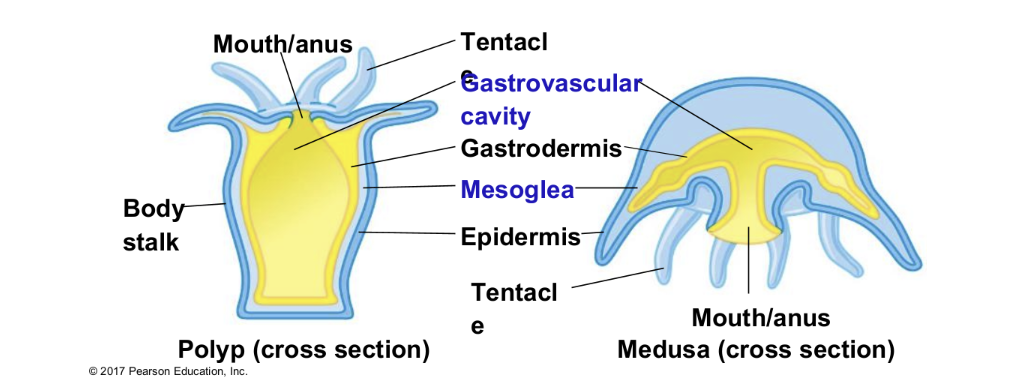
Aquatic: 2 body forms
sessile polyp- not moving
drifting/free swimming medusa
No cephalization
Oral and aboral side
cnidaria
sac like body with gastrovascular cavity
1 opening as mouth/anus to digestive sac
mesoglea
nervous system
mesoglea
non cellular layer functions as hydrostatic skeleton (flexible, supported by fluid pressure)
nervous system
simple, coordinated by non-centralized nerve net
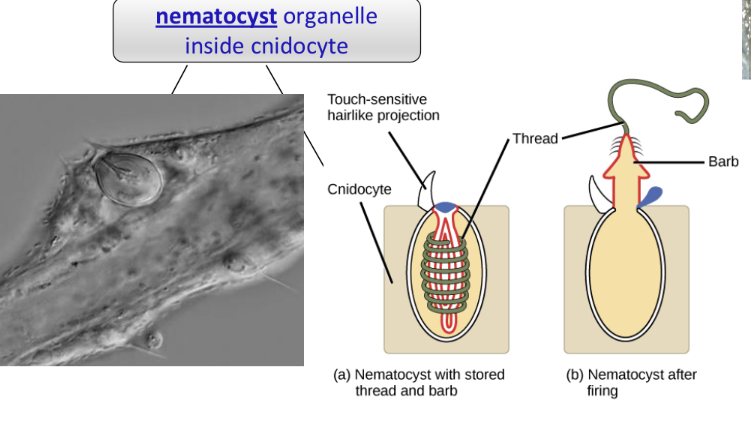
nematocysts and cnidaria
aquatic sit and wait carnivores, ex: sea anemone
stinging tentacles around central mouth
cast prey with cnidocytes
nematocyst organelle inside cnidocyte
ctenophora
radially symmetric and dipoblastic
transparent, medusa-like body
moves with cilia, fused into 8 comb-like plates
marine carnivores
only 2 tentacles or none
eject a sticky thread to capture prey
some engulf prey
porifera vs. cnidaria
lophotrochozoa
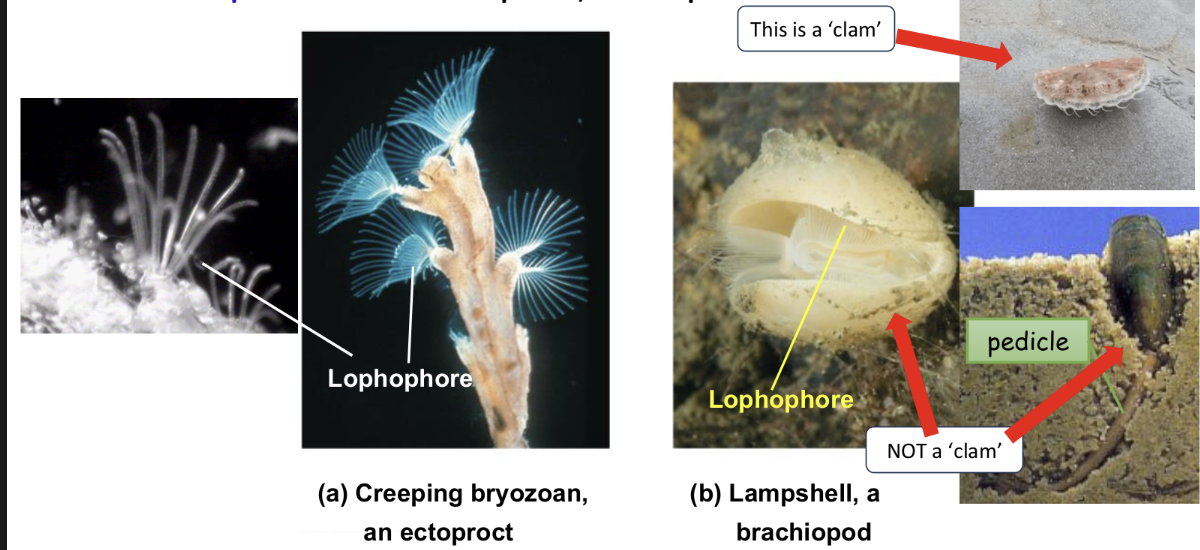
lopopohore- for feeding, others pass through a trochopore larval stage (either/or) but a few have neither
platyhelminthes
syndermata
annelida
mollusca
ectoprocta
brachiopoda
gastrotricha
cycliphora
nemertea
ectoprocta
crown of ciliated tentacles (lophophore) around mouth used for feeding
platyhelminthes
flatworms
live in marine, freshwater, and damp terrestrial habitats
many are parasites ex: flukes (have prominent gonads and an oral sucker on the other end) and tapeworms
use mucus to move
flat shape increases surface area to absorb food
gas exchange and elimination of nitrogenous waste can occur by diffusion across body surface
are acoelomates
yes cephalization
gastrovascular cavity w 1 opening (highly branches to digest and distribute nutrients)
O2/CO2 exchange is at cell level
Have: digestive, nervous, excretory, and reproduction system
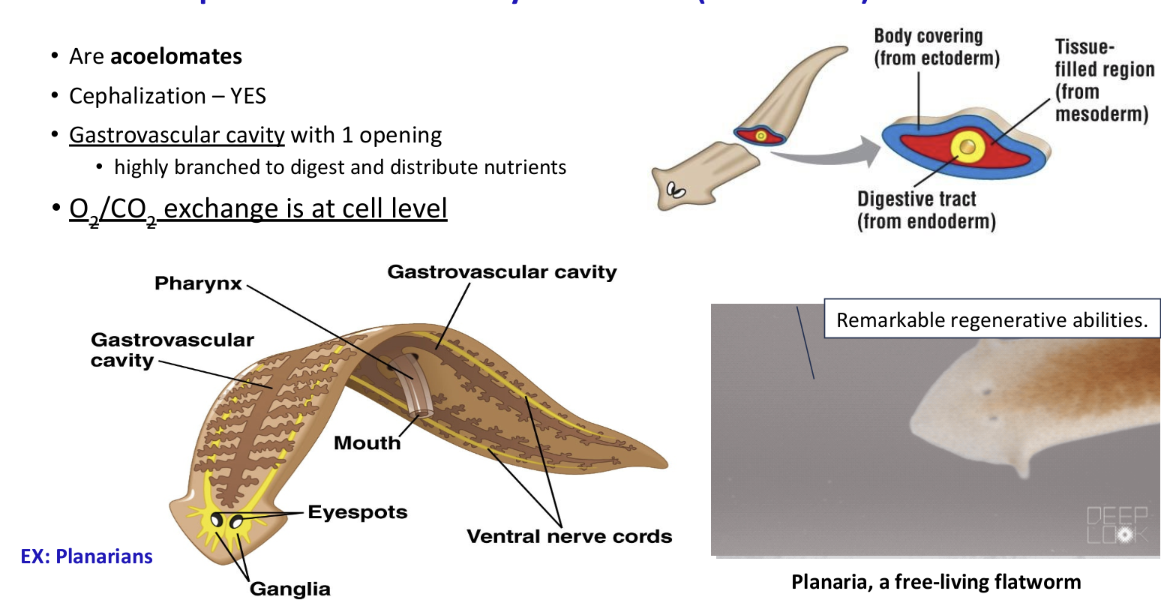
flatworm nervous system
centralized collection of nerves, ganglia, ventral nerve cords, eyespots
excretory system of flatworms
protonephridia with flame cells to remove excess **
tapeworms
parasitic, mostly in vertebrate intestines
humans get them by eating undercooked infected beef, pork, fish
do not have mouth or gastrovascular cavity, absorbs nutrients from host intestine
has a scolex, a head with no eyes or mouth with suckers and hooks
segments called proglotids
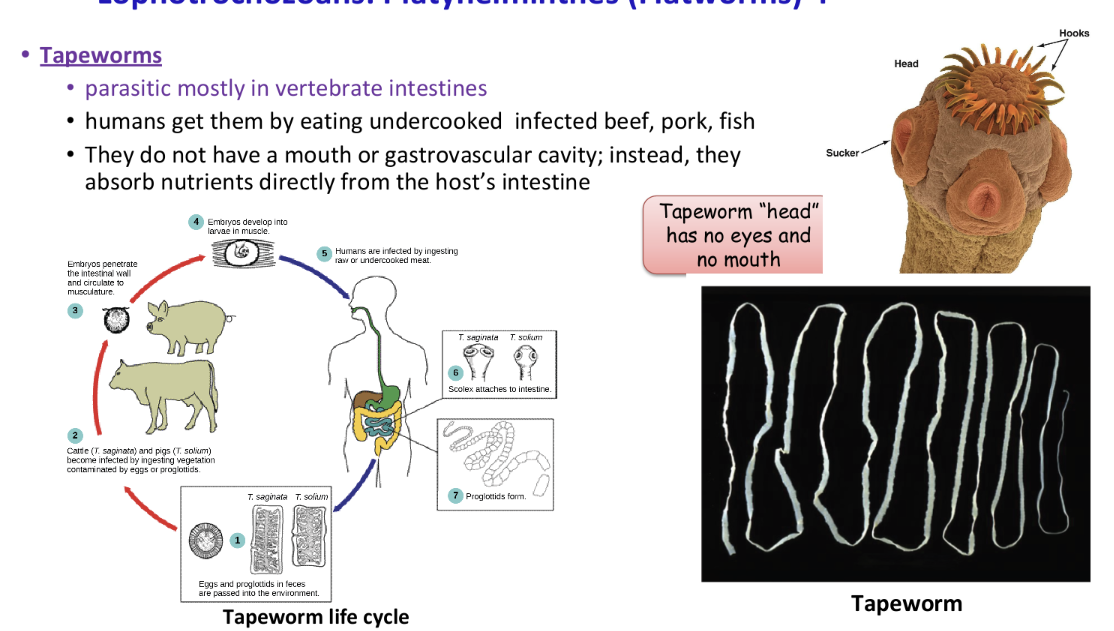
proglottids
repeated reproductive segments filled up fertilized eggs
syndermata (rotifers)
free-living, aquatic
microscopic, cylindrical body
crown of cilia - draws vortex of water into the mouth
jaws- grind up food (microorganisms)
pseudocoelom
alimentary canal present (digestive tube with 2 openings, mouth and anus)
parthenogenesis- asexual, females produce more females from unfertilized eggs
invertebrates
are animals that lack a backbone
They account for more than 97% of known animal species
Are morphologically diverse and occupy almost every habitat on Earth
More than 35 phyla identified
phylum: porifera
the Sponges
Aquatic, mostly marine
Motility : Sessile as adults
No Nervous, digestive, respiratory, circulatory, or reproductive system
Filter feeders
No true tissue or cephalization

