NS 3310 Lecture 22
 Call Kai
 Learn
Learn Practice Test
 Spaced Repetition
 Match
Match Flashcards
 Knowt Play
1/84

There's no tags or description
Looks like no tags are added yet.
Name | Mastery | Learn | Test | Matching | Spaced | Call with Kai |
|---|
No analytics yet
Send a link to your students to track their progress
85 Terms
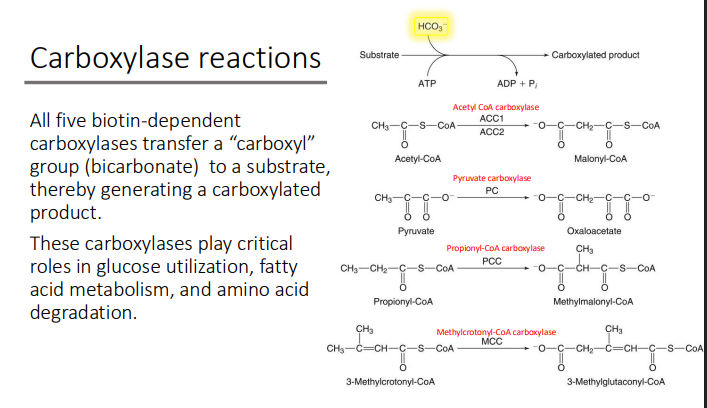
Carboxylase reactions: All five biotin-dependent carboxylases transfer a _____ group (bicarbonate) to a substrate, thereby generating a?
“carboxyl”; carboxylated product.
These carboxylases play critical roles in what 3 processes?
Glucose utilization
Fatty acid metabolism
Amino acid degradation
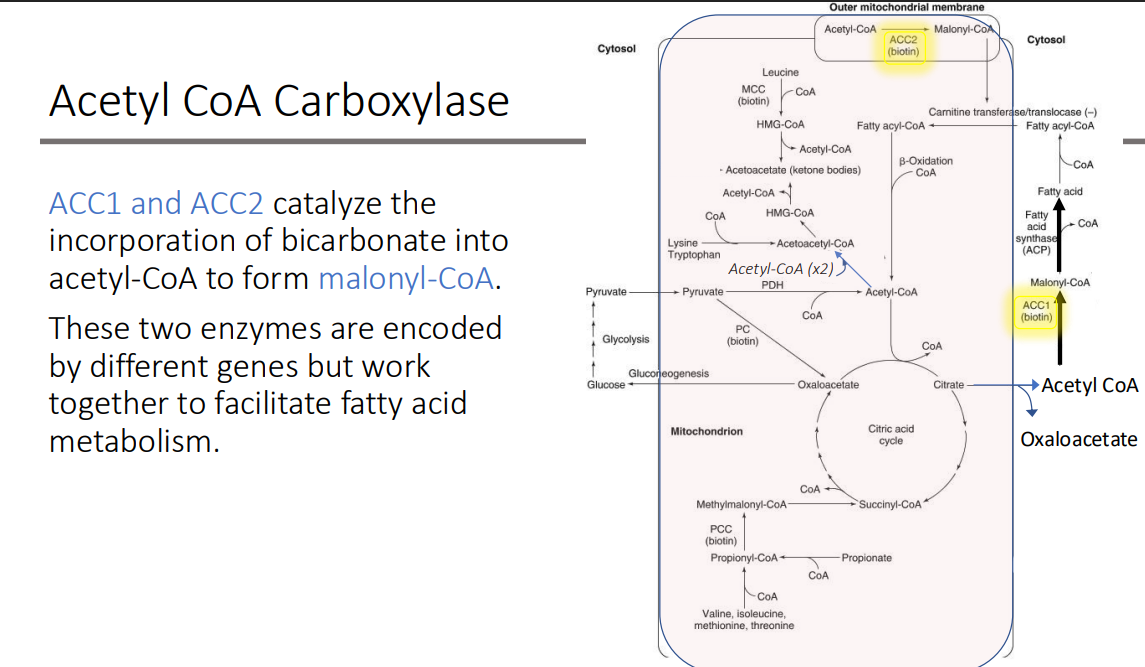
Acetyl CoA Carboxylase: ACC1 and ACC2 catalyze the incorporation of bicarbonate into? to form?
acetyl -CoA to form malonyl -CoA.
ACC1 and ACC2 are two enzymes that are encoded by different genes but work together to facilitate?
fatty acid metabolism
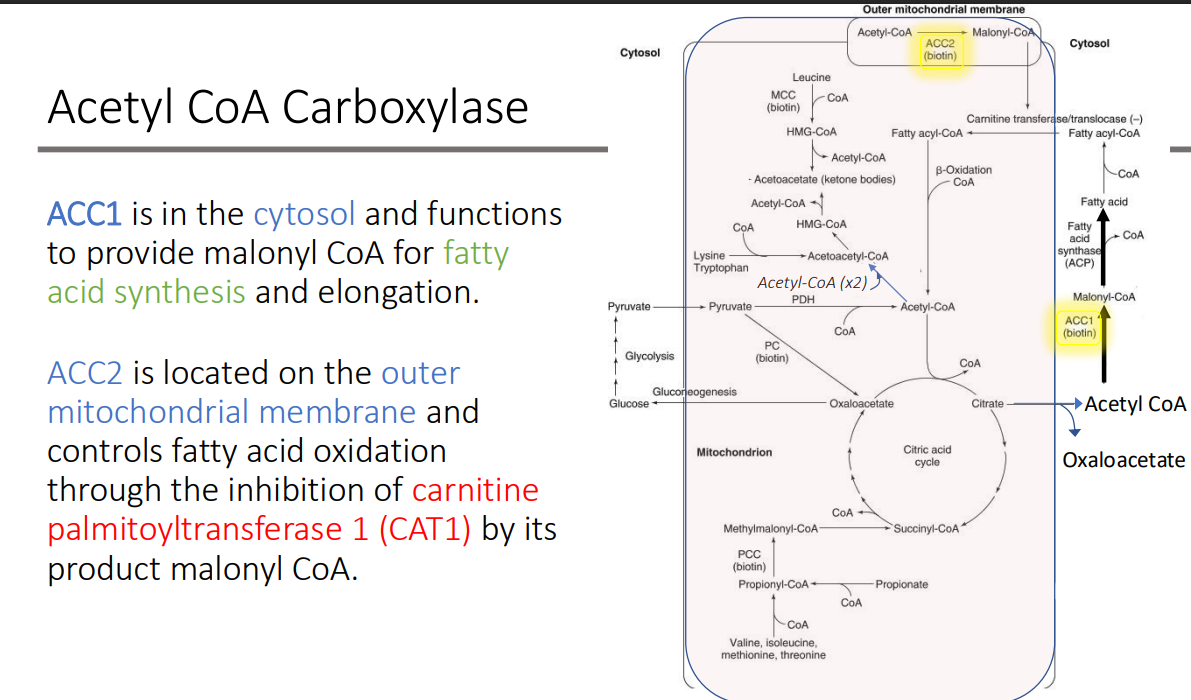
ACC1 is in the ___and functions to provide malonyl CoA for what two things?
cytosol
Fatty acid synthesis
Elongation
ACC2 is located on the?
outer mitochondrial membrane
ACC2 is located on the outer mitochondrial membrane and controls fatty acid oxidation through the inhibition of?
carnitine palmitoyltransferase 1 (CAT1) by its product malonyl CoA.
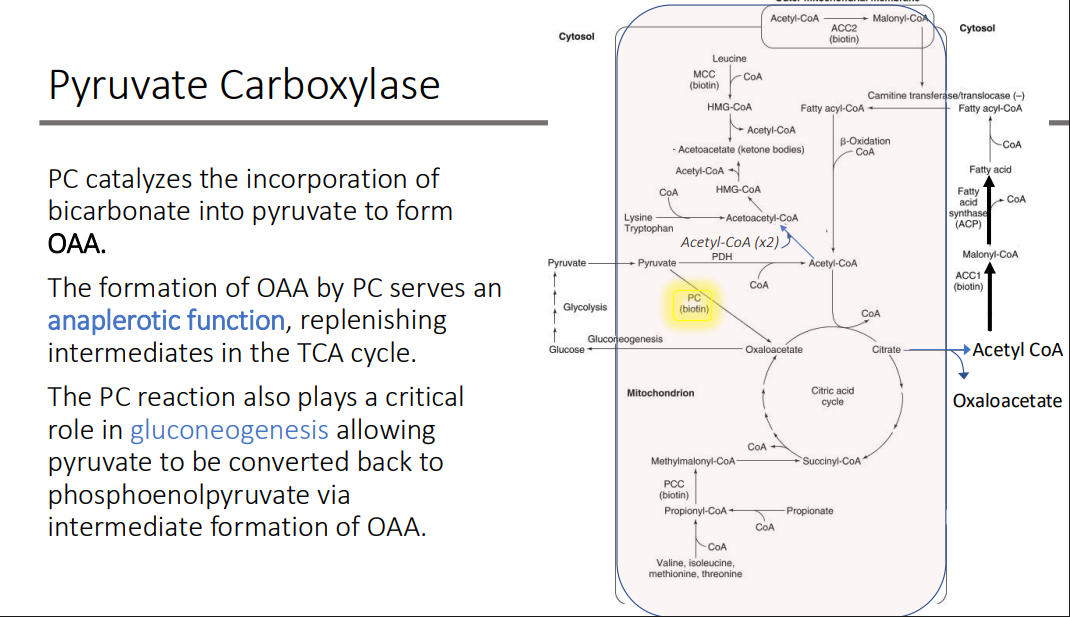
Pyruvate Carboxylase: PC catalyzes the incorporation of bicarbonate into? to form?
pyruvate to form OAA
The formation of OAA by PC serves what type of function?
anaplerotic function, replenishing intermediates in the TCA cycle.
The PC reaction also plays a critical role in?
gluconeogenesis
The PC reaction also plays a critical role in gluconeogenesis allowing pyruvate to be converted back to? via intermediate formation of?
phosphoenolpyruvate via intermediate formation of OAA.
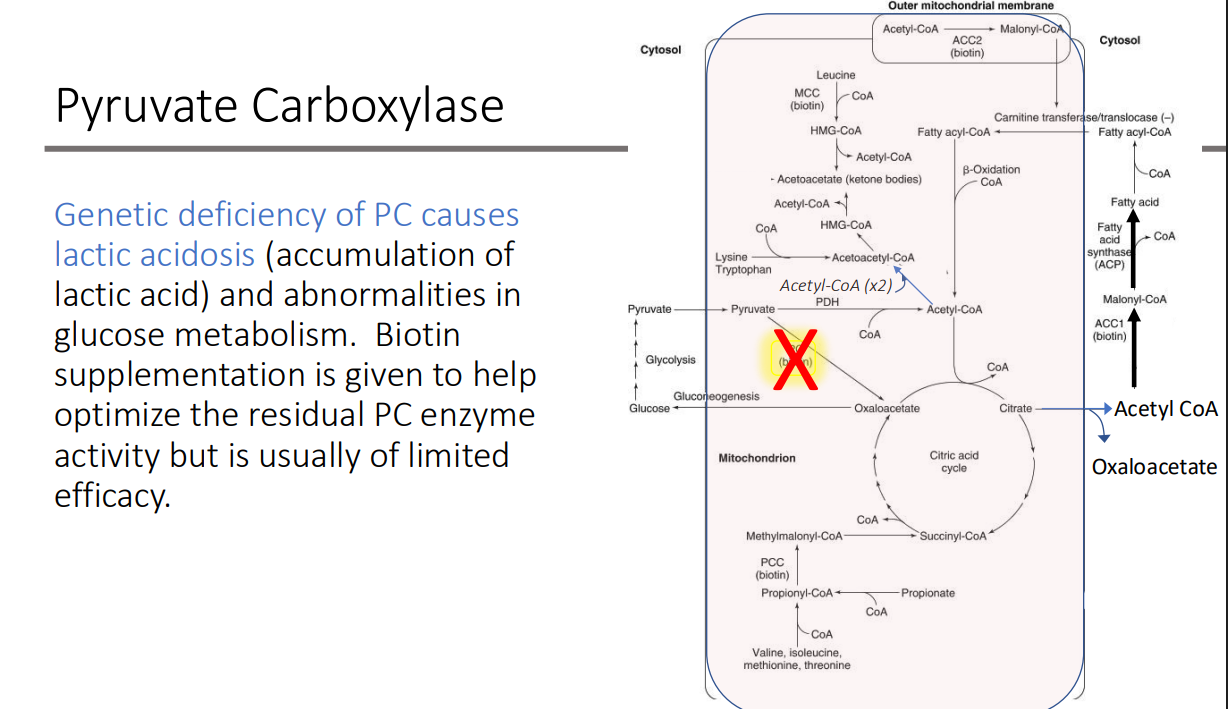
Pyruvate Carboxylase: Genetic deficiency of PC causes? and abnormalities in?
lactic acidosis (accumulation of lactic acid) and abnormalities in glucose metabolism
What supplementation is given to help optimize the residual PC enzyme activity but is usually of limited efficacy?
Biotin
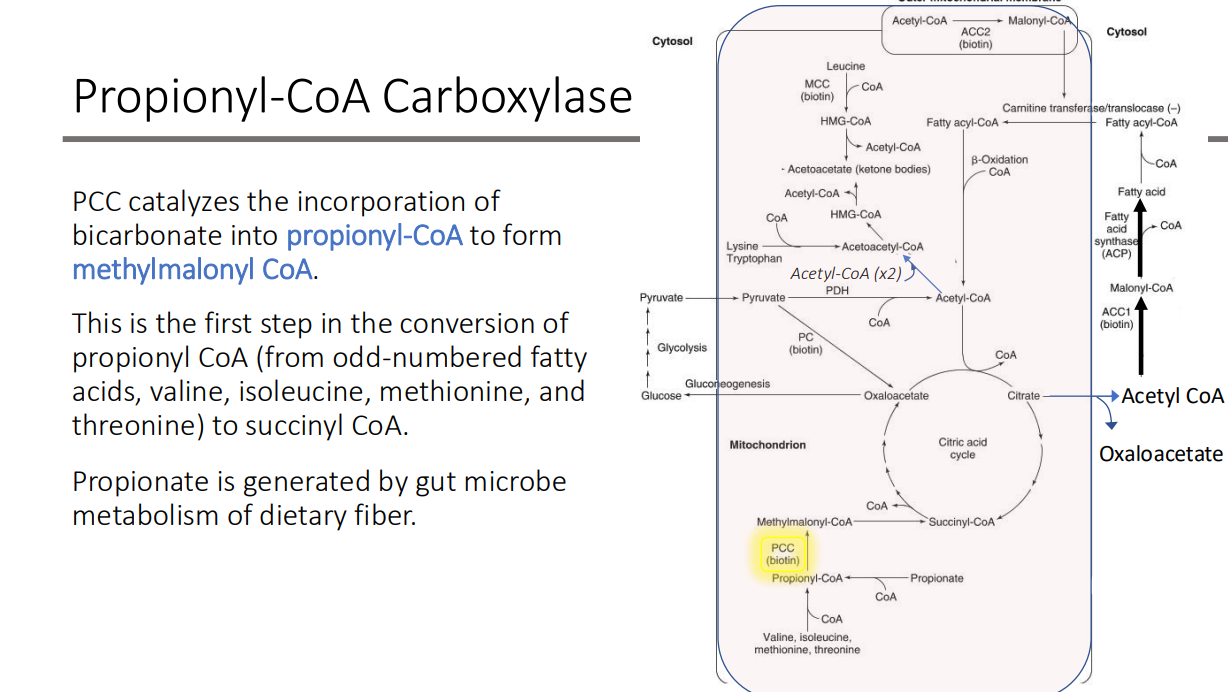
Propionyl-CoA Carboxylase: PCC catalyzes the incorporation of bicarbonate into? to form?
propionyl-CoA to form methylmalonyl CoA
Propionyl-CoA Carboxylase: PCC catalyzes the incorporation of bicarbonate into propionyl-CoA to form methylmalonyl CoA. This is the first step in the conversion of propionyl CoA (from odd-numbered fatty acids, valine, isoleucine, methionine, and threonine) to?
succinyl CoA.
Propionyl-CoA Carboxylase: Propionate is generated by?
gut microbe metabolism of dietary fiber.
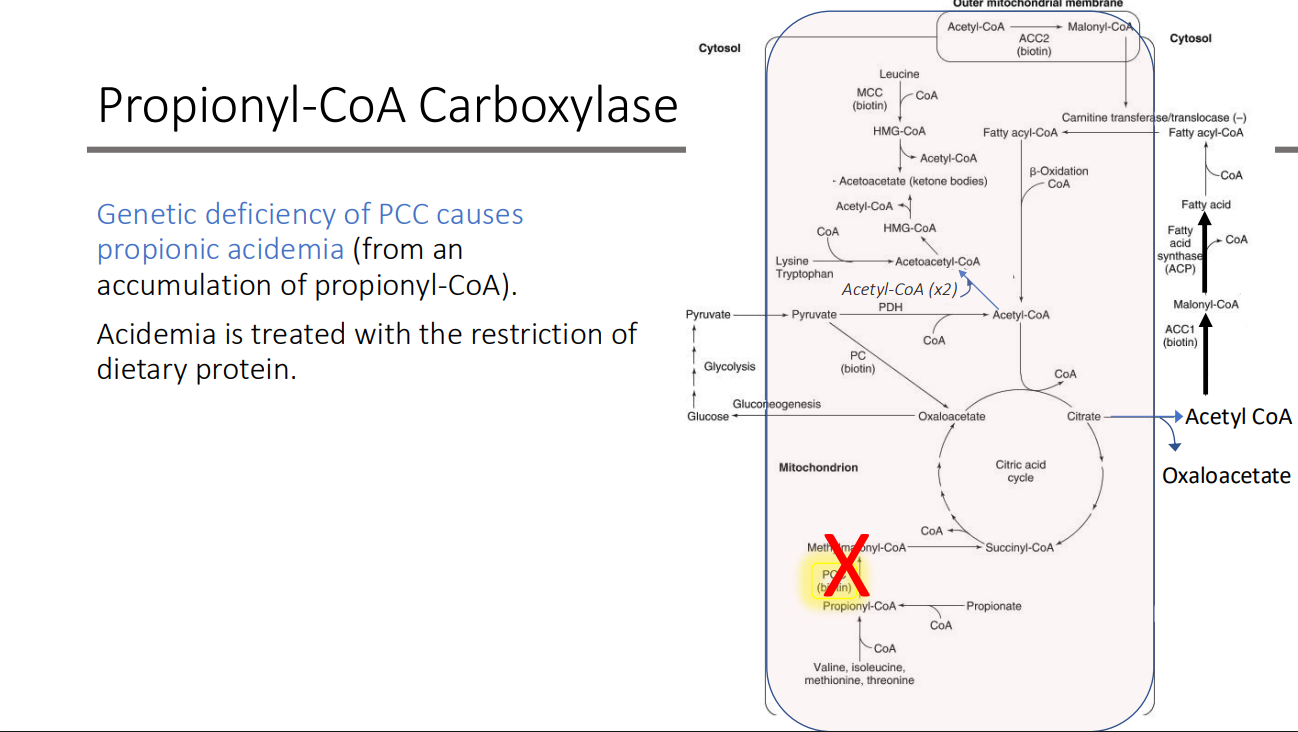
Genetic deficiency of PCC causes? How is it treated?
propionic acidemia (from an accumulation of propionyl-CoA)
treated with the restriction of dietary protein.
Catabolism of leucine requires?
biotin
Methylcrotonyl-CoA Carboxylase (MCC) catalyzes the incorporation of bicarbonate into 3- methylcrotonyl-CoA to?
form 3-methylglutaconylCoA.
MCC is an essential step in the degradation of? to?
leucine to acetyl CoA
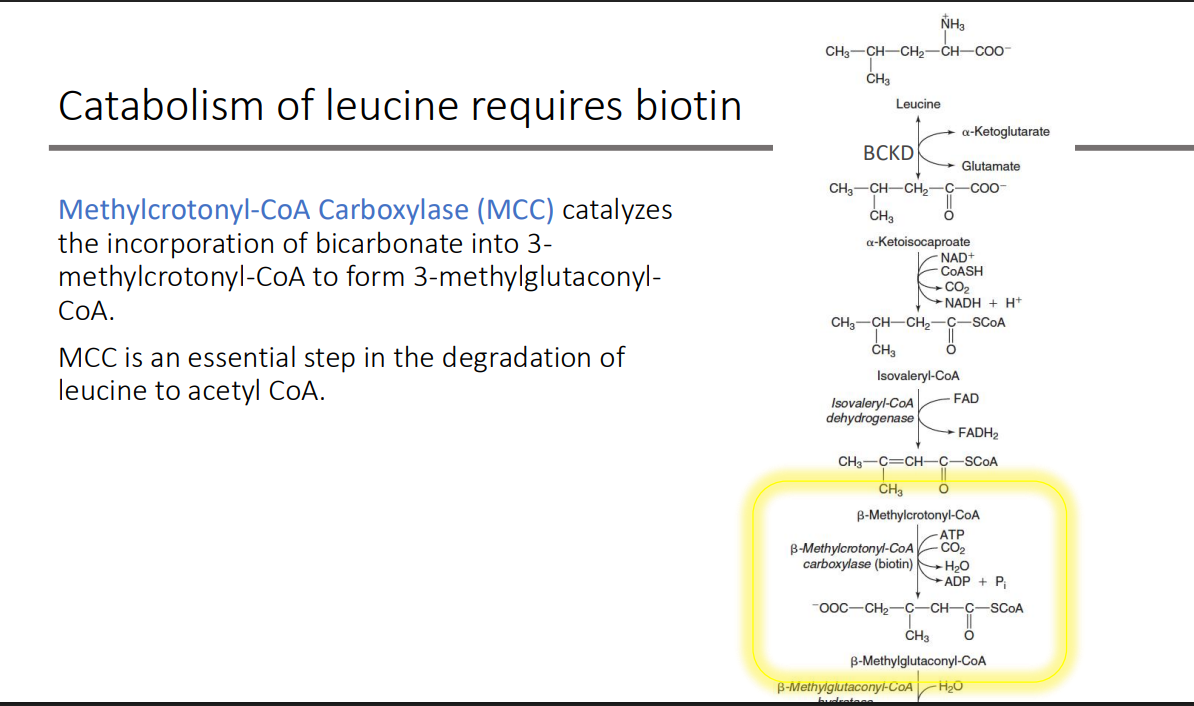
Catabolism of leucine requires biotin: Genetic deficiency in MCC impairs Leu catabolism .Moderate dietary restriction of the amino acid can support? Some patients respond to what type of supplementation?
normal development, especially if started in early.
biotin supplementation, though responsiveness can vary.
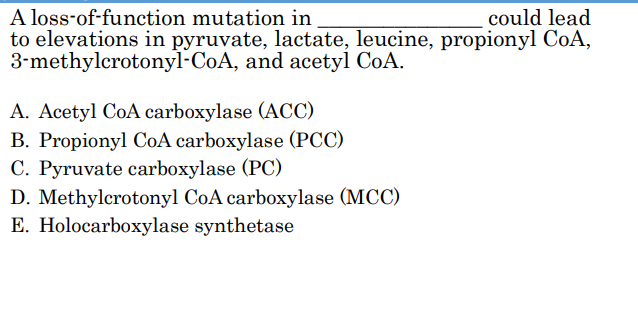
A loss-of-function mutation in _______________ could lead to elevations in pyruvate, lactate, leucine, propionyl CoA, 3-methylcrotonyl-CoA, and acetyl CoA
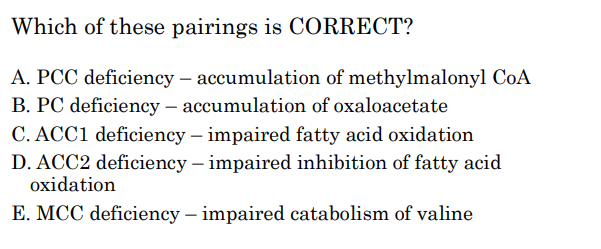
Which of these pairings is CORRECT?
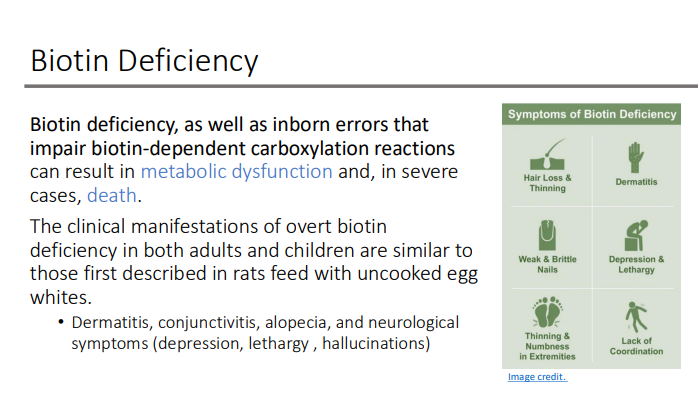
Biotin deficiency, as well as inborn errors that impair biotin-dependent carboxylation reactions can result in?
metabolic dysfunction and, in severe cases, death.
The clinical manifestations of overt biotin deficiency in both adults and children are similar to those first described in rats feed with uncooked egg whites. Which are 4 symptoms?
Dermatitis
conjunctivitis
alopecia,
neurological symptoms (depression, lethargy , hallucinations)
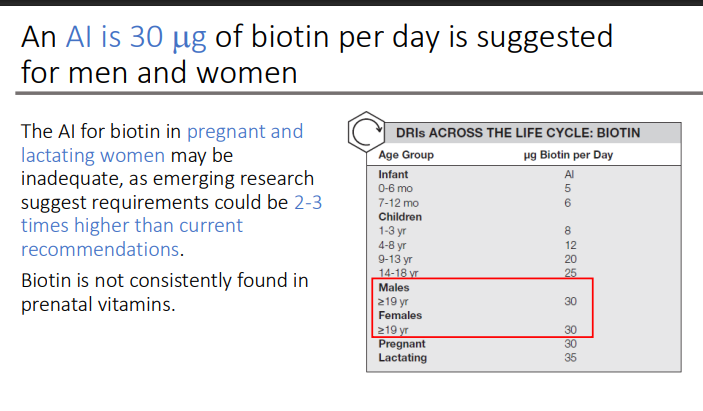
What is the AI for biotin?
30 ug of biotin per day is suggested for men and women
The AI for biotin in pregnant and lactating women may be inadequate, as emerging research suggest requirements could be?
2-3 times higher than current recommendations.
Biotin is not consistently found in prenatal vitamins
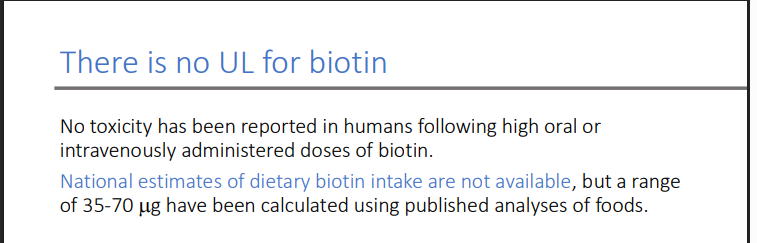
Is there a UL for biotin?
NO; No toxicity has been reported in humans following high oral or intravenously administered doses of biotin.
Biochemical indicators: What is am functional indicator of biotin status?
Urinary 3-hydroxyisovaleric acid (3HIA)
3HIA accumulates during the catabolism of leucine when the activity of what is impaired?
biotindependent MCC is impaired.
Urinary excretion of biotin declines dramatically in?
biotin-compromised individuals.
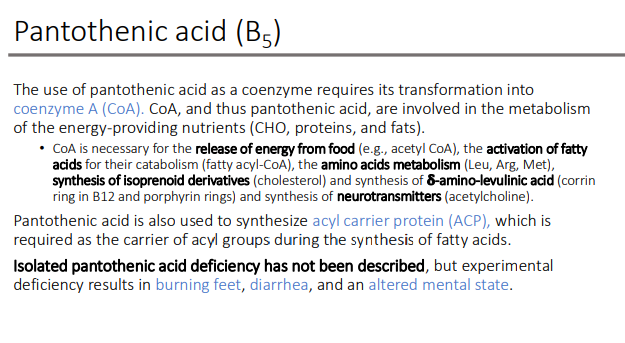
The use of pantothenic acid (B5) as a coenzyme requires its transformation into?
coenzyme A (CoA)
CoA, and thus pantothenic acid, are involved in the metabolism of the?
energy-providing nutrients (CHO, proteins, and fats)
CoA is necessary for what 5 things?
Release of energy from food (eg. acetyl CoA)
Activation of fatty acids for their catabolism (fatty acyl-CoA0
Amino acids metabolism (Leu, Arg, Met)
Synthesis of isoprenoid derivatives (cholesterol)
Synthesis of 𝛅-amino-levulinic acid (corrin ring in B12 and porphyrin rings)
Synthesis of neurotransmitter (acetylcholine)
Pantothenic acid is also used to synthesize what protein?
acyl carrier protein (ACP)
Acyl carrier protein (ACP) which is required as the carrier of?
acyl groups during the synthesis of fatty acids
Isolated pantothenic acid deficiency has not been described, but experimental deficiency results in what three symptoms?
Burning feet
Diarrhea
An altered mental state
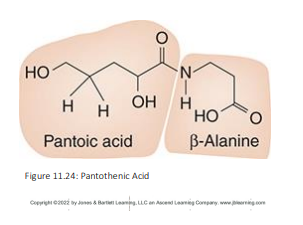
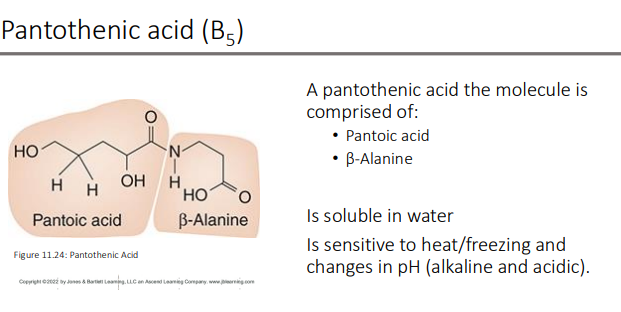
A pantothenic acid the molecule is comprised of what two things?
Pantoic acid
β-Alanine
Pantothenic acid (B5 ) is insoluble or soluble in water? It is sensitive to what 2 things?
Soluble
Heating/freezing
Changes in pH (alkaline and acidic)
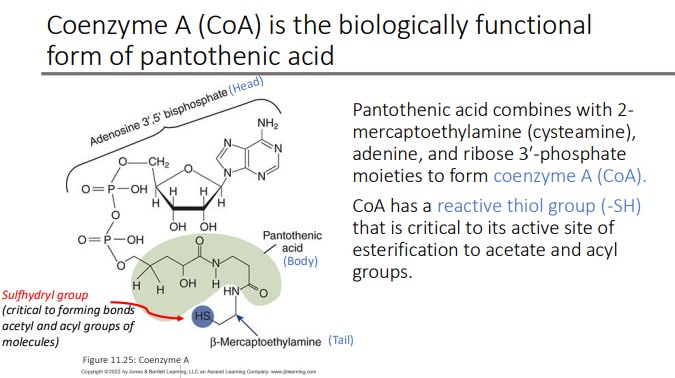
What is the is the biologically functional form of pantothenic acid?
Coenzyme A (CoA)
Pantothenic acid combines with what 3 things to form coenzyme A (CoA)
2- mercaptoethylamine (cysteamine)
Adenine
Ribose 3-′phosphate moieties
CoA has a reactive what? What is it critical to?
thiol group (-SH)
its active site of esterification to acetate and acyl groups.
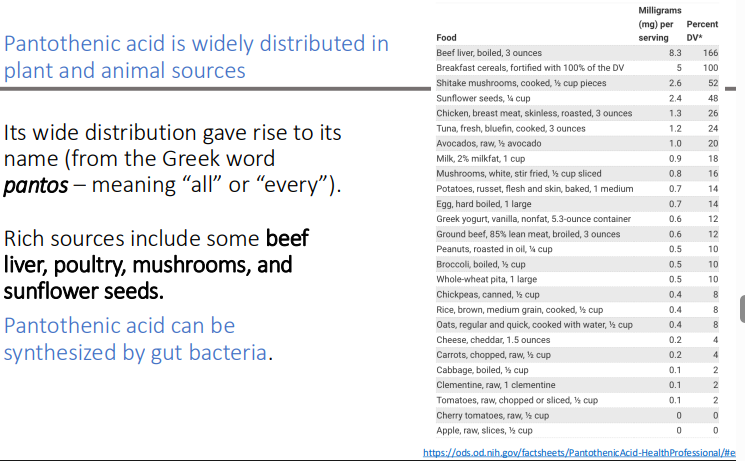
Pantothenic acid is widely distributed in plant and animal sources Its wide distribution gave rise to its name (from the Greek word pantos – meaning “all” or “every”). Rich sources include what 5 sources?
Some beef
Liver
Poultry
Mushrooms
Sunflower seeds
Pantothenic acid can be synthesized by?
gut bacteria
Digestion and absorption of pantothenic acid: Almost all (85%) of the dietary pantothenic acid is provided in the forms of what 2 things?
4’-phosphopantetheine
CoA
Digestion and absorption of pantothenic acid: 4’-phosphopantetheine and CoA can be converted into pantothenic acid by the action of what 3 digestive enzymes?
Pyrophosphatase
Phosphatase
Pantoteinase
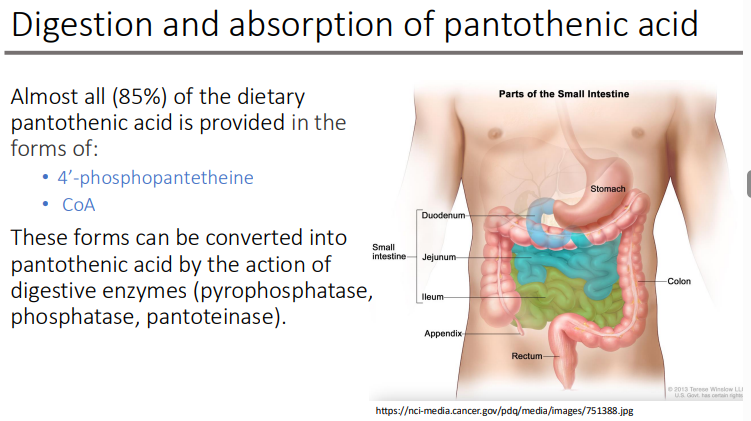
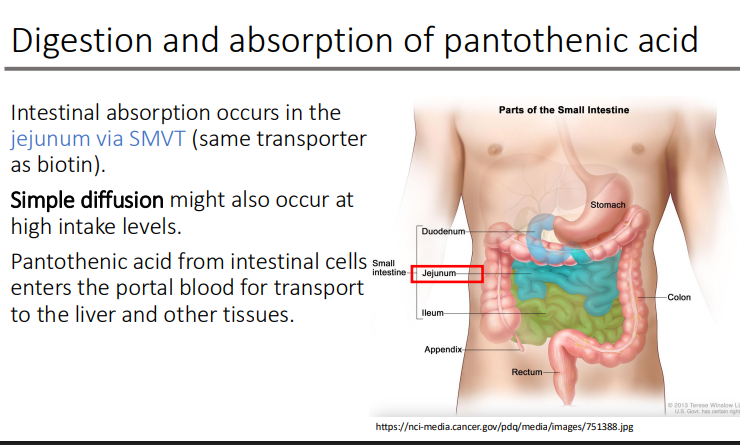
Digestion and absorption of pantothenic acid: Intestinal absorption occurs in the? via?
jejunum via SMVT (same transporter as biotin)
Digestion and absorption of pantothenic acid: When there is high intake levels, what might also occur?
simple diffusion
Pantothenic acid from intestinal cells enters? for transport to the?
portal blood; for the transport to the liver and other tissues
Metabolism and function of pantothenic acid: What can carry pantothenic acid (as CoA) throughout the body?
RBCs
The mechanism for uptake of B5 by various tissues includes both?
active and passive processes
In liver and cardiac muscle, pantothenic acid transport occurs in a what dependent manner?
sodium dependent manner (active transport)
What 3 areas have passive transport for pantothenic acid?
CNS
Adipose
Renal tissues
Most pantothenic acid in tissues is found as CoA, but smaller amounts are present as what two things?
Acyl carrier proteins
Free pantothenic acid
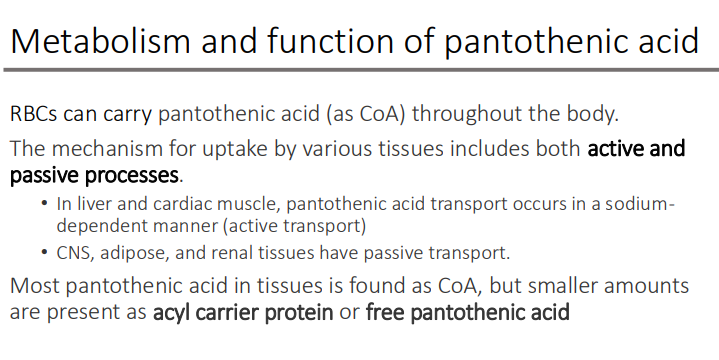
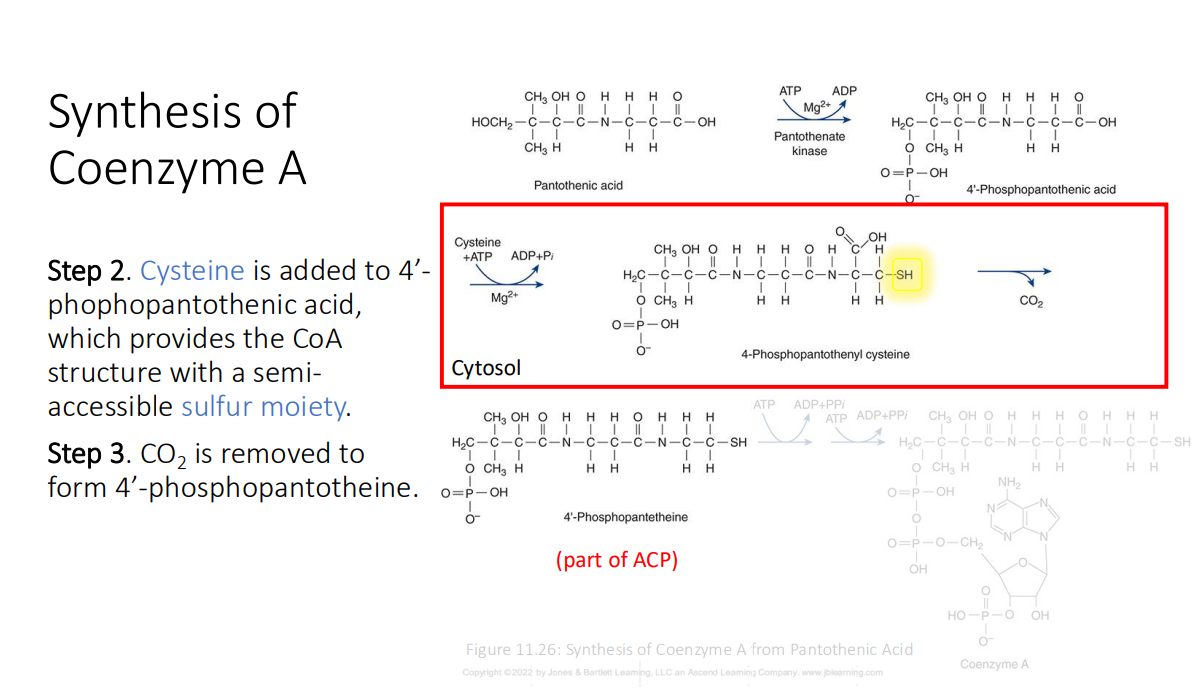
Synthesis of Coenzyme A: Step 1 . Pantothenic acid is phosphorylated to? by the enzyme?
4’- phosphopantothenic acid by the enzyme pantothenate kinase.
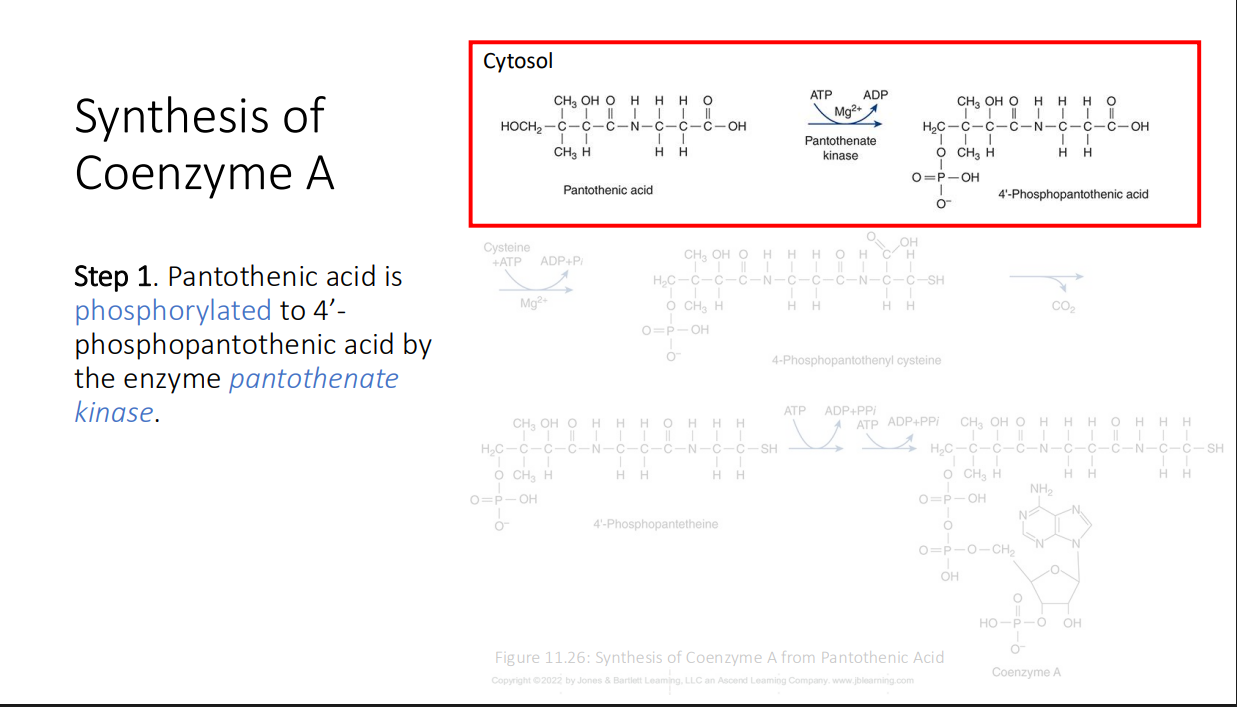
Synthesis of Coenzyme A: Step 2: Cysteine is added to 4’- phophopantothenic acid, which provides the CoA structure with a?
semi accessible sulfur moiety
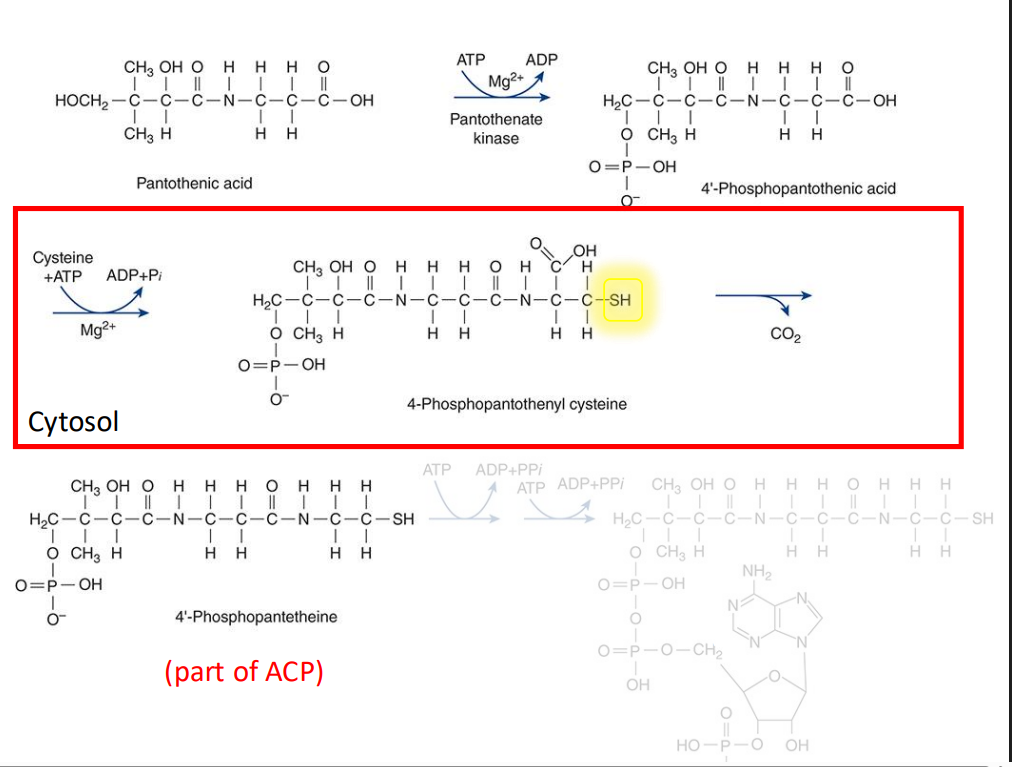
Synthesis of Coenzyme A: Step 3: What is removed to form 4’-phosphopantotheine?
Co2
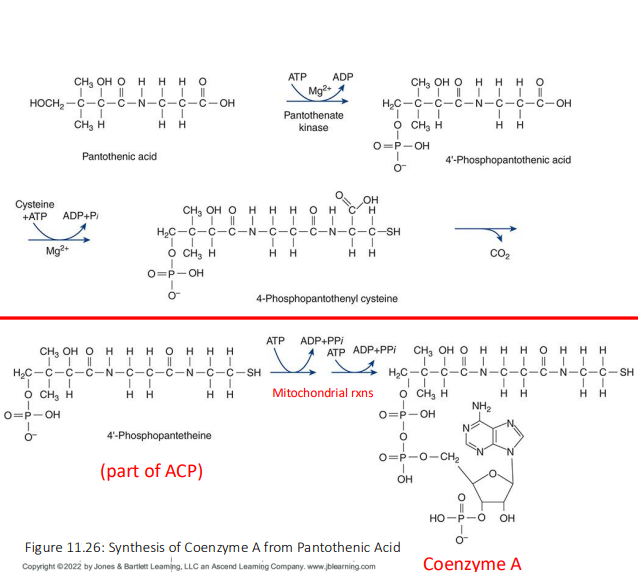
Synthesis of Coenzyme A: Step 4: What is used as a source of AMP?
ATP
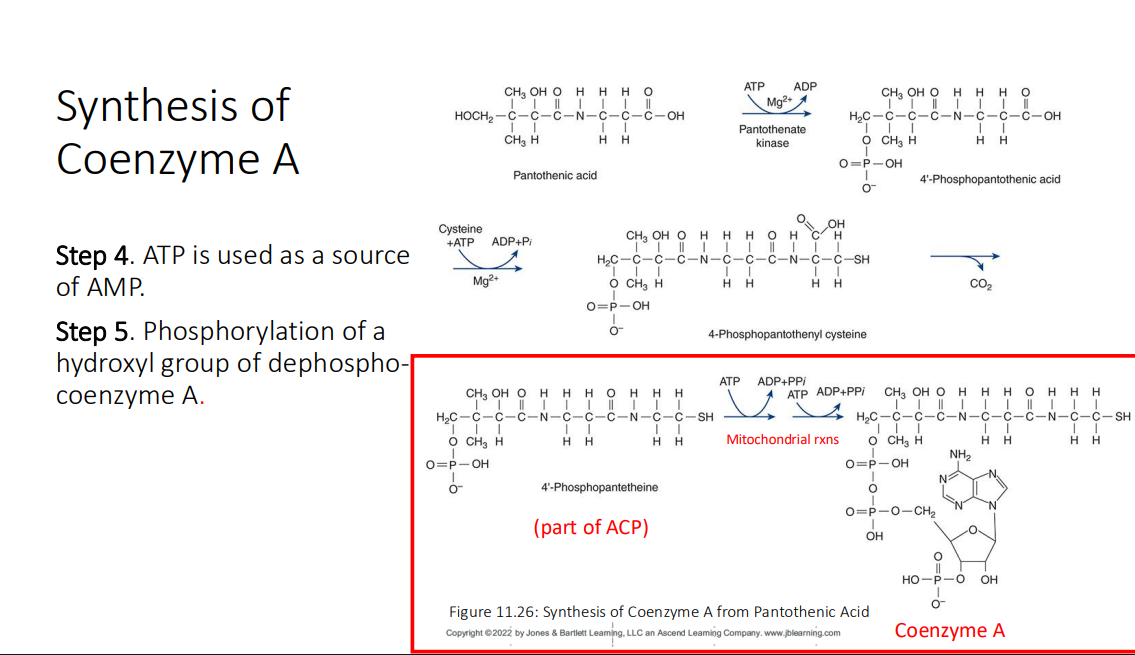
Synthesis of Coenzyme A: Step 5: Phosphorylation of a hydroxyl group of?
dephosphocoenzyme A
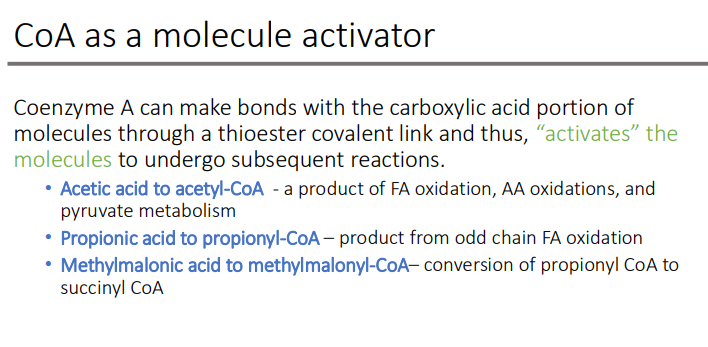
Coenzyme A can make bonds with the carboxylic acid portion of molecules through a?
thioester covalent link
Coenzyme A can make bonds with the carboxylic acid portion of molecules through a thioester covalent link and thus, what does to do to molecules to undergo subsequent reactions?
activates
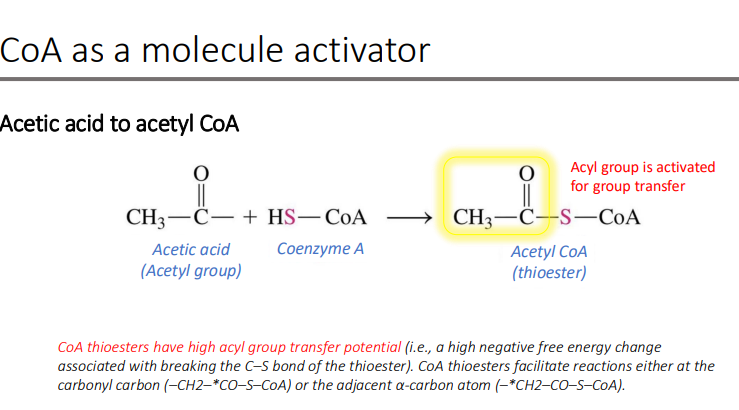
CoA as a molecule activator: Coenzyme A can make bonds with the carboxylic acid portion of molecules through a thioester covalent link and thus, “activates” the molecules to undergo subsequent reactions. What are 3 examples?
Acetic acid to acetyl-CoA - a product of FA oxidation, AA oxidations, and pyruvate metabolism
Propionic acid to propionyl-CoA- product from odd chain FA oxidation
Methylmalonic acid to methylmalonyl-CoA– conversion of propionyl CoA to succinyl CoA
CoA as a molecule activator. Acetic acid to acetyl CoA: CoA thioesters have high?
acyl group transfer potential
(i.e., a high negative free energy change associated with breaking the C–S bond of the thioester)
CoA as a molecule activator. Acetic acid to acetyl CoA: ). CoA thioesters facilitate reactions either at the? or the adjacent?
carbonyl carbon (–CH2–*CO–S–CoA) or the adjacent α-carbon atom (–*CH2–CO–S–CoA)
CoA as a molecule activator. Acetic acid to acetyl CoA: Acyl group is activated for?
group transfer
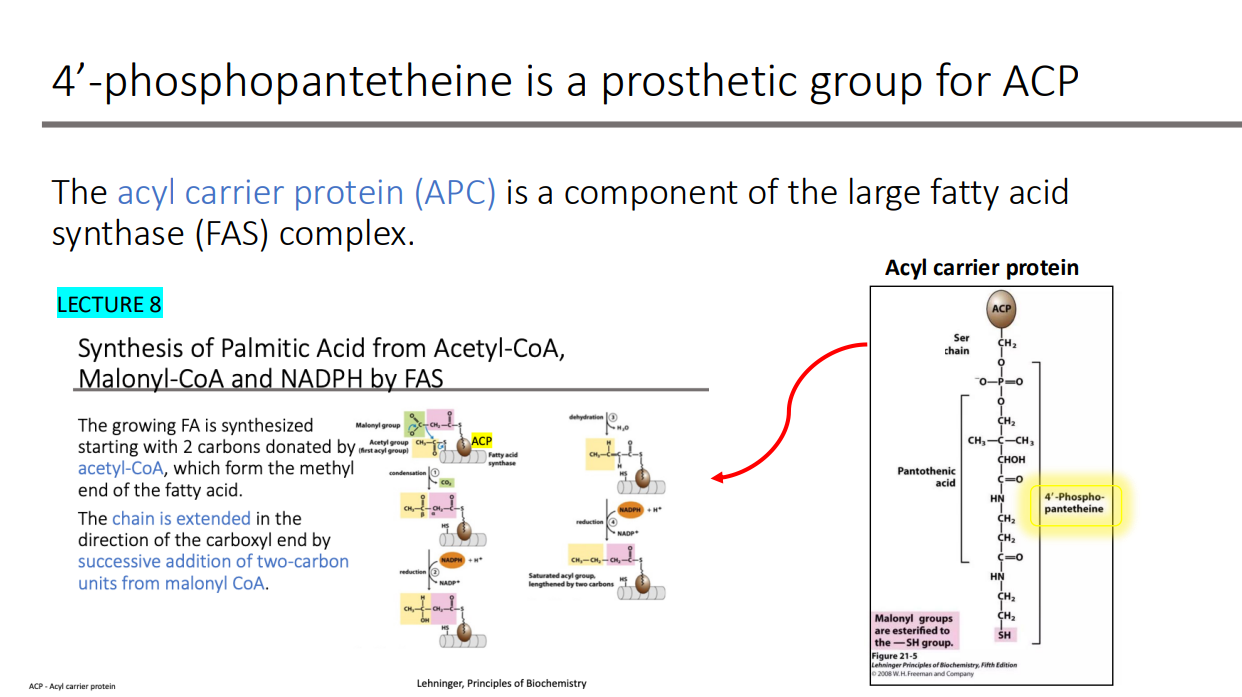
What is a prosthetic group for ACP?
4’-phosphopantetheine
The acyl carrier protein (APC) is a component of what complex?
large fatty acid synthase (FAS) complex
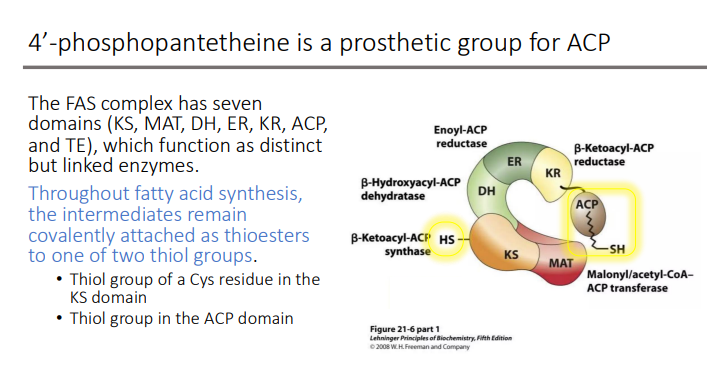
4’-phosphopantetheine is a prosthetic group for ACP: The FAS complex has seven domains (KS, MAT, DH, ER, KR, ACP, and TE), which function as?
distinct but linked enzymes.
Throughout fatty acid synthesis, the intermediates remain covalently attached as? to one of two?
thioesters to one of two thiol groups.
• Thiol group of a Cys residue in the KS domain
• Thiol group in the ACP domain
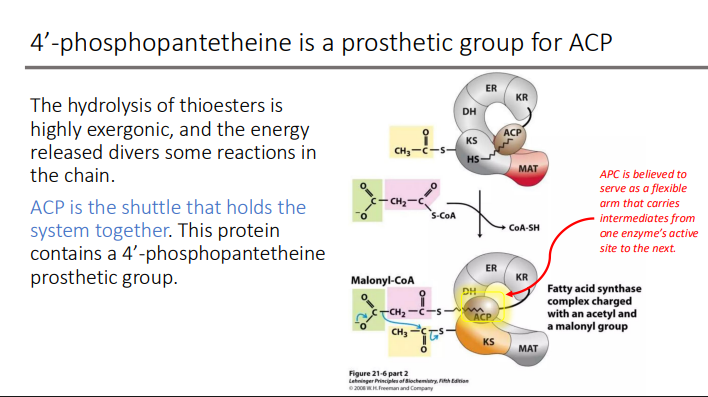
The hydrolysis of thioesters is highly? and the energy released drivers?
exergonic
ome reactions in the chain
What is the shuttle that holds the system together? What does this protein contain?
ACP; contains a 4’-phosphopantetheine prosthetic group.
APC is believed to serve as a flexible arm that carries intermediates from?
one enzyme’s active site to the next
As a coenzyme, pantothenic acid may be involved in the what of key proteins?
post transcriptional acetylation of key proteins (e.g., histones)
Evidence exists for pantothenate protecting against? or programmed?
free radical-induced apoptosis or programmed cell death
Pantothenate is believed to play a role in preventing the decay of the?
mitochondria
Emerging data suggest potential therapeutic uses of pantothenic acid for what two things?
Acne
Blood lipids
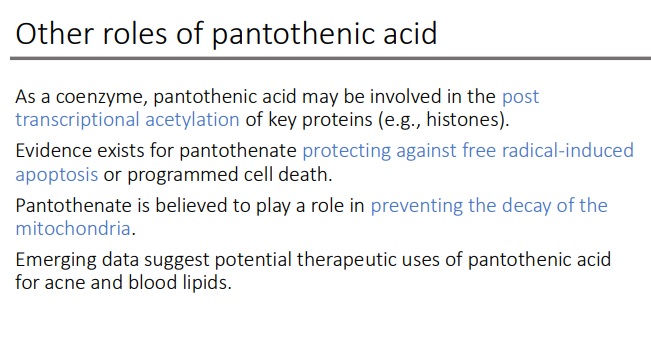
Pantothenic acid deficiency is rare and requires several weeks to develop: Isolated pantothenic acid deficiency has not been described, but experimental deficiency results in what type of symptoms?
burning feet syndrome
headaches
fatigue
impaired motor functions
muscle cramps
disturbances of the digestive tract, and vomiting.
Extreme manifestations include what 5 things?
Ulcerations
Cardiac tachycardia
Hypotension
Hypochromic anemia
Hypoglycemia
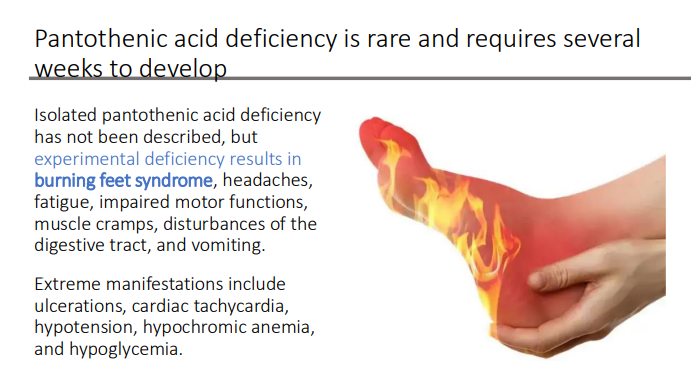
The pantothenic acid AI is?
5 mg /d for men and women
National nutritional surveys cannot estimate PA intake because data on the PA content of foods is scarce.
Pantothenic acid has low toxicity UL has not been established. Concerns with PA supplementation have been raised regarding the interference of PA with the absorption of?
biotin and lipoic acid (co-factor of PDH) as they all share the same transporter in the intestine (SMVT).
High intakes of 15-20 g have been associated with?
mild intestinal stress, including diarrhea
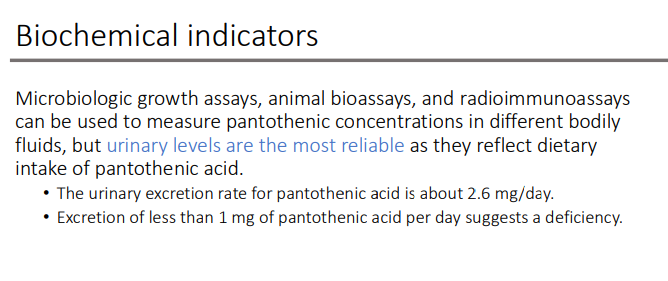
Biochemical indicators: What things can be used to measure pantothenic concentrations in different bodily fluids?
Microbiologic growth assays
animal bioassays,
radio immunoassays
What is the most reliable? Why?
urinary levels are the most reliable as they reflect dietary intake of pantothenic acid.
The urinary excretion rate for pantothenic acid is about?
2.6 mg/day
Excretion of less than _ mg of pantothenic acid per day suggests a deficiency.
1