Exam 3.1-3.2
 Call Kai
 Learn
Learn Practice Test
 Spaced Repetition
 Match
Match Flashcards
 Knowt Play
1/60

There's no tags or description
Looks like no tags are added yet.
Name | Mastery | Learn | Test | Matching | Spaced | Call with Kai |
|---|
No analytics yet
Send a link to your students to track their progress
61 Terms
3 major forms of development through childhood and infancy
physical
cognitive
social
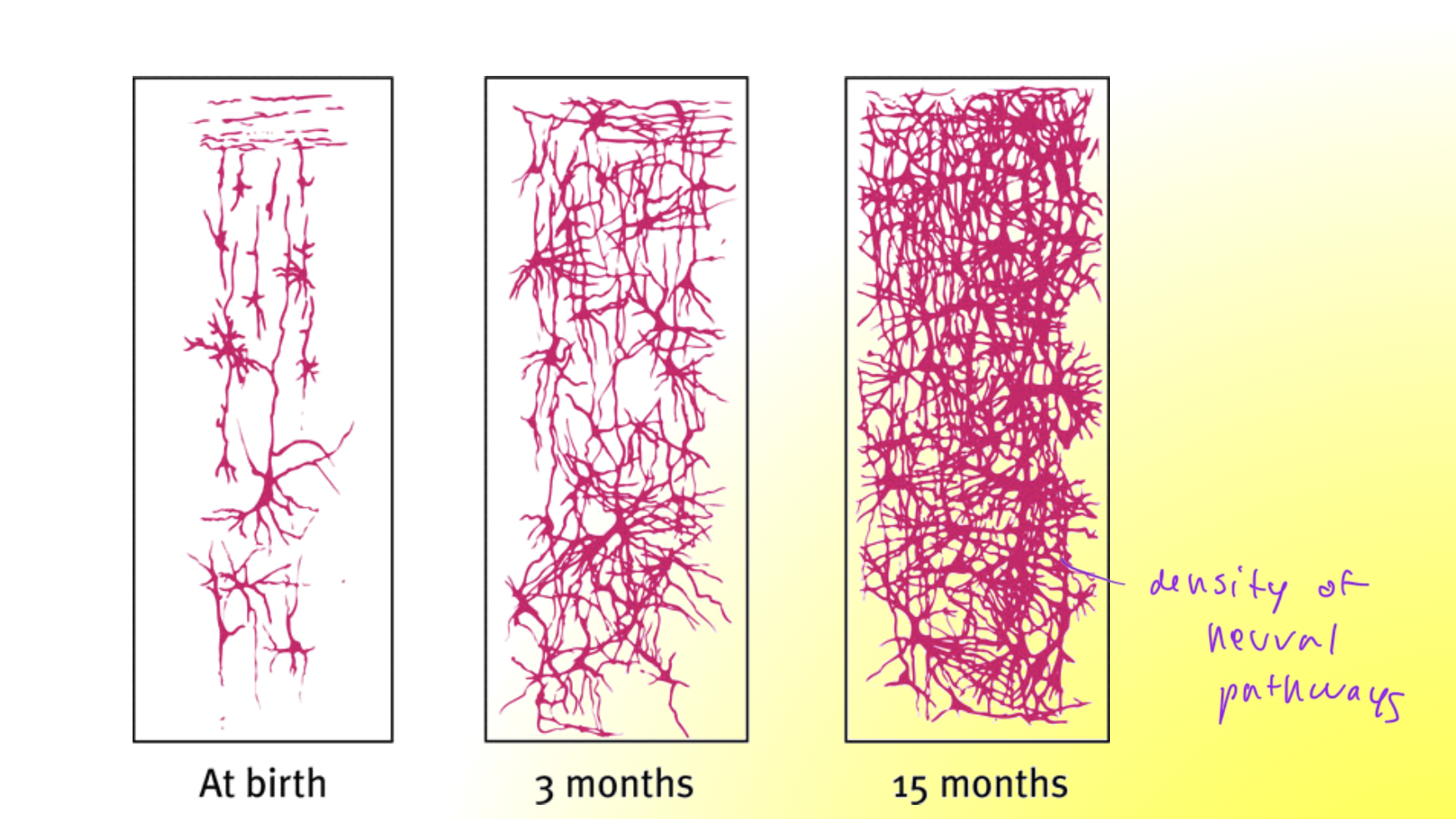
maturation
biological growth processes that enable orderly changes in behavior, relatively uninfluenced by experience
for example, seen in the brain as density of neural pathways increases as one ages
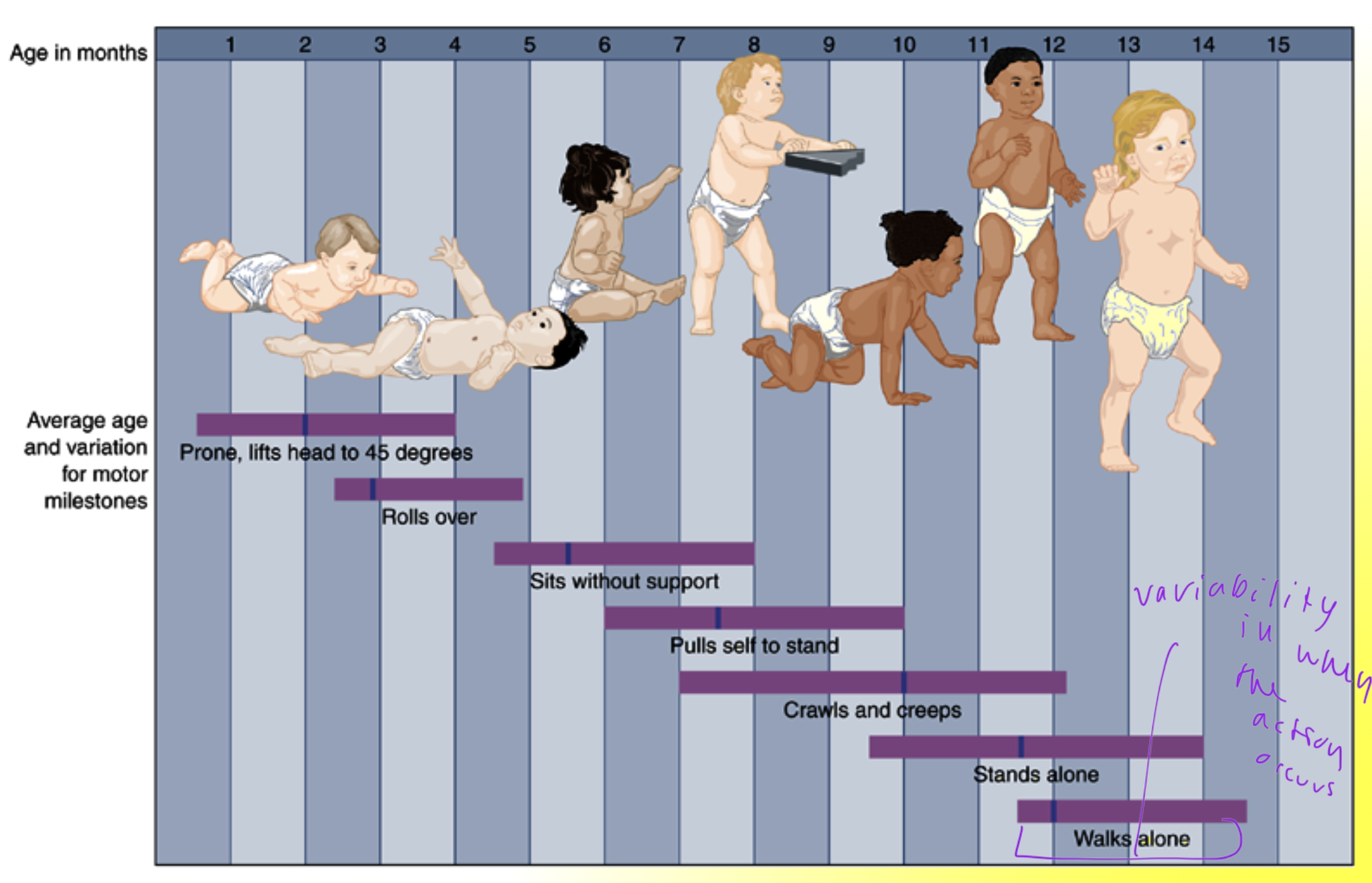
stepwise motor development
there is a decent amount of variation in age when a certain action occurs, but all are seen occurring in a stepwise fashion
infantile amnesia
the average age of earliest conscious memory is 3.5 y/o
memories are organized differently after
3-4 y/o
since below the age of 3-4, we do not understand language, so once you are older and understand language, you organize your memories differently
the ______ of infants does not translate well into later langauge
pre-verbal memories
since before they understand language, trying to organize those memories creates retrieval failures
do babies have memories?
yes, they just cannot recall them later since at the time of the original event, they did not understand language
Jean Piaget
studied childhood development
idea that children know less, and know things differently than adults
idea that a child’s mind develops through a series of stages
children are active thinkers, constantly trying to construct more advanced understandings of the world
schemas
a cognitive framework that organizes and interprets incoming info
what Piaget believes children develop as they learn more
assimilation
interpreting one’s new experience in terms of one’e existing schemas
accomodation
adopting one’s current schemas to incorporate new info
ex: kid before thoughts cows were normal cows, but later learns that a female moose is also called a cow, so incorporates this new info into what they knew before

Piaget’s main idea
children experience spurts of change, followed by stability as they move from one cognitive developmental stage to the next
piaget’s Stages of Cognitive Development
sensorimotor
preoperational
concrete operational
formal operational
Sensorimotor Stage
from birth to ~ 2y/o
infants know the world in terms of their sensory impressions and motor activities (looking, touching, mouthing, grasping)
kids here lack object permanence (awareness that objects continue to exist when not perceived) (this is why kids like playing peeka boo since they don’t realize that thing is just the same thing every time)
object permanence
awareness that objects continue to exist when not perceived
begins to develop at 8 m/o
Preoperational Stage
2-6/7 y/o
child learns to use language, but does not yet comprehend the mental operations of concrete logic
ex: kids here lack the concept of conservation, that properties like mass, volume, and number, remain that same despite changes in forms of objects (changes in shape don’t mean changes in quantity)
kids have egocentrism
theory of mind develops ~ 4 y/o

egocentrism
the preopertional child’s difficulty taking another’s point of view
ex: kids talking to you on the phone assume you can see the object they are looking at
kids stand in front pf the TV not realizing they are blocking it for you
does egocentrism ever completely diminish in people?
no
theory of mind
ideas about one’s own and other’s feelings, perceptions, and thoughts and the ability to infer them (so reduces egocentrism)
lacks in people with autism
develops about the age of 4
Concrete Operational Stage
7-11 y/o
children gain the mental operations that enable them to think logically about concrete events
kids begin to learn conservation
can understand that if 6+3=9, then 9-3=6
Formal Operational Stage
12 y/o to adulthood
stage when people begin to think logically about abstract concepts (If ___, then ___)
overall, Piaget’s ideas pf progression were accurate
from birth, babies develop an intense bond with their
caregiver
attachment
an emotional tie with another person, shown in young children by their desire for closeness with their caregiver and showing distress upon separation
children begin to prefer familiar faces and voices
stranger anxiety
when around 8 m/o, infants develop the ability to evaluate people as unfamiliar and possibly threatening
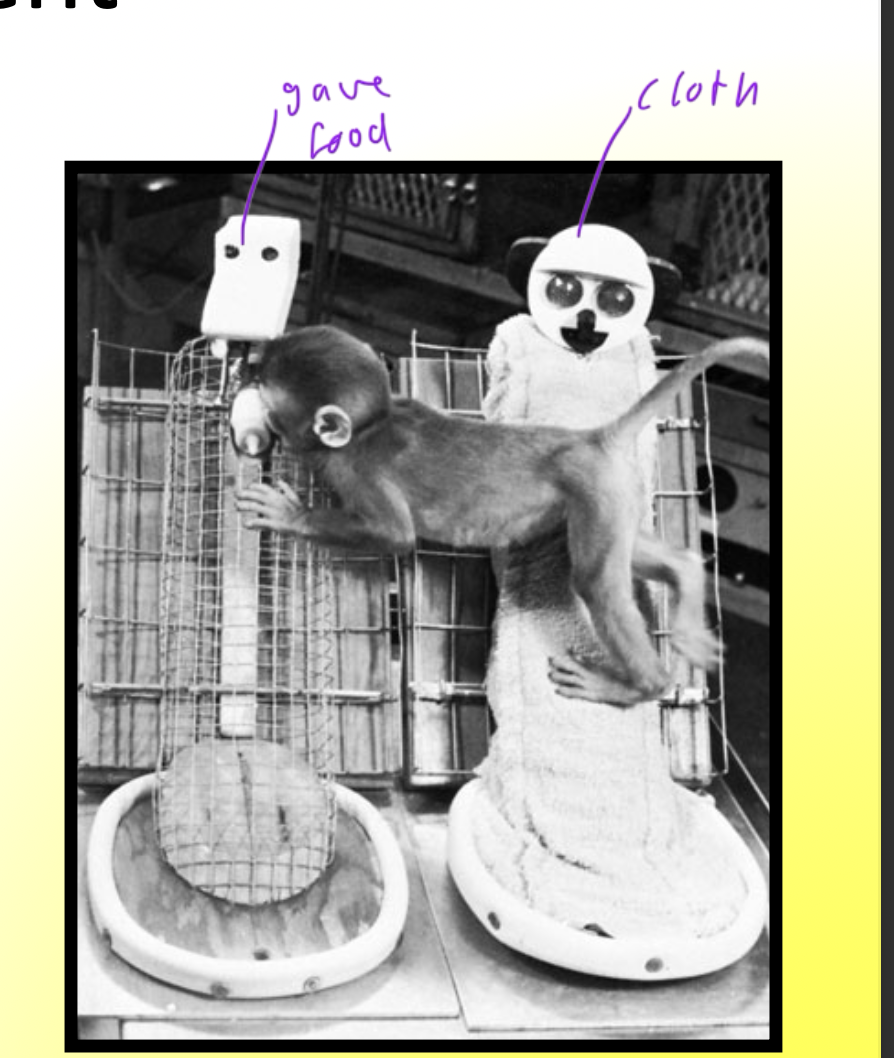
Harlow’s cloth and wire mother monkey study
found that baby monkeys preferred the cloth mother who provided comfort and warmth over the wire mother who provided food
the monkey only went to the wire mother for food
- show how important body contact is for newborns for attachment (especially skin on skin)
familiarity
another key to attachment
critical period
an optimal period shortly after birth when an organism’s exposure to certain stimuli or experiences produces proper development
imprinting
the process by which certain animals (excluding humans) form attachments during the critical period
not seen in humans, but shows us the importance of familiarity in attachment
seen in geese and ducks in a 1937 study by Lorenze
in the study, if a human was the first person hatching ducklings saw, then they would follow around that person
neophobia
a fear of new things, seen in children and shows the concept of familiarity
_______ varies with attachment style
strange situation responses
attachment differences show
level of emotional security
secure attachment
the child plays comfortably and explores in the mother’s presence, becomes upset for a sec when she leaves but is then ok, and is calmed by her return
can count on their caregiver to be there when needed
insecure/avoidant attachment
the child is indifferent to the mother’e leaving and returning, maintains proximity, but avoid close contact
is emotionally indifferent whether the mother is there or not
is hesitant to play and later in life, hesitant to date
caregiver is inconsistently there, so cannot count on them to be there, so kid can become clingy
anxious/ambivalent attachment
child is anxious even when the mother is near, explores the new environment, protests when mother leaves, but is not super comforted by her return either
anxious no matter what
wants to explore but is hesitant to do so, is constantly anxious
Overarching question of attachment differences
Can I count on my primary caregiver to be there when I need them?
self-concept
a sense of one’s identity and personal worth
Rouge Test
tests if kids can identify themselves in a mirror by noticing that their nose is covered in a red rouge
if they realize that the kid in the mirror is them, they will wipe their nose
at 15-18 m;o, they begin tp touch their noses
by age _____ self-image is quite stable
8-10 y/o
after self-recognition begins to occur at 15-18 m/o, _____ strengthens
sense of self
by school-age, kids start to describe themselves in terms of gender, group memberships, psychological traits, and compare themselves to other children
3 types of attachment styles
secure
insecure/avoidant
anxious/ambivalent
3 types of parenting styles
authoritarian
permissive
authoritative
which parenting swtyle yields children with the most self-reliance, self-esteem, and social competence?
authoritative
authoritarian parenting
parents impose rules and simply expect obedience, do not describe WHY they have certain rules
say “because I said so”
permissive parenting
parents submit to their child’s desires, make few demands, and use barely any punishment either
they just go with the flow
authoritative parenting
parents are both demanding and responsive
exert control by setting rules but ALSO explaining why they have those rules
have pen discussion with older children that allows for exceptions for rules
ythe best form of parenting for self-reliant kids
adolescence
the period from childhood to adulthood, extending from puberty to independence
3 main aspects of development
physical
social
cognitive
puberty
a period of sexual maturation, when a person becomes capable of reproducing
occurs for girls ~11 y/o, for boys is ~13 y/o
involves the development of primary and secondary sex characteristics
primary sex characteristics
reproductive organs and external genitalia
secondary sex characteristics
non-reproductive traits such as breats and hips in women, male facial hair and deeper voice
brain cells increase connections as the body physically develops during
puberty, then the brain cells begin selective pruning
the brain cells begin to work faster since they have increased myelination
frontal lobe development during puberty
continued growth of myelin allows for incr speed of neurons, so speed of thinking increases as kids mature
kids gain improved judgement, since the frontal lobe is getting more developed
cognitive development
reasoning power via logic developed
early-on, is mostly focused on the self
then eventually the kids enter Piaget’s formal operational stage at age 12 (where you become capable of if-then logic)
you develop morality
Piaget’s formal operational stage
where you become capable of if-then logic
adolescents begin to advocate for social and political issues
morality
discerning right from wrong
Kohlberg asked how moral reasoning develops by asking people what they would do and WHY in certain ethics-like dilemmas, created the Kohlberg’s Stage Theory
Kohlberg’s Stage Theory
includes 3 steps, shows what people in different stages of life would do and WHY in certain ethical dilemmas
Kohlberg Stage Theory Stage 1
postconventional morality
follows what one personally perceives as ethical principles
Kohlberg Stage Theory Stage 2
conventional morality
you begin to think about others more and think about rules
in early adolescence when you begin to care for others and uphold laws and rules simply because they are the laws
Kohlberg Stage Theory Stage 3
preconventional morality
before the age of 9
you obey to avoid punishment or to gain rewards
would say that someone should or should not steal simply because that would make someone else happy or mad (an egocentric response)
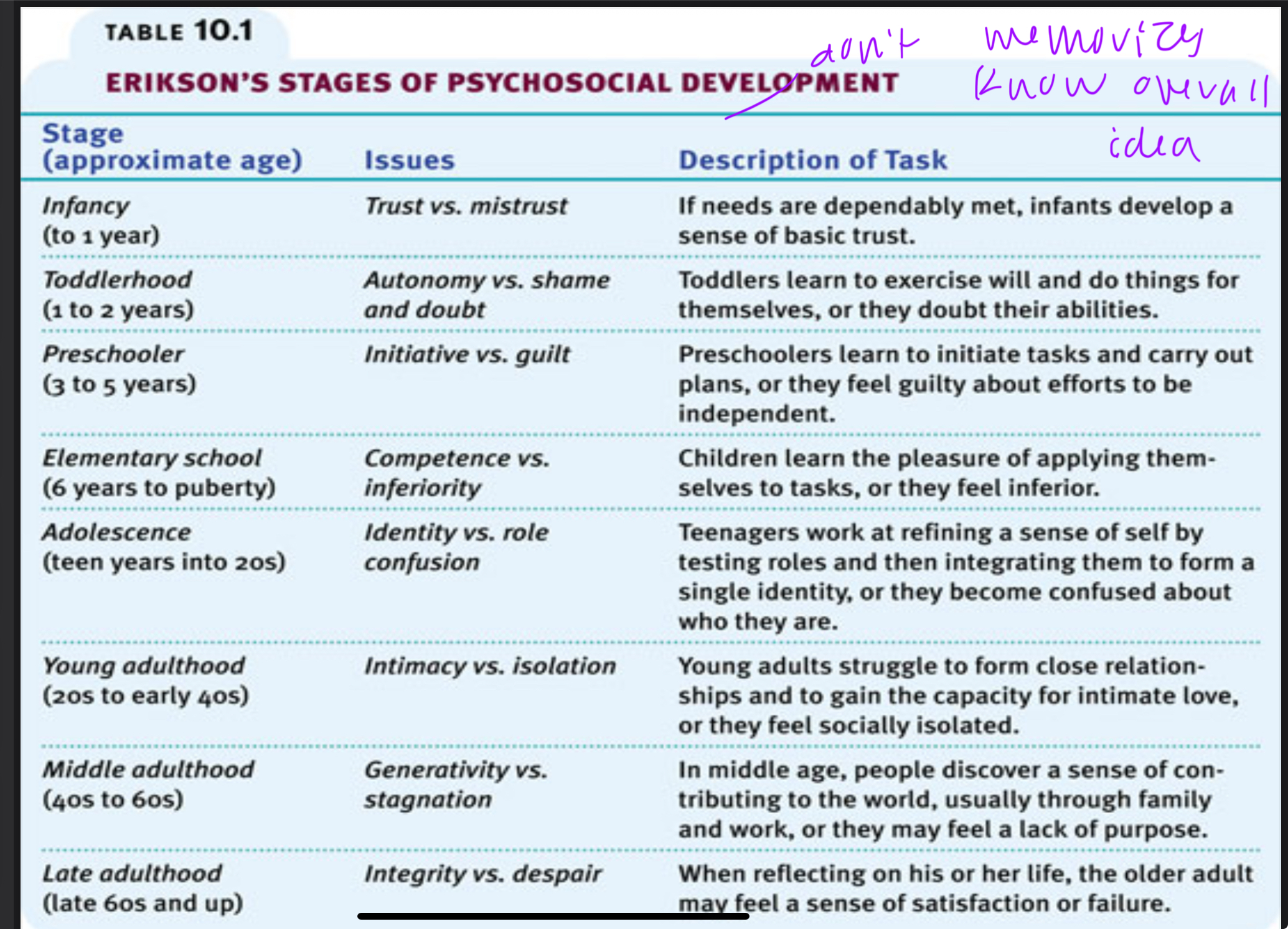
Erikson’s Stages of Psychosocial development 1963
each stage of life has its own psychosocial crisis that requires resolution
adolescence is marked by search for identity (one’s sense of self) by testing and integrating various roles
people start to think about what group of people they are in, etc