Geography - Living in the UK Today
 Call Kai
 Learn
Learn Practice Test
 Spaced Repetition
 Match
Match Flashcards
 Knowt Play
1/28

There's no tags or description
Looks like no tags are added yet.
Name | Mastery | Learn | Test | Matching | Spaced | Call with Kai |
|---|
No analytics yet
Send a link to your students to track their progress
29 Terms
Mechanical weathering
physical actions (e.g freeze-thaw weathering)
Chemical weathering
chemical reactions (e.g oxidation, hydrolysis)
Biological weathering
Plants like trees growing roots
Animals like rabbits burrowing into rocks
Mass movement
downward movement of material due to gravity
Slumping
Common on slopes with a permeable layer and then an impermeable layer
Water seeps in and separates them both
Sliding
Prolonged weather or dry weather changing the shape of rocks
Attrition
Rocks hitting each other to become smaller and rounder
Abrasion
Rocks crashing against a surface - smoothing the landform
Solution
Rocks and minerals dissolving into the water
Hydraulic action
When water forces into air-filled cracks and increases the pressure
The cracks then expand
Forms of transportation
Traction - large boulders and rock rolling along the riverbed
Solution - minerals dissolving in the water and carried along water
Saltation - small stones bouncing along the riverbed
Suspension - fine light material carried along water
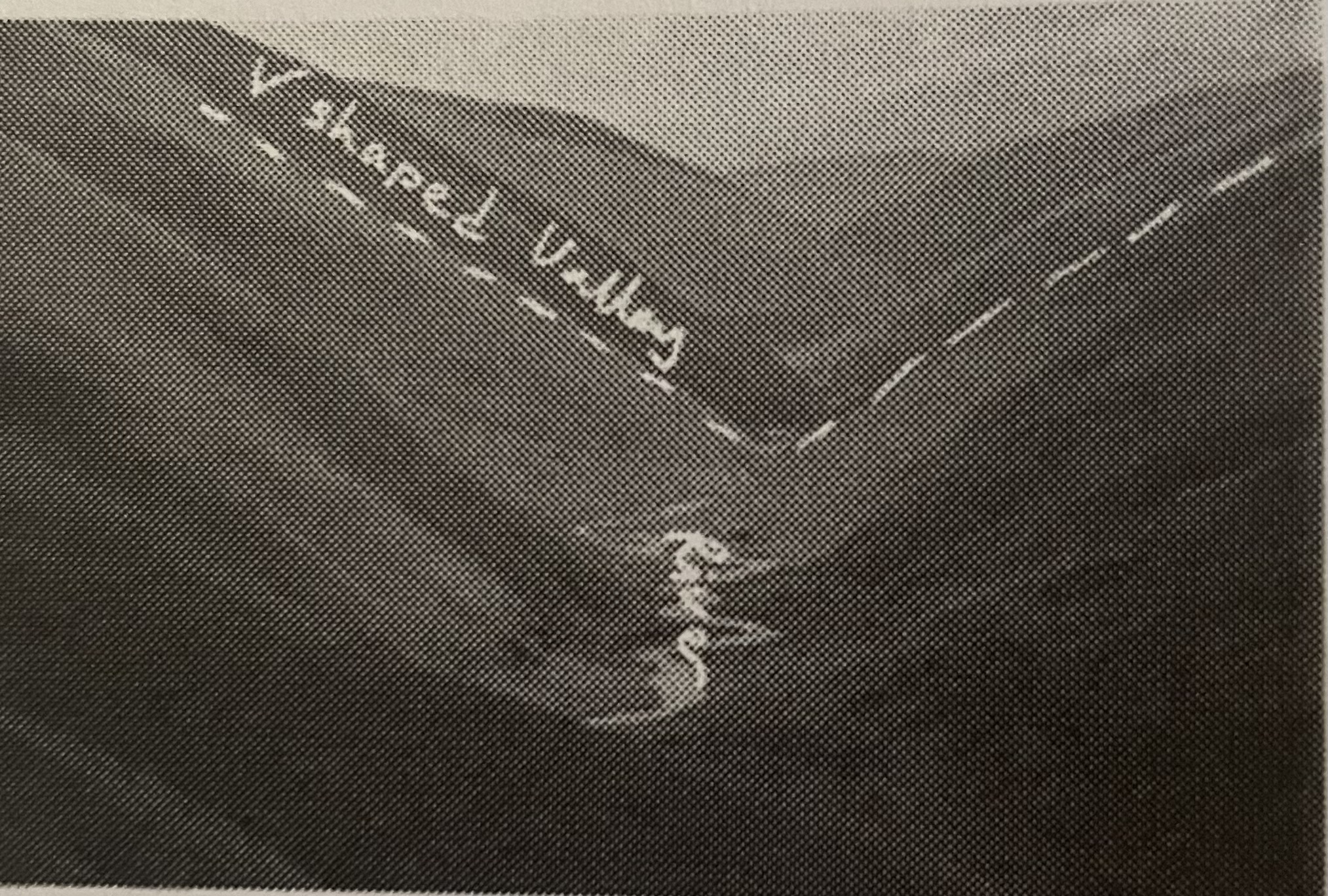
Upland areas
Wetter due to relief rainfall
Livestock graze here
Lots of mass movement
Lots of freeze-thaw weathering (cold temperatures)
Lowland areas
Softer material (clays and chalk)
Usually drier (rain shadow areas)
Used to grow crops - warmer and better deep soil (silt)
Urban areas - easier to build on flatter ground
River Tees courses
Upper course: Near Cross Fell
High Force Waterfall and gorge
Middle course: Yarm
Meanders
Oxbow lakes (None currently found on River Tees)
Lower course: Stockton and Middlesborough
Channelization
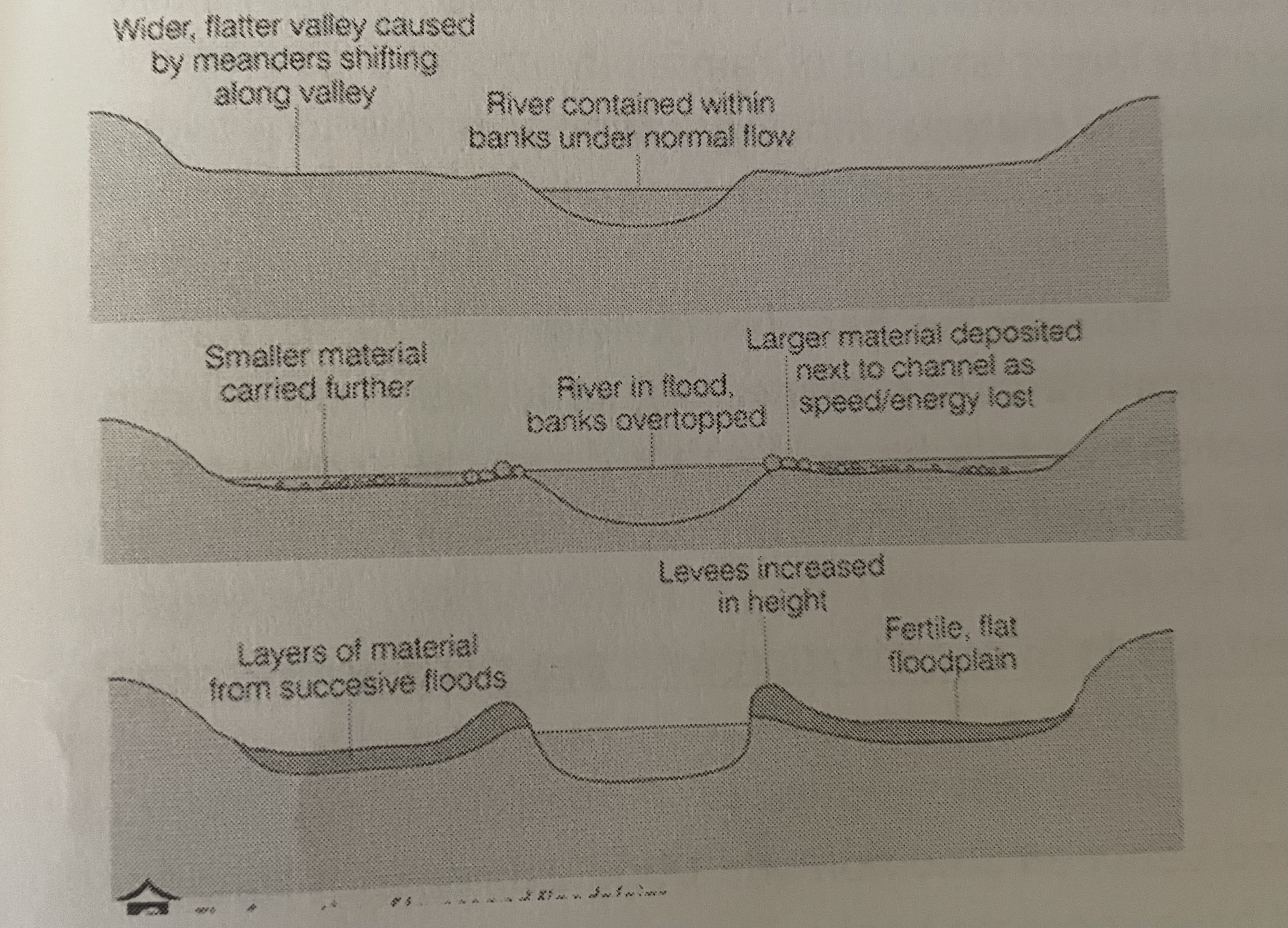
Floodplains
Levees
alluvium
material carried by the river
Levee formation
River floods, depositing heavy material close to the channel and finer material further away
Process repeats
Layers of heavy sediment build up over time to make a levee
Spit formation
Longshore drift moves material along a coastline
Lack of energy causes the material to be deposited where the coastline curves, extending the coastline into the sea as a spit
Spit curves due to wave and wind energy
Made of sand and shingle
Spit example
Spurn Point
Headland/Caves, arches and stacks example
Flamborough Head
Channelization example
Between Stockton and Middlesborough
Meander example
Around Yarm
Longshore drift definition
Example of transportation via prevailing wind
Wind push waves onto the beach at an angle (swash)
Waves are then pulled back by gravity (backwash)
Process transports sand and shingle along the coastline (saltation)
Landscapes of the UK - case studies
Holderness coastline
River Tees
People of the UK - case studies
Salford Quays
Manchester (New Islington)
Major import partners of the UK
The EU (e.g Germany for luxury vehicles) - no tariffs
USA
China - cheap to produce goods there
What does the UK import?
Cars - Germany
Petrol - Norway
Toys - China
Major export partners of the UK
The EU - no tariffs, short geographical distance
Switzerland - important financial haven
USA
China
What does the UK export?
Goods requiring expertise (e.g Boeing aircraft)
Cars from international companies such as Nissan (can be exported into EU tariff-free)
Trade deficit
Importing more than exporting

