E139 Lecture 8: Muscle Mechanics II
 Studied by 0 people
 Call with Kai
 Learn
Learn Practice Test
 Spaced Repetition
 Match
Match Flashcards
 Knowt Play
1/28

There's no tags or description
Looks like no tags are added yet.
Name | Mastery | Learn | Test | Matching | Spaced | Call with Kai |
|---|
No study sessions yet.
29 Terms
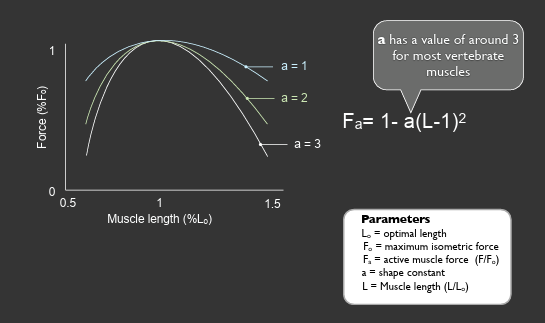
calculating active muscle force
Fa = 1 -a(L-1)²
what is “a” in the active muscle force equation for most vertebrates
3 in most vertebrate muscles
how does a value change the muscle length vs force graph
greater a = more parabolic
smaller a = flatter
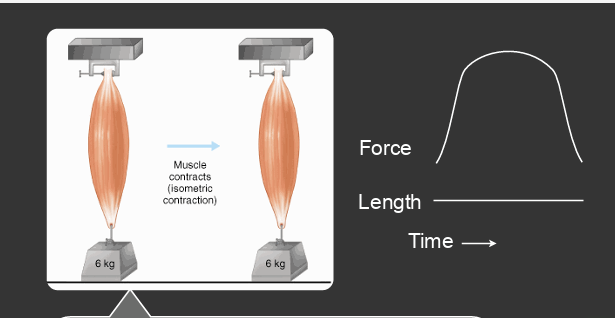
isometric contractions
length of the muscle is constant, but force changes
experiment by changing length, stimulating, and finding force
why is the relationship between force and muscle length
represents an average
in actuality it is a cubic graph
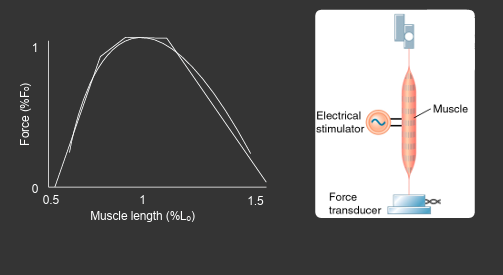
what drives the muscle length vs force relationship with active force
sarcomere interactions drive the pattern
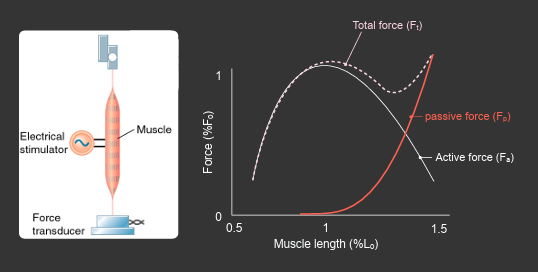
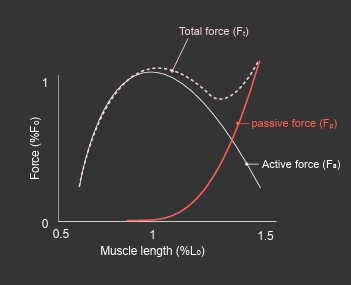
graphing total force
active force = parabolic graph
passive force = exponential graph
total force = cubic graph
purpose titin
contributes to passive force
longer titin isoforms are more compliant than shorter isoforms
what is PEVK in titin
ca2+ binding sight
when bound, the titin binds to actin to shorten and make it more stiff
what does titin span
Z disk to Z disk
epimysium
intramuscular connective tissue that wraps around the muscle
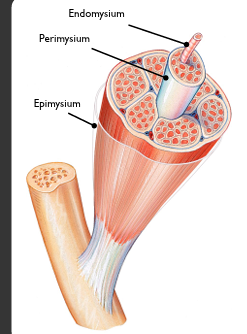
perimysium
intramuscular connective tissue that wraps around the fascicles
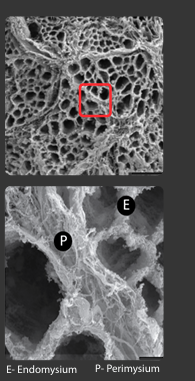
endomysium
intramuscular connective tissue that wraps around the muscle cells
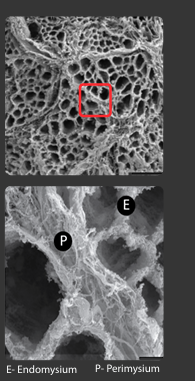
relationship between fibrotic tissue and conc
fibrotic = greater conc of intramuscular connective tissue = stiffer
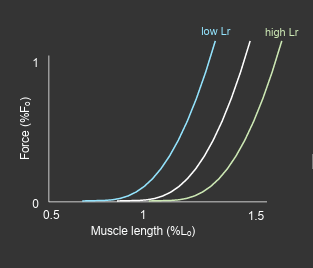
calculating passive force
exponential graph
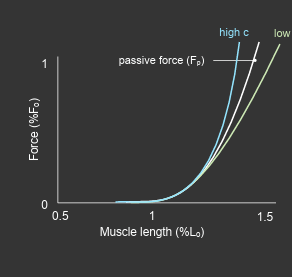
c = slope/ stiffness constant
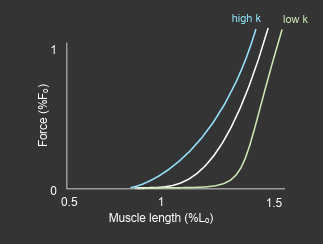
k = curvature constant
c value in passive muscle force equation
high c = more stiff
low c = less stiff
k value in passive muscle force equation
high k = flatter curve
low k = more curved
Lr in passive muscle force equation
Lr = resting muscle length (L/Lo)
low Lr = passive tension develops at a shorter length
equation for total force
Ft = Fa + Fp
isometric contractions and mechanical work
isometric contractions do not generate any mechanical work (force x displacement)
no displacement occurs
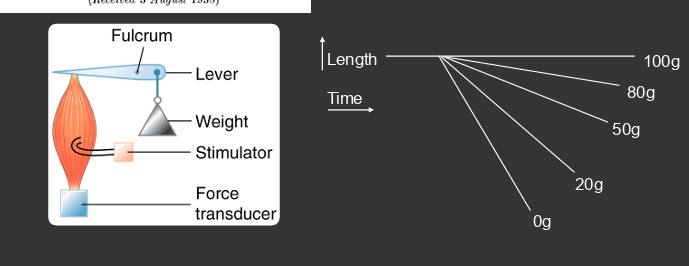
isotonic contractions
allow muscles to shorten at a constant load, but changing length
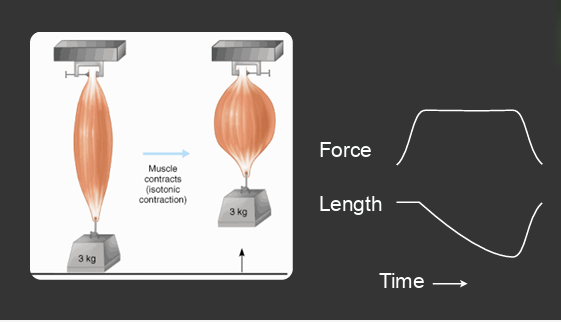
the heat of shortening and the dynamic constants of muscle
length increases with a greater load over time
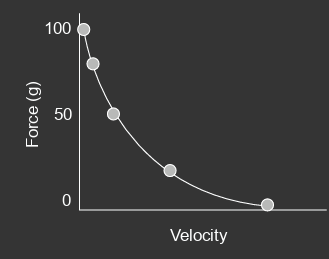
velocity vs force graph
x axis = velocity
y axis = force (g)
logarithmic graph; decreased force = increased slope
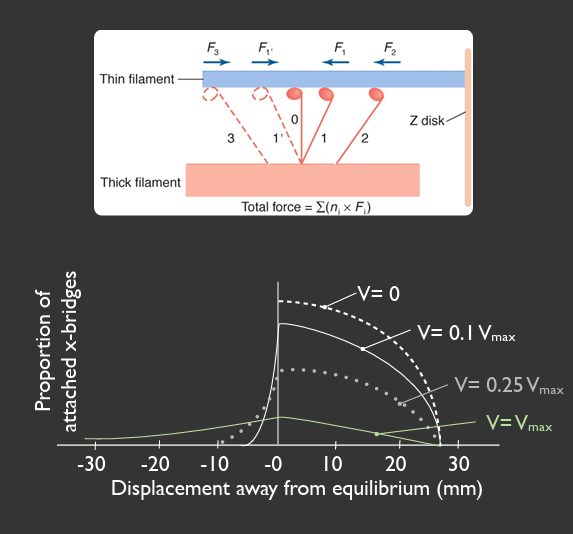
a f huxley
studied myosin heads generate force and ratchet
proportion of attached crossbridges vs displacement away from equilibrium (mm)
positive side = force generateion
increased speed of contraction = more crossover with negative force generation
at vmax = there is equal + and - force
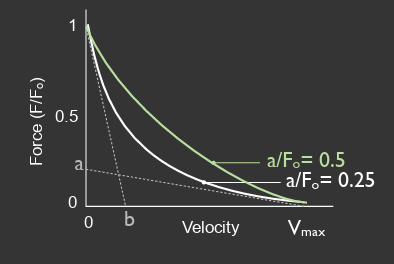
the hill equation
(F+a)(V+b) = (Fo+a)b
a/Fo = b/Vmax
what does the hill equation describe
the curvature of the force-velocity relationship
a/Fo in hill equation
greater a/Fo = flatter curve
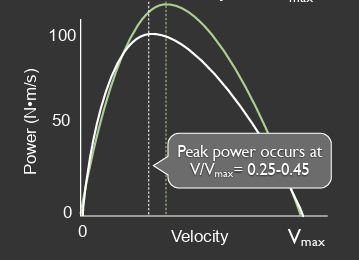
power equation
P = F(V) = W/t
 Note
Note  Flashcards (55)