L47 - Cardiac Output: Electrical events and Heart rate
 Call Kai
 Learn
Learn Practice Test
 Spaced Repetition
 Match
Match Flashcards
 Knowt Play
1/14

There's no tags or description
Looks like no tags are added yet.
Name | Mastery | Learn | Test | Matching | Spaced | Call with Kai |
|---|
No analytics yet
Send a link to your students to track their progress
15 Terms
How do you calculate cardiac output?
Cardiac output = Heart rate x Stroke volume
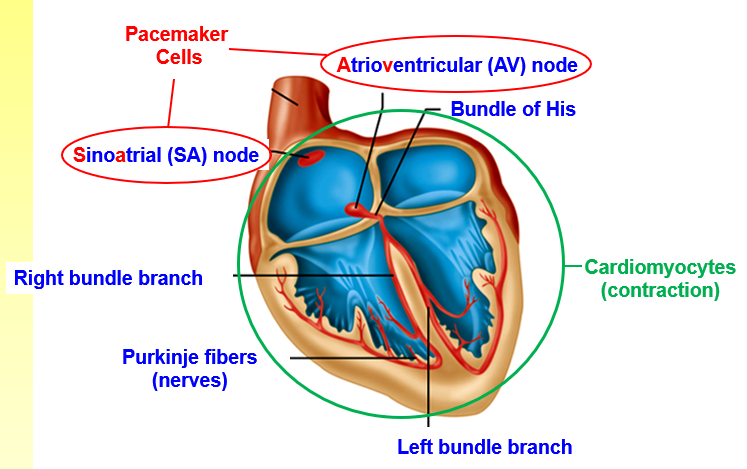
Name of the components of the Conduction System of the Heart
Pacemaker cells (SAN and AVN)
Right bundle branch
Purkyne fibres
Left bundle branch
Cardiomyocytes (contraction)
Bundle of His
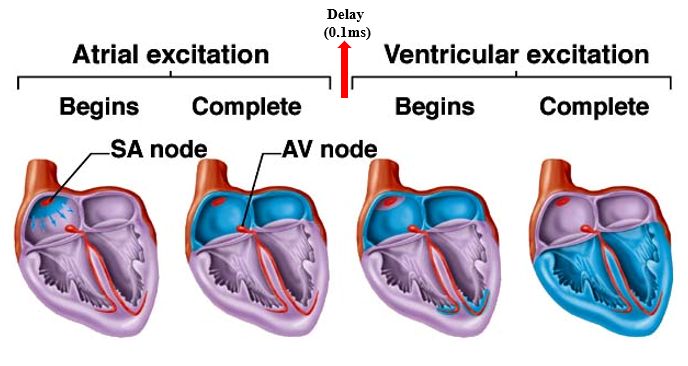
Sequence of cardiac excitation
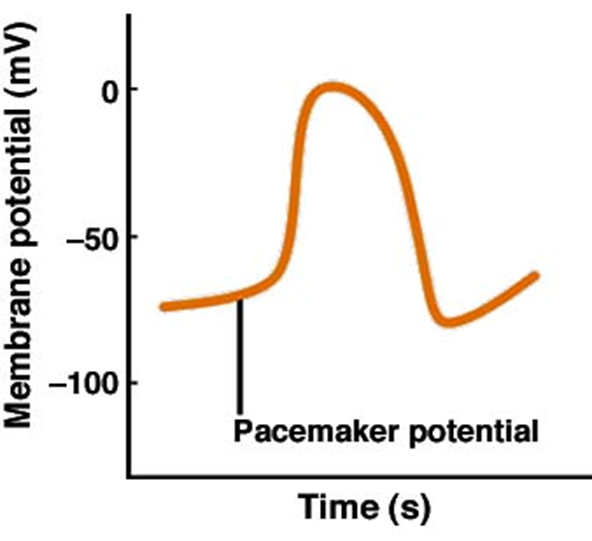
What causes the pacemaker cells of the SAN to trigger an action potential?
Low resting membrane potential (-60 to -70 mV)
Na+ leaking in through F-type channels and calcium ions moving in through the T-type channels causes to depolarisation
Rapid opening of voltage gated calcium L type channels leads to rapid depolarisation
Reopening of potassium channels and closing of calcium channels leads to repolarisation
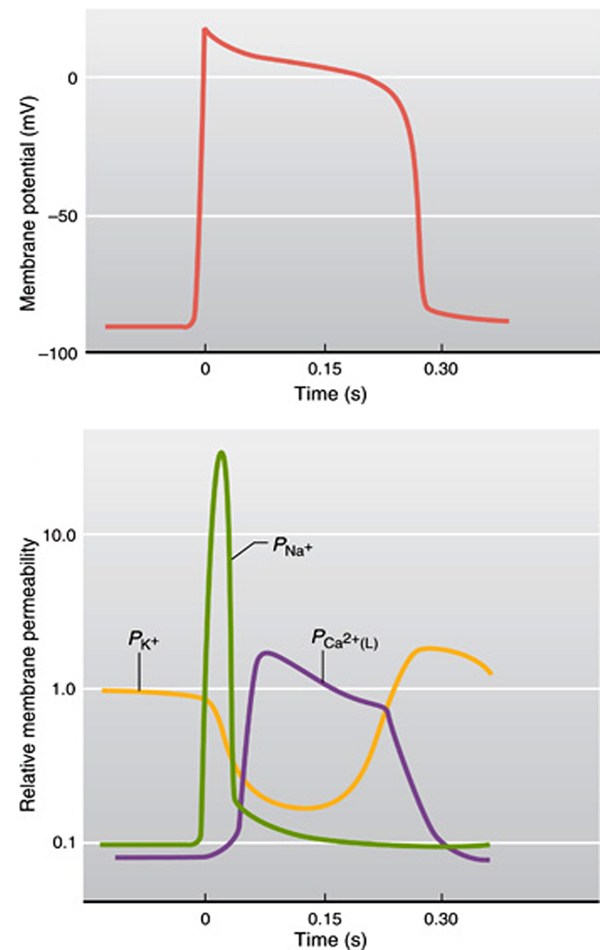
What is the mechanism of contraction of the ventricular cardiomyocytes?
Rapid opening of voltage gated sodium channels leads to rapid depolarisation
The prolonged opening of voltage gated calcium channels and closure of potassium channels leads to the prolonged plateau of depolarisation
Opening of potassium channels results in the repolarization phase
How does calcium produce contraction of the cardiac muscles?
Excitation-Contraction Coupling in Cardiac Muscle
Why does cardiac muscle have a prolonged refractory period?
To allow for ventricles to fill with blood prior to pumping
Refractory period = time required before it is possible to re-stimulate muscle contraction
Snio-atrial is regulated by the
autonomic nervous system
What regulates the rate of depolarisation in the SAN?
Parasympathetic and sympathetic nervous system
How does the parasympathetic nervous system regulate the rate of depolarisation in the SAN?
Parasympathetic neurones release acetylcholine
m2 muscarinic receptors of DAN
Increase in K+ efflux
Decrease in Ca2+ influx
Hyperpolarizes cell and decreases rate of depolarisation
Decrease in heart rate
How does the sympathetic nervous system regulate the rate of depolarisation in the SAN?
Sympathetic neurones release noradrenaline
b1 adrenergic receptors of SAN
Increase in Na+ and Ca2+ influx
Increases rate of depolarisation
Increases heart rate
How do you measure an electrocardiogram?
Using electrodes
What is an ECG?
A summation of the spread of action potentials through the various sections of the heart
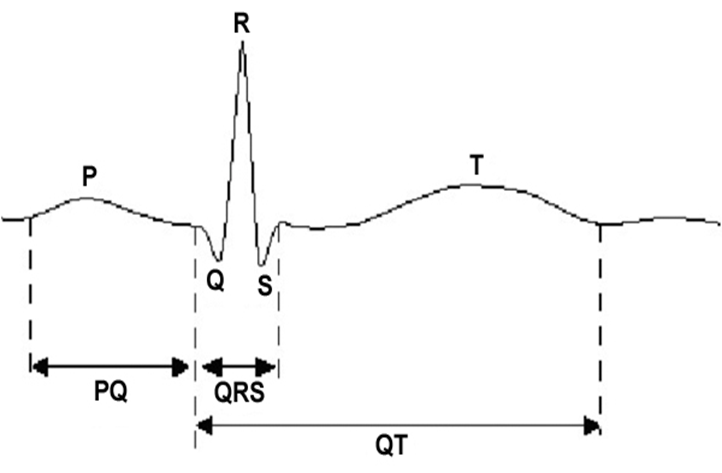
What does each wave mean?
P = Atrial depolarisaiton
QRS = Ventricular depolarisation
T = Ventricular depolarisation
PQ segment = Atrial contraction
QT segment = Ventricular contraction
WHy are ECGs important?
Provides valuable information concerning the electrical but NOT mechanical activity of the heart
Allows for diagnosis of diseases

