IB Biology HL: D3.3 - Homeostasis
 Call Kai
 Learn
Learn Practice Test
 Spaced Repetition
 Match
Match Flashcards
 Knowt Play
1/47

There's no tags or description
Looks like no tags are added yet.
Name | Mastery | Learn | Test | Matching | Spaced | Call with Kai |
|---|
No analytics yet
Send a link to your students to track their progress
48 Terms
homeostasis
maintenance of internal environment of the internal environment of an organism at preset values despite fluctuations due to external factors
homeostatic factors
body temperature
blood glucose concentration
blood ph
blood osmotic concentration
What type of feedback loop are used for homeostasis
negative feedback loop (not positive): returns homeostatic variables to the set point from values above and below the set point.
blood glucose concentration
too much glucose: insulin
too little glucose: glucagon
secreted by pancreatic endocrine cell
exocrine glands
glands which releases products into ducts, not blood level
pancreas
releases insulin (beta cells) and glucagon (alpha cells). Endocrine glands which secrete into bloodstream.
8 Marker blood sugar Homeostasis
individual eats
stimulus: causes glucose spike in blood
detected by islets of langerhans pancreas
beta cells produce and release insulin hormone n bloodstream
cells uptake more glucose as they embed more GLUT4 receptors on their surface
stored as glycogen
blood glucose level decreases
detected by islets of langerhans
alpha cells produce glucagon and release it
liver breaks down glycogen stores bc of glucagon
blood glucose level rises, closer to optimum
compare negative and positive feedback
positive: amplifies initiating stimuli - move system away from starting state: FSH, stimulate follicle growth, stimulating follicle developmenr
negative: counteract changes from set target value: keeps within narrow limits
requires energy, but is needed
example of positive feedback
As the pregnancy approaches the end, the growing foetus’s head applies pressure against the cervix.
The increased pressure stretches the cervix wall and stimulates the nerves. These nerves inform the hypothalamus, which stimulates the pituitary gland.
The pituitary gland releases the hormone oxytocin.
Oxytocin travels to the uterus and stimulates it to contract.
The contraction of the uterus pushes the foetus to the cervix, which causes more pressure on the cervix wall.
This pressure causes the nerves to stimulate the pituitary gland to release more oxytocin.
Negative feedback in regulation of blood glucose
blood sugar level rises
stimulates beta cells in islets of Lagerhans
causes secretion of insulin
promotes liver and muscle cells to bring GLUT4 receptors on the cell membrane, take in glucose and store it as glycogen
blood sugar falls
stimulates alpha cells in islets of lagerhans
secrete glucagon
causes liver and muscle to break down glycogen and release it as glucose
glucagon
acts as a chemical messenger
it activates enzymes in the liver and other glycogen storage sites
as well as converting amino acids into glucose
glucose is released into bloodstream
why does hyperglycemia increase blood pressure
increases glucose
greater osmotic effect
lower water potential, more water goes in bloodstream
diabetes
consistently elevated blood glucose levels, which can cause damage to tissues
chronic
leads to the presence of glucose in urine, dehydration
diabetes symptons
excessive thirst
excessive hunger
unexplained weight loss
blurred vision
slow wound healing
fatigue
frequent urination
name of endocrine glands of pancreas
Islets of Langerhans
type 1 diabetes
caused by insufficient$ or no insulin production
caused by autoimmune destruction of beta cells of pancreatic islet
often sudden and in childhood
type 1 diabetes treatment
insulin therapy: insulin taken when is needed
type 2 diabetes causes
deficiency of insulin receptors
or receptors are desensitised, because of excessive insulin
gradual condition, insulin resistance
type 2 diabetes treatment
reduction in weight
increase in physical activity
medications such as medformine
family history
endotherms
generate heat internally to maintain a steady body temperature ( mammals, birds)
ectotherms
rely on external heat sources to regulate body temperatures ( reptiles, fish)
thermoregulation
control/maintenance of core body temperatures to keep them close to a set point
how do endotherms control internal temperatures
peripheral thermoreceptors send signals to hypothalamus
hypothalamus relases thyrotropin stimulating hormone (TSH)
activates pituitary gland to release thyroid stimulating hormone
which stimulates thyroxin production in the thyroid gland
thyroxin causes brown tissue to generate heat
increases metabolic rate
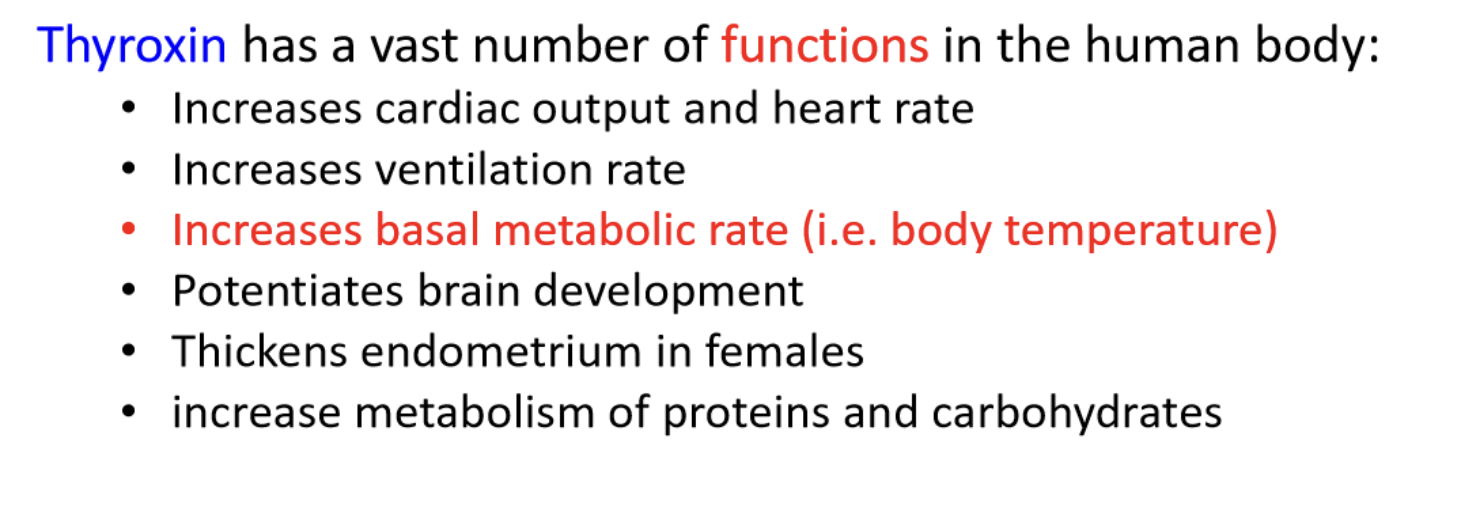
thyroxin functions
brown adipose tissue
type of adipose tissue which can generate heat at a fast rate: babies have more than adults.
uncoupled respiration
when respiration is done without producing atp, just to produce heat
osmoregulation
The regulation of the body's water balance and solute concentration to maintain homeostasis.
role of kidneys
regulation of water and ion balance (osmoregulation)
removal of toxins and metabolic waste products (excretion)
units for osmotic concentration
osmoles per litre (osmol L1)
different excretory products for different organisms
ammonia for fish
urea for mammals
uric acid for birds
excretion
removal of toxic waste products from the metabolism from the body.
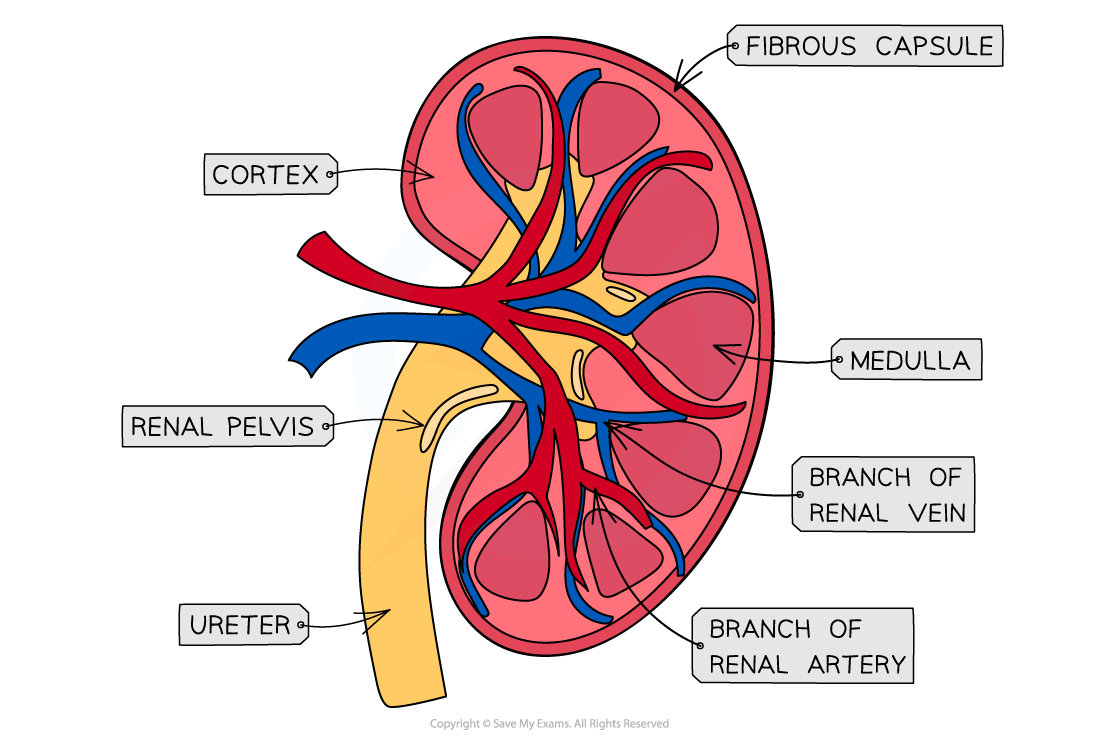
all parts of a kidney
medulla kidney
site of reabsorption of water
renal pelvis
collecting ducts deliver urine to the pelvis to be passed onto the ureter
renal vein
collects filtered from from kidney
renal artery
delivers oxygen rich blood to the kidney
ureter
carries urine to the bladder
cortex
ultrafiltration and selective re-absorption of blood content
Nephrons
The functional unit of the kidney that filters blood, reabsorbs useful substances and excretes waste products in the form of urine. There are millions of them
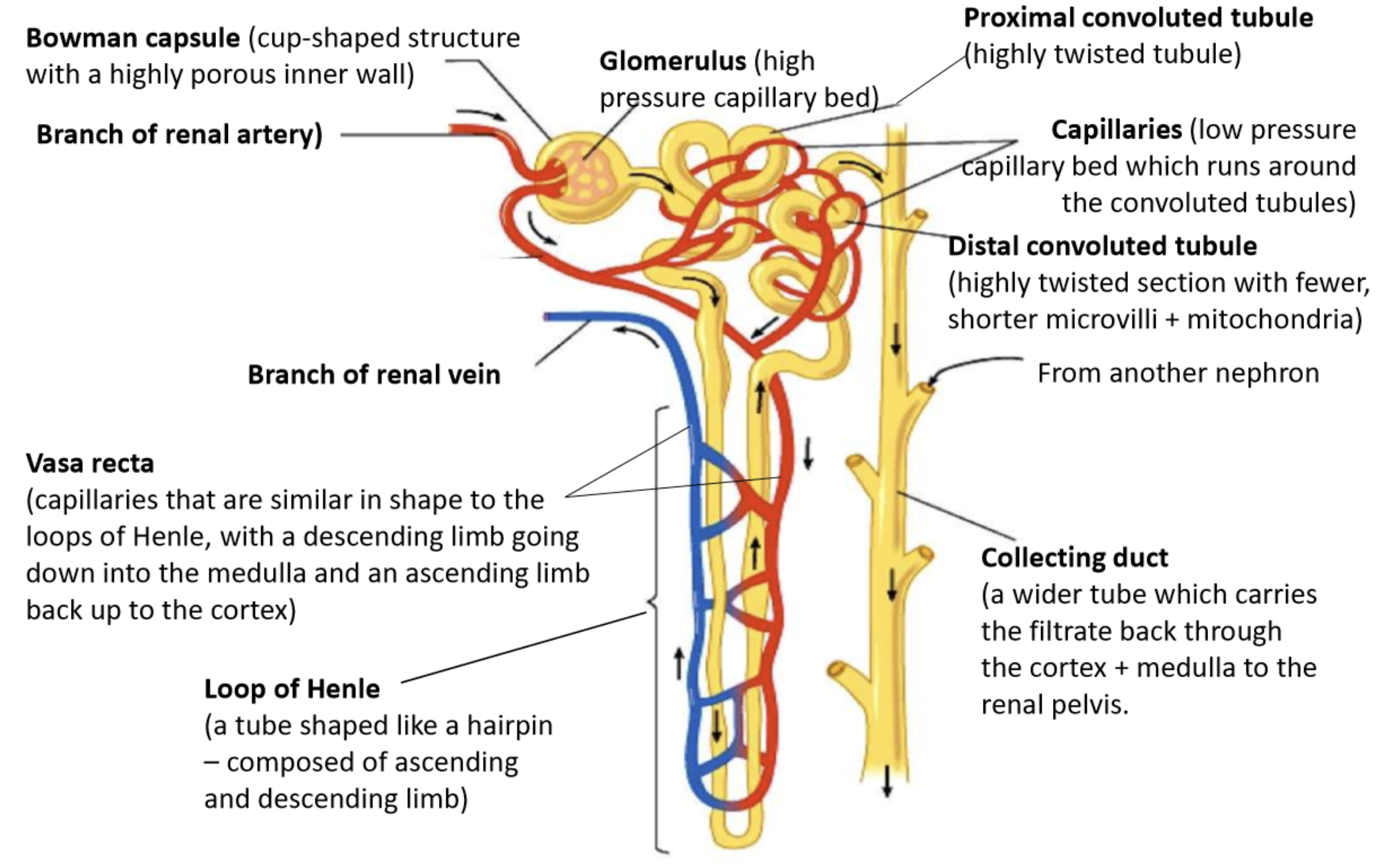
parts of a nephron
where does blood come in and out of a nephron
comes in an afferent artery and out an efferent artery
parts of nephron, in cirtex or medulla
cortex: bowman’s capsule, proximal convoluted tubule
medulla: loop of henley, collecting duct
process of ultrafiltration
blood enters thought a larger afferent artery, and smaller efferent artery
glomerulus is a zone of a high pressure capillary bed
forces ultrafiltration, water and small molecules are forced out and enters bownman’s capsule as capillary walls are fenestrated
after go to the proximal convoluted tubule, where things that are needed (salts…) are reabsorbed into the blood by active transports
structural adaptations of bowman capsule
podocytes: cells of the inner walls of the bowman’s capsule with feet-like extensions which wrap around like arterioles. Small gaps allows most filtrate to pass through
fenestration: tille holes in endothelim of capillaries, which allows molecules and fluids to leave plasma
basement membrane: surrounds and supports the capillart wall. It is made of a gel of negatively charged glycoproteins, which forms a mesh
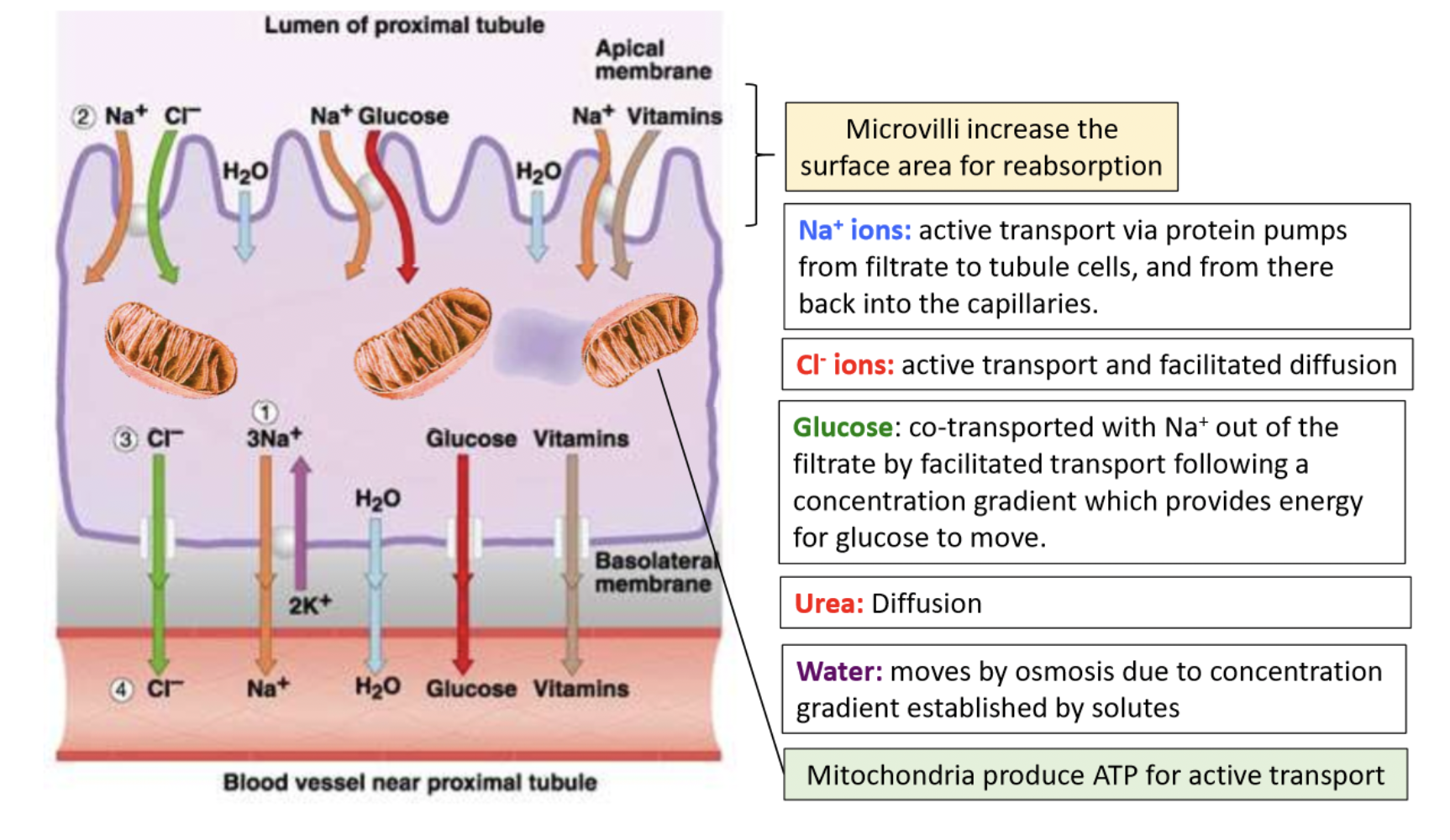
proximal convoluted tubule
contain microvilli to increase SA
actively transports glucose and salt into blood
water and Chloride are passively following a transport gradient
absorbs that stuff inside it
puts that stuff back into bloodstream
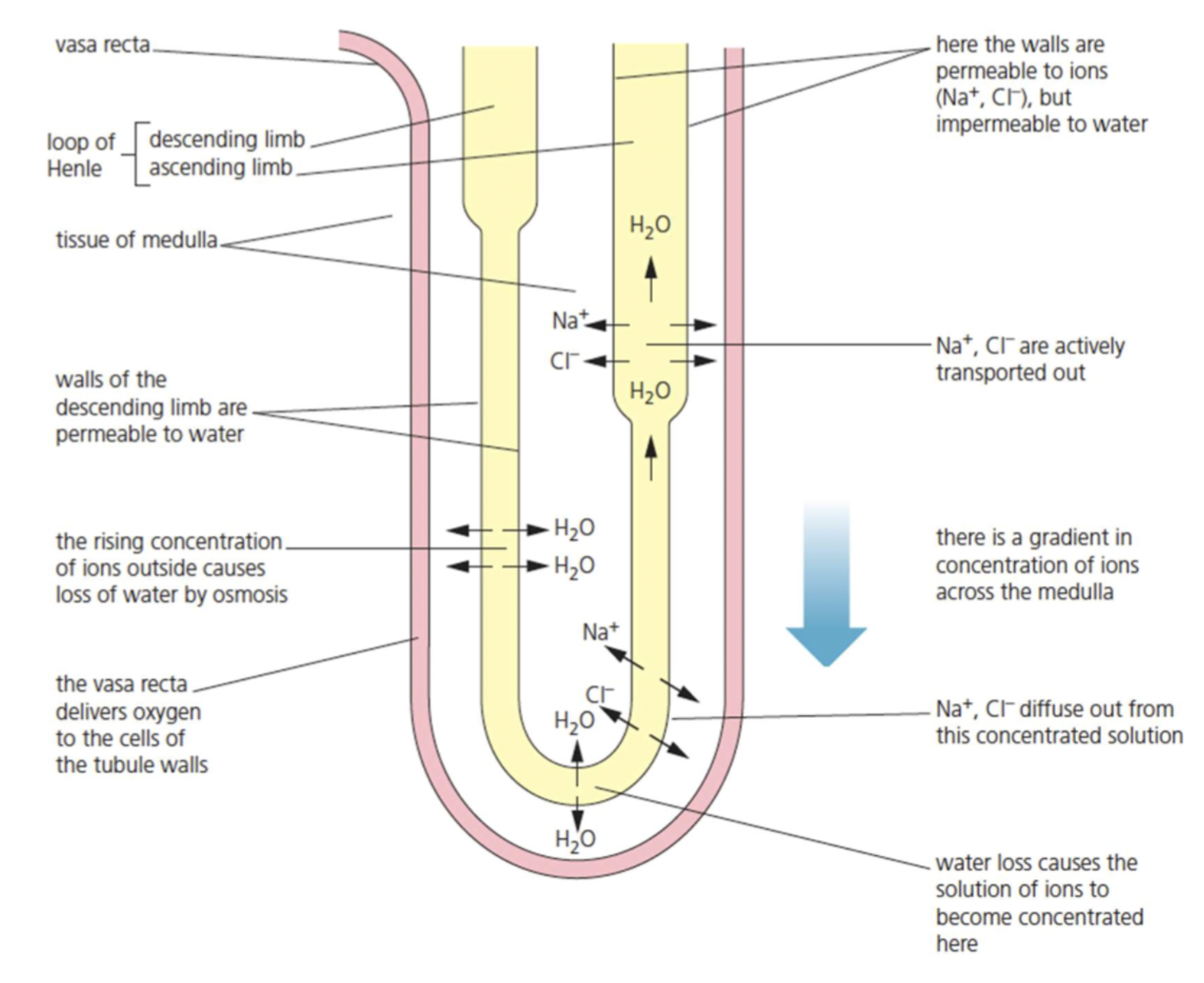
loop of henle
occurs after proximal tubule
descending loop is permeable to water, so water osmoses out of descending limb as medulla is salty
ascending loop isn’t, but actively transports salt ions (na and cl), so decreases water potential, so in descending loop water osmoses out
countercurrent system: blood and fluid go in opposite directions
distal convoluted tubule
Fine adjustment of PH
anti diurectic hormones
ADH
amount of water to be released from the collecting ducts to be retained by body is dependent of ADH. Controls how many aquaporins are present, ie how much water can passively transport into the cell membrane of collecting ducts

