Biofoundations Unit 3

0.0(0)
Studied by 0 people
call kaiCall Kai
learnLearn
examPractice Test
spaced repetitionSpaced Repetition
heart puzzleMatch
flashcardsFlashcards
GameKnowt Play
Card Sorting

1/229

flashcard set

Earn XP

Description and Tags

Photosynthesis (1-34), DNA Structure and Function (35-86) Mitosis (87-118) Meiosis (119-159) Viruses (159-181) Bacteria and Archaea (182-217) Gene Expression in Bacteria (218-230)

Last updated 4:55 AM on 3/21/26
Name
Mastery
Learn
Test
Matching
Spaced
Call with Kai

No analytics yet

Send a link to your students to track their progress

230 Terms

1
New cards

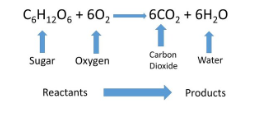
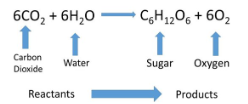
True or False: Cellular respiration is basically just the process of photosynthesis in reverse

True

2
New cards

CR vs PHS: CR has glucose and oxygen molecules that are ____ _____ into ________ _______ and ________. PHS has _________ ________ and __________ that are used to ______ new ______ and _______ molecules.

  • broken down, carbon dioxide, water

  • Carbon dioxide, water, build, glucose, oxygen

3
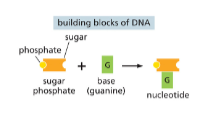
New cards

CR vs PHS: What happens when Cr and PHS breaks/builds glucose?

  • CR: breaking down glucose releases energy (-deltaG) and increases entropy (more chaos)

  • PHS: Building glucose absorbs energy (+deltaG) and decreases entropy (less chaos)

4
New cards

What does all PHS require at the basic level?

A cell to use energy

5
New cards

But what is the true genius of PHS?

cells capture light energy from the sun and transform it into the chemical energy in the bonds of a glucose molecule

6
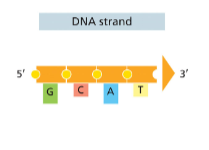
New cards

What are the two separate reactions happening simultaneously during CR?

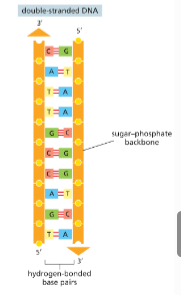
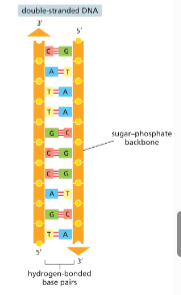
  1. Breakdown of glucose - Glycolysis, pyruvate processing, and the CAC work tg to break down glucose into CO2 and H+ ions (NADH) 

  1. Electron Transport Chain - The transported electrons at the end of the chain react w/ oxygen and hydrogen ions to form water 
<ol><li><p class="Paragraph SCXW111956375 BCX8" style="text-align: left;"><span style="line-height: 20.925px;"><span>Breakdown of glucose&nbsp;- Glycolysis, pyruvate processing, and the CAC work tg to break down glucose into CO</span><sub><span>2</span></sub><span> and H+ ions (NADH)&nbsp;</span></span></p></li></ol><ol start="2"><li><p class="Paragraph SCXW111956375 BCX8" style="text-align: left;"><span style="line-height: 20.925px;"><span>Electron Transport Chain - The transported electrons at the end of the chain react w/ oxygen and hydrogen ions to form water&nbsp;</span></span></p></li></ol><p></p>
7
New cards

What are the two separate reactions happening simultaneously during PHS?

  1. Light dependent reactions - Chlorophyll and other molecules in the chloroplast organelle split water to create electrons, hydrogen ions (NADPH), and oxygen gas 

  1. Light independent reactions - Carbon dioxide and hydrogen ions (NADPH) are used to build glucose molecules 
<ol><li><p class="Paragraph SCXW69509839 BCX8" style="text-align: left;"><span style="line-height: 20.925px;"><span>Light dependent reactions - Chlorophyll and other molecules in the chloroplast organelle split water to create electrons, hydrogen ions (NADPH), and oxygen gas&nbsp;</span></span></p></li></ol><ol start="2"><li><p class="Paragraph SCXW69509839 BCX8" style="text-align: left;"><span style="line-height: 20.925px;"><span>Light independent reactions&nbsp;- Carbon dioxide and hydrogen ions (NADPH) are used to build glucose molecules&nbsp;</span></span></p></li></ol><p></p>
8
New cards

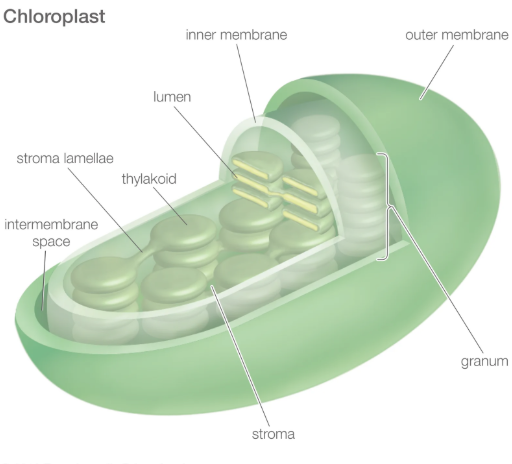
Fill in the Blank: The chloroplast is an organelle w/ a ______ ____, meaning that it has an outer membrane and inner membrane

Double membrane
<p>Double membrane</p>
9
New cards

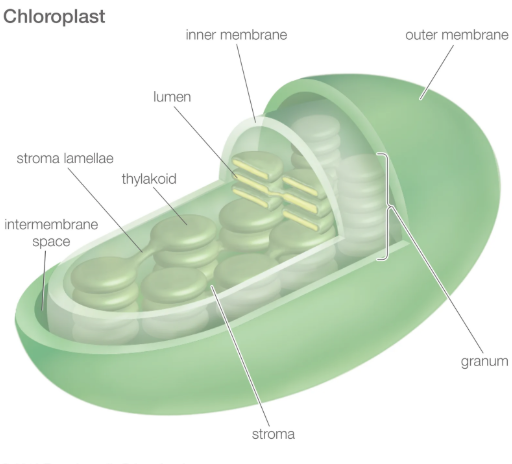
What is the stroma?

the water based interior inside the double membrane of a chloroplast
<p>the water based interior inside the double membrane of a chloroplast</p>
10
New cards

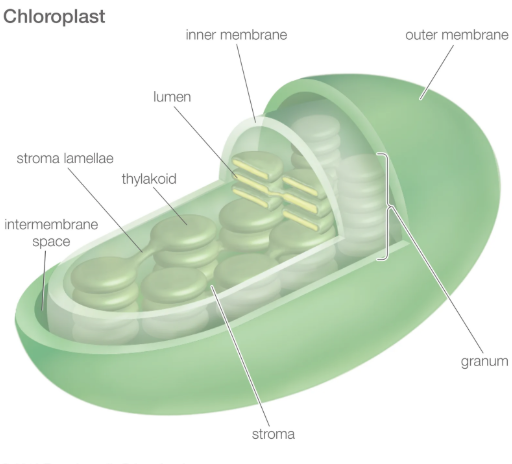
Fill in the Blank: In the stroma are folded, flattened sacs of membrane called ________ and the space inside of the thylakoid is the ______ _______

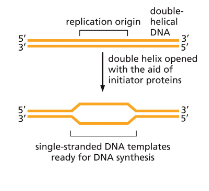
Thylakoid

Thylakoid lumen
<p>Thylakoid</p><p>Thylakoid lumen</p>
11
New cards

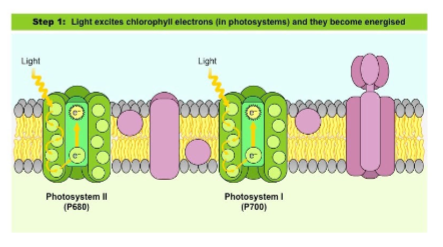
What are the two large protein systems the thylakoid membrane has?

Photosystem 1 and 2
<p>Photosystem 1 and 2</p>
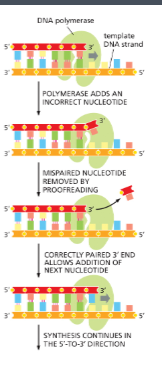
12
New cards

How does photosynthesis capture light?

  • In the photosystems, there are chlorophyll pigments which contain electrons that can be energized when struck by photons of light
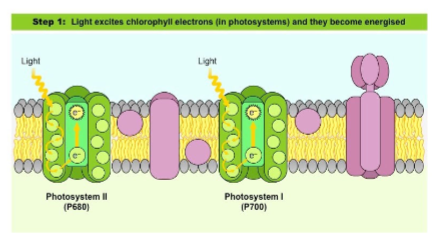
<ul><li><p>In the photosystems, there are chlorophyll pigments which contain electrons that can be energized when struck by photons of light</p></li></ul><p></p>
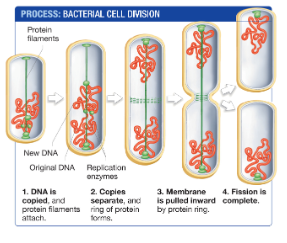
13
New cards

True or False: Photosystem 1 works first for capturing light

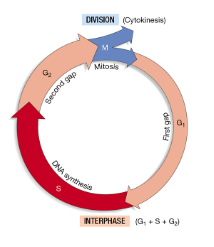
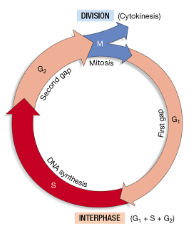
False; photosystem 2 works first for capturing light

14
New cards

How does Photosystem 2 works to capture to use light energy?

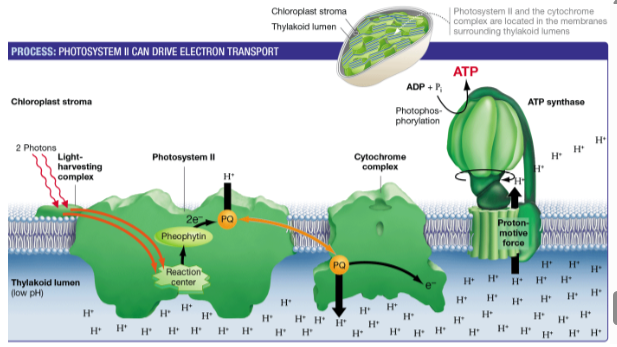
  1. Energy in light is captured by Photosystem 2 when it strikes a part of the photosystem called the light harvesting complex 

  1. The light harvesting complex then transfers that energy to a chlorophyll-containing region called the reaction center 

  1. Electrons in the reaction center are energized by the transferred light energy 

  1. A molecule called pheophytin will remove energized electrons from the reaction center

  2. Pheophytin passes the electrons into the photosynthetic ETC 

  1. The photosynthetic ETC pumps hydrogen ions from the chloroplast stroma to the thylakoid lumen which creates a concentration gradient

  2. An ATP synthase enzyme allows H+ ions to diffuse down their concentration gradient which leads to Photophosphorylation
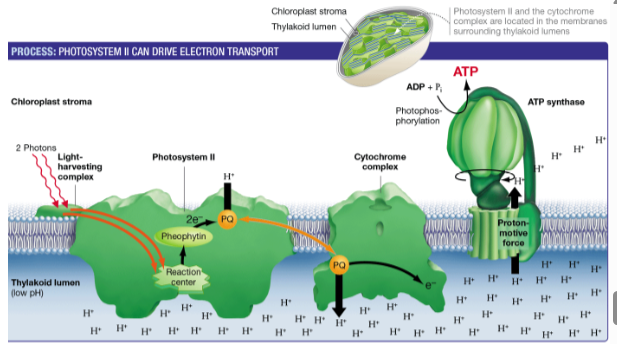
<ol><li><p class="Paragraph SCXW94312570 BCX8" style="text-align: left;"><span style="line-height: 20.925px;"><span>Energy in light is captured by Photosystem 2 when it strikes a part of the photosystem called the</span><mark data-color="yellow" style="background-color: yellow; color: inherit;"><span> light harvesting complex&nbsp;</span></mark></span></p></li></ol><ol start="2"><li><p class="Paragraph SCXW94312570 BCX8" style="text-align: left;"><span style="line-height: 20.925px;"><span>The light harvesting complex then transfers that energy to a chlorophyll-containing region called </span><mark data-color="yellow" style="background-color: yellow; color: inherit;"><span>the reaction center&nbsp;</span></mark></span></p></li></ol><ol start="3"><li><p class="Paragraph SCXW94312570 BCX8" style="text-align: left;"><span style="line-height: 20.925px;"><span>Electrons in the reaction center are energized by the transferred light energy&nbsp;</span></span></p></li></ol><ol start="4"><li><p class="Paragraph SCXW94312570 BCX8" style="text-align: left;"><span style="line-height: 20.925px;"><span>A molecule called</span><mark data-color="yellow" style="background-color: yellow; color: inherit;"><span> pheophytin</span></mark><span> will remove energized electrons from the reaction center</span></span></p></li><li><p class="Paragraph SCXW94312570 BCX8" style="text-align: left;"><span style="line-height: 20.925px;"><span>Pheophytin passes the electrons into the </span><mark data-color="yellow" style="background-color: yellow; color: inherit;"><span>photosynthetic ETC&nbsp;</span></mark></span></p></li></ol><ol start="6"><li><p class="Paragraph SCXW95434716 BCX8" style="text-align: left;"><span style="line-height: 20.925px;"><span>The photosynthetic ETC pumps hydrogen ions from the chloroplast stroma to the thylakoid lumen&nbsp;which creates a concentration gradient</span></span></p></li><li><p class="Paragraph SCXW95434716 BCX8" style="text-align: left;"><span style="line-height: 20.925px;"><span>An ATP synthase enzyme allows H+ ions to diffuse down their concentration gradient which leads to </span><mark data-color="yellow" style="background-color: yellow; color: inherit;"><span>Photophosphorylation</span></mark></span></p></li></ol><p></p>
15
New cards

How does the photosynthetic ETC create a concentration gradient?

  • The photosynthetic ETC pumps hydrogen ions from the chloroplast stroma to the thylakoid lumen 

  • This creates a concentration gradient where hydrogen ions are in high concentration in the lumen and low concentration in the stroma 
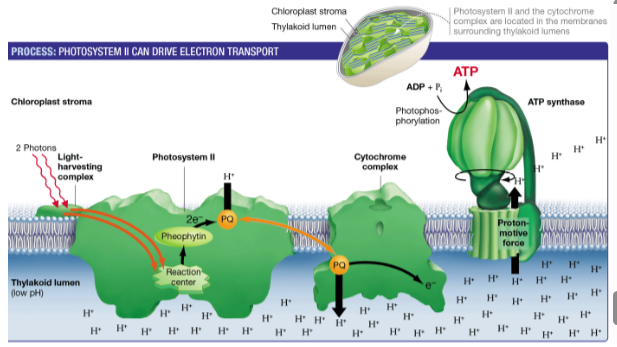
<ul><li><p class="Paragraph SCXW212109875 BCX8" style="text-align: left;"><span style="line-height: 20.925px;"><span>The photosynthetic ETC pumps hydrogen ions from the chloroplast stroma to the thylakoid lumen&nbsp;</span></span></p></li><li><p class="Paragraph SCXW212109875 BCX8" style="text-align: left;"><span style="line-height: 20.925px;"><span>This creates a concentration gradient where hydrogen ions are in high concentration in the lumen and low concentration in the stroma&nbsp;</span></span></p></li></ul><p></p>
16
New cards

What does the ATP Synthase enzyme use to allow photophosphorylation?

  • An ATP synthase enzyme allows hydrogen ions to diffuse down their concentration gradient 

  • It uses transport coupling to use the energy released by diffusion of hydrogen ions to make ATP 

  • Photophosphorylation 

<ul><li><p><span style="line-height: 20.925px;"><span>An ATP synthase enzyme allows hydrogen ions to diffuse down their concentration gradient&nbsp;</span></span></p></li><li><p><span style="line-height: 20.925px;"><span>It uses transport coupling to use the energy released by diffusion of hydrogen ions to make ATP&nbsp;</span></span></p></li><li><p><span style="line-height: 20.925px;"><span>Photophosphorylation&nbsp;</span></span></p></li></ul><p></p>
17
New cards

How do photosystem 2 replace the electrons that pheophytin took? (AKA: What is photolysis?)

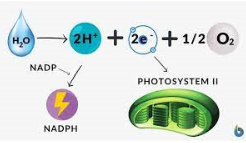
  • Photosystem 2 uses some of the transferred light to split apart H2O molecules 

  • This creates 2 electrons that go to Photosystem 2 

  • This creates 2 H+  ions that are used later to make a molecule called NADPH 

  • This creates oxygen gas O2 

  • AKA: Photolysis 

<ul><li><p class="Paragraph SCXW229944717 BCX8" style="text-align: left;"><span style="line-height: 20.925px;"><span>Photosystem 2 uses some of the transferred light to split apart H2O molecules&nbsp;</span></span></p></li></ul><ul><li><p class="Paragraph SCXW229944717 BCX8" style="text-align: left;"><span style="line-height: 20.925px;"><span>This creates 2 electrons that go to Photosystem 2&nbsp;</span></span></p></li></ul><ul><li><p class="Paragraph SCXW229944717 BCX8" style="text-align: left;"><span style="line-height: 20.925px;"><span>This creates 2 H+ &nbsp;ions that are used later to make a molecule called NADPH&nbsp;</span></span></p></li></ul><ul><li><p class="Paragraph SCXW229944717 BCX8" style="text-align: left;"><span style="line-height: 20.925px;"><span>This creates oxygen gas O2&nbsp;</span></span></p></li></ul><ul><li><p class="Paragraph SCXW229944717 BCX8" style="text-align: left;"><span style="line-height: 20.925px;"><span>AKA: Photolysis&nbsp;</span></span></p></li></ul><p></p>
18
New cards

What is at the end of the photosynthetic ETC and what does it do?

  • At the end of the photosynthetic ETC is a molecule called plastocyanin (PC) 

  • Plastocyanin delivers electrons from the ETC to the reaction center of Photosystem 1 

19
New cards

What happens in Photosystem 1 then?

  • light strikes the light harvesting complex, which re-energizes the electrons in the reaction center 

  • Re-energized electrons are passed through Photosystem 1 until they reach an iron-containing protein called ferredoxin 

  • Frome here, re-energized electrons can follow one of two chemical paths 
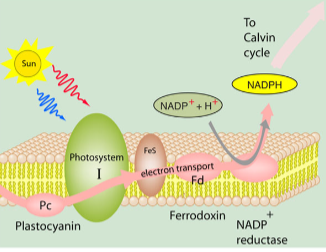
<ul><li><p class="Paragraph SCXW242598481 BCX8" style="text-align: left;"><span style="line-height: 20.925px;"><span>light strikes the light harvesting complex, which re-energizes the electrons in the reaction center&nbsp;</span></span></p></li></ul><ul><li><p class="Paragraph SCXW242598481 BCX8" style="text-align: left;"><span style="line-height: 20.925px;"><span>Re-energized electrons are passed through Photosystem 1 until they reach an iron-containing protein called ferredoxin&nbsp;</span></span></p></li></ul><ul><li><p class="Paragraph SCXW242598481 BCX8" style="text-align: left;"><span style="line-height: 20.925px;"><span>Frome here, re-energized electrons can follow one of two chemical paths&nbsp;</span></span></p></li></ul><p></p>
20
New cards

What is the first chemical path and what does it do?

  1. Cyclic photophosphorylation 

  • The re-energized electrons are recycled by ferredoxin back into the photosynthetic ETC 

  • This pumps more hydrogen ions which are then used by ATP synthases to make new ATP 

  • So if the need for ATP is particularly high at that time, the organism can bypass making glucose in favor of making more ATP for its short-term needs 
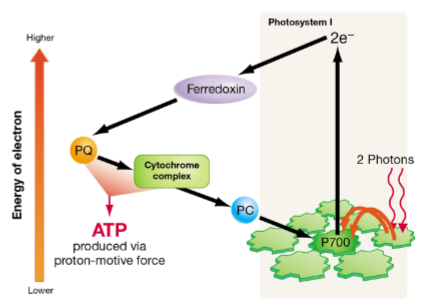
<ol><li><p class="Paragraph SCXW99911568 BCX8" style="text-align: left;"><span style="line-height: 20.925px;"><span>Cyclic photophosphorylation&nbsp;</span></span></p></li></ol><ul><li><p><span style="line-height: 20.925px;"><span>The re-energized electrons are recycled by ferredoxin back into the photosynthetic ETC&nbsp;</span></span></p></li><li><p><span style="line-height: 20.925px;"><span>This pumps more hydrogen ions which are then used by ATP synthases to make new ATP&nbsp;</span></span></p></li><li><p><span style="line-height: 20.925px;"><span>So if the need for ATP is particularly high at that time, the organism can bypass making glucose in favor of making more ATP for its short-term needs&nbsp;</span></span></p></li></ul><p></p>
21
New cards

What is the second chemical pathway and what does it do?

  1. Non-Cyclic electron flow 

  • Ferredoxin gives the electrons to an enzyme called NADP+ reductase 

  • NADP+ reductase catalyzes a chemical reaction 

  • 2 molecules of NADP+, 4 electrons, and 2 hydrogen ions are used to make 2 molecules of NADPH 

  • These are the H+ ions we made during photolysis in Photosystem 2
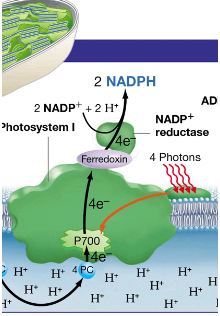
<ol start="2"><li><p class="Paragraph SCXW259861260 BCX8" style="text-align: left;"><span style="line-height: 20.925px;"><span>Non-Cyclic electron flow&nbsp;</span></span></p></li></ol><ul><li><p><span style="line-height: 20.925px;"><span>Ferredoxin gives the electrons to an enzyme called NADP+ reductase&nbsp;</span></span></p></li><li><p><span style="line-height: 20.925px;"><span>NADP+ reductase catalyzes a chemical reaction&nbsp;</span></span></p></li><li><p><span style="line-height: 20.925px;"><span>2 molecules of NADP+, 4 electrons, and 2 hydrogen ions are used to make 2 molecules of NADPH&nbsp;</span></span></p></li><li><p><span style="line-height: 20.925px;"><span>These are the H+ ions we made during photolysis in Photosystem 2</span></span></p></li></ul><p></p>
22
New cards

What is NADP+ and NADPH?

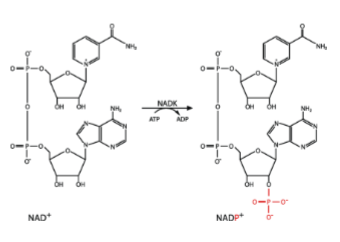
  • Molecules that are made from and have the same function as NAD+ 

  • They function as electron carriers 

23
New cards

Fill in the Blank: NADP+ is the form of the molecule w/o _______ and NADH is the form ___ Electrons

  • Electrons

  • w/o

<ul><li><p>Electrons</p></li><li><p>w/o </p></li></ul><p></p>
24
New cards

Which carriers perform catabolic reactions?

NAD+ and NADH are used to carry electrons for enzymes that perform catabolic reactions  

25
New cards

Which carriers perform anabolic reactions?

NADP+ and NADPH are used to carry electrons for enzymes that perform anabolic reactions 

26
New cards

Why do all of these carriers need to be separate?

  • These need to be separate bc any living cells needs to perform catabolic and anabolic reactions that the same time 

  • This division btwn NAD+ and NADP+ allows the cell to keep 2 separate pools of carried electrons, one for each type of reaction 

27
New cards

True or False: Much of the energy of PHS is spent to make biological molecules

True

28
New cards

Fill in the blank: The main product is ______, but we can use the _________ of ______ ____ to capture to make a wide variety of molecules that cells need

  • Glucose

  • Products of Carbon Dioxide

29
New cards

What is the processes plants and other photosynthetic cels use to capture Carbon dioxide?

Calvin Cycle or Light-independent reactions

30
New cards

Where does the Calvin cycle take place?

in the stroma of the chloroplast
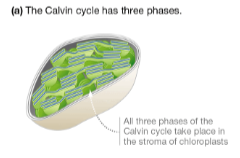
<p>in the stroma of the chloroplast</p>
31
New cards

What are the 3 phases of chemical reactions in the Calvin Cycle?

  1. Fixation (repeats 3x due to enzyme Rubisco)

  • Carbon dioxide is added to molecule called RuBP and ends in 2 molecules of 3-PGA (So 3 molecules of RuBP and 3 molecules of CO2 goes in)

  • End product of fixation is 6 molecules called 3-PGA 

  1. Reduction 

  • In: 6 molecules of 3-PGA, 6 molecules of ATP and NADPH from light capture

  • Out: 6 molecules of G3P, 6 molecules of ADP, 6 molecules of NADP+ 

  1. Regeneration 

  • In: 6 molecules of G3P, 3 molecules of ATP

  • Out: 1 molecule of G3P to make glucose and other molecules, 3 molecules of ADP, 3 molecules of RuBP
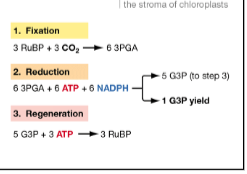
<ol><li><p class="Paragraph SCXW262291486 BCX8" style="text-align: left;"><span style="line-height: 20.925px;"><span>Fixation&nbsp;(repeats 3x due to enzyme Rubisco)</span></span></p></li></ol><ul><li><p><span style="line-height: 20.925px;"><span>Carbon dioxide is added to molecule called RuBP&nbsp;and ends in 2 molecules of 3-PGA (So 3 molecules of RuBP and 3 molecules of CO</span><sub><span>2</span></sub><span> goes in)</span></span></p></li><li><p><span style="line-height: 20.925px;"><span>End product of fixation is 6 molecules called 3-PGA&nbsp;</span></span></p></li></ul><ol start="2"><li><p class="Paragraph SCXW262291486 BCX8" style="text-align: left;"><span style="line-height: 20.925px;"><span>Reduction&nbsp;</span></span></p></li></ol><ul><li><p class="Paragraph SCXW262291486 BCX8" style="text-align: left;"><span style="line-height: 20.925px;"><span>In: 6 molecules of 3-PGA, 6 molecules of ATP and NADPH from light capture</span></span></p></li><li><p class="Paragraph SCXW262291486 BCX8" style="text-align: left;"><span style="line-height: 20.925px;"><span>Out: 6 molecules of G3P, 6 molecules of ADP, 6 molecules of NADP+&nbsp;</span></span></p></li></ul><ol start="3"><li><p class="Paragraph SCXW262291486 BCX8" style="text-align: left;"><span style="line-height: 20.925px;"><span>Regeneration&nbsp;</span></span></p></li></ol><ul><li><p><span style="line-height: 20.925px;"><span>In: 6 molecules of G3P, 3 molecules of ATP</span></span></p></li><li><p><span style="line-height: 20.925px;"><span>Out: 1 molecule of G3P to make glucose and other molecules, 3 molecules of ADP, 3 molecules of RuBP</span></span></p></li></ul><p></p>
32
New cards

What is G3P a product of?

Product of the energy investment phase of glycoylsis

33
New cards

What are the two ways plants can make glucose?

  1. Using G3P as the starting material plants can make glucose by running the process of glycolysis “in reverse” 

  • This “reverse glycolysis” is a metabolic chain called gluconeogenesis 

  1. Or plants can run glycolysis forward to make pyruvate that can go into the CAC 

  • The molecules of the CAC can be used to make amino acids for proteins and cellular signaling molecules 
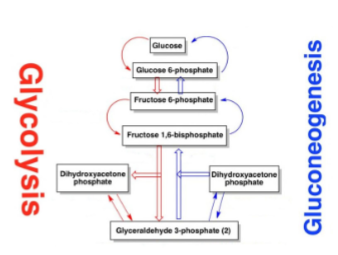
<ol><li><p class="Paragraph SCXW224007596 BCX8" style="text-align: left;"><span style="line-height: 20.925px;"><span>Using G3P as the starting material plants can make glucose by running the process of glycolysis “in reverse”&nbsp;</span></span></p></li></ol><ul><li><p class="Paragraph SCXW224007596 BCX8" style="text-align: left;"><span style="line-height: 20.925px;"><span>This “reverse glycolysis” is a metabolic chain called gluconeogenesis&nbsp;</span></span></p></li></ul><ol start="2"><li><p class="Paragraph SCXW224007596 BCX8" style="text-align: left;"><span style="line-height: 20.925px;"><span>Or plants can run glycolysis forward to make pyruvate that can go into the CAC&nbsp;</span></span></p></li></ol><ul><li><p class="Paragraph SCXW224007596 BCX8" style="text-align: left;"><span style="line-height: 20.925px;"><span>The molecules of the CAC can be used to make amino acids for proteins and cellular signaling molecules&nbsp;</span></span></p></li></ul><p></p>
34
New cards

Why is carbon capture important to cells?

  1. Self-Sufficiency

  • By capturing carbon into G3P, plants can use their metabolic pathways to make any kind of biological molecule they need and other elements can be absorbed directly from the environment (nitrogen in soil for ex)

  1. Energy w/o light 

  •  Plant cells have mitochondria that can use the same CR pathways as other cells, which allows the plant to make energy from glucose when there is not sufficient light to fulfill their needs

  1. Regeneration 

  • Non-PHS plant structures depend on CR for their ATP, and since ATP molecules are unstable and cannot be transported btwn cells efficiently, sugars can be easily moved thru a plant to provide energy for other parts of the organism Long-term energy storage

  1. Long-Term Energy Storage

  • Glucose can be store long term as glycogen

35
New cards
  1. Self Sufficiency

  2. By capturing carbon into G3P, plants can use their metabolic pathways to make any kind of biological molecule they need and other elements can be absorbed directly from the environment (nitrogen in soil for ex)

  3. Energy w/o Light

  4. Plant cells have mitochondria that can use the same CR pathways as other cells, which allows the plant to make energy from glucose when there is not sufficient light to fulfill their needs

  5. Energy transfer

  6. Non-PHS plant structures depend on CR for their ATP, and since ATP molecules are unstable and cannot be transported btwn cells efficiently, sugars can be easily moved thru a plant to provide energy for other parts of the organis Long-term energy storage

  7. Glucose can be store long term as glycogen

36
New cards

What is the building block of DNA called?

A molecule called a nucleotide

37
New cards

What are nucleotides made out of?

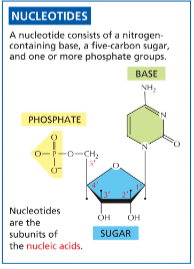
  1. Sugar w/ five carbon atoms 

  • Sugar is either ribose or deoxyribose 

  1. Phosphate group 

  1. Nitrogen-containing base 

  • Total of 5 different types of base 

<ol><li><p class="Paragraph SCXW50551288 BCX8" style="text-align: left;"><span style="line-height: 20.925px;"><span>Sugar w/ five carbon atoms&nbsp;</span></span></p></li></ol><ul><li><p class="Paragraph SCXW50551288 BCX8" style="text-align: left;"><span style="line-height: 20.925px;"><span>Sugar is either ribose or deoxyribose&nbsp;</span></span></p></li></ul><ol start="2"><li><p class="Paragraph SCXW50551288 BCX8" style="text-align: left;"><span style="line-height: 20.925px;"><span>Phosphate group&nbsp;</span></span></p></li></ol><ol start="3"><li><p class="Paragraph SCXW50551288 BCX8" style="text-align: left;"><span style="line-height: 20.925px;"><span>Nitrogen-containing base&nbsp;</span></span></p></li></ol><ul><li><p class="Paragraph SCXW50551288 BCX8" style="text-align: left;"><span style="line-height: 20.925px;"><span>Total of 5 different types of base&nbsp;</span></span></p></li></ul><p></p>
38
New cards

What are long chains of nucleotides connected tg called?

Nucleic acids

39
New cards

When are nucleic acids formed?

When nucleotides form by condensation reactions

40
New cards

True or False: Bc the nucleotides are asymmetrical, that means that each end of the nucleic acid chain is the same

False; bc the nucleotides are asymmetrical, that means that each end of the nucleic acid chain is different

41
New cards

What is the bond that is formed btwn two nucleotides called?

Phosphodiester bond
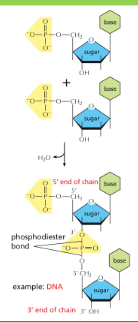
<p>Phosphodiester bond</p>
42
New cards

What are the 4 bases that are used to build DNA, even though there are 5 possible bases that build up nucleotides?

  • Purines: Adenine (A) & Guanine (G) 

  • Pyrimidines: Cytosine (C) & Thymine (T) 
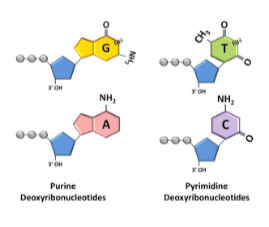
<ul><li><p class="Paragraph SCXW145031874 BCX8" style="text-align: left;"><span style="line-height: 20.925px;"><span>Purines: Adenine (A) &amp; Guanine (G)&nbsp;</span></span></p></li></ul><ul><li><p class="Paragraph SCXW145031874 BCX8" style="text-align: left;"><span style="line-height: 20.925px;"><span>Pyrimidines: Cytosine (C) &amp; Thymine (T)&nbsp;</span></span></p></li></ul><p></p>
43
New cards

What are the two sugars that nucleotides can use, and what is the difference btwn the two?

  1. Ribose has a hydroxyl group on its 2-prime carbon 

  • Sugar is used to make ribose nucleotides (RNA) 

  1. Deoxyribose is missing the hydroxyl group on  its 2-prime carbon 

  • Sugar is used to make deoxyribose nucleotides (DNA) 
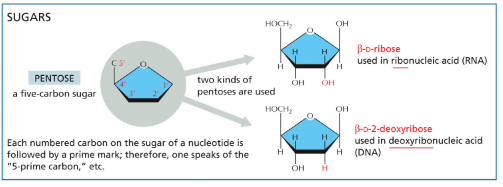
<ol><li><p class="Paragraph SCXW92804032 BCX8" style="text-align: left;"><span style="line-height: 20.925px;"><span>Ribose has a hydroxyl group on its 2-prime carbon&nbsp;</span></span></p></li></ol><ul><li><p class="Paragraph SCXW92804032 BCX8" style="text-align: left;"><span style="line-height: 20.925px;"><span>Sugar is used to make ribose nucleotides (RNA)&nbsp;</span></span></p></li></ul><ol start="2"><li><p class="Paragraph SCXW92804032 BCX8" style="text-align: left;"><span style="line-height: 20.925px;"><span>Deoxyribose is missing the hydroxyl group on &nbsp;its 2-prime carbon&nbsp;</span></span></p></li></ol><ul><li><p class="Paragraph SCXW92804032 BCX8" style="text-align: left;"><span style="line-height: 20.925px;"><span>Sugar is used to make deoxyribose nucleotides (DNA)&nbsp;</span></span></p></li></ul><p></p>
44
New cards

What is main function of nucleotides?

To store energy

45
New cards

What is most common nucleotide for energy?

ATP (Adenosine Triphosphate)

46
New cards

True or False: There is a triphosphate version of every type of molecule, the bonds btwn phosphates release large amts of kinetic energy when broken

True

47
New cards

What can nucleotide triphosphate molecules be used for?

  • To build nucleic acids

  • provide energy to power cellular work

48
New cards

DNA is a polymer of nucleotides, but specifically which ones?

Nucleotides that use the sugar deoxyribose

49
New cards

What is a single DNA chain referred to?

A strand

50
New cards

What holds the backbone of the strand?

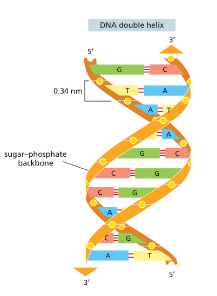
The sugar and phosphates will hold the chain tg w/ covalent bonds (this is called the backbone of a strand)
<p>The sugar and phosphates will hold the chain tg w/ covalent bonds (this is called the backbone of a strand)</p>
51
New cards

When DNA polymers are made, new nucleotides can only be added where there is a free 3-prime -OH group. What is this property of DNA called?

Directionality?
<p>Directionality?</p>
52
New cards

True or False: In chromosomes of all cells, two strands of DNA are always associated tg as double-stranded DNA

True; backbones face toward the outside of the molecule and bases faces towards the middle
<p>True; backbones face toward the outside of the molecule and bases faces towards the middle</p>
53
New cards

What are the two strands of DNA held tg by

Hydrogen bonds
<p>Hydrogen bonds</p>
54
New cards

Hydrogen bonds btwn bases on opposite strands are called what?

Base pairs

55
New cards

What is the length of a DNA molecule is typically measured how?

Many base pairs it has

56
New cards

How do bases always pair?

  • A always pairs w/ T

  • G always pairs w/ C

57
New cards

The principle of complementarity does what to DNA?

  • Bc of the above base-pairing rules, the order of nucleotides of one DNA strand can always be determined from the base pair sequence on the opposite DNA strand 

  • ex: 5’ - ATGCCTAATACGCTCGG – 3' 

58
New cards

What must happen for the double-stranded structure of DNA to Form?

  • The two strands of dna must be oriented in opposite directions (anti-parallel)

  • Both strands must be twisted into a spiral shape called a double helix
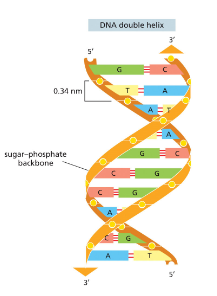
<ul><li><p>The two strands of dna must be oriented in opposite directions (anti-parallel)</p></li><li><p>Both strands must be twisted into a spiral shape called a double helix</p></li></ul><p></p>
59
New cards

True or False: The geometry of the DNA double helix is such that there are btwn the two backbones there are gaps that are different sizes 

true
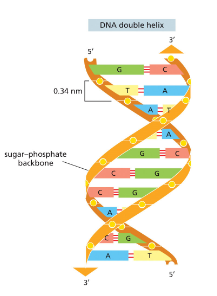
<p>true</p>
60
New cards

What are the gaps of the DNA and do they alternate?

  • Smaller is the minor groove 

  • Larger is the major groove 

  • Grooves alternate along a strand 

<ul><li><p class="Paragraph SCXW142181278 BCX8" style="text-align: left;"><span style="line-height: 20.925px;"><span>Smaller is the minor groove&nbsp;</span></span></p></li></ul><ul><li><p class="Paragraph SCXW142181278 BCX8" style="text-align: left;"><span style="line-height: 20.925px;"><span>Larger is the major groove&nbsp;</span></span></p></li></ul><ul><li><p class="Paragraph SCXW142181278 BCX8" style="text-align: left;"><span style="line-height: 20.925px;"><span>Grooves alternate along a strand&nbsp;</span></span></p></li></ul><p></p>
61
New cards

What is the major function of DNA?

  • To store info (specially the info needed to make one or more proteins or RNA molecules)

  • Also the info of the order of bases in a DNA strand (from 5’ to 3’)

62
New cards

What are genes?

Sequences of DNA that contain info to make proteins or RNA

63
New cards

What is gene expression?

The process of using this genetic info encoded in genes to make RNA and gene expression

64
New cards

True or False: When w/i a gene, DNA is not complex and only serves one function

Even w/i a gene, DNA is complex and multifunctional 

65
New cards

In cells, DNA is found as one more extraordinarily long double-stranded molecules called….

chromosomes

66
New cards

How many chromosomes are in humans?

  • 23 pairs of chromosomes 

  • In the cells of the body, 2 complete sets so 46 total chromosomes per cell 

67
New cards

What type of DNA takes up abt 20% of chromosomal DNA or genes?

Coding DNA

68
New cards

80% of remaining DNA has a variety of unknown function. What is this DNA called?

Non-coding DNA

69
New cards

Fill in the Blank: Before mitosis and meiosis, the cell must go through DNA replication in the ___________ (S) phase of interphase

synthesis

70
New cards

These copies are then separated by the spindle in a process called….

DNA segregation

71
New cards

What does the S phase of interphase look like in mitosis and meiosis?

  • In mitosis, the 2 cells produced receives 2 copies of each chromosome (one from each parent) 

  • In meiosis, the 4 cells produced randomly receive one copy of each chromosome 
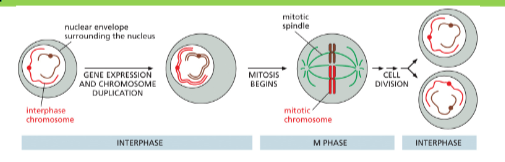
<ul><li><p class="Paragraph SCXW129628685 BCX8" style="text-align: left;"><span style="line-height: 20.925px;"><span>In mitosis, the 2 cells produced receives 2 copies of each chromosome (one from each parent)&nbsp;</span></span></p></li></ul><ul><li><p class="Paragraph SCXW129628685 BCX8" style="text-align: left;"><span style="line-height: 20.925px;"><span>In meiosis, the 4 cells produced randomly receive one copy of each chromosome&nbsp;</span></span></p></li></ul><p></p>
72
New cards

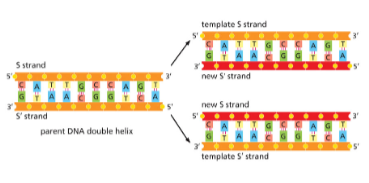
How does the principle of complementarity become the foundation of DNA replication?

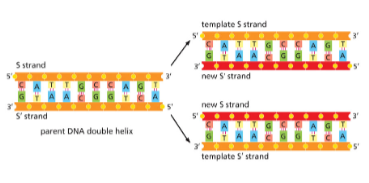
  • During replication, enzymes break the base pairs, causing the 2 strands to separate 

  • Each strand is used to make a copy of the other using the principle of complementarity 

  • End result of DNA replication is that we have 2 double stranded DNA molecules 
<ul><li><p class="Paragraph SCXW169896510 BCX8" style="text-align: left;"><span style="line-height: 20.925px;"><span>During replication, enzymes break the base pairs, causing the 2 strands to separate&nbsp;</span></span></p></li></ul><ul><li><p class="Paragraph SCXW169896510 BCX8" style="text-align: left;"><span style="line-height: 20.925px;"><span>Each strand is used to make a copy of the other using the principle of complementarity&nbsp;</span></span></p></li></ul><ul><li><p class="Paragraph SCXW169896510 BCX8" style="text-align: left;"><span style="line-height: 20.925px;"><span>End result of DNA replication is that we have 2 double stranded DNA molecules&nbsp;</span></span></p></li></ul><p></p>
73
New cards

What is semi-conservative replication?

  • One strand comes from the original cell’s DNA 

  • The other is newly copied by the cell 

<ul><li><p class="Paragraph SCXW177537701 BCX8" style="text-align: left;"><span style="line-height: 20.925px;"><span>One strand comes from the original cell’s DNA&nbsp;</span></span></p></li></ul><ul><li><p class="Paragraph SCXW177537701 BCX8" style="text-align: left;"><span style="line-height: 20.925px;"><span>The other is newly copied by the cell&nbsp;</span></span></p></li></ul><p></p>
74
New cards

Where does the process of replication begin?

  • This process of replication occurs simultaneously at multiple places on a chromosome 

  • The sites where replication begins are the replication origins 

75
New cards

What is the very first stage of replication?

Formation of replication bubble
<p>Formation of replication bubble</p>
76
New cards

True or False: Replication from the origin can only go in one direction

False; replication from the origin is bidirectional

77
New cards

Where does replication happen, and what does each structure have?

  • The area where replication happens is called the replication bubble 

  • Each bubble has 2 replication forks, one traveling in each direction 

78
New cards

How do forks interlap?

  • Replication initiates at all of the origins on a chromosome 

  • This continues until the replication forks overlap 

  • When forks overlap, that replication of that section of the chromosome is finished 

79
New cards

What is DNA polymerase?

A complex enzyme w/ multiple functions but the first and most important is DNA synthesis

80
New cards

What is the template strand in DNA synthesis?

  • In DNA synthesis, nucleotide triphosphates will form a weak association w/ the strand of DNA being copied 

  • The DNA strand being copied during replication is called the template strand 

81
New cards

Once weakly associated, DNA polymerases catalyzes a chemical reaction that does what?

  • Removes and releases 2 phosphates from the nucleotide and 

  • Forms a covalent bond btwn the 3-prime OH on the new strand and the phosphate on the nucleotide 

82
New cards

True or False: The DNA synthesis and replication are totally secure; it never makes the wrong base pair

False; Ocassionaly the wrong base may pair at the active site and be incorporated into the new DNA strand 

83
New cards

What is the other major function of DNA polymerase?

Proofreading

84
New cards

When does proofreading occur?

Occurs at the same time as DNA synthesis

85
New cards

What will happen to the shape of the DNA strand if improperly paired?

Improperly paired bases will distort the molecular shape of the DNA strand 

86
New cards

Since this distortion can be sensed by the polymerase, what does the DNA activate, and how does it work?

  1. The distortion of the DNA activates a second enzyme activity in DNA polymerase called an exonuclease 

  • Removes the wrong base by hydrolyzing the covalent bond 

  • Polymerase then goes back and ads the correct nucleotide using its DNA synthesis enzyme 
<ol><li><p class="Paragraph SCXW96806152 BCX8" style="text-align: left;"><span style="line-height: 20.925px;"><span>The distortion of the DNA activates a second enzyme activity in DNA polymerase called an exonuclease&nbsp;</span></span></p></li></ol><ul><li><p class="Paragraph SCXW96806152 BCX8" style="text-align: left;"><span style="line-height: 20.925px;"><span>Removes the wrong base by hydrolyzing the covalent bond&nbsp;</span></span></p></li></ul><ul><li><p class="Paragraph SCXW96806152 BCX8" style="text-align: left;"><span style="line-height: 20.925px;"><span>Polymerase then goes back and ads the correct nucleotide using its DNA synthesis enzyme&nbsp;</span></span></p></li></ul><p></p>
87
New cards

How do prokaryotic cells replicate?

Binary fission

88
New cards

How does Binary Fission consists of 4 key processes

  • The chromosome is duplicated so that the cell has two complete copies of its DNA sequences (DNA replication) 

  • The two copies of the chromosome are physically separated to the opposite of the cell (Chromosome segregation)

  • The cell membrane pinches in the middle to separate the two cells (Cytokinesis)

  • The cell membrane combines w/ itself so that the two separate cels are made (Cell division)
<ul><li><p class="Paragraph SCXW124921264 BCX8" style="text-align: left;"><span style="line-height: 20.925px;"><span>The chromosome is duplicated so that the cell has two complete copies of its DNA sequences&nbsp;(DNA replication)&nbsp;</span></span></p></li></ul><ul><li><p class="Paragraph SCXW124921264 BCX8" style="text-align: left;"><span style="line-height: 20.925px;"><span>The two copies of the chromosome are physically separated to the opposite of the cell&nbsp;(Chromosome segregation)</span></span></p></li><li><p class="Paragraph SCXW124921264 BCX8" style="text-align: left;"><span style="line-height: 20.925px;"><span>The cell membrane pinches in the middle to separate the two cells (Cytokinesis)</span></span></p></li><li><p class="Paragraph SCXW124921264 BCX8" style="text-align: left;"><span style="line-height: 20.925px;"><span>The cell membrane combines w/ itself so that the two separate cels are made (Cell division)</span></span></p></li></ul><p></p>
89
New cards

What is the replication process in eukaryotes?

Mitosis

90
New cards

What are the periods btwn rounds of mitosis?

Interphase
<p>Interphase</p>
91
New cards

How does interphase split up?

  1. First gap (G1) phase 

  • Growth means that cells become larger, make more organelles and proteins 

  • Performing physiological jobs means that each cell in an organism performs their specialized life functions  

  1. Synthesis (S) Phase 

  • This phase is the phase where the cell’s chromosomes are copied 

  • The chromosomes of a eukaryotic cell are more complex and greater in number compared to prokaryotes 

  1. Second Gap (G2) Phase 

  • The copy made of the chromosome during the S phase is checked for copying errors and those errors are repaired (DNA Repair) 

  • Cell starts producing the enzymes and other proteins needed for mitosis
<ol><li><p class="Paragraph SCXW203924453 BCX8" style="text-align: left;"><span style="line-height: 20.925px;"><span>First gap (G1) phase&nbsp;</span></span></p></li></ol><ul><li><p><span style="line-height: 20.925px;"><span>Growth means that cells become larger, make more organelles and proteins&nbsp;</span></span></p></li><li><p><span style="line-height: 20.925px;"><span>Performing physiological jobs means that each cell in an organism performs their specialized life functions&nbsp;&nbsp;</span></span></p></li></ul><ol start="2"><li><p class="Paragraph SCXW203924453 BCX8" style="text-align: left;"><span style="line-height: 20.925px;"><span>Synthesis (S) Phase&nbsp;</span></span></p></li></ol><ul><li><p><span style="line-height: 20.925px;"><span>This phase is the phase where the cell’s chromosomes are copied&nbsp;</span></span></p></li><li><p><span style="line-height: 20.925px;"><span>The chromosomes of a eukaryotic cell are more complex and greater in number compared to prokaryotes&nbsp;</span></span></p></li></ul><ol start="3"><li><p class="Paragraph SCXW203924453 BCX8" style="text-align: left;"><span style="line-height: 20.925px;"><span>Second Gap (G2) Phase&nbsp;</span></span></p></li></ol><ul><li><p><span style="line-height: 20.925px;"><span>The copy made of the chromosome during the S phase is checked for copying errors and those errors are repaired&nbsp;(DNA Repair)&nbsp;</span></span></p></li><li><p><span style="line-height: 20.925px;"><span>Cell starts producing the enzymes and other proteins needed for mitosis</span></span></p></li></ul><p></p>
92
New cards

Why does DNA have an X shape?

comes from two of them being attached tg at the middle by a centromere 

93
New cards

Where are eukaryotic chromosomes stored?

Nucleus

94
New cards

The DNA of eukaryotic chromosomes is wrappes around porteins called what?

Histones

95
New cards

The combo of DNA wrapped around histones is called a

Nucleosome

96
New cards

Nucleosomes are twisted tg into a chromosome by what?

Chromatin

97
New cards

Fill in the Blank: most of the time, the chromosomes are found as loosely packed balls of fibers called ________, and the fibers are formed by the supercoiling of the _________

  • Chromatin

  • Nucleosomes

98
New cards

True or False: Chromatin typically spreads out to fill the entire nucleus during interphase

True

99
New cards

When mitosis happens, what do the chromosomes do?

Condense into smaller, densely packed structures

100
New cards

What is a gene?

protein coding region

Explore top notes

note
WHAP - Unit 2 Review
Updated 528d ago
0.0(0)
note
2.1 Physical and Mental Health
Updated 1102d ago
0.0(0)
note
THE NEW NATION
Updated 633d ago
0.0(0)
note
Chapter 13 - Chemical Equilibrium
Updated 1437d ago
0.0(0)
note
WHAP - Unit 2 Review
Updated 528d ago
0.0(0)
note
2.1 Physical and Mental Health
Updated 1102d ago
0.0(0)
note
THE NEW NATION
Updated 633d ago
0.0(0)
note
Chapter 13 - Chemical Equilibrium
Updated 1437d ago
0.0(0)

Explore top flashcards

flashcards
cogni
400
Updated 783d ago
0.0(0)
flashcards
Latin Exam Vocabulary
437
Updated 309d ago
0.0(0)
flashcards
[ 2MID ] MIL - What is Media?
40
Updated 207d ago
0.0(0)
flashcards
LV - Python
20
Updated 1040d ago
0.0(0)
flashcards
Unit 2: Cognition
50
Updated 9d ago
0.0(0)
flashcards
unit 2 vocab
140
Updated 1183d ago
0.0(0)
flashcards
cogni
400
Updated 783d ago
0.0(0)
flashcards
Latin Exam Vocabulary
437
Updated 309d ago
0.0(0)
flashcards
[ 2MID ] MIL - What is Media?
40
Updated 207d ago
0.0(0)
flashcards
LV - Python
20
Updated 1040d ago
0.0(0)
flashcards
Unit 2: Cognition
50
Updated 9d ago
0.0(0)
flashcards
unit 2 vocab
140
Updated 1183d ago
0.0(0)