Lab 7
 Call Kai
 Learn
Learn Practice Test
 Spaced Repetition
 Match
Match Flashcards
 Knowt Play
1/19

There's no tags or description
Looks like no tags are added yet.
Name | Mastery | Learn | Test | Matching | Spaced | Call with Kai |
|---|
No analytics yet
Send a link to your students to track their progress
20 Terms
Anatomy of the Respiratory System
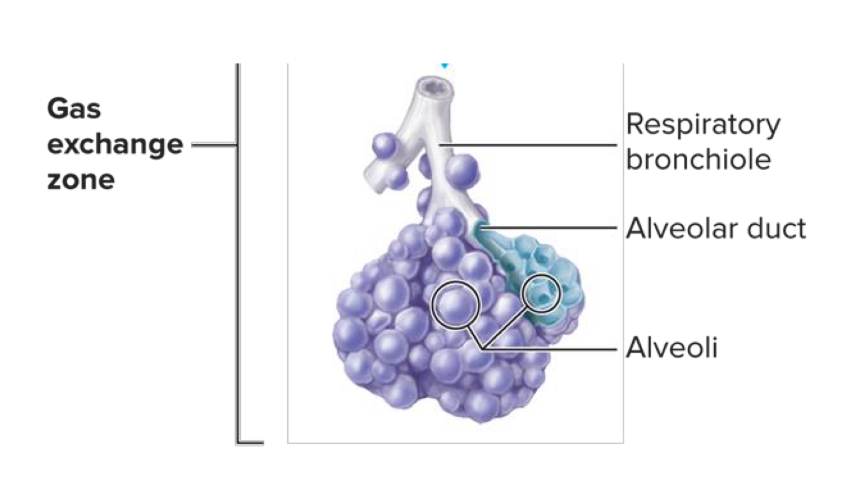
In the conducting zone, the air is transported from the nose all the way to the respiratory bronchioles. Beginning at the respiratory bronchioles, you have the exchange of oxygen and carbon dioxide.
Anatomy of the Respiratory System 2
gas exchange occurs in the bronchioles and the alveoli
intrapulmonary pressure: the pressure in the alveoli
Bronchioles
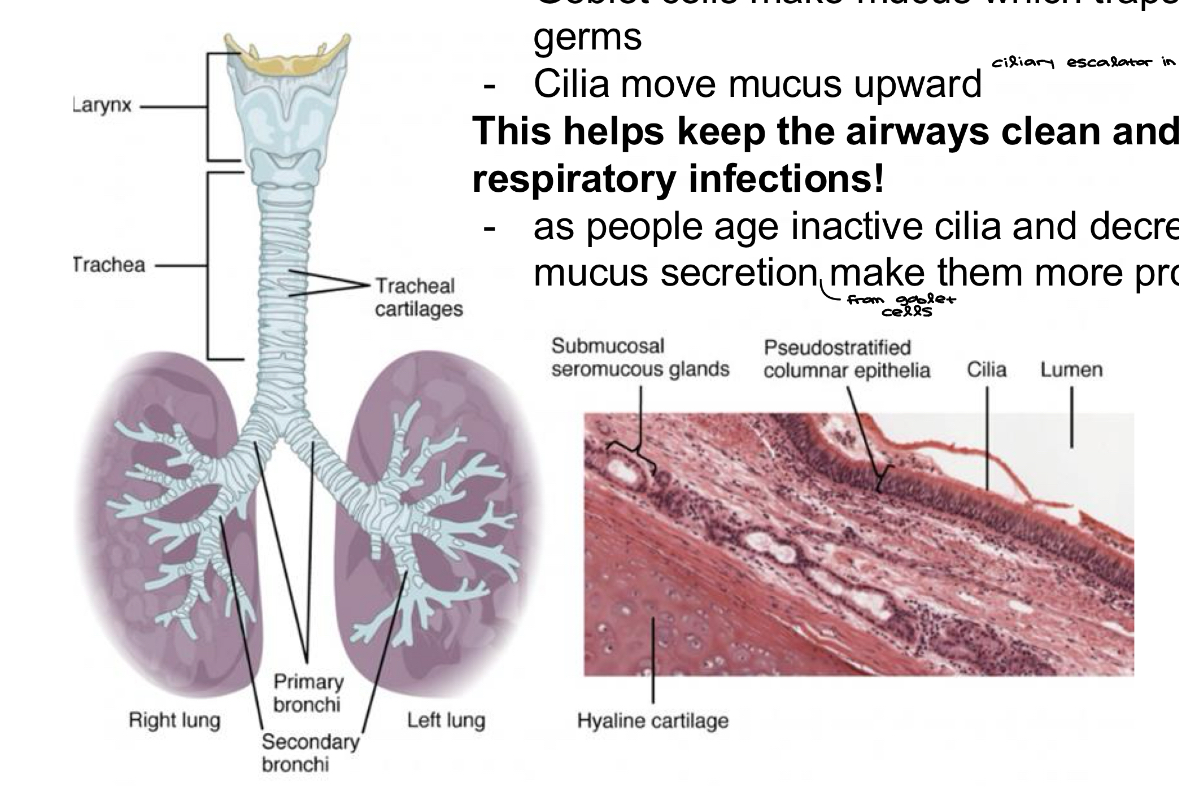
Bronchioles have cilia and goblet cells
goblet cells make mucus which traps dust and germs
cilia move mucus upward (ciliary escalator & resp. tract)
This helps keep the airways clean and prevent respiratory infections!
as people age inactive cilia and decreased mucus secretion from goblet cells make then more prone
Airflow
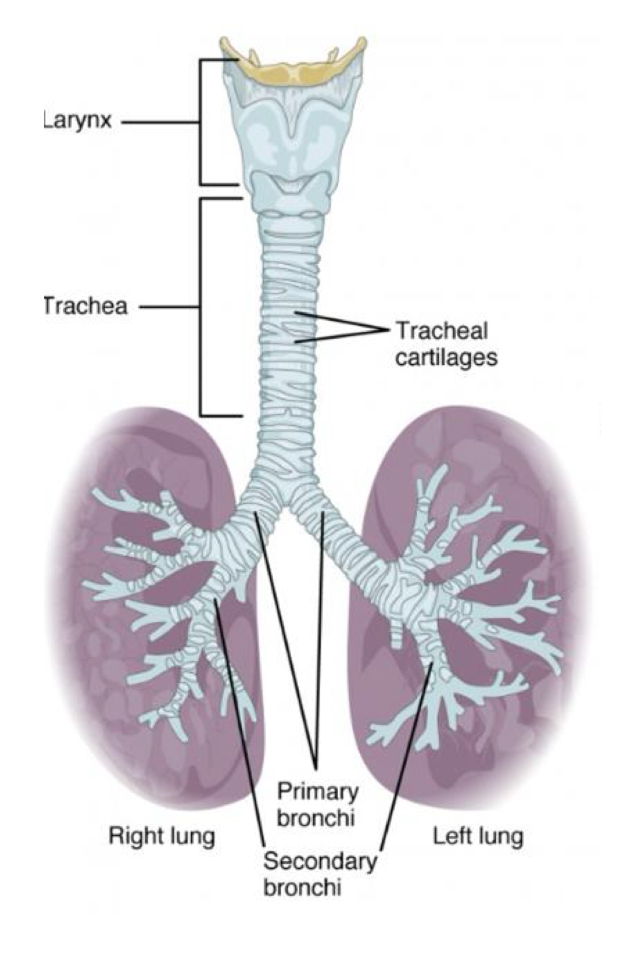
as airflow moves from the trachea to the primary bronchi → secondary bronchi (gets closer to alveoli) → tertiary bronchi the cross-sectional area gets smaller and the flow gets less turbulent and more laminar or steady (gets slower & straighter)
Gas Exchange in the Lungs: Partial Pressure
CO2 is the main drive of breathing under normal conditions
the medulla oblongata monitors CO2 levels more than O2
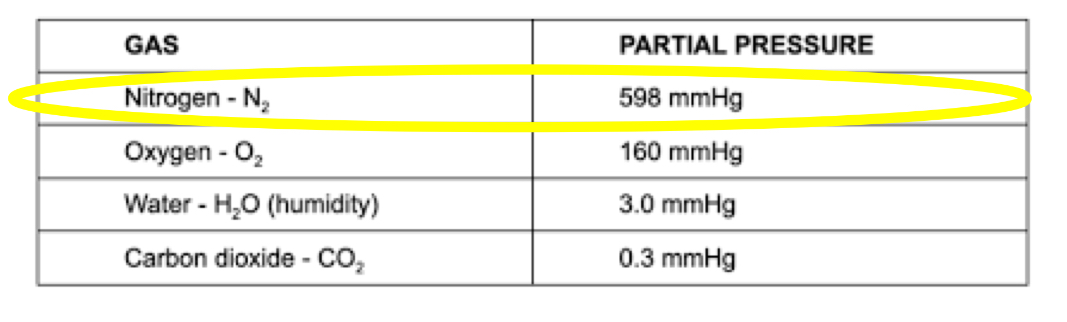
nitrogen is the most abundant gas in air and the highest partial pressure in the lungs
nitrogen is most abundant because it is very stable and relatively unreactive
because it does not readily participate in has exchange, it largely remains in the air spaces of the lungs
Respiratory System
Pulmonary ventilation: Inspiration and expiration, the movement of air in and out of the lungs
what we think of as respiration (breathing)
movement of air and all of its products
External respiration: breathing, occurs at the alveolar level
Carbon dioxide diffuses to the lungs from blood
Oxygen diffuses to the blood from lungs
CO2 out, O2 in
Internal respiration: occurs at the cellular level
Oxygen diffuses from blood to cells
Carbon dioxide diffuses from cells to blood
O2 travels with Hb
Breathing Mechanisms
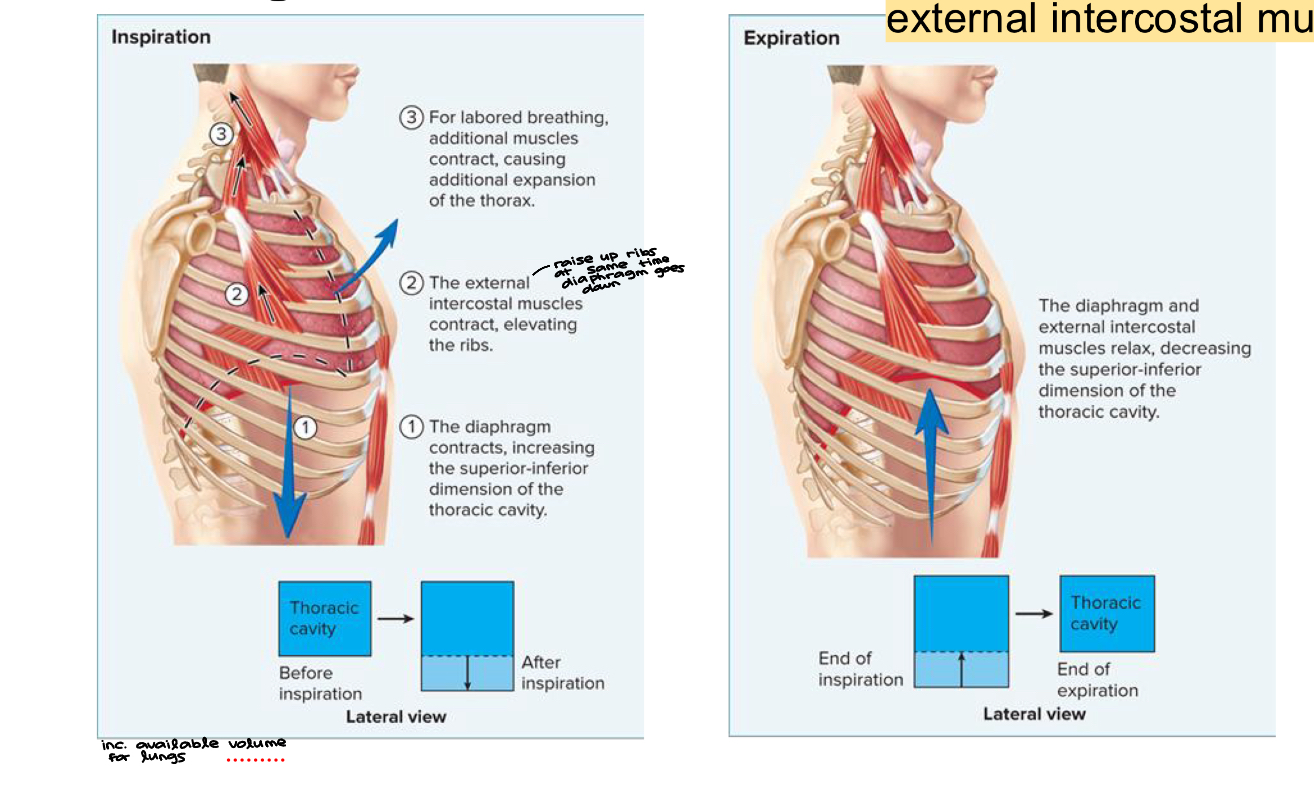
two muscles that assist in breathing: diaphragm and the external intercostal muscles
inspiration increases available volume for lungs
Spirometry and Lung Function
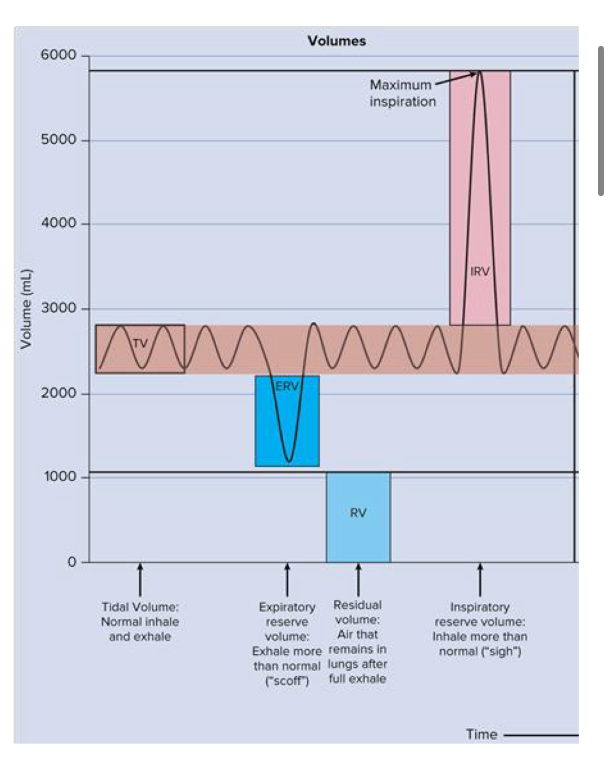
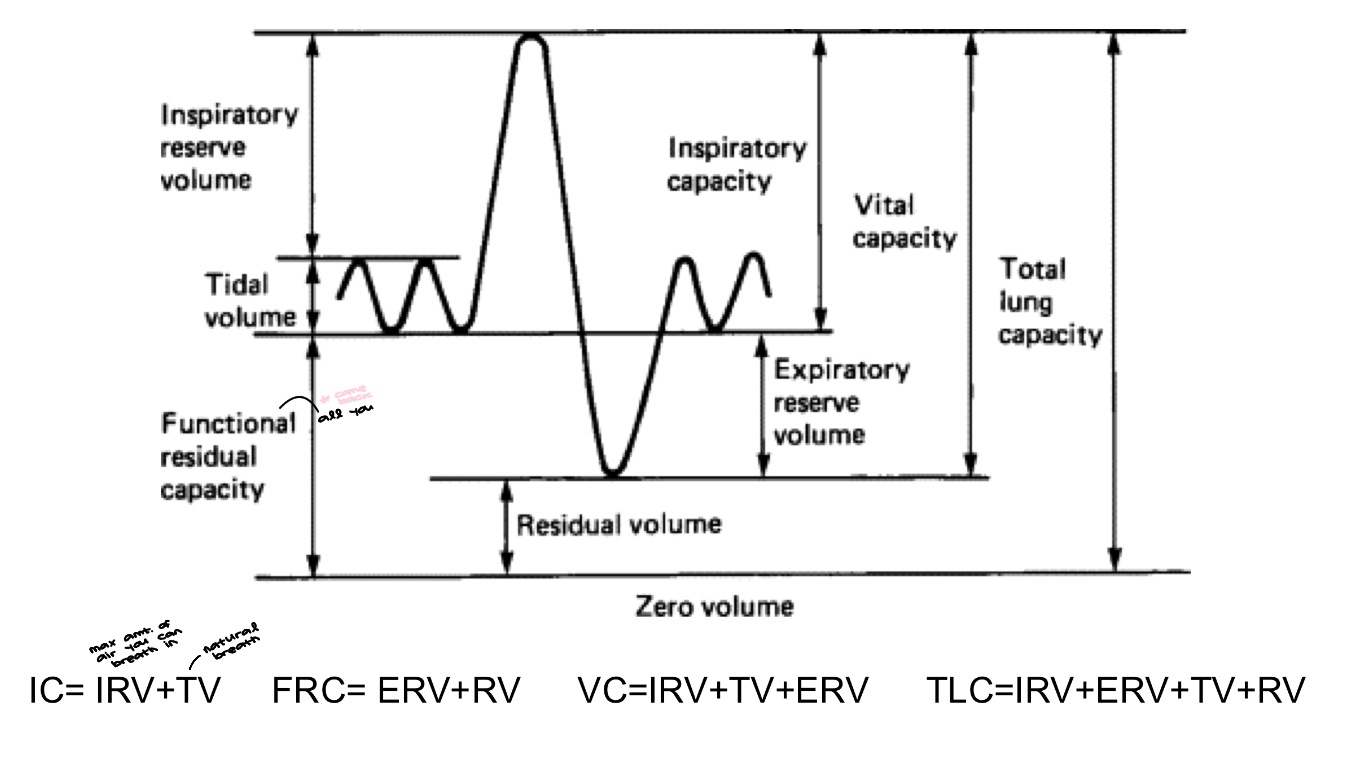
Process of measuring volumes of air that move into and out of the respiratory system using a spirometer
Pulmonary volumes:
Tidal volume
Inspiratory reserve volume
Expiratory reserve volume
Residual volume
Pulmonary Capacities
Pulmonary Capacities 2
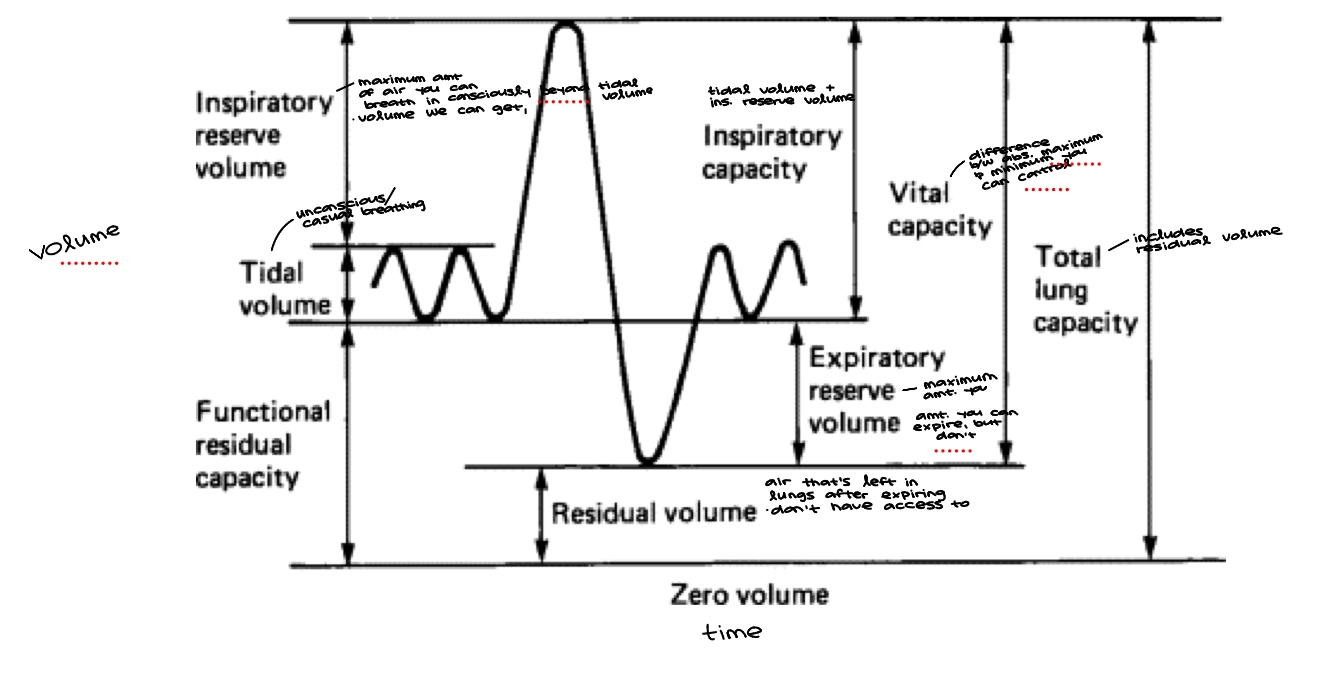
IC= IRV+TV
(amount of air a person can inspire maximally after a normal expiration)
FRC= ERV+RV
(amount of air remaining in the lungs at the end of a normal expiration)
VC=IRV+TV+ERV
(maximum volume of air a person can expel from the respiratory tract after a maximum inspiration)
TLC=IRV+ERV+TV+RV
Pulmonary Capacities 3
Lung Volume and Capacities
A: residual volume (RV)
B: vital capacity (VC)
C: inspiratory reserve volume (IRV)
D: tidal volume (TV)
E: total lung capacity (TLC)
F: expiratory capacity (EC)
G: inspiratory capacity (EC)
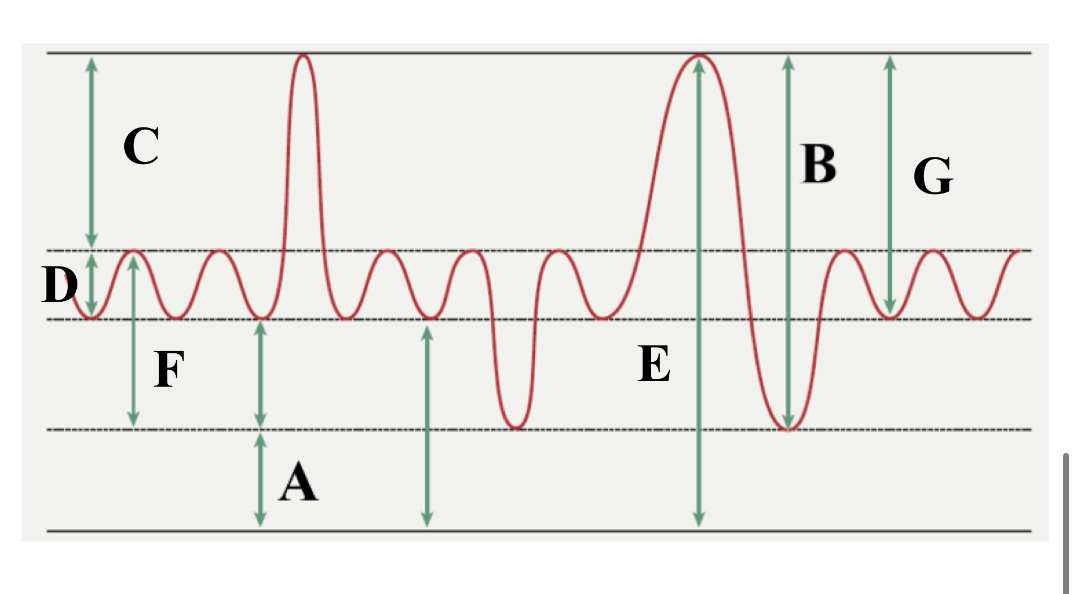
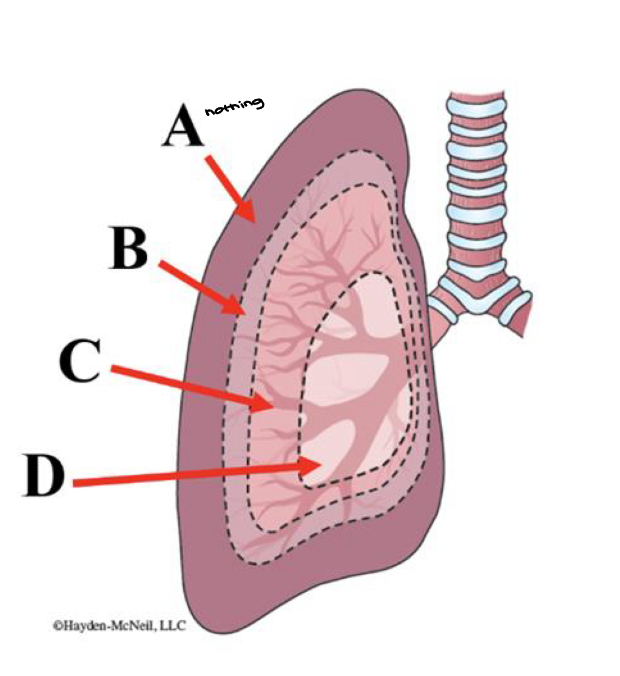
Where does the residual volume come from? Where does the tidal volume come from?
Residual: extra space in lungs
D is at the level of primary and secondary volume
Tidal volume comes from B
Physics of Gas Exchange
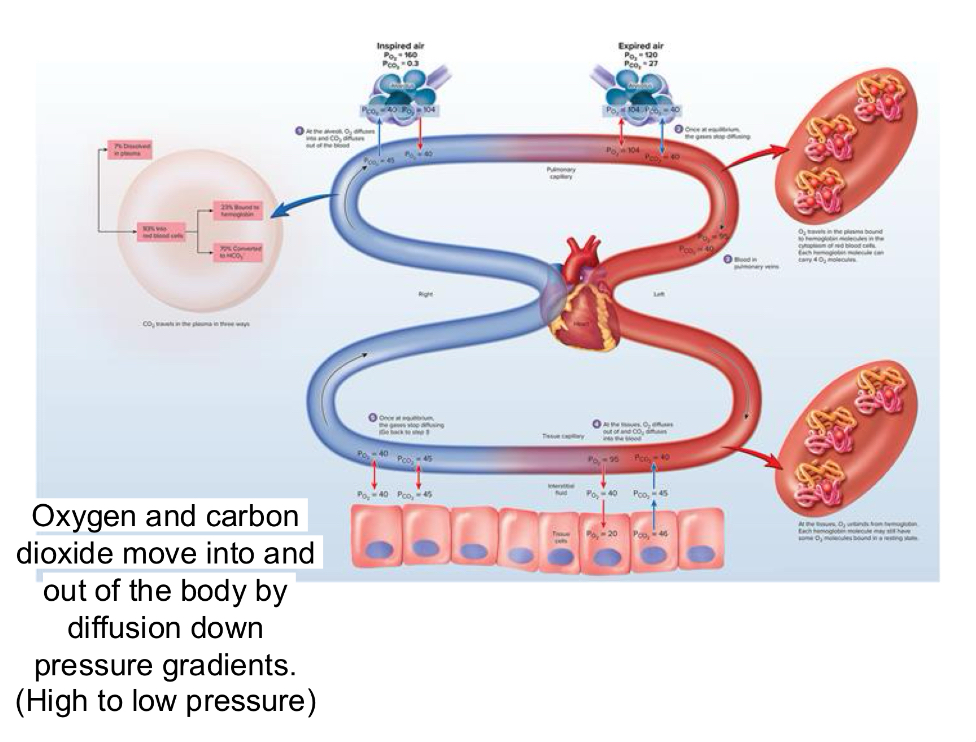
When a gas is in contact with a liquid that gas will dissolve in the liquid in proportion to its partial pressure.
For gas exchange to be efficient, there must be a close match, or coupling, between the amount of gas reaching the alveoli, known as ventilation, and the blood flow in pulmonary capillaries, known as perfusion.
Oxygen and carbon dioxide move into and out of the body by diffusion down pressure gradients. (High to low pressure)
Bohr Effect occurs when increasing partial pressures of carbon dioxide weakenend the hemoglobin-oxygen bond. The hemoglobin can then bind carbon dioxide and hydrogen ions to buffer carbon dioxide transport as bicarbonate. This is known as the Haldane effect.
At the body tissues, high carbon dioxide causes oxygen to dissociate from hemoglobin which allows more carbon dioxide to bind to the hemoglobin thus facilitating the exchange of gases. In the lungs, the gas gradients reverse, and the uptake of oxygen facilitates the release of carbon dioxide. As hemoglobin saturates, it releases the bound hydrogen ions which then combine with bicarbonate ions to generate carbonic acid which is subsequently converted to water and carbon dioxide. The carbon dioxide is then available to be removed from the body.
Some Medical Terms
Hypoxia: not enough oxygen (in response to ischemia)
Ischemia: not enough blood flow (blood carries oxygen to body, obstruction of blood vessel)
Ischemia often causes hypoxia, but hypoxia does not always mean ischemia
Anemic Hypoxia: lack of oxygen delivery due to too few erythrocytes (RBCs)
Hypocapnia: low carbon dioxide (CO₂) in the blood (alkalosis, low Co2 in blood)
Emphysema: permanent enlargement of the alveoli due to destruction of the alveolar walls
Hyperpnea: increased respiratory rate in response to increased metabolic demand, like running a marathon
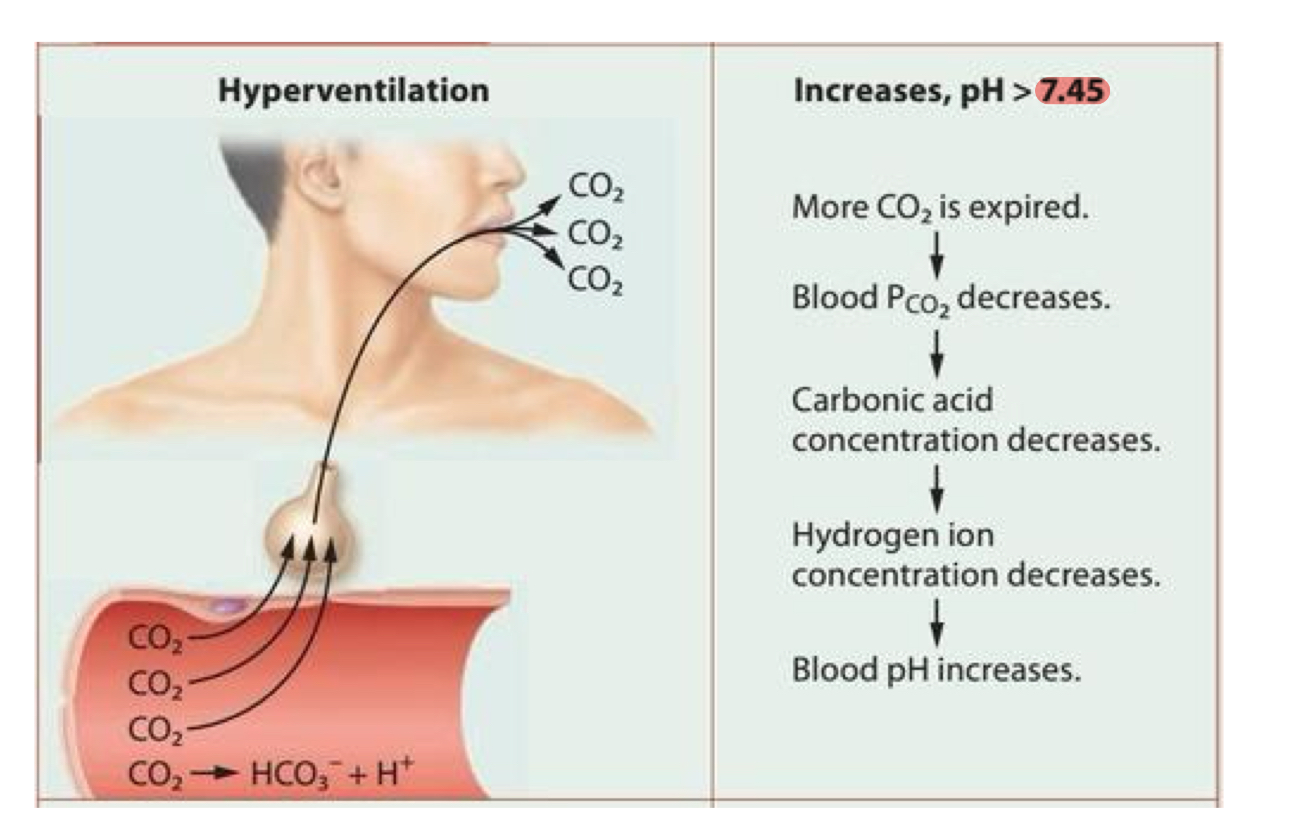
Hyperventilation
hyperventilation → kicks off lots of CO2 → blood pH goes up (alkalosis)
high CO2 in blood, low blood pH, acidosis
hyperventilation → alkalosis
Bohr Effect
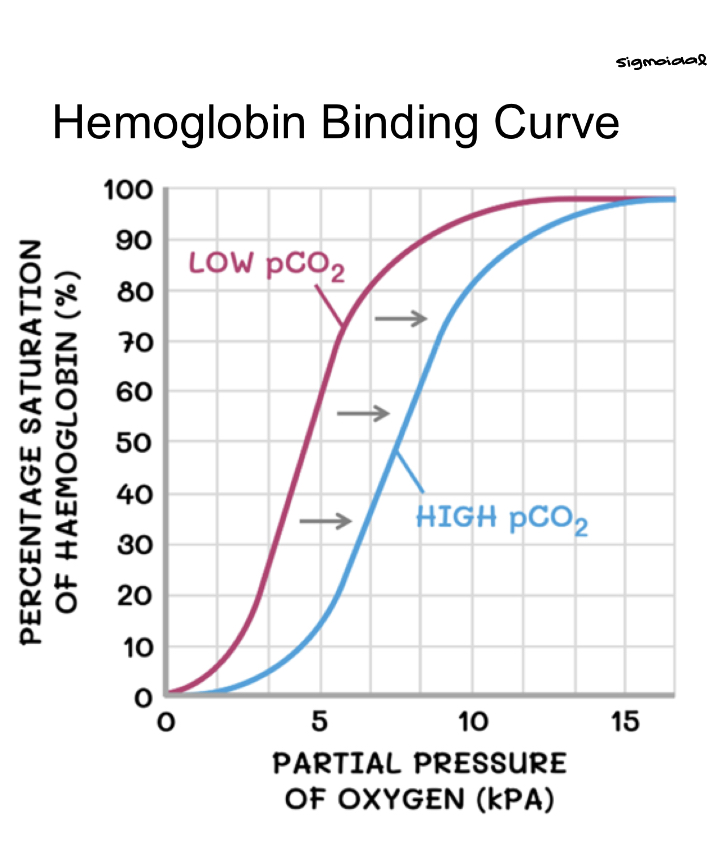
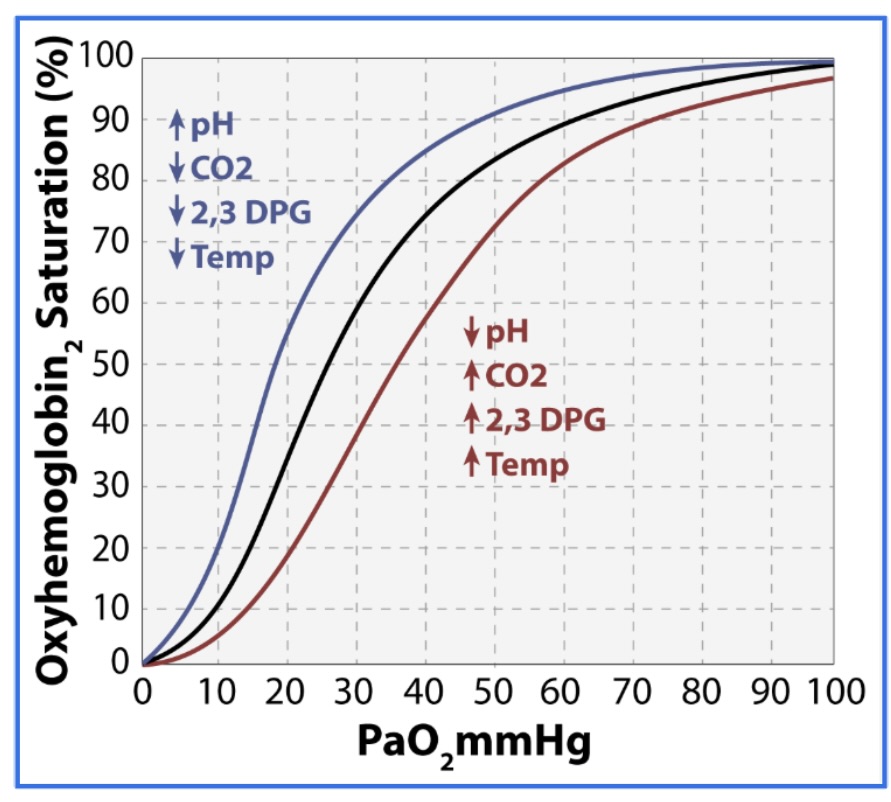
Hemoglobin binding curve shows how hemoglobin picks up and drops off oxygen
In the lungs, hemoglobin binds oxygen; in the tissues, it releases oxygen
Bohr effect: Increasing partial pressures of carbon dioxide weakening the hemoglobin-oxygen bond
Haldane effect: when hemoglobin releases oxygen, it can carry more CO₂
O2 and CO2 always reverse
Oxygen-Hemoglobin Dissociation Curve
Breathing Regulation
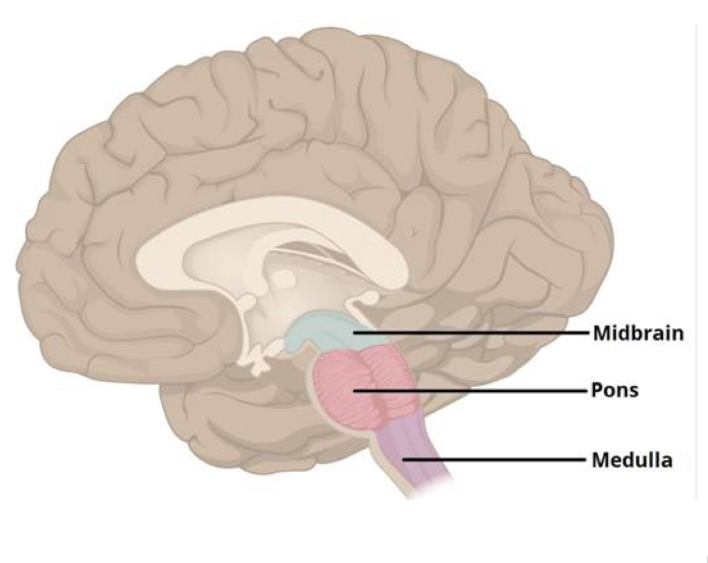
Respiration is controlled in the pons and medulla oblongata
Medulla oblongata
Ventral respiratory group
Initiates inspiration and expiration
Dorsal respiratory group
Alters breathing rate
Pons
Pontine respiratory group
Modifies and fine tunes breathing rhythms
makes it more smooth… w/out, breathing would be choppy
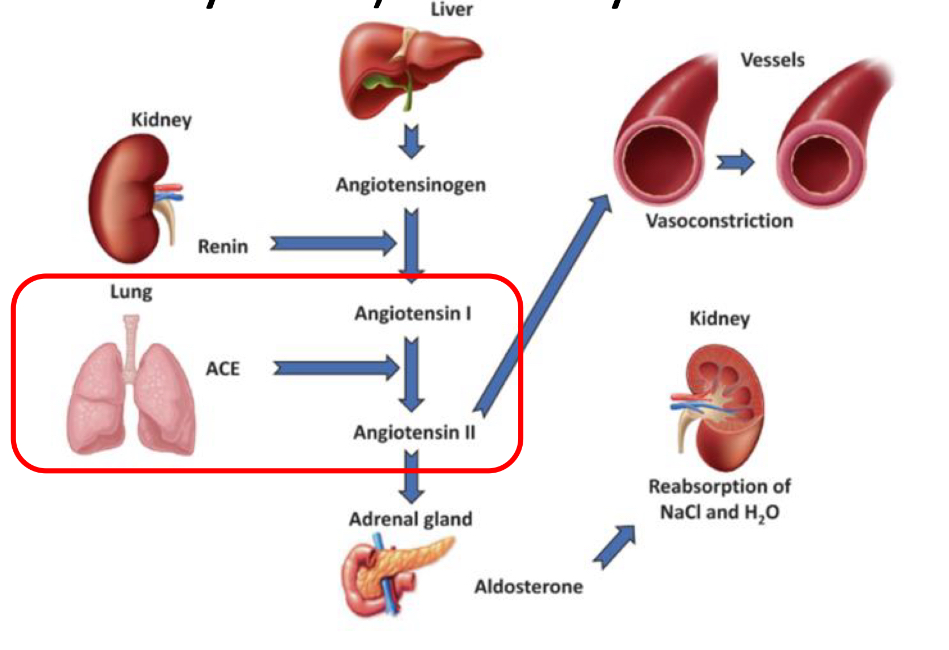
The lungs role in the (Renin-Angiotensin-Aldosterone System) RAAS System
ACE: Angiotensin Converting Enzyme
The RAAS system regulates blood pressure!