Neuropsychology Final
 Studied by 0 people
 Call Kai
 Learn
Learn Practice Test
 Spaced Repetition
 Match
Match Flashcards
 Knowt Play
1/289

There's no tags or description
Looks like no tags are added yet.
Name | Mastery | Learn | Test | Matching | Spaced | Call with Kai |
|---|
No analytics yet
Send a link to your students to track their progress
290 Terms
What are the two strategies for spatial navigation?
• Route-based navigation: Following a specific path or sequence of landmarks.
• Map-based navigation: Using an internal representation or “map” of the environment.
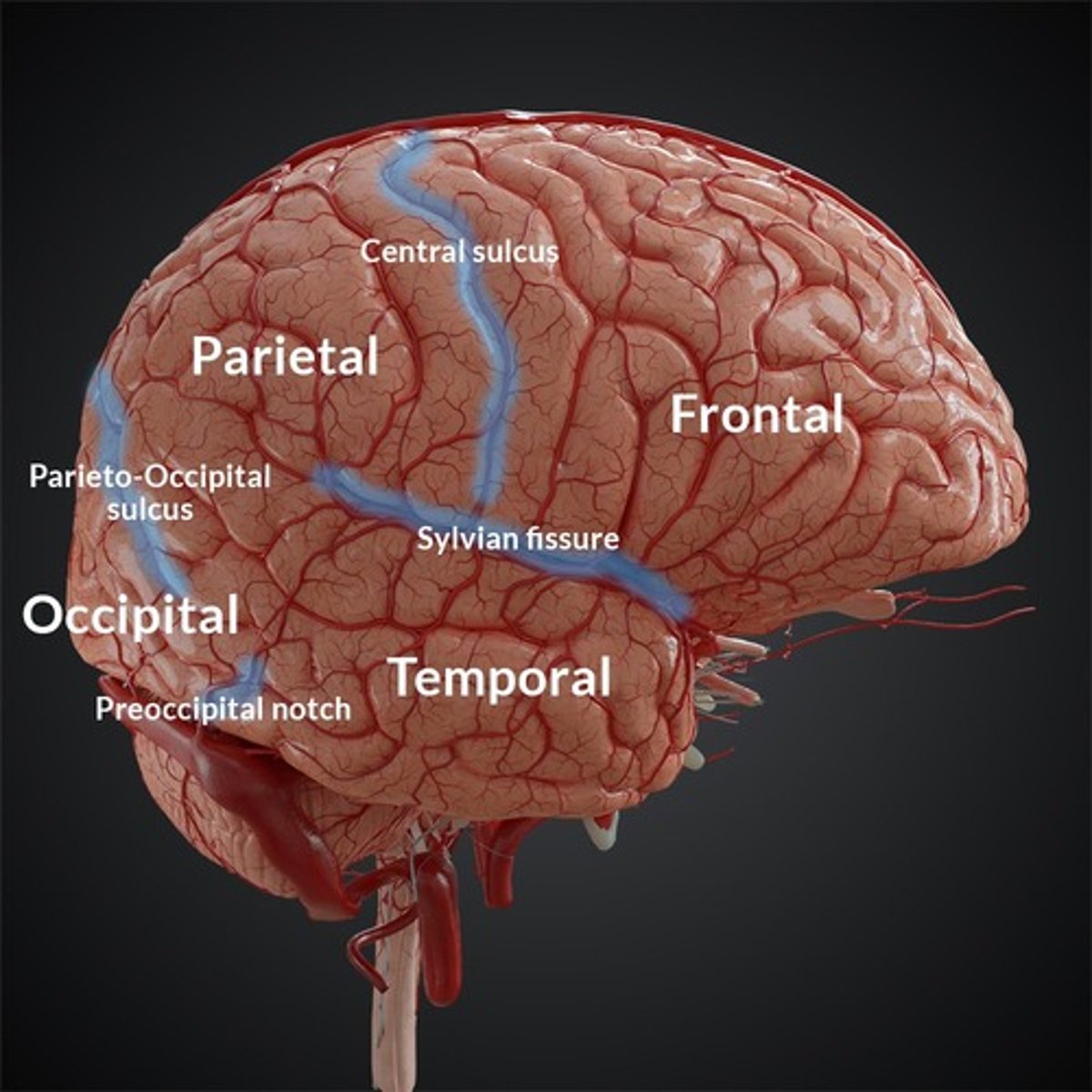
What is the superior temporal gyrus (STG), and where is it located?
- the uppermost gyrus of the temporal lobe
- involved in processing auditory information and language comprehension.
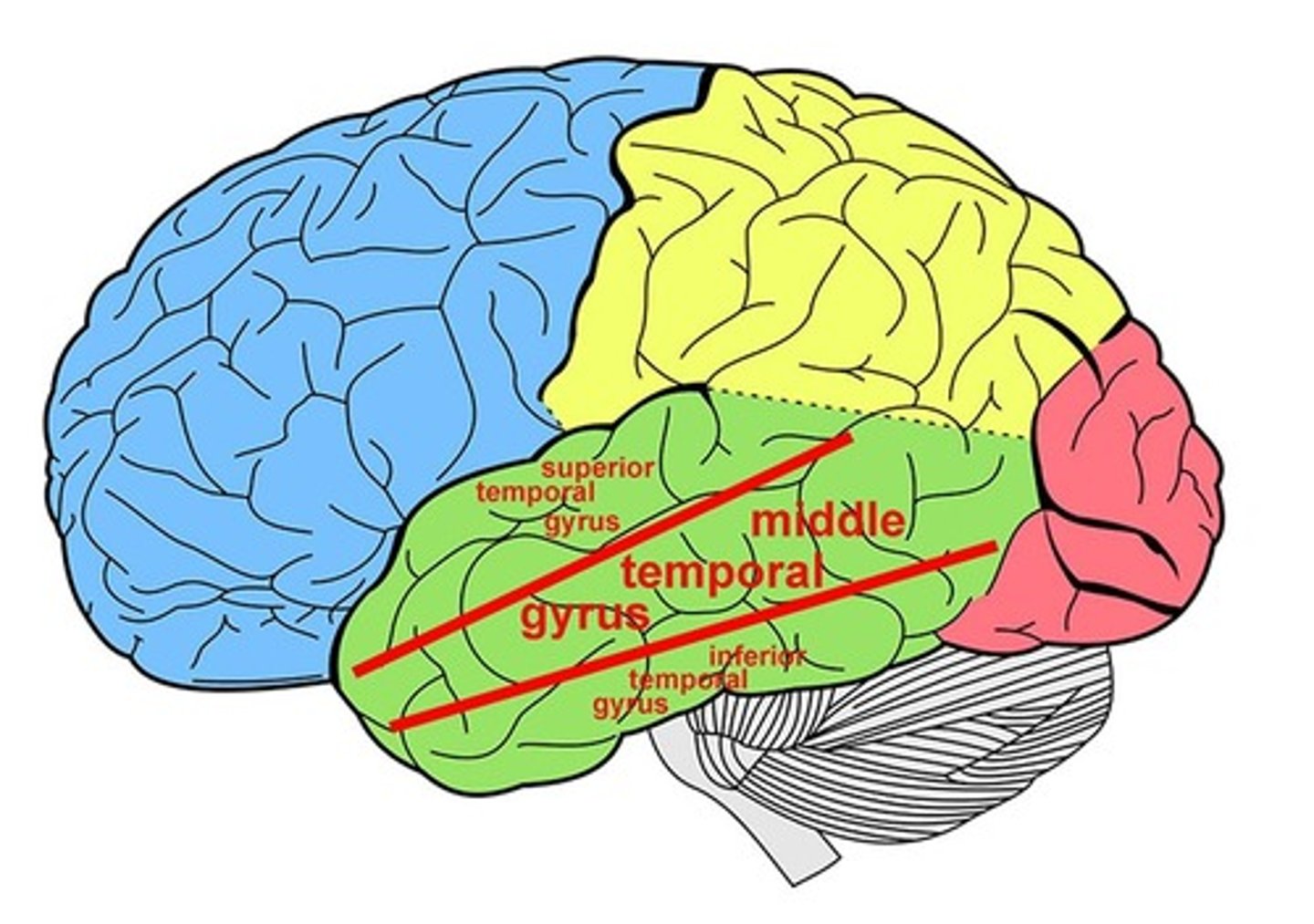
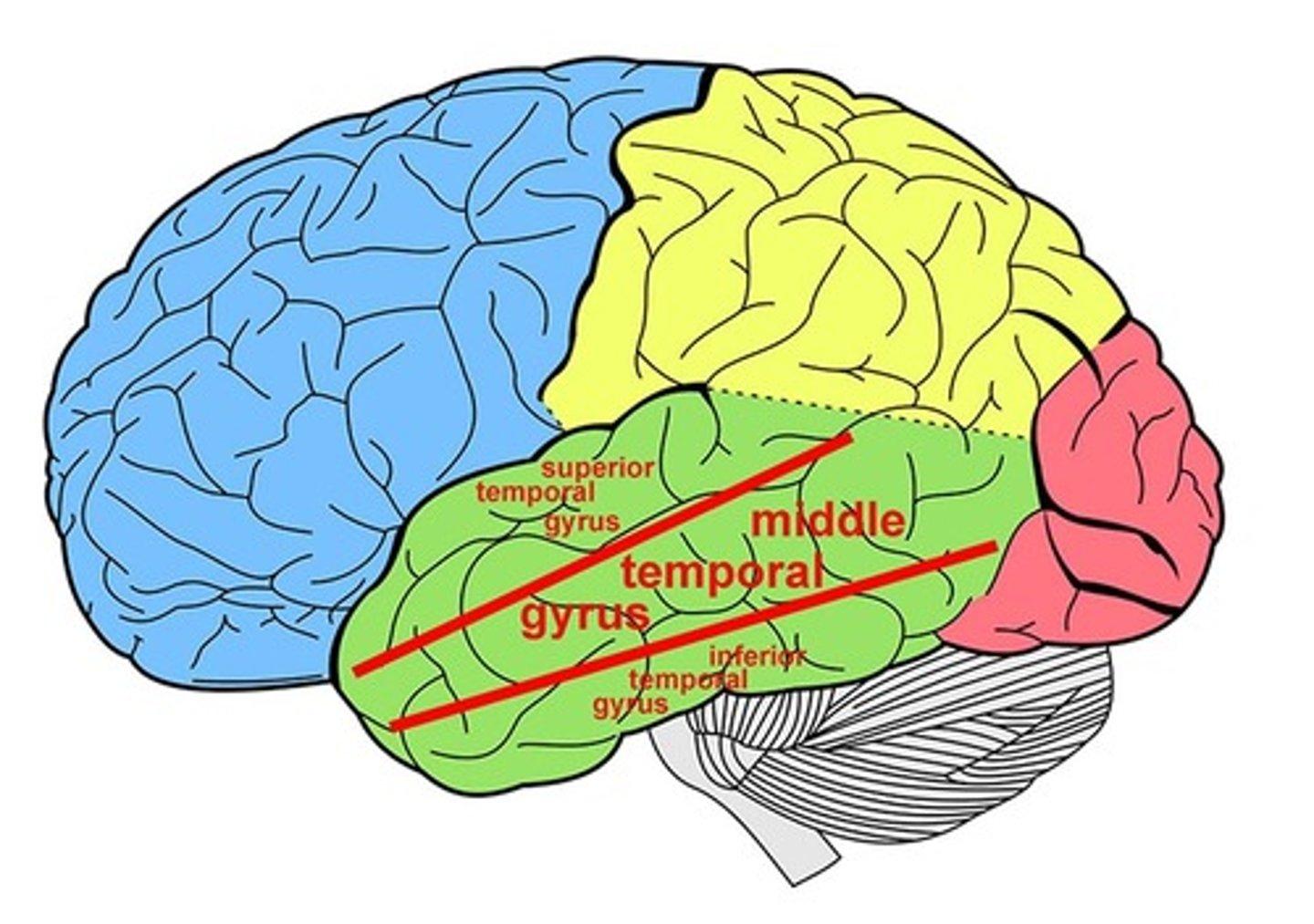
What is the function of the middle temporal gyrus, and where is it located?
- located between the superior and inferior temporal gyri
- linked to semantic memory and language processing
What are special characteristics of speech compared to other sounds?
- Speech sounds are restricted to three main frequency ranges (formants).
- Context can change a speech sound's acoustics, but it is still recognized as the same sound.
- The auditory system groups similar sounds as equivalent, even if they differ acoustically.
- Speech sounds change quickly, and their sequence is essential for comprehension..
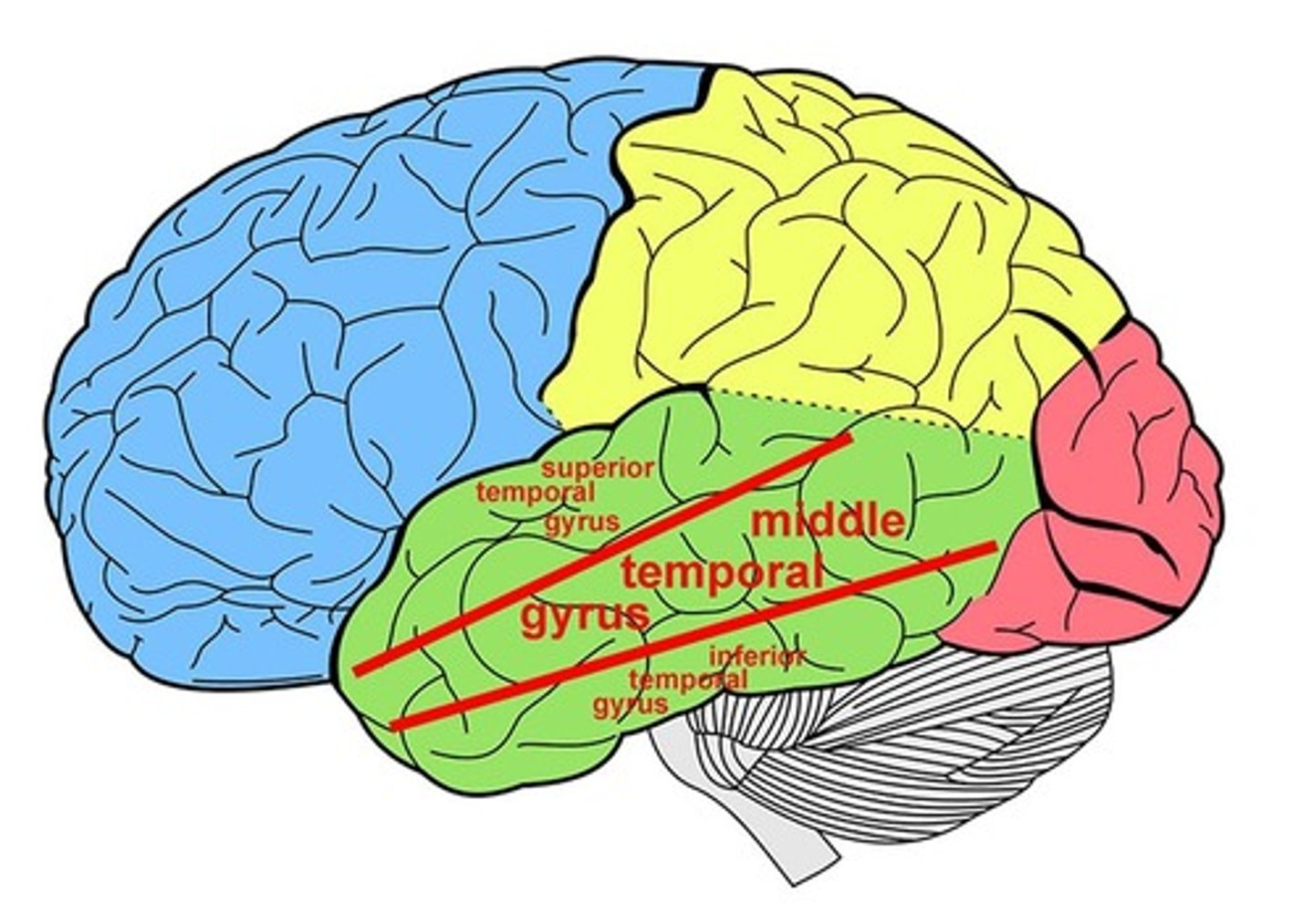
What is the inferior temporal gyrus, and what is its role?
- located at the bottom of the temporal lobe
-crucial for object recognition and perception
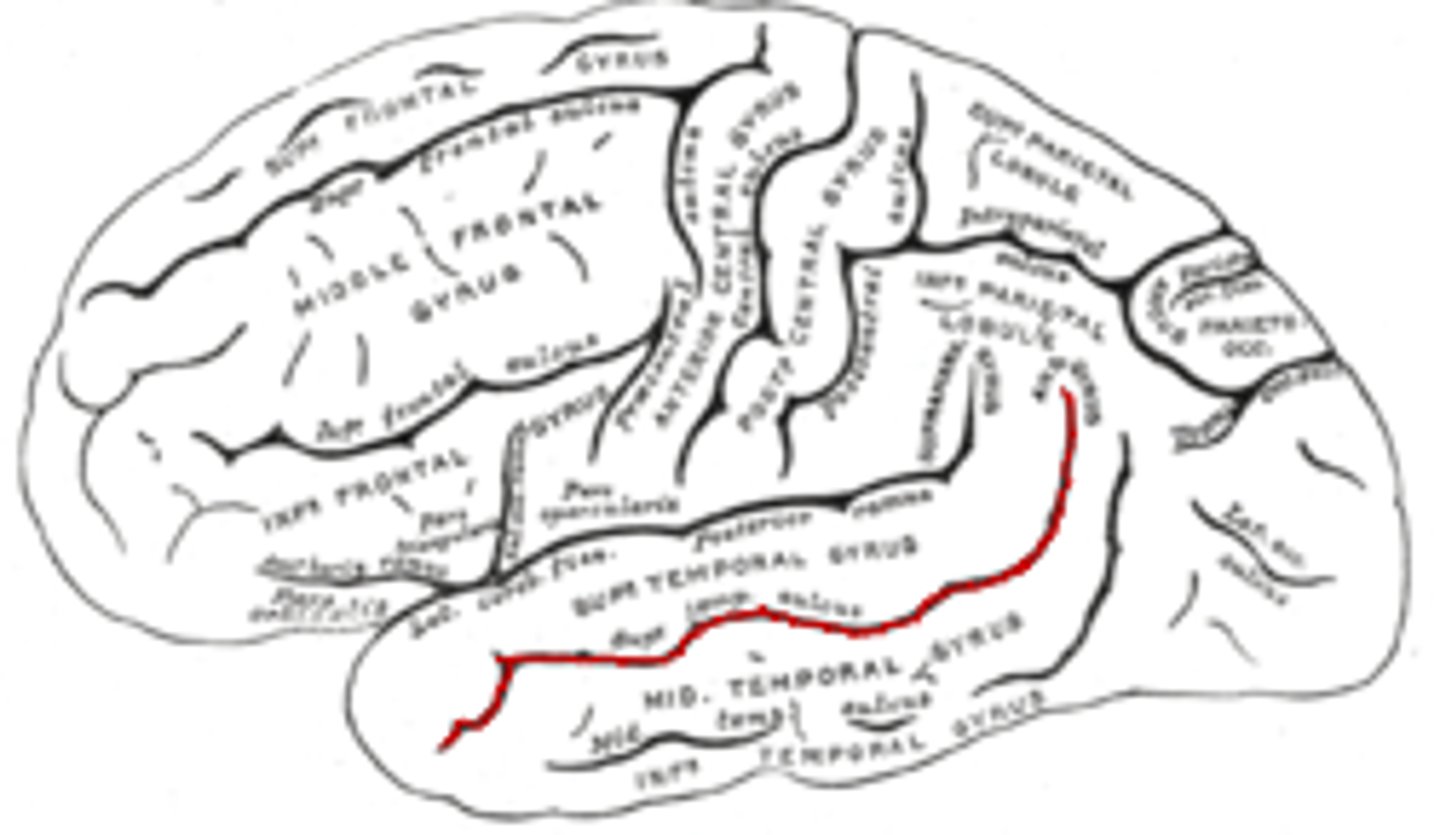
What is the superior temporal sulcus (STS), and what is its function?
- this separates the superior temporal gyrus from the middle temporal gyrus
- is involved in processing biological motion and social perception
What is the lateral fissure (Sylvian fissure), and what does it separate?
- this divides the temporal lobe from the frontal and parietal lobes above it
1. What is the neuroanatomical substrate for auditory object specification?
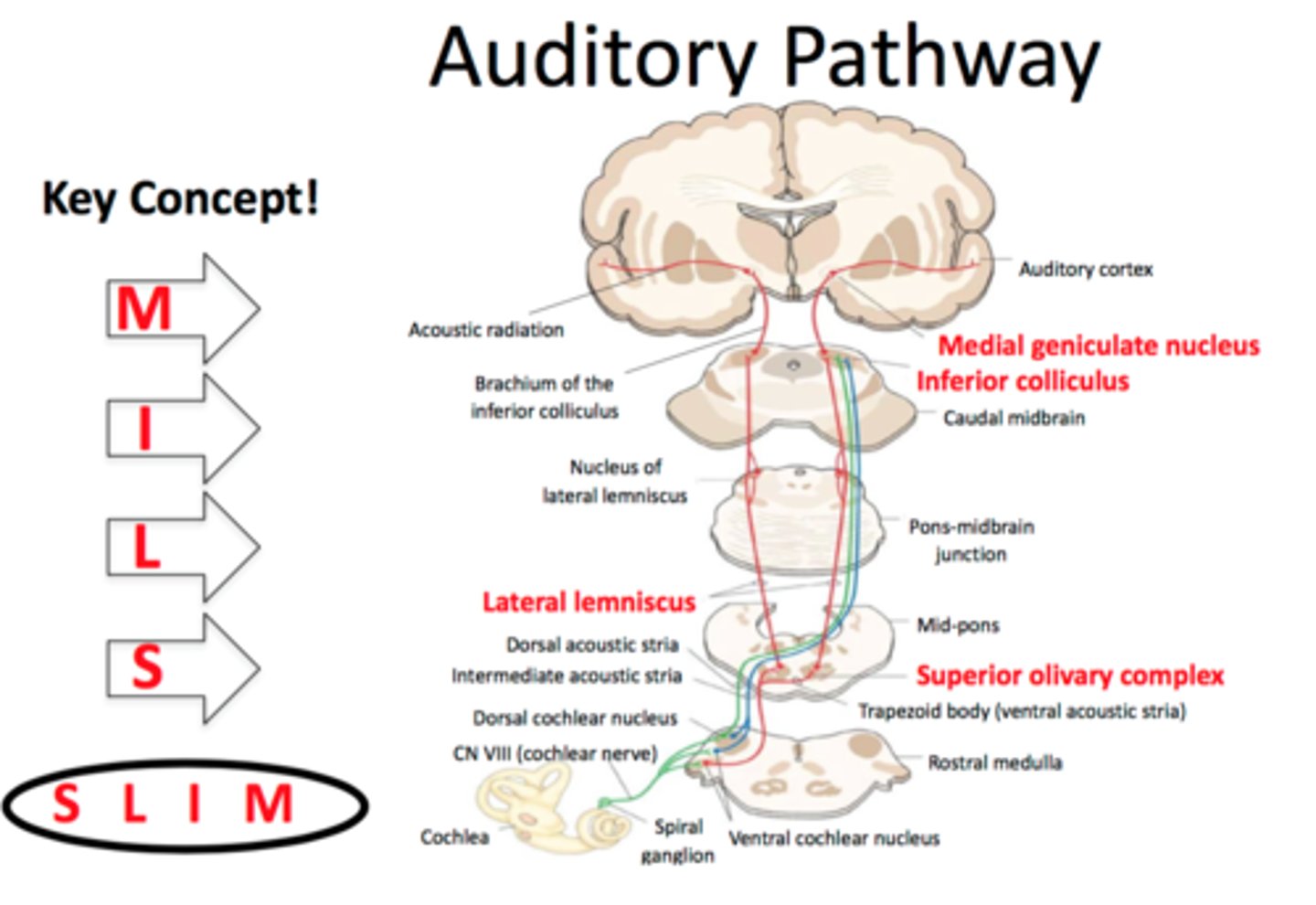
• The primary auditory cortex (Heschl’s gyrus) processes basic sound properties.
• Further analysis occurs in the superior temporal gyrus and secondary auditory regions.
What brain areas are involved in visual object specification?
- Begins at the primary visual cortex (V1).
• Progresses to the inferior temporal gyrus for object recognition.
Where is the polymodal area in the temporal lobe, and where does it receive information from?
- this area is in the superior temporal sulcus (STS)
- receives information from the auditory stream (superior temporal gyrus) and visual stream (inferior temporal gyrus)
How does the dorsal auditory pathway run in the temporal lobe, and what is its function?
1. Enters the spinal cord and ascends ipsilaterally in the dorsal columns.
2. Decussates (crosses) in the medulla.
3. Travels to the ventral posterior nucleus (VPN) of the thalamus.
4. Projects to the primary somatosensory cortex
- funciton: integrates auditory and spatial infromation
What is the perforant pathway, and what is its function?
1. Entorhinal Cortex → Sends input to the dentate gyrus of the hippocampus.
2. Dentate Gyrus → Projects to the CA3 region of the hippocampus.
3. CA3 → Sends signals to CA1 via the Schaffer Collaterals.
4. CA1 → Sends output back to the entorhinal cortex or forward to other cortical areas.
- facilitates the formation of new memories by linking sensory input to long-term memory storage
How does the temporal cortex connect with the frontal lobes?
- the posterior temporal cortex connects to the dorsolateral prefrontal cortex (executive function),
- the anterior temporal cortex connects to the orbitofrontal cortex (decision-making and emotional regulation).
How is object perception processed in the brain?
- this is processed along the ventral stream, starting in the primary visual cortex (V1) and progressing to the inferior temporal cortex, integrating edges, contrasts, and spatial configurations.
What is biological motion perception, and where is it processed?
this efers to recognizing motion patterns of living beings
- it is processed in the superior temporal sulcus (STS)
Where in the brain is face perception processed?
occurs in the fusiform face area (FFA) within the inferior temporal gyrus.
How does the ventral visual stream process object perception from V1 to the hippocampus?
V1 processes basic visual features (edges, contrast), secondary areas (V2/V4) combine these into coherent forms, the inferior temporal areas assign semantic meaning, and the hippocampus associates objects with memory.
What evidence challenges a strictly progressive model of object perception?
- Parallel processing shows features are processed simultaneously in distributed networks, not strictly hierarchically from the occipital lobe to the temporal pole
population coding
this involves large groups of neurons responding in varying patterns to represent objects, providing greater robustness and adaptability
What evidence supports the existence of grandmother cells?
single-cell recoridngs in monkeys/huamans show neurons that specfically respond to individual objects/faces, suggesting speciaized nuerons for recognition
What are the problems with hypothesizing object-specific neurons?
Issues include fragility, adaptability, and the complexity of real-world object recognition
What is view-dependent shape perception, and what evidence supports it?
- this perception relies on stored images of objects from specific angles.
- evidence includes slower recognition of rotated or unfamiliar views
What is view-invariant shape perception, and what evidence supports it?
- this perception relies on 3D object representations, independent of orientation
- evidence includes neurons in higher-order visual areas responding similarly across views
Agnosia
the failure to recognize objects despite intact sensory function.
Two types of visual agnosia
apperceptive agnosia and associative agnosia
Associative agnosia
• Inability to assign meaning to perceived objects despite intact visual perception.
• Patients can copy or match objects, but cannot name or describe their function.
• Example: Can draw a bicycle but cannot say what it is .
What is biological motion perception, and what brain area is involved?
- this perception is the ability to recognize movement patterns of living beings
- processed in the superior temporal sulcus (STS)
What role does biological motion perception play in social cognition?
It helps interpret gestures, intentions, and subtle social signals, crucial for social interaction.
What parts of face processing are carried out in the Fusiform Face Area (FFA)?
recognizing faces and distinguishing individuals.
What role does the Superior Temporal Sulcus (STS) play in face processing?
analyzes biological motion, gaze direction, and expressions, contributing to social perception
What role does the striate cortex (V1) play in face processing?
processes basic visual features such as edges, orientation, and contrast, which serve as the foundation for higher-order processing in the FFA and STS
Prosopagnosia
is the inability to recognize faces, often referred to as "face blindness."
Are there differences in the degree of prosopagnosia?
Yes, individuals can have varying levels of impairment, ranging from difficulty recognizing familiar faces to complete inability to recognize any faces.
Is prosopagnosia congenital or acquired?
Either congenital (present from birth) or acquired (due to brain damage, often in the fusiform gyrus).
What processes commonly cause conductive hearing disorders?
These are commonly caused by blockages or issues in the outer or middle ear, such as earwax buildup, fluid in the middle ear, or damage to the eardrum
What is the most common cause of conductive hearing loss?
Middle ear infections (otitis media) are a frequent cause
What is the point of 'tubes' in your ears?
these are inserted into the eardrum to drain fluid from the middle ear, reduce infections, and equalize pressure in cases of chronic ear infections.
What processes commonly cause sensorineural hearing disorders?
- these are caused by damage to the inner ear (cochlea) or auditory nerve.
- common causes include exposure to loud noise, aging, infections, and genetic predispositions
What is the general idea behind hearing aids?
used to amplify sound to compensate for hearing loss, particularly in cases where hair cells in the cochlea are damaged
What is the general idea that governs cochlear implants?
these bypass damaged hair cells in the cochlea, converting sound into electrical signals that directly stimulate the auditory nerve
How does the information from air vibrations get to the "normal" part of the auditory system? (cochlear implants)
a microphone captures sound, which is processed and transmitted to electrodes in the cochlea, stimulating the auditory nerve
Which part of the auditory system does the cochlear implant target?
the auditory nerve
What type of hearing disorder may make people a candidate for cochlear implants?
Sensorineural hearing loss, particularly in individuals with severe to profound hearing loss
What is a requirement for a cochlear implant to work?
the auditory nerve must be intact for the implant to transmit signals effectively
What is (usually) the result of bilateral lesions of the primary auditory cortex? Why is this strange?
these typically do not lead to complete cortical deafness; individuals often retain basic auditory sensations. This contrasts with damage to the primary visual or somatosensory cortices, which leads to significant loss of function in their respective domains.
bilateral lesions
lesions involving both sides of the brain
What are auditory hallucinations?
these involve hearing sounds, voices, or other auditory sensations that are not present in the environment.
What is a disorder where sufferers commonly experience auditory hallucinations?
Schizophrenia
What is thought to be the cause of auditory hallucinations?
Spontaneous neural activity in the auditory cortex, interacting with language and memory areas, is thought to cause these hallucinations.
What is the difference in the emotional valence of auditory hallucinations in those with and without schizophrenia?
schizophrenic auditory hallucinations are more disturbing and emotional while regular ones are natural or less distressing.
What does the research by Dierks et al. (1999) show about auditory hallucinations?
Their fMRI study showed activation in the primary auditory cortex, Broca's area, posterior temporal speech zones, and limbic regions (amygdala and hippocampus), suggesting the involvement of auditory processing, language, memory, and emotional systems.
What are two different kinds of auditory processing?
Rapidly presented stimuli and complex patterns of stimuli
Rapidly presented stimuli
sensory info shown very quickly, often too fast for conscious perception
Complex patterns of stimuli
multiple elements are combined within a single stimulus, mkaing ir difficulty to process/interpret
What is achieved by the auditory system categorizing sounds?
this allows consistent recognition of speech sounds despite contextual variations.
What are the symptoms of left auditory cortex damage in speech perception?
- difficulty discriminating sounds.
- complaints that people "talk too fast."
- inability to judge temporal sequences of sounds (e.g., resolution threshold increases from 50-60 ms to about 500 ms).
What are the symptoms of right auditory cortex damage in speech perception?•
- Difficulty understanding emotional intonation in language (prosody).
What are the main characteristics of music that can be perceived?
- loudness
- pitch
- timbre
- rhythm
- meter
- melody
What are the hemispheric differences in music perception?
- Left hemisphere: responsible for rhythm and grouping
- Right hemisphere: handles pitch discrimination and melody
Amusia
a deficit in pitch discrimination, often caused by right hemisphere damage
What can result from temporal lobe damage on the selection of auditory input?
impairment in the ability to filter and focus on relevant auditory stimuli
How is selection of auditory input tested?
through dichotic listening tasks where words are presented simultaneously in both ears. Typically, better recall is observed in the right ear, which is processed by the left temporal lobe
How do neuropsychologists test the use of contextual information?
McGill Picture Anomalies Test (MPAT): Patients are shown pictures with subtle anomalies that require contextual understandingto detect.
• Example: A person wearing mismatched shoes or sitting on a table instead of a chair.
• Other Tasks:
• Ambiguous words (e.g., “bank” for river vs. financial institution).
• Recognizing objects or faces out of context.
Temporal Lobe Damage: Patients, especially with right temporal lobe damage, often struggle to integrate context for meaning or recognition .
How does temporal lobe damage affect the use of contextual information?
individuals with temporal lobe damage may struggle to interpret ambiguous information or recall material that requires understanding context
What is the effect of damage to the medial temporal lobe?
impairment in long-term memory formation
What is the effect of damage to the left and right temporal lobe?
- • Temporal Lobe Damage:
• Left Temporal Lobe Damage: Impairs understanding of speech sounds and sequence discrimination.
• Right Temporal Lobe Damage: Leads to difficulty understanding emotional context or intention in speech and poor recognition of objects or faces out of context .
What changes in personality and affect can occur in temporal lobe epilepsy?
individuals may develop "temporal lobe personality," characterized by aggression, hostility, self-centeredness, and obsessive preoccupation with religion
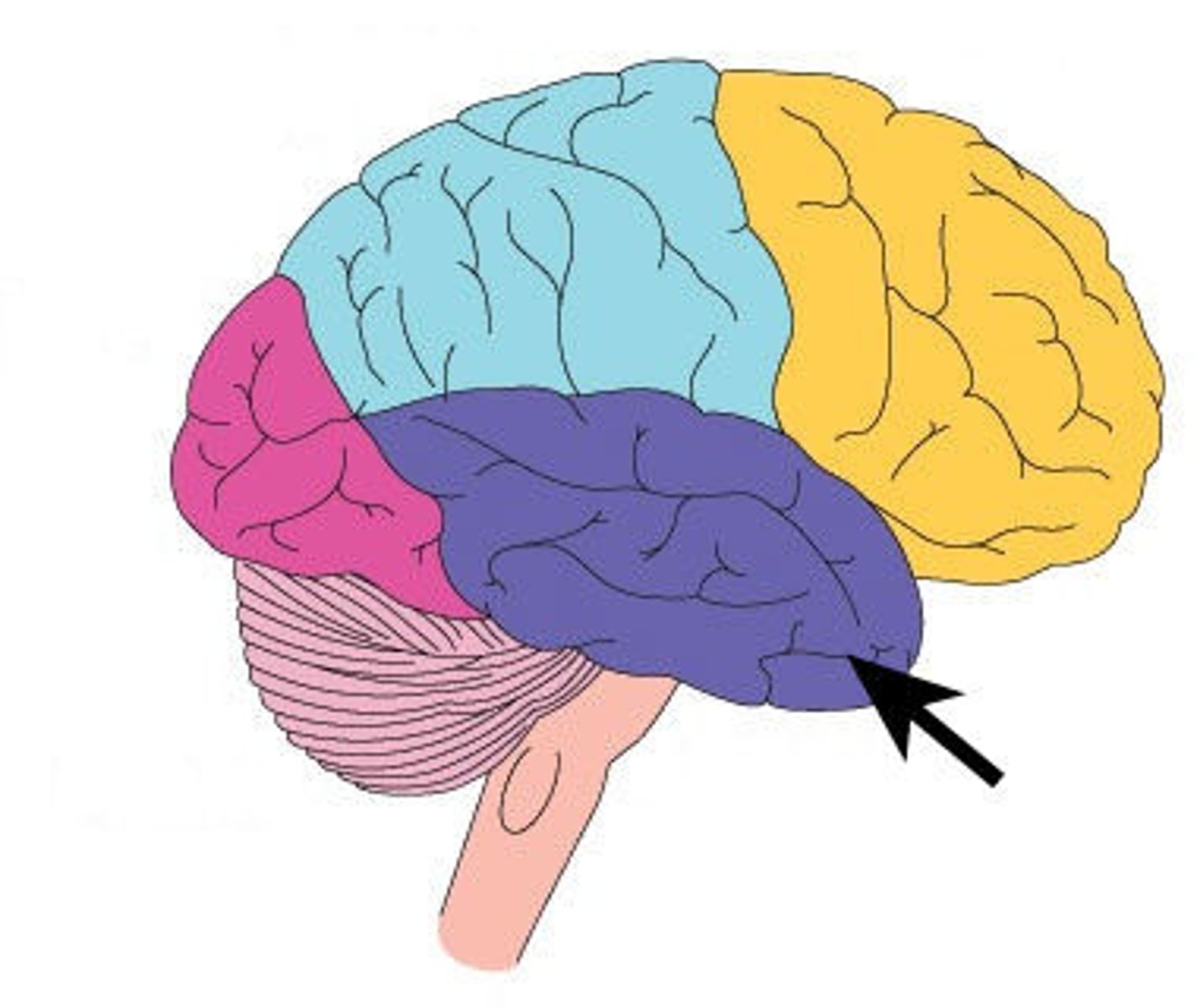
temporal lobe
A region of the cerebral cortex responsible for hearing and language.
exteroception
perception of external stimuli (e.g., touch, temperature).
Which submodalities are included in somatosensation, and are they interoceptive or exteroceptive?
inteoceptive:
- Nociception
- Proprioception
exteroceptive:
- Hapsis
- Balance
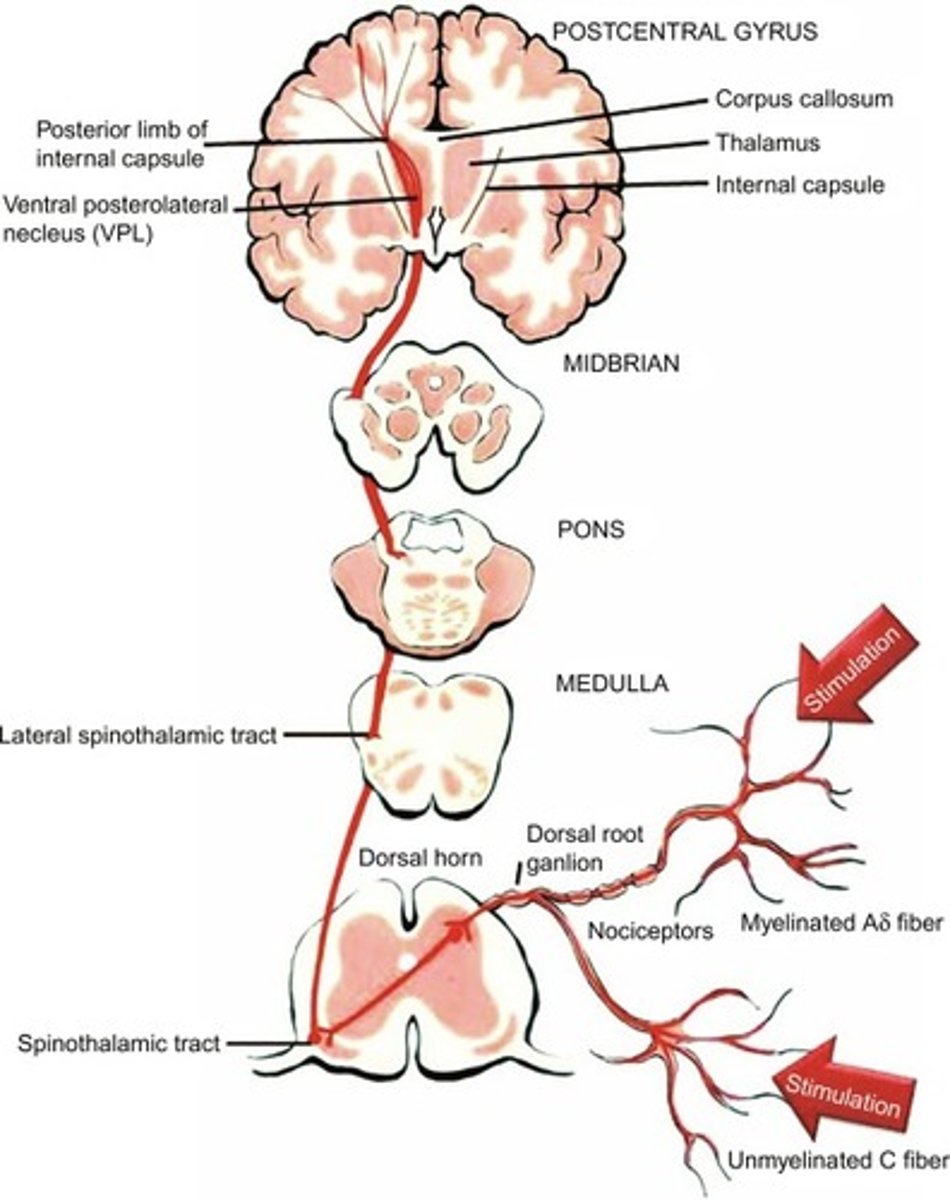
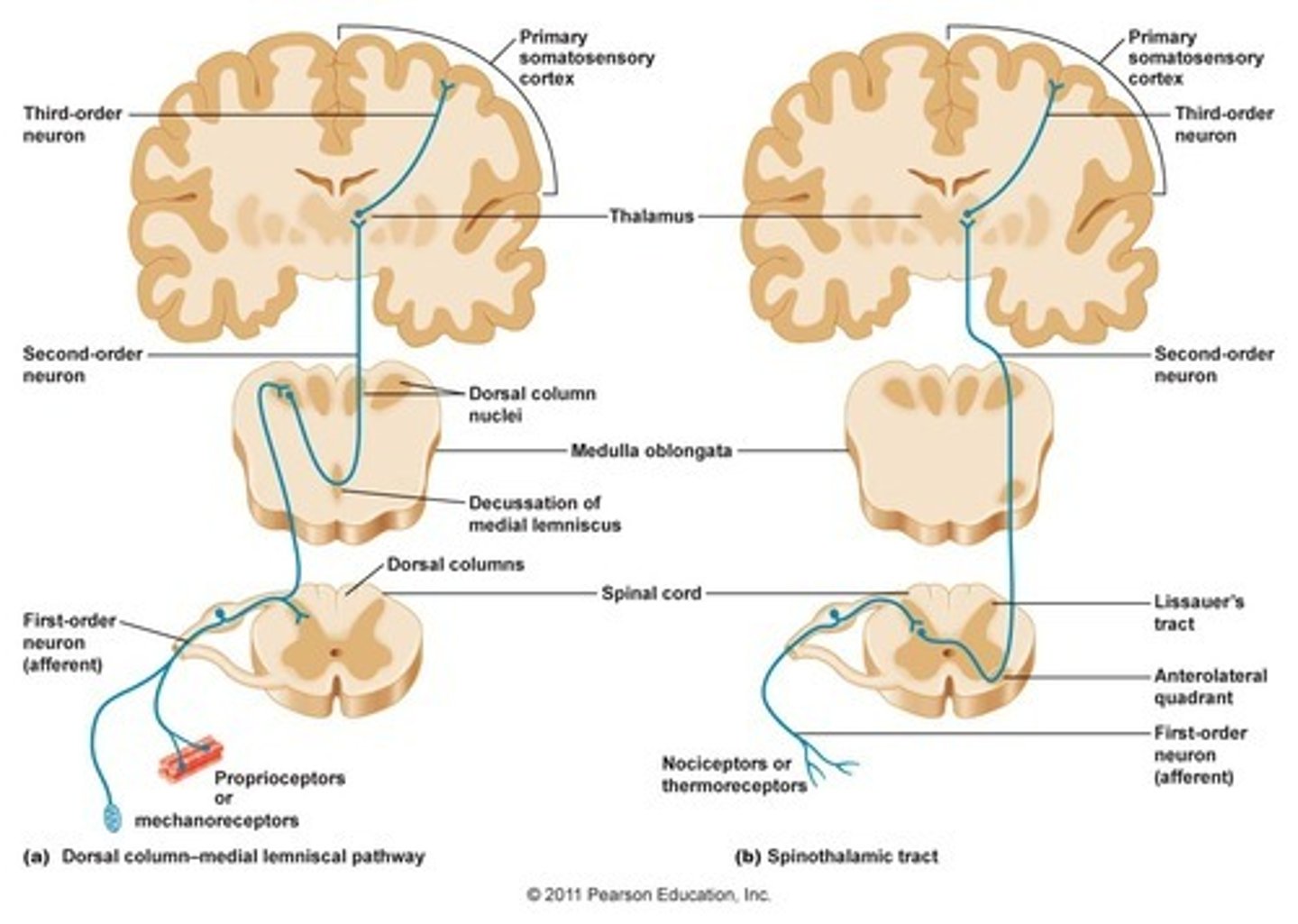
What somatosensory submodalities are carried in the spinothalamic tract?
nocioception (pain and temperature)
How does the spinothalamic tract run, and where does it decussate?
1. Sensory Receptors → Detect pain and temperature signals.
2. Spinal Cord → Signals enter the spinal cord, decussate (cross) at the entry level.
3. Ascend → Travel up the spinothalamic tract to the thalamus.
4. Thalamus → Relays information to the primary somatosensory cortex for processing.
• What somatosensory submodalities are carried in the dorsal column medial lemniscal pathway?
Submodalities: Fine touch (hapsis), vibration, and proprioception.
How does the dorsal column medial lemniscal pathway run, and where does it decussate?
1. Sensory Receptors → Detect fine touch, vibration, and proprioception.
2. Spinal Cord → Signals travel ipsilaterally in the dorsal columns.
3. Medulla → Synapse in the nucleus gracilis or nucleus cuneatus and decussate (cross).
4. Ascend → Travel up the medial lemniscus to the thalamus (ventral posterior nucleus).
5. Thalamus → Relays signals to the primary somatosensory cortex for processing.
Why does spinning followed by a sudden stop feel like the world is spinning?
The jellylike substance in the semicircular canals continues to move after stopping, stimulating hair cells
Which cranial nerve handles vestibular information, and what is its purpose?
cranial nerve VIII (vestibulocochlear nerve)
- Maintaining balance and posture.
• Coordinating eye movements (vestibulo-ocular reflex).
• Providing information for spatial orientation and detecting head movement .
What is somatosensory mapping?
the organization of sensory input in the brain
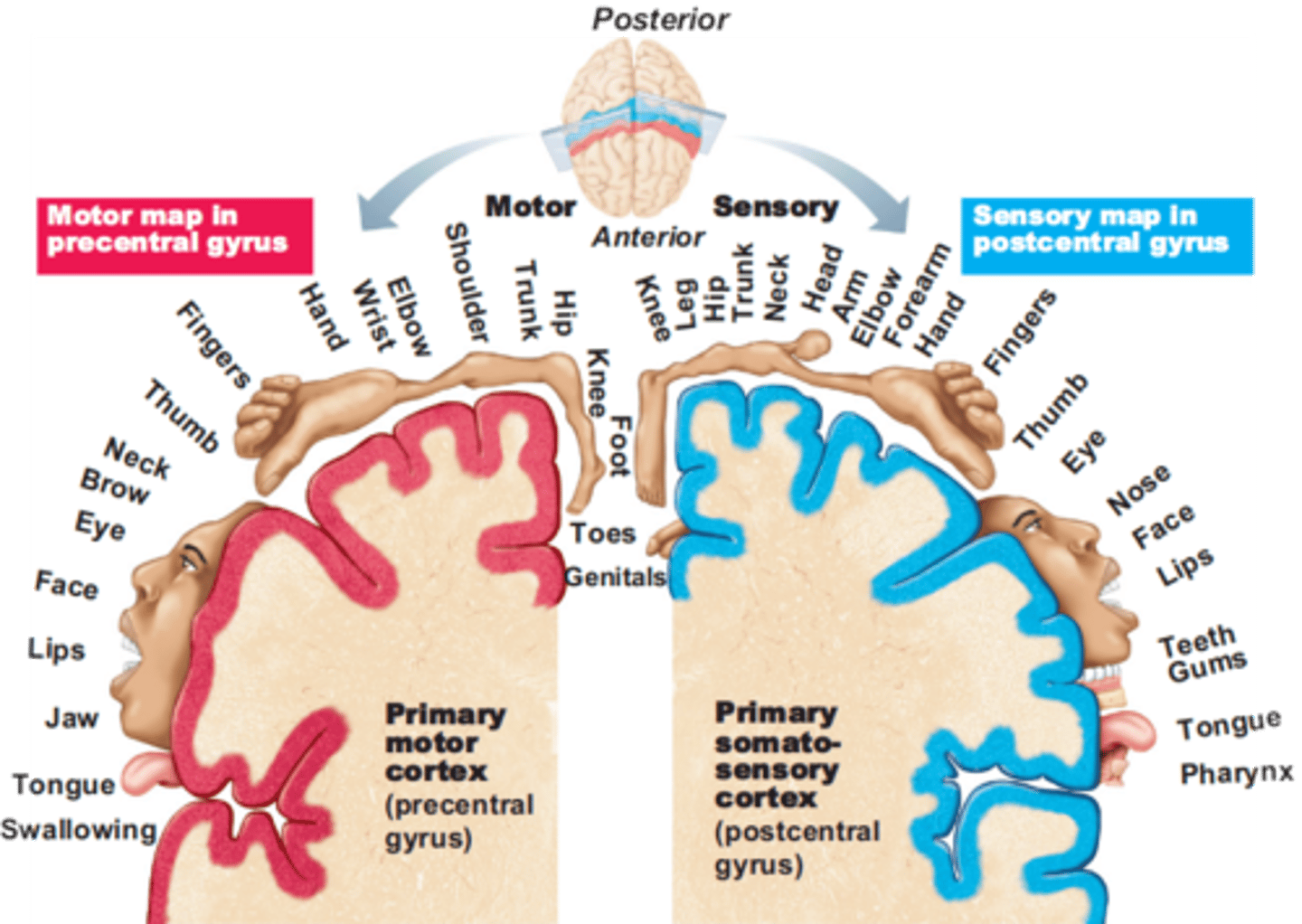
How is the homunculus generally represented on the somatosensory cortex?
a visual representation of the body within the brain, showing how body parts are mapped to the motor and sensory cortices
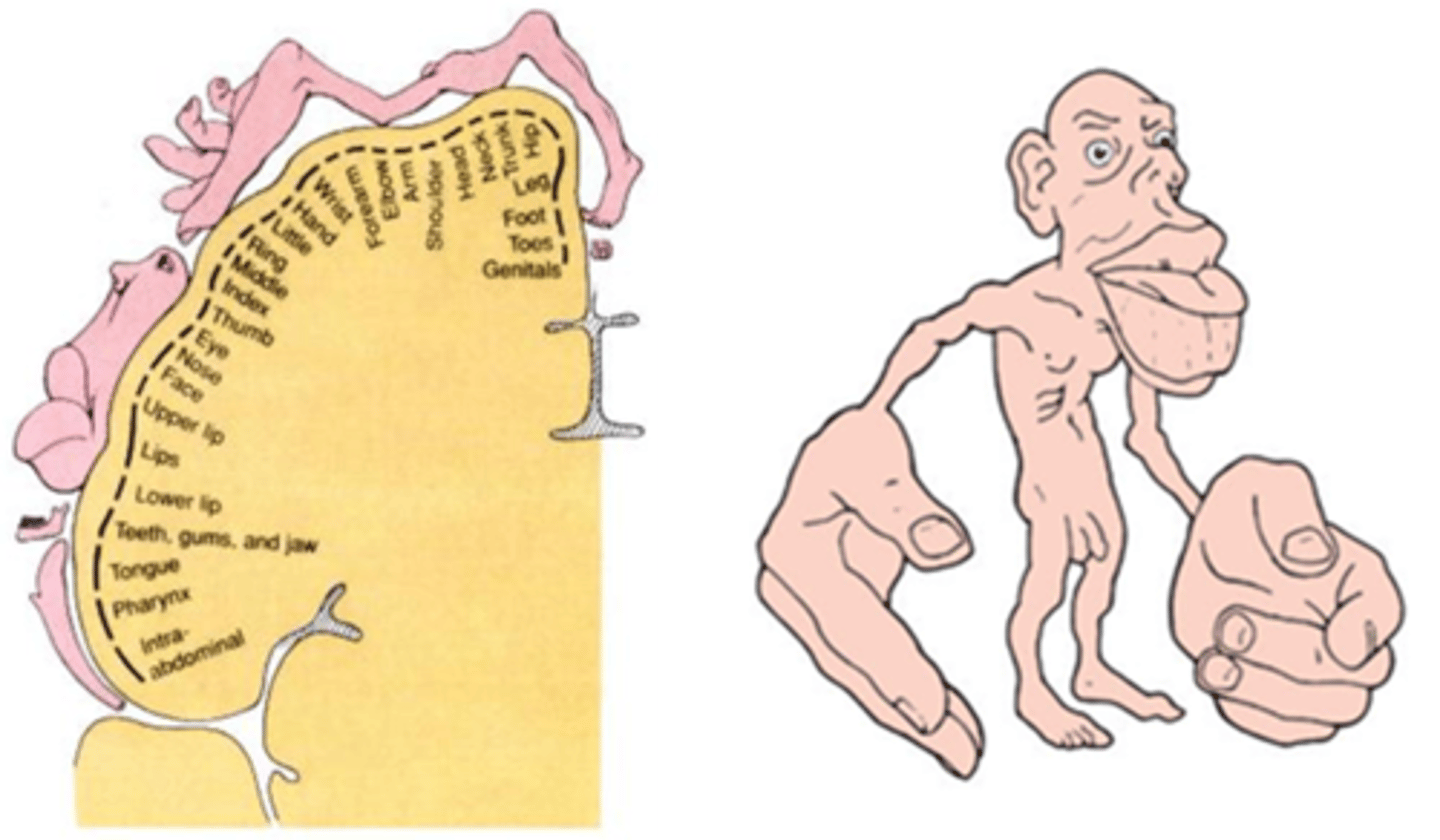
In what sense are there multiple representations of the body on the somatosensory cortex?
different maps may exist for various modalities (e.g., touch, proprioception), reflecting the complexity of sensory processing
What are the two different subparts of the vestibular system, and what do they respond to?
• Otolith organs (saccule and utricle): Respond to linear acceleration and head tilt.
• Semicircular canals: Respond to rotational movements.
Saccule
A small, fluid-filled sac under the utricle in the vestibular system that responds to static positions of the head.
Utricle
the larger of two sacs within the membranous labyrinth of the vestibule in the inner ear
• Where are the anterior and posterior zones of the parietal lobe, and what are their functions?
• Anterior zone: Includes the postcentral gyrus (Brodmann areas 1, 2, 3), involved in somatosensation.
• Posterior zone: Involves integration of visual, body, and other sensory input for movement.
What are the precentral and postcentral gyri, and which is in the parietal lobe?
• precentral gyrus: In the frontal lobe, responsible for motor control.
• postcentral gyrus: In the parietal lobe, processes somatosensory information
What two areas comprise the inferior parietal lobe?
supramarginal gyrus (Brodmann area 40).
• Angular gyrus (Brodmann area 39)
What is the general organization of connections in the posterior parietal lobe?
Inputs: Visual, auditory, somatosensory, and vestibular information.
• Outputs: Motor, premotor, and prefrontal areas for spatial guidance of actions
What does intermodal integration mean?
combining input from multiple sensory modalities to guide actions
What are the three regions involved in spatial navigation, and what do they process?
- PPA (Parahippocampal Place Area)
- RSC (Retrosplenial Cortex)
- MTL (Medial Temporal Lobe)
What are the vaguely spatial functions of the inferior posterior parietal lobe?
“Vaguely Spatial” Functions:
• Visual-Tactile Integration: Using sensory input to guide spatial actions.
• Spatial Cognition: Awareness of spatial relationships, such as object location and navigation.
• Attention Shifting: Determining when to shift attention to perceptual information.
• Why Spatial: These functions involve integrating spatial cues to guide attention and actions based on position and movement in the environment
Why is arithmetic thought to involve the inferior posterior parietal lobe?
tasks like mental calculation require spatial representation of numerical relationships
What are the four types of attentional processes?
- Alertness/arousal
- Vigilance/sustained attention
- Selective attention
- Attentional control
What type of attention is the parietal lobe particularly important for?
selective attention
How are dizziness and vertigo different?
- dizziness: general feeling of unsteadiness or lightheadedness
- vertigo: Sensation of spinning or movement when stationary
What are the symptoms of Menière's disease?
- Vertigo attacks
- hearing loss
- tinnitus
- fullness in the ears.
What are the symptoms of focal lesions in the postcentral gyrus?
• High sensory thresholds.
• Impaired touch and two-point sensitivity.
• Difficulty in sensing limb position.
• What are phantom limbs and phantom limb pain?
- phantom limbs: sensation that a missing limb is still present
- phantom limb pain: pain perceived in the missing limb due to cortical rewiring
What is a mirror box, and what is it used for?
atherapeutic tool used to treat phantom limb pain by providing visual feedback of a "virtual limb."
what is astereognosis, and how is it assessed?
- the inability to recognize objects by touch
- assessed by asking individuals to identify objects without visual input.
What are asomatognosias?
Disorders involving loss of awareness of one's body or body parts:
- Anosognosia: •
- Autopagnosia:
- Finger agnosia:
Why is there a division between somatosensory and posterior parietal disorders?
the anterior parietal lobe processes sensory input (somatosensation), and the posterior parietal lobe integrates sensory information for spatial cognition and motor planning
 Note
Note  Flashcards (52)