CHAPTER 9
 Studied by 13 people
 Call Kai
 Learn
Learn Practice Test
 Spaced Repetition
 Match
Match Flashcards
 Knowt Play
1/94

There's no tags or description
Looks like no tags are added yet.
Name | Mastery | Learn | Test | Matching | Spaced | Call with Kai |
|---|
No analytics yet
Send a link to your students to track their progress
95 Terms
The system of communication between cells through signaling pathways is called homeostasis
False
In the livers, the enzyme glycogen phosphorylase catalyzes the breakdown of glucose
False
Steroid hormones, such as testosterone and estrogen, are polar signaling molecules
False
After the binding of a signaling molecule to a surface receptor , the signaling molecule does not enter the cell
True
After signal transduction has run its course, receptor molecules are removed from the surface by endocytosis; one possible fate of the receptor is to be separated from its signaling molecule and returned to the cell surface
True
G-protein coupled receptors are found in both prokaryotes and eukaryotes
False
In plants the IP3/DAG pathways control the organism/s responses to water loss and changes in light intensity
True
Steroid hormones are nonpolar molecules derived from cholesterol
True
In breast cancer, Era is often lost, which increases cell proliferation
False
Cross-talk between second messenger pathways is probably involved in particular types of olfactory signal transduction in many animals.
True
In order for a target cell to receive a signal, it must possess a _______ specific to the signaling molecule
Receptor
Adjacent animal cells utilize _______ to rapidly communicate with each other
Gap Junctions
Adjacent plants cells utilize ____ to rapidly communicate with each other
Plasmodesmata
How do cells in the body of a multicellular organism communicate with each other
by way of signaling molecules that interact with specific receptors
Substance B is synthesized in neurons, travels through gap junctions, and triggers the transduction of an electrochemical signal. This is an example of _____
communication by direct contact
If Substance A is synthesized in the liver , travels through the circulatory system bound to a carrier protein, and causes a change in gene expression in a target cell. This is an example of ____
long-distance signaling
In order for a cell to respond to the signaling molecule epinephrine, it must have
receptors with an epinephrine binding site on the plasma membrane surface
Receptors for polar molecules are found _____, while receptors for nonpolar molecules are located
on the cell surface, within the cell
Non polar signaling molecules enter the cell by
simple diffusion
An example of a nonpolar signaling molecule is
testosterone
How does a cell surface receptor respond to the binding of a signaling molecule
the signal is transduced through the plasma membrane and into the cell
the overall process by which information carried by a signaling molecule is translated into changes that occur inside the cell is called signal
transduction
You have recently identified a molecule you believe to be a signaling molecule associated with signal transduction. All you know about this molecule is that it is hydrophilic; therefore, you expect it to interact with a receptor ____.
on the cell surface
In the 1950s, Earl Sutherland and colleagues discovered that epinephrine ____.
triggers the release of a second messenger which leads to the hydrolysis of glycogen to glucose
In general, a cell receiving a message undergoes three stages of cell signaling. What are these stages? a. paracrine, autocrine, and local
signal reception, signal transduction, and cellular response
A pathway for cell growth control is conserved between Drosophila and humans, indicating that the pathway is ____.
at least 800 million years old
In the process of quorum sensing, bacteria release signaling molecules in ____ concentrations as cell density ___
increasing ; increases
Quorum sensing
is a type of communication between unicellular organisms
The evolution of which class of molecules played an important role in the development of multicellular organisms
Protein kinases
he two major categories of extracellular signaling molecules that bind to cell surface receptors are
peptide hormones and neurotransmitters
Neurotransmitters are molecules released by _____
neurons
The surface receptors that recognize and bind signaling molecules are ___
glycoproteins
The recognition of a chemical signal by a receptor protein in the membrane is most similar to ____
binding of a specific substrate to the active site of an enzyme
The last protein in a signaling pathway is called the
Target protein
Amplification of a signal increases as the ____
number of enzyme-catalyzed steps increases
n the first step of signal transduction, what is the trigger for the cellular response
ligand
What is the second step of signal transduction
transduction
Protein kinases
Add phosphate groups to proteins
The effects of protein kinases are reversed by another group of enzymes called
phosphatases
Once transduction of a signal is complete, the receptor and its bound signaling molecule are removed from the cell surface by ____
Endocytosis
he protein kinase activity of the receptor tyrosine kinase (RTK) is located ____ region of the protein
on the cytoplasmic
During autophosphorylation, RTKs add phosphate groups to which amino acids
Tyrosine
What happens immediately after a signaling molecule binds to an RTK?
receptor dimerization
Structurally similar RTKs have been found in all multicellular animals, suggesting that
RTKS evolved relatively early in the history of animals
The insulin receptor is an example of a(n) _
receptor tyrosine kinase
Substance E is made in the pancreas, travels through the blood, and binds to a surface receptor on a target cell. After dimerization and autophosphorylation, the receptor activates a signaling protein. Substance E is therefore the ligand for
a receptor-tyrosine kinase
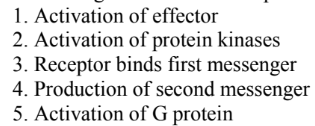
Arrange the events in the pathway activated by G - protein - coupled receptors (GPCRs) in the correct order
3—>5—>1—>4—>2
Inactive G proteins are
bound to GDP
Activated G proteins
separate into two parts How many transmembrane domains are present in a G - protein - coupled receptor?
How many transmembrane domains are present in a G - protein - coupled receptor?
Seven
Many of the different types of GPCRs in humans function to
distinguish different volatile molecules for odor recognition
More than 60% of all prescribed drugs target ____, due to their wide physiological impact
G-protein-coupled-receptors
G proteins are inactivated when
GTP is converted to GDP
Many signal transduction pathways utilize second messengers to
relay the message from the inner surface of the plasma membrane throughout the cytoplasmThe amino acid targets of protein kinases in all GPCR pathways are ____
The amino acid targets of protein kinases in all GPCR pathways are ____
serine and threonine
which molecule is a common second messenger
Diacylglycerol
In the cAMP pathway, the G protein activates
Adenylyl cyclase
Once activated , cAMP is quickly degraded to AMP by_____, switching off the signal pathway .
phosphodiesterase
In the IP3/DAG pathway, what is the effector molecule
phospholipase C
Substance C is secreted from a neuron, and binds to its receptor on a nearby cell, triggering an increase in intracellular cAMP. Substance C is therefore a ligand for a ____
a G-protein coupled receptor
Ras proteins are of interest to researchers because of their role in ____.
the development of many types of cancer
Inactive Ras is bound to receptor tyrosine kinases by
Adapter proteins
Activated Ras__
activates MAP kinase (MAP K)
Acetylcholine, a neurotransmitter, binds to ____.
ligand-gated ion channels
Which cellular response follows activation of a ligand - gated ion channel?
generation of an electrical signa
A neuron synthesizes and secretes substance D, which binds to a receptor on the neuron cell membrane, triggering an influx of calcium. Substance D therefore is a ligand for a ___
a ligand gated ion channel
Steroid and thyroid hormones do not bind to membrane surface receptors because they
are soluble in the lipid bilayer
Steroid hormones
include testosterone, estrogens, and cortisol
Why are steroid hormones bound to carrier proteins in the blood
to mask hydrophobic groups on the steroids to allow for circulation in the blood
How do cells distinguish between estrogen and testosterone?
estrogen and testosterone have the same basic structures, but different side chains that are easily distinguished by their individual receptors
Estrogen receptor (ER) α typically ____, while ERβ typically ___
stimulates cell proliferation; inhibits cell proliferation
Researchers have determined that the growth of hormone - responsive breast cancer cells depends upon __
the relative concentrations of ERα and ERβ in the tumor cells
Hormone receptors are comprised of two domains, the hormone binding domain and the ____, which triggers the cellular response
DNA - binding domain
Substance A is secreted by the liver, travels through the circulatory system bound to a carrier protein and causes a change in gene expression in its target cell. Substance A is therefore a ligand for ____
a steroid hormone receptor
Nitric oxide(NO)binds to an
internal receptor and activates a second messenger cascade
NO can only function as a paracrine regulator because____.
it is rapidly converted into nitrates and nitrites
How is the NO pathway manipulated by Viagra to treat erectile dysfunction?
the breakdown of cGMP is inhibited
NO binds to and activates____ to trigger its cellular response.
guanylyl cyclase
Communication and integration of responses between simultaneously occurring cell signaling pathways is called
cross- talk
Hormone - independent steroid hormone receptor activation is an example of
cross- talk
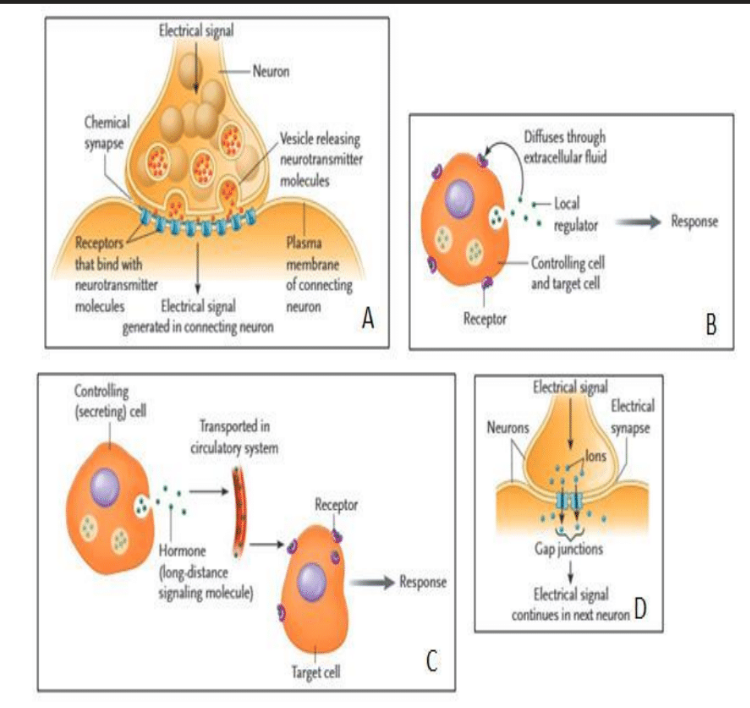
cell communication by direct contact
D
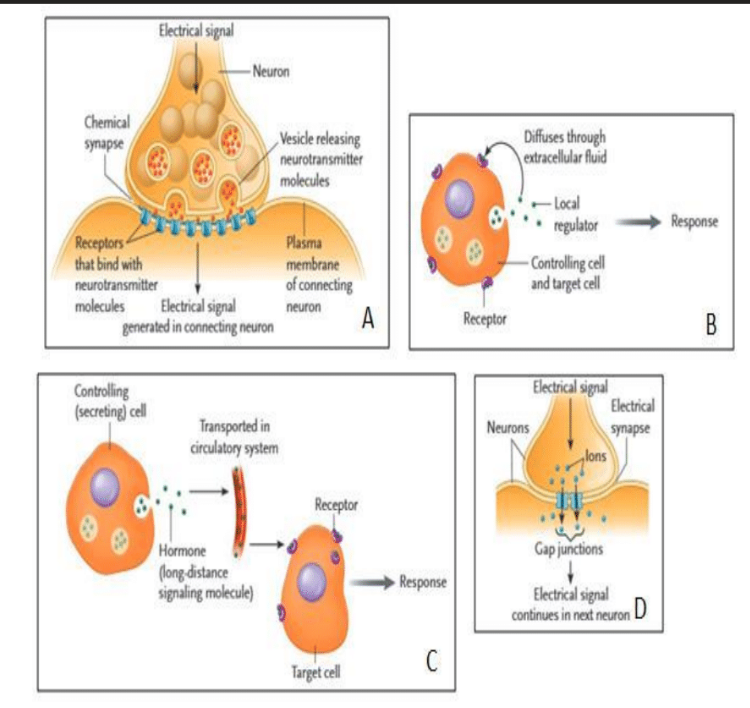
paracrine regulation
A
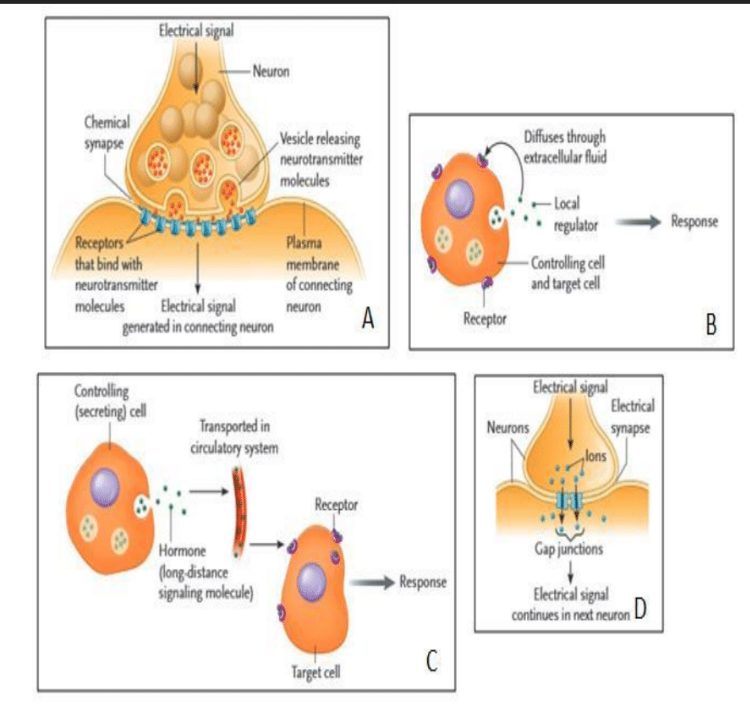
autocrine regulation
b
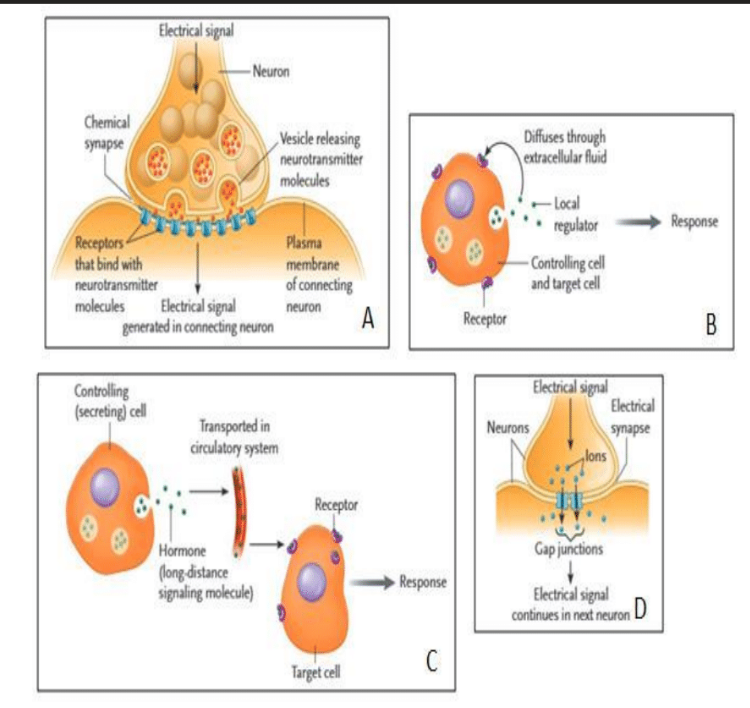
long-distance signaling
C
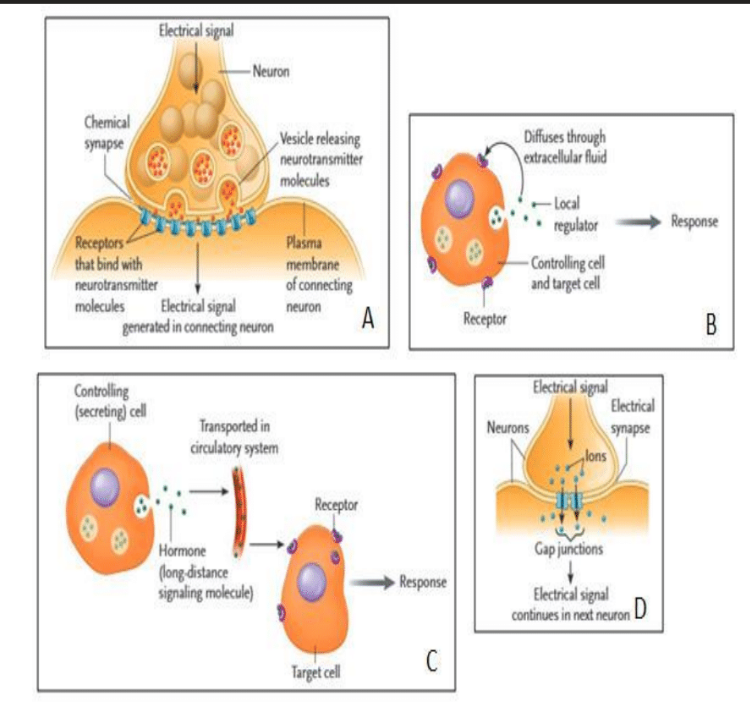
communication used by neurotransmitters acting on neuron across a synapse
A
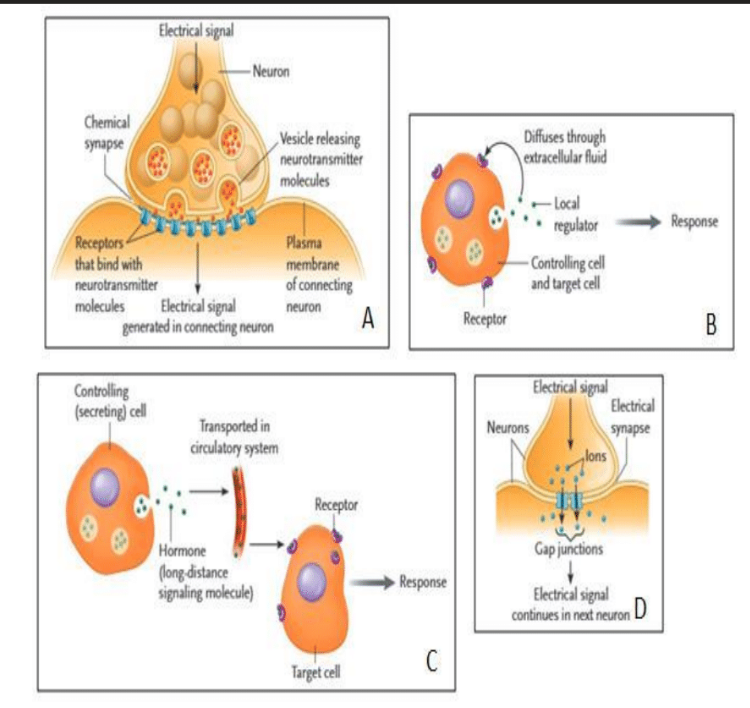
communication used by cardiac muscle cells to synchronize heart contractions
D
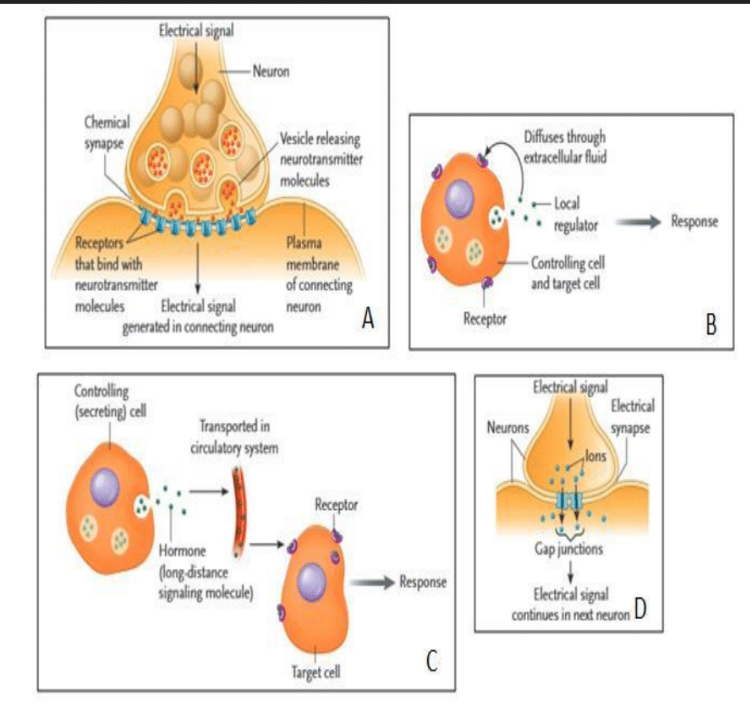
meditation of the fight or flight response by epinephrine
C
binds to an activates the enzyme guanylyl cyclase
Nitric oxide
directly bind to DNA to affect transcription
hormone receptors
Lithium reduces the activity of this pathway
IP3/ DAG
G protein activated by a receptor tyrosine kinase
Ras
Binds to acetylcholine
ligand gated ion channel
Pathway triggered by glucagon to stimulate glycogen breakdown
cAMP
Defects in this receptor type can lead to diabetes and dwarfism
receptor tyrosine kinase
Converts an extracellular signal into an intracellular response
signal transduction
 Note
Note  Flashcards (115)