personality and the self
 Call Kai
 Learn
Learn Practice Test
 Spaced Repetition
 Match
Match Flashcards
 Knowt Play
1/104

There's no tags or description
Looks like no tags are added yet.
Name | Mastery | Learn | Test | Matching | Spaced | Call with Kai |
|---|
No analytics yet
Send a link to your students to track their progress
105 Terms
personality
characteristic patterns of thinking, feeling, and behaving
psychodynamic
sigmund freud
psychic energy moves among compartments of the personality: id, ego, superego
extension of first law of thermodynamics: energy moves but does not get created or destroyed
hysteria
physical symptoms (paralysis, blindness, etc.) without medical cause, not known as somatic symptom disorder
psychoanalysis
freud’s treatment approach
used by those who believe psychodynamic theories
3 energy systems
id, ego, superego
id
present at birth
contains primitive drives as source of energy for personality
ex. hunger, thirst, sex
operates according to pleasure
ego
readily seen by others
develops when child begins interacting with others
person’s “self”
coordinates needs of id with reality
superego
develops when child internalizes society’s rules for right and wrong
develops conscience (not conscious of the id)
defense mechanisms
when ego is faced with anxiety
protective behaviors to reduce anxiety
sublimation
channeling negative energy into a socially acceptable activity
ex. doing martial arts instead of fighting kids at school
psychosexual stages
freud’s theory for developing personality in id stage
oral, anal, phallic, latency, genital
oral stage
birth to 1 year
focus on mouth (sucking, eating)
anal stage
1-3 years
focus on bladder/bowel control, indepedence, potty training
phallic stage
3-6 years
focus on genitals, identifying with parents, Oedipus/Electra complex
latent period
6 to puberty
dormant sexual feelings, focus on school, hobbies, same-sex friendships
genital stage
puberty to adulthood
mature sexual interest, focusing on intimacy/balance
neo-Freudian
theorist who attempted to update freud’s original personality theory
many replace pleasure/sexual motivation with social competence
inferiority complex
can lead to overcompensation
seeking appearance of superiority
ex. buying a super expensive car
unconscious mind
part of mental actvitiy that cannot be voluntarily retreived
two components of unconscious mind
personal unconscious, collective unconscious
personal unconscious
forgotten/repressed experiences
collective unconscious
commons psychological predispositions as humans pass from generation to generation
MBTI
Myers-Briggs Type Indicators
does the MBTI hold up well to analyses of validity and reliability?
no
Jung’s concepts of personality characteristics
extroversion, introversion
extroversion
outgoing
introversion
relatively less outgoing
humanistic psychology
humans are unique
animal research is irrelevant
different that psychodynamic/behavioralism
human nautre is bascially good
carl roger’s humanistic theory of personality
people who follow the path laid out by their feelings will lead productive, healthy lives, and their expectations will match reality
people who expereince judgment and conditional acceptance often experience depression, anxeity
people who experience unconditional, nonjudgemental acceptance, they reach self-actualization
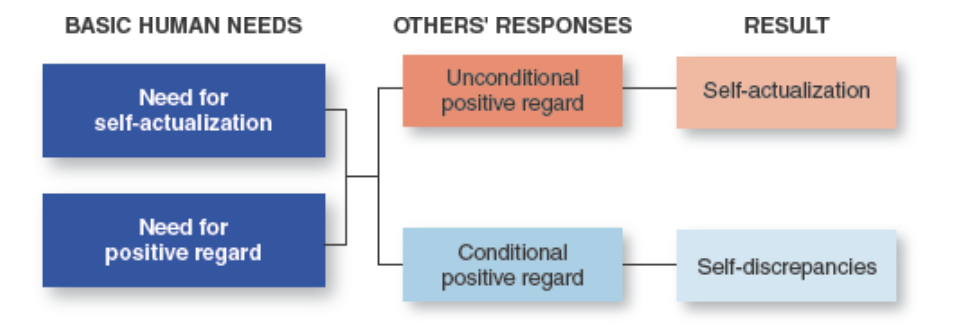
trait
stable personality characteristic
five clusters formed by cattell’s identified 16 personality factors
extroversion, anxiety, self-control, independence, and receptivity
one of the earliest efforts to identify personality traits
selection of 4,500 words to describe observable traits
later, in 1940s, computers allowed to use original list and make extremes for each trait
ex. trait of suspiciousness ranged from “trusting” to “suspicious”
big five theory (OCEAN)
individual differences in personality
openness to experience
conscientiousness (wishing to do right)
surgency (extroversion)
agreeableness
neuroticism (chronic tendency to expereince negative emotions)
openness
fantasy, aesthetics, feelings, actions, ideas, values
curious, imaginative
conscientiousness
competence, order, dutifulness, striving, self-discipline, deliberation
reliable, world hard
low conscientiousness = hard to work with, lazy
extroversion
warmth, assertiveness, activity, excitement seeking, positive emotion
can be overbearing
introversion
coolness, reserve, passivity, caution
sensitive and reflective
agreeableness
trust, straghtforward, altruism, compliance, modesty
low in this trait = cynical, uncooperative, rude
neuroticism
anxiety, angry hostility, depression, self-consciousness, impulsivity, vulnerability
opposite = emotional stablity
sometimes beneficial in threatening environments
social-cognitive learning theories
features cognition and learning from social environment as important sources in individual diffs in personality
locus of control
social-cognitive learning theory about source of individual outcome
external and internal loci of control
external locus of control
most of your outcomes happen because of luck, chance, opportunity (not in ur control)
internal locus of control
your outcomes come from your talent and effort
reciprocal determinism
albert bandura
a person influences the situation as much as the situation influences that person
ex. observation of others’ behavior contributes to personality
situation = external, environ. factors
person = internal traits
self-efficacy
confidence in your abilities to gain reinforcement
temperament
child’s pattern of mood, activity, or emotional responsiveness
reactivity
differences in people’s responses to new/challenging stimuli
children with high reactivity = high introversion and neuroticism later in life
self-regulation
ability to control attention and inhibit responding to perceived stimuli
GWAS
genomewide association studies
identified 6 genetic loci associated with Big Five traits
Minnesota Study of Twins Reared Apart
thomas bouchard
studied 59 pairs of identical twins and 47 pairs of fraternal who were raised in separate families, along with twins raised in same home
identical twins were similar, regardless of where they were raised
how much heritability does the big five show?
0.50 in humans (certain trait have variations from high to low and are influenced moderately by both genetics and environmental factors)
population heritability for positive emotionality
between 0.46 and 0.52
which neurochemicals are related to extroversion?
dopamine and opiod activity
cortisol
hormone released at times of stress
have there been apparent differences in cortical thickness, volume of structures, or white matter related to any of the big five traits?
no
reinforcement sensitivity theory (RST)
explains differences in behavior based on sensitivity to rewards, punishments, and motivations
three brain networks: behavioral approach system (BAS), fight-flight freeze system (FFFS), behavioral inhibition system (BIS)
three brain networks for individual differences in approach, avoidance, and inhibition of behavior
behavioral approach system (BAS)
fight-flight freeze system (FFFS)
behavioral inhibition system (BIS)
behavioral approach system (BAS)
predict a person’s response to reward, or impulsivity
fight-flight freeze system (FFFS)
active when an organism experiences unlearned punishment or lack of reward
diffs in FFFS activity correlate with reactivity
behavioral inhibition system (BIS)
active when an organism senses learned signals for punishment or lack of reward
diffs in BIS associated with anxiety/neuroticism
what trait did humans lose found in chimpanzees?
dominance
valid test
does the job it is supposed to do
ex. if u conduct a creativity test, people with more creativity should score higher
reliable test
returns similar results when interpreted by diff observers or is taken repeatedly (measures consistency)
personality inventories
objective test, often with numbered scales/multiple choice, to assess personality
minnesota multiphasic personality inventory (MMPI)
published in early 1940s, revised in 2020
revisions → assess eating concerns, impulsivity, compulsivity, and self-importance, more diverse
compares responses to true-false items made by normal and psychological disorder people
demonstrates the differences in responses
projective tests
derived from freud’s defense mechanisms: projection
provides ambiguous stimulus into which test takers “project” their personality
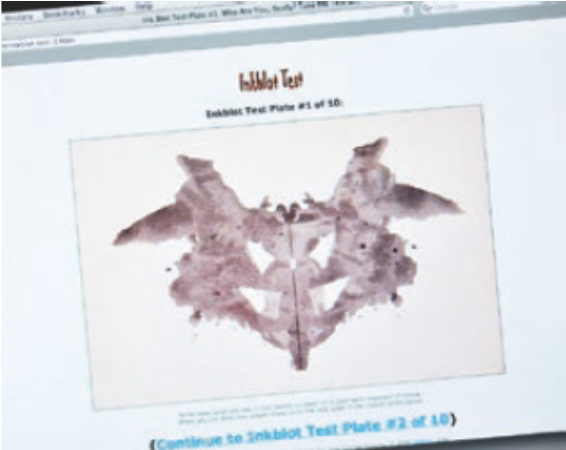
rorschach inkblot test
10 diff inkblots
participants describe what each inkblot looks like to them
ex. participant looks at one part of inkblot rather than whole image
indicates concrete thinking instead of abstract
why do personality studies of diverse groups like native americans fail?
confoudning variables (socioeconomic status and education)
heterogeneity of large ethnic groups are often ignored
what did william james argue about the self?
"in favor of “the belief in a distinct principle of selfhood)
such a principle could be studied scientifically
self
patterns of thought, feelings, and actions we perceive in our own minds
sense of embodiment
the self is embedded in the body
how do psychologists approach the study of the self?
ABCs: affect, behavior, cognition
affective (emotional) components of the self
evaluation of the self (level of self-esteem)
behavior and self-concept
form reciprocal relationships
we gain self-knowledge by observing our behavior
thoughts about the kind of people we are influence our behavior
cognitive processes and the self
help us organize information and think about the self
self-concept
description of your own self
demographic factors
personality
relationships with others
physical attributes
other roles
self-schemas
organization that helps us think about the self and how you view and interact with others
self-reference effect
individuals remember things that are most relevant to them as compared to things that are not as relevant to them

