KINES 262 - Lecture Exam #3
 Call Kai
 Learn
Learn Practice Test
 Spaced Repetition
 Match
Match Flashcards
 Knowt Play
1/171

There's no tags or description
Looks like no tags are added yet.
Name | Mastery | Learn | Test | Matching | Spaced | Call with Kai |
|---|
No analytics yet
Send a link to your students to track their progress
172 Terms
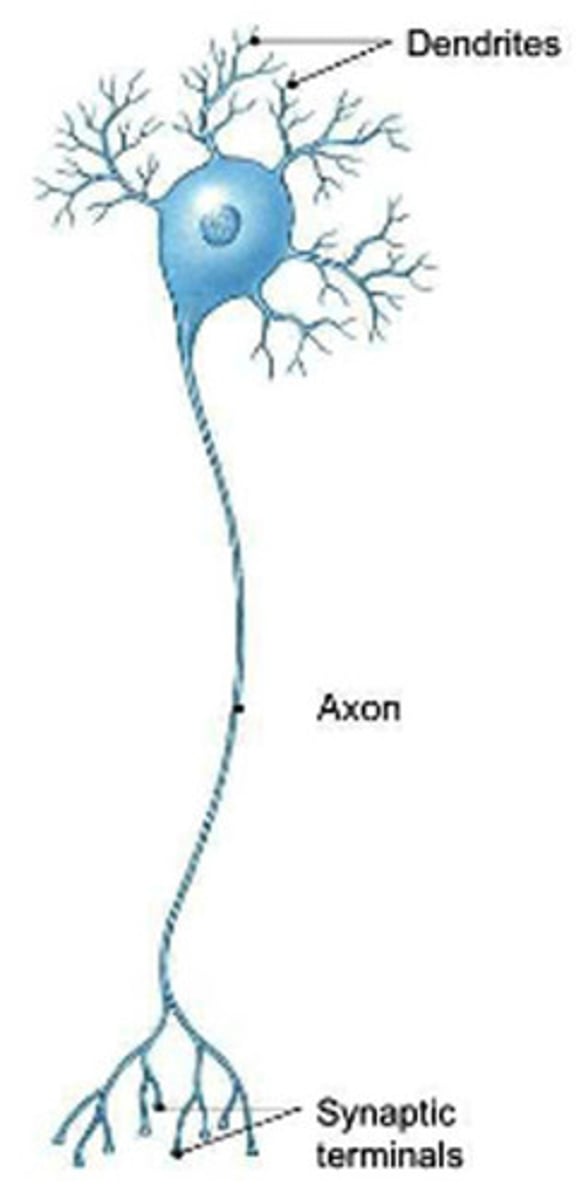
What are neurons?
Nerve cells
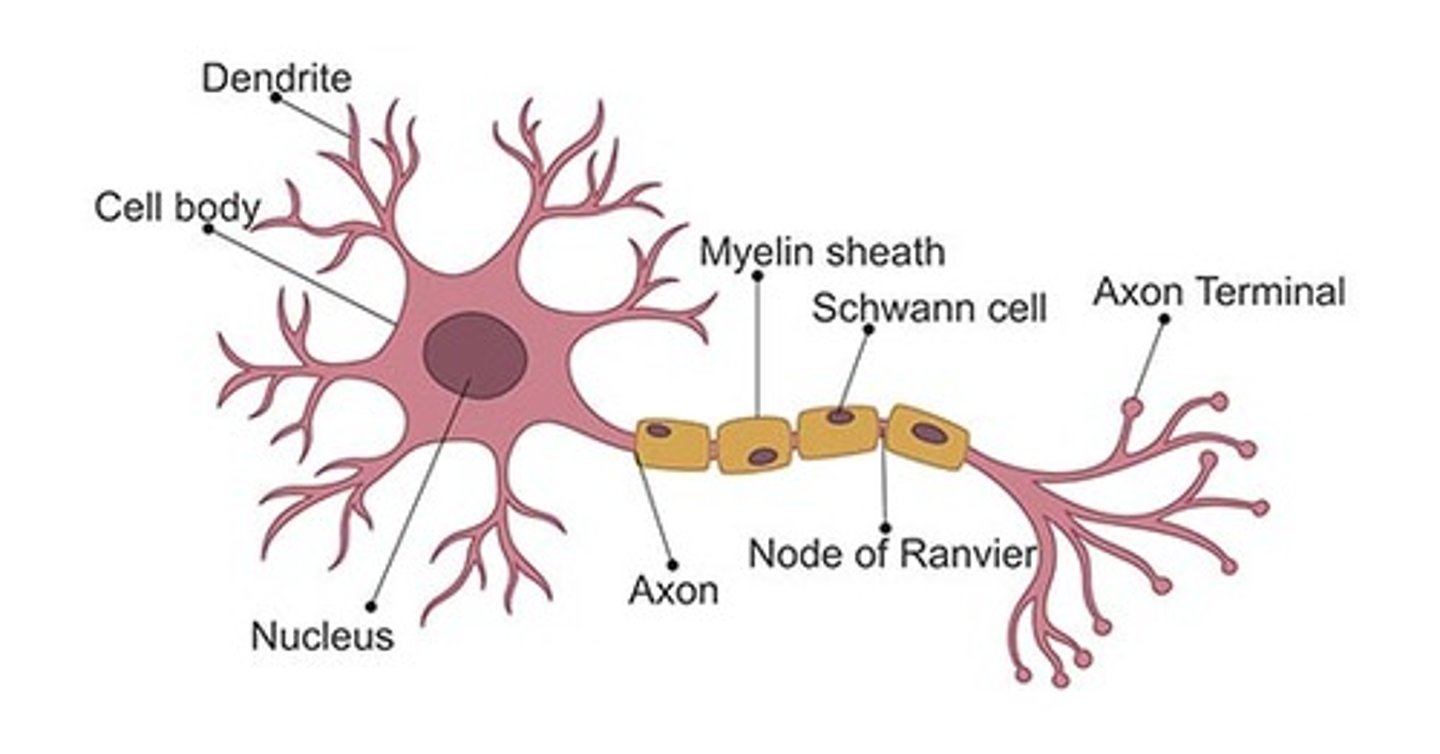
What is a dendrite?
End of neuron that conducts electrical currents toward the cell body.
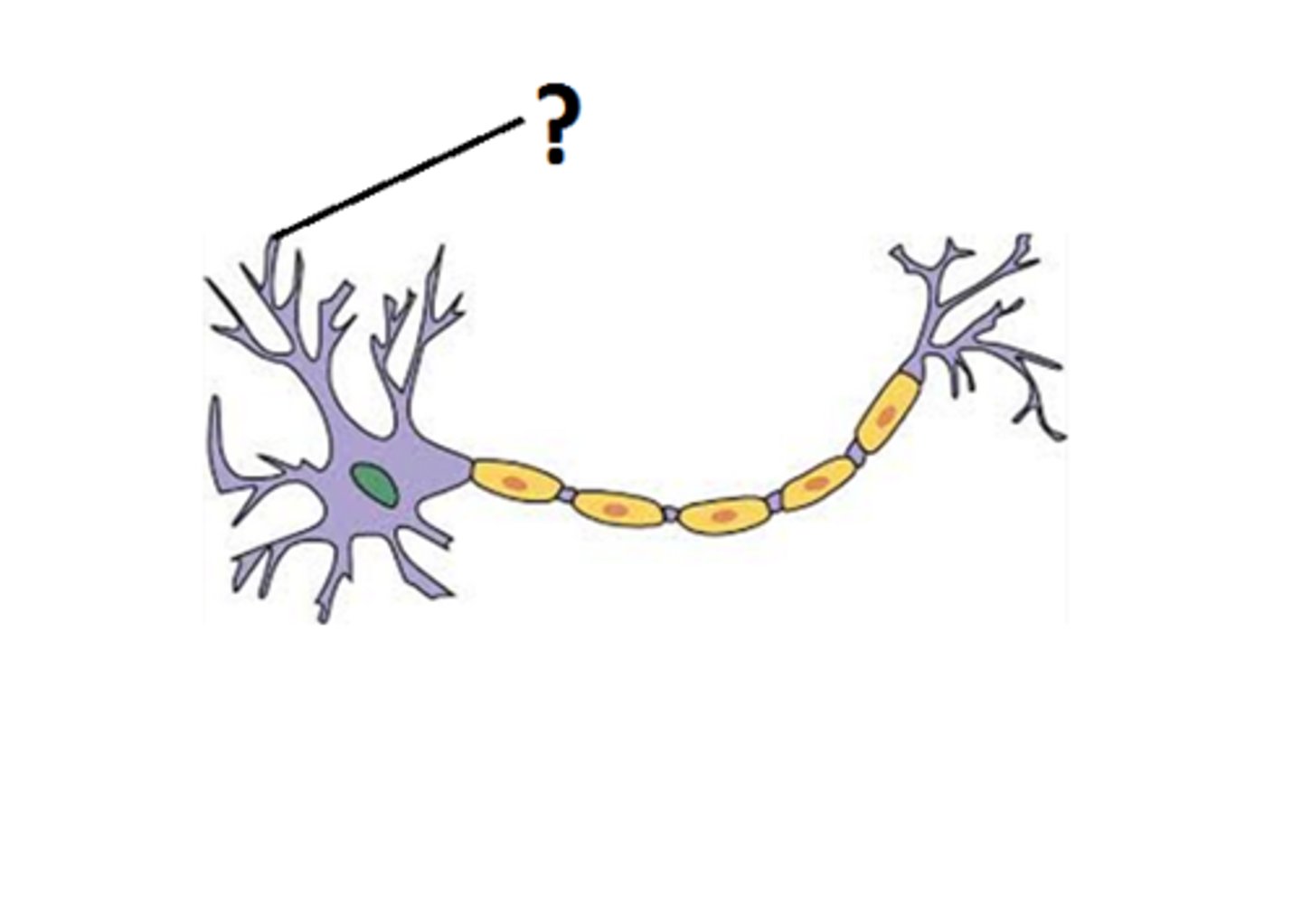
What is the Soma?
The cell body of the neuron, contains the nucleus
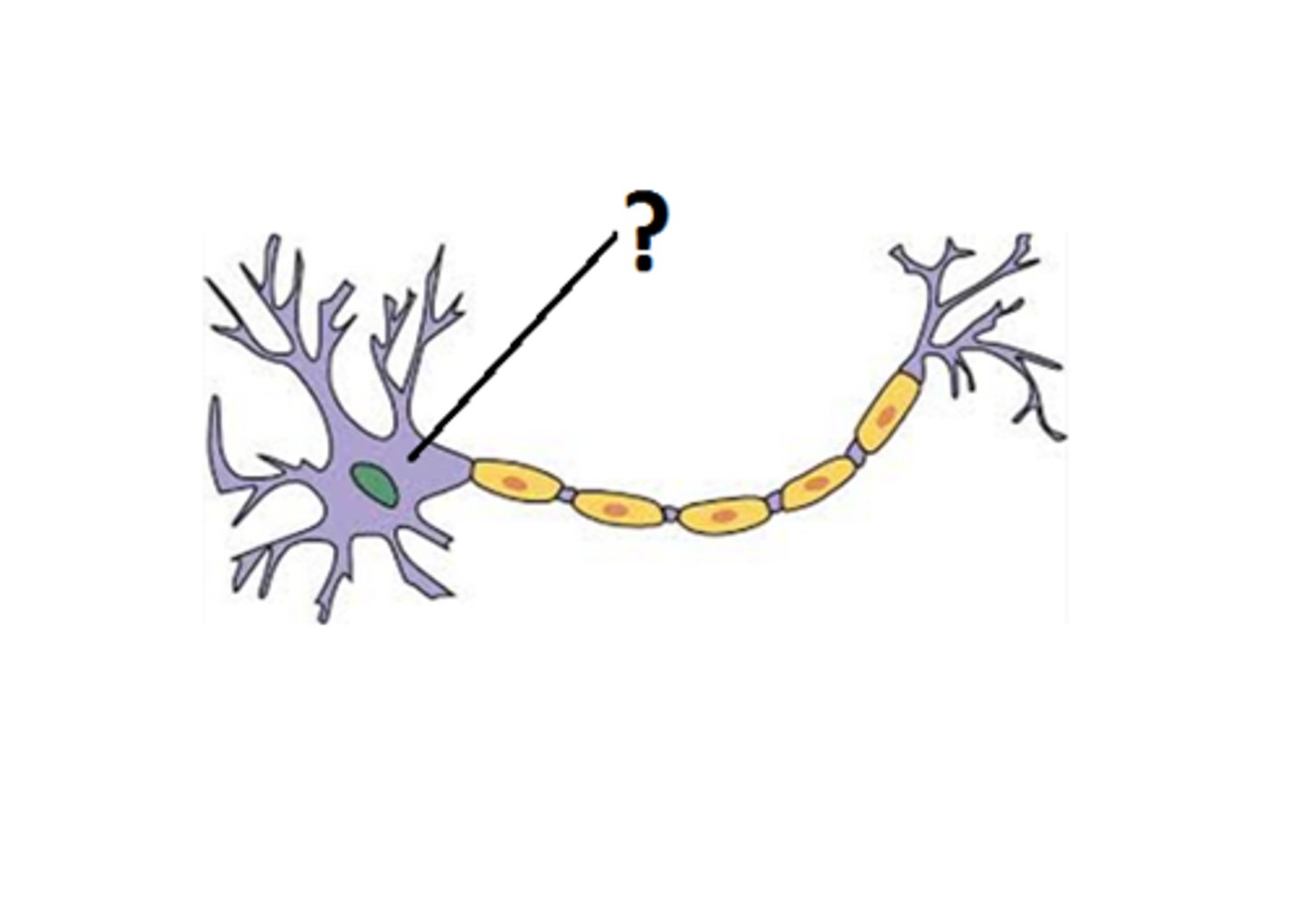
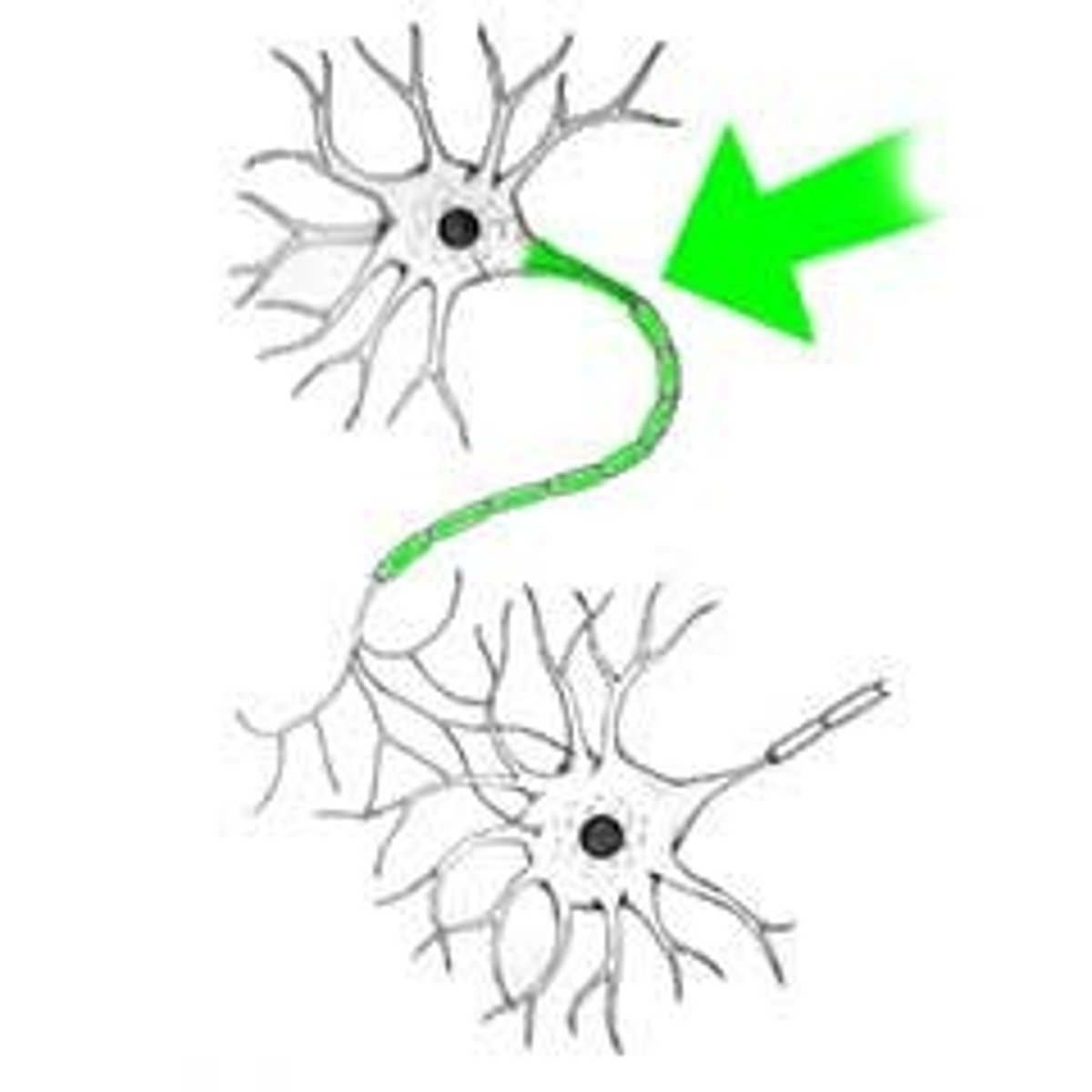
What is an Axon?
The portion of a nerve cell (neuron) that carries nerve impulses away from the cell body (soma)
What are Axons made up of?
Nerve fibers
What are the two types of axons?
- Myelinated
- Unmyelinated
What is the difference between myelinated and unmyelinated axons?
- The main difference between these two types of neurons is the speed of conduction of impulse
- A neuron with myelinated axons can conduct the impulse at a faster rate
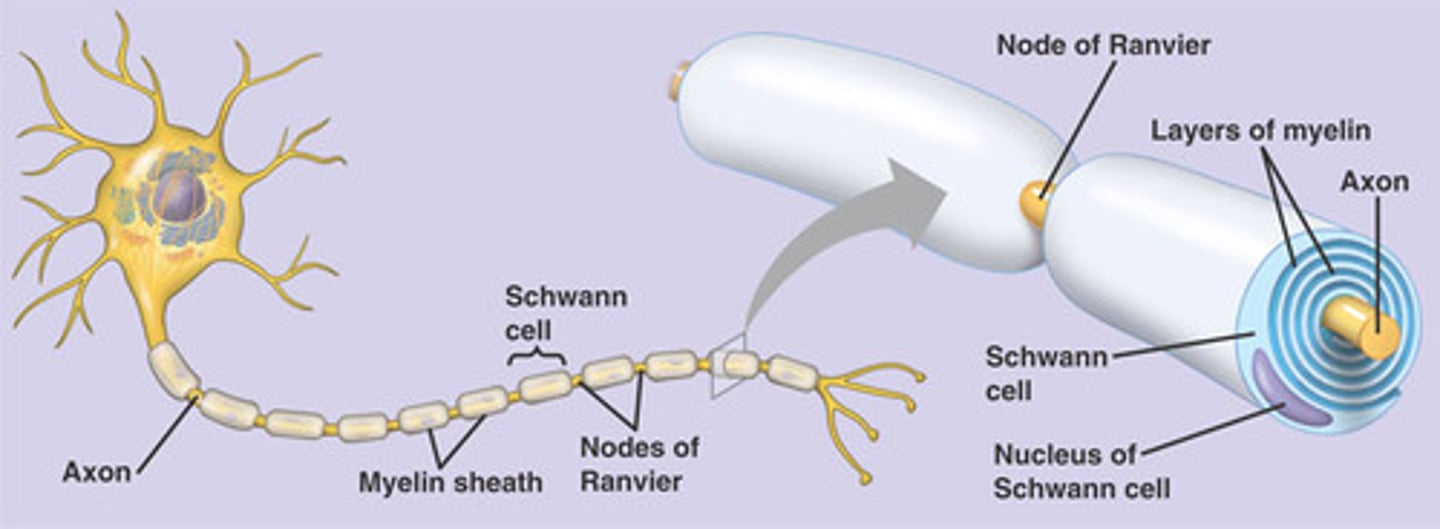
What is the Myelin sheath?
Covers the axon of some neurons and helps speed neural impulses
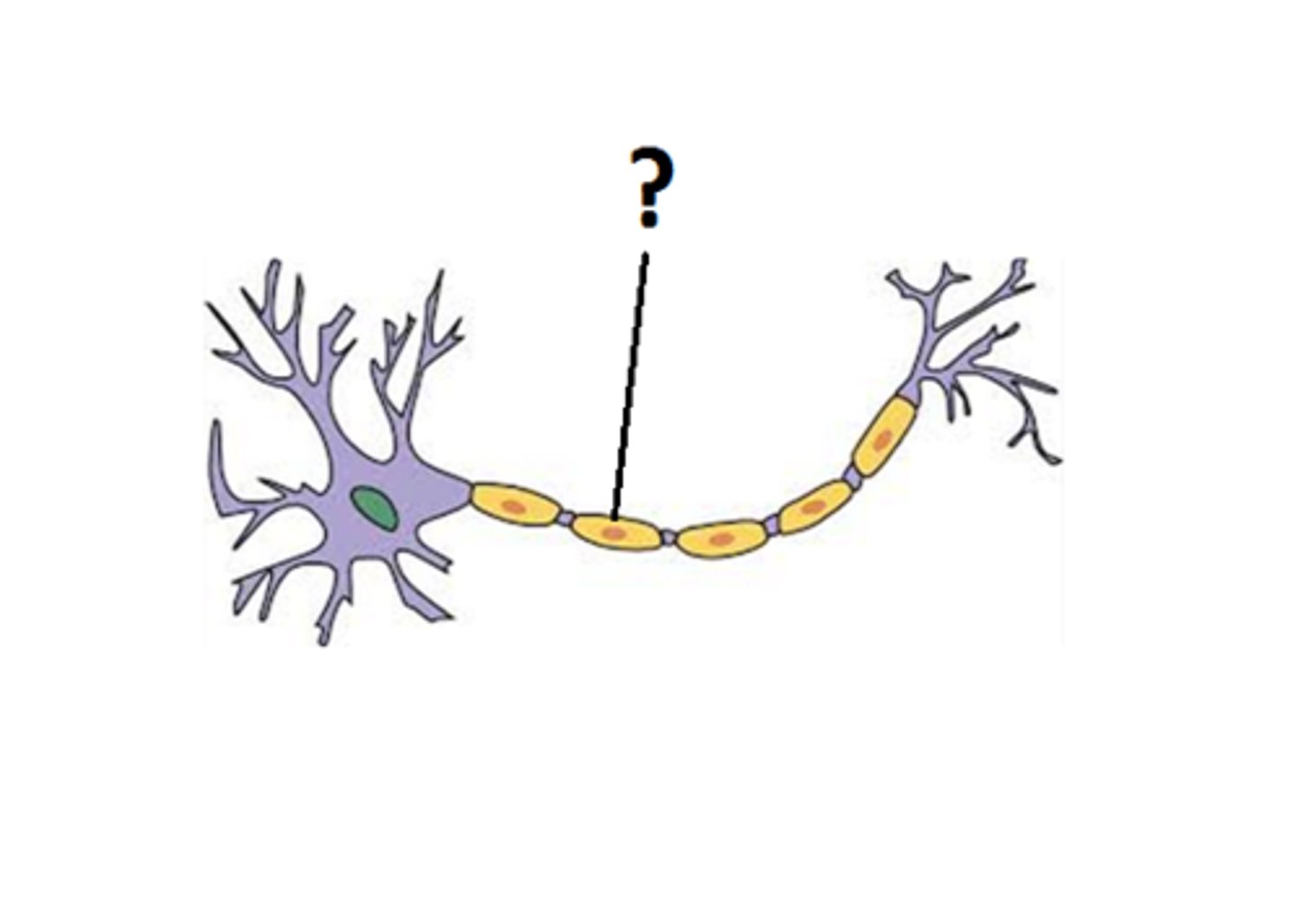
What is a Node of Ranvier?
A gap in the myelin sheath of a nerve, between adjacent Schwann cells.
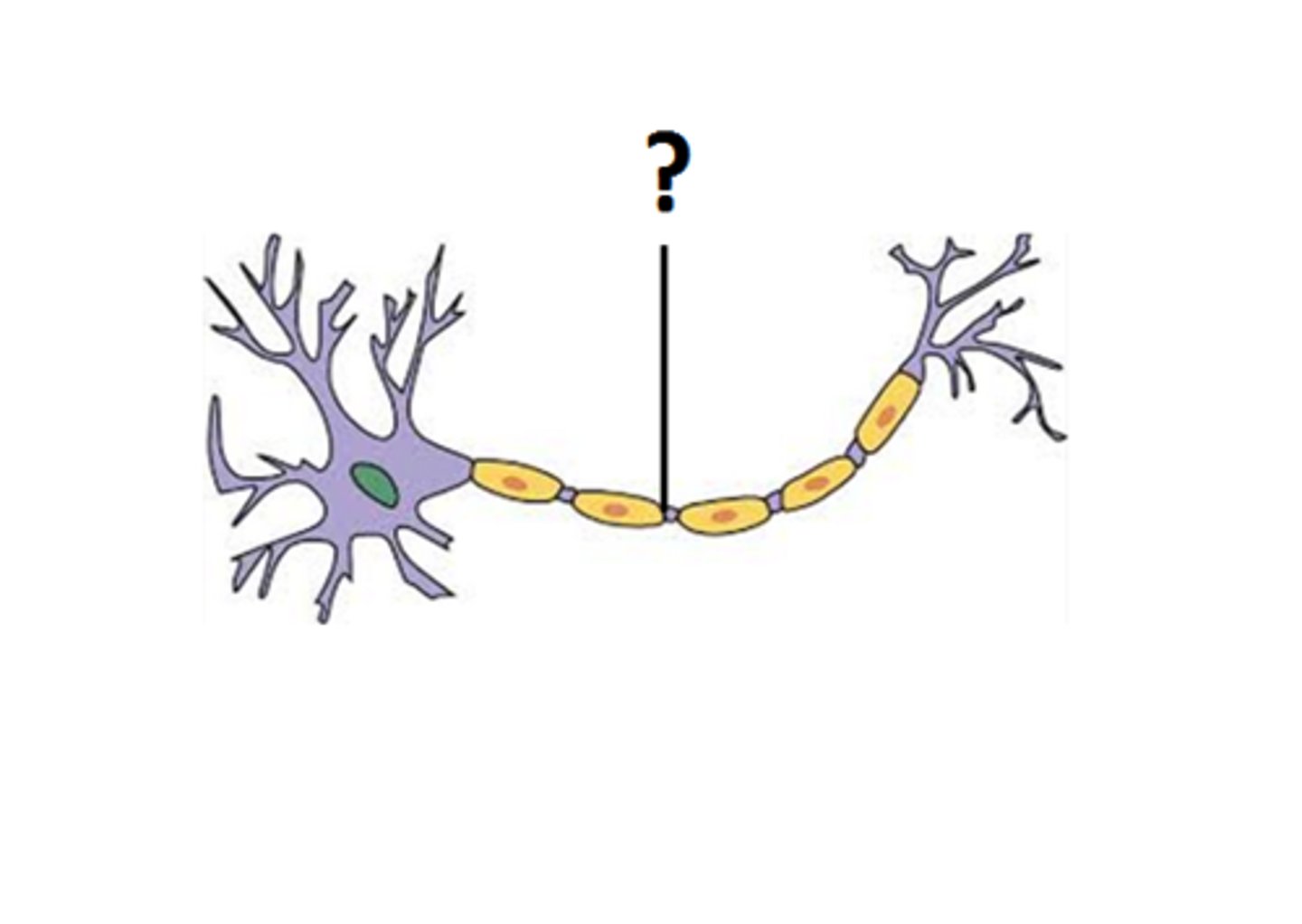
What is an Axon terminal?
The end of an axon
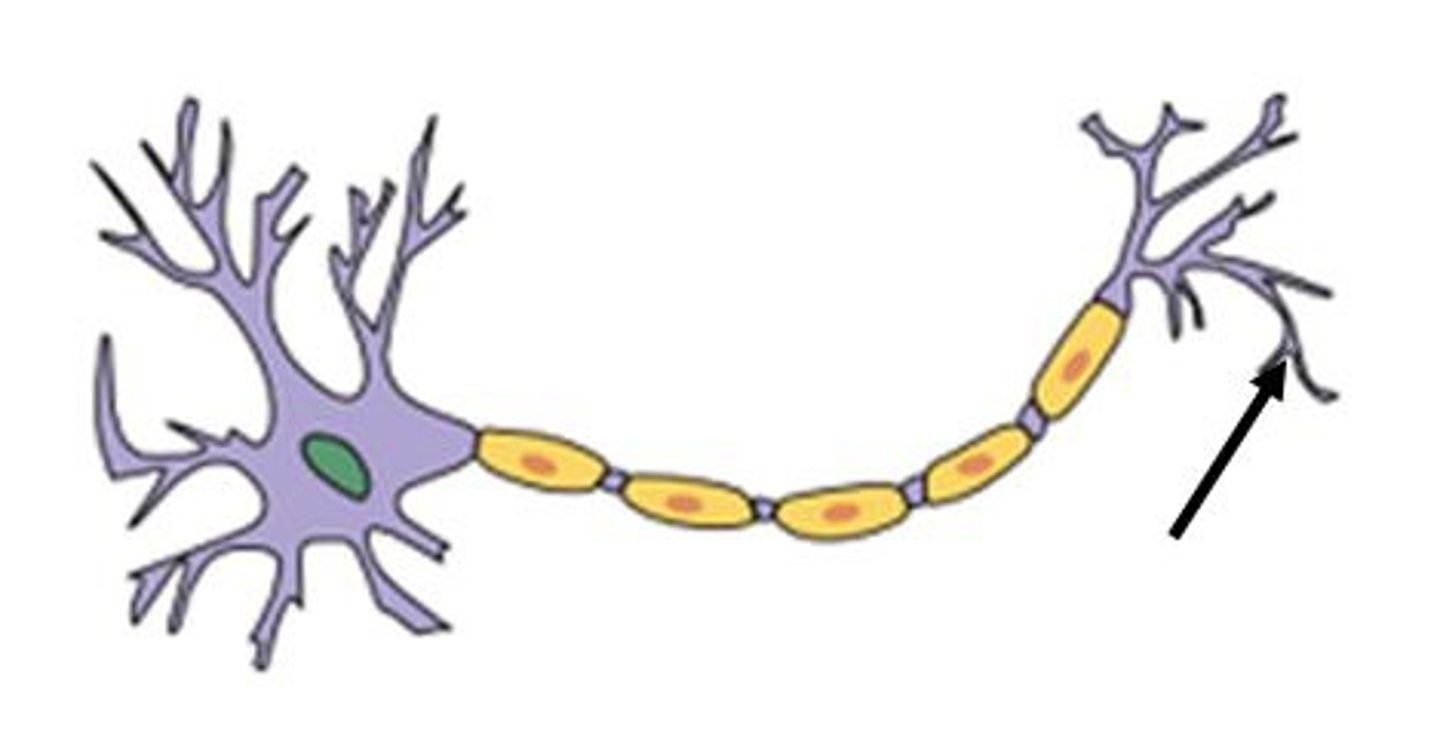
What are neurons responsible for?
The transfer and processing of information in the nervous system
What are nerves made up of?
Neurons
What is a Synapse?
The junction between axon terminals of one nerve and dendrites of another nerve
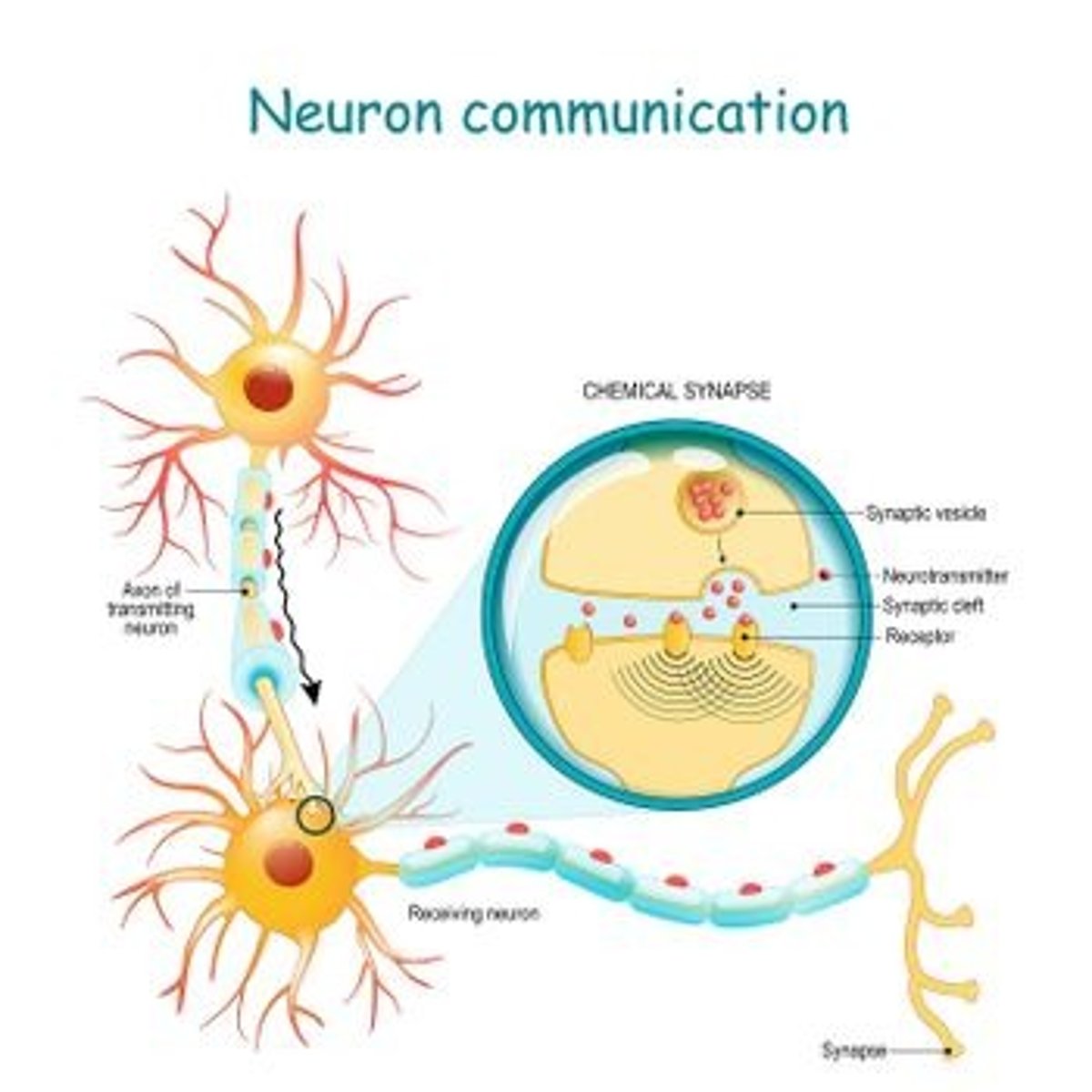
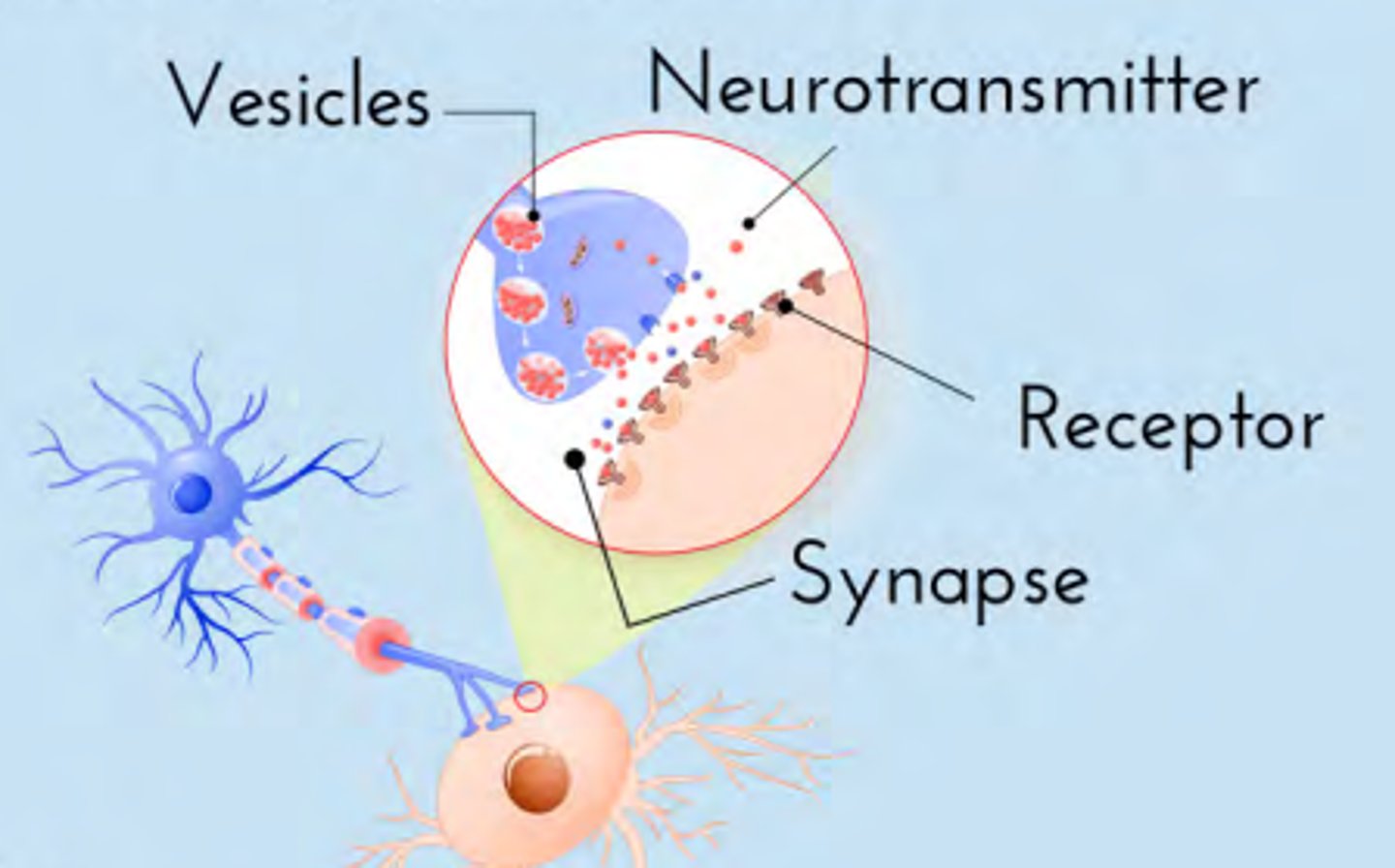
Where are neurotransmitters released?
Across the synaptic cleft
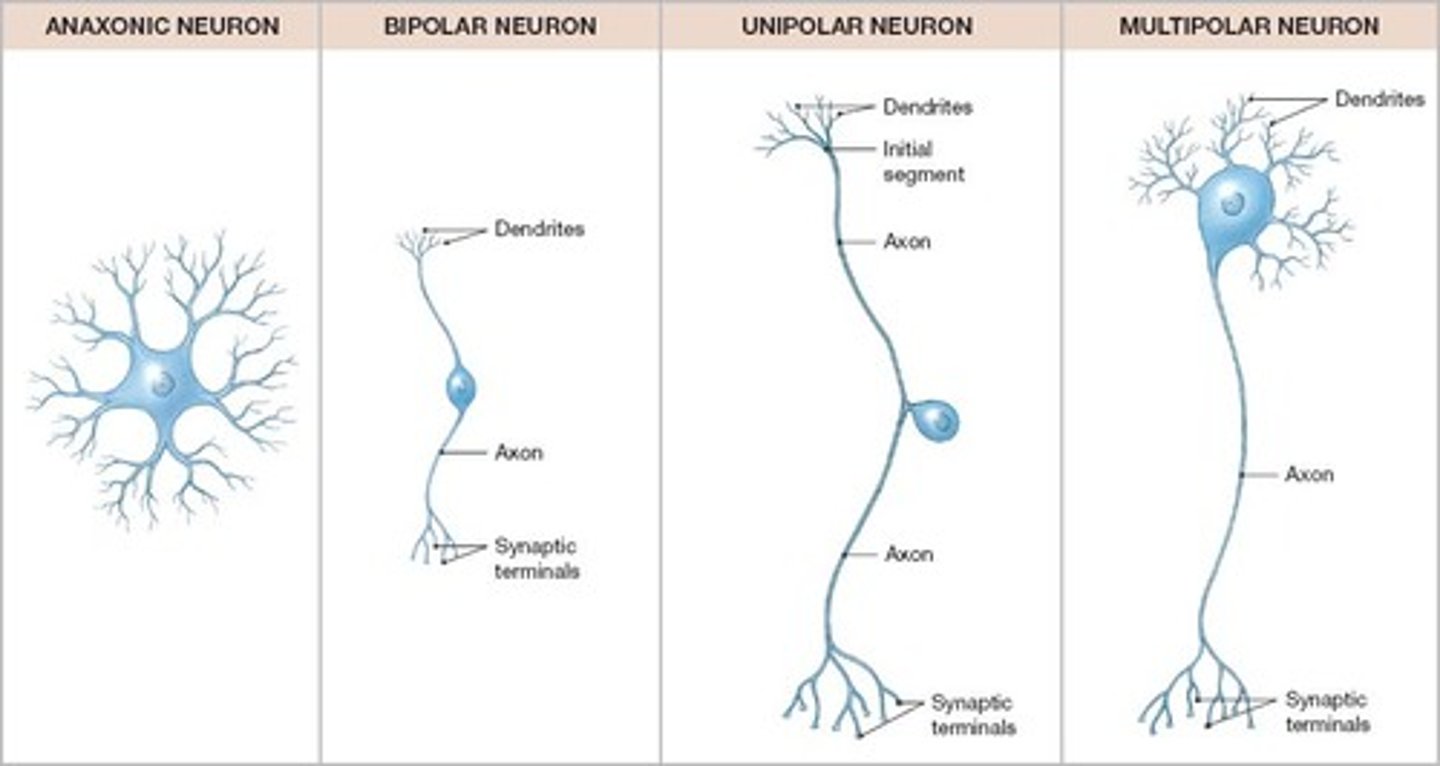
What are the 4 types of Neurons?
- Anaxonic
- Bipolar
- Pseudo- unipolar
- Multipolar
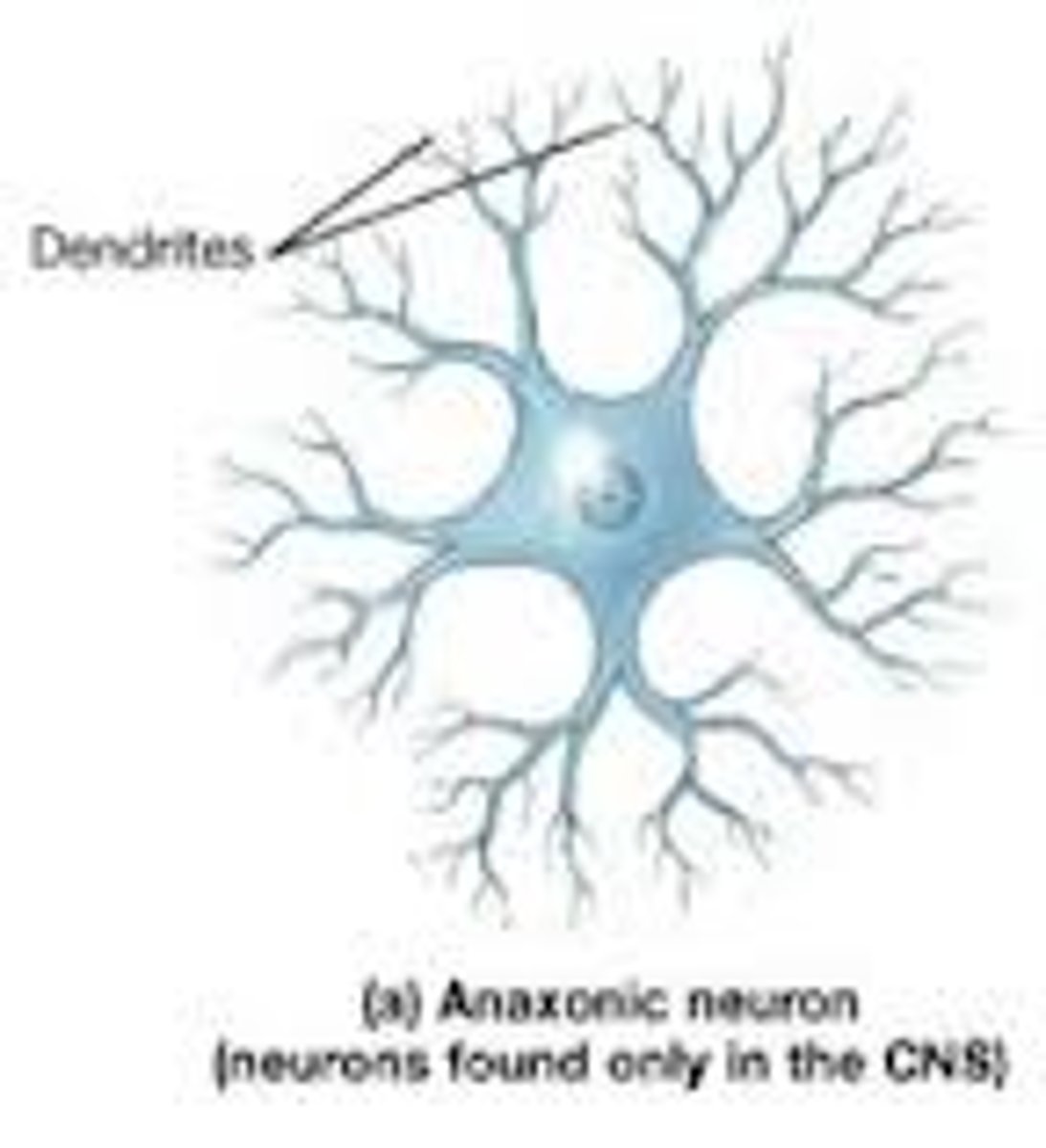
What is the defining characteristic of Anaxonic Neurons?
No Axon
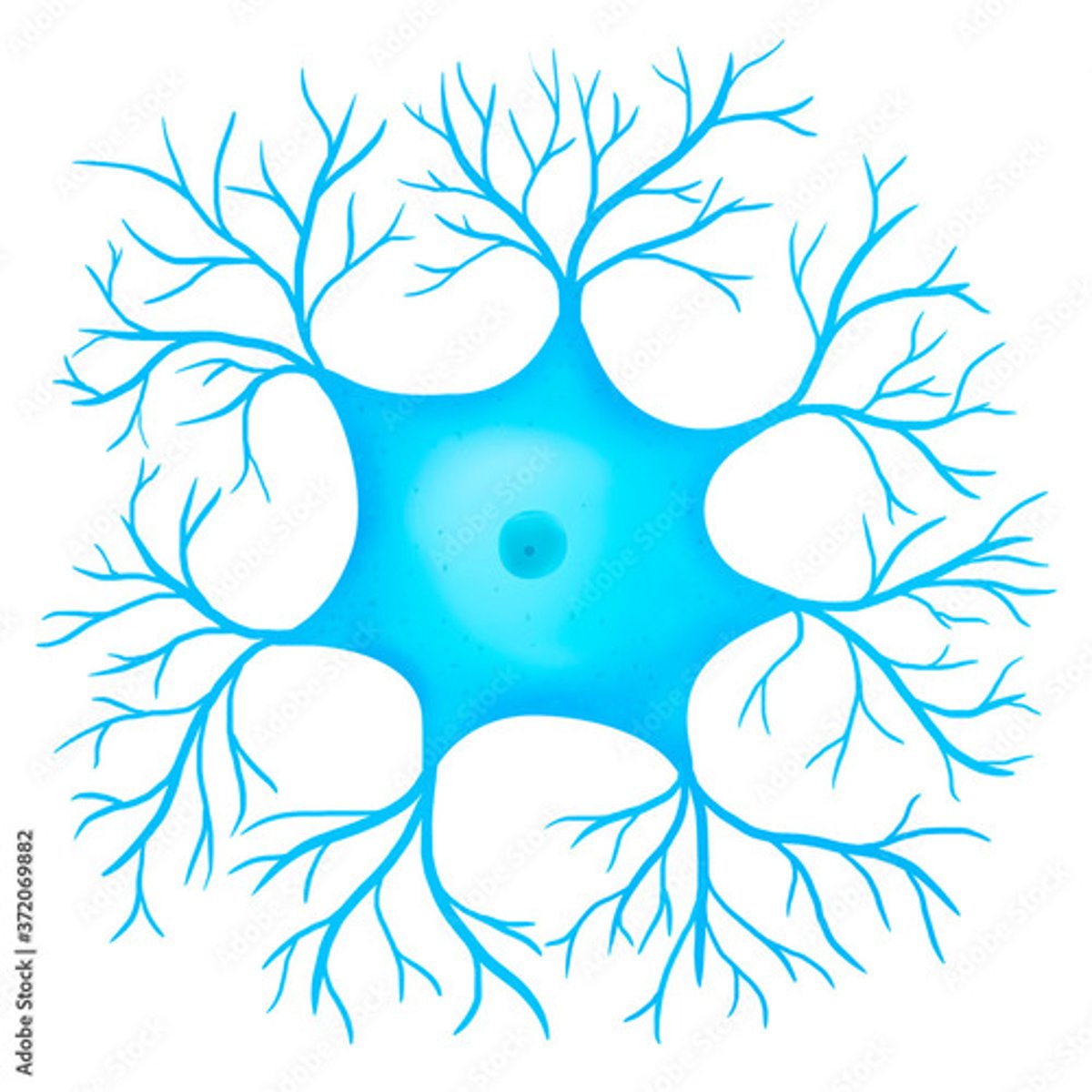
Where are Anaxonic Neurons found?
- ONLY in the CNS
- Brain and special sense organs
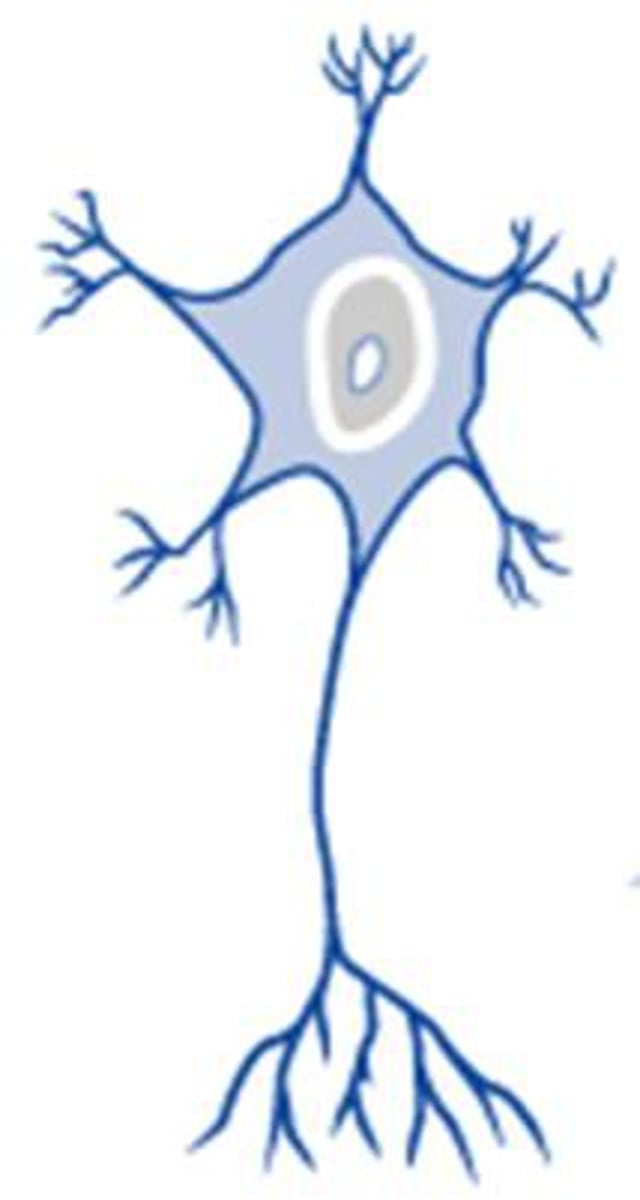
What are the defining characteristics of Bipolar Neurons?
- They have 2 projections off the soma
- Unmyelinated
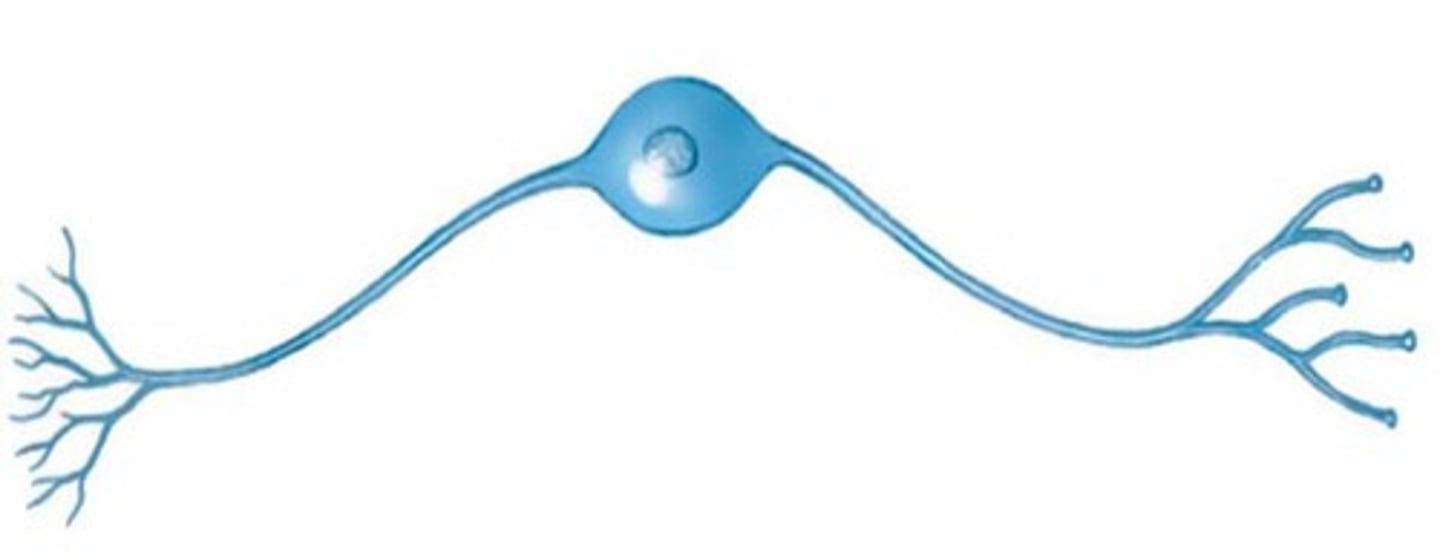
Where are Bipolar Neurons found?
Special sense organs
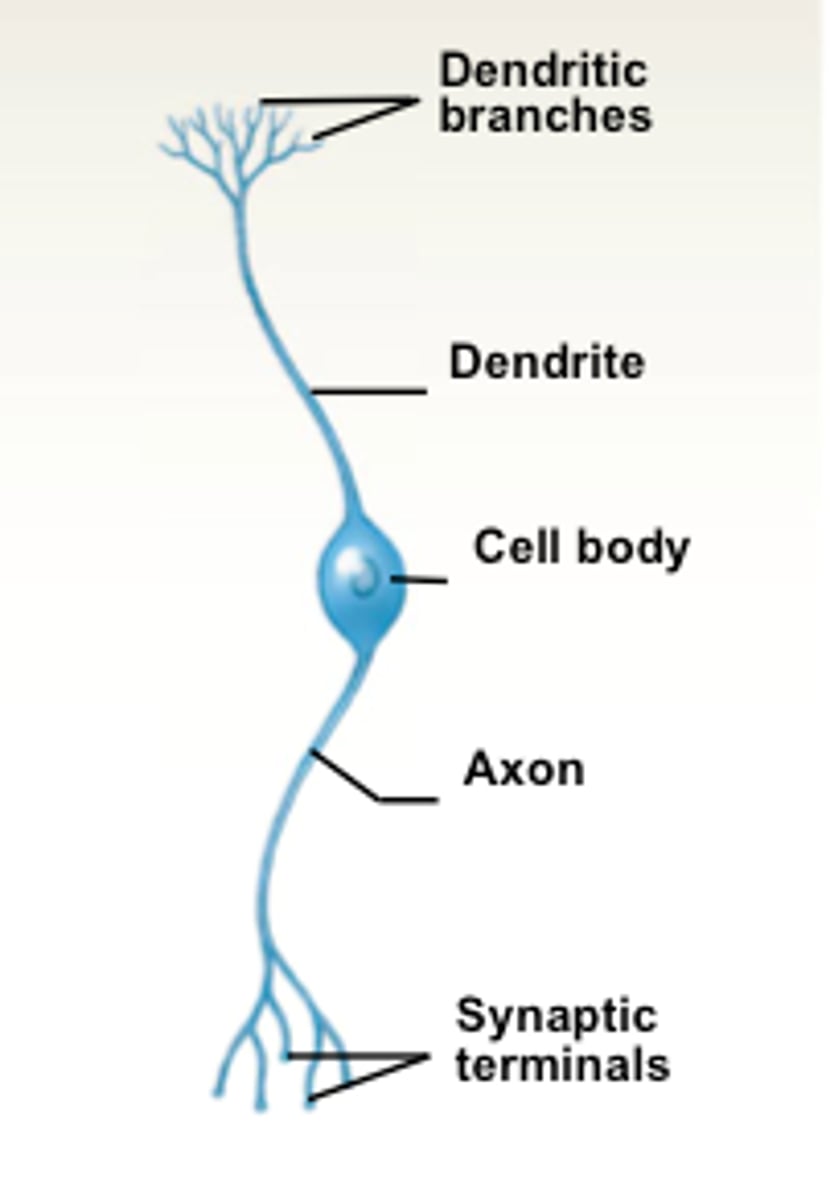
What are the defining characteristics of Pseudo-unipolar Neurons?
- One process
- Splits into two
- Sensory neurons
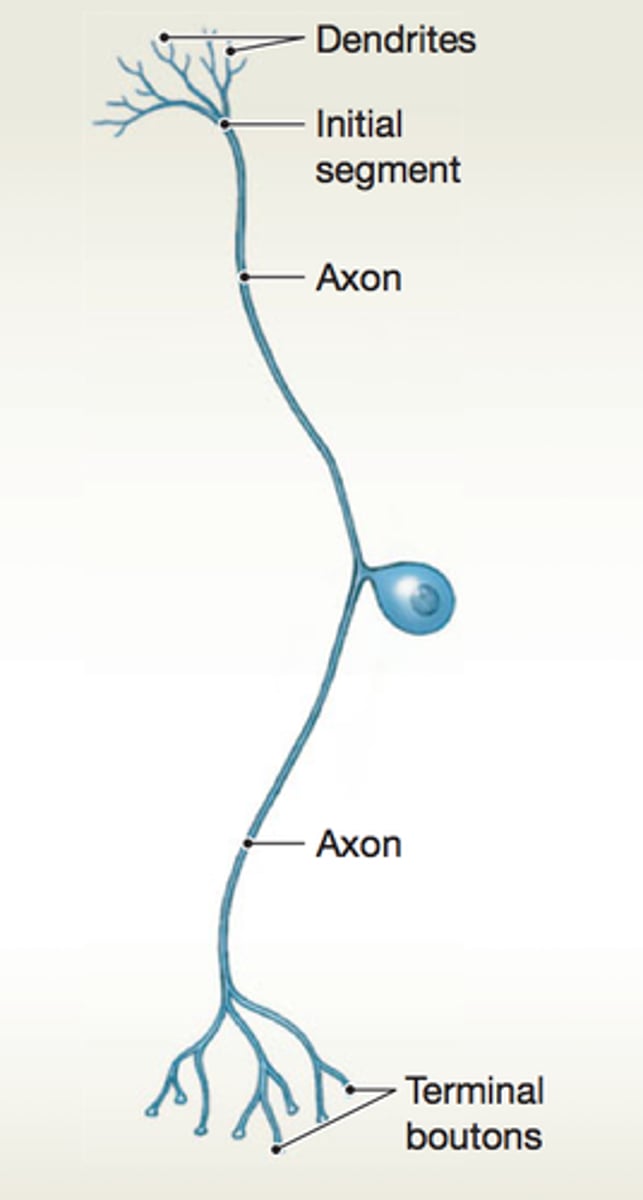
Where are Pseudo-unipolar Neurons found?
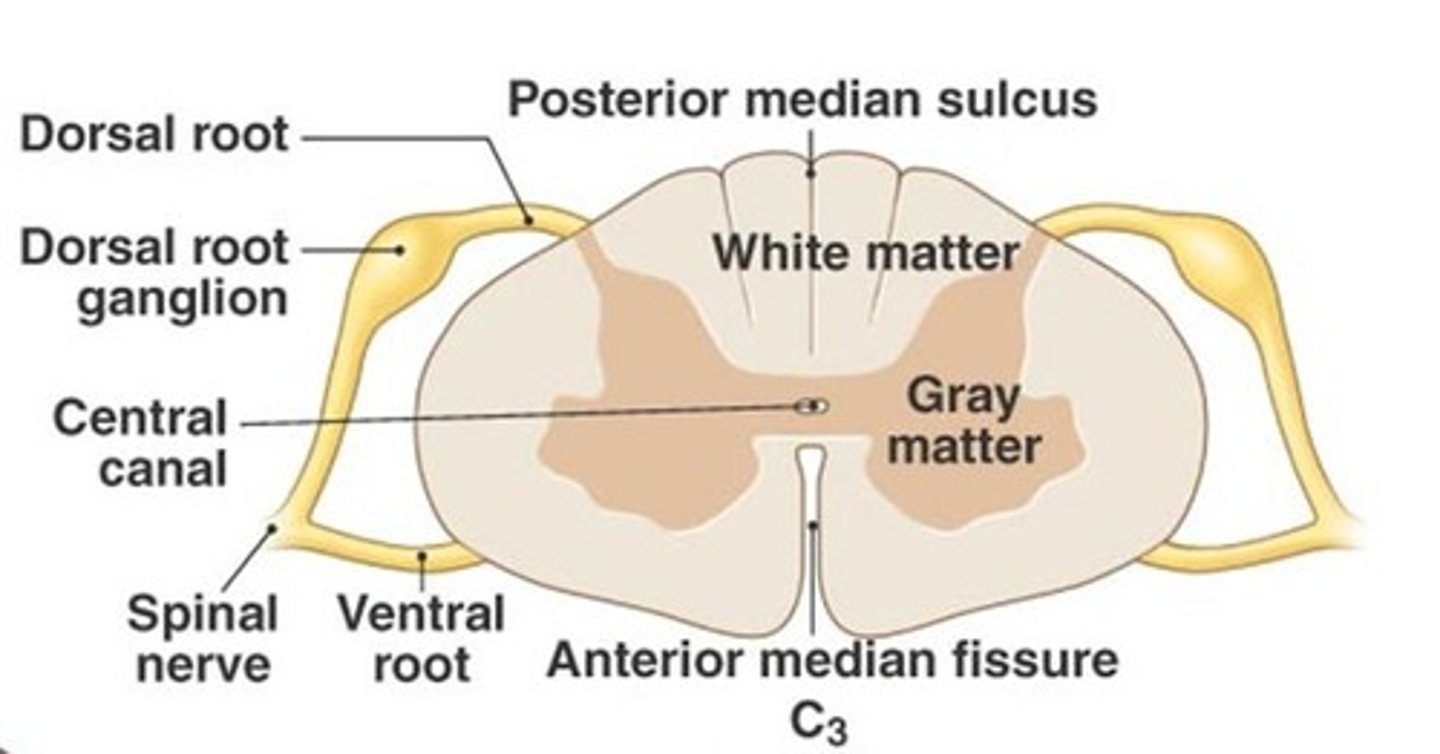
Dorsal root ganglia
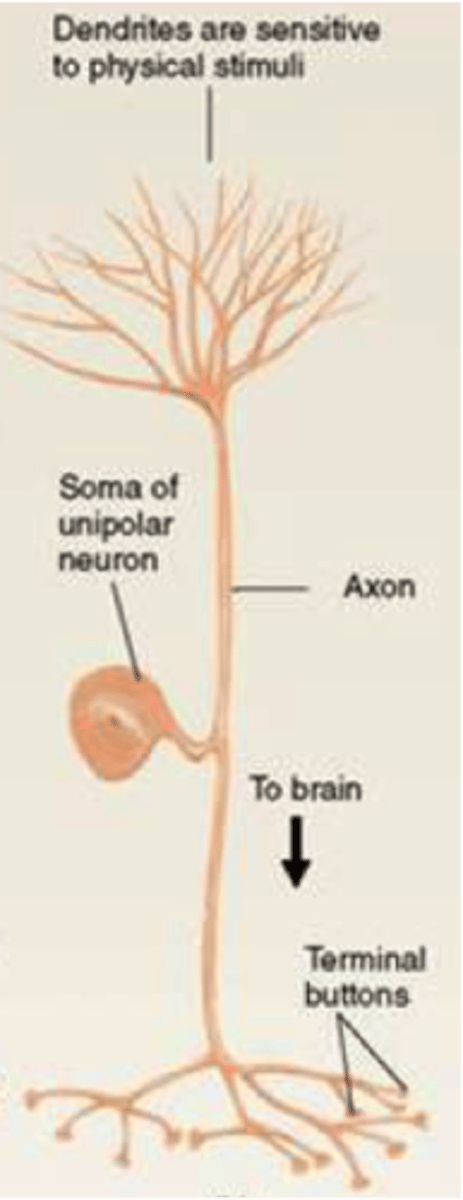
What is the dorsal root ganglion?
where the majority of sensory neurons cell bodies reside.
What are the defining characteristics of Multipolar Neurons?
- Several dendrites
- One axon
- Motor neurons
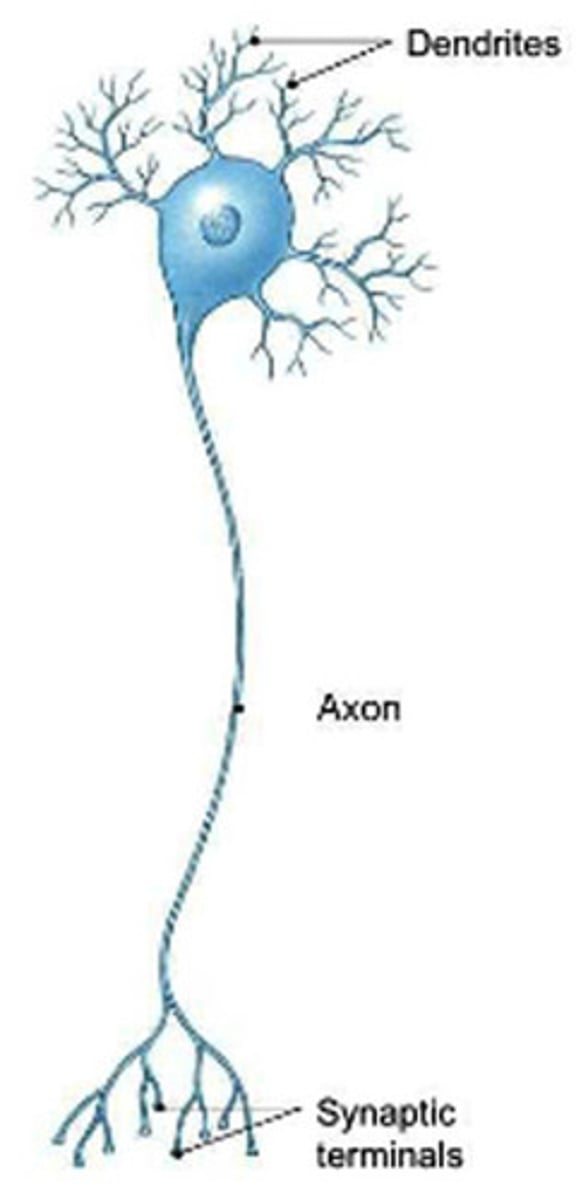
Where are Multipolar neurons found?
Brain and spinal cord (CNS)
What is the Central Nervous System (CNS) composed of?
The brain and spinal cord
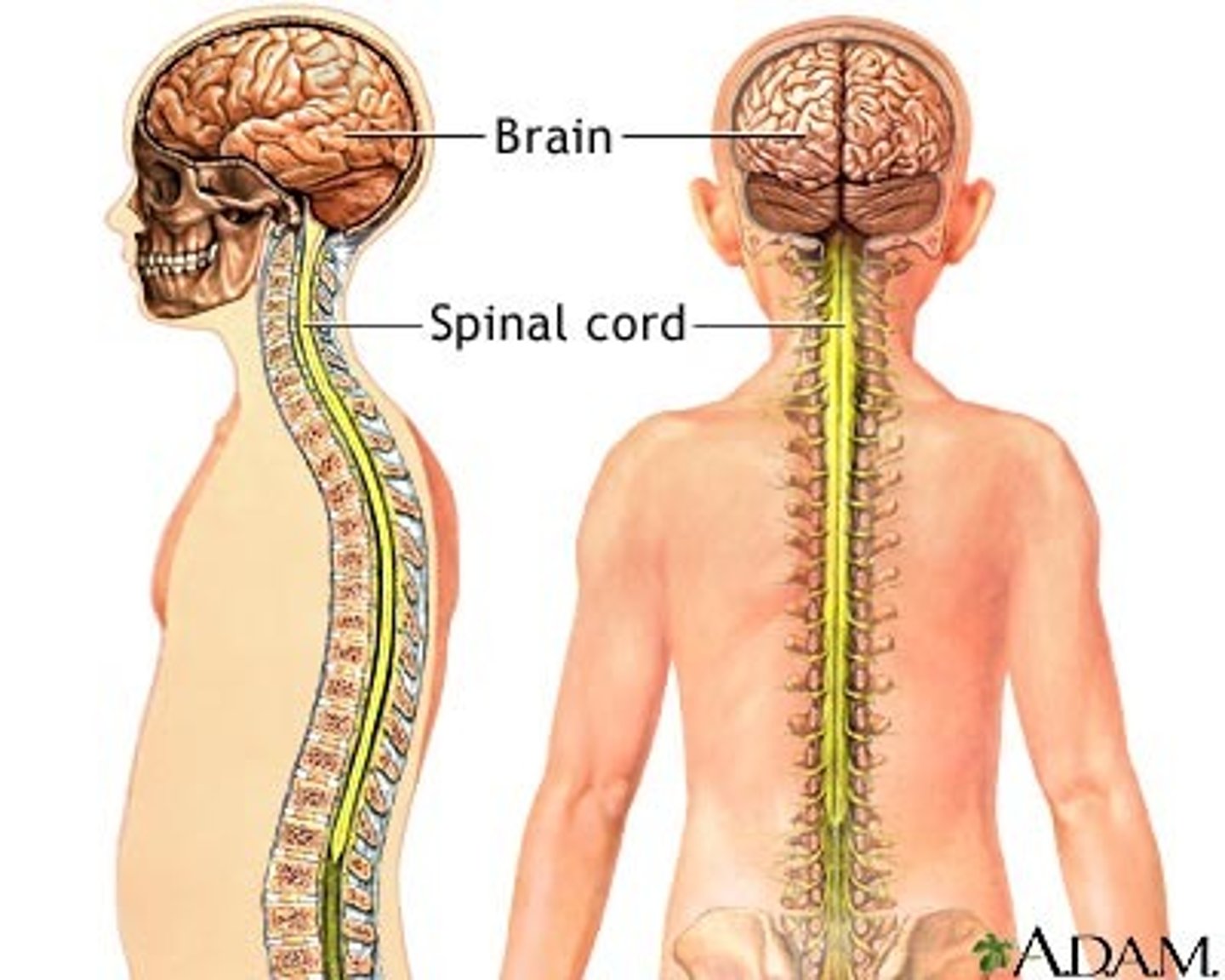
What is the Peripheral Nervous System (PNS) composed of?
The nerves of the body not including the brain and spinal cord
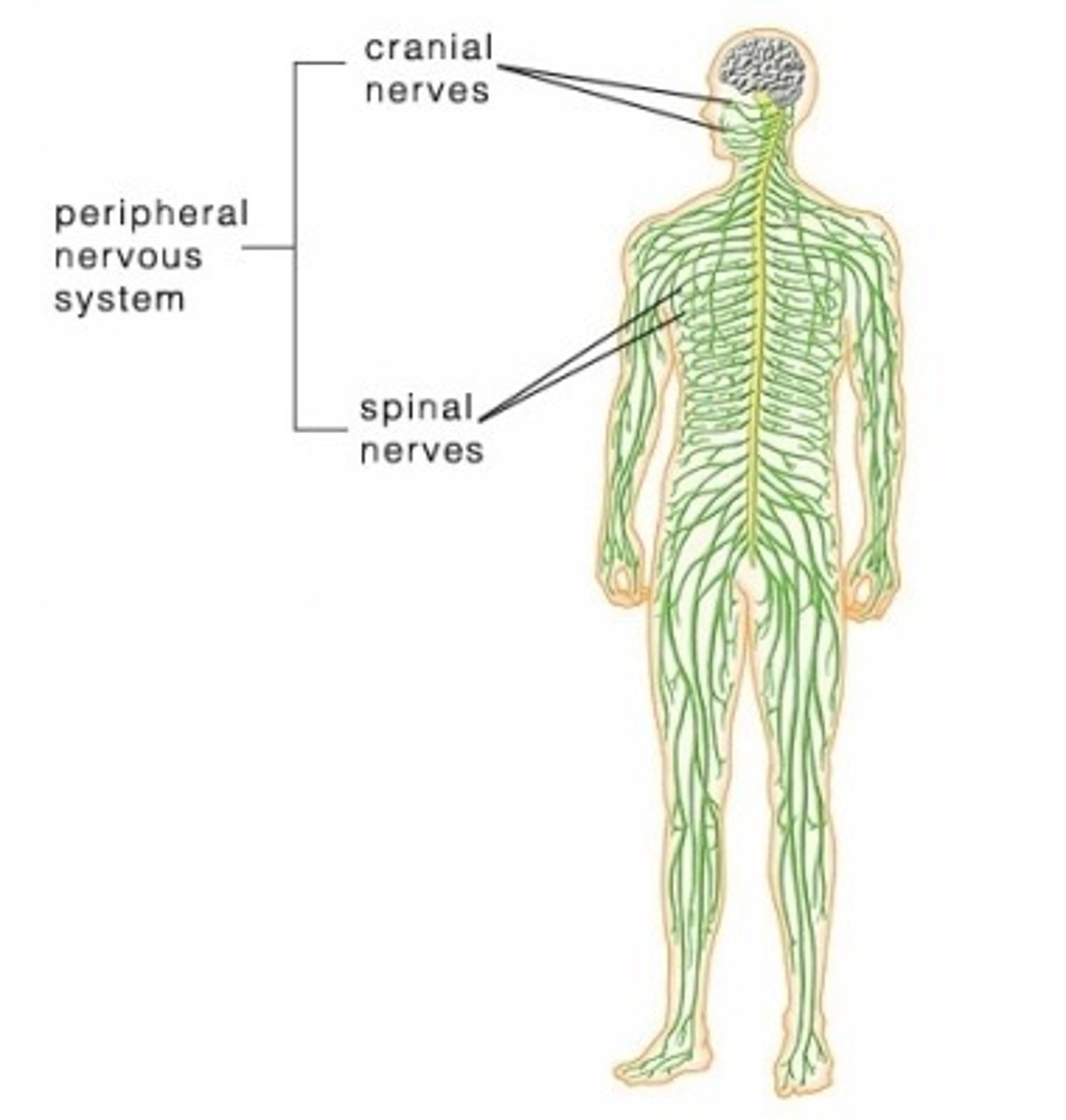
What does the PNS do?
Sends info to CNS from outside world, transmitting messages from CNS to muscles and bodily glands.
What are neuroglia?
Cells that support and protect neurons
What are the neuroglia of the CNS?
- Astrocytes
- Oligodendrocytes
- Ependymal cells
- Microglia
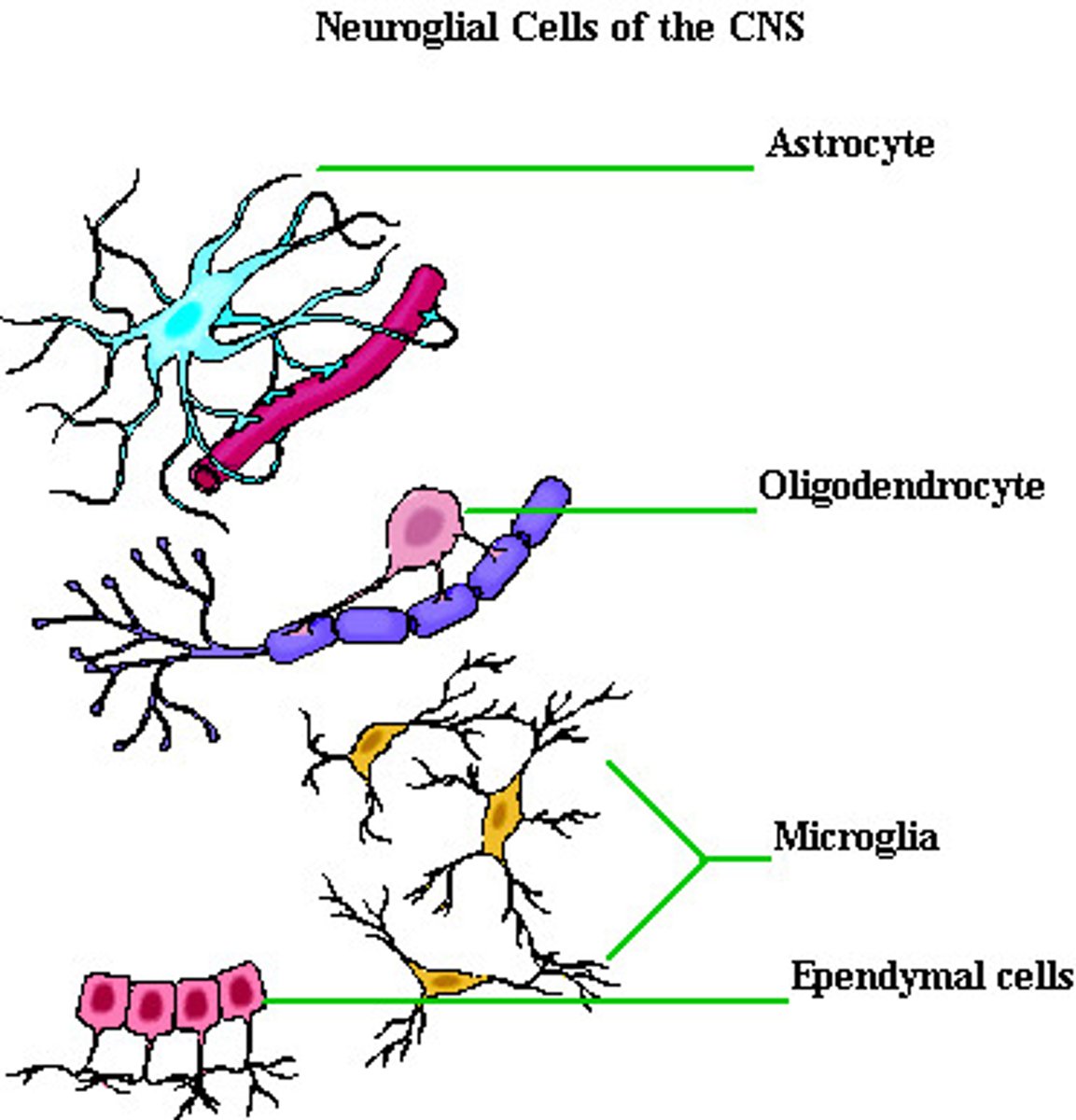
What are astrocytes?
They are the MOST NUMEROUS GLIAL CELL, they fill spaces between neurons for support, and regulate the composition of the extracellular space. It is important to note that Astrocytes form a connection between neurons and capillaries. Astrocytes are ONLY found in the brain.
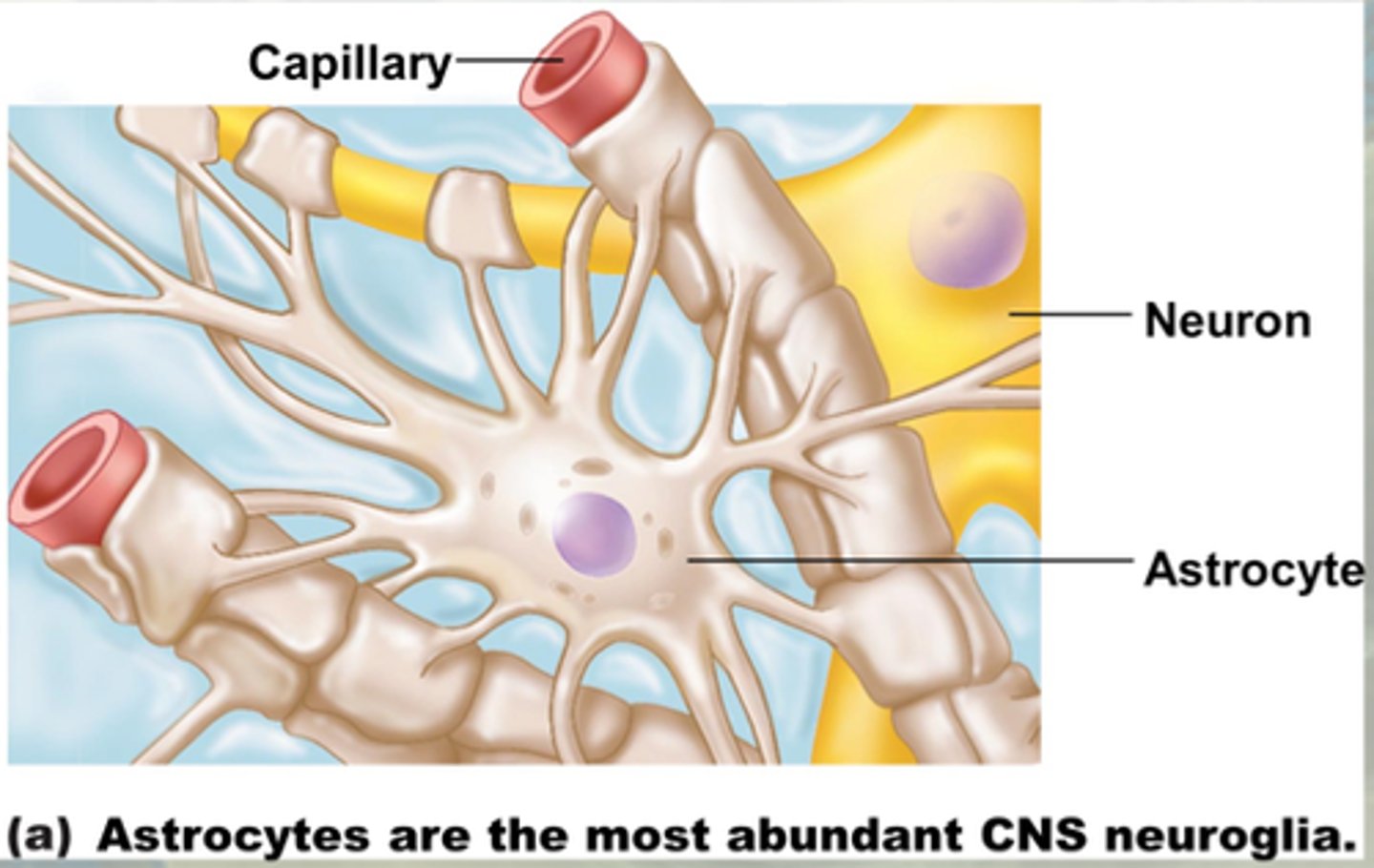
What do astrocytes do?
- Form and maintain the blood/brain barrier
- Promote neuron development
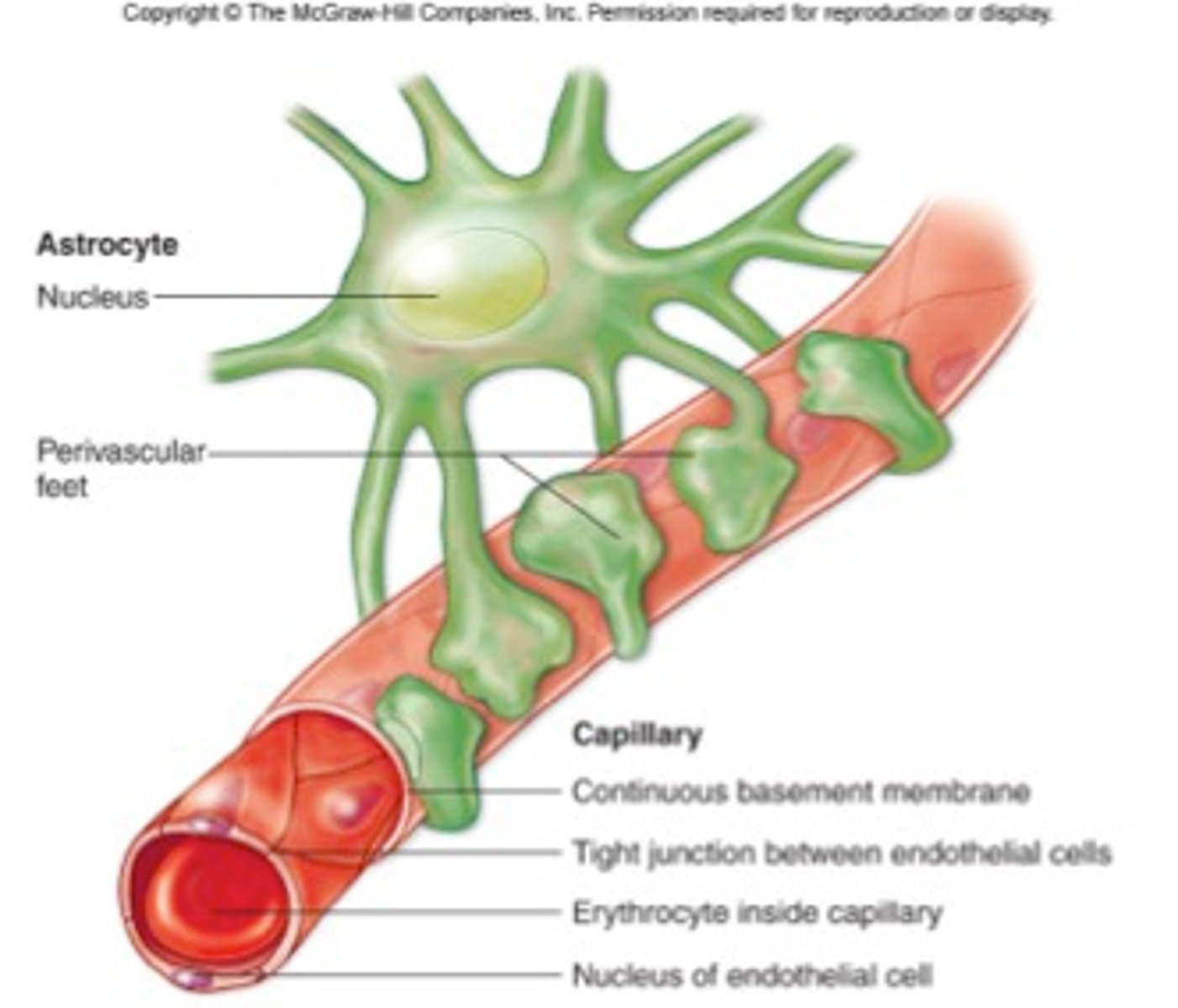
What are oligodendrocytes?
A type of glial cell that forms insulating myelin sheaths around the axons of neurons in the central nervous system.
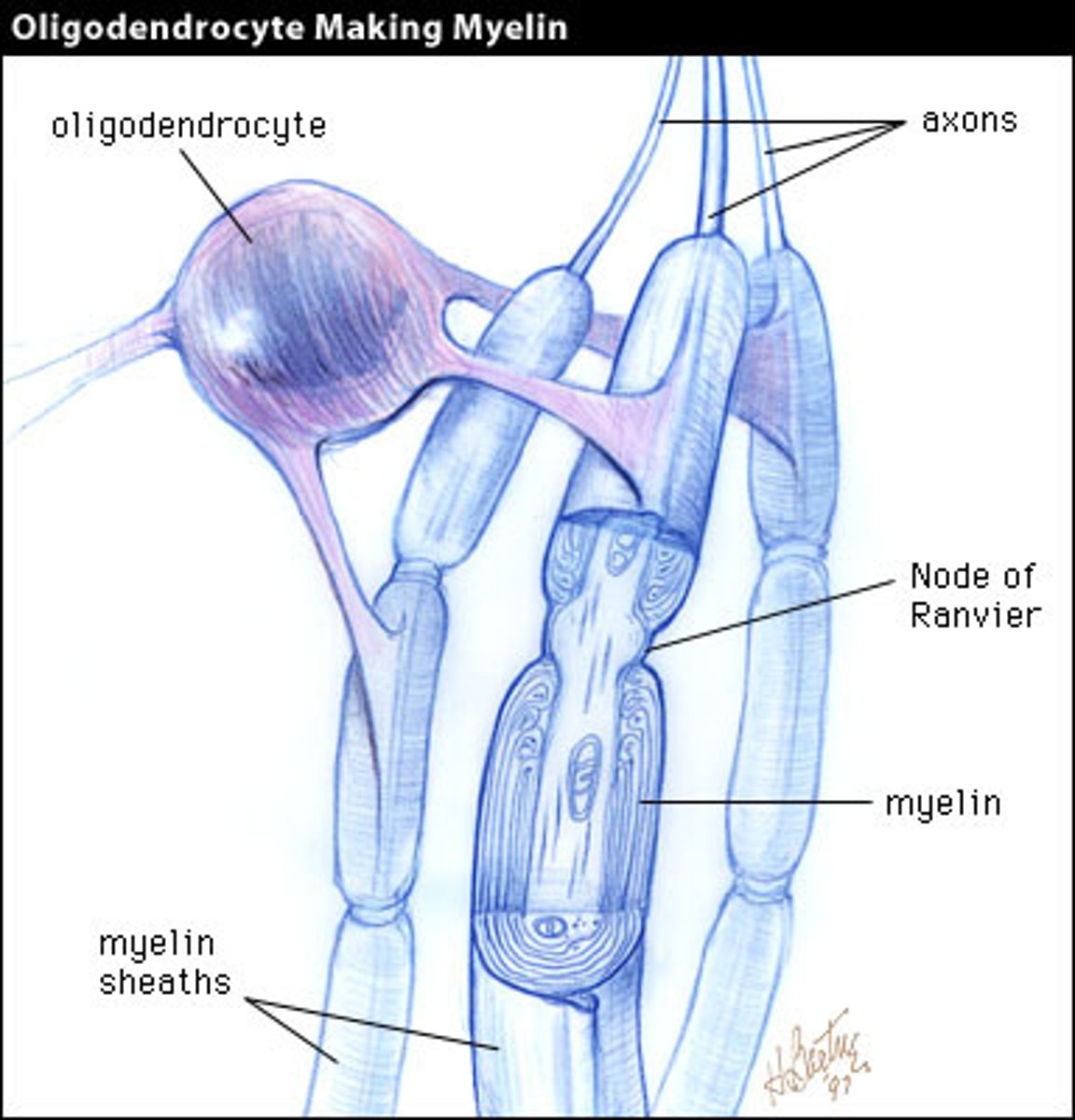
What do oligodendrocytes do?
- Produce myelin in CNS
- (Increase action potential speed)
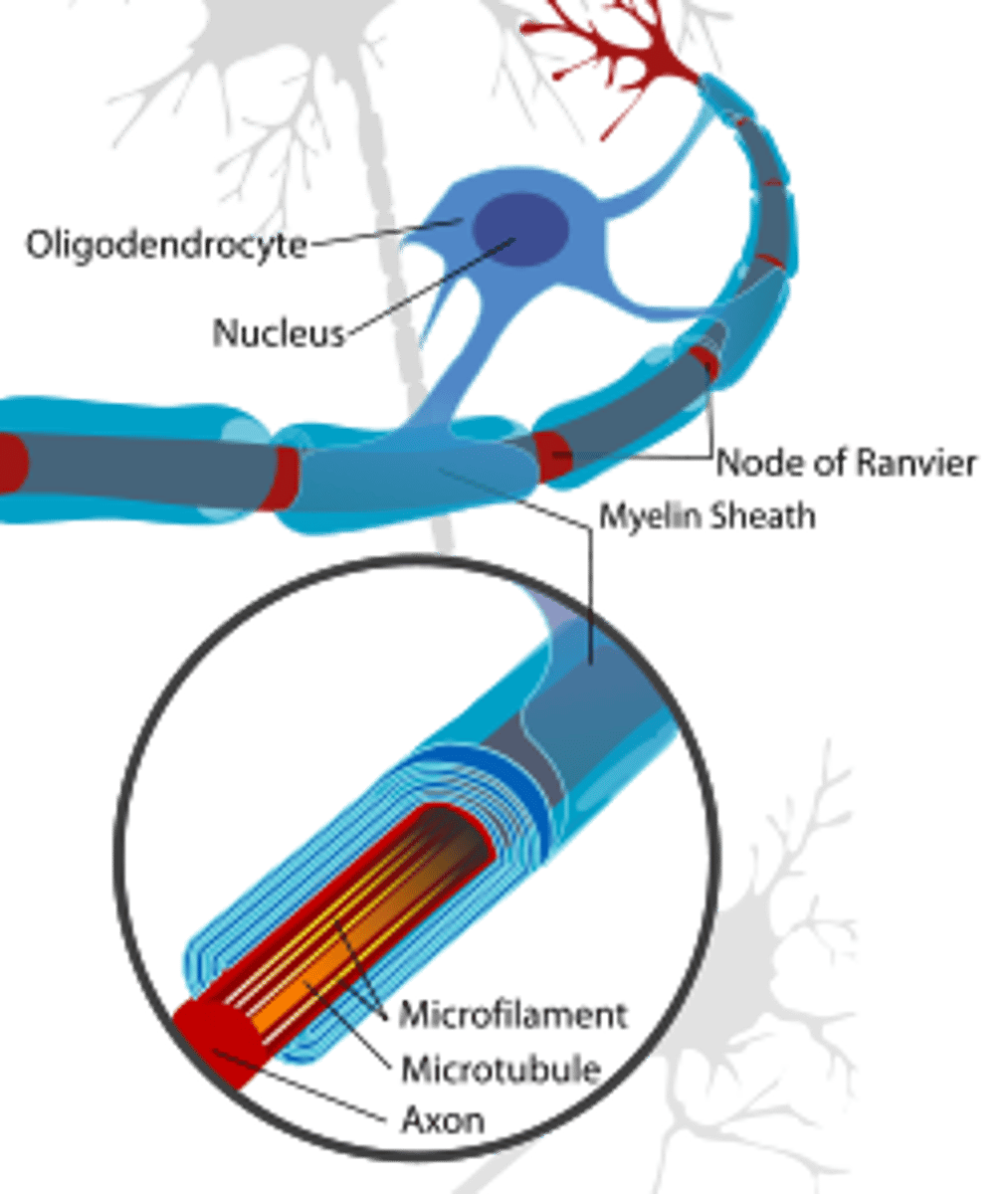
Why are myelin sheaths important?
Increase action potential speed
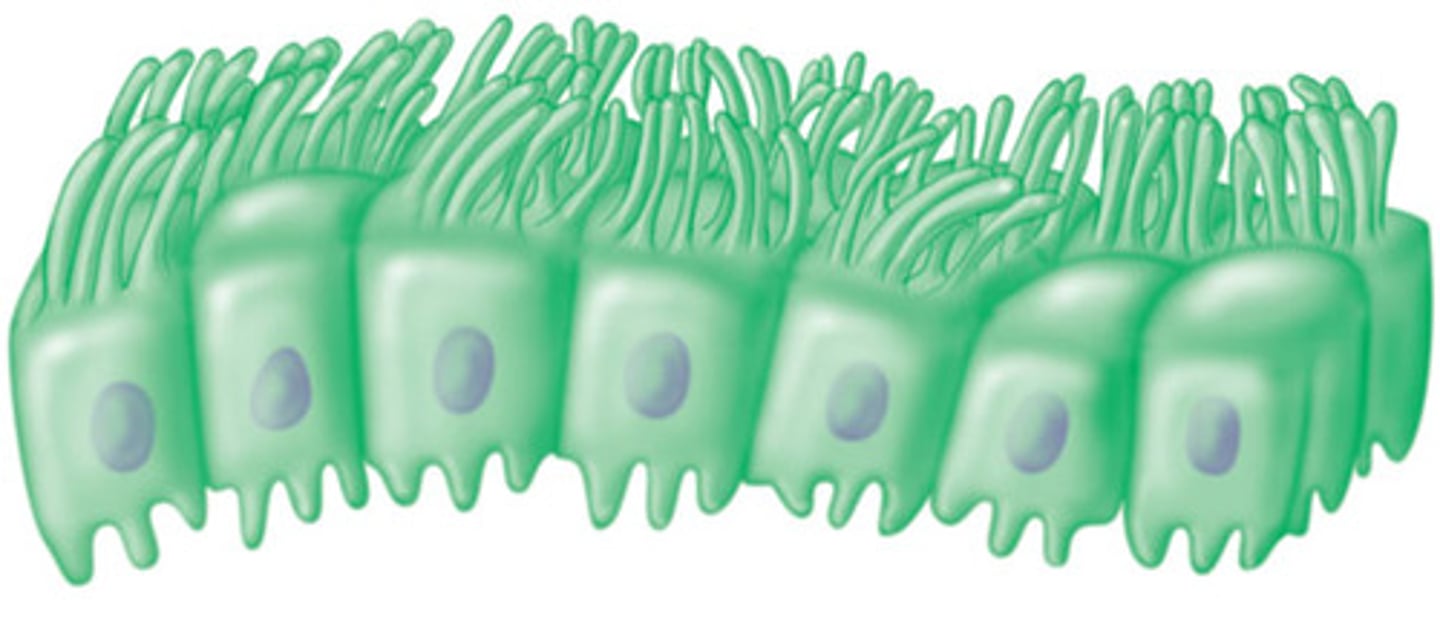
What are ependymal cells?
These are glial cells that line the central cavities of the brain and the spinal cord. These have cilia that helps to circulate cerebrospinal fluid that fillds cavities and protects the CNS
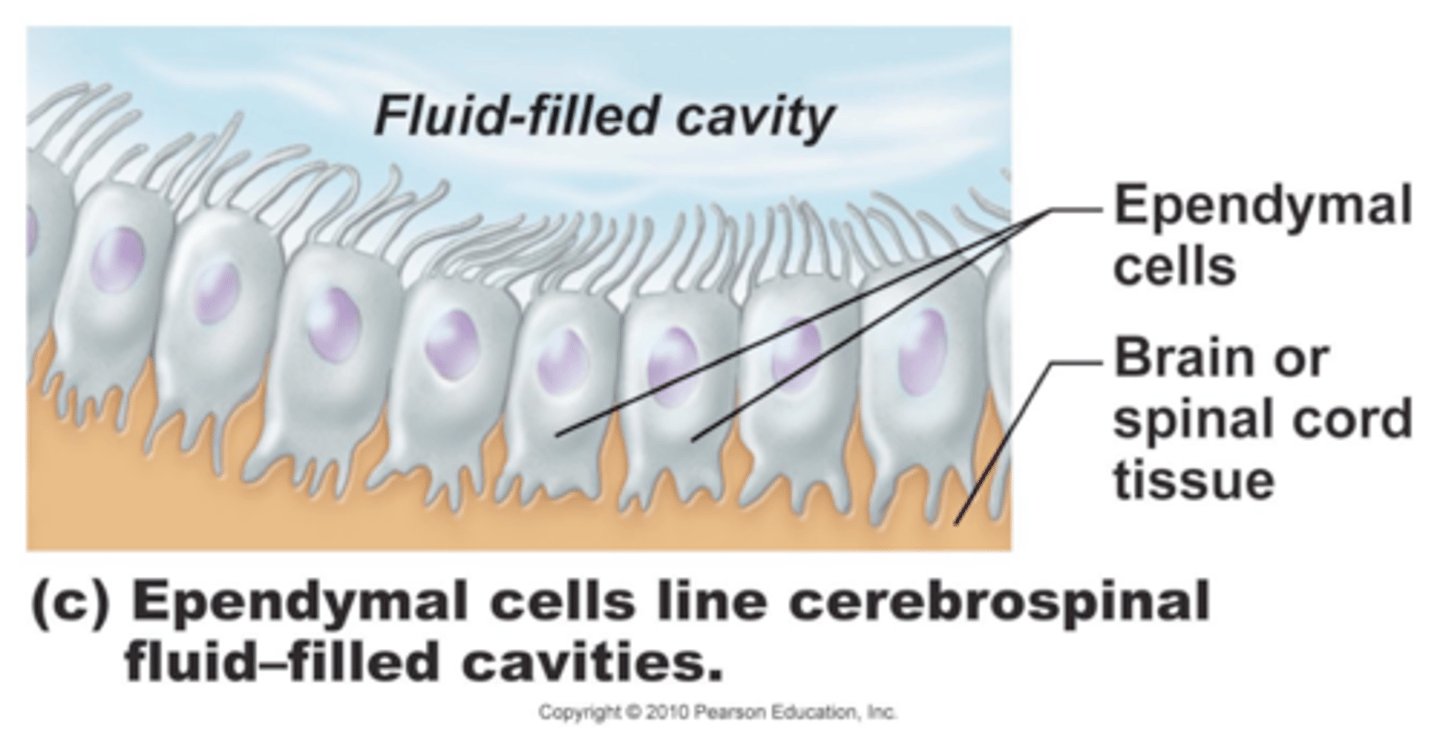
What do ependymal cells do?
Secrete and circulate CSF (Cerebrospinal Fluid)
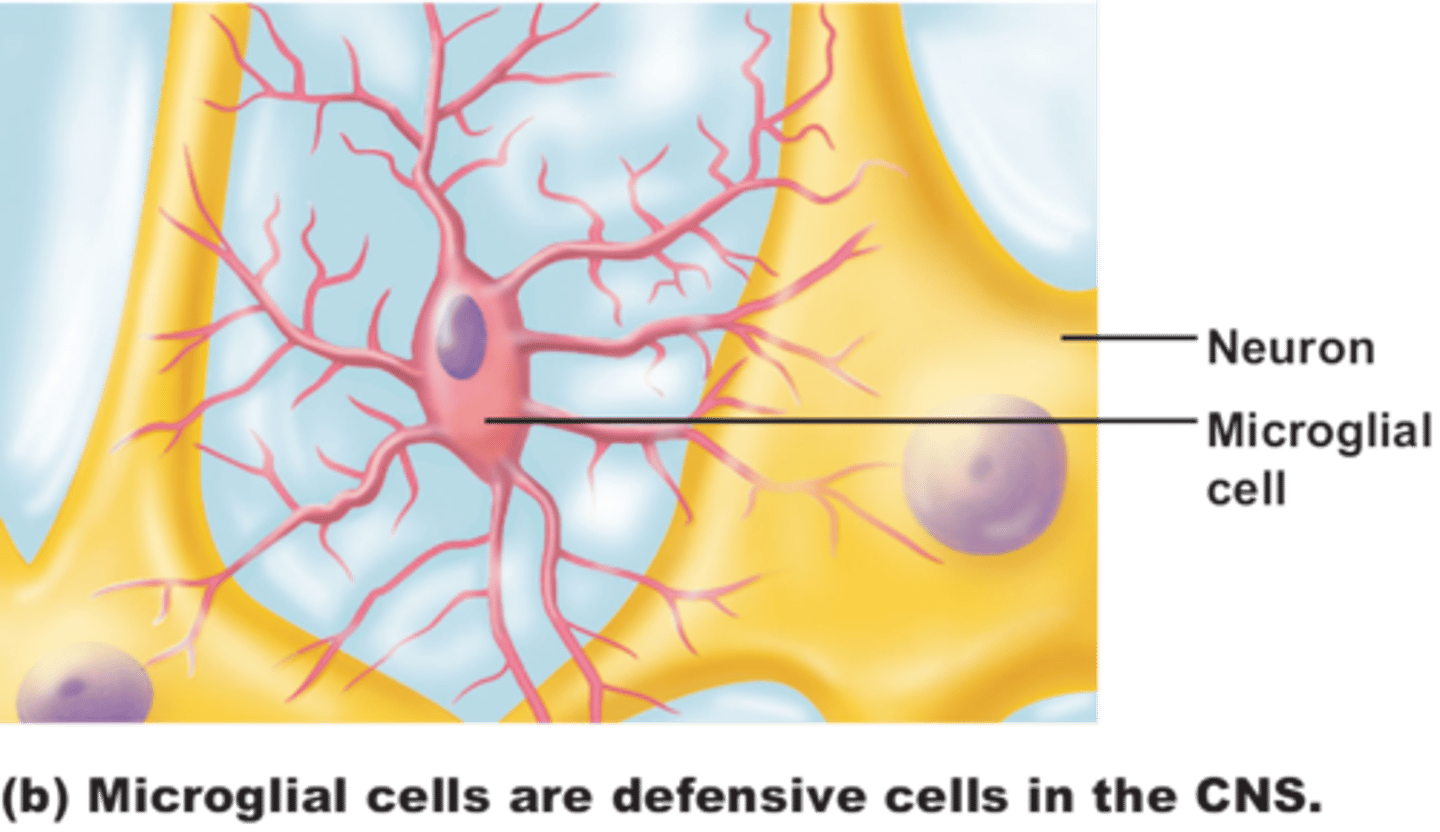
What are microglia?
Roving phagocytic cells
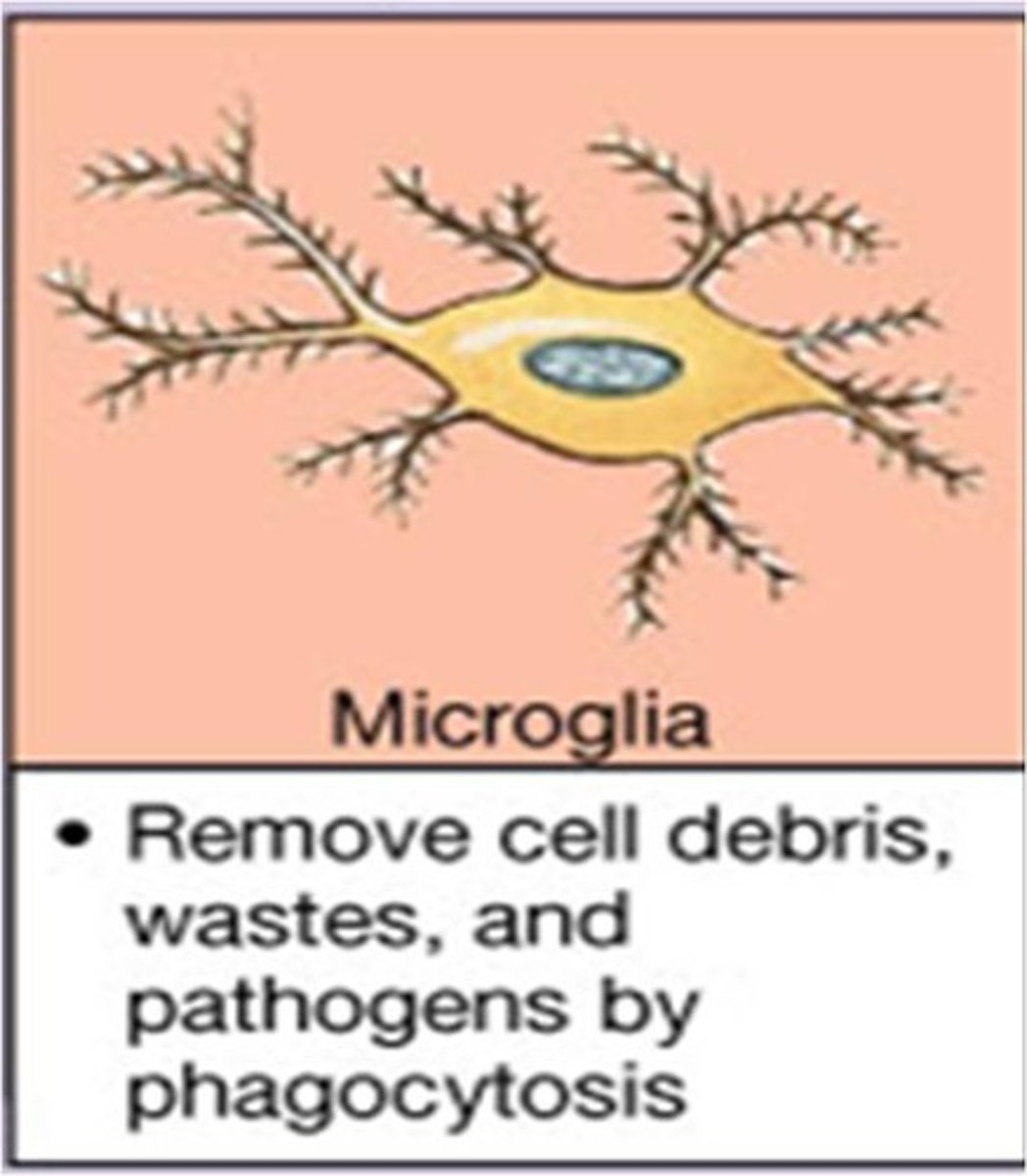
What do microglia do?
- They act like phagocytes and engulf cellular debris, waste products & pathogens
- Monitor the health of nearby neurons, and dispose of debris, including dead brain cells and bacteria
What are the neuroglia of the PNS?
- Satellite cells
- Schwann cells
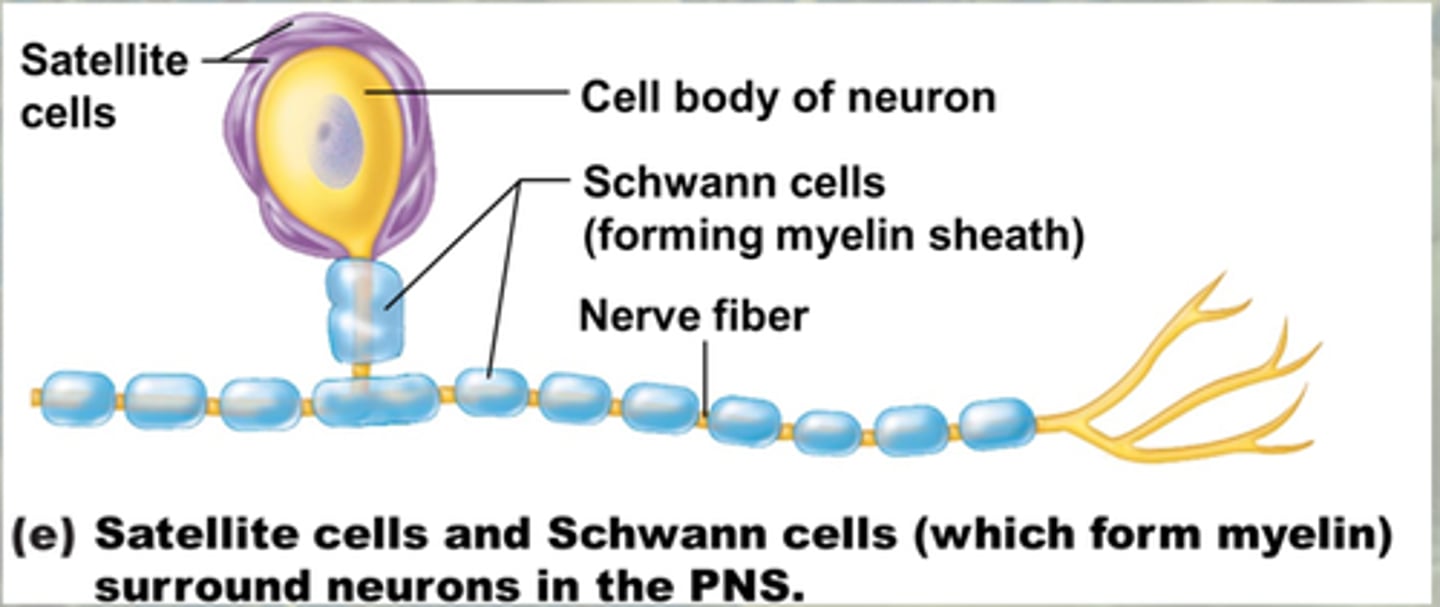
What are satellite cells in the PNS?
Small glia that surround neurons' sensory ganglia
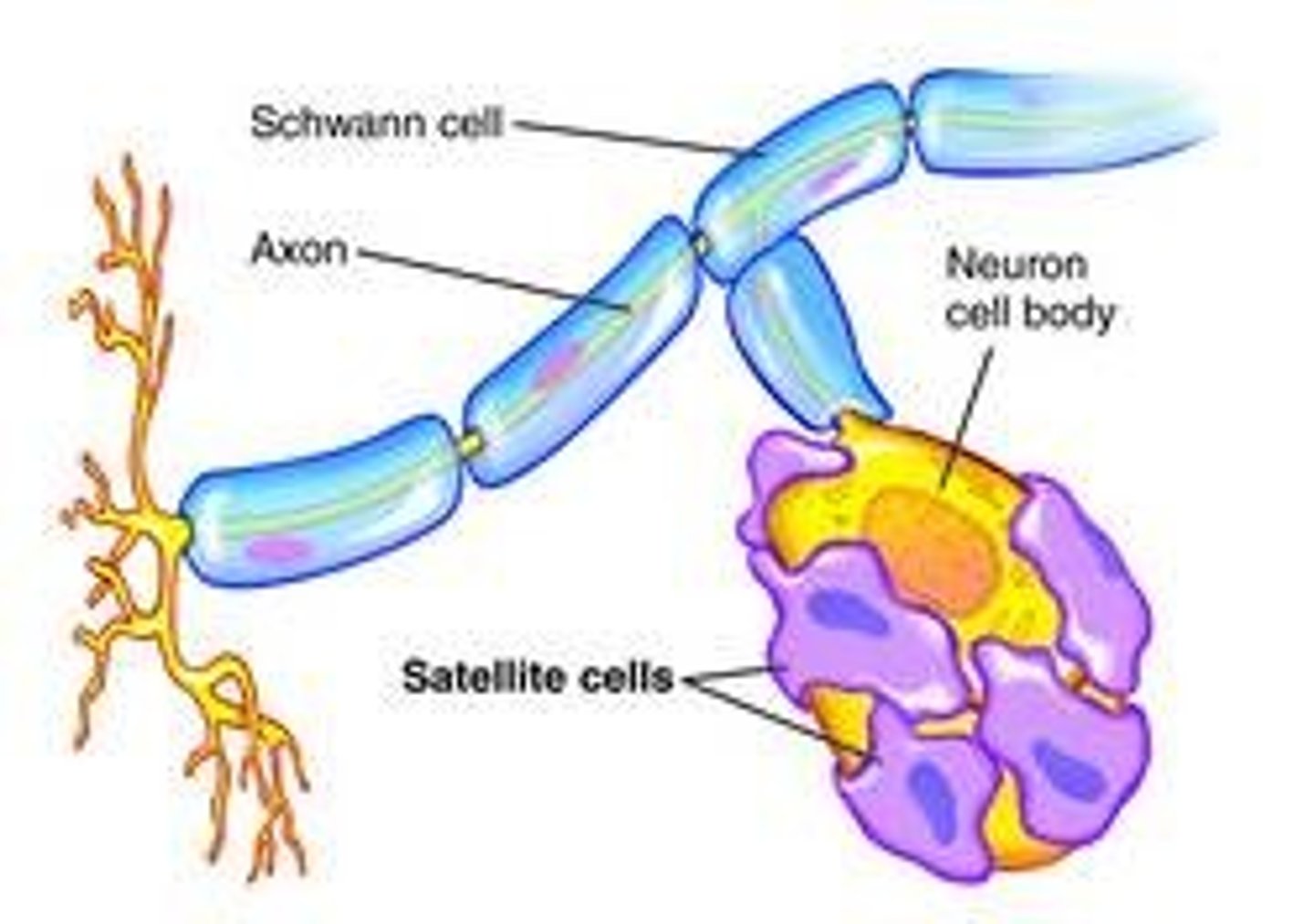
What do satellite cells do in the PNS?
support/surround cell bodies
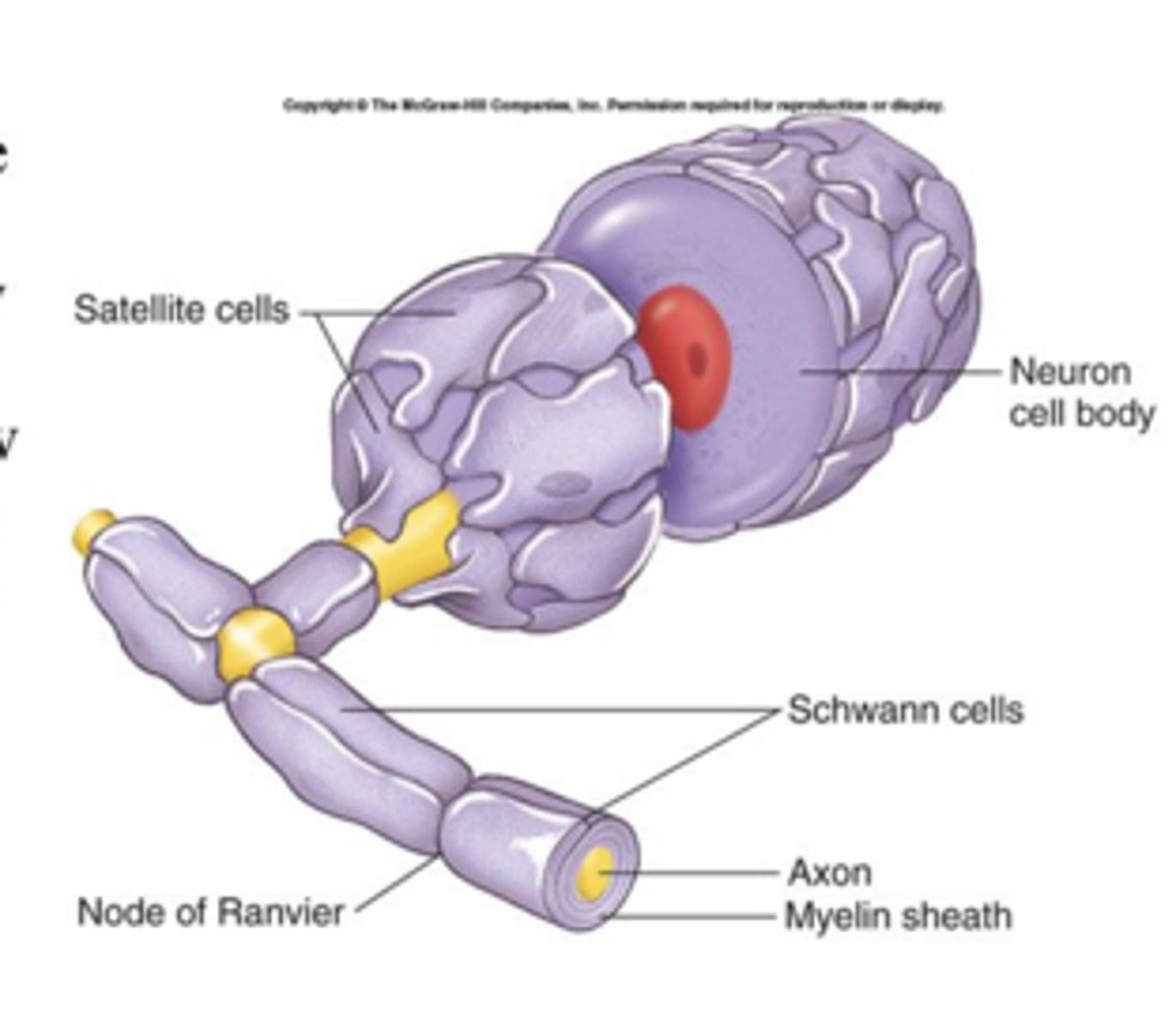
What are Schwann cells?
A type of glial cell that forms insulating myelin sheaths around the axons of neurons in the peripheral nervous system.
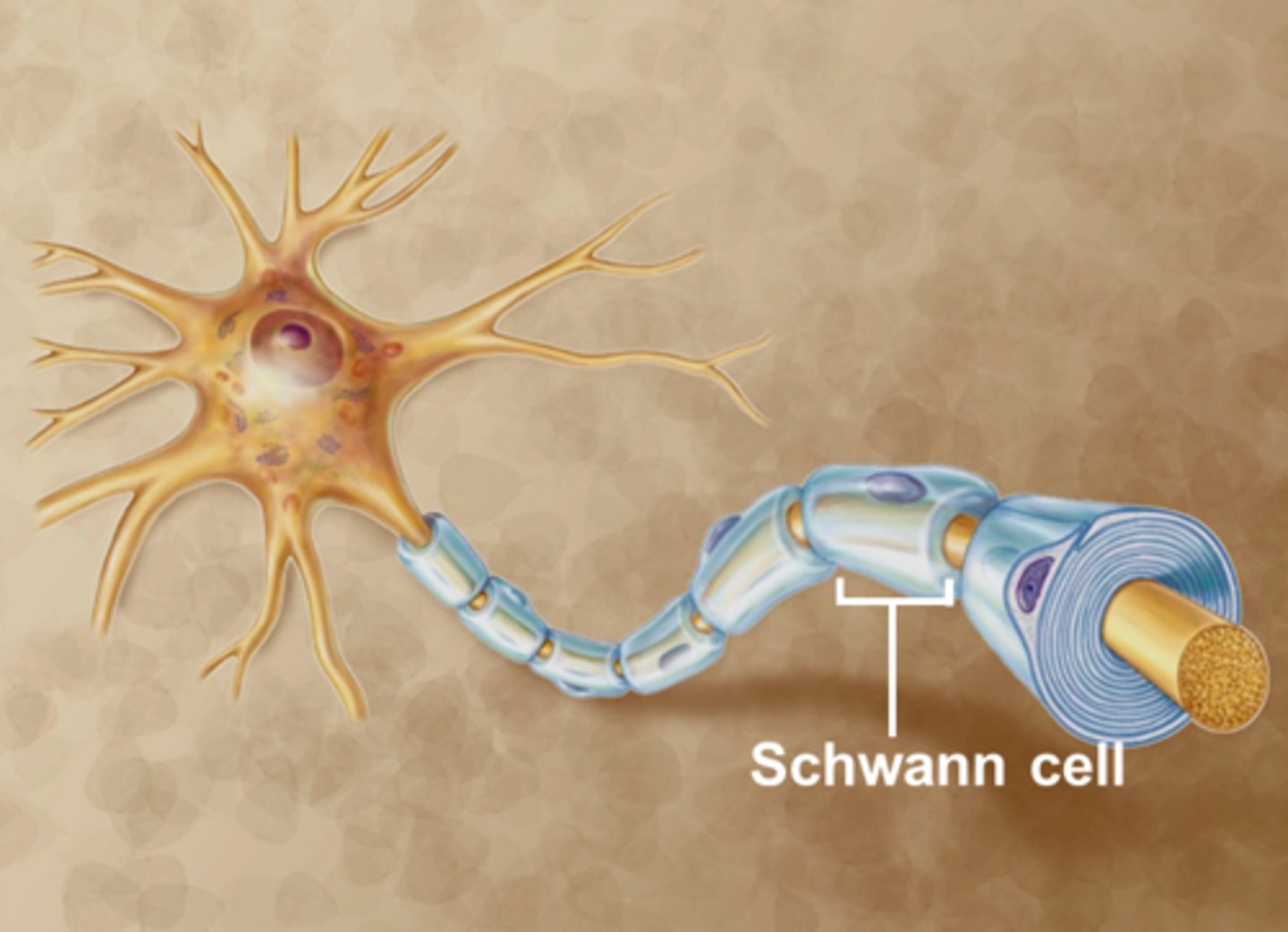
What do Schwann cells do?
- Form myelin sheath in PNS
- (Increase action potential speed)
What are the 3 main types of connective tissue surrounding nerves?
- Epineurium
- Perineurium
- Endoneurium
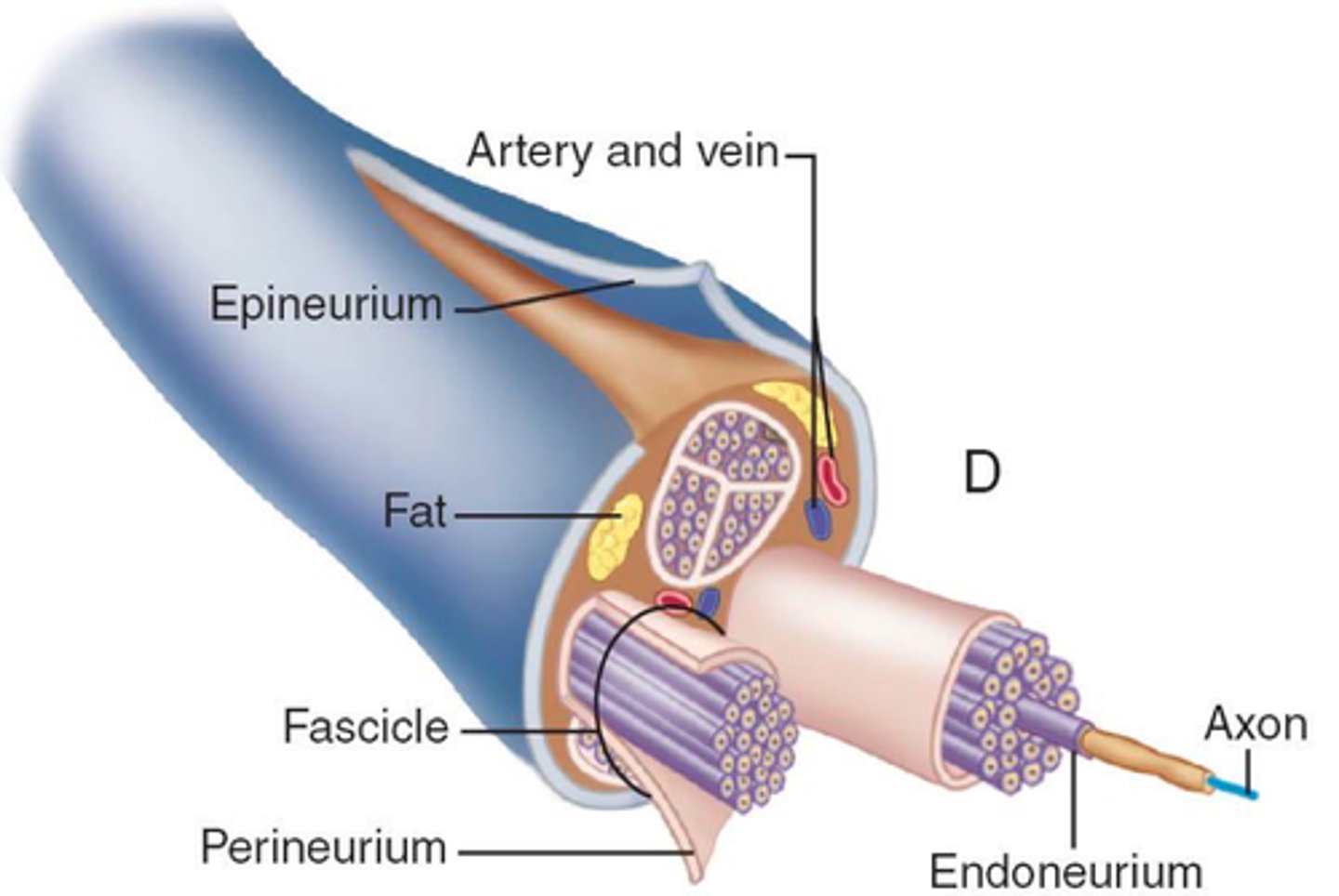
What are the levels of organization of the connective tissue of a nerve? (Largest to Smallest)
- Epineurium
- Perineurium
- Endoneurium
What does the epineurium surround?
Surrounds the entire nerve
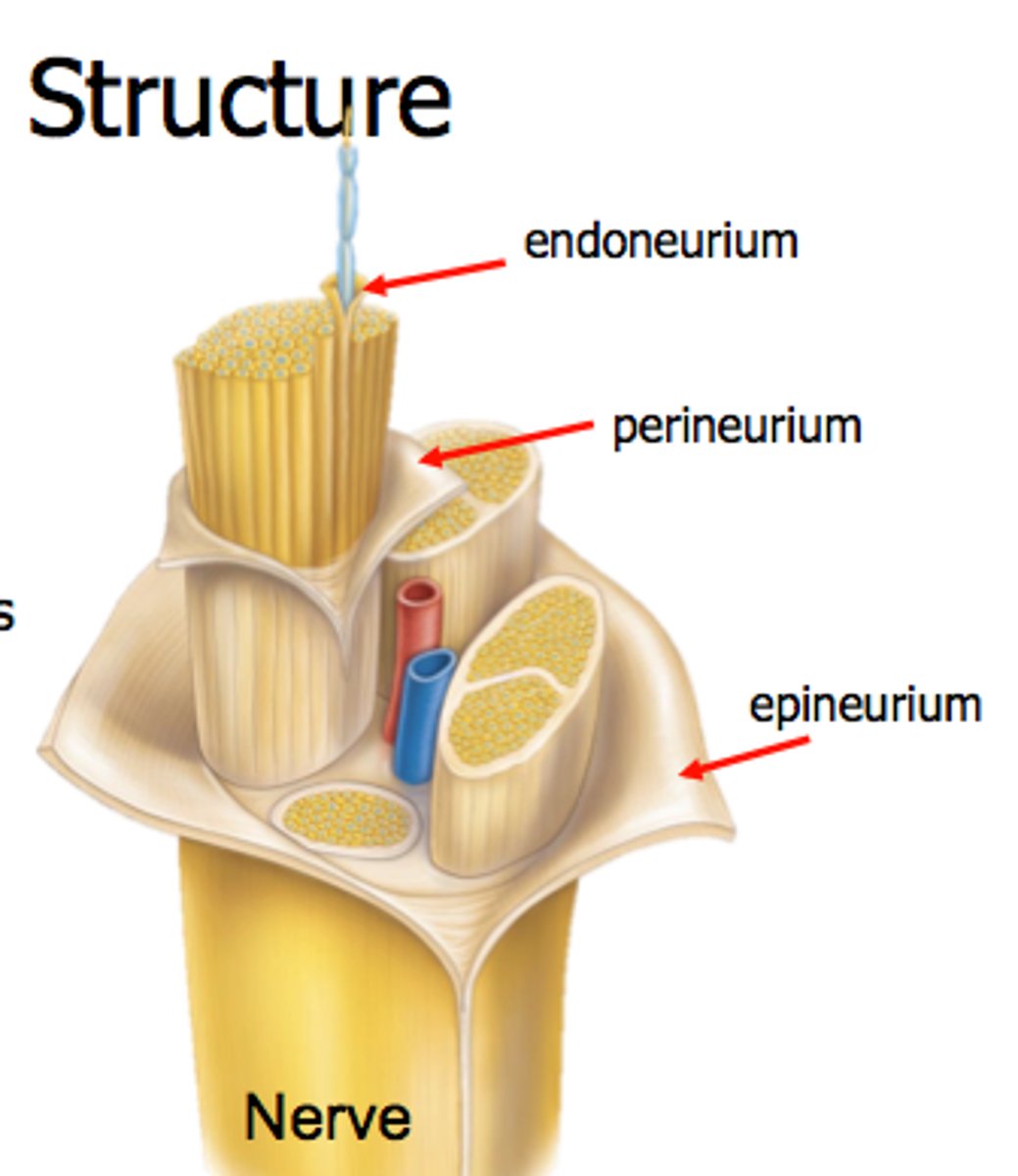
What does the perineurium surround?
Surrounds each neural fascicle
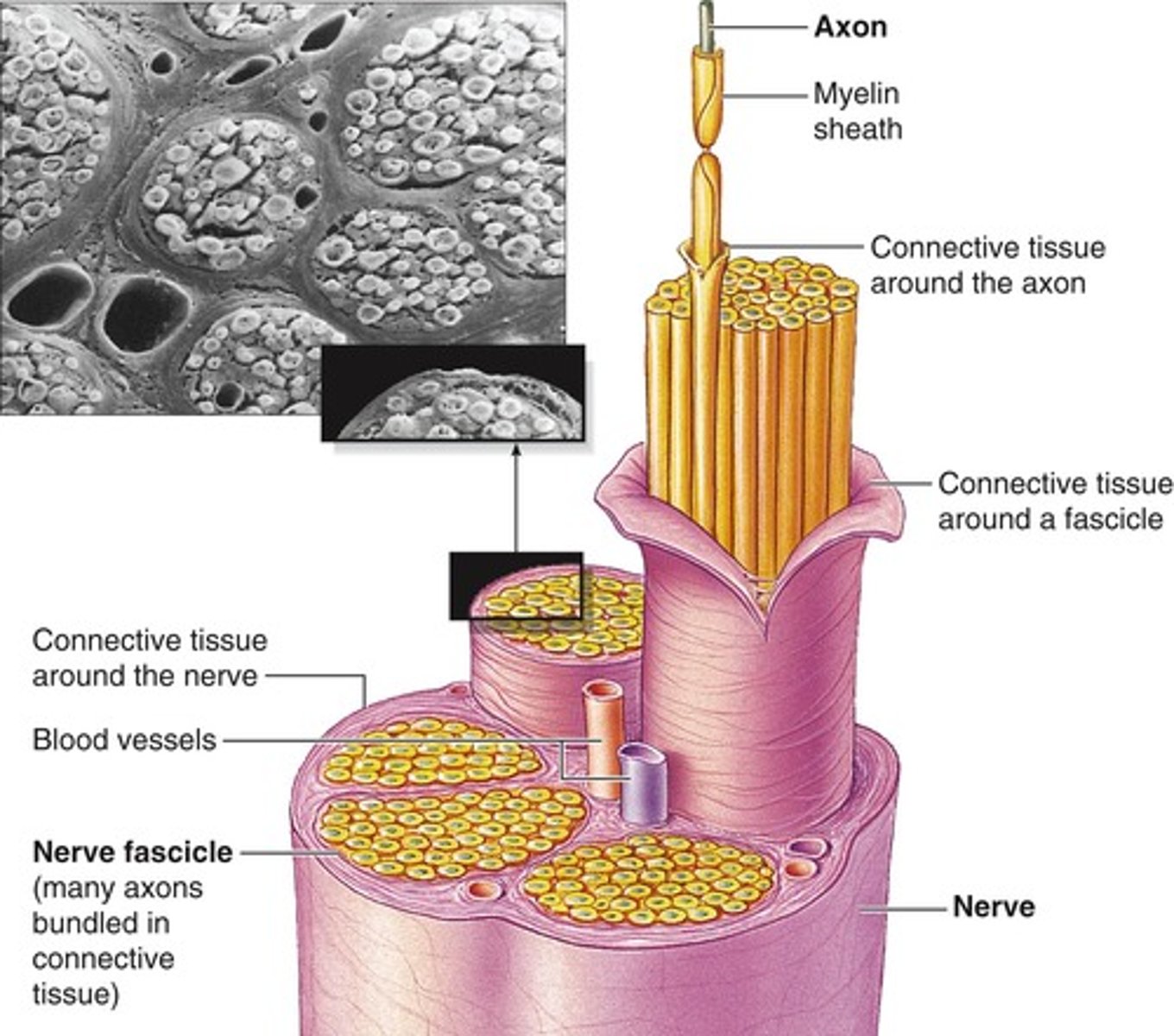
What does the endoneurium surround?
Surrounds individual neuron
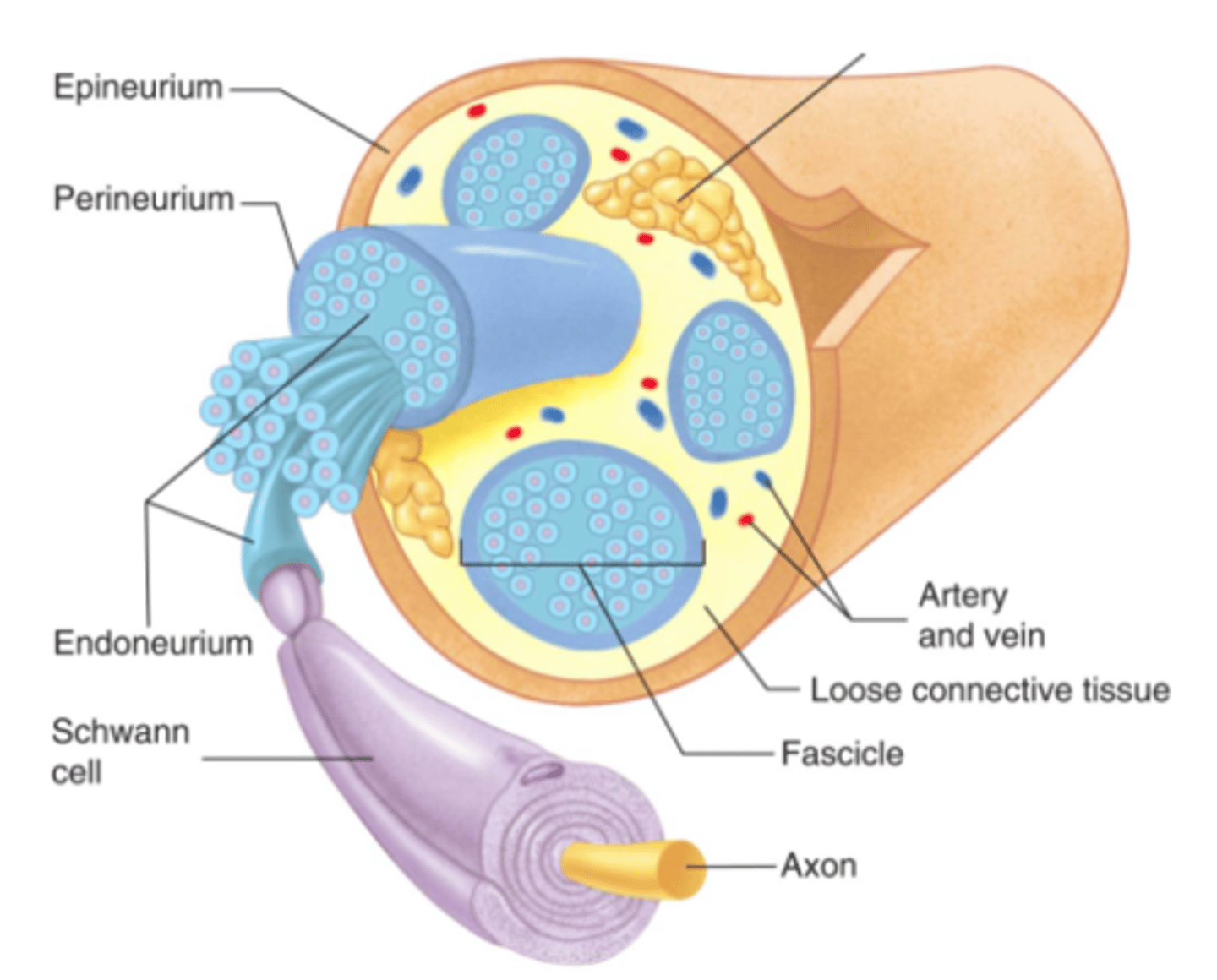
What are the 3 neuron types?
- Sensory
- Motor
- Interneurons
What kind of neurons are sensory neurons?
Pseudounipolar
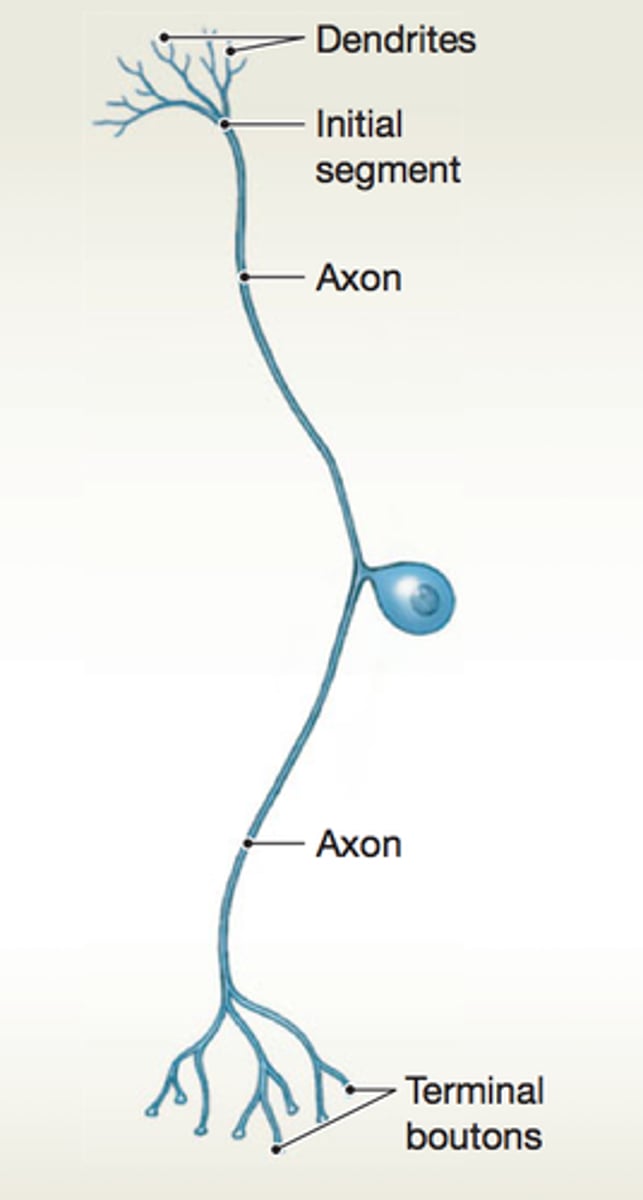
What do sensory neurons do?
- Carry impulses from the sense organs to the spinal cord and brain
- Deliver info to CNS (via afferent fibers)
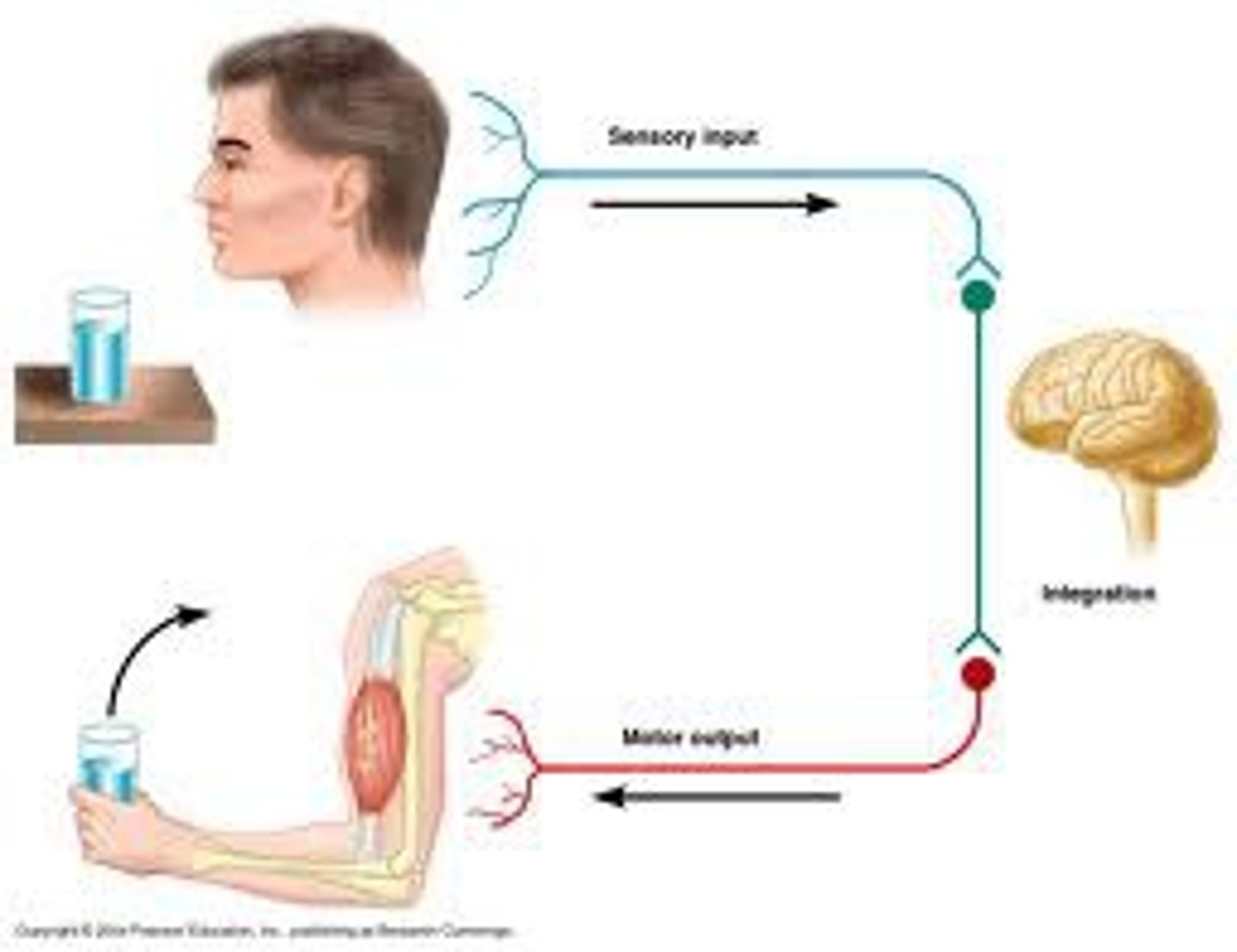
What are afferent fibers?
Sensory impulses from the periphery to the posterior horn of the spinal cord
Somatic sensory division
- Info about outside world
- Receives sensory information from skin, fascia, joints, skeletal muscles, special senses
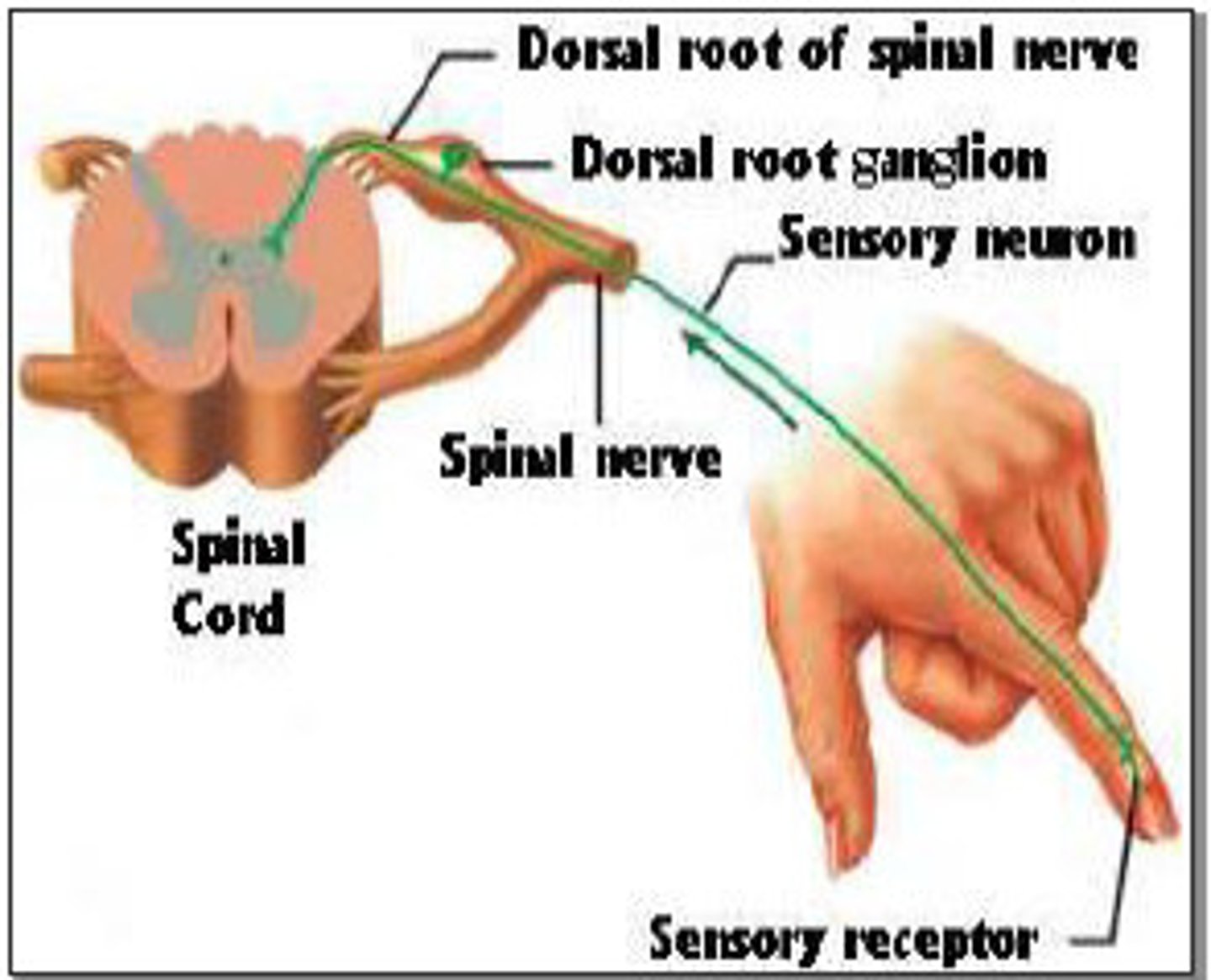
- Visceral sensory division
- Internal info
- Carries signals mainly from the viscera of the thoracic and abdominal cavities, such as the heart, lungs, stomach, and urinary bladder
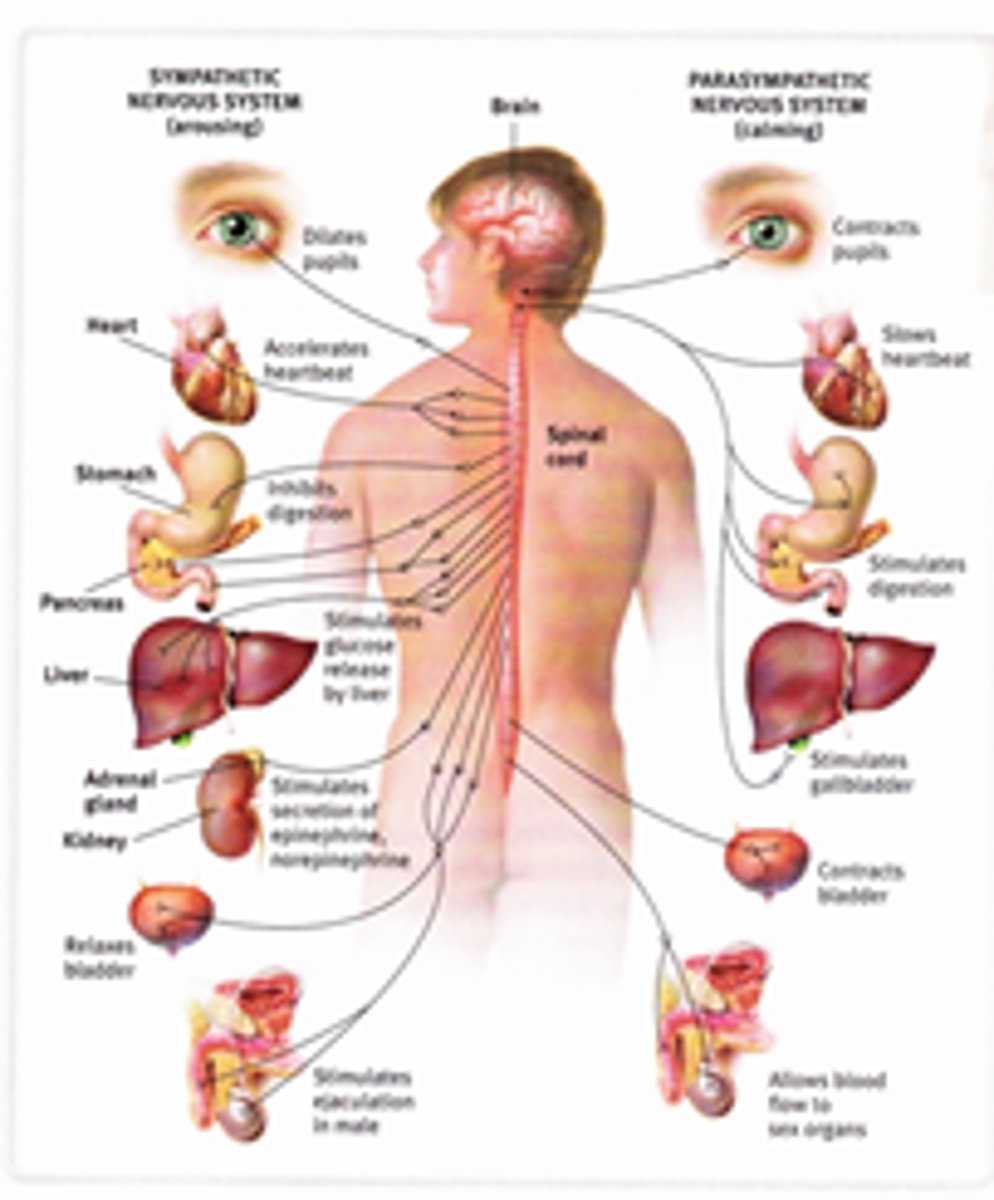
What kind of Neurons are Motor neurons?
Multipolar
What do motor neurons do?
- Carry impulses from the brain and spinal cord to muscles and glands
- Deliver info from CNS to periphery (via efferent fibers)
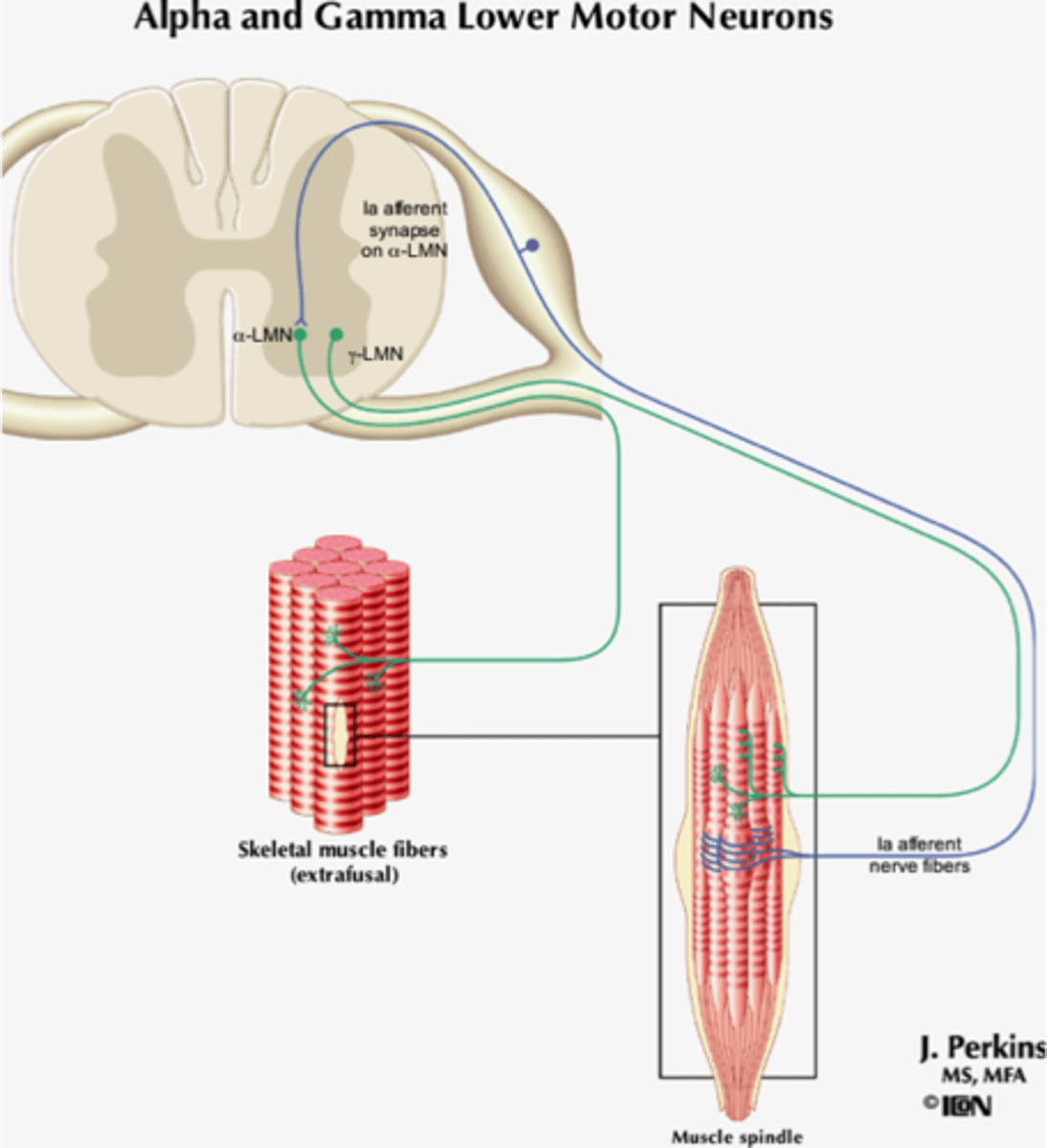
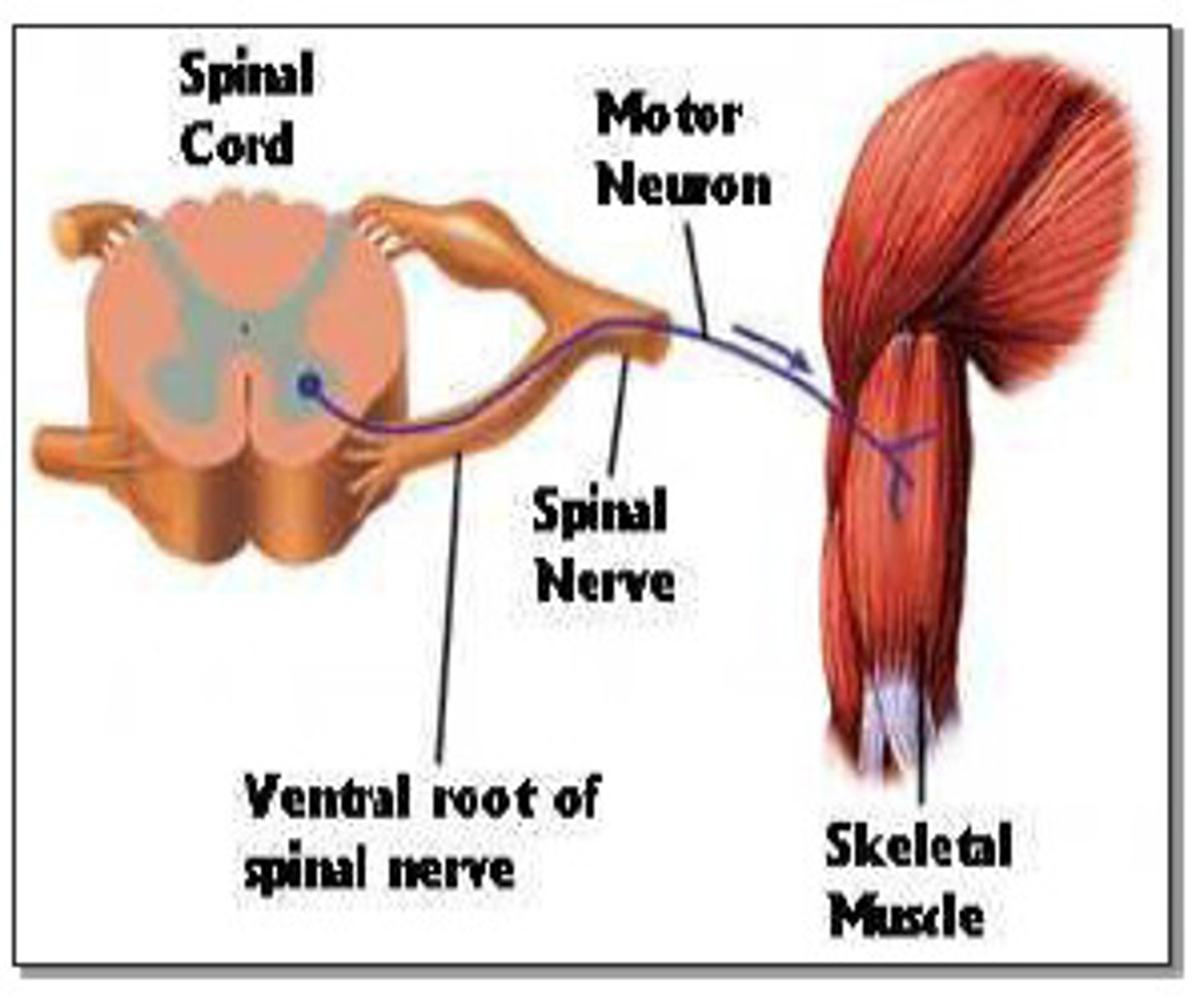
Somatic motor division
- Coconsciously controlled
- Carries signals to skeletal muscles
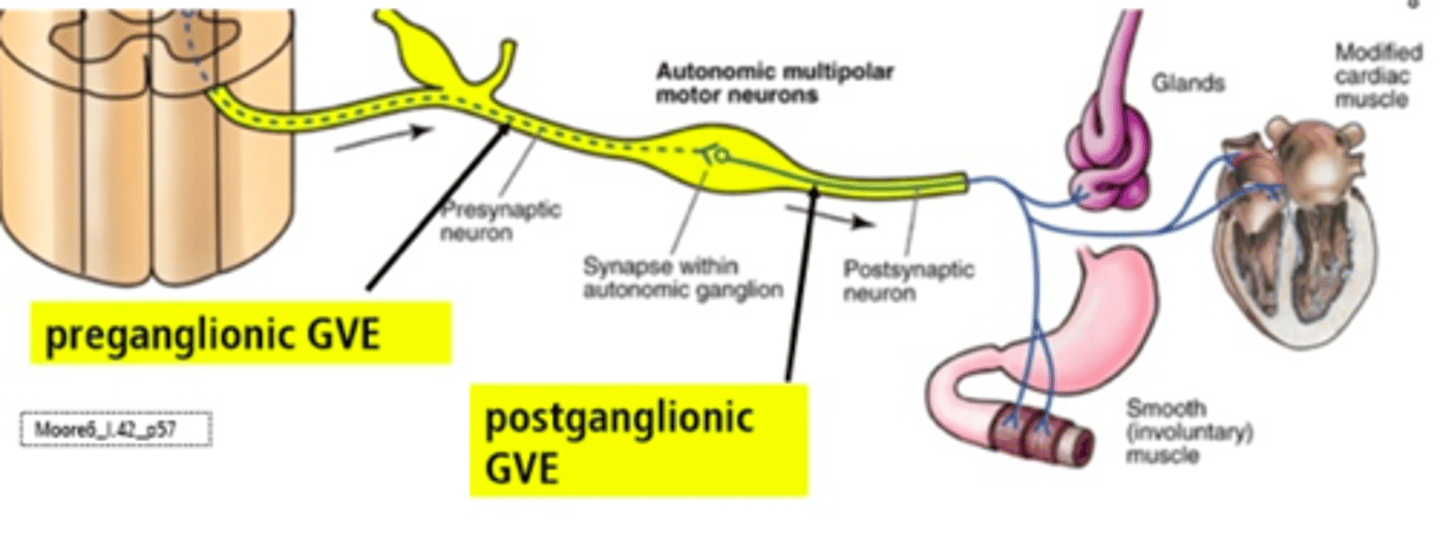
Visceral motor division
- Unconsciously controlled
- Carries signals to glands, cardiac muscle, and smooth muscle
What are Interneurons?
Neurons within the brain and spinal cord that communicate internally and intervene between the sensory inputs and motor outputs
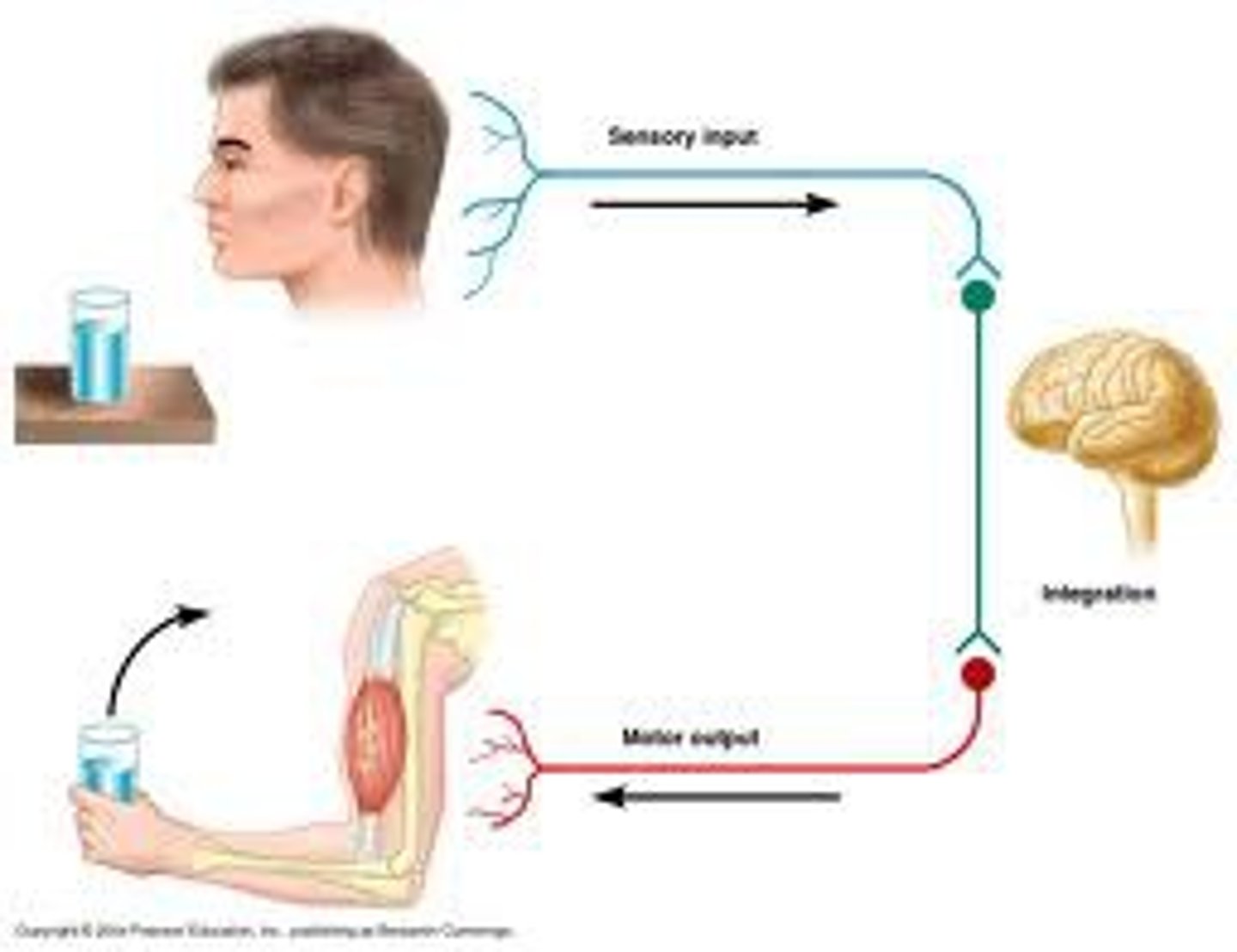
Where are Interneurons located?
- Located ONLY in the CNS
- Between sensory and motor neurons
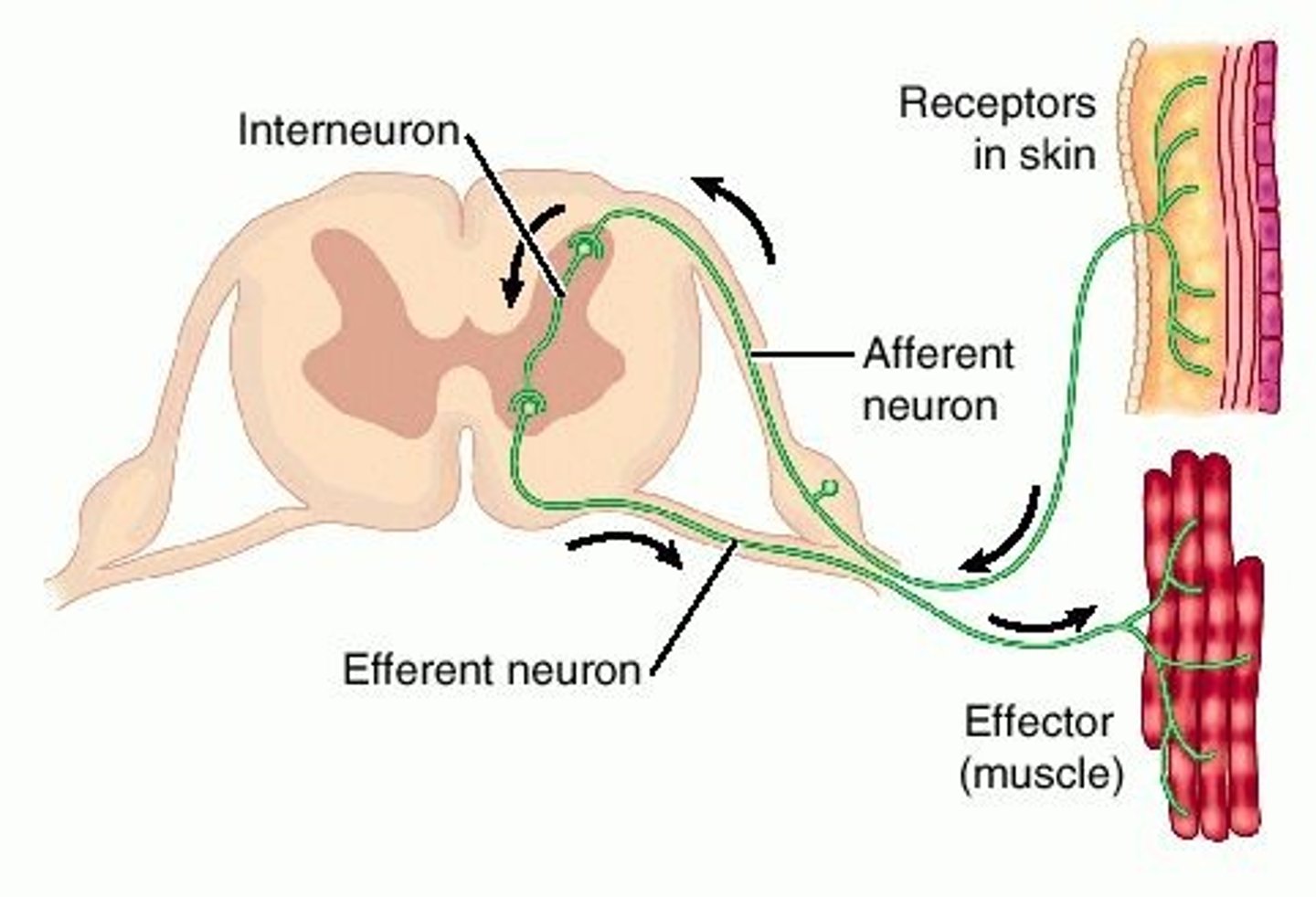
What are 3 types of receptors in the nervous system?
- Exteroceptors
- Interoceptors
- Proprioceptors
What are exteroceptors?
- Receive sensory information from outside of the body.
- Examples: Visual, auditory, tactile, gustatory, and olfactory
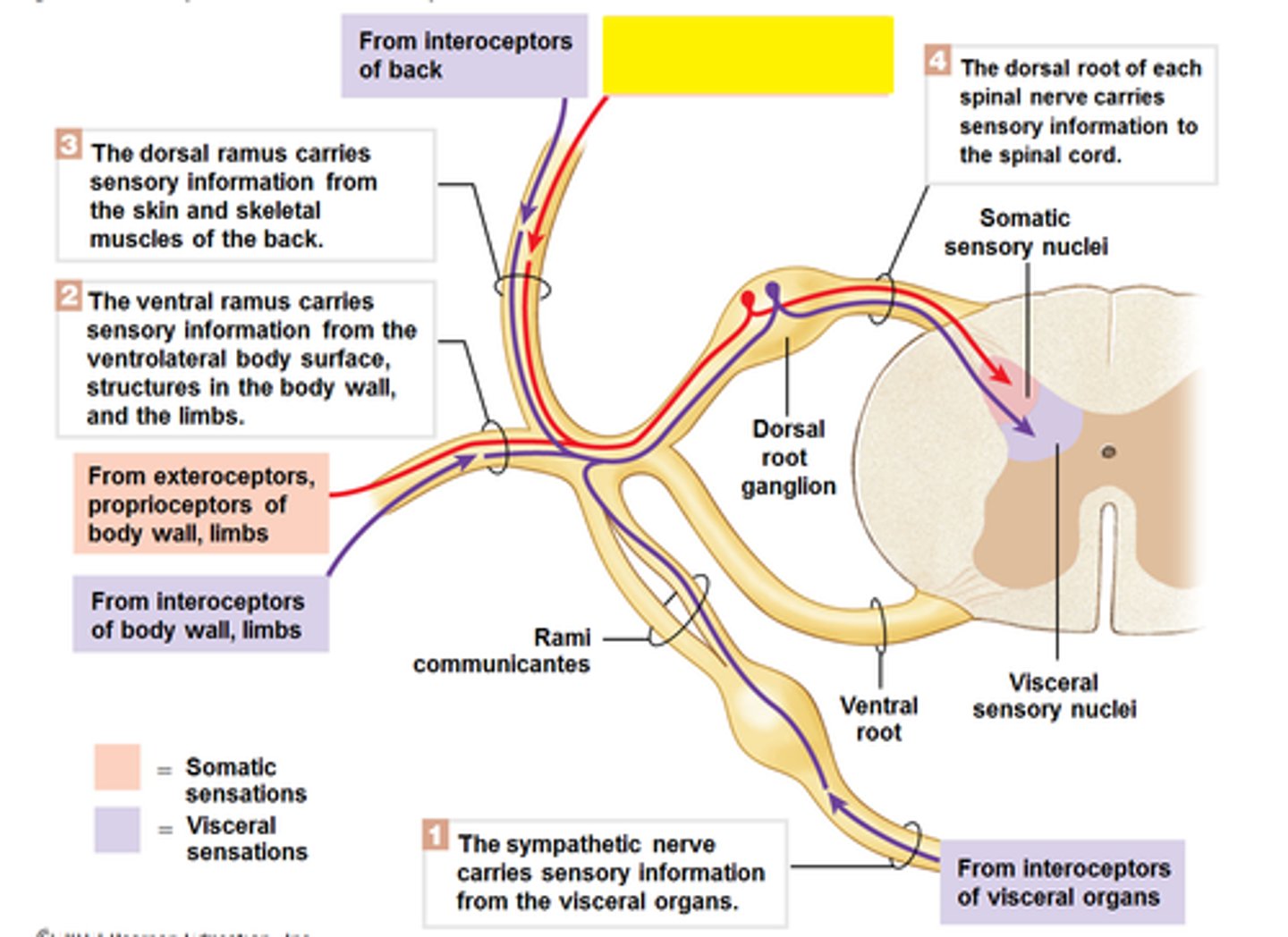
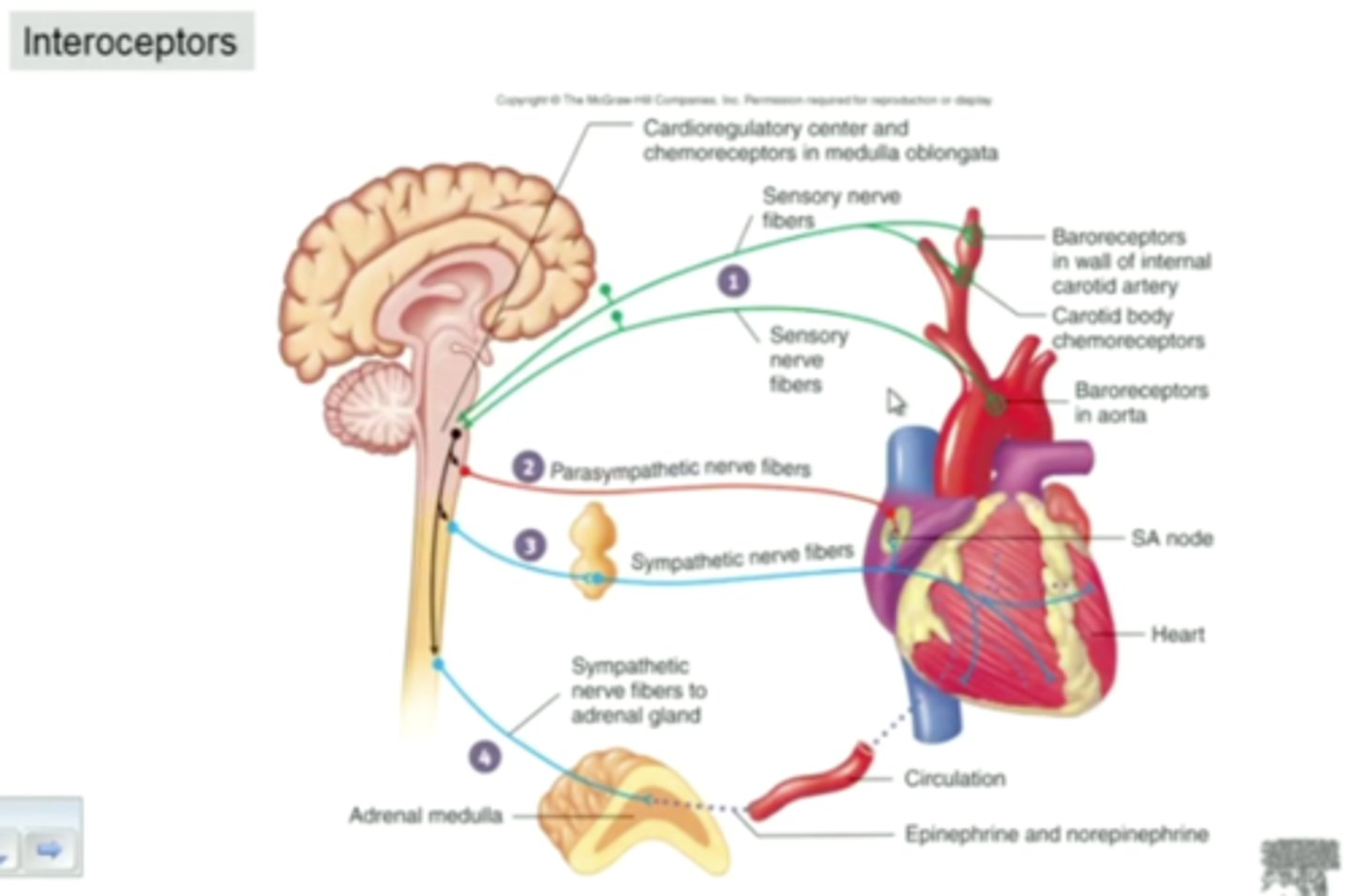
What are interoceptors?
- Receive sensory information from inside the body. Detect internal body sensation.
- Examples: from the viscera (hollow organs), stomach pain, pinched spinal nerves, and deep skin inflammation
What do propioceptors monitor?
Changes in muscle position
What are the 3 types of proprioceptors?
- Muscle spindles
- Golgi tendon organs
- Joint receptors
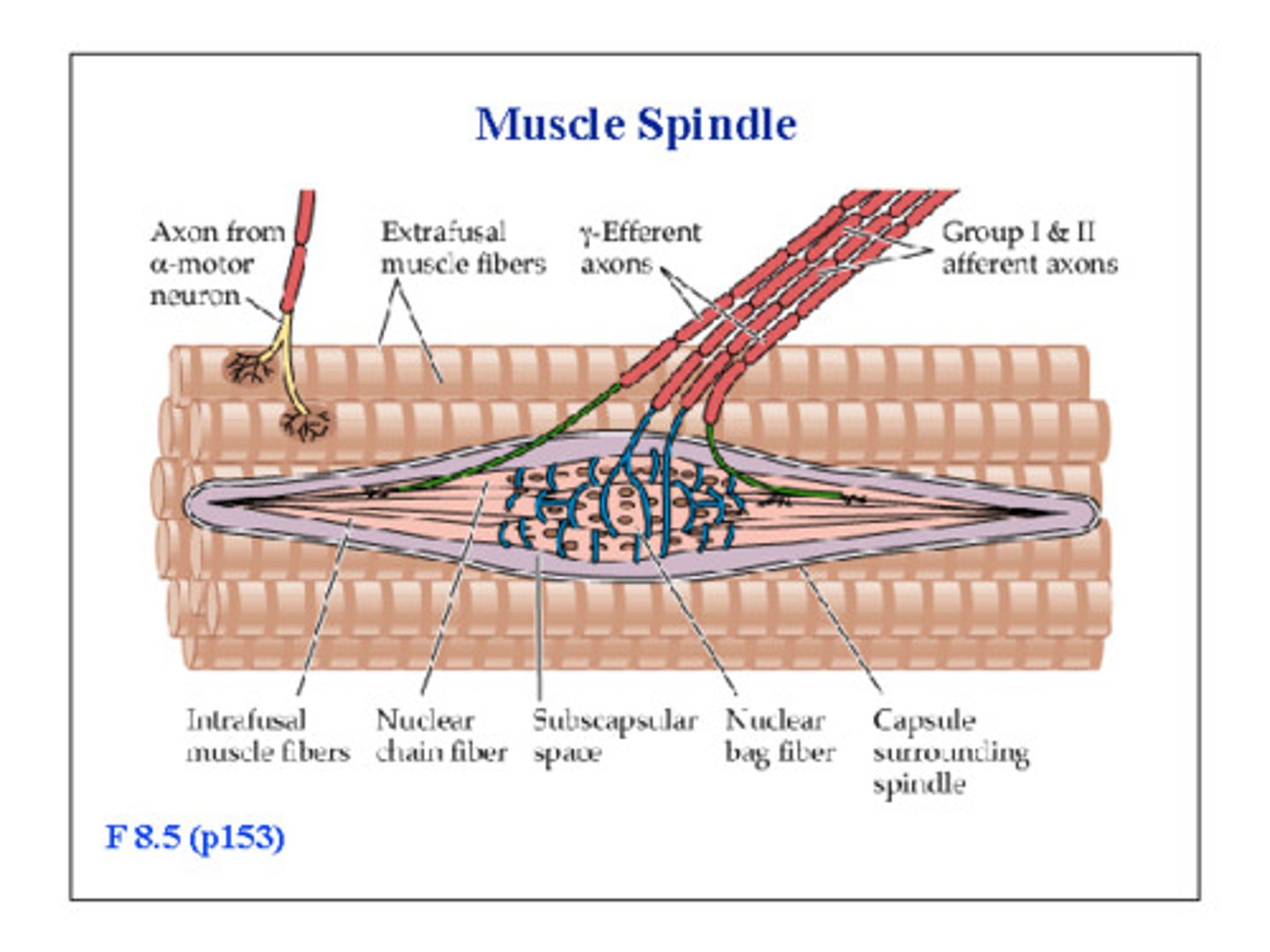
What do Muscle Spindles detect?
Changes in muscle length
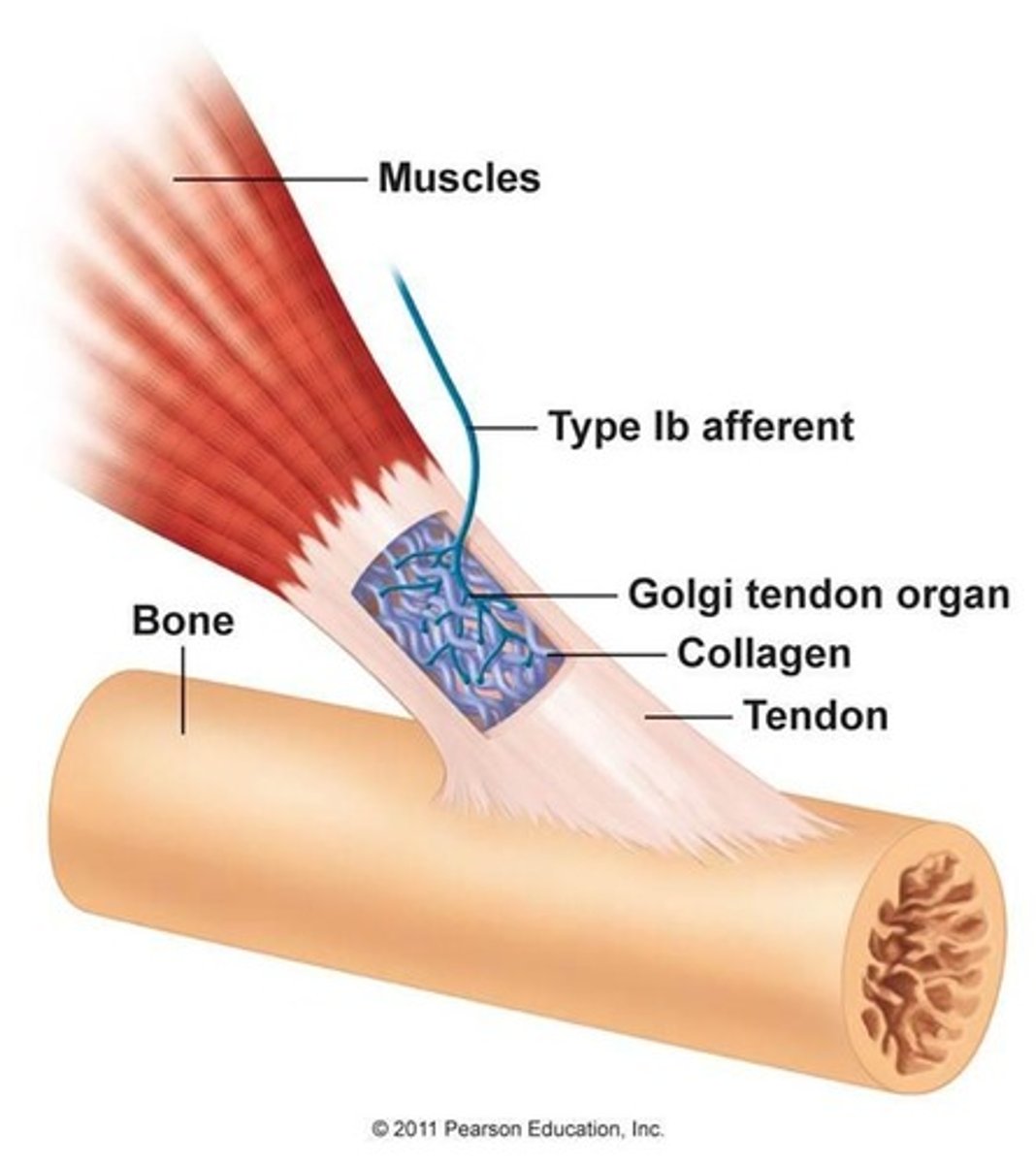
What do Golgi Tendon Organs detect?
Tension of muscle tendons
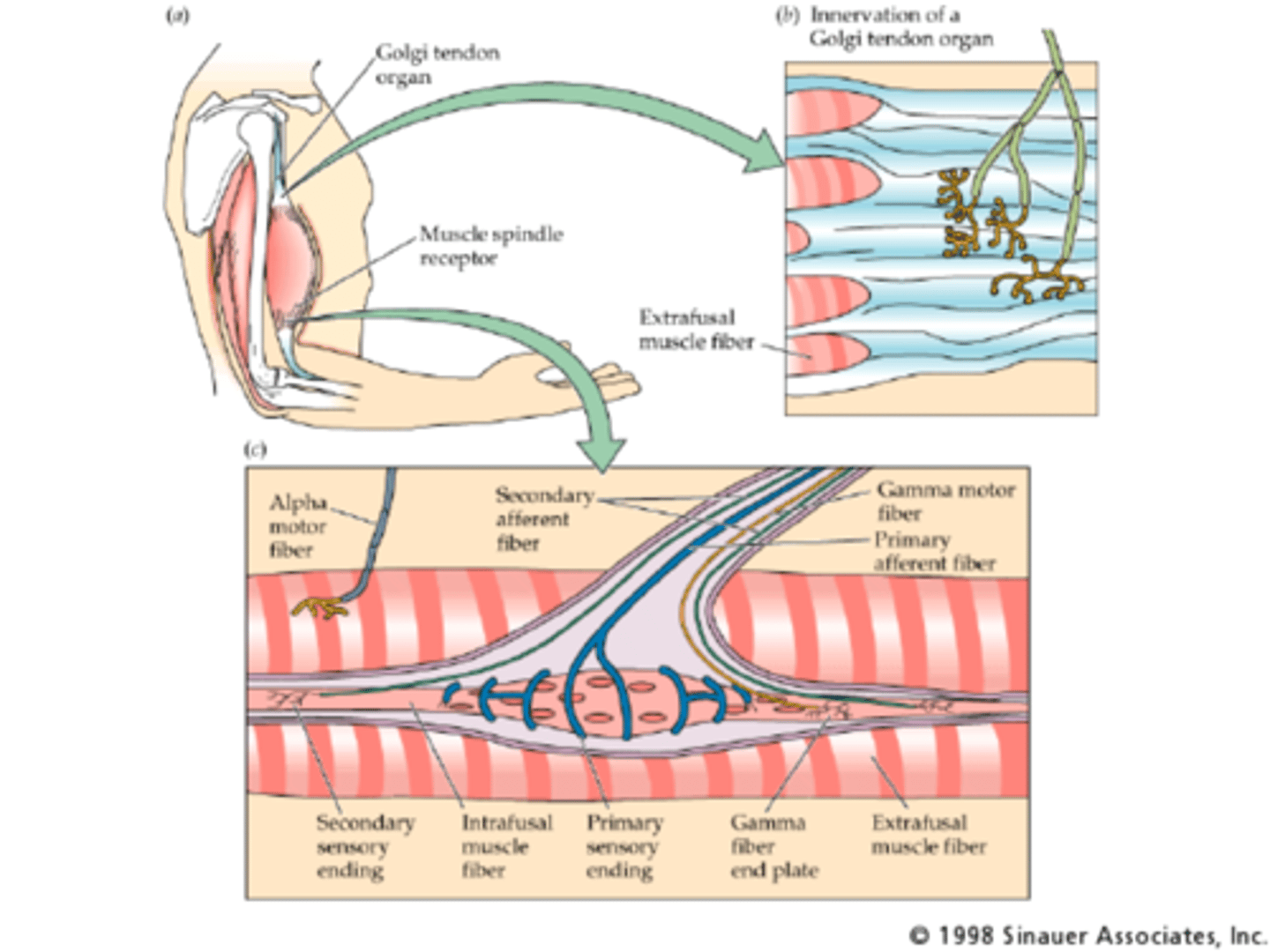
What do Joint Proprioceptors detect?
Joint position
What is nerve excitability?
Amount of current applied to the surface necessary to elicit an action potential in a specific nerve
What is the ability to conduct an electrical impulse called?
An Action Potential
What are Axon membranes permeable to?
- Sodium (Na+ )
- Potassium (K+)
What is the beginning of a nerve impulse?
Neuroeffector junction
What is the neuroeffector junction?
A neuroeffector junction is the synapse between a neuron and an effector other than another neuron.
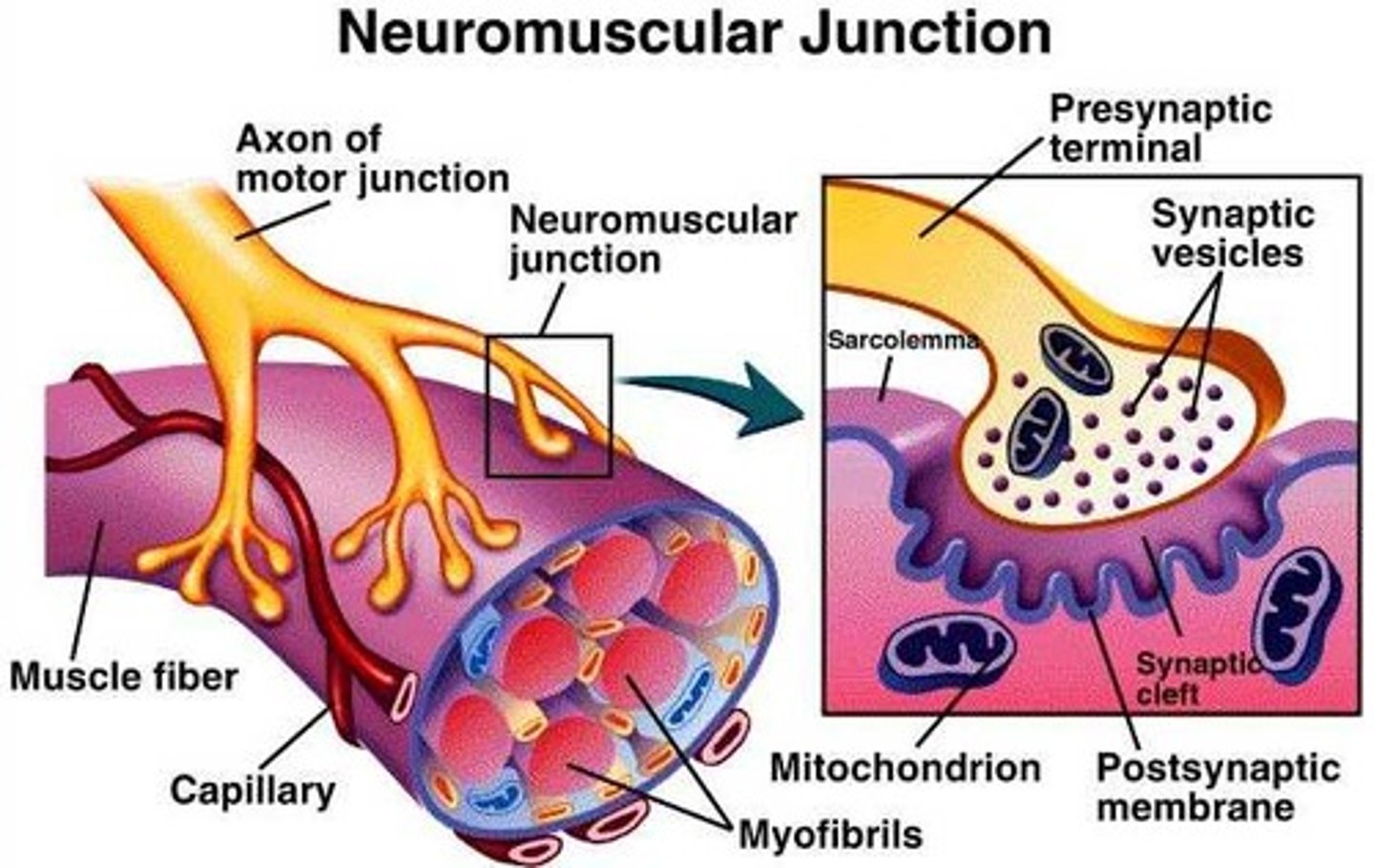
What is the Motor-end Plate?
Where the neuron synapses with a muscle fiber
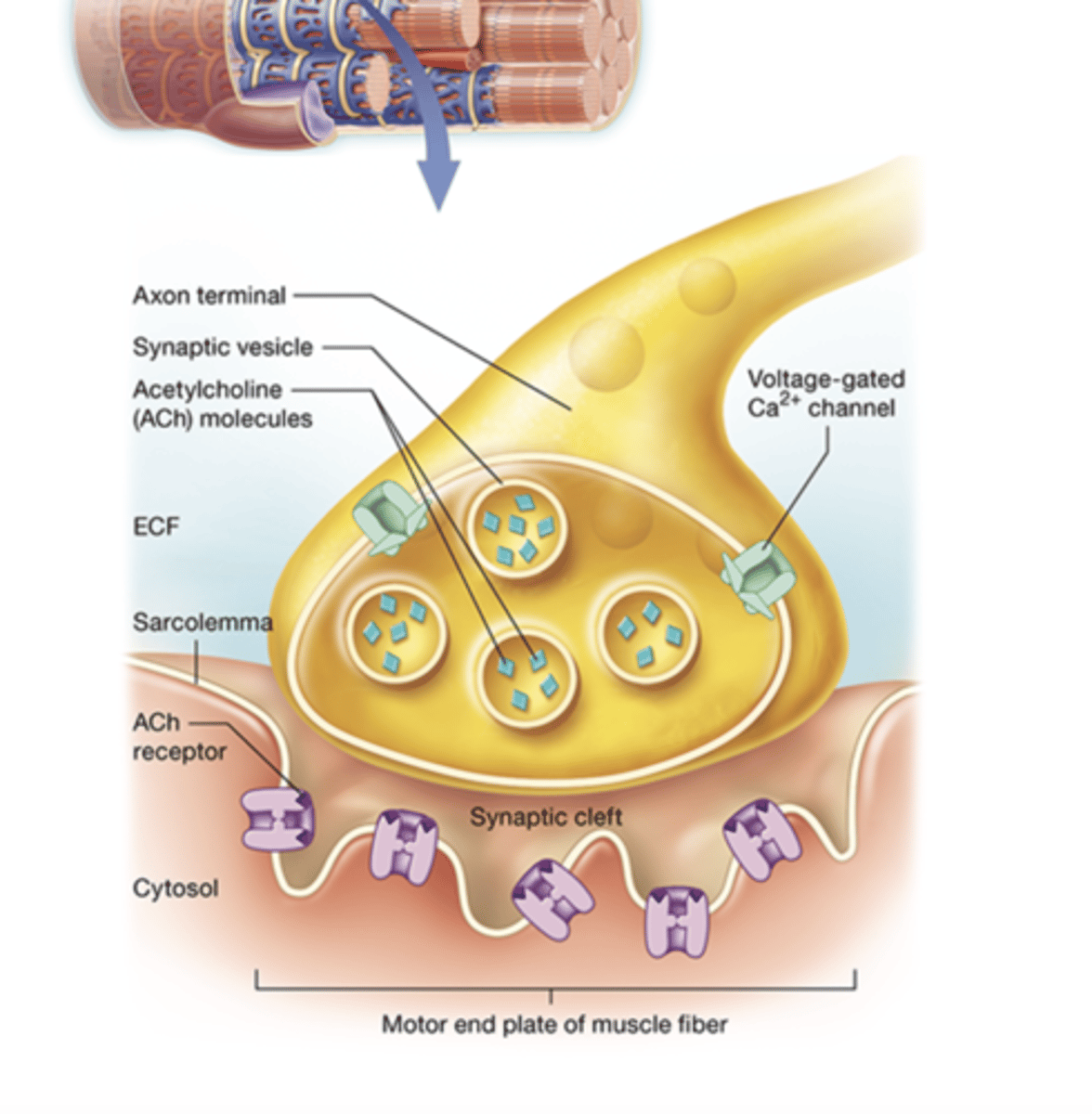
Parts of the Brain
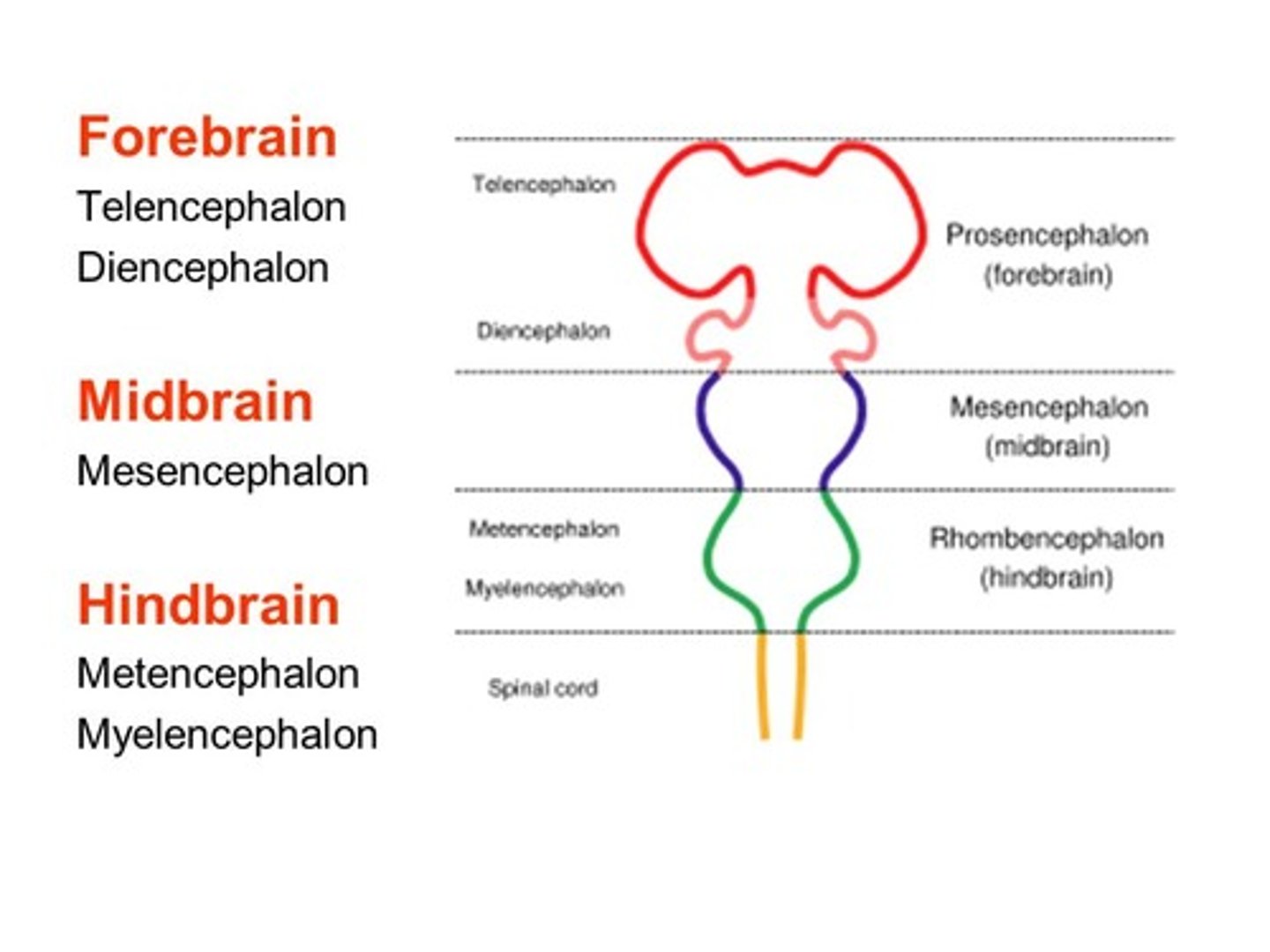
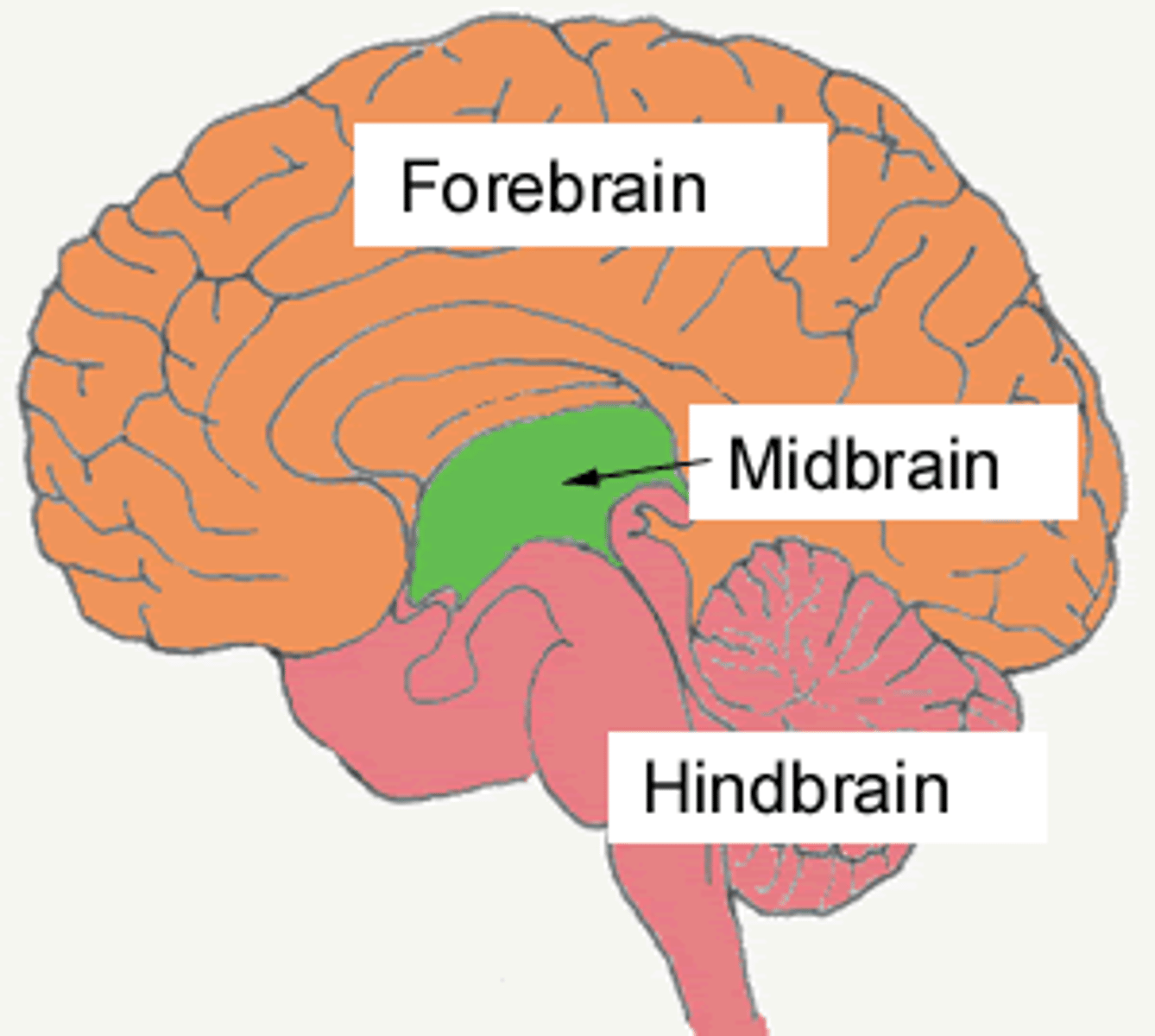
What is the largest part of the brain?
Forebrain (Prosencephalon)
What is the Forebrain (Prosencephalon) composed of?
- Cerebrum (Telencephalon)
- Diencephalon
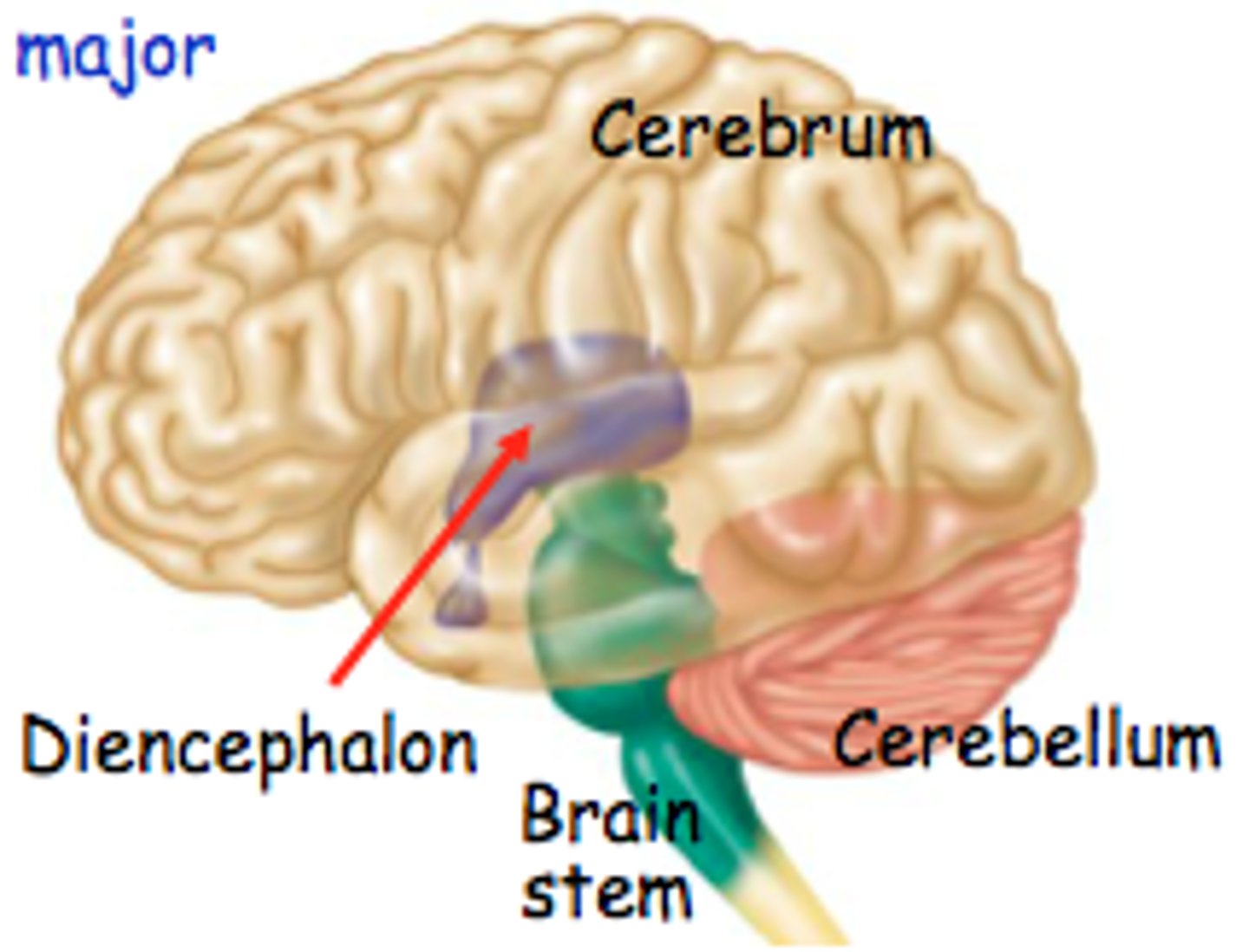
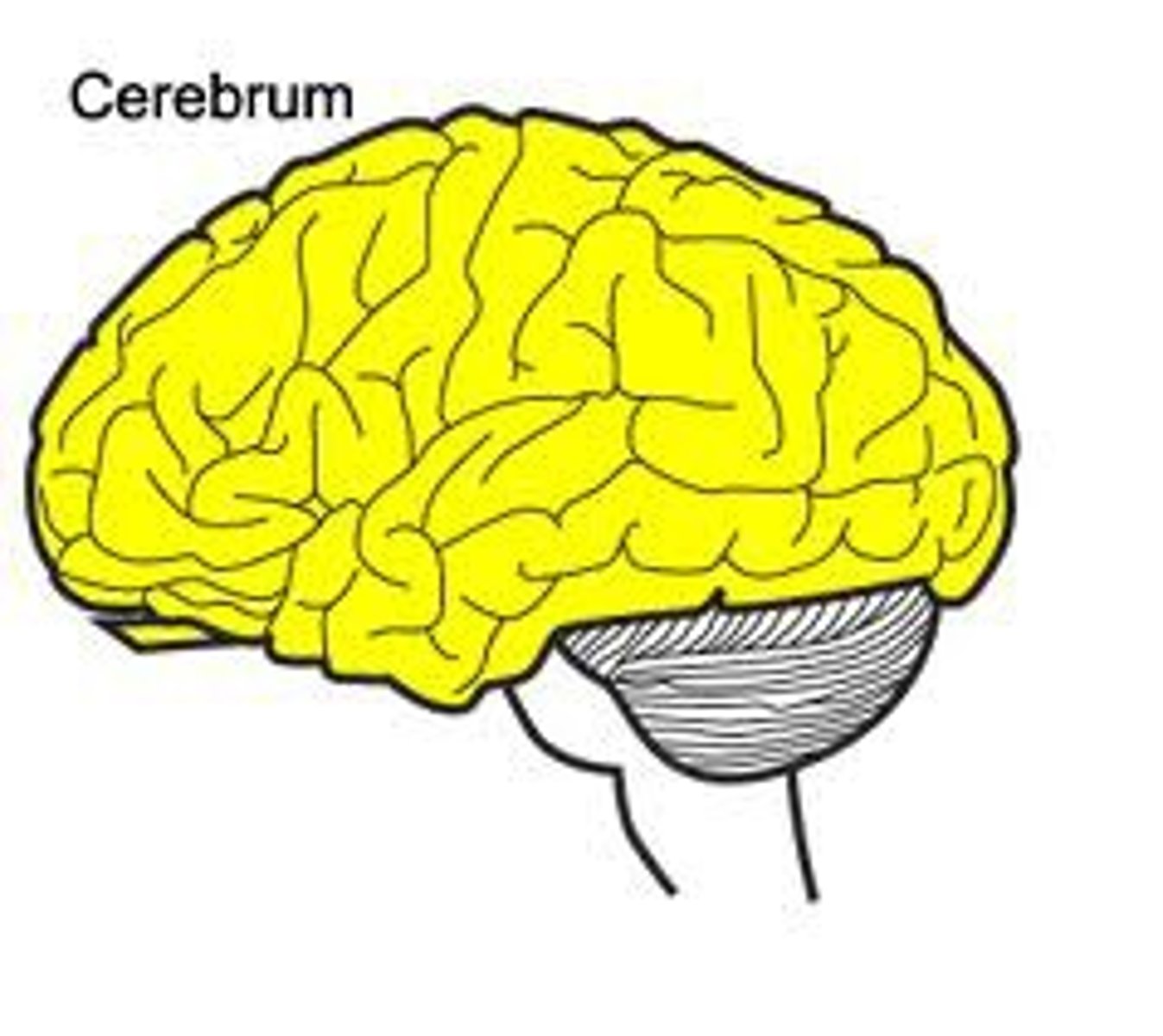
What is the Cerebrum (Telencephalon)?
The cerebrum is the part of the brain that controls memory, senses, consciousness, and reasoning.
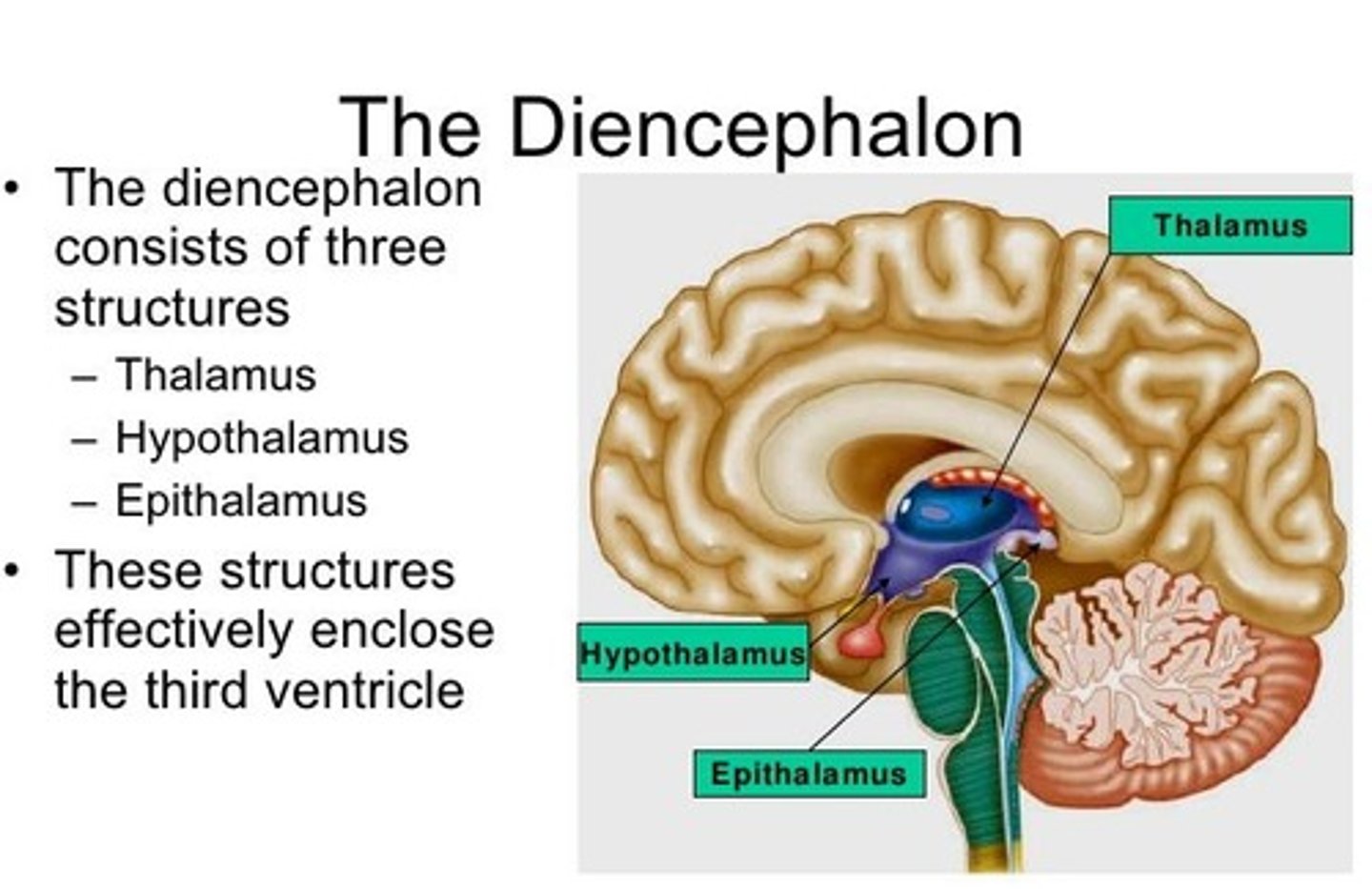
What is the Diencephalon composed of?
- Epithalamus
- Thalamus
- Hypothalamus
- Hippocampus
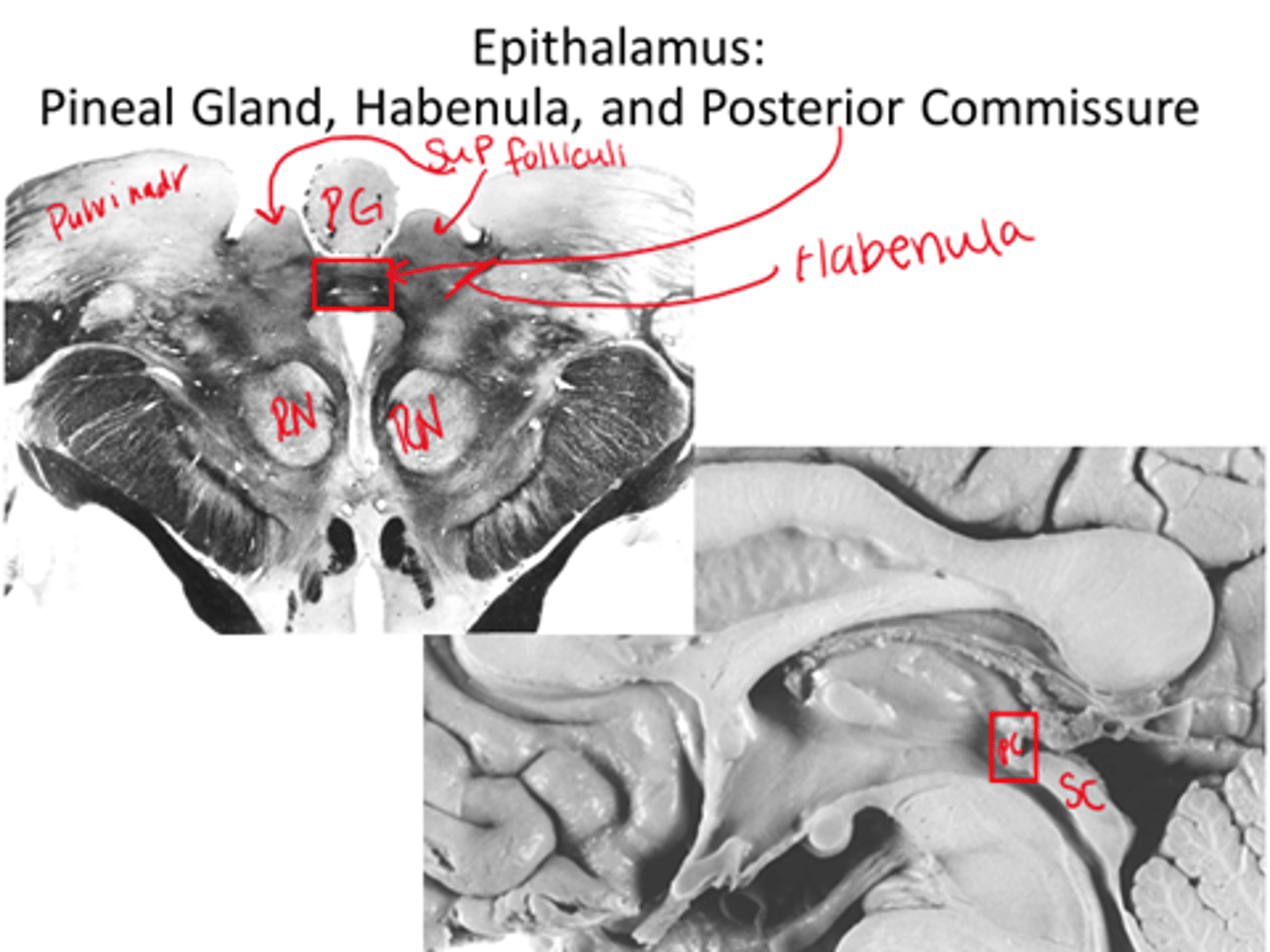
What is the Epithalamus composed of?
- Pineal gland
- Habenula
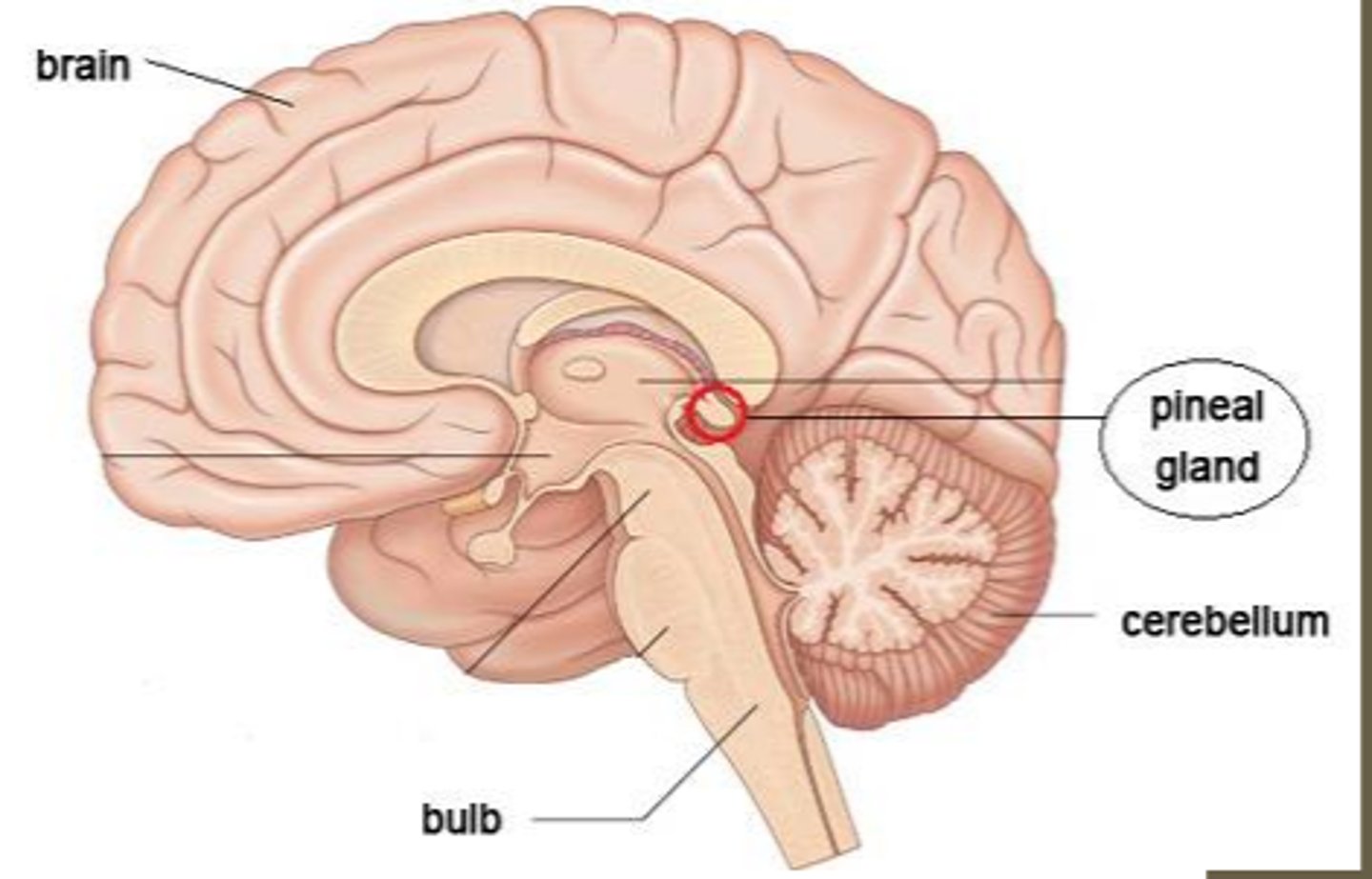
What does the pineal gland secrete?
Melatonin
What does Melatonin regulate?
- Circadian rhythms
- (sense of daytime and night; it regulates sleep cycle)
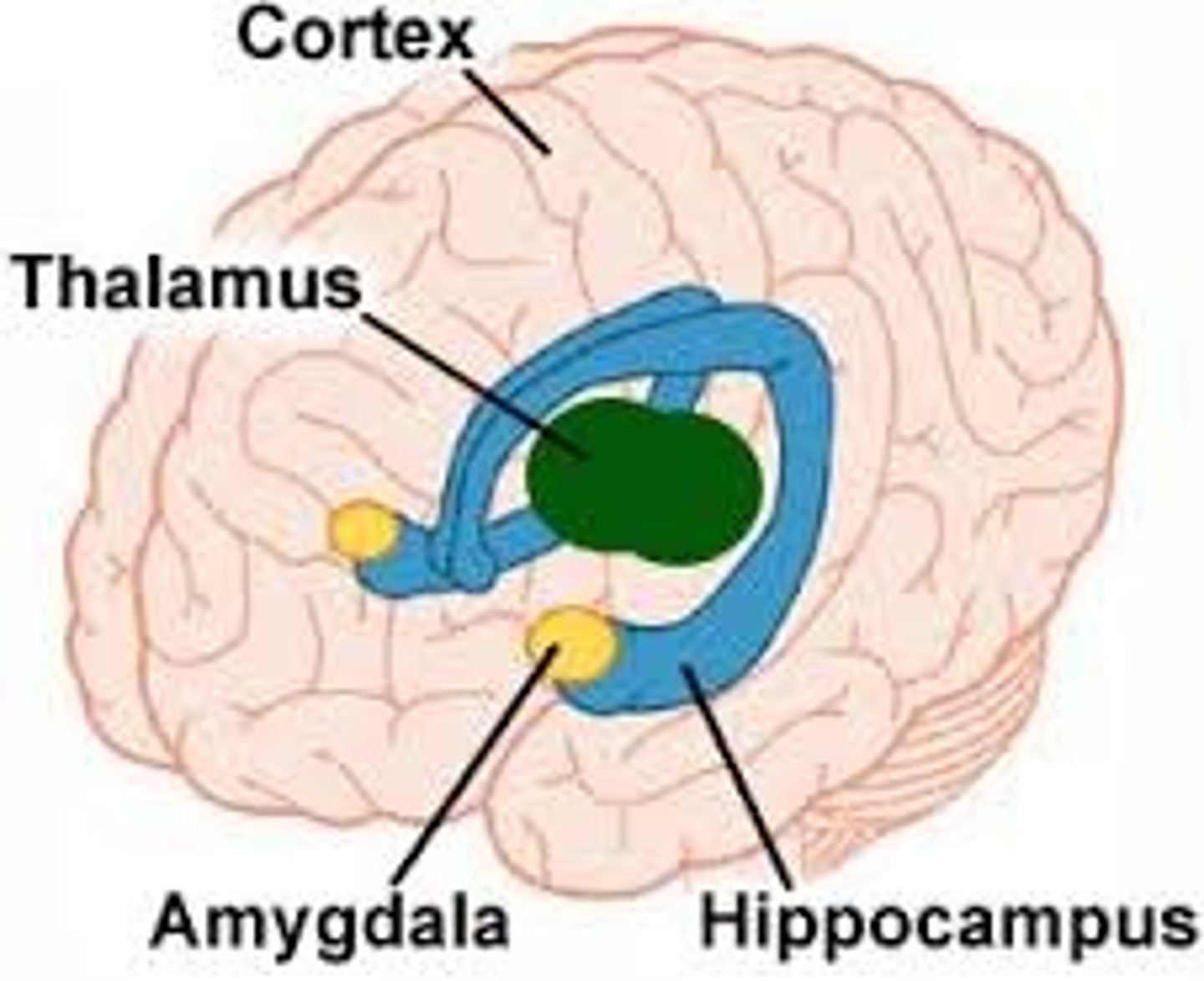
What is the Thalamus responsible for?
- To route sensory signals to the cerebral cortex
- Sensory processing center
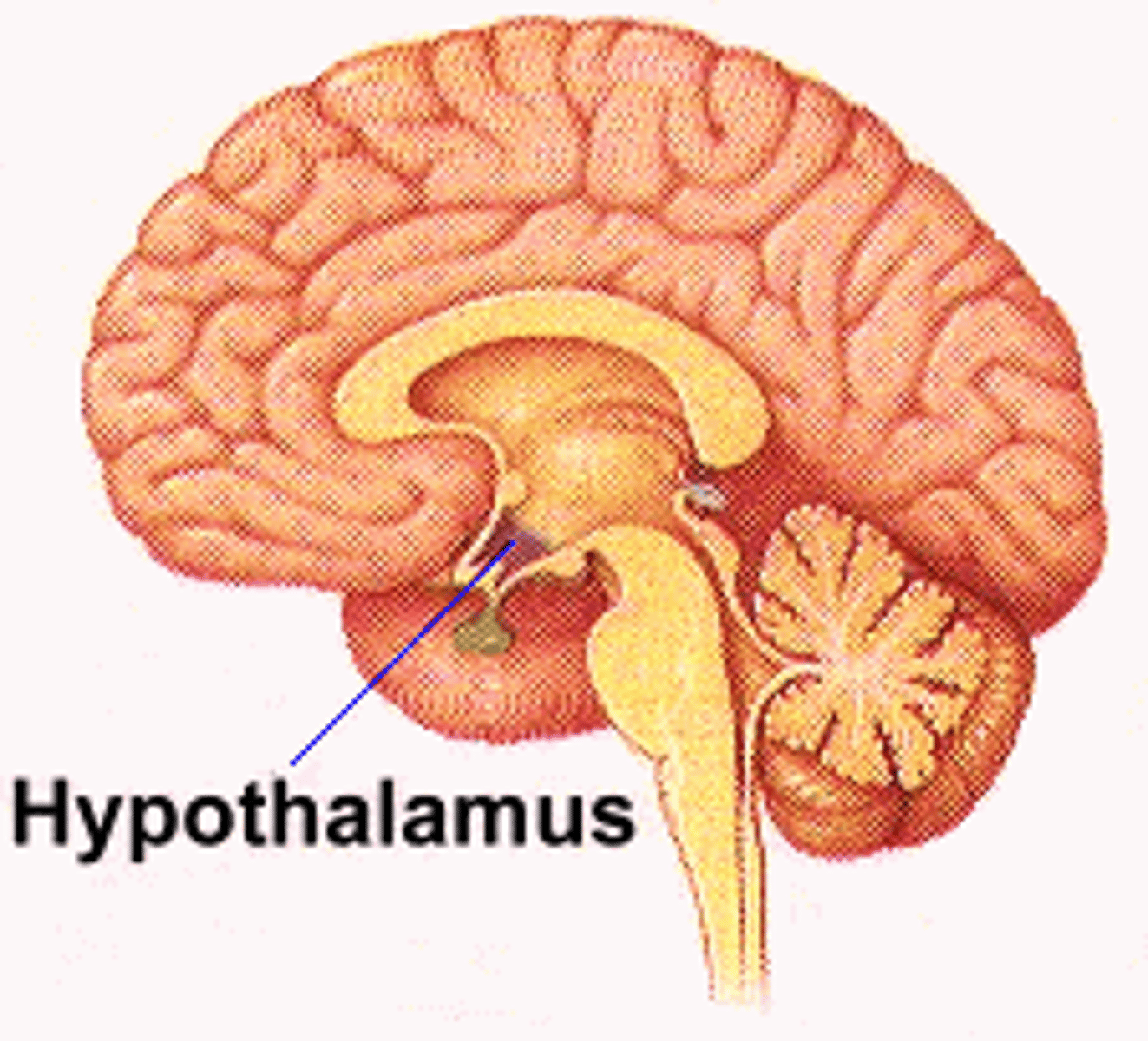
What is the Hypothalamus responsible for?
- Emotions
- Autonomic control
- Hormone control
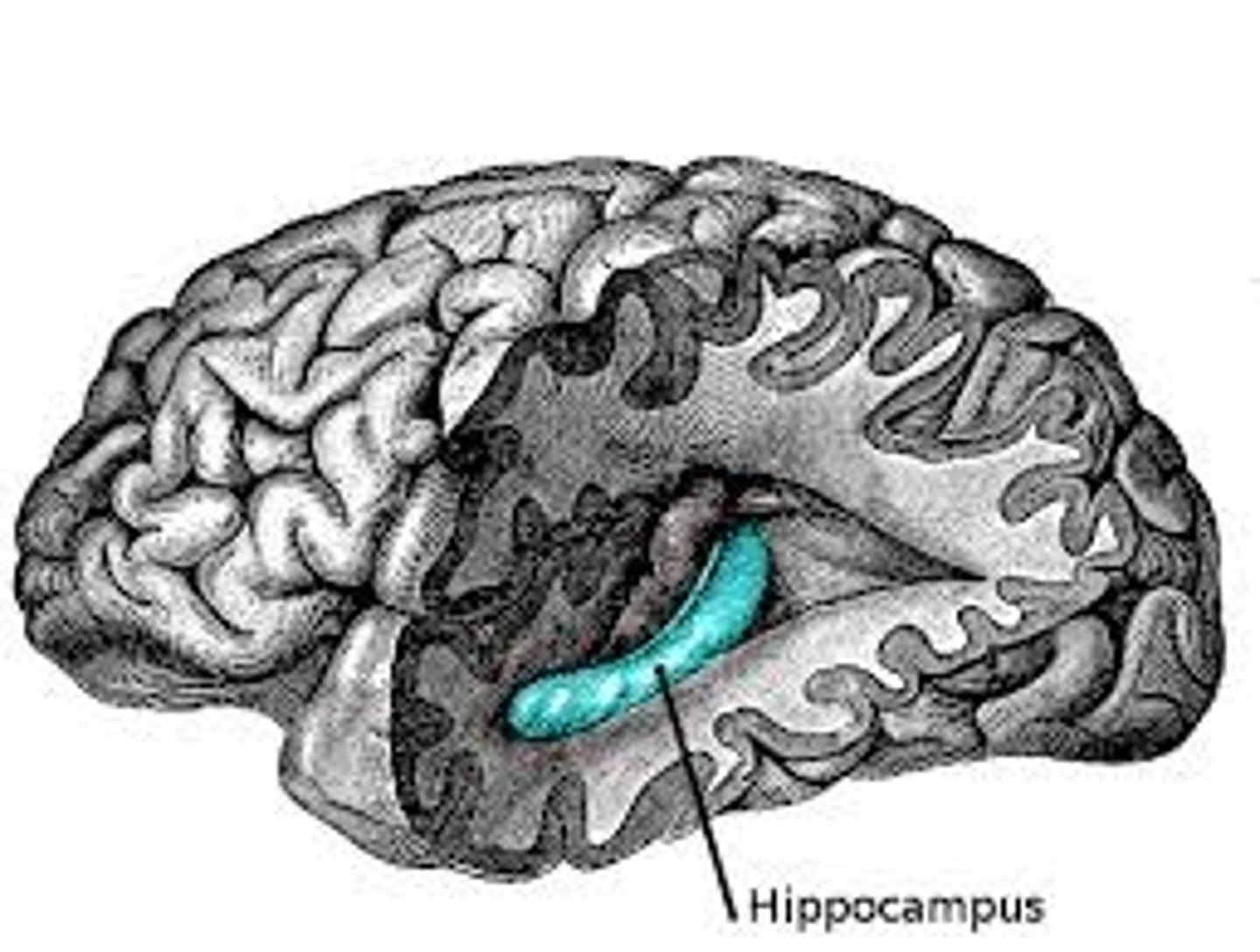
What is the Hippocampus responsible for?
Memory
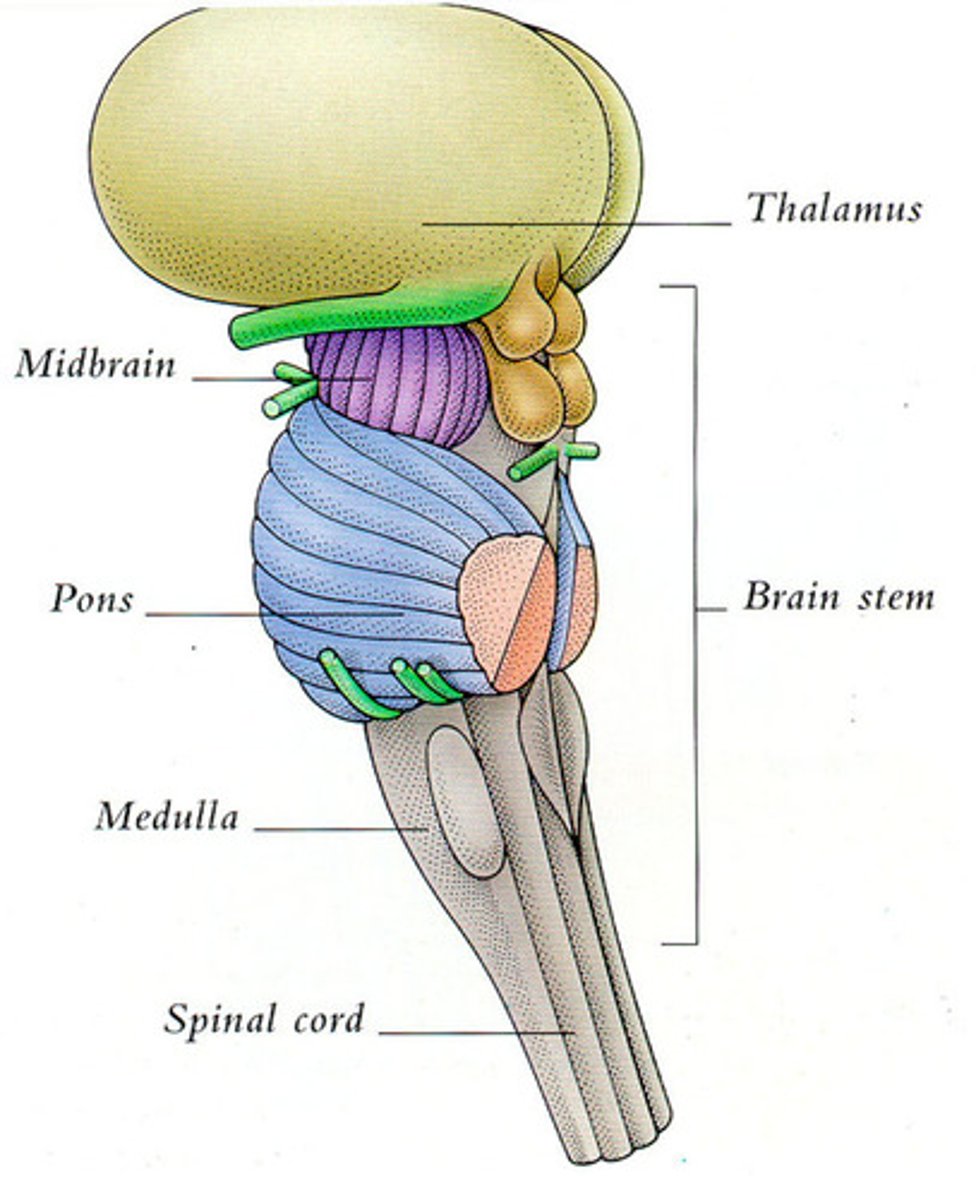
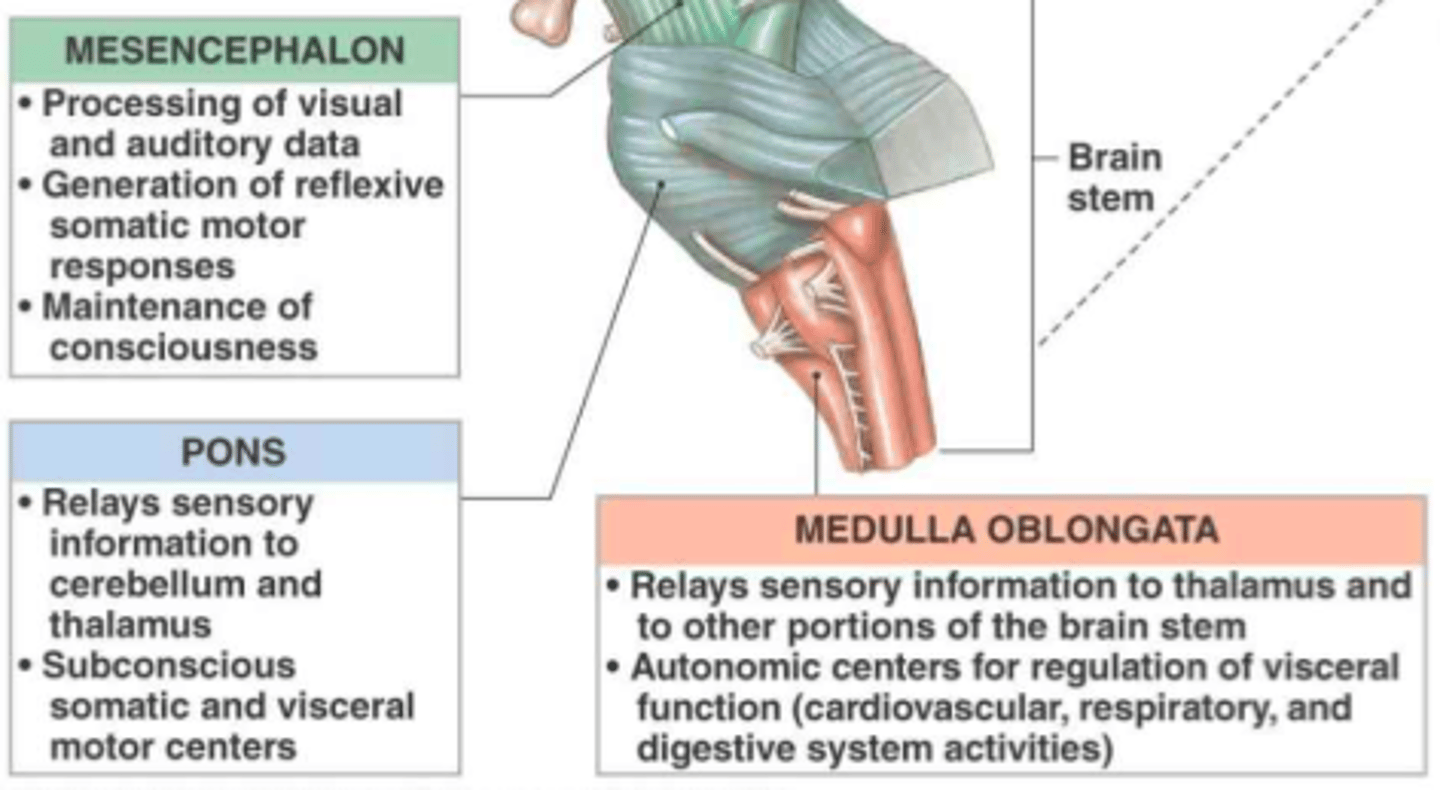
What is the brain stem composed of?
- Midbrain (Mesencephalon)
- Hindbrain (Rhombencephalon)
What is the Hindbrain composed of?
- Metencephalon
- Myelencephalon
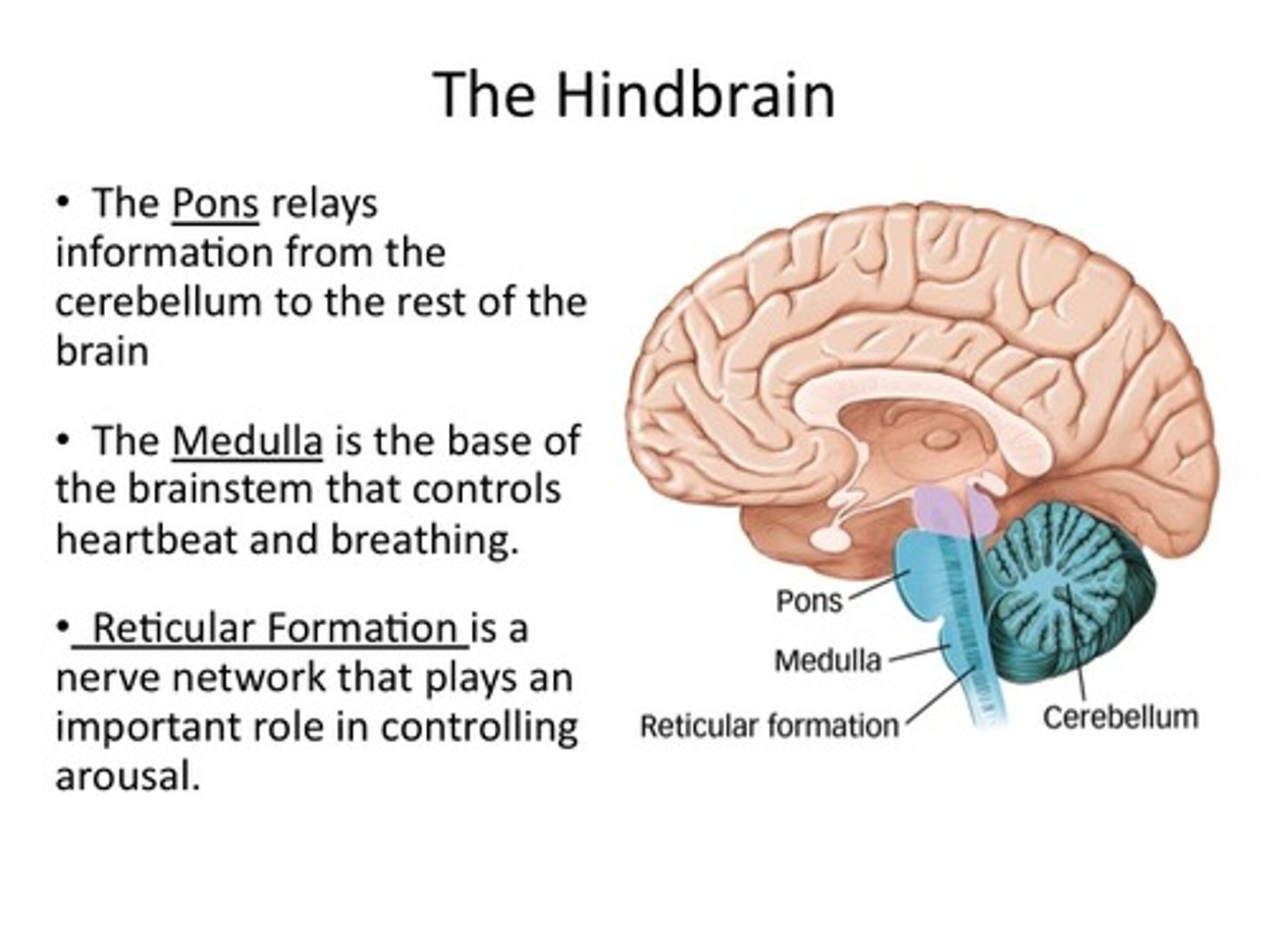
What is the Metencephalon composed of?
- Pons
- Cerebellum
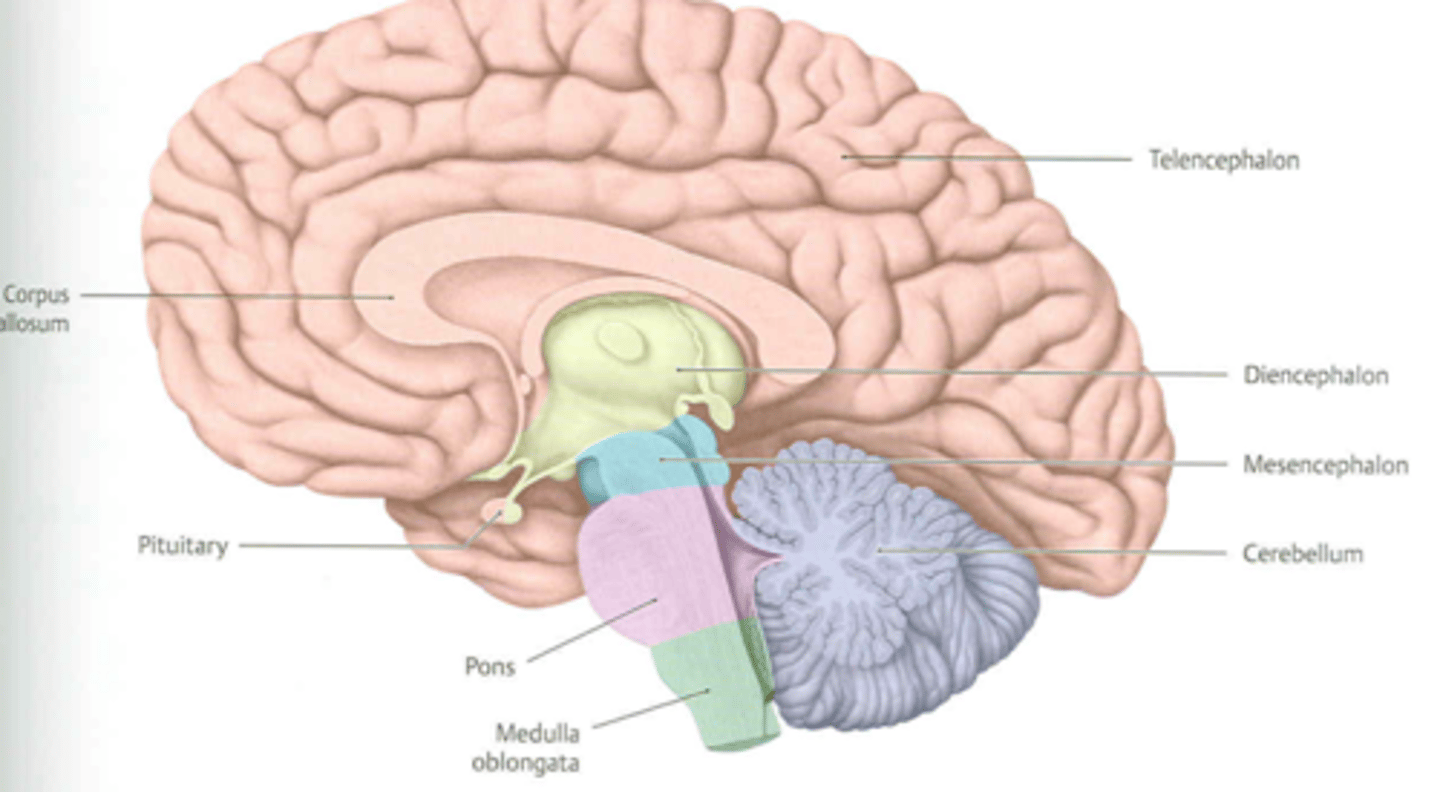
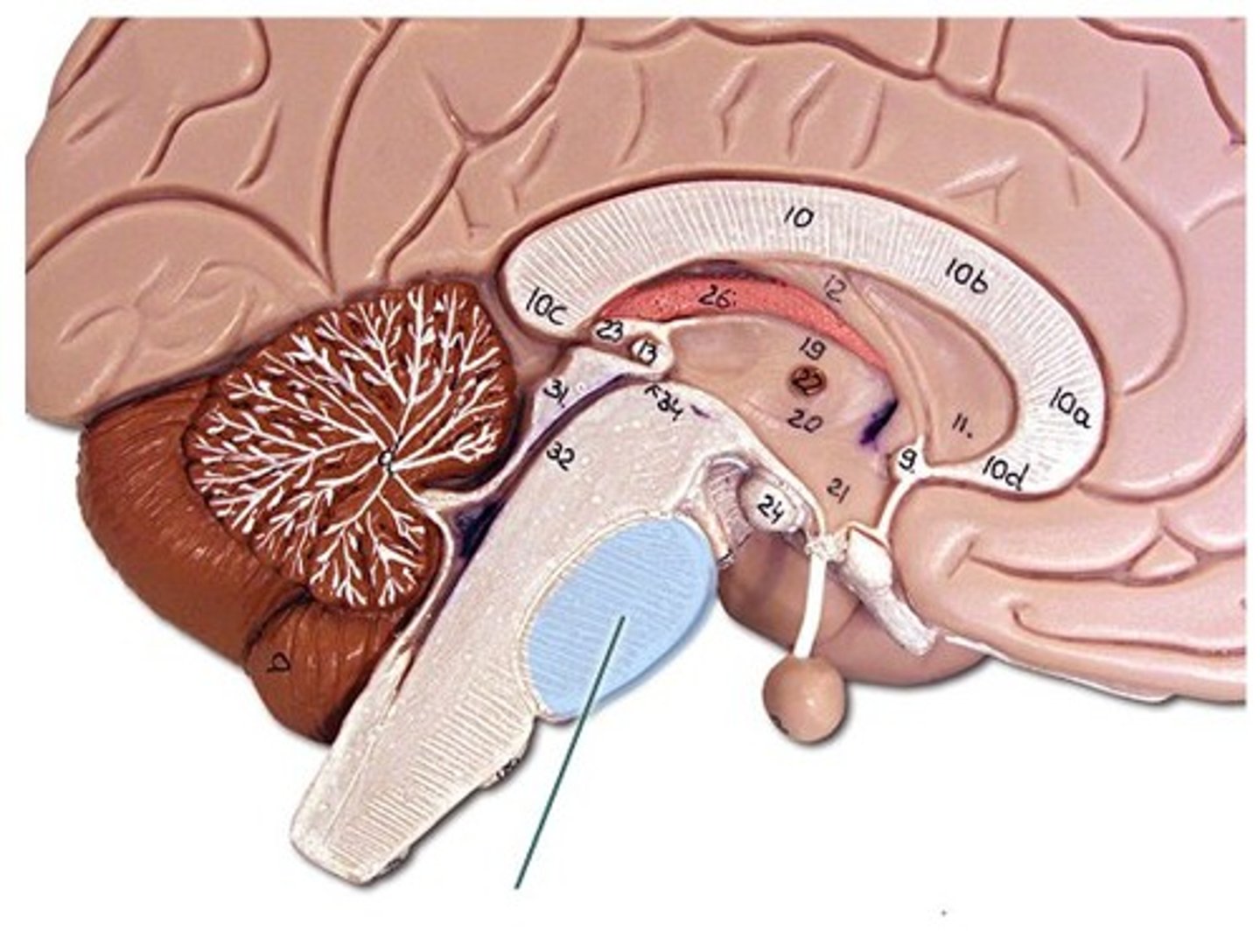
What is the Pons responsible for?
- Breathing
- Heart rate
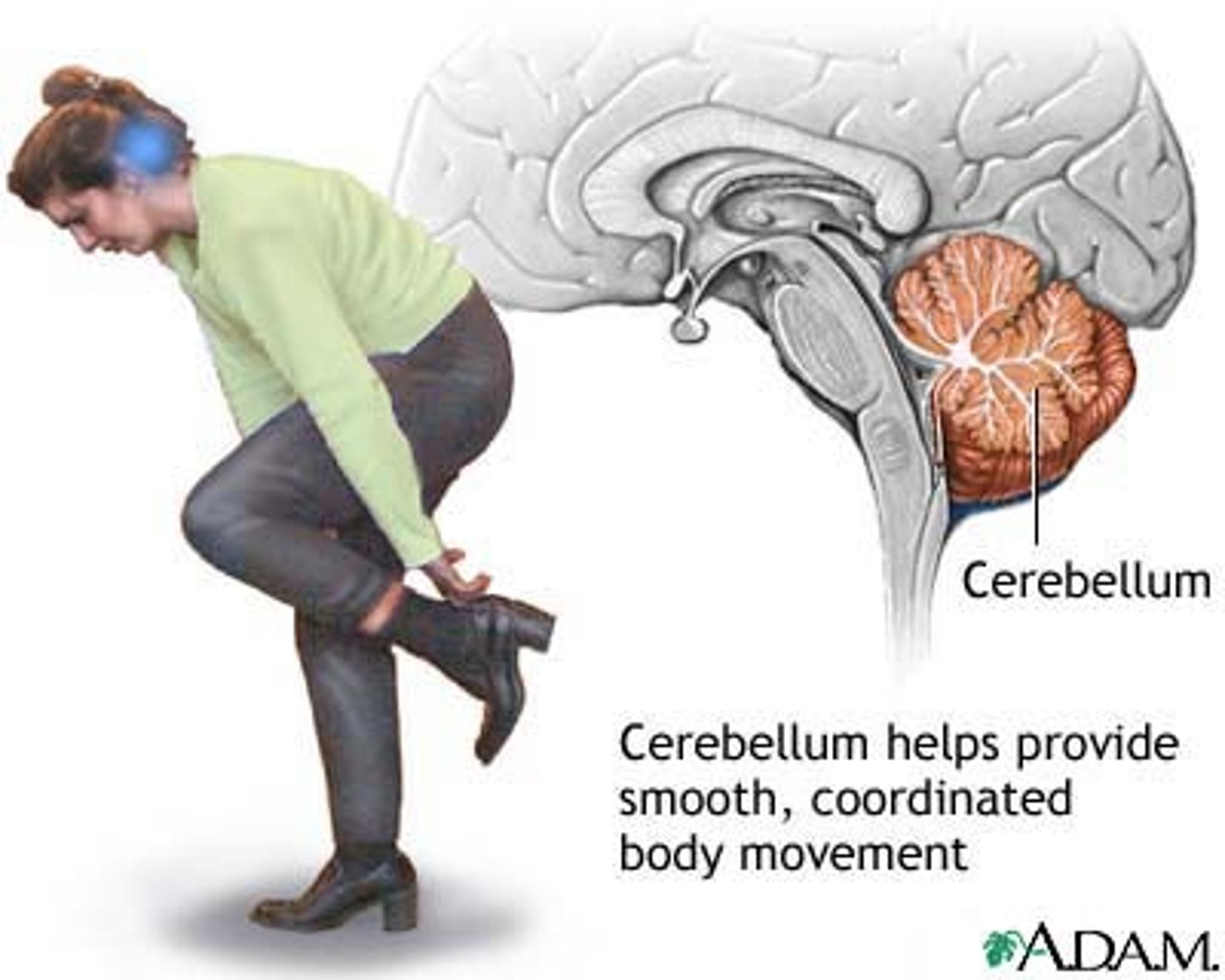
What is the Cerebellum responsible for?
- Coordination
- Planning of movements (posture and smooth movements)
What is the Myelencephalon composed of?
Medulla oblongata
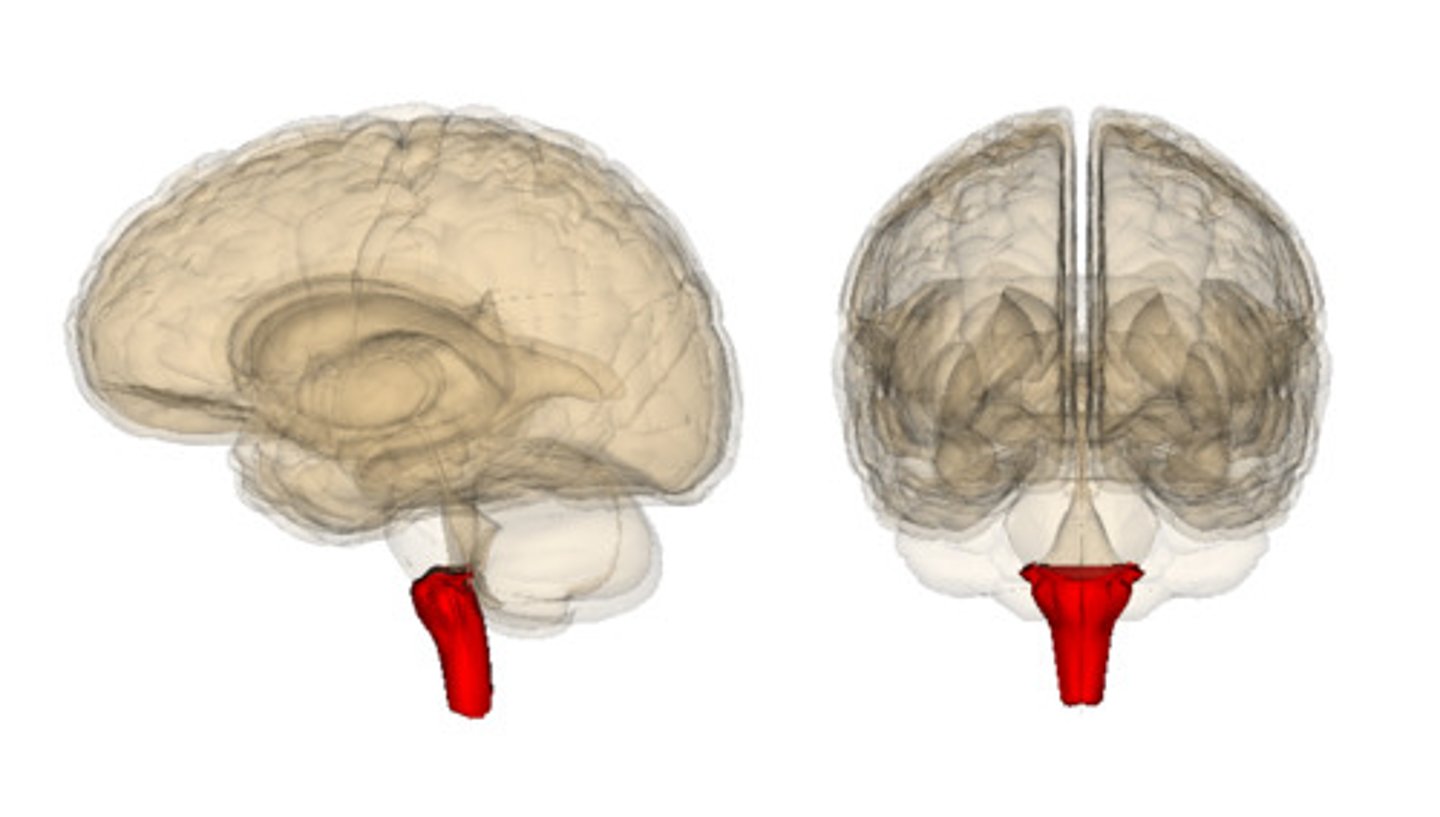
What is the Medulla Oblongata responsible for?
- Relays sensory info to thalamus
- Regulation of autonomic function (HR, BP, digestion)
What are the brain ventricles?
The ventricles create a central cavity within the brain. They are filled with cerebrospinal fluid.
How many ventricles are in the brain?
- 4
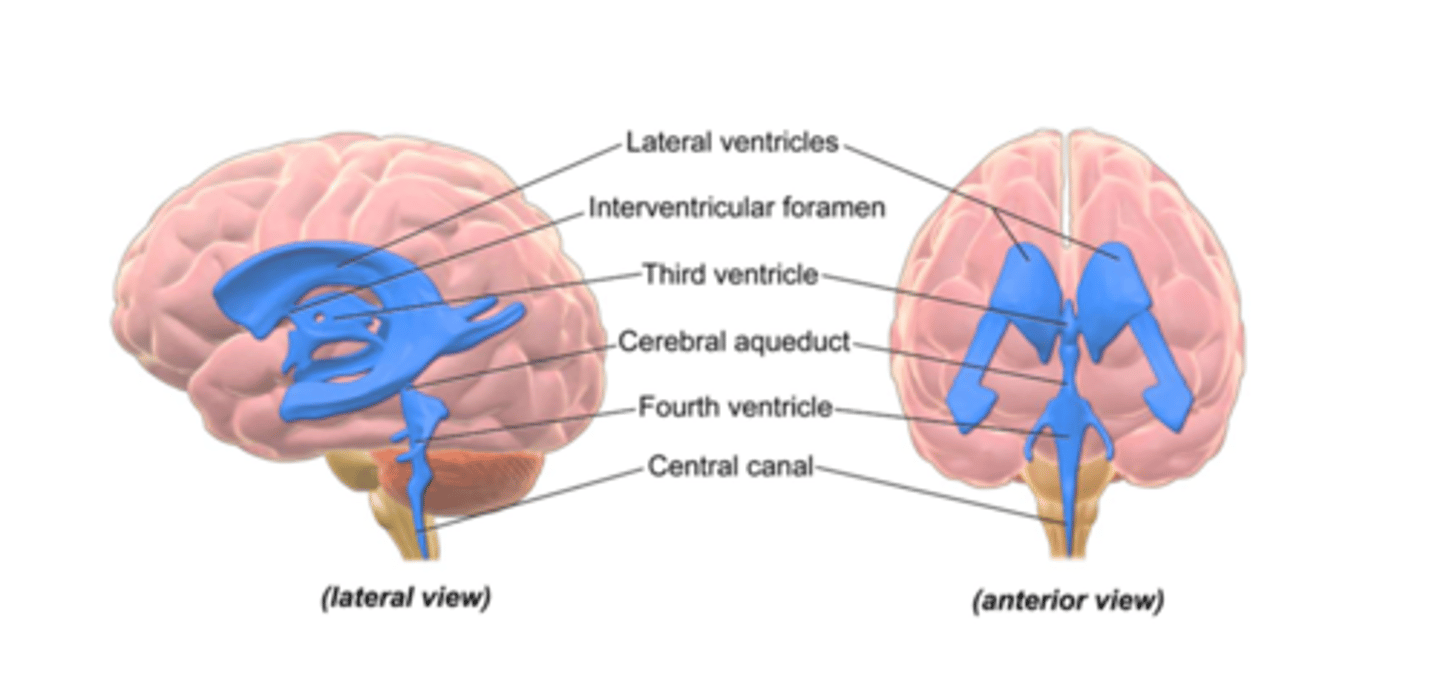
- 2 lateral ventricles
- Third ventricle
- Fourth Ventricle
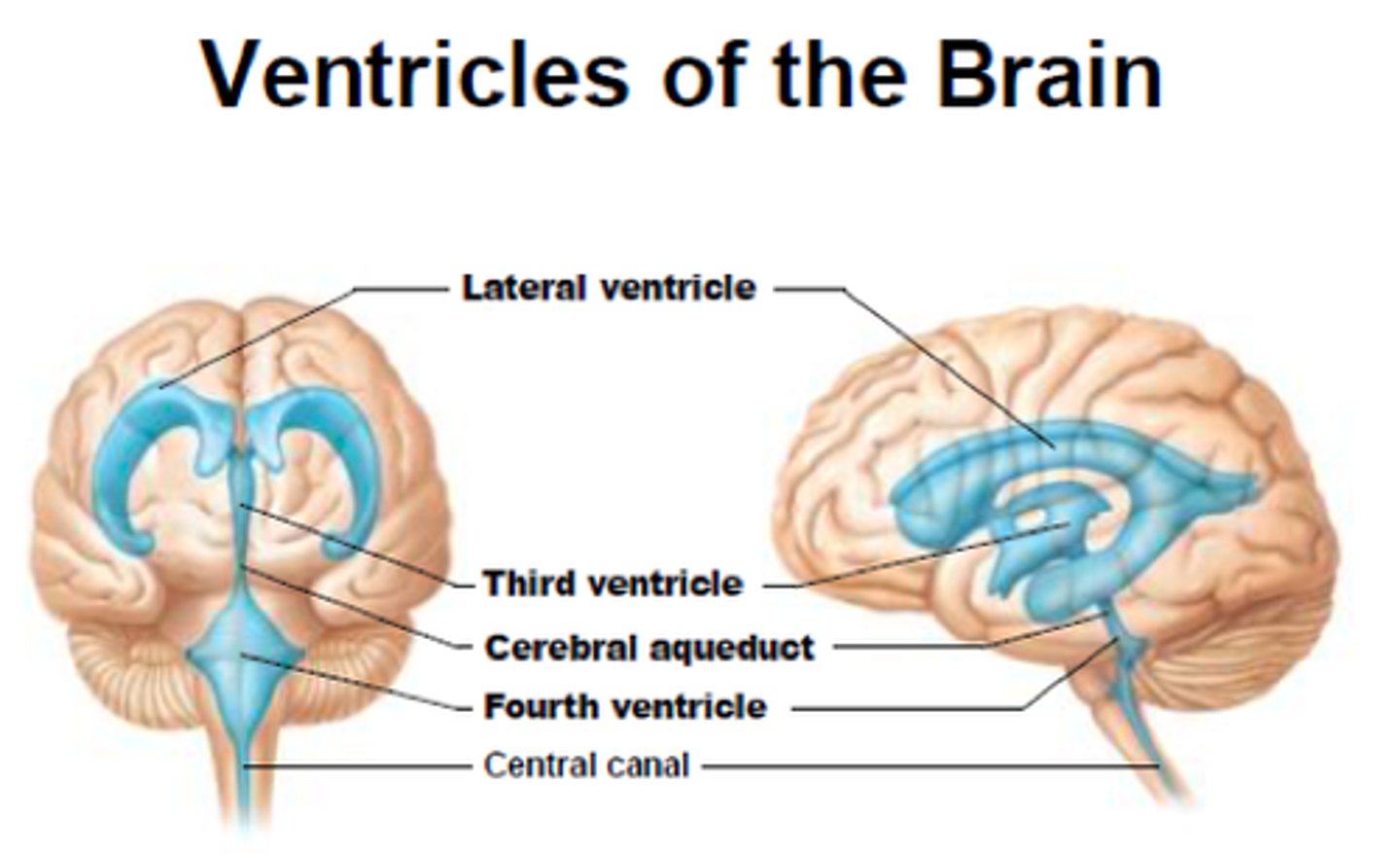
Where are the 2 lateral ventricles located?
- One in each cerebral hemisphere
- Joined by interventricular foramen (Monro)
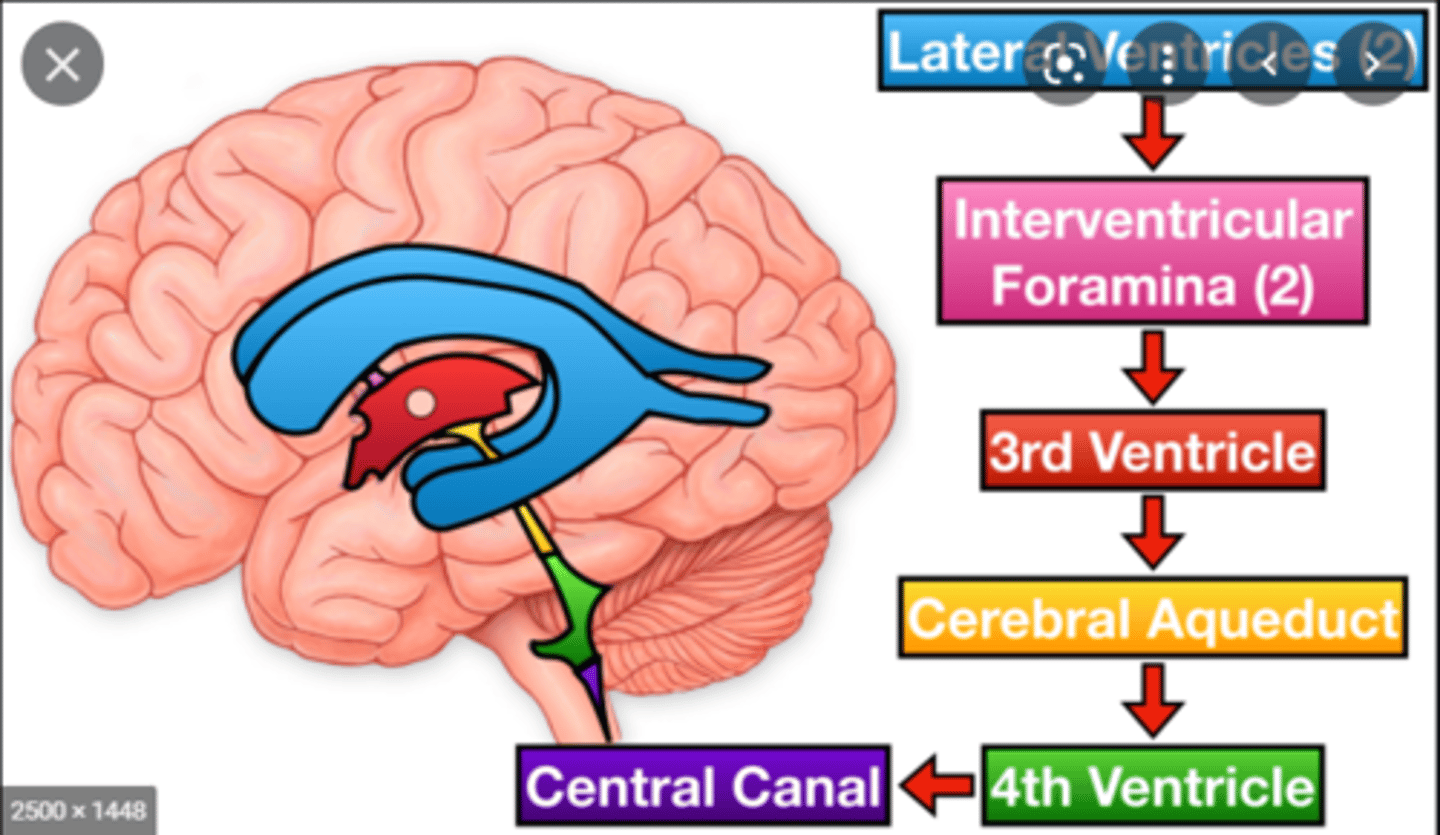
Where is the 3rd ventricle located?
- Diencephalon
- Connected to 4th ventricle through cerebral aqueduct
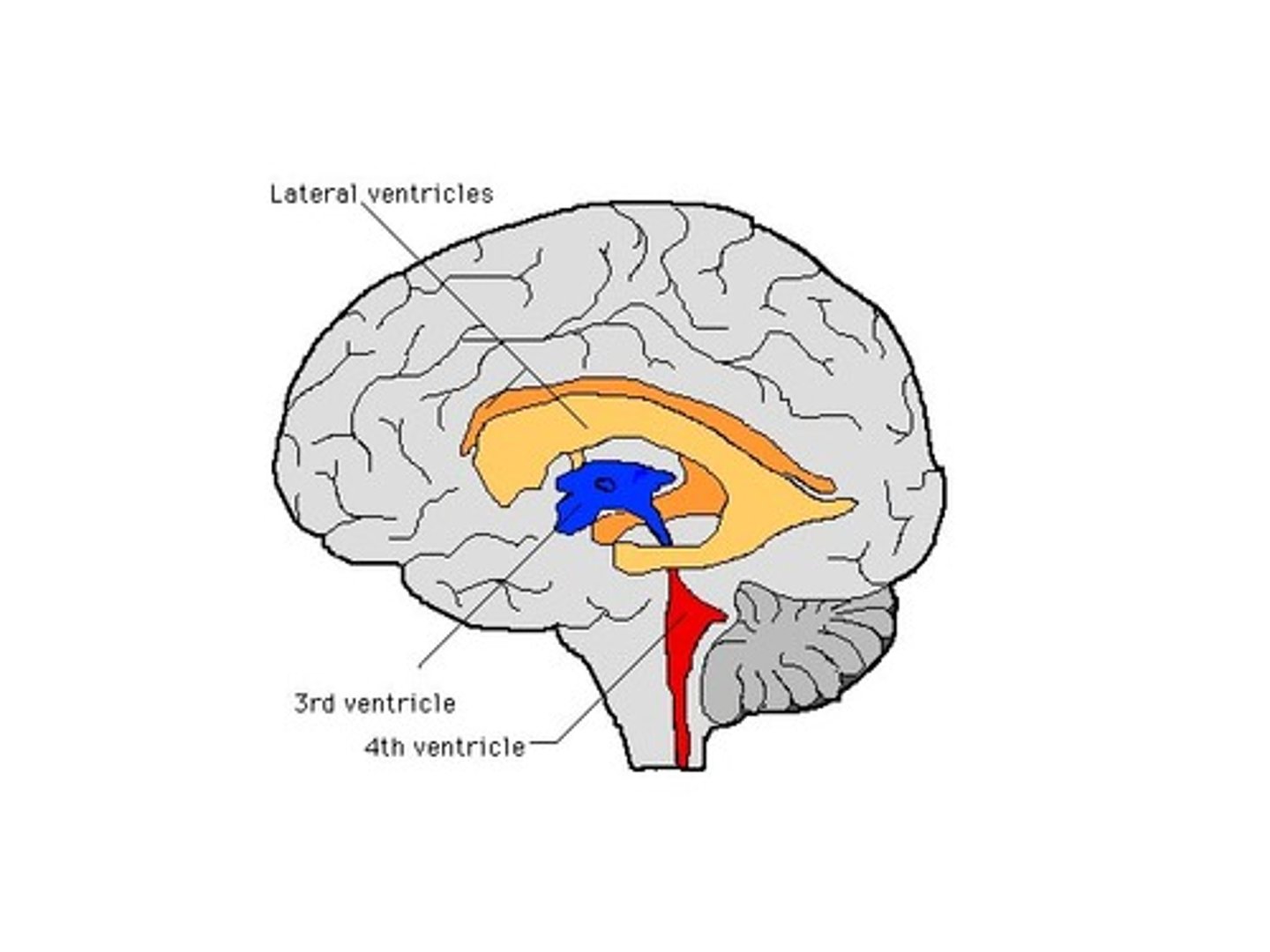
Where is the 4th ventricle located?
- Between pons and cerebellum
- Narrows to foramen of Magendie (central spinal canal)
What is Cerebrospinal Fluid (CSF)?
A clear, colorless liquid that circulates in the ventricles and subarachnoid space
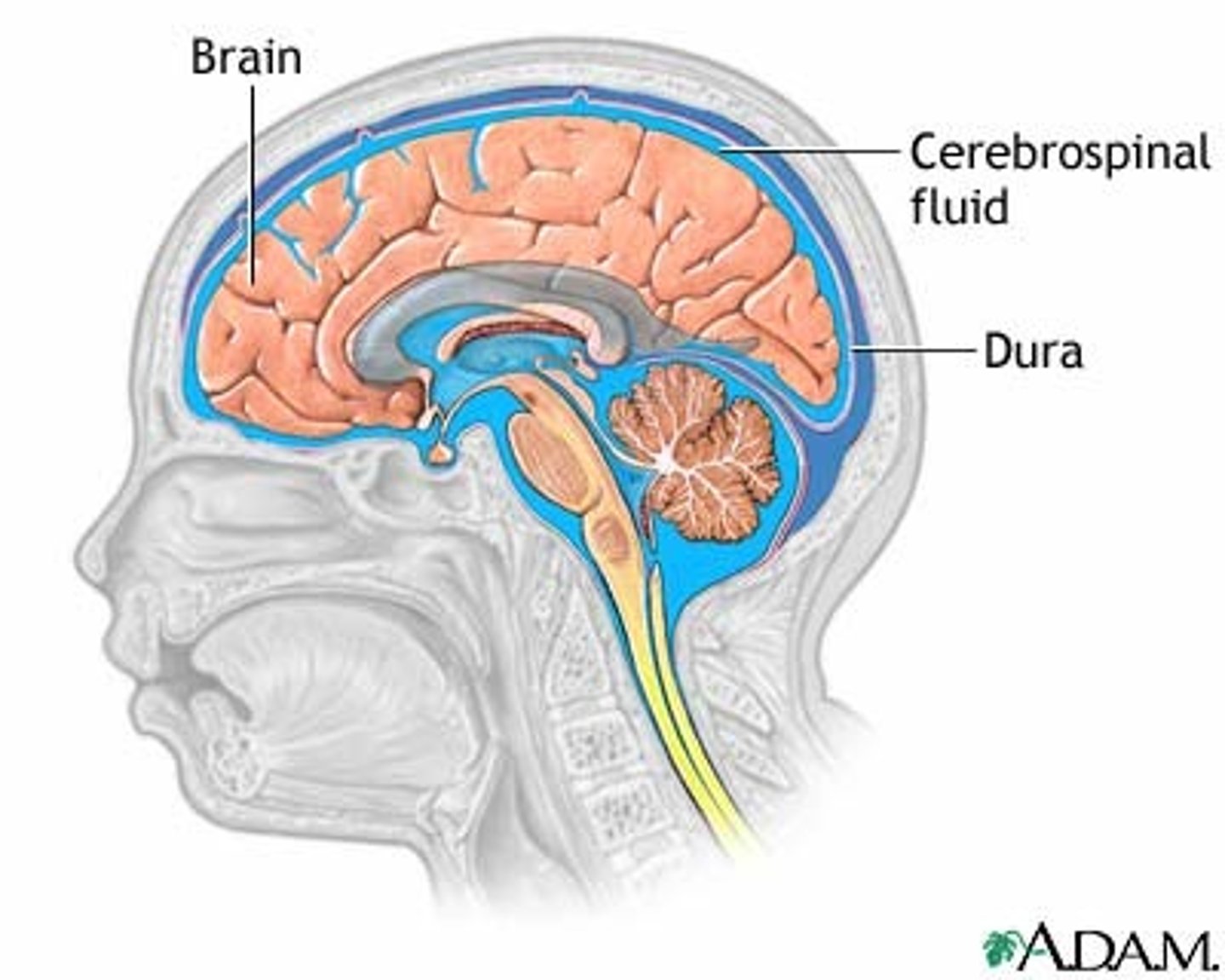
What is the function of Cerebrospinal Fluid (CSF)?
- Surrounds/ Cushions
- Transports nutrients
Where is Cerebrospinal Fluid (CSF) formed?
Choroid plexus