Swallowing & Dysphagia
 Studied by 0 people
 Call Kai
 Learn
Learn Practice Test
 Spaced Repetition
 Match
Match Flashcards
 Knowt Play
1/51

There's no tags or description
Looks like no tags are added yet.
Name | Mastery | Learn | Test | Matching | Spaced | Call with Kai |
|---|
No analytics yet
Send a link to your students to track their progress
52 Terms
Moving a bolus from the lips to the stomach safely and efficiently
What is the goal of swallowing?
To provide nutrition and hydration to sustain life
Why is swallowing necessary?
bolus
Swallowed food - a small rounded mass
nasal cavity, tongue, larynx, trachea, pharynx, soft palate (velum), epiglottis, esophagus
Identify the structures: 1-8
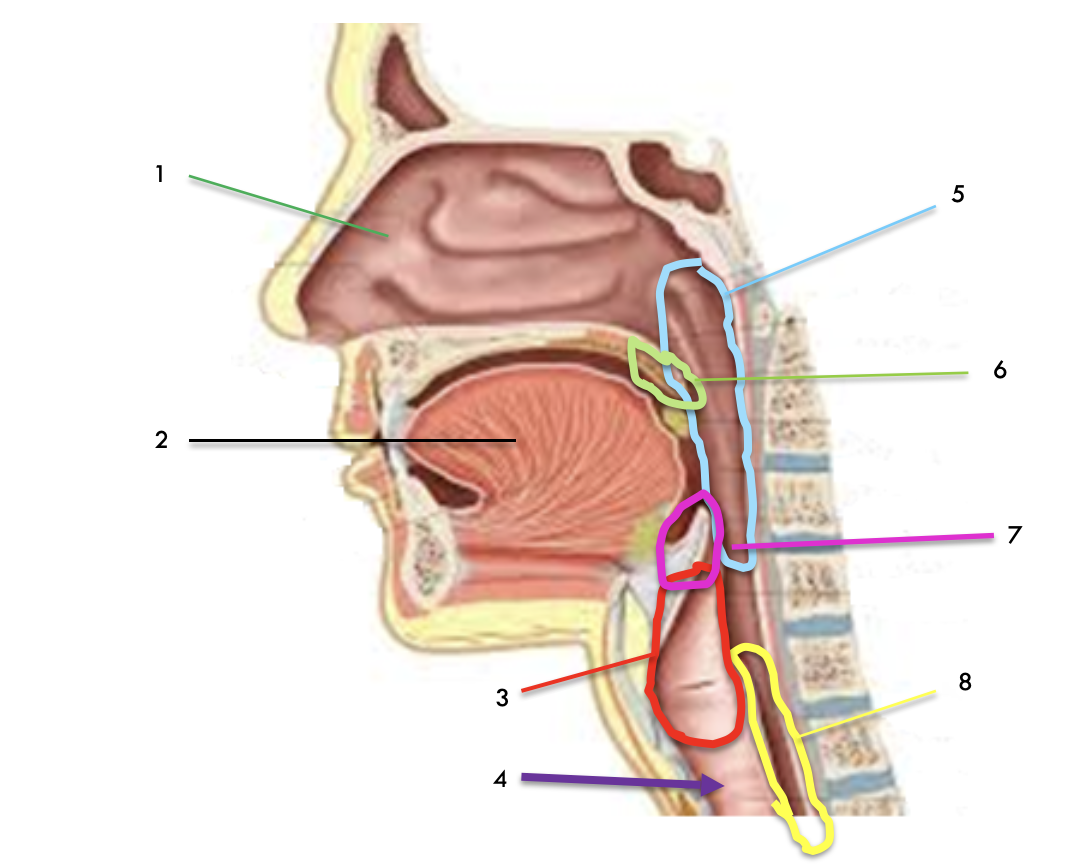
True
True or false: Swallowing involves many of the same structures as speech and respiration
Jaw, lips, teeth, hard palate, soft palate (velum), tongue, pharynx
Shared anatomical structures for swallowing and respiration/speech
larynx (speech/respiration), esophagus (swallowing)
Differences in anatomical structures used for swallowing vs respiration/speech
top of the larynx
While respiration & swallowing share a common pathway through much of the upper airway, they separate at the ______
larynx, moves past the VFs, down the trachea, and into the lungs
Airflow for respiration (and speech) enters the …
larynx
A swallowed bolus is kept out of the _____ by several protective mechanisms and is guided into the esophagus towards the stomach.
oral, pharyngeal, esophageal
3 phases of swallowing
oral preparatory and transport phase
two components of the oral phase
Oral preparatory stage
In this phase, the bolus is prepared: anticipate eating, food is brought to mouth, liquids sipped/sucked, food chewed (masticated) and mixed with saliva, prepare a cohesive bolus to swallow
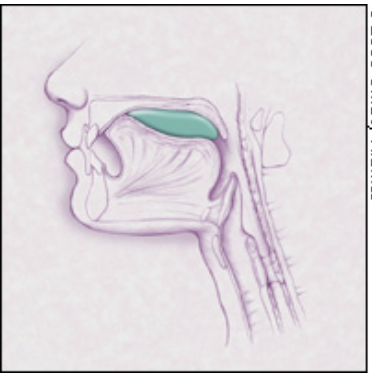
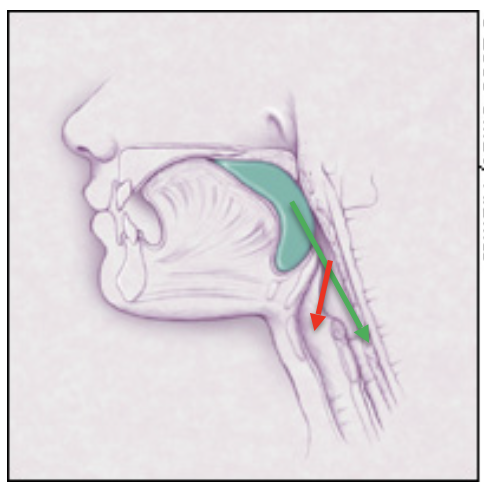
oral transport stage
In this phase, the bolus is moved to the back of the mouth (oral cavity). The bolus is propelled anteriorly to posteriorly through mouth to pharynx, takes ~1 sec
Pharyngeal phase
In this phase, the bolus is propelled through the pharynx to the esophagus. Where a bolus takes a different pathway from respiration. Takes ~1 sec.
Soft palate elevates to seal off the nasal cavity
The larynx moves up and forward
The epiglottis folds downward to cover the airwary
The vocal folds adduct
Reflexive cough
List the types of safety mechanisms the pharyngeal phase includes

esophageal phase
In this phase, the bolus is moved through the esophagus into the stomach, takes ~8-20 secs, swallowing is complete and digestion begins
Oral prep/transit: voluntary, resp continues, ~1 sec (depending on food consistency)
Pharyngeal: involuntary, resp pausing, ~1 sec
Esophageal: involuntary, resp continues, ~8-20 secs
Compare swallowing phases
False
True or false: dysphagia is a primary disorder
Developmental disabilities, acquired neurological disabilities, degenerative neurological disabilities, trauma
What disorders is dysphagia secondary to?
Coughing during or immediately after eating/drinking
Wet sounding voice during/after eating/drinking
Extra effort/time needed to chew/swallow
Food/liquid leaking from mouth/getting stuck in mouth
Recurring pneumonia/chest congestion after eating
Weight loss/dehydration from not being able to eat/drink enough
Discomfort/difficulty w/ eating/swallowing
List the signs and symptoms of dysphagia
symptoms
What the patient or client reports.
signs
What you observe/see.
penetration or aspiration
When the bolus enters larynx instead of esophagus
nasal regurgitation
When the velum does not raise to block off nasal cavity and the bolus enters the nasal cavity
Penetration
Bolus enters the larynx but does not pass beyond the VFs
aspiration
Bolus passes beyond the VFs, below larynx and into trachea and possibly lungs
lung damage, distress, or pneumonia
Consequences of aspiration may include …
Preventing adequate nourishment/hydration
Pain or discomfort when swallowing
Decreased quality of life
Social isolation
Other consequences of dysphagia may include:
True
True or false: Dysphagia may involve problems accepting, gathering, sucking, chewing, or swallowing food
food acceptance and bolus preparation
Problems with the oral preparatory phase involve …
moving the bolus to the back of the mouth
Problems with the oral transport phase involve difficulty …
moving the bolus through the pharynx to the esophagus
Problems with the pharyngeal phase involve difficulty…
moving the bolus through the esophagus to the stomach
Problems with the esophageal phase involve difficulty …
Medical conditions that result in low muscle tone, delayed motor development, or physical deformity may cause dysphagia - Down syndrome, Cerebral palsy, Cleft lip and palate
Inadequate feeding behaviors (i.e. inefficiency, overselectivity, refusal, feeding delay) - low birth weight, prematurity, prenatal drug exposure
Dysphagia or difficult feeding behaviors can occur in children with a variety of conditions such as
premature
_____ babies are often at increased risk for feeding and swallowing difficulty because they do not have fully developed systems and often have low birth weights.
Unsafe/inefficient swallowing
Delayed growth
Food intolerance
Poor appetite regulation
Difficulties premature babies may have include
Pica
ingestion of nonnutritive substances (e.g., clay, soil, pebbles, etc.) for one month or longer
True.
True or false: medical interventions may limit exposure to feeding development, feeding routines, and food tastes & textures
Tube feeding, tracheostomy, mechanical ventilation
Interventions for swallowing difficulties in pediatric population
neurological damage, laryngeal damage, trauma
Acquired dysphagia can result from
affected phase, underlying cause, and severity
The characteristics of adult dysphagia are related to the…
Referral
Screening
Assessment
Case hx
Clinical swallowing eval
Instrumental swallowing assessment
Evaluation of feeding and swallowing disorders includes
without instrumentation
Clinical swallowing assessment refers to swallowing assessment …
Oral mechanism exam
Assesses structures used in swallowing
Observation
Determine readiness for food
Trials with food and drink
Look for signs or symptoms of dysphagia
instruments
Instrumental swallowing assessments examine the swallow using
Videofluoroscopy (VFSS or MBSS)
An individual eats or drinks food or liquid with barium in it, and swallowing is viewed by X-ray
Endoscopic assessment (FEES)
A lighted scope is inserted through the nose into pharynx, and the swallow is viewed on a screen
Compensatory or rehabilitative
Two main approaches to tx for dysphagia
compensatory
________ approaches ‘compensate’ for the disordered swallow which may include changing the diet, the environment/equipment, the patient/position
Rehabilitative
______ techniques attempt to improve the disordered swallow, which may include exercises for strengthening weak swallowing muscles. Also adjunct techniques like Neuromuscular Electrical Stimulation (NMES)
 Note
Note  Flashcards (44)