1.1 Cognitive Behavioral Therapy - Background
 Studied by 0 people
 Call Kai
 Learn
Learn Practice Test
 Spaced Repetition
 Match
Match Flashcards
 Knowt Play
1/9

There's no tags or description
Looks like no tags are added yet.
Name | Mastery | Learn | Test | Matching | Spaced | Call with Kai |
|---|
No analytics yet
Send a link to your students to track their progress
10 Terms
What is cognitive Behavioral Therapy?
= structured, short-term, present-oriented psychotherapy for psychological disorders.
directed toward solving current problems and modifying dysfunctional (inaccurate and/or unhelpful), distortions in thinking and behavior
Treatment is also based on a conceptualization or understanding of individual patients (their specific beliefs and patterns of behavior).
The therapist seeks in a variety of ways to produce cognitive change (modification in the patient’s thinking and belief system) to bring about enduring emotional and behavioral change.
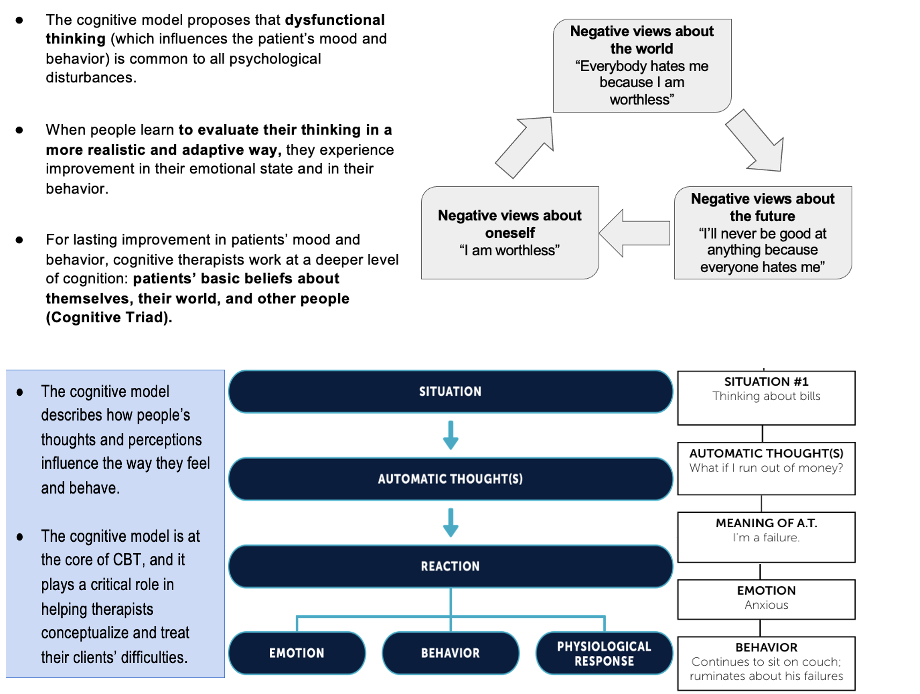
What is the underlying theory of CBT “Cognitive Model”?
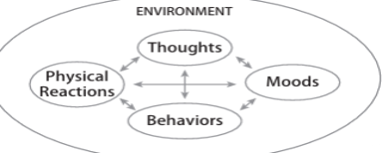
How does the Five-part model to understand life experiences of clients looks?
Name the 10x Basic principles of CBT
1. based on ever-evolving formulation of patient’s problems and individual conceptualization
2. requires a high therapeutic alliance
3. emphasizes collaboration and active participation
4. goal oriented and problem focused
5. emphasizes the present
6. educate patient to be her own therapist for relapse prevention
7. aims must be time-limited
8. sessions must be structured
9. teach patient to identify, evaluate and respond to their own dysfunctional thoughts or beliefs
10. use of variety of techniques to change thinking, mood, and behavior
Which tasks has the therapist to accomplish at once?
conceptualizing the case
building rapport
socializing and educating the patient
identifying problems
collecting data
testing hypotheses
summarizing
Which 3x skills should a therapist learn at first in order?
1. Developing the therapeutic relationship
2. Conceptualization
3. CBT-Techniques
In which 8x basic counseling skills should you be proficient as a therapist?
Listening
Empathy
Concern
Positive Regard
Genuineness
Accurate understanding
Reflection
Summarizing
In which 3x stages can your expertise develop as a CBT-therapist after you are proficient in basic counseling skills?
Stage 1: Learn case conceptualizing in cognitive terms based on the gathered Information of an intake evaluation
Stage 2: Integrate your knowledge of techniques in Case conceptualization
Stage 3: integrate more automatically new data into case conceptualization
Name the 6x general principles of ethics in Psychology.
1. Competence
2. Integrity
3. Professional and Scientific Responsibility
4. Respect for People’s Rights and Dignity Principle
5. Concern for Others’ Welfare Principle
6. Social Responsibility
How can you resolve ethical Issues?
1. Familiarity with ethics code
Lack of awareness or misunderstanding of ethical standard is no defense of unethical behavior
2. Confronting Ethical Issues
Consult appropriate authorities and other psychologists with state or national ethics committees to choose a proper response
 Note
Note  Flashcards (42)