Unit 1: Ch 1 Intro to Human anatomy and physiology
 Studied by 2 people
 Call Kai
 Learn
Learn Practice Test
 Spaced Repetition
 Match
Match Flashcards
 Knowt Play
1/131

Earn XP
Description and Tags
Basics of Human anatomy and physiology
Name | Mastery | Learn | Test | Matching | Spaced | Call with Kai |
|---|
No analytics yet
Send a link to your students to track their progress
132 Terms
anatomy
Branch of science dealing with the form and organization of body parts.
physiology
The study of body functions.
atom
Smallest particle of an element that has the properties of that element.
subatomic particles
Parts of an atom, including protons, electrons, and neutrons.
molecule
Particle composed of two or more joined atoms.
macromolecule
Very large molecule, such as a protein, starch, or nucleic acid.
cell
The structural and functional unit of an organism.
organelle
Any of the structures in cells that has a specialized function.
tissue
Assembled group of similar cells that performs a specialized function.
organ
Structure consisting of two or more tissues with a specialized function.
organ system
Group of organs coordinated to carry on a specialized function.
organism
An individual living thing.
internal environment
Conditions inside the body, surrounding the cells.
cell membrane
The selectively permeable outer boundary of a cell consisting of a phospholipid bilayer embedded with proteins.
pressure gradient
Difference in the pressure of a liquid or gas from one area to another; as between the plasma and extracellular fluid (blood flow) or between air in the lungs and atmosphere (breathing).
concentration gradient
Difference in the concentration of a chemical from one area to another; as on the opposite sides of a cell membrane.
permeant
Substance Possessing the ability to cross a cell membrane.
permeable
Allows permeant substance passage across a cell membrane.
cellular differentiation
The process of embryonic cells becoming fated for their various functions.
membrane receptors
Proteins found on a cell membrane that can bind to chemicals such as neurotransmitters and hormones.
Nearly all body structures and functions work in ways to maintain life. Which organ system is the exception to this.
Reproductive system
Metabolism
The sum of all chemical reactions in a living system. EX: (Respiration, Digestion, circulation, excretion).
The most abundant chemical in all living systems.
H2O
intracellular fluid
Fluid inside the cells.
interstitial fluid
Fluid between cells and outside of blood vessels; tissue fluid.
extracellular fluid
Body fluids outside cells.
atmospheric pressure
Pressure exerted by the weight of the air, about 760 mmHg at sea level
hydrostatic pressure
Pressure exerted by fluids, such as blood pressure.
homeostasis
Dynamic state in which the body’s internal environment is maintained within the normal range.
homeostatic mechanisms
Any of the control systems that help maintain a normal internal environment in the body.
set point
Target value of a physiological measure maintained automatically by the body. EX:
(body temp 98.6 oF)
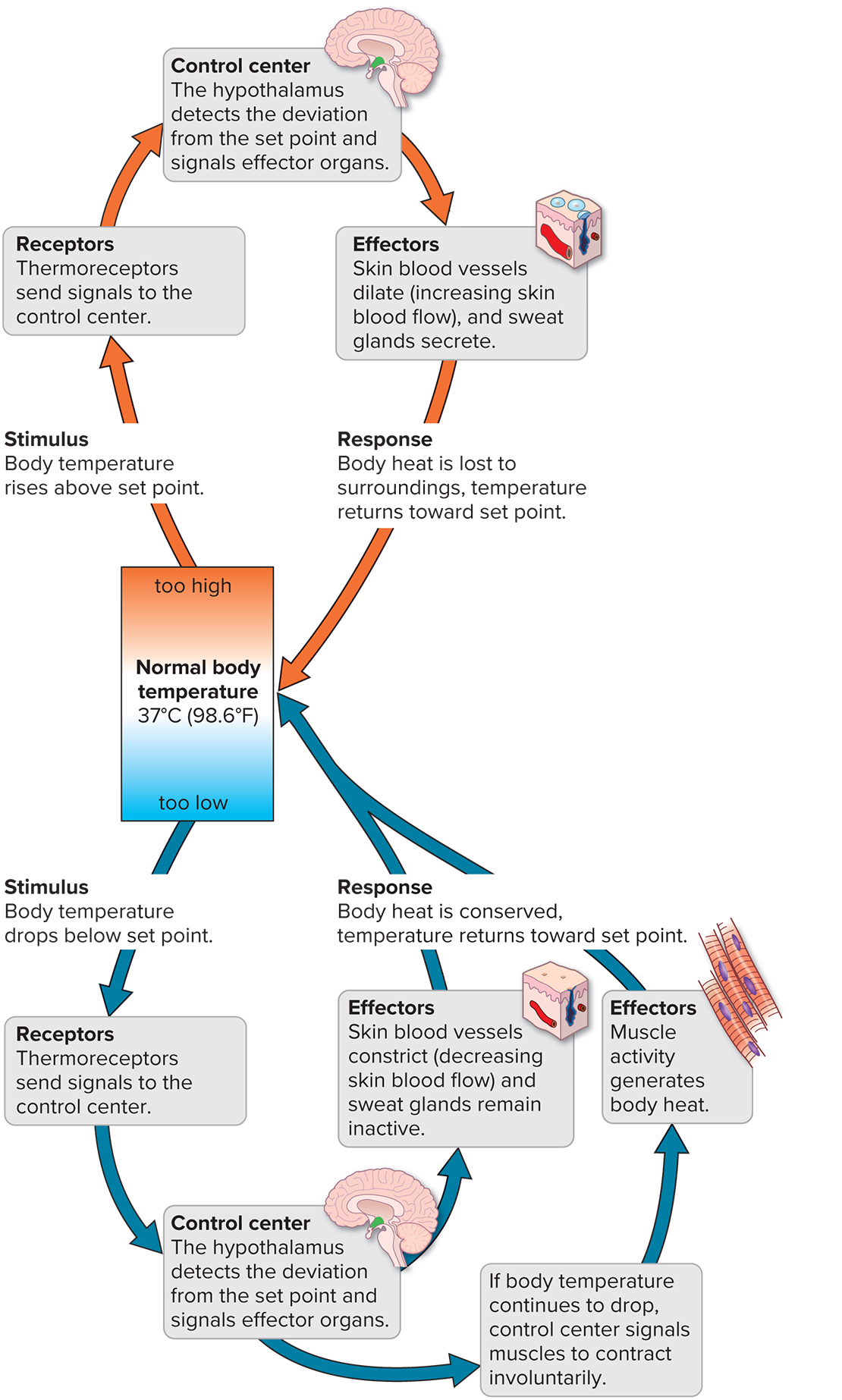
receptor
Specialized cell or structure that provides information about the environment; also, cell surface molecule that binds other molecules, called ligands, thereby conveying a signal to inside the cell.
control center
compares information from the receptors to the set point. Then telling effectors what to do to return to the set point.
effector
A muscle or gland
feedback loop
An underlying component of the physiological control systems that maintain homeostasis.
negative feedback
A mechanism that restores the level of a biochemical or other condition in the internal environment. Since the deviation from the set point is corrected it is negative (opposite).
positive feedback
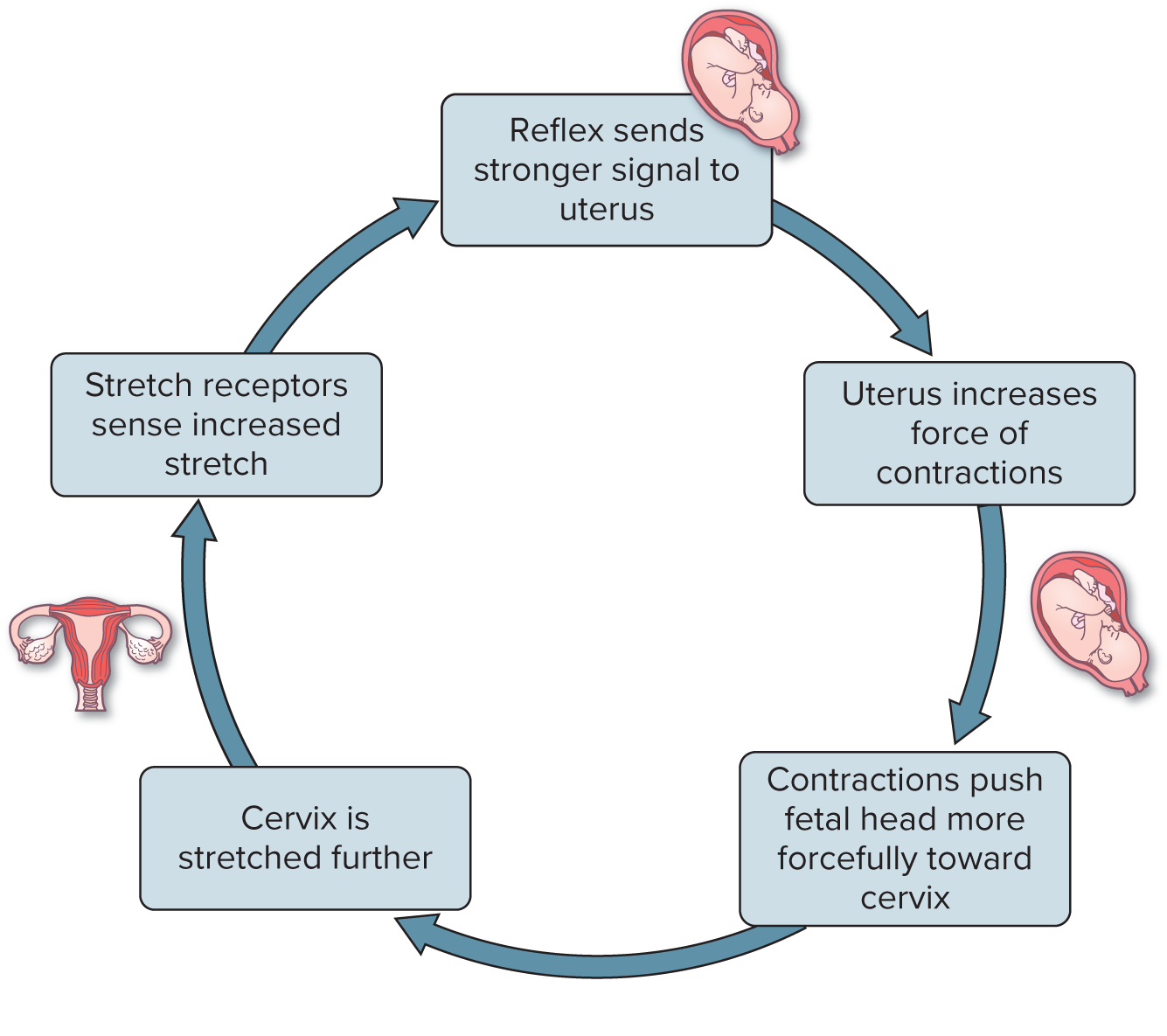
Process by which changes cause additional similar changes, producing unstable conditions. Since the deviation from the set point is amplified it is Positive (similar). EX: blood clotting to stop wounds.
normal range
Range of values for a particular measurement obtained from a sample of healthy population.
Viscera
Organs in a body cavity.
axial portion
pertaining to the head, neck, and trunk.
appendicular portion
Upper and lower limbs.
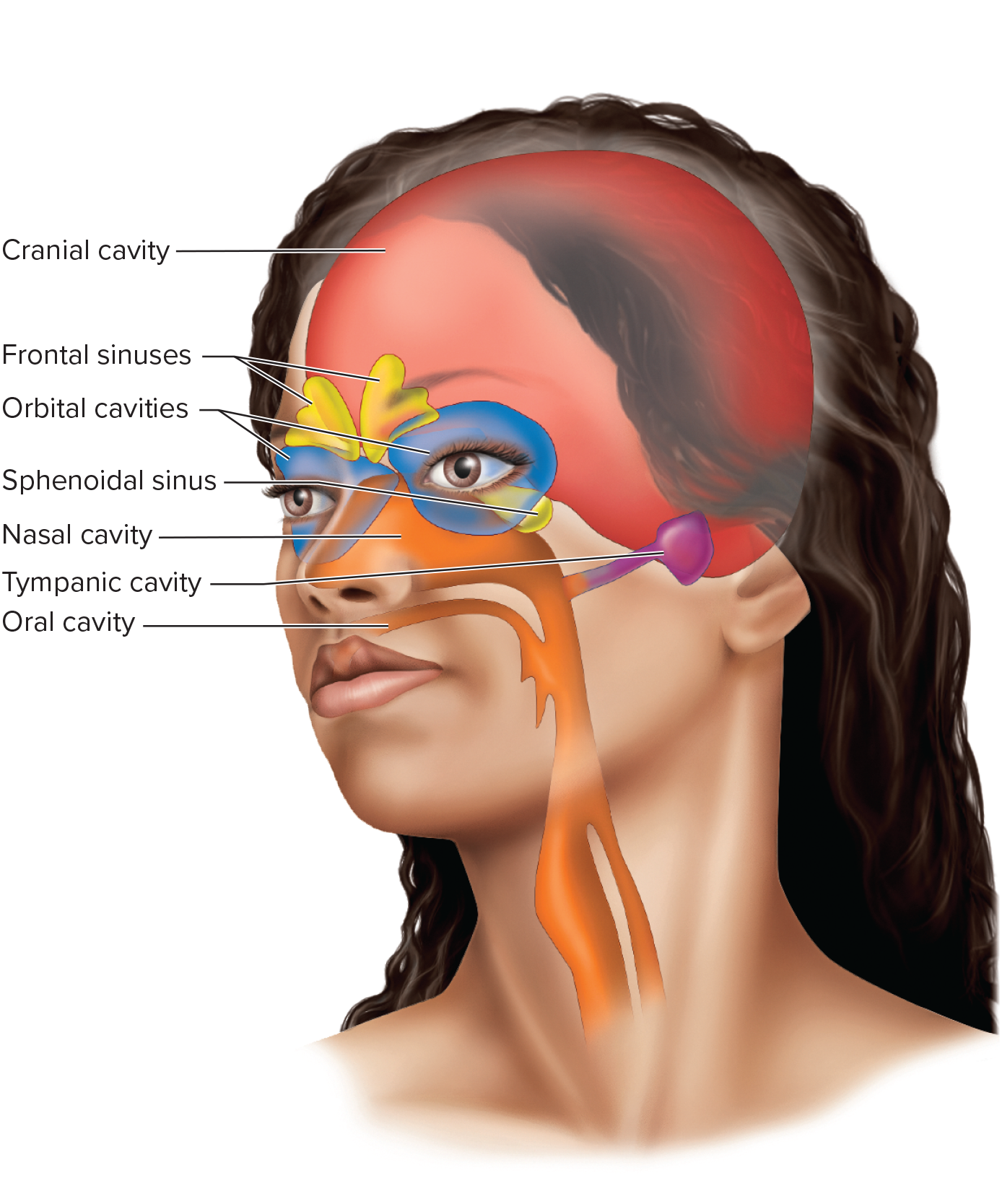
cranial cavity
Space in the cranium containing the brain.
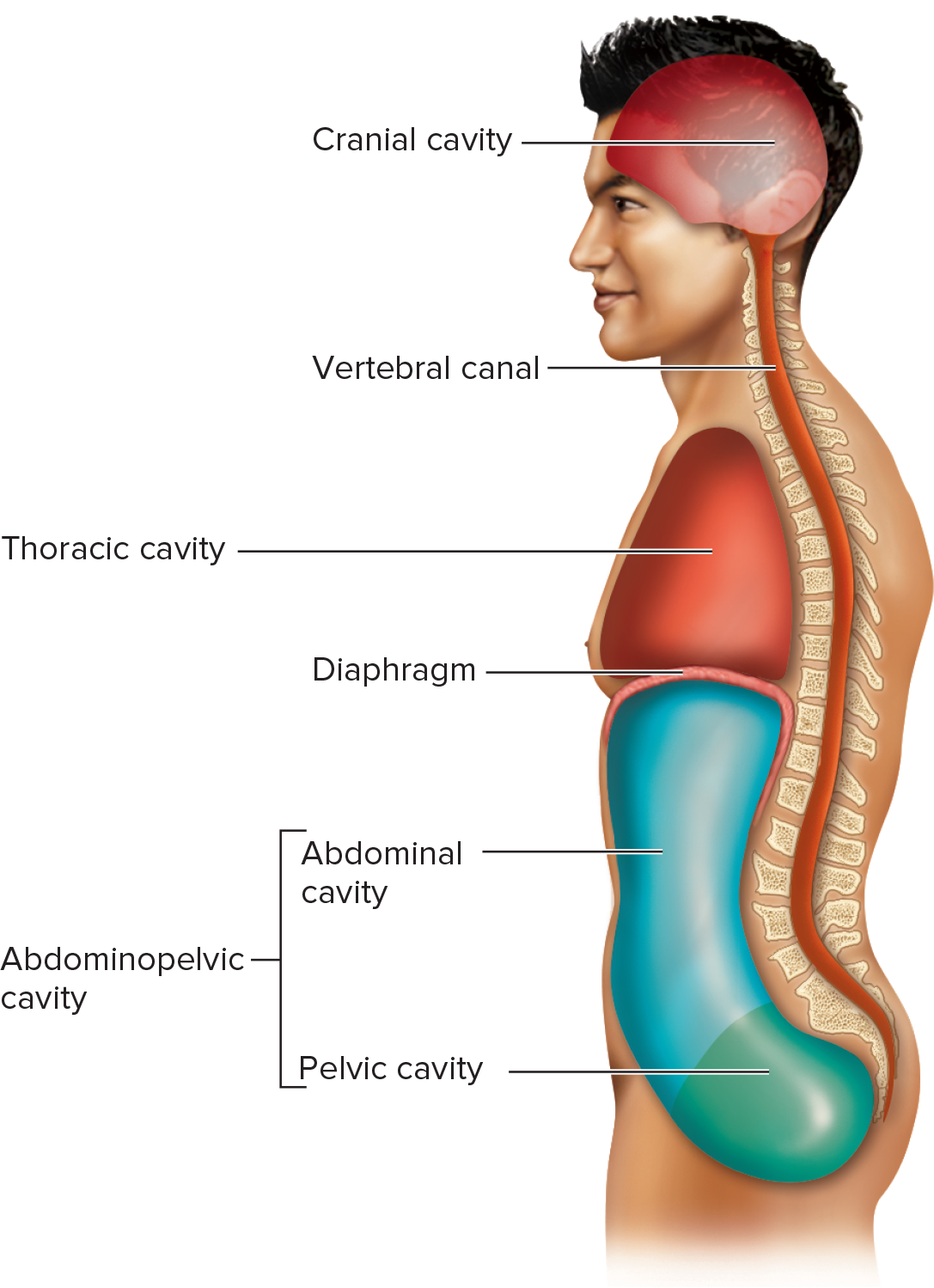
vertebral canal
Canal formed by hollow areas in the vertebrae that contains the spinal cord.
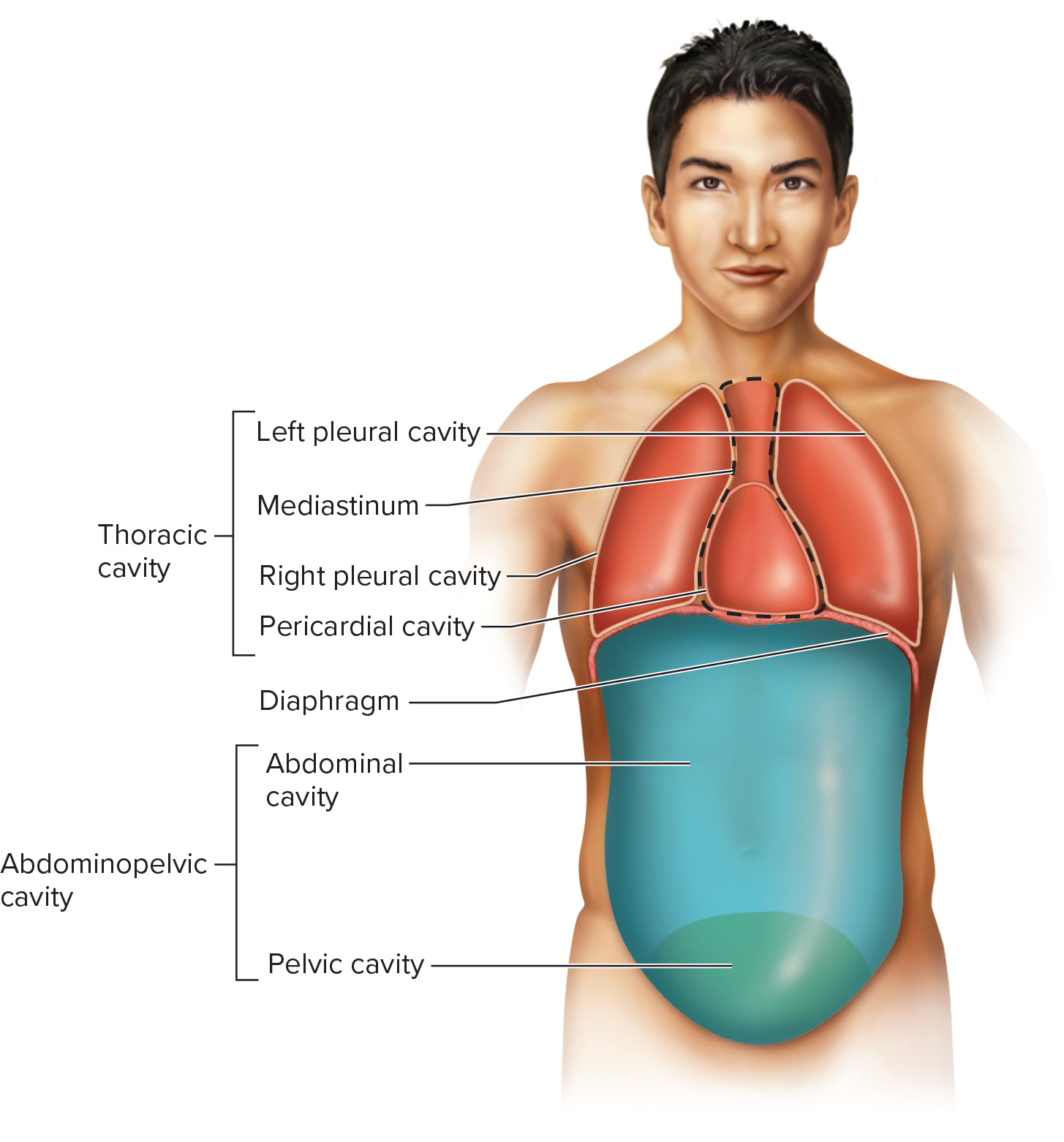
Thoracic cavity
Space containing the organs in the upper trunk.
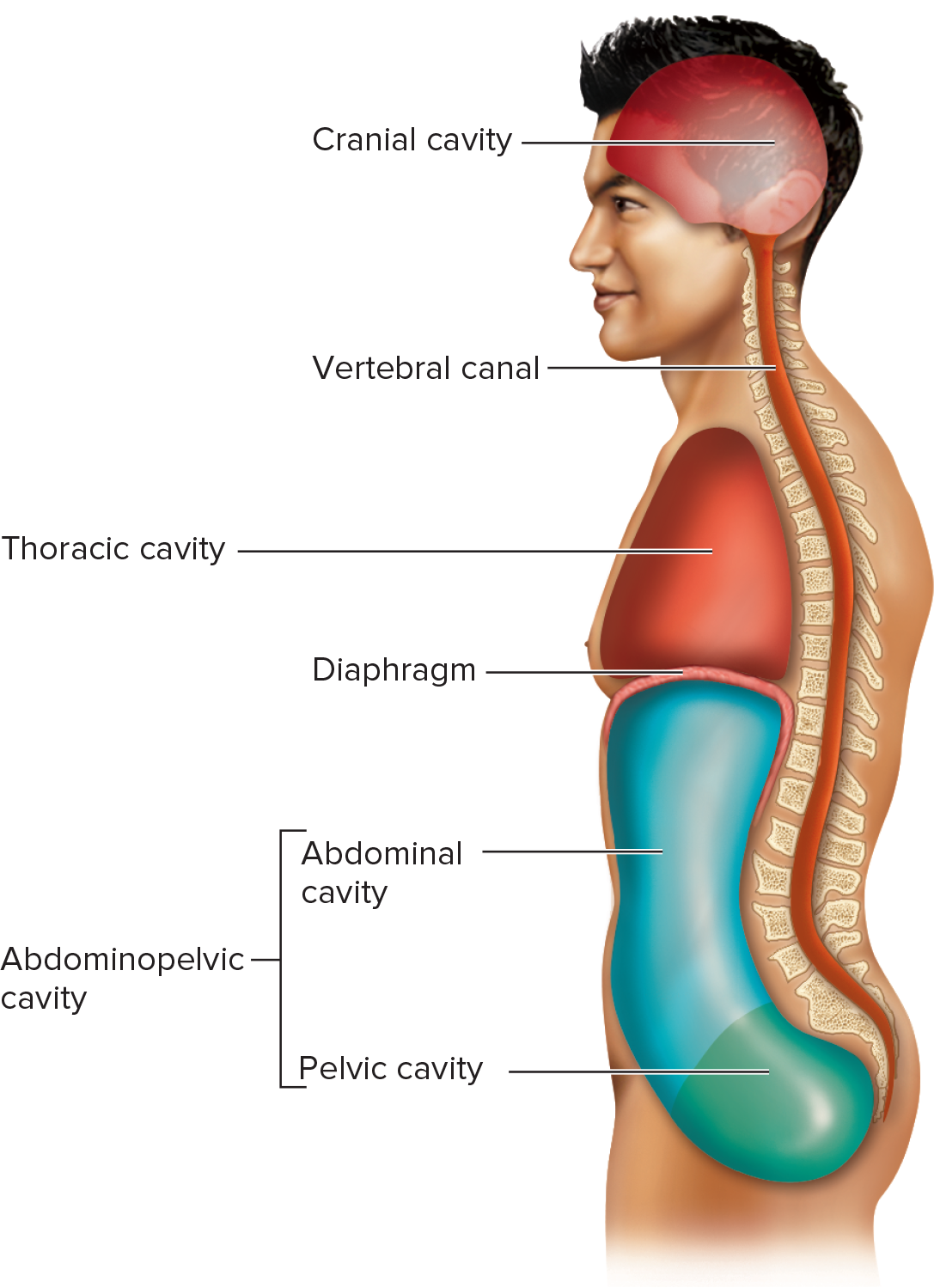
abdominopelvic cavity
Space between the diaphragm and the pelvic outlet that contains the abdominal and pelvic viscera.
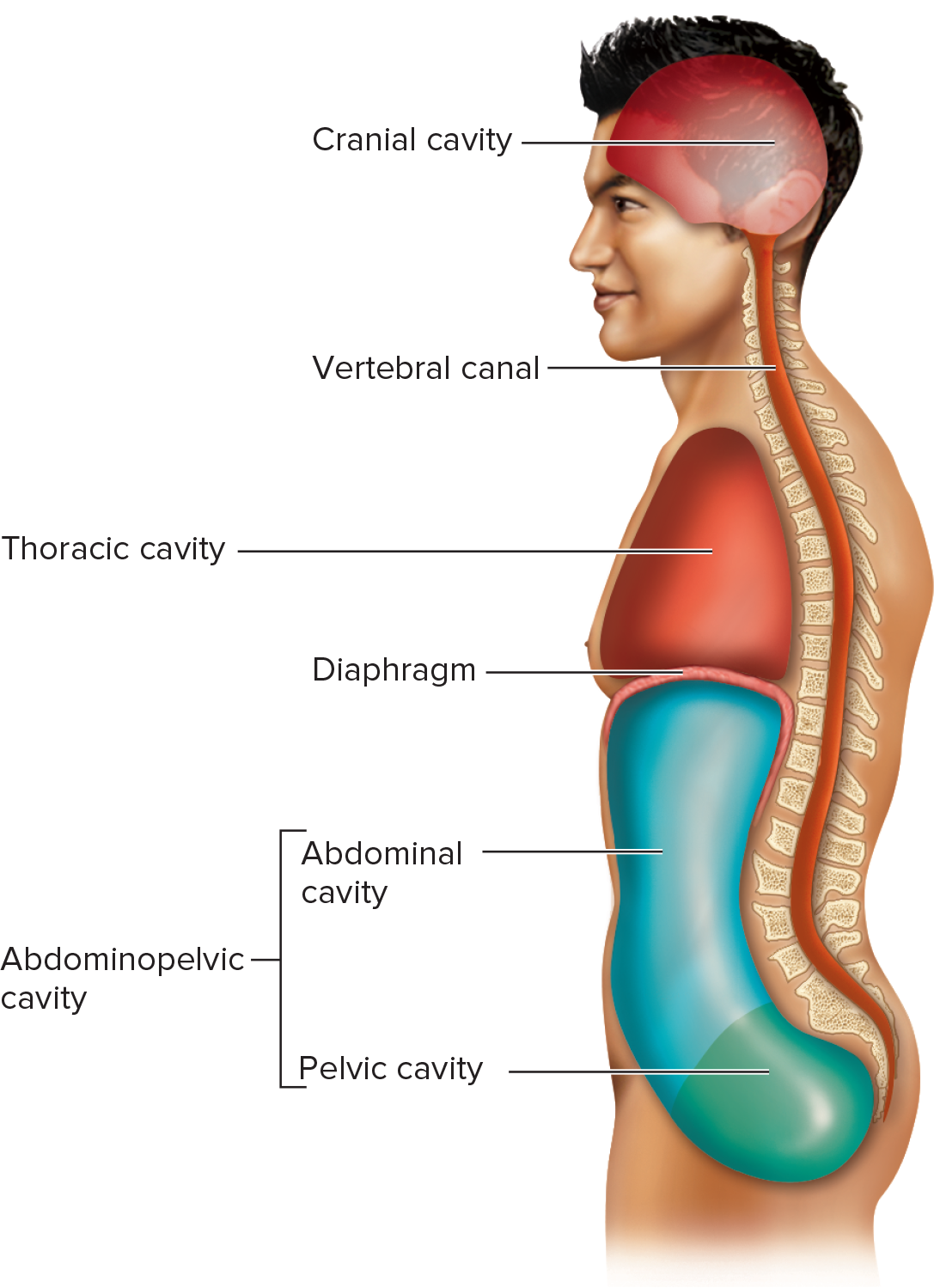
diaphragm
A sheetlike structure largely composed of skeletal muscle and connective tissue that separates the thoracic and abdominal cavities
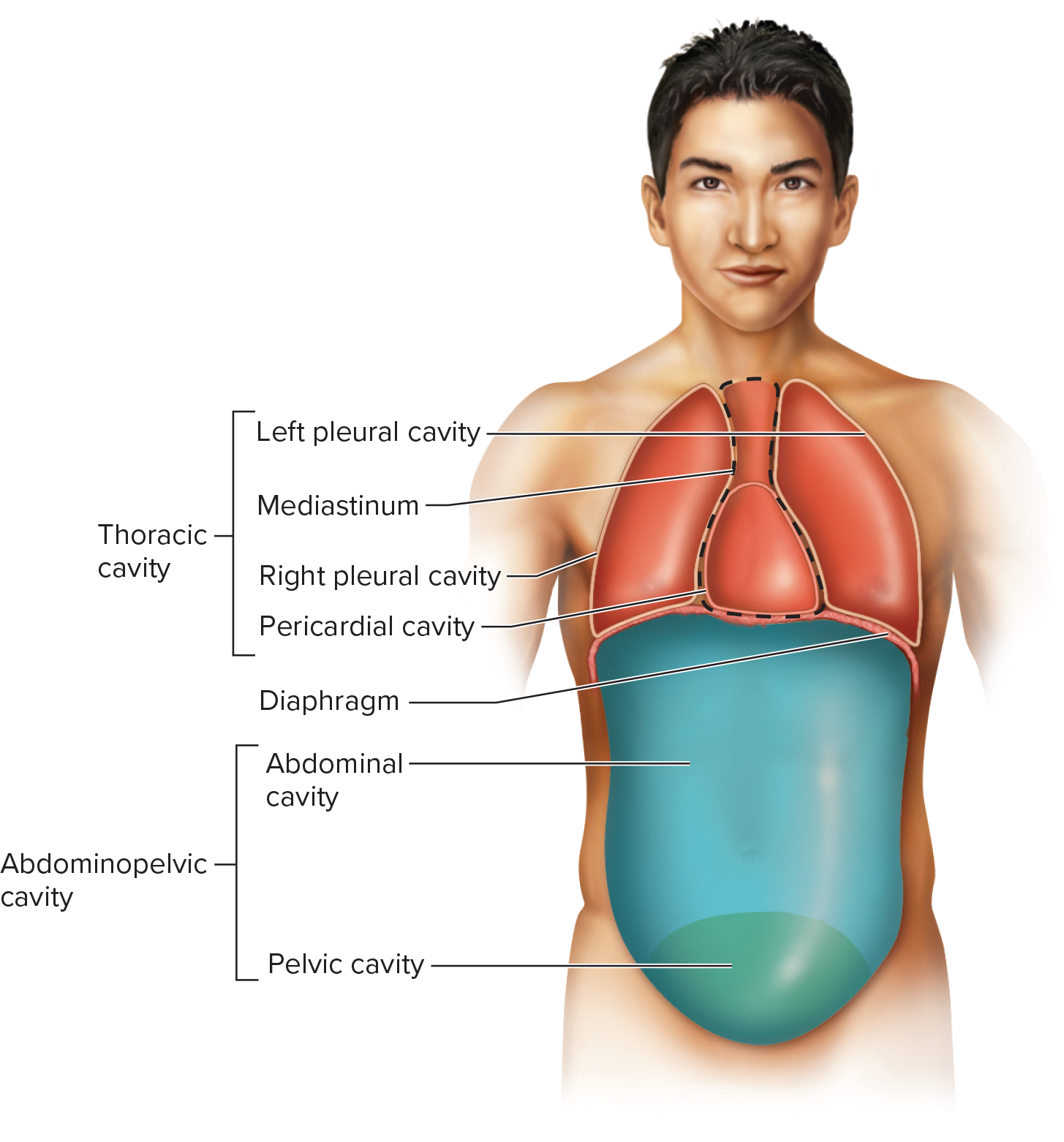
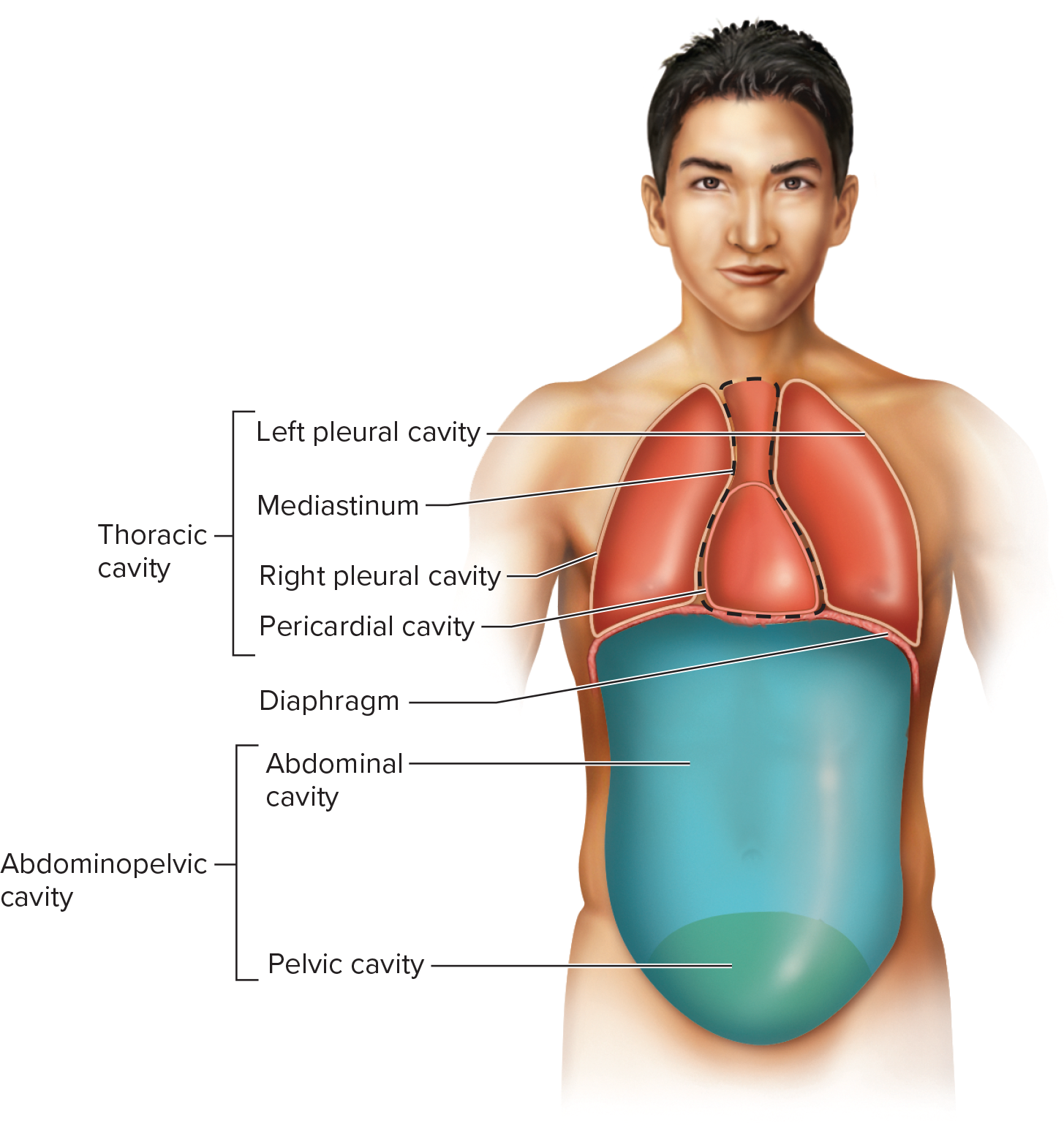
mediastinum
The region in the thoracic cavity between the lungs.
abdominal cavity
Space between the diaphragm and the pelvic inlet that contains the abdominal viscera.
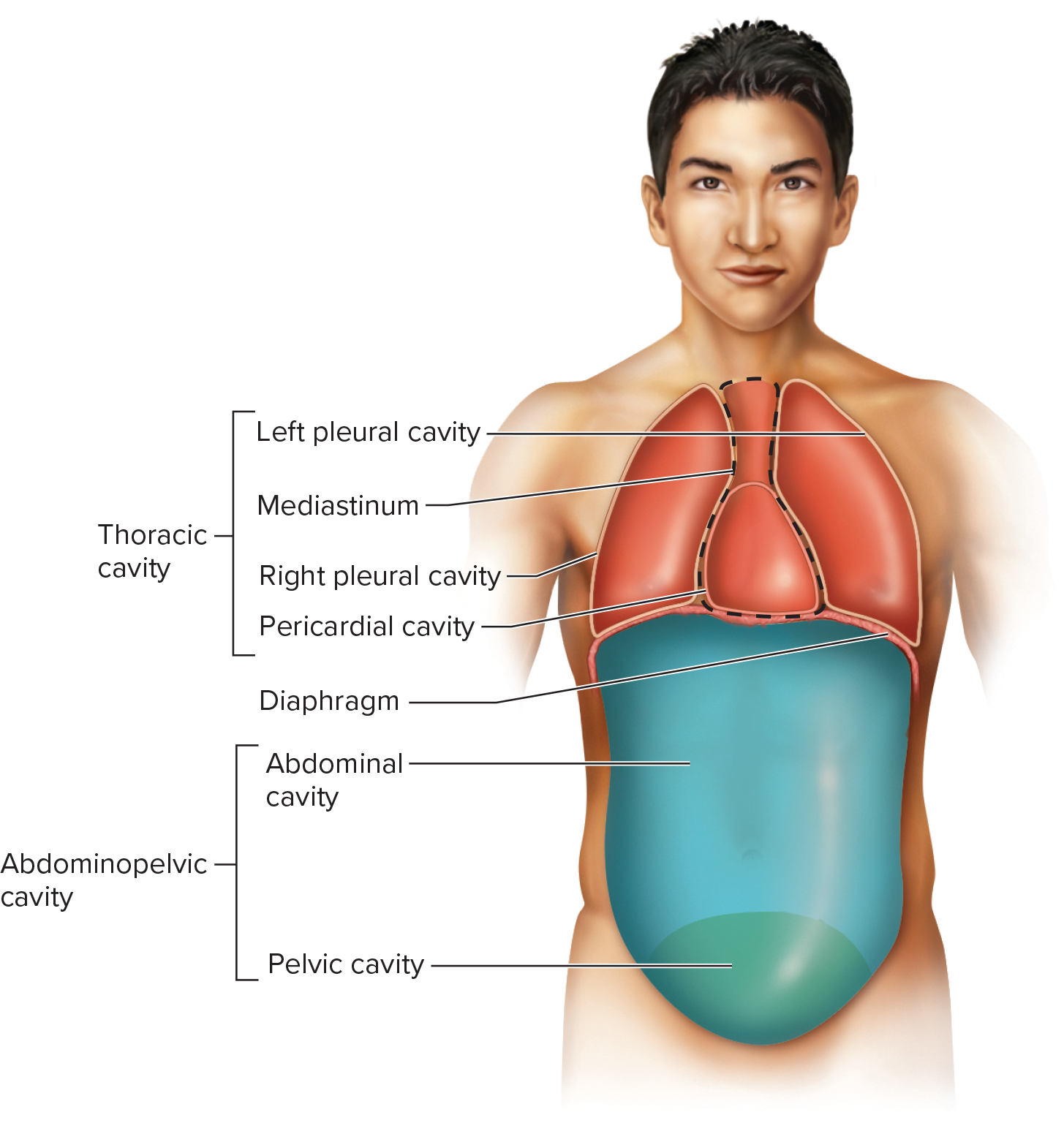
pelvic cavity
Hollow place within the ring formed by the sacrum and hip bones.
oral cavity
nasal cavity
orbital cavity
tympanic cavity
Contains the teeth.
Connects with several air-filled sinuses.
Contains the eyes and associated muscles/nerves.
Contains the middle ear bones.
serous membrane
Membrane that lines a cavity without an opening to the outside of the body and covers the organs in these cavities.
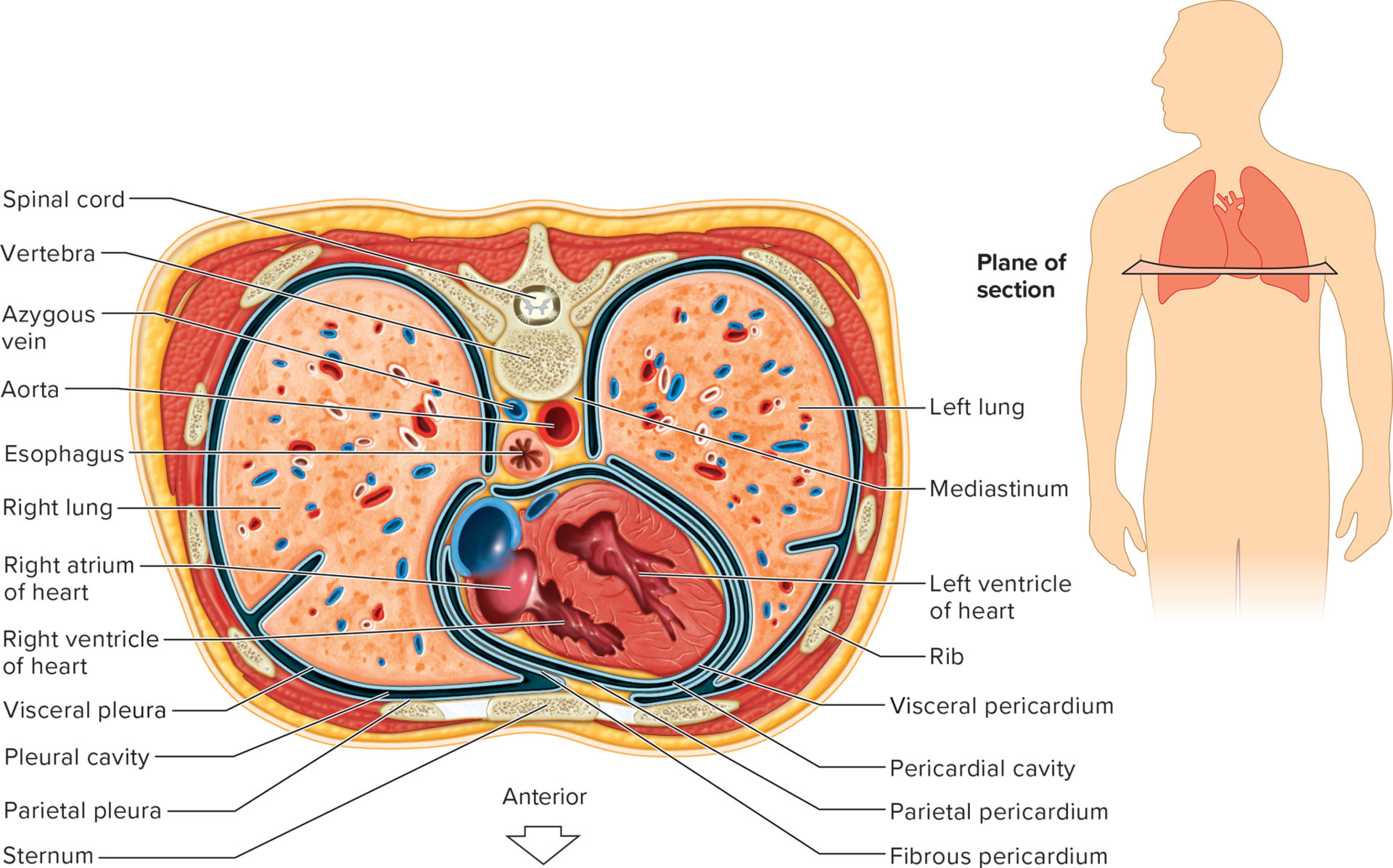
serous membrane: Parietal layer
Outer layer that lines the wall of the cavity.
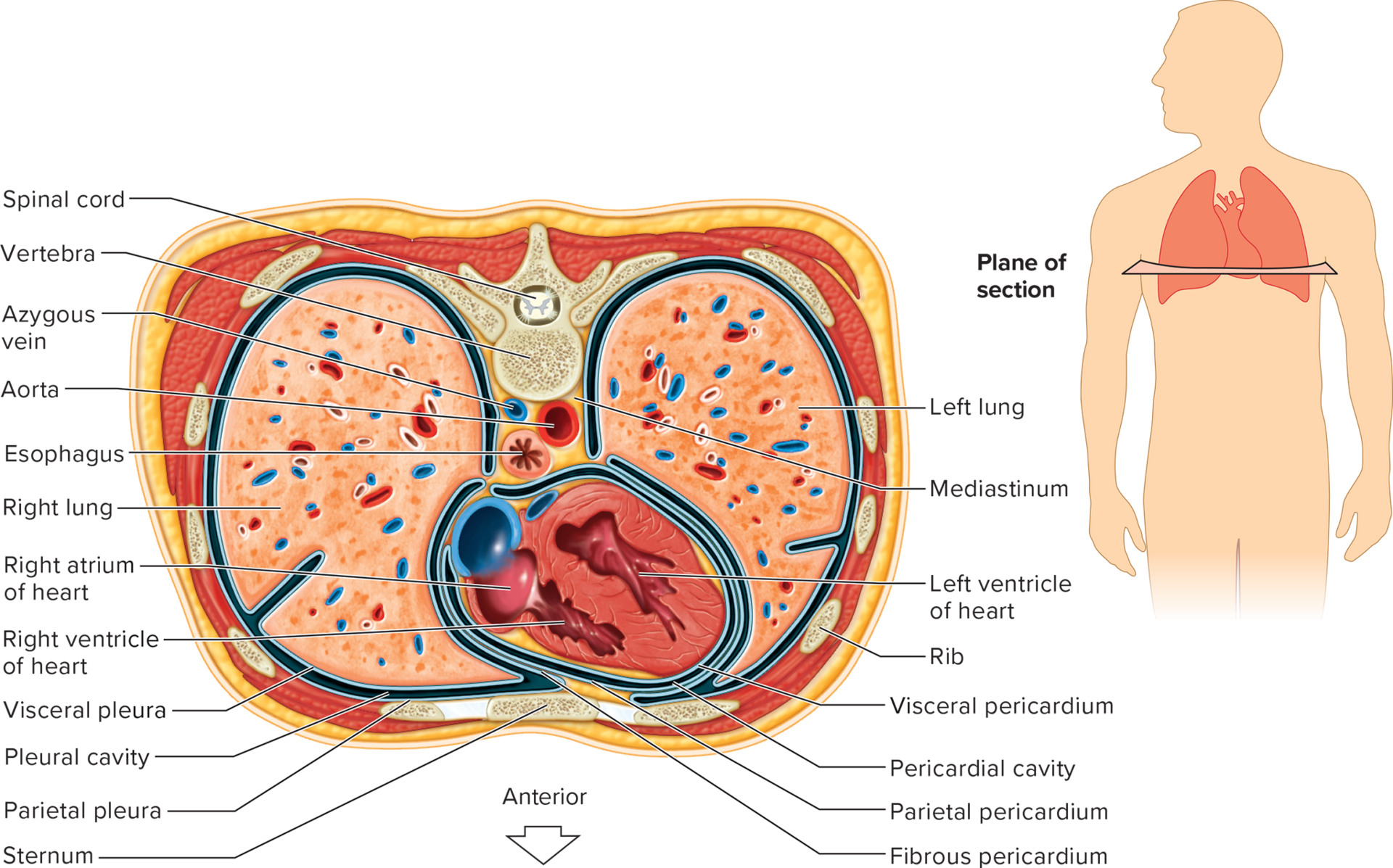
serous membrane: visceral layer
Inner layer that covers the organs within the cavity.
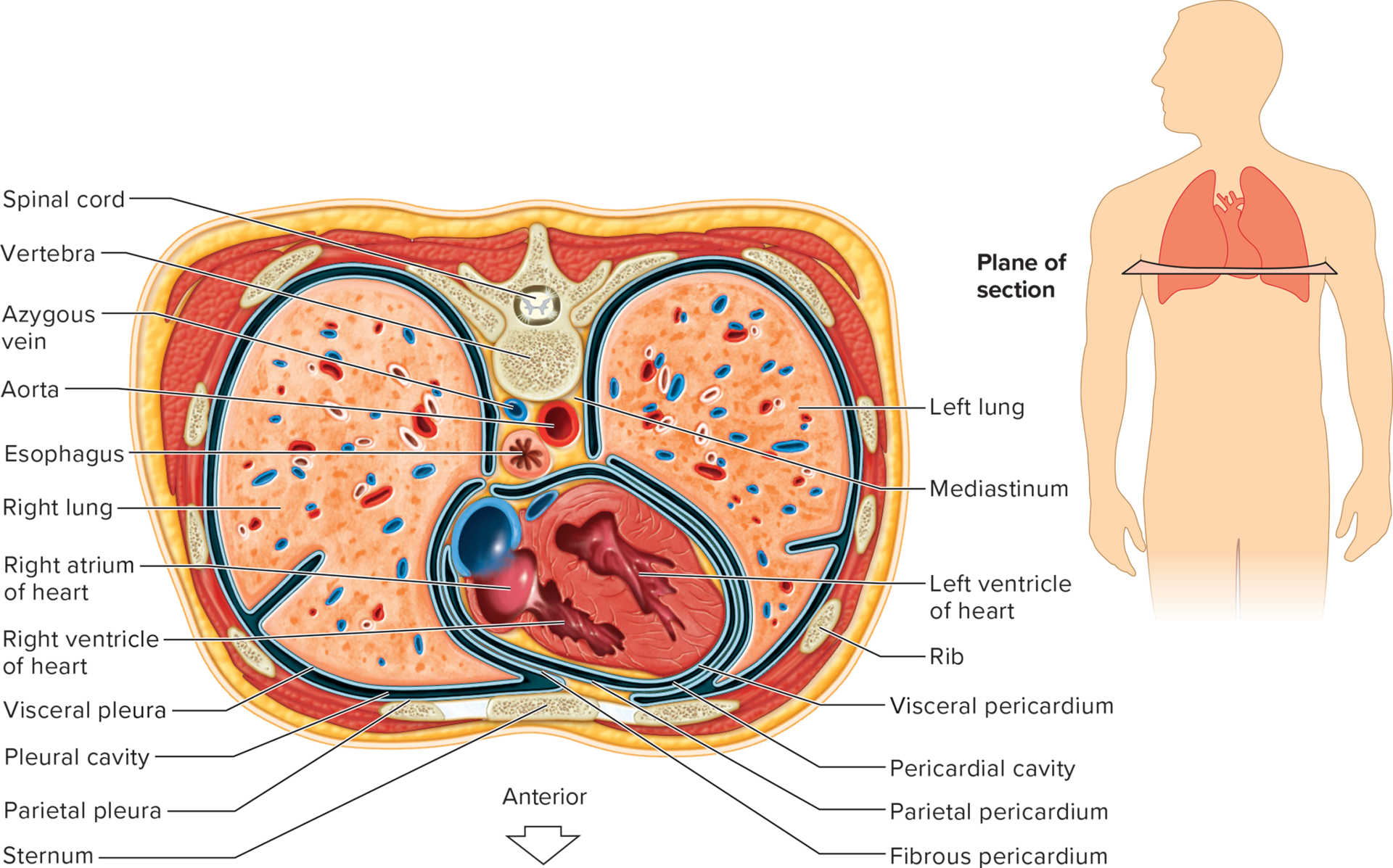
pleural membrane
Serous membrane that encloses the lungs and lines the chest wall.
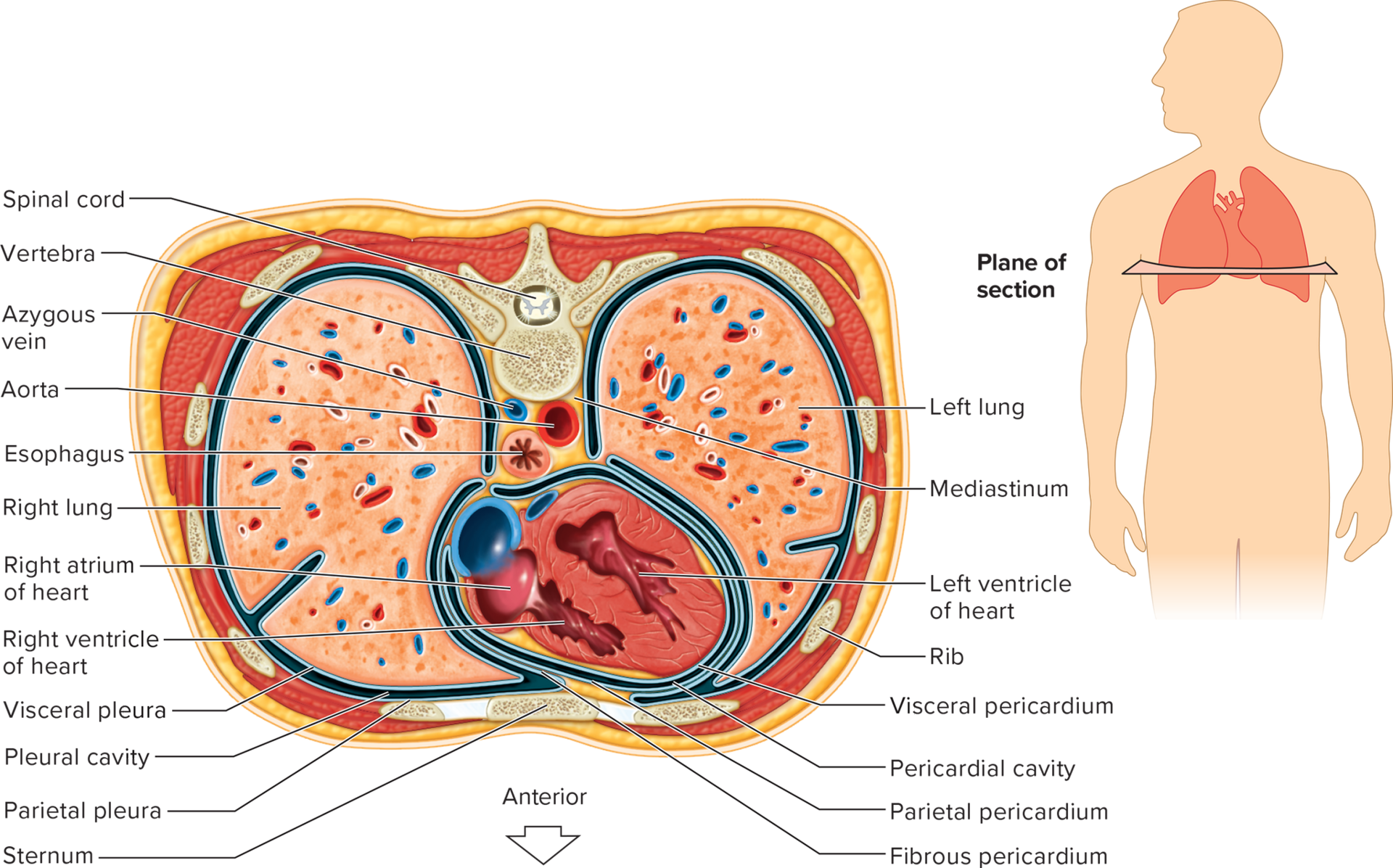
pericardial membrane
Connective tissue surrounding the heart comprised of two layers.
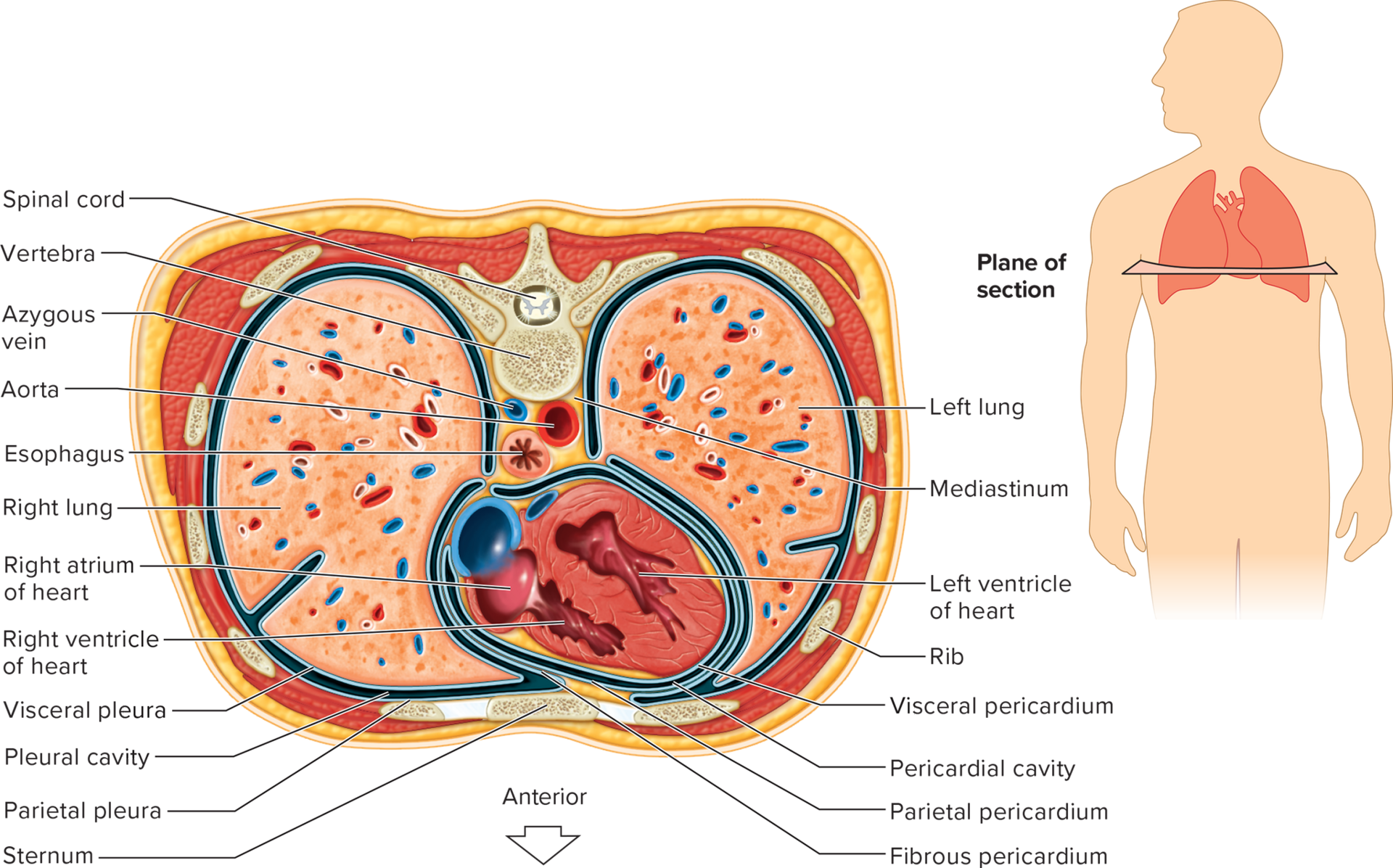
peritoneal membranes
connective tissue lining the abdominal cavity comprised of two layers.
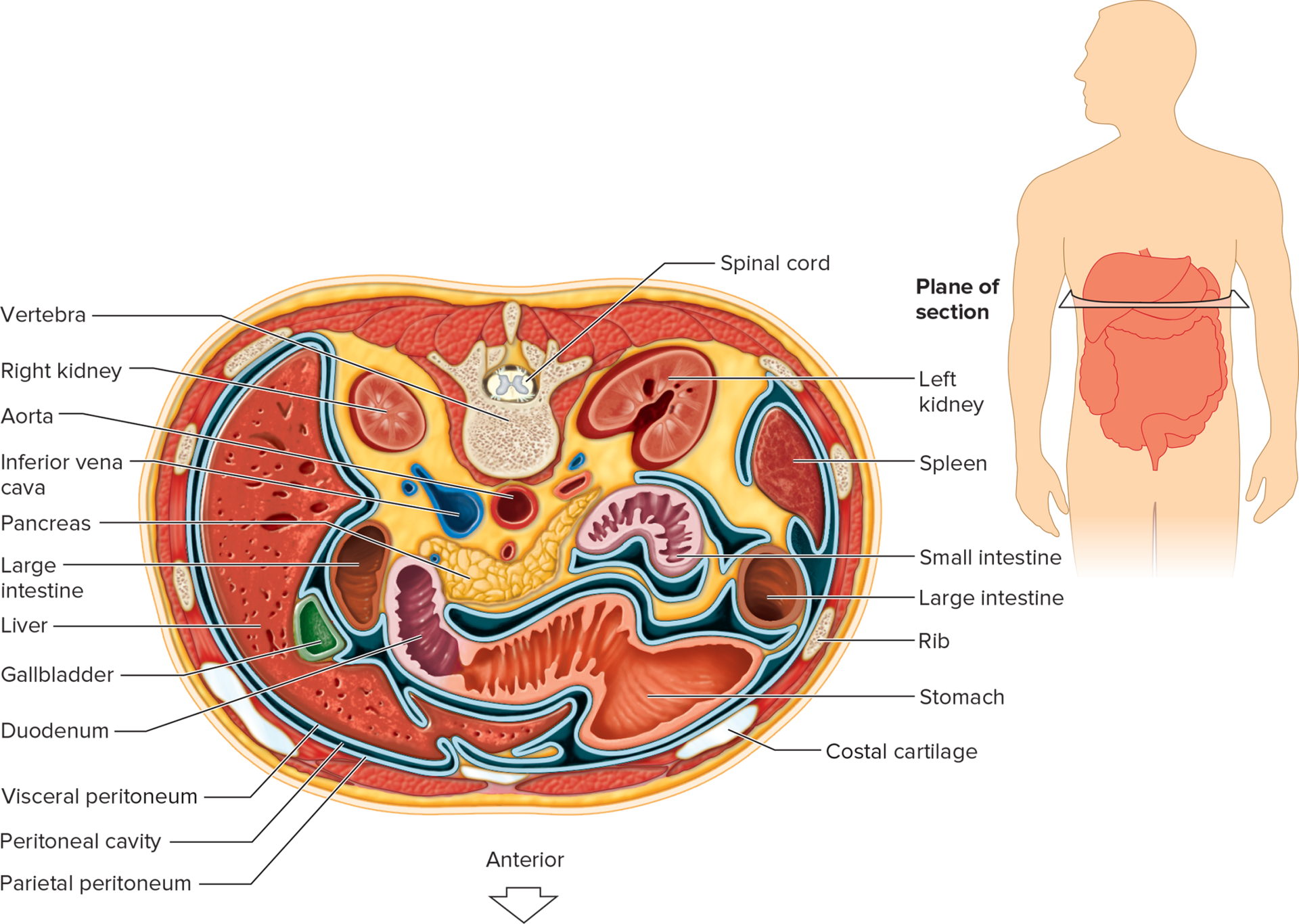
integumentary system
Pertaining to the skin and its accessory organs. EX: hair, nails, sweat glands, sebaceous glands.
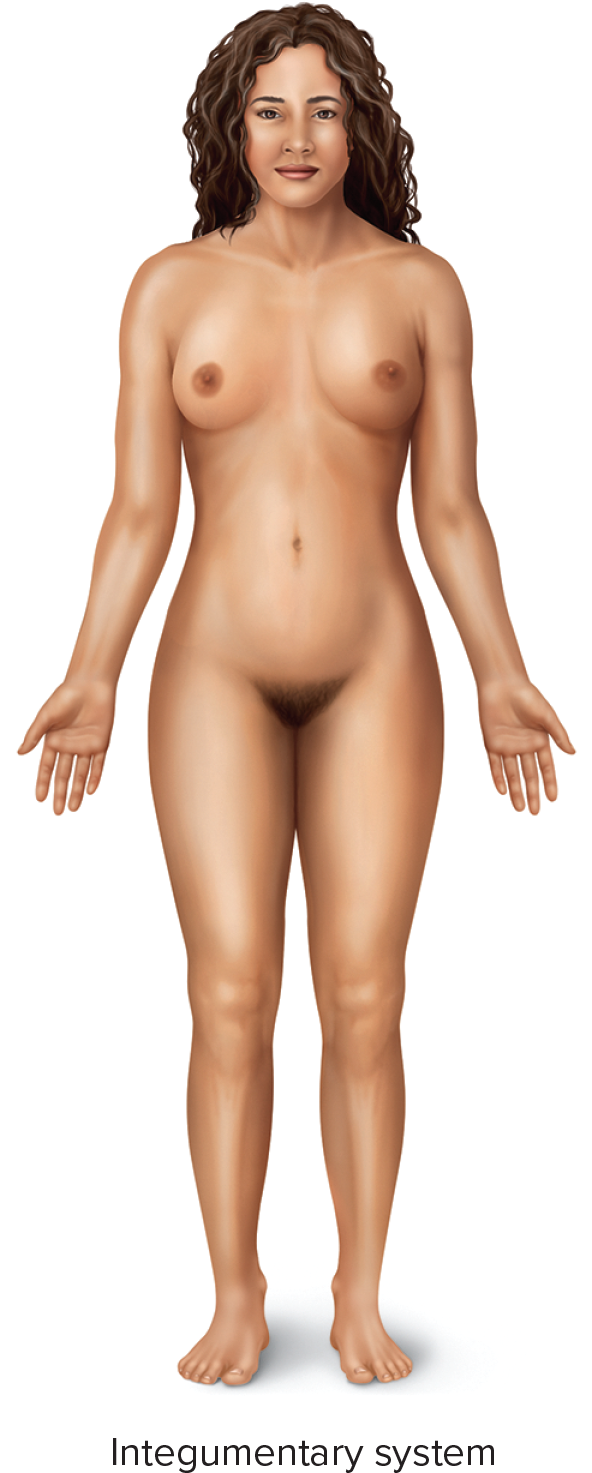
skeletal system
Organ system consisting of the bones, and the ligaments and cartilages that hold them together.
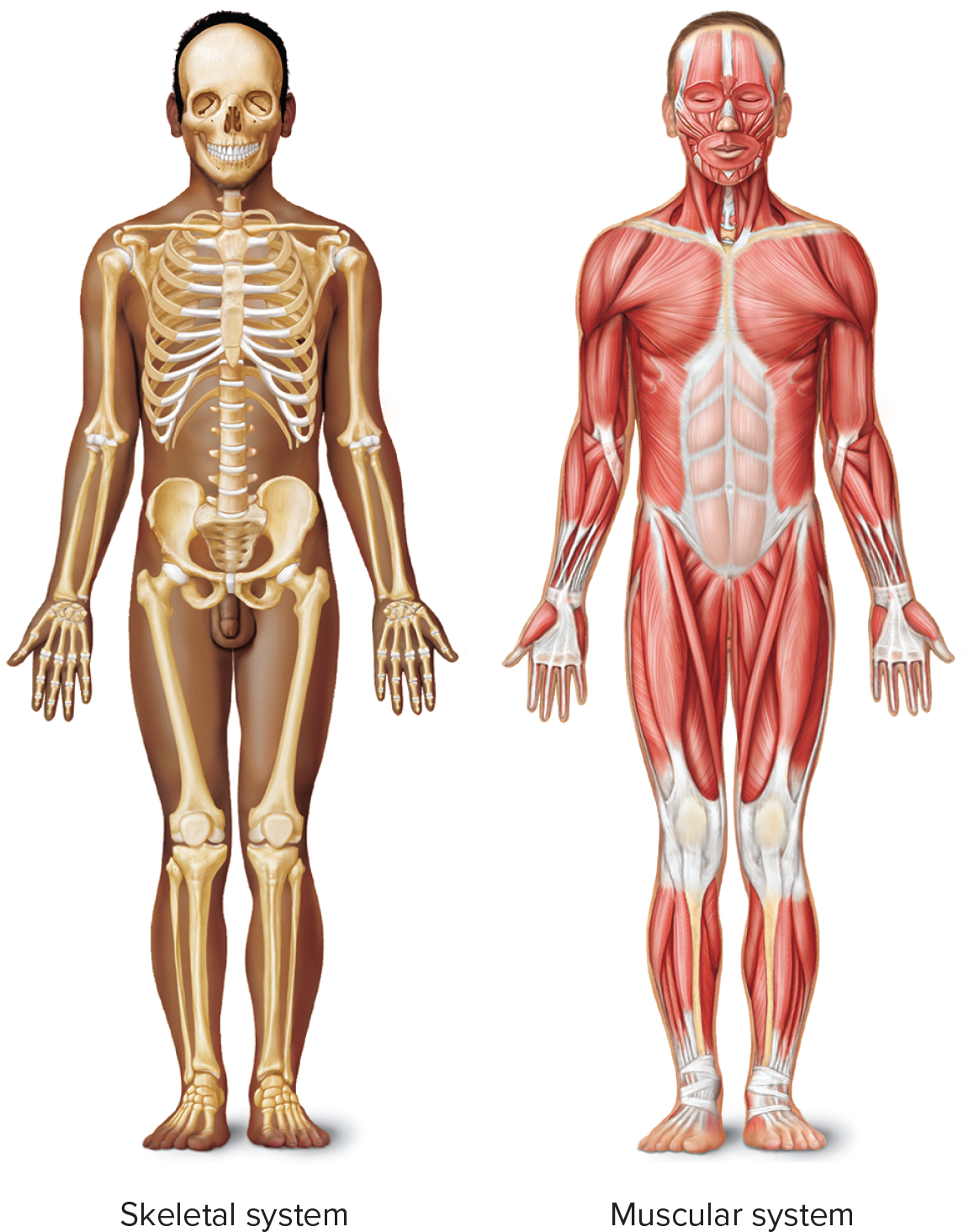
muscular system
Organ system consisting of the skeletal muscles and associated connective tissue.
nervous system
Organ system consisting of the brain, spinal cord, and nerves.
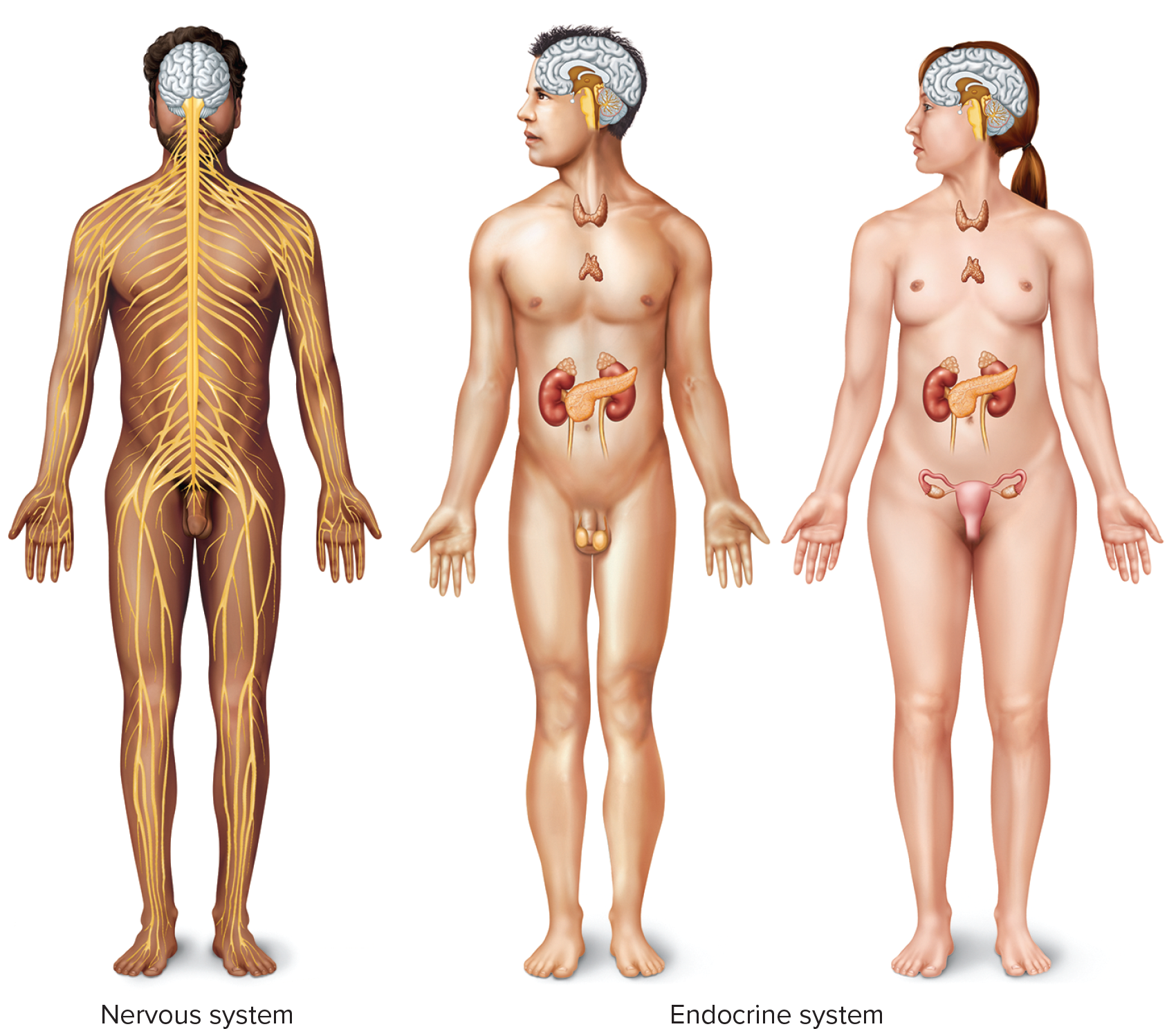
endocrine system
Organ system that includes all the glands that secrete hormones into the blood.
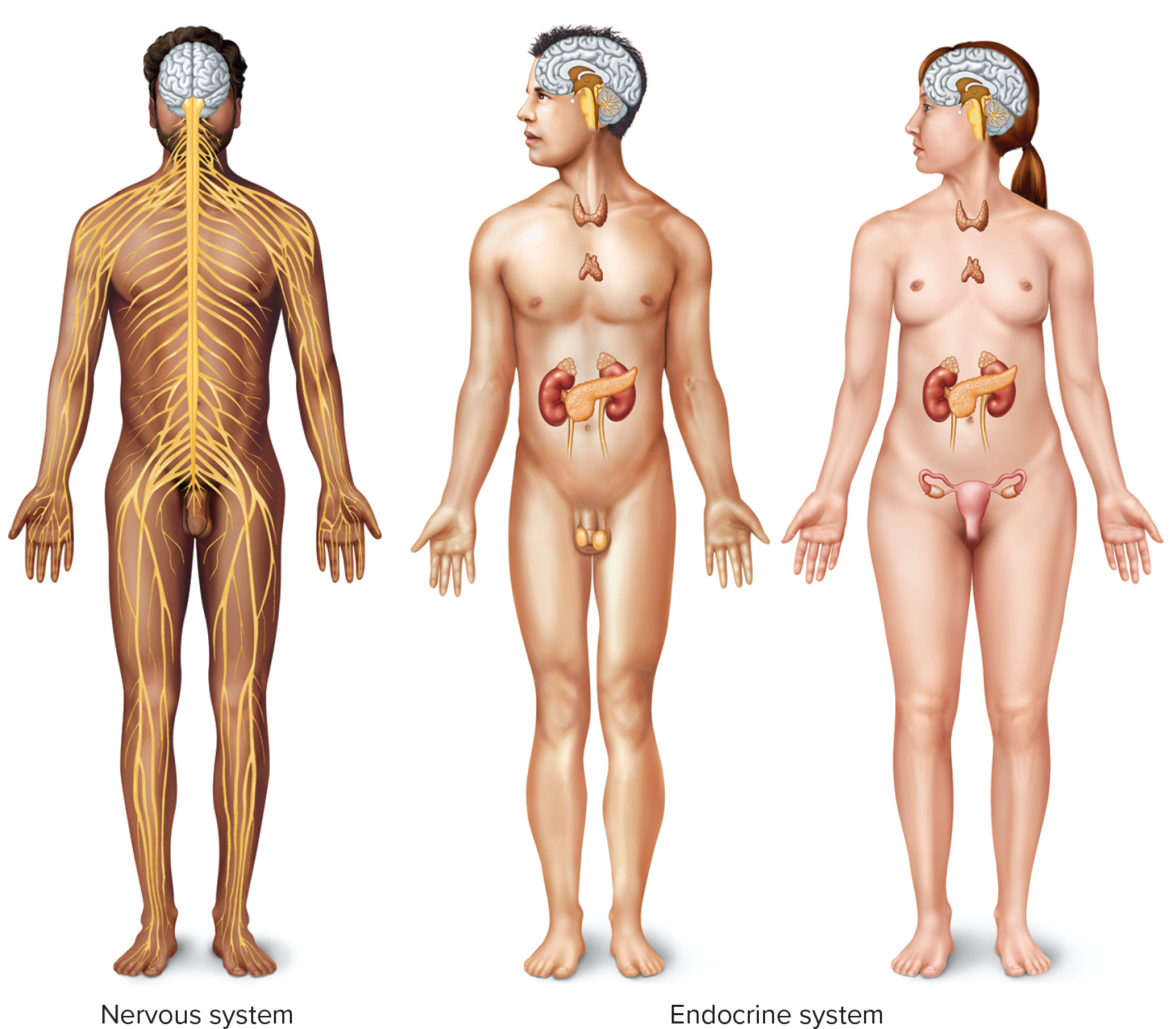
cardiovascular system
Organ system consisting of the heart and blood vessels.
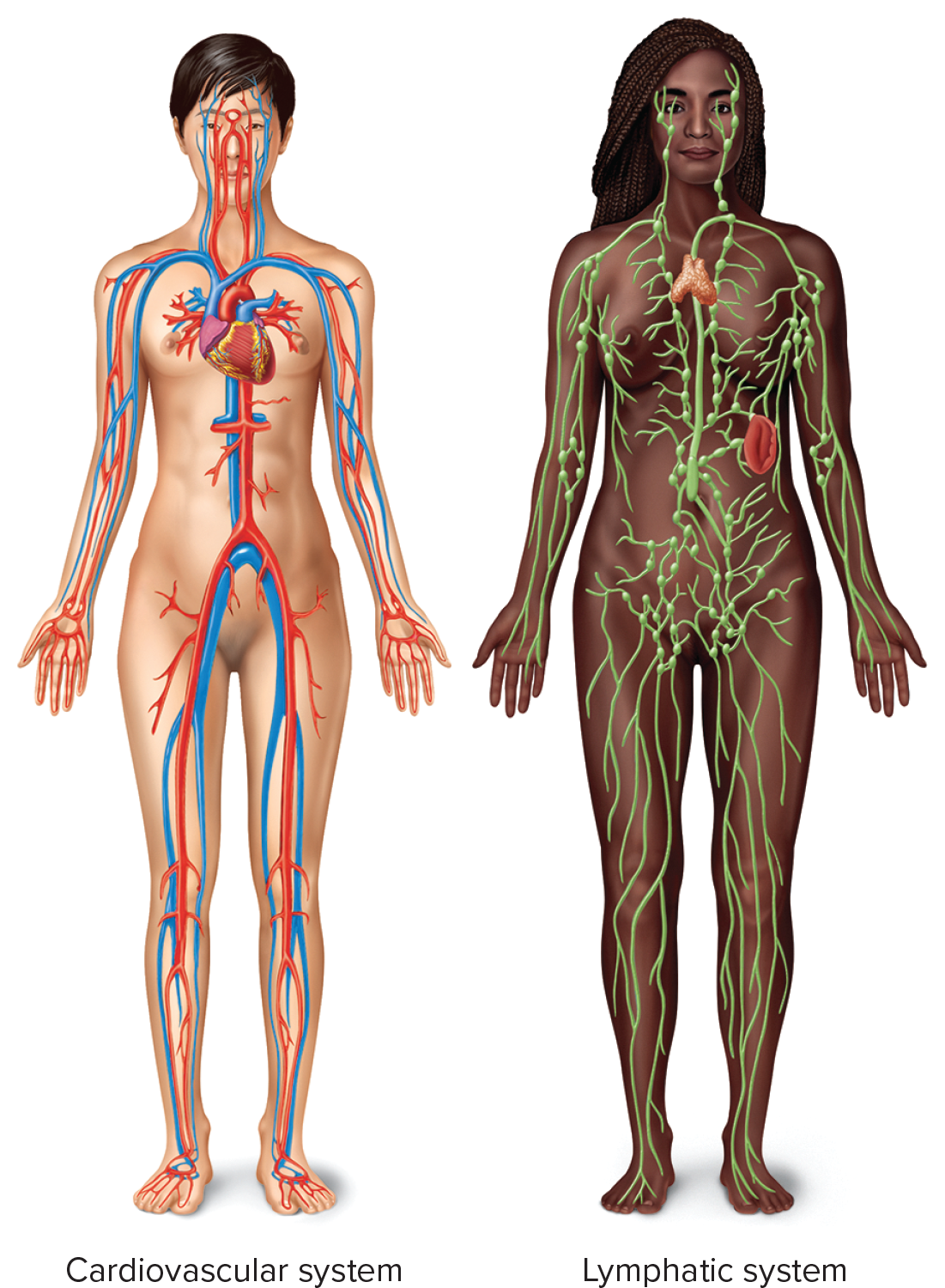
Lymphatic system
The organs and tissues associated with immunity and fluid balance.,
digestive system
Organ system that includes the mouth, tongue, pharynx, salivary glands, esophagus, stomach, liver, pancreas, gallbladder, small intestine, and large intestine.
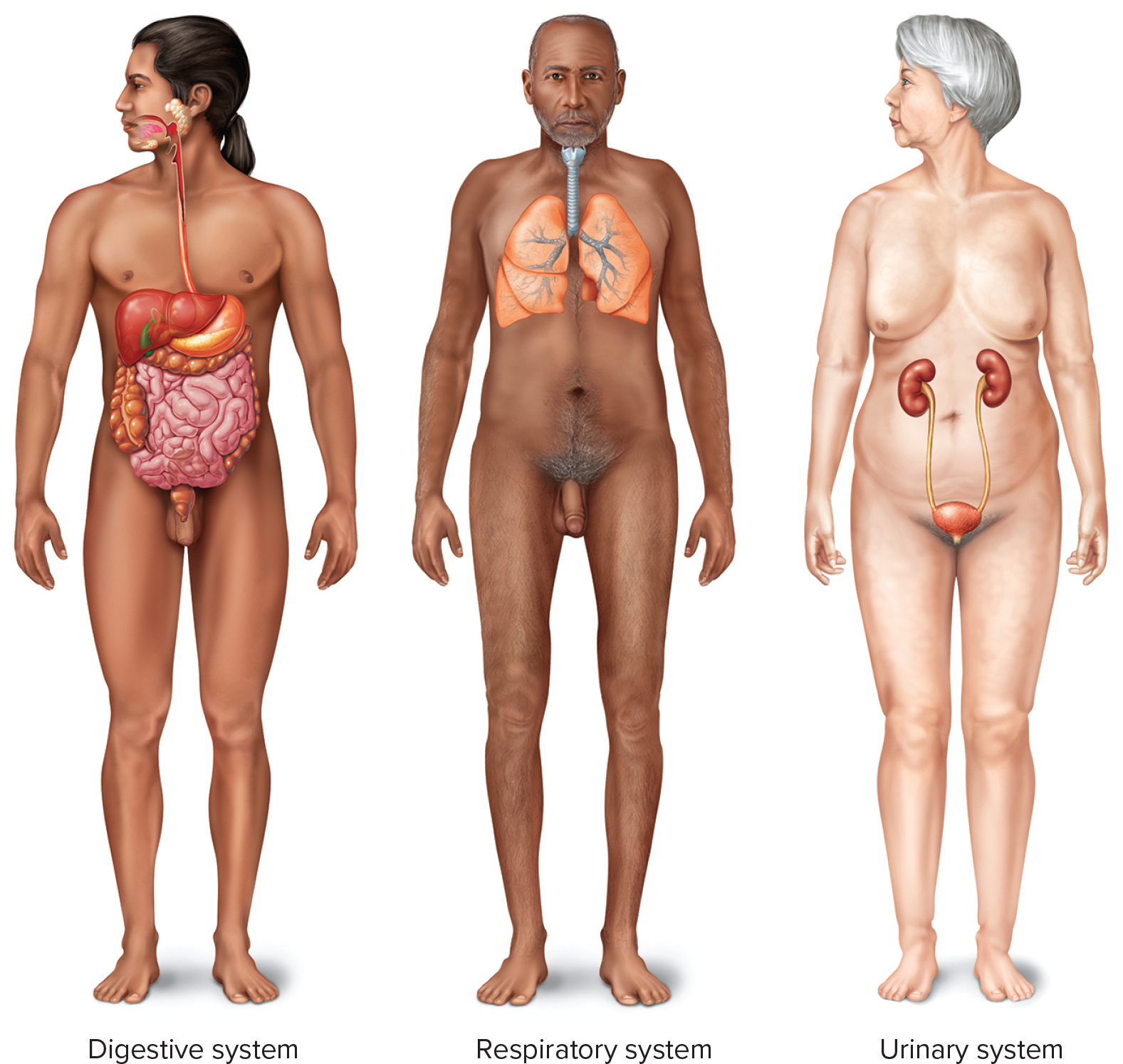
respiratory system
organ system consisting of the nasal cavity, pharynx, larynx, trachea, bronchi, and lungs. It obtains oxygen and removes carbon dioxide.
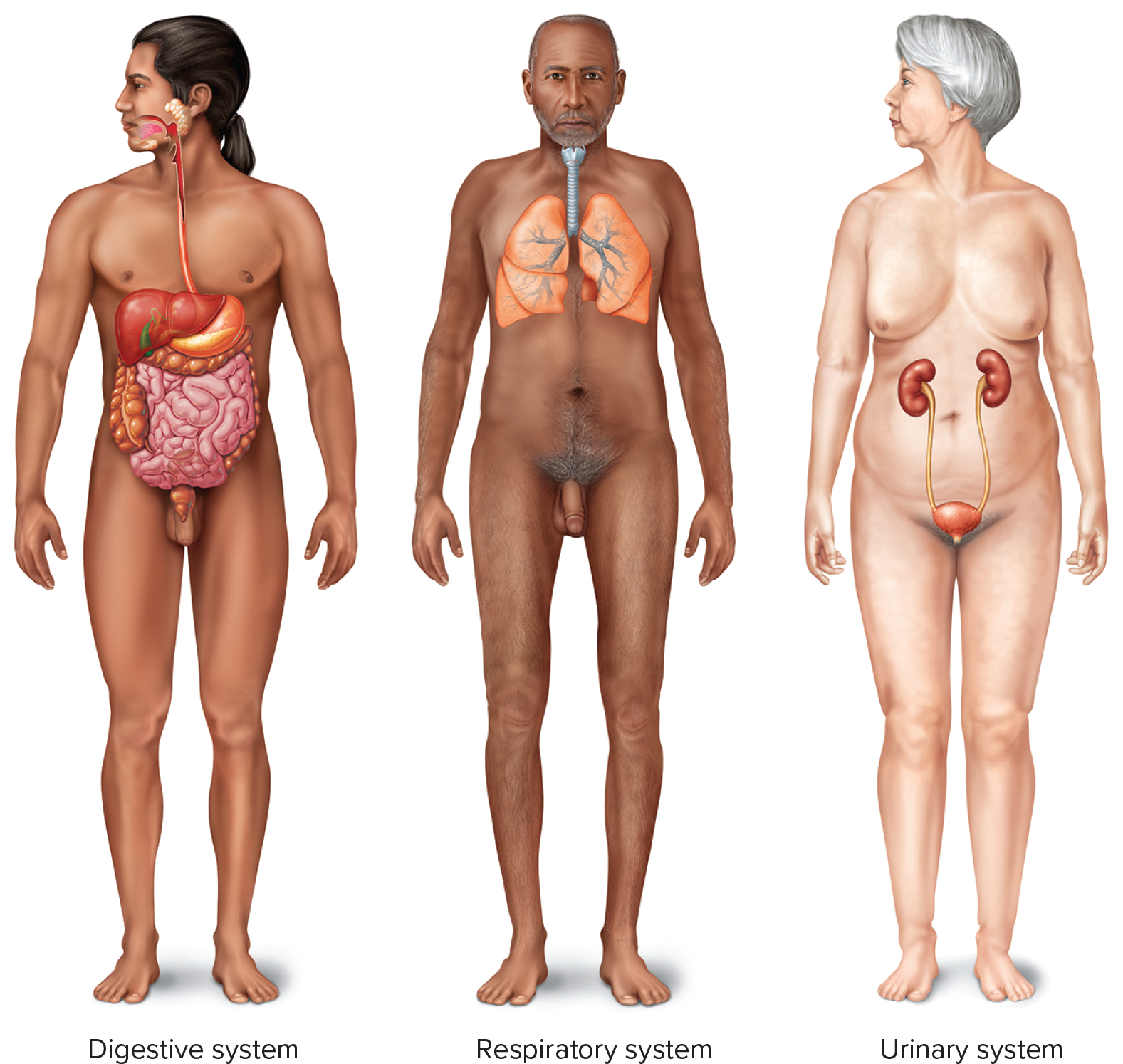
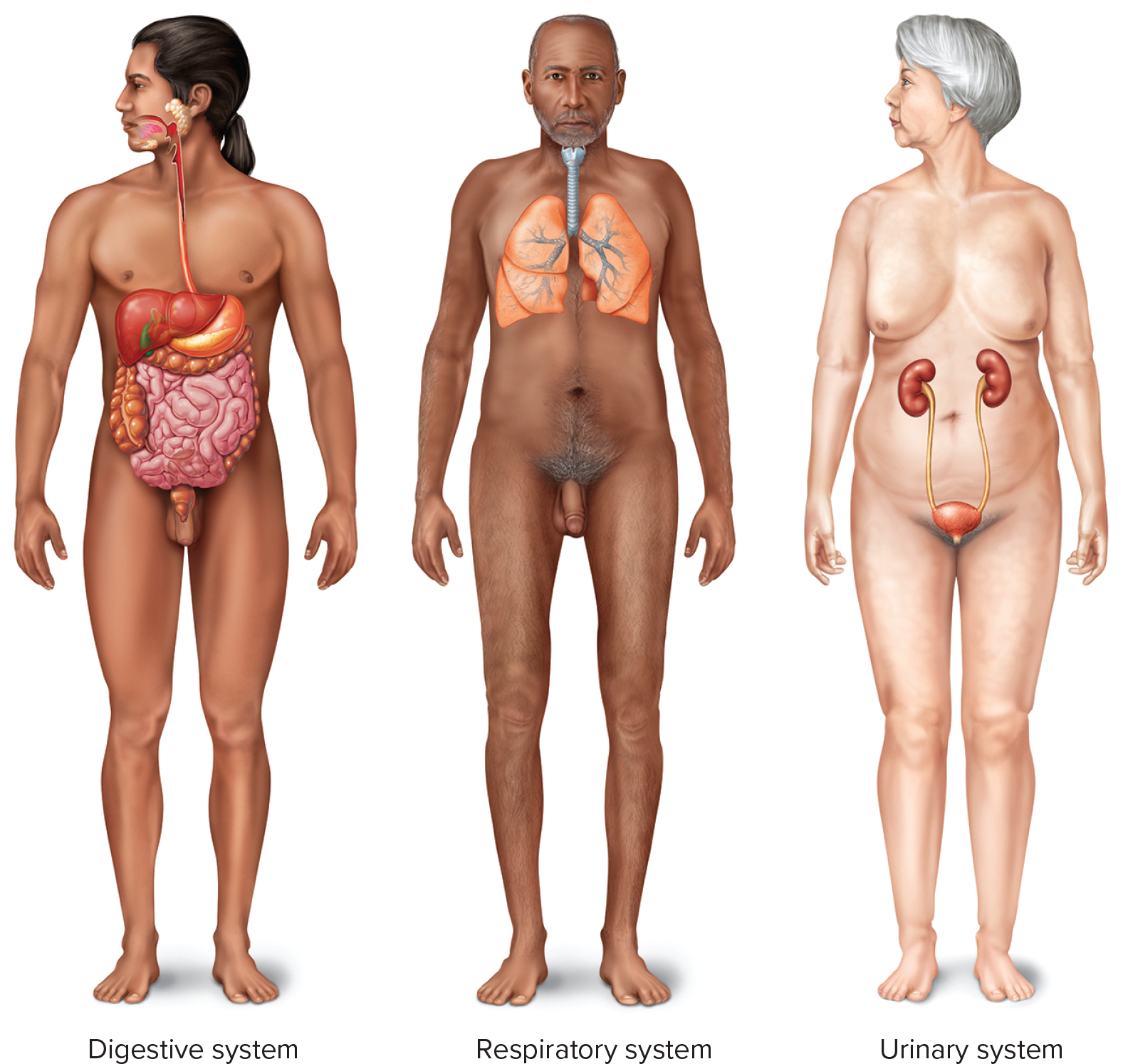
urinary system
Body system that consists of kidneys, ureters, urinary bladder, and urethra; filters substances from the blood; forms, stores, and excretes urine.
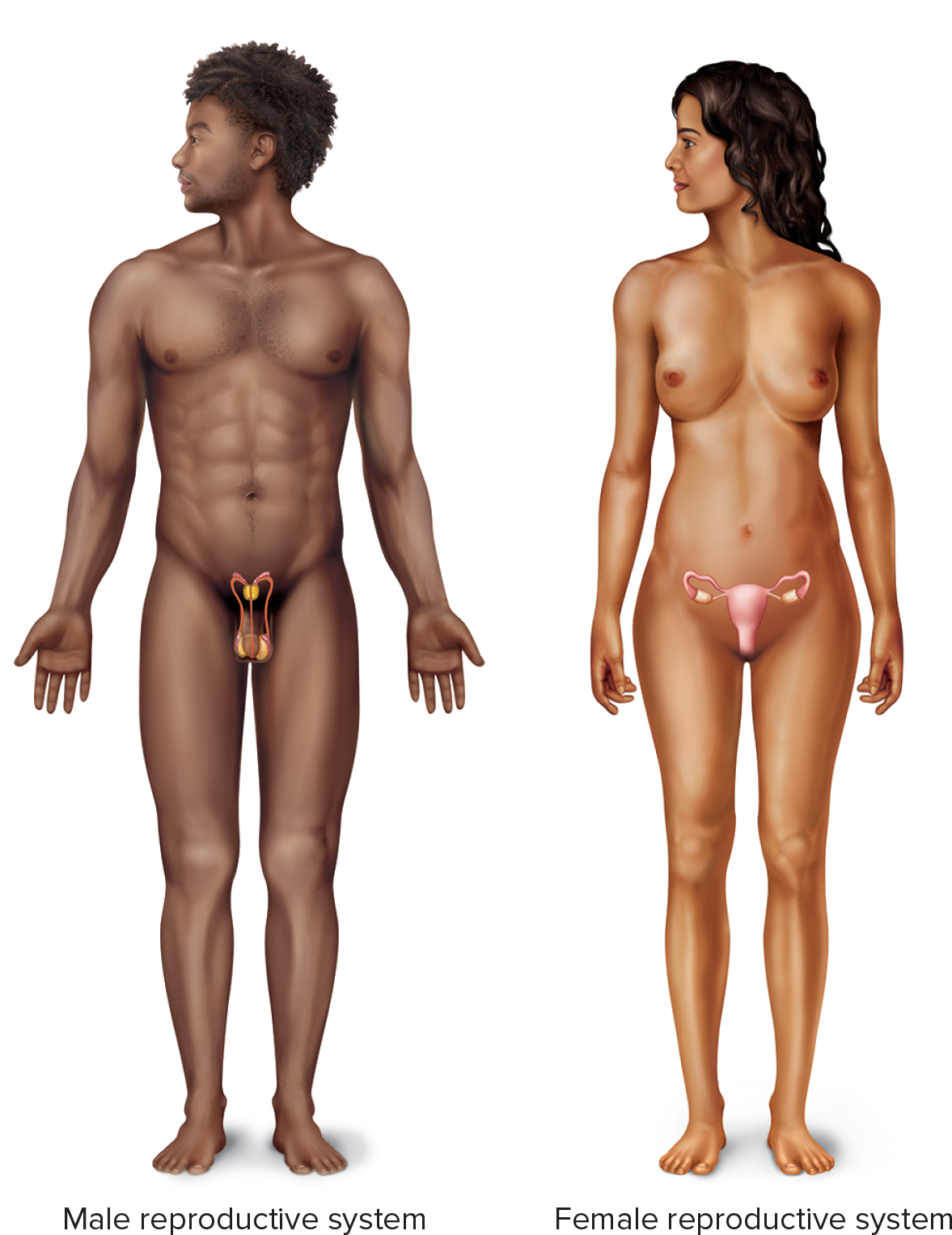
reproductive system
Body systems that most commonly consist of male reproductive organs or female productive organs for the primary purpose of producing offspring. The female system consists of the ovaries, uterine tubes, uterus, vagina, clitoris, and vulva. The male system consists of the scrotum, testes, epididymes, ductus deferentia, seminal vesicles, prostate gland, bulbourethral gland, penis, and urethra.
superior
Above another part
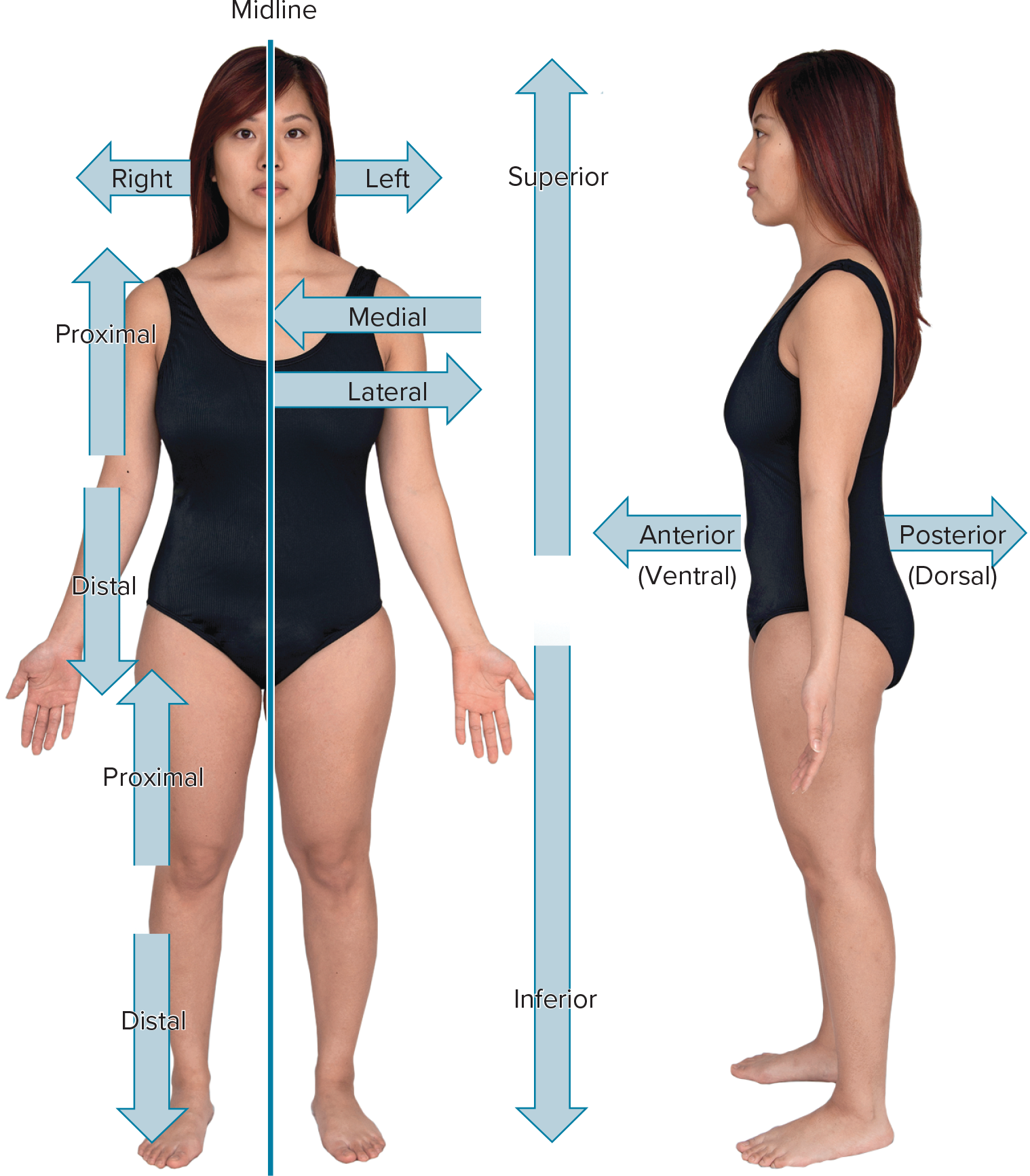
inferior
Below another part.
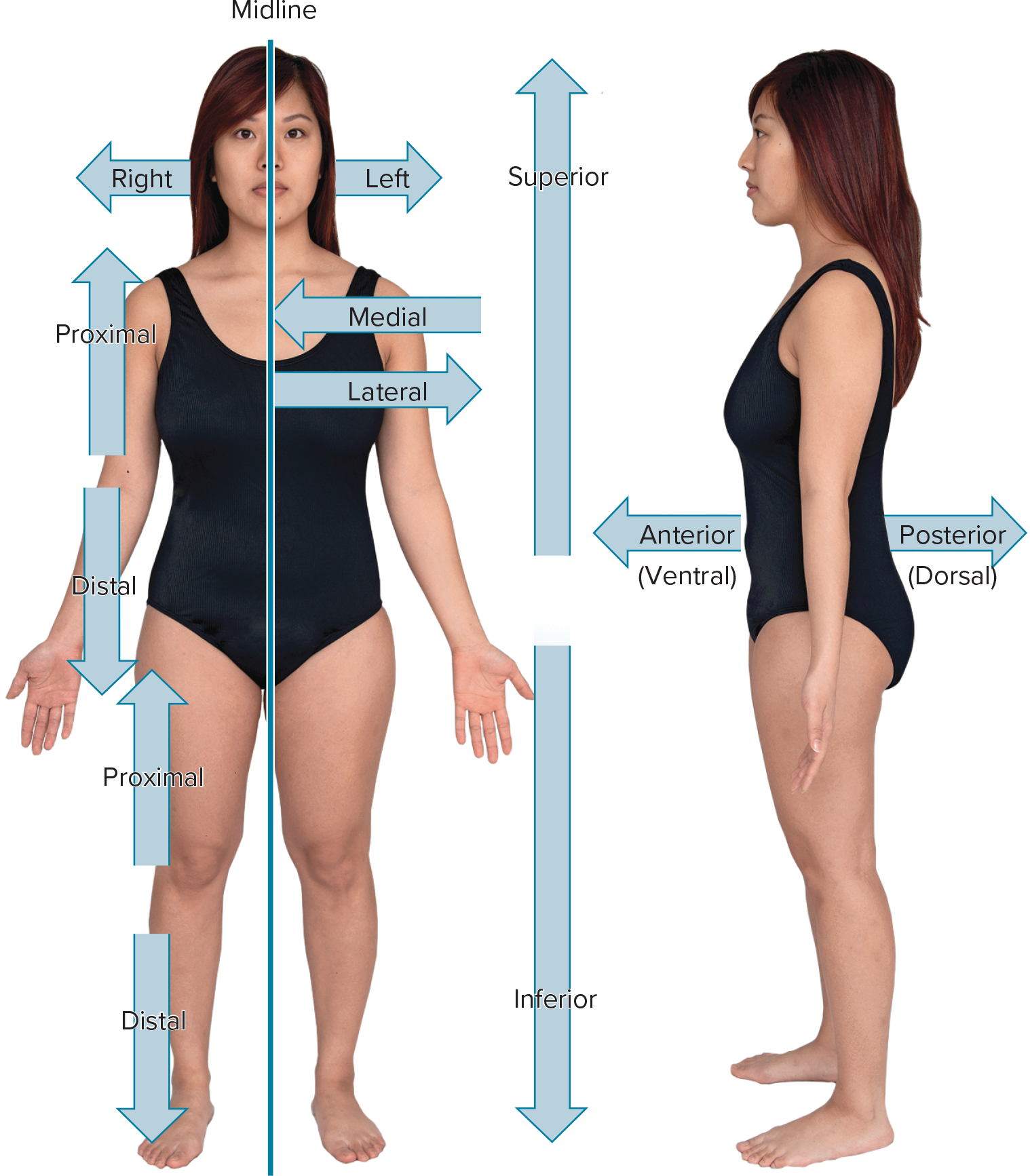
anterior
Toward the front.
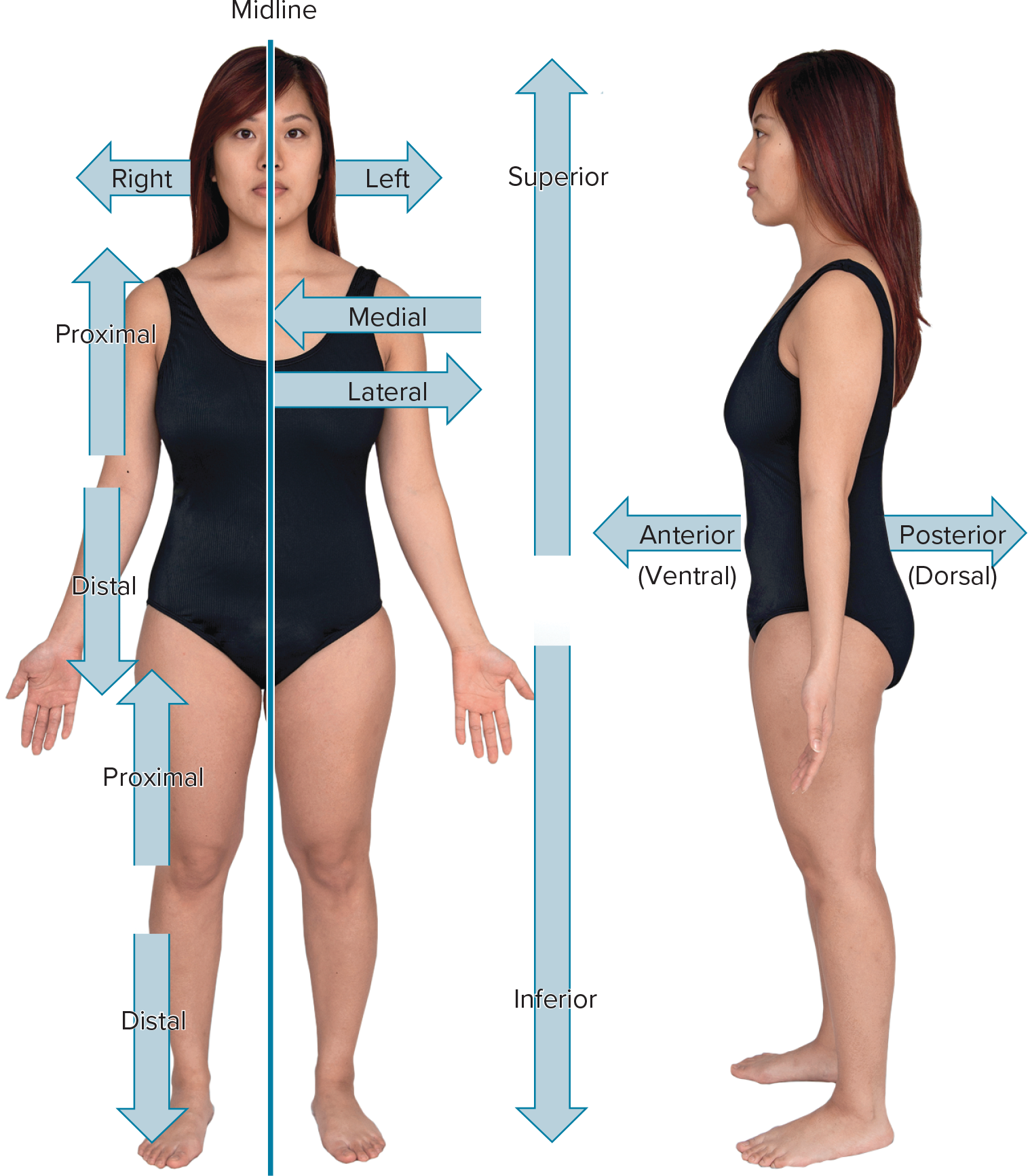
posterior
Toward the back.
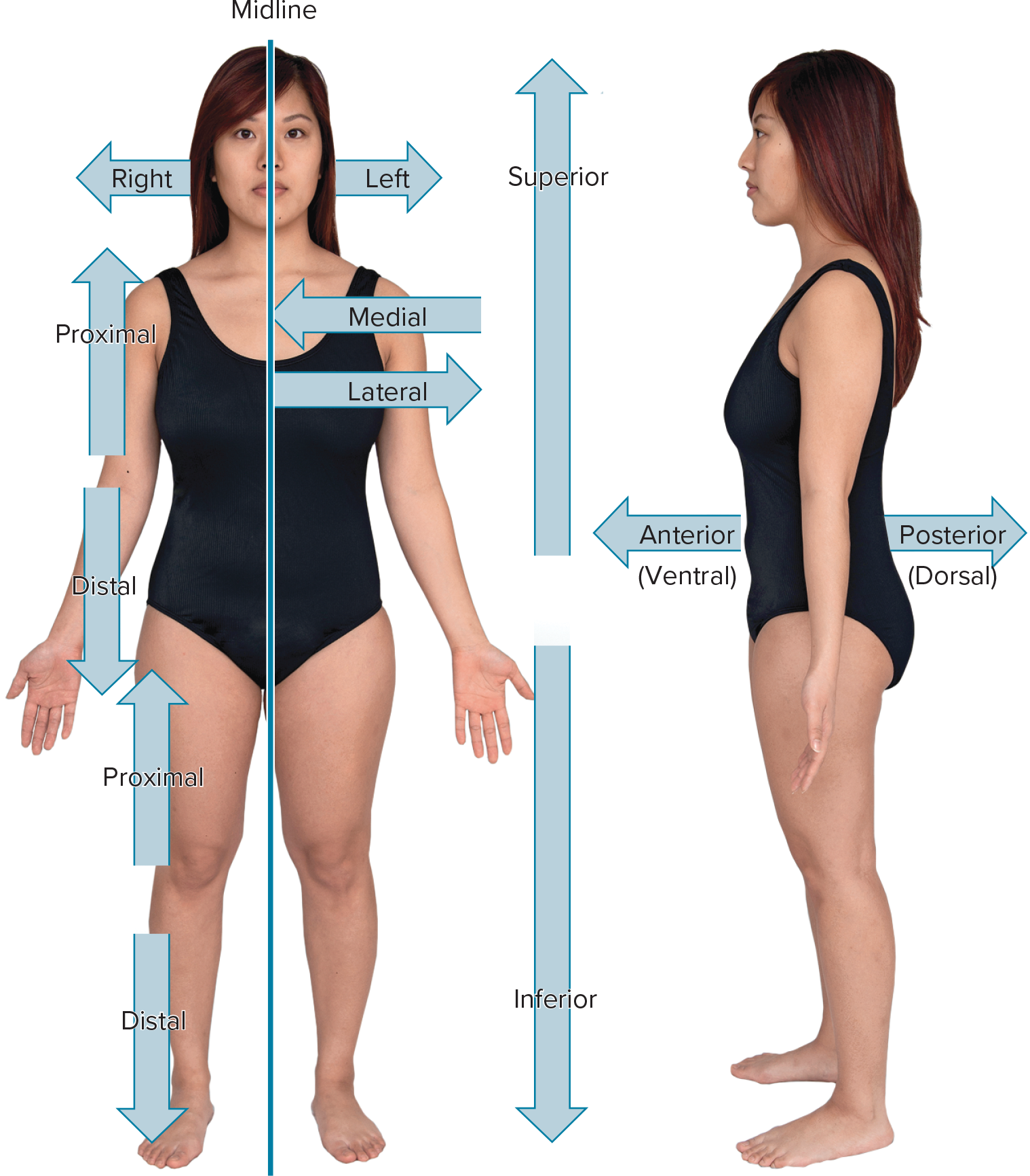
medial
Closer to midline than another part.
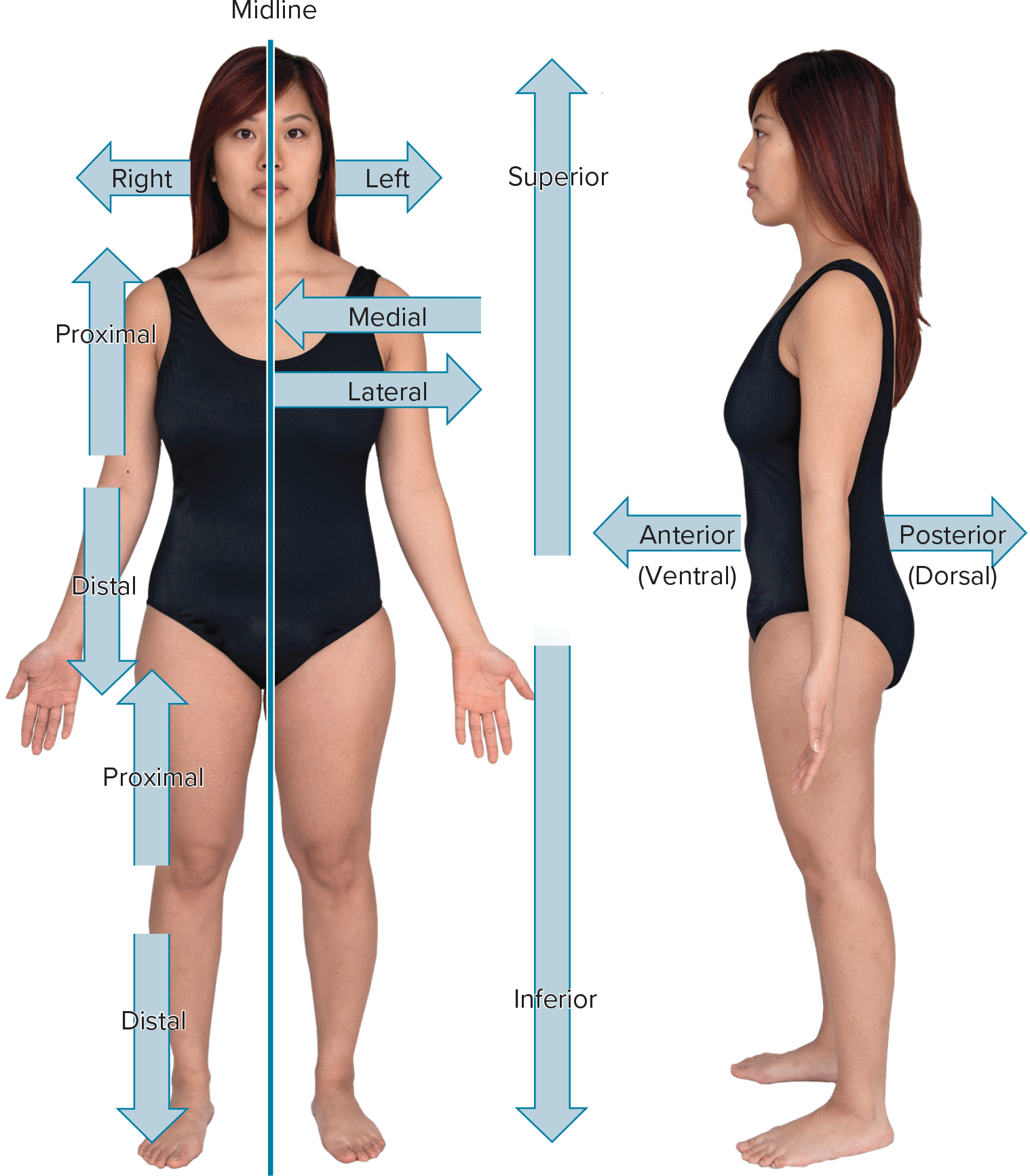
lateral
Towards the side, away from midline.
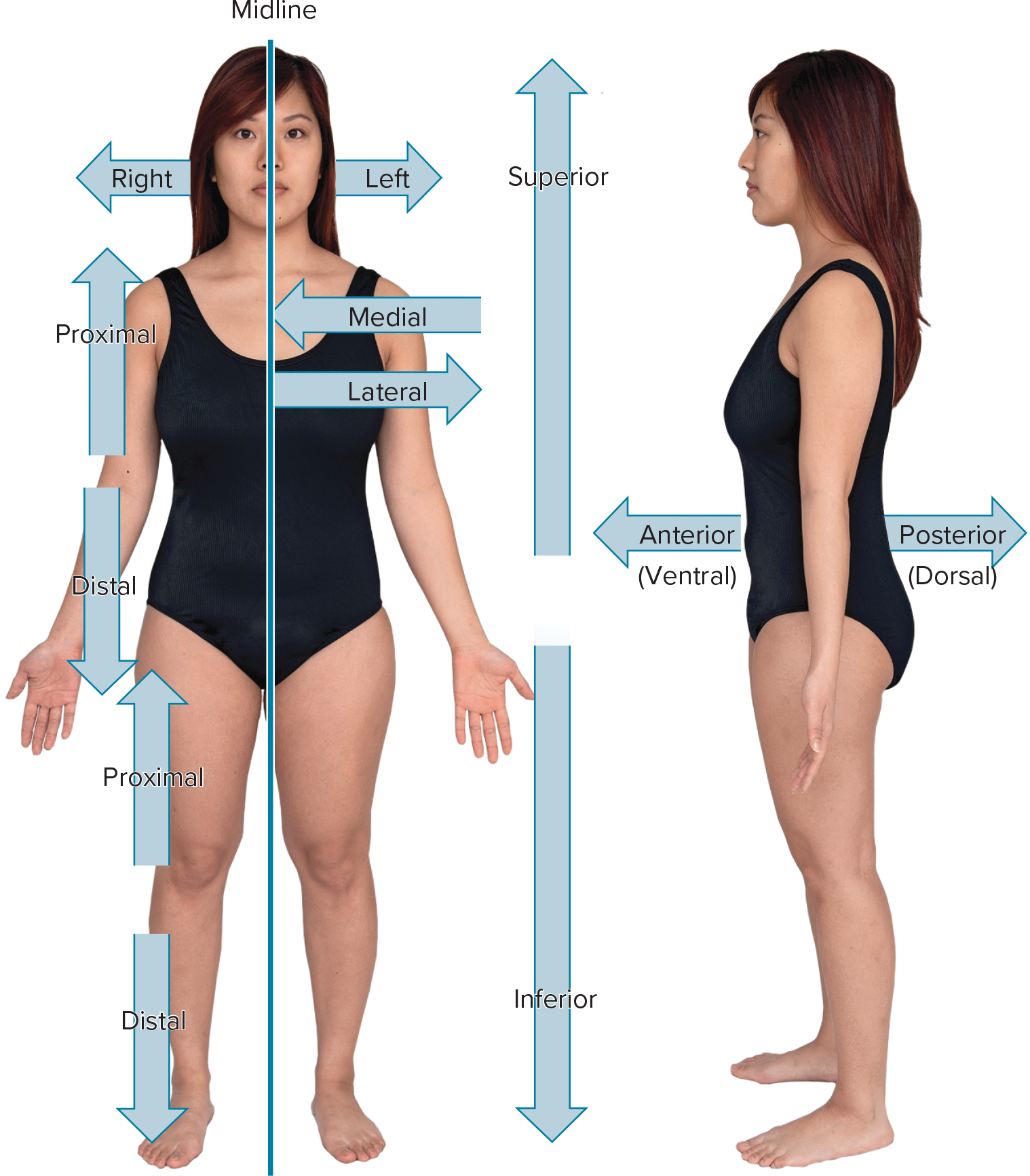
bilateral
Paired structures on each side of the midline EX: lungs.
ipsilateral
Structures on the same side of the midline. EX: R lung/R kidney.
contralateral
Structures on the opposite side.
proximal
A part closer to the point of attachment to the trunk than another EX: Elbow is proximal to the wrist.
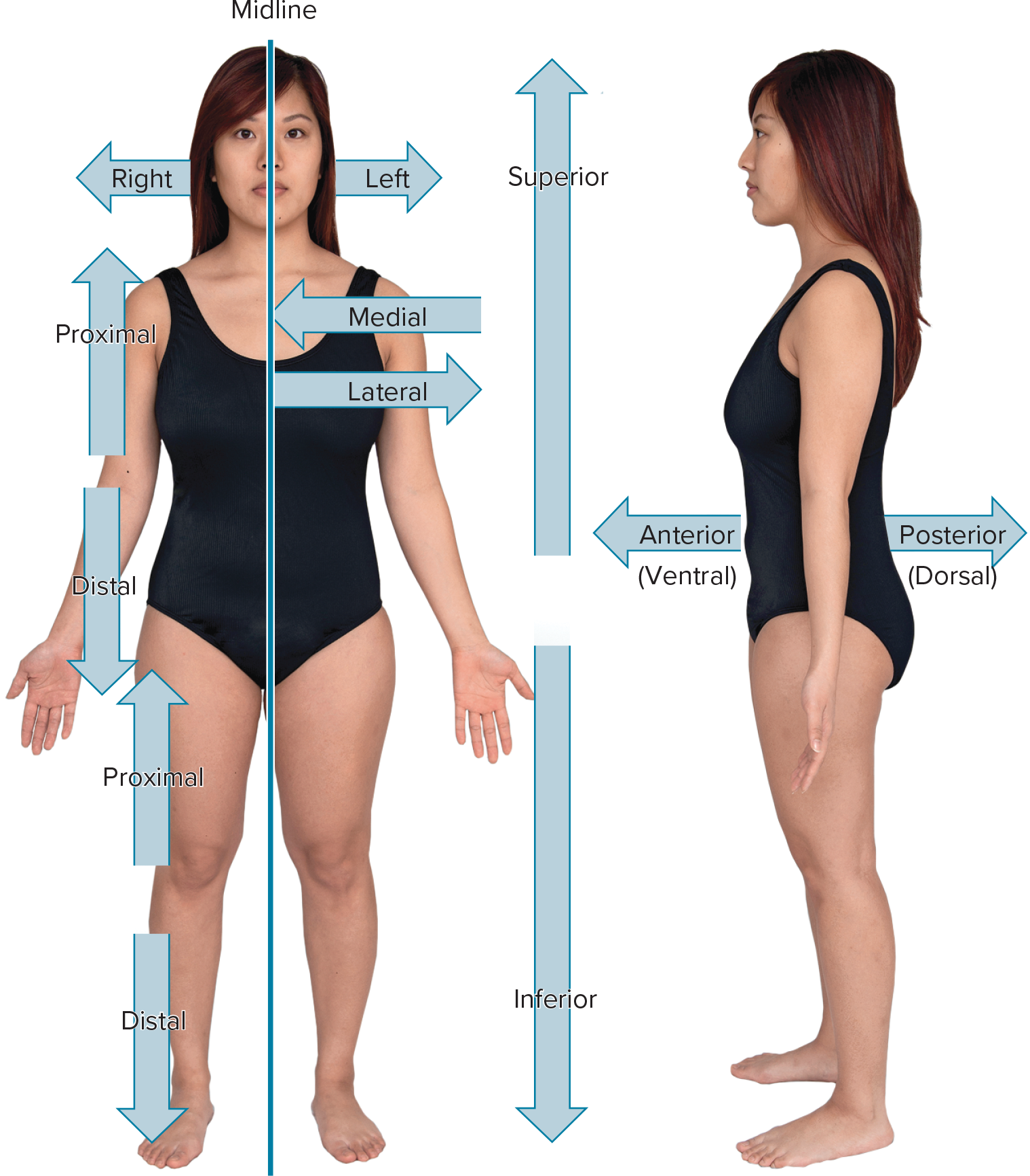
distal
opposite of proximal EX: Wrist is distal to the elbow.
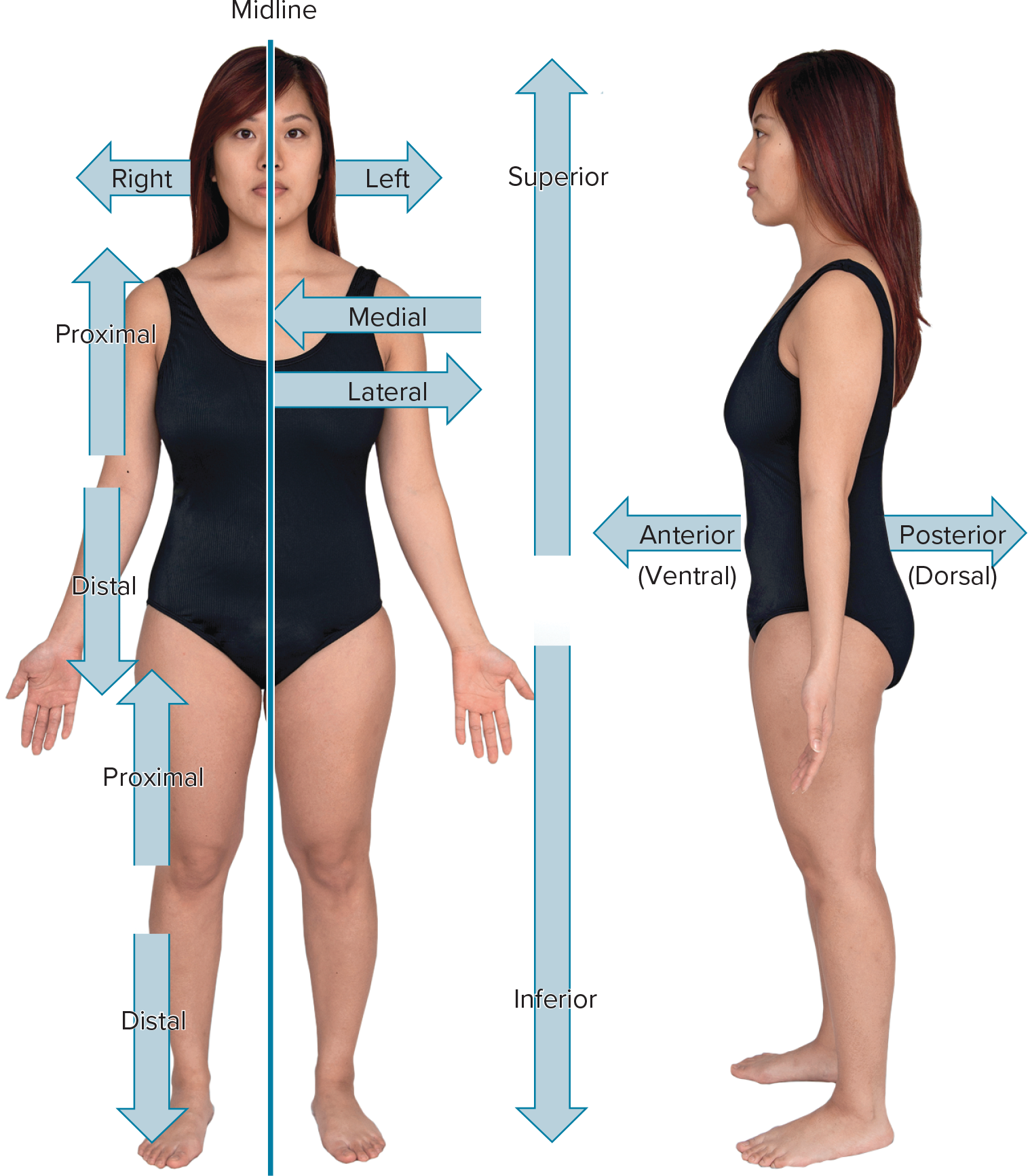
superficial
toward the surface.
deep
more internal parts
sagittal plane
Lengthwise cut that divides the body into left and right portions.
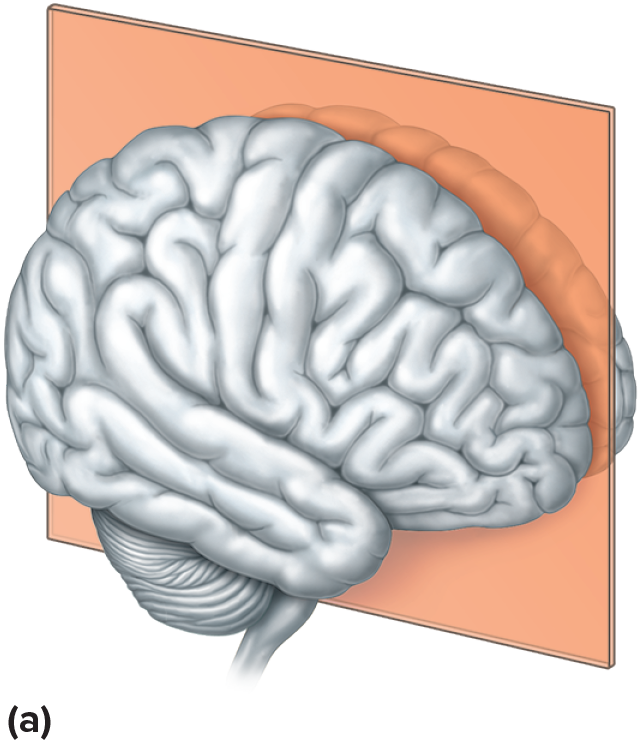
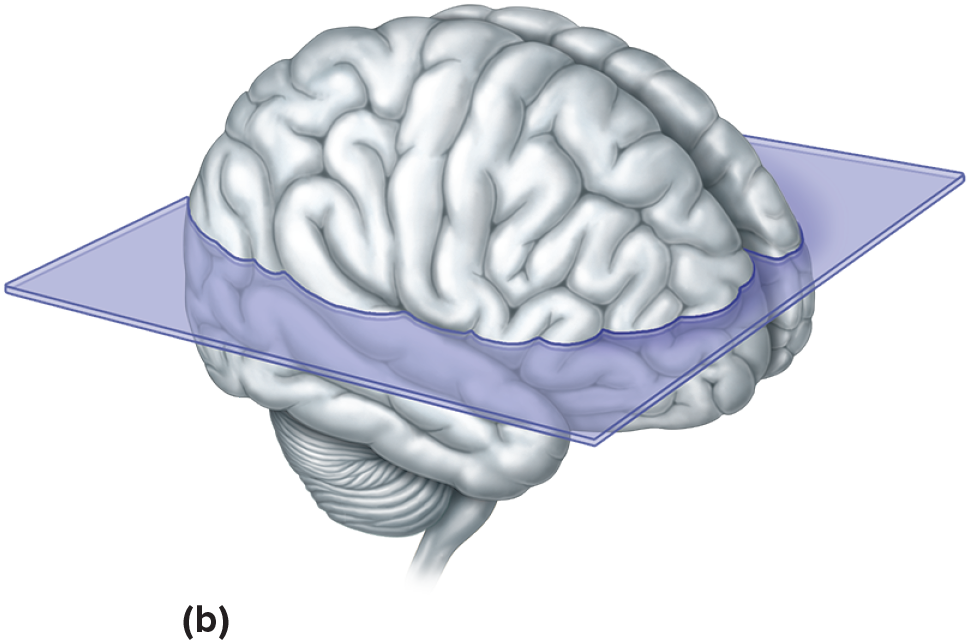
transverse plane
horizontal cute that divides the body into superior and inferior portions.
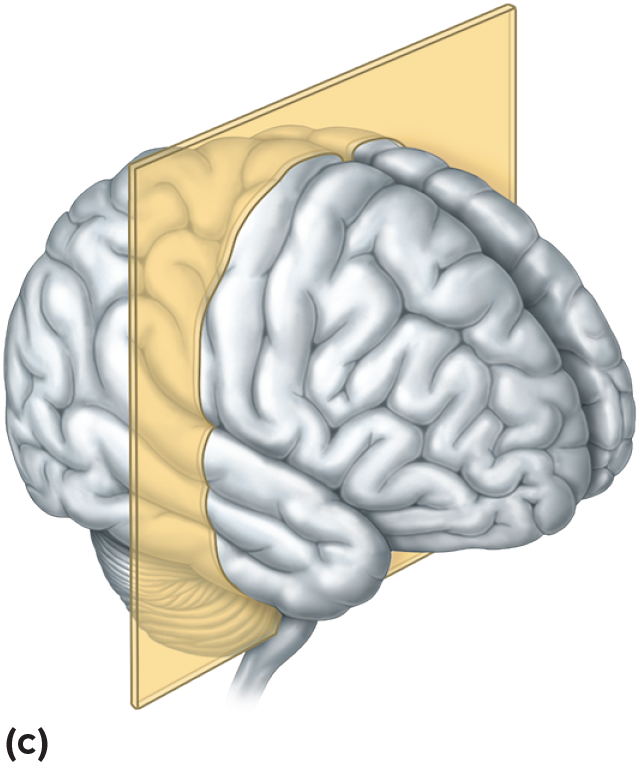
frontal plane
refers to a section that divides the body into anterior and posterior portions.
cross section
A cut across a cylindrical structure.

oblique section
An angular cut of a cylindrical structure.

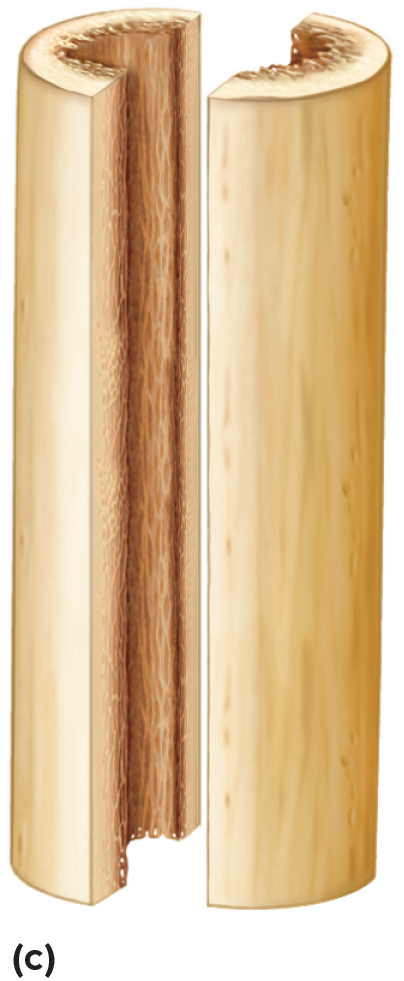
longitudinal section
a lengthwise cut of a cylindrical structure.
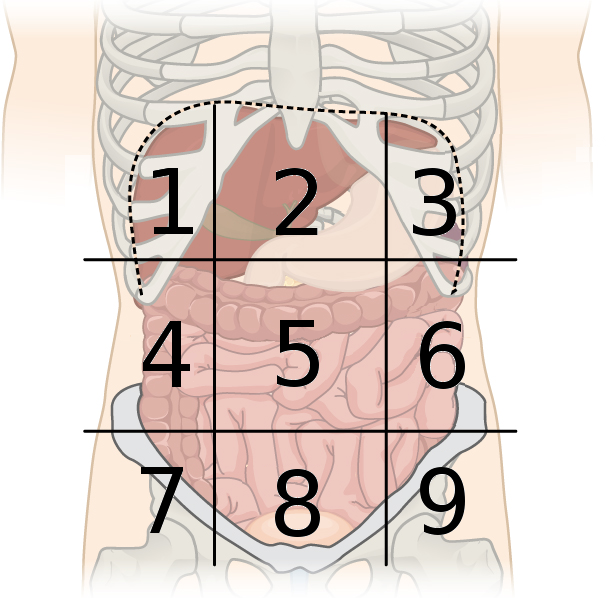
name each region
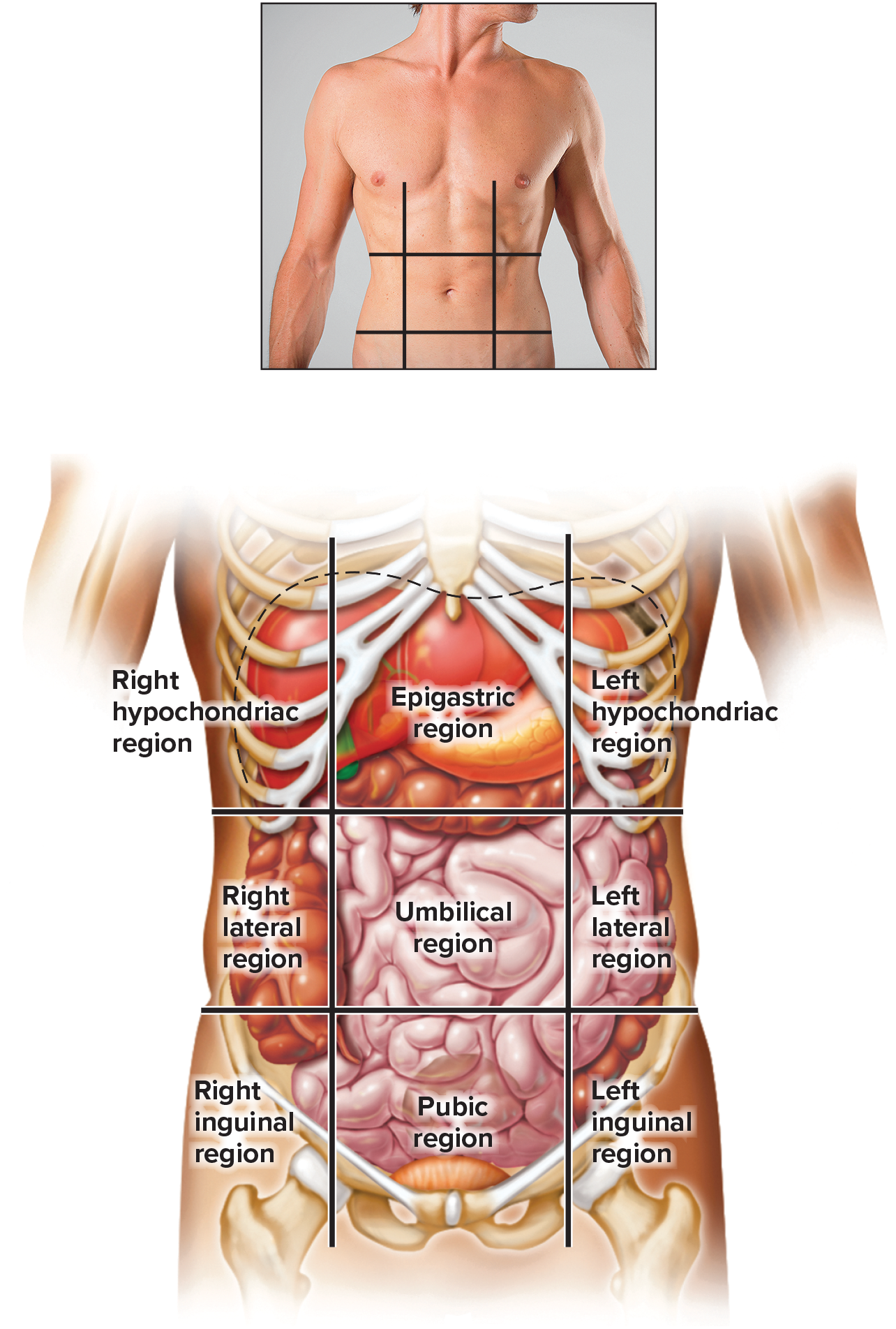
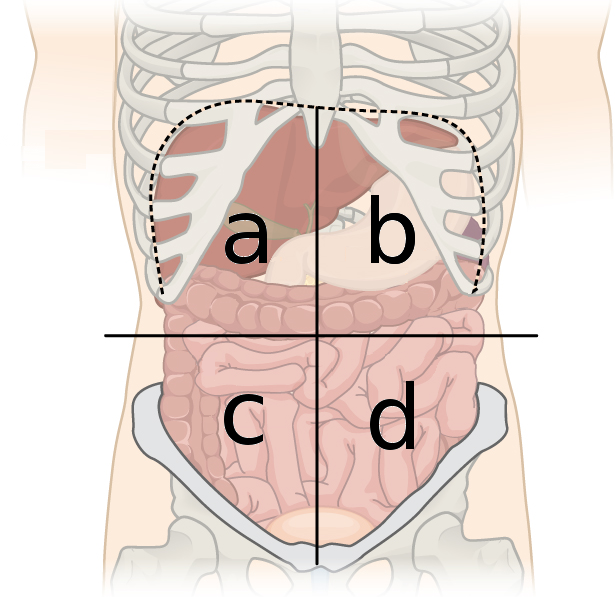
name the four quadrants
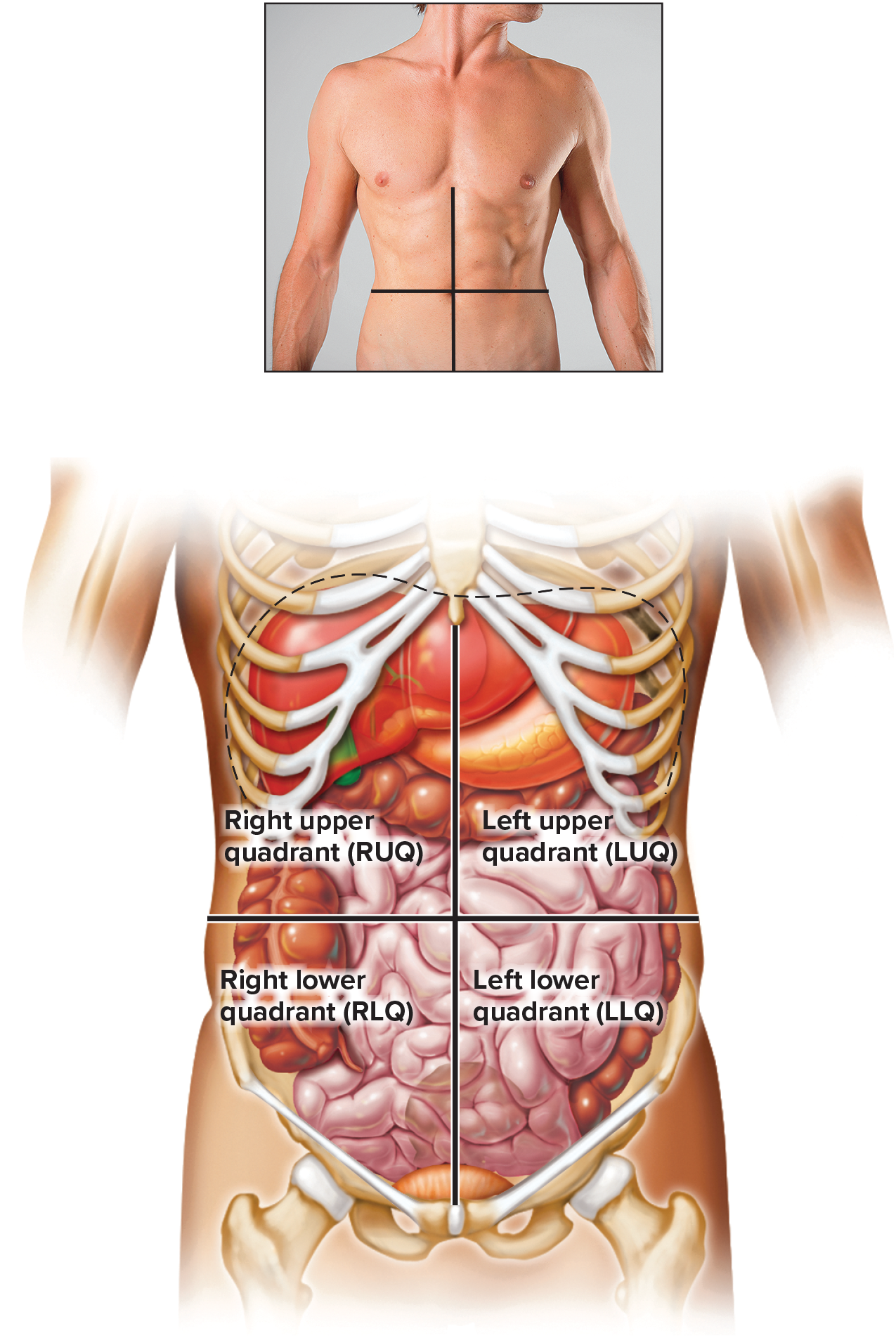
abdominal
Region between the thorax and pelvis.
acromial
Point of the shoulder
antebrachial
forearm
antecubital
anterior surface of the elbow
axillary
armpit
brachial
arm
buccal
cheek
carpal
wrist
celiac
abdomen
cephalic
head
cervical
neck
costal
ribs

