FINAL STUDY SET
 Studied by 0 people
 Call with Kai
 Learn
Learn Practice Test
 Spaced Repetition
 Match
Match Flashcards
 Knowt Play
1/33

There's no tags or description
Looks like no tags are added yet.
Name | Mastery | Learn | Test | Matching | Spaced | Call with Kai |
|---|
No study sessions yet.
34 Terms
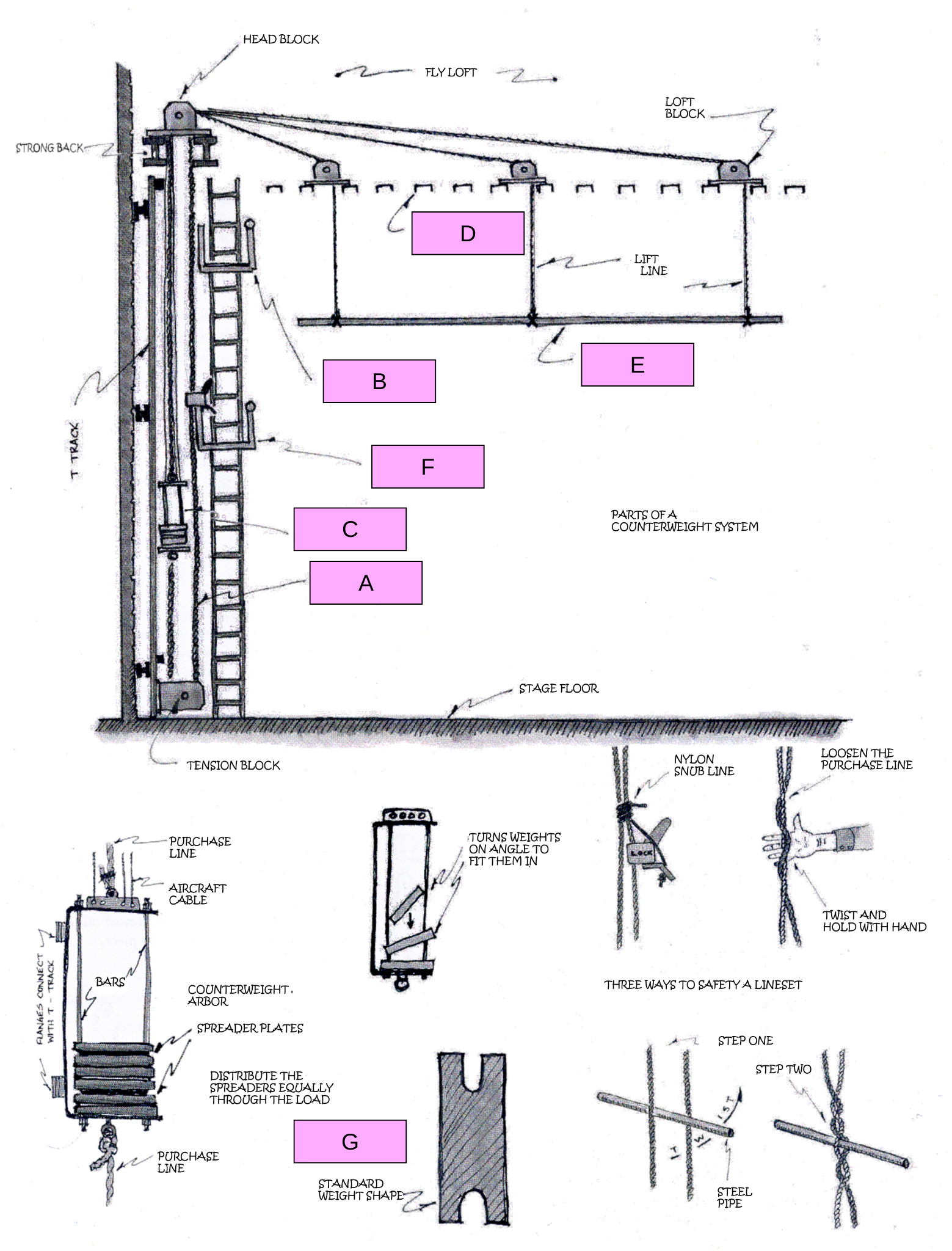
Batten
E
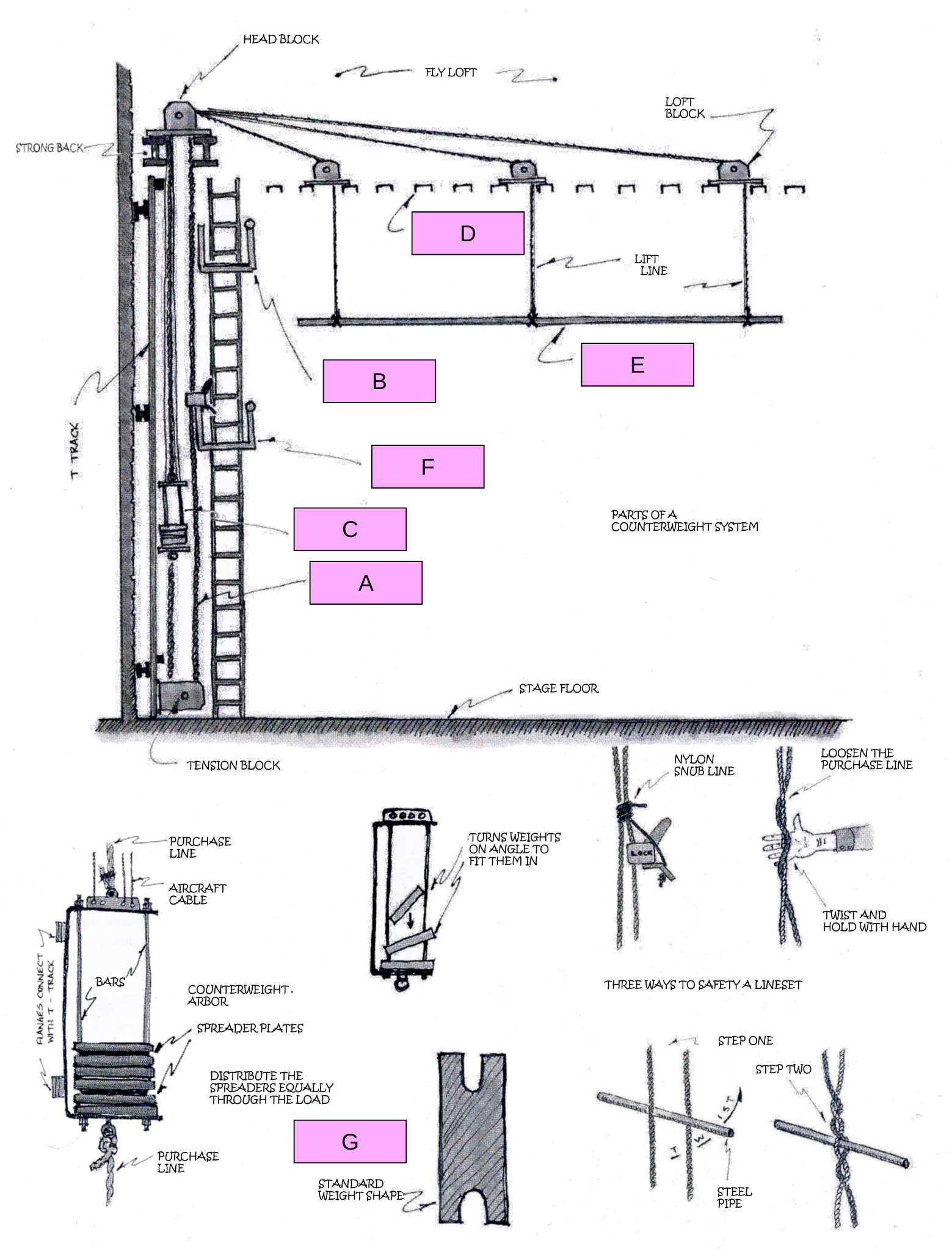
Flyrail/Locking rail
F
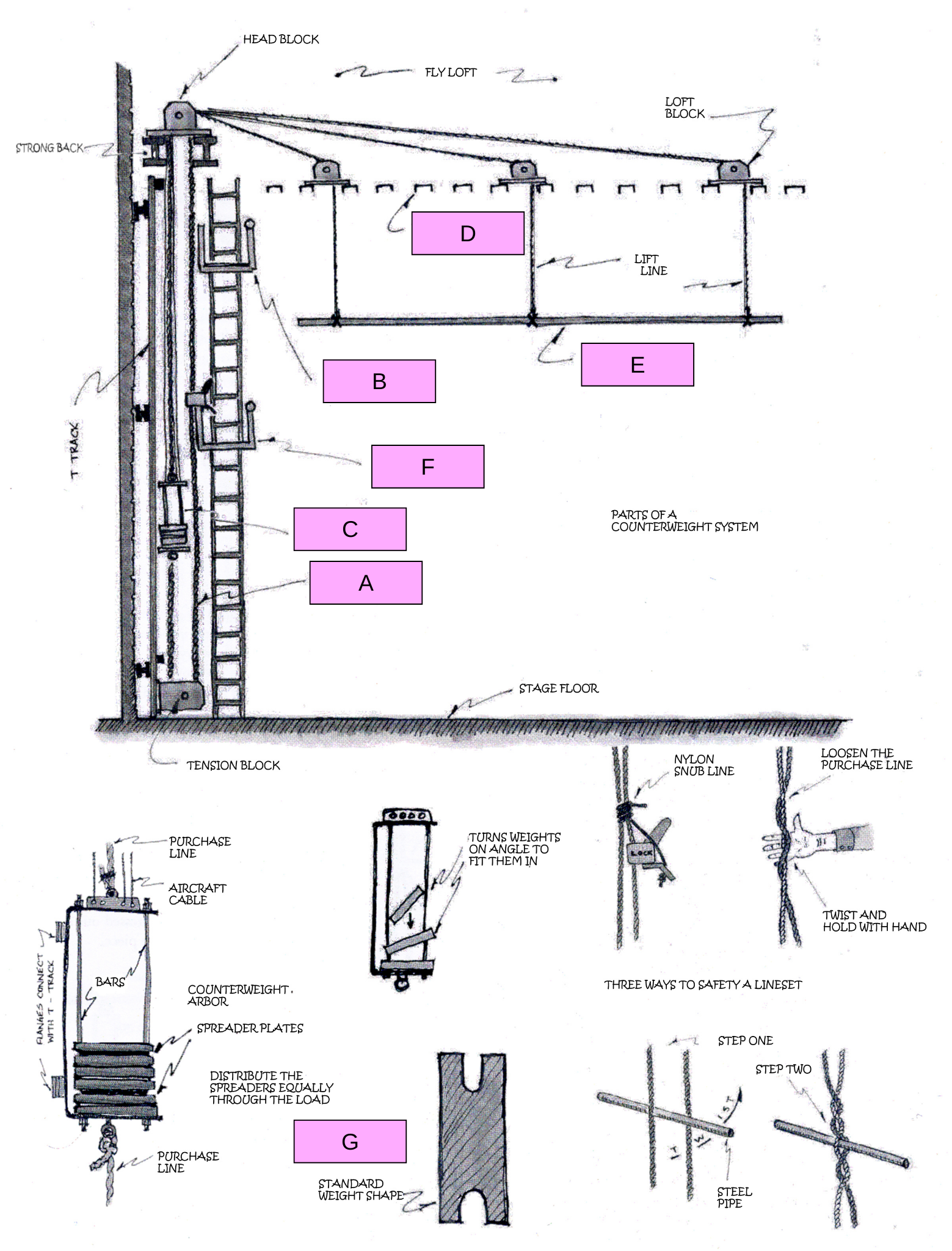
Loading bridge
B
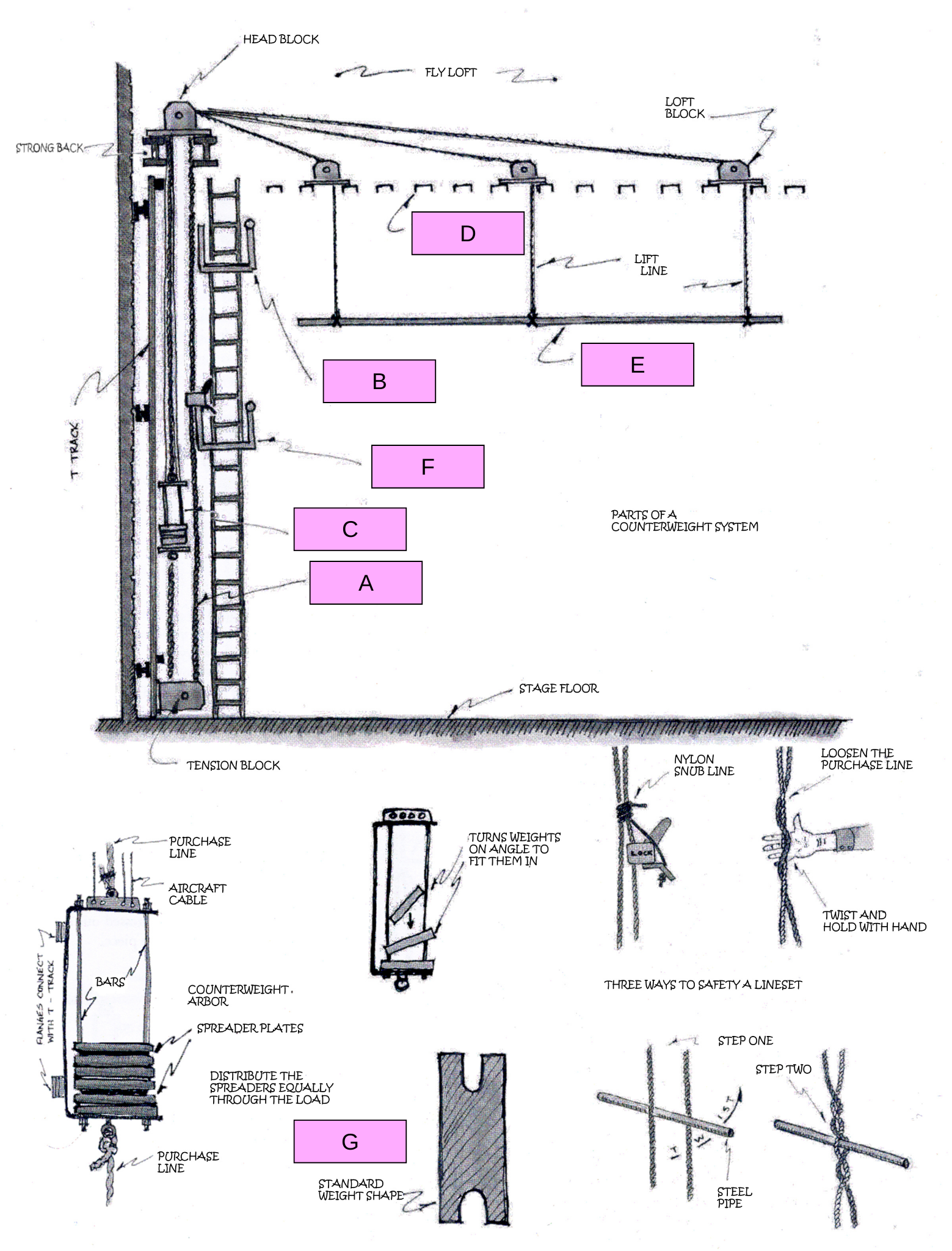
Arbor
C
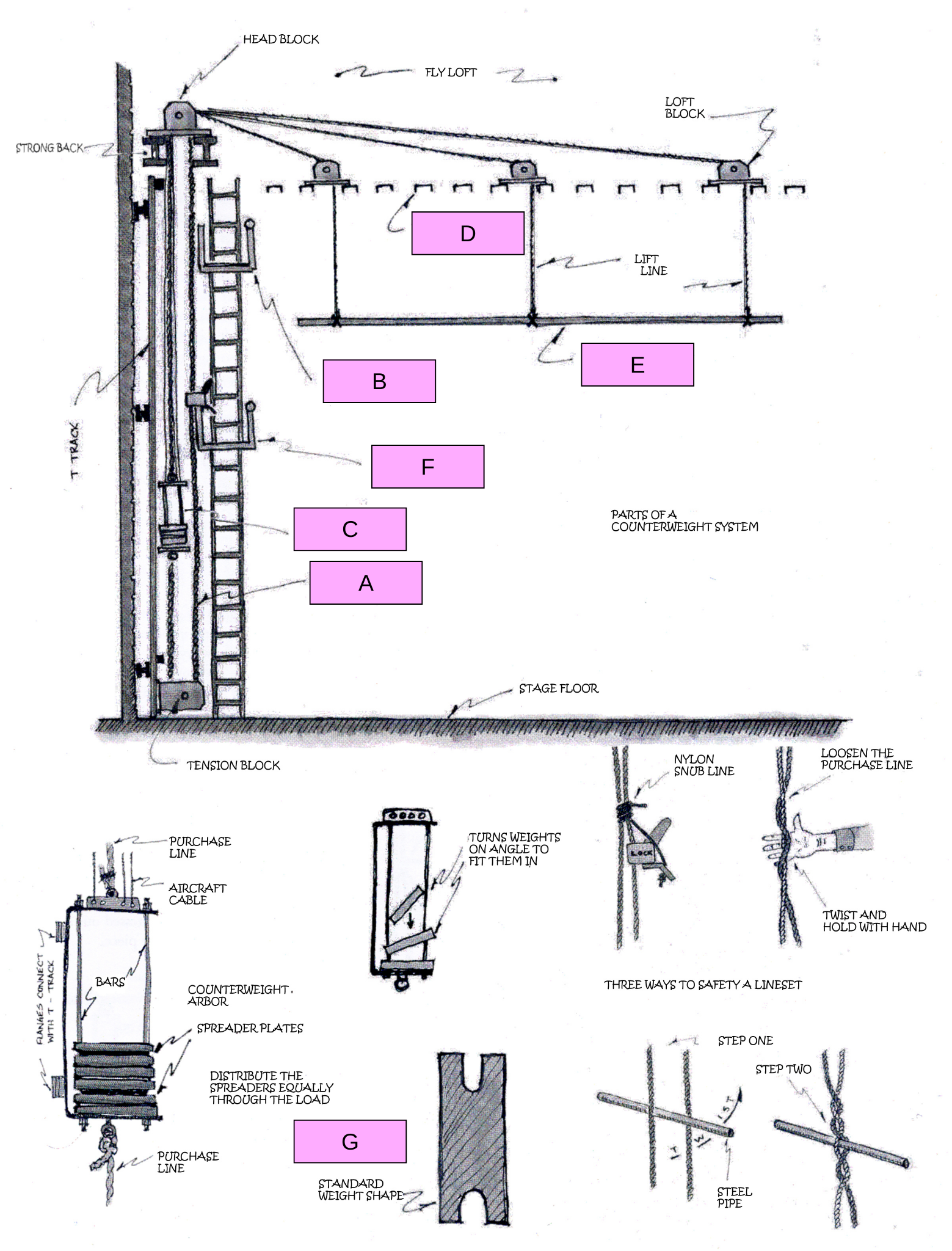
Pig iron
G
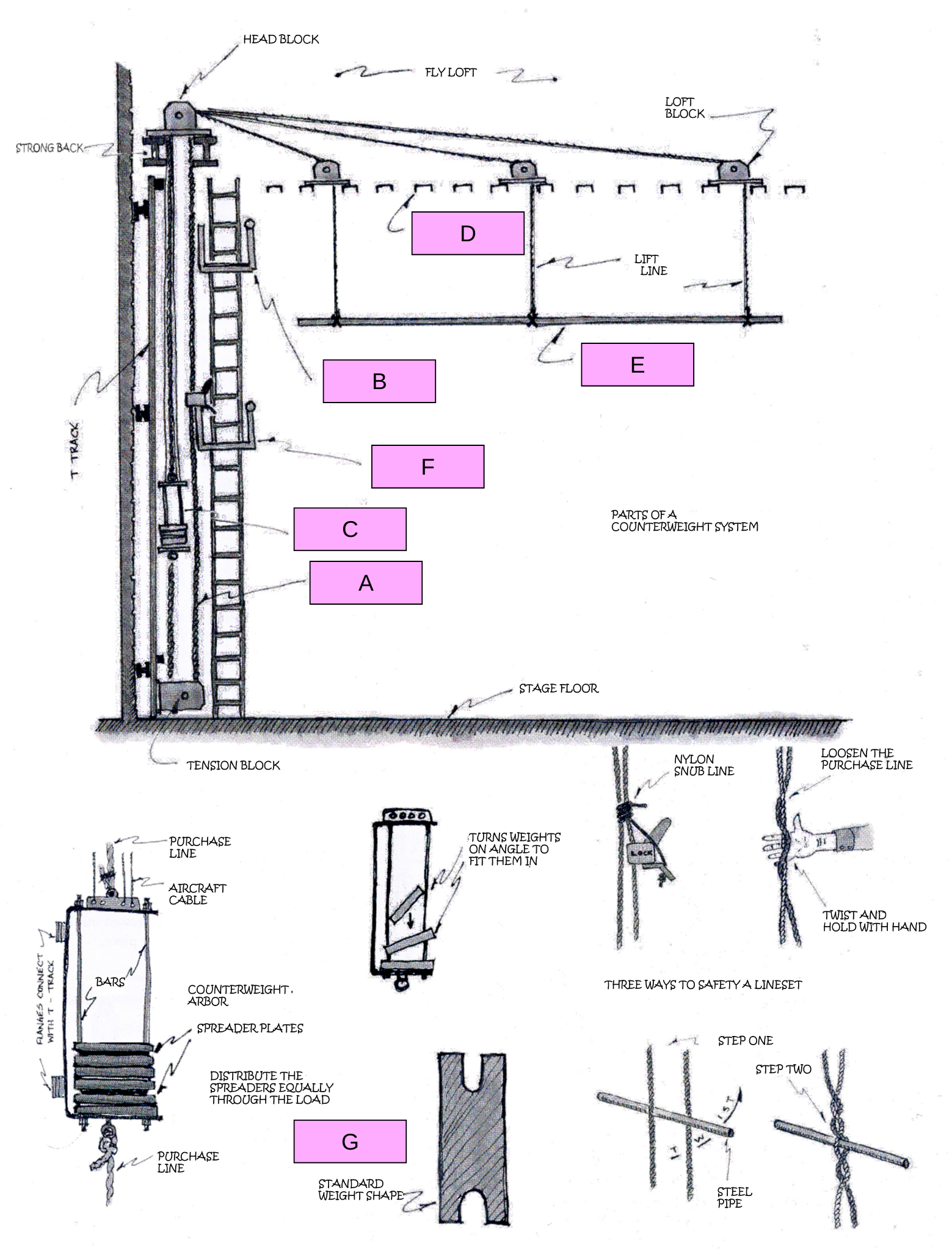
Purchase line
A
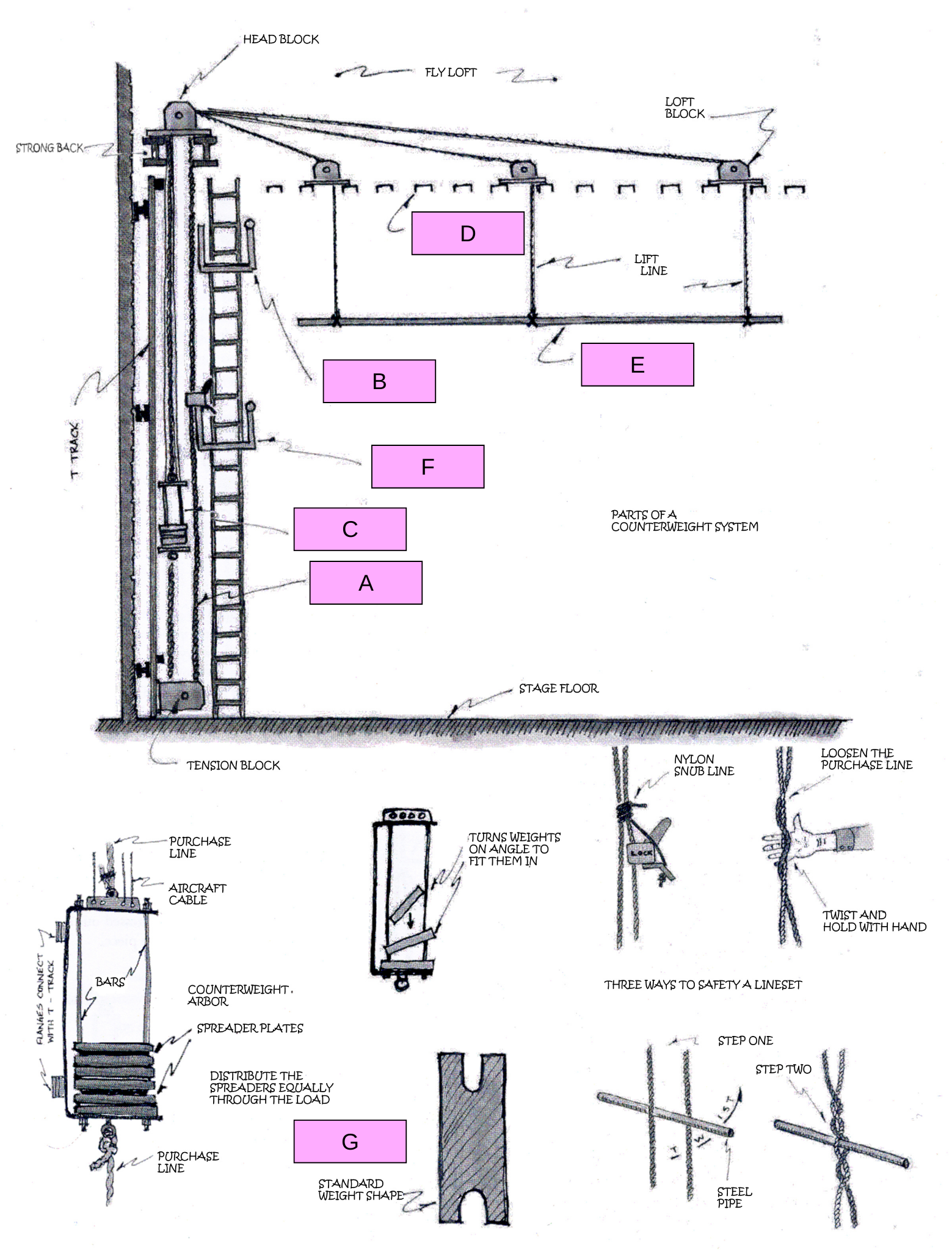
Grid
D
What’s the order of operations for hanging scenery?
Fly batten into deck, load scenery onto batten, load weight onto arbor, fly scenery out to test weight
What’s the order of operations for removing scenery?
Fly batten into deck, unload the weight on the arbor, unload the scenery on the batten, fly the lineset out
1
Standby: pull keeper ring quietly
2
Mar: Hold lines together to create friction
3
Release lock quietly
4
Pull back line to take piece out
5
GO: Move line in or out
6
Don’t: crash arbor into rail or pull up on the line
7
Relock: and replace keeper ring
Hitch
Make a line fast to an anchorage
Bend
Knots that bind two separate ropes together.
Knot
Stoppers, loops, and self-sufficient bindings.
What is the effective rating of rope based on?
Breaking Strength
How much strength does any knot typically reduce in a rope?
50%
Bowline knot purpose
Strong knot with a fixed loop that will not cinch down on itself.
Clove hitch purpose
Connect rope to a pipe and must have a half hitch on top.
How to create a bight?
Fold rope in half
Figure 8 purpose
Stop knot that will not roll down the line.
Figure 8 Loop creates…
A secure loop in the center of the rope.
Alpine Butterfly purpose
Creates a loop off the side of the rope while keeping the standing line vertical.
Square knot/bend purpose
Tie two ropes of equal diameter to one another
Tying on a bight?
Tie a know in middle of rope at the bight
Clove hitch on a bight purpose
Using end of pipe to slip knot onto
Difference between working end and standing end
Working end is used for knots or bends, standing end is stationary or tied to something
Overland loop vs underhand loop
Overhand is over standing end, underhand is under standing end
Actual size of a 1 × 3
¾ x 2 ½
Actual size of a 2 × 4
1 ½ x 3 ½
 Note
Note  Flashcards (30)