what is the nutritional perspective of the rumen complex
 Studied by 0 people
 Call Kai
 Learn
Learn Practice Test
 Spaced Repetition
 Match
Match Flashcards
 Knowt Play
1/24

There's no tags or description
Looks like no tags are added yet.
Name | Mastery | Learn | Test | Matching | Spaced | Call with Kai |
|---|
No analytics yet
Send a link to your students to track their progress
25 Terms
what is the purpose of fermentation?
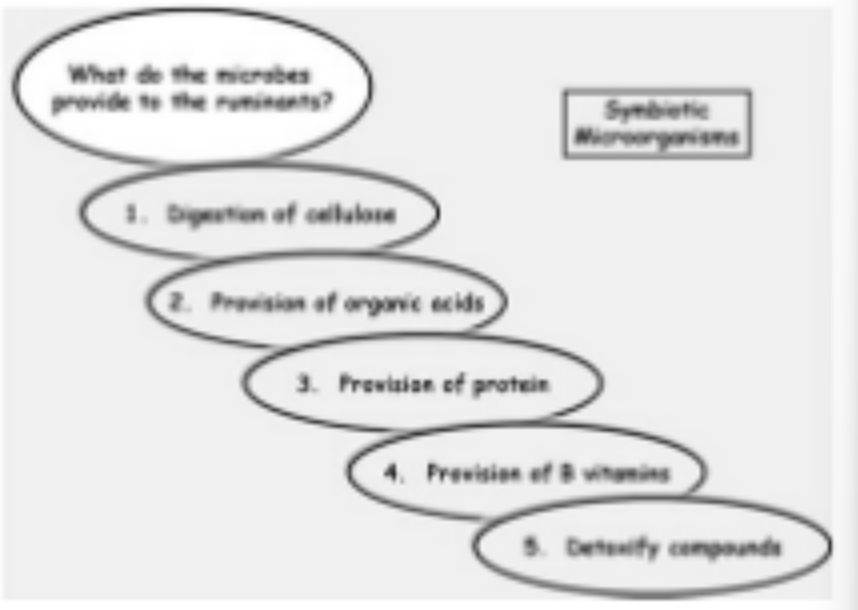
• Fermentation transforms forage into the simple sugars that rumen microorganisms can use for growth
• Structural plant cell wall carbohydrates are broken down by the rumen microbes.
• simple sugars are converted into compounds used to support the rumen microbial population,
• sustains digestion and animal metabolism.
• Microbes ferment forages
• produce by-products called volatile fatty acids (VFA)
• VFA = major energy source for the ruminant animal (short chain fatty acids)
a perfect symbiotic relationship between microbes and ruminants
herbivores can derive 70% of their energy intake from microbial breakdown - a classic example of mutualis
how does ruminant diet relate to one health
Not just ruminants/herbivores
Dietary polysaccharides that reach the human large intestine have a major impact on gut microbial ecology and health
why and how does diet affect the rumen?
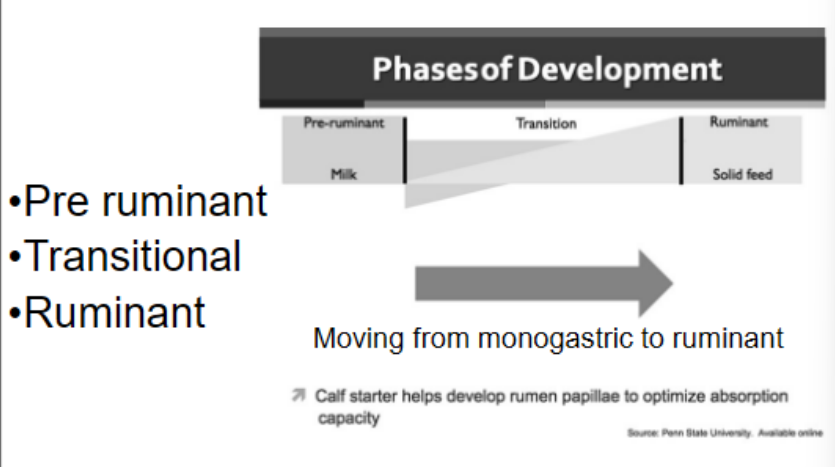
first part of rumen=pre-ruminant/monogastric
Oesophageal Groove
• muscular structure
• lower end of the oesophagus
• closed, forms a tube allowing milk to go directly into the abomasum.
• prevents milk from being fermented or soured by the ruminal microorganisms.
• Sometimes called the reticular groove.
for milk digestion
bebby cows
“Young animals have the ability
to convert feed into growth
most efficiently during the first 2
months of their life,
• Growth rates will vary
according to
• the energy and protein
contents of the milk
• and the volume and
frequency with which it is
supplied “
what are calves fed first
colustrum
healthy rumen development increases productivity
milk replacer bags change as calve develops
Milk replacer-
• 5-6 litres of milk (13-15% of calf birth weight) daily, min two feeds,
• check correct lifestage
• read the label!!!
• digested in abomasum /bypasses the immature rumen
Then…
Concentrates from 3-4 days old
• ‘digested’ in rumen
• produces butyrate & propionate
• increases papillae number and
size
• improves rumen absorptive ability
• high energy, reduces gut fill
If fed alone (need fibre and feed) - so need better levels of concentrates
• causes hyperkeratinisation
• and clumping of papillae and
• decreased rumen motility
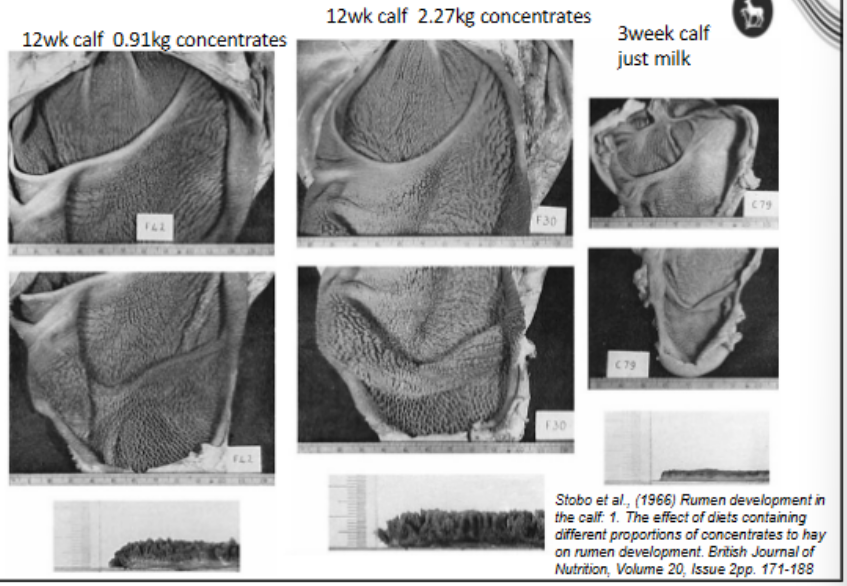
bottom pic show papillae - higher conc = better papillae development
another example of calf rumen development influenced by diet
• Concentrates are vital for rumen papillae development
Calves given the high-concentrate
diets had a significantly greater weight
of reticulo-rumen tissue at 12 weeks
• increase in the length and density
of papillae
• particularly in the anterior dorsal
and ventral sacs of the rumen, as
the intake of concentrates was
increased
• Compared to calves given the high-
roughage diets
• Marked relationship between the
performance of the animal and an
advanced stage of development of the
rumen papillae

creep/calf feed?
young calves have undeveloped rumens at birth
Need physiological changes before they can digest high fibre feeds
Digestion of milk and forages
• does not provide the end products needed to develop the rumen papillae
Concentrate feeds
• digested to propionic and butyric acids in the
rumen
• stimulate the growth of the rumen papillae.
Concentrate feeding for 3 to 4 weeks
• rumen not developed enough for fibre
fermentation
• rumen needs to be developed for calf to
digest substantial amounts of fibr
fibre or feed first?
healthy rumen development increass productivity
Feed
• Stimulates rumination and saliva
production
• Muscular development of rumen
• Increase pH
• Reduces keratinisation
• Reduces non nutritive oral behaviours
• Increase dry matter intake and size of
rumen
• Improves post weaning total dry matter
intake
• produces acetate
krebs cycle
correlation between VFAs. diet and rumen health
• Volatile fatty acids, = significant factors in the postnatal
development of the ruminal epithelium
• Practical importance
• size and length of ruminal papillae respond to
concentrations of VFA in the rumen.
• Animals on a high plane of nutrition, with abundant VFA
production
• = long, luxuriant papillae well suited to promote
absorption.
• Animals nutritionally deprived/poor diet
• = small, blunted papillae,
• require time on a high quality diet to allow for
development of their papillae and absorptive
capacity.
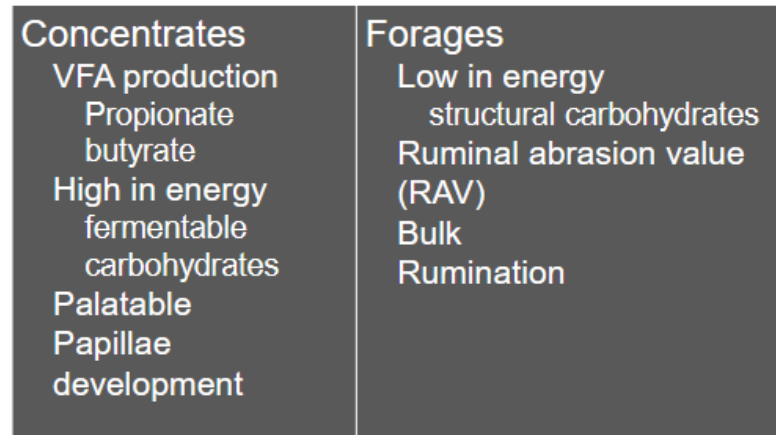
summarise conc vs forages
concentrations - start fermentation in rumen of calves- enzymes are different so digest more easily
structural carb = cellulose not starch
describe how calf → cow i.e. monogastric to ruminant
rumen grows in size and abomasum shrinks
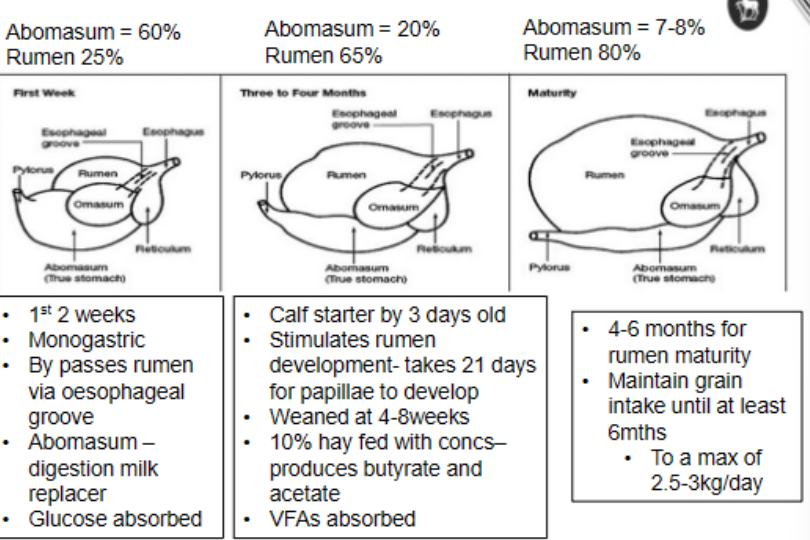
weaning?
Transition period
• over 4 weeks –
• two weeks pre-weaning and two weeks post-weaning
Determined by solid feed intakes, (1kg concentrates)
• which reflects the rumen development,
Not just age or live-weight.
• need to be abale to maintain high intakes during weaning and prevent growth checks.
• Gradual weaning, where liquid feed is reduced over time in volume and frequency
of feeds,
• stimulates solid feed intake preferable to abrupt weaning
how do we wean calves?
Bucket rearing system
• Reduce milk and frequency of feeds
• seven to 14 days up to weaning.
• increase of solid feed intake,
• improve the efficiency of gain
• maximize the economic performance of the calf.
Automated feeders
• Automatic feeders reduce the daily
volume of milk on offer over a pre-defined
period up to weaning.
• gradual weaning process with minimal
labor input and results in a smoother
transition for the calf.
• Careful re slow eating individuals
how do we time the feeding for growing calves?
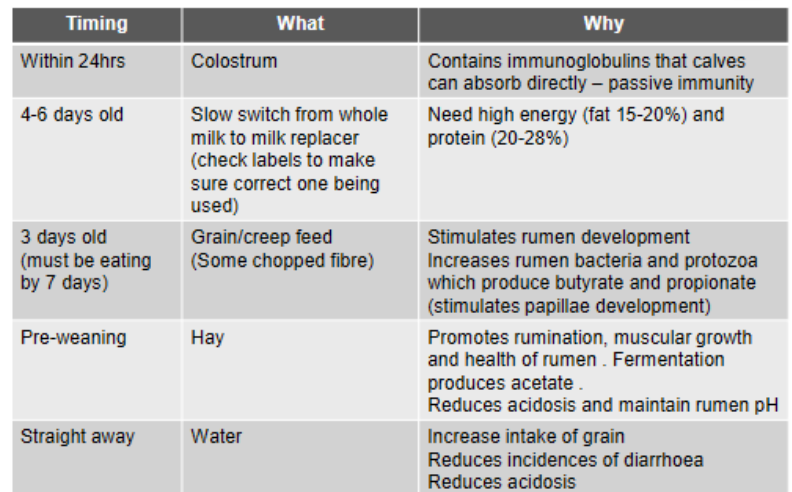
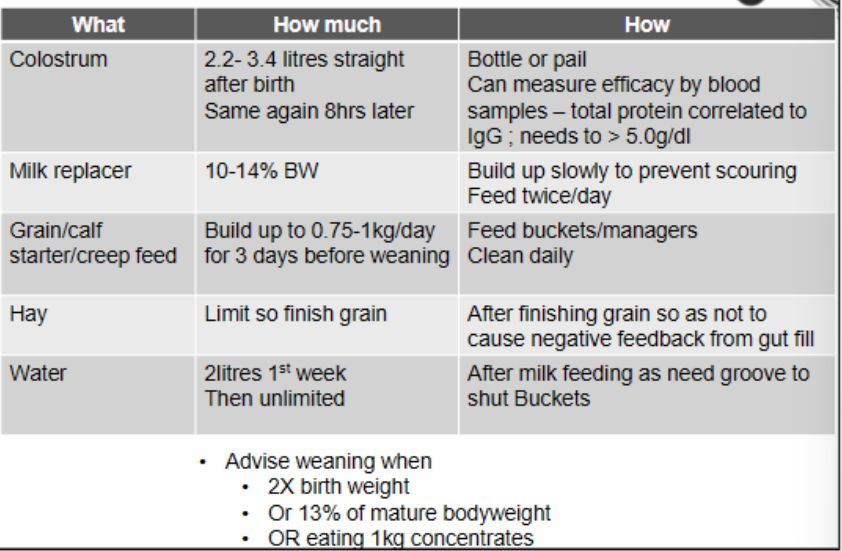
quantity involved in weaning and how
dont need to know numbers
what exactly happens in rumen?
Bacteria ferment fibre - cellulose/pectins,glucans
• Fibre digested by bacteria and used to grow
• By products of fermentation released
into rumen
• Volatile fatty acids (VFAs) are rumen byproducts from CHO digestion
• Called short chain fatty acids (SFAs) in human and pet nutrition
• VFAs are organic fatty acids with 1 to
6 carbons
how do Plant CHOs used as energy source by cellulolytic bacteria to grow
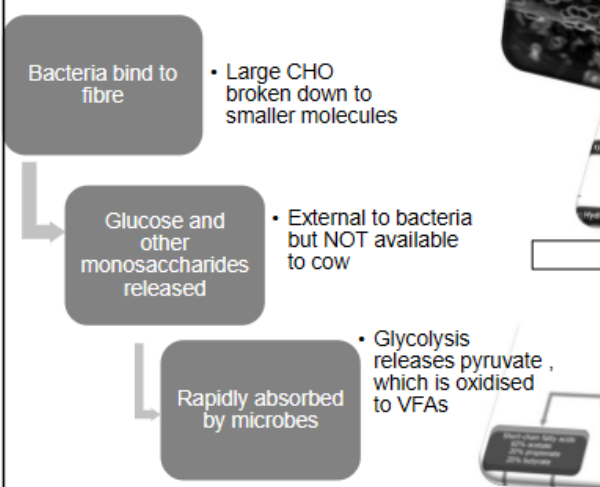
what happens to plant CHOs?
Volatile fatty acids diffuse out of rumen into blood,
must be continuously removed or pH drops
6-8kg VFAs produced/24hrs-
• main energy source for the ruminant
70-80% absorbed from reticulorumen
14-18% absorbed from omasum
• Mostly by simple diffusion
• Some facilitated diffusion in exchange
for HCO3- which is a buffer and stops
rumen getting acid
• Transported to liver for processing
Loses 3-11% of the fermented energy as methane
how are VFAs absorbed?
• diffusion through the epithelium, down a
concentration gradient
• undergo different degrees of metabolism
Acetic acid passes through the
epithelium largely unchanged
• oxidised throughout most of
the body to generate ATP.
• utilised minimally in the liver,
• major source of acetyl CoA
for synthesis of lipids
Propionic acid passes through the
epithelium largely unchanged
• almost completely removed from
portal blood by the liver.
within liver, propionate serves
as a major substrate for
gluconeogenesis,
critical to the ruminant because
almost no glucose reaches the
small intestine for absorption
Butyric acid, metabolised in the epithelium
•to beta-hydroxybutyric acid (ketone body)
•is oxidised in many tissues for energy productio
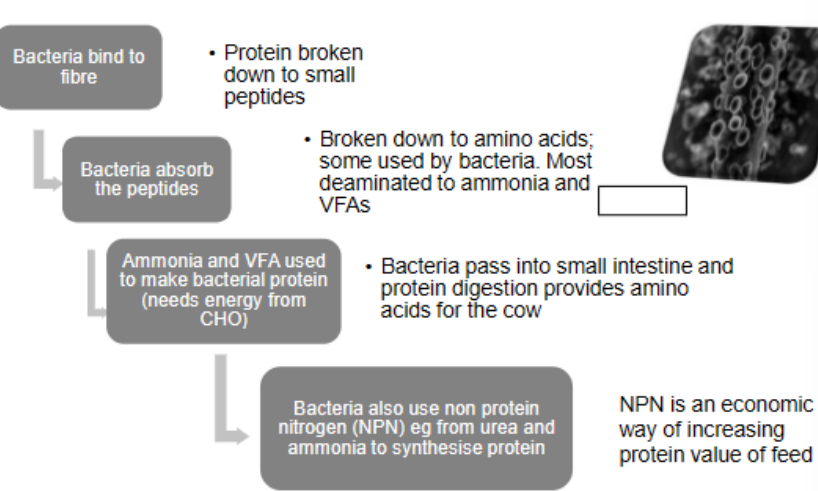
how is protein degraded in the rumen?
• Bacteria break down food and fibre
protein into amino acids-
• Bacteria absorb and use some amino
acids to grow and live
Bacterial byproducts of protein digestion
are
•Ammonia
•VFAs
• Micro-organisms mostly use these to
make more amino acids
• The bacteria pass out of the rumen and
are absorbed in the small intestine
• The cow uses/digests the microbial
protein
how is plant protein used by microorganisms to grow?
what is degradable vs undegradable protein?
sometimes we need to protect some of the nutrients in the rumen so bacteria csnt ferment them so we give undegradable protein
Rumen degradable protein (RDP)
• Feeds the rumen bacteria
• Ensures an adequate supply of microbial
protein
• Microbial protein is the highest quality protein
available
Undegradable protein (RUDP)
• Rumen undegradable protein passes through
the rumen unchanged
• Digested in the small intestin
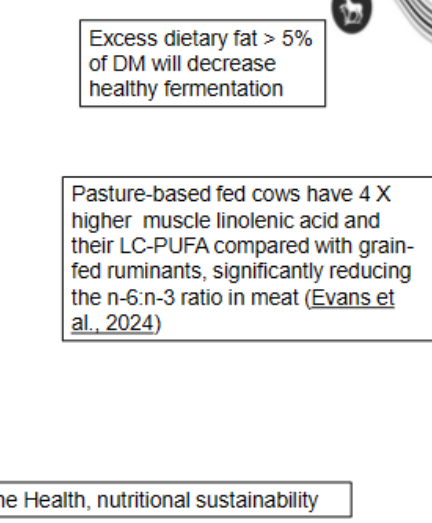
are fats good for cows?
no - it coats the bacteria and kills them
Conveniently, most plants are low in fat (and low in
energy)
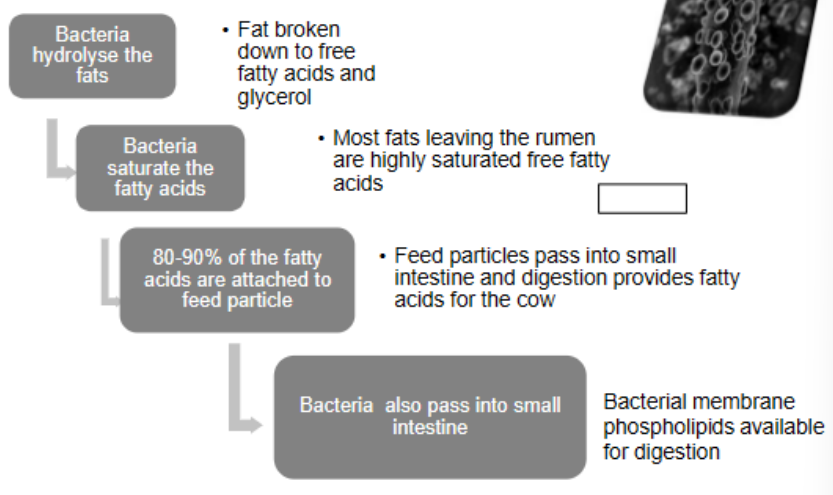
Unsaturated fats are toxic to
cellulolytic bacteria – stops
fermentation
•Bacteria hydrogenate to
saturated fats (uses up H2
reduces acidity
•Can convert to non-toxic fatty
acids e.g. conjugated linoleic
acid (CLA)
Manufacturers provide protected fats
which bypass the rumen
• Free fatty acids(85-90%) &
bacteria pass into SI -
• the phospholipds in their cell
membranes are absorbed in the
small intestine
how do microorganisms use plant fats?
summarise this presentation

 Note
Note  Flashcards (179)