Unit 3 Cell Biology 1/1
 Studied by 1 person
 Call Kai
 Learn
Learn Practice Test
 Spaced Repetition
 Match
Match Flashcards
 Knowt Play
1/344

There's no tags or description
Looks like no tags are added yet.
Name | Mastery | Learn | Test | Matching | Spaced | Call with Kai |
|---|
No analytics yet
Send a link to your students to track their progress
345 Terms
A mother kangaroo has 16 chromosomes in its somatic cells. How many chromosomes will be in a fertilized egg of the kangaroo? How many chromosomes will it pass on to its offspring? How many chromosomes will the offspring inherit from the father kangaroo?
A fertilized kangaroo egg will have 16 chromosomes, the mother will pass on 8 chromosomes to her offspring, and the offspring will inherit the other 8 chromosomes from the father.
Compare cytokinesis in animal cells and plant cells.
Cytokinesis in animal cells occurs by formation of a cleavage furrow produced by a contractile ring of actin and myosin, whereas in plant cells it occurs by formation of a cell plate from Golgi-derived vesicles that grows outward to become a new cell wall.
During which stage of the cell cycle does each of the sister chromatids become an independent chromosome?
Each sister chromatid becomes an independent chromosome during anaphase of mitosis, when the centromeres split and the chromatids are pulled to opposite poles of the cell.
Compare the roles of tubulin and actin during eukaryotic cell division with the roles of tubulin-like and actin-like proteins during bacterial binary fission.
In eukaryotic cell division, tubulin forms the mitotic spindle to separate chromosomes, and actin forms the contractile ring for cytokinesis, whereas in bacterial binary fission, tubulin-like proteins (such as FtsZ) help position the division site and actin-like proteins help maintain cell shape and chromosome organization rather than forming a spindle.
A kinetochore has been compared to a coupling device that connects a motor to the cargo that it moves. Explain.
A kinetochore functions like a coupling device because it physically attaches chromosomes (the cargo) to spindle microtubules and associated motor proteins, allowing the force generated by microtubule dynamics and motors to move chromosomes during cell division.
What other functions do actin and tubulin carry out? Name the proteins they interact with to do so.
Actin and tubulin also function in cell shape, intracellular transport, and cell motility, with actin interacting with myosin to drive muscle contraction and cell crawling, and tubulin interacting with motor proteins kinesin and dynein to move vesicles and organelles along microtubules.
How does MPF allow a cell to pass the G2 phase checkpoint and enter mitosis?
MPF allows a cell to pass the G₂ checkpoint and enter mitosis by phosphorylating specific target proteins that trigger chromosome condensation, nuclear envelope breakdown, and spindle formation.
Explain how receptor tyrosine kinases and intracellular receptors might function in triggering cell division.
Receptor tyrosine kinases trigger cell division by binding extracellular growth factors and activating phosphorylation cascades that turn on genes for cell cycle progression, while intracellular receptors bind lipid-soluble signals inside the cell and directly regulate transcription of genes required for division.
Explain what causes the traits of parents (such as hair color) to show up in their offspring.
Parental traits appear in offspring because parents pass on genes through their gametes, and the combination of alleles inherited from each parent determines which traits are expressed through protein production and gene regulation.
Describe how an asexually reproducing eukaryotic organ ism produces offspring that are genetically identical to each other and to their parents.
An asexually reproducing eukaryotic organism produces genetically identical offspring by copying its DNA and dividing by mitosis, so each daughter cell receives the same set of chromosomes and alleles as the parent.
A horticulturalist breeds orchids, trying to obtain a plant with a unique combination of desirable traits. After many years, she finally succeeds and wants to produce more plants like this one. Discuss whether she should crossbreed it with another plant or cause it to undergo asexual reproduction (forming a clone), and why.
She should cause the orchid to undergo asexual reproduction (cloning) because cloning preserves the exact genetic combination responsible for the desirable traits, whereas crossbreeding would reshuffle alleles through sexual reproduction and likely produce offspring that do not retain the unique trait combination.
Using shoes as an analogy for chromosomes, how would you describe the collection of “shoes” in human diploid and haploid cells?
In the shoe analogy, a diploid human cell is like having 23 matching pairs of shoes (one left and one right from each parent), whereas a haploid cell is like having just one shoe from each pair, for a total of 23 unmatched shoes.
A certain eukaryote lives as a unicellular organ ism, but during environmental stress, it produces gametes. The gametes fuse, and the resulting zygote undergoes meiosis, generating new single cells. What type of organism could this be?
This organism could be a unicellular eukaryotic protist or fungus (such as certain algae or yeasts) that normally lives haploid but undergoes sexual reproduction under stress, forming a diploid zygote that immediately undergoes meiosis to restore the haploid life stage.
After the synaptonemal complex disappears, how would any pair of homologous chromosomes be associated if crossing over did not occur? What effect might this have on gamete formation?
If crossing over did not occur, homologous chromosomes would lack chiasmata and thus associate only weakly or not at all after the synaptonemal complex disappears, increasing the risk of nondisjunction and producing gametes with abnormal chromosome numbers.
What would be the source of genetic diversity in the gametes if chromosomes were not assorted independently?
If chromosomes were not assorted independently, genetic diversity in gametes would still arise from crossing over (recombination) between homologous chromosomes during prophase I of meiosis.
The diploid number for fruit flies is 8, and the diploid number for grasshoppers is 46. If no crossing over took place, would the genetic variation among offspring from a given pair of parents be greater in fruit flies or grasshoppers? Explain.
Genetic variation would be greater in grasshoppers because, even without crossing over, their much higher diploid number allows far more possible combinations of chromosomes to arise through independent assortment than in fruit flies.
If all chromosomes in a gamete were shortened to half their lengths, how would the genetic diversity resulting from crossing over get affected?
Genetic diversity from crossing over would decrease because shorter chromosomes provide fewer opportunities for crossover events, reducing the number of new allele combinations formed.
In some pea plant crosses, the plants are self-pollinated. Is self-pollination considered asexual or sexual reproduction? Explain.
Self-pollination is considered sexual reproduction because it involves meiosis to produce gametes and fertilization (fusion of sperm and egg), even though both gametes come from the same plant.
An individual with cystic fibrosis (genotype ff) marries a heterozygous individual who carries a copy of the recessive allele (genotype Ff). What proportions of the offspring are expected to be homozygous dominant, homozygous recessive, and heterozygous?
From a cross between ff and Ff, 0% of the offspring are homozygous dominant (FF), 50% are homozygous recessive (ff), and 50% are heterozygous (Ff).
If two organisms, both with the genotype AaBb, are mated, what is the probability of obtaining the genotypes AABB and AaBb in the F2 generation?
From a cross of AaBb × AaBb, the probability of AABB is 1/16, and the probability of AaBb is 4/16 (1/4).
Three characters (flower color, seed color, and pod shape) are considered in a cross between two pea plants: PpYyIi * ppYyIi. Using the rules of probability, determine the fraction of offspring predicted to be homozygous recessive for at least two of the three characters.
The fraction is 1/4, because the probability of being homozygous recessive for at least two traits equals the sum of the probabilities of being recessive for exactly two traits (7/32) plus all three traits (1/32), giving 8/32 = 1/4.
Incomplete dominance and epistasis are both terms that define genetic relationships. What is the most basic distinction between these terms?
Incomplete dominance describes the interaction between alleles of the same gene producing an intermediate phenotype, whereas epistasis describes an interaction between different genes, in which one gene masks or alters the expression of another.
If a man with type AB blood marries a woman with type O, what blood types would you expect in their children? What fraction would you expect of each type?
A man with type AB (IᴬIᴮ) blood and a woman with type O (ii) blood can have children with type A (Iᴬi) or type B (Iᴮi) blood only, with 50% type A and 50% type B, and 0% type AB or type O.
A rooster with gray feathers and a hen of the same phenotype produce 15 gray, 6 black, and 8 white chicks. What is the simplest explanation for the inheritance of these colors in chickens? What phenotypes would you expect in the offspring of a cross between a gray rooster and a black hen?
The simplest explanation is incomplete dominance, in which gray feathers result from a heterozygous genotype between alleles for black and white feathers, and the observed 15 gray : 6 black : 8 white ratio approximates the expected 1 black : 2 gray : 1 white phenotypic ratio from a gray × gray cross.
From a cross between a gray rooster (heterozygous) and a black hen (homozygous black), you would expect 50% gray offspring and 50% black offspring, with no white chicks.
Lucia and Jared each have a sibling with cystic fibrosis, but neither Lucia nor Jared nor any of their parents have the disease. Calculate the probability that if this couple has a child, the child will have cystic fibrosis. What would be the probability if a test revealed that Jared is a carrier but Lucia is not? Explain your answers.
Because cystic fibrosis is autosomal recessive, each of Lucia and Jared—having an affected sibling but being unaffected themselves—has a 2/3 probability of being a carrier; thus the probability their child has cystic fibrosis is
(2/3)×(2/3)×(1/4)=1/9.(2/3)\times(2/3)\times(1/4)=1/9.(2/3)×(2/3)×(1/4)=1/9.
If testing shows Jared is a carrier but Lucia is not, the probability becomes 0, because two recessive alleles are required and Lucia cannot pass one on.
Explain how the change of a single amino acid in hemoglobin leads to the aggregation of hemoglobin into long fibers.
A single amino acid substitution in hemoglobin (glutamic acid to valine) creates a hydrophobic patch that causes deoxygenated hemoglobin molecules to stick together, leading them to aggregate into long fibers.
Idris lives in Nigeria with his family. His elder sister suffers from malaria, but he and his parents do not. They do not have any other remarkable disease. What is causing this difference in sensitivity to malaria in the family? What is the probability that a future sibling of Idris will be sensitive to malaria?
The difference is most likely due to variation in the β-globin (hemoglobin) gene: carrying one sickle-cell allele (HbAS) provides protection against severe malaria, while having normal hemoglobin (HbAA) does not, so Idris (and his parents) are likely HbAS and his sister is likely HbAA.
If both parents are HbAS, the probability a future sibling will be malaria-sensitive (HbAA) is 1/4 (25%).
Propose a possible reason that the first naturally occurring mutant fruit fly Morgan saw involved a gene on a sex chromosome and was found in a male.
A likely reason is that the mutation was on the X chromosome and therefore expressed immediately in a male fruit fly, which has only one X chromosome, whereas a female could carry the mutant allele without showing the phenotype due to having a second, normal X chromosome.
Why is the fruit fly Drosophila melanogaster a good model organism for genetic studies?
Drosophila melanogaster is a good model organism for genetic studies because it has a short generation time, produces many offspring, has easily observed traits, is inexpensive to maintain, and has a well-characterized genome with many genes similar to those of humans.
Mark is color-blind, and his wife Helena is not. Their son is also color-blind. What are the genotypes of Mark and Helena? What is the probability that a second child will be color-blind if the child is a girl? A boy?
Color blindness is X-linked recessive, so Mark’s genotype is XᶜY and Helena’s genotype must be XᴺXᶜ (a carrier), since their son is color-blind; the probability a second child is color-blind is 50% if the child is a boy and 50% if the child is a girl.
If a disorder were caused by a dominant X-linked allele, how would the inheritance pattern differ from what we see for recessive X-linked disorders?
For a dominant X-linked disorder, a single affected allele on the X chromosome causes the phenotype, so affected fathers pass the disorder to all daughters and no sons, affected mothers pass it to about half of both sons and daughters, and the disorder appears in every generation rather than skipping generations as recessive X-linked disorders often do.
When two genes are located on the same chromosome, what is the physical basis for the production of recombinant offspring in a testcross between a dihybrid parent and a double-mutant (recessive) parent?
Recombinant offspring arise because crossing over between homologous chromosomes during prophase I of meiosis physically exchanges segments of the chromosome, separating linked genes and producing new allele combinations in the gametes.
If genes A and B are on the same chromosome, but are 63 map units apart, will they behave as linked or unlinked? Explain your answer.
They will behave as unlinked because genes that are far apart on the same chromosome undergo crossing over so frequently that the recombination frequency reaches the 50% maximum, making them assort as if they were on different chromosomes.
About 5% of individuals with Down syndrome have a chromosomal translocation in which a third copy of chromo some 21 is attached to chromosome 14. If this translocation occurred in a parent’s gonad, how could it lead to Down syndrome in a child?
If a chromosome 21 becomes translocated onto chromosome 14 in a parent’s gonad, meiosis can produce a gamete that contains a normal chromosome 21 plus the chromosome 14 carrying an extra copy of chromosome 21, so when this gamete is fertilized the child ends up with three copies of chromosome 21 material, causing Down syndrome.
The ABO blood type locus has been mapped on chromosome 9. A father who has type AB blood and a mother who has type O blood have a child with trisomy 9 and type A blood. Using this information, can you tell in which parent the nondisjunction occurred? Explain your answer.
Yes—the nondisjunction occurred in the father, because the child with trisomy 9 has type A blood, which means the child inherited an A allele and no B allele from the extra chromosome; since the mother is type O (ii) and can contribute only i alleles, the presence of A but not B indicates the extra chromosome 9 carrying the ABO locus came from the father and carried the A allele rather than both A and B.
The gene that is activated on the Philadelphia chromosome codes for an intracellular tyro sine kinase. Explain how the activation of this gene could contribute to the development of cancer.
Activation of the gene on the Philadelphia chromosome produces a constitutively active intracellular tyrosine kinase that continuously phosphorylates target proteins, driving uncontrolled cell division and inhibiting normal regulatory checkpoints, thereby promoting cancer development.
Gene dosage—the number of copies of a gene that are actively being expressed—is important to proper development. Identify and describe two processes that establish the proper dosage of certain genes.
Proper gene dosage is established by X-chromosome inactivation, which silences one X chromosome in female mammals to equalize expression with males, and genomic imprinting, in which epigenetic marks cause only the maternal or paternal copy of certain genes to be expressed.
Reciprocal crosses between two primrose varieties, A and B, produced the following results: A female B male S offspring with all green (nonvariegated) leaves; B female A male S offspring with patterned (variegated) leaves. Explain these results.
These results are explained by cytoplasmic (maternal) inheritance of chloroplasts, because leaf variegation depends on chloroplast genotype, which is transmitted almost exclusively through the egg; thus offspring phenotype reflects the female parent’s chloroplasts—A females produce all-green offspring, while B females produce variegated offspring regardless of the male.
Mitochondrial genes are critical to the energy metabolism of cells, but mitochondrial disorders caused by mutations in these genes are generally not lethal. Why not?
Mitochondrial disorders are generally not lethal because cells contain many mitochondria and many copies of mitochondrial DNA, so the presence of some functional mitochondria can partially compensate for defective ones and still allow enough ATP production for survival.
Explain why a double-stranded GC-rich polynucleotide sequence is more stable than a double-stranded AT-rich polynucleotide sequence of the same length.
A GC-rich double-stranded polynucleotide is more stable than an AT-rich one because G–C base pairs form three hydrogen bonds instead of two, and they also have stronger base-stacking interactions, making the DNA helix harder to separate.
What might happen during the replication of DNA if topoisomerase is inhibited?
If topoisomerase is inhibited, DNA replication would stall or fail because excessive supercoiling ahead of the replication fork would build up, preventing strand separation and potentially causing DNA breaks.
How do immortal cells cope with the shortening of telomeres to be able to divide indefinitely?
Immortal cells cope with telomere shortening by expressing telomerase, an enzyme that adds repetitive DNA sequences to the ends of chromosomes, thereby maintaining telomere length and allowing the cells to divide indefinitely.
What is the relationship between DNA replication and the S phase of the cell cycle?
DNA replication occurs during the S (synthesis) phase of the cell cycle, when each chromosome is duplicated to produce two identical sister chromatids in preparation for cell division.
If the DNA pol I in a given cell were nonfunctional, how would that affect the synthesis of a leading strand?
If DNA polymerase I were nonfunctional, synthesis of the leading strand would still occur because DNA polymerase III carries out strand elongation, but the RNA primer at the start of the leading strand would not be removed and replaced with DNA, leaving an RNA segment in the newly synthesized strand.
Describe the structure of a nucleosome, the basic unit of DNA packing in eukaryotic cells.
A nucleosome consists of a segment of DNA wound around a core of eight histone proteins (two each of H2A, H2B, H3, and H4), forming a beadlike structure, with adjacent nucleosomes connected by short stretches of linker DNA often associated with histone H1.
How does euchromatin differ from heterochromatin in structure and function?
Euchromatin is loosely packed, lightly stained, and transcriptionally active DNA, whereas heterochromatin is tightly packed, darkly stained, and largely transcriptionally inactive, serving mainly structural and regulatory roles.
Interphase chromosomes appear to be attached to the nuclear lamina and perhaps also the nuclear matrix. Describe these two structures.
The nuclear lamina is a dense meshwork of intermediate filament proteins (lamins) lining the inner surface of the nuclear envelope that provides structural support and helps organize chromosomes, while the nuclear matrix is an internal protein scaffold within the nucleus that organizes chromatin and coordinates processes such as DNA replication and transcription.
In a research article about alkapzxtonuria published in 1902, Garrod suggested that humans inherit two “characters” (alleles) for a particular enzyme and that both parents must contribute a faulty version for the offspring to have alkaptonuria. Today, would this disorder be called dominant or recessive?
Today, alkaptonuria would be classified as a recessive disorder because the phenotype appears only when an individual inherits two faulty alleles, one from each parent.
Since AUG is the start codon and codes for methionine, do all proteins have methionine as the first amino acid? Explain.
All proteins initially begin translation with methionine because AUG is the start codon, but the first methionine is often removed after translation by cellular enzymes, so many mature proteins do not retain methionine as their first amino acid.
What is a TATA box, and what is its role in transcription?
A TATA box is a conserved DNA sequence in a eukaryotic promoter that binds transcription factors (including TATA-binding protein) and helps position RNA polymerase II correctly to initiate transcription.
What enables RNA polymerase to start transcribing a gene at the right place on the DNA in a bacterial cell? In a eukaryotic cell?
In bacterial cells, RNA polymerase is guided to the correct start site by a σ (sigma) factor that recognizes promoter sequences, whereas in eukaryotic cells, transcription begins at the correct location through the binding of general transcription factors (including TATA-binding protein) to the promoter, which then recruit RNA polymerase II.
Suppose X-rays caused a sequence change in the TATA box of a particular gene’s promoter. How would that affect transcription of the gene?
A sequence change in the TATA box would likely reduce or prevent binding of the TATA-binding protein and other transcription factors, thereby greatly decreasing or abolishing transcription of the gene.
Given that there are about 20,000 human protein-coding genes, how can human cells make 75,000–100,000 different proteins?
Human cells can make 75,000–100,000 different proteins from about 20,000 genes through alternative RNA splicing, along with additional diversity from RNA editing and post-translational modifications.
Compare RNA splicing to how you would watch a prerecorded television show. What would introns correspond to in this analogy?
RNA splicing is like watching a prerecorded TV show where the commercials are cut out before viewing, and in this analogy the introns correspond to the commercials that are removed so only the meaningful content (exons) remains.
What would be the effect of treating cells with an agent that removed the 5′ cap from mRNAs?
Removing the 5′ cap would cause mRNAs to be rapidly degraded and poorly recognized by ribosomes, greatly reducing or preventing translation.
What two processes ensure that the correct amino acid is added to a growing polypeptide chain?
The correct amino acid is ensured by specific aminoacyl-tRNA synthetases charging each tRNA with its proper amino acid and by codon–anticodon base pairing between mRNA and tRNA at the ribosome during translation.
Discuss the different post-translational changes that may be needed to make a functional protein.
Post-translational changes make many proteins functional by modifying their structure, activity, or destination, including folding with the help of chaperones, cleavage of signal peptides or pro-proteins, covalent modifications such as phosphorylation, glycosylation, acetylation, or methylation to regulate activity and stability, formation of disulfide bonds for structural integrity, and targeting to specific cellular locations through added signal sequences.
In eukaryotic cells, mRNAs have been found to have a circular arrangement in which proteins hold the poly-A tail near the 5′ cap. How might this increase translation efficiency?
Holding the poly-A tail near the 5′ cap likely increases translation efficiency by allowing ribosomes that finish translating an mRNA to be rapidly recycled back to the start, enabling repeated rounds of protein synthesis on the same transcript.
What happens when one nucleotide pair is lost from the middle of the coding sequence of a gene?
Losing one nucleotide pair from the middle of a coding sequence causes a frameshift mutation, altering all downstream codons and typically producing a drastically different, nonfunctional protein
Individuals heterozygous for the sickle-cell allele are generally healthy but show phe notypic effects of the allele under some circumstances (see Figure 14.17). Explain in terms of gene expression.
Individuals heterozygous for the sickle-cell allele are generally healthy because they express both normal and sickle hemoglobin, with normal hemoglobin preventing disease under typical conditions, but under low-oxygen stress the sickle allele is expressed enough to produce some sickling, causing phenotypic effects.
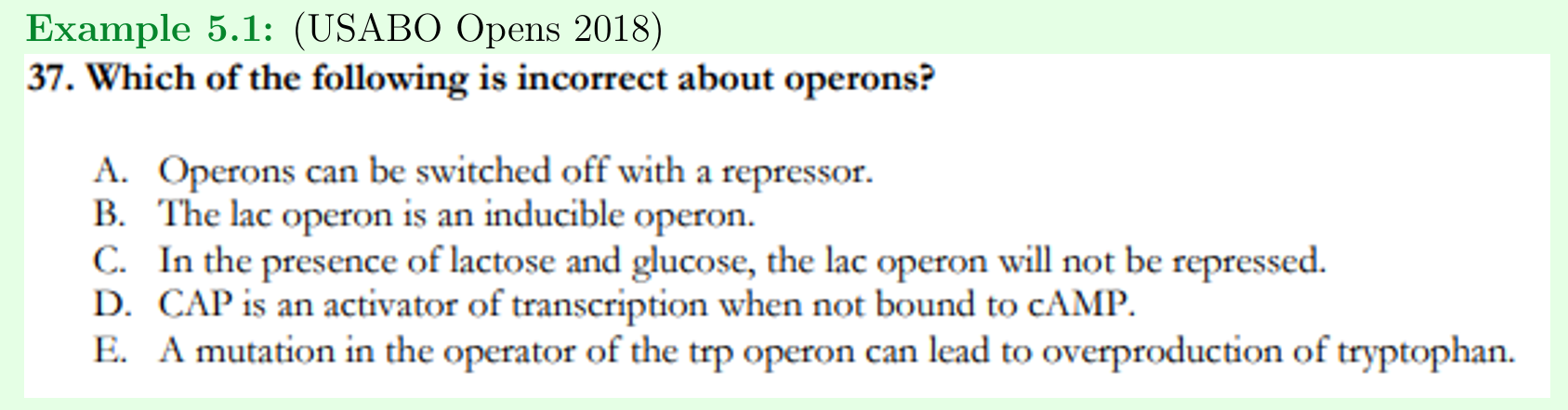
How does binding of the trp corepressor to the trp repressor alter repressor function and transcription? How does binding of the lac inducer alter the function of the lac repressor?
Binding of the trp corepressor activates the trp repressor so it binds the operator and shuts off transcription, whereas binding of the lac inducer inactivates the lac repressor, so it releases the operator and allows transcription to proceed.
Describe the binding of repressors and activators to the lac operon when both lactose and glucose are scarce. What is the effect of these scarcities on transcription of the lac operon?
When both lactose and glucose are scarce, the lac repressor remains bound to the operator because no lactose is present to inactivate it, and although CAP–cAMP would bind as an activator due to low glucose, transcription of the lac operon remains essentially off because the bound repressor blocks RNA polymerase.
A certain mutation in E. coli changes the lac operator so that the active repressor cannot bind. How would this affect the cell’s production of β-galactosidase?
If the lac operator were mutated so the active repressor could not bind, the cell would produce β-galactosidase constitutively, because transcription of the lac operon would proceed continuously regardless of whether lactose is present.
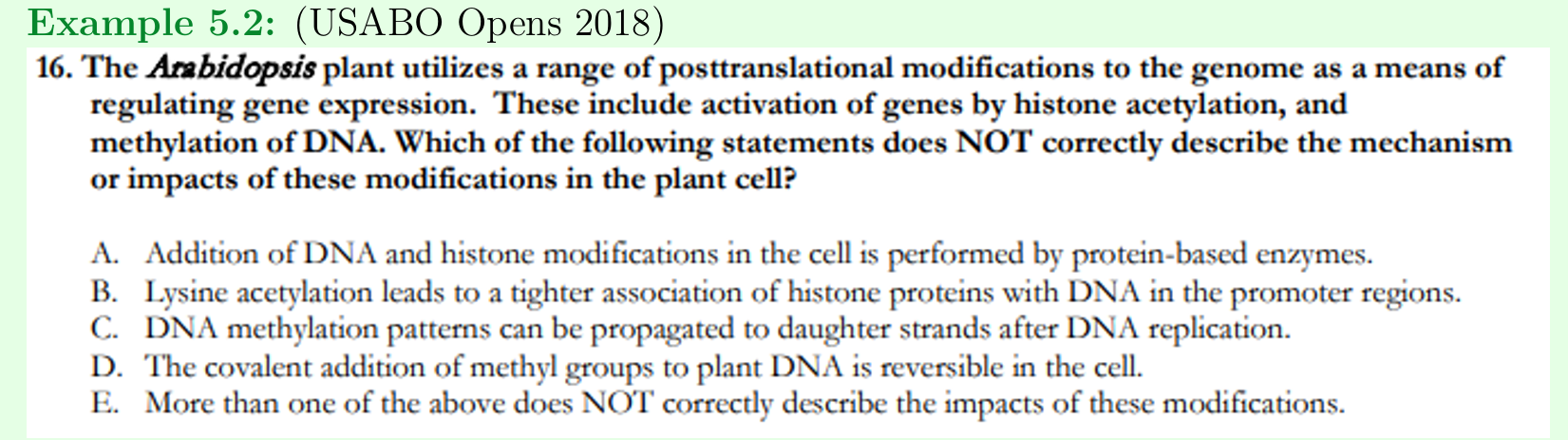
In general, what are the effects of histone acetylation and DNA methylation on gene expression?
In general, histone acetylation increases gene expression by loosening chromatin and making DNA more accessible to transcription machinery, whereas DNA methylation decreases gene expression by condensing chromatin or directly blocking transcription factor binding.
Speculate about whether the same enzyme could methylate both a histone and a DNA base.
It is unlikely that the same enzyme would methylate both a histone and a DNA base because histones are proteins and DNA is a nucleic acid, requiring enzymes with different substrate specificities and catalytic mechanisms.
Describe three mechanisms by which repressors can inhibit eukaryotic gene expression.
Repressors can inhibit eukaryotic gene expression by directly blocking activator binding or RNA polymerase recruitment at the promoter, by recruiting corepressors such as histone deacetylases that condense chromatin, and by interfering with enhancer–promoter interactions that are required for transcription initiation.
Once mRNA encoding a particular protein reaches the cytoplasm, what are four mechanisms that can regulate the amount of the protein that is active in the cell?
Once mRNA reaches the cytoplasm, the amount of active protein can be regulated by control of mRNA stability (degradation rate), regulation of translation efficiency, post-translational modification (such as phosphorylation or cleavage), and selective protein degradation via the proteasome.
Suppose you compared the nucleotide sequences of the distal control elements in the enhancers of three genes that are expressed only in muscle cells. What would you expect to find? Why?
You would expect the enhancers to share similar or identical regulatory sequences (binding sites) because muscle-specific transcription factors recognize the same DNA motifs to activate expression of genes only in muscle cells.
Compare miRNAs and siRNAs, including their functions.
miRNAs and siRNAs are both small RNAs that guide the RNA-induced silencing complex to target mRNAs to reduce gene expression, but miRNAs typically bind imperfectly to multiple targets to fine-tune translation or promote degradation, whereas siRNAs usually bind perfectly to a specific mRNA and trigger its cleavage and destruction.
Inactivation of one of the X chromosomes in female mammals involves a noncoding RNA (XIST). Suggest a model for how XIST RNA initiates Barr body formation
XIST RNA is transcribed from the X chromosome to be inactivated, spreads along that chromosome, and recruits chromatin-modifying proteins that methylate DNA and deacetylate histones, condensing it into heterochromatin and forming a Barr body.
Mitosis gives rise to two daughter cells that are genetically identical to the parent cell. Yet you, the product of many mitotic divisions, are not composed of identical, zygote-like cells. Why?
Although mitosis produces genetically identical daughter cells, you are not made of identical, zygote-like cells because different genes are turned on or off in different cells through differential gene expression and epigenetic regulation, causing cells to become specialized in structure and function during development.
Explain how the signaling molecules released by an embryonic cell can induce changes in a neighboring cell without entering the cell.
Signaling molecules can induce changes in a neighboring embryonic cell without entering it by binding to specific receptors on the cell surface, which trigger intracellular signal transduction pathways that alter gene expression and cell behavior.
How do fruit fly maternal effect genes determine the polarity of the egg and the embryo?
Fruit fly maternal effect genes determine egg and embryo polarity by depositing asymmetrically distributed mRNAs and proteins in the egg during oogenesis, which establish anterior–posterior and dorsal–ventral axes and direct early developmental patterning.
Cancer-promoting mutations are likely to have different effects on the activity of proteins encoded by protooncogenes than they do on proteins encoded by tumor suppressor genes. Explain.
Cancer-promoting mutations typically activate or increase the activity of proto-oncogene products, driving excessive cell growth, whereas they inactivate or reduce the function of tumor suppressor proteins, removing normal brakes on the cell cycle and allowing uncontrolled division.
Under what circumstances is cancer considered to have a hereditary component?
Cancer is considered to have a hereditary component when an individual inherits a mutant allele of a cancer-related gene (such as a tumor suppressor or DNA repair gene) that increases susceptibility, even though additional somatic mutations are still required for the disease to develop.
What are some potential difficulties in using plasmid vectors and bacterial host cells to produce large quantities of proteins from cloned eukaryotic genes?
Using plasmid vectors and bacteria to produce eukaryotic proteins can be difficult because bacteria cannot remove introns from eukaryotic genes, may fail to perform essential post-translational modifications (such as glycosylation or proper folding), may not recognize eukaryotic regulatory sequences, and may degrade or improperly express large or toxic proteins, leading to low yield or nonfunctional products.
Describe the role of complementary base pairing during RT-PCR, RNA sequencing, and DNA microarray analysis.
Complementary base pairing allows reverse transcriptase in RT-PCR to synthesize DNA from an RNA template, enables sequenced fragments in RNA sequencing to be identified by matching their bases to reference sequences, and permits labeled nucleic acid probes to hybridize specifically to complementary genes on a DNA microarray for detection of gene expression.
What is the advantage of using stem cells for gene therapy or gene editing?
The advantage of using stem cells for gene therapy or gene editing is that they can both self-renew and differentiate into many specialized cell types, so a corrected gene introduced into stem cells can be propagated to many descendant cells and potentially provide long-lasting or permanent therapeutic effects.
List at least three different properties that have been acquired by crop plants via genetic engineering.
Crop plants have been genetically engineered to acquire traits such as herbicide resistance, insect (pest) resistance, improved nutritional content (e.g., vitamin A–enriched “Golden Rice”), disease resistance, and tolerance to drought or salinity.
As the investigator of a murder case, how can you use DNA technology to identify the guilty? Discuss the genetic basis of this technology.
You can identify the guilty by comparing DNA profiles from crime-scene samples to suspects using techniques such as STR analysis, which rely on the genetic principle that individuals (except identical twins) have unique patterns of highly variable, noncoding DNA sequences inherited from their parents.
Describe the whole-genome shotgun approach.
The whole-genome shotgun approach sequences an entire genome by randomly breaking DNA into many small fragments, sequencing each fragment, and then using computer algorithms to assemble the overlapping sequences into the complete genome.
What are the ways by which the functions of newly sequenced genes can be ascertained?
The functions of newly sequenced genes can be ascertained by comparing their sequences to known genes to identify similarities, examining when and where the genes are expressed, disrupting or knocking out the genes to observe phenotypic effects, and studying the biochemical activity of the encoded proteins to determine their roles in the cell.
Explain the advantage of the systems biology approach to studying cancer versus the approach of studying a single gene at a time.
The systems biology approach has the advantage of analyzing entire networks of genes, proteins, and signaling pathways simultaneously, revealing interactions, feedback loops, and emergent behaviors that drive cancer, which are often missed when studying one gene in isolation.
Eukaryotes such as humans have around 21,000 genes and 7 genes per megabase. Prokaryotes such as E. coli, on the other hand, have 4,400 genes and 950 genes per megabase. What accounts for the lower gene density in eukaryotes?
Eukaryotes such as humans have around 21,000 genes and 7 genes per megabase. Prokaryotes such as E. coli, on the other hand, have 4,400 genes and 950 genes per megabase. What accounts for the lower gene density in eukaryotes?
What evolutionary processes might account for prokaryotes having smaller genomes than eukaryotes?
Prokaryotes tend to have smaller genomes because strong selection for rapid replication favors compact DNA, they experience frequent gene loss, have fewer introns and regulatory sequences, and lack the evolutionary pressures that allowed eukaryotes to accumulate large amounts of noncoding and repetitive DNA.
What is simple sequence DNA, and where is it located in a chromosome?
Simple sequence DNA consists of short nucleotide motifs repeated many times in tandem (satellite DNA), and it is located mainly in centromeres and telomeres of chromosomes, where it plays structural roles rather than encoding proteins.
Contrast the organizations of the rRNA gene family and the globin gene families. For each, explain how the existence of a family of genes benefits the organism.
The rRNA gene family consists of many nearly identical copies clustered together and transcribed at very high rates, which benefits the organism by allowing rapid production of large amounts of rRNA needed for ribosome assembly, whereas the globin gene family consists of related but nonidentical genes expressed at different developmental stages or in different tissues, which benefits the organism by allowing specialized hemoglobin proteins with different oxygen-binding properties to be produced as needs change.
Describe three examples of errors in cellular processes that lead to DNA duplications.
Three examples of cellular errors that can lead to DNA duplications are unequal crossing over during meiosis, in which misaligned homologous chromosomes exchange unequal segments; replication slippage, where DNA polymerase temporarily dissociates and reattaches incorrectly, copying a region twice; and retrotransposition, in which an mRNA is reverse-transcribed and inserted back into the genome, creating an extra gene copy.
What are three ways that transposable elements are thought to contribute to genome evolution?
Transposable elements contribute to genome evolution by creating mutations when they insert into or near genes, promoting gene and genome rearrangements (such as duplications, deletions, or inversions) through recombination between elements, and providing new regulatory sequences that can alter when and where genes are expressed.
In 2005, Icelandic scientists reported finding a large chromosomal inversion present in 20% of northern Europeans, and they noted that Icelandic women with this inversion had significantly more children than women without it. What would you expect to happen to the frequency of this inversion in the Icelandic population in future generations?
If the inversion causes Icelandic women to have more children on average, it confers a reproductive advantage, so natural selection would tend to increase the inversion’s frequency over future generations (unless the inversion also carries significant disadvantages—such as reduced survival or fertility in men—that counterbalance that advantage).
Would you expect the genome of the macaque (a monkey) to be more like that of a mouse or that of a human? Explain.
You would expect the macaque genome to be more like that of a human because macaques and humans share a more recent common ancestor than either does with mice, so fewer evolutionary changes have accumulated between their genomes.
DNA sequences called homeoboxes help homeotic genes in animals direct development. Given that they are common to flies and mice, explain why these animals are so different.
Although flies and mice share homeobox-containing homeotic genes, the animals are so different because these genes are used in different regulatory contexts—activated at different times, places, and combinations—leading to very different patterns of gene expression and developmental outcomes.
There are three times as many human-specific insertions of Alu elements in the human genome as in the chimpanzee genome. How did these extra Alu elements arise in the human genome? Propose a role they might have played in the divergence of these two species.
The extra Alu elements in the human genome arose through retrotransposition, in which Alu RNAs were reverse-transcribed and inserted repeatedly into new genomic locations after the human–chimpanzee lineages diverged. These insertions may have contributed to species divergence by altering gene regulation, disrupting or modifying genes, and promoting genome rearrangements, thereby influencing traits unique to humans.



DNA (Deoxyribonucleic Acid)
A polymer of nucleotides that stores genetic information. DNA encodes instructions for building and regulating cellular components.
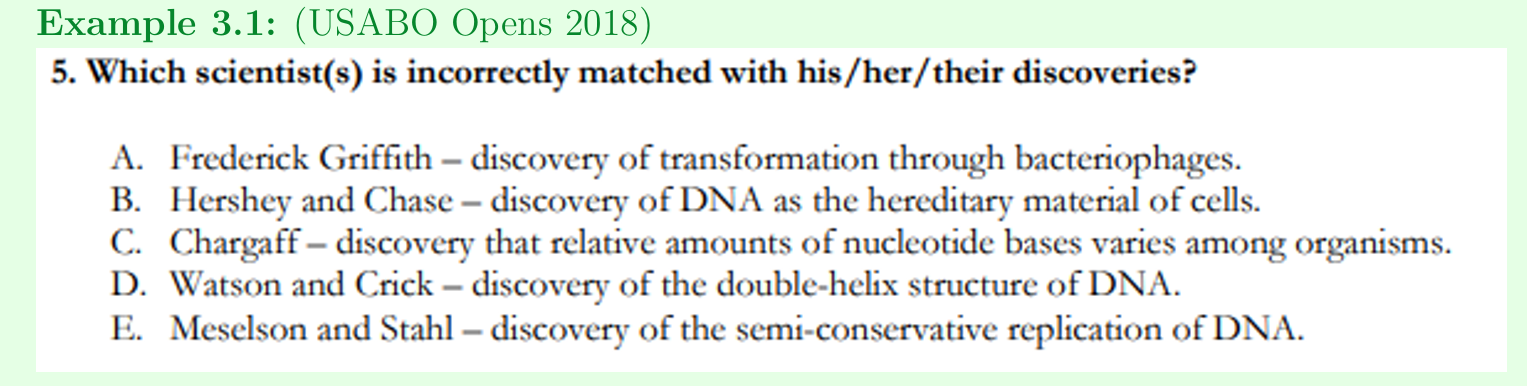
Transformation
The ability of cells (usually bacteria) to take up DNA from their environment and incorporate it into their genome.
Griffith Experiment
Demonstrated transformation using Streptococcus pneumoniae. Heat-killed virulent bacteria transferred genetic information to nonvirulent bacteria.
Avery–MacLeod–McCarty Experiment
Identified DNA as the transforming principle by selectively destroying DNA or protein.
Key inference:
Destroy DNA → no transformation
Destroy protein → transformation occurs
 Note
Note  Flashcards (105)