12. LO6: Eruption and Shedding
 Call Kai
 Learn
Learn Practice Test
 Spaced Repetition
 Match
Match Flashcards
 Knowt Play
1/53

There's no tags or description
Looks like no tags are added yet.
Name | Mastery | Learn | Test | Matching | Spaced | Call with Kai |
|---|
No analytics yet
Send a link to your students to track their progress
54 Terms
Q: What are the three main phases of tooth eruption and shedding?
Preeruptive Phase, Prefunctional Eruptive Phase, and Functional Eruptive Phase
Q: What movement occurs during the Preeruptive Phase?
Movement of primary and permanent tooth crowns within the forming bony crypt
Q: When does the Preeruptive Phase occur?
From the early initiation of the tooth to crown completion
Q: When does the Preeruptive Phase end?
With the early initiation of root formation
Q: What general changes cause the movement of developing crowns during the Preeruptive Phase?
Changes in the size and shape of the developing mandible & maxilla
the position and development of adjacent teeth, and
permanent teeth movement in relation to the resorptive roots of primary teeth and remodelling of alveolar processes
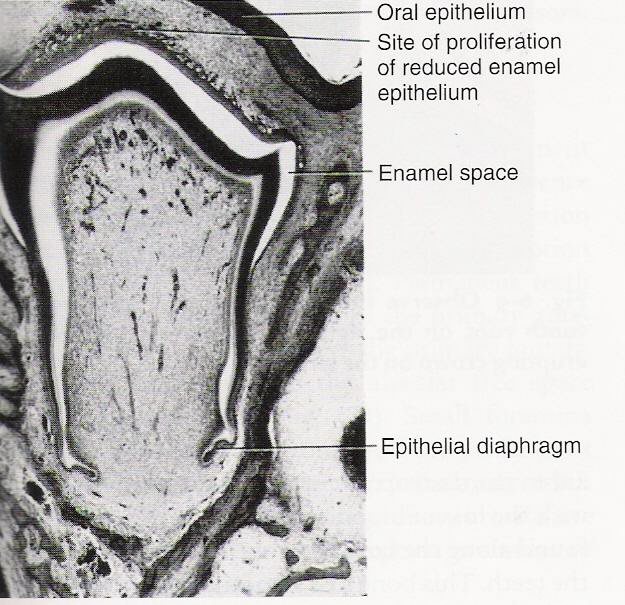
Q: What is the rule for all tooth movement during the Preeruptive Phase?
All movement occurs BEFORE root formation
Q: Where do permanent anterior teeth develop relative to the incisal level of the forming primary teeth?
Lingual to the incisal level of the forming primary teeth
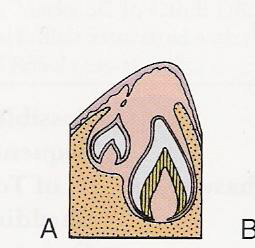
Q: Later in development, where are permanent incisor successors located relative to the primary tooth?
Lingual to the apical third of the primary tooth
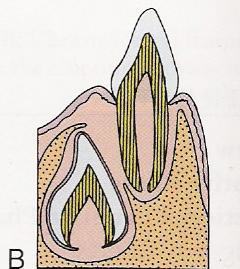
Q: Permanent premolars initially shift from a location near which area of the primary molars?
Near the occlusal area of primary molars
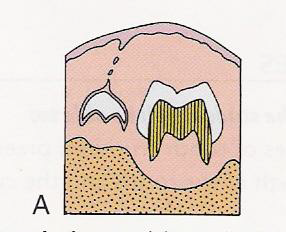
Q: Permanent premolars shift to a location enclosed within which part of the primary molars?
Within the roots of the primary molars
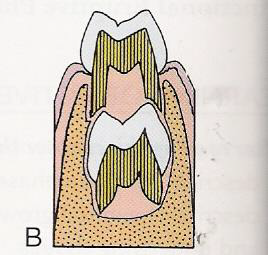
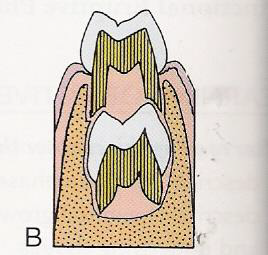
Q: What causes the change in position of the permanent premolars during the Preeruptive Phase?
Increased height of the alveolar bone
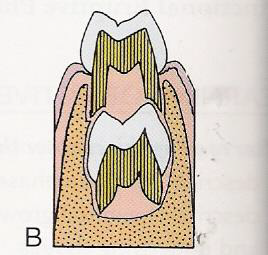
Q: How do permanent molars develop, since they have no primary predecessors?
They develop without relationship to primary teeth
Q: How do Maxillary molars develop with respect to the occlusal plane during the Preeruptive Phase?
With the occlusal slanted distally
Q: How do Mandibular molars develop with respect to the occlusal plane during the Preeruptive Phase?
With the occlusal slanted mesially
Q: What are the four main stages of the Prefunctional Eruptive Phase?
Root formation
Movement
Penetration through epithelial layers
Intraoral movement
What does the pre-functional eruptive phase begin with?
Develop of the root
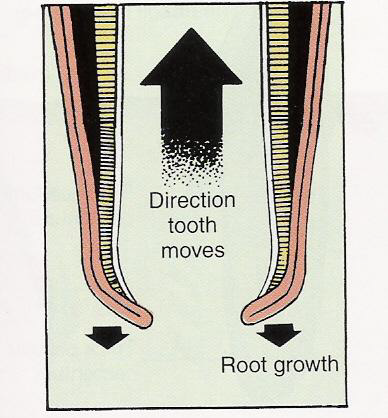
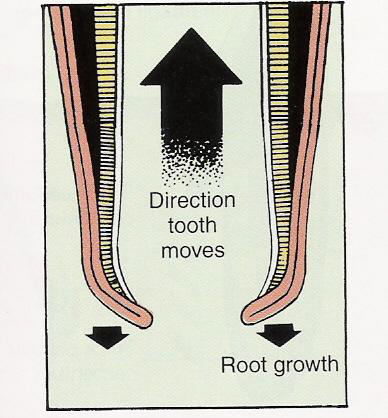
Q: How does root formation drive eruptive movement?
With increase in root length, the tooth begins eruptive movements, providing space for further root lengthening
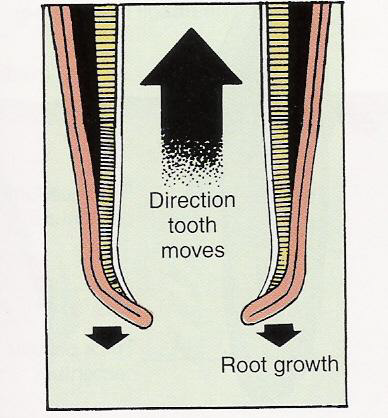
Q: Name some causative factors (forces) of eruption.
Root growth
changes in vascularity
increased cellular activity around the forming tooth
endocrine factors (growth hormone), and
enzyme activity
Q: What is the Dental Follicle?
An area of mesenchymal cells and fibers that surround the dental papilla and the enamel organ of the developing teeth, forming a pathway for eruption
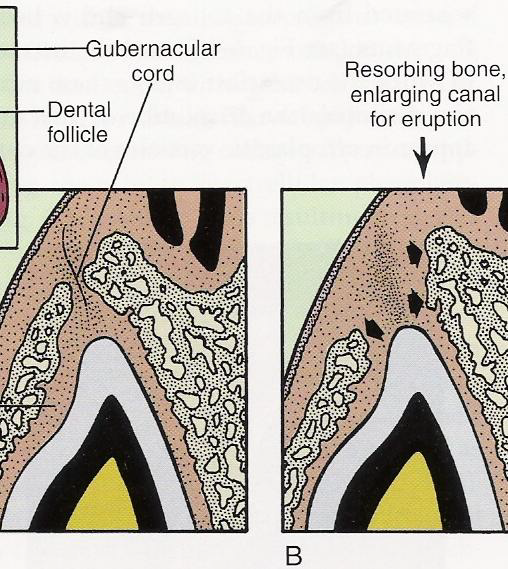
Q: What is the Gubernacular cord?
A fibrous tissue band connecting the tooth sac with the alveolar mucosa
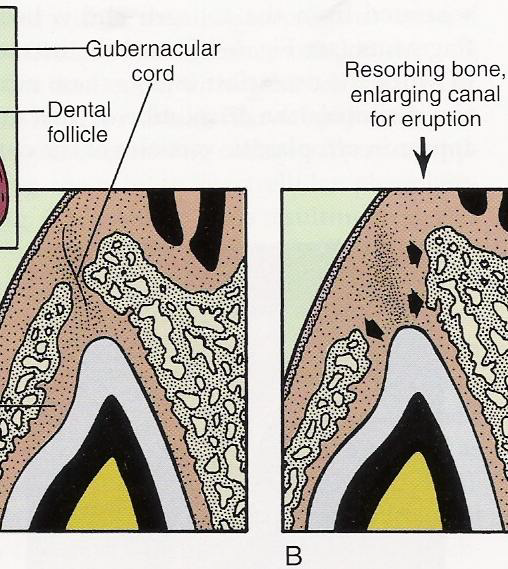
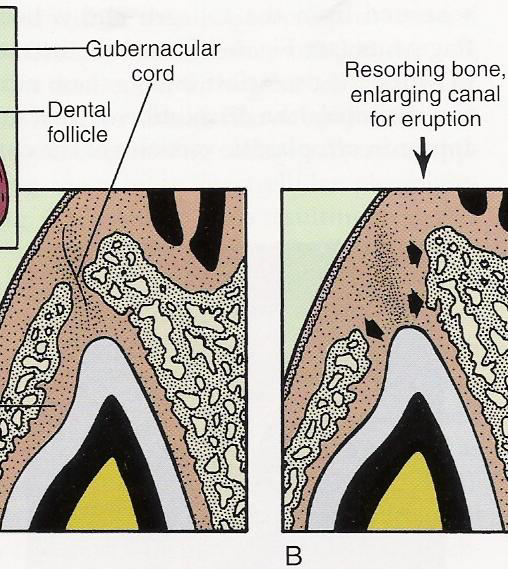
Q: What must be resorbed to allow tooth movement (occlusally) during the Prefunctional Eruptive Phase?
Bone and connective tissue
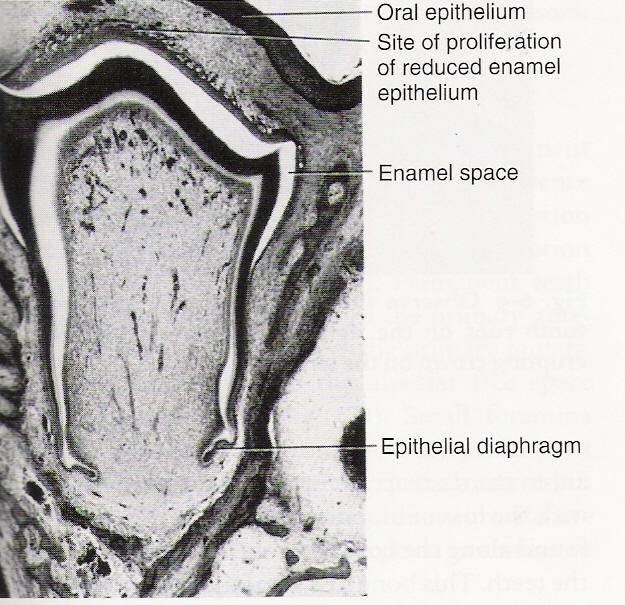
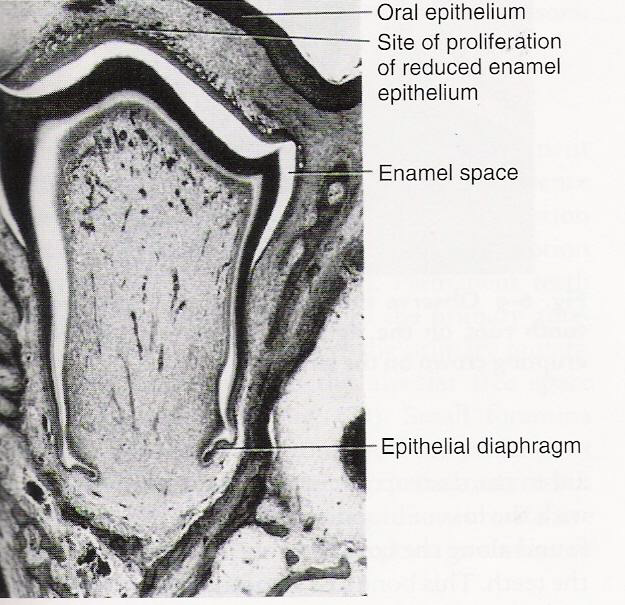
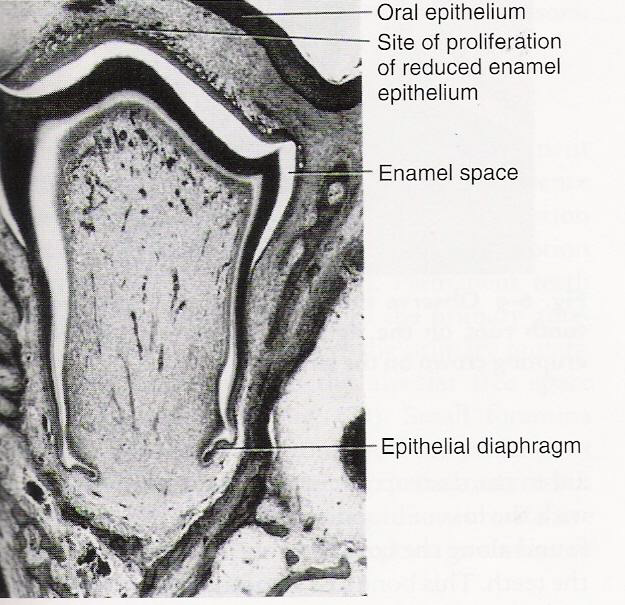
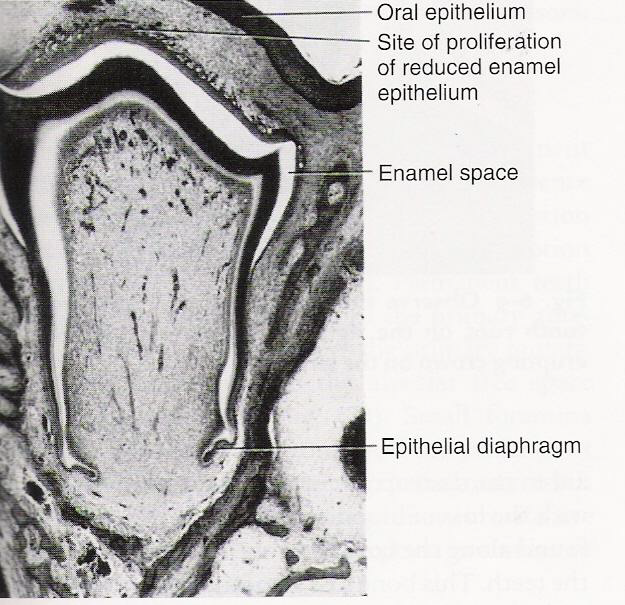
Q: What is the Reduced Enamel Epithelium (REE)?
The layers of the epithelial enamel organ compacted and remaining on the surface of enamel after its formation is complete
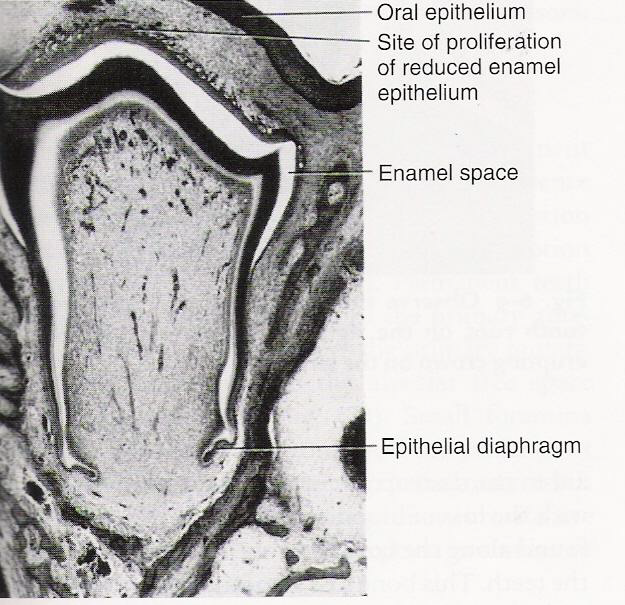
Q: What must the Reduced Enamel Epithelium (REE) do to begin epithelial penetration?
It contacts and fuses with the oral epithelium
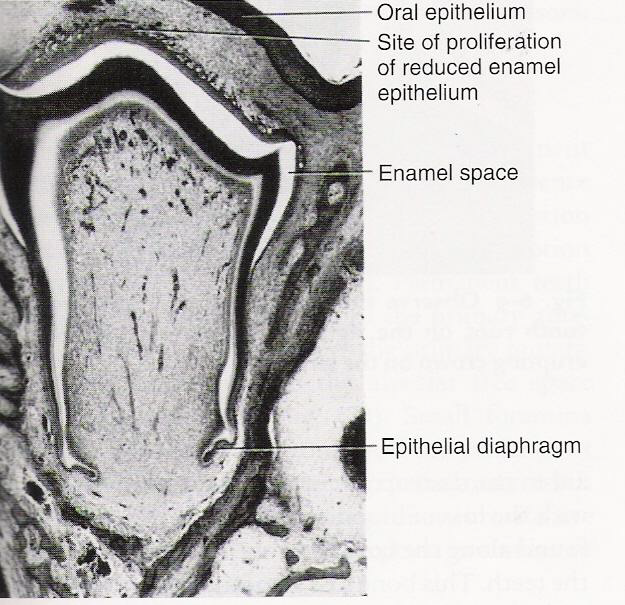
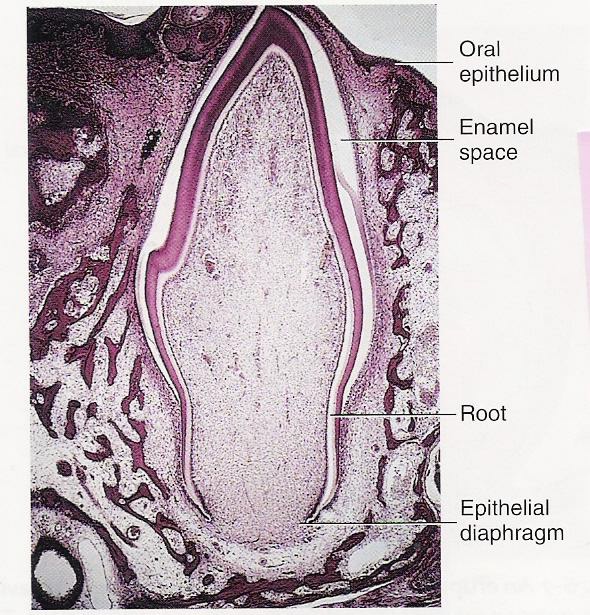
Q: What causes the breakdown of the oral epithelium during eruption?
Enzymes within the REE (reduced enamel epithelium)
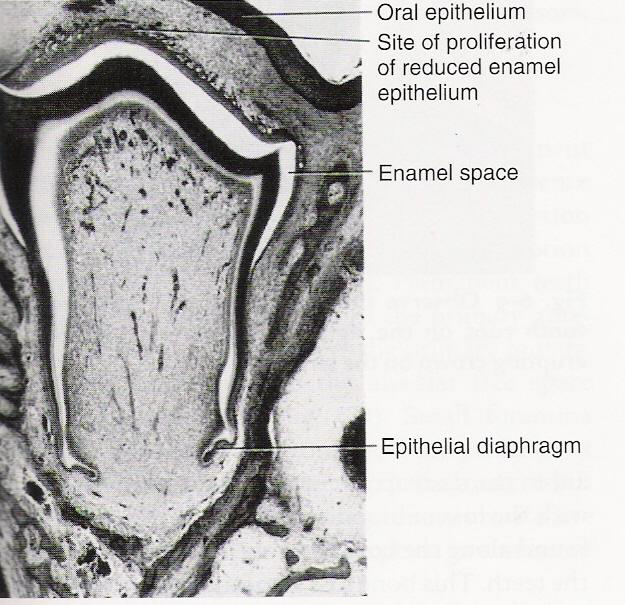
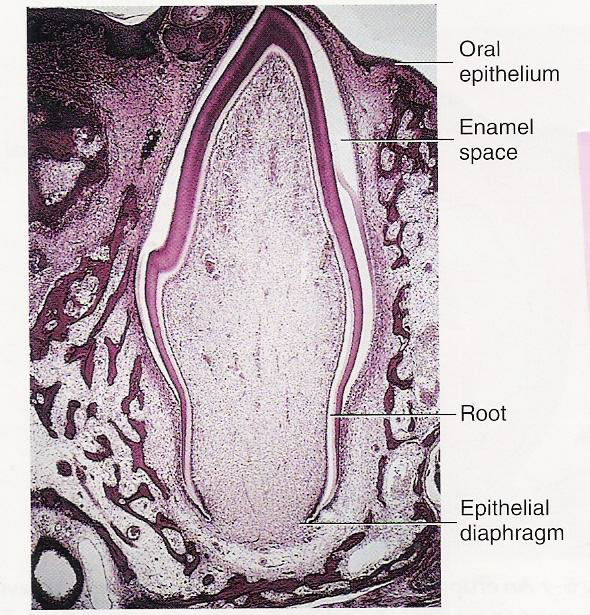
Q: What do the fused epithelial layers become after the tooth crown penetrates them?
The first epithelial attachment: junctional epithelium
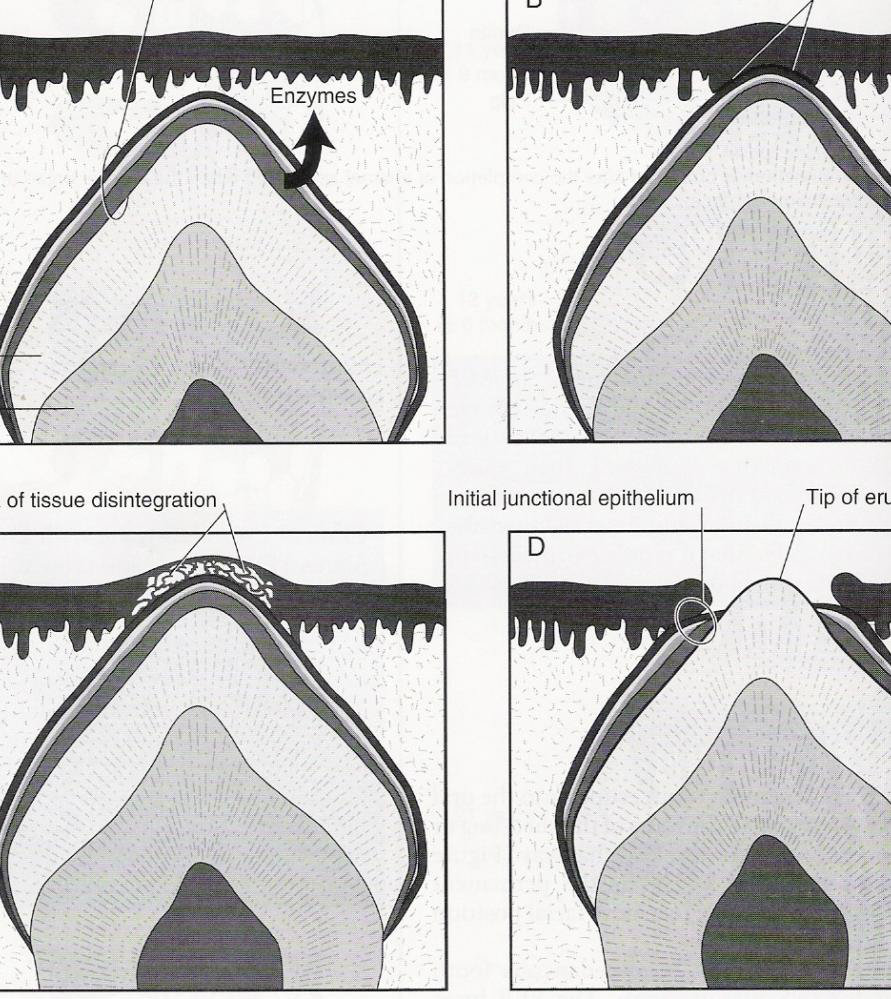
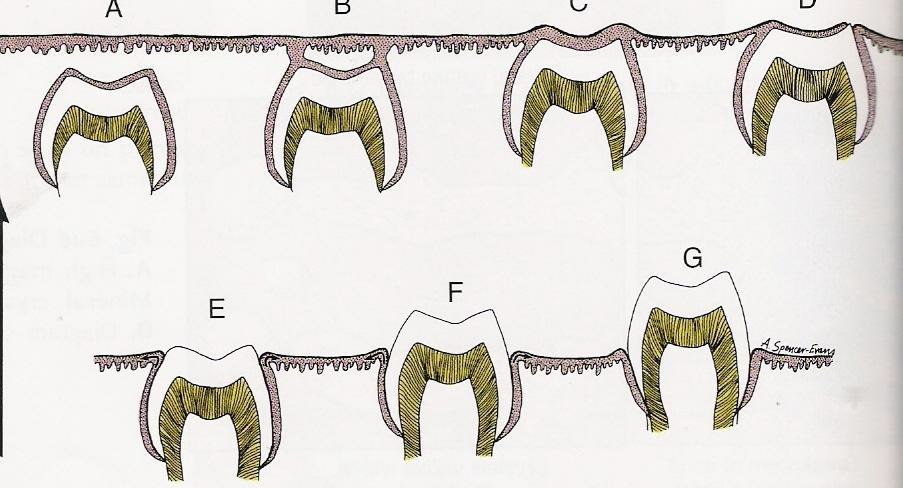
Q: Describe Stage A of the Stages of Tooth Eruption.
Tooth crown approaching oral epithelium in the preeruptive stage
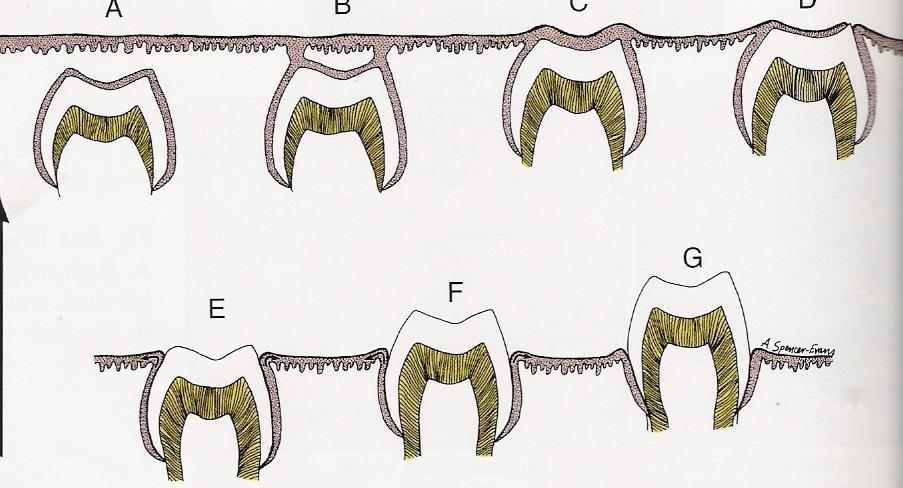
Q: Describe Stage B of the Stages of Tooth Eruption.
Contact of REE (including the developmental cuticle) fusing with oral epithelium
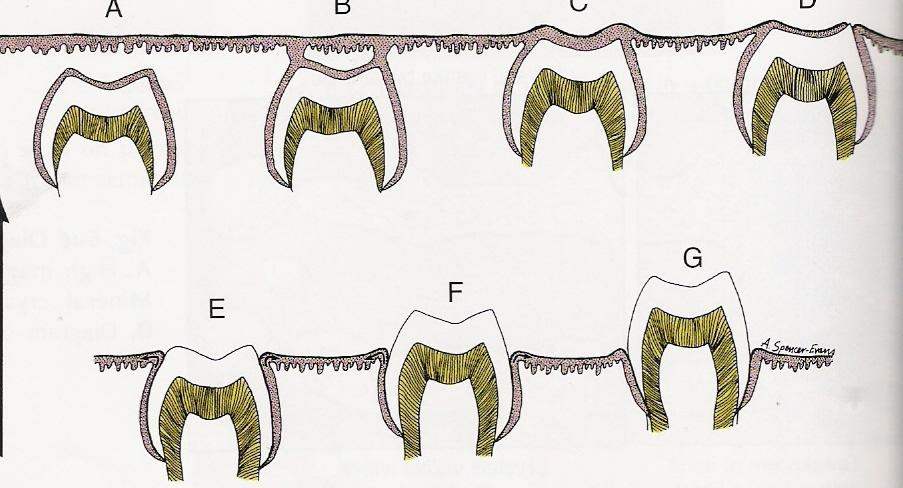
Q: Describe Stage C of the Stages of Tooth Eruption.
Fusion of REE (including the developmental cuticle) and oral epithelium
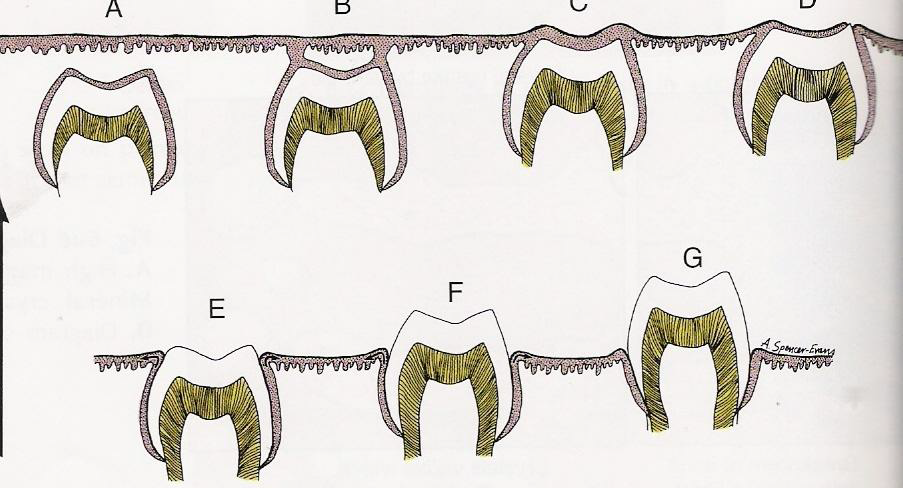
Q: Describe Stage D of the Stages of Tooth Eruption.
Thinning of the fused epithelium
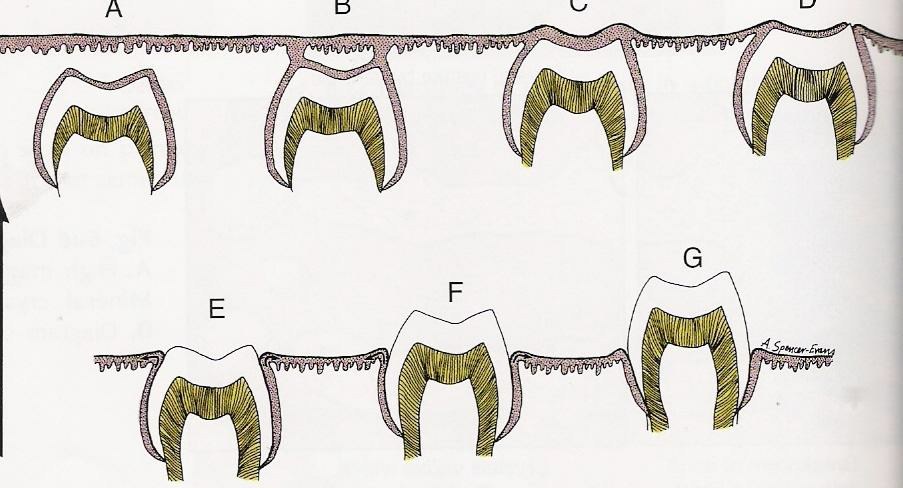
Q: Describe Stage E of the Stages of Tooth Eruption.
Rupture of oral epithelium, formation of the attached gingiva, and emergence
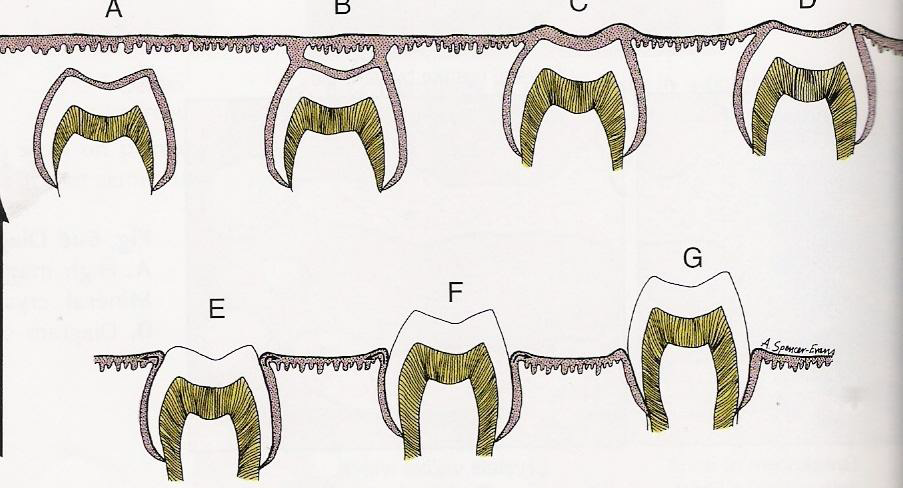
Q: Describe Stage F of the Stages of Tooth Eruption.
Clinical crown appearance into the oral cavity (prefunctional stage)
Q: Describe Stage G of the Stages of Tooth Eruption.
Tooth erupting into functional occlusion
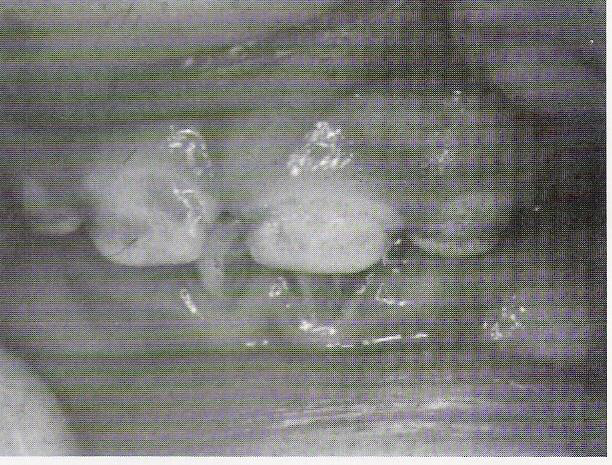
Q: What three tissues compose Nasmyth’s Membrane?
Fused tissue of the Reduced Enamel Epithelium (REE), the oral epithelium, and the primary cuticle
Q: What is the primary cuticle?
A thin film on the enamel surface of an unerupted tooth, which is a product of the degenerating ameloblasts
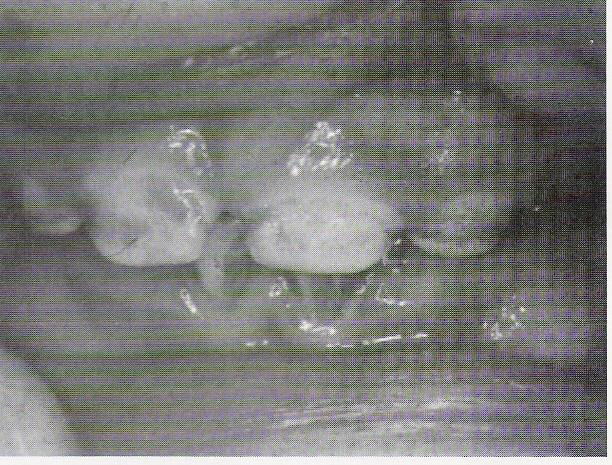
Q: Why does Nasmyth’s Membrane stain easily?
It easily stains with food debris, causing staining of the newly erupted primary teeth
Q: What happens during the Prefunctional Eruptive Phase (Intraoral movement)?
The tooth continues to erupt until it is in clinical contact with the opposing tooth
Q: How is the Clinical crown defined?
The exposed part of the crown at any point in eruption, from the cusp tip to the gingival attachment
Q: How is the Anatomic crown defined?
The area from the cusp tip to the cementoenamel junction
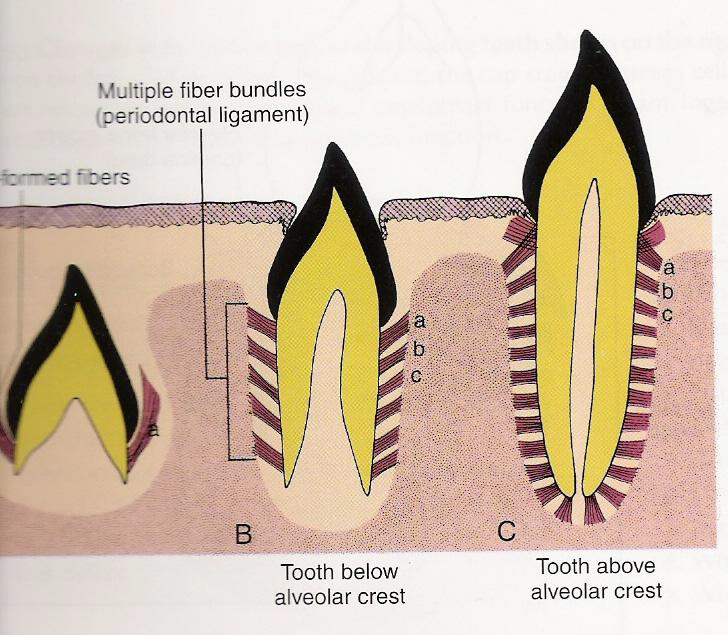
Q: Which periodontal ligament (PDL) fibers form first during the Prefunctional Eruptive Phase?
Cervicle fibers
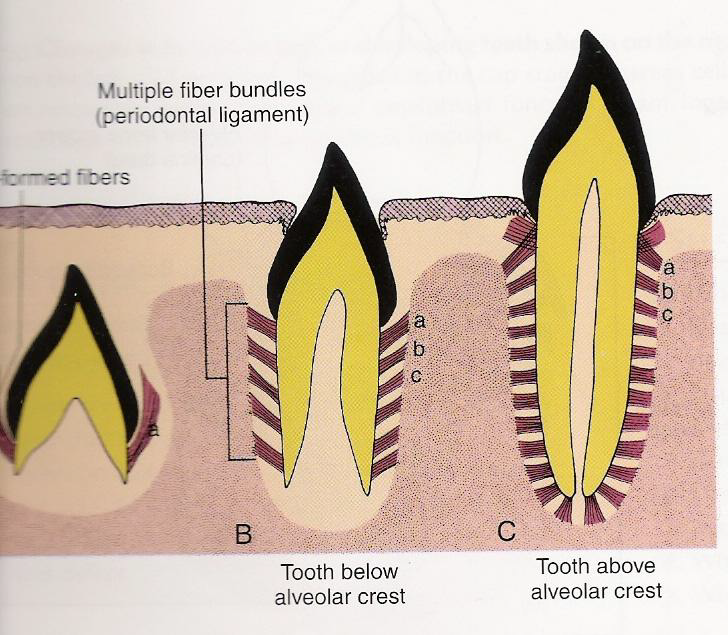
In the Prefunctional eruptive phase, the first cervicle fibres grow along what during the elongation?
With eruption: fibers grow along the elongating root (note orientation of fibers)
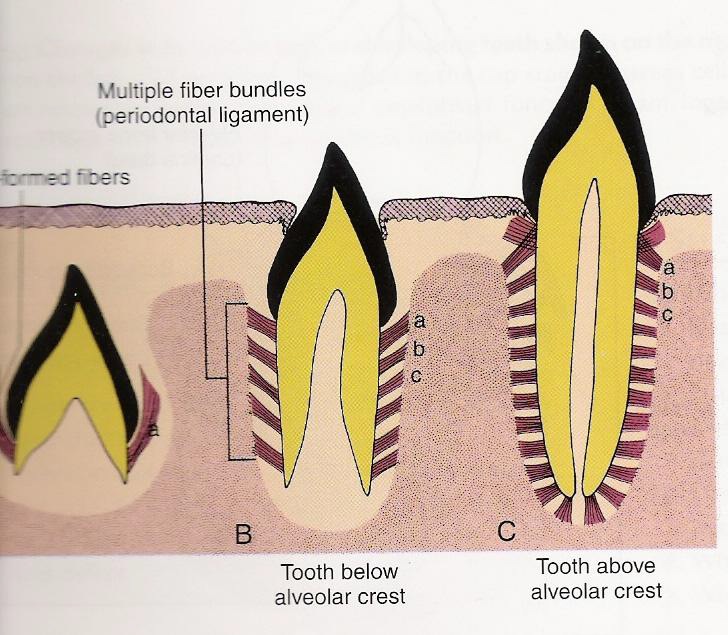
Q: When does the Functional Eruptive Phase occur?
After the teeth are in functional occlusion and continues until the teeth are lost or death
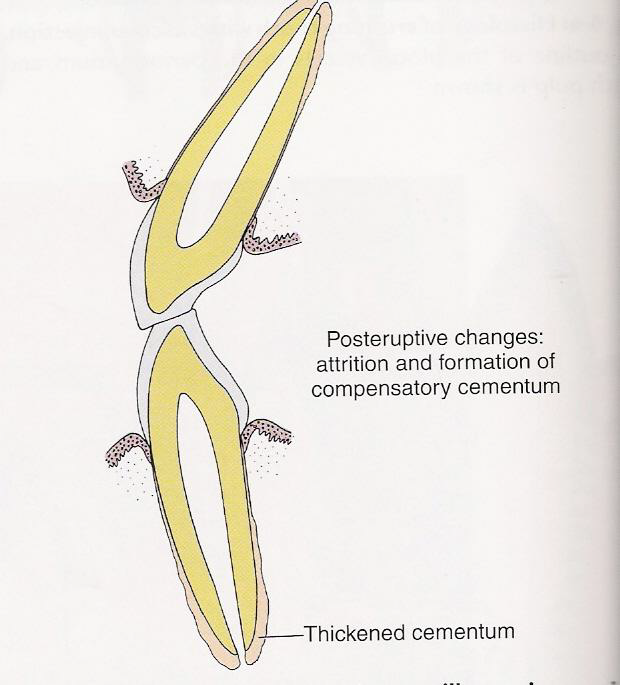
Q: What are two structural changes that occur early in the Functional Eruptive Phase due to function?
Completion of the apex of the tooth root and rapid formation of cementum
Q: What is the role of eruption in the Functional Eruptive Phase?
It balances occlusion and accommodates the continued growth of the maxilla and mandible
Q: What force helps maintain tooth contact despite slight interproximal wear during function?
Mesial eruptive force
Q: What is supraeruption?
Over eruption of the opposing tooth (or teeth) following the loss of a tooth (or teeth)
Q: What are potential consequences of supraeruption?
Unbalanced normal occlusal plane
Temporomandibular joint malfunction
Reduced vertical dimension
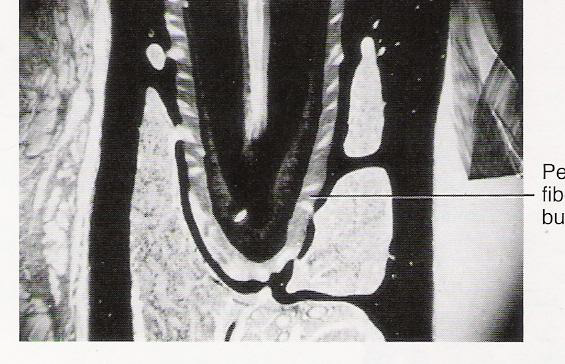
Q: What structural change related to the PDL occurs during the Functional Eruptive Phase?
Formation of apical periodontal ligament fibers and thickening and final orientation of all PDL fibers
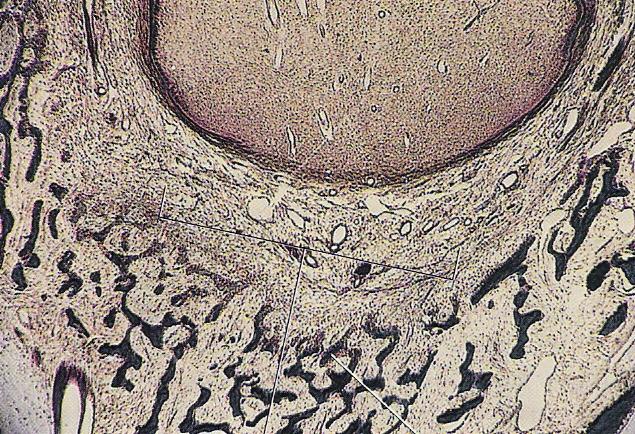
Q: What structural change happens to the alveolar bone in the Functional Eruptive Phase?
Alveolar bone density increases
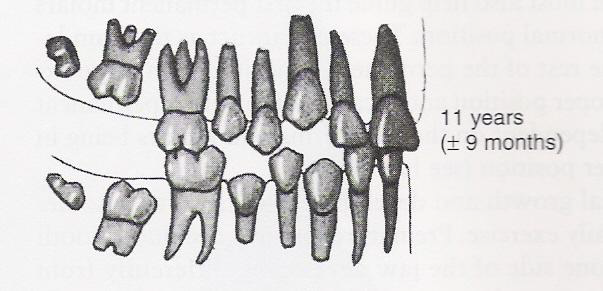
Q: At approximately 11 years (± 9 months), which permanent teeth are typically in the Pre-eruptive phase?
Permanent 3rd molars
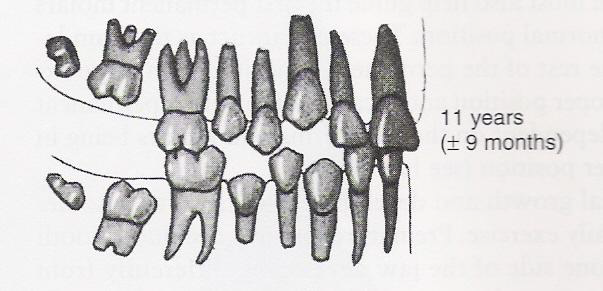
Q: At approximately 11 years, which permanent teeth are typically in the Prefunctional eruptive phase?
Permanent 2nd molars, 2nd premolars, 1st premolars, and cuspids
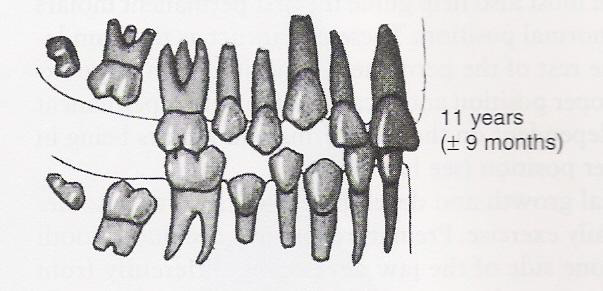
Q: At approximately 11 years, which permanent teeth are typically in the Functional eruptive phase?
Permanent 1st molars, lateral incisors, and central incisors
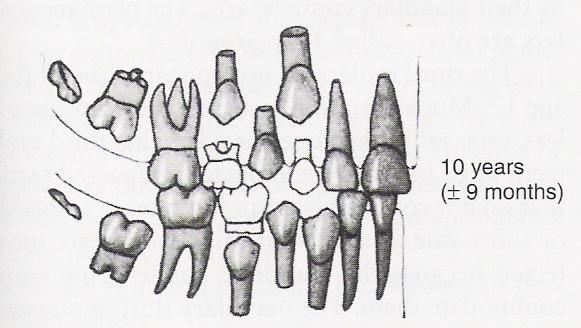
Q: At approximately 10 years (± 9 months), which permanent teeth are typically in the Pre-eruptive phase?
Permanent 3rd molars
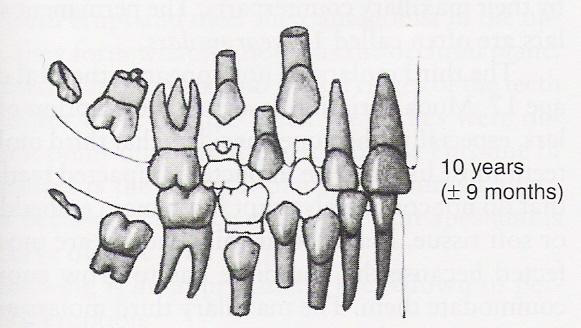
Q: At approximately 10 years, which teeth are typically in the Functional eruptive phase?
Permanent 1st molars, lateral incisors, central incisors, primary 2nd molars, and primary maxillary canine
How does functional attrition with occlusal/incisal wear keep occlusion
Eruption maintains teeth in contact throughout life

