Ch 10 - Muscle System Physiology - Road map
 Call Kai
 Learn
Learn Practice Test
 Spaced Repetition
 Match
Match Flashcards
 Knowt Play
1/38

Earn XP
Description and Tags
82 terms
Name | Mastery | Learn | Test | Matching | Spaced | Call with Kai |
|---|
No analytics yet
Send a link to your students to track their progress
39 Terms
Muscle tension
Generation of force by all muscle tissue;
creates movement, maintains posture, stabilizes joints, generates heat, and regulates the flow of materials through hollow organ
Muscle cells (Myocytes)
Muscle tissue consists of Muscle Cells (Myocytes) and the surrounding extracellular matrix called Endomysium,
Endomysium
holds the muscle cells together and transmits tension to neighboring cell. the ECM surrounding the myocytes.
Striation
Alternating light and dark bands
due to alternating arrangement of actin (thin) and myosin (thick) protein filaments within repeating functional units called sarcomeres.
Skeletal Muscle Tissue
Long, thin, striated,multinucleated cells arranged parallel to each other;
often called Muscle Fibers;
must be stimulated by the nervous system; voluntary
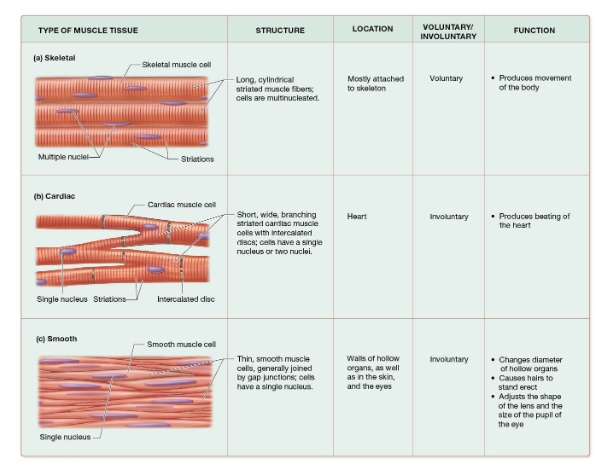
Muscle Fibers
elongated muscle cells that forms the basic structural units of muscle tissue, particularly skeletal muscle
Cardiac Muscle Tissue
Shorter and wider with branches
usually a single nucleus; striated with
Intercalated Discs that are modified gap junctions and modified tight junctions; unite cells for contraction as a unit;
found only in the heart; involuntary
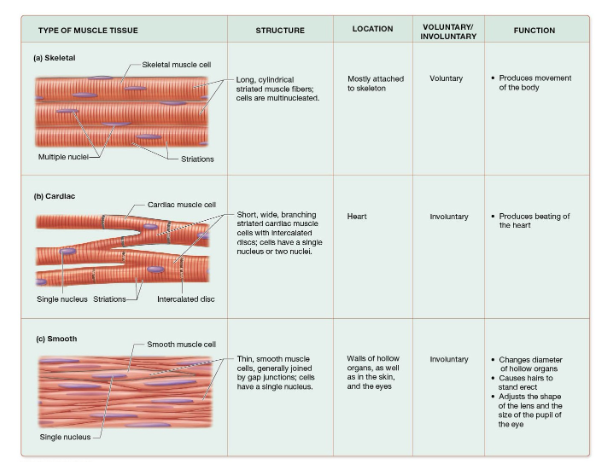
Intercalated Discs
modified gap junctions and modified tight junctions; unite cells for contraction as a unit; found only in the heart;
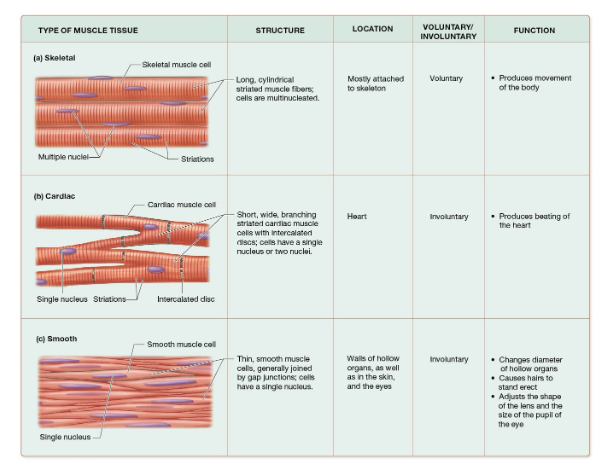
Smooth Muscle Tissue
Long, flattened cells with two pointed ends and a single, centrally located oval nucleus;
line hollow organs, found in the eyes, the skin, and the ducts of certain glands;
many are linked by gap junctions; involuntary
Contractility
is the ability to contract where proteins in the cell draw closer together
the smallest unit is the sarcomere
Excitability (Responsivity)
is the ability to respond to a stimulus (chemical, mechanical or electrical)
Conductivity
is the ability to conduct electrical charges across the plasma membrane
Distensibility
is the ability of a cell to be stretched without being ruptured
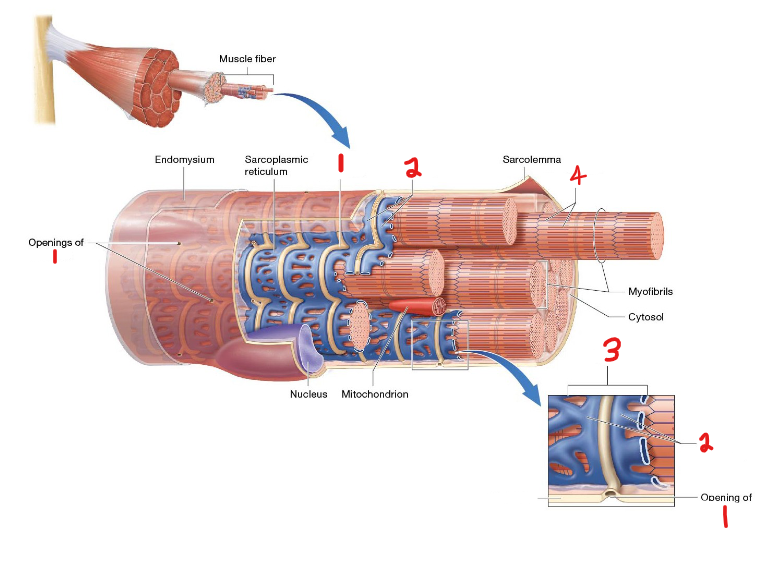
Sarcoplasm - The muscle cell’s cytoplasm
1
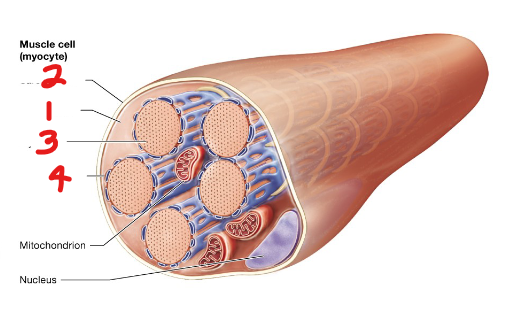
Sarcolemma - The muscle cell’s plasma membrane
2
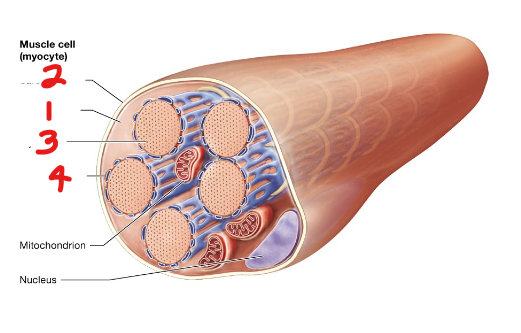
Myofibrils - Bundles of specialized proteins, including those involved in muscle contraction
3
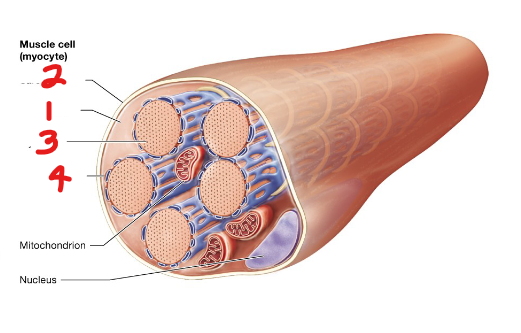
Sarcoplasmic Reticulum (SR) - modified smooth endoplasmic reticulum that forms a weblike network surrounding each myofibril contains calcium
4
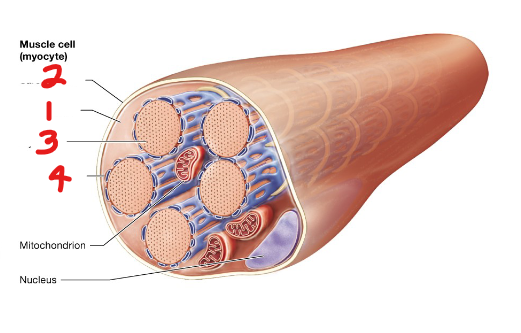
Tranverse Tubules (T-tubules) - Sarcolemma forms inward extensions called Tranverse
Tubules (T-tubules) that dive into the muscle fiber and surround each myofibril, forming a tunnel-like network
1
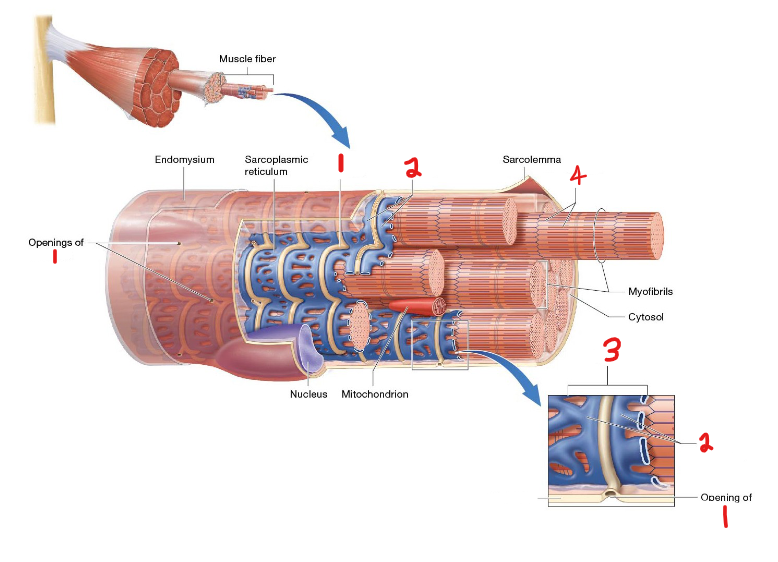
Tunnels are filled with extracellular fluid; flanking each side of a T-tubule are enlarged portions of the S R called
Terminal Cisternae
2
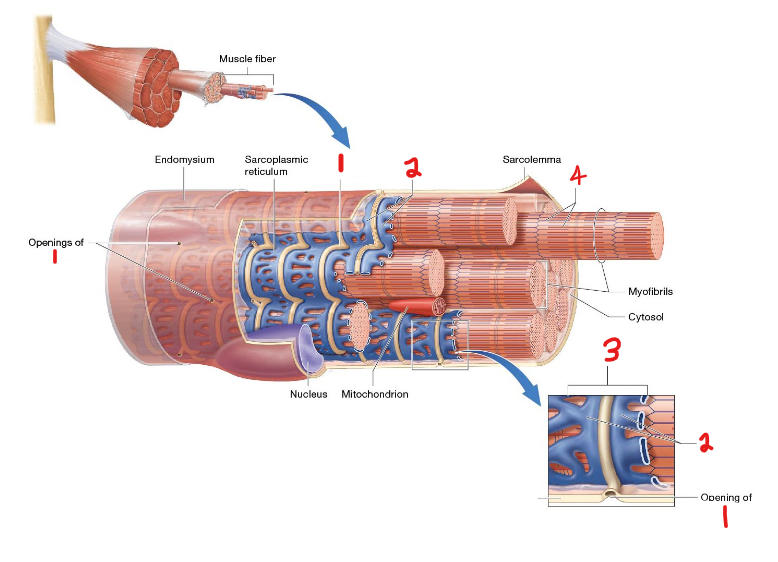
a Triad is a combination of a T- tubule and two terminal cisternae
3
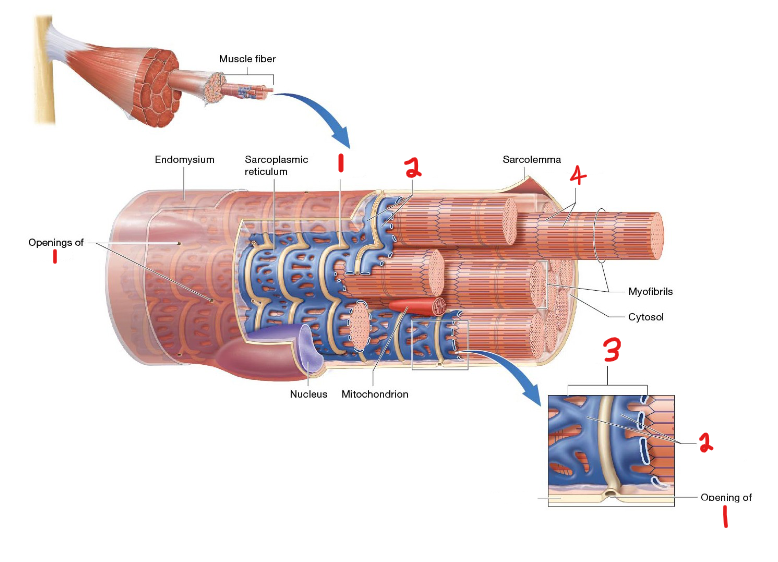
Myofibrils Composed of hundreds to thousands of protein bundles called Myofilaments
4