Fungi
 Studied by 0 people
 Call Kai
 Learn
Learn Practice Test
 Spaced Repetition
 Match
Match Flashcards
 Knowt Play
1/21

There's no tags or description
Looks like no tags are added yet.
Name | Mastery | Learn | Test | Matching | Spaced | Call with Kai |
|---|
No study sessions yet.
22 Terms
How are fungi different from plants?
Plants:
Autotrophs
Specialized tissues for transportation of water and nutrients
Cell walls with cellulose
Fungi
Heterotrophs (decomposers)
Bodies are a mass of filaments woven together with no distinct tissues
Cell walls with chitin
How do fungi get nutrients
Extracellular digestion: fungi release digestive enzymes breaking down food, and then absorbing nutrients
Food sources: dead stuff, and parasitic fungi feed on living hosts.
Some form mutualistic/symbiotic relationships with plant roots
How do fungi reproduce?
Asexual:
Fragmentation
Budding
Quicker and less energy used, however less genetic diversity
Sexual:
Spores released from a fruiting body (ex mushroom)
Spread by wind, water, or other animals
There is more genetic diversity, but it is slower and uses more energy
Lichen
A mutualistic relationship between a fungus and an algae
Mutualism
A relationship in which both organisms benefit from the relationship
Algae benefits by:
getting water and minerals from fungus
Fungus benefits by:
Getting food made by algae through photosynthesis
Where do you find lichens, why?
On surfaces not typically colonized by other organisms. This relationship allows for food and support.
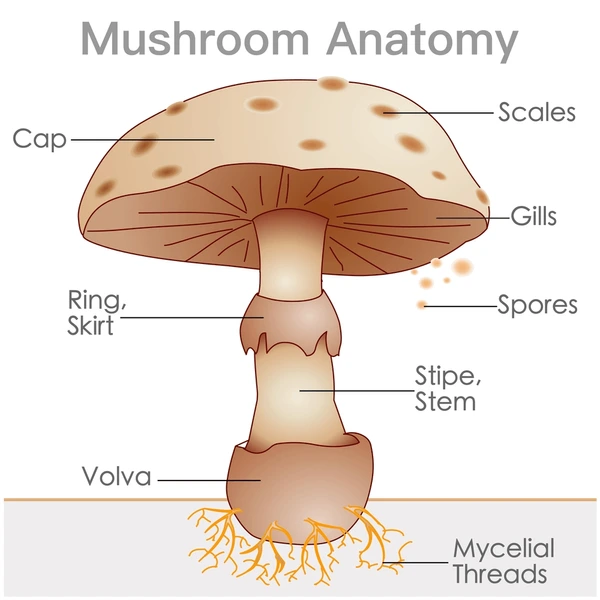
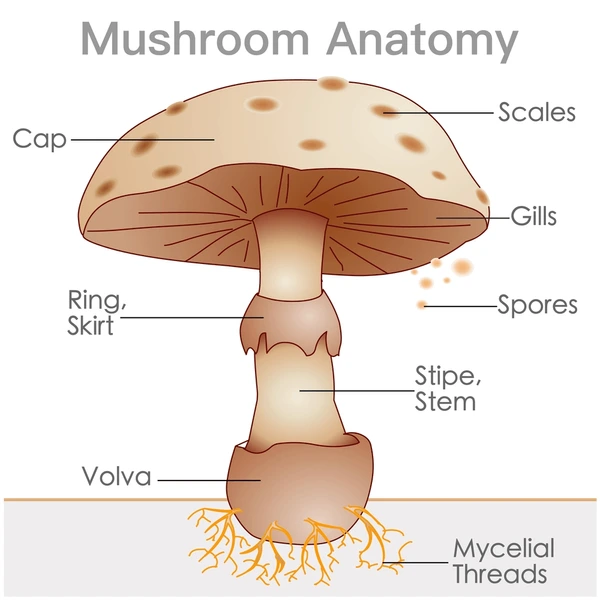
Cap
Characteristic of phylum:
basidiomycota; fruiting body of the fungus
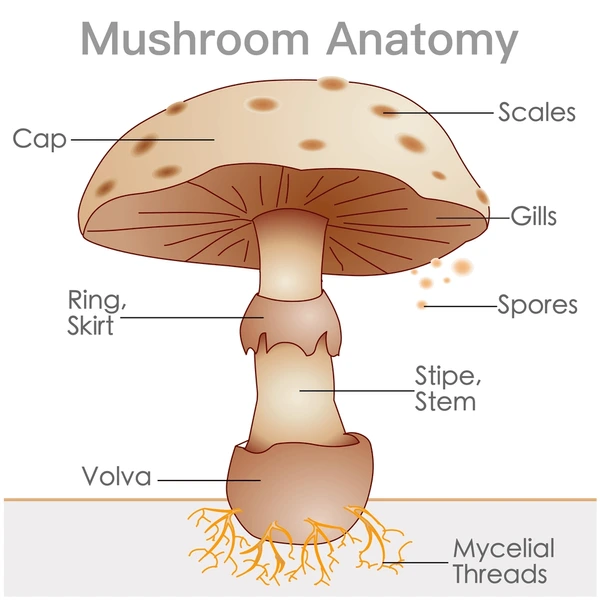
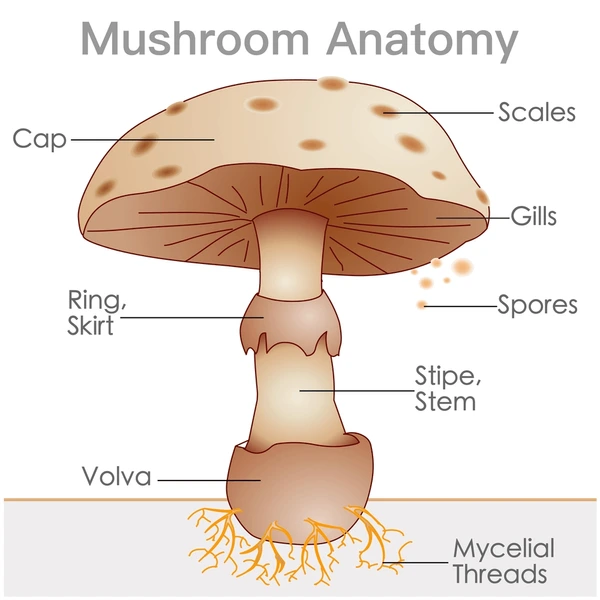
Gills
Holds spores for release by wind, water, or animals
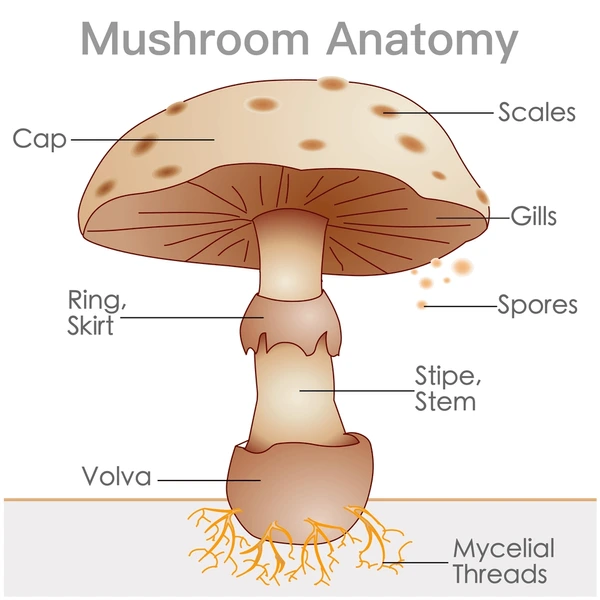
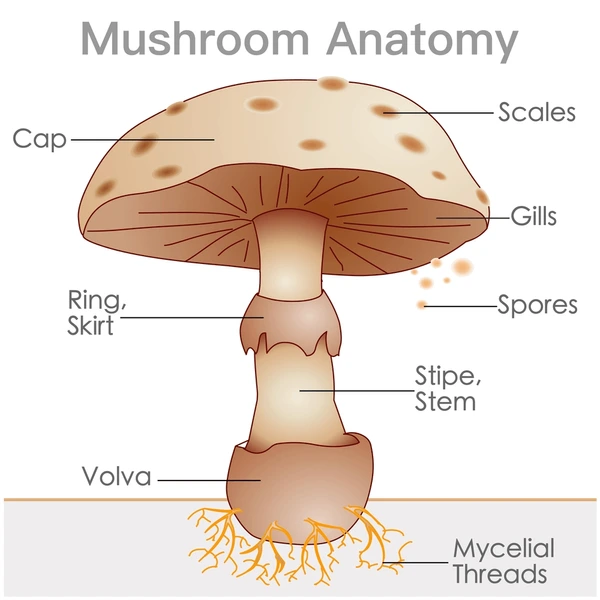
Annulus
protects the gills during development
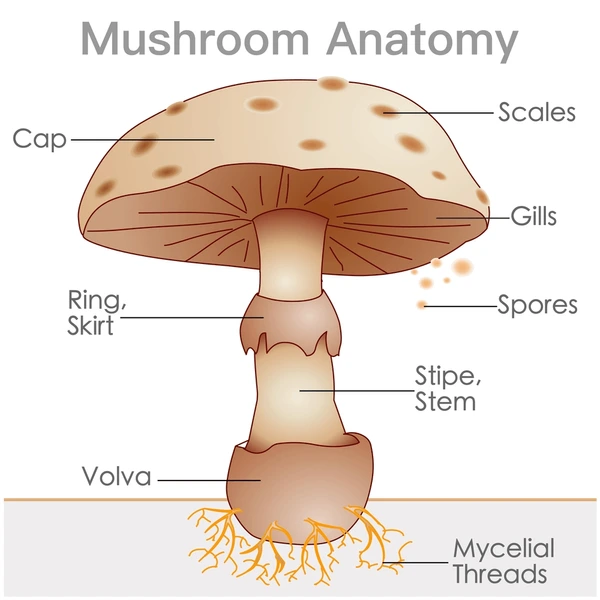
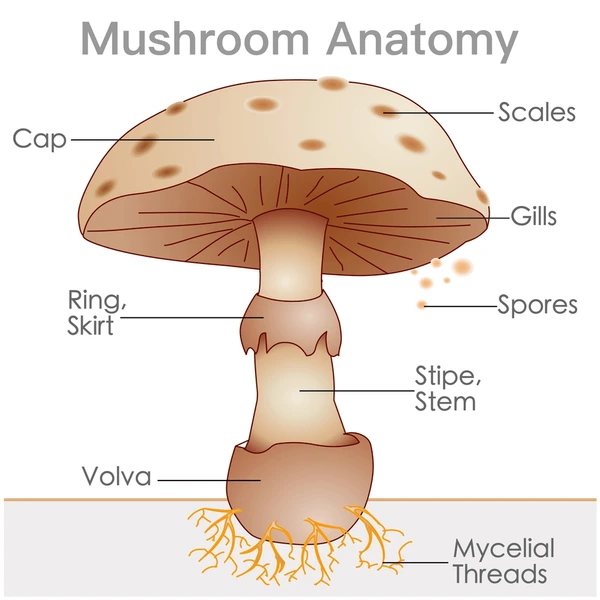
Stalk/Stipe
supports the fruiting body
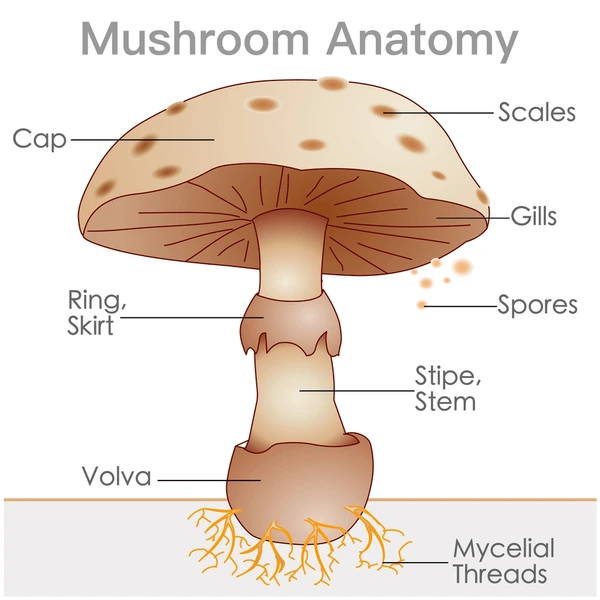
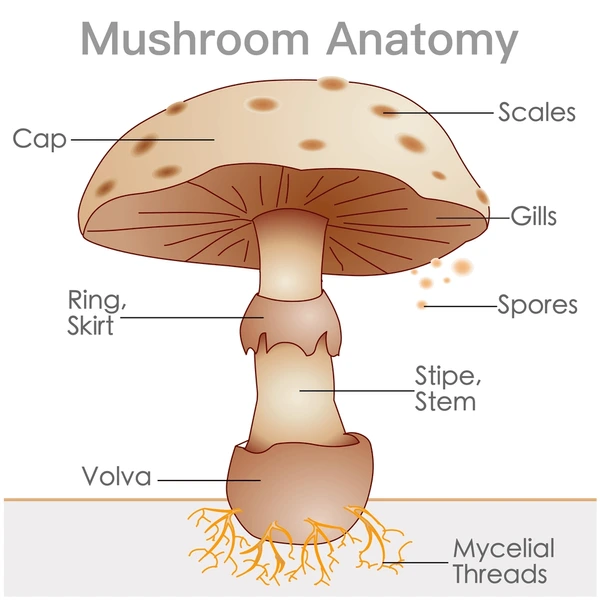
Volva:
remnant of veil to protect the gills (when the mushroom was younger)
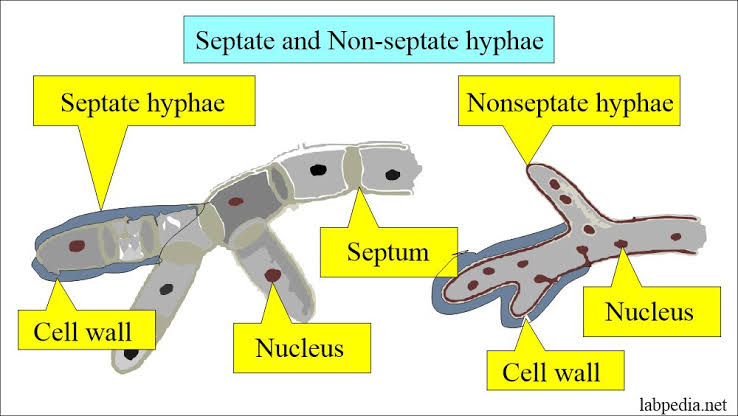
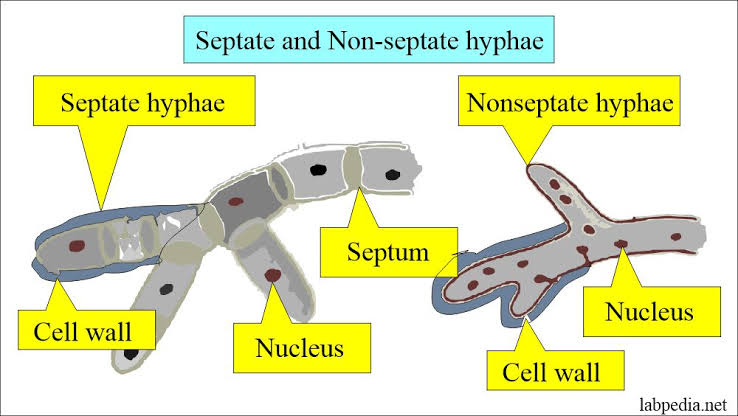
Hyphae
threadlike filaments form from spores
Some fungi have septa which are cell walls made from chitin and separates cells
Other fungi may have nuclei but no separation
Mycellium
underground network of hyphae
Fungi are categorized by mode type of
spores
Chytridiomycota
uses zoo spores, which has flagella
most are parasites of algae and animals
can reproduce asexually by infecting pollen
or sexually using motile zoospores
Zygomycota
uses zygospores
Break down decaying matter, ex: bread mold
reproduce asexually using sporangia
or sexually using zygospores
Ascomycota
Can be pathogenic or beneficial
Spores: ascospores and conidiophores
Ex: truffles, largest phylum
Decomposers, parasites, or mutualists
Asexually reproduce by specialized hyphae called conidiophores or conidiospores which are dispersed by wind, water, or animals
Sexually reproduce by: hyphae from 2 different individuals join and form an ascospore
Basidiomycota
Decomposers or parasites
Fruiting bodies rise from the ground to release spores
Asexually reproduce by dispersing conidiospores through water, animals, or wind
Sexually reproduce by: fruiting bodies rising up (mushrooms, puffballs) on the fills, these confain basidio that fuse together to form basidiospores. They are usually dispersed bt wind.
Deuteromycota
sexual life cycle not completely understood
Ex: penicillium
“Imperfect fungi”
Glomeromycota
Can not have sex
Lives in close association with roots of trees and plants
Mutualistic relationship
 Note
Note  Flashcards (26)