4.12 communicable diseases
 Call Kai
 Learn
Learn Practice Test
 Spaced Repetition
 Match
Match Flashcards
 Knowt Play
1/173

There's no tags or description
Looks like no tags are added yet.
Name | Mastery | Learn | Test | Matching | Spaced | Call with Kai |
|---|
No analytics yet
Send a link to your students to track their progress
174 Terms
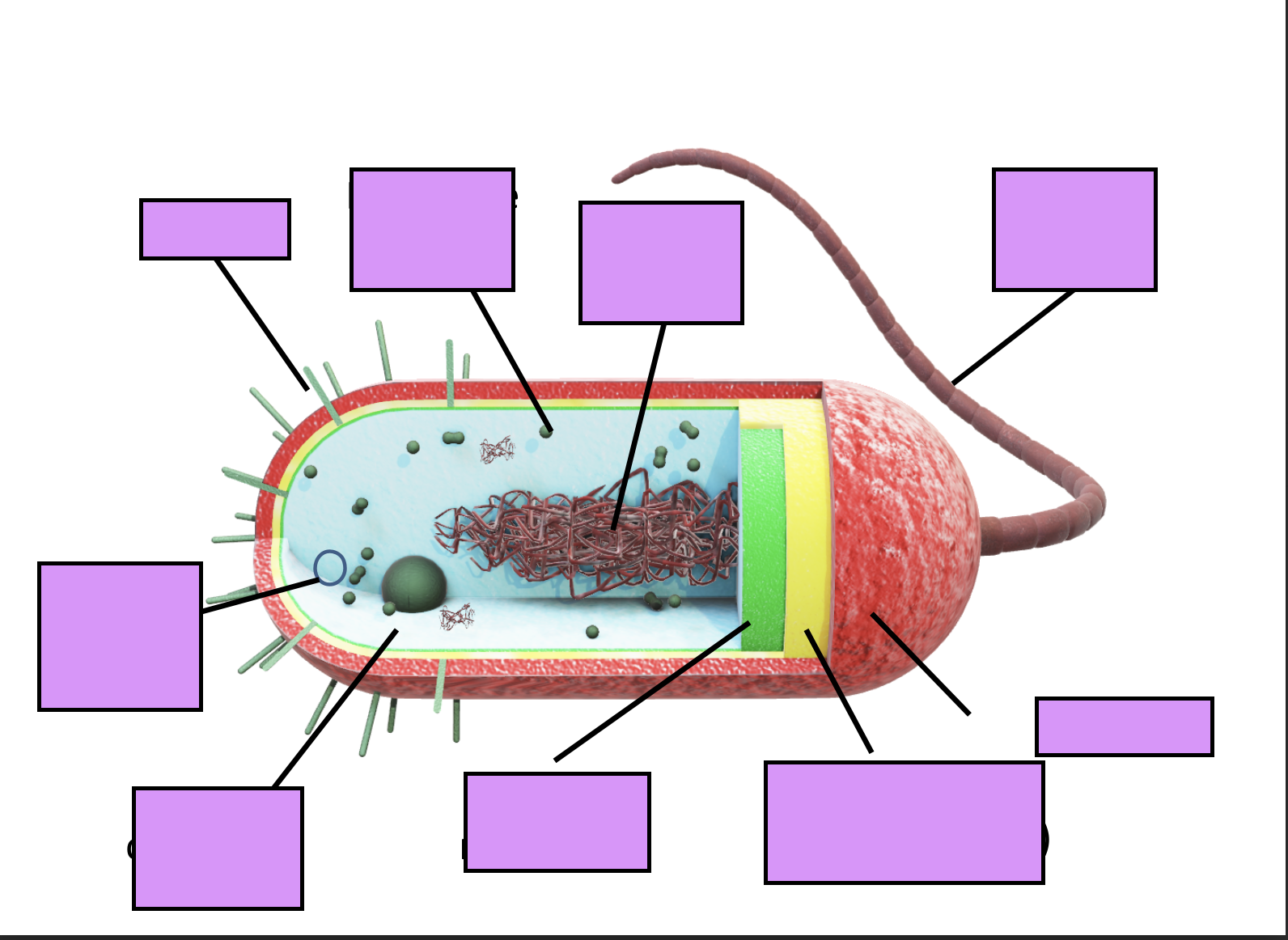
label this picture of bacteria
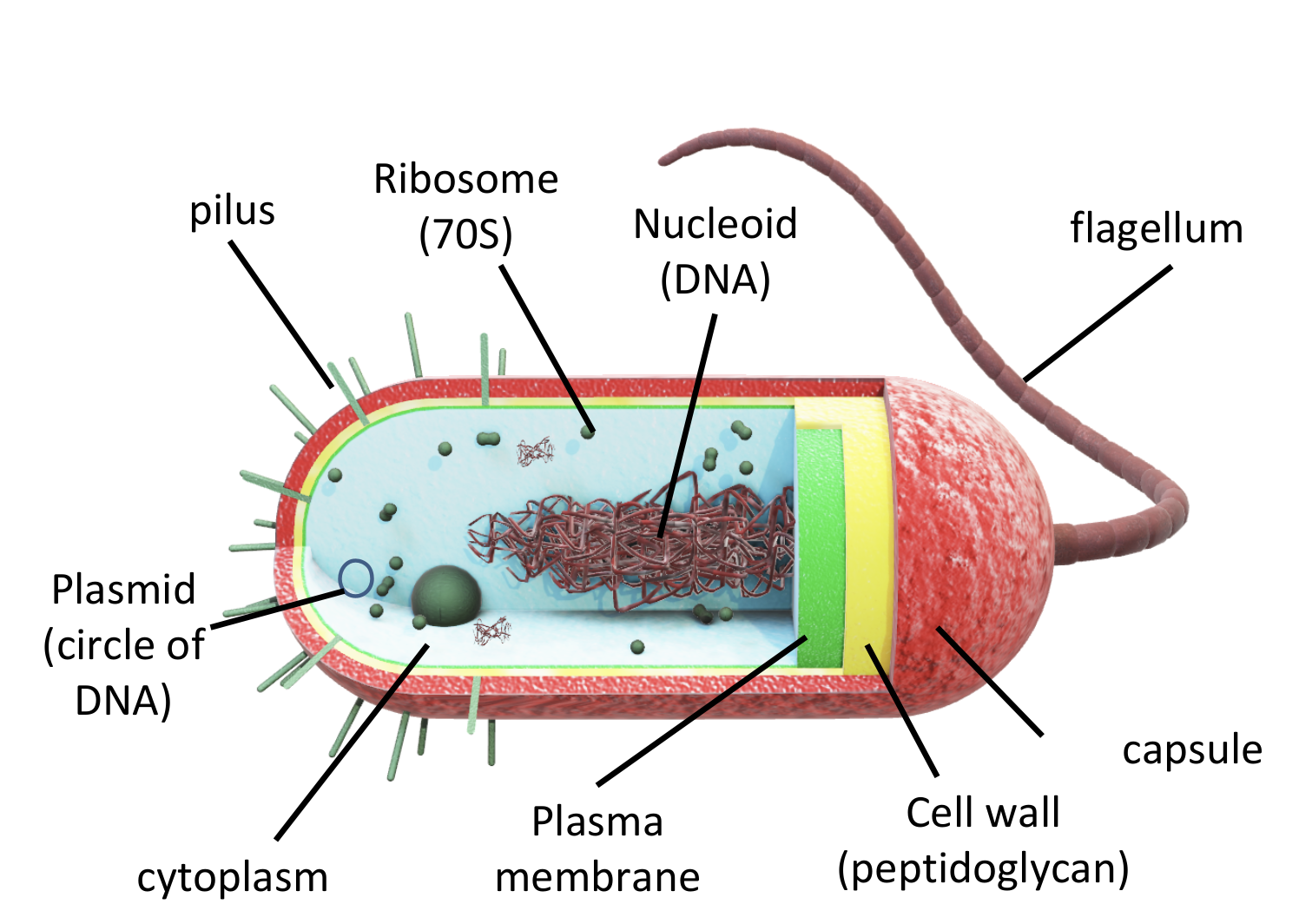
how do you know if something is gram positive?
looks purple/blue under light microscope
what stain do you use to become Gram positive?
stain with crystal violet
what is an example of something that is gram positive?
MRSA
how do you know if something is gram negative?
looks red under light microscope
what stain do you use to become gram negative?
stain with safranin
what is an example of something that is gram negative?
E.Coli
what is the process of gram staining on bacteria?
crystal violet is added then safranin
what is the shape and function of coccus bacteria?

what is the shape and function of spirillum bacteria?

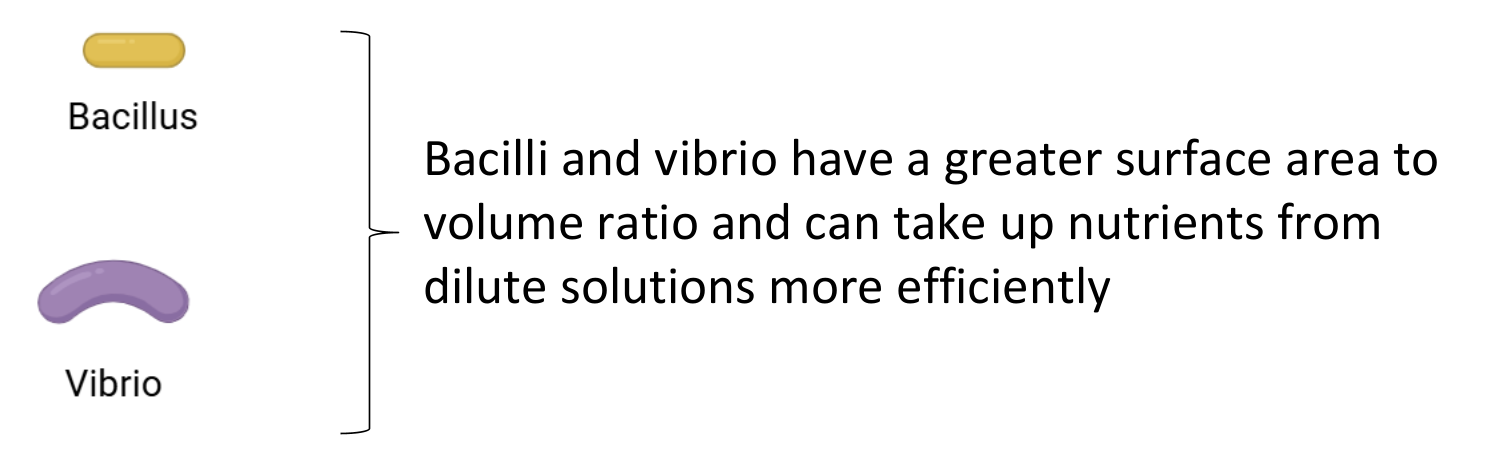
what is the shape and function of bacillus and vibrio bacteria?
how do bacteria reproduce?
by binary fission
what are problems with bacteria reproducing so quickly?
food spoilage
spread of disease
how do bacteria cause disease?
producing toxins and causing symptoms by cell damage
damage cell membranes, enzymes or genetic material
what happens in tuberculosis?
lungs most often affected
kills cells and tissues
what are symptoms of tuberculosis?
coughing up blood
fever
chest pain
chills
night sweats
weight loss
what happens in tuberculosis?
infection of the meninges (membrane that surrounds brain and spinal cord)
becomes swollen and causes damage to the brain and nerves
which category of people are bacterial meningitis most common?
more common in infants younger than 1yrs
people ages 16-21 because students are living in dorms or other close quarters that are at increased risk
what are symptoms of meningitis?
fever
headache
stiff neck
sensitive to light
vomiting
confusion
what happens in ring rot?
ring of decay on potato tuber or tomato
also leaf wilting
what are symptoms of ring rot?
cause plant to wilt
soft cheese-like rotting of the vascular ring
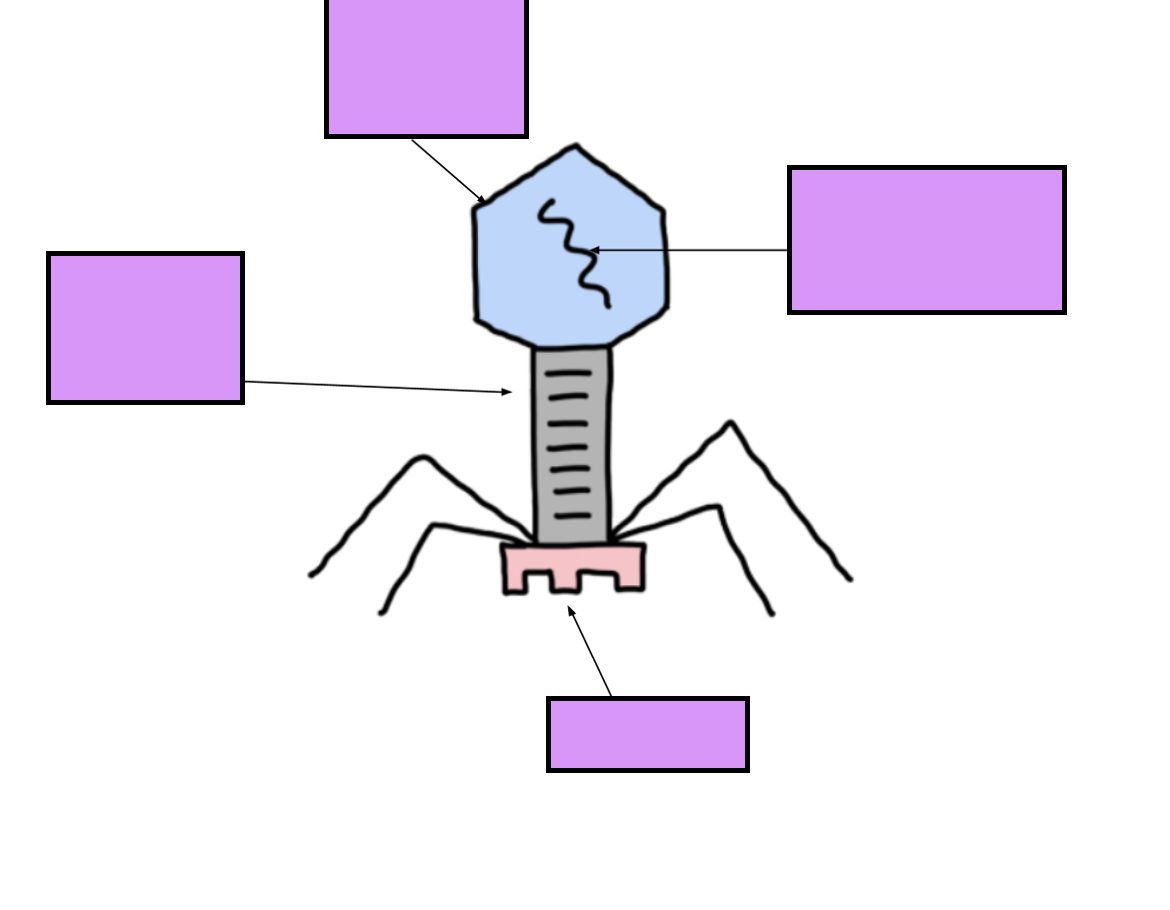
do the labels
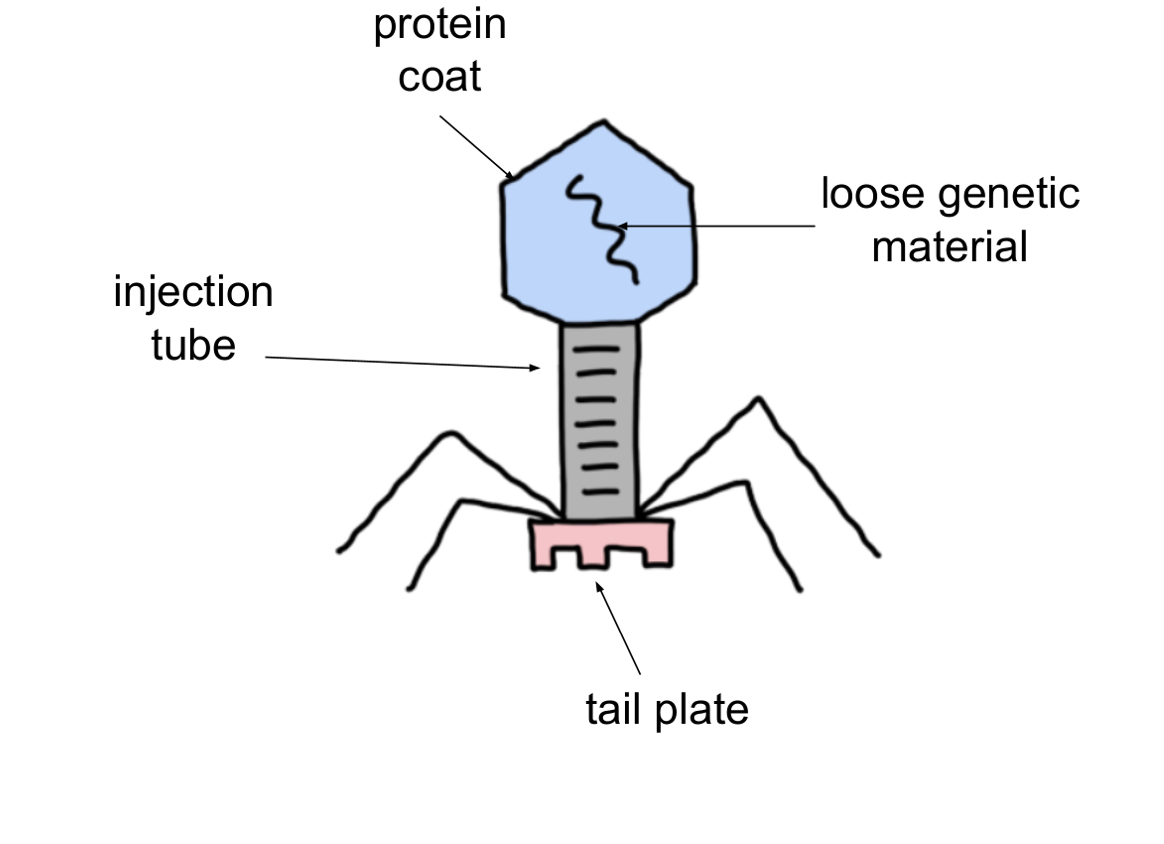
how many times smaller is bacteria to a human cell?
x100 smaller
what is smaller virus or bacteria?
virus
how many times smaller is a virus than a bacteria?
x1000
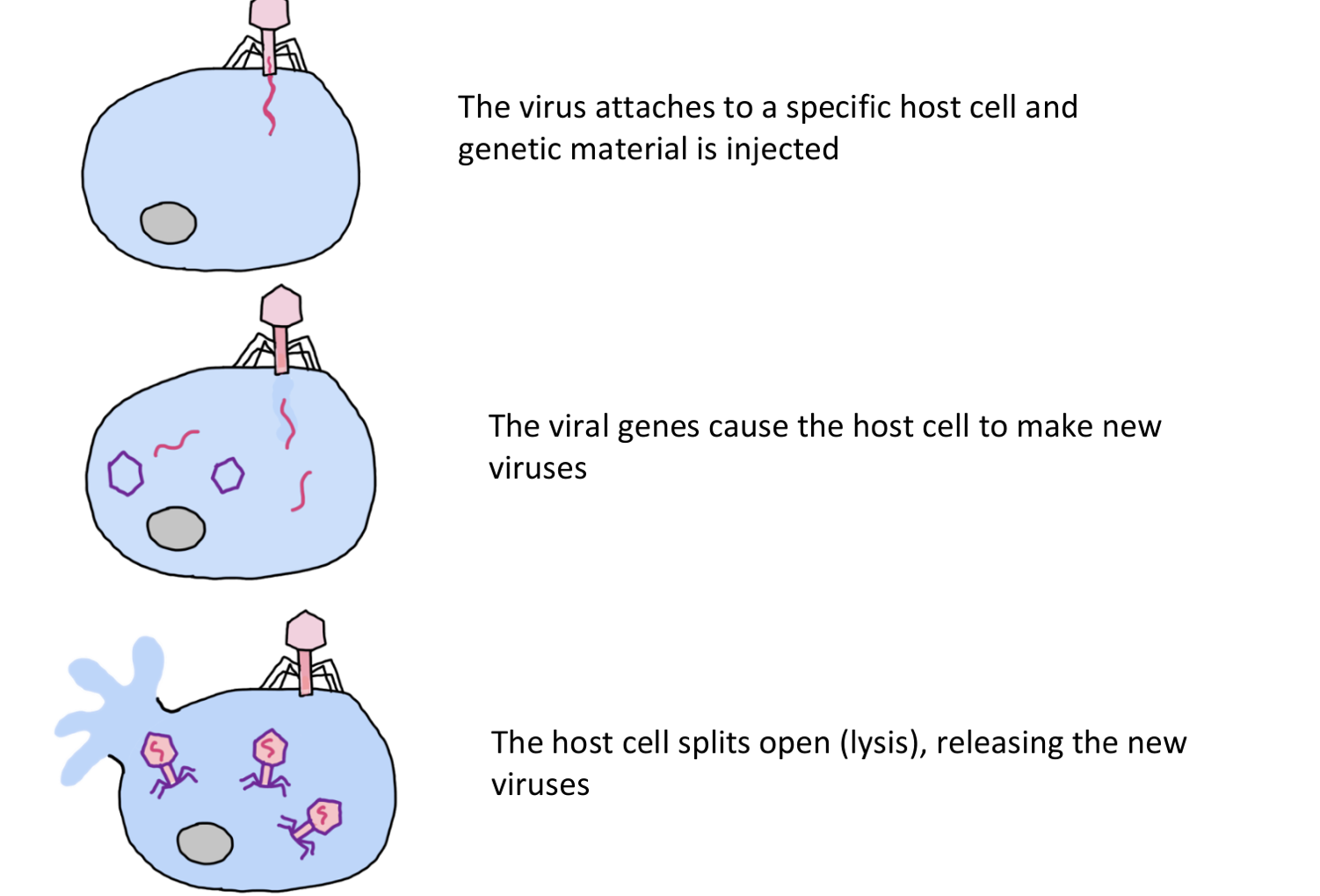
how do virus reproduce?
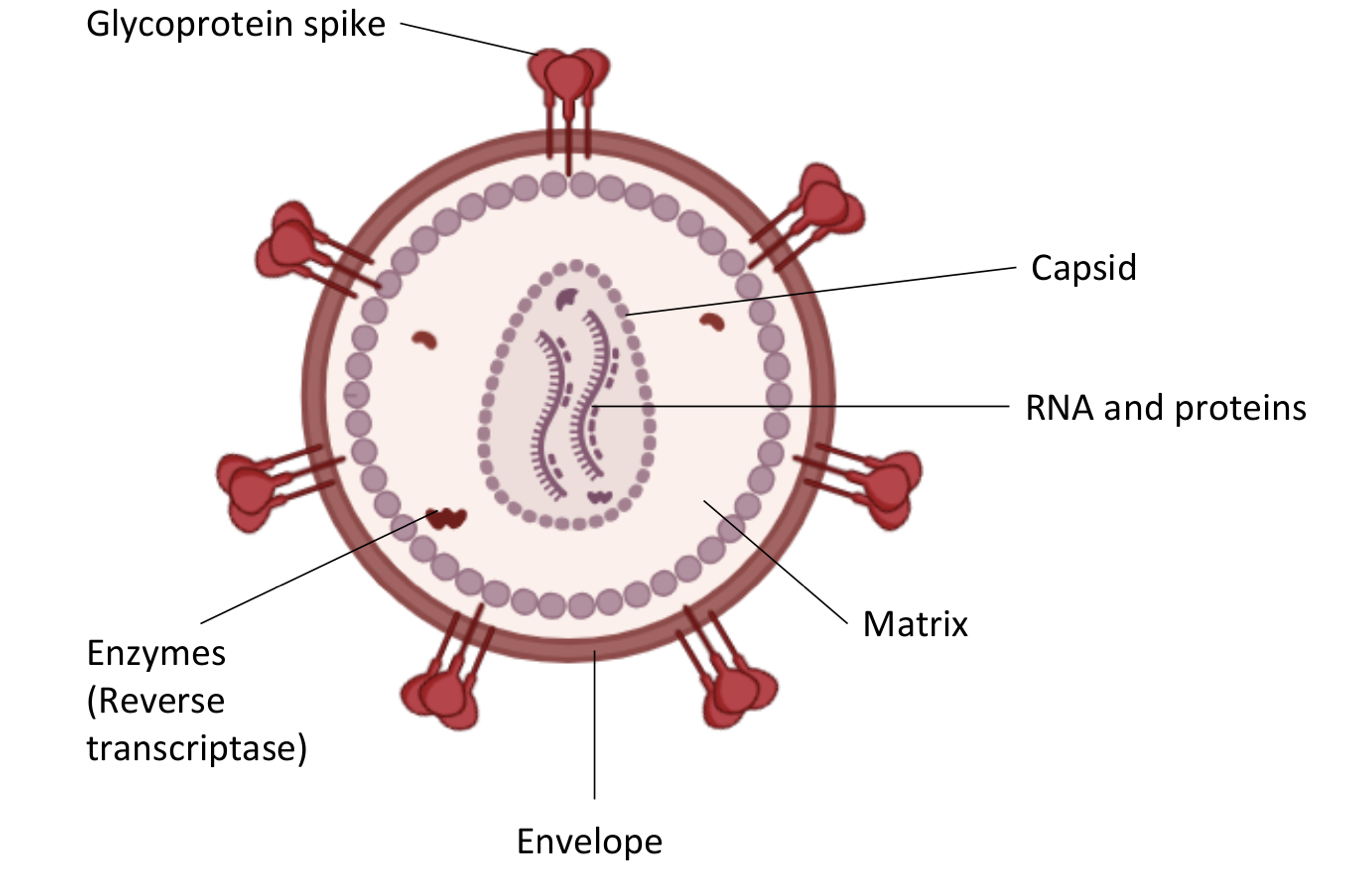
what is this?
retrovirus e.g. HIV
because it stores genetic information not as DNA but as RNA
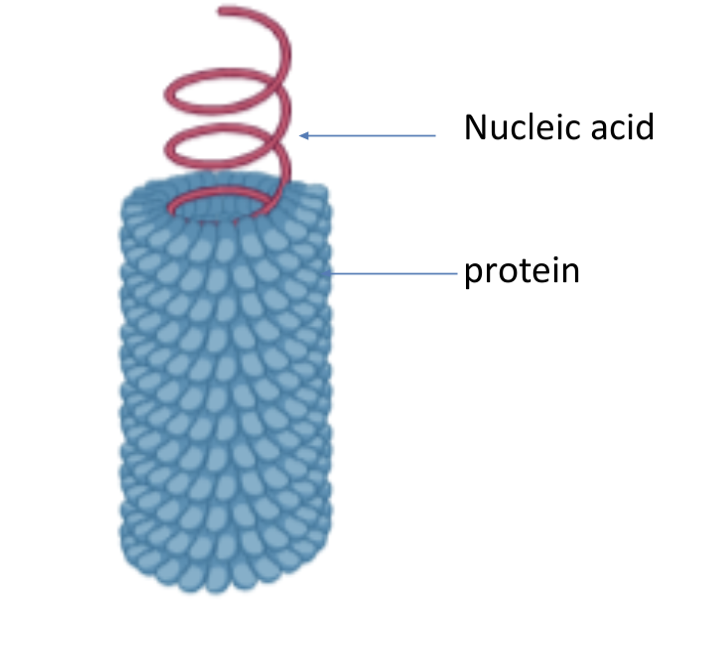
what virus is this?
tobacco mosaic virus (TMV)
what is the characteristic of HIV?
attacks cellist the immune system and compromises the immune system
what is the characteristic of Influenza?
attacks the respiratory system
causing muscle pain and headaches
what is the characteristic of Tobacco Mosaic Virus (TMV)?
causes mottling and discolouration of leaves
what happens in early stages of HIV?
initially causes a flu like illness
treatment would be antiretroviral drugs (without these the virus attacks the body’s immune system)
what happens in late stages of HIV/ AIDS?
when body'‘s immune system is so badly damages
it can no longer deal with other infections or cancers
how is HIV spread?
sexual contact
exchange of bodily fluids e.g. blood when drug users share needles
what is a symptom of TMV?
distinctive mosaic patterns on leaves which affects the growth due to a lack of photosynthesis
how do yeast reproduce?
asexual reproduction
what is characteristic of cattle ringworm?
growth of fungus in the skin with spore cases erupting through skin to cause a rash
what is characteristic of athlete’s foot?
growth under skin of feet, particularly the toes
what is characteristics of black Sigatoka?
causes leaf spots on cabana plants, reducing yield
what type of cell are protoctista?
unicellular
eukaryotic as contains a nucleus
what is the symptoms of malaria?
causes recurrent episodes of fever and can be fatal
how do you control the spread of malaria?
preventing the vectors, mosquitos, form breeing
using mosquito nets to prevent being bitten
what is characteristic of blight in potatoes / tomatoes?
affects both leaves and potato tubers
what is characteristic of malaria?
parasite in the blood that causes heachae, fever and may progress to coma and death
what are 2 types of protozoan disease?
blight in potatoes/ tomatoes
malaria
what are 3 types of fungal diseases?
cattle ringworm
athlete’s foot
black Sigatoka
what are the 3 viral diseases?
HIV/AIDS
Influenza
TMV
what are the 3 bacterial infections?
tuberculosis
bacterial meningitis
ring rot
what are the 3 ways of direct transmission between animals?
direct contact
inoculation
ingestion
what is direct contact?
contact with body fluids (STis)
skin to skin (ringworm and athletes foot)
microbes from faeces (diarrhoeal diseases)
what is inoculation?
break in the skin
animal bite
puncture wound / sharing needles
what is ingestion?
taking in contaminated food or drink
transferring pathogens from hand to mouth
what are the 3 ways of in-direct transmission between animals?
fomites
droplet infection
vectors
what is fomites?
inanimate objects e.g. bedding, socks, cosmetics
what is droplet infection?
droplets of saliva and mucus are expelled from your mouth as you talk, cough and sneeze
other breathe this in and if contaminated with pass on a pathogen
what is vectors?
vectors transmit disease from one host to another
what are examples of vectors?
mosquitoes transmit malaria,
rat fleas transmit bubonic plague
water can transmit diarrhoeal diseasesfactors that in
factors that increase the transmission of communicable disease in animals
overcrowded
poor nutrition
compromised immune system (HIV/AIDS or after surgery)
poor disposal of waste
climate change
culture
infrastructure
socioeconomic factors
what are infectious disease caused by?
caused by pathogenic organisms
what are non infectious diseases caused by?
lifestyle, working conditions, genes
through where do pathogens enter the body?
ears
eyes
mouth
nose
skin
anus
vagina / penis
what are the primary defense that prevent entry to pathogens? And make a brief explanation
saliva contains antibacterial enzymes
tears / sweat contain antibacterial enzymes
hair and mucus in trachea traps dirt and microbes
blood clotting prevents infection
skin acts as a barrier and produces antimicrobial substance
stomach acid has low pH which kills harmful microbes
‘good’ gut bacteria out compete the bad
ciliated cells in the trachea waft mucus up to the throat where it is swallowed
how does your skin act as a primary defense?
massive protective barrier covering your entire body
produces an antimicrobial substance (sebum) that inhibits the growth of pathogens
covered in commensal bacteria - non harmful bacteria that live in harmony with the body
how does blood clotting act as a primary defense?
if you get cut your blood clots prevent pathogens from getting in
Thromboplastin is released which causes the blood to clot
serotonin contract the small blood vessels in the area to reduce blood loss
how does you mouth specifically saliva act as a primary defense?
saliva contains antibacterial enzymes (lysozymes)
how does expulsive reflexes act as a primary defense?
coughing and sneezing expel foreign objects and happen automatically
how does the nose act as a primary defense?
full of hairs and mucus which trap microbes and then you blow it out or sniff it to the back of your throat and swallow it
the mucus contains lysozymes which destroy bacterial and fungal cell walls
also contain phagocytes
how does the eye act as a primary defense?
yee is protected by tears and rapid eye movement (REM)
REM pushes microbes to the front of your eye
tears contain water, salts and lysozymes
microbes usually die in salty conditions
how does your ear act as a primary defense?
yellow, sticky ear wax traps pathogens
how do ciliated epithelial cells work together to prevent pathogen from entering?
mucus traps microbes and ciliated eptihelial cells waft it to the back of your throat
then swallow it
how are we protected from pathogens when we eat?
microbes ingested in food enter the stomach which contains hydrochloric acid (pH2)
kills most microbes
How does urine protect us from pathogens?
urine is mixture of water and urea
urea is a toxic substance made from products of broken down protein
microbes don’t usually live in these conditions
urine also contains lysozymes
how does the female cycle prevent pathogens?
female cycle ensure that most microbes are ejected from vagine every 28 days with the uterine wall
how does intestine and anus prevent pathogens?
good gut bacteria outcompete the bad ones
as most microbes are ejected from anus with faeces
how do platelets become activated for blood clotting?
if endothelium or vessel is damaged, platelets are exposed to proteins outside which active platelets, triggering blood clotting
how does blood clotting and repair take place?
activated platelets form a plug over damaged area and release chemical called thromboplastin
thromboplastin together with Ca2+ in blood, now act on blood protein called prothrombin
this converts prothrombin to thrombin
thrombin acts on soluble blood protein called fibrinogen, which catalyses formation of insoluble fibrin which forms a mesh, trapping RBCs
activated platelets also release serotonin which causes smooth muscles to contract, which narrow blood vessels reducing blood flow to damaged area
overtime both of these form a scab
how does inflammation take place?
when tissue is damaged, activates mast cells that release histamine, which causes vasodilation of nearby vessels
so increase blood supply to affected area so area feels hot and appear red
increased temp reduces pathogens ability to reproduce
histamine also causes blood vessels to be more permeable, so more tissue fluid forms so causes nearby tissues to swell and feel painful (called oedema)
cytokines released also attract phagocytes
how does fever take place?
cytokines released travel to the brain, specifically the hypothalamus and raises body temperature
because reducing pathogen reproduce as they reproduce at 37oc or less and specific immune system works faster at higher temperature
what are the 2 types of WBCs?
phagocytes
lymphocytes
what are 2 types of phagocytes?
neutrophils
macrophages
what are 2 types of lymphocytes?
B lymphocytes
T lymphocytes
what are opsonins?
in blood, and are special molecules that recognise and stick to pathogens, tagging them as forge in
what do opsonins include?
antibodies and other molecules called complement
how does neutrophils work?
neutrophils attracted to molecules produced by pathogens
receptors on phagocyte membrane attack opsonins
phagocyte engulfs pathogen putting them in a special vacuole called phagosome
lysosomes fuse with phagosome forming phagolysosome
lysosome enzymes now break down pathogen and destroy it
how does phagocytes work?
phagocytes recognises antigens on invading bacterium as forge in or by chemicals
the cell membrane of the phagocyte fuses around the bacterium engulfing it into a vesicle (phagosome)
a lysosome fuses with the vesicle (phagolysome) and empties its digestive enzymes to digest / hydrolyse the micro-organism
antigens are presented on cell surface membrane. Useful products taken into cytoplasm by diffusion / AT and waste products exocylosed
how do macrophages work?
same as neutrophils but have additional feature called antigen presentation
at end, glycoproteins from cytoplasm (called Major Histocompatibility complex) (MHC) move to phagolysosome and bind to antigen molecules
when MHC binds to antigen forms an MHC-antigen Complex which then moves to cell surface membrane and antigens are presented to exterior of cell to lymphocytes
so say macrophages act as antigen presenting cell (APC)
what is released when phagocyte engulfs a pathogen? And what does it do?
releases cytokines
this signal to phagocytes and other immune cells to move to the site of infection
what is an antigen?
protein on surface of a pathogen (or other cells including our own)
what is an antibody?
proteins made by a B lymphocyte in response to an antigen
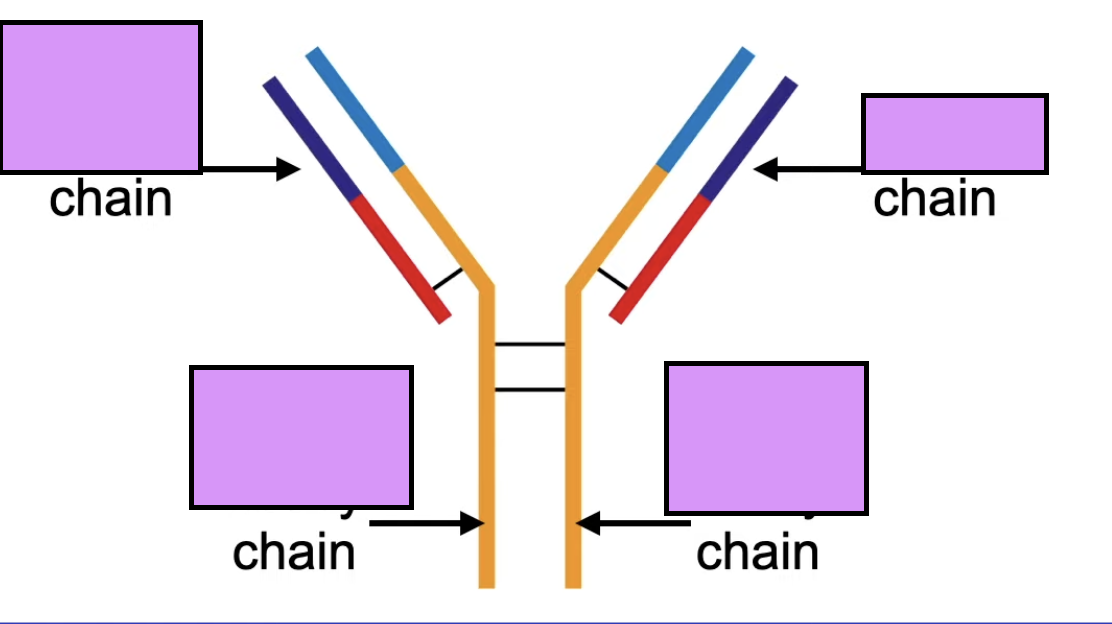
complete the labels
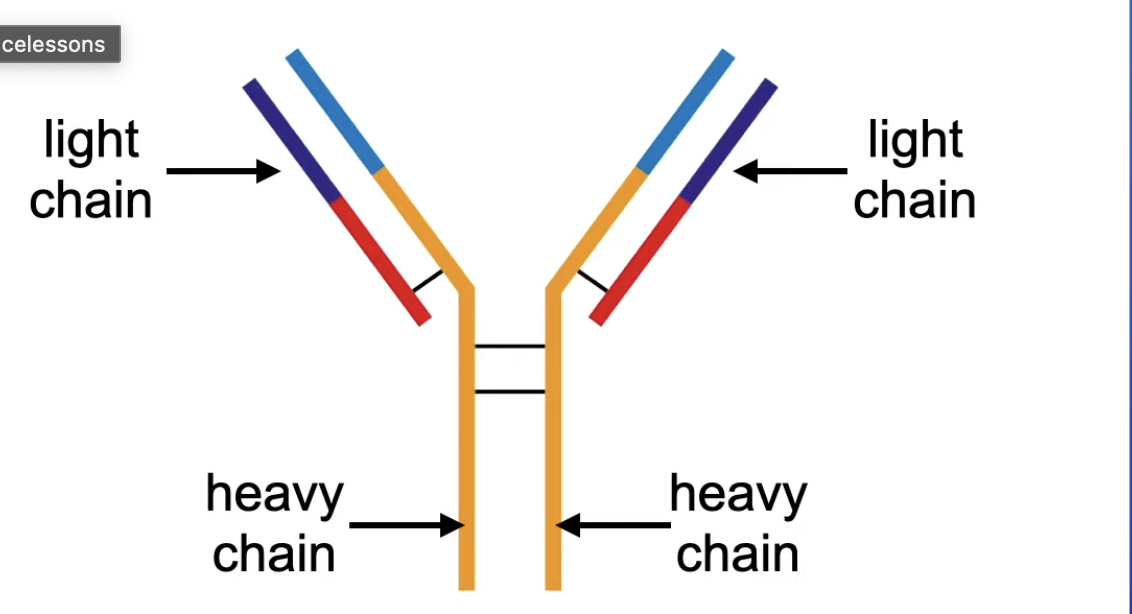
what is the variable region?
area of antibody that is different on different antibodies but complementary to their specific antigen
what is a constant region?
area that is the same on all antibodies, has a site where it can bind to immune system cell
what are the bonds between antibodies?
disulphide bonds
what is the purpose of the hinge region?
allows flexibility so distance between 2 antigen binding sites can vary
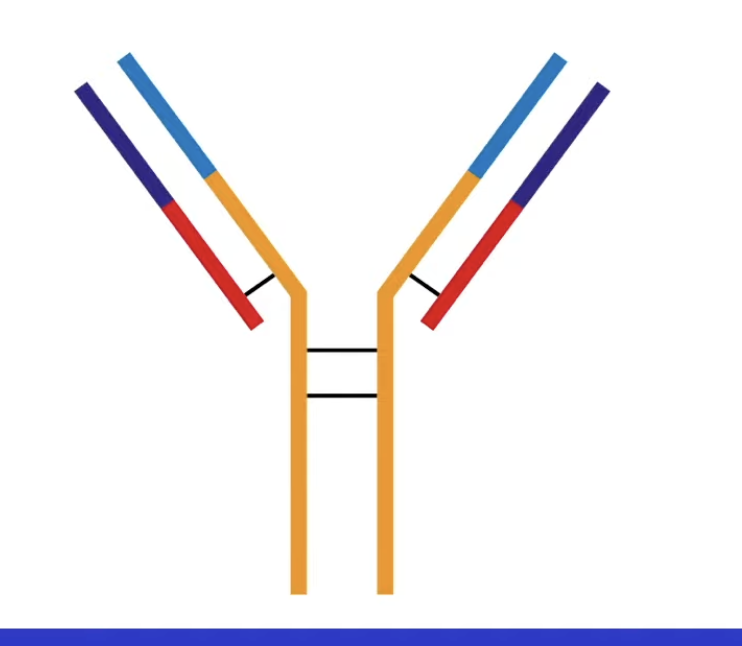
how does an antibody look like
what is another name for antibodies?
immunoglobulins
what is an antibody made of?
glycoproteins consisting of 4 polypeptide chains
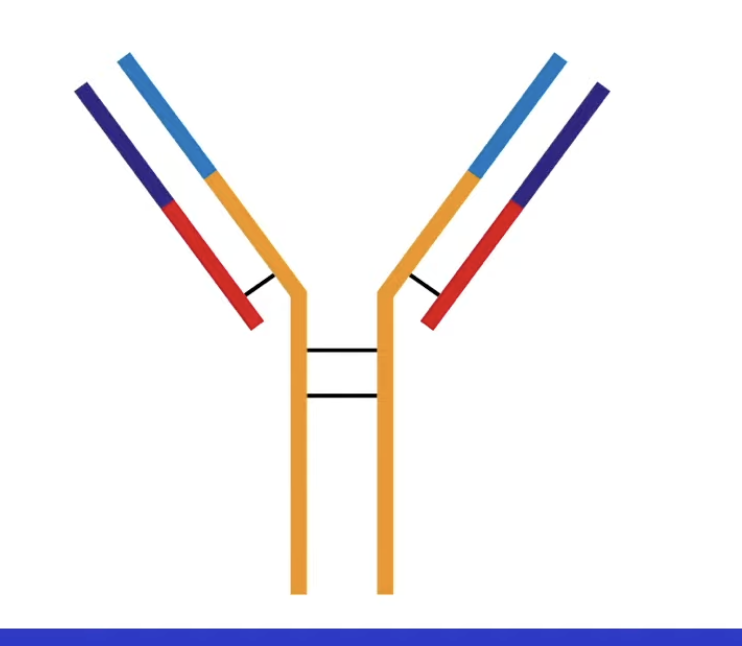
what part shows disulphide bridges?
black lines
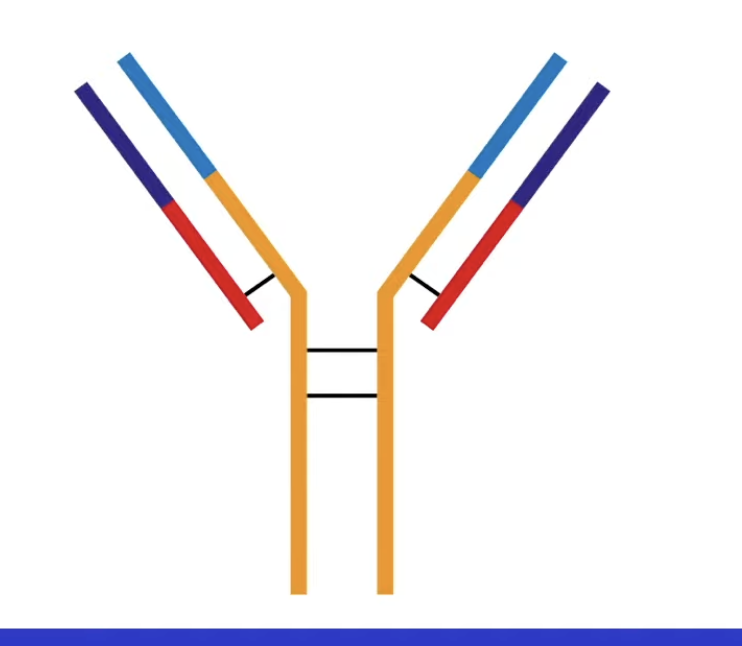
where do the antigen bind to?
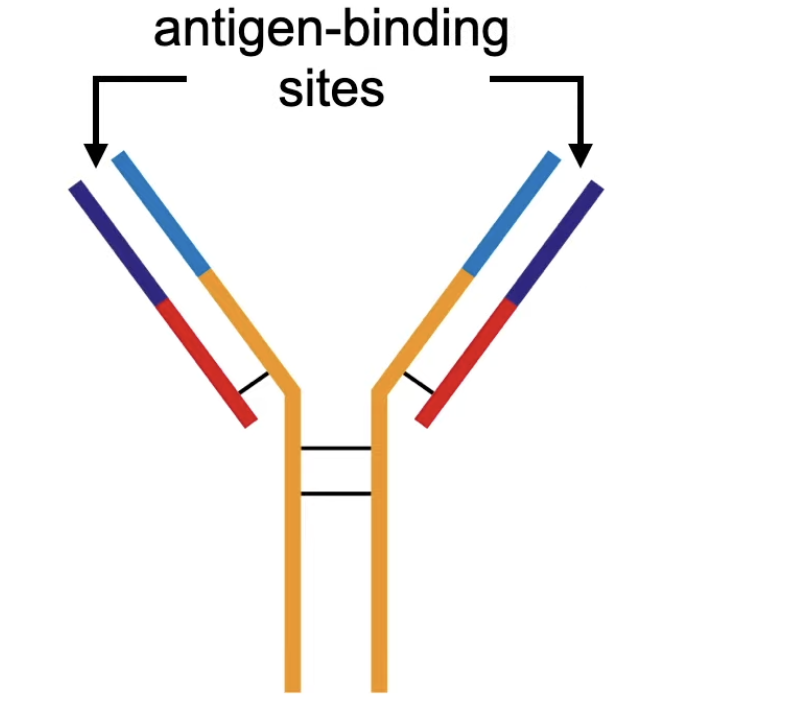
when antigens bind to the antibody what is it called?
antigen-antibody complex

