Early Mesoamerica Art
 Studied by 0 people
 Call Kai
 Learn
Learn Practice Test
 Spaced Repetition
 Match
Match Flashcards
 Knowt Play
1/13

There's no tags or description
Looks like no tags are added yet.
Name | Mastery | Learn | Test | Matching | Spaced | Call with Kai |
|---|
No analytics yet
Send a link to your students to track their progress
14 Terms
Axis Mundi
A symbolic vertical axis connecting the underworld, earth, and upper world. Often represented as a tree or mountain, it marks the center of the cosmos.
Olmec
The earliest known major Mesoamerican civilization (c. 1200-400 BCE), known for monumental stone sculpture, jade artifacts, and complex ceremonial centers.
San Lorenzo
One of the earliest Olmec cities, featuring social zoning, monumental architecture, and colossal heads.
La Venta
A major Olmec ceremonial center known for its Great Pyramid, altars, and colossal heads.
Colossal Head
Massive basalt sculptures (up to 10 feet tall) depicting individual Olmec rulers. Each has a unique headdress and facial features. Likely portraits of elite leaders.

Sculpture in-the-round
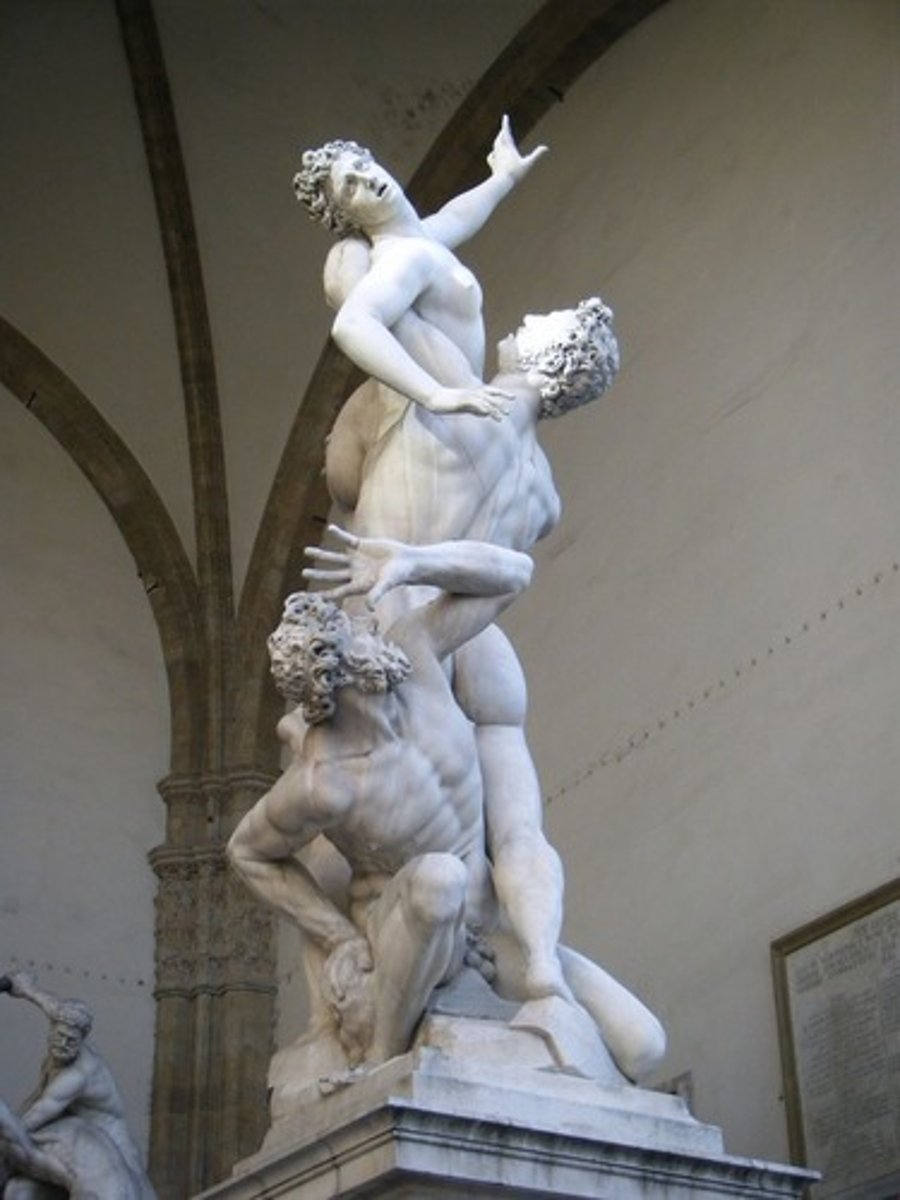
A freestanding sculpture carved on all sides, meant to be viewed from multiple angles.
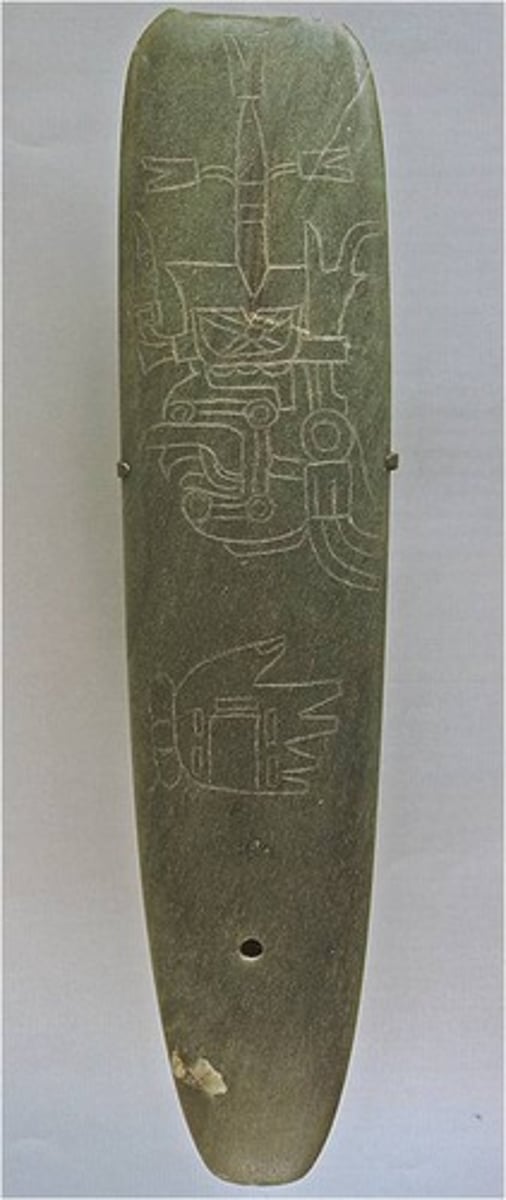
Celt
A polished stone or jade axe-shaped object, often ceremonial and engraved with symbolic imagery.
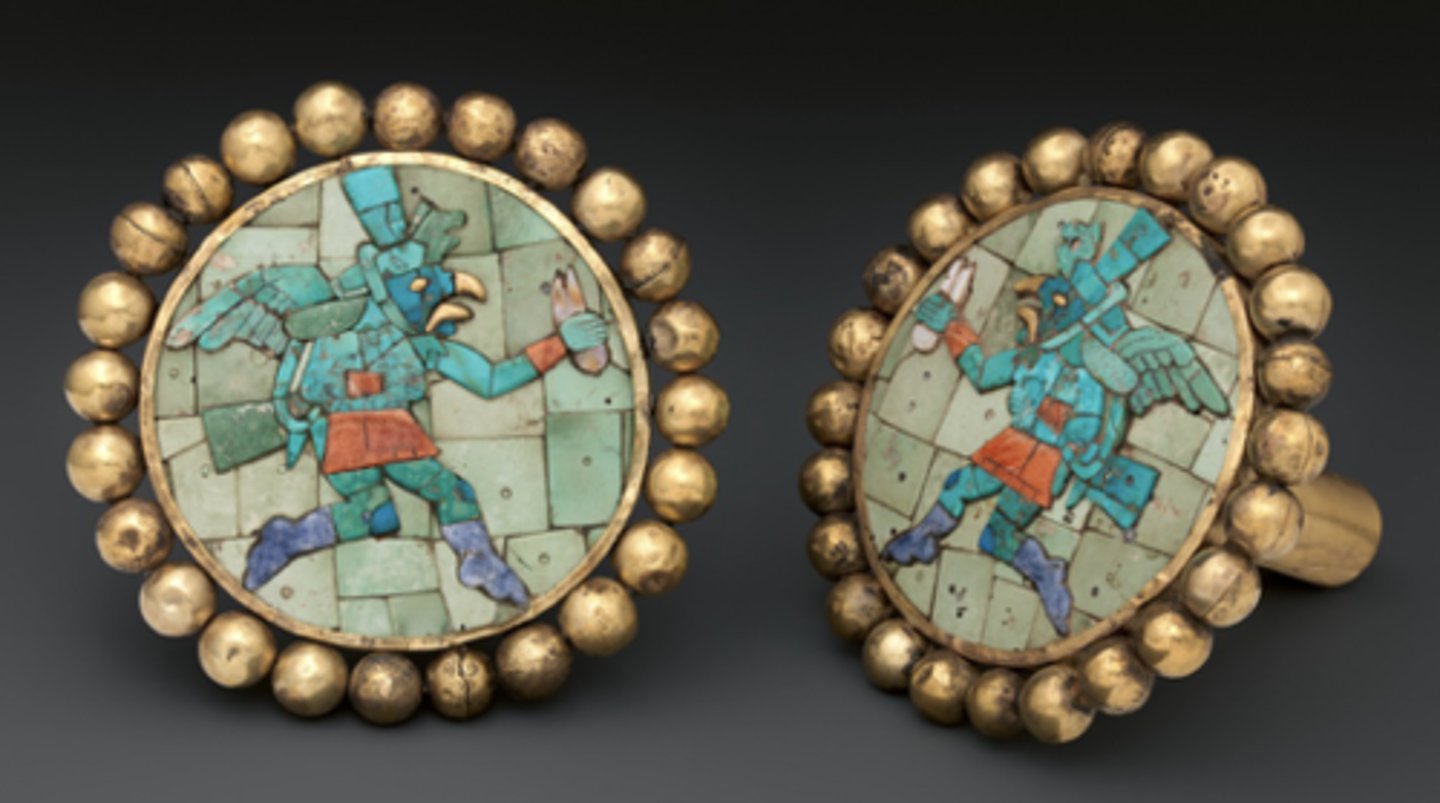
Earflares
Large, decorative ear ornaments made of jade or other precious materials, worn by elites.
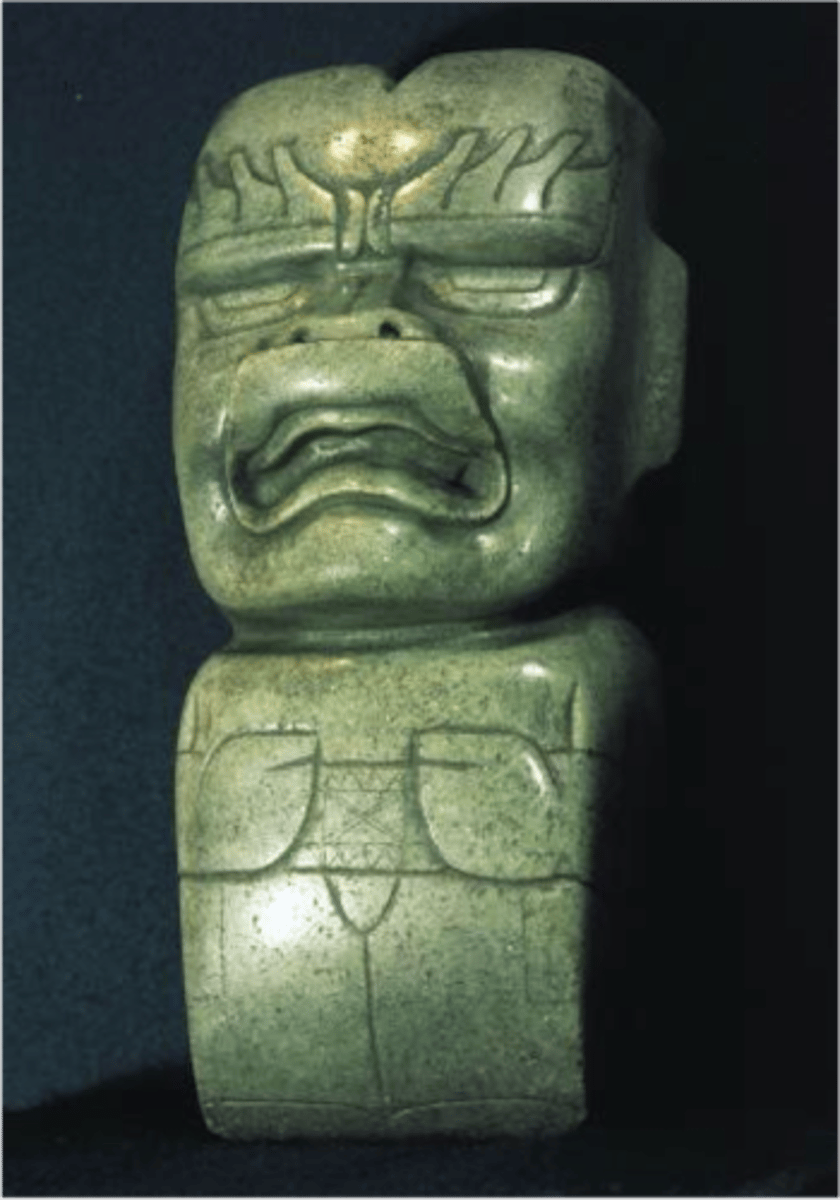
Were-jaguar
A supernatural being in Olmec art, combining human and jaguar traits. Symbolizes divine power, transformation, or shamanic identity.
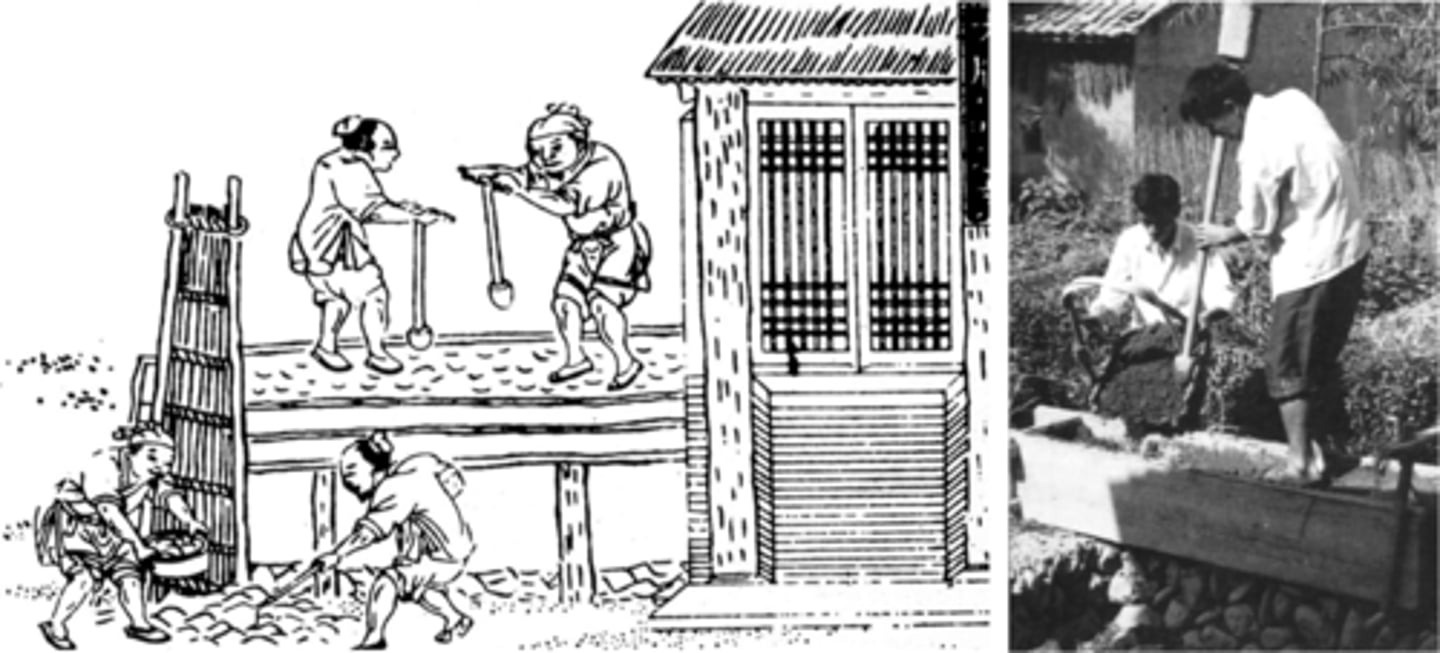
Rammed Earth
A construction technique using compacted earth to build solid walls or platforms. Used in La Venta's pyramid and platforms.
Social Zoning
The spatial organization of cities into elite, ceremonial, and residential areas. Seen in San Lorenzo.
Ritual Complex
A group of structures used for religious ceremonies, often aligned with cosmological principles.
Teotihuacan
A later Mesoamerican city (Classic Period) known for its pyramids and urban planning.
Talud-Tablero
An architectural style with sloping (talud) and vertical (tablero) elements, typical of Teotihuacan.
 Note
Note  Flashcards (54)