Fungus
 Call Kai
 Learn
Learn Practice Test
 Spaced Repetition
 Match
Match Flashcards
 Knowt Play
1/25

There's no tags or description
Looks like no tags are added yet.
Name | Mastery | Learn | Test | Matching | Spaced | Call with Kai |
|---|
No analytics yet
Send a link to your students to track their progress
26 Terms
What is some of the history of fungus with the salem witch trials
During the period of the salem witch trials (1692-1693) people were thought to be witches because they were having hallucinations, fingers and toes falling off, and speaking in tongues. What actually happened was that they were infected with claviceps purpurea which was found in ergot of rye that was eaten. This food produced alkaloids, constricted capallaries, not good blood flow, caused hallucigen, and caused feet and toes to fall off. It was known as St Anthonys fire.
How can fungi be beneficial and how can they be harmful
most are beneficial and work with plants to help absorb water and minerals, they are used for food manufacturing and beverages (yeast makes bread), they produce antibiotics, they serve as important research tool in genetics
They can be harmful as they can be pathogens or when they spoil. Thirty percent cause dieseases in plants, animals and humans but most in plants and they can spoil fruits, pickles, jams, and jellies
What are some characteristics of fungi
They have chitin in their cell wall, can grow through multinucleate cellular filaments called hyphae, The mycelia are branched masses of extending hyphae
WHat is the difference between coenocytic and septate hyphae
coenocytic is many nuclei in one cell while septate hyphae is one nucleus per cell
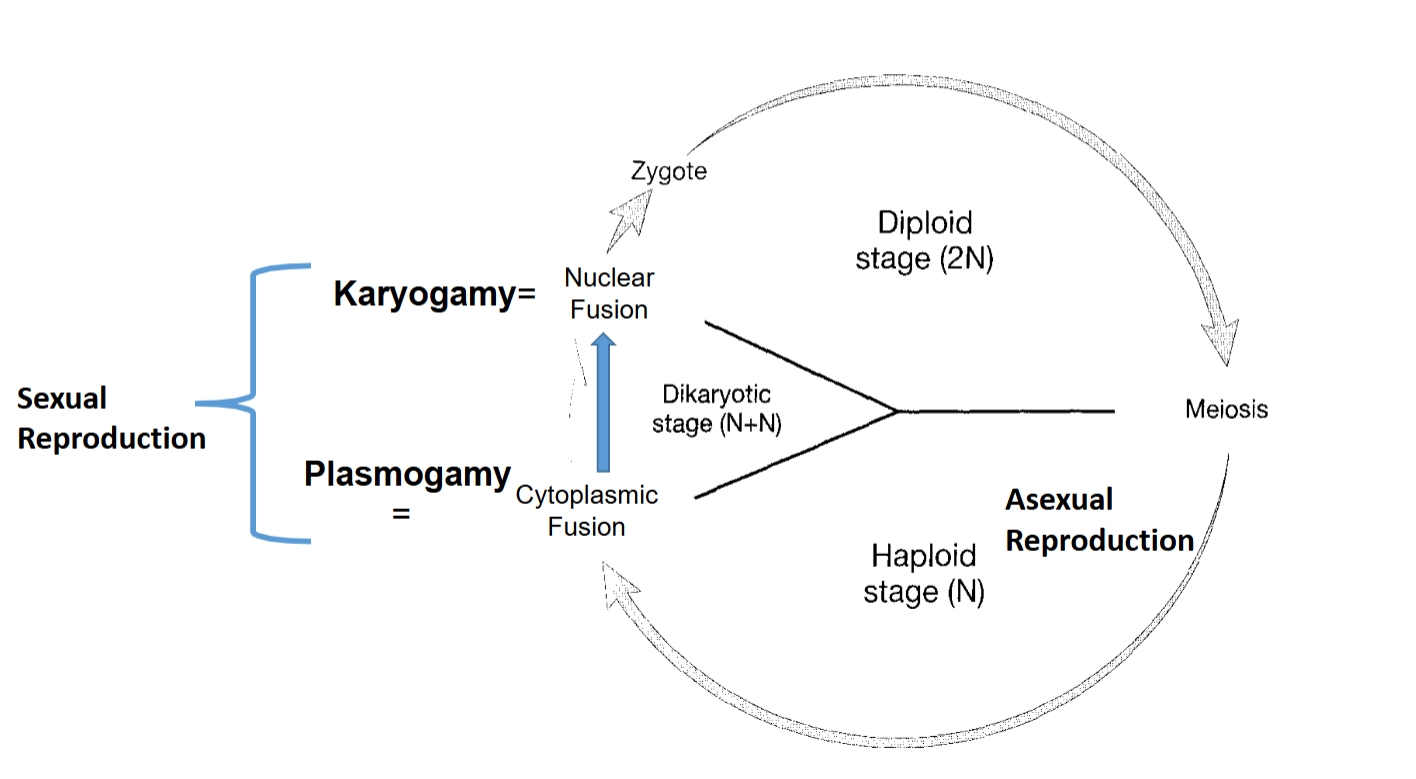
What is the general life cycle of fungi
Most cells start off haploid. The two cells fuse together called (plasmogeny) considered dikaryote (2 nuclei) and then the two nuclei fuse together called karyogemy. The zygote is formed (diploid) and it undergoes meiosis to become haploid. Haploid cell then goes find another cell and partake in plasmogomy and the cycle continues
What are the six taxons for fungi and what types of mold are in them
Deuteromycota=fungi imperfecti, Ascomycota= sac fungi, Basidiomycota= club fungi, Glomeromycota= mycorrhizal fungi, Zygomycota=water molds, Chitridiomycota= zoospore
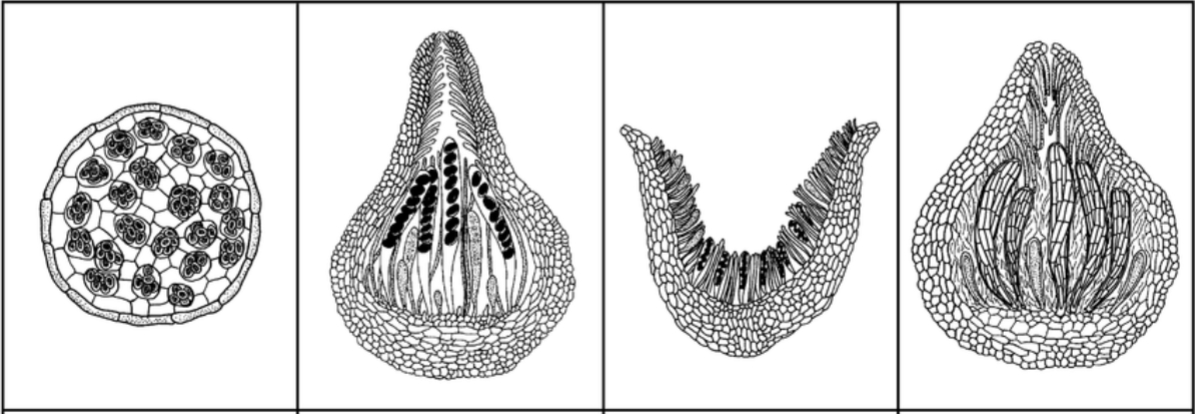
What are the four different shapes of ascopores
A)Cleistothecium, B) Perithecium, C) Apothecium, and D) Pseudothecium
What is the defining character of Ascomycota
The formation of sac like structure called ascus, where sexual spores (ascospores) are produced
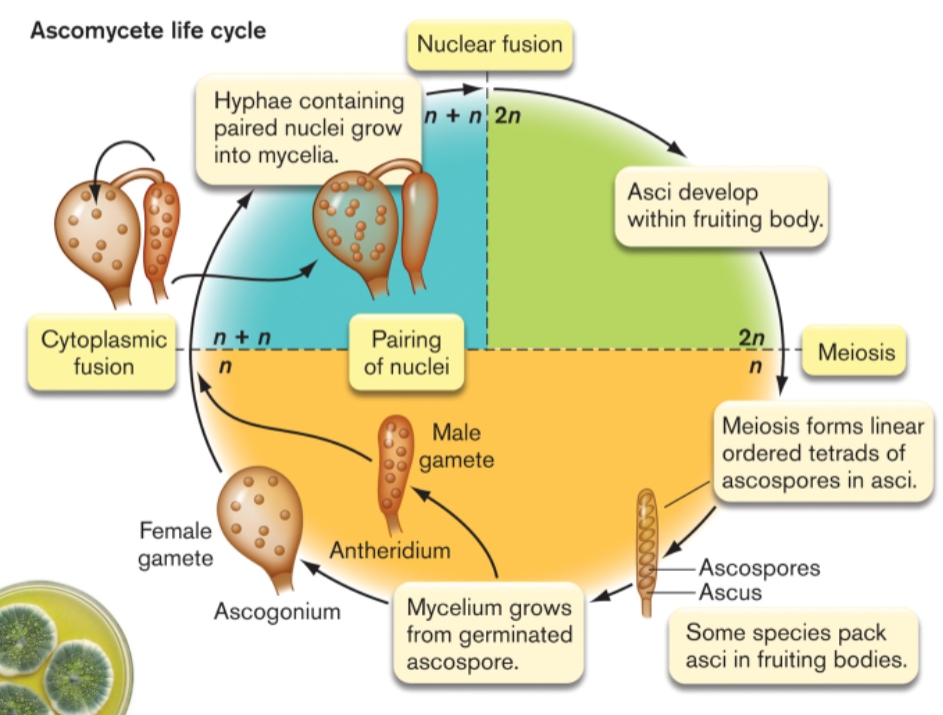
Explain the ascomycete life cycle
The mycelium grows and they have male and female parts (male =antheridium and female= ascogonium) Then they fuse together (plasmogemy= cytosplasmic fusion) and considered dikaryotic. Then the nuclei fuse together Karyogemy and are diploid. The Asci develop within the fruiting body and meiosis occurs to go from diploid to haploid. From haploid spores more mycelia grow.
What are some examples of sac fungi
powdery mildew, crucibulum sp., aspergillus fumigatus, morchella escuenta, tuber melanosporum, penicillum chrysogenum, Saccharomyces Cerevisiae
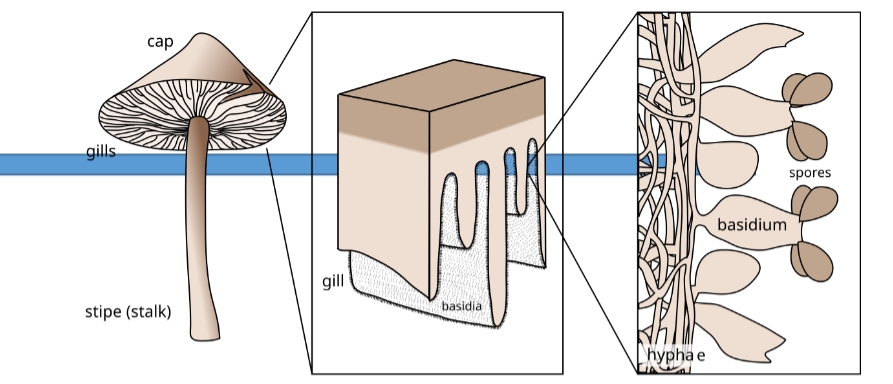
What are some characteristics of Basidiomycota
They have 16 classes. The sexual spores are called basidiospores. It includes rusts, smuts, mushrooms and jelly fungi. The club fungi have gills.
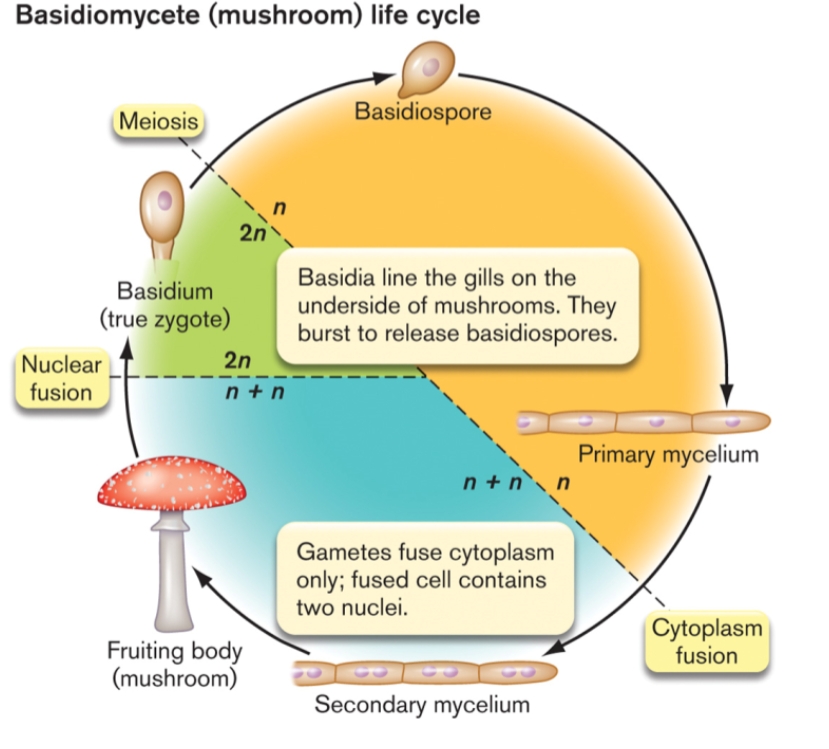
What is the Basidiomycota life cycle
The Basidiospores grows to mycelium. It fuses with another mycelium to form a dikaryotic cell (plasmogemy) then it grows to the fruiting body (mushroom) and Nuclear fusion occurs (karyogemy). Then forms the basidium and undergoes meiosis to become haploid.
What are some examples of basidiomycota
Devils finger (clathrus archeri), Jack O lantern fungus (Omphalotus olearius), Puccinia graminis, Agaricus bisporus, Amanita muscaria, Ustilago maydis.
What is the defining character of glomeromycota
The defining character is that if forms arbuscular mycorrhizas (AM) with the thalli of bryophytes and the roots of vascular land plants
What are some characteristics of glomeromycota
Form intimate relationship with roots of plants, help plants uptake minerals and water, take in nutrients and release nutrients into plant, hyphae take up water, intracellular fungi (grow around cells), pushing against cell wall.
What is the defining characteristic of zygomycota
They are fast growing fungi characterized by primitive coenocytic (mostly aseptate) hyphae
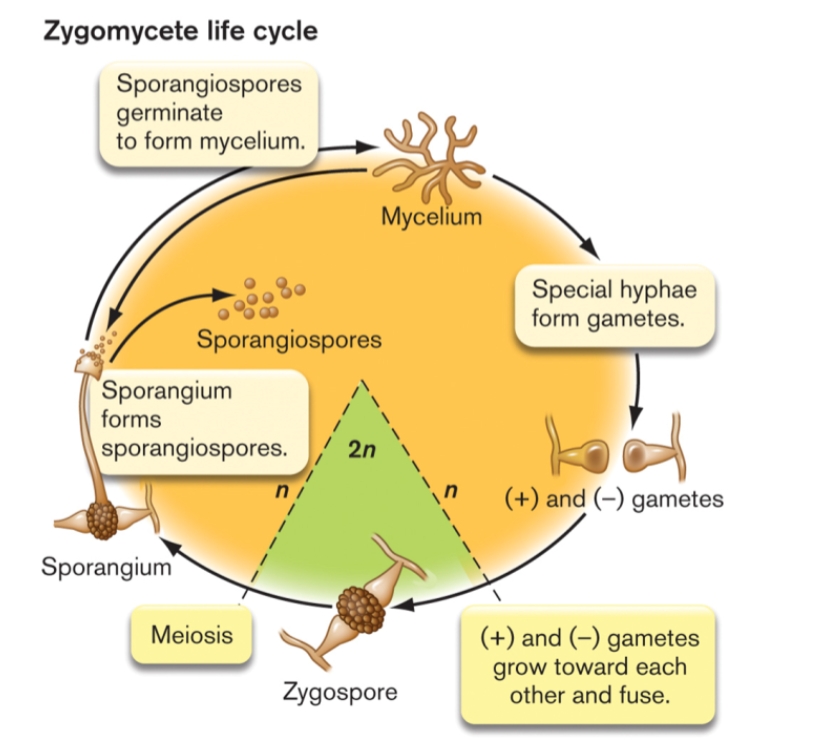
What is the life cycle of zygomycota
The mycelia is haploid and forms gametes (+ and - gametes) these go through karyogamy and form zygospore (nuclei fused to form diploid cell) and then meiosis form sporangium from zygospore (at the tip of the sporangium is sporangiospores that are haploid), the sporangiospores form mycelia and then they can either form more sporangia or go through sexual reproduction.
What is an example of zygomycota
rhizopus stolonifer
What is the defining characteristic of chirtridiomycota
It releases zoospores (look similar to sperm because it is flagellated). It is known colloquially as chytrids, mainly saprophobic=help break down decaying material, synchitrium plant pathogens
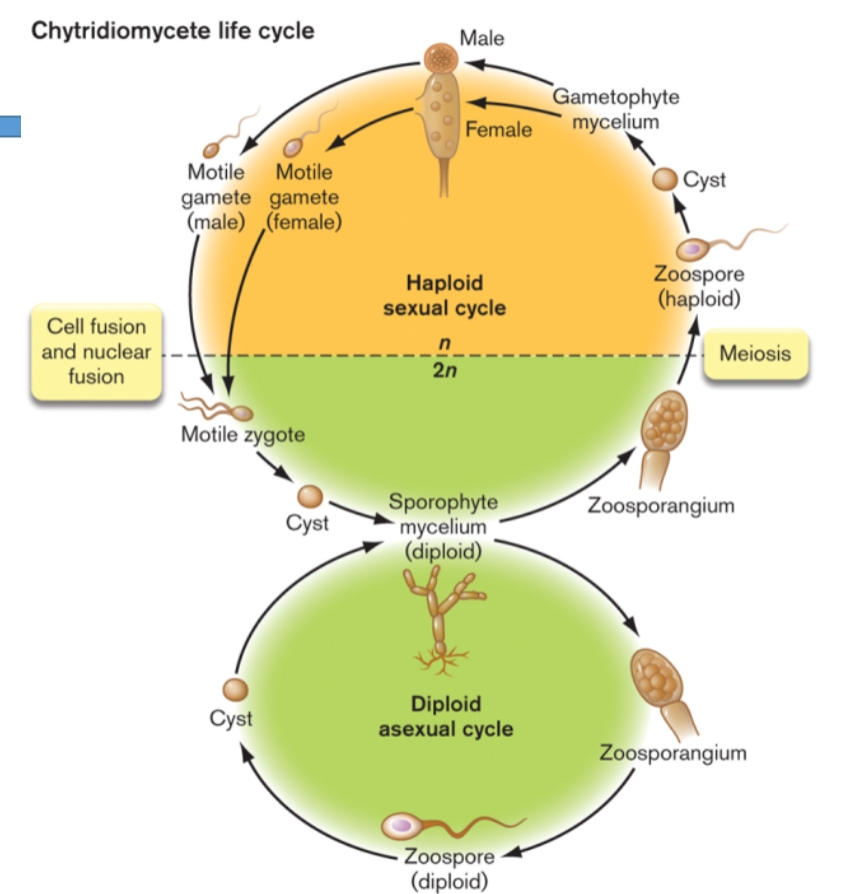
What is the life cycle of chytridiomycota
the zoospore encyst to form mycelia, from the mycelia you get female and male structures which you get male and female motile gametes. Those fuse together by undergoing plasmogamy and karyogamy to form a diploid cell. This cyst and form sporophyte mycelium (diploid) then they can either form a zoosporangium and undergo meiosis to release haploid zoospores, or they can undergo asexual reproduction and produce zoosporangium (diploid) that are released and form cyst that form ore mycelia dn can form more zoosporangia.
What are the unicellular fungi
They are yeast that can be ascomycota and there are some unicellular basidiomycota
What is an example (genus, species) of ascomycota
saccharomyces cerevisiae (used in beer/wine) band bakers yeast
What are examples of unicellular basidiomycota
causes corn smut (disease of corn) delicacy, it is ustilago maydis. The heliospores you can eat
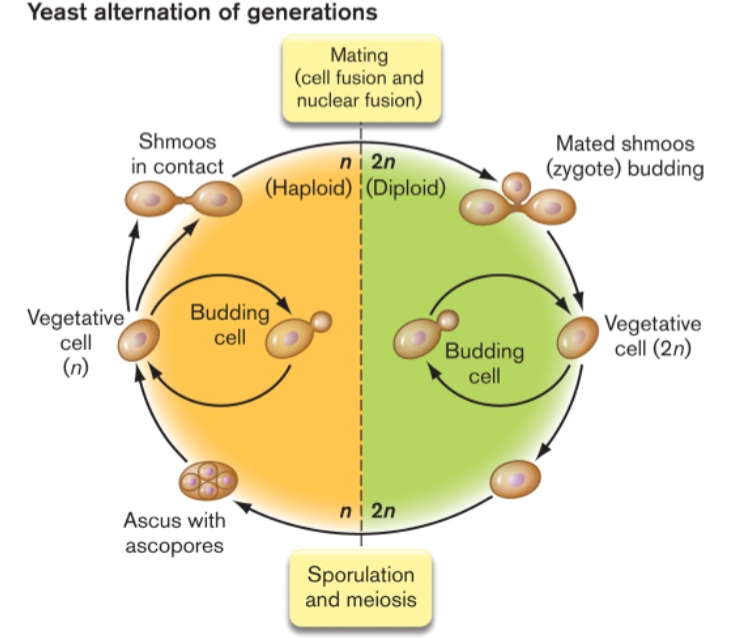
Describe the yeast alteration life cycle
yeast mainly stay in asexual cycle. Vegetative budding cell (haploid) and they keep budding. They can also undergo sexual reproduction and make shmoos. The shmoos are two cells come together and form this tunnel. The shmoos mate and form zygote which is diploid and keep forming diploid cells or it can go back to haploid ascus through meiosis and then can keep having haploid cells produced.
Describe the nutrition aspect of yeast
They are mostly saphrobes which acquire nutrineths through decaying organic matter. Some acquire nutrients by absorption. Some pathogens steal nutrients from plants. They do this through the haustorium which pushes on wall and membrane until inside cell but doesnt want to break the cell. The structure in plant pathogens that absorb nutrients and does not penetrate cell membrane.
Are some of the yeast anaerobic or aerobic?
Most fungi are aerobic and many yeast are anaerobes. For example saccharomyces cerevisiae are facultative anaerobes that go through fermentative pathway and produce ethanol

