Teeths
 Studied by 8 people
 Call Kai
 Learn
Learn Practice Test
 Spaced Repetition
 Match
Match Flashcards
 Knowt Play
1/57

There's no tags or description
Looks like no tags are added yet.
Name | Mastery | Learn | Test | Matching | Spaced | Call with Kai |
|---|
No analytics yet
Send a link to your students to track their progress
58 Terms
Cusp pattern
Unique to species
Tooth pattern
Indicated feeding niche
Simple developemnt
Two embryonic cell types
Evolution of teeth theories:
1. Independently from pharngeal denticles seen in many
fish
2. After jaws were internalized from the skin denticles as
seen in sharks
As mandible develops, _______ cells begin to differentiate
Embryonic
Different genes _______ different tooth formations
Control`
Tooth Crown morphogenisis:
Development starts as one ___
knot
Tooth Crown morphogenisis:
As _____ get expressed more _____ form
genes, knots
Later expression= ?
shorter

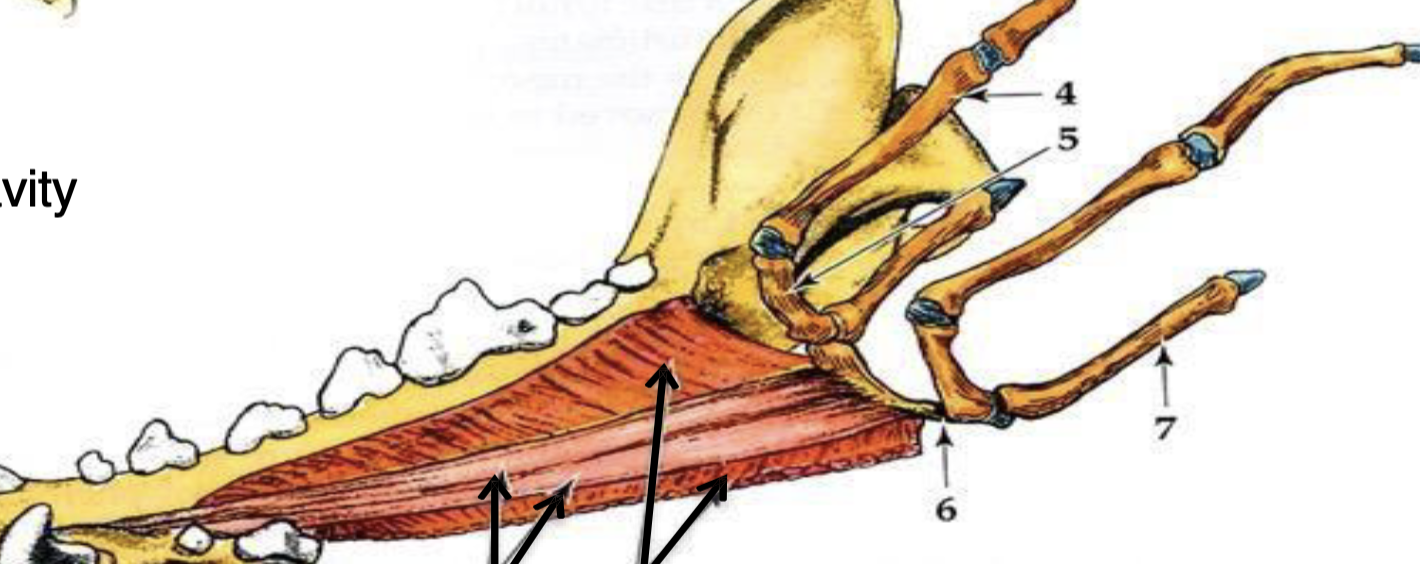
Label floor of oral cavity
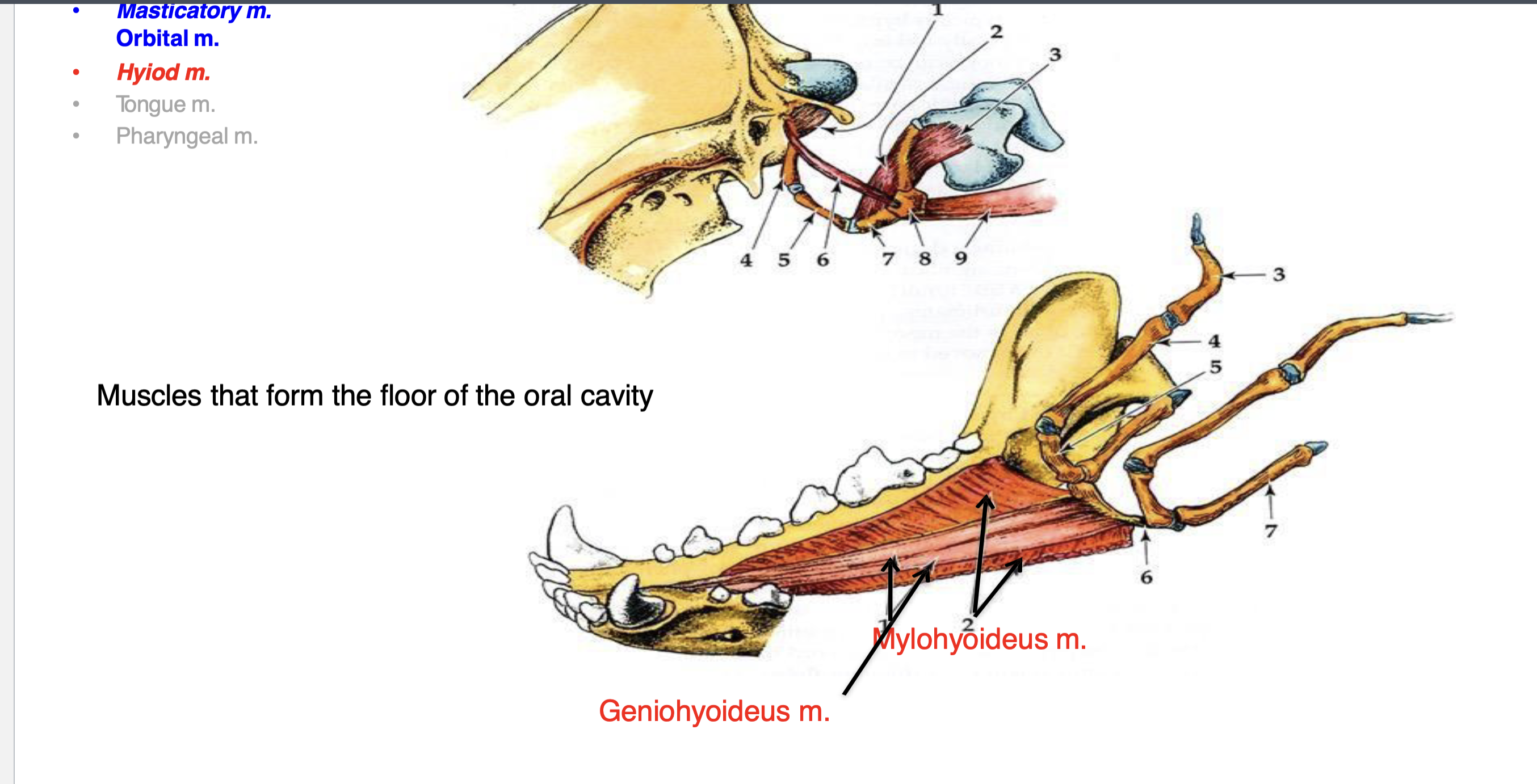

Floor labeling cont. label red blue arrows
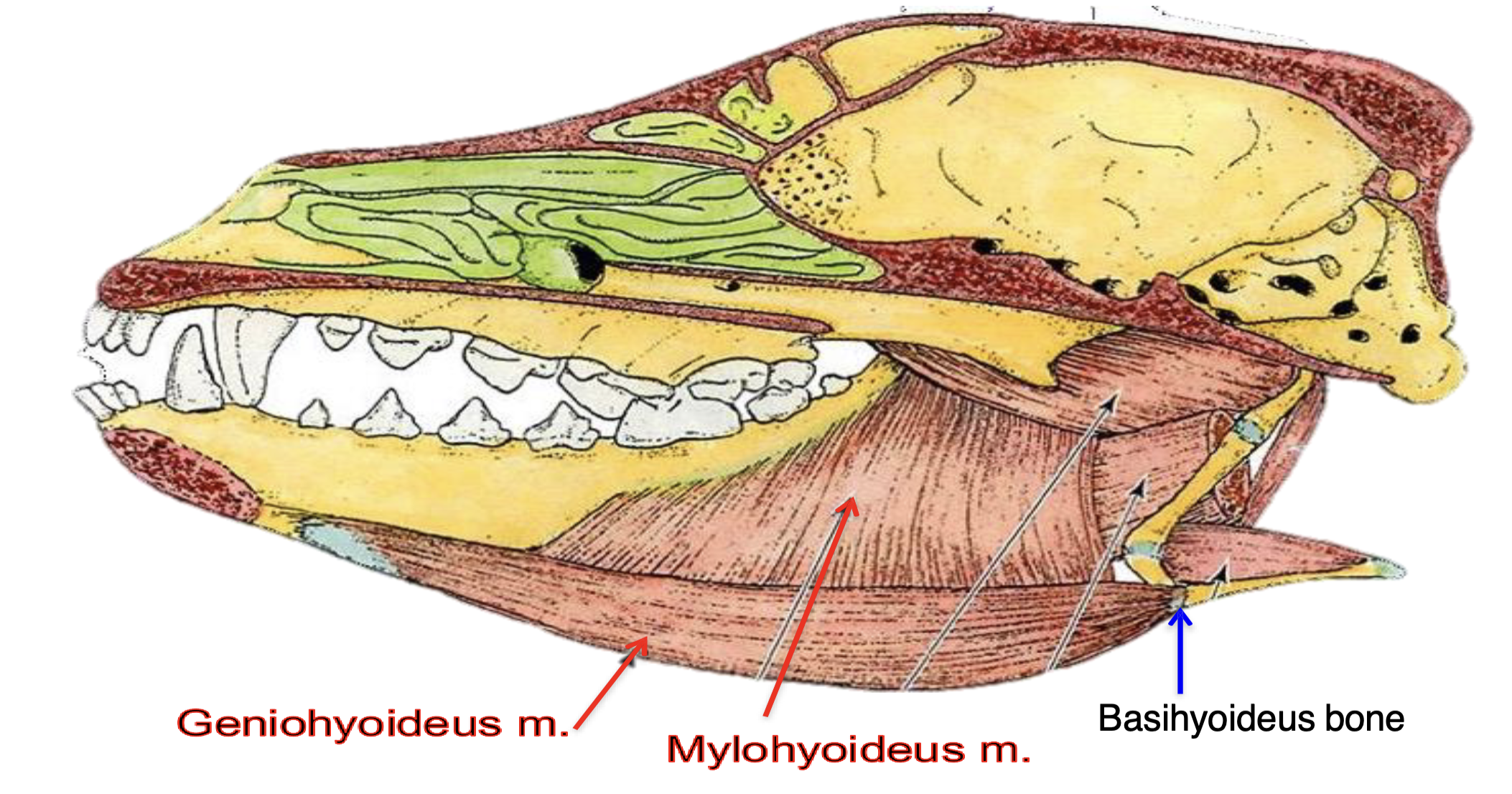
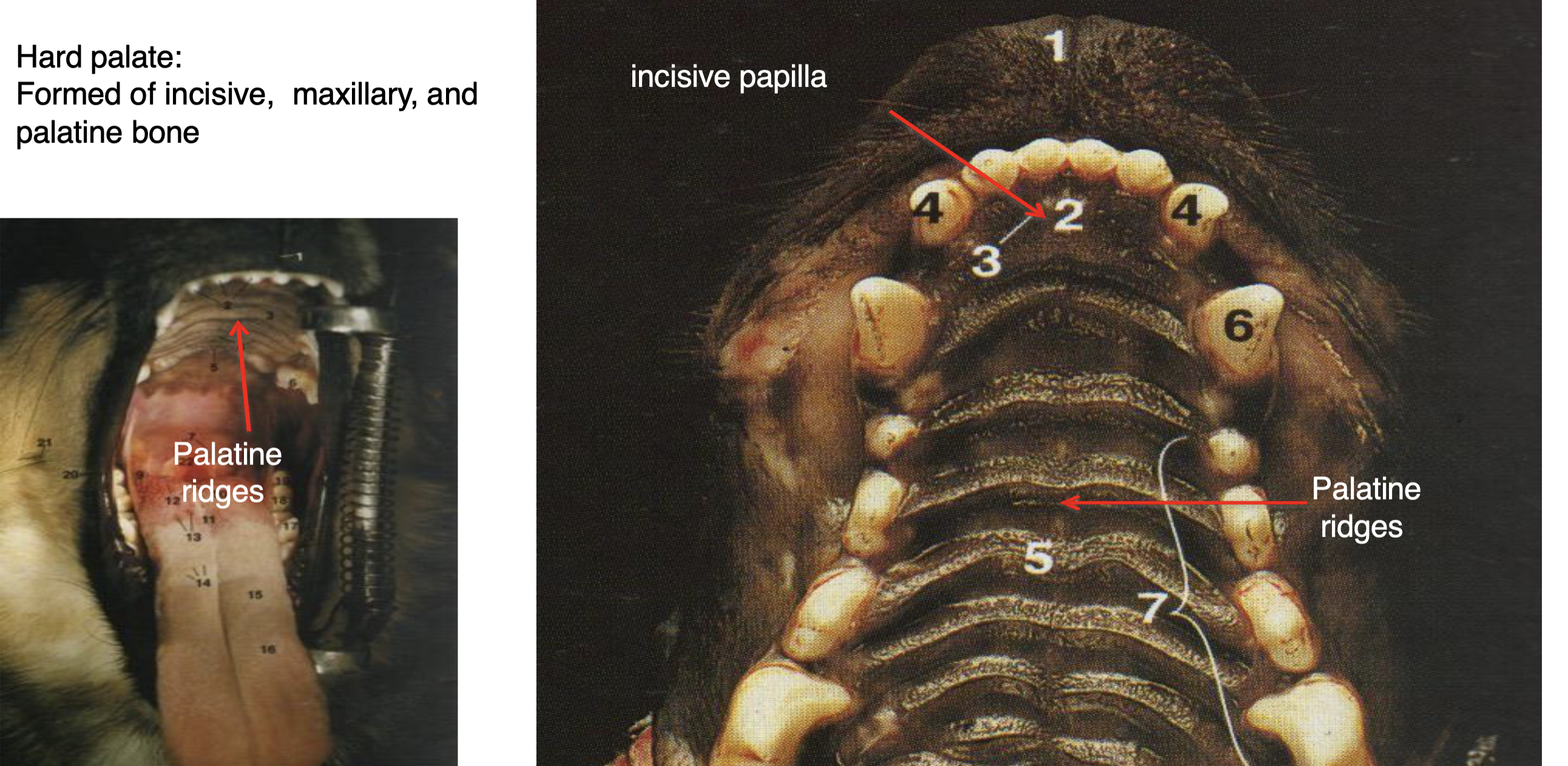
Heterodont
different teeth (incisive, canine, premolar & molar)
Diphyodont:
successive development of deciduous and permanent set of teeth
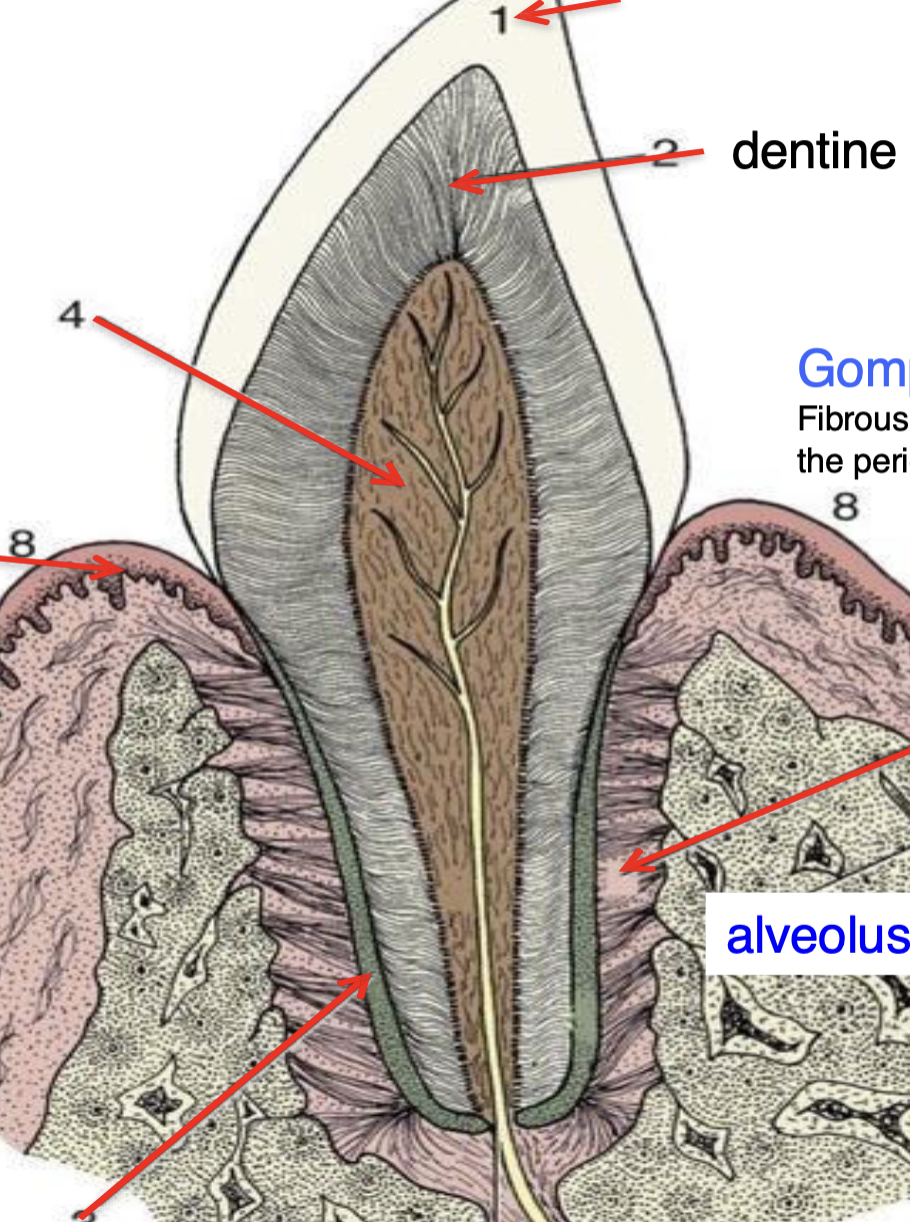
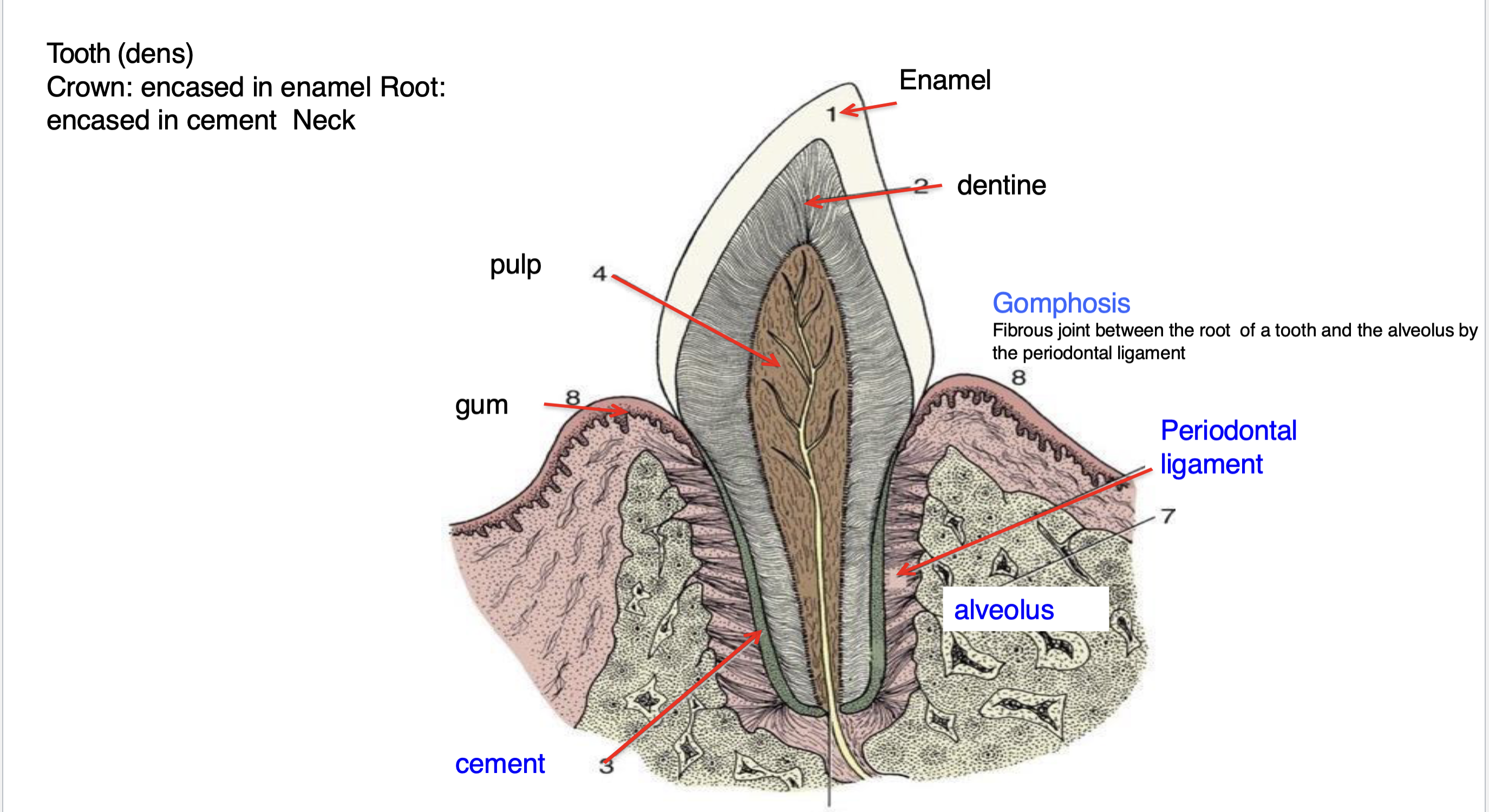
Formula for teeth
Dog: permanent dentition
2(I 3/3, C 1/1, P 4/4, M 2/3) = 42
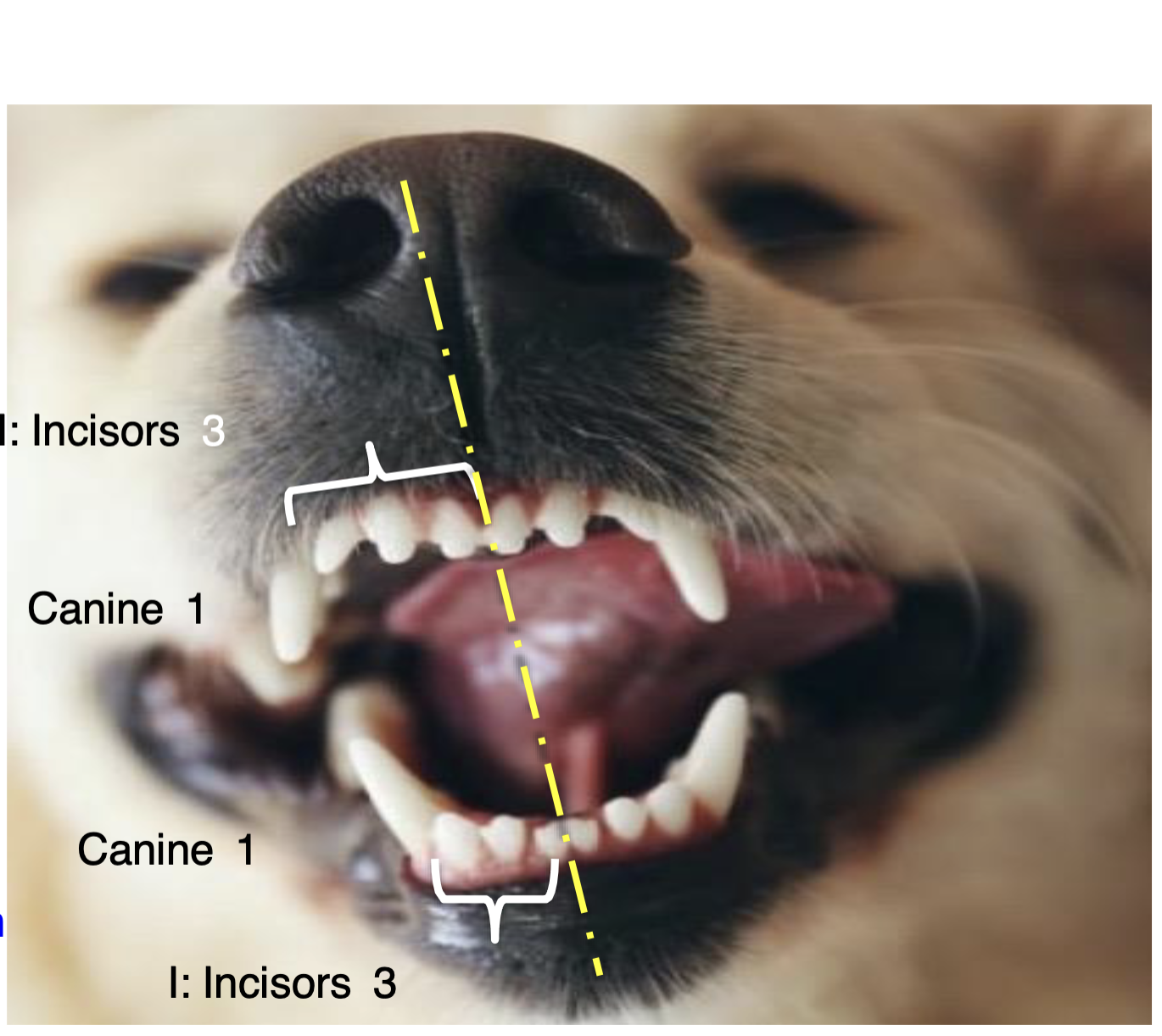
Formula dog teeth
Temp/ milk Detention: (Not as important to know)
2(I 3/3, C1/1, P3/3) = 28
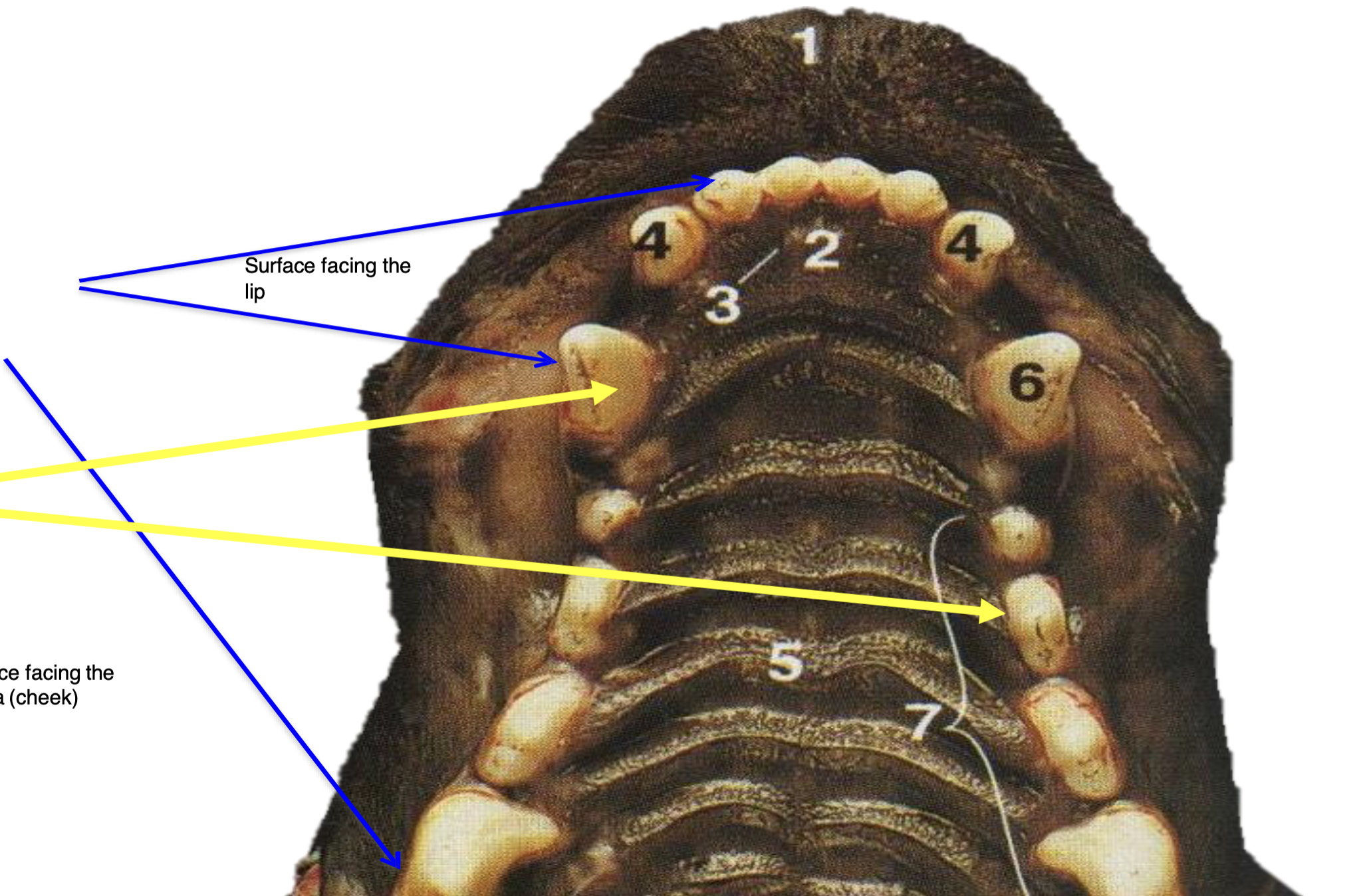
teeth surface labeling
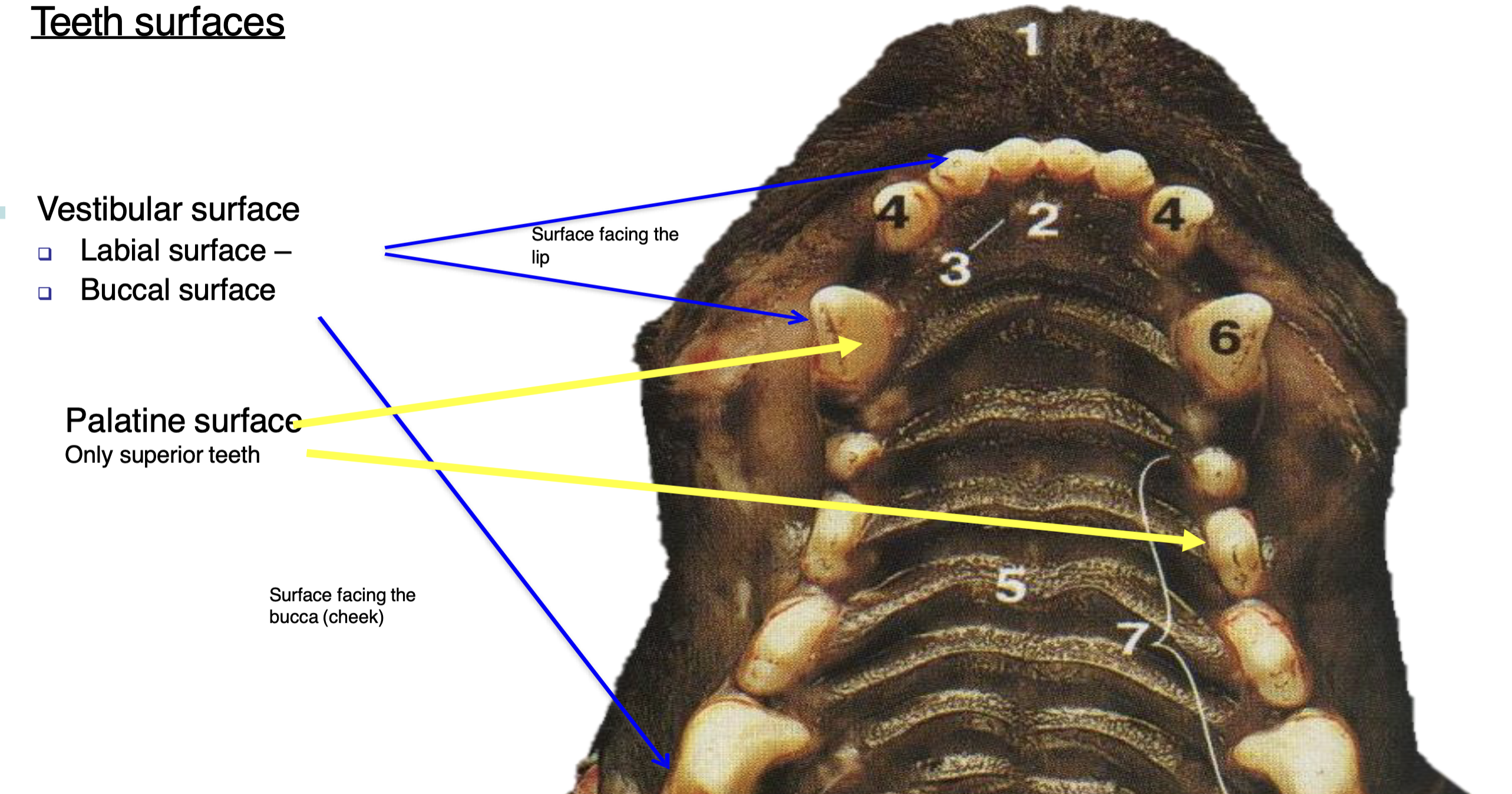
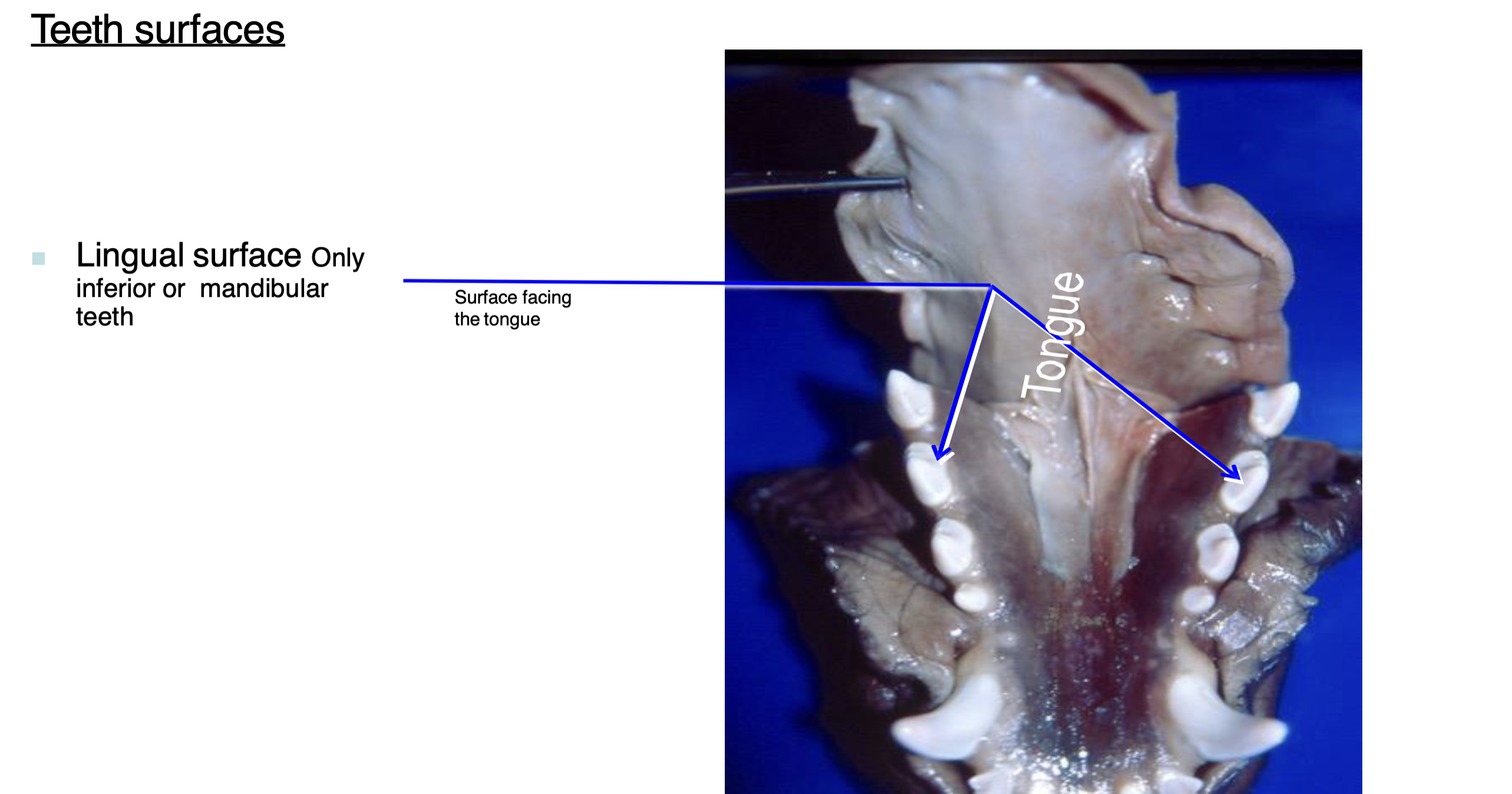
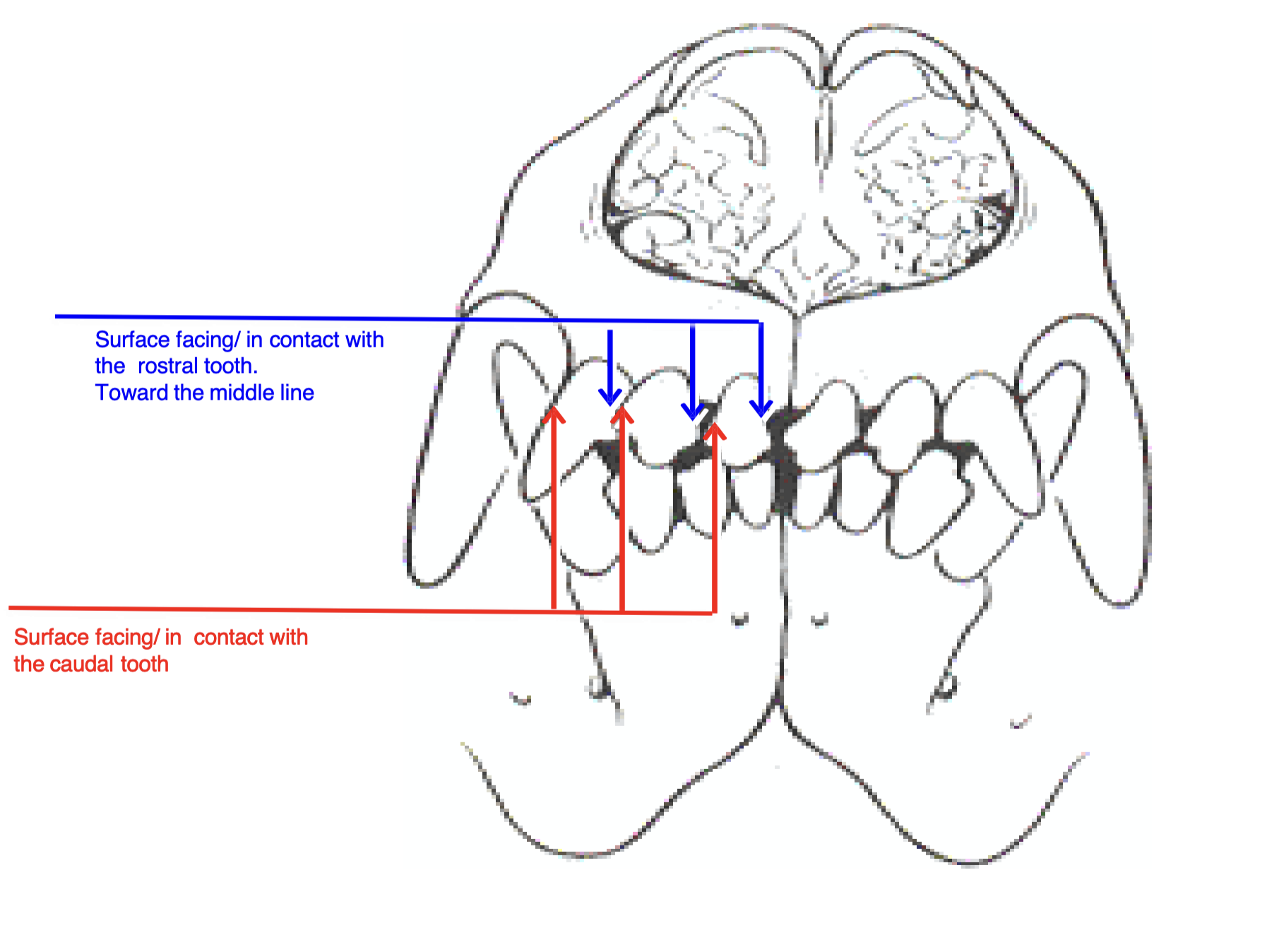
Blue=Mesial
red=Distal
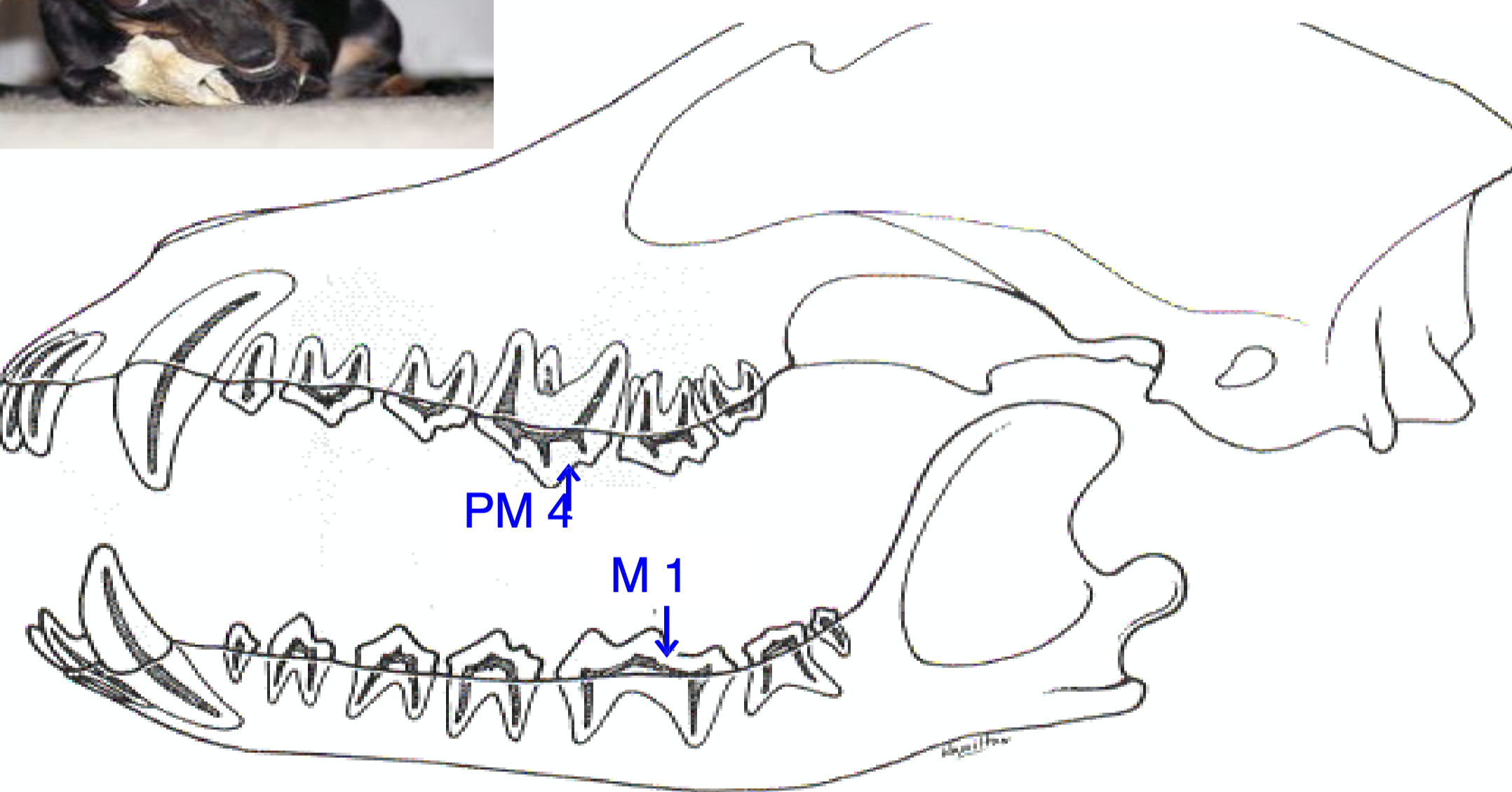
what are these known as
4th superior premolar & first inferior molar and
known as Sectorial or carnassial teeth
Cats permanent teeth formula
Permanent formula
2(I 3/3, C 1/1, P 3/2, M 1/1)=30
cats deciduous (temp.) formula:
2(I 3/3, C1/1, P3/2)=26
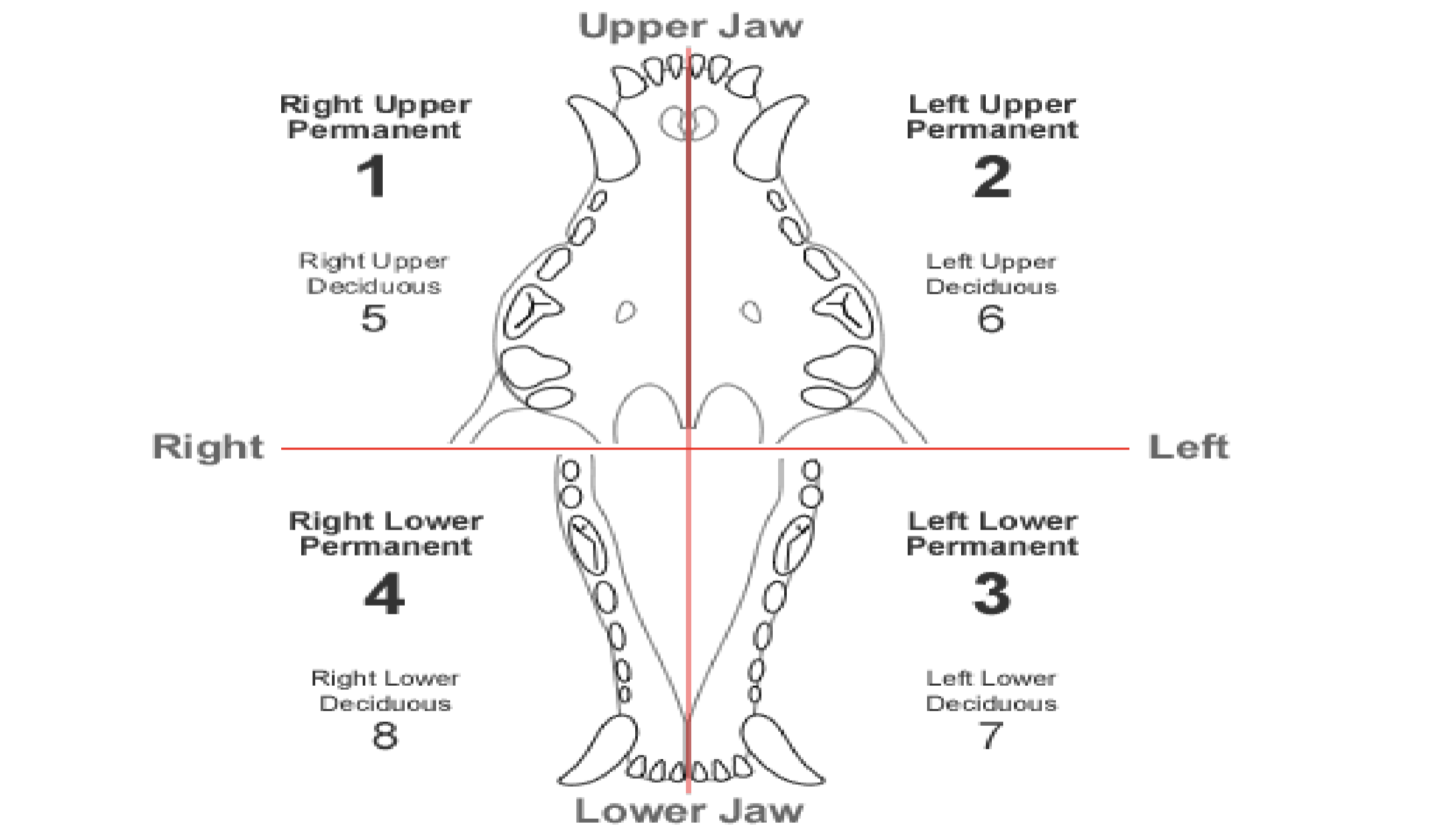
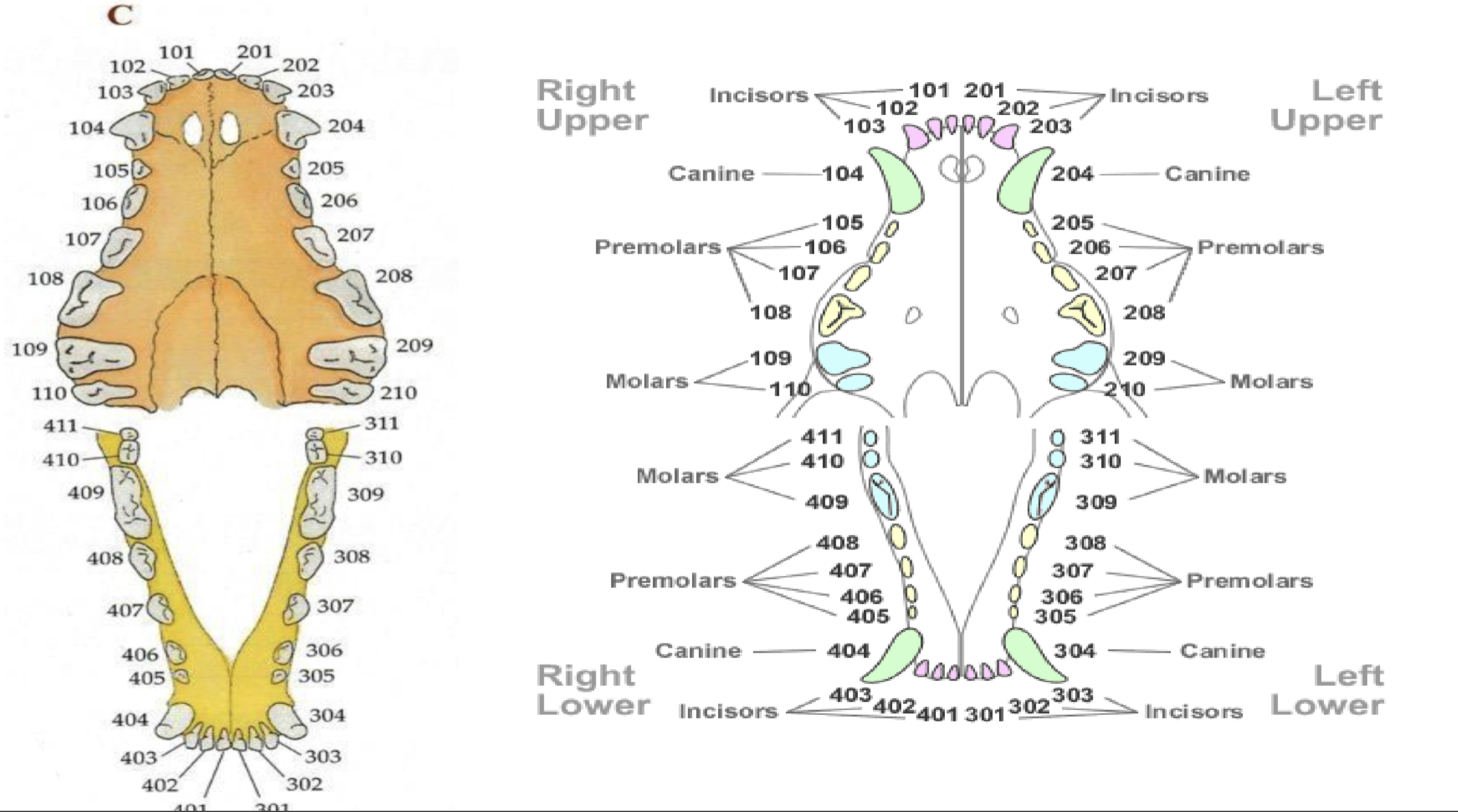
standard numbering system
Supernumerary teeth
Mutations or other factors can
result in extra teeth
Sometimes a health concern
but not always
how to number supernumerary teeth
Numbered slightly different:
add 50 to nearest ‘normal’
tooth
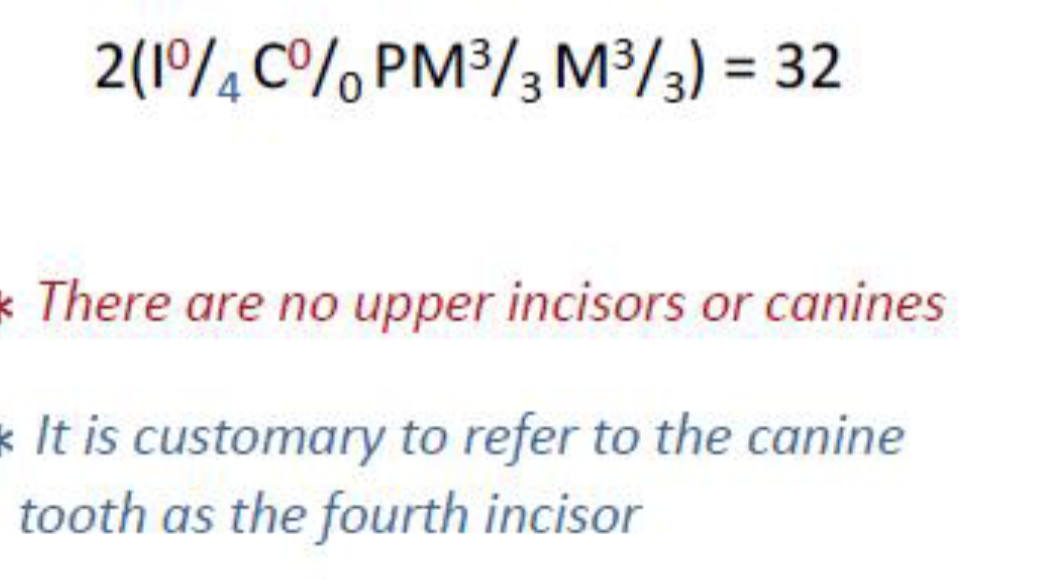
Ruminant dental formula
deciduous

Ruminant permanent formula
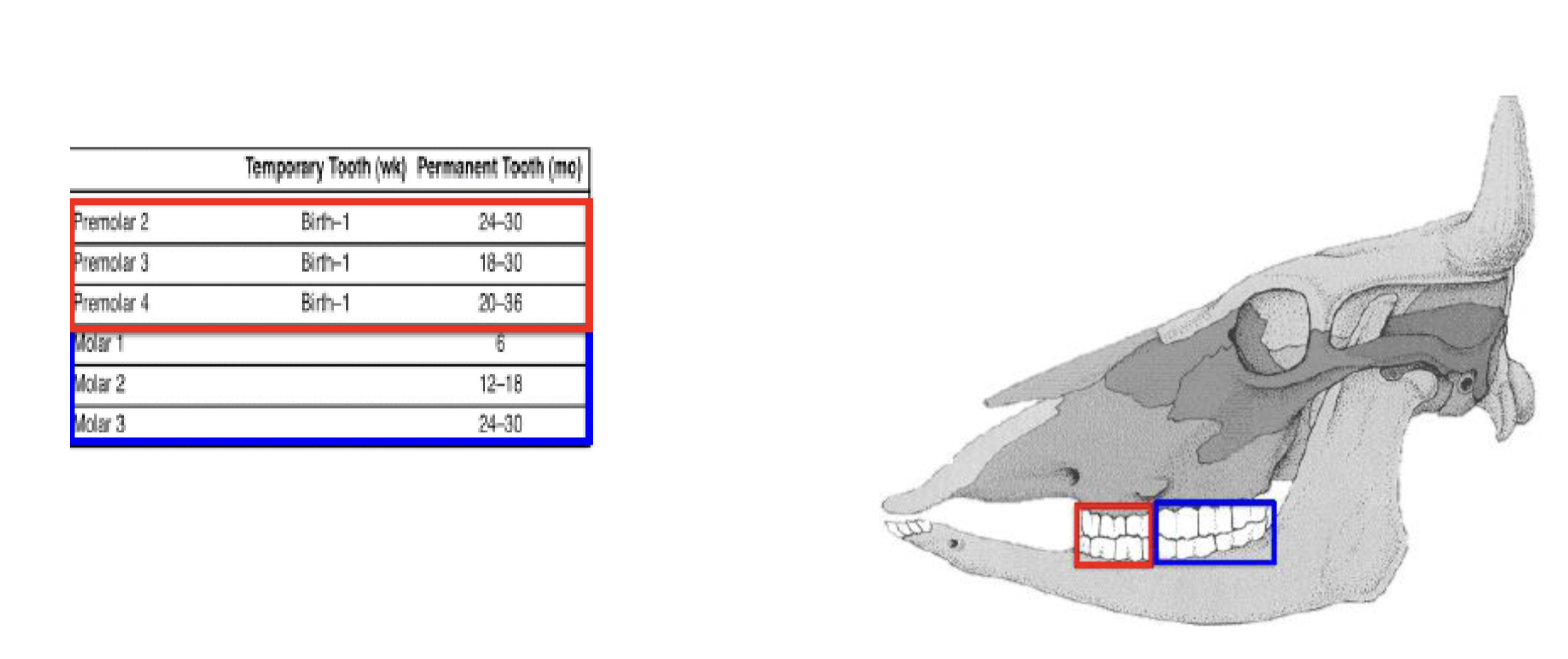
Brachydont
wear over time to become ‘peg mouth’
Pinchers
1st intermediate pair incisors
2nd intermediate pair incisors
corners correspond to the canine tooth that adapt an incisor shape and move closer to the incisor 3
Horse hyposodont
Flat long teeth made for
Flat long teeth made for
grinding
Erupt for life
Wear down about 2-3 mm/year
Horse Cementum
covers the surface and connects
to the bone (easily stained)
Horse Incisors:
forms the ‘cup’ or
infundibulum
Dentin
is the living softer layer that is
produced throughout life
”Dental star” is formed as tooth
becomes worn
Dental formula for horse
permanent
2(I3/3:C1/1:PM3(4)/3:M3:3) = 42
Dental formula for horse
Deciduous
2(dI 3/3: dC 0/0: dPM 3/3) = 24
Dental formula for horse
2nd premolar =
first ‘ check tooth’
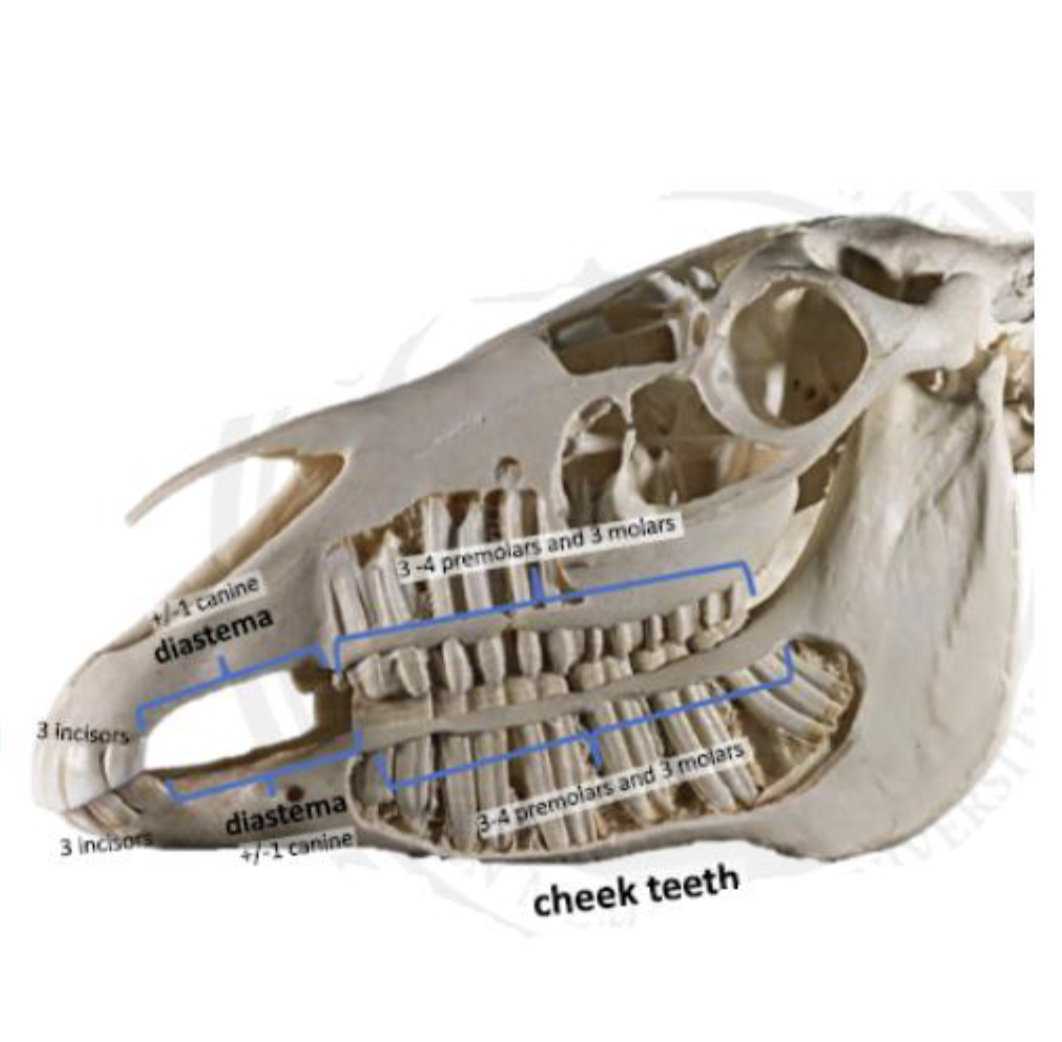
first premolars in horses are called:
‘wolf tooth’
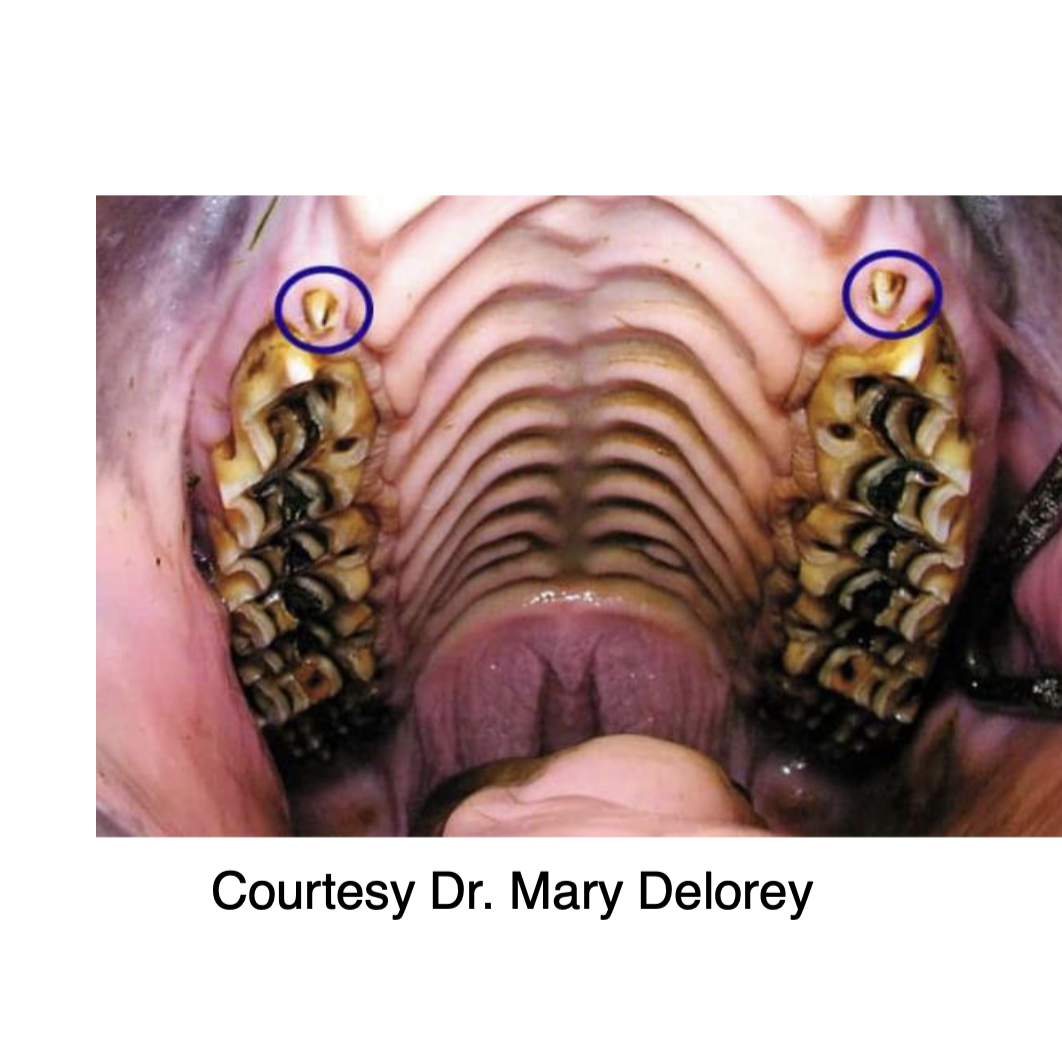
what percent of horses have wolf teeth
70%
Removed in performance horses
not harmful, but can interfere with bit and cause soreness
Horse teeth rules
First canine:
2nd premolar:
First molar:
X04 is first canine
X06 is 2nd premolar
X09 is first molar
Horse: arcade teeth
upper is ____ than ____
wider than lower
Horse arcade teeth points:
Buccal side of upper
Lingual side of lower
Aging of horse teeth
Incisors:
incisors: 6 days, 6 weeks, 6 months
2.5,3.5,4.5 years
Takes 6 months for teeth to
start to erode after erupting
(wear)
Once all enamel is wear
(Level)
Aging of horse teeth
Canines
5 years
Aging of horse teeth
Premolars
2,3,4 years
Aging of horse teeth
molars
1,2,~4 years
What are common during eruptions
Cysts
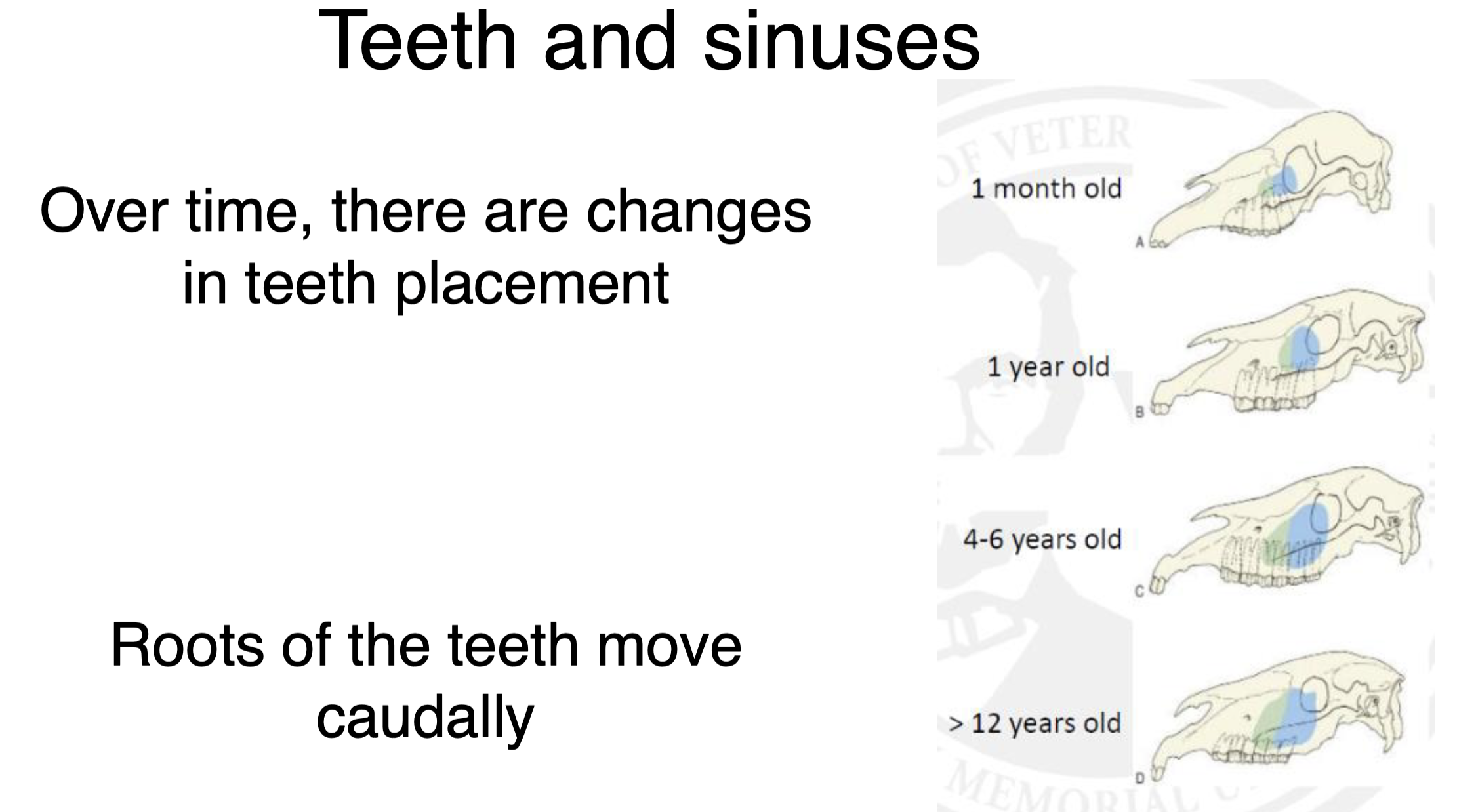
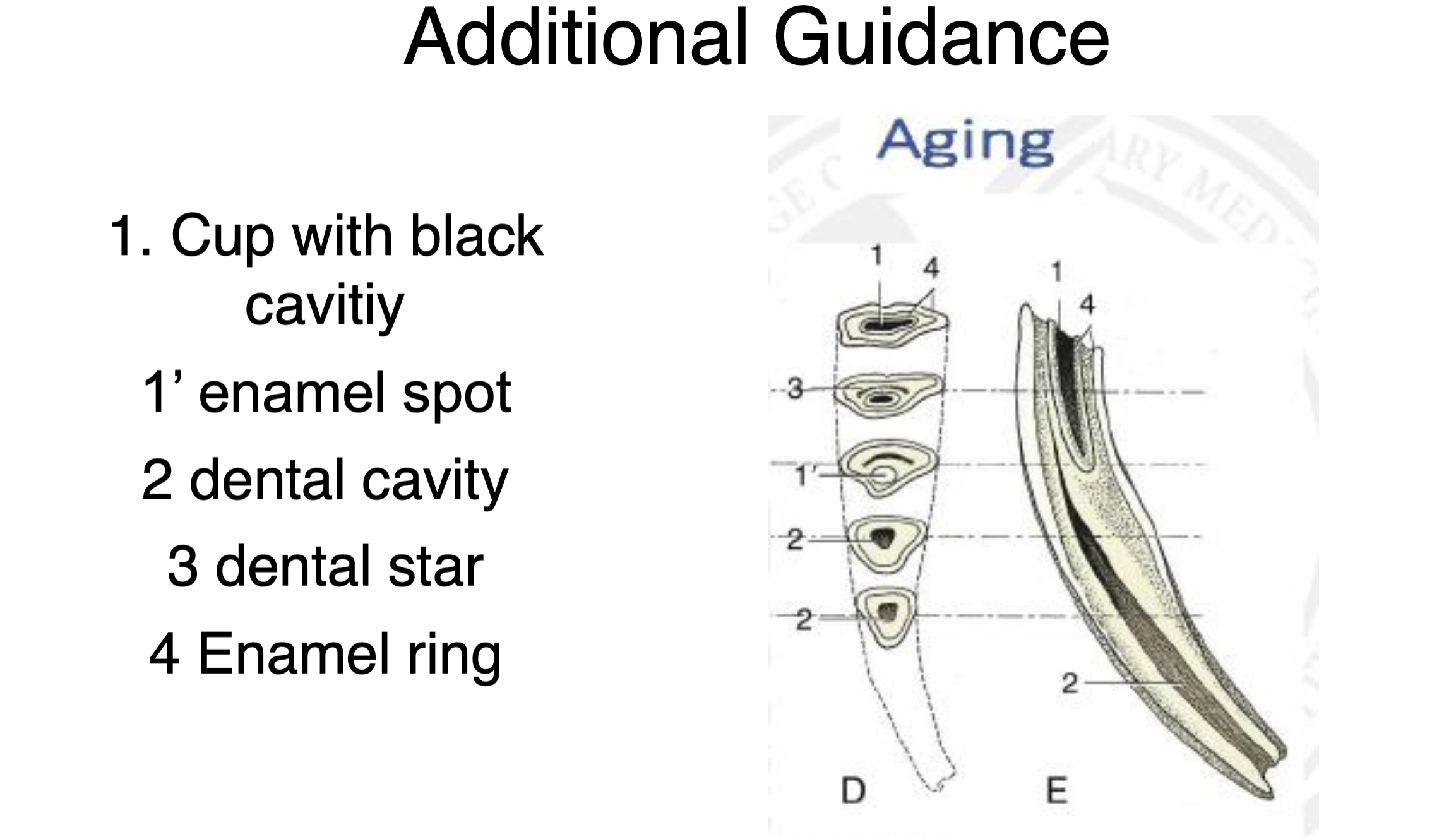
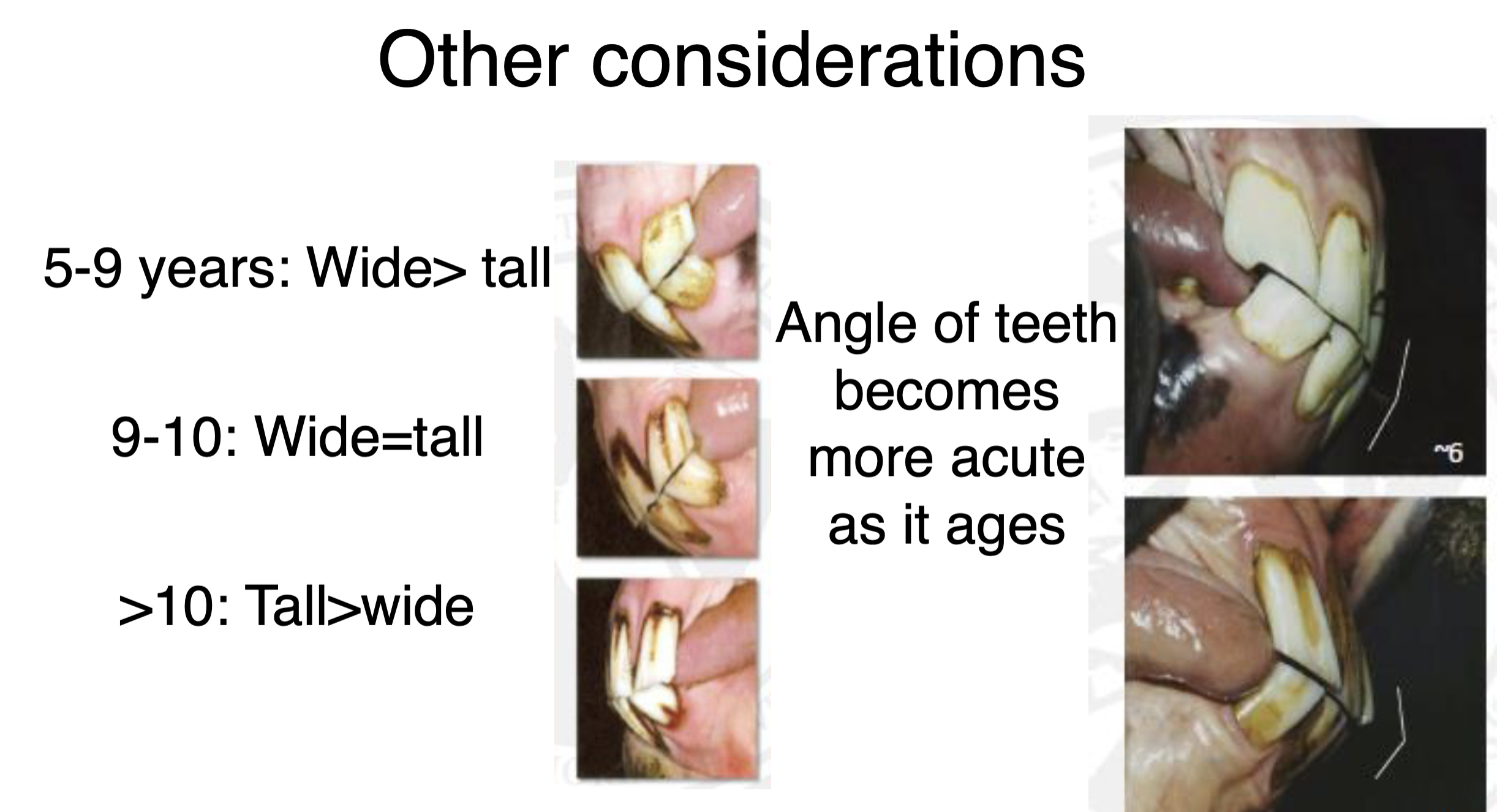
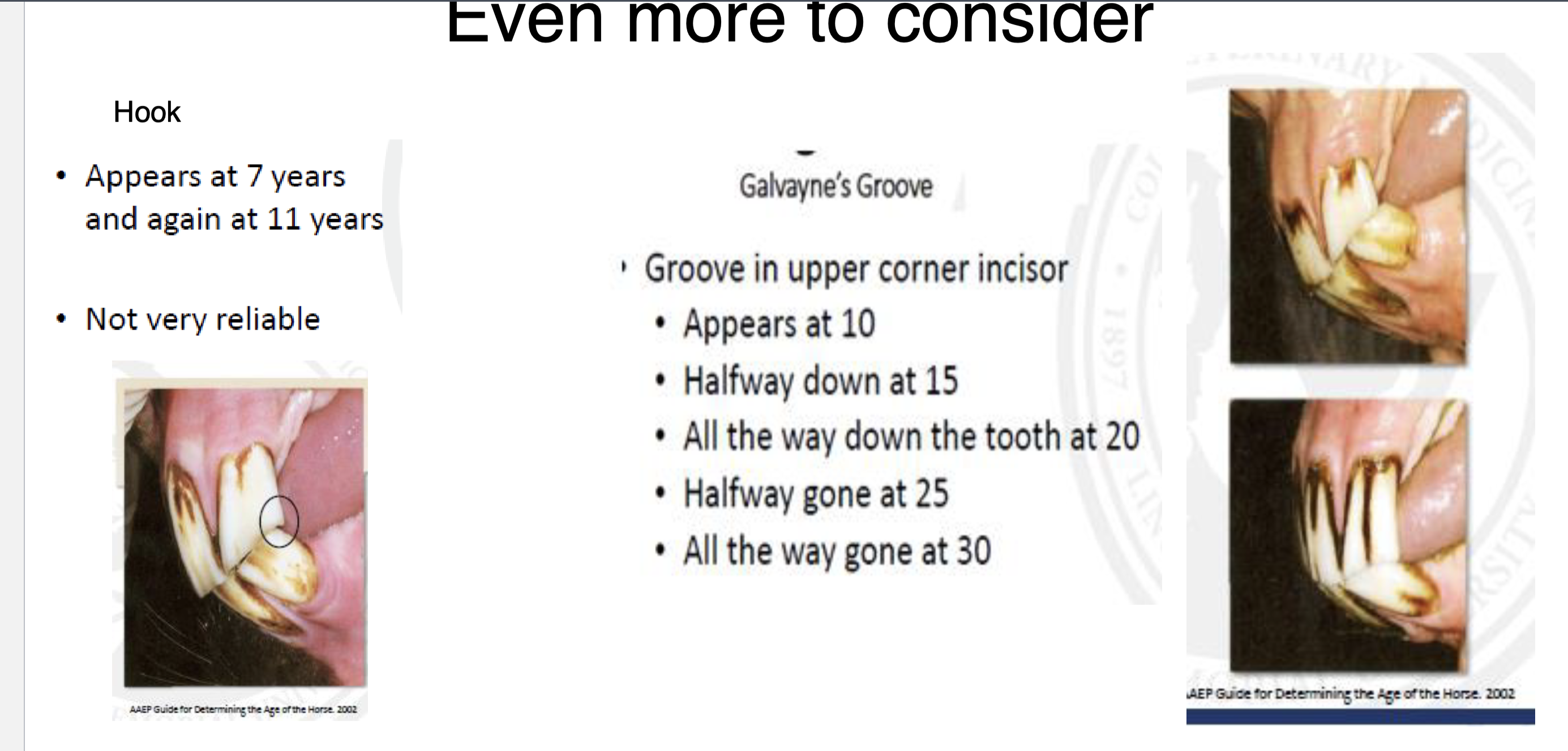
know the curves/ hook
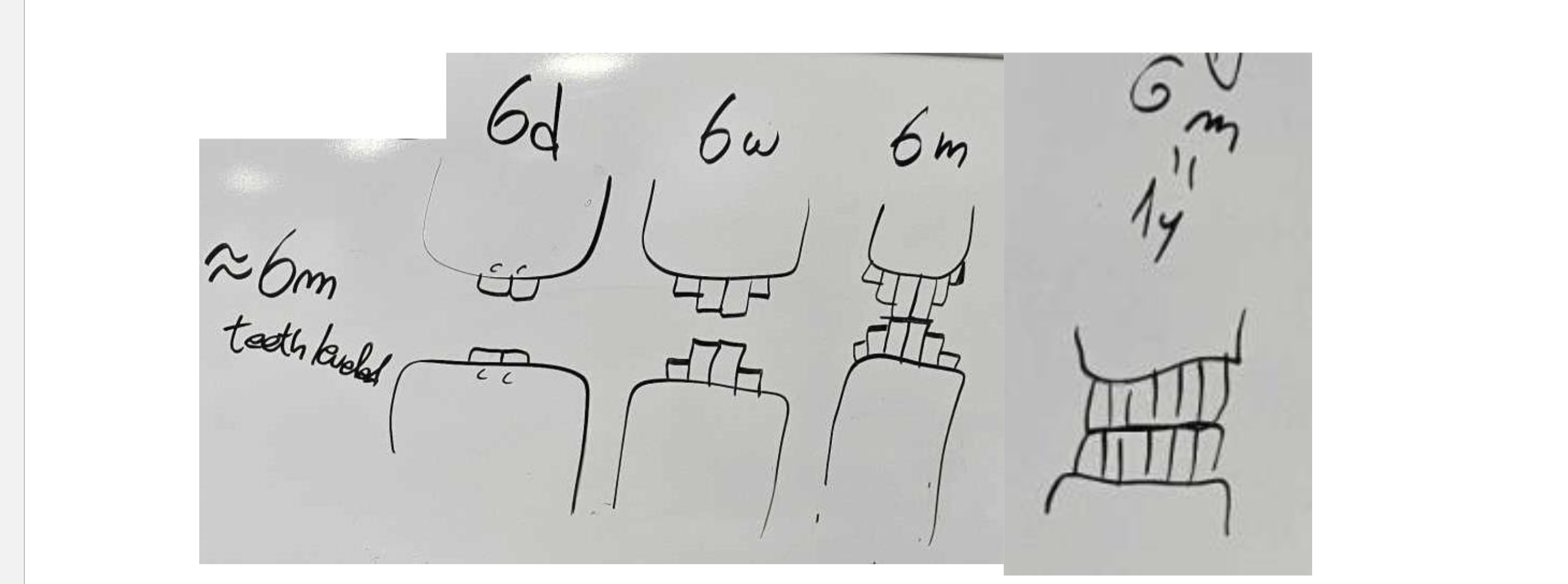
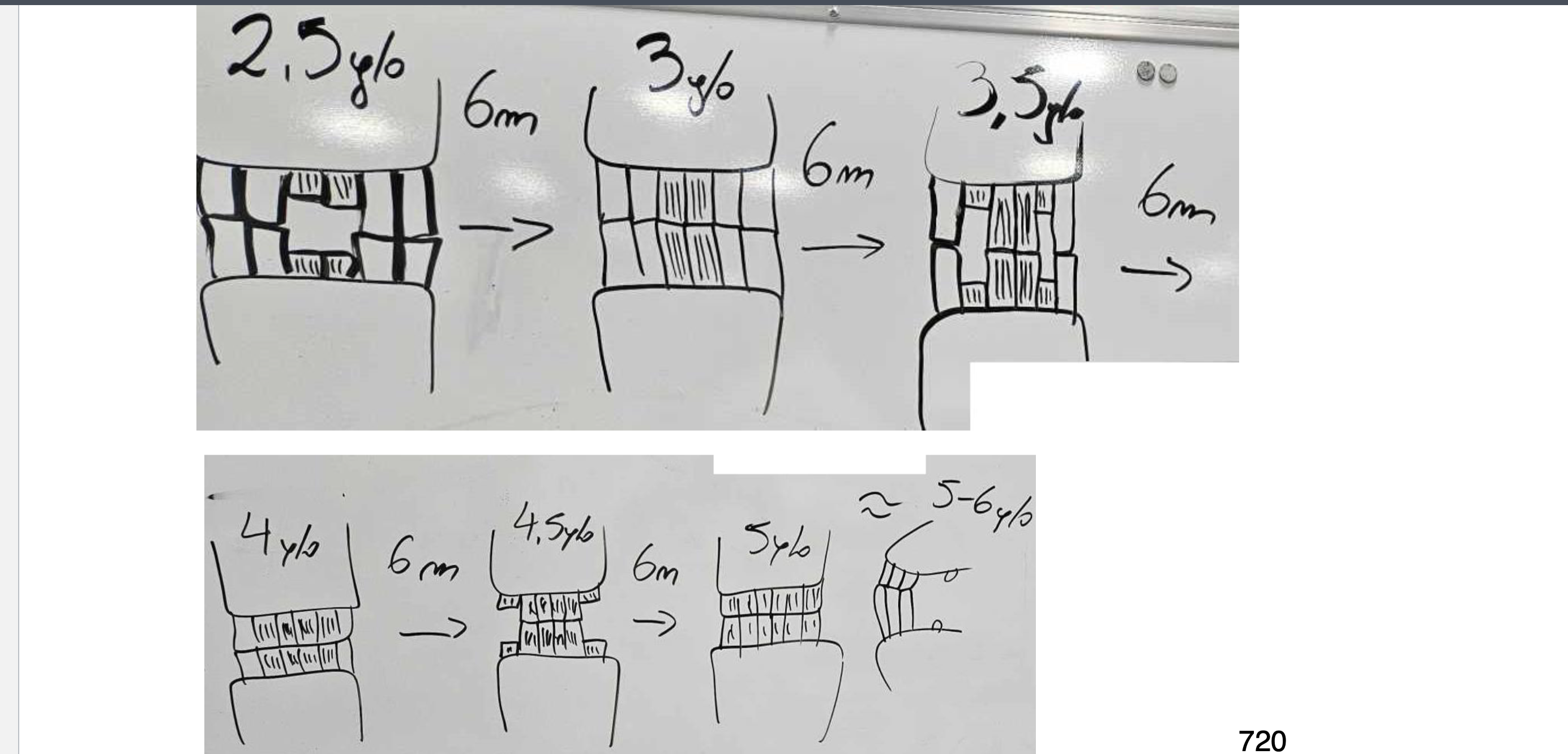
 Note
Note  Flashcards (22)