i hate this class
 Call Kai
 Learn
Learn Practice Test
 Spaced Repetition
 Match
Match Flashcards
 Knowt Play
1/25

There's no tags or description
Looks like no tags are added yet.
Name | Mastery | Learn | Test | Matching | Spaced | Call with Kai |
|---|
No analytics yet
Send a link to your students to track their progress
26 Terms
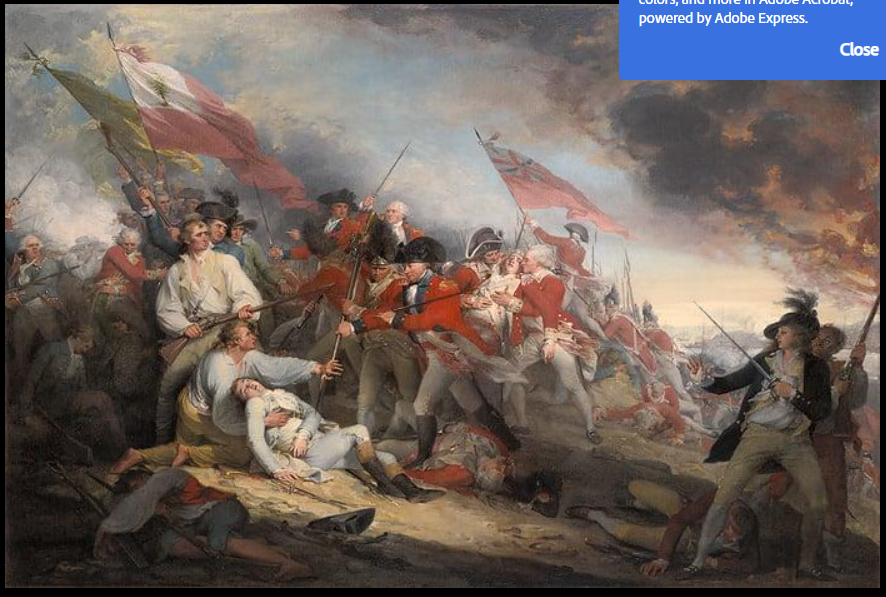
John Trumbull, Death of General Warren Battle of Bunker’s Hill (1786) Historical Context
Depicts a 1775 battle from the American Revolution (painted ~10 years later).
Americans lost the battle, but it became a turning point in the war.
Created after independence → reflects postwar reconciliation with Britain.
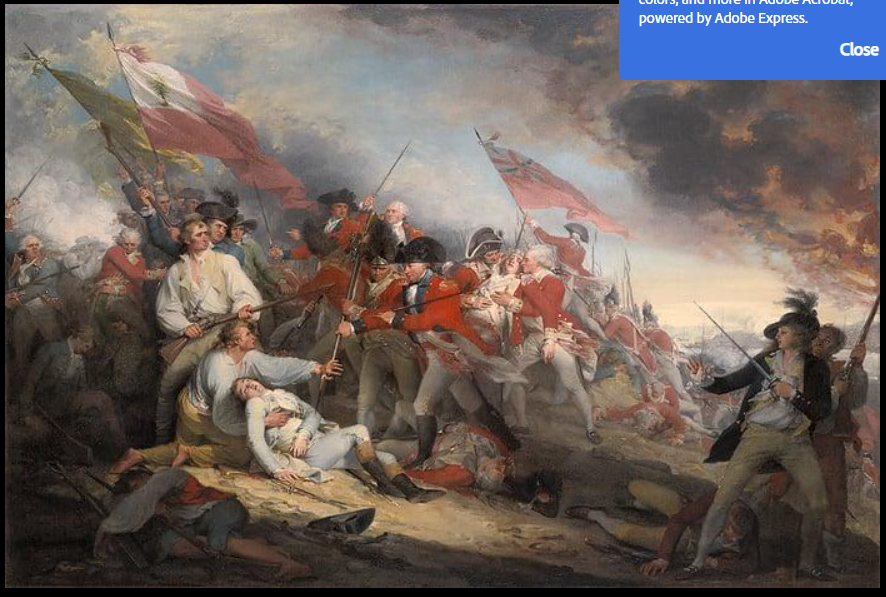
John Trumbull, Death of General Warren Battle of Bunker’s Hill (1786) Worldview
Sees the Revolution as sacrificial, personal, and morally complex.
Emphasizes shared humanity between Americans and British (soldiers stopping the bayonet).
Suggests rebuilding relationships, not permanent hatred.
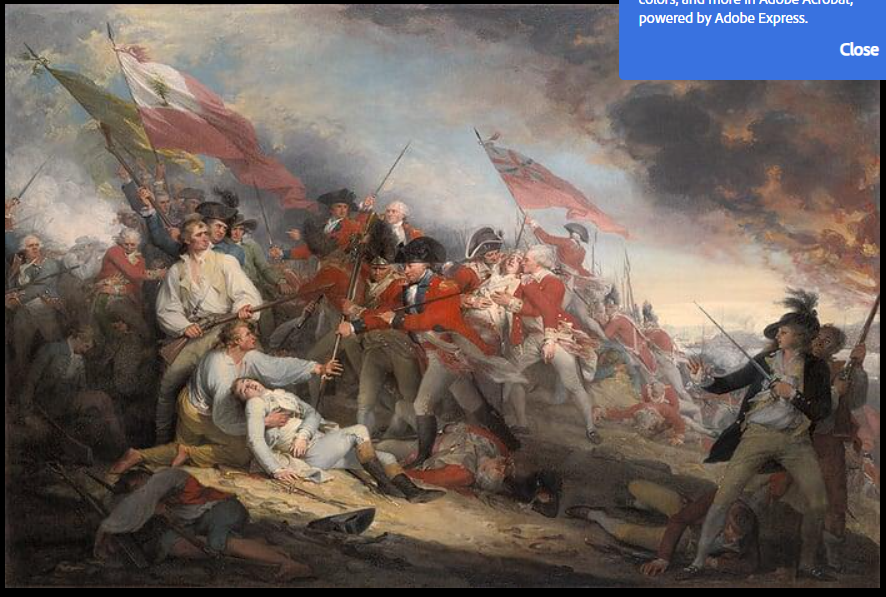
John Trumbull, Death of General Warren Battle of Bunker’s Hill (1786) Form
Dramatic lighting highlights Warren (heroic focus).
Diagonal composition leads eye upward to flags → sense of movement and chaos.
Organized chaos: bodies converge toward center → emotional intensity.
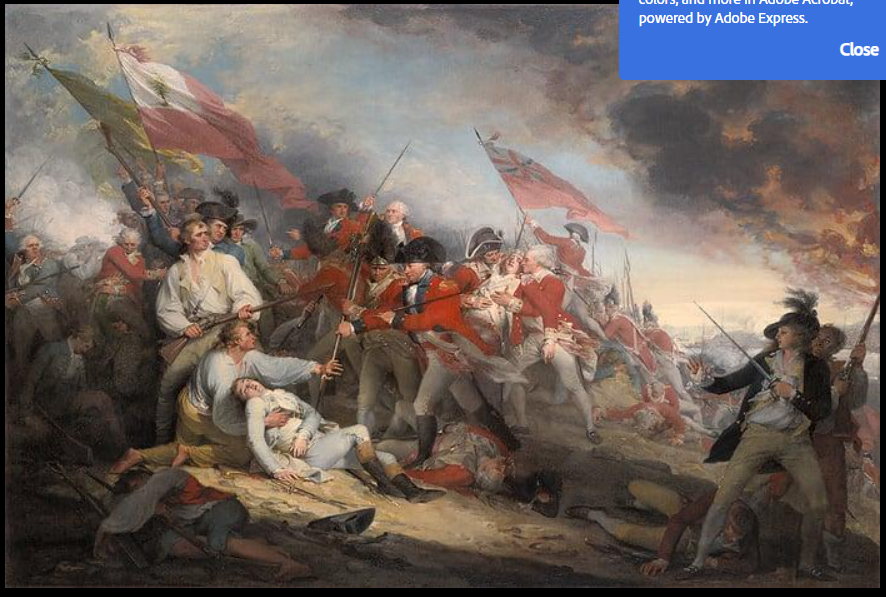
John Trumbull, Death of General Warren Battle of Bunker’s Hill (1786) Content
Central moment: dying General Warren protected from further violence.
Americans = less formal, more like everyday people; British = uniformed redcoats.
Message: Revolution as heroic sacrifice + moral restraint, not just violence.
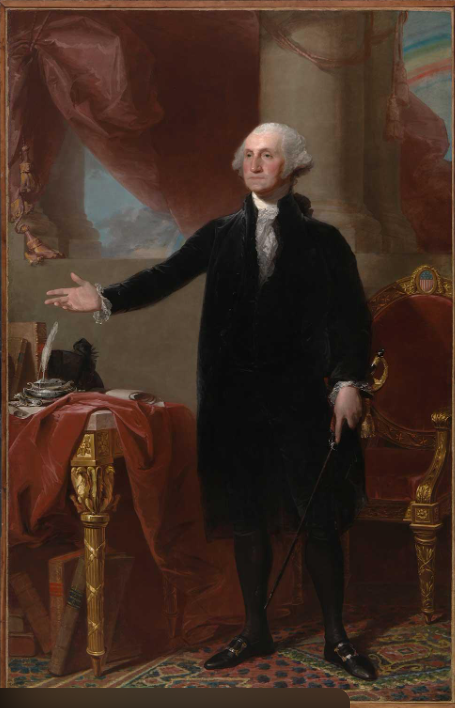
Gilbert Stuart, George Washington (1796)
Historical Context
Painted during Washington’s presidency (early republic period).
High demand for his image → shaping identity of the new nation.
Worldview
Washington shown as ideal leader, not just a real person.
Reflects tension:
Is the nation built on one leader?
Or can anyone become “the next Washington”?
Form
Full-length portrait → more symbolic detail than bust portraits.
Neoclassical elements: column, balanced composition, calm pose.
Gesture like an orator (Roman leader) → authority without aggression.
Content
Surrounded by symbols:
Books (including Federalist Papers) → intellect, governance.
Desk, quill → democracy through documents.
Rainbow → hope and future.
Not a military image → emphasizes statesman over general.
Message: America as rational, stable, hopeful democracy
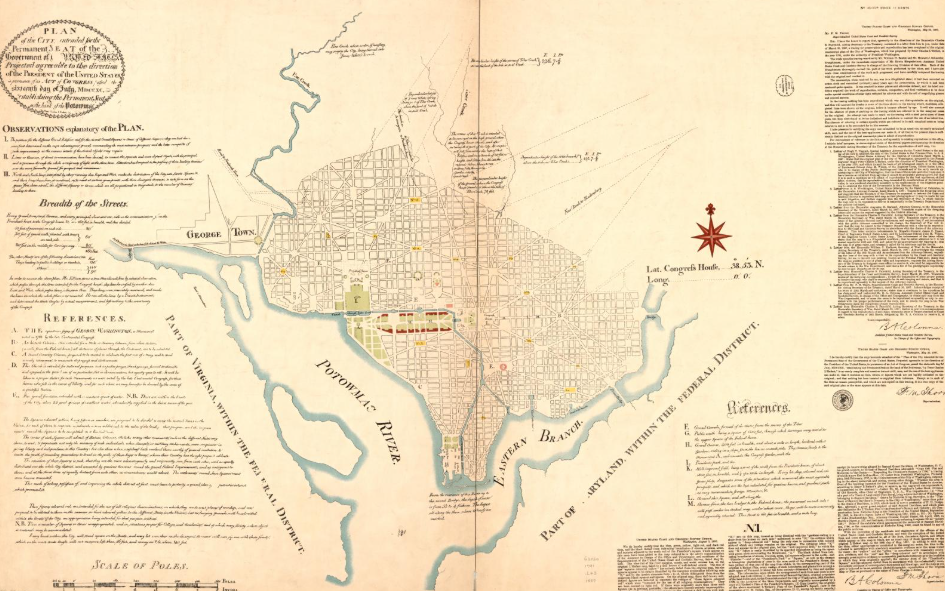
Pierre Charles L’Enfant, Plan for Washington, DC (1791)
Historical Context
New capital created after independence → not in any state (neutral ground).
Built during debate over federal vs. state power.
Worldview
City as a symbol of national unity and power.
Reflects federalist ideas: strong central government.
Also designed with military control in mind (diagonals for troop movement).
Form
Combines:
Grid system (like Philadelphia → equality)
Diagonal avenues (grand, dramatic views → power)
Central axes connect:
Capitol
President’s House
National Mall
Content
Layout encodes political ideas:
Checks and balances (branches positioned in relation)
Spaces for monuments → national identity building
Message: America as ordered, powerful, intentionally designed nation.
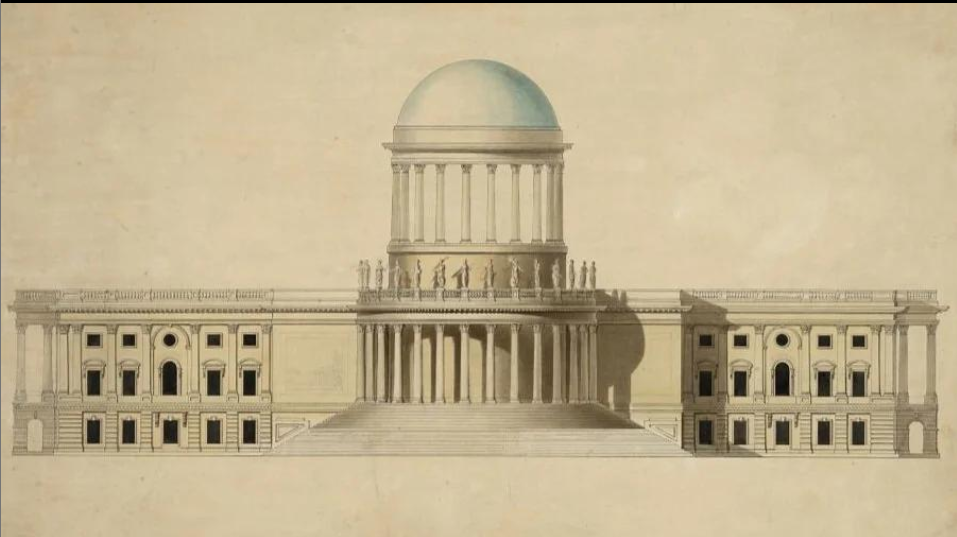
William Thornton, Design for the U.S. Capitol (1793)
Historical Context
Part of competition to design national government building.
Influenced by fears of instability (e.g., French Revolution).
Worldview
Leaders wanted architecture that reflects:
“Republican simplicity”
Order, stability, and balance
Looks to ancient Greece & Rome → models of democracy and republics.
Form
Neoclassical style:
Columns, pediment, dome (inspired by Roman Pantheon)
Symmetry & geometry → rational, calm design
Built from simple shapes → clarity and order.
Content
Symbolizes:
Democracy (Greece)
Republican government (Rome)
Columns = metaphor for citizens/states supporting nation.
Message: America as a stable, rational, enduring republic.
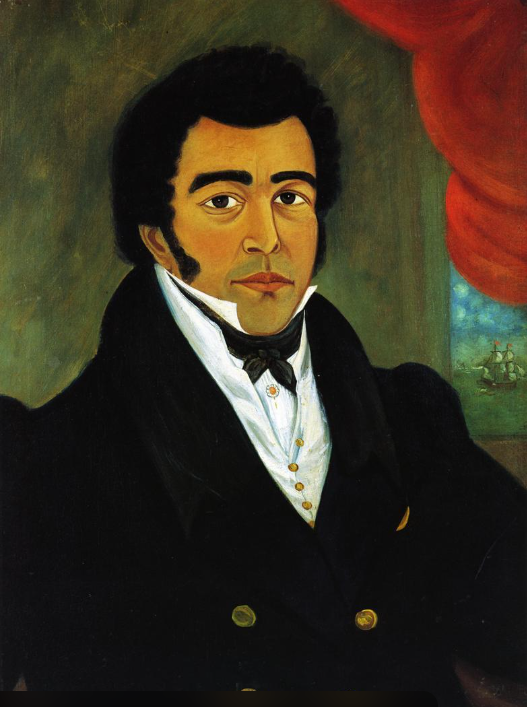
Joshua Johnston, Portrait of a Gentleman (1805–10)
Joshua Johnston, Portrait of a Gentleman (1805–10)
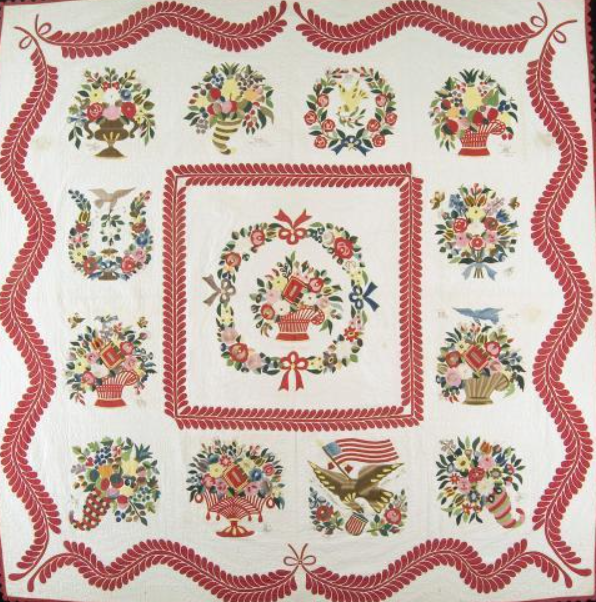
Mary Simon & others, Baltimore Album Quilt (1847)
Historical Context
Antebellum era → rise of middle-class domestic culture.
Enabled by new textile production + cheaper printed fabrics.
Often made collaboratively (friendship networks, gifts, or exhibitions).
Worldview
Home = center of identity, memory, and moral development.
Reflects women’s roles, but also their creativity and entrepreneurship.
Quilts act as “social maps” → connecting people across distance.
Form
Composed of individual blocks (album-style “vignettes”).
Highly detailed appliqué → almost painterly.
Uses a wide variety of industrially produced fabrics.
Content
Includes imagery like:
Nature (flowers)
National symbols (flags, eagles, Lady Liberty)
Often includes names, inscriptions, messages.
Functions as both:
Personal object (gift, memory)
Public display (competitions, exhibitions)
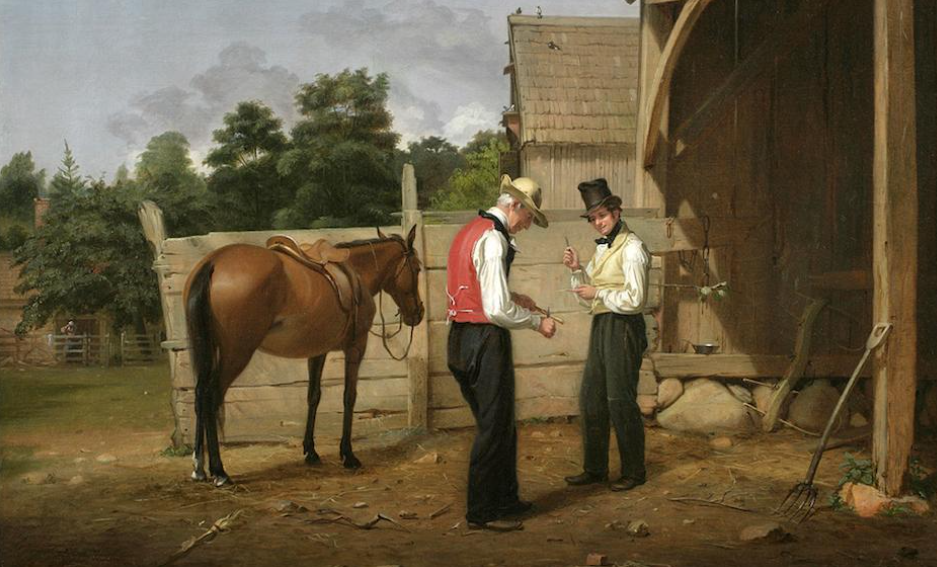
William Sidney Mount, Bargaining for a Horse (1835)
Historical Context
Antebellum period → rise of genre painting (scenes of everyday life).
Growing middle-class art market.
Expansion of democracy (more white men voting) → interest in “common people.”
Worldview
Focus on identifying “American types” (farmers, traders, rural people).
Reflects curiosity: Who are Americans in this new democracy?
Often humorous or observational → not heroic like earlier history painting.
Suspicion of:
Greed
Dishonesty in business
Reflects anxiety about changing American values.
Form
Smaller scale → meant for home display.
Narrative composition → encourages viewer to interpret the scene.
Realistic but slightly exaggerated gestures → storytelling.
Content
Scene of negotiation/trade (horse deal).
Shows rural economy + social interaction.
Suggests themes like:
Trust vs. deception
Everyday decision-making
Example of “social mapping” → defining roles in society.
Symbols:
Broken barn → neglect of responsibility
Pigeons → “plucking a pigeon” (scamming someone)
Message: someone is being cheated.
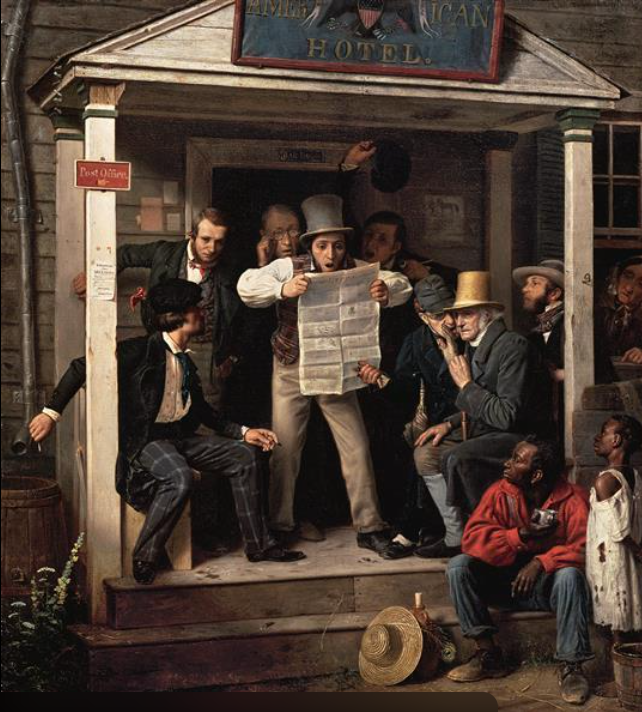
Richard Caton Woodville, War News from Mexico (1848)
Historical Context
Painted during/after the Mexican-American War (1846–48).
Period of territorial expansion + cheap newspapers (printing advances).
Worldview
Shows how Americans experience war indirectly through media.
Reflects a society increasingly connected by information networks.
Raises question: how does expansion affect everyday citizens?
Form
Genre painting → crowded, detailed scene.
Focus on facial expressions + reactions.
Composition draws viewer into shared public moment.
Content
People gathered reading war news.
Highlights:
Different reactions (excitement, concern, curiosity).
Emphasizes role of newspapers in shaping national identity.
Connects to expansion → war helps grow U.S. territory.
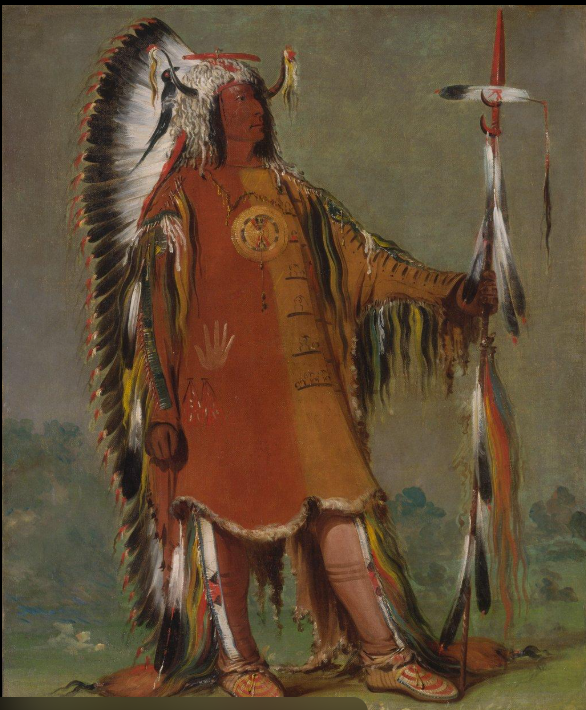
George Catlin, Mah-to-toh-pa (Four Bears) (1832)
Context
Painted during westward expansion into Native lands.
Catlin traveled to document Native American tribes.
Worldview
Saw Native Americans as important but “vanishing” cultures (problematic idea).
Attempt to preserve cultures visually as expansion threatened them.
Reflects outsider (Euro-American) perspective.
Form
Portrait style → detailed attention to clothing, adornment, identity markers.
Direct gaze → emphasizes individuality and authority.
Ethnographic approach (documentation).
Content
Depicts a specific leader (Four Bears of the Mandan).
Highlights:
Cultural identity
Status and leadership
Functions as both:
Portrait
Cultural record
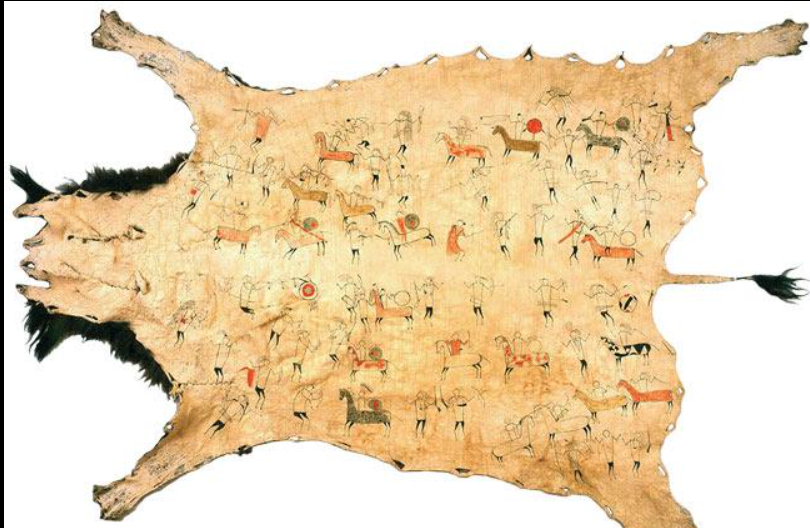
Ma-to-toh-pa (Four Bears), Painted Buffalo Robe (1835)
Historical Context
Created by a Native American leader (not an outsider artist).
Same period of U.S. expansion into Indigenous lands.
Worldview
Represents Indigenous perspective, not Euro-American.
Art used to record history, identity, and achievements.
Emphasizes continuity of culture despite outside pressures.
Form
Painted on buffalo hide.
Uses pictographic symbols instead of Western perspective.
Narrative layout → events shown across surface.
Content
Depicts battles, achievements, personal history.
Functions as:
Historical record
Status symbol
Contrasts with Catlin:
Catlin = outsider documenting
Robe = self-representation
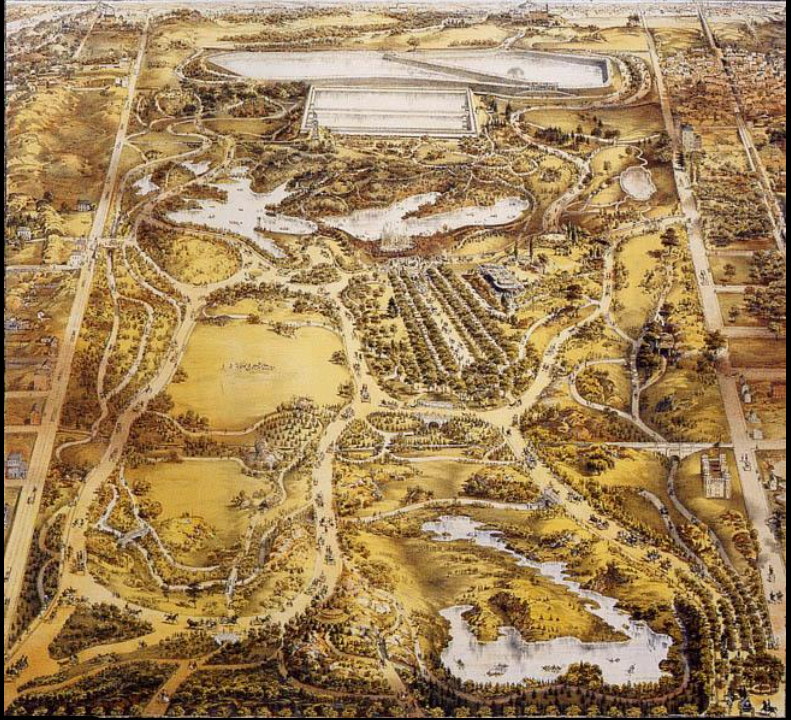
Olmsted & Vaux, Central Park (1850s)
Historical Context
Urbanization → need for public green space.
Designed in New York City.
Worldview
Nature seen as:
Restorative
Necessary for public health
Controlled, designed nature → not wilderness.
Form
Carefully planned “natural” landscape.
Curving paths, open fields, scenic views.
Content
Democratic space:
Intended for all social classes
Reflects idea that environment shapes society
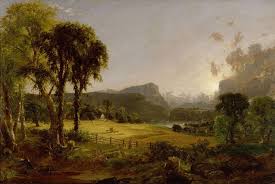
Cropsey, American Harvesting (1851)
Historical Context
Expansion of agriculture.
Growing national pride.
Worldview
America as:
Abundant
Blessed with fertile land
Supports idea of Manifest Destiny.
Form
Warm light, detailed landscape.
Balanced composition.
Content
Farmers harvesting crops.
Emphasizes:
Prosperity
Harmony between people and land.
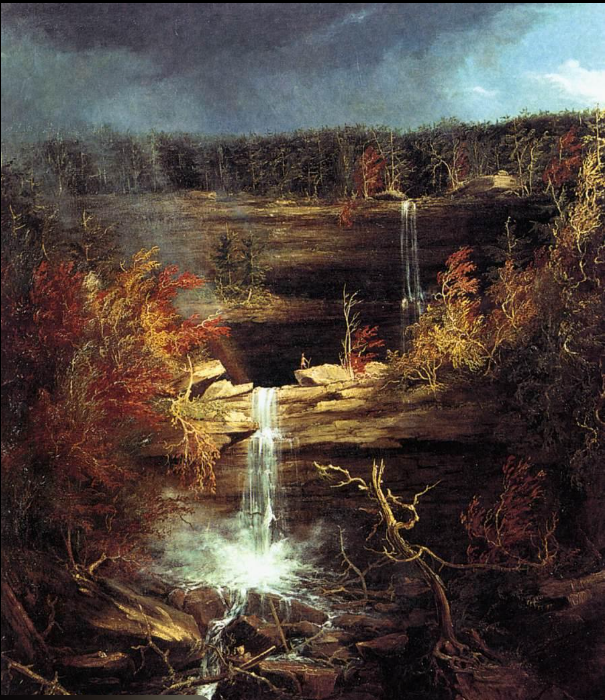
Thomas Cole, Kaaterskill Falls (1826)
Historical Context
Early Hudson River School (first major U.S. art movement).
Worldview
Nature as:
Powerful
Spiritual
Sublime (awe-inspiring)
Form
Dramatic scale:
Tiny humans vs. massive landscape.
Strong contrasts (light/dark, height/depth).
Content
Waterfall in wilderness.
Message:
Nature is larger than humanity
Spiritual experience through landscape.
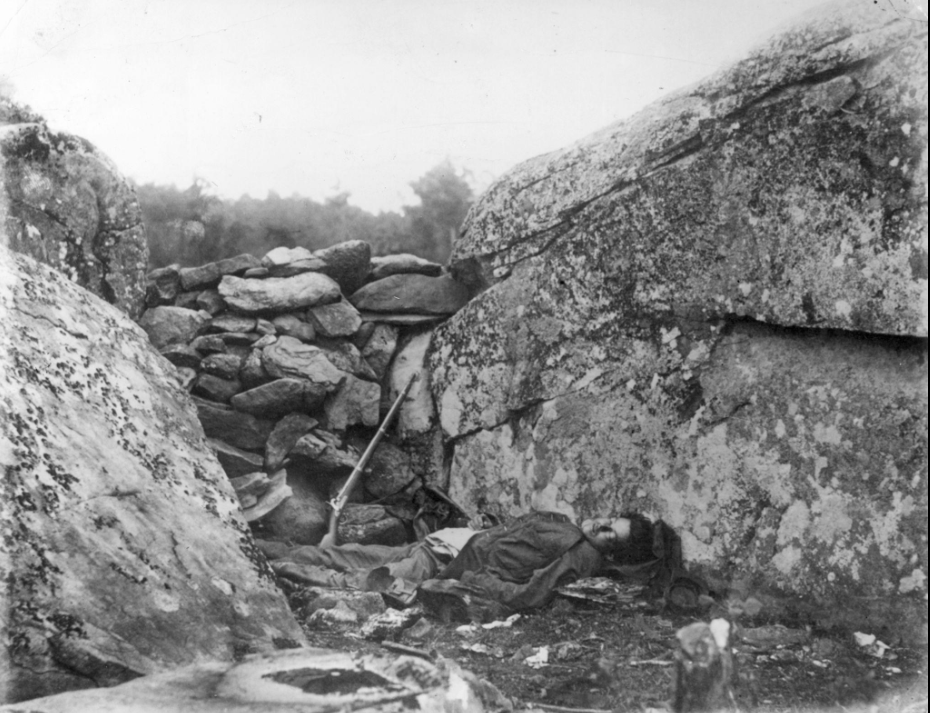
Alexander Gardner, Home of a Rebel Sharpshooter, Gettysburg (1863)
Historical Context
Civil War (1861–65); rise of photography as documentation.
First time Americans saw real images of war’s aftermath.
Worldview (connect to lecture)
Like Catlin/landscape painters → claims to show “truth.”
BUT raises same question: what is constructed vs. real?
Gardner likely moved the body → staged scene.
Connects to lecture theme:
→ Images shape memory, not just record it.
Form
Photograph (new medium → seen as objective).
Careful composition:
Body placed dramatically in rocky landscape.
Combines:
Landscape + death (nature becomes site of violence).
Content
Dead Confederate soldier alone in nature.
Suggests:
Isolation
Tragedy
BUT excludes:
Full battle context
Causes of war (slavery)
👉 Key takeaway: Like landscape painting, it looks real—but selectively tells a story
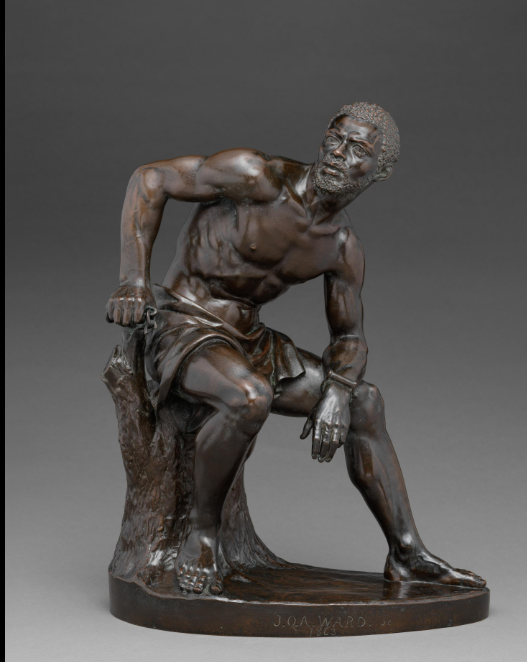
John Quincy Adams Ward, The Freedman (1863)
Historical Context
Created during Emancipation Proclamation (1863).
Moment of transition: slavery → freedom (uncertain future).
Worldview (connect to lecture)
Reflects tension similar to:
Landscape = opportunity vs. reality
Shows freedom as incomplete:
Not triumphant → uncertain, restrained.
Form
Bronze sculpture.
Seated, introspective pose (not heroic standing).
Chains broken but still present.
Content
Black man just freed from slavery.
Emphasizes:
Thoughtfulness
Transition
Avoids:
Violence of slavery
Active resistance
👉 Key takeaway: Freedom is shown as quiet and incomplete, not fully realized
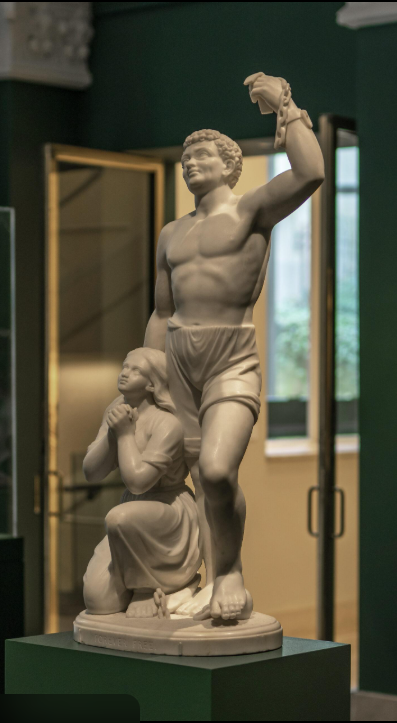
Edmonia Lewis, Forever Free (1867)
Historical Context
Post–Civil War (Reconstruction era).
Edmonia Lewis was a Black and Native artist working in Rome.
Worldview (connect to lecture)
Directly challenges dominant narratives:
Unlike Catlin → self-representation perspective
Still reflects limits:
Freedom framed as granted (not seized).
Form
Marble (associated with classical European art).
Two figures:
Man standing (active)
Woman kneeling (passive/praying)
Content
Chains broken → emancipation.
Gesture of prayer → gratitude.
Suggests:
Freedom as moral/spiritual victory
👉 Key takeaway: More empowering than Ward, but still shaped by Euro-American artistic traditions and expectations.
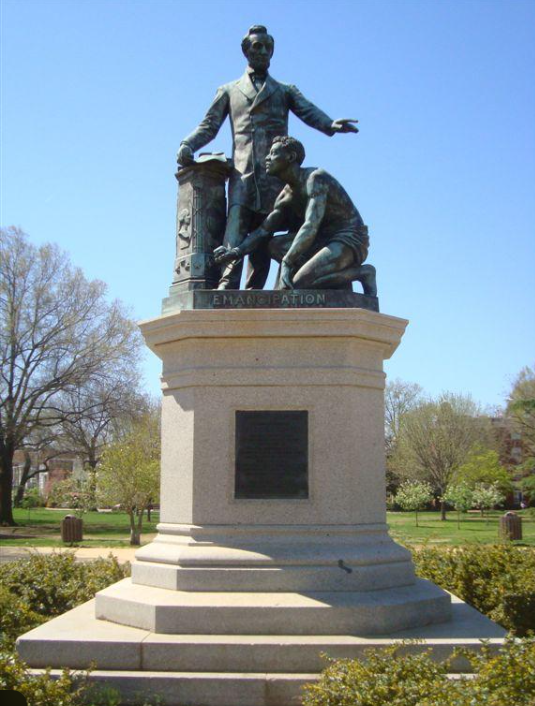
Thomas Ball, Emancipation Group (1876)
Context
Installed in Washington, D.C. during Reconstruction.
Funded partly by formerly enslaved people.
Worldview (connect to lecture)
Strong example of:
Who controls representation?
Reinforces hierarchy:
Abraham Lincoln standing
Black man kneeling
Form
Public monument (meant for national audience).
Hierarchical composition:
Lincoln upright
Freedman lower, dependent
Content
Lincoln “granting” freedom.
Black figure:
Passive, kneeling
Erases:
Black agency in securing freedom
👉 Key takeaway: Like Manifest Destiny imagery → promotes a specific national story, leaving out key realities.
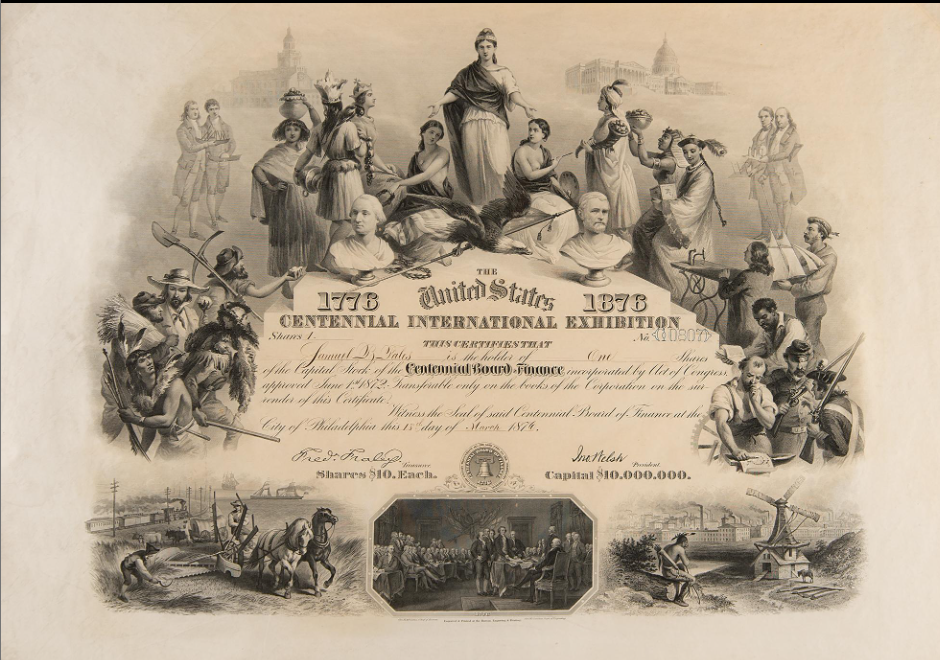
Centennial Stock Certificate (1876)
What it shows
Allegorical America at top
Global figures bringing goods
Scenes of:
Industry
Agriculture
War
Expansion
Native Americans shown as disappearing
Connection to Lecture
“Organizing the world” → U.S. at center, others orbit it
Progress narrative:
Wagon → railroad
“Primitive” → “modern”
Vanishing Indian idea:
Native Americans shown as past, not present
👉 Key Point:
This is propaganda—it presents U.S. progress as natural and unified while hiding conflict (war, displacement, inequality).
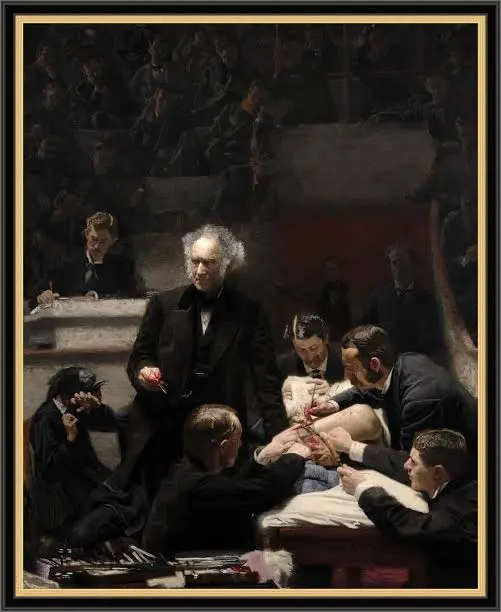
Thomas Eakins, The Clinic of Dr. Samuel Gross, 1875
Form
Large-scale oil painting (~8 feet tall), realistic style with dramatic lighting.
Central spotlight on Dr. Gross and patient; darkened background for contrast.
Precise anatomical detail; visible brushwork in hands, surgical instruments, and lighting.
Deep perspective and spatial organization; includes multiple planes of observers.
Includes self-portrait of Eakins among medical students, reinforcing presence of artist.
Historical Context
Philadelphia, post-Civil War period; preparing for the 1876 Centennial Exhibition.
Reflects advances in surgery, anesthesia (chloroform), and medical pedagogy.
Gilded Age interest in progress, science, and professionalization of medicine.
Response to societal fascination with modern knowledge and expertise.
Content
Scene of surgical lecture: Dr. Gross removing diseased bone from patient’s leg.
Multiple doctors, students, and family members observing.
Emphasizes knowledge transmission, medical practice, and technological expertise.
Light and composition highlight both the drama and scientific significance of the procedure.
Reveals About How Makers Saw Their World
Art as documentation of contemporary life and professional achievement.
Celebration of progress, skill, and education.
Artists as informed participants, not just observers—Eakins integrates personal study and anatomical expertise.
Realism as a tool to engage viewers critically with both the subject and art itself.
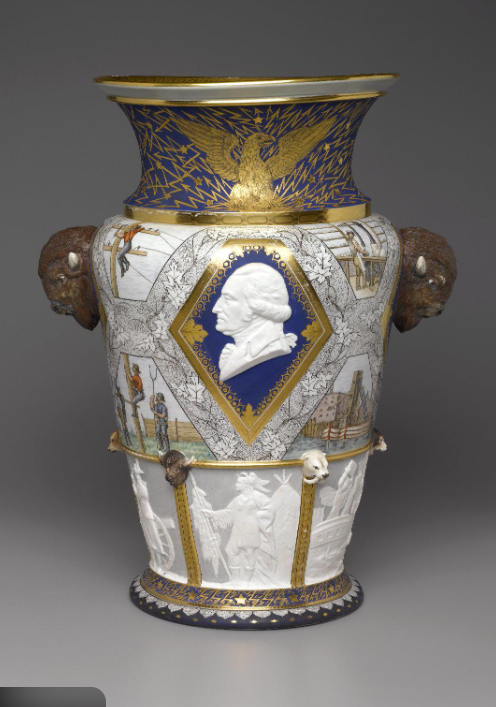
Centennial Vase (Karl Müller, 1876)
What it shows
Historical scenes (e.g., Boston Tea Party)
George Washington
Animals (buffalo, eagle)
Native American design motifs
Advanced ceramic techniques
Connection to Lecture
Combines:
Past (Revolution)
Present (industry)
Nature (animals)
Reflects idea that:
→ “Everything fits together”
BUT…
Lecture emphasizes:
These things don’t actually fit seamlessly
Industrial growth vs. nature
Expansion vs. Native displacement
👉 Key Point:
The vase visually unifies American identity, but that unity is constructed and artificial.
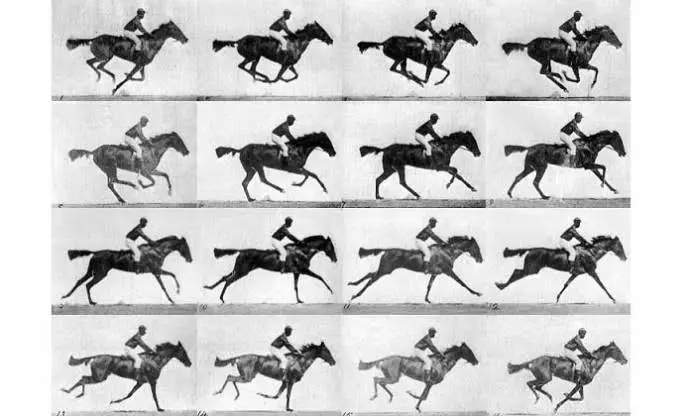
Muybridge, Sallie Gardner (The Horse in Motion), 1878
Form
Sequential photographs capturing rapid motion; series of still images.
Black-and-white, sharp contrast to freeze action.
Multiple cameras positioned along a track; each triggers automatically as horse passes.
First use of motion photography to study locomotion scientifically.
Images appear like frames of a movie; reveal detail invisible to the naked eye.
Historical Context
Late 1870s, America; Industrial Revolution with emerging photography and scientific experimentation.
Commissioned to settle debate about horse gait—scientific as well as practical application for racing and animation.
Intersection of art, science, and technology; precursor to motion pictures.
Content
Horse “Sallie Gardner” captured mid-stride at full gallop.
Demonstrates biomechanics: all four hooves off the ground simultaneously.
Isolates movement into discrete moments for detailed analysis.
Reveals About How Makers Saw Their World
Desire to understand and document reality with precision.
Emphasis on scientific observation and technological innovation.
Photography as a tool for discovery, not just aesthetic representation.
Shows a world increasingly defined by mechanization, measurement, and systematic analysis.

