Micro lab Quiz #3 P2
 Call Kai
 Learn
Learn Practice Test
 Spaced Repetition
 Match
Match Flashcards
 Knowt Play
1/24

Earn XP
Description and Tags
Ch.20
Name | Mastery | Learn | Test | Matching | Spaced | Call with Kai |
|---|
No analytics yet
Send a link to your students to track their progress
25 Terms
selective toxicity
selectively find and destroy pathogens W/O damaging host
chemotherapy
use of chemicals to treat disease
antibiotic
substance made by microbe to inhibit other microbe in small amount
antimicrobial drugs
synthetic substance that interfere microbial growth
narrow spectrum of microbial activity
drug that affect narrow range of microbial types
broad-spectrum
affect broad range of G+ or G- bacteria
superinfection
overgrowth of normal microbiota that are resistant to antibiotics
bactericidal
kill microbe
bacteriostatic
prevent bacterial growth (static = stop)
antimicrobial drug functions:
inhibit cell wall synthesis (ex. penicillin)
inhibit nucleic acid synthesis
inhibit essential metabolites (ex. sulfonamide)
injure plasma membrane (ex. antifungul drug + sterol, polypeptide antibiotic)
what does penicillin do?
destroys peptide crossbridge in G+ (w/ B-lactam ring)
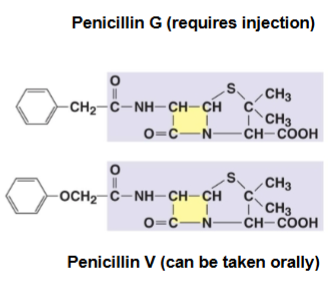
how do antibiotics (like penicilllin) stop protein synthesis?
target bacterial 70S ribosome
what do polypeptide antibiotics do? (hint: plasma membrane)
change membrane permeability
what do antifungal drugs do? (hint: plasma membrane)
combine with membrane sterols to injure plasma membrane
how to inhibit nucleic acid synthesis?
inhibit DNA gyrase that allows DNA replication/txn
how to inhibit essential metabolite synthesis?
antimetabolite (ex. sulfonamide) compete w/ normal substrate for an enzyme
What does sulfonamide compete with?
para-aminobenzoic acid (PABA) precursor to stop folic acid synthesis
what do sulfonamides do?
stop folic acid synthesis needed to make nucleic acid and proteins
antifungal drug
antiviral drug
interferon
diffusion method
minimal inhibitory concentration (MIC)
lowest antibioitc concentration preventing growth

