Workshop- Optimal Management of the New-born Calf
 Call Kai
 Learn
Learn Practice Test
 Spaced Repetition
 Match
Match Flashcards
 Knowt Play
1/32

There's no tags or description
Looks like no tags are added yet.
Name | Mastery | Learn | Test | Matching | Spaced | Call with Kai |
|---|
No analytics yet
Send a link to your students to track their progress
33 Terms
what are the ways to test colostrum quality?
what result will goo colostrum give?
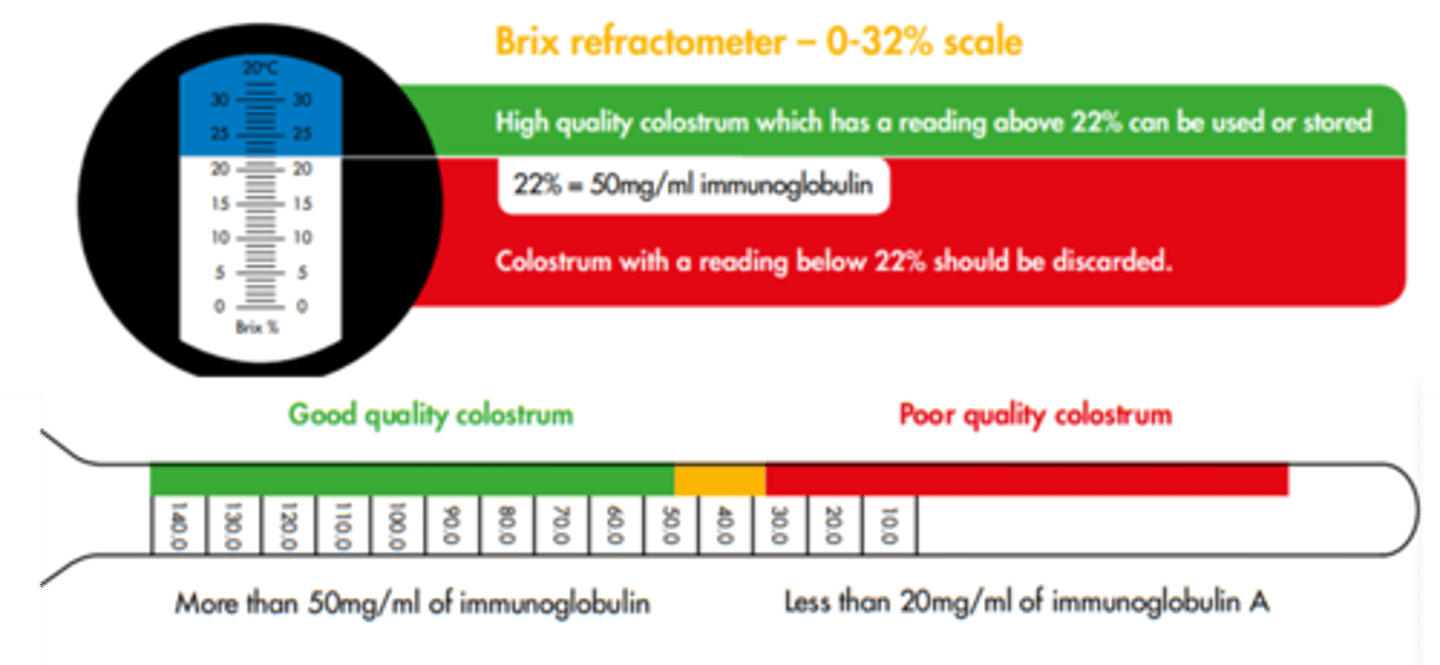
using a Colostrometer or Brix refractometer a threshold of 50 mg/ml IgG is considered ‘good quality’ colostrum
Brix 22% or 50 mg/ml Immunoglobulin (IgG)...
This is based on Holstein Friesian colostrum
Slightly higher % for beef, ewe, and sow colostrum have been researched
Testing total protein (serum) in calf
what are you looking for when measurng TP?
what should serum IgG be?
When measuring total protein (TP) a threshold of >5.2 g/L TP means passive transfer of immunoglobulins has occurred
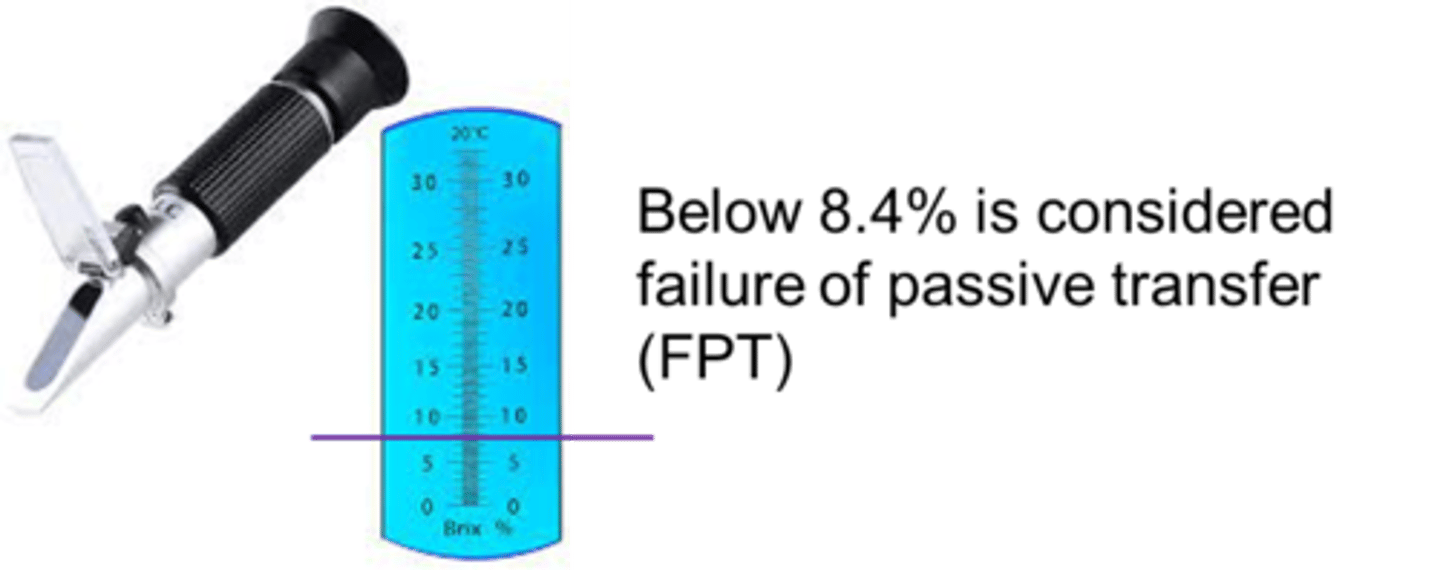
Below 8.1% (8.4%) is considered failure of passive transfer (FPT)
Brix 8.1% or serum IgG >10 g/L
This is equivalent to serum total protein
5.0 g/dL or
50 mg/ml
Again, slightly higher % may be reported for other farmed species
is a higher % os Ig actually better in colostrum or will anything over 22% be good
the higher the % the better
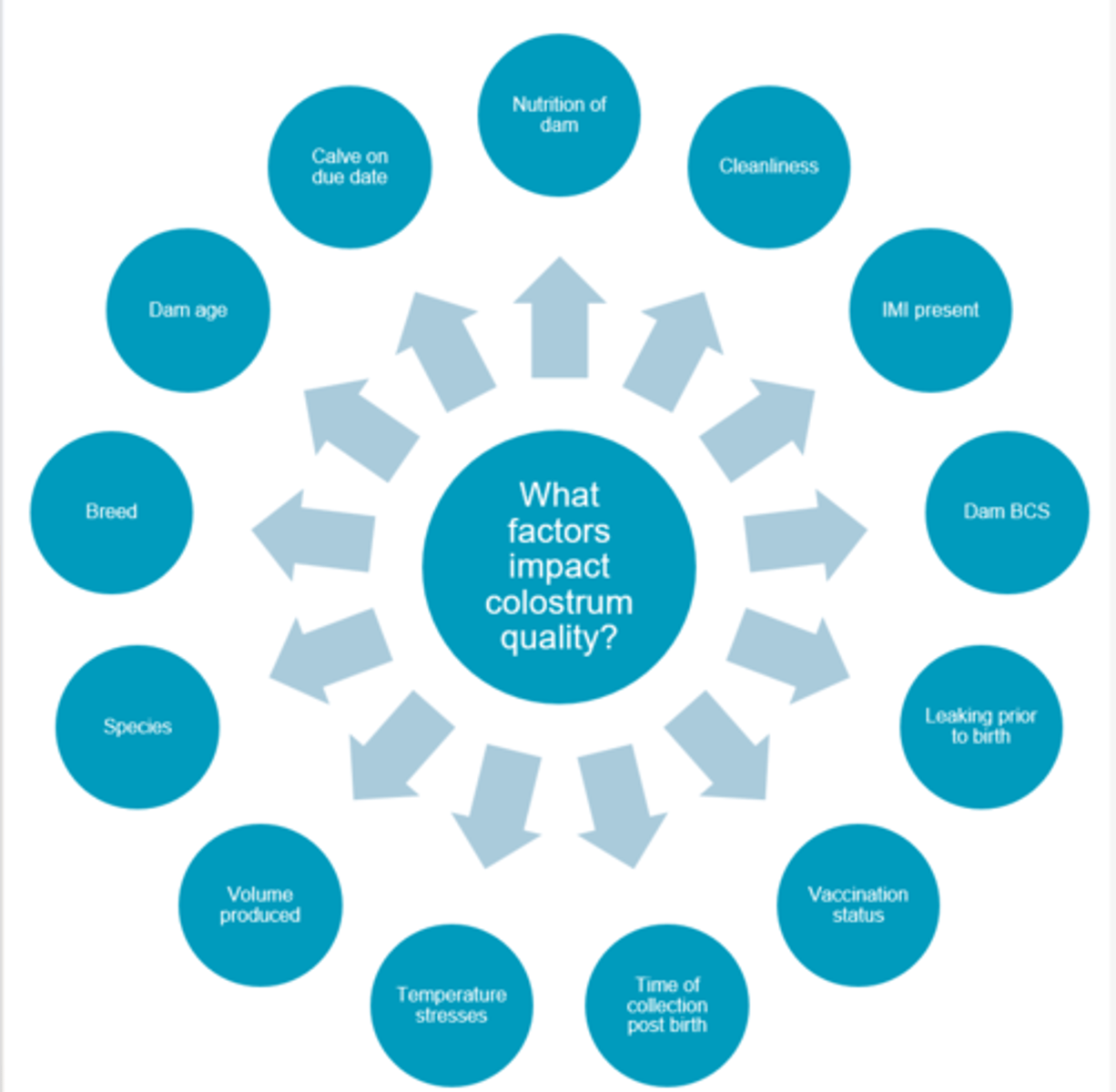
what factors impact colostrum quality?
nutrition of dam
cleanliness
IMI present
dam bcs
leaking prior to birth
vacc status
time of collection post birth
temp stressers
vol produced
species
breed
dam age
calve on due date
how does nutrition impact colostrum qual
nutrition in dry period contributes to quantity and qual of colostrum
Esp protein intake
how does cleanliness impact colostrum qual
Is managemnt control of calfs, colostrum and farm
Should be harvested cleanly and into a clean bucket
Need washing up liquid and hot water to break down fat globules
Shouldn’t be sitting on side and opended
Stored in fridge
Everything used to feed just be cleaned properly
Colostrum shouldn’t be building up
how does dam age impact colostrum qual
first time→ lower qual colostrum
how does vol produced impact colostrum qual
Nutriton has some impact but individual and breed depednent
how does temp stressors impact colostrum qual
Ventilation
But cant fully control
Heat stress affects colostrum production
how does vacc status impact colostrum qual
Not necessarily incrs ig content but affect the fraction Ig that are specific to certain pathogens
Esp rota and corona vacc
So protect calves
how does milk leaking prior to birth impact colostrum qual
If beyond calving date can leak colostrum so get reduction in ig content
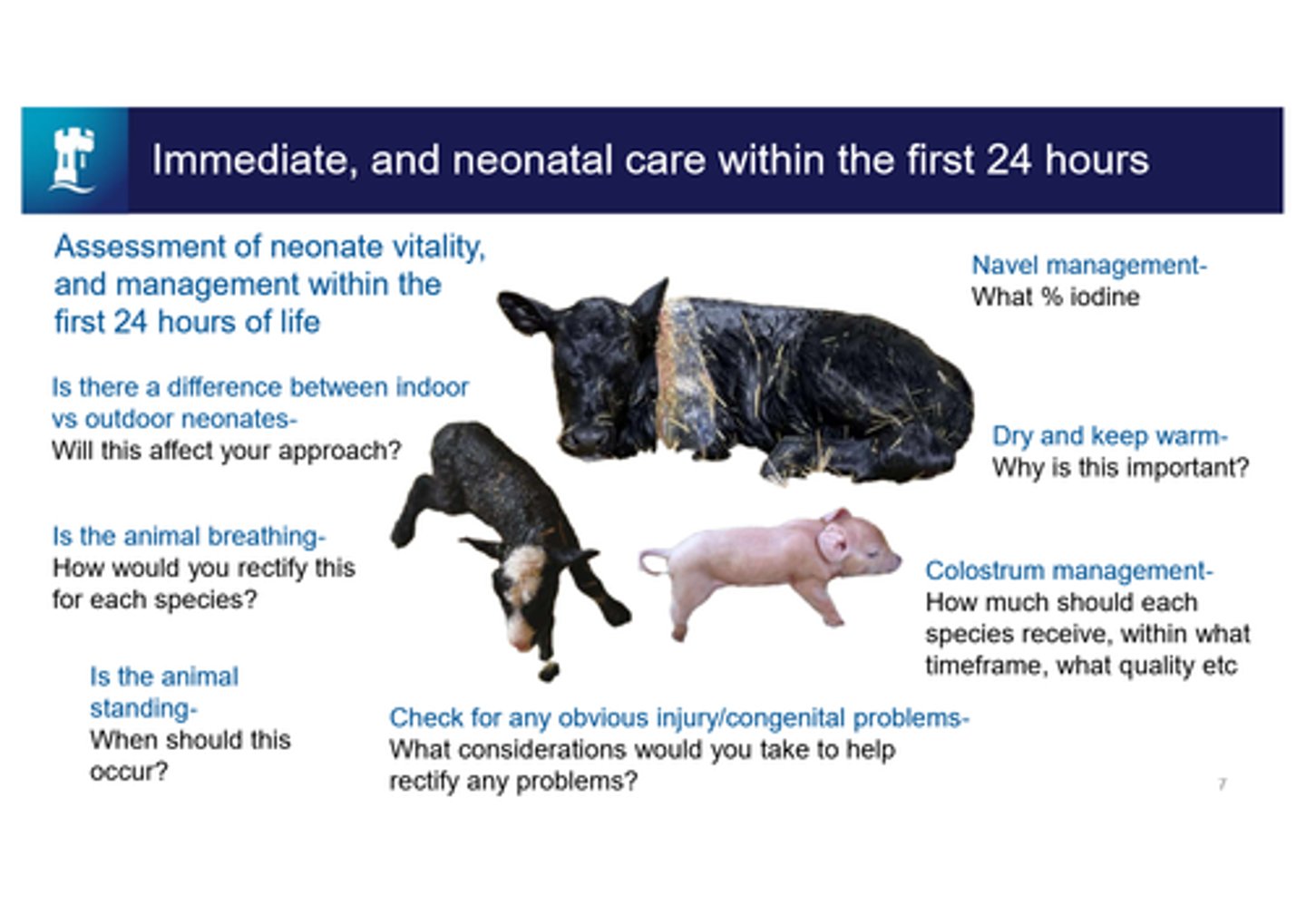
what is included in immediate neonatal care in the first 24hrs?
are they indoors or outdoors
breathing
standing, within1-2hrs
injury/congenital problems
colostrum and suckling - target 10% of body weight in 6hrs
dry and warm - prevent hypothermia
navel management - 7 %iodine
are they indoors or outdoors ? how does this affect the car of the neonate
inside- warmer, more climate control, but more infection risk
outside - temp fluctuates more, can be cleaner
how can you rectify breathing
Ambibags
Clear airwaysupto 30s for calf is beneficial to hang upside down if have fluid on chest is beneficial but longer is worse bc abdominal contents push onto diaphragm even if there is fluid there
Lamb: tip gently upsdie down, don’t swing
what injuries or congenital issues should be picked up, what can they mean
Usually limb injurries in calves due to the traction to get them out
No cleft palate -> affect ability to form tight seal to suckle colostrum and milk
Heart esp calves see murmurs, not as much in piglets and lambs
Some abnormalities may not be compatible with life
how might there be evidence OF A PROBLEM
No response to external stimuli:
Absent suckling reflex:
Swollen tongue or head:
Meconium staining:
Assisted birth considerations:
why does it matter that the birth was assisted or not
Risk of hypoxia, acidosis, fractures, nerve damage.
what does meconium staining indicate
Indicates fetal distress before birth (aspiration risk).
what can a swollen head or tongue indicate
Could indicate dystocia-related trauma or fluid retention from a difficult birth.
Head trapped in pelvis and pressure around neck → Head and tongue swell
So cant form tight enough seal around the teat
So might not get enough colostrum
Provide colostrum either bottle or stomach tube
Nsaids bc bruised and pain
Scleral haemorrhage -> bc incrs intraocular pressure
what can absent suckling reflex indicate
Suggests neurological issues, weakness, or hypoglycemia.
Should have it immedietly after birth
No reflex → cant suckle effectively and gain colostrum
So need added care if don’t have this
Incrs risk of failure of passive transfer and incrs morbidity and mortaliy in first few mo of life if not have
what can no response to stimuli mean
Could indicate hypoxia, acidosis, or hypoglycemia.
ear should flick
when should ruminants/ lambs and calves be standing/ in sternal after birth ?
sternal within 10 minutes
standing within the hour
need help if not - risk of reduced colostrum intake, and other issues
why is it important to keep neonates dry and warm ?
thermoneutral zone is quite small
keep housed if possible
what % iodine is appropriate for navals?
5-10%
ideally 7.5%
when should neonates respond to stimuli
immediately
why does it matter if the birth required assistance or surgery
it is more difficult to adapt and may have injuries
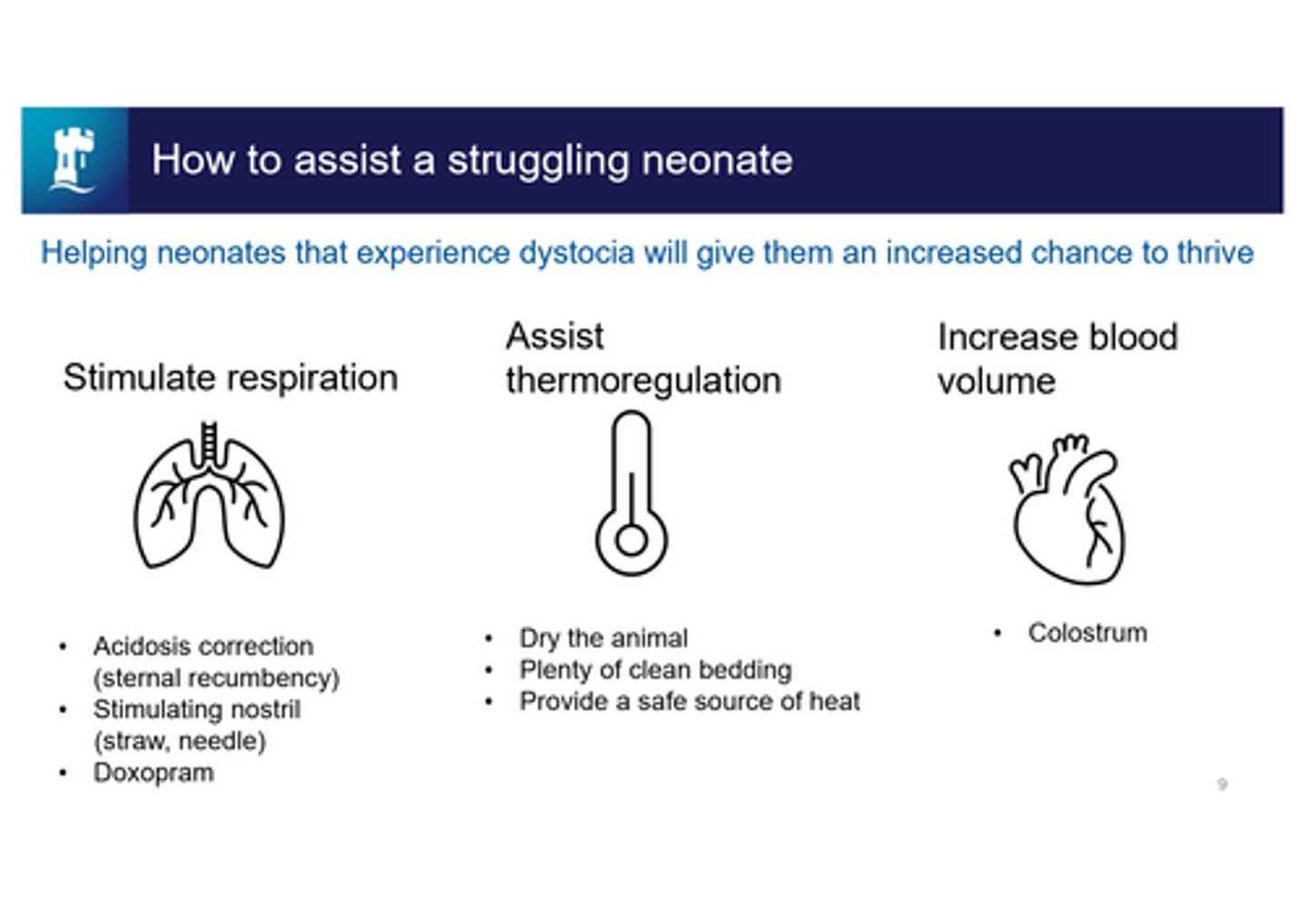
How to assist a struggling neonate...
the key things...
STIMULATE RESPIRATION
ASSIST THERMOREGULATION
INCREASE BLOOD VOLUME
how can we increase blood vol
colostrum
rarely use blood products
how can we assist thermoregulation
dry the animal
plenty of clean bedding
provide a safe source of heat
how can we stimulate respiration
•Acidosis correction (sternal recumbency)
•Stimulating nostril
(straw, needle)
•Doxopram→ not used anymore
You are on farm for a routine fertility visit and the farmer mentions that a lot of the pre-weaned calves have diarrhoea. Typically calves get diarrhoea at 10-14 days old.
This has been a periodic issue for some time, but the milk buyer has started to raise concerns about mortality rates on the farm and the farmer wants to get this resolved.
After ensuring the sick calves are treated appropriately you turn your attention to getting to the bottom of the problem to enable you to provide advice for the farmer to prevent further outbreaks.
how you might investigate this problem?
Herd history: Age of affected calves, seasonality, mortality rate trends.
Colostrum management: Check serum total protein (STP) in calves.
would still be at a point where reliant on maternal derived abodies
Environmental factors: Hygiene, bedding, overcrowding.
Pathogen testing: Fecal samples for Rotavirus, Coronavirus, Cryptosporidium, E. coli.
there is a scour vacc
Nutritional factors: Milk replacer quality and consistency.
Water supply: Contaminated water can be a source of pathogens.
You are called out at 4am to attend a calving. The farmer has been trying to calve the cow for about 2 hours prior to calling you. You perform a successful caesarean section and deliver a calf that is alive but appears very weak.
In your groups think about what considerations you might need to make for care of this newborn calf.
Correct acidosis/ hypoxic: Place calf in sternal recumbency, provide oxygen if needed.
Stimulate respiration: Use nostril stimulation, rubbing, Doxapram if necessary.
Thermoregulation: Dry thoroughly, provide deep bedding or heat lamp.
Colostrum management: Ensure high-quality colostrum ASAP, and check suckle reflex
Monitor for sepsis: Due to prolonged labor, antibiotics or anti-inflammatories might be needed.
NSAIDs
is off license in calves of this age
also maybe not if dehydrated
You have been asked to speak to a new client of your practice. This client is a small holder with 2 sows that they are hoping to have piglets from – they house these pigs outdoors and plan to rear the piglets as outdoor pigs. The client has previously worked on an intensively managed housed pig farm but does not have any experience with outdoor pig systems.
In your groups think about what differences between the care of newborn piglets that are in indoor and outdoor pig systems and what advice you wish to provide to this client.
Key differences:
Thermal environment: Outdoor piglets more susceptible to hypothermia, but can get sunburnt
Disease risk: Indoor piglets higher risk of infections due to close contact.
Colostrum management: Outdoor piglets may struggle to find teats in cold weather.
Advice for the client:
Provide shelter with deep straw bedding.
Ensure piglets find teats quickly.
Consider heated creep area for piglets.
Watch for crushing risk under sow. regular checks. dont really use farrowing crates outside
needs to be close so can check regularly

