Inheritance, Variation and Evolution AQA GCSE
 Studied by 0 people
 Call Kai
 Learn
Learn Practice Test
 Spaced Repetition
 Match
Match Flashcards
 Knowt Play
1/113

There's no tags or description
Looks like no tags are added yet.
Name | Mastery | Learn | Test | Matching | Spaced | Call with Kai |
|---|
No analytics yet
Send a link to your students to track their progress
114 Terms
Asexual reproduction
when there is only one parent. there's no fusion of gametes, no mixing of chromosomes, no genetic variation.
the offspring are genetically identical to the parents (clones)
bacteria, some plants and some animals are produced
asexually
is mitosis asexual or sexual reproduction?
asexual reproduction
Mitosis steps
1- duplicates the amount of DNA , each arm is an exact duplicate of the other
2- the chromosomes line up at the centre of the cell and cell fibres pull them apart, 2 arms of each chromosome go to opposite ends of the cell
3- membranes form around each sets of the chromosomes, becoming the nuclei of the 2 new cells
4- lastly, the cytoplasm + cell membrane divide
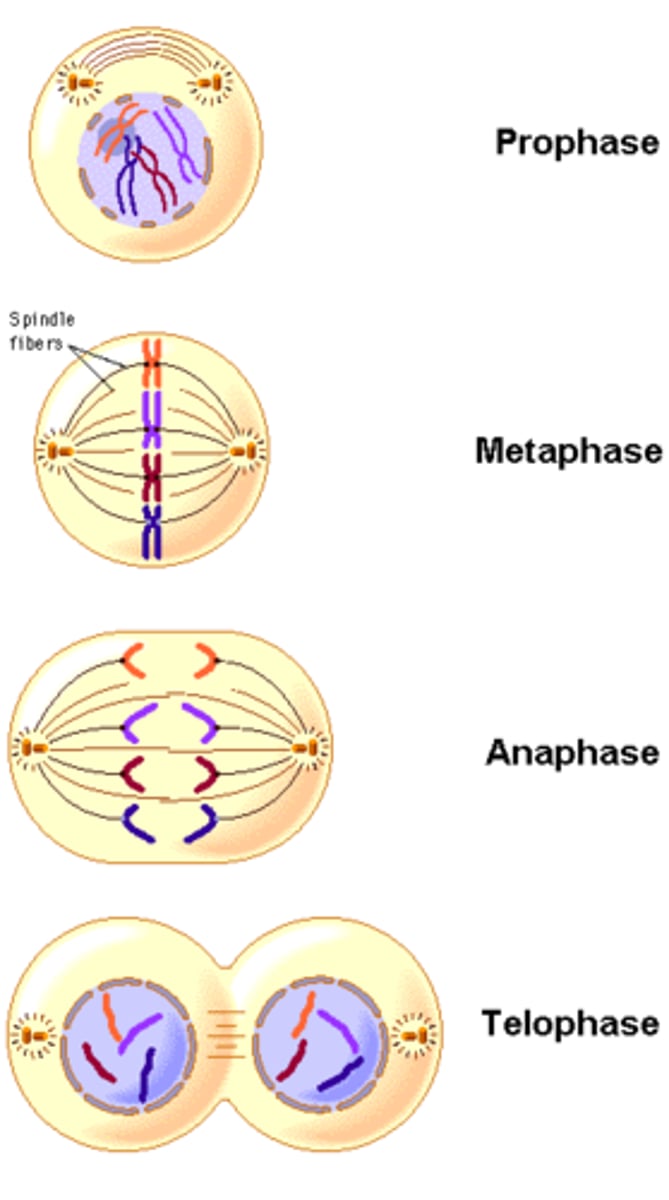
mitosis
normal body cells with chromosomes (46)
chromosomes duplicate (92)
chromosomes pulled to opposite sides poles of cell
chromosomes split to form 2 identical daughter cells (diploids)
diploid
46 chromosomes
mitosis is used in
growth, repair, development of cell, heal cuts, heal bones, embryo to adult
Sexual Reproduction
involves the fusion of male and female gametes. Because there are TWO parents, the offspring contain a mixture of their parents' genes.
sexual reproduction involves the fusion of
egg cells and sperm cells
Gamete
A specialised sex cell formed by meiosis
Runners
Long shoots from plants, such as strawberries, that are used for asexual reproduction
Meiosis is sexual or asexual reproduction?
Sexual Reproduction
Meiosis steps
1- before division, genetic information is duplicated, forming 2 armed chromosomes. After replication, the chromosomes arrange themselves into pairs
2- first division; the pairs line up in the centre of the cell
3- pairs then pulled apart, each cell has 1 copy of each chromosome (some mums, some dads)
4- second division; chromosomes line up again and the arms of the chromosomes are pulled apart
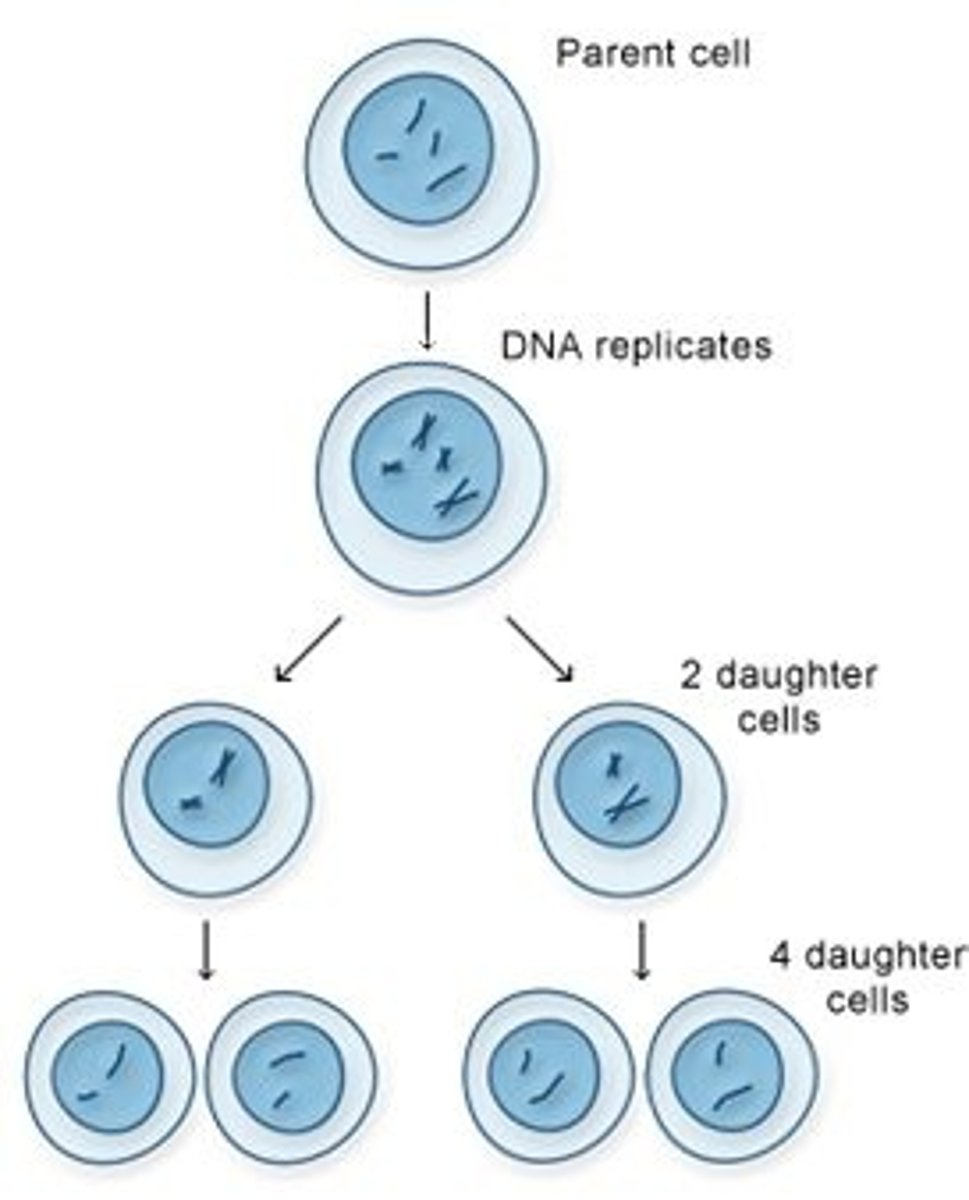
meiosis
normal cell (from testes or ovaries) with 46 chromosomes
number of chromosomes double (92)
chromosomes pulled to opposite poles of cell
chromosomes splits
chromosomes split AGAIN to produce 4, non-identical daughter cells
what does meiosis produce?
4 chromosomes, all genetically different
how many chromosomes does a gamete have?
23 chromosomes (haploid)
gametes are produced by
meiosis
mitosis VS mieosis
mitosis;
2 identical daughter cells (both with 46 chromosomes - diploids)
asexual reproduction
normal body cells
used for growth + repair
1 division
mieosis;
4 unidentical daughter cells (with 23 chromosomes - haploids)
sexual reproduction
gametes (sperm / eggs produced in testes / ovaries)
2 divisions
fertilised cells divide by
mitosis many times to form an embryo
sex cells in animals/humans
male = sperm
female = egg
sex cells in plants
male = pollen
female = egg
DNA
Nucleic acid molecules that contain genetic information and make up chromosomes
It contains coded information
DNA is a
POLYMER made up of 2 strands coiled into a double helix
what shape is DNA
double helix (twisted ladder)
What does DNA stand for?
DeoxyriboNucleic Acid
Chromosomes
long molecules of DNA that normally come in pairs
how many pairs of chromosomes do humans have?
23 pairs
XY
male sex chromosomes
XX
female sex chromosomes
the ___ pair of chromosomes carries genes which decides a persons ____
23rd, sex
Gene
Part of a chromosome, made of DNA, which codes for a specific protein
>tell us what order to put the amino acids together
there are 20 different amino acids but
1000s of possible proteins
Genome
an organisms entire set of genetic material
why is it important for scientists to understand the human genome?
- allows to identify genes in the genome that are linked to specific inherited diseases
- tiny differences' in people's genomes can be studied to help figure out migration patterns of past human populations + used to discover ancestors
Polymer
A large molecule that is made up of many repeating units
(DNA is a polymer)
Nucleotide
A molecule made of a phosphate group, a sugar and an organic base
Collagen
A protein found in connective tissue under the skin and in tendons
Mutation
A spontaneous change in the genetic material of a cell
Allele
An alternative form of a particular gene
Genotype
The combination of alleles an individual has for a particular gene, e.g., BB, Bb or bb
Phenotype
The physical expression of the genotype, i.e. the characteristic shown
Dominant
An allele that only needs to be present once in order to be expressed; represented by a capital letter
Recessive
An allele that will only be expressed if there are two present; represented by a lower case letter
Homozygous
When an individual carries two copies of the same allele for a gene, e.g., BB or bb
Heterozygous
When an individual carries two different alleles for a gene, e.g. Bb
Monohybrid inheritance
The pattern of inheritance shown when a characteristic is controlled by a single gene
Punnett square
A type of diagram used to work out the outcome of genetic crosses
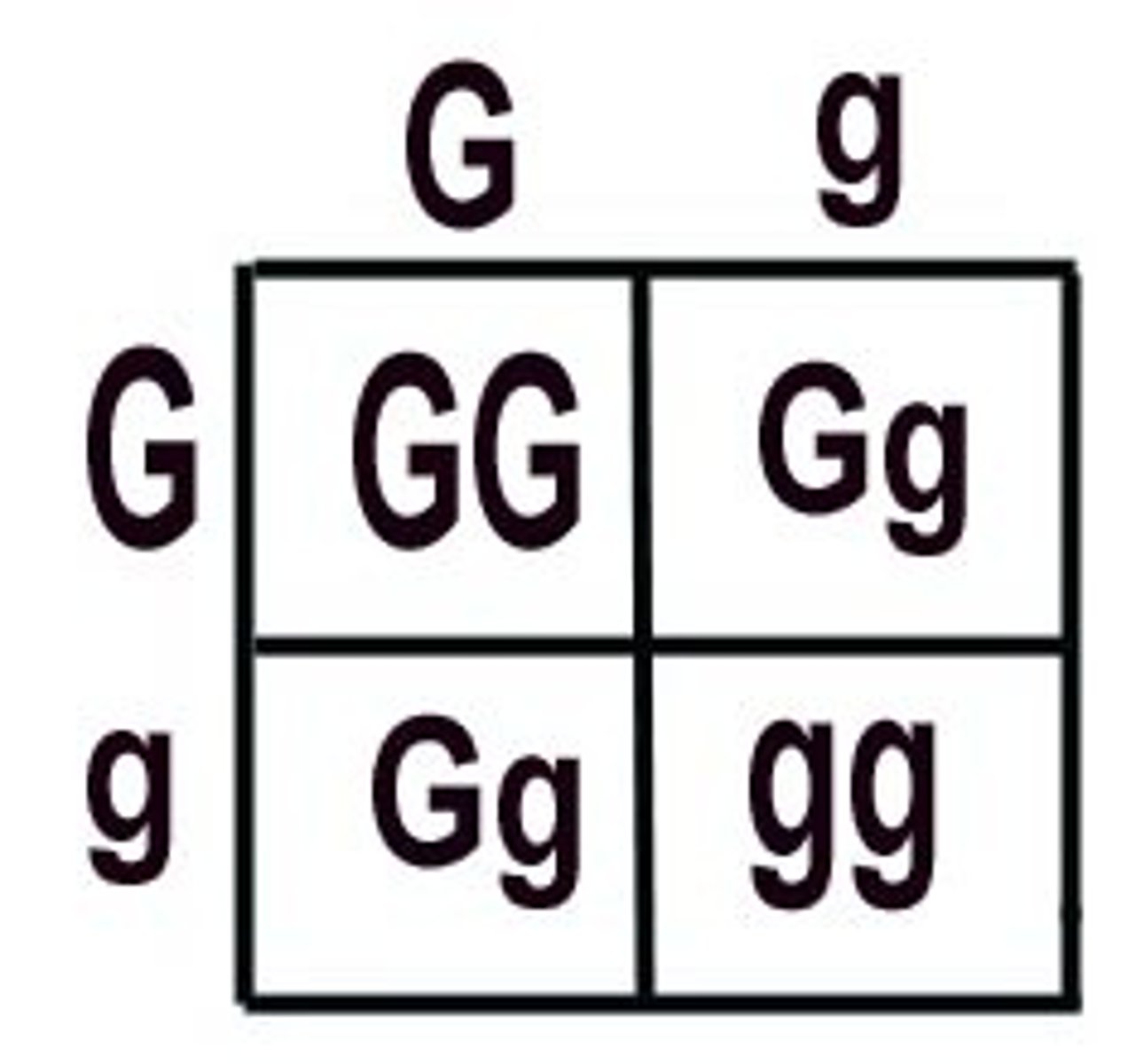
Genetic cross diagram
Diagram showing how the alleles in two parents may form different combinations in the offspring when the parents reproduce.
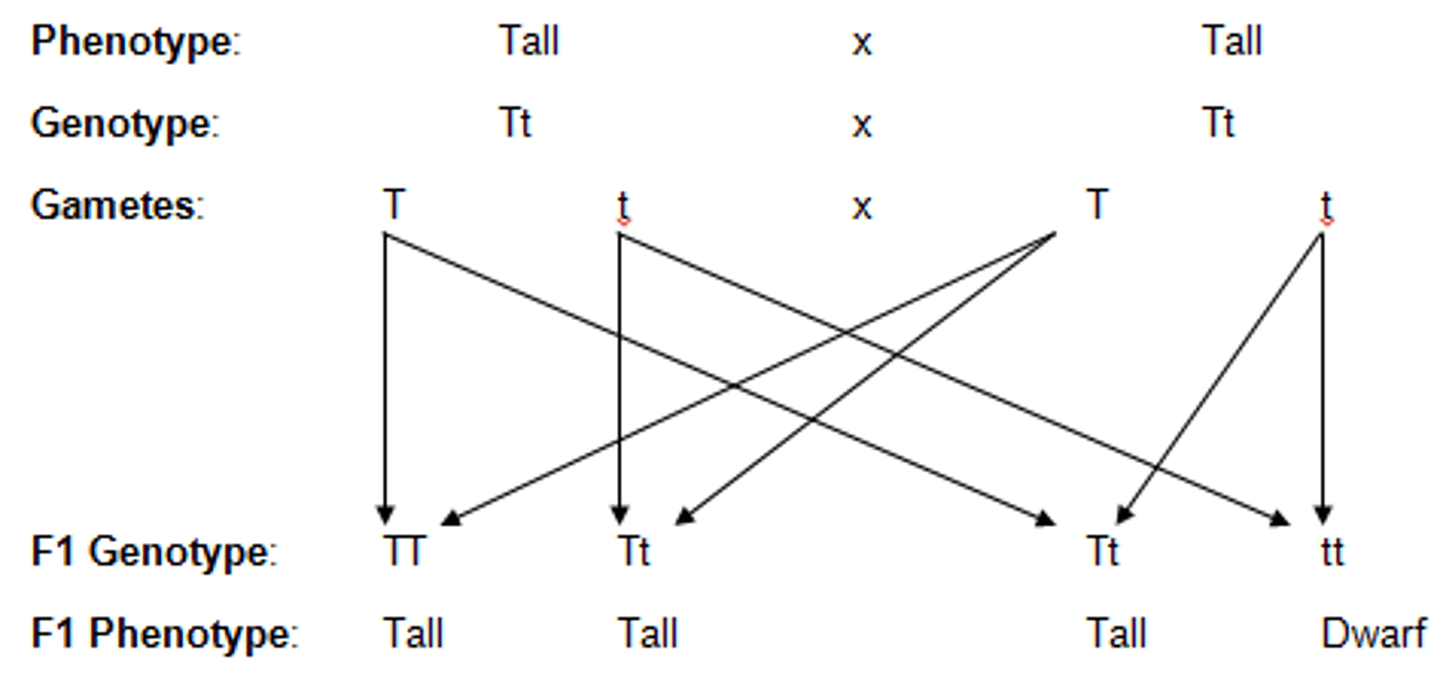
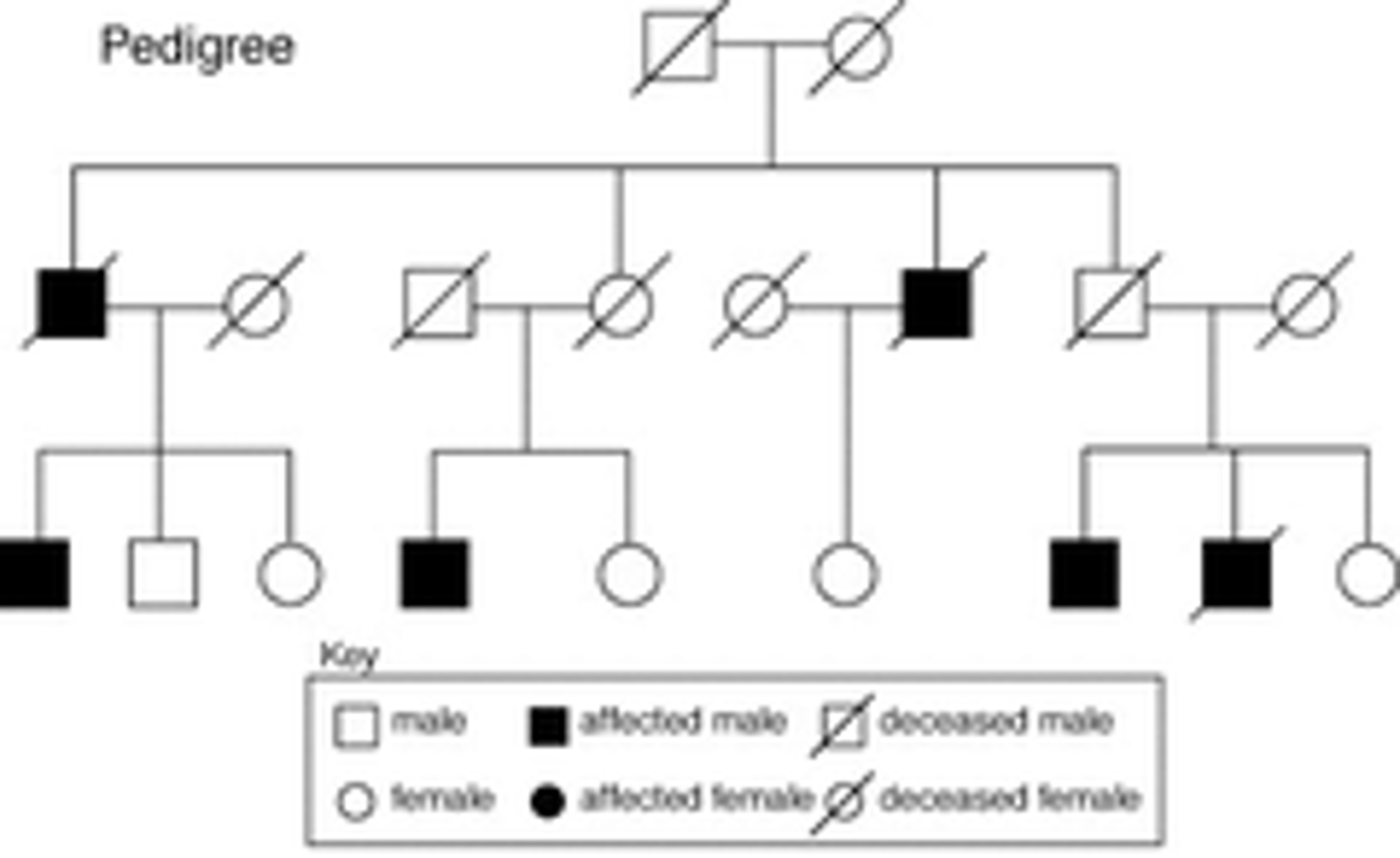
family tree
Diagram that shows the inheritance of a genetic condition in a family.
Polydactyly
A genetic disorder caused by a dominant allele, where affected people have extra fingers or toes
polydactyly is caused by
dominant allele
For a child to have polydactyly, what must a parent have?
only one parent needs the defective allele "D"
Cystic Fibrosis
A genetic condition that causes a build-up of mucus in the lungs
cystic fibrosis is caused by
recessive allele
For a child to have cystic fibrosis, what must both parents have?
to be either carries or have the disease themselves "ff"
embryo screening
you can remove a cell from the embryo to analyse its genes
many genetic disorders can be detected this way
Against embryonic screening
1) Implies that people with genetic problems are 'undesirable' - this could increase prejudice
2) There may come a point where everyone wants to screen their embryos so they can pick the most 'desirable' one
3) Screening is expensive
4) 'Bad' alleles are destroyed after screening - unethical
Advantages of embryonic screening
1) It will help to stop people suffering
2) Treating disorders costs the government a lot of money
3) There are laws to stop it going too far e.g. parents cannot select the sex of their baby (unless for health reason)
Sex chromosomes
The pair of chromosomes that determine the sex of organisms
Variation
Differences in the characteristics of organisms
what causes differences in genes?
mutations - they occur occasionally
genetic variation
differences in the genes individuals inherit cause variation within a population
environmental variation
differences in the conditions in which an organism develops cause variation
most variation in phenotype is caused by
both genetic and environmental factors
Mutations are
change to the genome
they are random and occur due to errors during DNA replication
Evolution
A gradual change in a group of organisms over a long period of time
theory of evolution
All of today's species have evolved from simple life forms that first started to develop over three billion years ago
Who came up with the theory of evolution?
Charles Darwin
what animal does Charles Darwin use as evidence of his theory
finches
Speciation
the development of new species
Natural selection
The survival of individual organisms that are best adapted to their environment
How does natural selection work?
species show wide variation BUT limited resources mean organisms are in competition >
organisms with the most suitable characteristics for the environment are most likely to survive >
these organisms are more likely to breed >
the beneficial characteristics are passed on and gradually become more common in the population
if different species breed, they produce
infertile offspring
reasons species become extinct;
1) the environment changes to quick (e.g. destruction of habitat)
2) new predator kills them all (e.g. hunting)
3) new disease kills them all
4) they can't compete with another (new) species for food
5) a catastrophic event happens that kills them all (e.g. volcanic eruption or asteroid collision)
Fossil
The remains of animals/plants preserved in rock
3 main places fossils are found
1- sedimentary rocks
2- ice
3- amber
(4- no oxygen areas / low temps
Why is the fossil record incomplete?
- fossils that formed millions of years ago may have been destroyed by geological activity
- many early organisms were soft bodied, and soft tissue tends to decay away completely. so no traces were left behind
- we haven't found all the fossils yet
Selective breeding
The breeding process used by scientists and farmers to produce organisms that show the characteristics that are considered useful
reasons to selective breed
animals produce more meat /milk/ eggs
crops with disease resistance
animals to have a good/ gentle temperament
decorative plants / patterns on pets
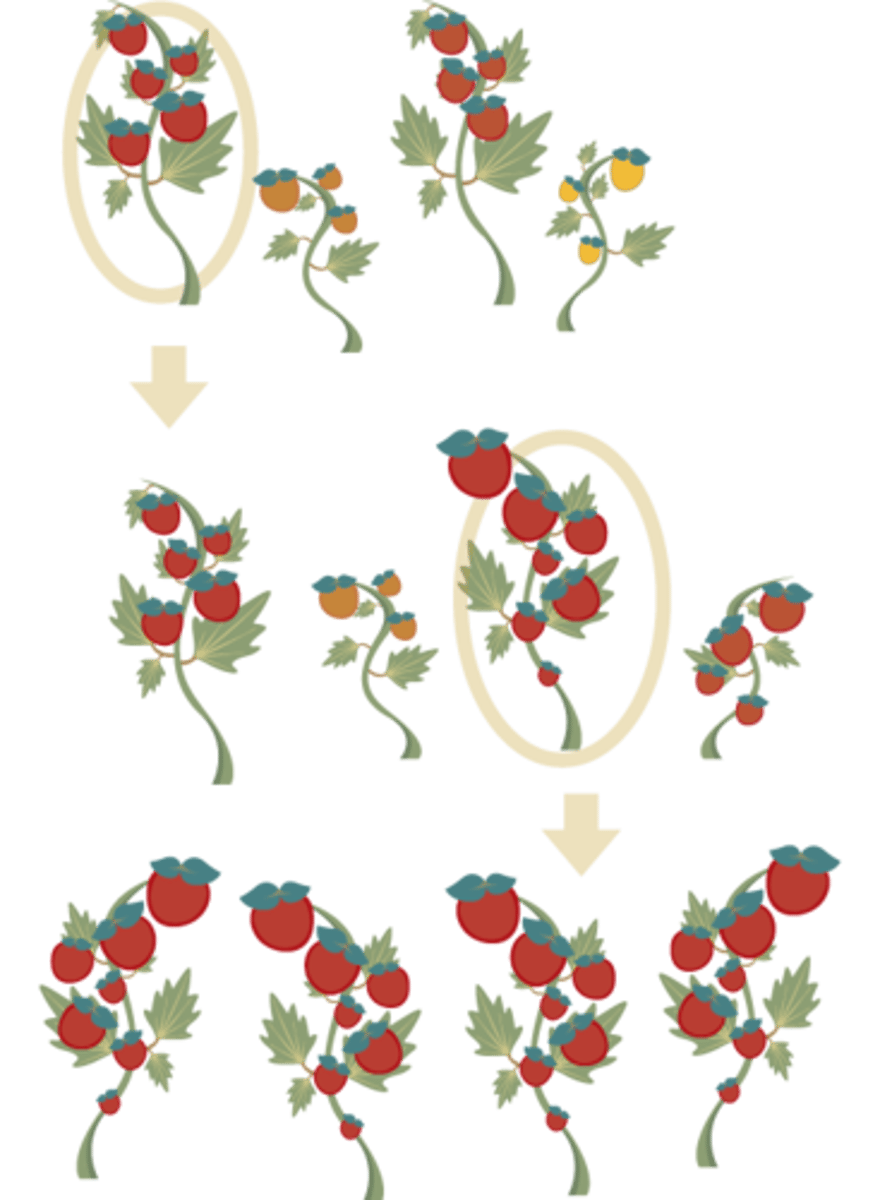
steps of selective breeding
from existing stock, select the ones with the characteristics you are after
breed them with each other
select best of the offspring and breed them together
continue process over several generations , and the desirable trait gets more desirable
eventually, all offspring have the desired characteristics
selective breeding is / isn't new
it is nothing new
drawbacks of selective breeding
gene pool is reduced (reduction in number of different alleles)
which means there is less of a chance of a resistant gene against a disease
it can cause health problems (like dogs struggle to breathe)
Genetic engineering
The process of moving a gene from one organism to another
steps of genetic engineering
1. useful gene is isolated (cut) from one organism genome using an enzyme
2. It is inserted into a vector (usually a virus or bacteria plasmid)
3. Vector is introduced to the target organism and the useful gene is inserted into its cells
4. Vector 'infects' organism to help the useful gene spread
Bacteria have been genetically modified to produce
human insulin that can be used to treat diabetes
Why are crops genetically modified?
- They are engineered to be resistant to insects and to herbicides
- This will result in increased yields as less crops will die
- To be bigger
why do they genetically modify animals (e.g. sheep)
so they are bigger and produce more food
so they produce substances (like drugs) in their milk to treat human disease's
Pros and Cons of GM crops
Pros:
Increase yield,
contain nutrients for less developed nations,
grown worldwide with no problem
Cons: Affect weeds/plants/insects affecting and possibly reducing biodiversity,
not sure if its safe,
transplanted genes may get out in environment and create 'superweed'
gene therapy
The insertion of working copies of a gene into the cells of a person with a genetic disorder in an attempt to correct the disorder
Genetically modified (GM)
organisms that have had specific areas of their genetic material changes using genetic engineering techniques
Clone
An offspring that is genetically indetical ot the parent organism
Cuttings
A method of asexually reproducing plants, used by gardeners, by planting small lengths of plant shoots
Tissue Culture
A method of producing large numbers of plants asexually by growing small pats of plants in a nutrient jelly
Surrogate
A female that gestates and gives birth to an organism that has not been produce from on of her own egg cells
Binomial system
The method of naming organisms by using their genus and species
Genus
A group of closely related species
Species
A group of organisms that can reproduce with each other to produce fertile offspring
Three-domain system
A new classification system that divides organisms into three domains rather than five kingdoms
Extinct
A species that has died out
Speciation definition
Where populations have become so different that successful interbreeding is no longer possible
 Note
Note  Flashcards (46)