3. Conformity and Resistance
 Studied by 0 people
 Call Kai
 Learn
Learn Practice Test
 Spaced Repetition
 Match
Match Flashcards
 Knowt Play
1/54

There's no tags or description
Looks like no tags are added yet.
Name | Mastery | Learn | Test | Matching | Spaced |
|---|
No study sessions yet.
55 Terms
Conformity definition
Aligning one’s behaviour or expressed attitudes and beliefs with social norms or others’ behaviour
What are norms?
Implicit or explicit rules or principles that guide or constrain behaviour. Norms are understood by members of a group and applied without the force of laws
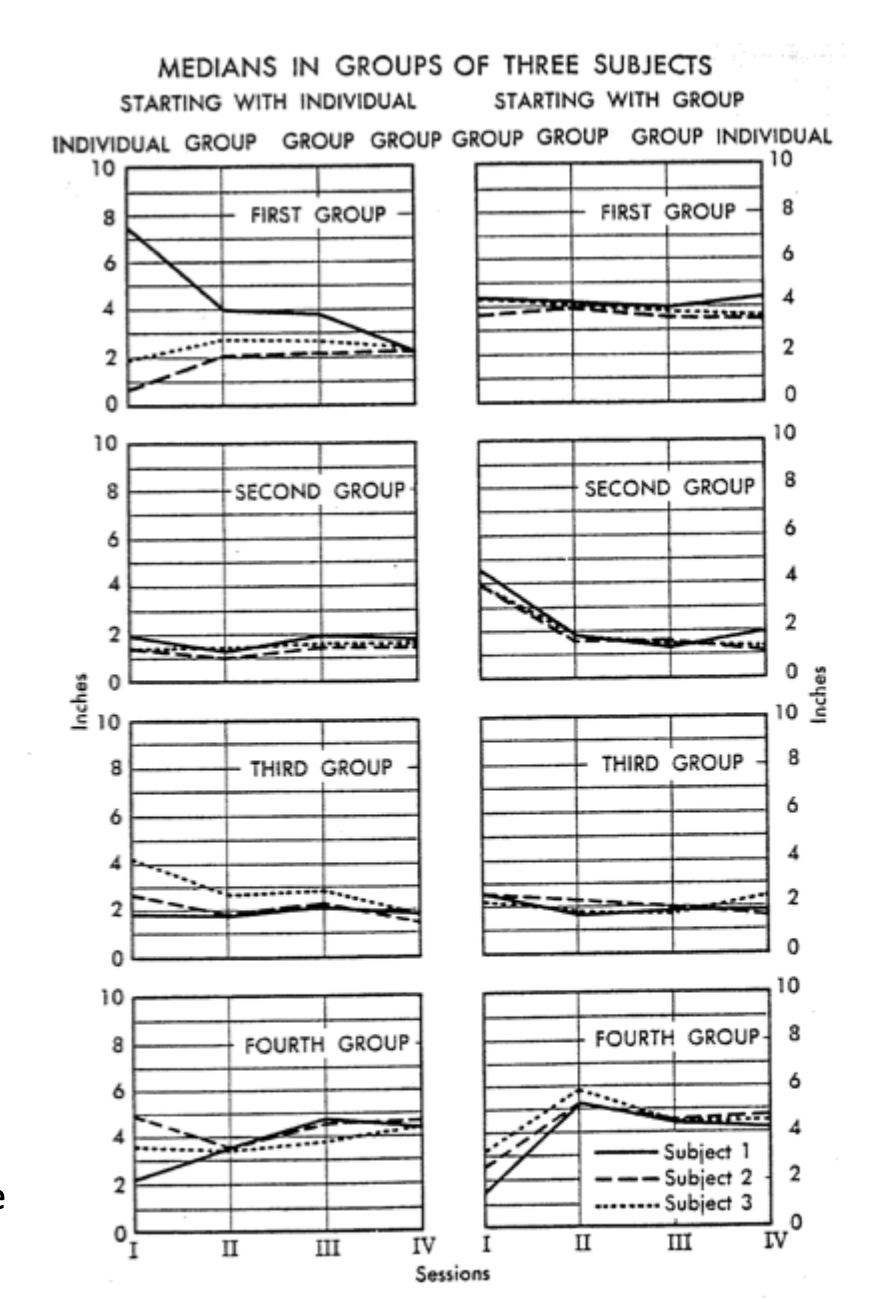
What did Sherif find regarding conformity using the autokinetic effect? Participants estimated how much the light was moving alone and in groups.
(The autokinetic effect is an illusion in which a point of light in a dark room appears to be moving)
when responding alone, individuals came up with their own distinct estimates
when responding in groups, they converged on common estimates, despite being entirely subjective
in this norms help to resolve uncertainty (informational influence)
What was Asch’s design to test conformity?
used a situation with less uncertainty
task: say aloud which of the three lines on the right are the same length as the one of the left
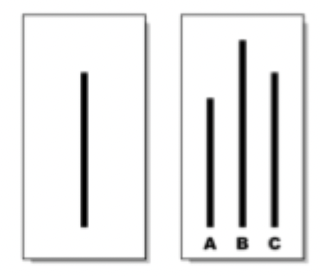
In Asch’s study of conformity how often are participants correct alone?
99%
In Asch’s study of conformity what were the 3 key findings when participant responded in a group of confeds who provided the wrong answer?
average conformity rate: 33%
only 25% answered correctly consistently
50% conformed on 6 more critical trials (out of 12)
What did conformity in Asch’s study change to when ppts recorded their responses privately
dropped from 33% to 12.5%
the study shows normative influence
What happened when the confed was in the minority in Asch’s study
ppts ridiculed the confederate
What is the informational influence explanation for conformity?
one accepts information from another as evidence about reality
e.g. “they must know something I don’t know”
What is the informational influence explanation for conformity?
One conforms to gain social approval or to avoid social disapproval
e.g. “going along with the crowd”
What is the the referent informational influence explanation of conformity?
one conforms to the norm of a group when one’s membership in that group is important or salient
e.g. “that’s what people like me do”
What is the false consensus effect?
when one overestimates the degree to which attitudes or beliefs are shared by others
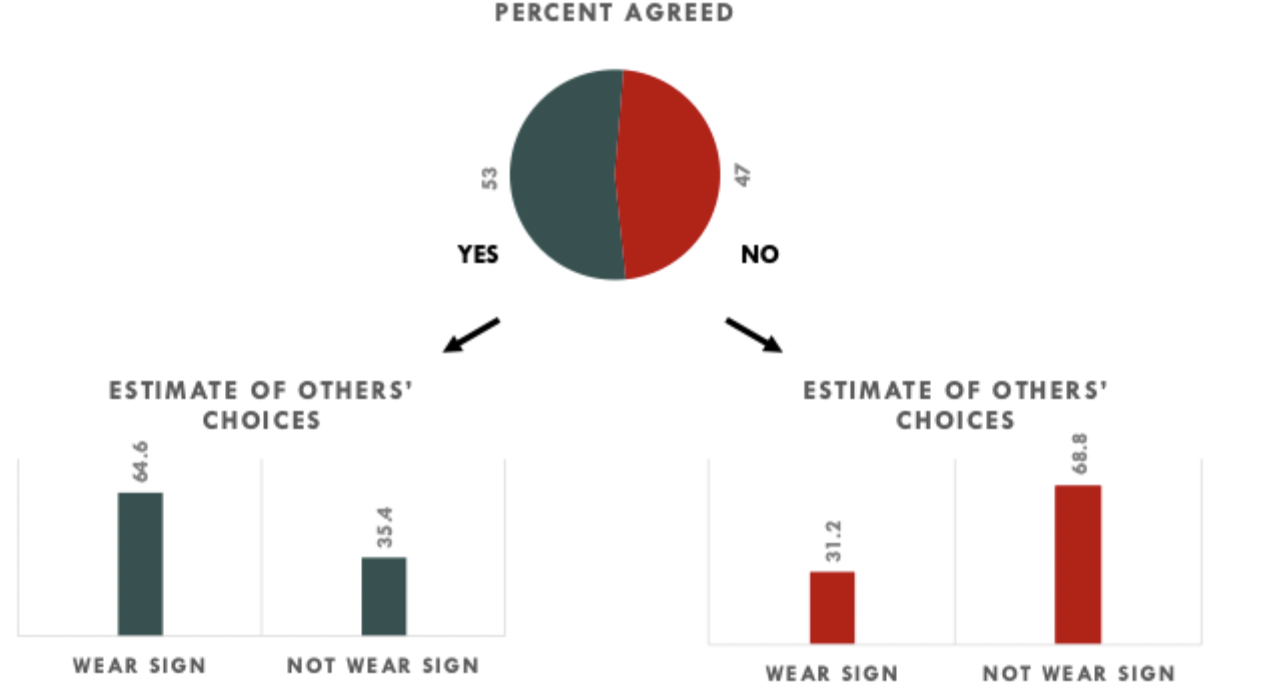
How did Ross et al study the false consensus effect?
task: participants were asked to wear a sandwich board around campus
measure 1: will you wear the sandwich board?
measure 2: what percentage of your peers do you estimate would agree to wear the sandwich board
What were the results of Ross et al’s study of the false consensus effect?
estimated that more people would say the same thing that they did
What is pluralistic ignorance?
Conforming to what one mistakenly believes is the majority view, despite not personally endorsing it
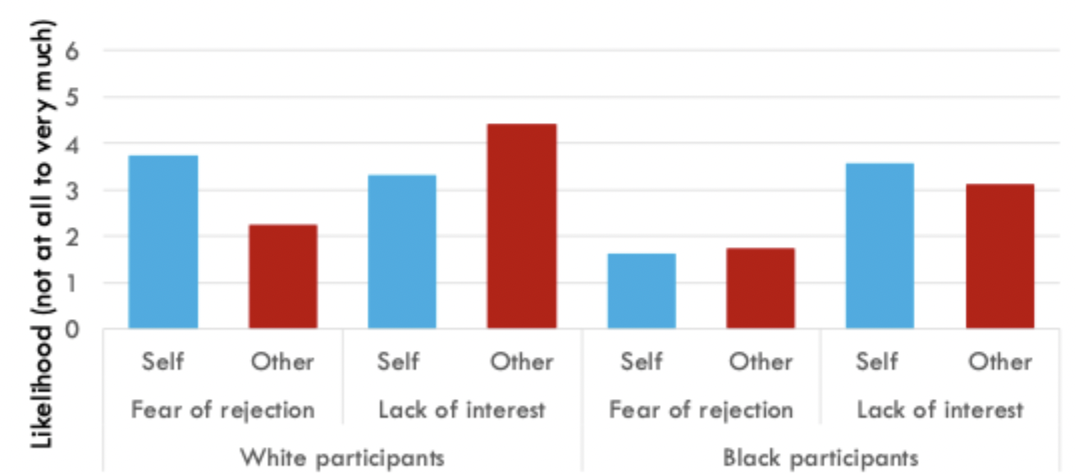
What were the participants, scenario and measures used by Shelton and Richeson (2005) examining pluralistic ignorance in the context of intergroup interactions?
participants: black and white students at an American University. Initial studies demonstrated that both groups wanted more intergroup friendships
scenario ss
measures: Did this happen because you/they were not interested in sitting together? Did this happen because you/they were afraid of rejection?

What did Shelton and Richeson (2005) find examining pluralistic ignorance in the context of intergroup interactions?
when the other students in the story were white…
because the white group had a lack of interest for them to join them, out of fear of rejection they’re not going to join them
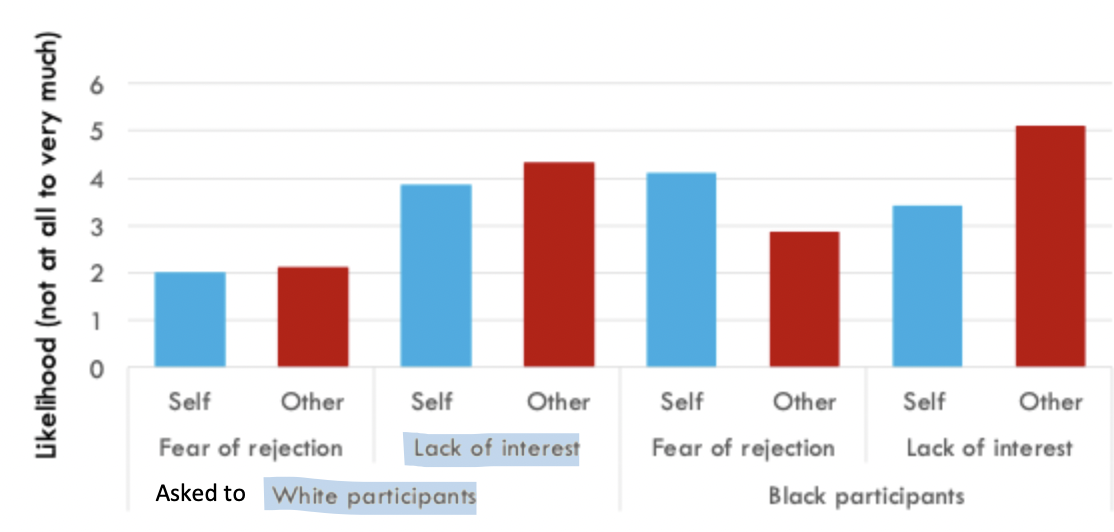
when the other students in the story were black…
in intergroup condition their attributing this behaviour to this norm which doesn’t actually exist
What are illusory norms?
our perception of norms is not always accurate
but out behaviour may nevertheless be shaped by those perceived norms
What are the emotional costs of nonconformity?
guilt, shame, embarrassment, humiliation
what are the social costs of nonconformity?
isolation, ostracism, perceived as disruptive
What is the black sheep effect and what are some examples?
the costs of nonconformity can be particularly harsh for in group deviants
people judge alcoholics from their in group more harshly
children protest more strongly to norm violations by an ingroup member
How do tight and loose cultures differ in their sanctioning of norm violations?
tight cultures have many strong norms and a low tolerance of deviant behaviour
loose cultures have weak social norms and a high tolerance of deviant behaviour
What are moral norms?
a subset of social norms which explicitly govern behaviours that have positive or negative outcomes for both the self and others
e.g. fairness, trust, cooperation and etc
What might be the role of gossip with non-conformity?
gossip is often perceived negatively
some researchers argue that it is an important mechanism for enforcing social norms
What was the procedure of Beersma and Van Kleefs study of gossip and policing nonconformity?
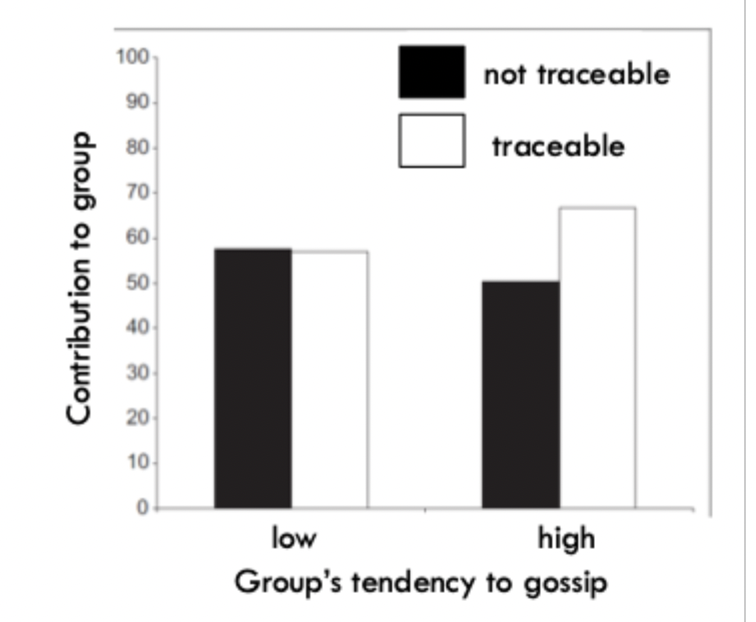
ppts played a dictator game. they could donate lottery tickets to the group or keep them.
manipulations were:
traceability: the degree to which behaviour in the game would be identifiable
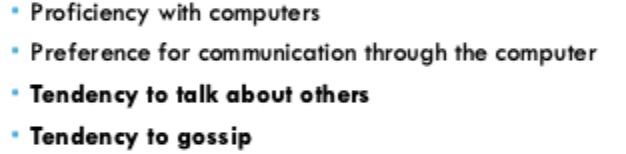
gossipy-ness: participants received a “general communication profile” which presented the mean scores of their three group members on four dimensions - two relevant to gossipyness
What did Beersma and Van Kleef find in their study of gossip and policing nonconformity?
gossip serves as a social function
gossip provides a moderating effect on pro-group behaviour
gossip enforces moral norms
What is moral outrage?
moral norms have powerful effects on people’s emotions and sense of purpose via both the commission of moral and immoral acts
violation of moral norms elicit negative affect including moral outrage
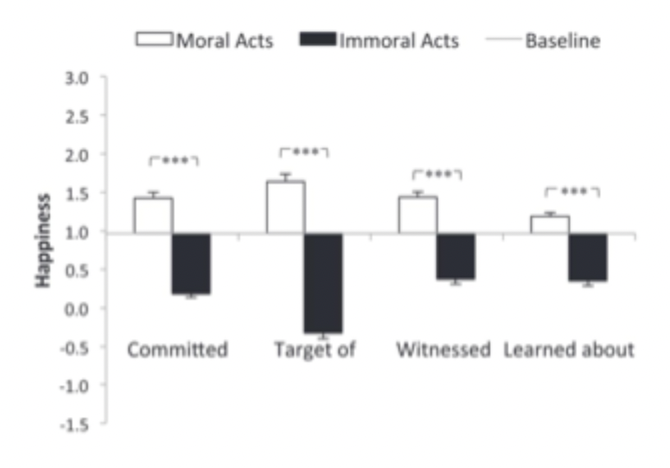
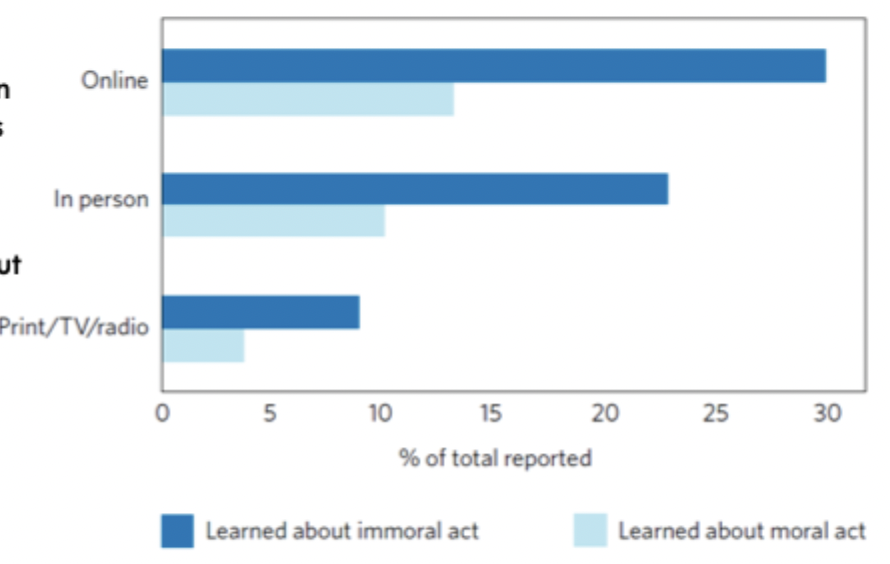
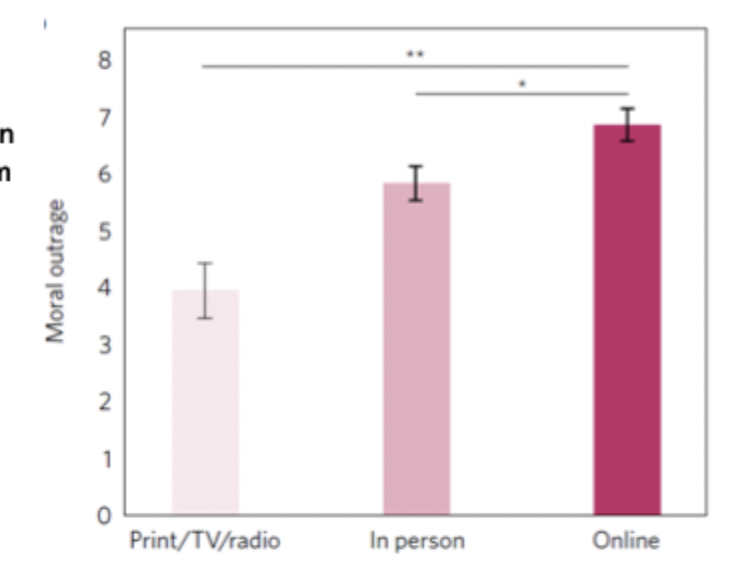
What did Hoffman et al find measuring outrage in response to moral norm violations across different media?
used experience sampling (5x per day, 3 days)
analysed instances in which participants learned of moral/immoral acts
compared sources and amount of outrage
participants were more likely to learn about immoral acts versus moral acts and more likely to learn about it online
ppts expressed the most moral outrage (anger and disgust) when they learned of the norm violation online
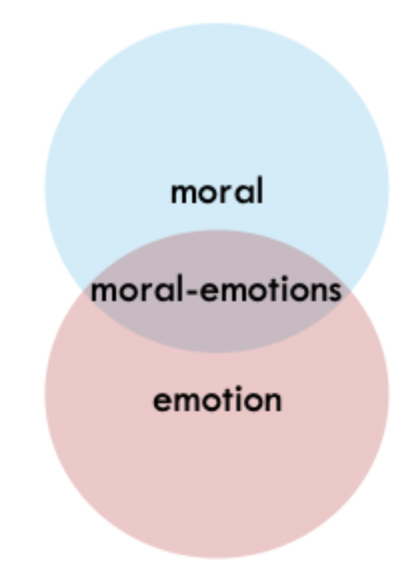
What were the predictors and dependent variable used by Brady et al to examine the role of moral emotions and norm transmission?
predictors:
the number of moral-emotional words in a tweet about a controversial topic
valence of words
group membership: conservative/liberal based on algorithm examining follower network
dependent variables
retweet count
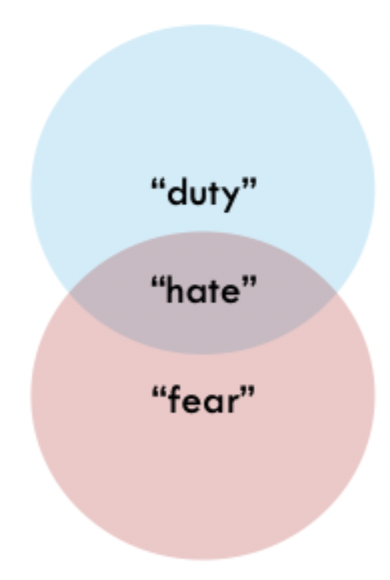
What did brady et al find examining the role of moral emotions and norm transmission?
the more moral-emotional words used (e.g., blame, fight, hate, shame), the more the were retweeted
depending on the issue, valence of tweets and group membership moderated the effect
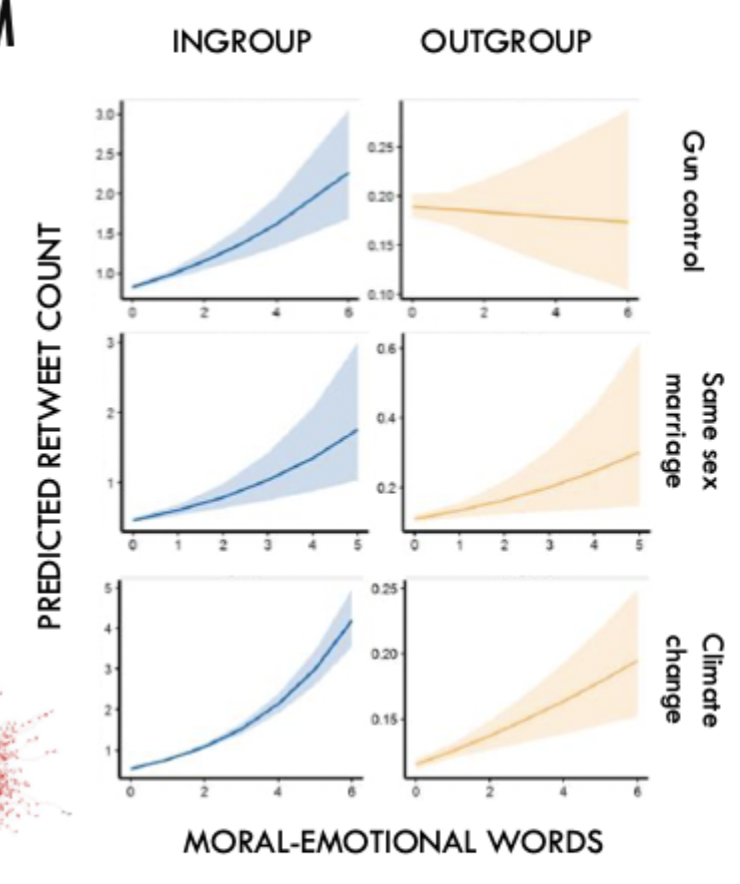
What are the two factors that follow-up research has suggested that moral outrage expression online is partly driven by?
reinforcement learning:
social feedback to outrage expression predicted tweeting moral outrage on the following day. this effect was particularly powerful among newer users, and when social feedback was greater than expected
Norm learning
users are less sensitive to reinforcement learning in ideologically extreme networks where moral outrage is the norm
Status, power and nonconformity
Powerful people are more likely to…
eat with their mouths open
interrupt conversation
invade personal space
sexualise and others and harass
cheat
status, power and nonconformity
privileged people are more likely to:
lie in negotiations
cheat at a game
receive bribes
What did Belezza, Gina and Keinan find studying whether nonconformity signals status?
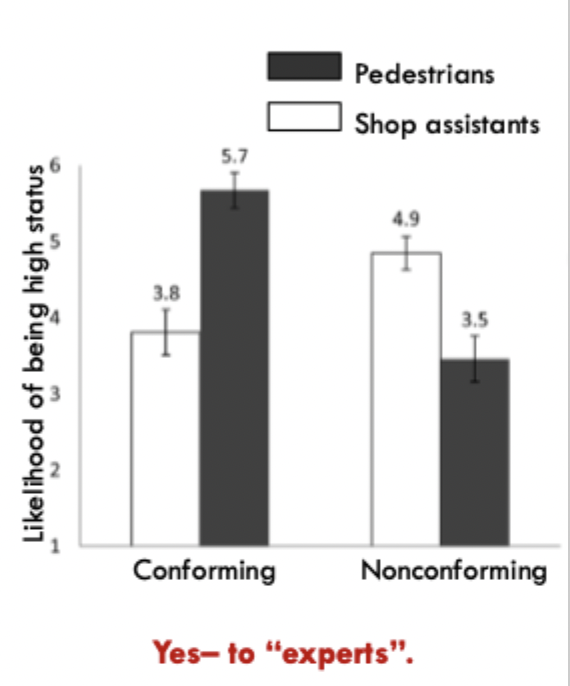
Scenario: “Imagine that a woman is entering a luxury boutique in downtown Milan during winter. She looks approximately 35 years old”
Conditions
nonconforming: she is wearing gym clothes and a jacket
conforming: she is wearing a dress and a fur coat
Participants: pedestrian or shop assistant
Measure: likelihood of being high status
experts of the scenario (the shop assistants) reported that the non-conforming woman would be more likely to be high status
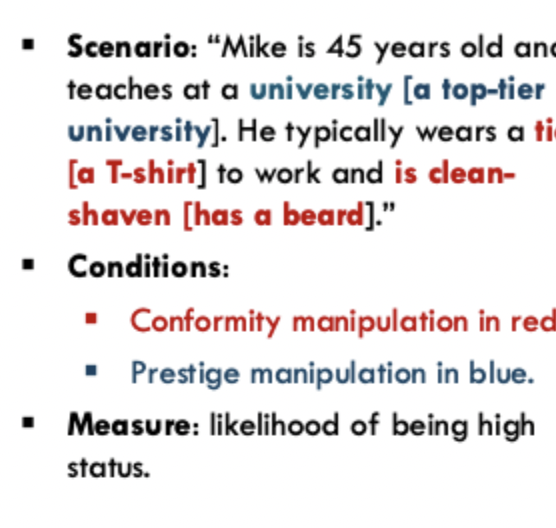
What did belezza, gina and keinan find studying if nonconformity signals status in low vs high prestige contexts
found less smartly dressed teacher was given higher likelihood of being high status within high prestige contexts
What is the Robin Hood effect?
the notion that nonconformity signals that one would make a good leader when that nonconformity is prosocial
What was found in van Kleef et al’s study of whether nonconformity signals leadership ability?
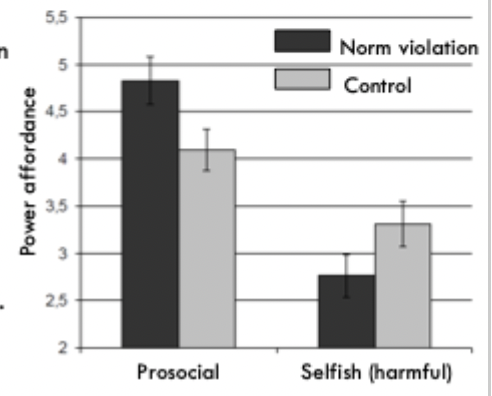
ppts watched video clips of three people in a room with an open window. At some point, the target character closes the window
Prosociality conditions
prosocial: other people were visibly cold
selfish (harmful): others visibly hot
Norm violation conditions:
the window is/isn’t market “do not touch”
Measure: Power of affordance (would ppts want the target as a boss/leader/etc)
Power of affordance most given to target who performed prosocial behaviour, most particularly in the norm violation condition
Acts of prosocial nonconformity can signal leadership ability
same finding found in van Keef’s study similar study using confed pouring cup of coffee in waiting room and it be offered or not
What are the key points regarding nonconformity?
nonconformity has costs and benefits
it is policed by social responses such as gossip
moral norm violations elicit moral outrage, which contributes to norm policing
status and power afford nonconformity
nonconformity can convey status and power
nonconformity can also lead to social change
What happens when individuals explicitly and deliberately resist societal norms for behaviour, beliefs, and attitudes?
When they deviate from the norm to challenge the norm itself?
Active resistance
What is the difference between descriptive and prescriptive deviance?
descriptive deviance: diverge from the average group attitude in a direction consistent with the desirable group attitude
prescriptive deviance: diverge from the average group attitude in a direction inconsistent with the desirable group attitude
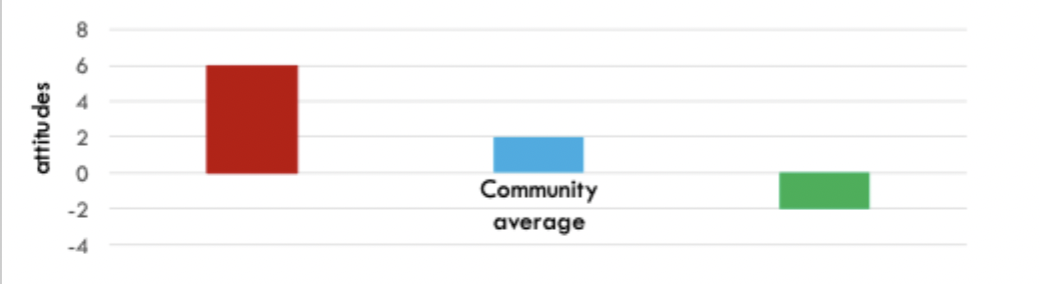
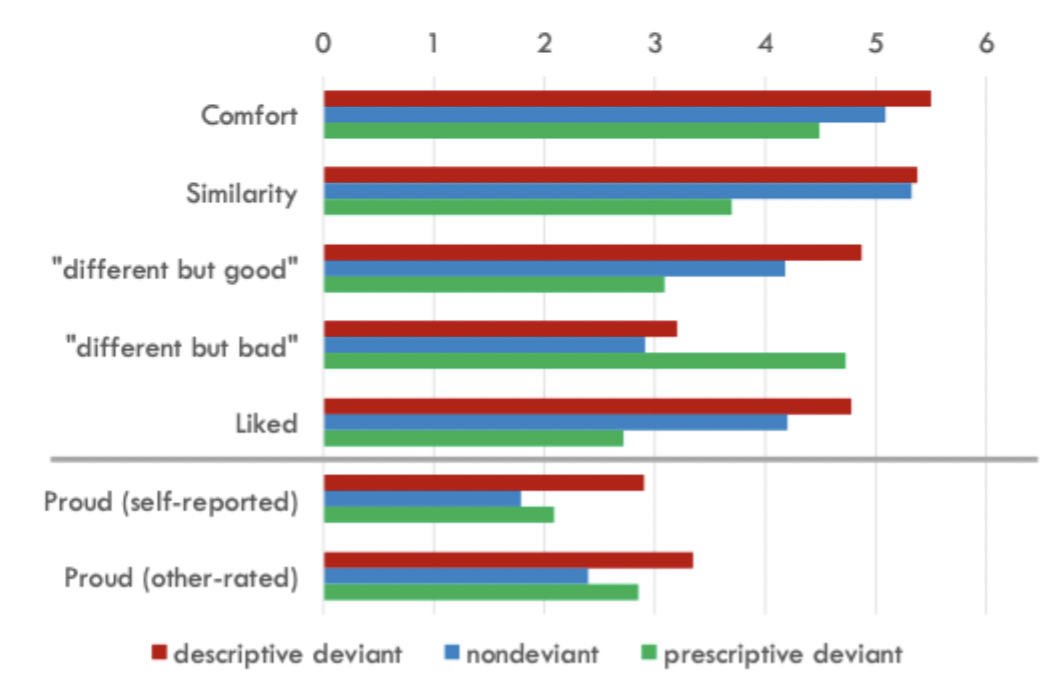
What did Morrison and Miller find regarding people’s feelings towards being descriptive/prescriptive deviant?
Study 1: ppts imagined giving a controversial speech as either descriptively deviant, prescriptively deviant or nondeviant. Ppts asked how they would feel about it
Study 2: ppts gave speech on affirmative action, as one of three deviants. Measure how ppts felt and how observers saw they felt
felt more better/ more positive things about being descriptive deviant rather than a prescriptive deviant
and more pride
What did Morrison and Miller find in their third study regarding descriptive vs prescriptive deviance?
Predictors
political affiliation of bumper sticker (democrat vs republican)
county in which car was seen (blue vs red)
measures
proportion of bumper stickers
proportion of voters in that area
in blue counties, the ratio of democratic-to republican stickers was higher than democratic-to-republican registered voters
in red counties, the ratio of republican-to-democrat stickers was higher than republican-to-democrat registered voters
more likely to be descriptive deviants in county where their view is the majority
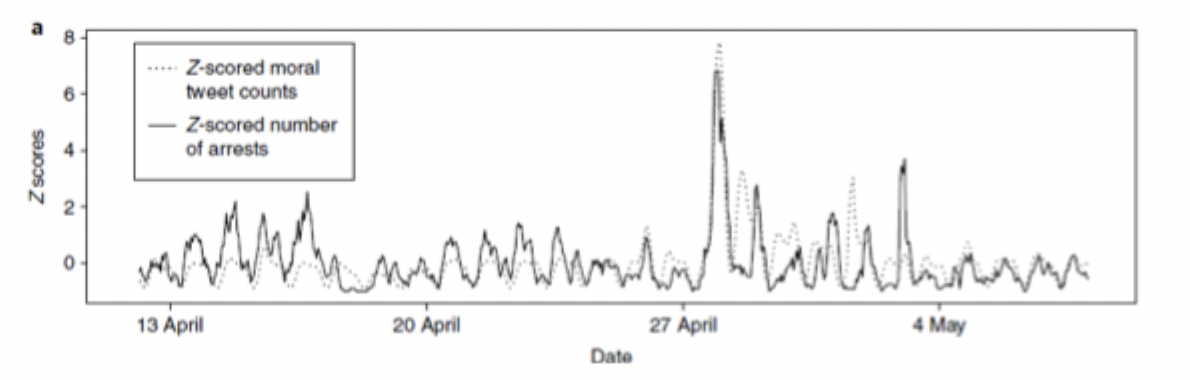
What did Mooijman et al (2018) find regarding the prevalence of moral outrage online and its role in active resistance?
Context: protests over death of freddie gray, who died in police custody
predictor: 18 million tweets from cities where there were protests (subset coded and used to train a model)
dependent variable: number of arrests in violent and peaceful protests
the number of moral tweets increased on days with violent protests and predicted the number of arrests
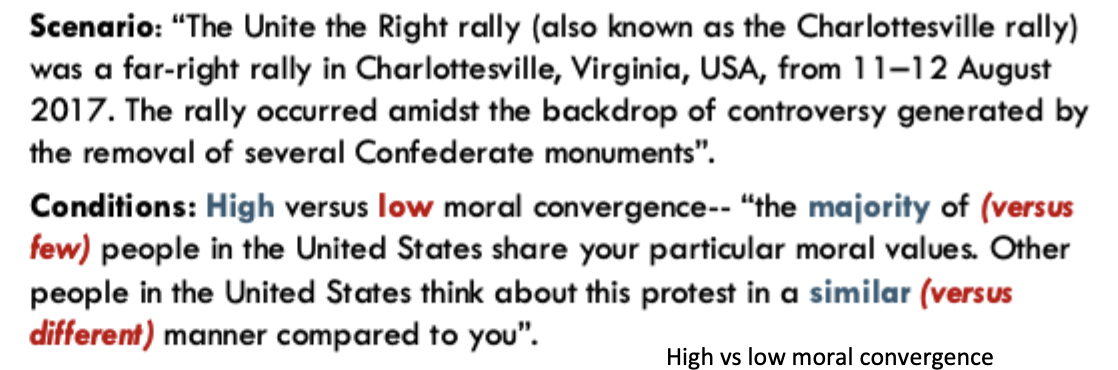
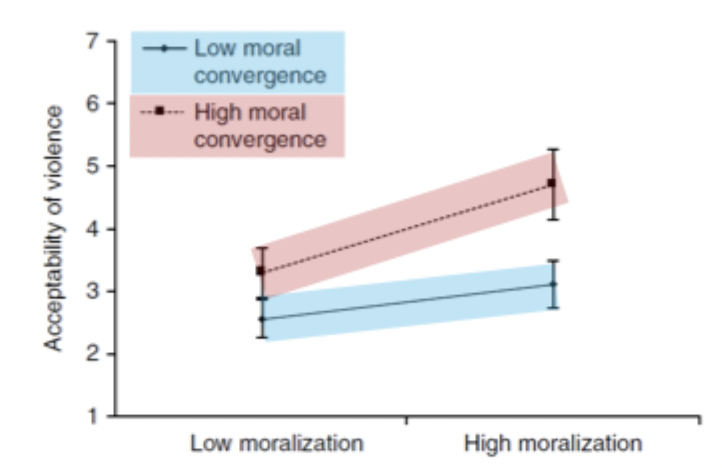
What did Moojiman et al find in follow-up experiments testing causal relationships regarding moral outrage and action?
high vs low moral convergence conditions
Measures
is the issue a moral issue?
is violence an acceptable response?
participants who believed that issue was a moral issue felt that violence was more acceptable
this pattern was particularly strong when participants believed that their morals converged with those of the majority
Key factors regarding resistance
active deviance from norms is more likely when it is in the same direction as community attitudes
moral outrage helps drive active resistance
The power of the vocal majority outline
norms change
majority views change
sometimes when enough people deviate from the norm, the minority view becomes the majority view
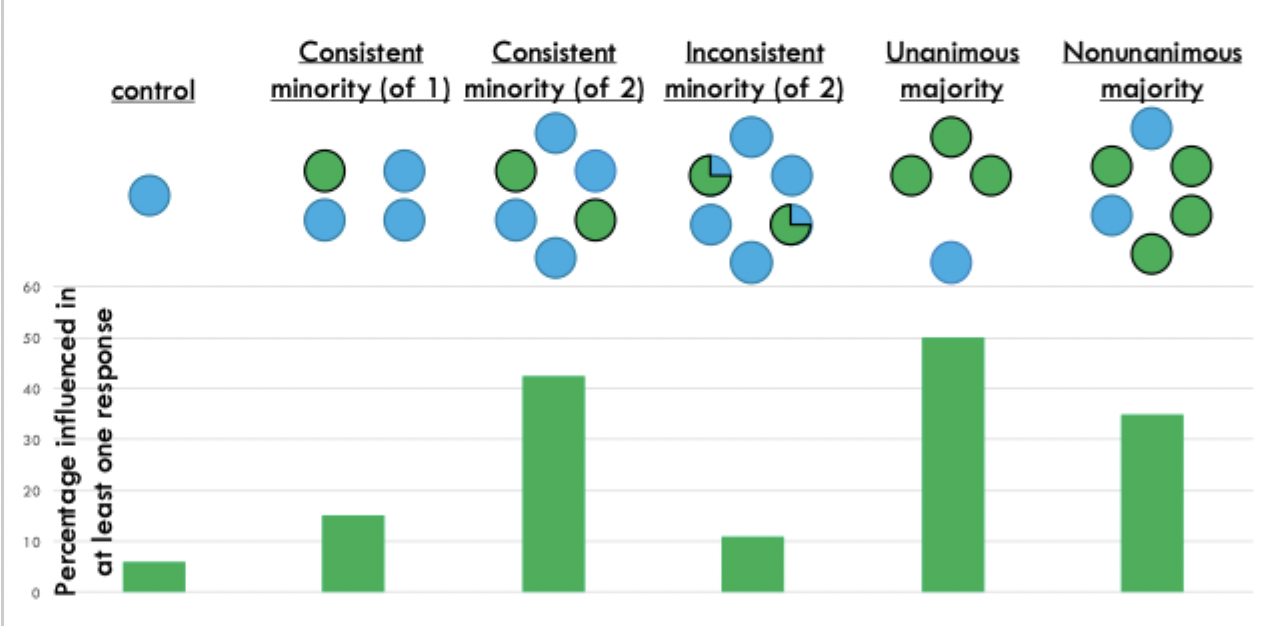
What did Moscovici, Lage, and naffrechoux find regarding the power of the vocal minority?
ppts repeatedly completed a colour labelling task in groups of other “participants”. The colour stayed blue but the light intensity changed
ppts were asked (pubicly), what is the colour? and light intensity?
manipulation: presence and size of a vocal minority
measure: percentage of people who changed their response at least once
percentage of influenced increased most with consistent minority of two, almost as much as with unanimous majority. But not as much as non-unanimous majority
didn’t increase with inconsistent minority
What was some evidence of some lasting informational effect after moscovici’s minority influence exp?
researchers also measured changes in participants’s threshold between blue and green
the consistent minority pushed participants’ threshold between blue and green in the direction of green

What is the convergent-divergent theory as a mechanism for the vocal minority effect?
nemeth argued for convergent-divergent theory
diverging from the majority, so people inhibit their own thoughts that are at odds with those views. Good for consensus.
Diverging from the minority is not threatening, so people are comfortable entertaining minority viewpoints. Good for innovation.
What is the conversion effect as a mechanism for the vocal minority effect?
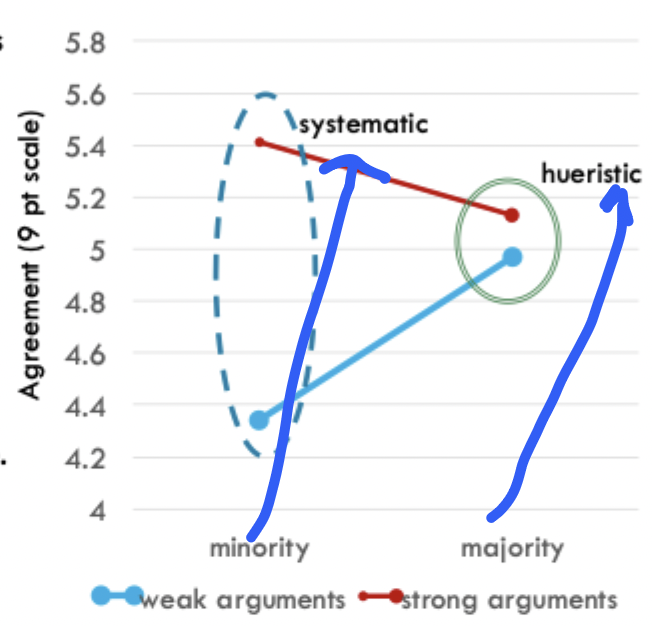
moscovici argued for the conversion effect
individuals accept the majority view passively but actively engage in a validation process with the minority view.
much like the systematic/ heuristic theory of persuasion
ironically end up more persuaded by the good arguments or the minority group
What did Martin and Hewstone find regarding systematic vs heuristic processing of vocal minority messages?
participants presented arguments about the use of animals in research.
argument conditions: strong vs weak
source conditions: the source was representing a minority vs majority viewpoint (researchers controlled for the attitude of the ppts)
measure: agreement with source
showed systematic processing is used with minority - strong arguments eliciting more agreement than that of heuristic processing used for majority
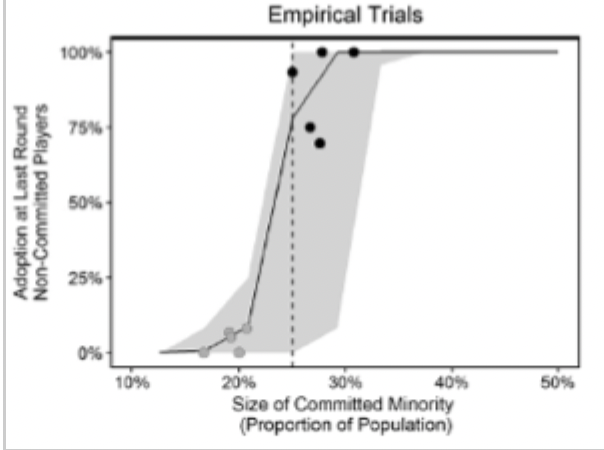
What are tipping points for social change?
when the size of the minority reaches a specific proportion of the population, norms flip quickly and dramatically so that the minority attitude, belief, or behaviour becomes the norm
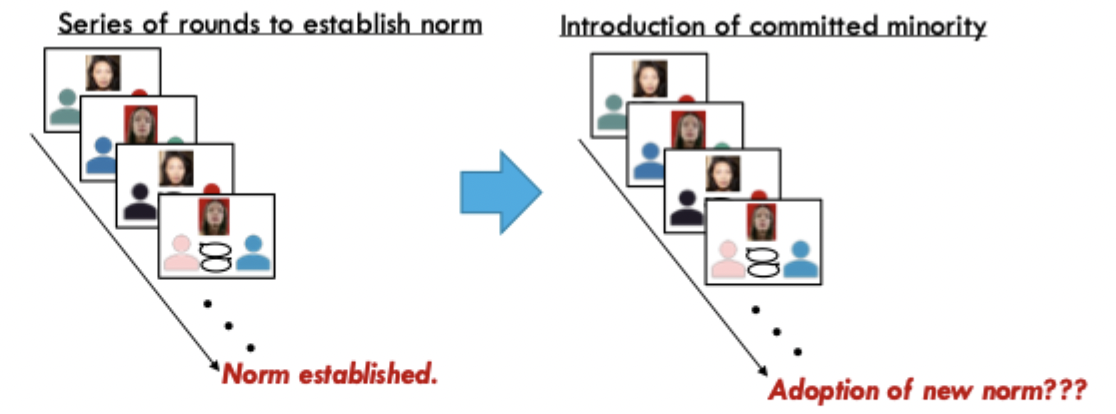
What did Centola et al find regarding the tipping points for social change?
groups of ppts played a name matching game
in each round of the game, ppts get paired with a partener
both win points if they provide the same name
groups first complete a series of rounds to establish a norm
then the researchers introduce a committed minority
manipulation: size of the minority
groups reached a tipping point when the minority was about 25%
below 25 - stuck with the old name. Over - flip with which new name was adopted
4 key points regarding change?
a vocal minority can change norms, beliefs, and behaviour
particularly when consistent
the influence of the minority voice on individuals may emerge implicitly
consistent resistance may affect change via a critical mass
 Note
Note  Flashcards (43)