Human Movement - Energy systems
 Studied by 3 people
 Call Kai
 Learn
Learn Practice Test
 Spaced Repetition
 Match
Match Flashcards
 Knowt Play
1/19

There's no tags or description
Looks like no tags are added yet.
Name | Mastery | Learn | Test | Matching | Spaced | Call with Kai |
|---|
No analytics yet
Send a link to your students to track their progress
20 Terms
What is ATP?
Adenosine Triphosphate
A source our muscles can use for contractions
Energy is released by the breakdown of ATP
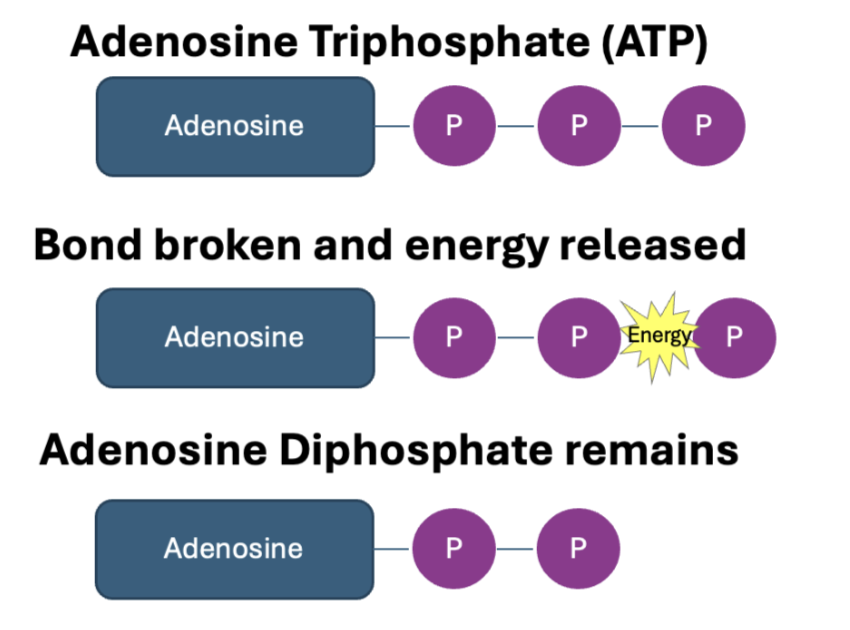
ADP
Adenosine Di Phosphate
It is the remaining molecule after 1 phosphate molecule breaks off from ATP splitting, the energy to move the muscles is released
Energy systems
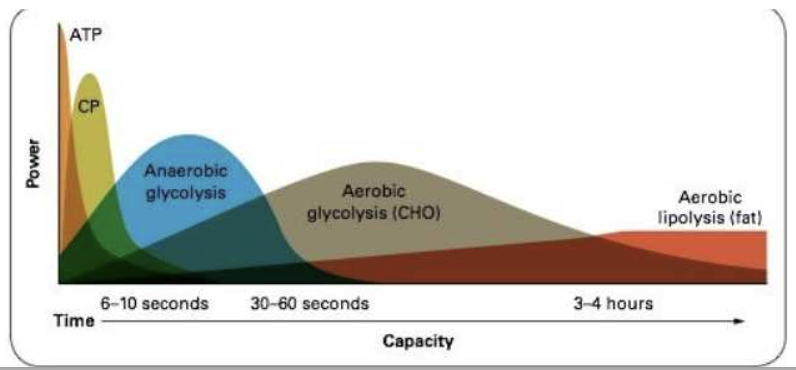
Two without oxygen → ATP-PC and Anaerobic glycolysis
One with oxygen → Aerobic glycolysis
All are 3 used in varying percentages all of the time
What two factors determine what amount of energy is needed during exercise?
Duration and intensity of exercise/activity
(determines which energy system is predominately used)
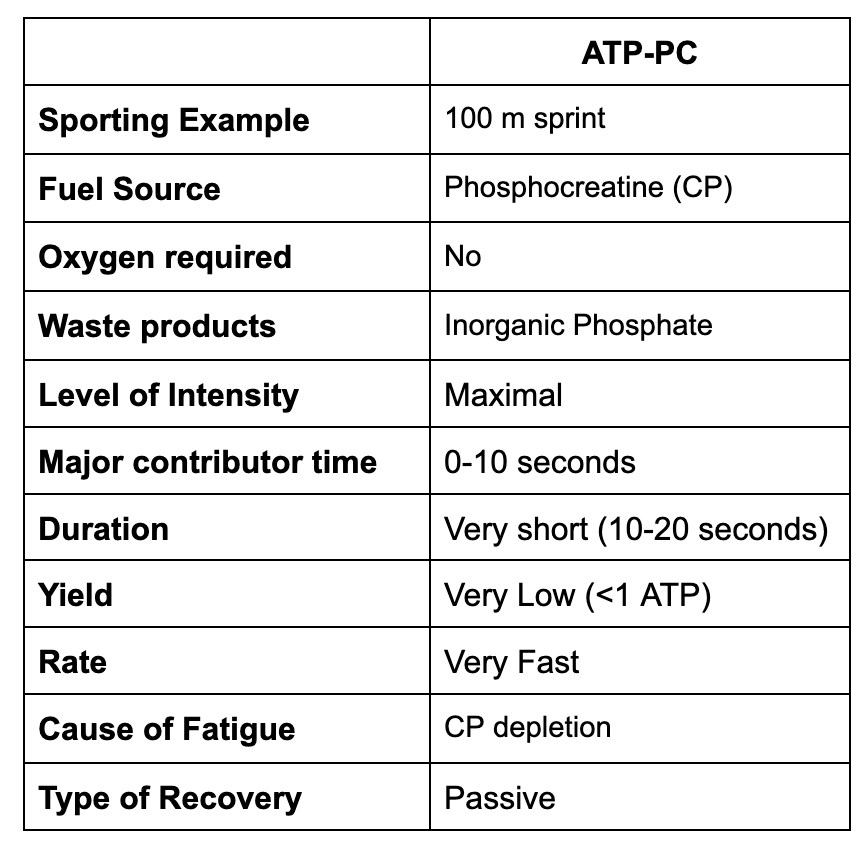
ATP-PC
Major contributor time: 0-6 seconds**
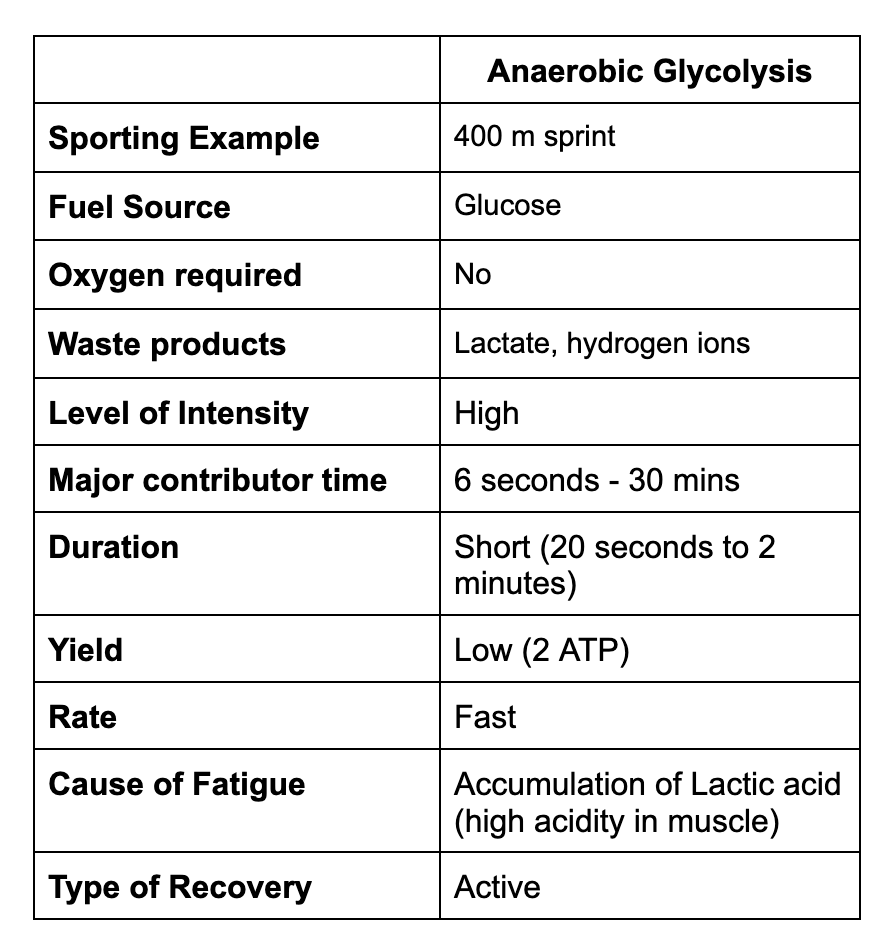
Anaerobic Glycolysis
30 secs not min**
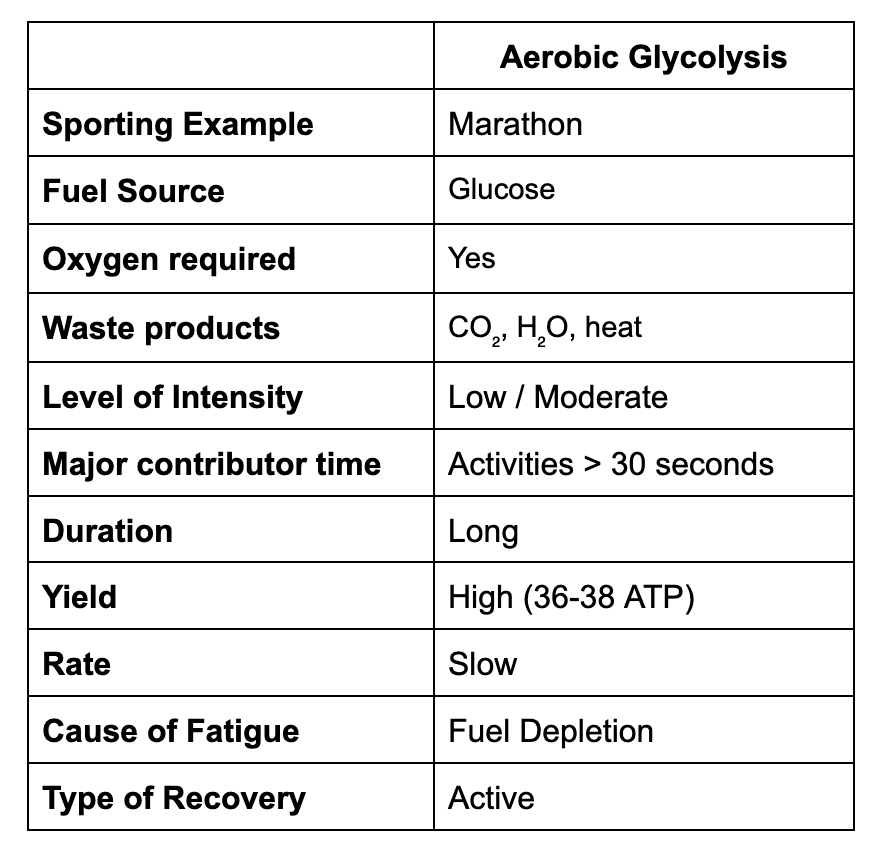
Aerobic glycolysis
Energy system interplay
How our body uses different energy systems during exercise
Energy production
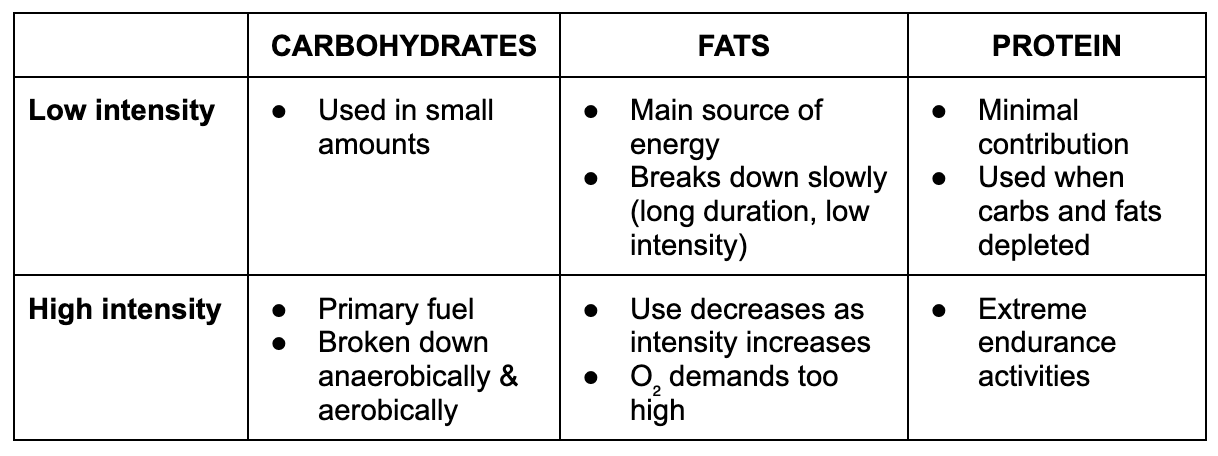
Energy is released in the body by the breakdown of:
- creatine phosphate (chemical)
- carbohydrates, fats & proteins (foods)
These produce ATP
Fuels
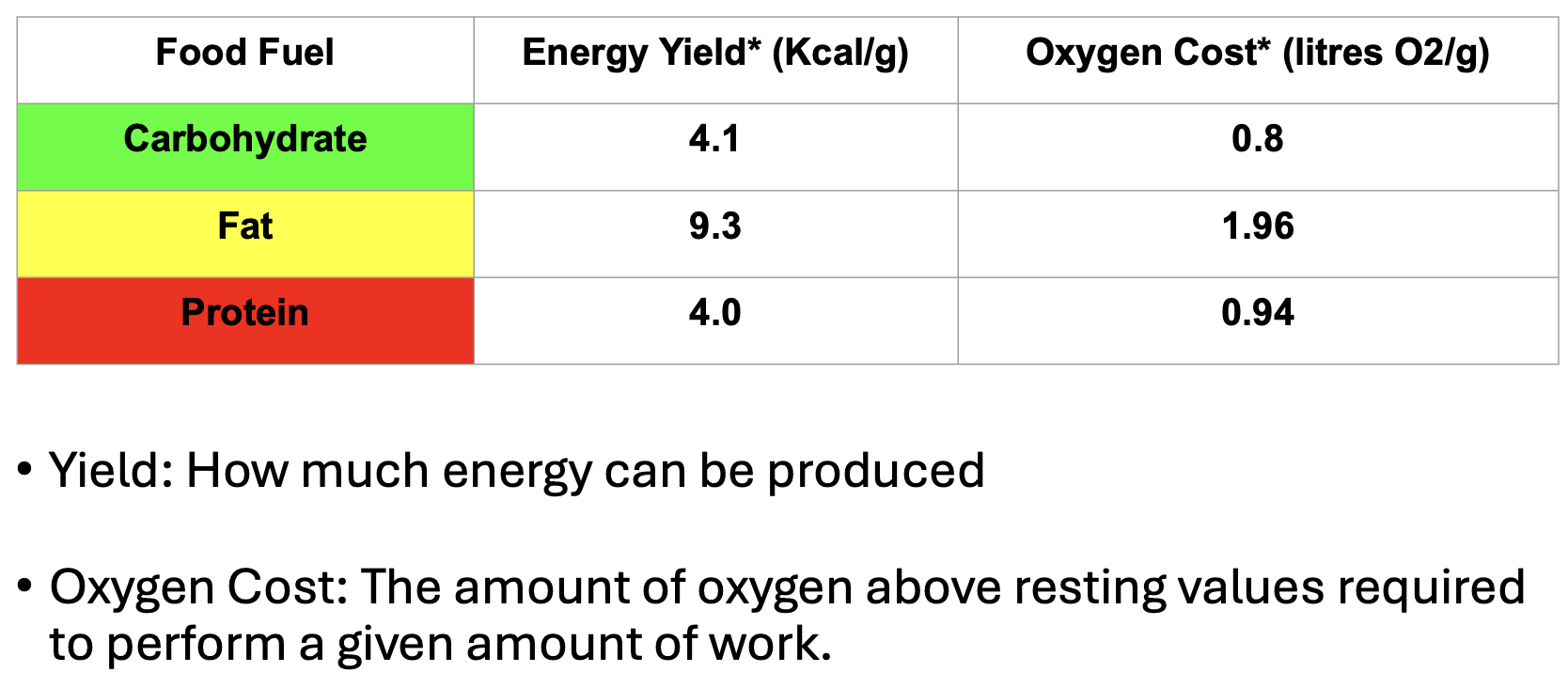
ATP production
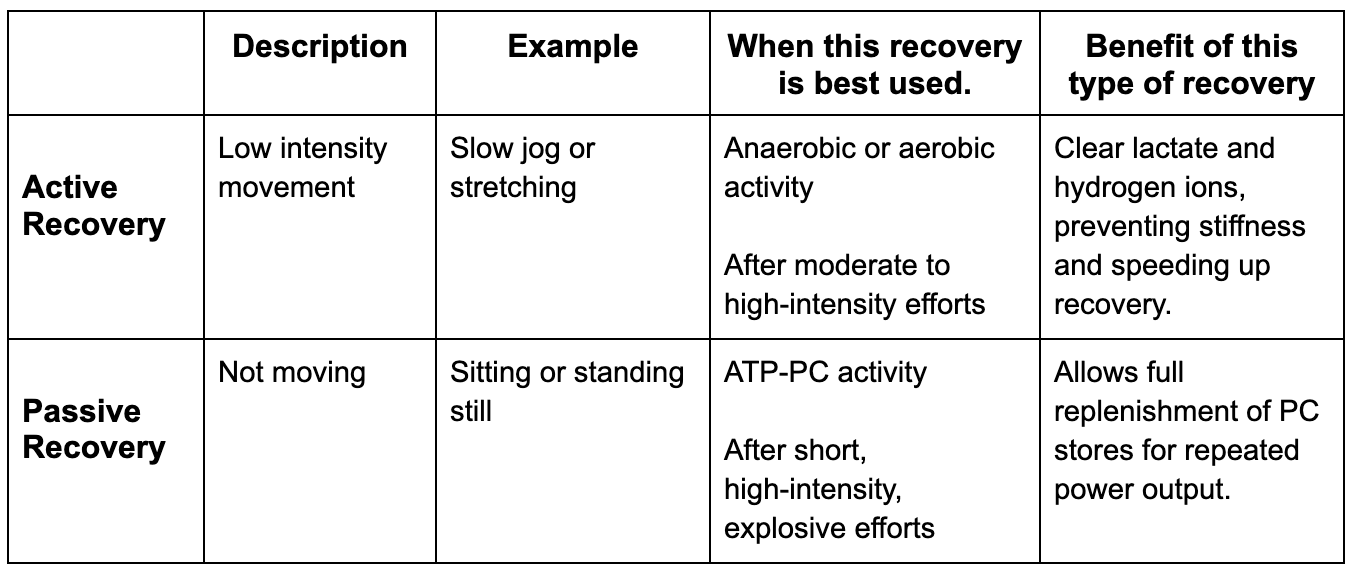
Active VS Passive recovery
Causes of fatigues
•Depletion of energy stores
•Accumulation of lactate and hydrogen ions
•Dehydration and reduced electrolytes
•Increased muscle temperature
Depletion of PC stores
•ATP-PC system is the major contributor between 0-6 seconds at high intensity.
•PC stores in the muscles are rapidly depleted.
•The major contributing system then becomes the anaerobic glycolysis system.
•There is approx. 10-20 seconds of PC stored in muscles.
Depletion of glucose stores
•When the aerobic system is used continually during exercise glycogen stores are reduced.
•Fats then become the major fuel source which requires more oxygen to break down so fatigue sets in.
•The body stores approx. 90 mins worth of glycogen. It uses muscle stores first then moves to glycogen stored in the liver.
Metallic by-product accumalation
•As the rate of anaerobic glycolysis increases so does H+ and lactate accumulation within the muscles and the blood.
•The presence of hydrogen ions cause muscle acidity. This decreases enzyme activity and the breakdown of glucose.
•pH decreases.
•H+ and lactate causes the burning sensation in the muscles.
Dehydration and reduced electrolytes
The body loses fluid through sweat.
Sweat contains salt and water.
Electrolytes are minerals in your body that contain an electric charge. They must be maintained to assist with your body’s blood chemistry, muscle action and other processes.
Dehydration can cause fatigue due to coordination, endurance and decision making.
Increased muscle temperature
Causes blood to be redirected away from the working muscles to the skin in attempt to cool the body – vasodilation.
This reduces oxygen supply to the working muscles, forcing the anaerobic system to increase its contribution. This leads to increased lactate & H+ production.
Heat leads to fatigue which leads to poor decision making.
LIP
The lactate inflection point (LIP)is also known as the anaerobic threshold.
This is the point in an endurance exercise where blood lactate levels begin to rise rapidly because lactate production exceeds the body's ability to remove it.
This rapid accumulation of lactate and associated hydrogen ions leads to fatigue.
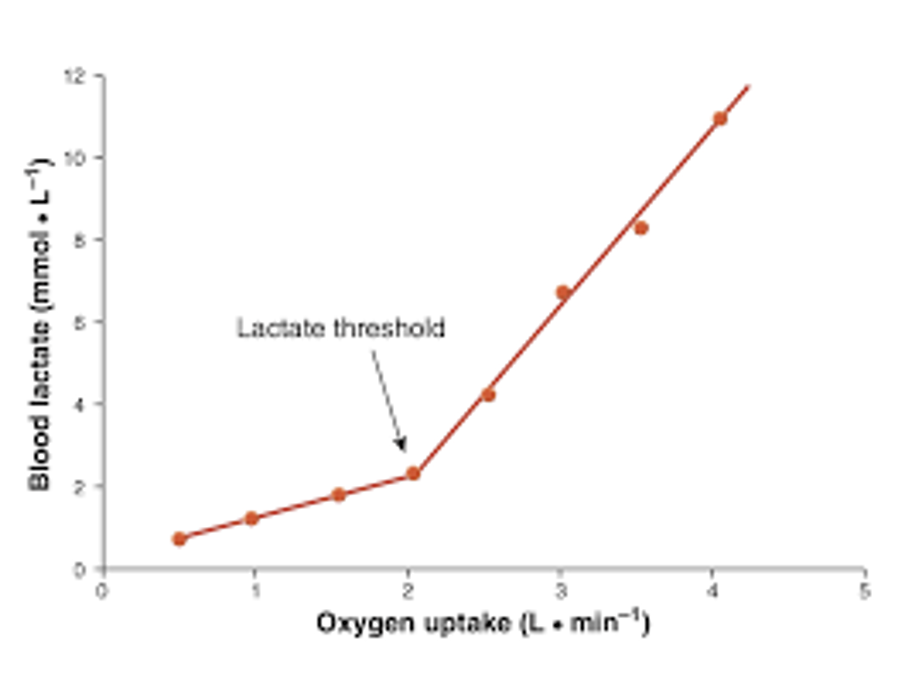
LIP
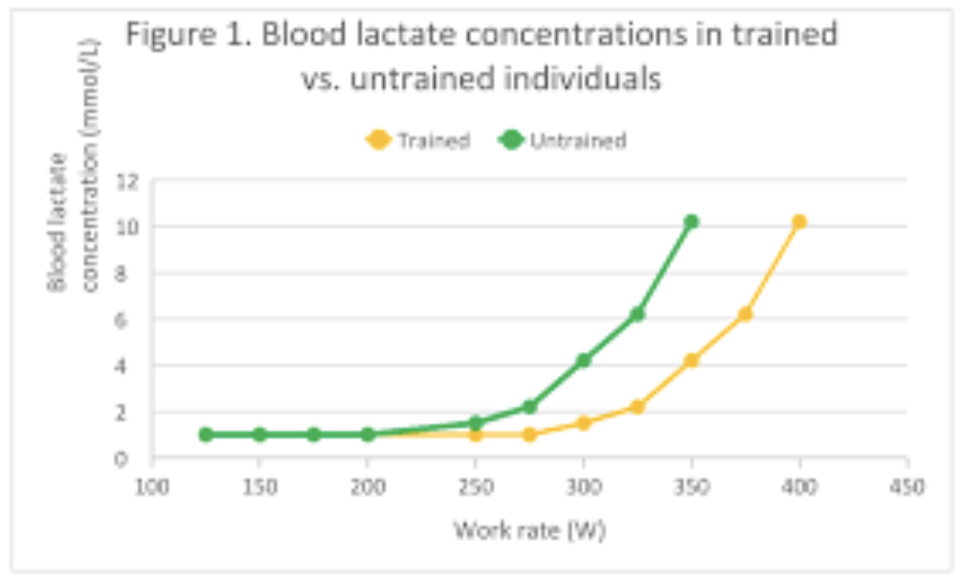
Training to increase your LIP allows you to sustain higher aerobic intensities for longer periods, improving endurance performance by delaying the shift to anaerobic glycolysis.
Can improve the lactate threshold though training of the anaerobic system, since the body and muscles can more effectively get rid of lactic acid
 Note
Note  Flashcards (500)