Nucleic Acids + Cells - Lecture
 Studied by 0 people
 Call Kai
 Learn
Learn Practice Test
 Spaced Repetition
 Match
Match Flashcards
 Knowt Play
1/161

There's no tags or description
Looks like no tags are added yet.
Name | Mastery | Learn | Test | Matching | Spaced | Call with Kai |
|---|
No analytics yet
Send a link to your students to track their progress
162 Terms
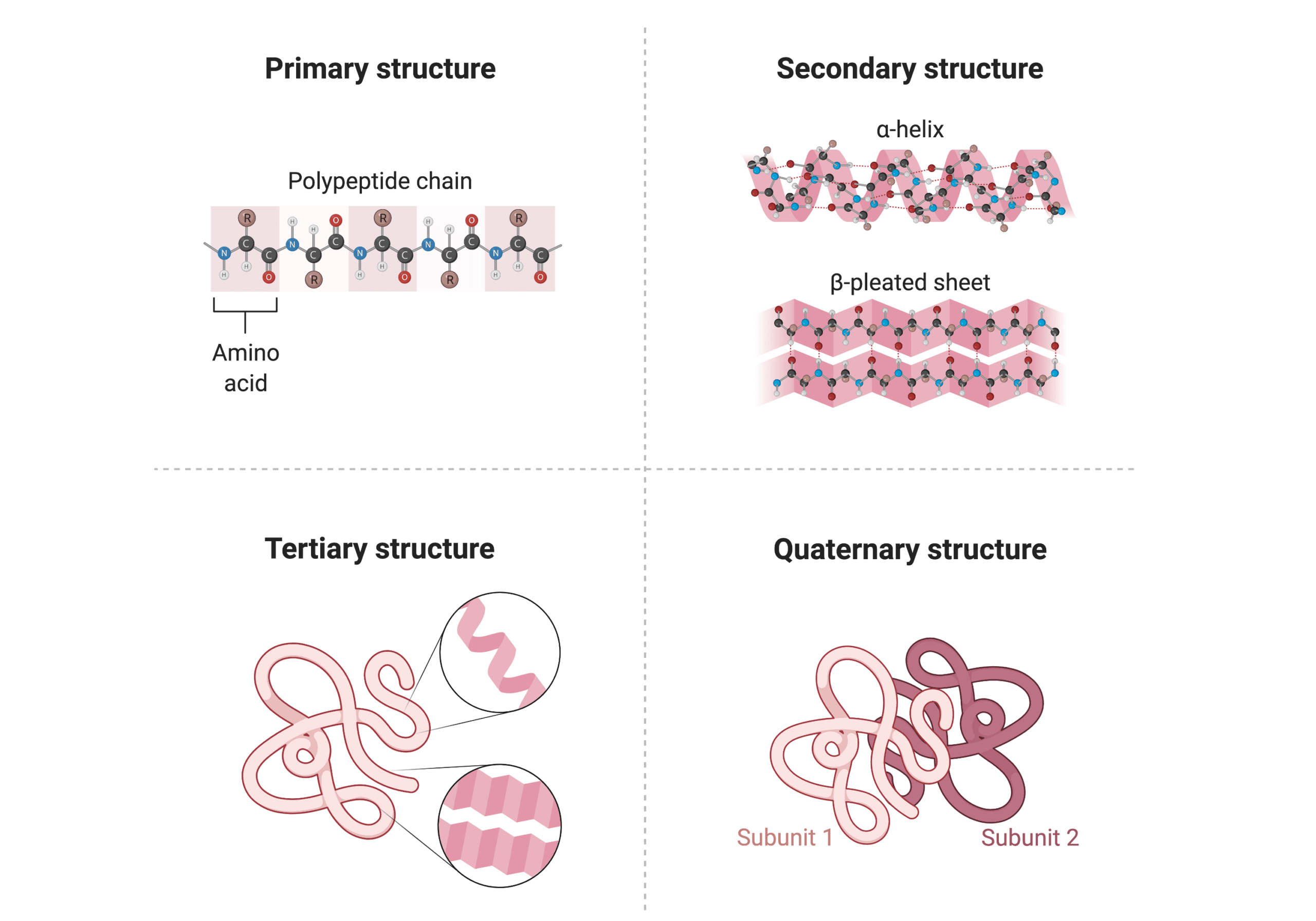
What is the primary structure of a protein?
The exact sequence of amino acids — like a person’s core traits, values, and personality.
Everything that happens later depends on this foundation.
Change the sequence → change the entire protein.
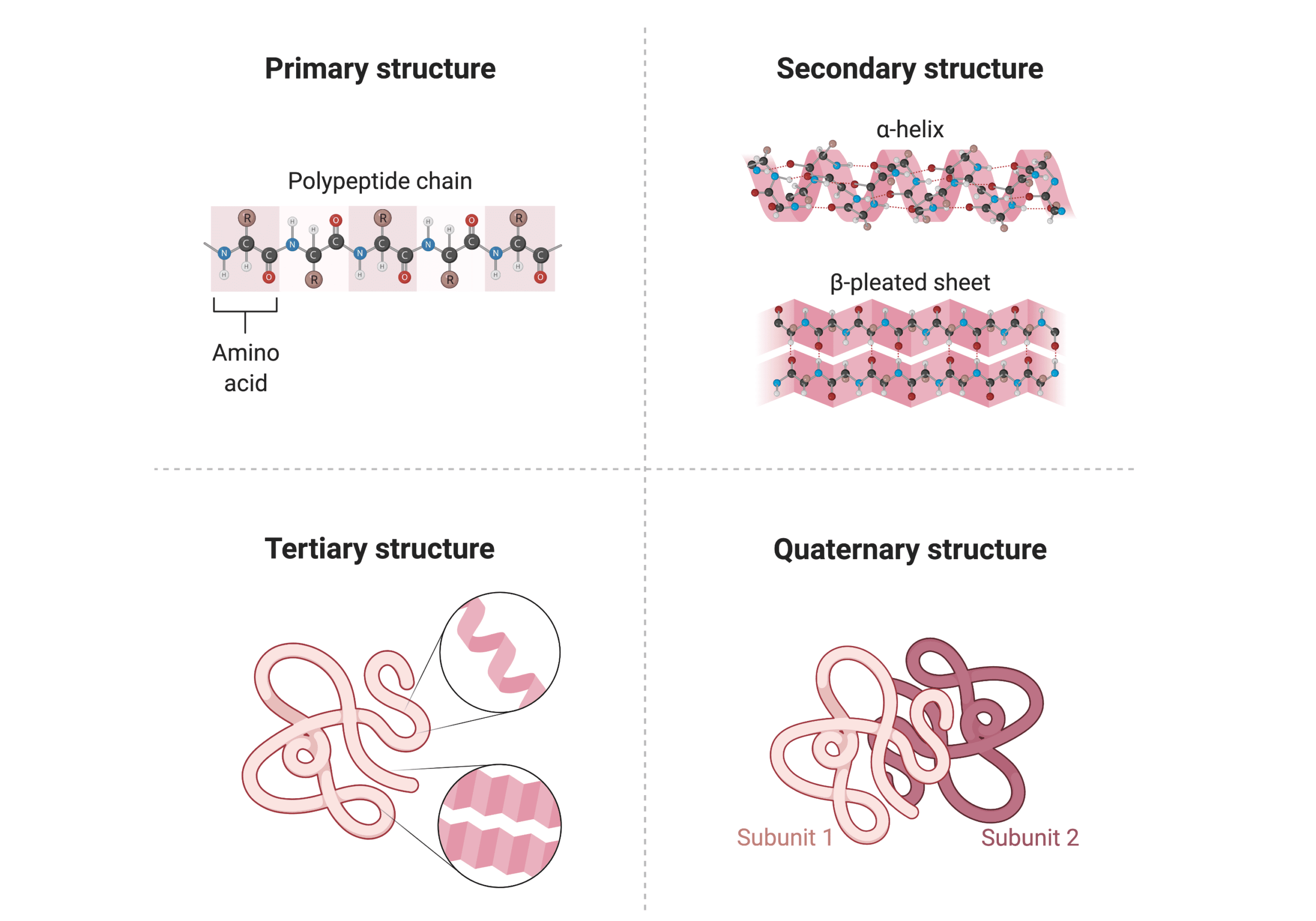
What is the secondary structure of a protein?
Early folding into α‑helices and β‑sheets, held together by hydrogen bonds.
Like early relationship patterns: routines, habits, first shared memories — light but important connections.
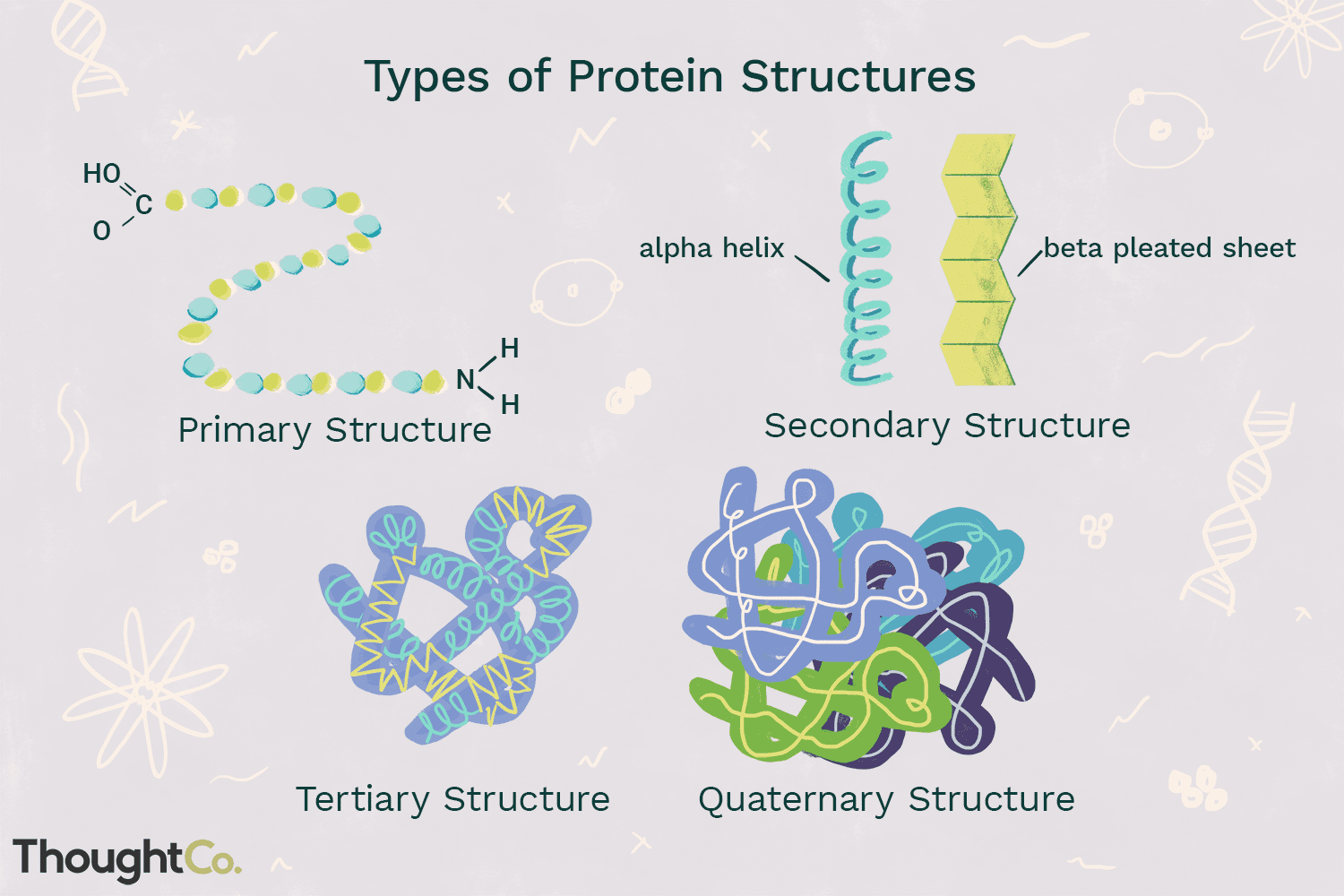
What drives secondary structure formation?
Hydrogen bonds between parts of the backbone.
These create the first stable shapes but do not determine final function.
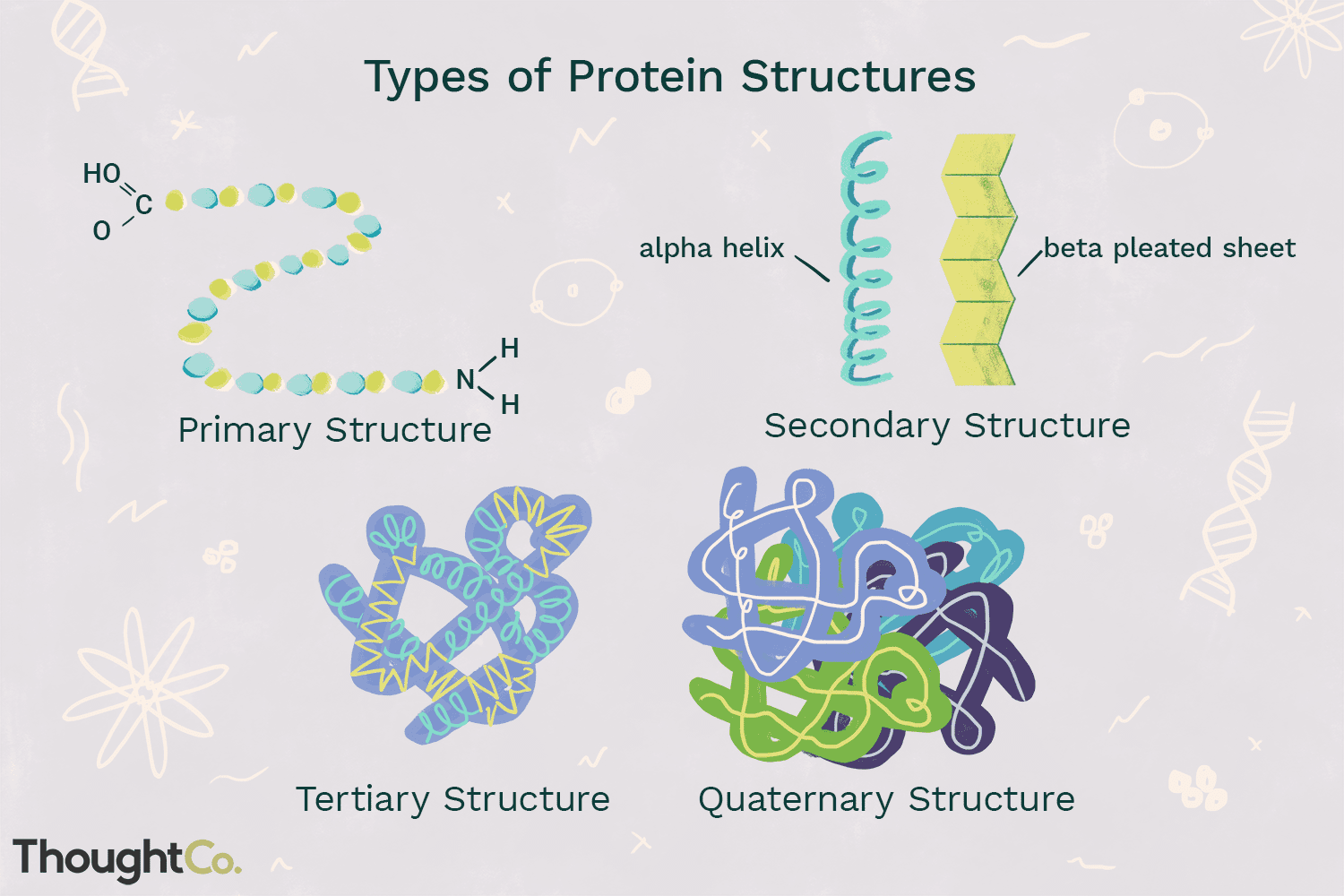
What is the tertiary structure of a protein?
The full 3‑D folded shape created by R‑group interactions.
Like a deep, stable relationship built on trust, emotional closeness, shared values, and long‑term commitments.
This shape determines the protein’s function.
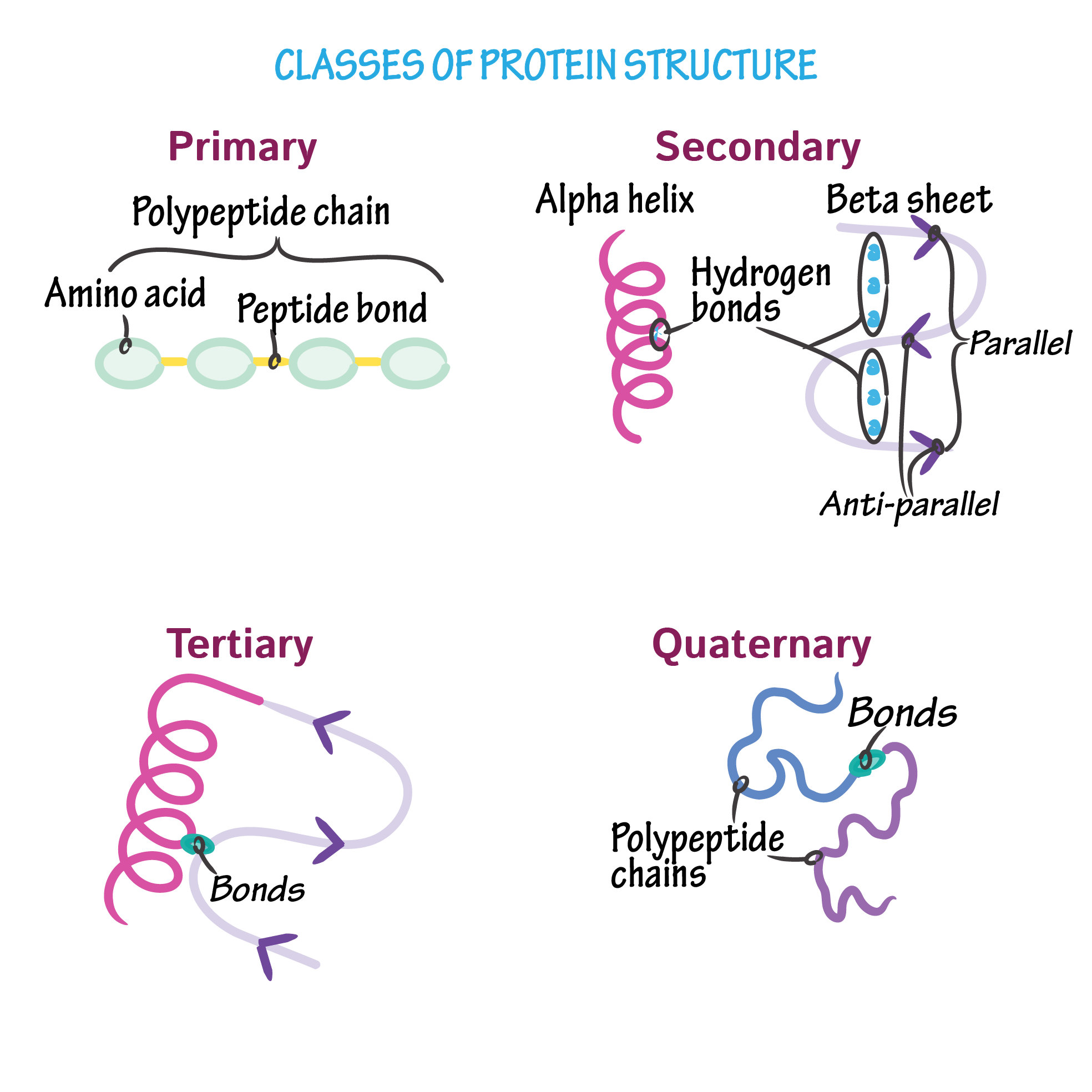
What types of bonds stabilize tertiary structure?
• Hydrogen bonds → emotional closeness
• Ionic bonds → strong attraction/shared values
• Covalent bonds → long‑term commitments (e.g., disulfide bridges)
This structure decides what the protein can actually do.
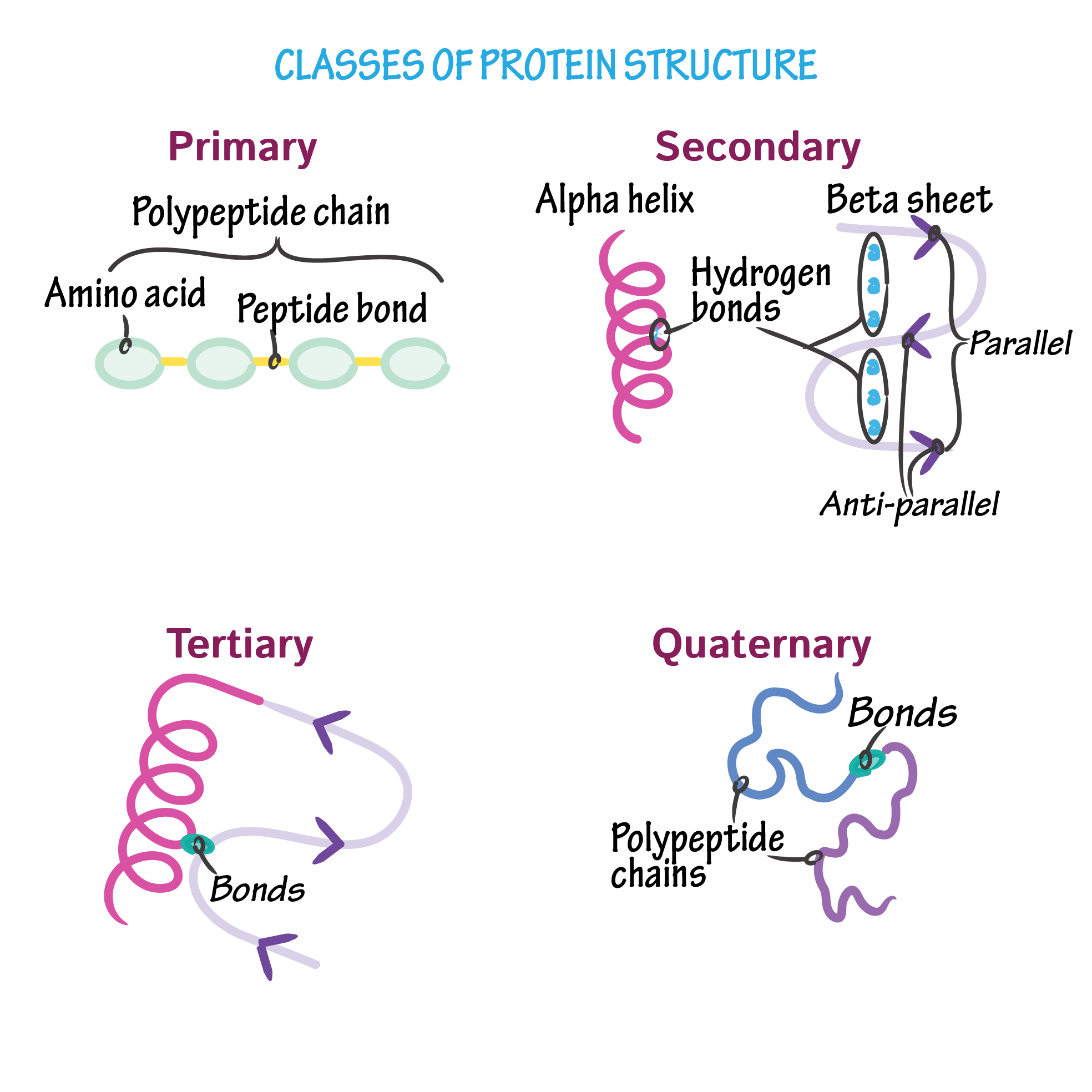
What is quaternary structure?
When multiple folded polypeptides join to form one functional protein.
Like two fully formed individuals teaming up as a partnership.
Optional, but powerful —- not all proteins have this
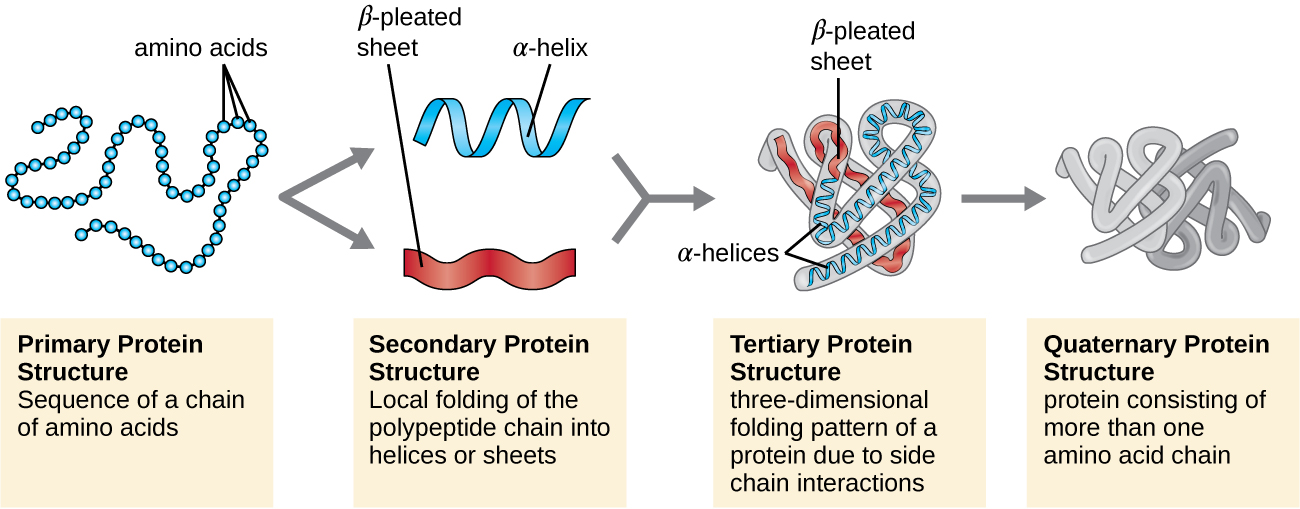
How does protein structure relate to protein function?
Function depends entirely on the final 3‑D shape.
Once tertiary (or quaternary) structure forms, the protein can act as an enzyme, receptor, channel, structural support, or contractile protein.
What are examples of protein functions using the relationship analogy?
Enzymes → the couple that solves problems together
Channels → the couple that keeps communication flowing
Receptors → the couple that listens and responds
Structural proteins → the couple that supports each other and their environment
Muscle proteins → the couple that takes action and gets things done
Function always depends on the final folded shape.
What happens to excess dietary protein?
It is broken into amino acids.
Your body uses what it needs to build proteins.
Any extra is burned for energy right away — especially during starvation — because protein cannot be stored.
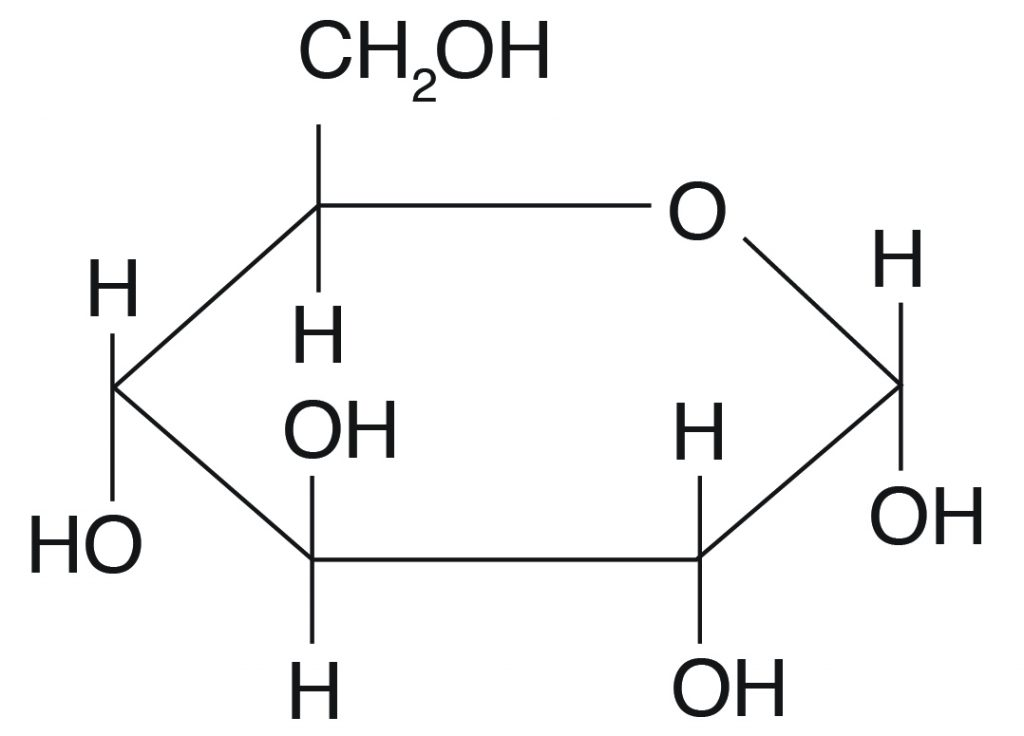
What do carbohydrates do?
Carbohydrates are mainly used for energy. They play a smaller role in building cell structures because cells don’t construct major components out of carbohydrates the way they do with proteins and lipids.
Analogy: They’re the fun moments and quick boosts in a relationship — helpful, energizing, but not what builds the structure.
What do lipids do, and what’s their relationship analogy?
Lipids are major structural components of cells. They form the cell membrane, store long‑term energy, and create barriers and compartments inside the body.
Analogy: They’re the boundaries, comfort, and stability — the “home” the relationship lives in.
Can proteins be used as energy storage?
No, it can’t.
Proteins cannot be stored for energy
Dietary protein is broken into amino acids, which are used to build your own proteins
Any leftover amino acids are immediately used for energy. The body cannot store protein the way it stores fat.
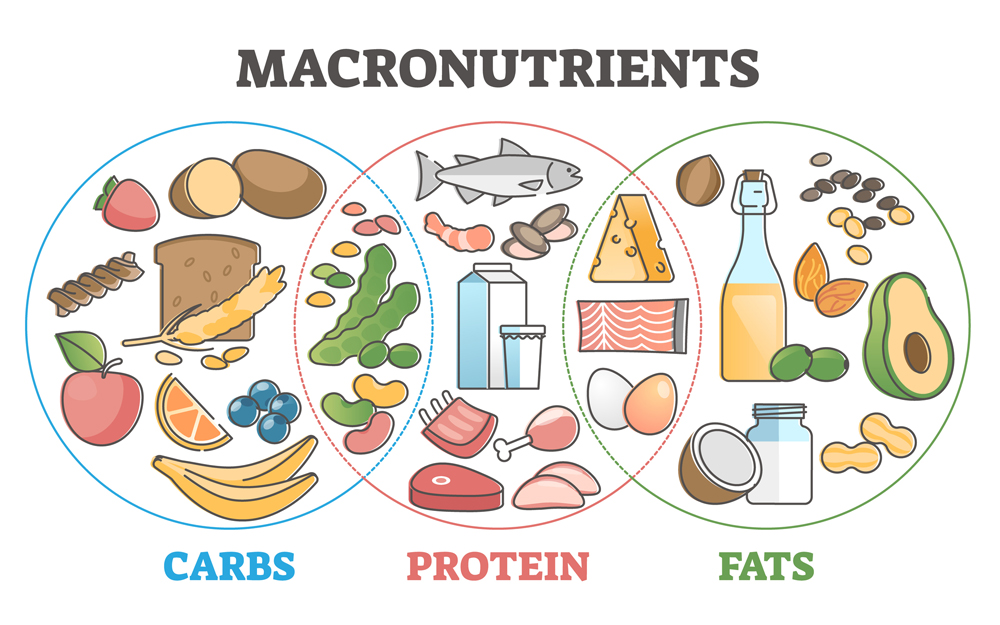
What are macronutrients?
Macronutrients are carbohydrates, lipids, and proteins — nutrients we consume in large amounts because the body uses them to build structures, make important molecules, and produce energy.
Why are proteins the most important macromolecules, and what’s their relationship analogy?
Proteins are the most structurally and functionally important macromolecules. They make up much of the cell and perform nearly every job: enzymes, channels, receptors, structural components, and muscle contraction proteins.
Analogy: They’re the actions, effort, communication, and teamwork — the real work that makes the relationship function.
What do nucleic acids do?
DNA stores genetic information; RNA transfers and expresses it. They are not used for energy, nutrients, or structure.
Their job is information
Analogy: They’re the shared history, identity, and long‑term meaning — the story and values that guide the relationship.
Why are nucleic acids called “nucleic acids”?
They were discovered as acidic molecules in the nucleus long before their true role — carrying genetic information — was understood.
How are nucleic acids different from carbohydrates, lipids, and proteins?
They don’t provide energy, aren’t nutrients, and don’t build structures.
Their job is information storage and expression.
They were named “nucleic acids” before their true role was understood.
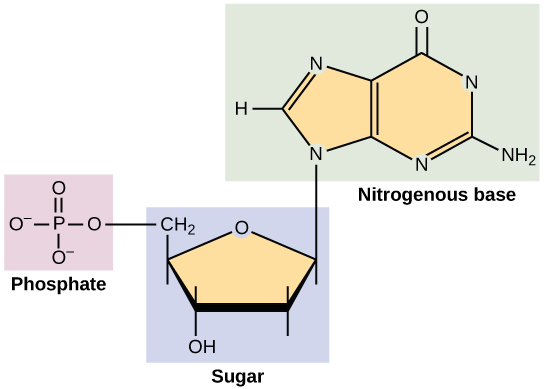
What is the monomer and polymer of nucleic acids?
Monomer: A nucleotide.
Polymer: DNA & RNA
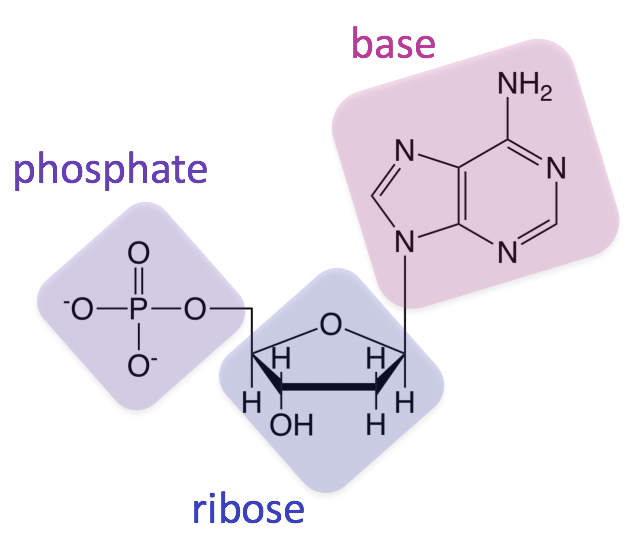
Each nucleotide has three parts: a phosphate group, a 5‑carbon sugar (ribose or deoxyribose), and a nitrogenous base.
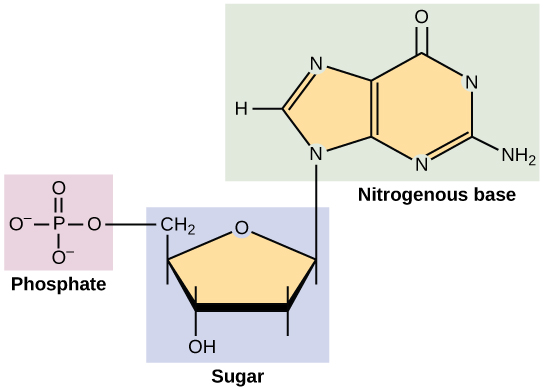
What is the function of the phosphate group in a nucleotide?
Every nucleotide has a phosphate group.
It’s a phosphorus atom with oxygens that acts as a “connector,” attaching to the 5′ carbon of the sugar and linking nucleotides together to form a chain
Analogy:
The phosphate group = someone’s “attachment style.” It’s the part of a person that naturally connects them to others and helps build the relationship chain.
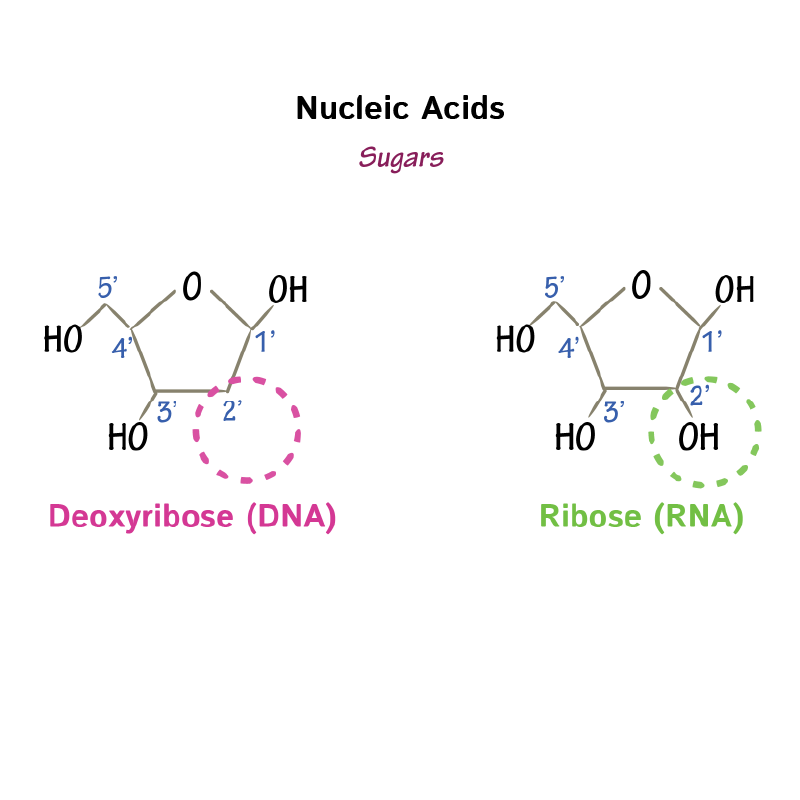
What does the 5‑carbon sugar do in a nucleotide?
The sugar determines whether the nucleotide is DNA (deoxyribose) or RNA (ribose)
The phosphate attaches to the 5′ carbon, and the next nucleotide attaches at the 3′ carbon, giving the strand its 5′ → 3′ direction.
Analogy:
The sugar = someone’s “sense of self.”
It’s their identity and emotional stability — the backbone everything else attaches to. Ribose vs. deoxyribose is like two similar personalities with one small difference that changes the whole dynamic.
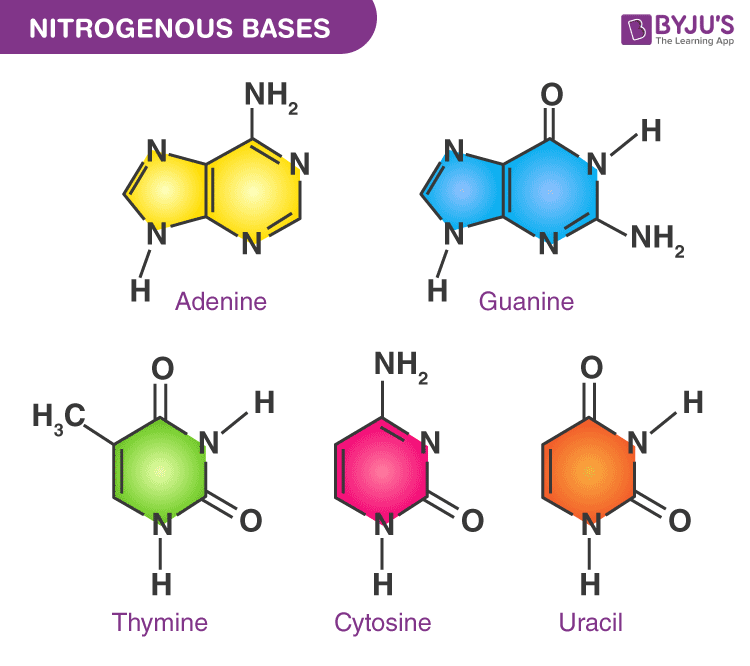
What is a nitrogenous base?
They store and transmit genetic information
A nitrogen‑containing base that can accept H⁺ (a base).
The four DNA bases are A, T, G, and C.
Bases determine pairing: A–T and G–C.
Analogy:
The base = someone’s “communication style.”
It determines compatibility, who they pair with, and how they connect.
Bases accepting H⁺ is like someone who absorbs emotional charge and stabilizes the environment.
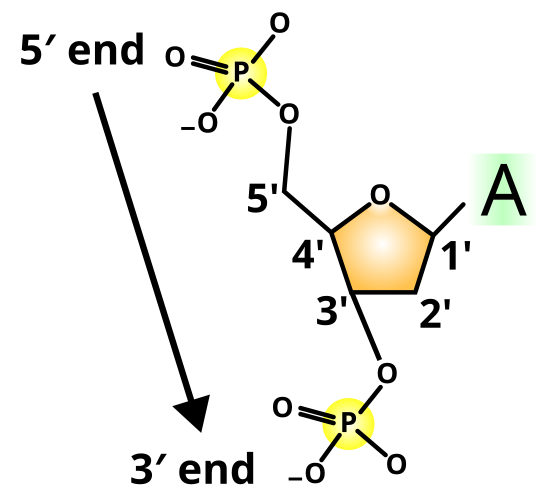
Why do nucleotides use prime (′) numbering?
Sugar carbons are labeled 1′–5′ to distinguish them from carbons in the nitrogenous base.
The 5′ carbon holds the phosphate; the 3′ carbon links to the next nucleotide.
This creates strand direction. (Gives DNA direction)
Analogy:
They represent “orientation in the relationship.” Two people can only build something meaningful if they’re aligned — just like nucleotides only link 5′ to 3′.
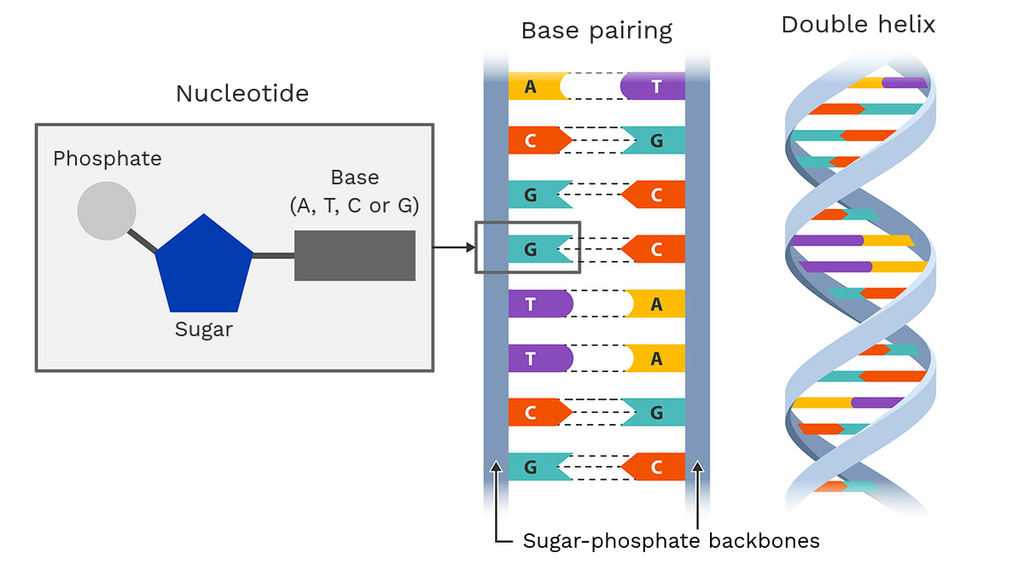
What is the structure of DNA?
DNA is a two‑stranded molecule
Each strand is a polymer of nucleotides, and the bases pair in the center to form the double helix
Analogy:
The double helix = the relationship itself.
Two people (two strands) come together, each bringing their attachment style (phosphate), identity (sugar), and communication style (base).
When aligned correctly, they form a stable, long‑term partnership.
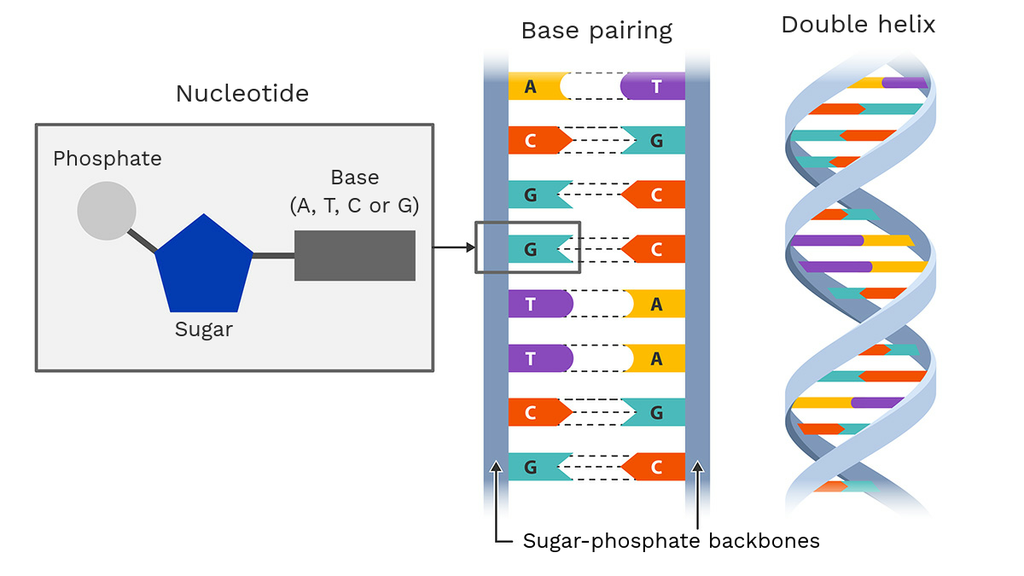
What is DNA made of?
DNA is made of nucleotides
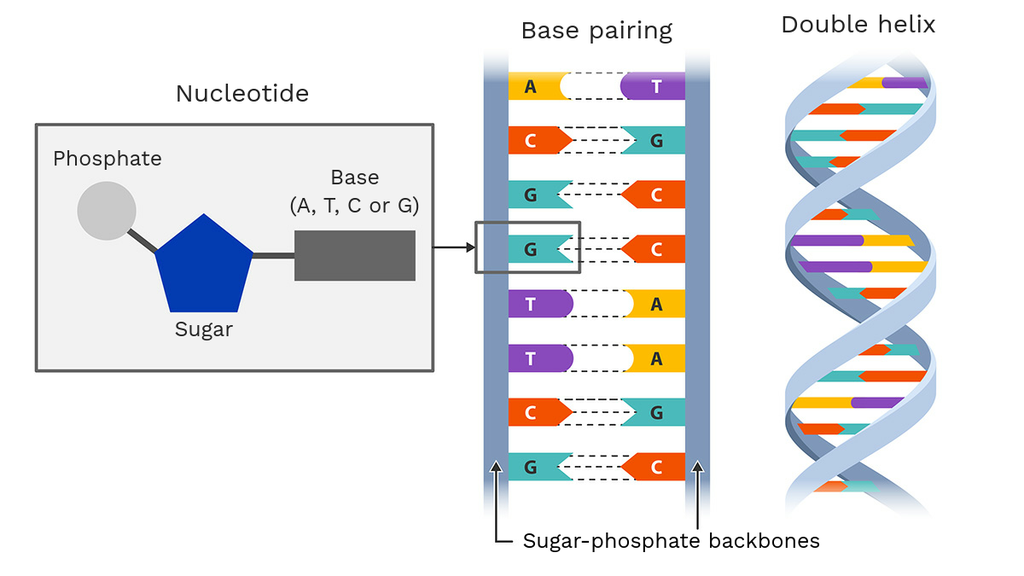
What are the three required parts of a nucleotide?
A phosphate group, a 5‑carbon sugar (deoxyribose in DNA), and a nitrogenous base (A, T, G, or C).
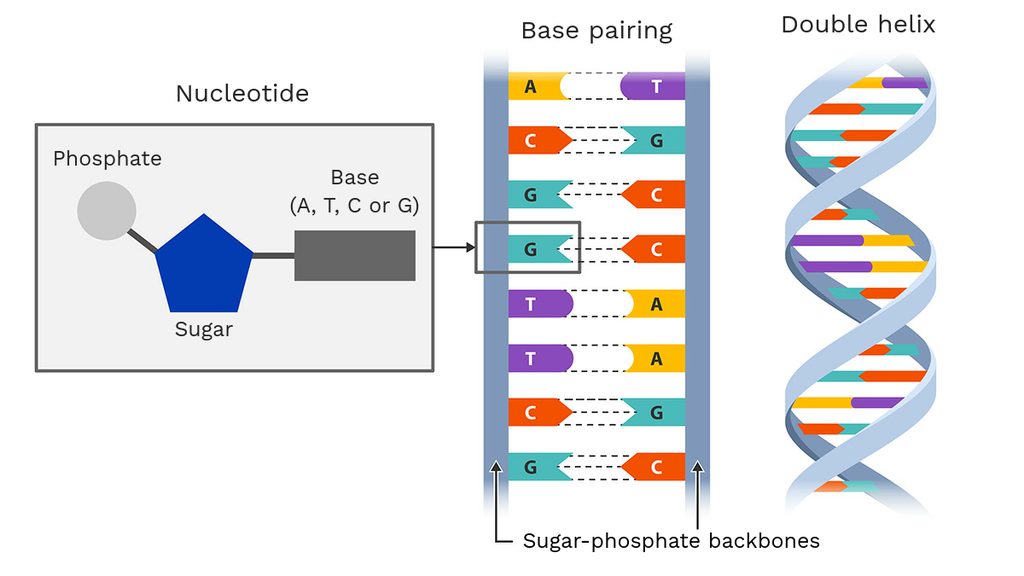
What sugar does DNA contain? And Which bases are found in DNA?
Deoxyribose
Adenine (A), Thymine (T), Guanine (G), Cytosine (C).
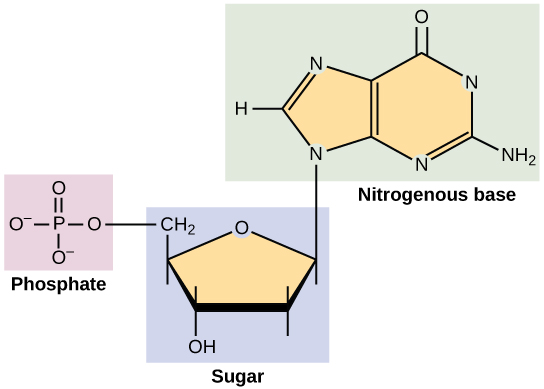
What forms the backbone of a DNA strand?
The phosphate group and the sugar (deoxyribose).
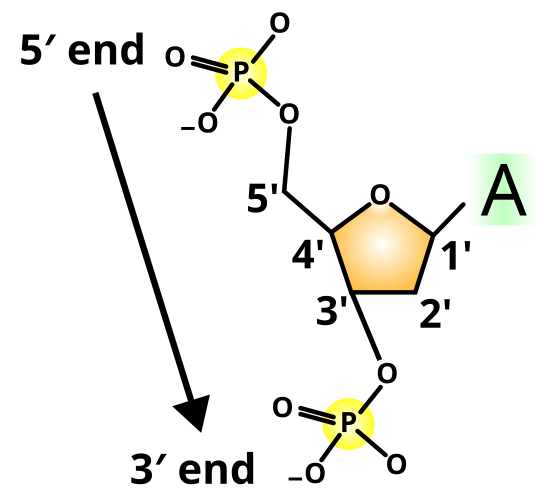
What gives DNA strands direction? And Why is it important to know the 5′ and 3′ ends?
The sugar carbons: nucleotides link 5′ → 3′, giving the strand orientation.
Because they show how nucleotides connect and how DNA is read, copied, and built.
DNA is a polymer of nucleotides, and each nucleotide has the same three parts.
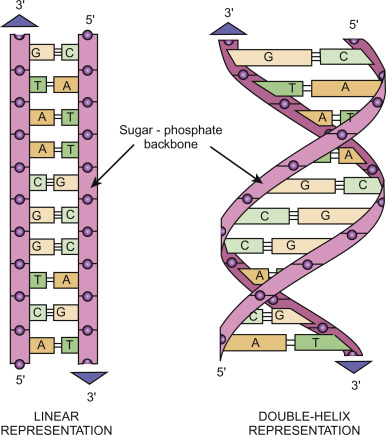
What does it mean that DNA is double‑stranded and antiparallel?
DNA has two strands that run in opposite directions (5′ → 3′ and 3′ → 5′).
This arrangement is called antiparallel, like a two‑way road with lanes going opposite ways.
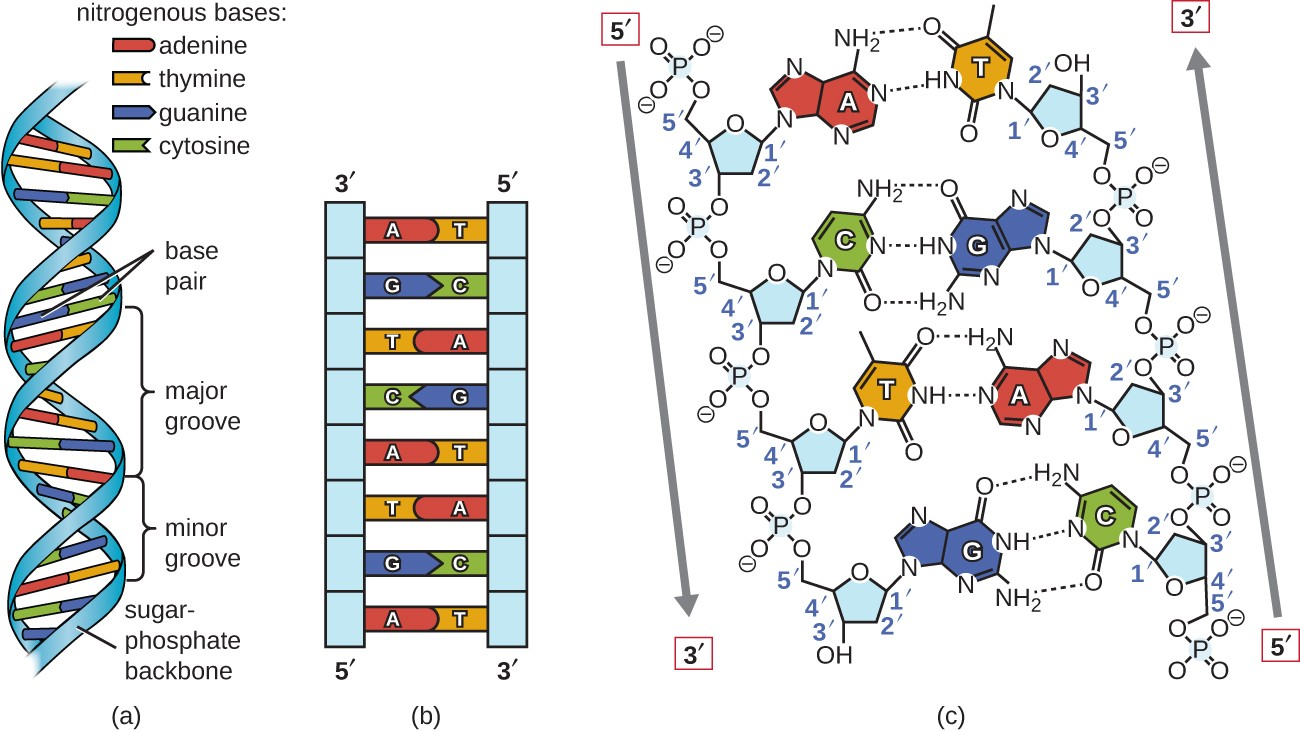
Why do the two DNA strands stick together?
The nitrogenous bases (A, T, G, C) have polar covalent bonds, creating partial positive and partial negative areas.
These partial charges allow hydrogen bonds to form between the strands.
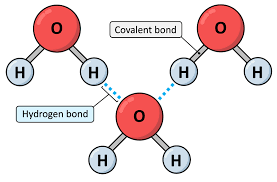
What is a hydrogen bond?
A hydrogen bond is a weak attraction between a slightly positive area and a slightly negative area. It is not a true covalent bond and not a hydrogen atom “stuck” to something.
Where else do hydrogen bonds matter in biology?
Hydrogen bonds:
hold water molecules together
stabilize protein 3‑D structure
hold the two DNA strands together
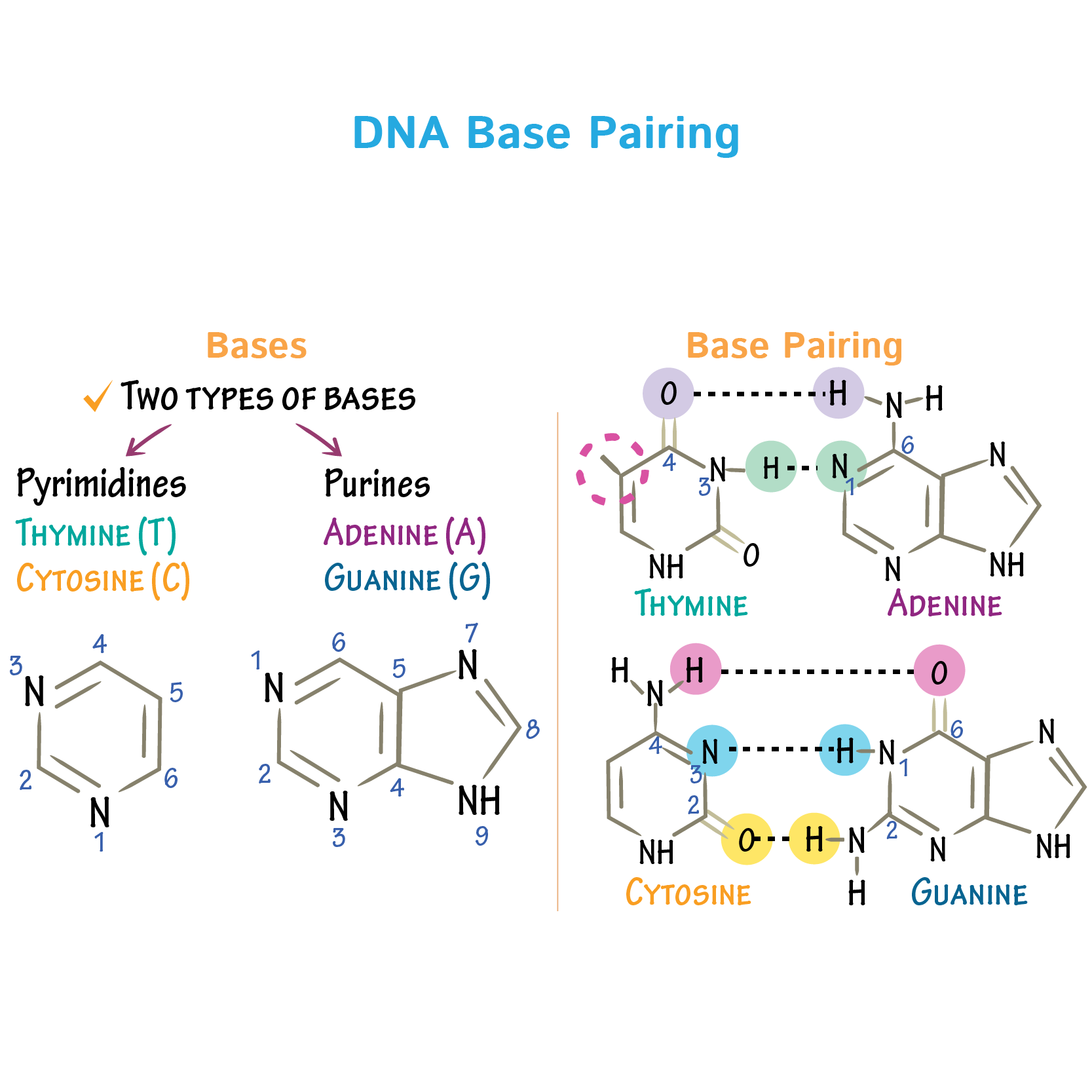
What are the base‑pairing rules in DNA?
Adenine ↔ Thymine
Guanine ↔ Cytosine
These pairs are the only ones that can form hydrogen bonds.
There are no exceptions
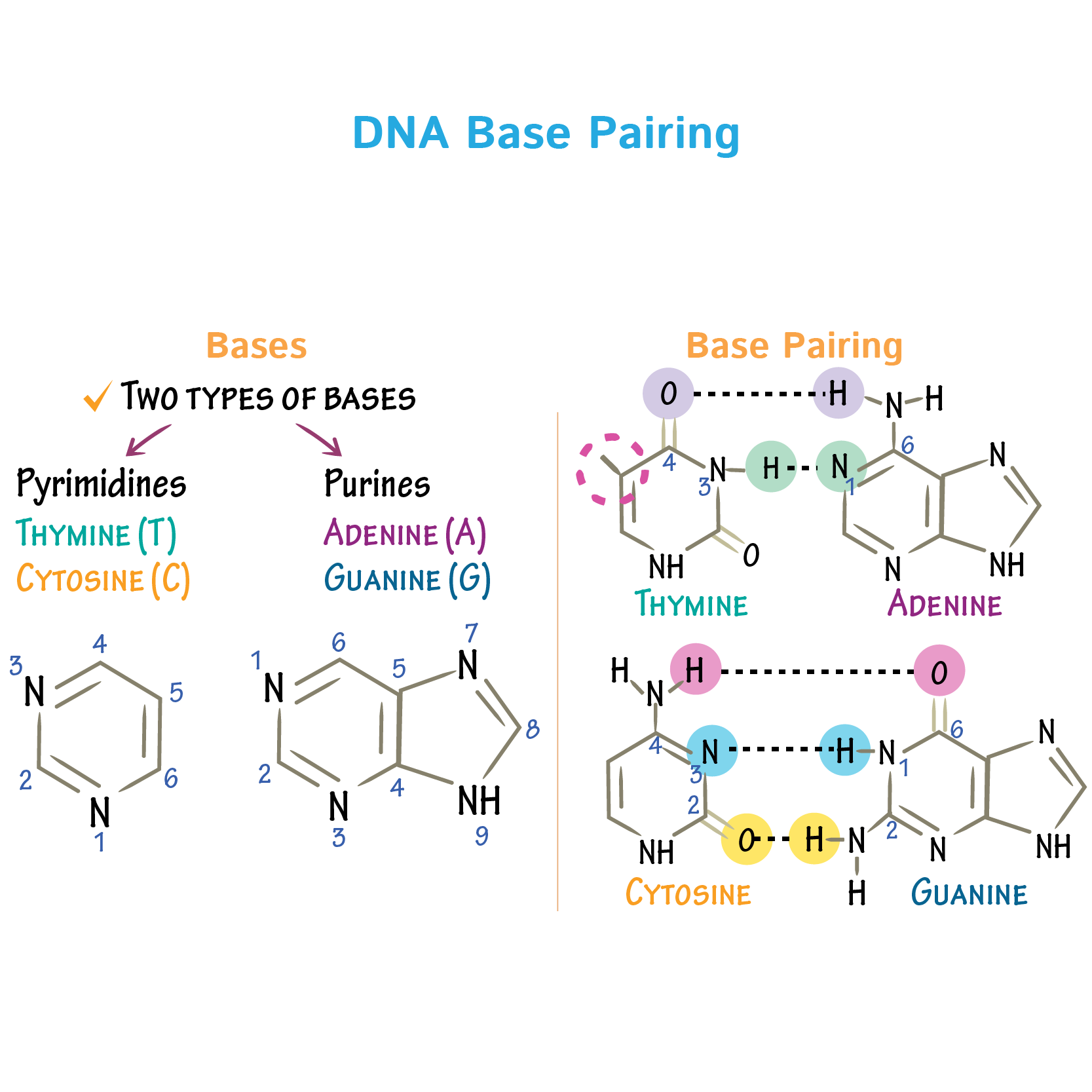
Why is base pairing predictable?
Because only A–T and G–C can form hydrogen bonds due to their shape and polarity.
If you see an A, you know there’s a T across; if you see a G, you know there’s a C.
Analogy:
Bases are like puzzle pieces with magnets inside: polarity creates the “magnets,” hydrogen bonds make them click, and only A–T and G–C fit together.
Why does predictable base pairing matter?
It makes DNA:
easy to copy
accurate to repair
stable for storing genetic information
What creates partial charges in DNA bases?
Polar covalent bonds — when atoms share electrons unequally, creating slight positive and negative areas.
This happens in water, amino acids, and DNA bases.
Why can hydrogen bonds form between DNA bases?
Partial charges from polar covalent bonds create weak attractions (hydrogen bonds) between bases on opposite strands.
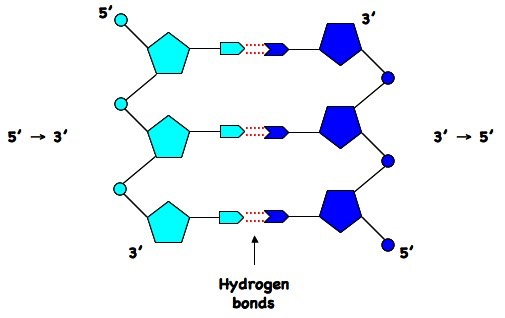
Why are hydrogen bonds important in DNA?
They hold the two strands together while still being weak enough to separate during replication and transcription.
What is the key idea your professor wants you to connect?
Polar covalent bonds → partial charges → hydrogen bonds → base pairing → stable, reliable DNA.
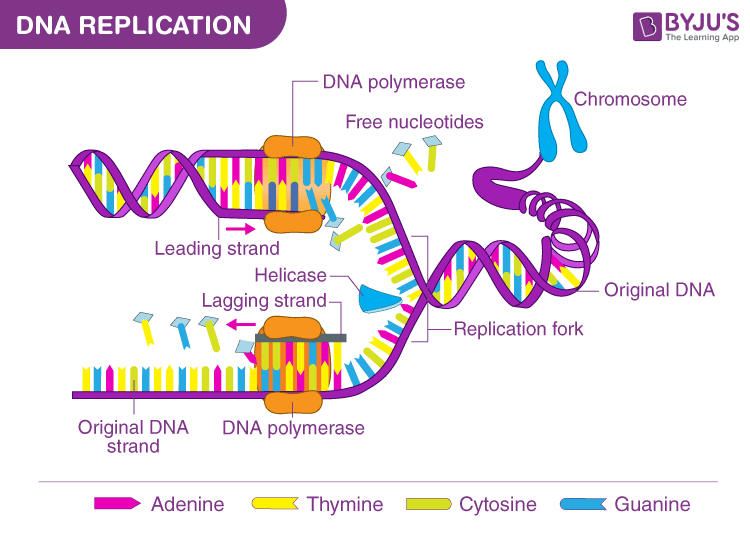
What does DNA replication require?
Enzymes, especially DNA polymerase.
Replication happens only before cell division.
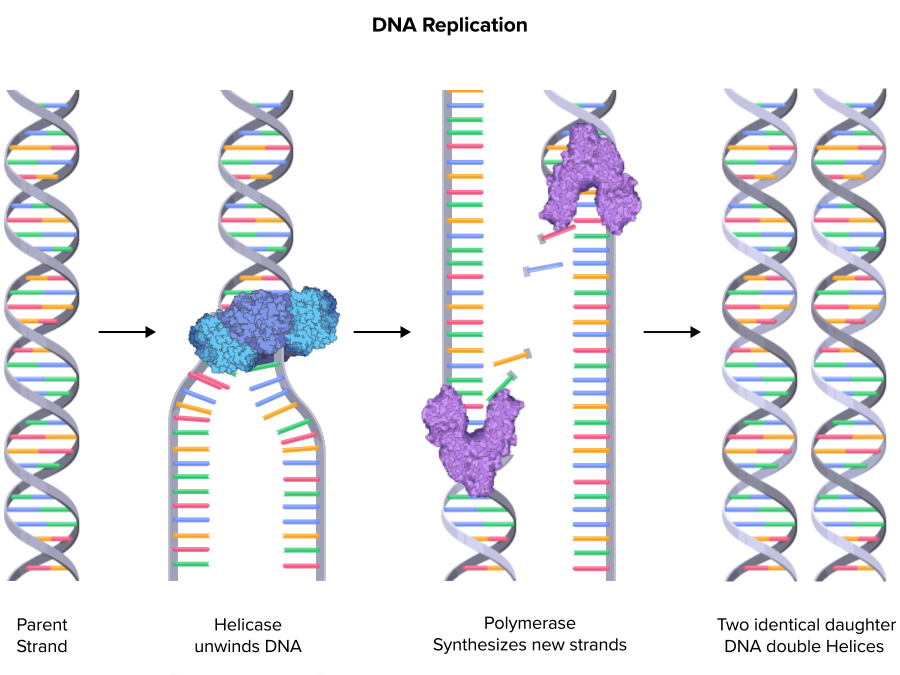
What is the first step of DNA replication?
Break the hydrogen bonds between the two DNA strands to separate them.
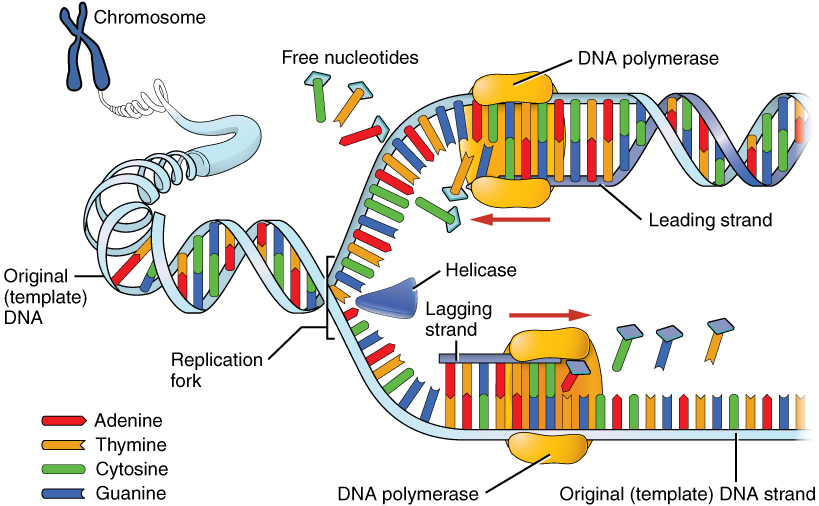
Why can nucleotides line up automatically during replication?
Each base has only one correct partner (A–T, G–C), so free nucleotides match themselves like puzzle pieces.
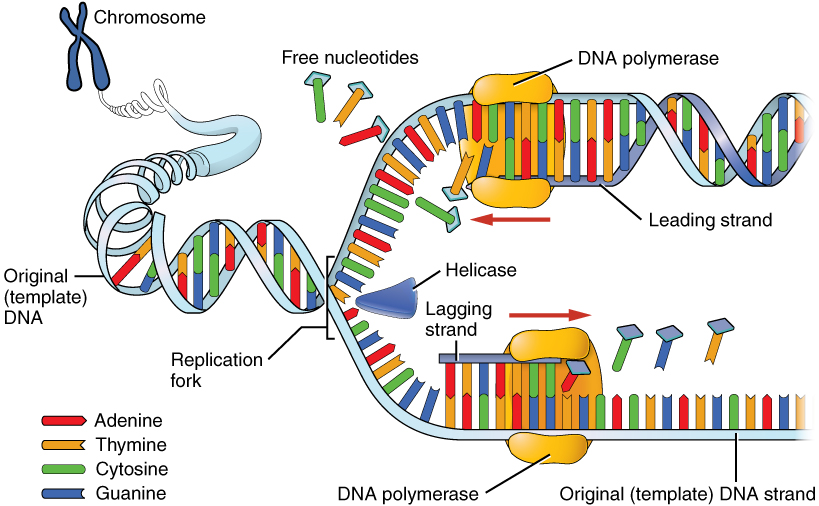
What does DNA polymerase do?
It catalyzes covalent bonds between nucleotides using dehydration synthesis, building the sugar‑phosphate backbone.
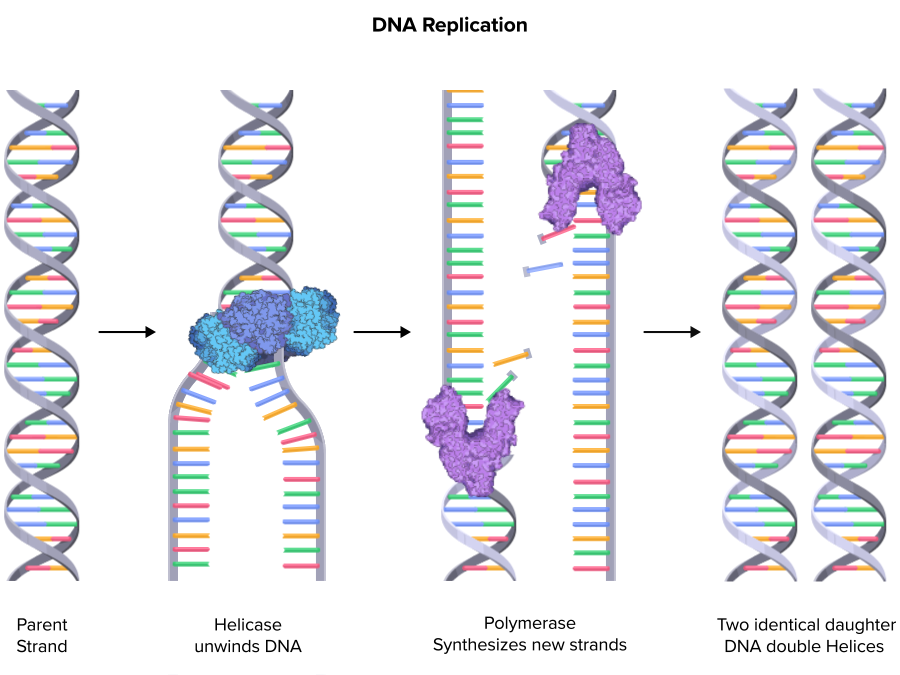
What is the result of DNA replication?
Two double‑stranded DNA molecules, each with one old strand and one new strand.
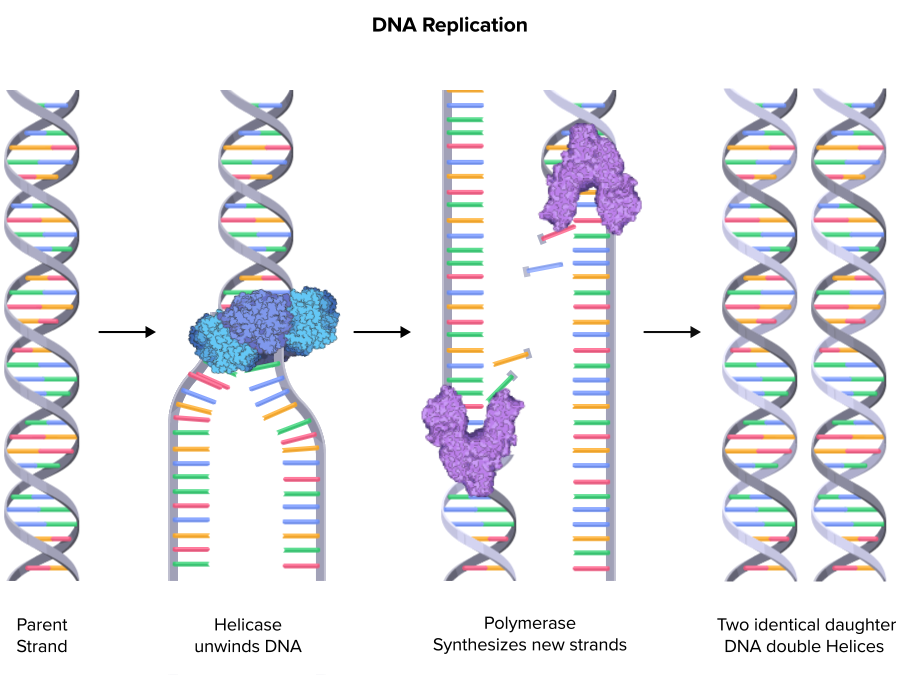
When does DNA replication occur?
Only before cell division.
The only other time is in a lab (PCR).
Why do cells need a copy of DNA?
Cells need extra DNA only when they are dividing.
One copy is enough for normal cell function.
Cells need a copy of DNA so each new cell gets the full set of instructions for making proteins and staying alive.
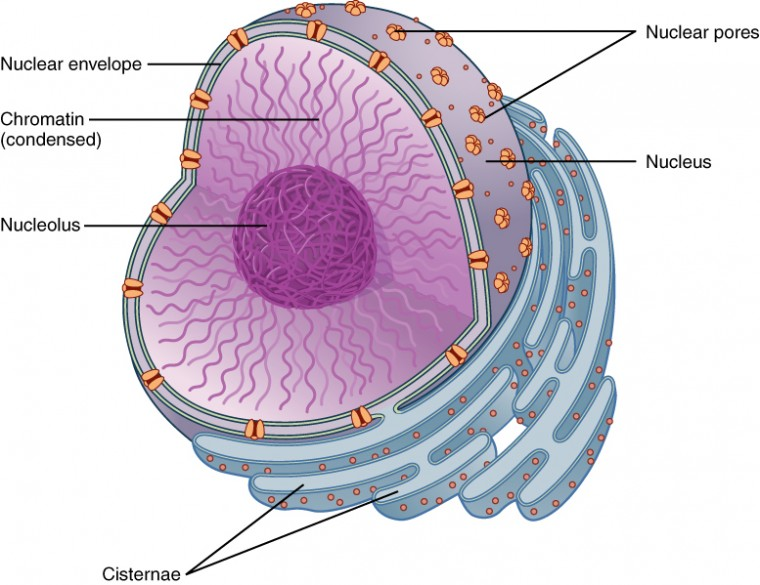
Does DNA leave the nucleus?
No. DNA stays in the nucleus.
Exceptions:
When the cell is dividing (nucleus disappears)
When the cell is dead
Why do we need RNA?
Protein synthesis happens outside the nucleus.
RNA is a working copy of a gene that carries instructions to build a polypeptide.
In short: Protein synthesis happens outside the nucleus, so the cell makes an RNA copy of the needed gene to carry instructions.
What does DNA actually do?
DNA contains genes, and genes direct the synthesis of polypeptides.
Proteins—not DNA—perform all cell functions.
In short: to provide the instructions for making proteins.
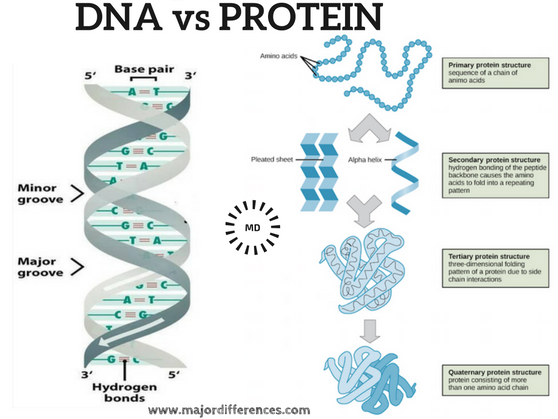
Analogy: DNA vs proteins
DNA = the instruction manual
Proteins = the workers that actually do the job
In short:
DNA tells the cell what to do. Proteins actually do it.
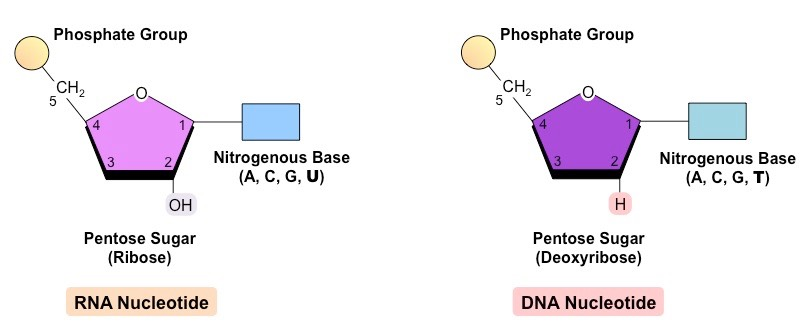
What sugar does DNA contain?
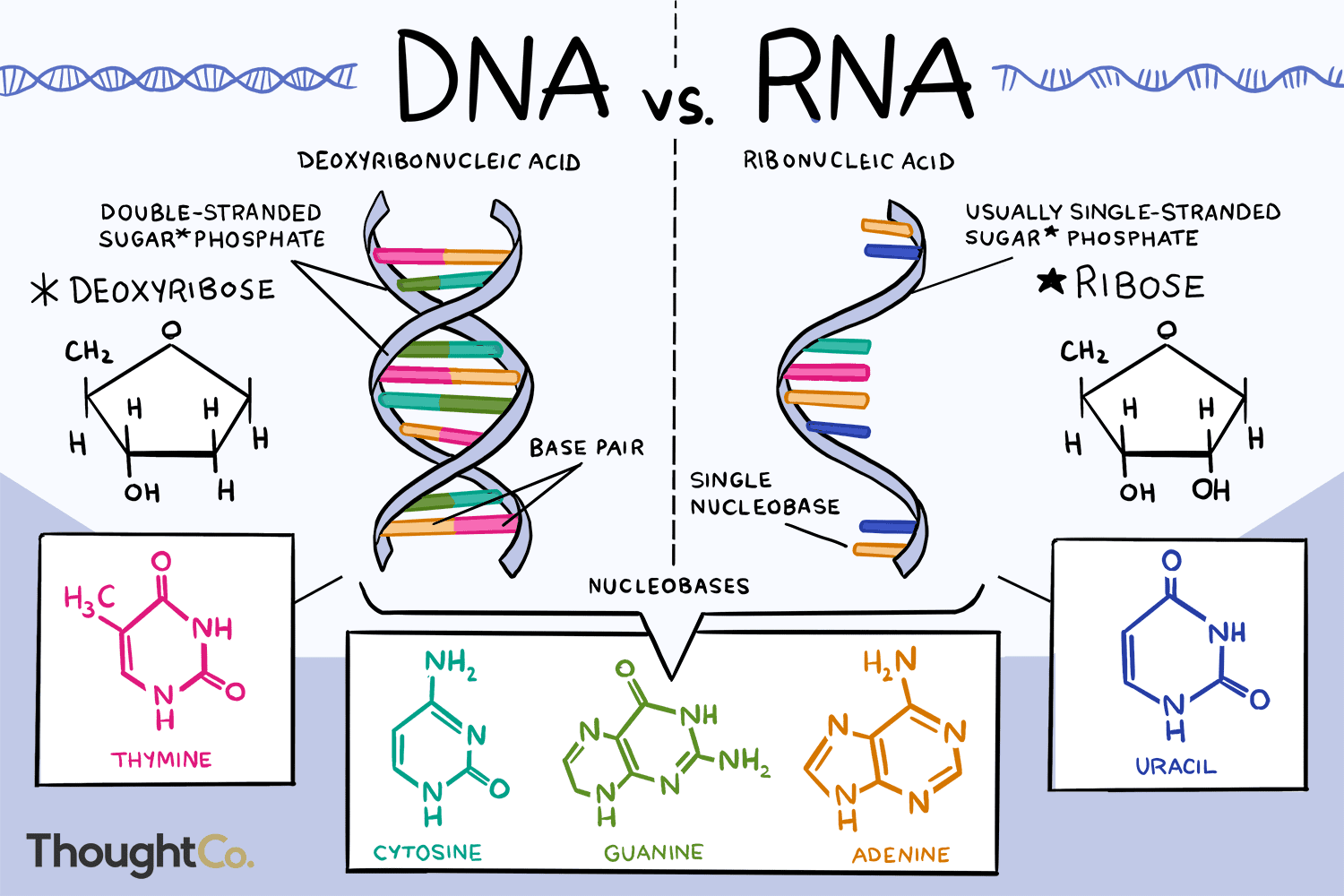
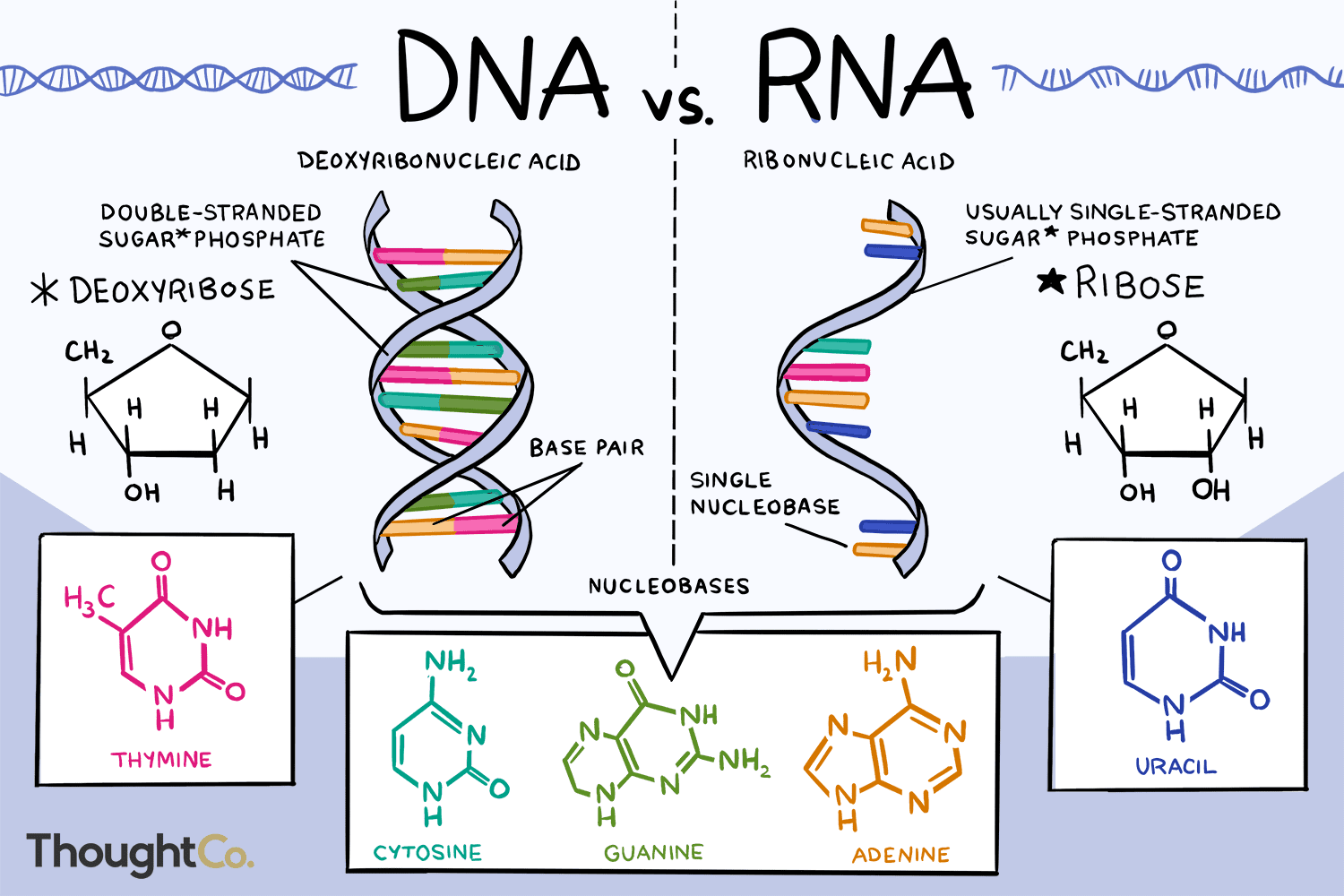
Deoxyribose — missing an oxygen at the 2′ carbon.
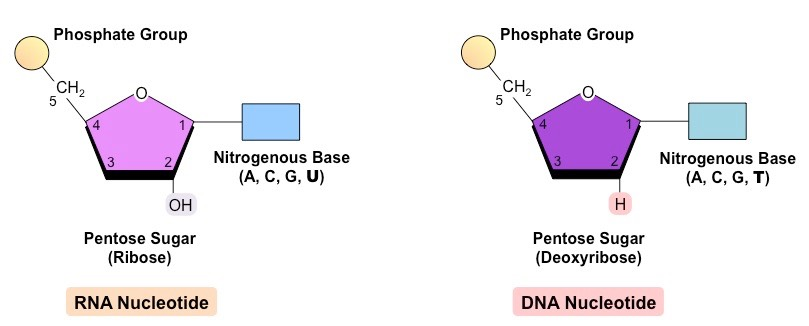
What sugar does RNA contain?
Ribose — has the oxygen at the 2′ carbon.
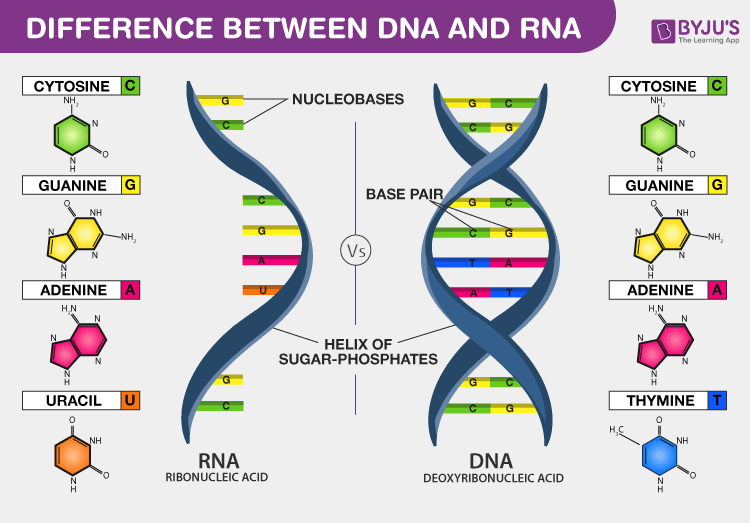
Which molecule is single‑stranded: DNA or RNA?
RNA is single‑stranded.
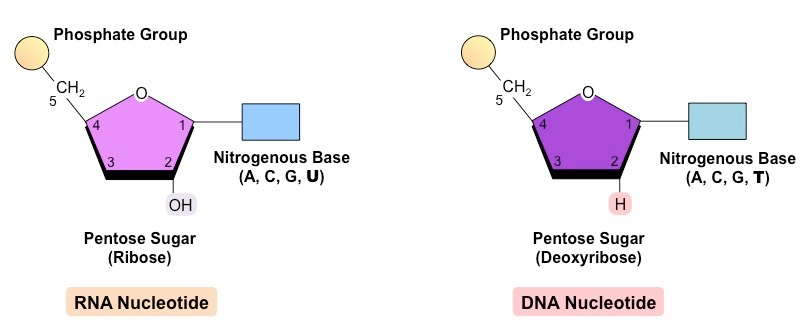
Why is DNA’s sugar smaller than RNA’s?
DNA’s sugar is missing an oxygen at the 2′ carbon, making it slightly smaller.
What a smaller sugar does for DNA
Makes DNA more stable
Without that extra oxygen, DNA is less reactive and less likely to break.Helps DNA stay double‑stranded
The simpler sugar makes the double helix tighter and sturdier.Perfect for long‑term storage
DNA’s whole job is to store information for life, so stability is everything.
Shortcut:
DNA’s smaller sugar = stability.
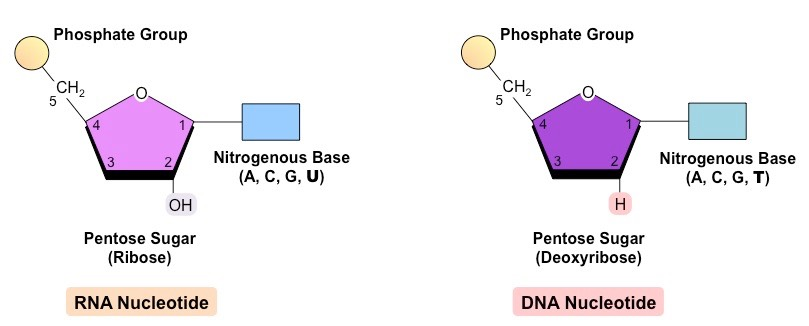
Why is RNA’s sugar larger?
RNA’s ribose has an oxygen at the 2′ carbon, which takes up space
What a larger sugar does for RNA
More reactive - The extra oxygen makes RNA easier to break down.
More flexible - RNA can fold into many shapes and act like a temporary tool.
Perfect for short‑term jobs - RNA is meant to be used and then destroyed.
In short: RNA’s bigger sugar = flexibility
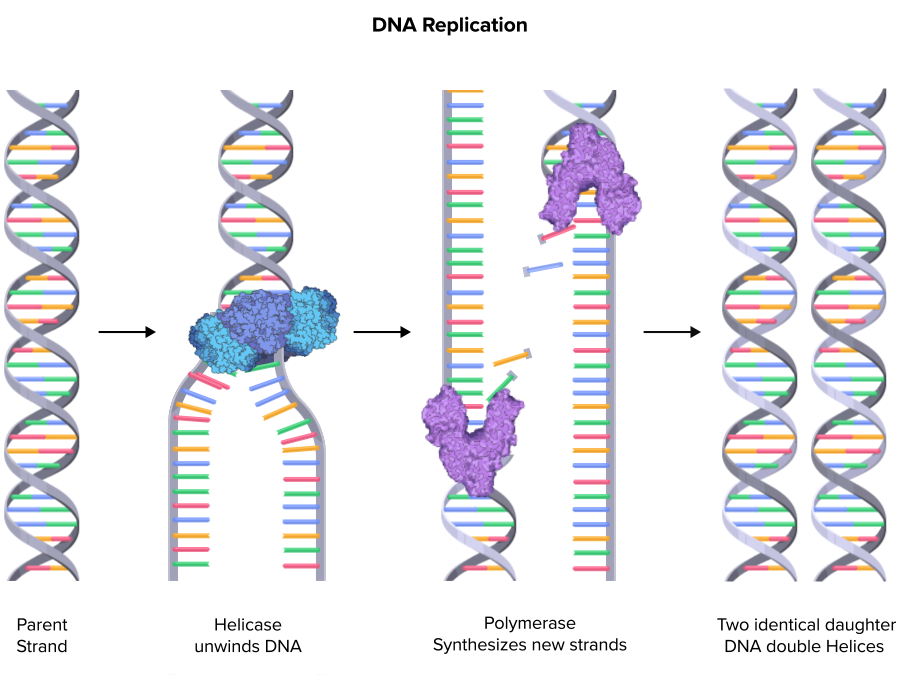
What is the starting point of DNA replication?
One double‑stranded DNA molecule whose strands must be separated.
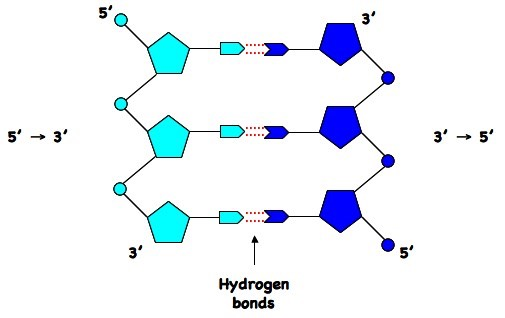
How do nucleotides attach during replication?
They hydrogen‑bond to their complementary bases, then DNA polymerase forms covalent bonds in the backbone.
Analogy: How does DNA replication work?
Like unzipping a zipper, matching each tooth with its partner, then sealing the new zipper shut.
Why is DNA considered self‑replicating?
Base pairing rules ensure nucleotides match automatically; enzymes simply connect them.
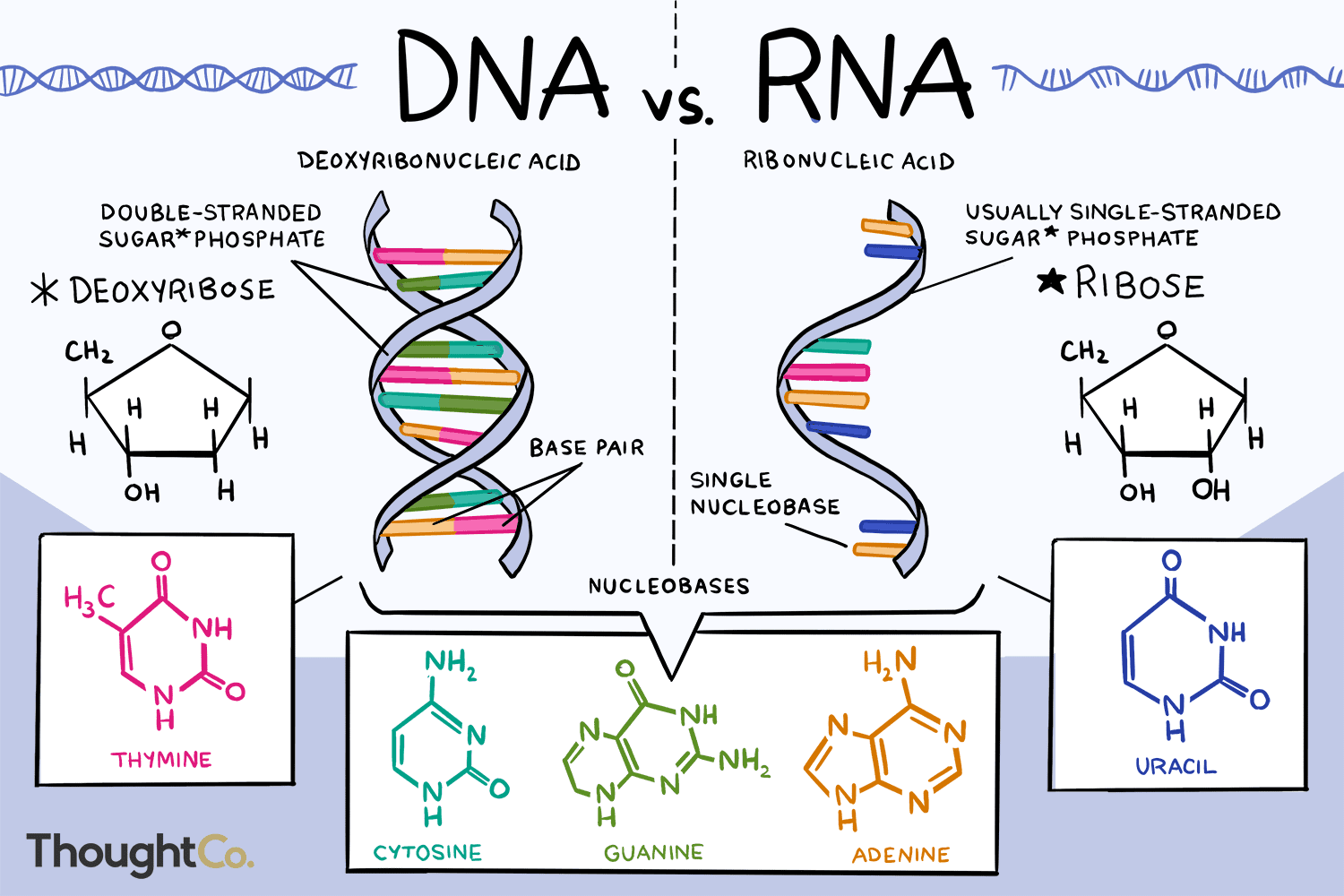
Why does RNA behave differently from DNA?
RNA contains ribose, which has an extra oxygen compared to deoxyribose.
This extra oxygen makes RNA less stable (more reactive) and prevents it from forming long, stable double‑stranded molecules like DNA.
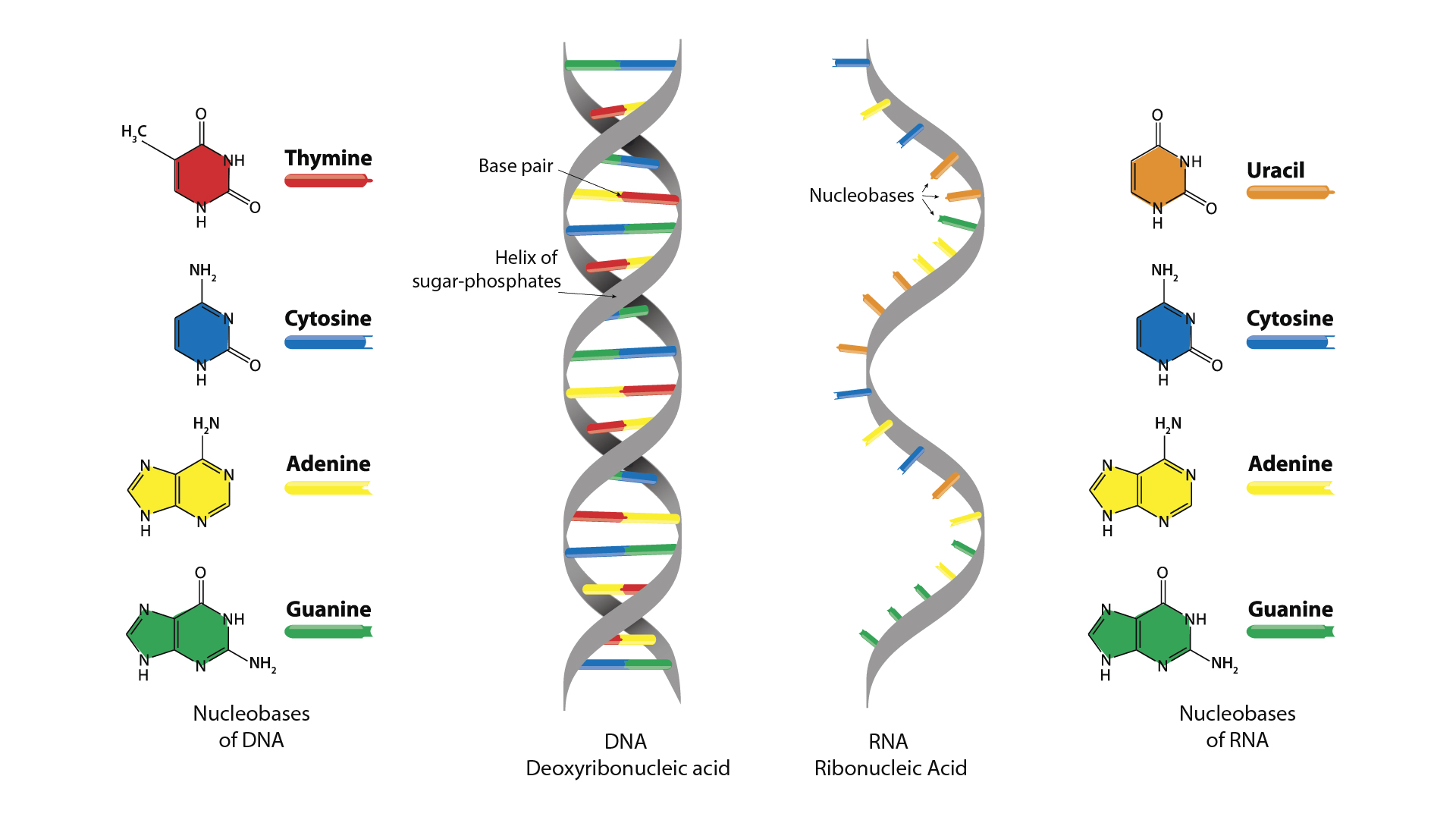
What base does RNA use instead of thymine?
RNA uses uracil (U) instead of thymine (T).
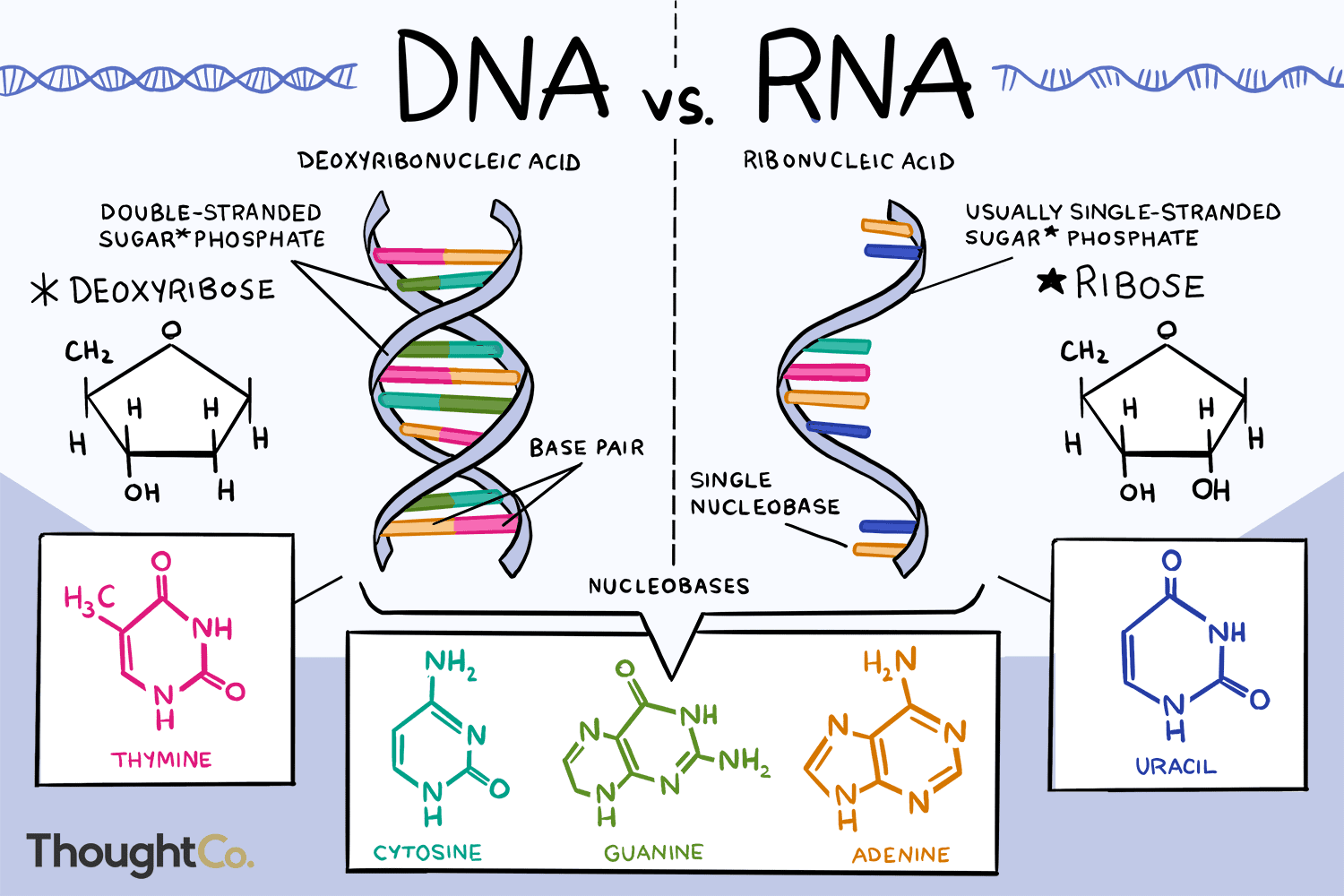
How is uracil different from thymine?
Uracil has one ring (pyrimidine).
Thymine has two rings (a methylated pyrimidine).
Seeing uracil is a quick way to identify RNA.
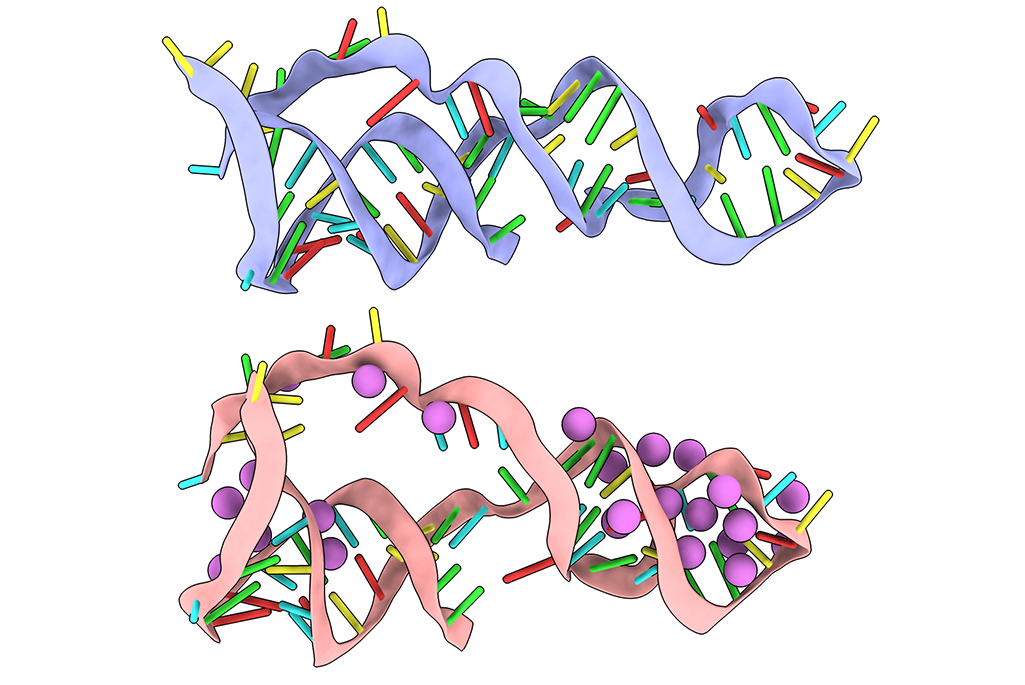
How can RNA form 3D shapes?
RNA forms hydrogen bonds within itself.
C pairs with G, A pairs with U.
These internal bonds let RNA fold into stable 3D structures.
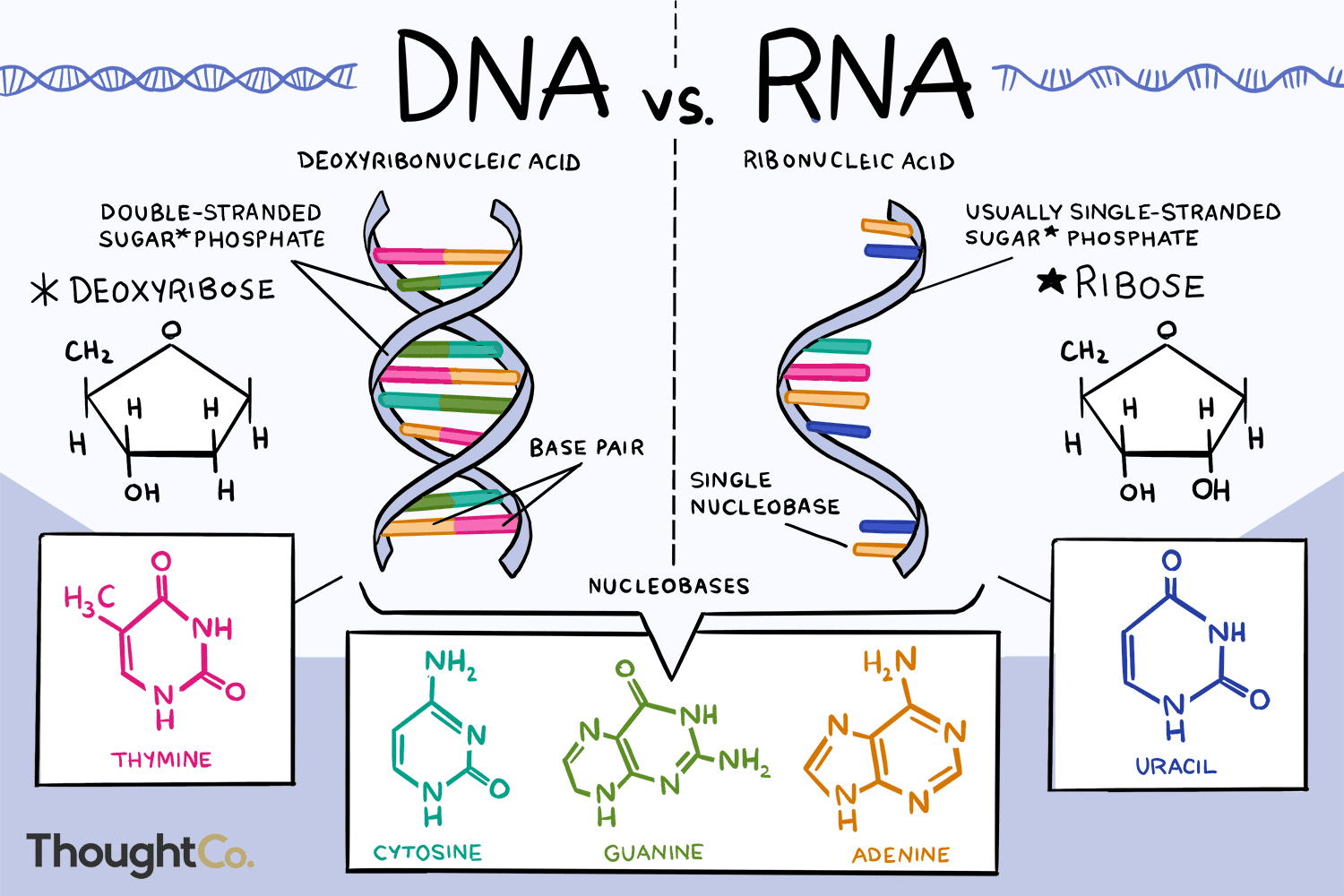
Can RNA form double‑stranded helices like DNA?
Nope, It can’t.
RNA cannot form stable double‑stranded helices because ribose makes it too reactive.
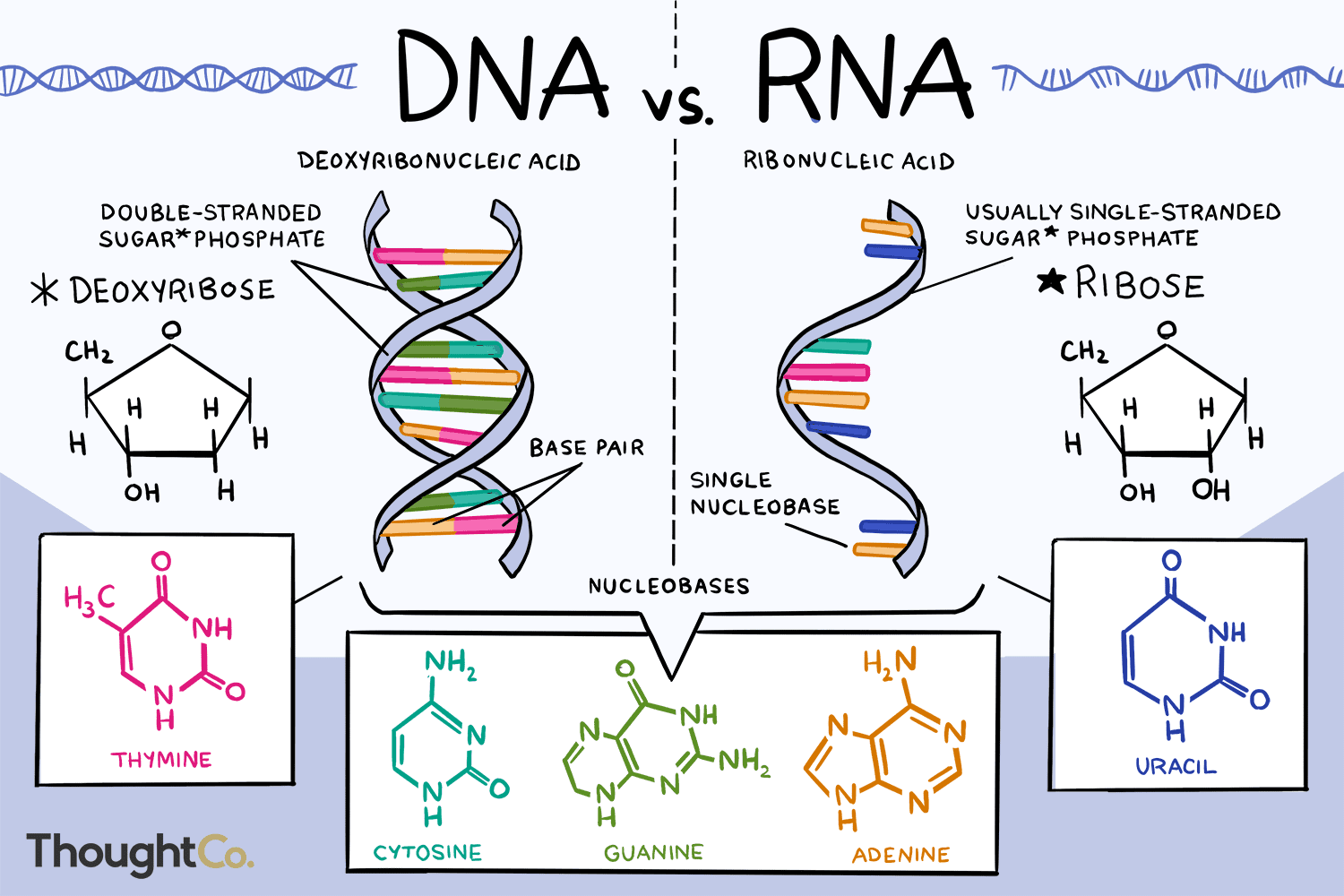
What are the base‑pairing rules in RNA?
C pairs with G
A pairs with U
These internal hydrogen bonds stabilize RNA’s folded shape.
What is the function of DNA and RNA as polymers?
Their function is storage and transfer of information.
That is all DNA and RNA polymers do.
What additional role do nucleotides have besides being monomers?
Nucleotides provide short‑term energy storage in cells.
Example: ATP.
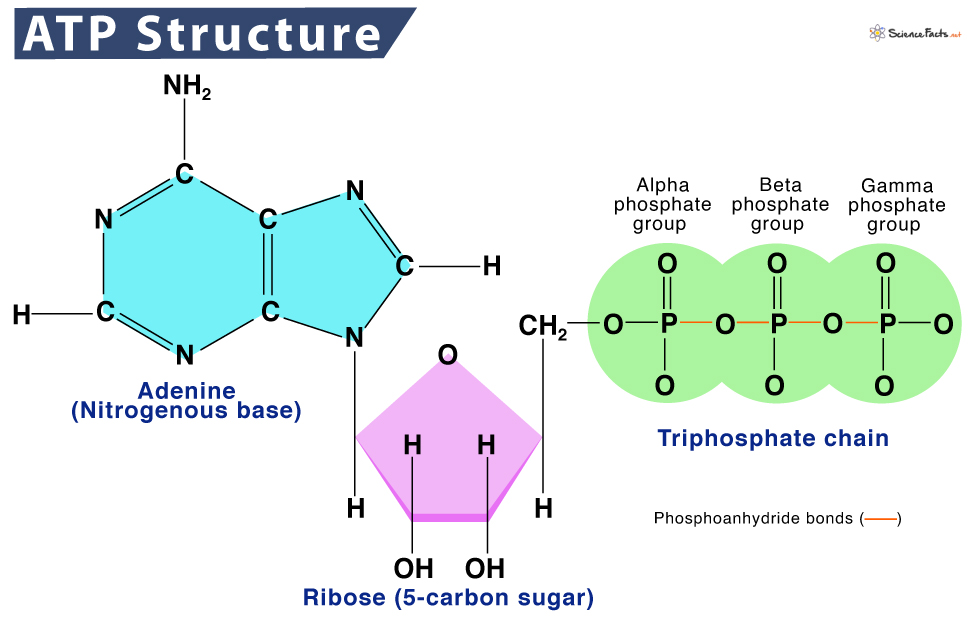
What is ATP made of?
ATP = adenosine (adenine nucleotide) + 3 phosphates.
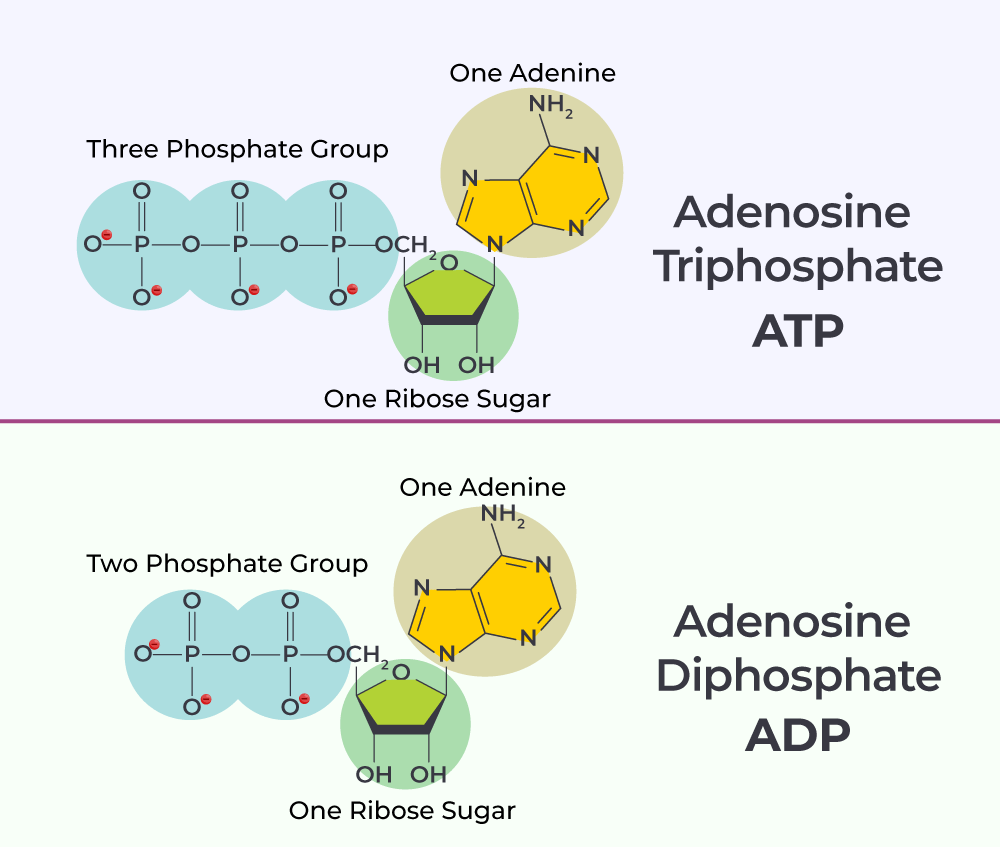
What are ADP and ATP?
Add a second phosphate → ADP (adenosine diphosphate).
Add a third phosphate → ATP (adenosine triphosphate).
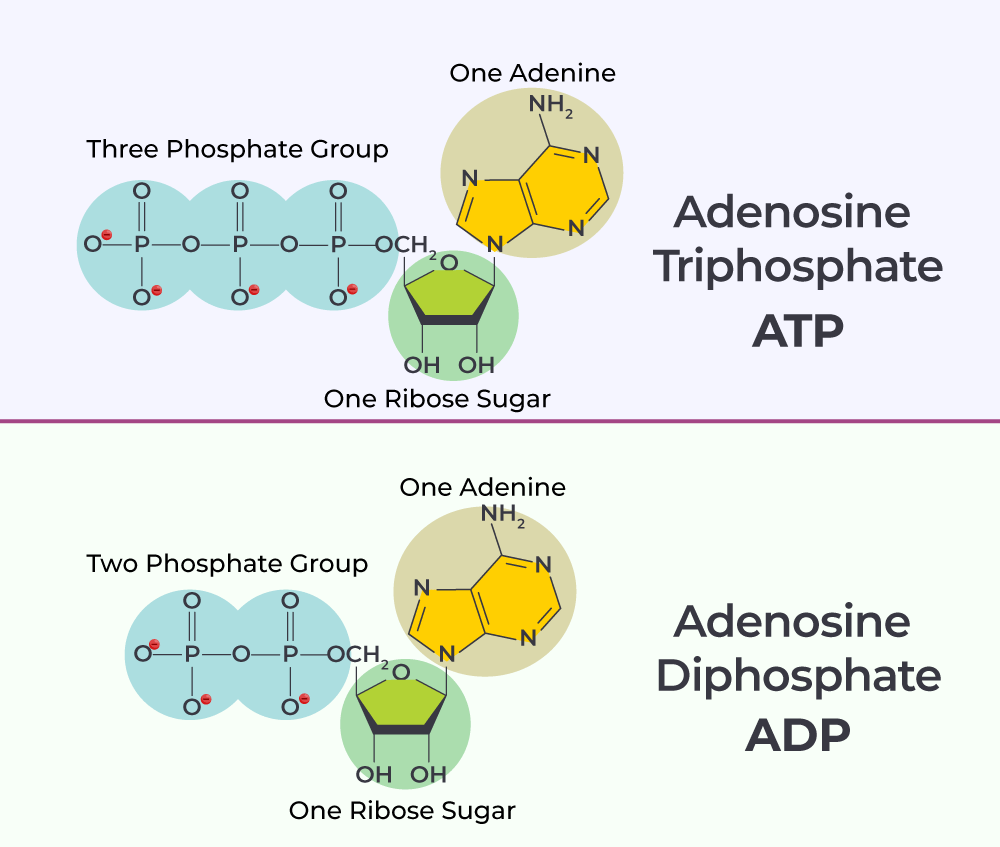
Why does ATP store energy?
Adding the third phosphate requires energy, which becomes stored in the chemical bond.
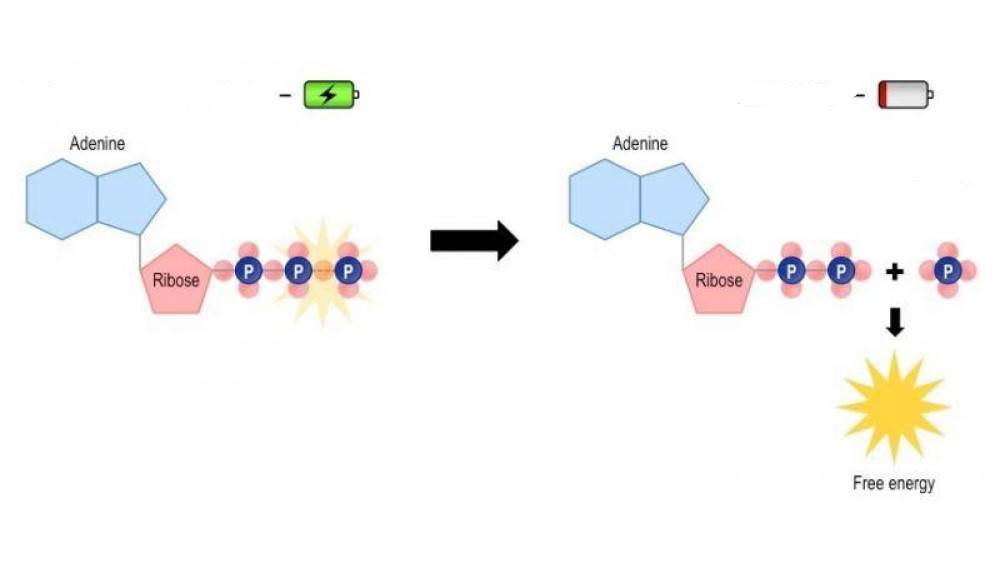
How is energy released from ATP?
Breaking the bond to the third phosphate releases stored energy.
What happens to the energy released from ATP?
Some becomes heat (why we stay warm).
Some powers cellular functions.
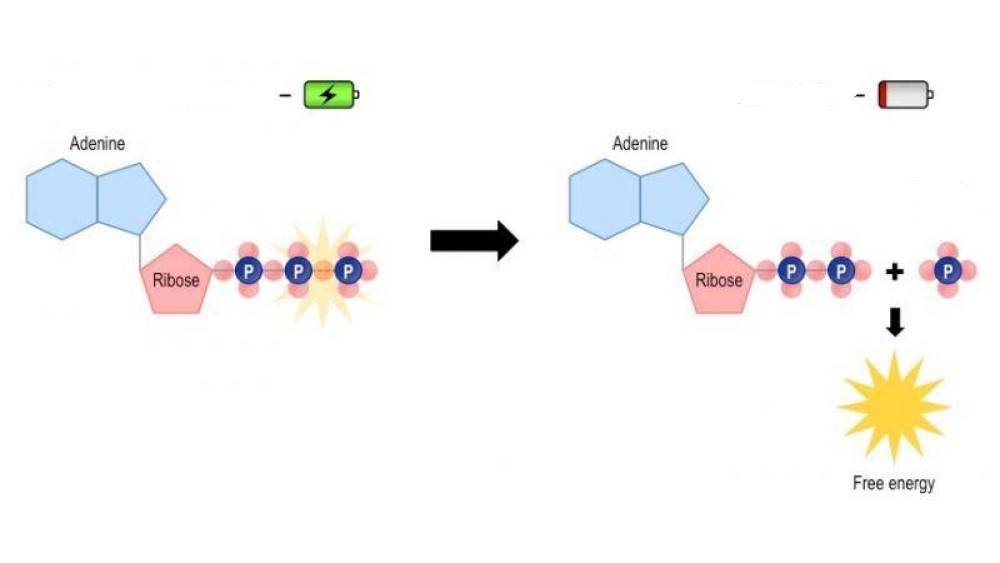
Why is ATP an energy molecule?
Energy is stored in the bond to the third phosphate.
Breaking that bond releases energy for cellular functions; some energy becomes heat.
Why do cells matter?
Cells matter because they’re the basic unit of life — the smallest thing that can actually be alive.
Everything living is made of cells, and they perform every life function: breathing, growing, healing, sensing.
They keep the body organized by creating controlled spaces for chemistry to happen, and they pass on DNA so life can continue.
Shortcut: no cells, no life.
cells are the foundation because life doesn’t exist without them.
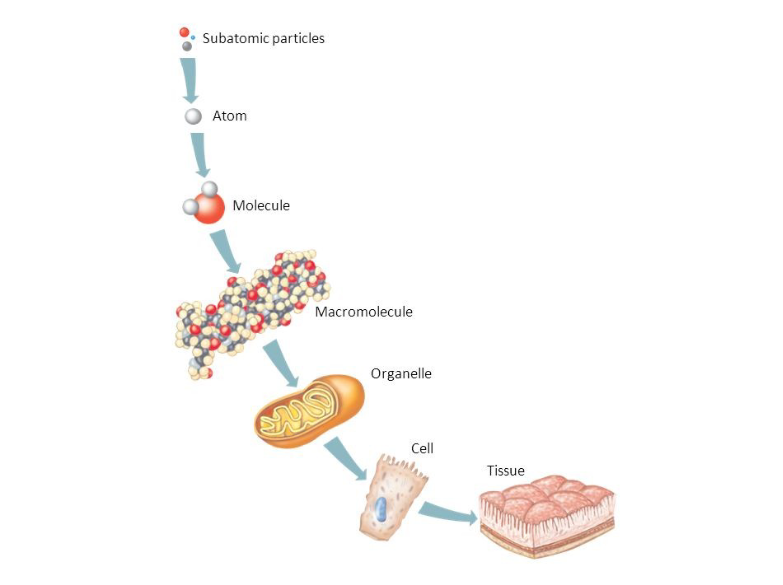
What is the hierarchy of biological organization (smallest → largest)?
Subatomic particles → Atoms → Molecules → Macromolecules → Organelles → Cells → Tissues.
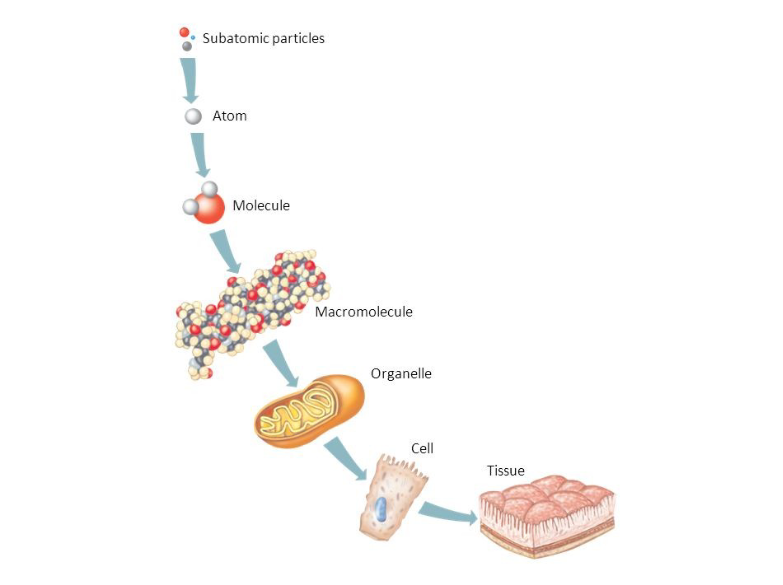
Why does the biological hierarchy matter?
Small molecules form polymers, and polymers build cells.
Once you reach the cell, you cross the line from nonliving to living.
In short: Small molecules form polymers; polymers build cells. Proteins, lipids, and carbohydrates provide structure; nucleic acids store information. Life begins at the cell level.
What are organelles, cells, and tissues?
Organelles = functional parts inside cells
Ex) Mitochondria
Ribosomes
Cells = smallest living unit
Ex) Muscle cell
Nerve cell
Tissues = groups of cells with common origin, characteristics, and function
Ex) Epithelial tissue (skin lining)
Connective tissue (tendons, fat, cartilage)
What is a scientific theory?
A broad, well‑supported explanation based on extensive evidence — not a guess.
Examples: gravity, cell theory, evolution.
What are the three statements of Cell Theory?
The cell is the basic unit of life.
All living things are made of at least one cell.
New cells arise only from preexisting cells.
Where did the first cells come from?
Billions of years ago, the first cells formed from nonliving material under ancient Earth conditions. This no longer occurs today.
How do modern cells arise?
Through mitosis, used for growth, repair, and replacing worn‑out cells.
What is a cell?
The smallest unit of life.
It can grow, use energy, respond, and divide.
Made of macromolecules and organelles.
Produced only by preexisting cells.
Life begins at the cell.
What things are NOT cells (nonliving levels)?
Anything smaller than a cell: subatomic particles, atoms, molecules, macromolecules, organelles.
Also viruses, tissues, organs, and organ systems.
These are materials, not living units.
Why are viruses not cells?
They have genetic material but no organelles, no metabolism, and cannot reproduce alone.
What is the quick rule for determining if something is alive?
If it’s smaller than a cell → not alive.
If it’s bigger than a cell → made of cells, but not a cell itself.
Why aren’t tissues, organs, or organ systems considered cells?
They are made of cells, but they are not cells themselves.
What are cells made of?
Cells are built from polymers (macromolecules), which are built from monomers.
What macromolecules make up cells?
Proteins → structure + function
Lipids → membranes
Carbohydrates → structure + energy
Nucleic acids → information only
What does Cell Theory explain?
It defines what life is
Explains how life is organized
How life continues through cell division
How organisms grow, repair, and reproduce
In short: Life begins at the cell; all living things are made of cells; cells come from cells.
Importance: It is the framework that explains what life is, how it’s built, and how it continues.
What is the historical exception to Cell Theory?
The first cells formed from nonliving material billions of years ago under ancient Earth conditions.
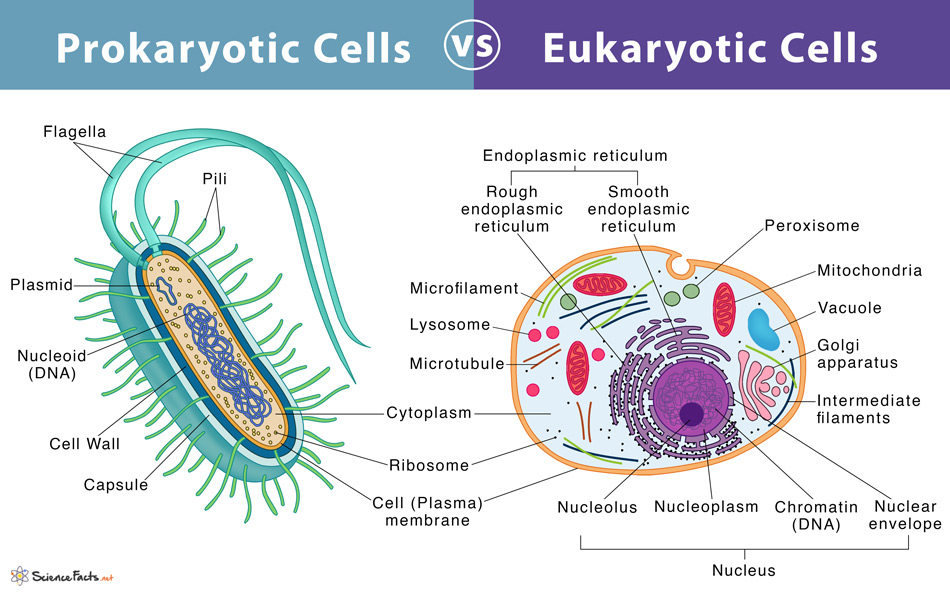
Why is understanding prokaryotic vs. eukaryotic cells important?
It explains shared features of all eukaryotes, differences among animals/fungi/plants/protists, and why eukaryotic organelles evolved the way they did. Prokaryotes are simpler, which helps explain how eukaryotes arose.
In short: All eukaryotes share core features, differ by organism type, and evolved from simpler prokaryotes. This explains why organelles look and behave the way they do.
In short: It’s important because these two cell types are the foundation for understanding all biology.
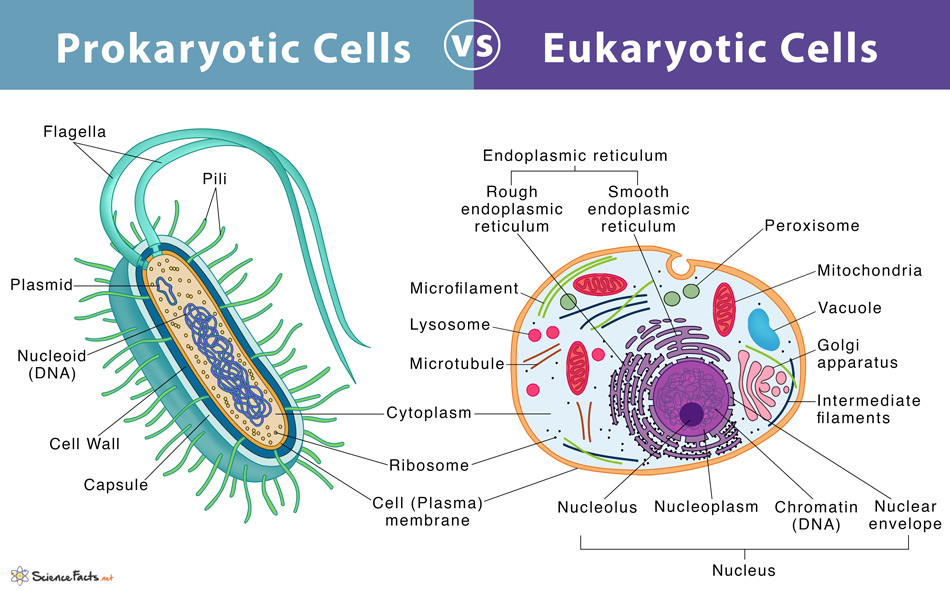
What structural features do prokaryotes lack?
No nucleus and no membrane‑bound organelles (no mitochondria, ER, Golgi, etc.).
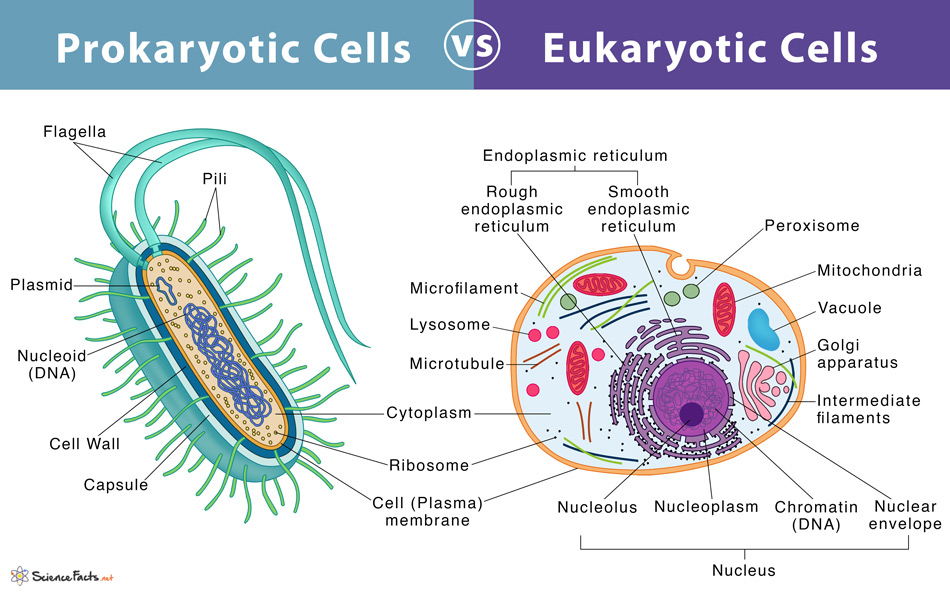
What are eukaryotic cells?
More complex cells with a nucleus and membrane‑bound organelles.
Include animals, fungi, plants, and protists.
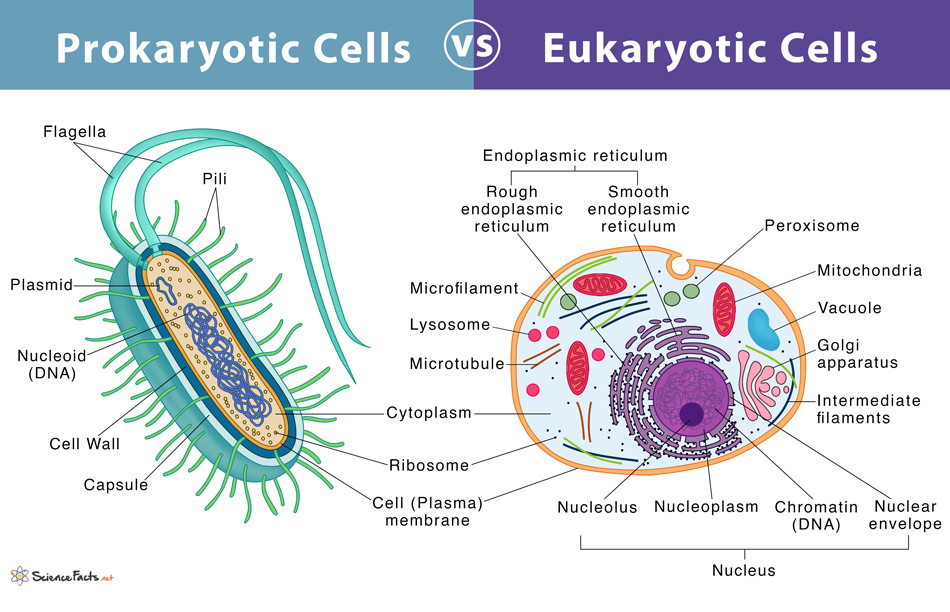
Prokaryotic cells function
Use nutrients for energy
Grow and reproduce
Maintain homeostais
Respond to the environment
Make proteins
Carry and copy DNA
In one line: prokaryotic cells function as complete, self‑sufficient living units.
To carry out all the functions needed for a simple organism (like bacteria) to live.
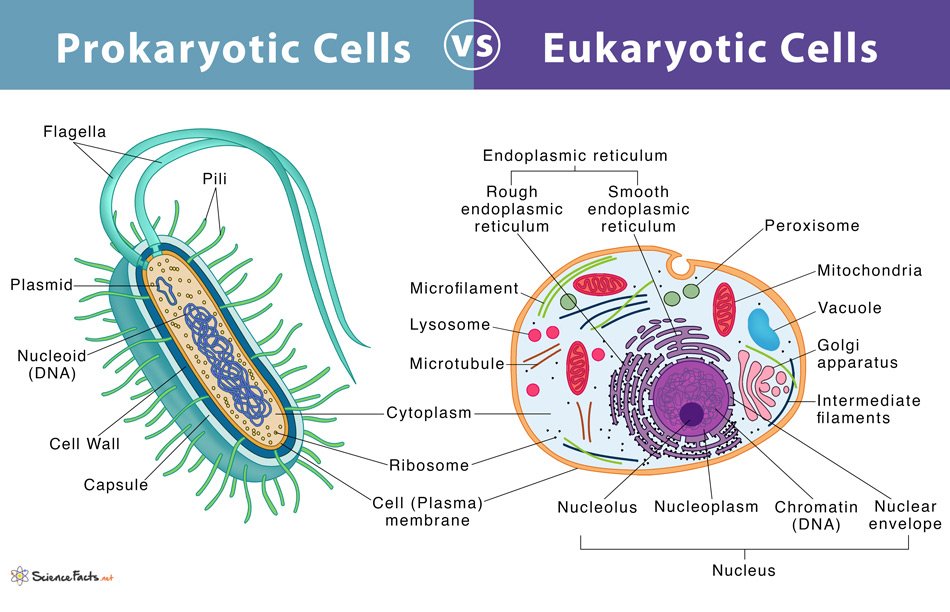
Eukaryotic cells function
Use energy to run complex processes
Make proteins with specialized organelles
Maintain homeostasis
Grow and divide (mitosis or meiosis)
Store and protect DNA in a nucleus
Communicate with other cells
In short: They are complex cells with a nucleus and organelles that work together to carry out all major life functions.
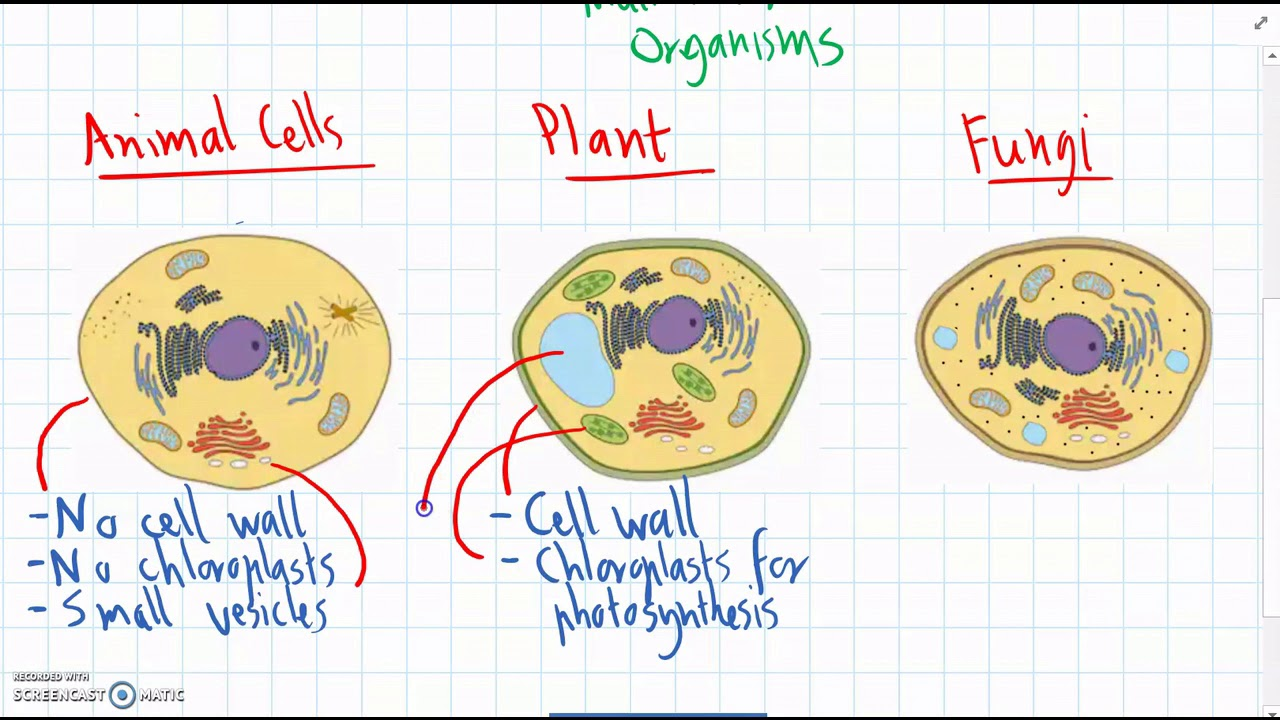
Why aren’t fungi similar to plants?
Fungi do not perform photosynthesis and obtain energy differently
They are more similar to animals in nutrient acquisition.
What is important to know about protists?
They are not “plant‑like” or “animal‑like” categories anymore — they are a diverse group of their own.
Protists are mostly single‑celled eukaryotes that live in water and carry out all life functions in one cell.
Examples include algae, amoebas, and paramecia.
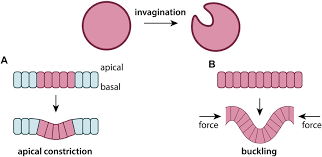
What is invagination?
The outer membrane folds inward, forming internal compartments that pinch off into organelles (ER, Golgi, vesicles).
These share membrane structure with the cell membrane.
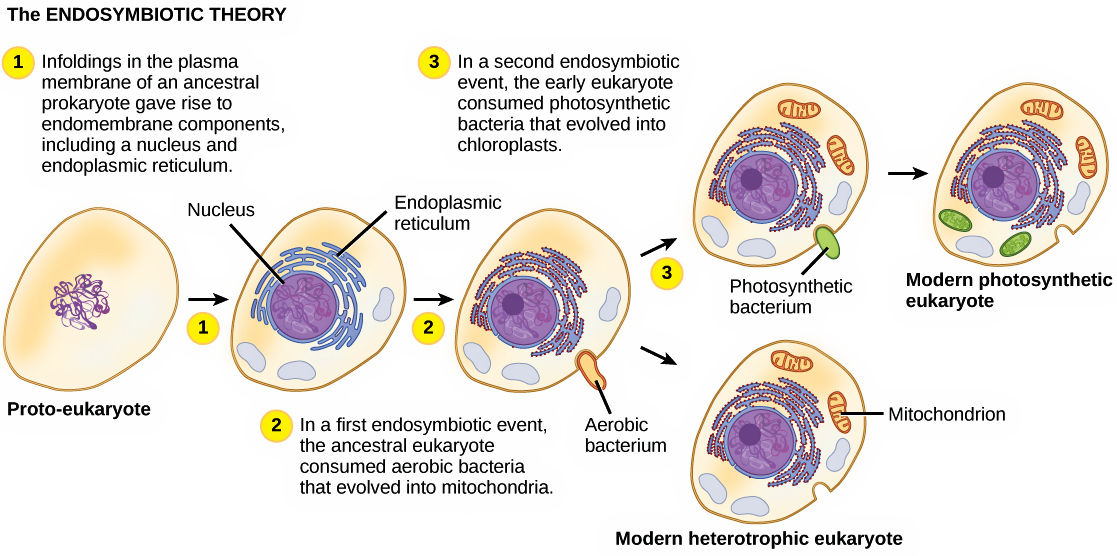
What is endosymbiosis?
Small simple cells were engulfed by larger cells and became permanent residents.
These became mitochondria (and chloroplasts in plants).
Their membranes do NOT match the cell membrane because they originated as independent bacteria.
Why can some organelles merge with the cell membrane while others can’t?
Organelles formed by invagination share membrane structure → they can merge.
Mitochondria and chloroplasts came from endosymbiosis → their membranes are independent.
 Note
Note  Flashcards (50)