Lecture 8: Small Intestine (digestion and absorption of carbohydrates, protein, fat), Large Intestine
 Call Kai
 Learn
Learn Practice Test
 Spaced Repetition
 Match
Match Flashcards
 Knowt Play
1/13

There's no tags or description
Looks like no tags are added yet.
Name | Mastery | Learn | Test | Matching | Spaced | Call with Kai |
|---|
No analytics yet
Send a link to your students to track their progress
14 Terms
enzymes from pancreatic acini won’t work when
in an acidic environment
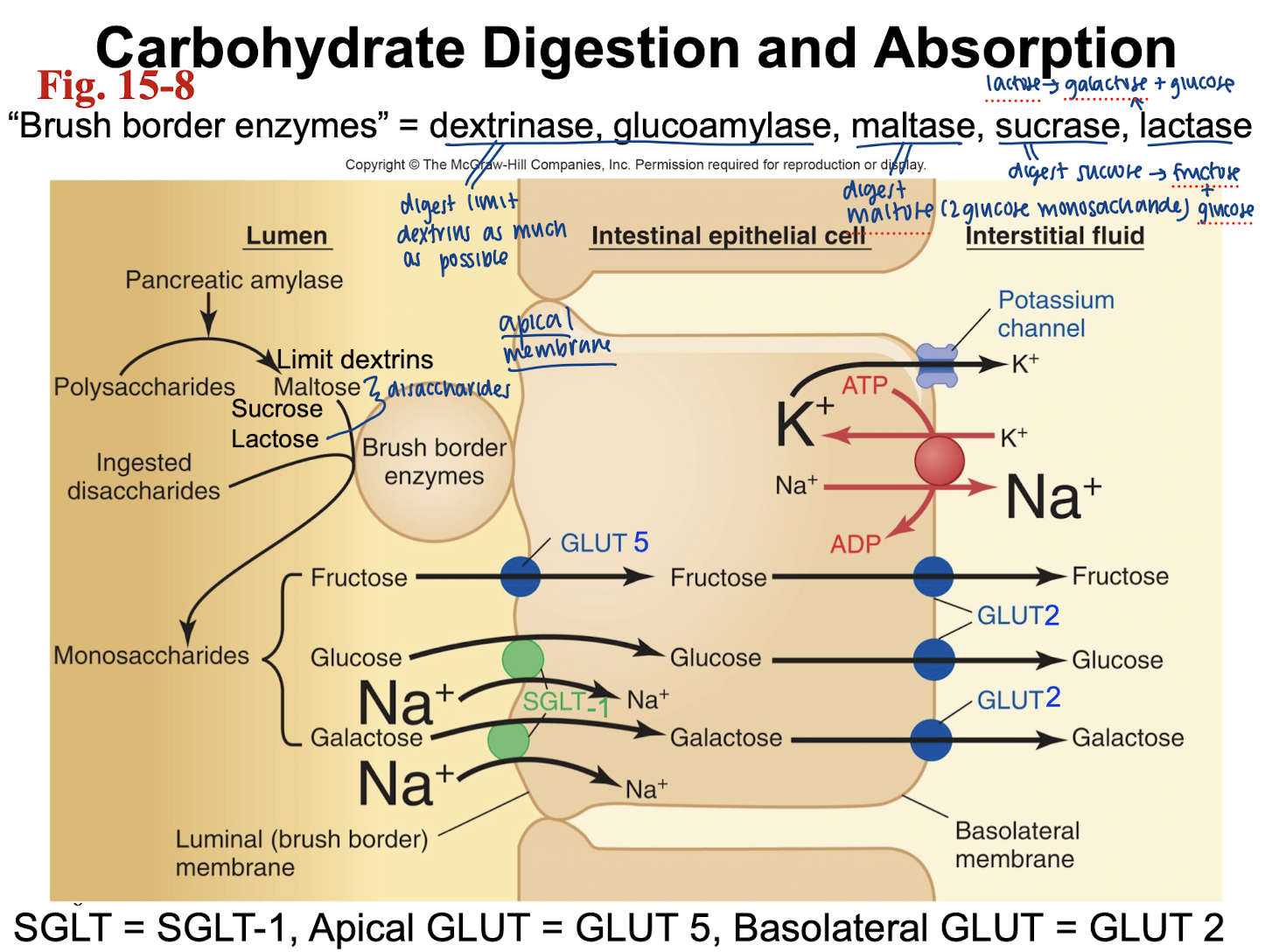
carbohydrates digestion and absorption
salivary amylase secreted in mouth
salivary amylase de-activated by stomach acid
pancreatic amylase secreted in small intestine (breaks down glucose → maltose + limit dextrins)
digestion by brush border enzymes
dextrinase, glucoamylase: break down limit dextrins into disaccharides (maltose, sucrose, lactose)
maltase: breaks down maltose into 2 glucose
sucrase: breaks down sucrose to glucose + fructose
lactase: breaks down lactose to glucose + galactose
absorption transporters
glucose and galactose cross apical membrane by secondary active transport (Na+ coupled transport via SGLT-1)
fructose crosses apical membrane by facilitated diffusion (GLUT 5)
glucose, galactose, and fructose all cross basolateral membrane via facilitated diffusion transporters (GLUT 2)
Na/K ATPase on basolateral membrane that generates Na+ gradient
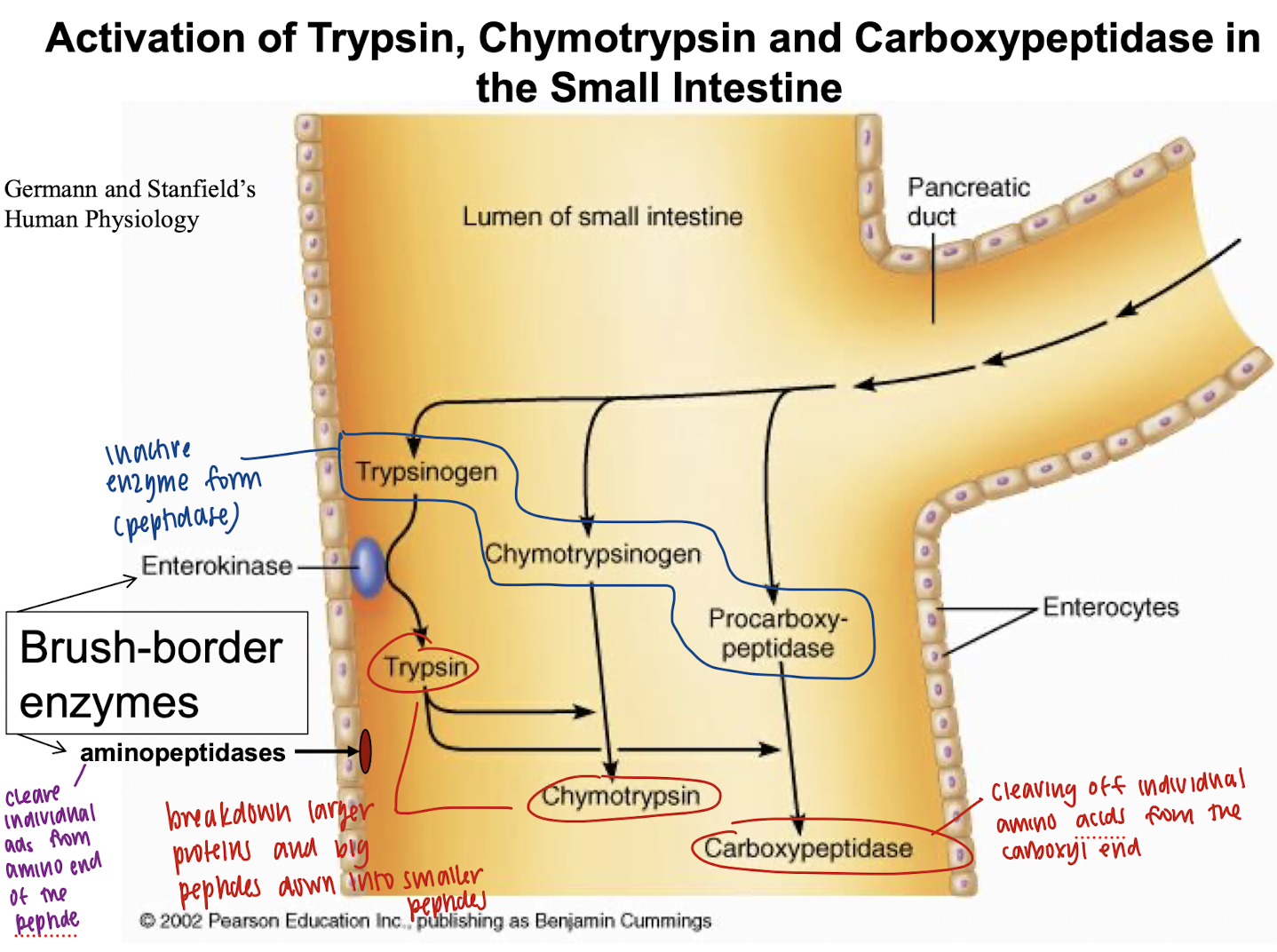
activation of brush border (BB) and pancreatic enzymes (PE) for protein digestion in intestine
enterokinase activates trypsinogen → trypsin
trypsin activates chymotrypsinogen→ chymotrypsin
trypsin activates procarboxypeptidase → carboxypeptidase
trypsin and chymotrypsin break down proteins into peptides
carboxypeptidase break down amino acids off from the carboxyl end
aminopeptidases break down amino acids off from the amino end
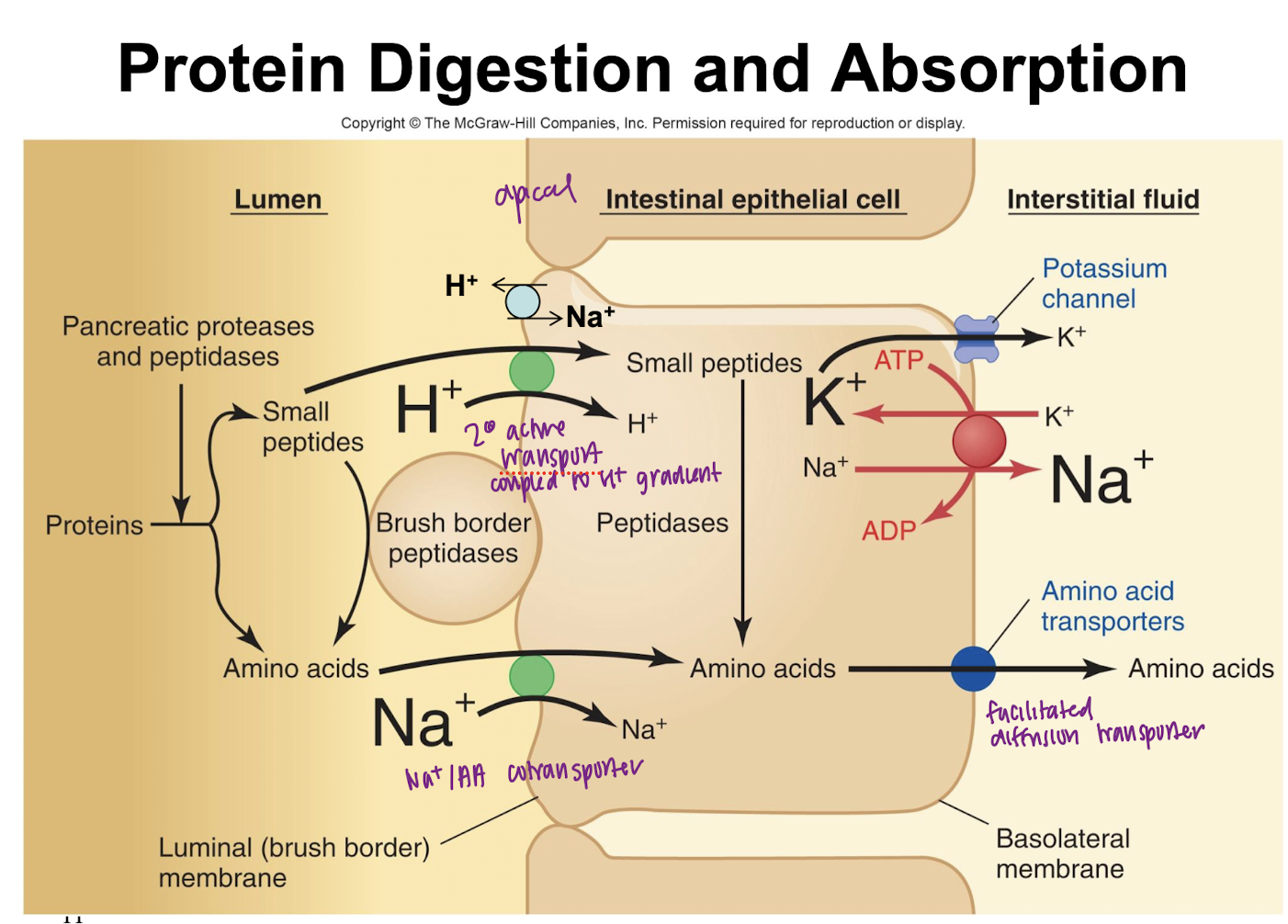
protein digestion and absorption transporters
apical membrane
H+/peptide cotransporter
Na+/H+ exchanger
Na+/AA cotransporter (at least 7 AA transporters w/ different specificities)
basolateral membrane
Na/K ATPase
Amino acid transporter
substances from small and large intestine that move into circulatory route
amino acids, carbohydrates, NO FAT SOLUBLE SUBSTANCES
bile secretion and bile salt recycling mechanism
CCK → gallbladder contraction and relaxation of Sphincter of Oddi
bile salts move down bile duct and travel from duodenum to ileum
bile salts recycled back into liver via hepatic portal vein
bile secretion is increased by increased hepatic bile salt concentration
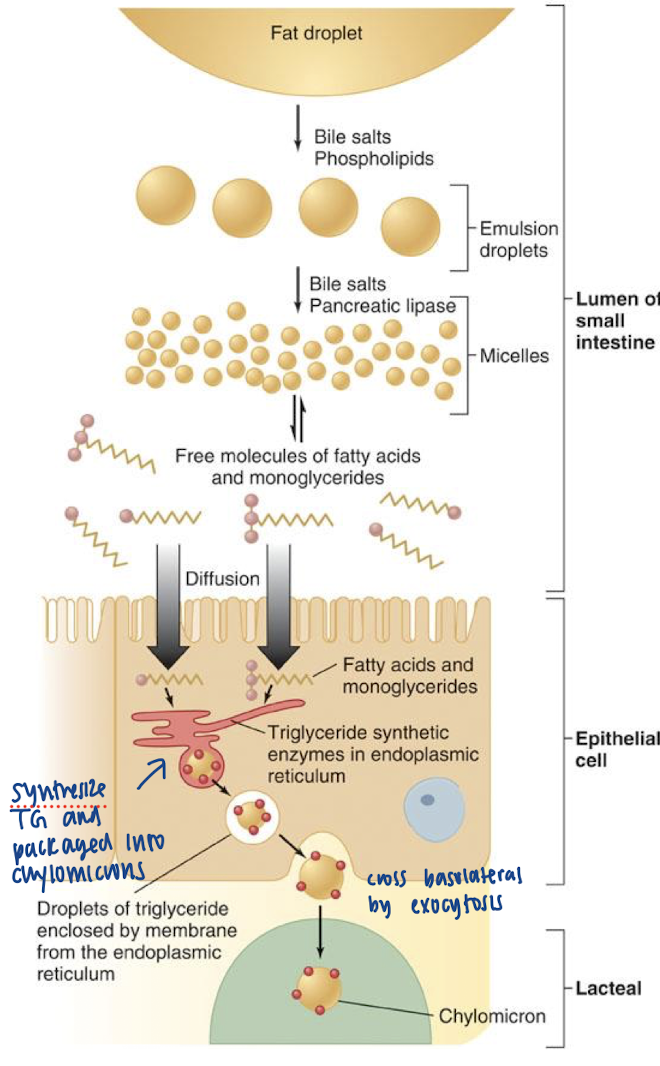
digestion and absorption of fat steps
emulsification: breaking up large fat globules into smaller ones w/ the help of bile salt and phospholipid
digestion by lipase (+ colipase) from the pancreas → triglycerides broken down to free fatty acids (FFA) and monoglycerides
formation of micelles from FFA, monoglyceride, bile salts
equilibrium between free product and those in micelles
absorption: FFA & monoglycerides diffuse into epithelial cell
fatty acids and monoglycerides are resynthesized into triglycerides and packaged into chylomicrons in the ER and Golgi
exocytosis of chylomicrons
uptake of chylomicrone by lacteal (lymphatic capillary) which takes chylomicrons to the general circulation
how is water absorbed in the small intestine
80% of water is absorbed due to active absorption of solutes (particularly Na+)
how are vitamins absorbed in the small intestine
fat soluble (A, D, E, K) follow pathway for fat absorption
water-soluble: B12 requires intrinsic factors that are secreted from the stomach
ileocecal sphincter
between ileum and cecum
contractions of the ileum open the sphincter
contractions of the large intestine close the sphincter
diarrhea can be caused by
bacterial/viral toxins or entry of atypical amounts on non-absorbable products into large intestine → stimulate secretion and motility → diarrhea
why metabolic acidosis with diarrhea?
high flow rate and stimulation of secretion leads to significant loss of HCO3- in the feces and gain of H+ in the blood
also lose a lot of K+ → hypokalemia can develp
also lose a lot of H2o → dehydration can develop
mass movement
wave of intense contraction in large intestine (also called gastrocolic reflex). initiated by stimuli in the upper GI tract and moves content toward rectum for defecation
reflexes in the colon steps
the presence of food in the stomach and chyme in the duodenum stimulate mass movement in the colon
mass movements are integrated by the enteric plexus
they propel the contents toward the rectum
presence of feces in the rectum stimulates parasympathetic and local reflexes that result in defecation

