3.1 & 3.2 - Surface area to volume ratio & Gas exchange
 Call Kai
 Learn
Learn Practice Test
 Spaced Repetition
 Match
Match Flashcards
 Knowt Play
1/24

There's no tags or description
Looks like no tags are added yet.
Name | Mastery | Learn | Test | Matching | Spaced | Call with Kai |
|---|
No analytics yet
Send a link to your students to track their progress
25 Terms
How does an organism's size relate to their surface area to volume ratio?
The larger the organism, the lower the surface area to volume ratio.
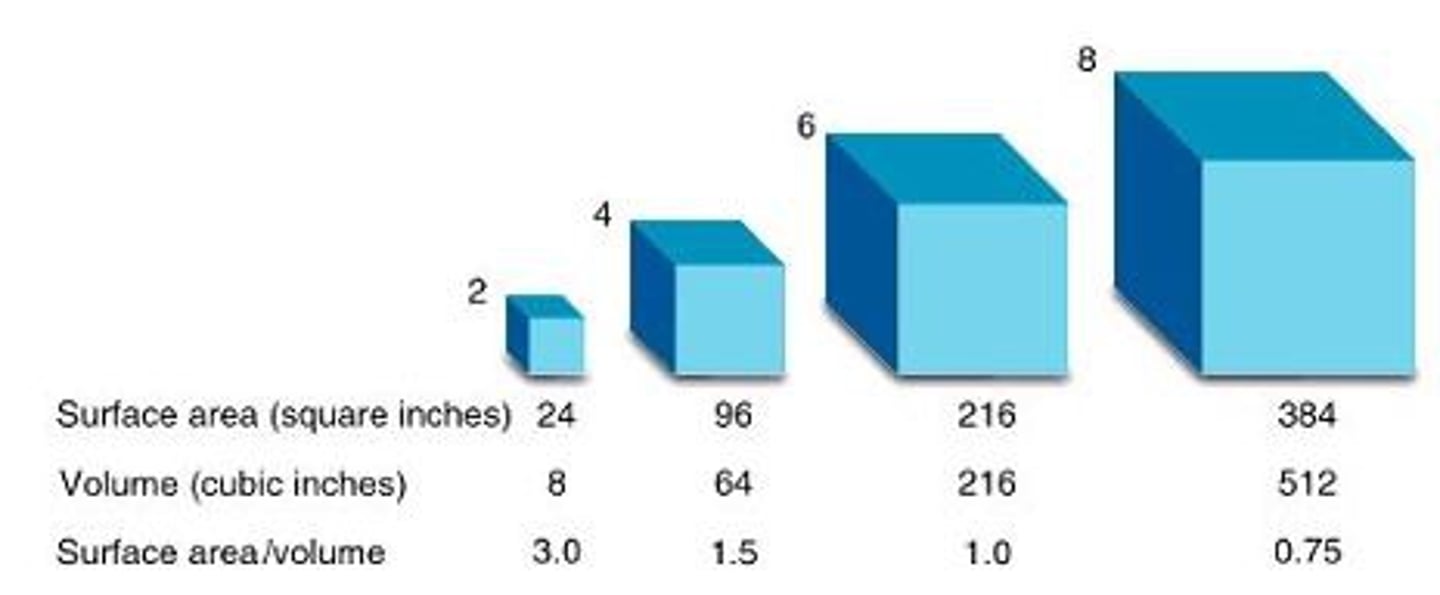
How does an organism's surface area to volume ratio relate to their metabolic rate?
The lower the surface area to volume ratio, the lower the metabolic rate.
How might a large organism adapt to compensate for its small surface area to volume ratio?
● Changes that increase surface area e.g. folding
● body parts become larger e.g. elephant's ears
● elongating shape
● developing a specialised gas exchange surface.
Why do multicellular organisms require specialised gas exchange surfaces?
● Their smaller surface area to volume ratio means the distance that needs to be crossed is larger
● substances cannot easily enter the cells as in a single celled organism.
Name three features of an efficient gas exchange surface.
1. Large surface area, e.g. folded membranes in mitochondria.
2. Thin/short distance, e.g. wall of capillaries.
3. Steep concentration gradient, maintained by blood supply or ventilation, e.g. alveoli.
Why can't insects use their bodies as an exchange surface?
They have a waterproof chitin exoskeleton and a small surface area to volume ratio in order to conserve water.
Name and describe the three main features of an insect's gas transport system.
● Spiracles= holes on the body's surface which may be
opened or closed by a valve for gas or water exchange.
● Tracheae= large tubes extending through all body
tissues, supported by rings to prevent collapse.
● Tracheoles= smaller branches dividing off the tracheae.
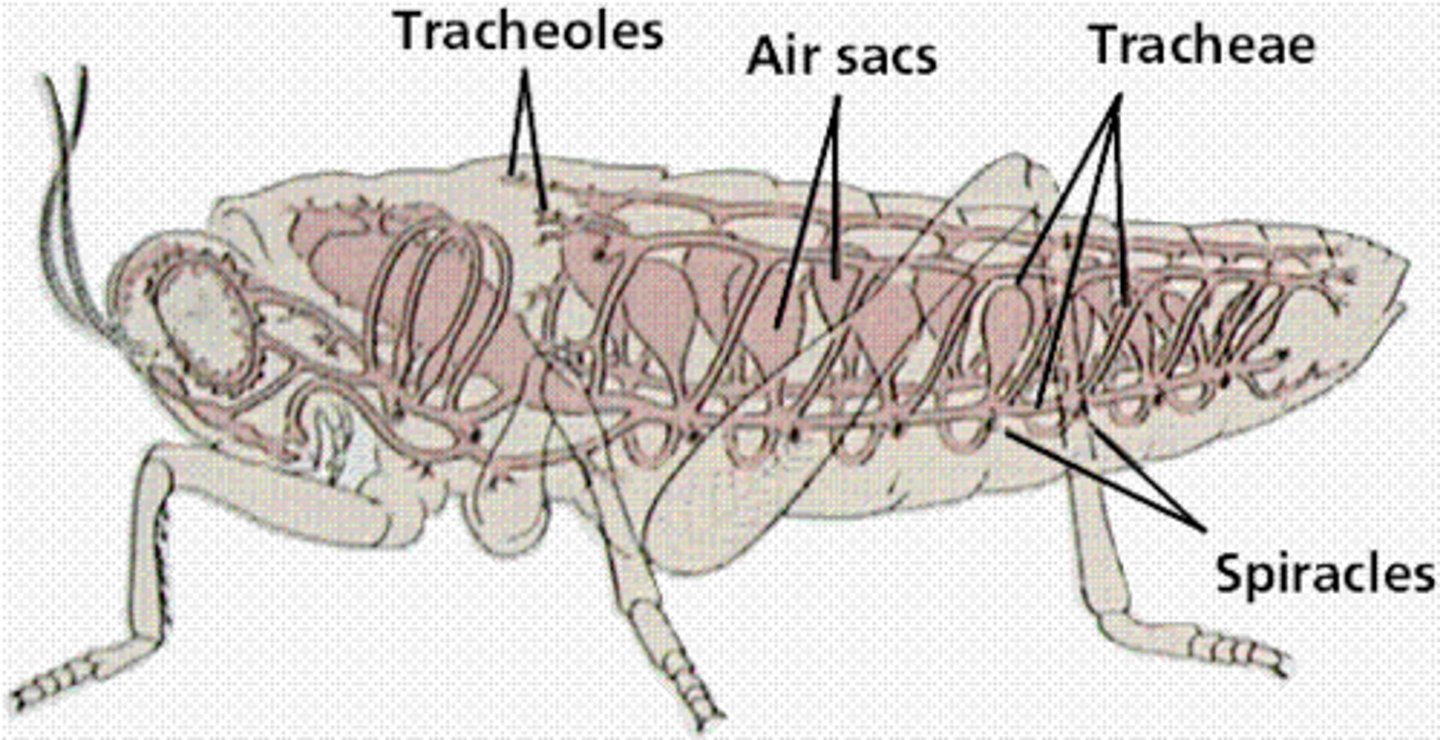
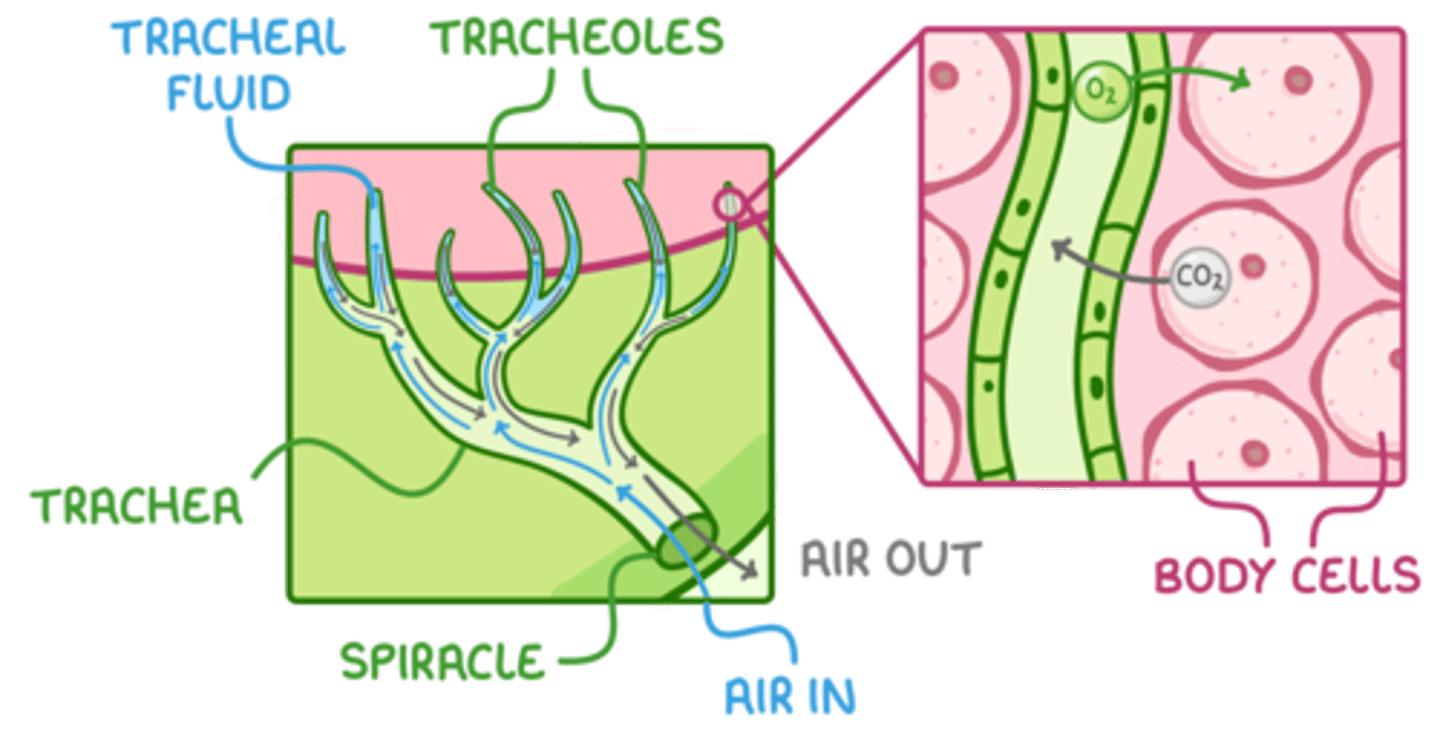
Explain the process of gas exchange in insects.
● Gases move in and out of the tracheae through the spiracles.
● A diffusion gradient allows oxygen to diffuse into the body tissue while waste CO2 diffuses out.
● Contraction of muscles in the tracheae allows mass movement of air in and out.
Why can't fish use their bodies as an exchange surface?
They have a waterproof, impermeable outer membrane and a small surface area to volume ratio.
Name and describe the two main features of a fish's gas transport system.
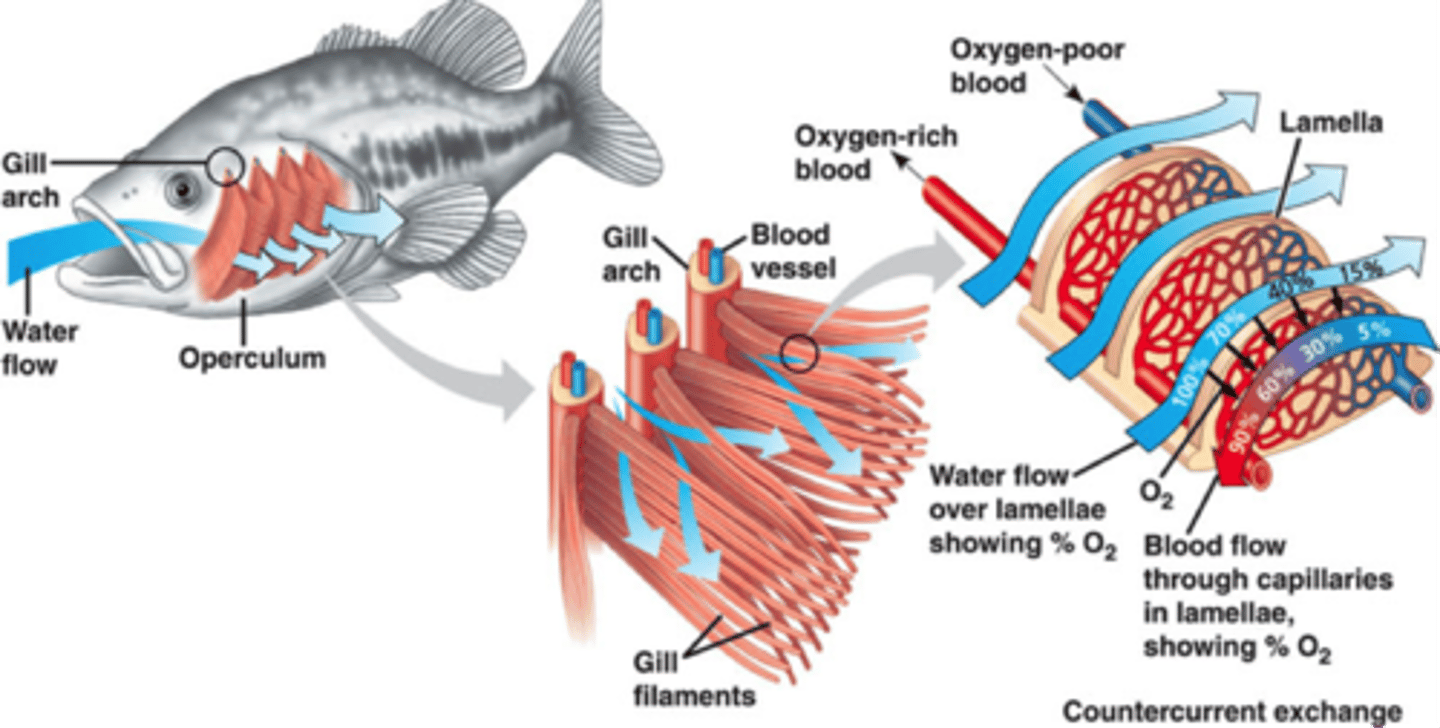
● Gills= located within the body, supported by arches, along which are multiple projections of gill filaments, which are stacked up in piles.
● Lamellae= at right angles to the gill filaments, give an increased surface area. Blood and water flow across them in opposite directions (countercurrent exchange system).
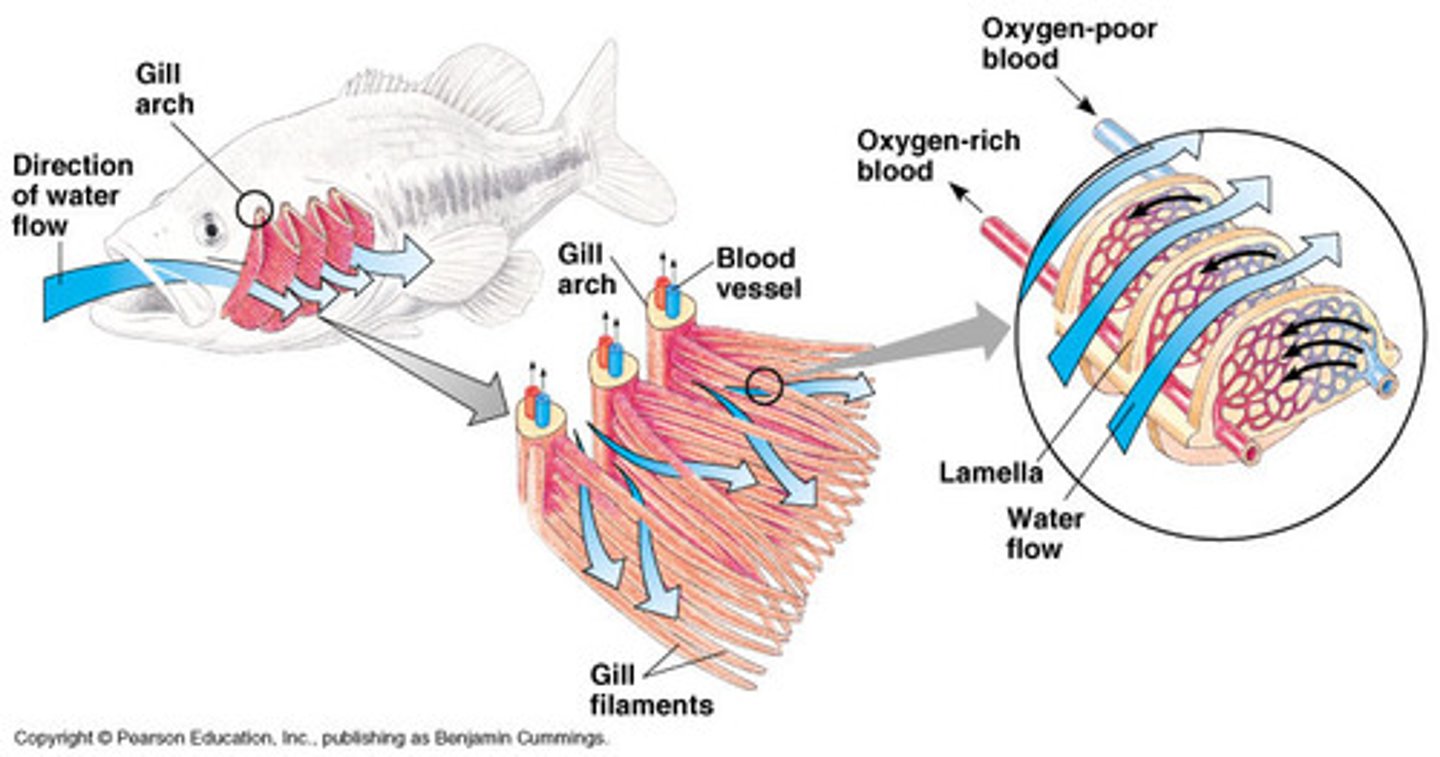
Explain the process of gas exchange in fish.
● The fish opens its mouth to enable water to flow in, then closes its mouth to increase pressure.
● The water passes over the lamellae, and the oxygen diffuses into the bloodstream.
● Waste carbon dioxide diffuses into the water and flows back out of the gills.
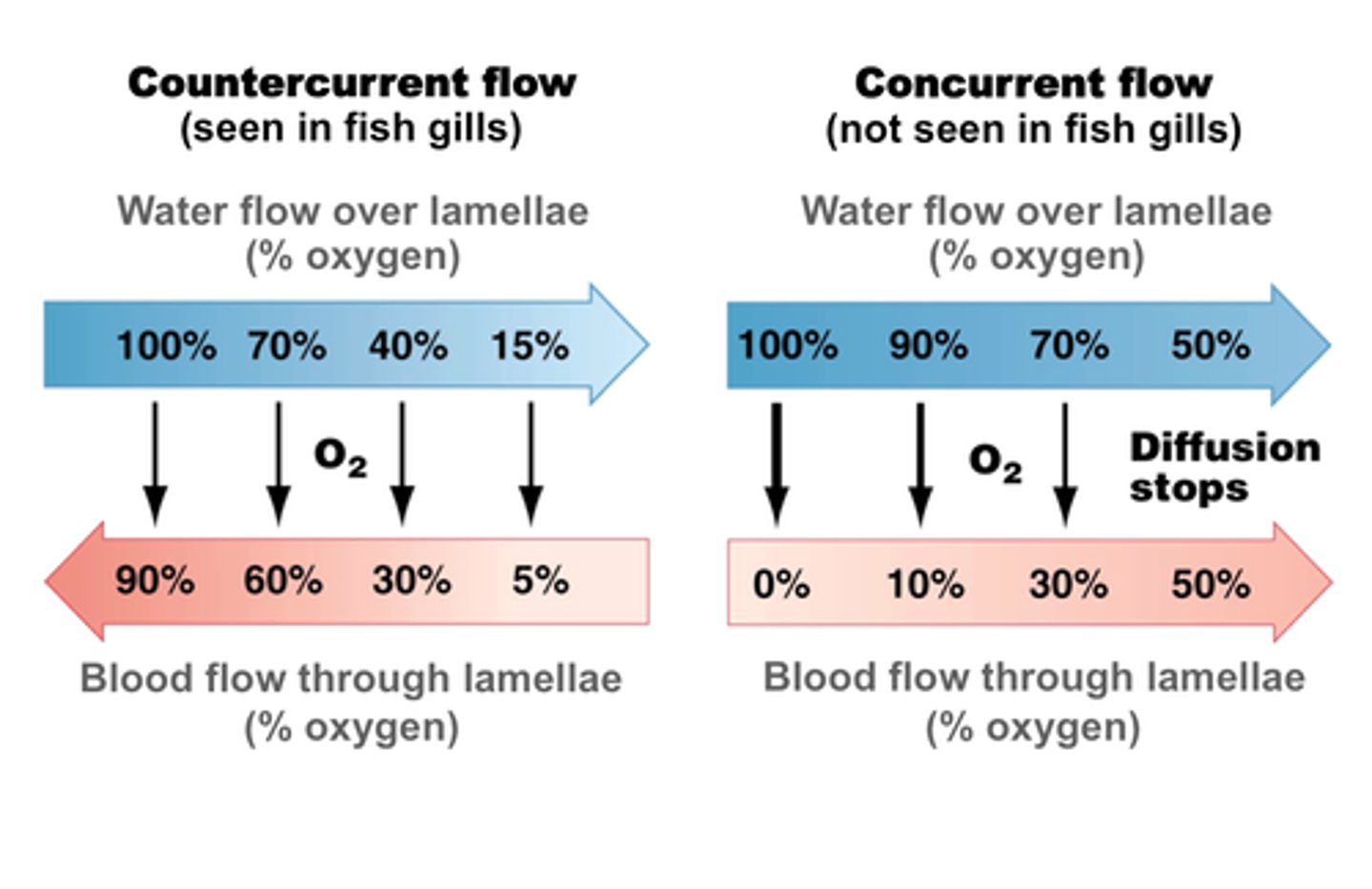
How does the countercurrent exchange system maximise oxygen absorbed by the fish?
● Maintains a steep concentration gradient, as water is always next to blood of a lower oxygen concentration.
● Keeps rate of diffusion constant along whole length of gill enabling 80% of available oxygen to be absorbed.
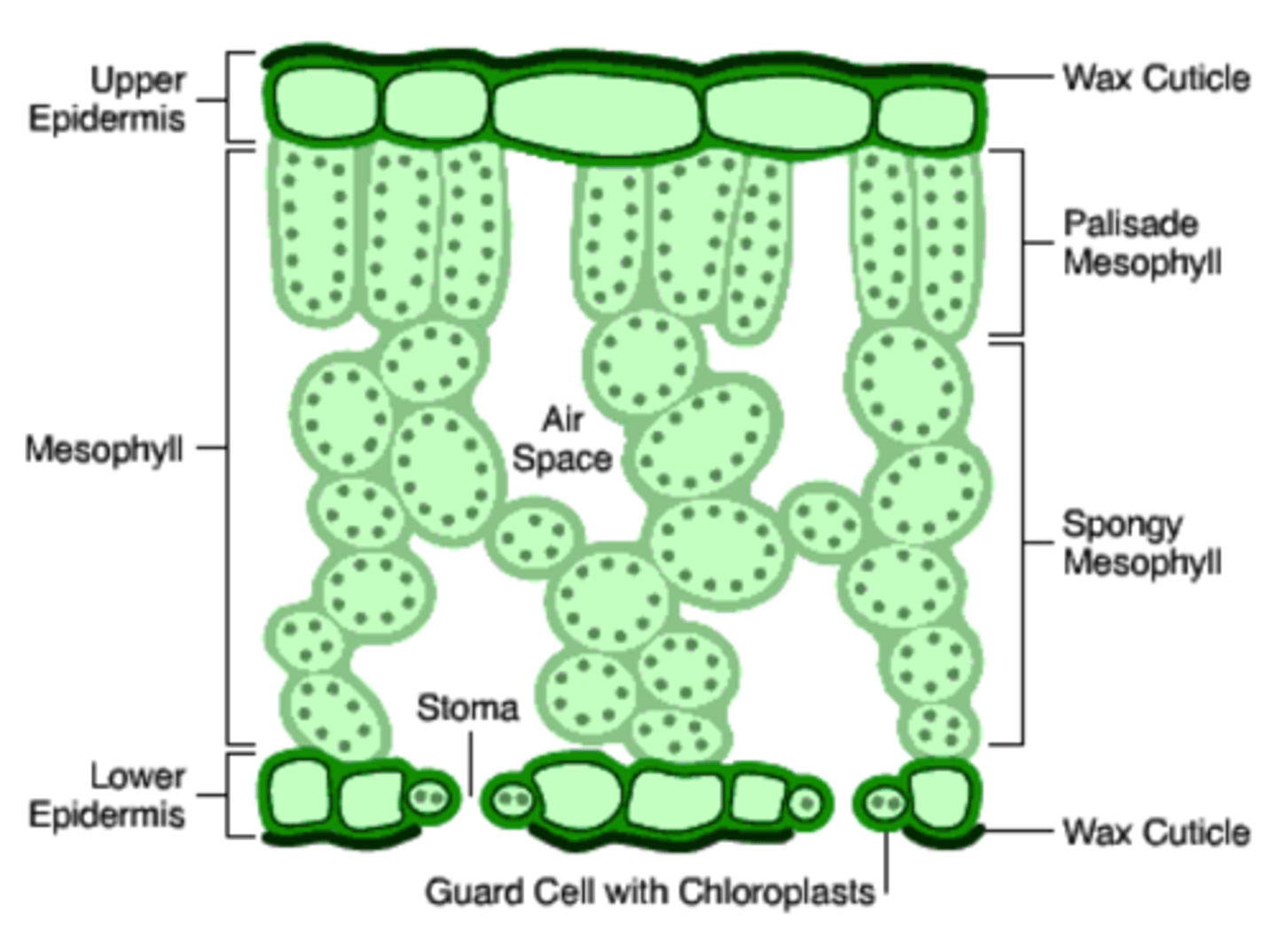
Name and describe three adaptations of a leaf that allow efficient gas exchange.
1. Thin and flat to provide short diffusion pathway and large surface area to volume ratio.
2. Many minute pores in the underside of the leaf (stomata) allow gases to easily enter.
3. Air spaces in the mesophyll allow gases to move around the leaf, facilitating photosynthesis.
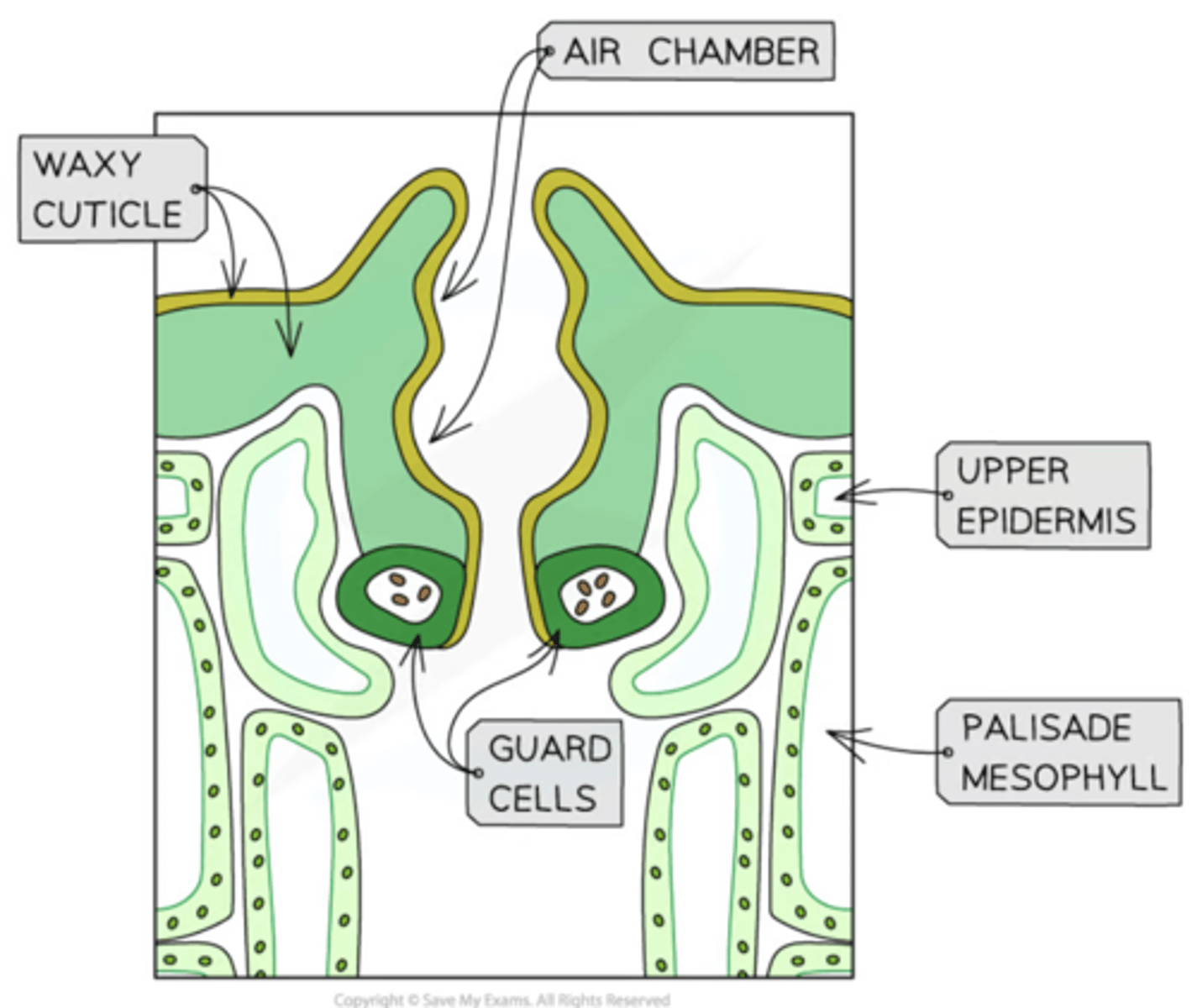
How do plants limit their water loss while still allowing gases to be exchanged?
● Stomata regulated by guard cells which allows them to open and close as needed.
● Most stay closed to prevent water loss while some open to let oxygen in.
Describe the pathway taken by air as it enters the mammalian gaseous exchange system.
Nasal cavity → trachea → bronchi → bronchioles → alveoli
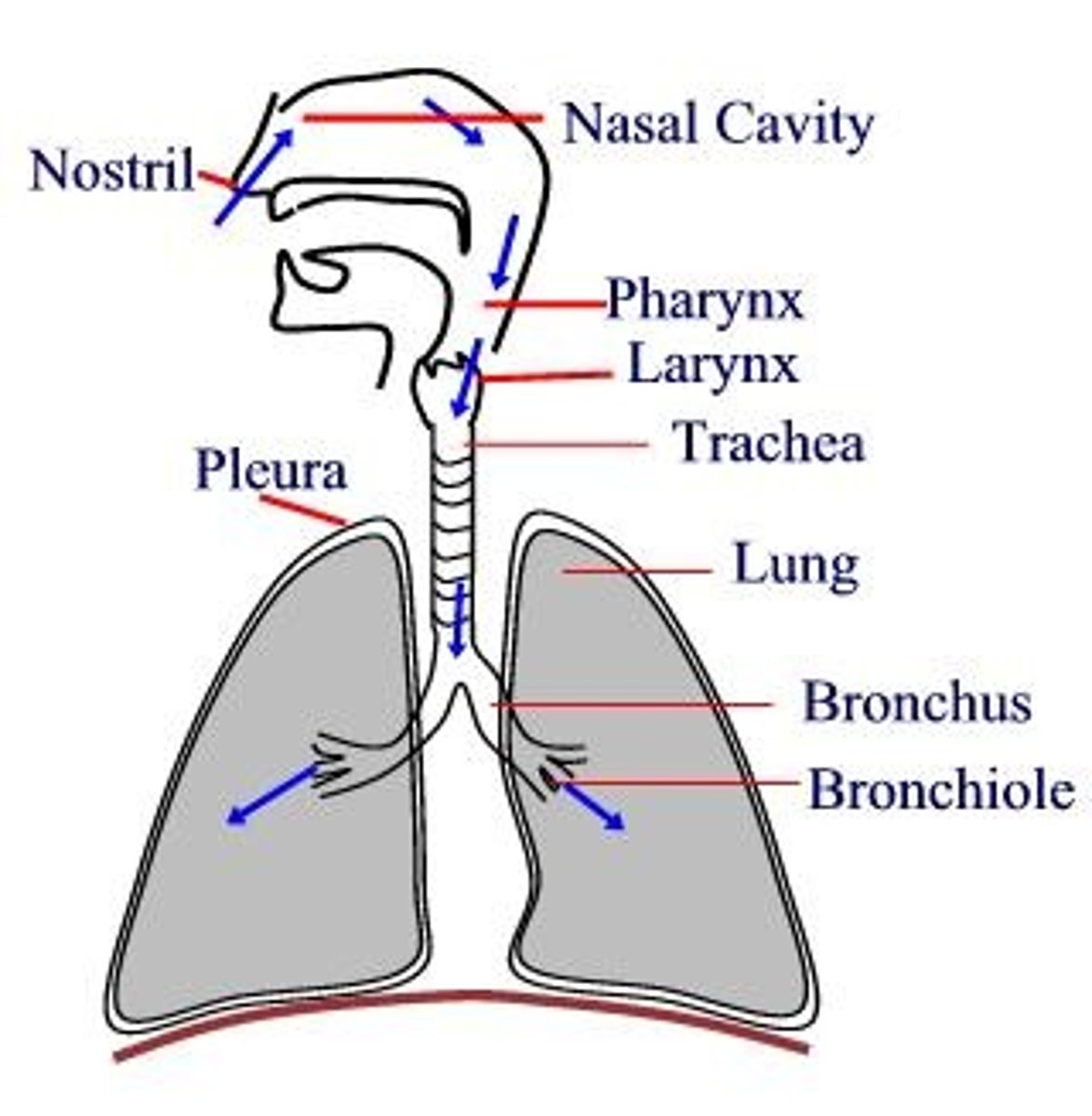
Describe the function of the nasal cavity in the mammalian gaseous exchange system.
● A good blood supply warms and moistens the air entering the lungs.
● Goblet cells in the membrane secrete mucus which traps dust and bacteria.
Describe the trachea and its function in the mammalian gaseous exchange system.
● Wide tube supported by C shaped cartilage to keep the air passage open during pressure changes.
● Lined by ciliated epithelium cells which move mucus towards the throat to be swallowed, preventing lung infections.
● Carries air to the bronchi.
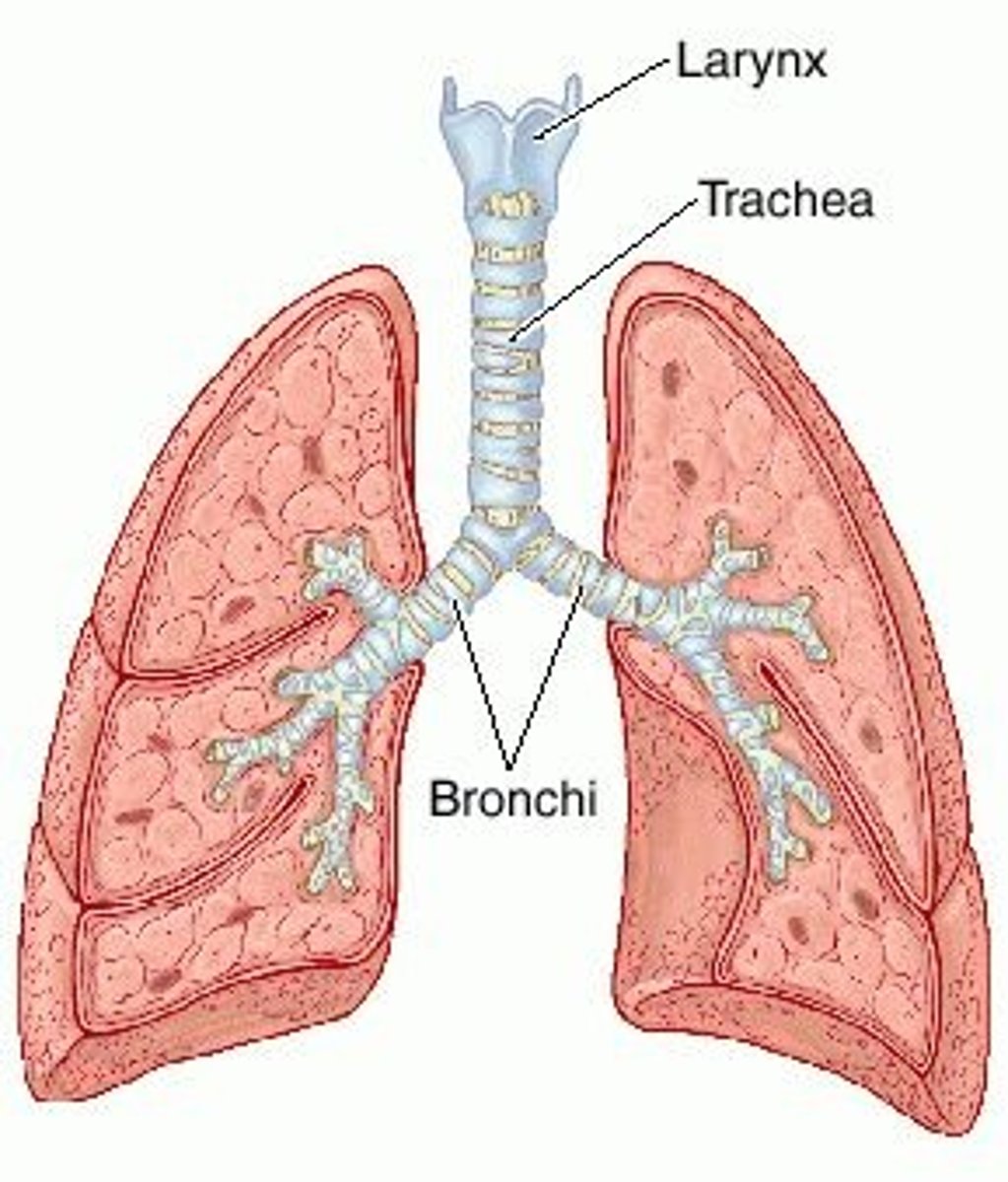
Describe the bronchi and their function in the mammalian gaseous exchange system.
● Like the trachea they are supported by rings of cartilage and are lined by ciliated epithelium cells.
● However they are narrower and there are two of them, one for each lung.
● Allow passage of air into the bronchioles.
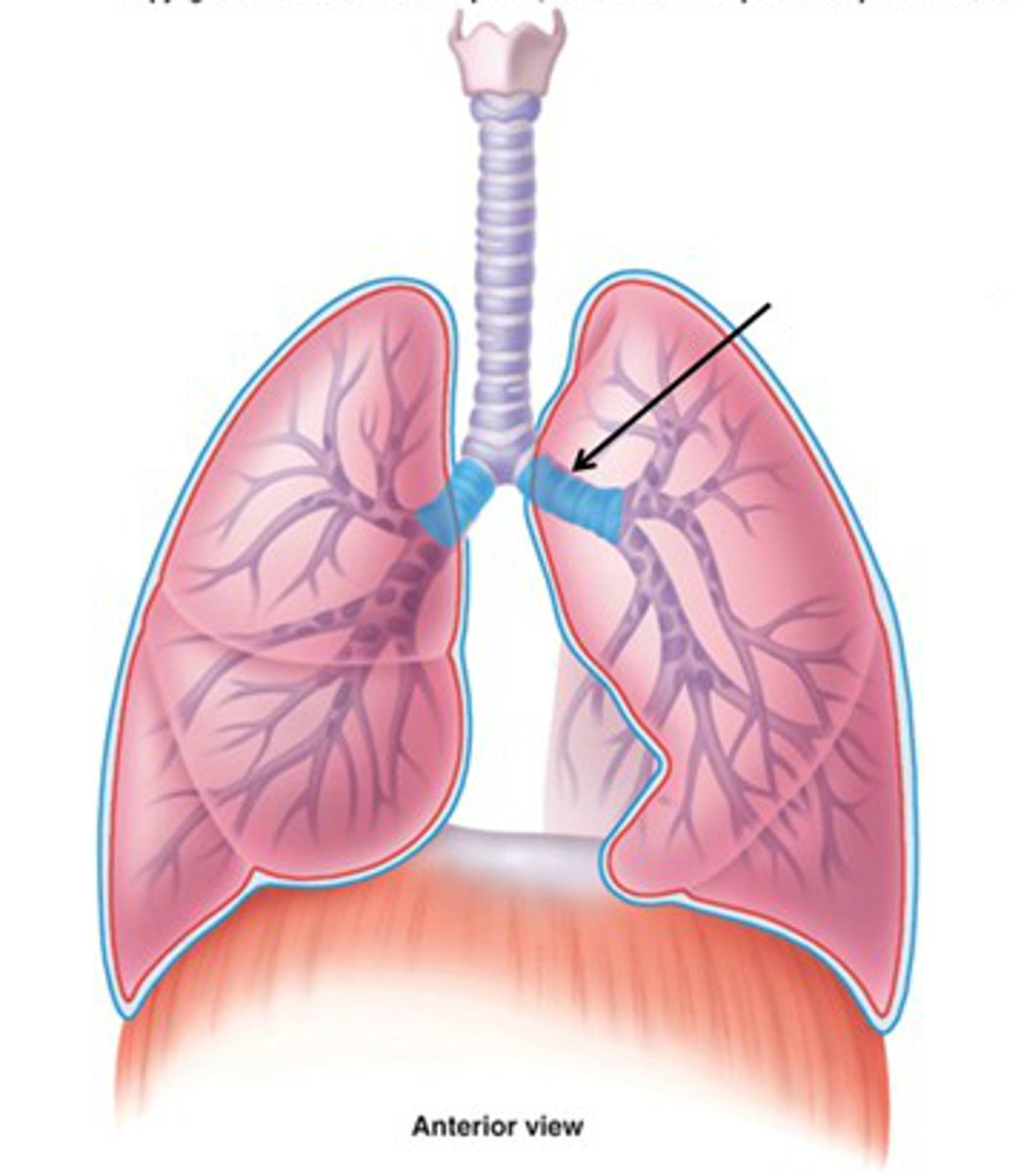
Describe the bronchioles and their function in the mammalian gaseous exchange system.
● Narrower than the bronchi.
● Do not need to be kept open by cartilage, therefore mostly have only muscle and elastic fibres so that they can contract and relax easily during ventilation.
● Allow passage of air into the alveoli.
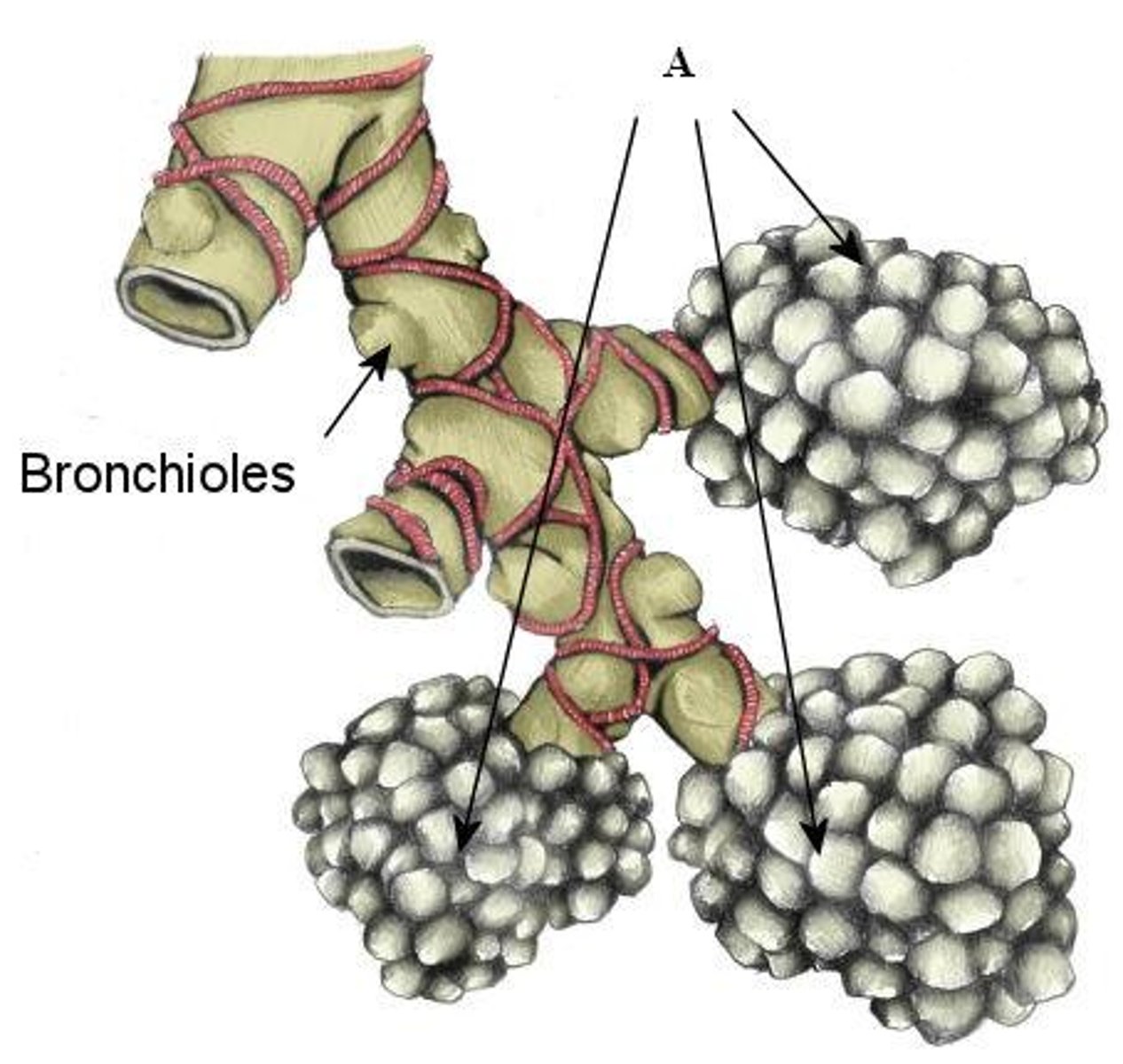
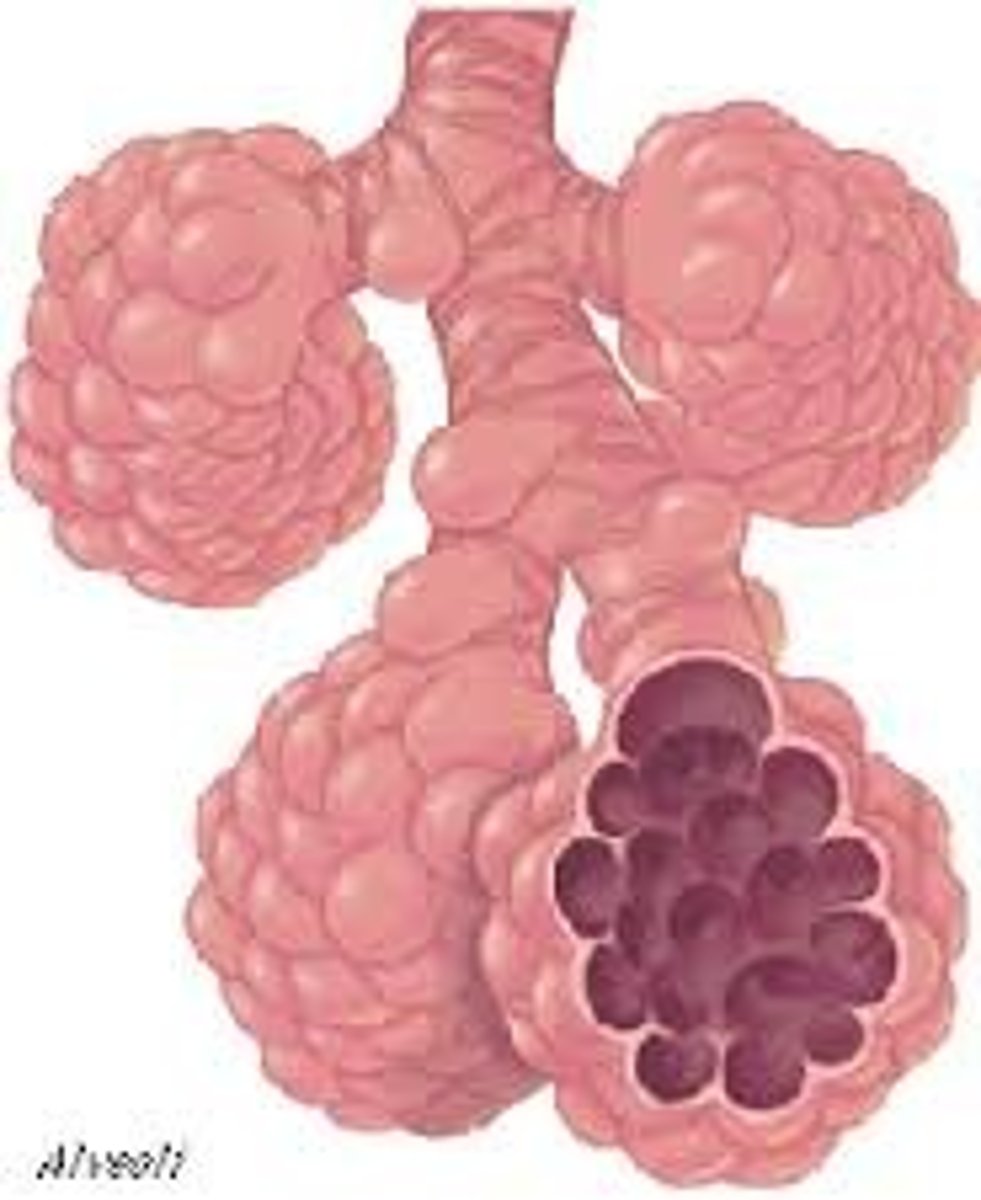
Describe the alveoli and their function in the mammalian gaseous exchange system.
● Mini air sacs, lined with epithelium cells, site of gas exchange.
● Walls only one cell thick, covered with a network of capillaries, 300 million in each lung, all of which facilitates gas diffusion.
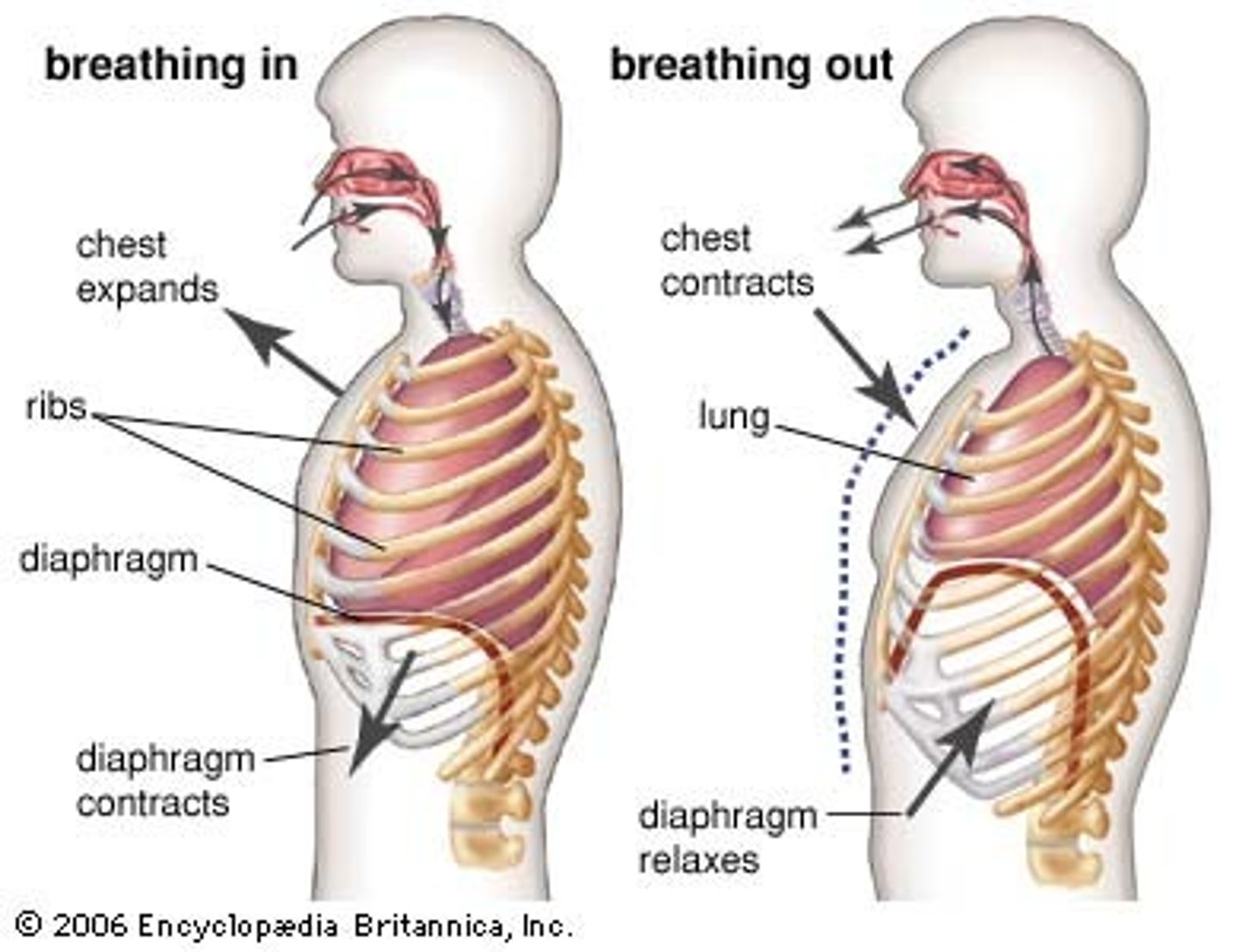
Explain the process of inspiration and the changes that occur throughout the thorax.
● External intercostal muscles contract (while internal relax), pulling the ribs up and out.
● Diaphragm contracts and flattens.
● Volume of the thorax increases.
● Air pressure outside the lungs is therefore higher than the air pressure inside, so air moves in to rebalance.
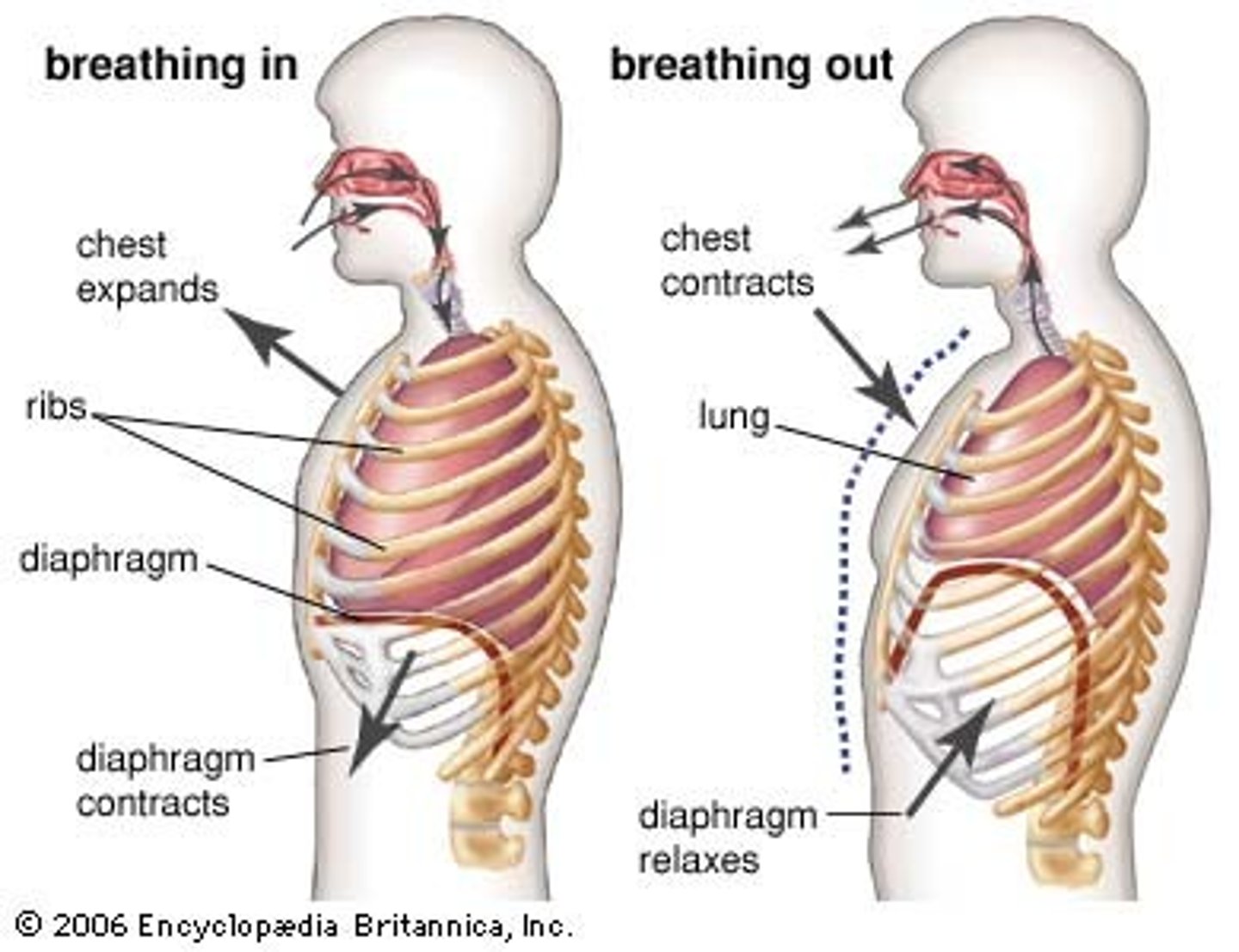
Explain the process of expiration and the changes that occur throughout the thorax.
● External intercostal muscles relax (while internal contract), bringing the ribs down and in.
● Diaphragm relaxes and domes upwards.
● Volume of the thorax decreases.
● Air pressure inside the lungs is therefore higher than the air pressure outside, so air moves out to rebalance.
What is tidal volume?
The volume of air we breathe in and out during each breath at rest.
What is breathing rate?
The number of breaths we take per minute.
How do you calculate pulmonary ventilation rate?
● Tidal volume x breathing rate.
● These can be measured using a spirometer, a device which records volume changes onto a graph as a person breathes.


