Anatomical Position, Terms, Planes of Section, and Body Cavities
 Call Kai
 Learn
Learn Practice Test
 Spaced Repetition
 Match
Match Flashcards
 Knowt Play
1/45

There's no tags or description
Looks like no tags are added yet.
Name | Mastery | Learn | Test | Matching | Spaced | Call with Kai |
|---|
No analytics yet
Send a link to your students to track their progress
46 Terms
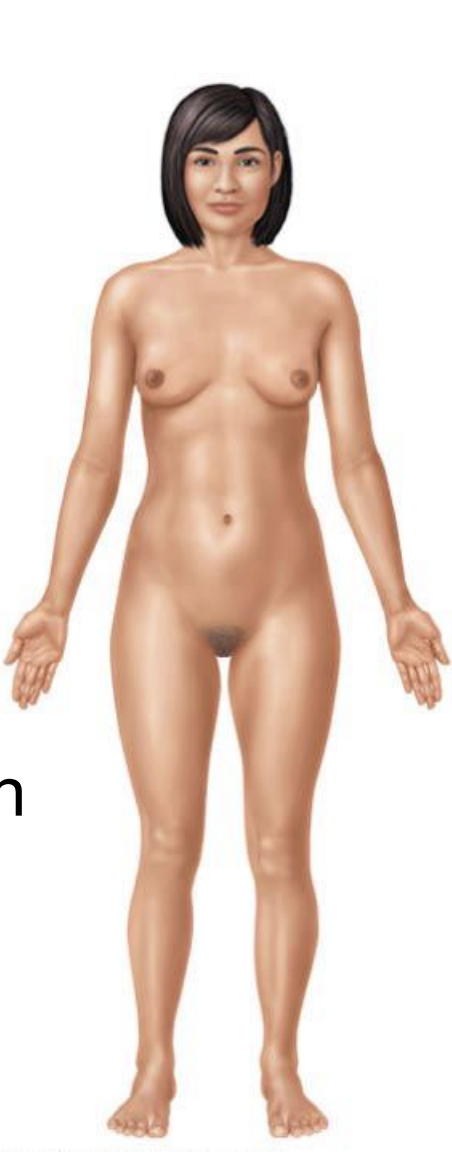
What is the anatomical position?
The common frame of reference from which all body parts and regions are described:
Body is standing upright, feet are shoulder width apart, with upper limbs at side of trunk and head and palms facing forward.
Positional Terms
Supine = facing upwards
Prone = facing downwards
Supra = above
Epi = above/upper • Infra = below
Sub = below/lower
Endo = inside
Intra = inside
Extra = outside
Inter = in between
Peri = around/surrounding
Para = around/surrounding
Directional Terms
Another means of ensuring accurate communication, describes relative location of body parts and markings
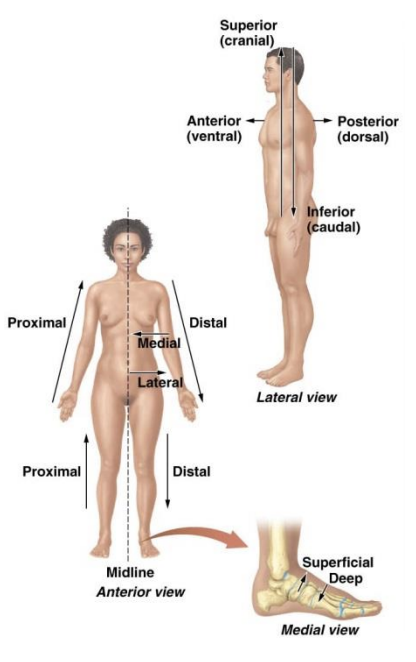
Anterior (Ventral)
Toward the front
Examples:
the palms are on the anterior side of the body
the oesophagus is anterior to the spinal cord
Posterior (Dorsal)
Towards the back
Examples:
the occipital bone is on the posterior cranium (skull)
the spinal cord is posterior to the oesophagus
Superior (Cranial)
Towards the head
Examples:
the nose is superior to the mouth
the neck is superior to the chest
Inferior (Caudal)
Toward the tail
Examples:
the nose is inferior to the forehead
the umbilicus is inferior to the chest
Proximal
Closer to the point of origin (generally the trunk)
Examples:
the knee is proximal to the ankle
the shoulder is proximal to the elbow
Distal
Farther away from the point of origin (generally the trunk)
Examples:
the foot is distal to the hip
the wrist is distal to the elbow
Medial
Closer to the midline of the body or a body part; on the inner side
Examples:
the ear is medial to the shoulder
the index finger is medial to the thumb
Lateral
Farther away from the midline of the body or a body part; on the inner side
Examples:
the shoulder is lateral to the chest
the thumb is lateral to the index finger
Superficial
Closer to the surface
Examples:
the skin is superficial to the muscle
muscle is superficial to bone
Deep
Farther below the surface
Examples:
bone is deep to the skin
bone is deep to muscle
Regional Terms
The body can be divided into two regions:
axial region, which includes head, neck and trunk
appendicular region, which includes upper and lower limbs
Each broad region can be divided into several smaller regions
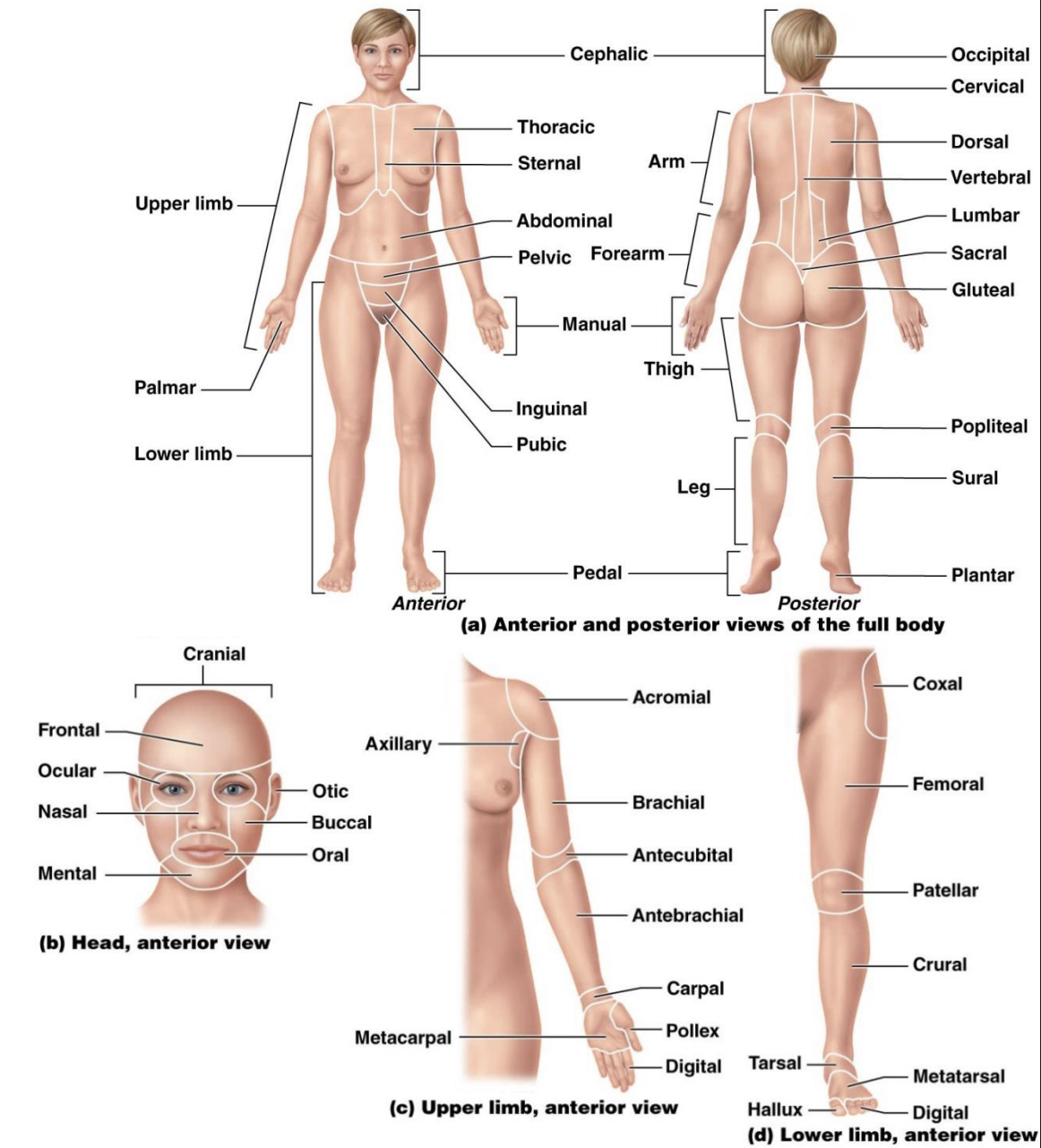
Cephalon
Head
cephalic region
Cervicis
Neck
cervical region
Thoracis
Thorax or chest
thoracic region
Brachium
Arm
brachial region
Ante brachium
Forearm
ante brachial region
Carpus
Wrist
carpal region
Manus
Hand
manual region
Crus
Anterior Leg
crural region
Sura
Calf
sural region
Tarsus
Ankle
tarsal region
Pes
Foot
pedal regionPl
Planta
Sole
plantar region
Abdomen
Abdominal region
Lumbus
Loin
lumbar region
Gluteus
Buttock
gluteal region
Pelvis
Pelvic region
Pubis
Anterior pelvis
pubic region
Inguen
Groin
Inguinal region
Femur
Thigh
femoral region
Coxa
Hip
coxal region
Planes of Section
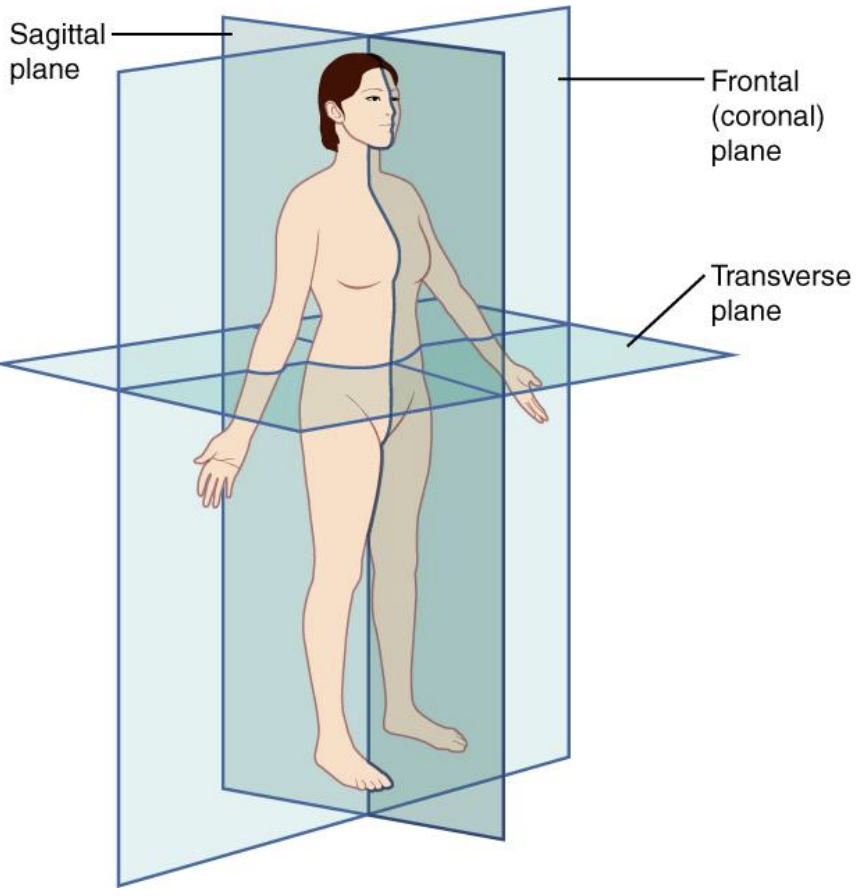
Three primary planes of section provide a means of studying form and function of a body region by dividing body or a body part up for examination:
sagittal
frontal
transverse
(oblique) – not pictured
Sagittal
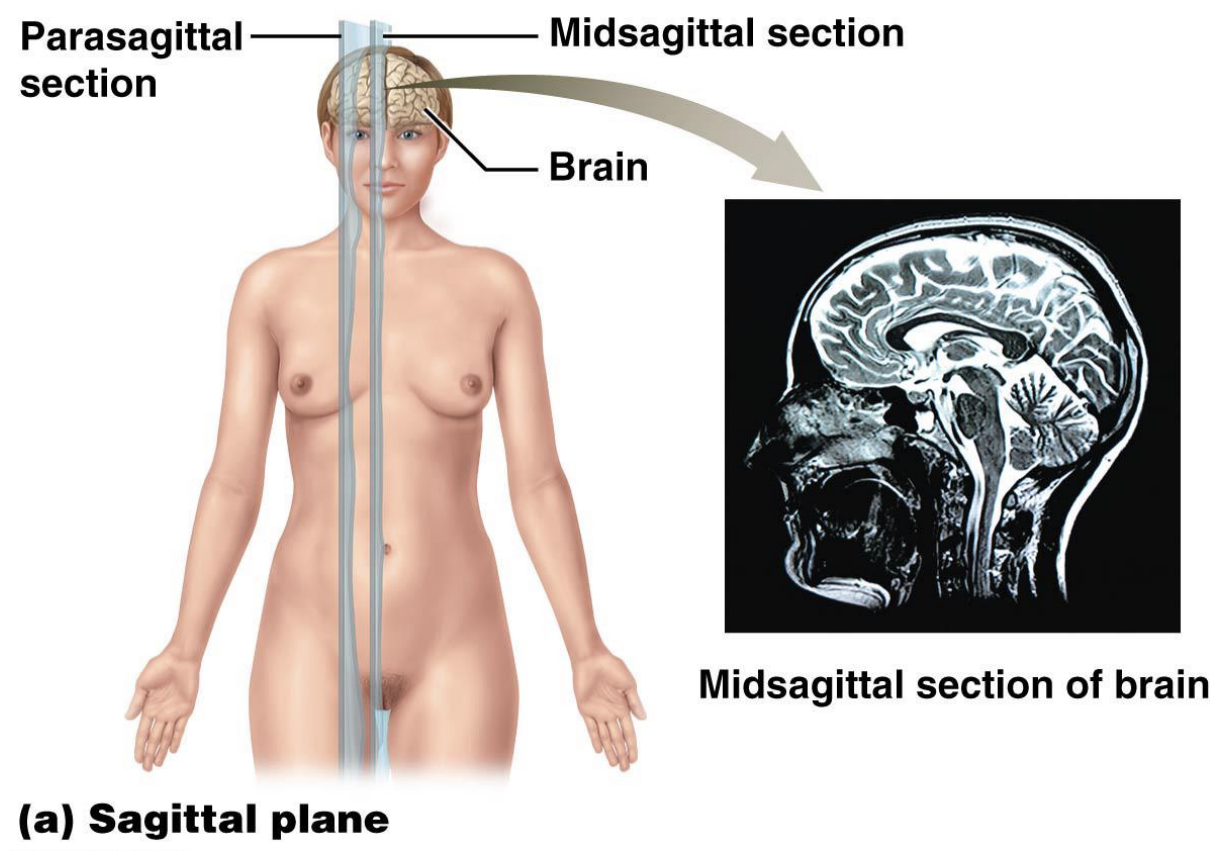
Sagittal plane divides body or body part into right and left sections:
Midsagittal plane (median plane) divides body or body part into equal left and right sections
Parasagittal plane divides body or body part into unequal right and left sections
Frontal (Coronal) Plane
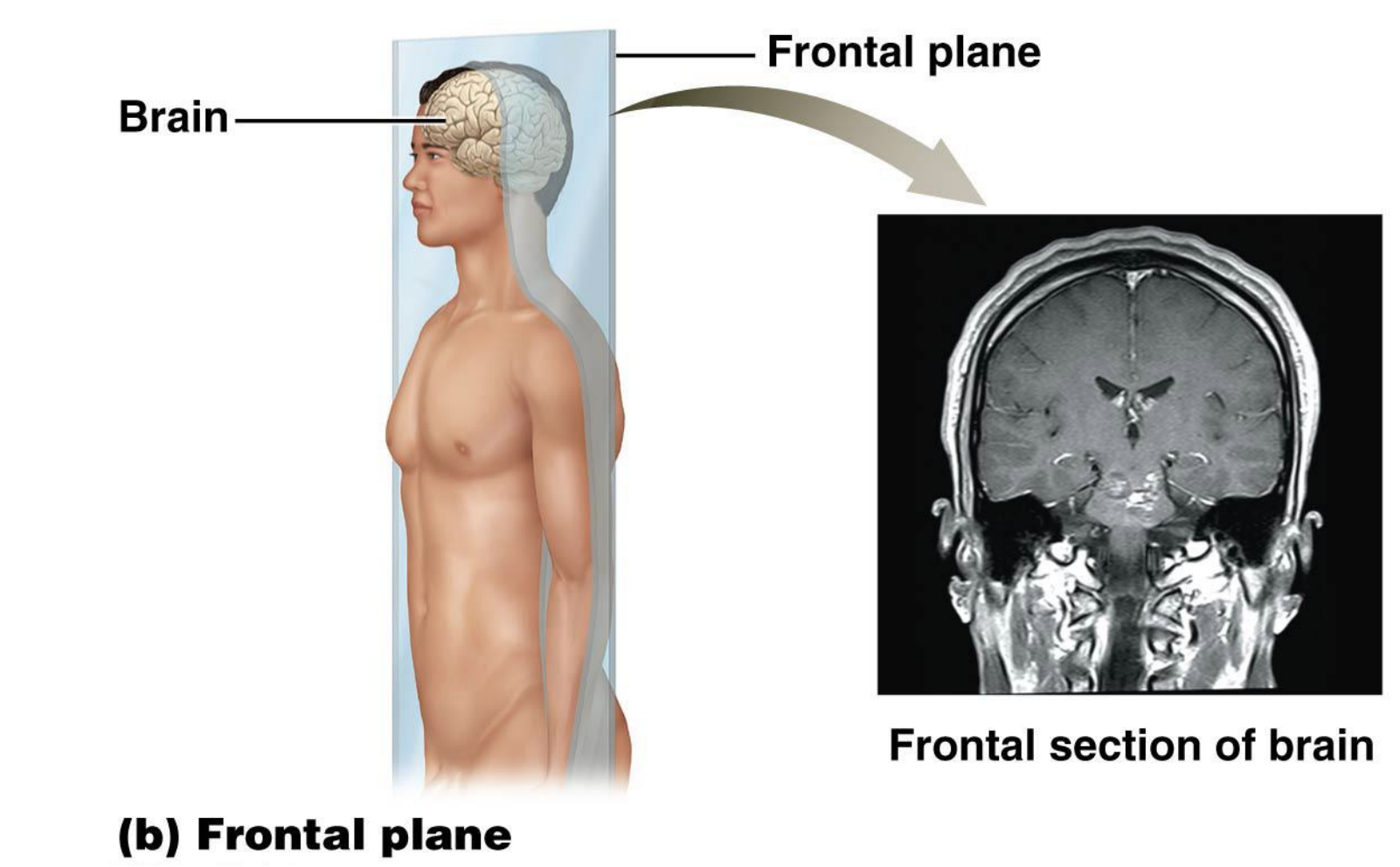
Divides body or body part into anterior and posterior sections
Transverse (Horizontal) Plane
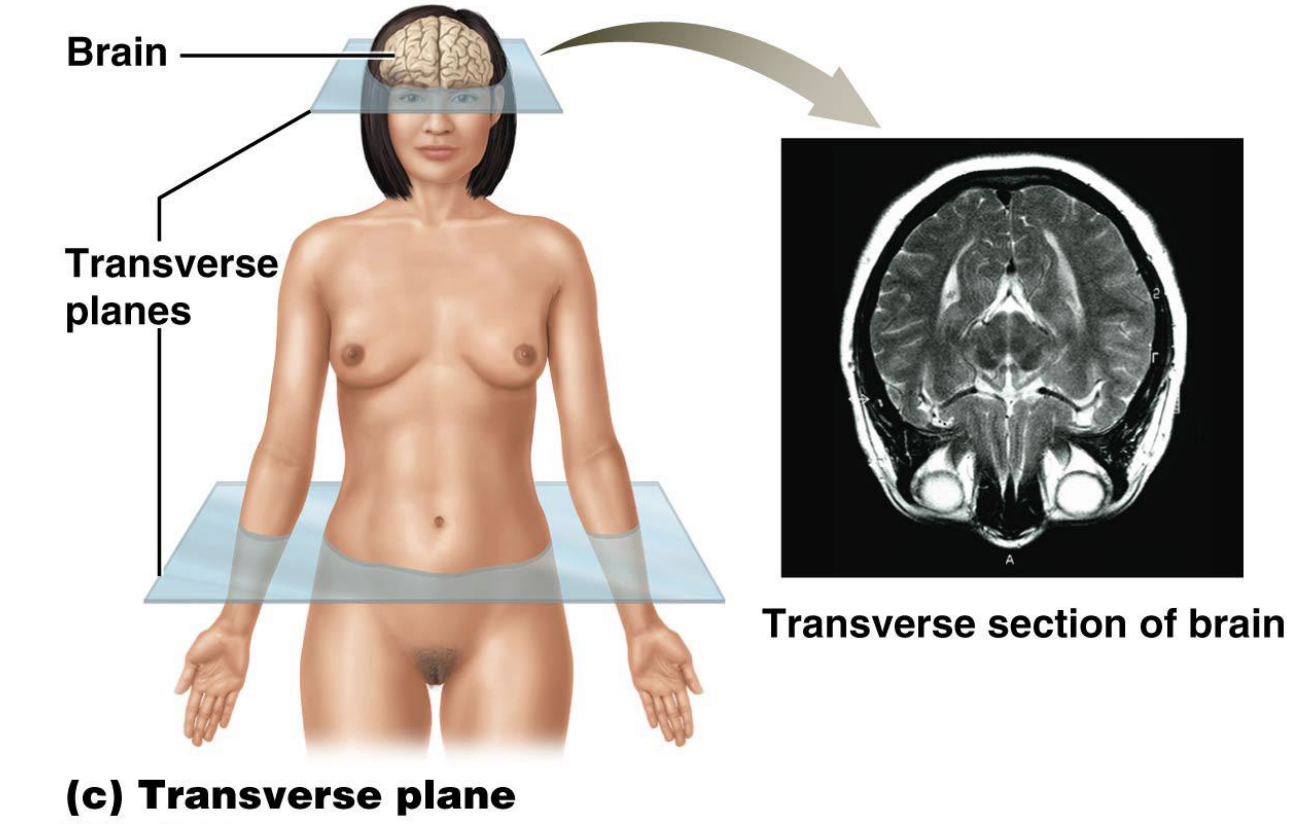
Divides body or body part into superior and inferior sections or proximal and distal sections when describing structures of appendicular region
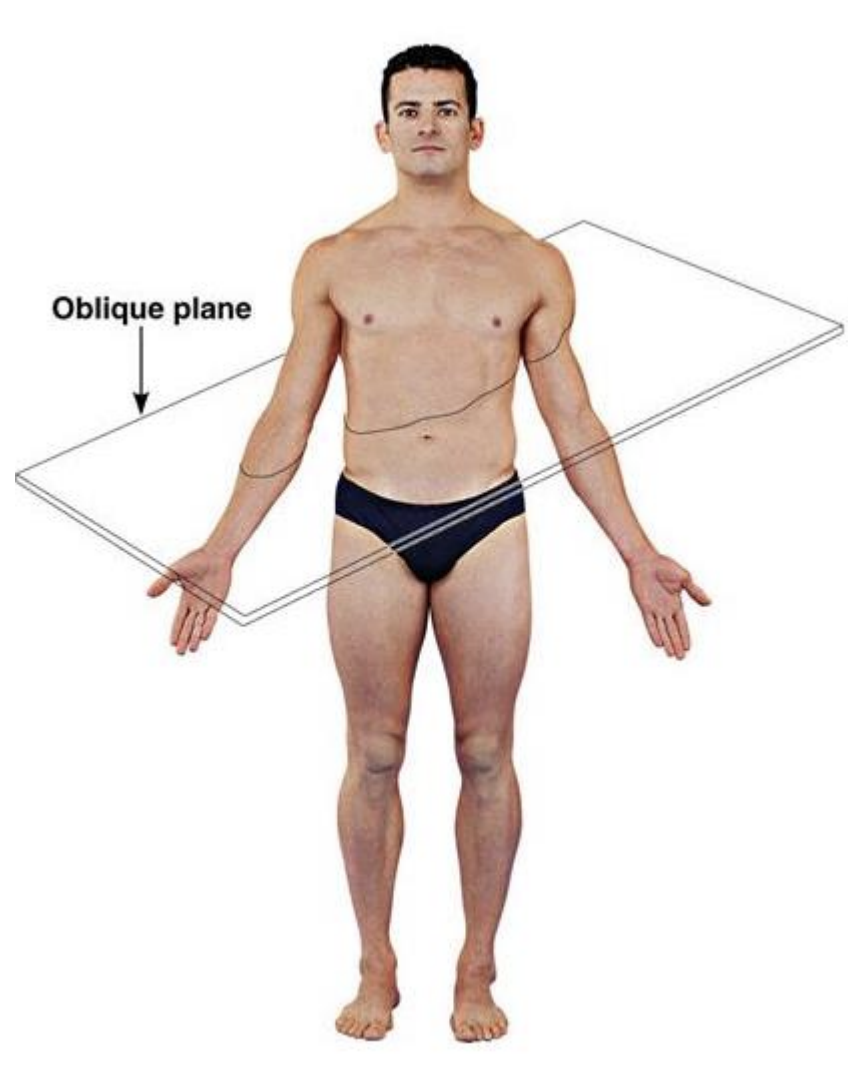
Oblique Plane
A less standardised plane, is taken at an angle; useful for examining structures that are difficult to examine using only three primary planes of section
Body Cavities
A cavity is any fluid-filled space within body; axial region of body is divided into several cavities
Cavities protect internal organs and allow them to move and expand as necessary to perform their functions
Major cavities include dorsal and ventral cavities and their subdivisions
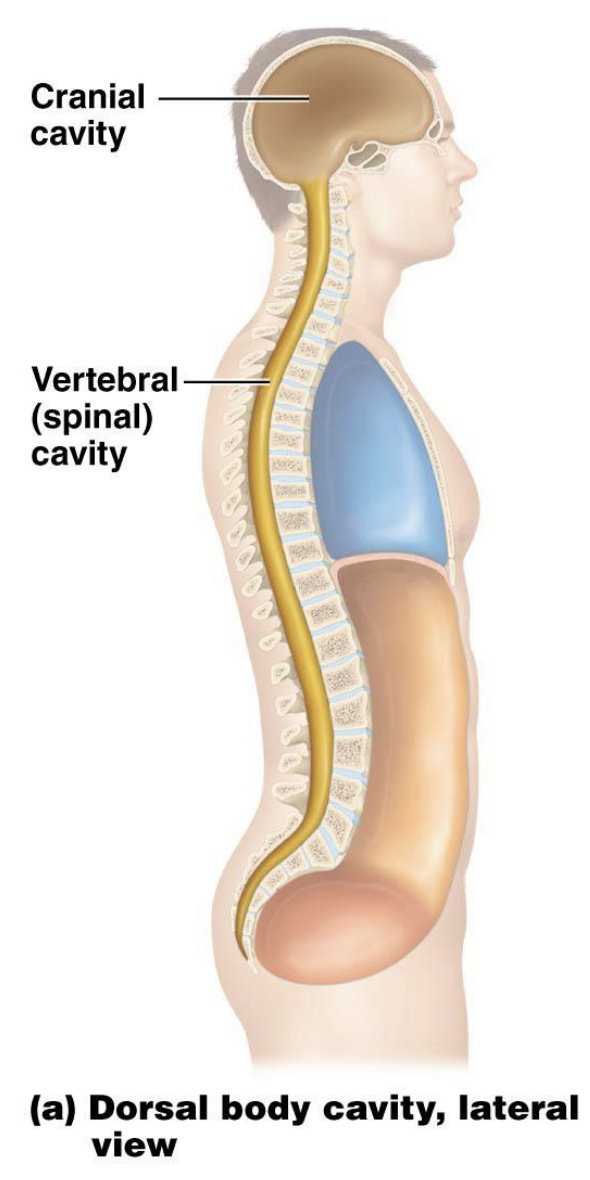
Dorsal Body Cavity
Largely located on posterior side of body; subdivided into two cavities:
Cranial cavity – within skull; protects brain
Vertebral (spinal) cavity – within vertebral column; protects spinal cord
Lined with protective layers called meninges –
Subdivisions are continuous and filled with cerebrospinal fluid (CSF); bathes and protects both brain and spinal cord
Ventral Body Cavity
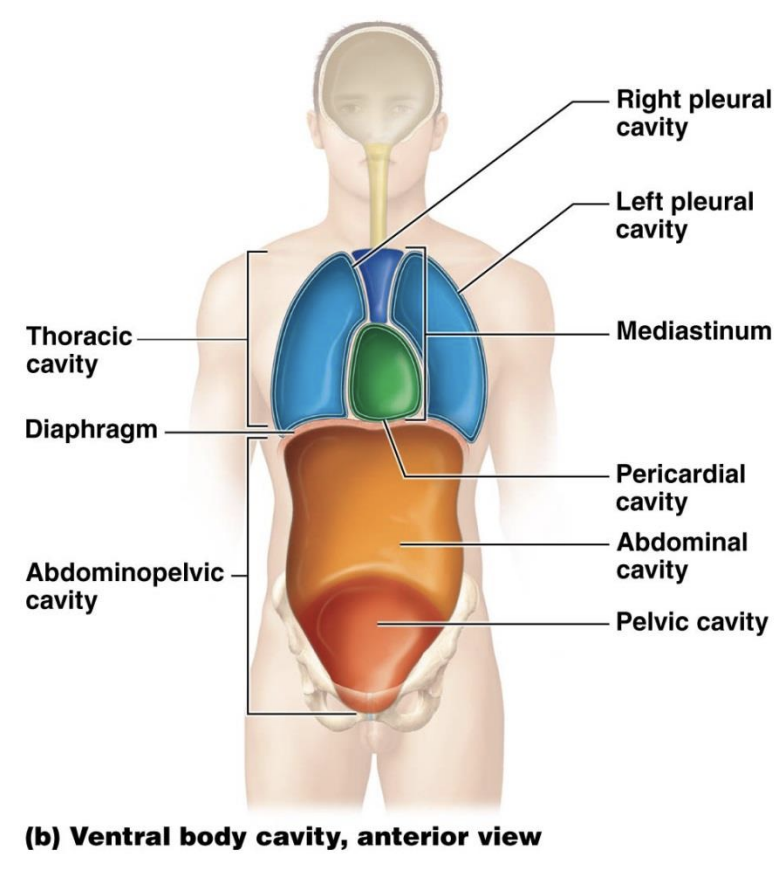
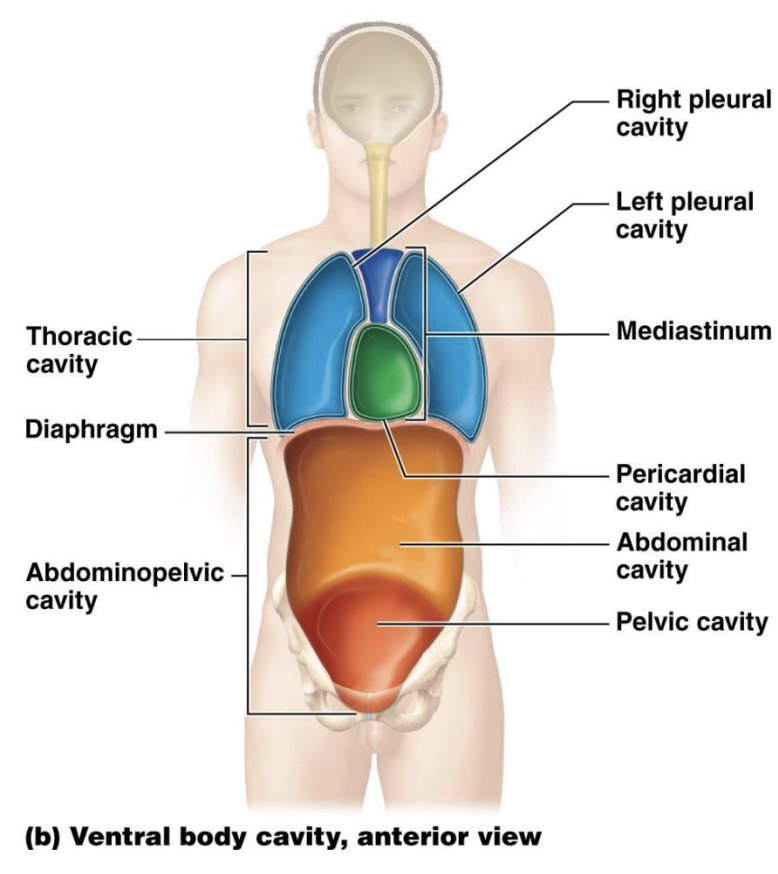
Separated into two divisions by diaphragm:
Thoracic cavity and its subdivisions are superior to diaphragm
Abdominopelvic cavity and its subdivisions are inferior to diaphragm
Lined with serous membranes termed parietal and visceral …. (dependant on location)
Ventral Body Cavity - Thoracic Cavity
Thoracic cavity – divided into three smaller cavities:
Pleural cavities – each surround either left or right lung
Mediastinum – between pleural cavities; houses heart, great vessels, trachea (windpipe), and oesophagus; not within serous membrane
Pericardial cavity – within mediastinum; within serous membrane that surrounds heart Body Cavities
Ventral Body Cavity - Abdominopelvic Cavity
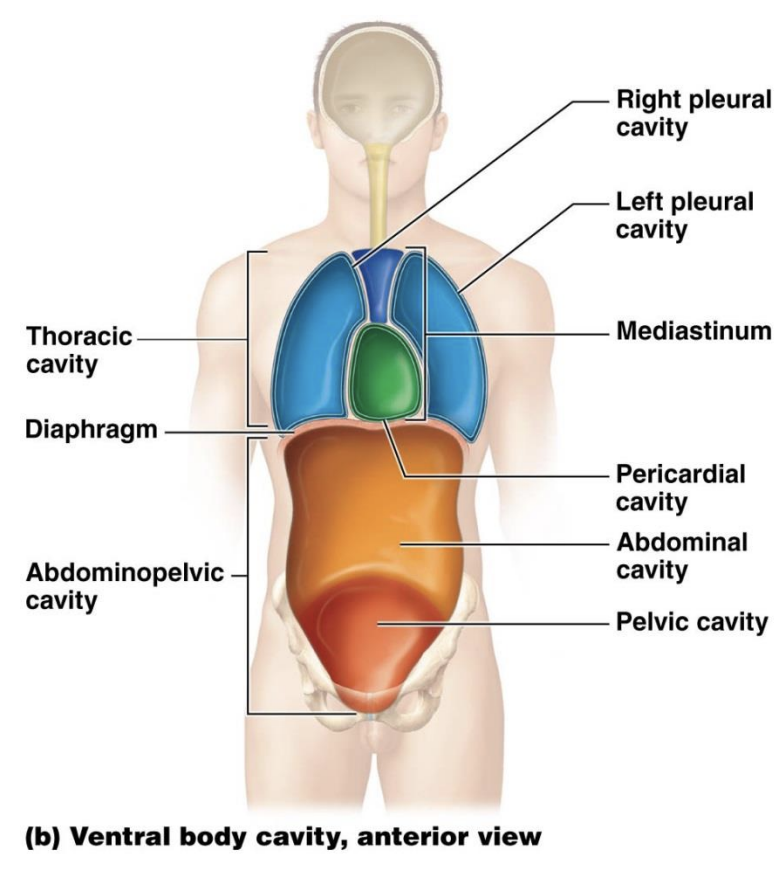
Abdominopelvic cavity – subdivided into superior abdominal cavity (spans from diaphragm to bony pelvis) and pelvic cavity (area within bony pelvis)
Contains organs from several systems (digestive, lymphatic, reproductive, and urinary)
Peritoneal cavity – abdominal sub cavity found within serous membrane
Abdominopelvic Cavity
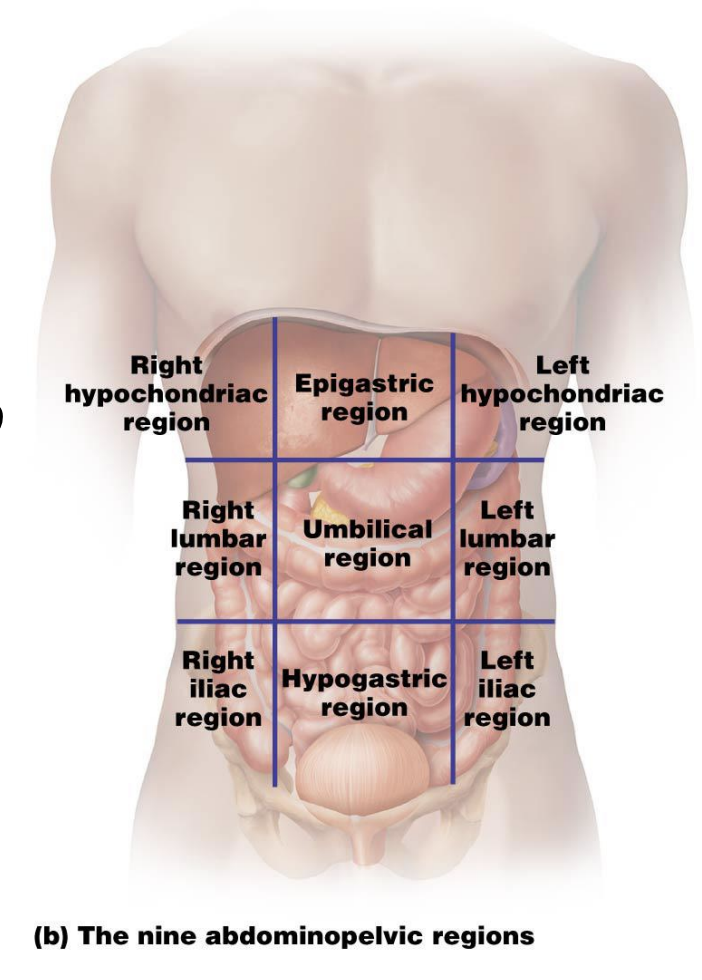
Abdominopelvic cavity can be divided up into segments or quadrants
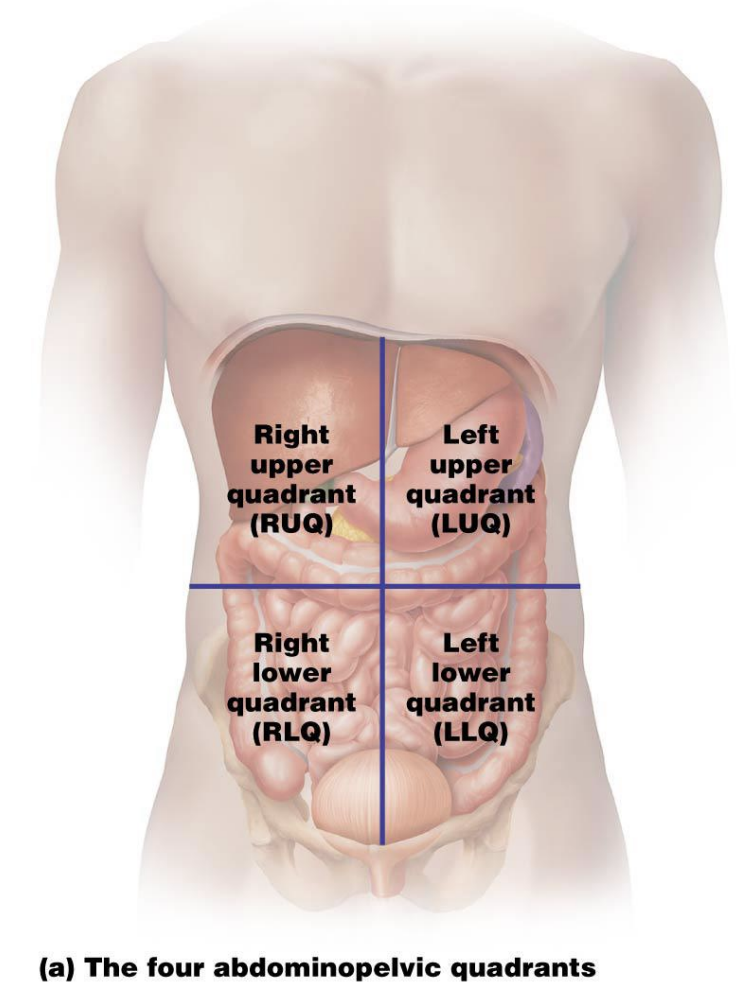
Abdominopelvic Cavity
Abdominopelvic cavity can also be divided into nine segments using two parasagittal and two transverse imaginary lines: