Hospital Pharmacy (INTRO)
0.0(0)
 Studied by 3 people
 Call Kai
 Learn
Learn Practice Test
 Spaced Repetition
 Match
Match Flashcards
 Knowt Play
Card Sorting
1/200

Earn XP
Description and Tags
Introduction to Hospital Pharmacy (PHARM 31)
Last updated 1:25 PM on 8/20/23
Name | Mastery | Learn | Test | Matching | Spaced | Call with Kai |
|---|
No analytics yet
Send a link to your students to track their progress
201 Terms
1
New cards
____ is an institution that provide patient services, diagnostic and therapeutic, for particular or general medical conditions
Hospital
2
New cards
What is the 4 Basic Elements of Survival in Human Existence?
\
1. Food (including *water*)
2. Clothing
3. Shelter
4. Health (***Hospital***)
1. Food (including *water*)
2. Clothing
3. Shelter
4. Health (***Hospital***)
3
New cards
The Greek God of Medicine
Temple of Aesculapius
4
New cards
____ B.C. Temple of Aesculapius
1134 B.C.
5
New cards
A ___ temple located at Kos, Greece. Where Hippocrates practiced.
Greek Temples
6
New cards
The Father of Medicine
Hippocrates
7
New cards
6’th century B.C
Indian and Egyptian cultures
8
New cards
1134 B.C.
Greek Temples
9
New cards
The evolution of the hospital is related to __ and _______ with ____
The evolution of the hospital is related to **SOCIOLOGICAL DEVELOPMENT** and **ASSOCIATED** with **DIVINE POWERS**
10
New cards
Hospital is an institution that provide patient services, ____ and ______ , for particular or general medical conditions.
**Diagnostic** and **Therapeutic**
11
New cards
____ diagnosis of certain disease
Diagnostic
12
New cards
____ treatment or healing the certain disease
Therapeutic
13
New cards
____ associated with the relationship of the society in their surroundings.
Sociological Development
14
New cards
____ born with a divine father **Apollo**; god of healing and Coronis a mortal mother. He is a demigod.
Asclepius
15
New cards
Asclepius Temple
Every night for thousands of years ( __ B.C. to __ A.D.)
Every night for thousands of years ( __ B.C. to __ A.D.)
(**500** B.C. – **500** A.D.)
16
New cards
Every night for thousands of years (500 B.C. – 500 A.D.), sick and afflicted pilgrims flocked to the _____.
Grecian Temples of Asclepius
17
New cards
______ and ___ were sought during dream visitations by the ancient god of medicine
**Healing** and **Advice**
18
New cards
Both __ and __ regarded disease as a curse inflicted by supernatural powers and rather sought to propitiate the malevolent deity than to organize the work of relief.
**Greek** and **Romans**
19
New cards
Both Greeks and Romans regarded disease as a curse inflicted by _____ and rather sought to propitiate the malevolent deity than to organize the work of relief
Supernatural powers
20
New cards
__ had a temple on the island in the Tiber (291 B.C.), where now stand the church and monastery of St. Bartholomew, in which the same rites were observed as among the Greeks
Æsculapius
21
New cards
Æsculapius had a temple on the island in the Tiber (291 B.C.), where now stand the _______ and ___________, in which the same rites were observed as among the Greeks.
**Church** and **Monastery of St. Bartholomew**
22
New cards
A Temple on the Island of Tiber
Basilica of St. Bartholomew
23
New cards
____ were appointed to treat various classes of citizens, and these practitioners usually enjoyed special privileges and immunities.
Municipal physicians
24
New cards
What Hospital that Men and women were admitted to different wards, and no attention was paid to religion or race. No one was turned away and there was no limit to how long patients could stay?
Egyptian Hospital
25
New cards
In __, the Buddhist King Azoka (252 B. C.) established a hospital for men and animals.
India
26
New cards
In India, the Buddhist ___ (252 B. C.) established a hospital for men and animals.
King Azoka
27
New cards
In India, the Buddhist King Azoka (___B. C.) established a hospital for men and animals.
252 B.C.
28
New cards
____ brought to heal various forms of the disease
Christ
29
New cards
Christ brought to heal various forms of the disease
Early Christian Times
30
New cards
Enumerate 4 Christ brought to heal various forms of the disease
Jesus, made the blind man see.
Jesus restoring life to a little girl.
Healing various forms of disease including the most loathsome, leprosy
Jesus Heals a Lame Man
Jesus restoring life to a little girl.
Healing various forms of disease including the most loathsome, leprosy
Jesus Heals a Lame Man
31
New cards
____ Himself gave His followers the example of caring for the sick by the numerous miracles
Christ
32
New cards
He brought to heal various forms of disease including the most loathsome, ______.
Leprosy
33
New cards
He also charged His Apostles in explicit terms to heal the sick __ and promised to those who should believe in Him that they would have power over disease ____.
Heal the sick (Luke 10:9)
Power over disease (Mark 16:18)
Power over disease (Mark 16:18)
34
New cards
Among the "*many wonders and signs done by the Apostles in Jerusalem*" was the _____,__ of the __ *,* and of the ___, besides the larger number whom the __.
Among the "*many wonders and signs done by the Apostles in Jerusalem*" was the **restoration of the lame man (Acts 3:2-8)**, of the **palsied Æneas (ix, 33, 34)**, and of the **cripple at Lystra (xiv, 7, 9)**, besides the larger number whom the **shadow of St. Peter delivered from their infirmities (v, 15, 16)**.
35
New cards
__ enumerates among the charismata the "grace of healing" (1 Corinthians 12:9)
St. Paul
36
New cards
1 Corinthians 12:9
Grace of Healing
37
New cards
___ admonishes the faithful in case of sickness to bring in the priests of the Church and let them **pray over the sick man** "*and the prayer of faith shall save him,*”
St. James (v, 14, 15)
38
New cards
St. James
The _____ was instituted not only for the spiritual benefit of the sick but also for the restoration of their bodily health.
The _____ was instituted not only for the spiritual benefit of the sick but also for the restoration of their bodily health.
Sacrament of Extreme Unction
39
New cards
___ Part of Sacrament
Anointing the Sick
40
New cards
____ Like the other works of Christian charity, the **care of the sick** was from the beginning a sacred duty for each of the faithful, but it devolved in a special way upon the bishops, presbyters, and deacons.
Mother Theresa
41
New cards
____ The same ministrations that brought relief to the poor naturally included **provision for the sick** who were visited in their homes.
Mother Theresa
42
New cards
Enumerate the 6 Biographical about Mother Theresa?
1. A teacher before a missionary
2. Resides in Calcutta, India
3. Child prostitution is the major issue in Calcutta (men thought a virgin could help them heal)
4. She is the living saint
5. Her charity is called Sisters of the Poor
6. The shape of her feet is distorted she’d pick the worst feet
43
New cards
____ Hospital Founded in Mexico City
1524 Hospital of Immaculate Conception
44
New cards
____ First hospital on the American continent built by the Spaniards
1524 Hospital of Immaculate Conception
45
New cards
Name change to Hospital of Jesus of Nazareth
1524 Hospital of Immaculate Conception
46
New cards
_______Hospital for the sick soldiers
1663 Manhattan Island Hospital
47
New cards
__ First hospital founded in the United States Established by Dr. Thomas Bond
1751 Pennsylvania Hospital
48
New cards
From 149 to approximately 5,800
1873 number of hospitals in the US doubled
49
New cards
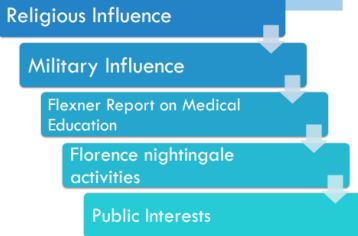
Enumerate the Development and Expansion of Hospitals (*in order*)
1. Religious Influence
2. Military Influence
3. Flexner Report on Medical Education
4. Florence nightingale activities
5. Public Interests
50
New cards
The 3 RELIGIOUS INFLUENCE
1. Temples of the Greek
2. Roman Empire
3. The Doctrines of Jesus
51
New cards
___ (*temple of asclepius*) the god of medicine
Temples of the Greek
52
New cards
___ healing was associated with divine powers, while continued death was because of lack of purity
Roman Empire
53
New cards
___ intensified the emotions and virtues of love, pity and charity.
The Doctrines of Jesus
54
New cards
____ The battlefield wounded (soldiers) during the civil war of the roman empire, became a stimulus for the demand for surgical and medical progress.
Military Influence
55
New cards
___ during the time of President Lincoln; it focuses his attention on the inadequacy of hospital buildings as well as the lack of nursing care.
Military Influence
56
New cards
___ he commanded the catholic sisters to take care of the wounded soldier because hospital care was so poor
President Lincoln
57
New cards
____ is the most important event in the history of American and Canadian medical education.
Flexner’s Report on Medical Education
58
New cards
____ It was a commentary on the condition of medical education in the early 1900s and gave rise to modern medical education.
Flexner’s Report on Medical Education
59
New cards
___ the founder of modern nursing
Florence Nightingale
60
New cards
___ a nurse during the Crimean war
Florence Nightingale
61
New cards
___ she used to be called as “***a lady with the lamp***” after her habits of making rounds at night.
Florence Nightingale
62
New cards
Florence Nightingale ___ serves as a basis for quality nursing care and for the development of the schools of nursing
She used to be called as “the lady with the lamp” because of her habits making rounds at night
63
New cards
___ through greater dependence and improved confidence in hospital care.
Public Interest
64
New cards
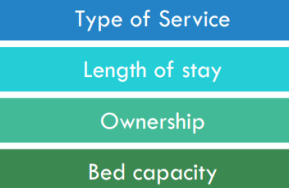
Enumerate the 4 Classification of Hospitals
1. Type of Service
2. Length of stay
3. Ownership
4. Bed capacity
65
New cards
Enumerate the 2 Type of Service
1. General Type
2. Special Type
66
New cards
What Type of Service is the best-known type of hospital, which is set up to deal with many kinds of disease and injury?
General Type
67
New cards
What Type of Service It has an emergency department to deal with immediate and urgent threats to health?
General Type
68
New cards
What Type of Service is SUMC?
General Type
69
New cards
What Type of Service that includes trauma centers, rehabilitation hospitals, children's hospitals, seniors' (geriatric) hospitals, and hospitals for dealing with specific medical needs such as psychiatric problems (see psychiatric hospital), certain disease categories such as cardiac, oncology, or orthopedic problems, and so forth?
Special Type
70
New cards
___ For the treatment and management of cardiovascular conditions.
Philippine Heart Center (PHC)
71
New cards
____ healthcare providers for nephrology, urology and transplant medicine.
National Kidney and Transplant Institute (NKTI) & ST. Lukes Medical Center
72
New cards
____ It has done organ transplants of the liver, pancreas, and bone marrow. It is the first in Asia to perform double transplant operations of both liver and kidney, as well as pancreas and kidney
National Kidney and Transplant Institute (NKTI) & ST. Lukes Medical Center
73
New cards
What Type of Service is Philippine Heart Center (PHC)?
Special Type
74
New cards
What Type of Service is National Kidney and Transplant Institute (NKTI) & ST. Lukes Medical Center?
Special Type
75
New cards
What Type of Service is Lung Center of the Philippines (LCP)?
Special Type
76
New cards
___ specializes in the treatment of lung cancer and pulmonary diseases.
Lung Center of the Philippines (LCP)
77
New cards
___ It also offers executive check- ups and physical therapy for post-stroke patients and those with musculo-skeletal disorders.
Lung Center of the Philippines (LCP)
78
New cards
Enumerate the 2 Length of Stay
1. Short Term
2. Long Term
79
New cards
___ The average length of stay of patient is less than 30 days
Short Term
80
New cards
What Length of Stay?
___ Patients with acute disease conditions and emergency needs.
___ Patients with acute disease conditions and emergency needs.
Short Term
81
New cards
What Length of Stay?
___ Acutely ill patients usually recover in less than 30 days.
___ Acutely ill patients usually recover in less than 30 days.
Short Term
82
New cards
___ Average length of stay of the patient is 30 days or longer
Long Term
83
New cards
What Length of Stay?
___ Such patients have long-term illnesses, such as psychiatric conditions.
___ Such patients have long-term illnesses, such as psychiatric conditions.
Long Term
84
New cards
Enumerate the 2 Ownership
1. Governmental
2. Non-Governmental
85
New cards
What ownership?
__ Veterans Hospital Armed Forces City Hospitals
__ Veterans Hospital Armed Forces City Hospitals
Governmental
86
New cards
What ownership?
__ Church Related or Operated Community Hospitals
__ Church Related or Operated Community Hospitals
Non-Governmental
87
New cards
___ Owned and operated by federal branches of the government.
Governmental
88
New cards
What ownership is City Hospitals?
Governmental
89
New cards
What ownership is General Hospital?
Governmental
90
New cards
___ owned, financed and controlled by the city government.
City Hospitals
91
New cards
___ Hospital caring for the indigent.
General Hospitals
92
New cards
What ownership is Church?
Non-Governmental
93
New cards
What ownership is Community Hospitals?
Non-Governmental
94
New cards
___ SUMC, Visayan Community Medical Center, Cardinal Rosales, Holy Child Hospital (Diocese of Dumaguete)
Church Hospital
95
New cards
____ private owned, non-profit. Operated by the community but with no relation to the local government. The fees from patients are financed by the community and surrounding area.
Community Hospitals
96
New cards
___ determines the number of staff hired for that hospital. ***The greater the number, the more staff hired****.*
Bed Capacity
97
New cards
___ Traditionally, the hospital’s basic purpose for existence has been the treatment and care of the sick and injured.
Functions
98
New cards
Enumerate the 4 Fundamental Functions:
1. Patient Care
2. Education
3. Research
4. Public Health
99
New cards
What Functions?
____ Involves diagnosis, treatment, preventive and rehabilitation?
____ Involves diagnosis, treatment, preventive and rehabilitation?
Patient Care
100
New cards
Enumerate the 2 Types of Patient Care
1. Emergency care
2. Outpatient care
 Note
Note  Flashcards (46)