Lights & Shapes
 Studied by 0 people
 Call with Kai
 Learn
Learn Practice Test
 Spaced Repetition
 Match
Match Flashcards
 Knowt Play
1/67

Earn XP
Description and Tags
These flashcards cover key terms and definitions related to lights and sounds regulations for vessels as outlined in maritime navigation rules.
Name | Mastery | Learn | Test | Matching | Spaced | Call with Kai |
|---|
No study sessions yet.
68 Terms
Masthead light
A white light placed over the fore and aft centerline of the vessel showing an unbroken light over an arc of the horizon of 225 degrees and so fixed as to show the light from right ahead to 22.5 degrees abaft the beam on either side.
Sidelights
A green light on the starboard side and a red light on the port side, each showing an unbroken light over an arc of the horizon of 112.5 degrees from right ahead to 22.5 degrees abaft the beam on its respective side.
Sternlight
A white light placed as nearly as practicable at the stern showing an unbroken light over an arc of the horizon of 135 degrees and so fixed as to show the light 67.5 degrees from right aft on each side.
Towing light
A yellow light having the same characteristics as the sternlight, covering an arc of 135 degrees and placed at the stern.
All-round light
A light showing an unbroken light over an arc of the horizon of 360 degrees.
Flashing light
A light flashing at regular intervals at a frequency of 120 flashes or more per minute.
Rule 22
Visibility of lights
for 50m<
In vessels of 50 metres or more in length:
a masthead light, 6 miles;
a sidelight, 3 miles;
a sternlight, 3 miles;
a towing light, 3 miles;
a white, red, green or yellow all-round light, 3 miles.
Rule 22
Visibility of lights
for 12m<
In vessels of 12 metres or more in length but less than 50 metres in length:
a masthead light, 5 miles; except that where the length of the vessel is less than 20
metres, 3 miles;
a sidelight, 2 miles;
a sternlight, 2 miles;
a towing light, 2 miles;
a white, red, green or yellow all-round light, 2 miles.
Rule 22
Visibility of lights
for 12m >
In vessels of less than 12 metres in length:
a masthead light, 2 miles;
a sidelight, 1 mile;
a sternlight, 2 miles;
a towing light, 2 miles;
a white, red, green or yellow all-round light, 2 miles.
Rule 22
Visibillity of lights
In inconspicuous, partly submerged vessels or objects being towed:
a white all-round light, 3 miles.
Script order for identifying lights
(6)
Type of vessel
Length
Aspect
Special circumstances
Underway
Making way
Rule 23
Power-driven vessels underway
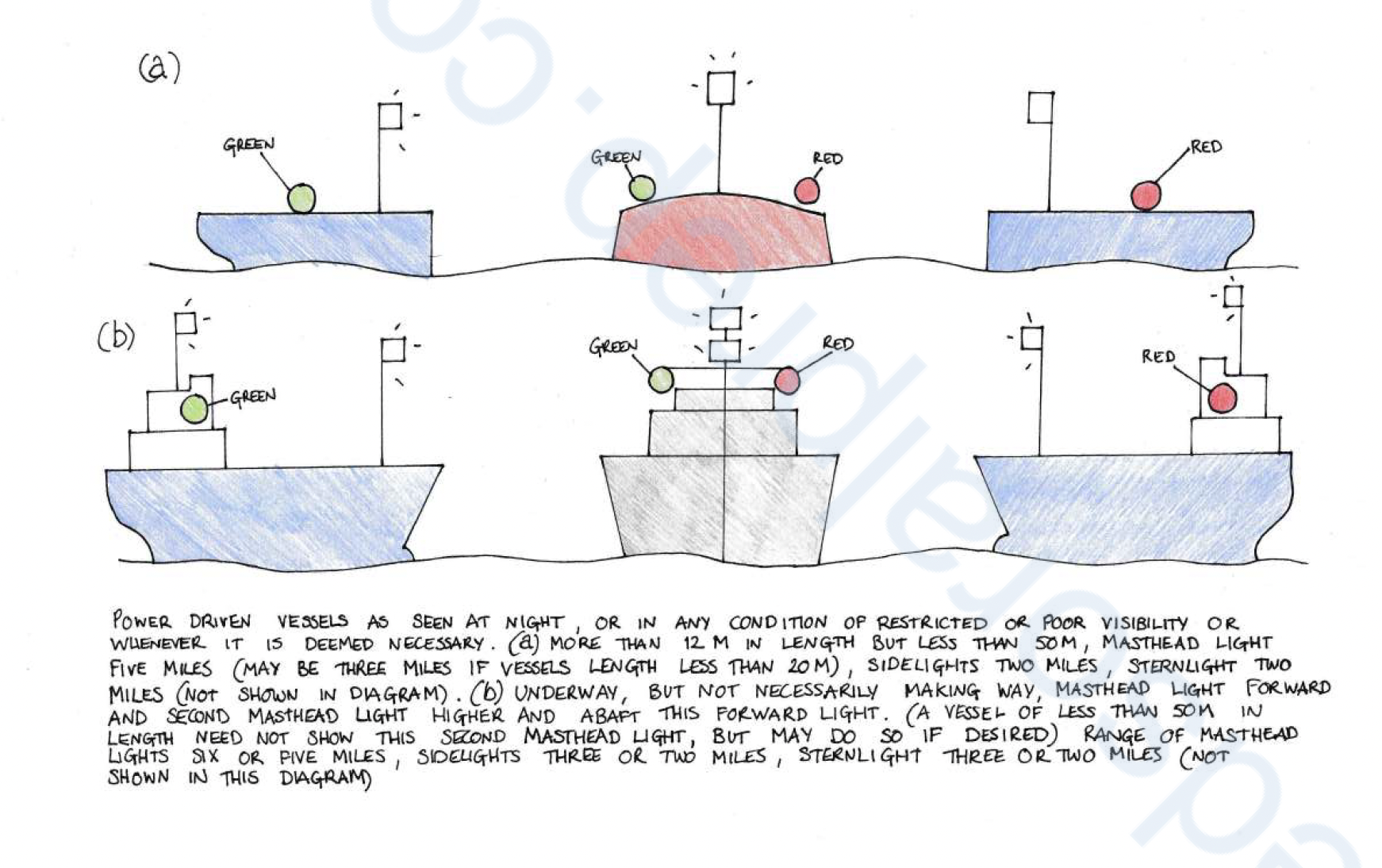
A power-driven vessel underway shall exhibit:
a masthead light forward
if greater than 50m in length, a second masthead light abaft of and higher than the forward one
sidelights
a sternlight
Rule 23
An air-cushion vessel when operating in the non-displacement mode shall display
a masthead light forward
if greater than 50m in length, a second masthead light abaft of and higher than the forward one
sidelights
a sternlight
in addition,
exhibit an all-round flashing yellow light
Rule 23
A WIG craft only when taking-off, landing and in flight near the surface shall display
a masthead light forward
if greater than 50m in length, a second masthead light abaft of and higher than the forward one
sidelights
a sternlight
in addition,
a high intensity all-round flashing red light.
Rule 23
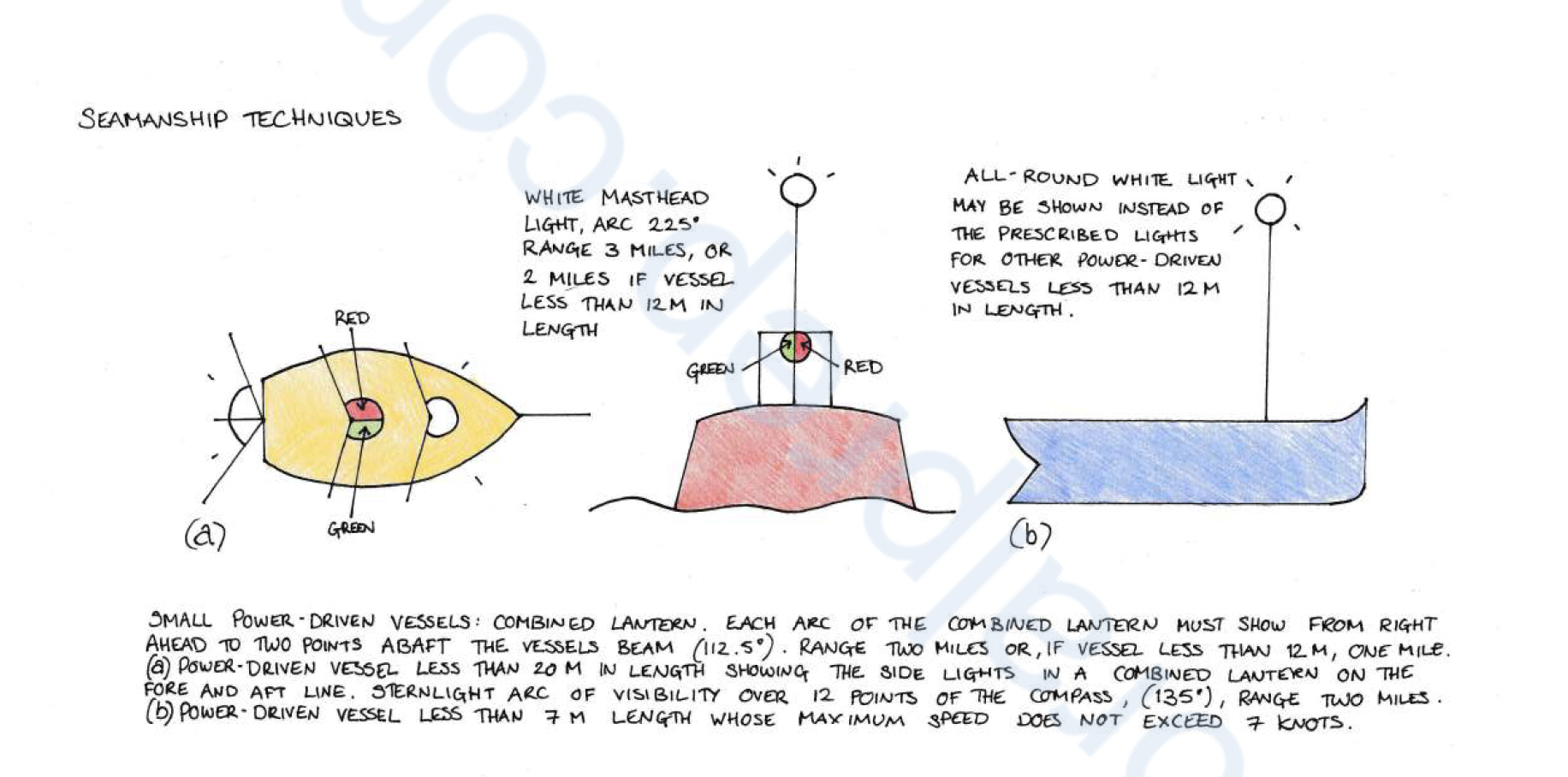
A power-driven vessel of less than 12 metres in length may instead display
all-round white light
sidelights
the masthead light or all-round white light on a power-driven vessel of less than 12 metres in length may be displaced from the fore and aft centreline of the vessel if centreline fitting is not practicable, provided that the sidelights are combined in one lantern which shall be carried on the fore and aft centreline of the vessel or located as nearly as practicable in the same fore and aft line as the masthead light or the all-round white light.
Rule 23
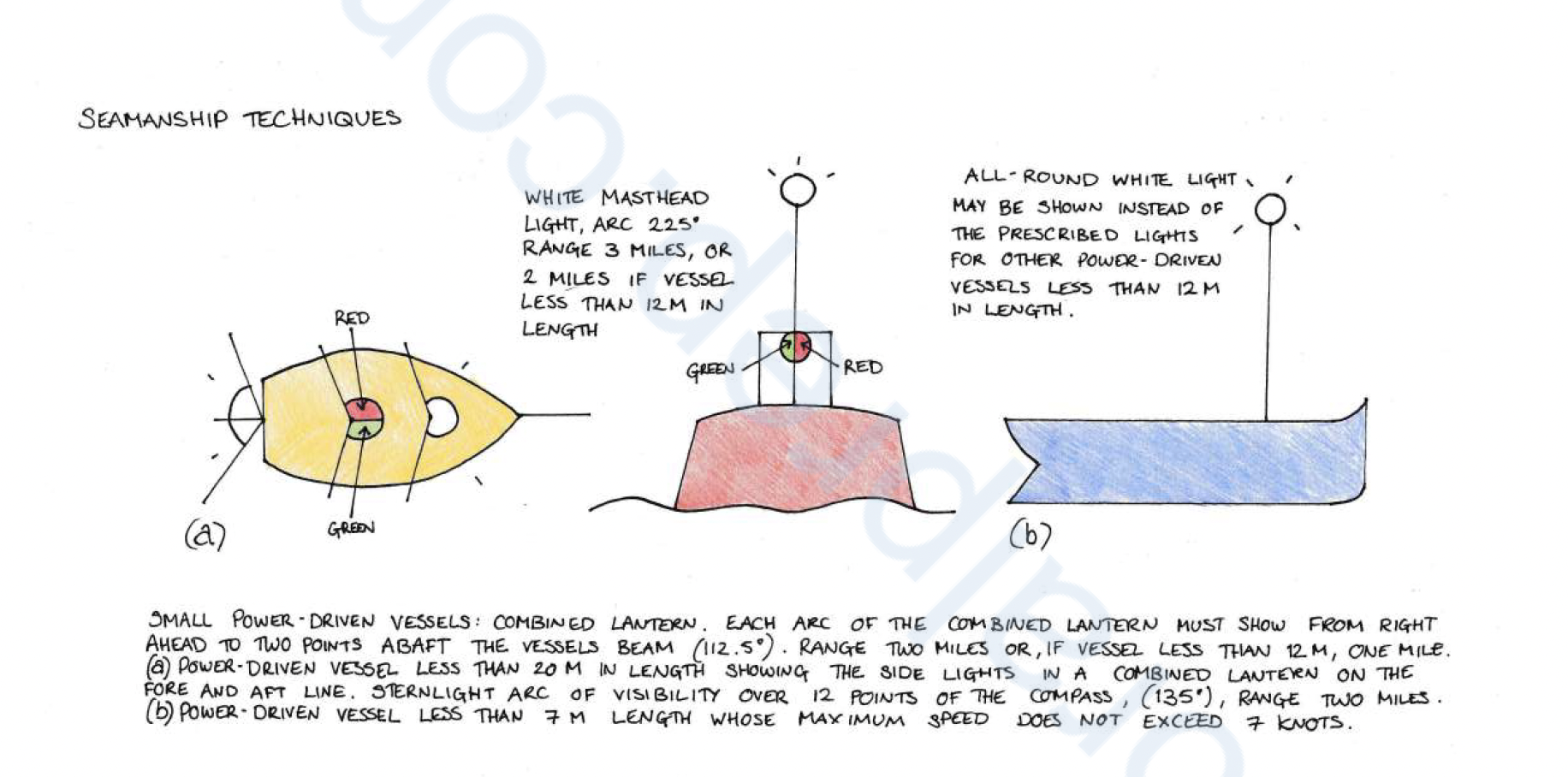
a power-driven vessel of less than 7 metres in length whose maximum speed does not exceed 7 knots may instead display
an all round white light
and shall, if practicable, also exhibit sidelights
Rule 24
Towing and pushing
A power-driven vessel when towing shall exhibit
instead of the light prescribed in Rule 23(a)(i) or (a)(ii),
two masthead lights in a vertical line.
When the length of the tow, measuring from the stern of the towing vessel to the after end of the tow is greater than 200 metres, three such lights in a vertical line
sidelights
a sternlight
a towing light in a vertical line above the sternlight
when the length of the two exceeds 200 metres, a diamond shape where it can best be seen.
‘Towing light’ means a yellow light having the same characteristics as the ‘sternlight’ defined in paragraph I of this Rule.
Rule 24
Towing and pushing
When a pushing vessel and a vessel being pushed ahead are rigidly connected in a composite unit they shall be regarded as a…
they shall be regarded as a power-driven vessel and exhibit the lights prescribed in Rule 23.
a masthead light forward
if greater than 50m in length, a second masthead light abaft of and higher than the forward one
sidelights
a sternlight
Rule 24
Towing and pushing
A power-driven vessel when pushing ahead or towing alongside, except in the case of a composite unit, shall exhibit
instead of the light prescribed in Rule 23,
two masthead lights in a vertical line
sidelights
a sternlight.
Rule 24
Towing and pushing
A vessel or object being towed, other than a partly submerged vessel shall exhibit:
sidelights
a sternlight
when the length of the tow exceeds 200 metres, a diamond shape where it can best be seen.
Rule 24
Towing and pushing
Provided that any number of vessels being towed alongside or pushed in a group shall be lighted as one vessel.
a vessel being pushed ahead, not being part of a composite unit, shall exhibit
at the forward end, sidelights
a vessel being towed alongside shall exhibit
a sternlight
at the forward end, sidelights
Rule 24
Towing and pushing
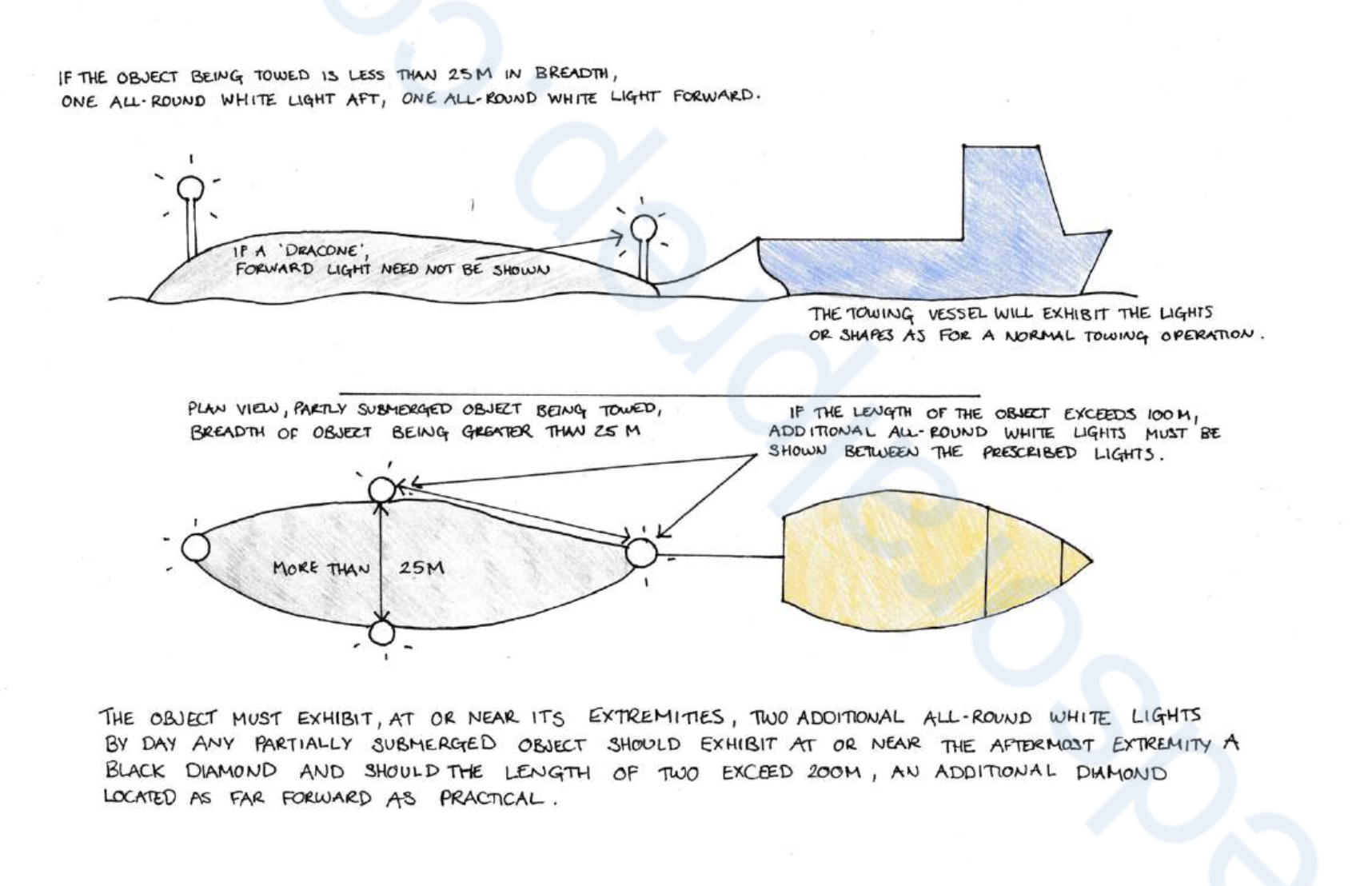
An inconspicuous, partly submerged vessel or object, or combination of such vessels or objects being towed, shall exhibit:
if it is less than 25 metres in breadth,
one all-round white light at the forward end
one all-round white light at the after end except that dracones need not exhibit a light at or near the forward end;
if it is 25 metres or more in breadth,
two additional all-round white lights at or near the extremities of its breadth;
if it exceeds 100 metres in length,
additional all-round white lights between the lights prescribed in sub-paragraphs (i) and (ii) so that the distance between the lights shall not exceed 100 metres;
a diamond shape at or near the aftermost extremity of the last vessel or object being towed and
if the length of the tow exceeds 200 metres
an additional diamond shape where it can best be seen and located as far forward as is practicable.
Rule 25
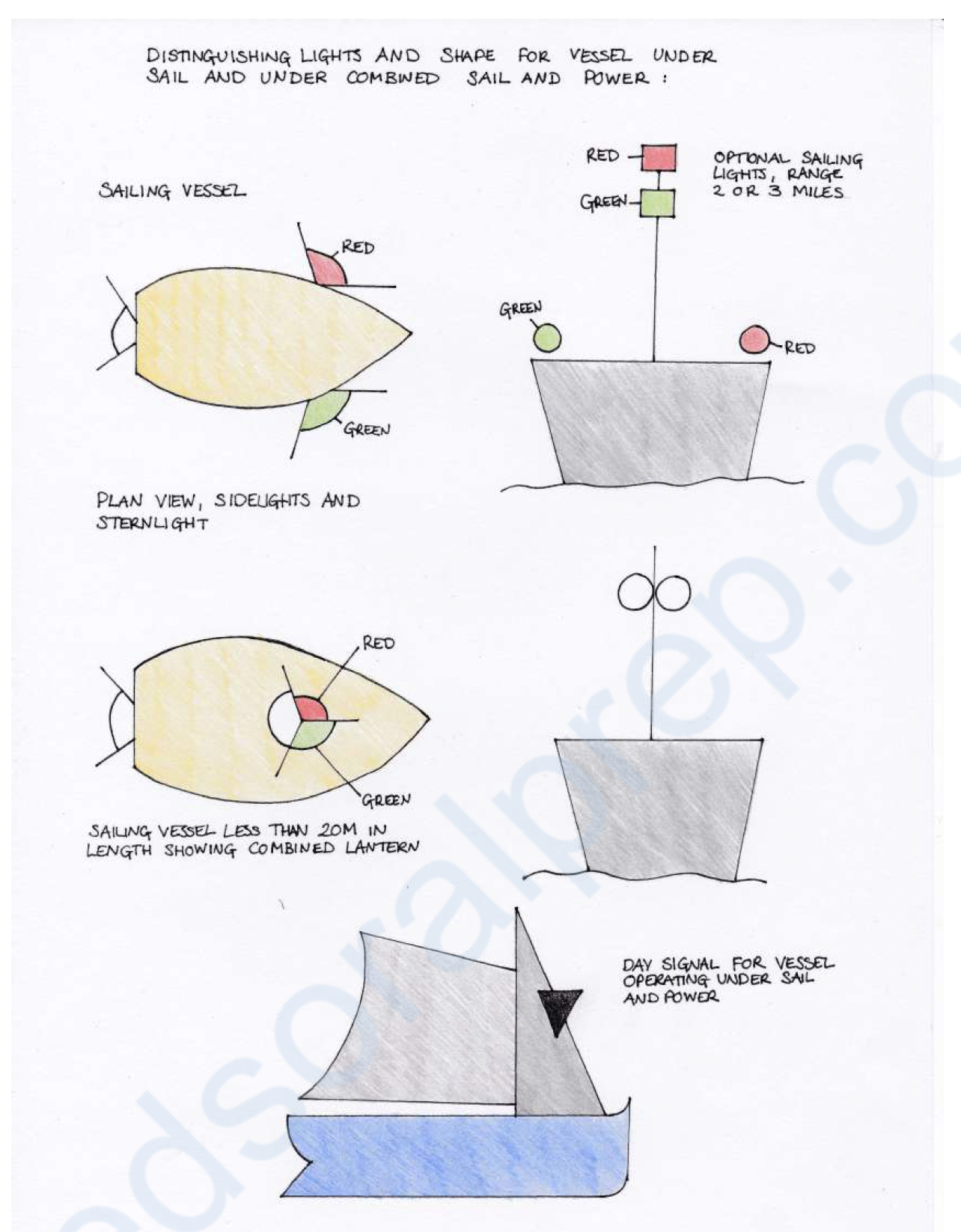
Sailing Vessels Underway and vessels under oars
A sailing vessel underway shall exhibit
20m <
20m >
7m >
sidelights
a sternlight
Sailing vessels underway may in addition to the lights prescribed
exhibit at or near the top of the mast, where they can best be seen, two all-round lights, Red over Green in a vertical line.
In a sailing vessel of less than 20 metres in length
the lights prescribed in this Rule may be combined in one lantern carried at or near the top of the mast where it can best be seen.
A sailing vessel of less than 7 metres in length shall,
if practicable, exhibit the lights prescribed above, but if she does not, she shall have ready at hand an electric torch or lighted lantern showing a white light which shall be exhibited in sufficient time to prevent collision
Rule 25
Sailing Vessels Underway and vessels under oars
A vessel under oars may exhibit
A vessel under oars may exhibit the lights prescribed in this Rule for sailing vessels, but if she does not, she shall have ready at hand an electric torch or lighted lantern showing a white light which shall be exhibited in sufficient time to prevent collision.
Rule 25
Sailing Vessels Underway and vessels under oars
A vessel proceeding under sail when also being propelled by machinery shall exhibit
shall exhibit forward where it can best be seen a conical shape, apex downwards.
Rule 26
Fishing vessels
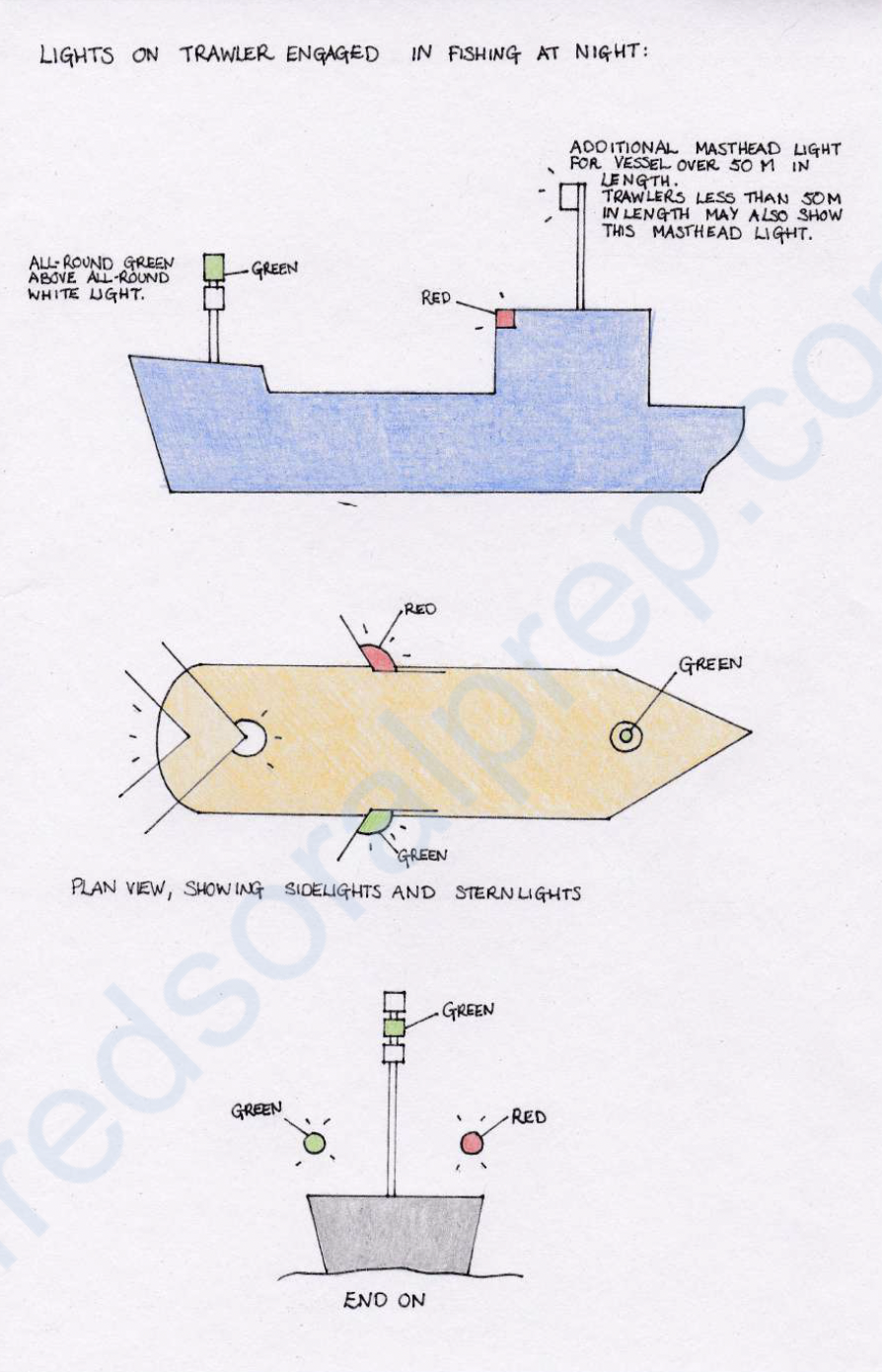
A vessel engaged in Trawling
A vessel when engaged in trawling, by which is meant the dragging through the water of a dredge net or other apparatus used as a fishing appliance, shall exhibit
two all-round lights in a vertical line, green over white OR a shape consisting of two cones with their apexes together in a vertical line one above the other
if greater than 50m in length, a masthead light abaft of and higher than the all-round green light
when making way through the water, in addition to the lights prescribed in this paragraph,
sidelights
a sternlight.
Rule 26
Fishing vessels
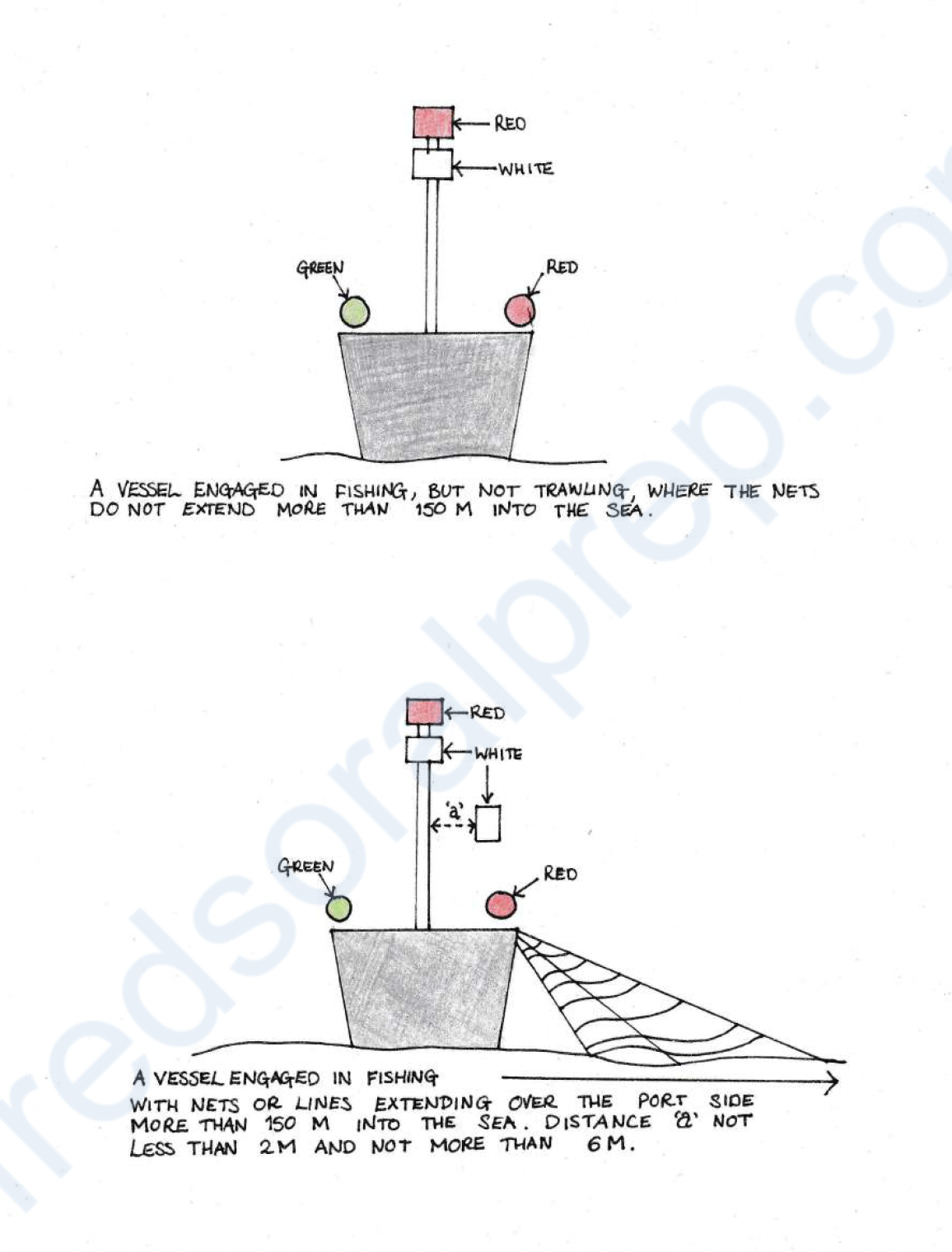
A vessel engaged in fishing, other than trawling, shall exhibit
two all-round lights in a vertical line, Red over White OR a shape consisting of two cones with apexes together in a vertical line one above the other
When there is outlying gear extending more than 150 metres horizontally from the vessel,
an all-round white light or a cone apex upwards in the direction of the gear;
when making way through the water, in addition
sidelights
sternlight.
Rule 27
RAM or NUC
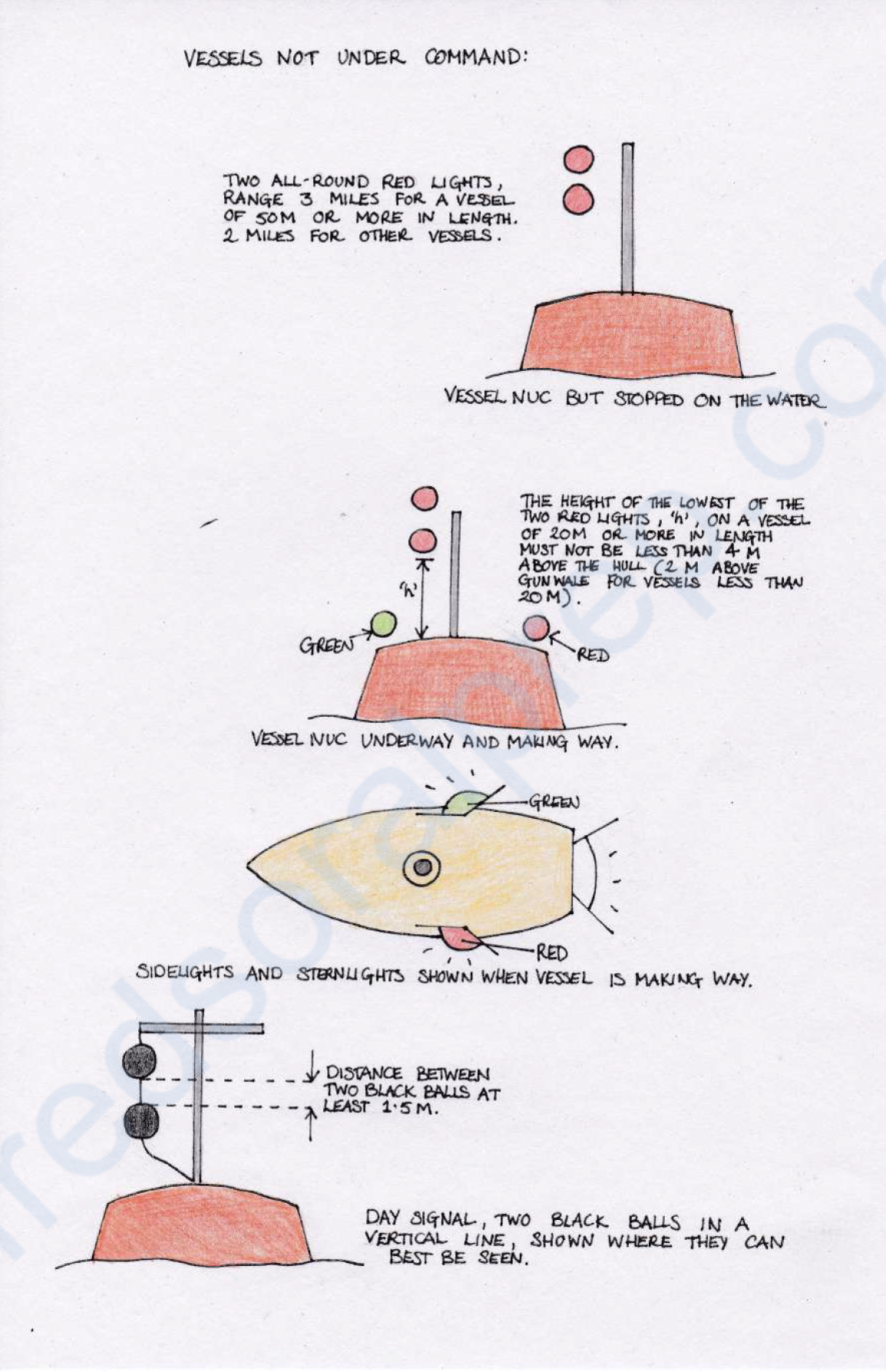
A vessel not under command shall exhibit
two all-round red lights in a vertical line
two balls or similar shapes in a vertical line
when making way through the water, in addition,
sidelights
sternlight.
Rule 27
RAM or NUC
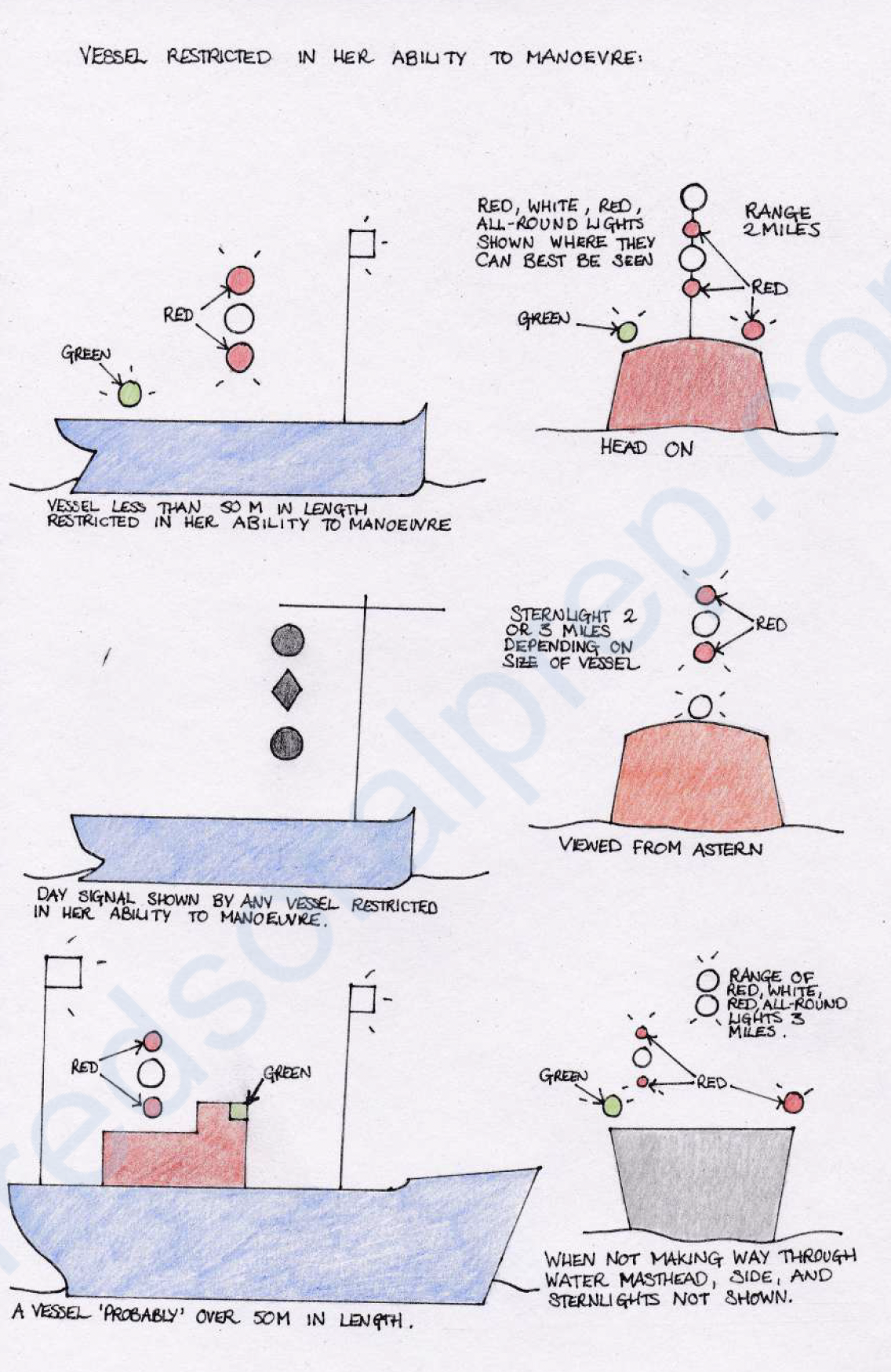
A vessel restricted in her ability to manoeuvre, except a vessel engaged in mine clearance operations, shall exhibit
three all-round lights in a vertical line where they can best be seen. Red/White/Red
three shapes in a vertical line where they can best be seen. Ball/Diamond/Ball
when making way through the water, in addition
masthead lights
sidelights
sternlight
when at anchor, in addition the lights or shape prescribed in Rule 30.
in the fore part, an all-round white light or one ball
at or near the stern and at a lower level than the light prescribed, an all-round white light
Rule 27
RAM or NUC
A power-driven vessel engaged in a towing operation that severely restricts the towing vessel and her tow in their ability to deviate from their course shall
shall display the lights and shapes from Rule 24 and Rule 27
Rule 24
two masthead lights in a vertical line.
When the length of the tow, measuring from the stern of the towing vessel to the after end of the tow is greater than 200 metres, three such lights in a vertical line
sidelights
a sternlight
a towing light in a vertical line above the sternlight
when the length of the two exceeds 200 metres, a diamond shape where it can best be seen.
Rule 27
three all-round lights in a vertical line where they can best be seen. Red/White/Red
three shapes in a vertical line where they can best be seen. Ball/Diamond/Ball
Rule 27
RAM or NUC
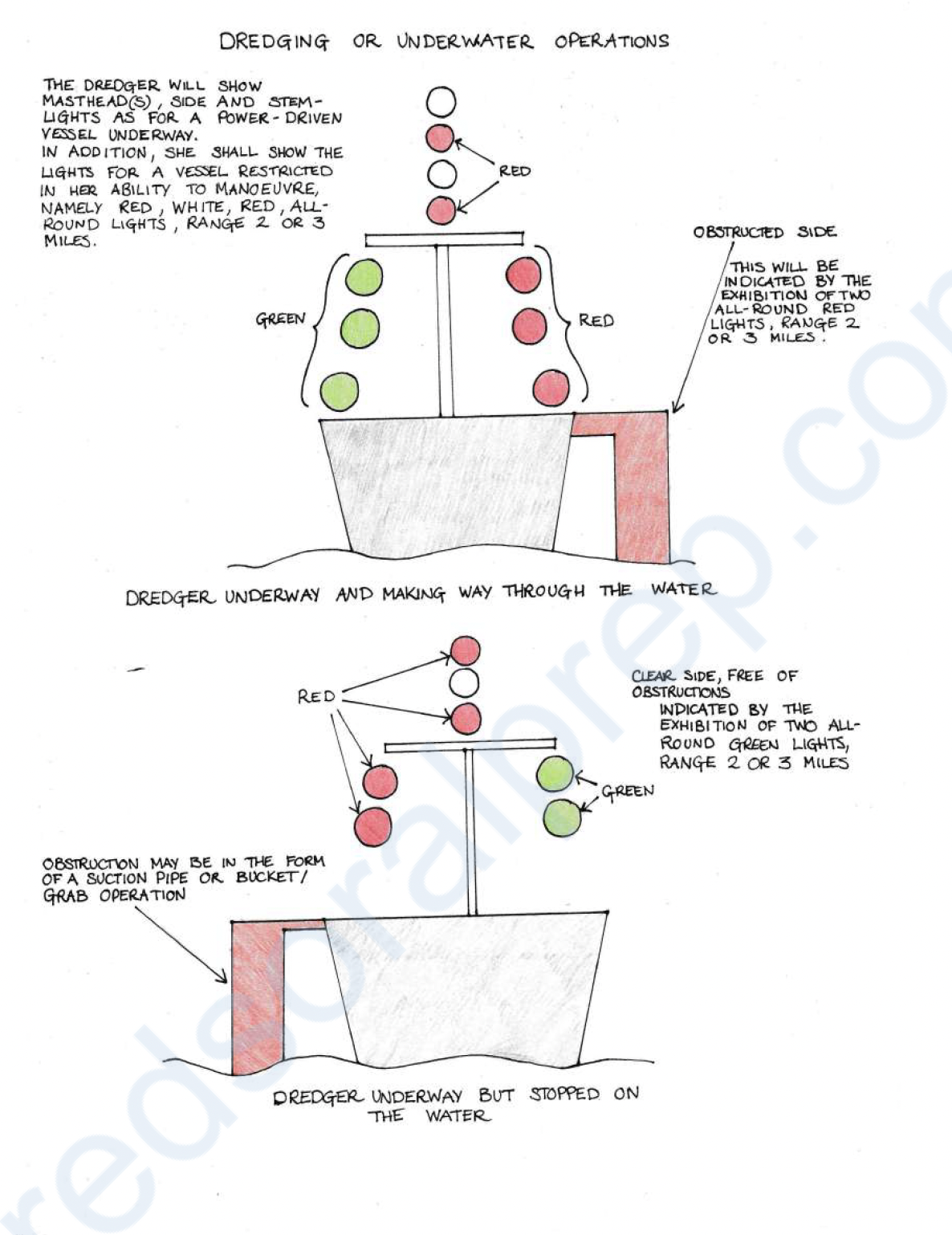
A vessel engaged in dredging or underwater operations, when restricted in her ability to manoeuvre, shall exhibit
three all-round lights in a vertical line where they can best be seen. Red/White/Red
three shapes in a vertical line where they can best be seen. Ball/Diamond/Ball
in addition, when an obstruction exists, exhibit:
two all-round red lights OR two balls in a vertical line to indicate the side on which the obstruction exists
two all-round green lights OR two diamonds in a vertical line to indicate the side on which another vessel may pass
when at anchor, the lights or shapes prescribed in this paragraph instead of the lights or shapes prescribed in Rule 30.
Rule 27
RAM or NUC
Whenever a vessel engaged in diving operations, due to its size makes it impractical to exhibit the lights and shapes prescribed in rule 27(d)
the following shall be exhibited
Three all-round lights in a vertical line. Red/White/Red
a rigid replica of the International Code flag ‘A’ not less than 1 metre in height. Measures shall be taken to ensure its all-round visibility
Rule 27
RAM or NUC
A vessel engaged in mine clearance operations shall exhibit
in addition to the lights prescribed for a power-driven vessel in Rule 23 or for a vessel at anchor in Rule 30 as appropriate, exhibit
three all-round green lights OR three balls. One of these lights or shapes shall be exhibited near the foremast head and one at each end of the fore yard.
These lights or shapes indicate that it is dangerous for another vessel to approach within 1000 metres of the mine clearance vessel.

Rule 27
RAM or NUC
Vessels of less than 12 metres in length, except those engaged in diving operations, shall …
shall not be required to exhibit the lights and shapes prescribed in this Rule
Rule 28
Vessels constrained by their draught
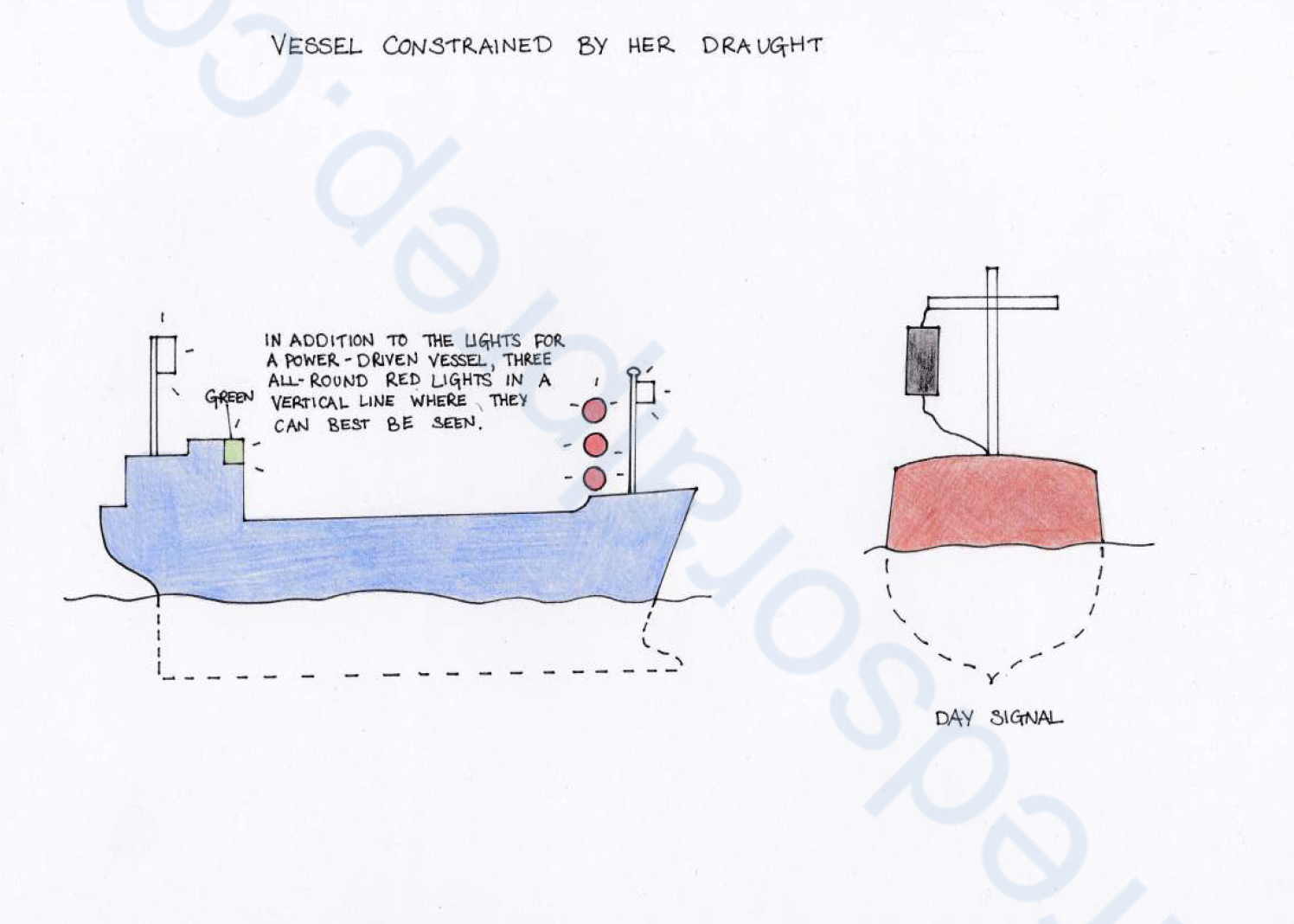
A vessel constrained by her draught may, in addition to the lights prescribed for power-driven vessels in Rule 23, exhibit
three all-round red lights in a vertical line
OR a cylinder.
Rule 29
Pilot vessels
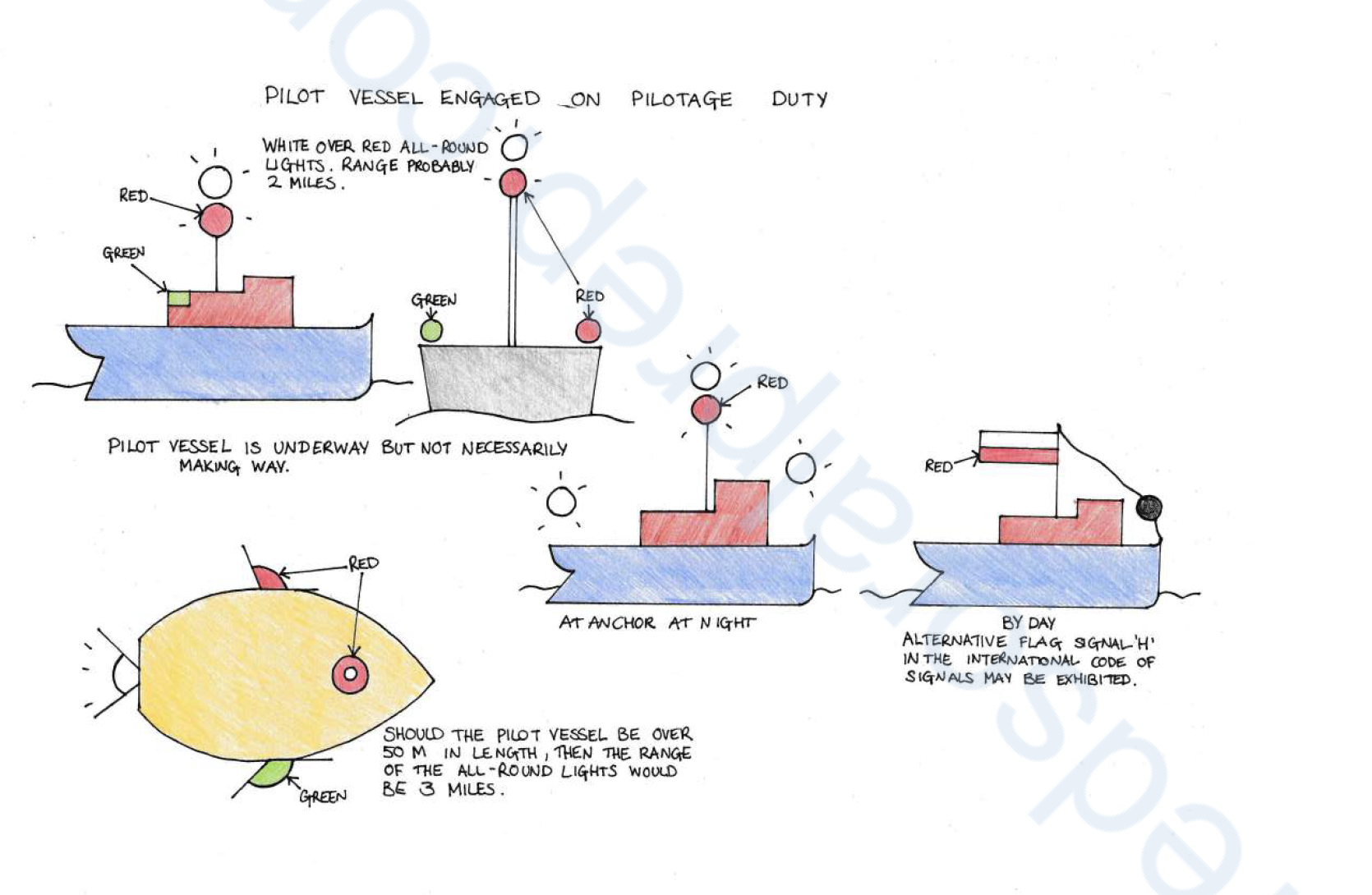
A vessel engaged in pilotage duty shall exhibit:
at or near the masthead, two all-round lights in a vertical line, White over Red
when underway, in addition
sidelights
a sternlight
when at anchor, in addition
the lights or shape prescribed in Rule 30 for vessels at anchor.
A pilot vessel when not engaged on pilotage duty shall exhibit the lights or shapes prescribed for a similar vessel of her length.
Rule 30
Anchored vessels and vessels aground
A vessel at anchor shall exhibit where it can best be seen:
Vessels are at anchor so long as the anchor is down and is holding. When weighing anchor, a vessel continues to be at anchor until the anchor is out of the ground.
in the fore part, an all-round white light or one ball
at or near the stern and at a lower level than the light prescribed above, an all-round white light
A vessel of less than 50 metres in length may exhibit
an all-round white light where it can best be seen instead of the lights prescribed in paragraph (a) of this Rule.
A vessel at anchor may, and a vessel of 100 metres and more in length shall,
also use the available working or equivalent lights to illuminate her decks.
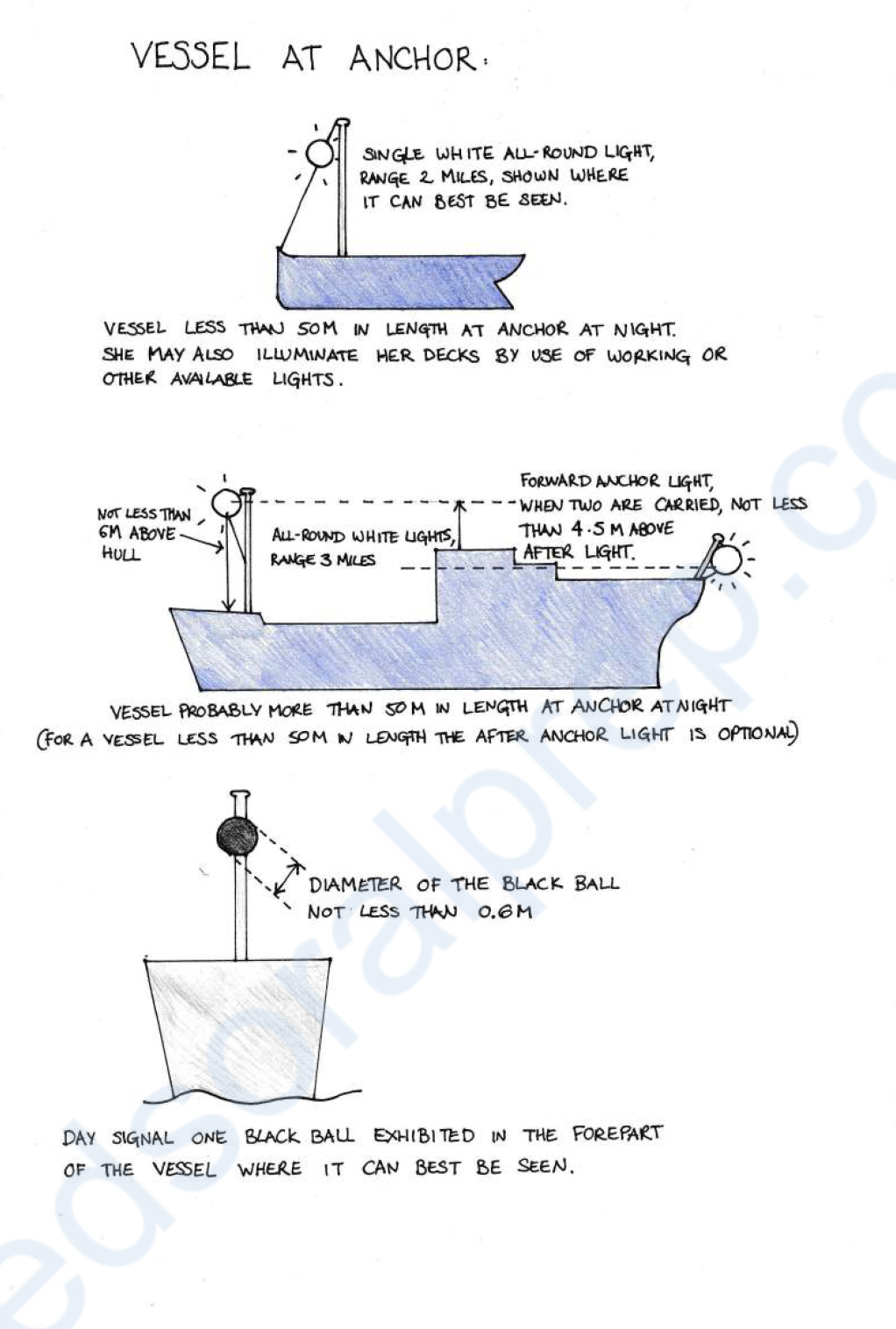
Rule 30
Anchored vessels and vessels aground
A vessel aground shall exhibit
A vessel aground shall exhibit the lights prescribed in paragraph (a) or (b) of this Rule and in addition, where they can best be seen:
two all-round red lights in a vertical line
three balls in a vertical line.
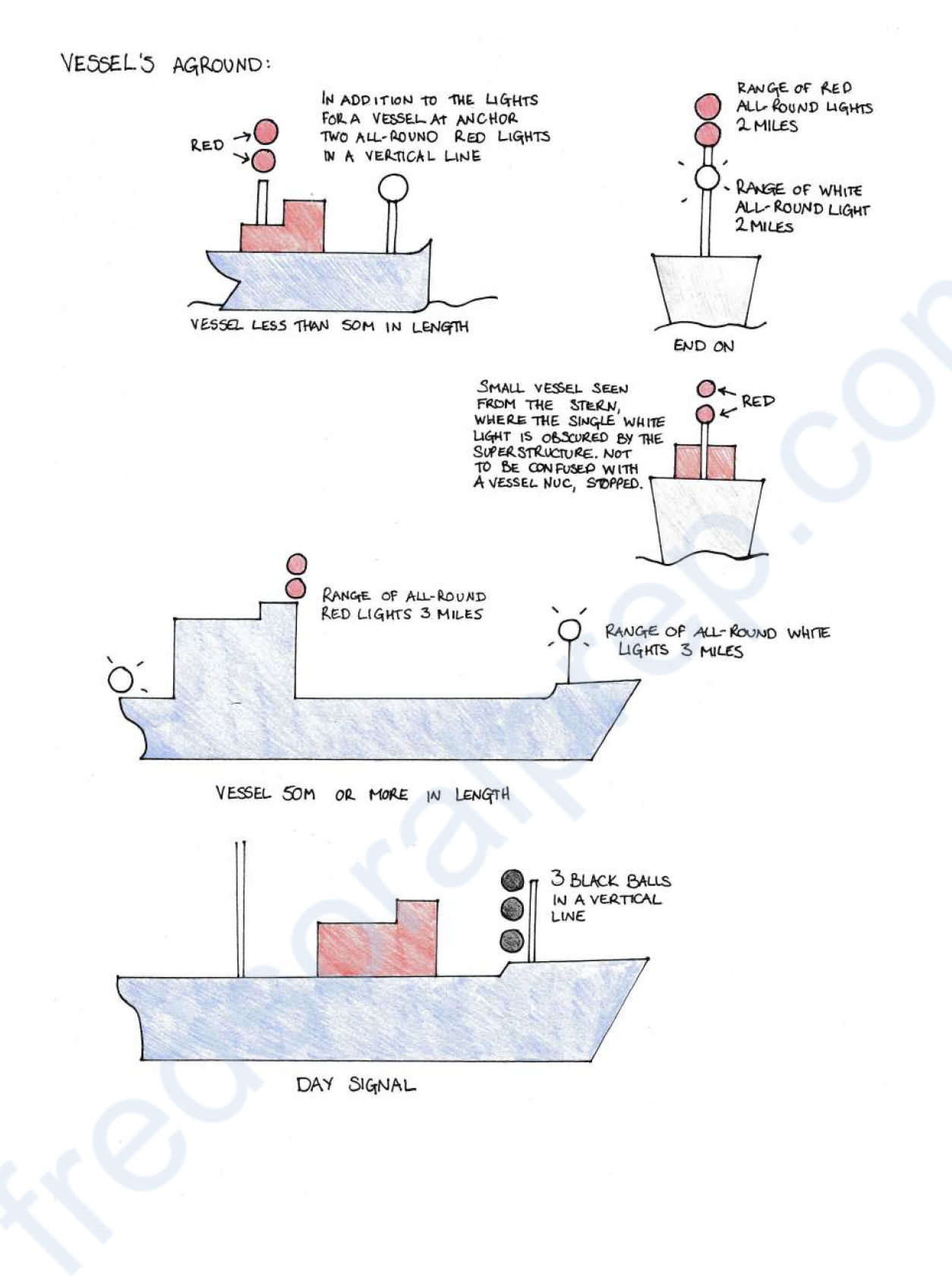
Rule 30
Anchored vessels and vessels aground
Vessels 7m >
Vessels 12m >
when at anchor, not in or near a narrow channel, fairway or anchorage, or where other vessels normally navigate
A vessel of less than 7 metres in length, when at anchor, not in or near a narrow channel, fairway or anchorage, or where other vessels normally navigate, shall not be required to exhibit the lights or shapes prescribed in paragraphs (a) and (b) of this Rule.
A vessel of less than 12 metres in length, when aground, shall not be required to exhibit the lights or shapes prescribed in sub-paragraphs (d)(i) and (ii) of this Rule.
The word ‘whistle’ means
The word ‘whistle’ means any sound signalling appliance capable of producing the prescribed blasts and which complies with the specifications in Annex III to these Regulations.
The term ‘short blast’ means
The term ‘short blast’ means a blast of about one second’s duration
The term ‘prolonged blast’ means
The term ‘prolonged blast’ means a blast of from four to six seconds’ duration
Rule 34
Manoeuvring and warning signals
When vessels are in sight of one another, a power-driven vessel underway, when manoeuvring as authorised or required by these Rules, shall indicate that manoeuvre by the following signals on her whistle
Stbd
Port
Astern
one short blast to mean ‘I am altering my course to starboard’;
two short blasts to mean ‘I am altering my course to port’
three short blasts to mean ‘I am operating astern propulsion’.
Rule 34
Manoeuvring and warning signals
Any vessel may supplement the whistle signals prescribed in paragraph (a) of this Rule by light signals, repeated as appropriate, while the manoeuvre is being carried out:
these light signals shall have the following significance:
Stbd
Port
Astern
one flash to mean ‘I am altering my course to starboard’;
two flashes to mean ‘I am altering my course to port’;
three flashes to mean ‘I am operating astern propulsion’;
the duration of each flash shall be about one second, the interval between flashes shall be about one second, and the interval between successive signals shall be not less than ten seconds;
the light used for this signal shall, if fitted, be an all-round white light, visible at a minimum range of 5 miles, and shall comply with the provisions of Annex I to these Regulations.
Rule 34
Manoeuvring and warning signals
When in sight of one another in a narrow channel or fairway,
a vessel intending to overtake another shall indicate her
intention by the following signals on her whistle
the vessel about to be overtaken shall indicate her agreement by the following signal on her whistle
When in sight of one another in a narrow channel or fairway, a vessel intending to overtake another shall indicate her intention by the following signals on her whistle
two prolonged blasts followed by one short blast to mean ‘I intend to overtake you on your starboard side’;
two prolonged blasts followed by two short blasts to mean ‘I intend to overtake you on your port side’
the vessel about to be overtaken shall indicate her agreement by the following signal on her whistle
one prolonged, one short, one prolonged and one short blast
——— — ——— —
Rule 34
Manoeuvring and warning signals
When vessels in sight of one another are approaching each other and fails to understand the intentions or actions of the other vessel or is in doubt whether sufficient action is being taken by the other to avoid collision, the vessel shall immediately indicate such by..
When vessels in sight of one another are approaching each other and from any cause either vessel fails to understand the intentions or actions of the other or is in doubt whether sufficient action is being taken by the other to avoid collision, the vessel in doubt shall immediately indicate such doubt by giving
at least five short and rapid blasts on the whistle. Such signal may be supplemented by a light signal of at least five short and rapid flashes.
— — — — —
Rule 34
Manoeuvring and warning signals
A vessel nearing a bend or an area of a channel or fairway where other vessels may be obscured by an intervening obstruction shall sound …
shall sound one prolonged blast.
———
Such signal shall be answered with a prolonged blast by any approaching vessel that may be within hearing around the bend or behind the intervening obstruction.
Sound signals
Audible indicators like whistles, bells, or gongs used to communicate maneuvers or presence, specifically during restricted visibility to avoid maritime collisions.
Restricted visibility
The term “restricted visibility” means any condition in which visibility is restricted by fog, mist, falling snow, heavy rainstorms, sandstorms or any other similar causes
Rule 35
Sound signals in restricted visibility
A power-driven vessel making way through the water shall sound
A power-driven vessel making way through the water shall sound
at intervals of not more than 2 minutes
one prolonged blast.
———
Rule 35
Sound signals in restricted visibility
A power-driven vessel underway but stopped and making no way through the water shall sound
A power-driven vessel underway but stopped and making no way through the water shall sound
at intervals of not more than 2 minutes
two prolonged blasts in succession with an interval of about 2 seconds between them.
—— ——
Rule 35
Sound signals in restricted visibility
NUC , RAM , CBD , SAIL , FISH and TOW/PUSH shall sound
sound at intervals of not more than 2 minutes
three blasts in succession, one prolonged followed by two short blasts
—— — —
Rule 35
Sound signals in restricted visibility
FISH @Anchor carrying out work shall sound
RAM @Anchor carrying out work shall sound
sound at intervals of not more than 2 minutes
three blasts in succession, one prolonged followed by two short blasts
—— — —
Rule 35
Sound signals in restricted visibility
A vessel towed or if more than one vessel is towed the last vessel of the tow, if manned, shall sound
at intervals of not more than 2 minutes
sound four blasts in succession, one prolonged followed by three short blasts. —— — — —
When practicable, this signal shall be made immediately after the signal made by the towing vessel.
Rule 35
Sound signals in restricted visibility
When a pushing vessel and a vessel being pushed ahead are rigidly connected in a
composite unit they shall be regarded as …
shall be regarded as a power-driven vessel and shall give the signals as such
A power-driven vessel making way through the water shall sound
at intervals of not more than 2 minutes
one prolonged blast.
A power-driven vessel underway but stopped and making no way through the water shall sound
at intervals of not more than 2 minutes
two prolonged blasts in succession with an interval of about 2 seconds between them.
Rule 35
Sound signals in restricted visibility
A vessel at anchor shall sound
A vessel at anchor shall
at intervals of not more than one-minute
ring the bell rapidly for about 5 seconds.
In a vessel of 100 metres or more in length
the bell shall be sounded in the forepart of the vessel
and immediately after the ringing of the bell the gong shall be sounded rapidly for about 5 seconds in the after part of the vessel.
A vessel at anchor may in addition sound three blasts in succession, one short, one prolonged and one short blast, to give warning of her position and of the possibility of collision to an approaching vessel.
Rule 35
Sound signals in restricted visibility
A vessel aground shall …
A vessel aground shall give the bell signal and if required the gong signal prescribed for a vessel at anchor,
in addition, give three separate and distinct strokes on the bell immediately before and after the rapid ringing of the bell.
A vessel aground may in addition sound an appropriate whistle signal.
Rule 35
Sound signals in restricted visibility
A vessel of 12 metres or more but less than 20 metres in length shall …
A vessel of 12 metres or more but less than 20 metres in length shall not be obliged to give the bell signals at anchor or aground.
However, if she does not, she shall make some other efficient sound signal at intervals of not more than 2 minutes
Rule 35
Sound signals in restricted visibility
A vessel of less than 12 metres in length shall …
A vessel of less than 12 metres in length shall not be obliged to give the bell signals at anchor or aground,
but if she does not, shall make some other efficient sound signal at intervals of not more than 2 minutes.
Rule 35
Sound signals in restricted visibility
A pilot vessel when engaged on pilotage duty may in addition to the signals prescribed in this rule …,
A pilot vessel when engaged on pilotage duty may in addition to the signals prescribed in this rule, sound an identity signal consisting of four short blasts.
— — — —
ANNEX I
Shapes
Colour?
Ball ?
Cone?
Cylinder?
Diamond?
Vertical distance between shapes?
Shapes shall be black
a ball shall have a diameter of not less than 0.6 metre
a cone shall have a base diameter of not less than 0.6 metre and a height equal to its diameter
a cylinder shall have a diameter of at least 0.6 metre and a height of twice its diameter;
a diamond shape shall consist of two cones as defined in (Cone) above having a common base.
The vertical distance between shapes shall be at least 1.5 metres
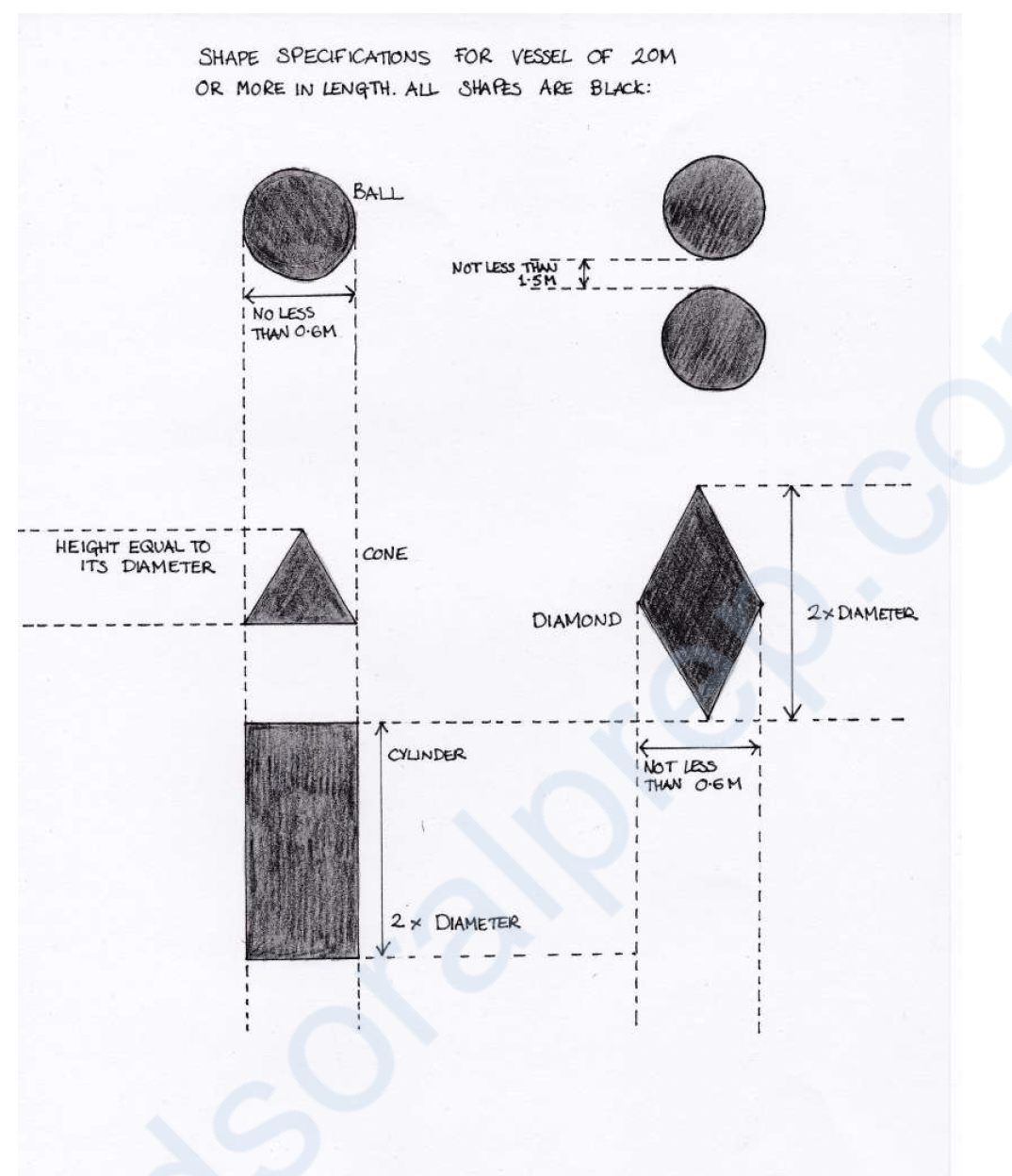
ANNEX I
Shapes
In a vessel of less than 20 metres in length…
In a vessel of less than 20 metres in length, shapes of lesser dimensions but in proportion with the size of the vessel may be used and the distance apart may be correspondingly reduced.
ANNEX II
Additional signals for fishing vessels fishing in close proximity
The lights mentioned herein shall, in accordance with Rule 26, be placed ….
be placed where they can best be seen.
They shall be at least 0.9 metre apart but at a lower level than lights prescribed in Rule 26(b)(i) and (c)(i).
The lights shall be visible all-round the horizon at a distance of at least 1 mile but at a lesser distance than the lights prescribed by these Rules for fishing vessels.
ANNEX II
Additional signals for fishing vessels fishing in close proximity
Signals for trawlers
Vessels of 20 metres or more in length when engaged in trawling, whether using demersal or pelagic gear, shall exhibit
Vessels of 20 metres or more in length when engaged in trawling shall exhibit
when shooting their nets, two white lights in a vertical line
when hauling their nets, White over Red in a vertical line;
when the net has come fast upon an obstruction, two red lights in a vertical line.
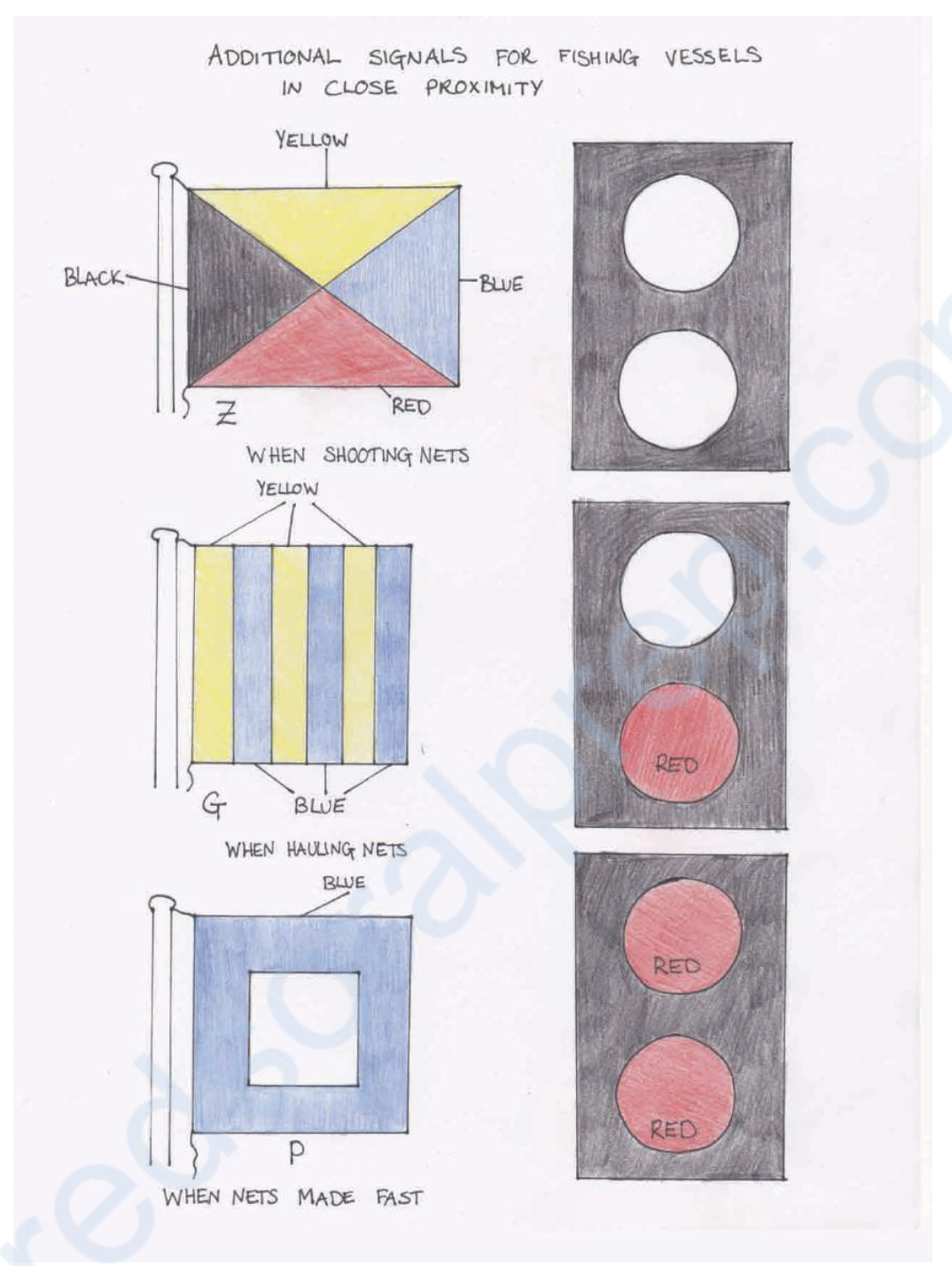
ANNEX II
Additional signals for fishing vessels fishing in close proximity
Signals for trawlers
Each vessel of 20 metres or more in length engaged in pair trawling shall exhibit
by night, a searchlight directed forward and in the direction of the other vessel of the pair
when shooting or hauling their nets or when their nets have come fast upon an obstruction, the lights prescribed 2 of this rule
when shooting their nets, two white lights in a vertical line
when hauling their nets, White over Red in a vertical line;
when the net has come fast upon an obstruction, two red lights in a vertical line.
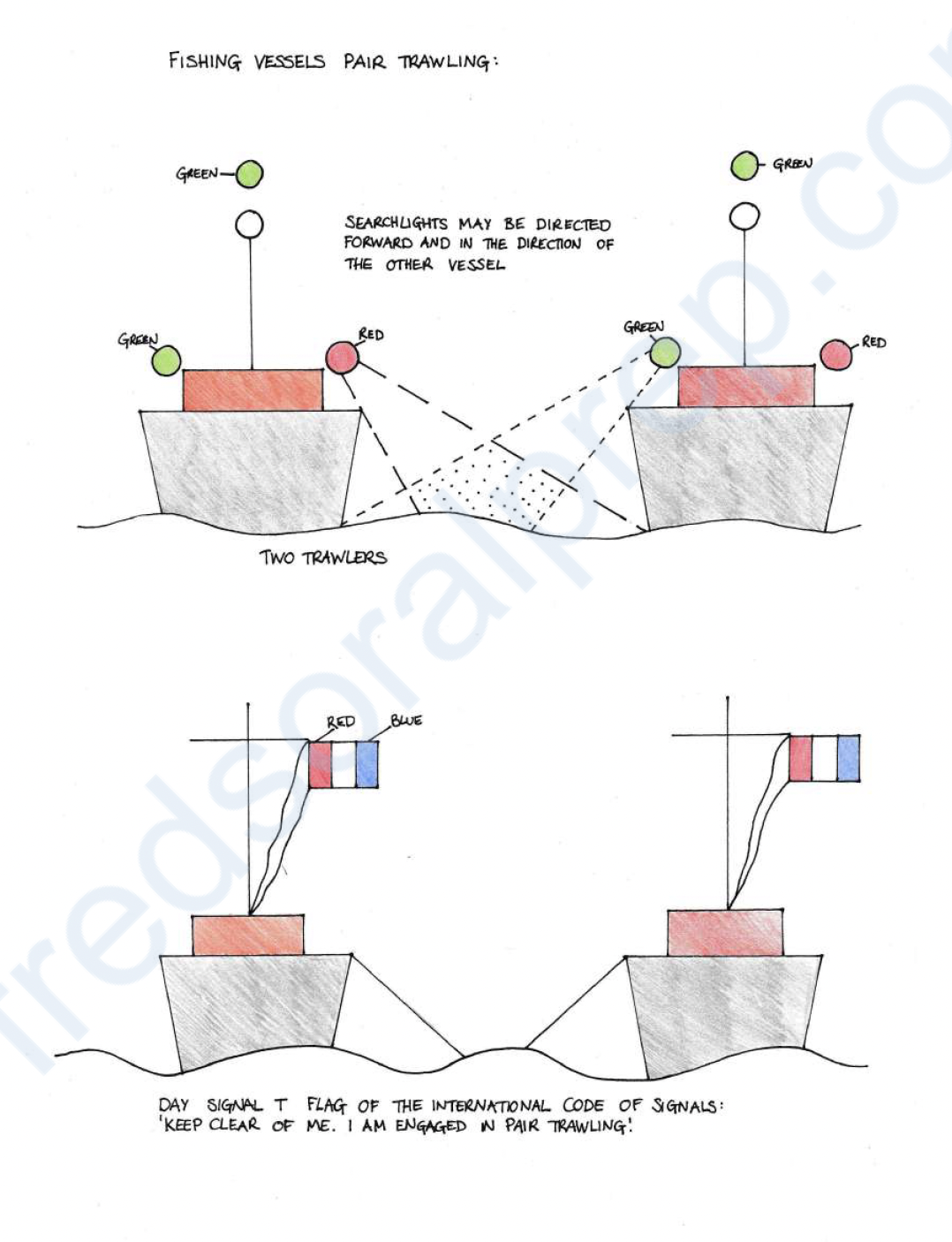
ANNEX II
Additional signals for fishing vessels fishing in close proximity
Signals for trawlers
A vessel of less than 20 metres in length engaged in trawling, whether using demersal or pelagic gear or engaged in pair trawling, may exhibit
A vessel of less than 20 metres in length engaged in trawling, whether using demersal or pelagic gear or engaged in pair trawling, may exhibit the lights prescribed in paragraphs (a) or (b) of this section, as appropriate.
by night, a searchlight directed forward and in the direction of the other vessel of the pair
when shooting or hauling their nets or when their nets have come fast upon an obstruction, the lights prescribed 2 of this rule
when shooting their nets, two white lights in a vertical line
when hauling their nets, White over Red in a vertical line;
when the net has come fast upon an obstruction, two red lights in a vertical line.
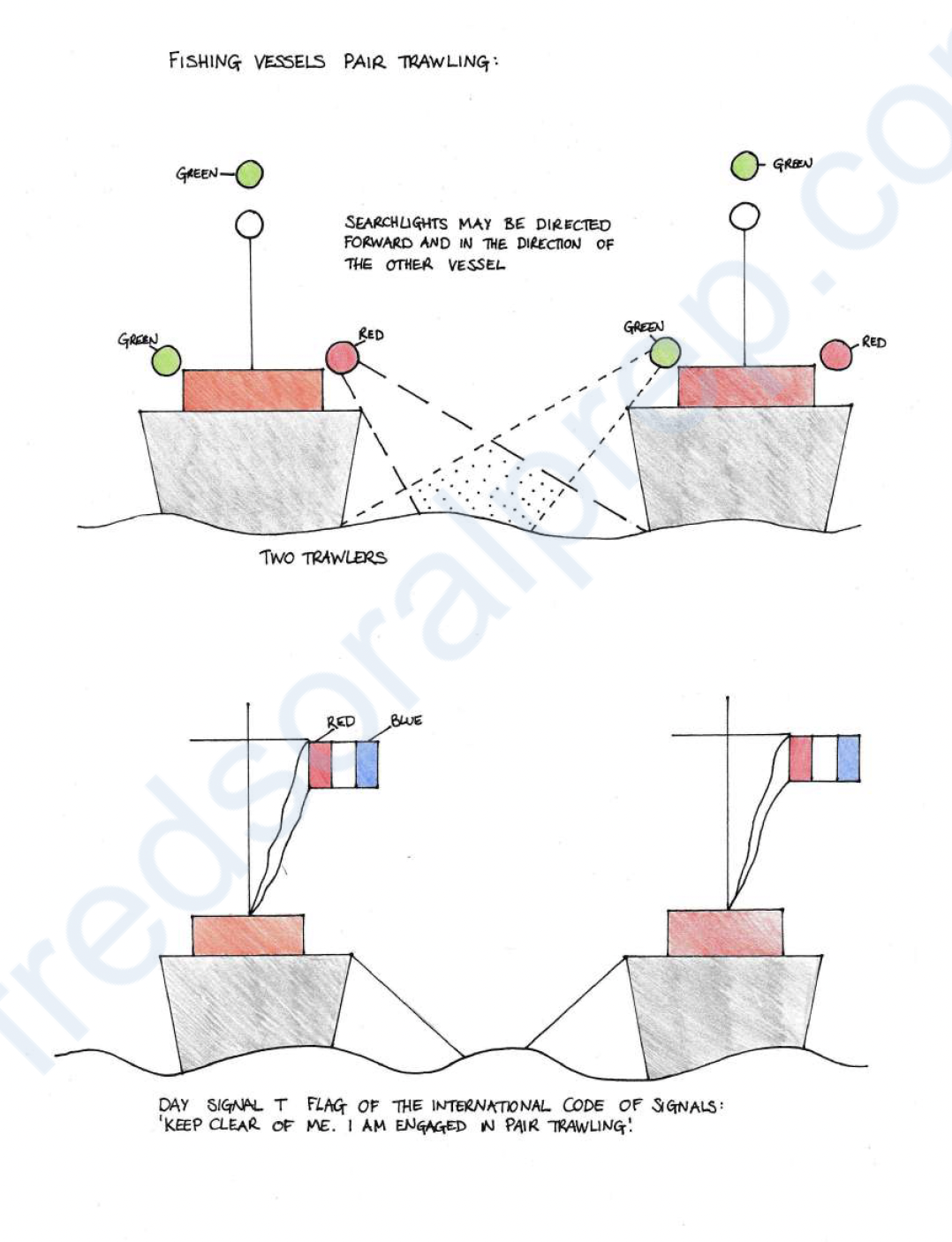
ANNEX II
Signals for purse seiners
Vessels engaged in fishing with purse seine gear may exhibit
Vessels engaged in fishing with purse seine gear may exhibit two yellow lights in a vertical line.
These lights shall flash alternately every second and with equal light and occultation duration.
These lights may be exhibited only when the vessel is hampered by its fishing gear.
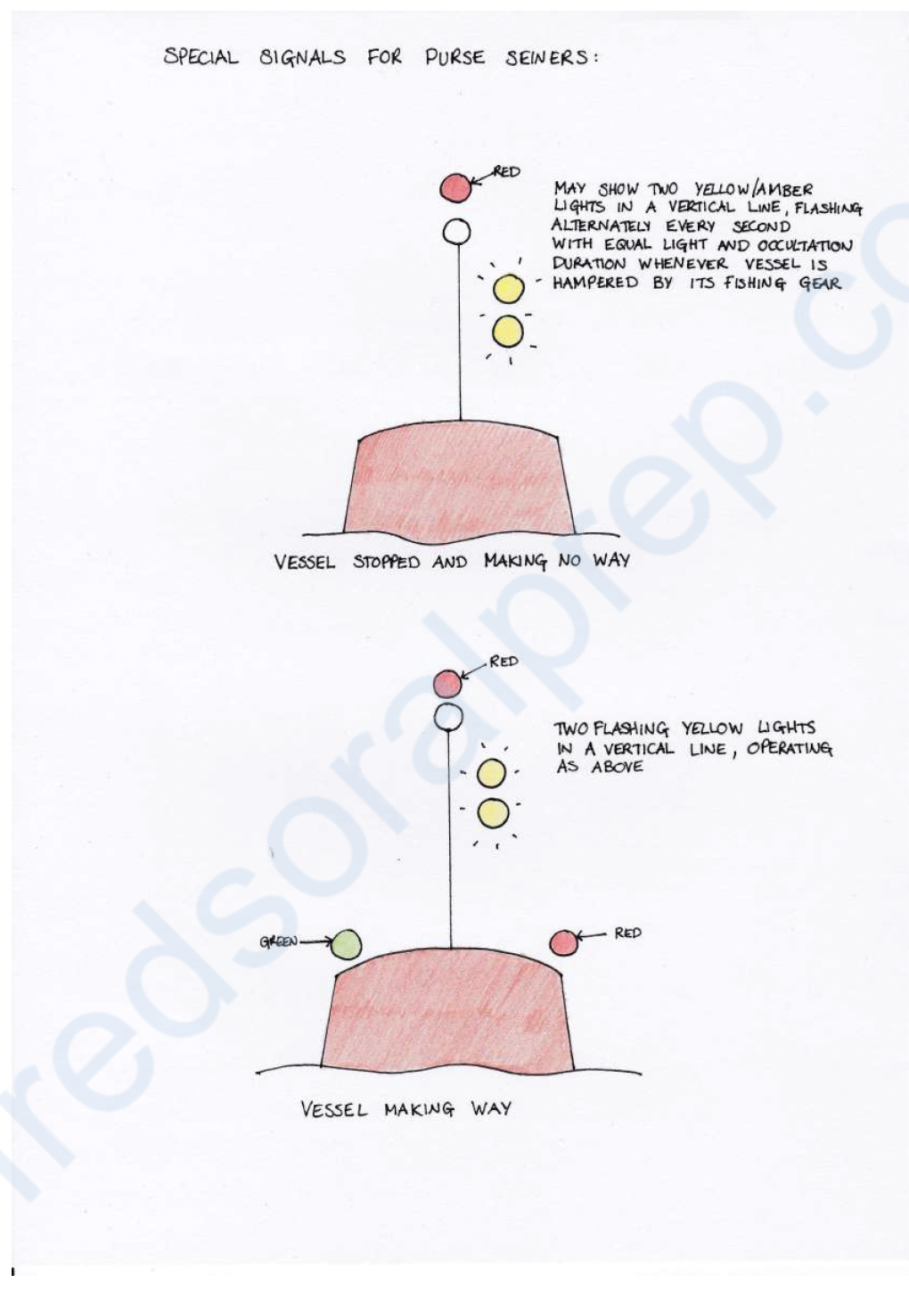
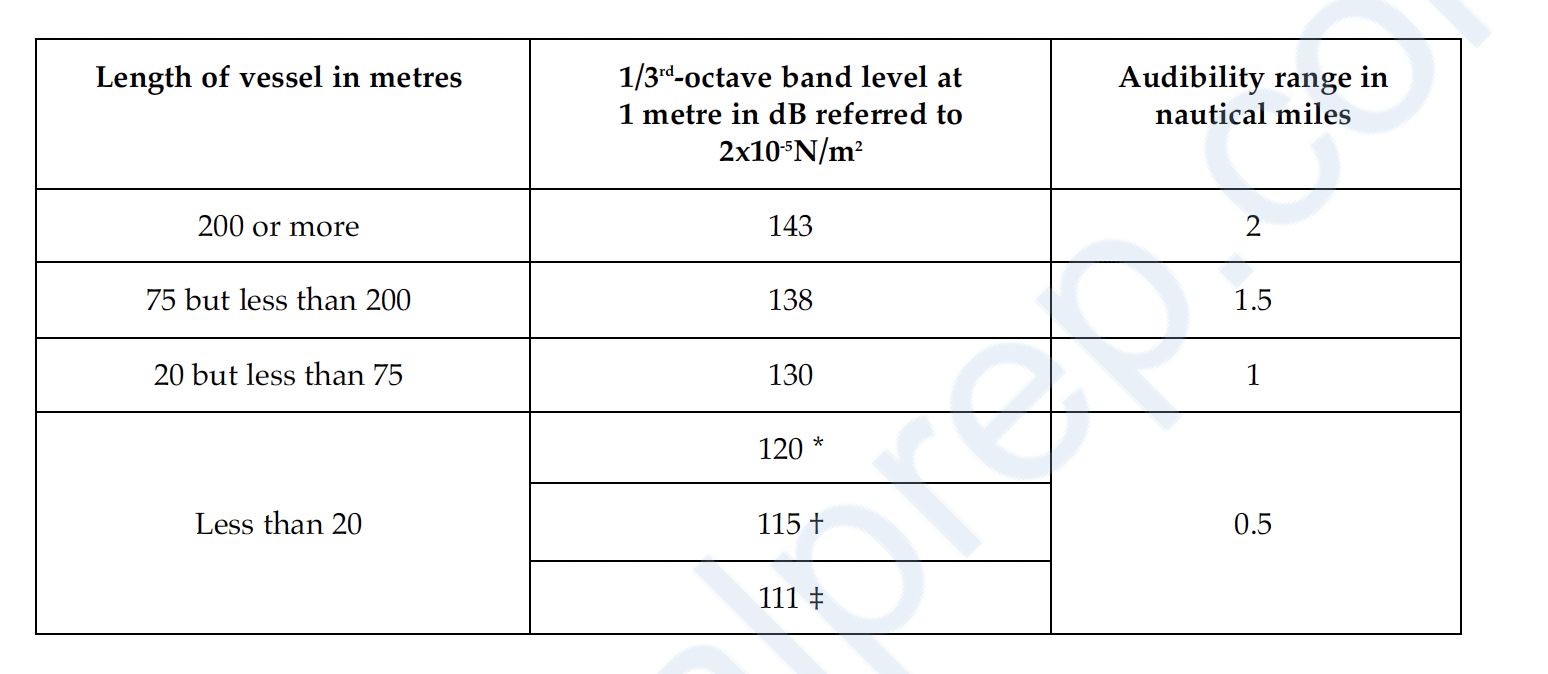
ANNEX III
Technical details of sound signal appliances
 Note
Note  Flashcards (187)