ACCT 201B - Chapter 9: Flexible budgets, Standard Costs, and Variance Analysis
 Call Kai
 Learn
Learn Practice Test
 Spaced Repetition
 Match
Match Flashcards
 Knowt Play
1/17

There's no tags or description
Looks like no tags are added yet.
Name | Mastery | Learn | Test | Matching | Spaced | Call with Kai |
|---|
No analytics yet
Send a link to your students to track their progress
18 Terms
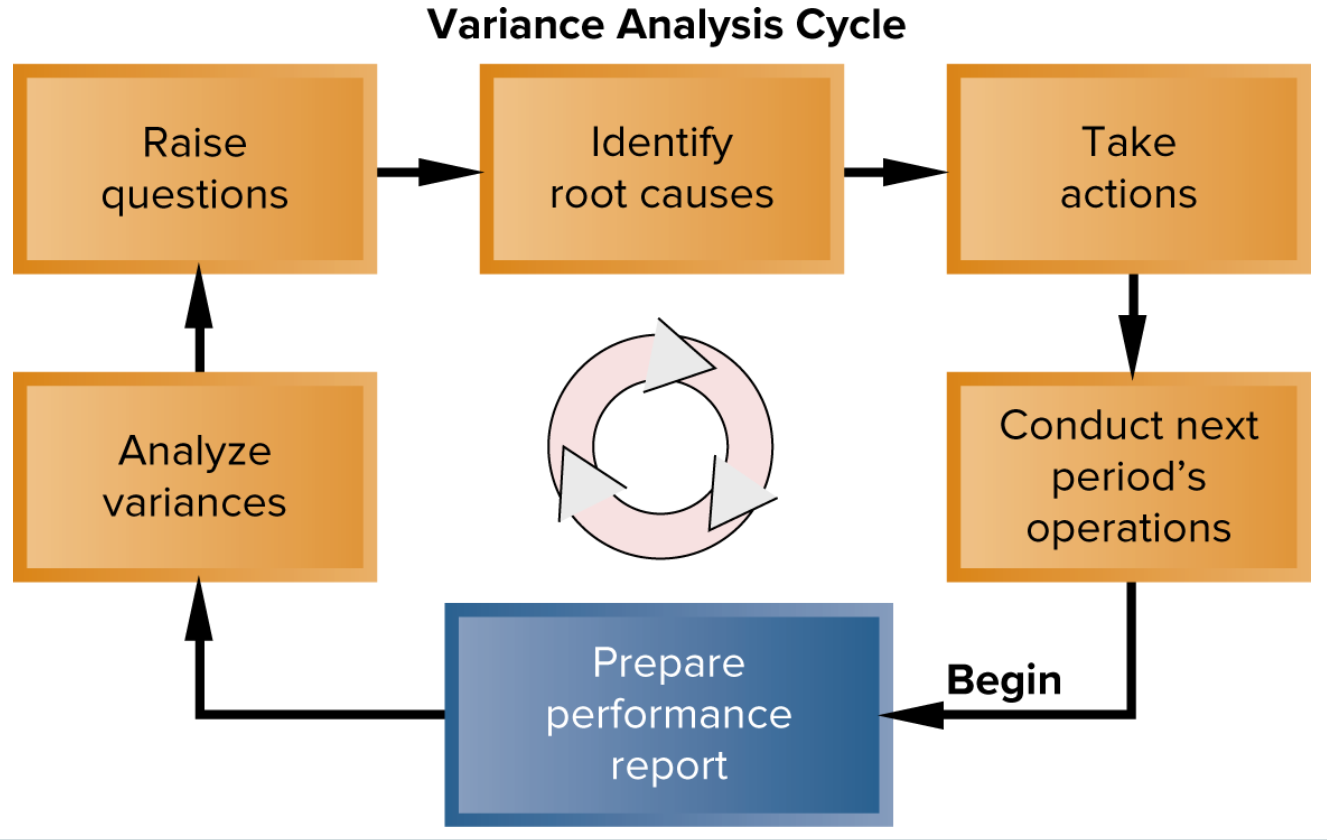
Variance Analysis Cycle
evaluates and improves performance
planning budget
prepared before the period begins and is valid for only the planned level of activity
static planning budget
used for planning but is inappropriate when evaluating how well costs are controlled
flexible budget
shows what costs and revenues should have been given the actual level of activity
revenue variance
the difference between the actual revenue and what the revenue should have been, given the actual level of activity
spending variance
the difference between the actual amount of the cost and how much a cost should of been
cost driver
any factor that directly causes changes in the cost of activities
standard
benchmark for measuring performance
standard quantity per unit
defines the amount of direct materials that should be used for each unit of finished product, includes allowance for normal inefficiencies like scrap and spoilage
standard hours per unit
defines amount of direct labor hours that should be used to produce one unit of finished goods
price variance
difference between the actual amount paid for an input and the standard amount that should have been paid, multiplied by actual amount of input purchased
quantity variance
the difference between how much of an input was actually used and how much should have been used and is stated in terms of dollar using standard price of the input
standard rate per unit
defines that a company expects to pay for variable overhead equals the variable portion of the predetermined overhead rate
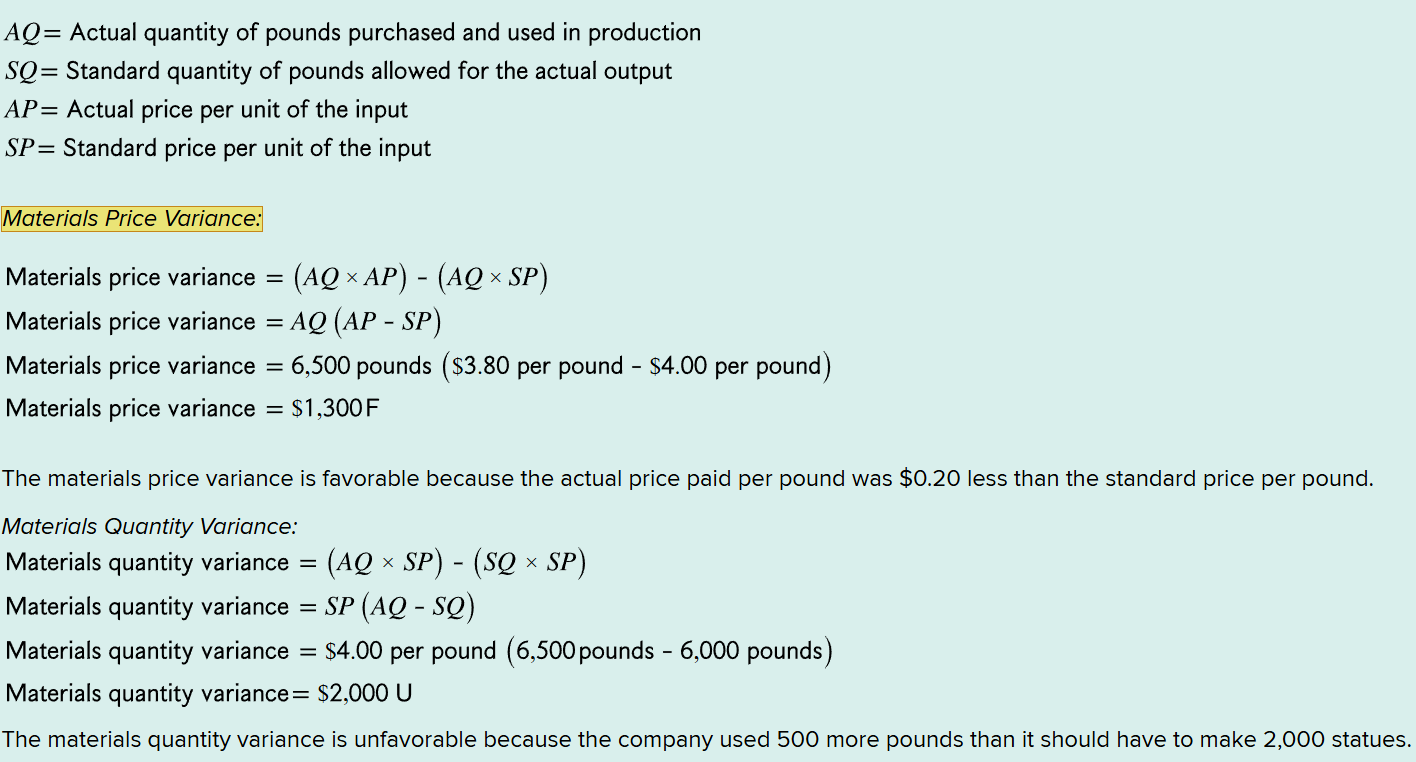
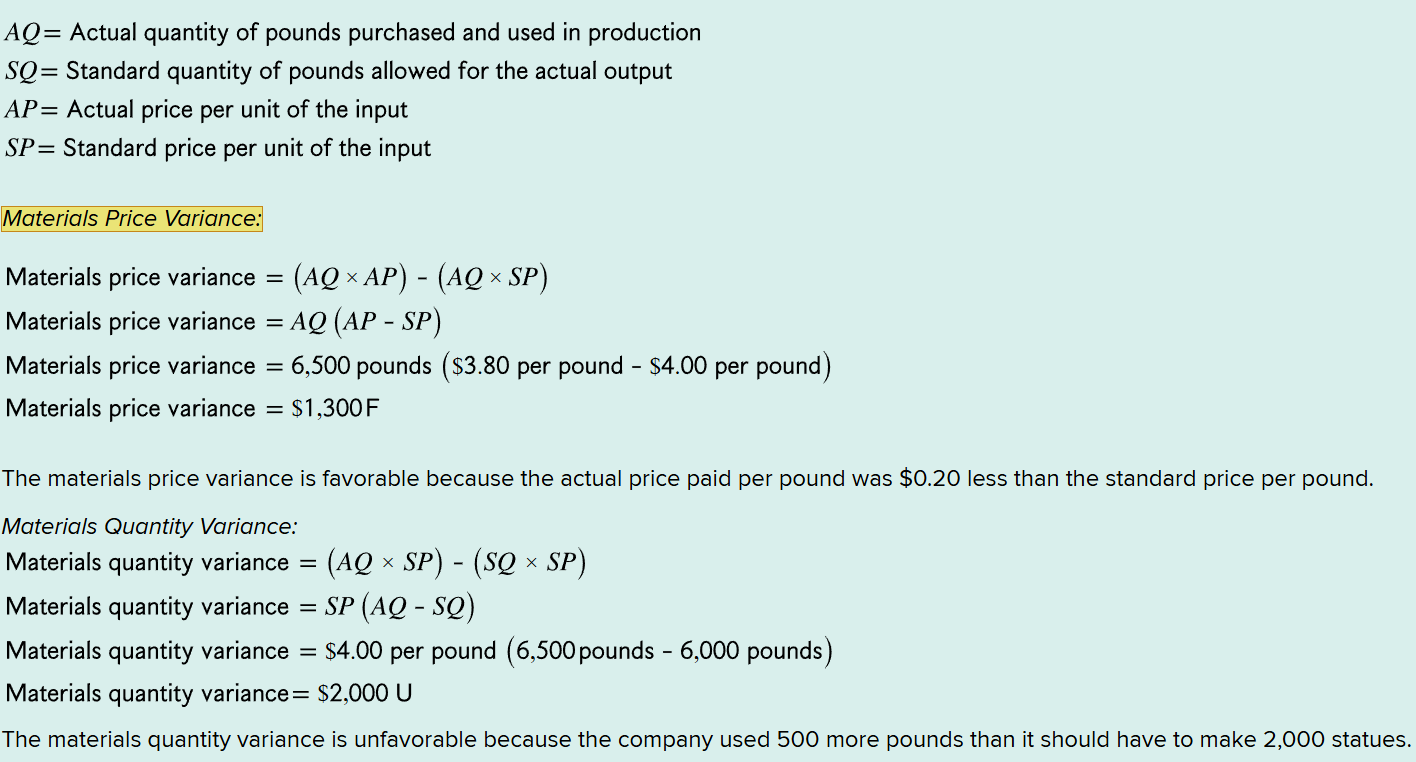
materials quantity variance
measures the difference between the actual quantity of materials used in production and the standard quantity of materials allowed for the actual output, multiplied by the standard price per unit of materials
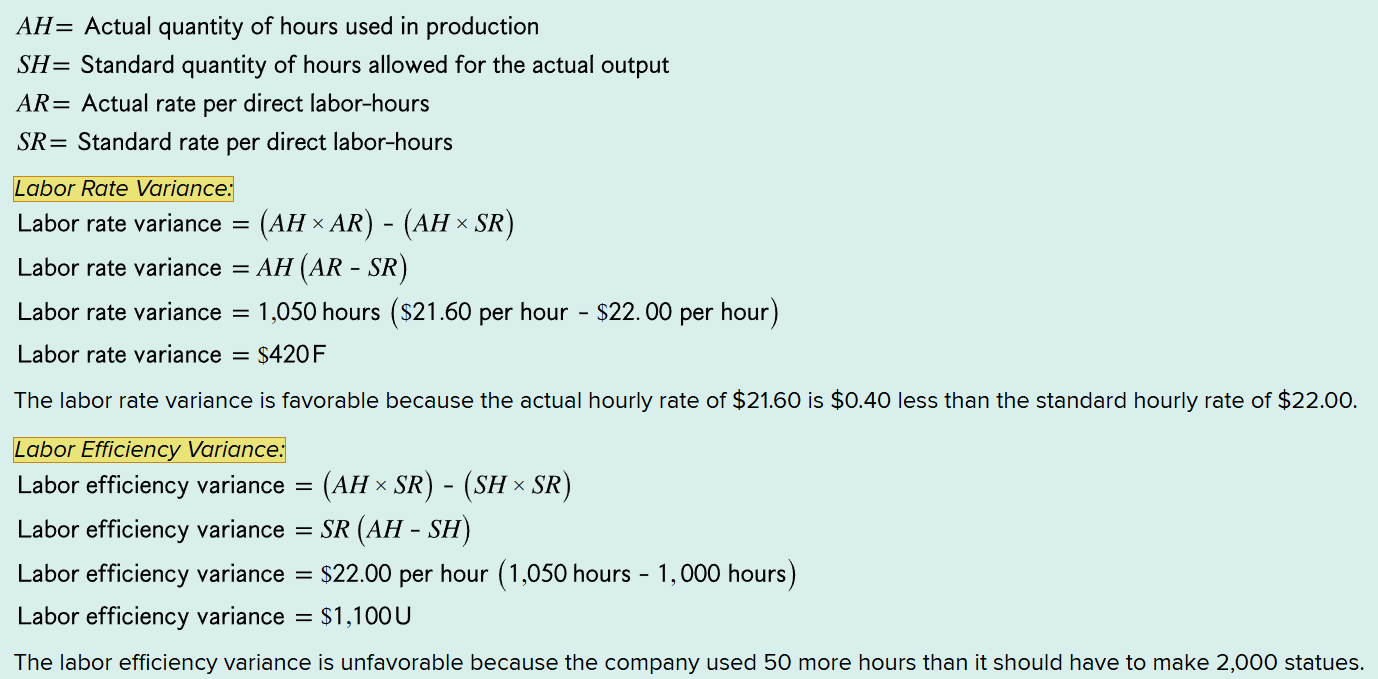
labor rate variance
measures the difference between the actual hourly rate and the standard hourly rate, multiplied by the actual number of hours worked during the period; actual rate > standard rate = unfavorable
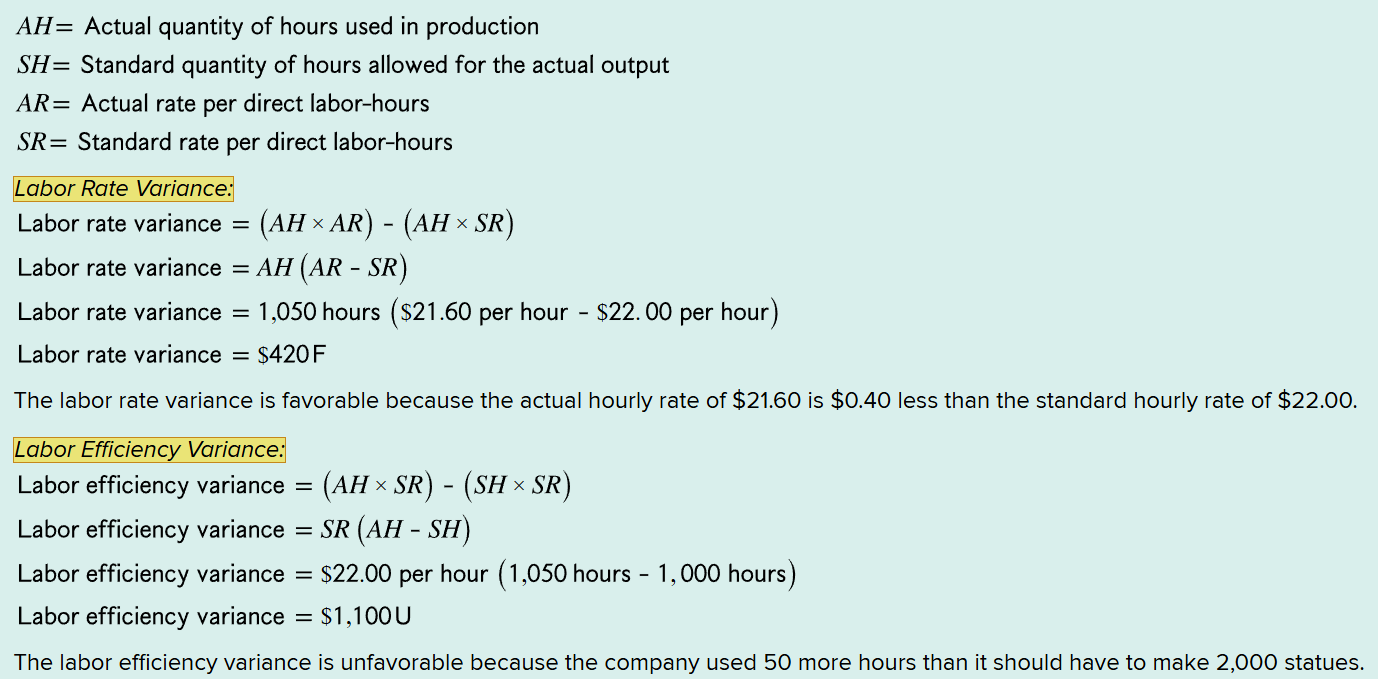
labor efficiency variance
measures the difference between the actual labor-hours used and the standard hours allowed for the actual output, multiplied by standard hourly rate; actual hours < standard hours = favorable
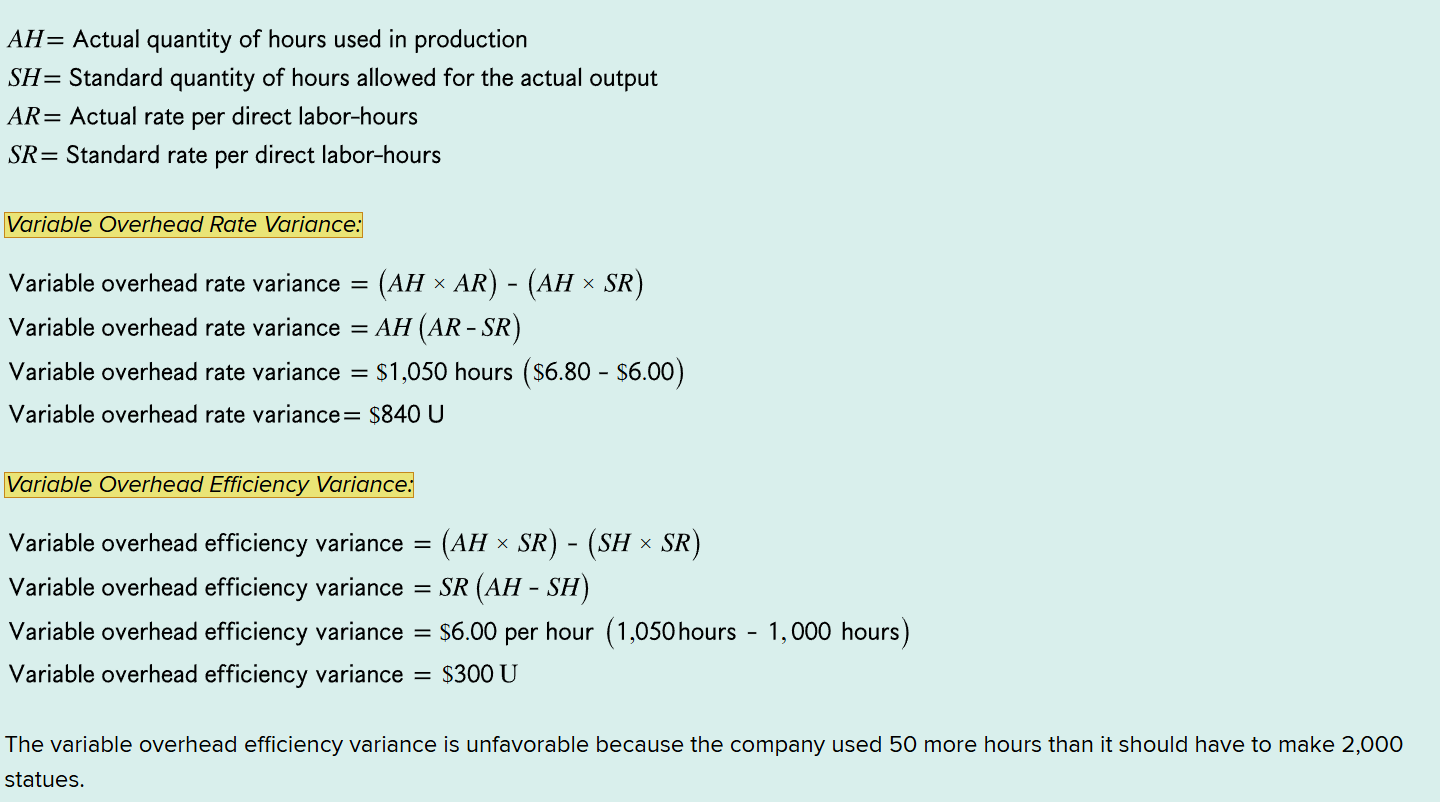
variable overhead rate variance
actual > standard = unfavorable
materials price variance
measures the difference between a direct material’s actual price per unit and its standard price per unit, multiplied by the actual quantity purchased