3. environment , nutrition, demography
 Call Kai
 Learn
Learn Practice Test
 Spaced Repetition
 Match
Match Flashcards
 Knowt Play
1/252

There's no tags or description
Looks like no tags are added yet.
Name | Mastery | Learn | Test | Matching | Spaced | Call with Kai |
|---|
No analytics yet
Send a link to your students to track their progress
253 Terms
Potable water
0 coliforms / 100 ml water
Purest form of water
Rain water (very soft H2O)
Daily water supply in urban areas rural areas
Urban: 150-200L/ capita/ day
Rural: 40-60L / capita/ day
Safe yield of water source
👉 Yield adequate for 95% of the year
Problem habitations
1.6–100–15
Water source NOT within:
1.6 km (plains)
100 m elevation (hilly)
Water depth:
>15 meters
Water washed
Saaf safai ni rkhna = washed
Scabbed , trachoma infective , conjunctivitis
Water based disease
Pani se transmit
Cyclops for Guinea worm transmission
Snails for schistosomiasis
Water borne diseases
Borne = born to drink
Ganda pani pine se
GI infection, typhoid, cholera
anopheles - which water
Clean H2O
Culex -
Dirty H2O
Aedes
Artificial collection of H2O
Best method to disinfect H2O
Boiling
Does boiling have residual protection?
No
Best residual property water purification method
Chlorination
Chlorine ONLY has residual property
2nd best method to disinfect water
Chlorination
MC used form of chlorine
Bleaching powder
100g of bleaching powder releases =?
33g free chlorine
Main disinfecting action in chlorination?
HOCl (hypochlorous acid)
👉 HOCl (Hypochlorous acid) = HerO of ChLorine
Chlorine works best @ pH= ?
7
Horrocks apparatus is used for?
👉 Horrock’s apparatus = chlorine demand of water
6 cups method
Indicator = starch iodide
Blue color = endpoint
2n grams of bleaching powder will disinfect 455L of H2O
How much bleaching powder is required to disinfect 1000L water
2.5g
Break point chlorination
A Point where:
Chlorine demand satisfied
Some Extra chlorine added = free residual chlorine
ideas residual chlorine in
Drinking water
Post pandemic
Swimming pool
To kill cyclops/polio
CONTACT PERIOD: 1 hr
Drinking water:
👉 0.5 mg/L for 1 hrPost-epidemic:
👉 0.7 mg/LSwimming pool:
👉 1 mg/LTo kill cyclops/polio:
👉 2 mg/L
0.5 p peena , 1 p pool, 2 p polio ko roko
0.5 mg chlorine tablet disinfects?
20L water
WHO Drinking water criteria
Turbidity : 5 NTU
Color: colorless 15TCU /5 hozen unit
Taste& odor : absent
pH: 6.5-8.5
5–15–6.5-8.5
OT test
tells FREE chlorine separately - YES
tells COMBINED chlorine separately - NO
Tells total chlorine
OTA test
Can detect both FREE & COMBINED chlorine separately
Not affected by: manganese , Mg, Iron
Yellow color in first 10–15 sec
After 5 min
Free chlorine
Free + Combined
Most effective water treatment in rural areas
Chlorination of water
std chloride in water
200 mg/l
Max : 600mg/l
Permissible harness of water
150-300mg/l
Softening water is recommended @ 150mg/l
Permissible Total dissolved solids (TDS)
<600mg/l
Permissible level : <1000mg/l
Fluoride permissible in water
0.5-0.8mg/l
Nitrates permissible in water
<50mg/l
If high: Indicates remote/long standing contamination of water
NiteRATE: rate old
Permissible nitrite in water
Upto 3mg/l
High; indicates recent contamination of water
Nite RITE : right now
Lead permissible level in water
0.01mg/l
MOST UNDESIRABLE METAL IN WATER
Alpha nd beta radiological acitivity of water
Alpha: <0.5 Bq/L
Beta: <1 Bq/l
Most reliable indicator of fecal contamination In drinking water
E. Coli
Recent: steptococci
Remote(late): clostridium perfirengens
Recent/ non fecal: klebsiella
Why choose COLIFORMS as indicators of water contamination
Present in large numbers in intestine
Easily detectable
Survive longer
Resistant to purification
Screening test for Ecoli in water
Presumptive coliform test
(mc method: multiple tube )
Diagnostic test for Ecoli in water
EIC
E : eijkmann test
I : indole test
C : citrate utilization
Amt of Mercury permissible in water
<0.001mg/l
Arsenic permissible in Water
0.01mg/l
1 meq/L hardness = ?
50mg CaCO3 (50ppm) / L
Temporary hardness of water content
Ca2+ , Mg2+ salts of bicarbonate
Permanent hardness of water contents
CNS
Chlorides
Nitrates
Sulfates
Benefit of hardness of water
Protects from CVD
Softening of water is recommended at?
150-300mg/l or 3-6 meq
Methods to remove TEMPORARY hardness of water
BLSP
BOILING
LIME
SODIUM CARBONATE
PERMUTIT
Methods to remove PERMANENT hardness of water
SB
Sodium carbonate
Base exchange
Hardness of water classification
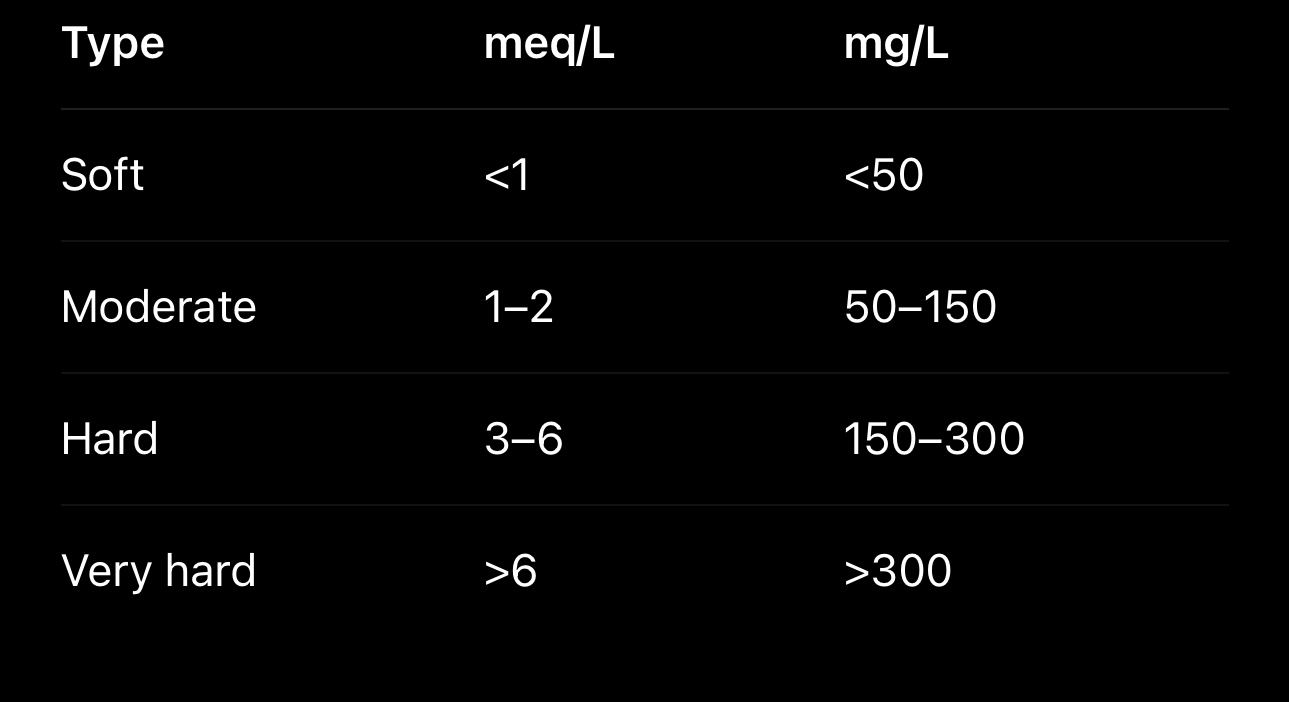
Most effective & cheapest method of disinfecting wells
Chlorination

Sanitary well
Protected from contamination
Continuous safe water
Location : <100 radius ,
From source of contamination : >15m(150ft)
STEP WELL became source of which infestation?
Guinea worm
Primary air pollutants
SO, NO, CO
Directly release in air
Secondary air pollutants
Ground level ozone
Combination of 1° pollutants
Best indicator of air pollution
Sulphur dioxide (SO2)
Indicators of pollution
Smoke/ soiling index
Grit/ dust
Coefficient of haze (smoke+aerosol)
API (air pollution index)
MC and widely distributed air pollutant
CO
CARBON MONOXIDE
Best biological indicator of air pollution
Lichen (life detector in air )

Kata thermometer
THIN BULB
Cooling power of air
Air velocity (low)
For thermal COMFORT : DRY & WET KATA measurement
Dry: >6
Wet: >20

Globe thermometer
measure: radiant heat / corrected effective temp
THICK BULB
Tool to measure atmospheric pressure
BAROMETER
Examples of natural ventilation
Perflation & aspiration
Examples of mechanical ventilation
Exhaust ventilation
Plenum ventilation
AC
National air quality monitoring program is under?
Central Pollution Control Board (CPCB)
AQI includes:
SO
NO
CO
H2S
Ammonia (NH3)
Lead
AQI TABLE
NO VERY SEVERE CATEGORY

What causes global warming
Green house gases
Water vapour (highest contributor )
Co2 (2nd highest)
Methane
Ozone
Pyare Climate M Over heat
Pani, co2, methane, ozone
what depletes ozone layer
CFC (chloro fluoro carbon)
Highest contributor to global warming
Water vapour
Co2 - second highest
Kyoto protocol 2005
Release green house gas emission by 90%
Paris agreement
Done for Climate change
Protocols to reduce green house gases Water/ global warming
Kyoto protocol 2005
Paris agreement
GLASGO agreement
Solid waste is called
Refuse (rukha waste)
Liquid waste is called
sewage
Most unsatisfactory method for REFUSE disposal
Dumping
DUMPing someone = WORST thing to do
Refuse examples
Garbage : kitchen waste
Rubbish : paper, plastic
Ash: smoke
End product of solid waste disposal
Manure
For a population of 1000, trench dimensions?
2m deep
1 acre land/ year
Most satisfactory method of refuse disposal
Sanitary landfill/ CONTROLLED tipping
Controlled tipping / sanitary landfill methods:
TAR
TRENCH (best costly)
AREA method
RAMP method (HILLY)
MC used refuse disposal method
AREA METHOD (dilli ka kudedaan)
Disused lands
Refuse disposal method in hilly area
RAMP method
Ramp p chadh k
Incineration disadvantage
Hearing method of waste disposal
Disadv: NO MANURE PRODUCTION
Done when land is NOT available
Composting
Converts waste → manure
Eg: CBI
COMPOSTING
Bangalore method → Anaerobic (bang m saas ni ata)
Indore method → Aerobic (Indore cleanest to sas aega )
Waste disposal method of rural areas
Manure pits
2 pits 1-2 m deep
Waste disposal method for camping
Burial
200 log → 1m deep trench → 1 week
Composition of SEWAGE
99.9% H2O + 0.1% solids
Diff b/w SEWAGE & SULLAGE
Sewage : liquid waste + excreta
SULLAGE : liquid waste - excreta
strength of sewage
BOD (biological o2 demand)
Oxygen used by bacteria (aerobic)
Measured over 5 days at 20°C
COD (chemical o2 demand)
Chemical oxidation
👉 Uses “Potassium dichromate”
BOD Strength parameters
Normal BOD : 100-300mg/L
Strong sewage BOD : >300mg/L
Suspended solids in sewage parameters
N: 100-500mg/l
Strong sewage : >500mg/l
Weak sewage : <100mg/l
1° Rx of sewage
SGS
👉 S → Screening
👉 G → Grit removal
👉 S → Sedimentation
2° treatment of sewage
Aerobic oxidation - biological
Trickling filter
Activated sludge process (preferred most)
Sea outfall
River outfall
Land Rx / sewage farming
OXIDATION PONDS & DITCHES

1. Trickling filter : 2° method of sewage Rx
Needs large area
❌ Not preferred

Most preferred 2° method of treatment of sewage (2°- biological)
• Activated heart of sewage treatment •
Activated sludge process
Aeration tanks (BUZZ WORD)
Most preferred
Takes less space
Oxidation ponds & ditches
Use Photosynthesis to purify sewage (plants in ponds & ditches)
Used in smaller communities
“ day - aero> anaero
Night - anaero> aero

