ARTH 17th century Italy PART I: the baroque style
 Studied by 0 people
 Call Kai
 Learn
Learn Practice Test
 Spaced Repetition
 Match
Match Flashcards
 Knowt Play
1/13

There's no tags or description
Looks like no tags are added yet.
Name | Mastery | Learn | Test | Matching | Spaced | Call with Kai |
|---|
No analytics yet
Send a link to your students to track their progress
14 Terms
baroque
style associated with 17th century. marked generally by use of complex forms, bold ornamentation, and the juxtaposition of contrasting elements often conveying a sense of drama, movement, and tension
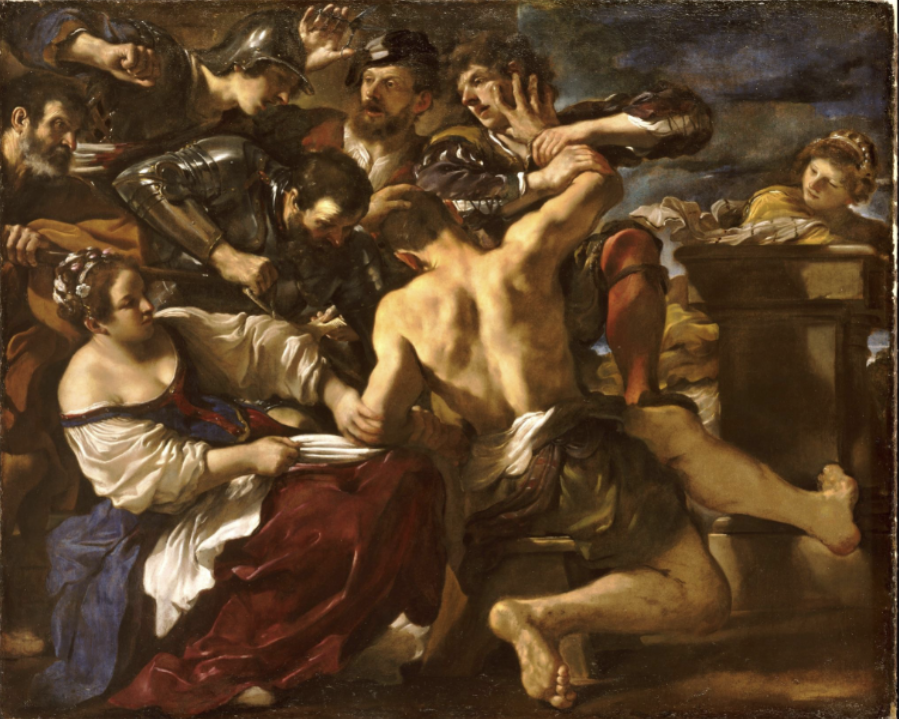
Guercino, Samson Captured by the Philistines, 1619. The Met
example of baroque art. depicts complex forms & composition; drama; movement, tension. Frequently, figures loom large in the foreground. depicts the story of Samson who is similar to Hercules. All his strength came from his hair and in this a women was used to seduce him and get him drunk enough were a group of men could cut his hair off and make him powerless.
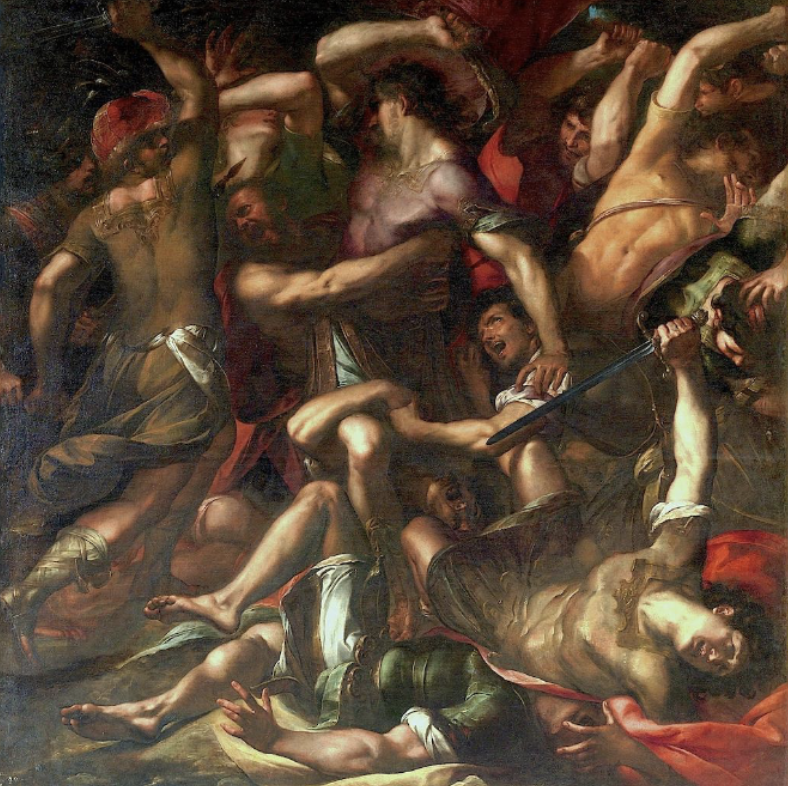
Giulio Cesare Procaccini (Italian) Samson and the Philistines before 1621
Another version of Samson and the Philistines by a different painter. an example of baroque painting. complex forms & composition; drama; movement, tension. Frequently, figures loom large in the foreground. hard to decipher which limb belongs to which figure
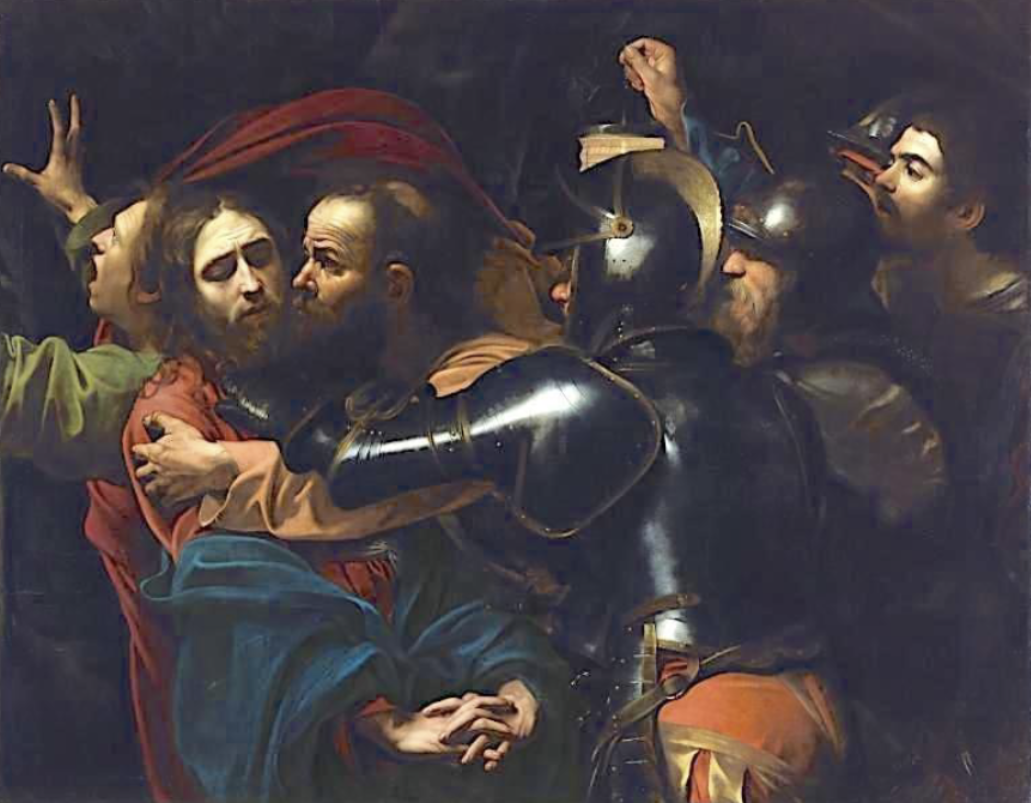
Caravaggio (Italy), The Taking of Christ, 1602. National Gallery of Ireland
example of baroque painting. The half view, from the knees or the waist up, with figures close to the picture plane and filling up the picture space is a hallmark of baroque painting.
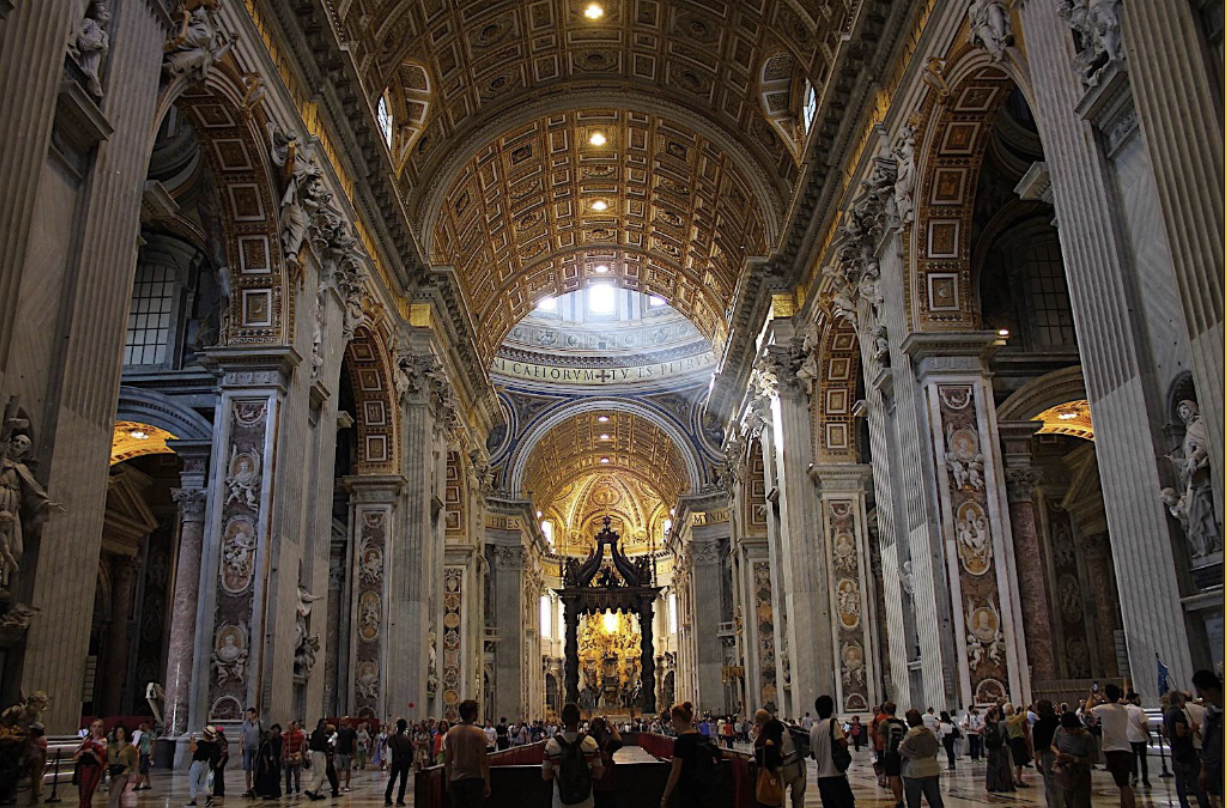
Carlo Maderno, nave (central aisle) St. Peter’s Basilica Vatican City designed: 1607 length: 730 ft
example of baroque architecture. very ornate detail, lots of intricate decorations. lots of statues and use of gold foil
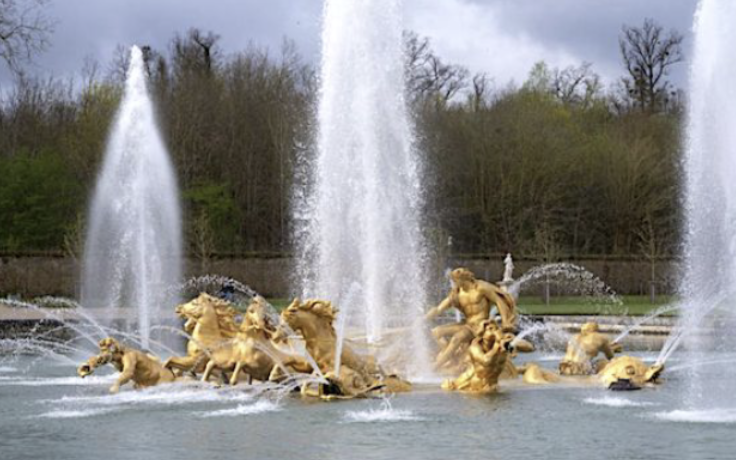
Jean-Baptiste Tuby, Apollo Fountain, installed 1671, Versailles
A French baroque example to convey the drama of baroque statuary. depicts the god apollo, the god of the sun, on his chariot.
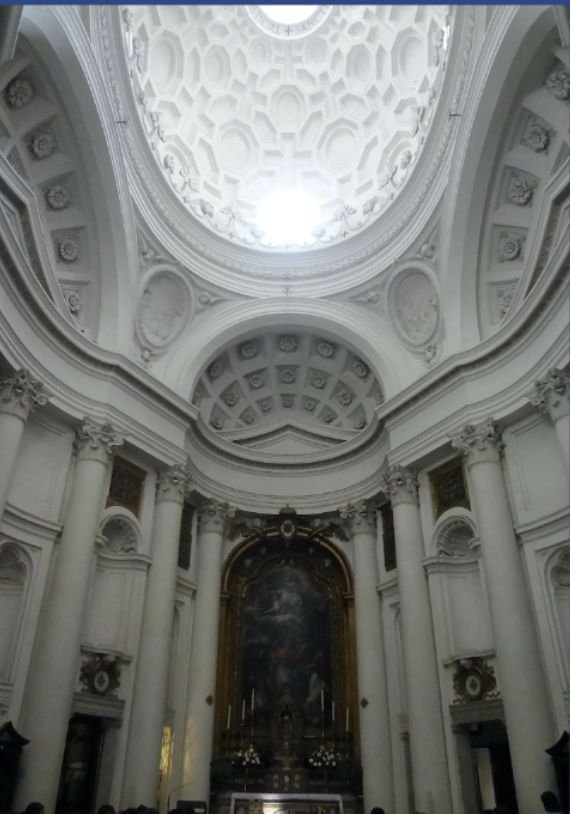
Francesco Borromini, San Carlo alle Quattro Fontane, Rome, 1638–1646 (consecrated)
example of baroque style in Italy, architecture. oval room with oval dome. no corners. has a sense of movement since it doesn’t have 90 degree corners or angles which lets the eyes roam around with ease. unusual design for a church because they were usually made to look like a cross.
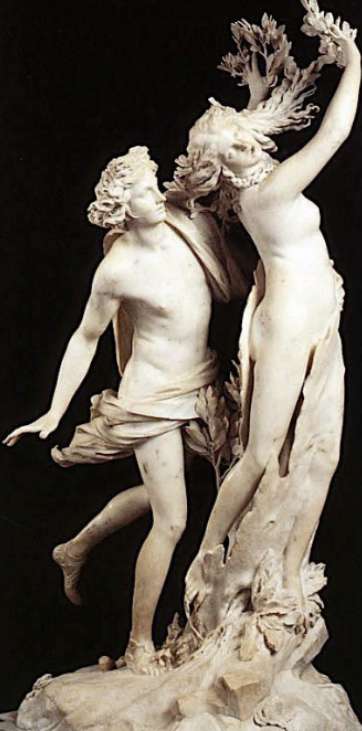
Gianlorenzo Bernini, Apollo and Daphne, 1622-25. Marble
example of baroque style italy, statuary. depicts God of the sun, poetry, and music and Daphne a nymph. the myth is that Daphne transforms into a laurel tree after begging her father who was a God to save her from being assaulted by Apollo. Daphne’s toes sprouting tree roots and tree bark growing between her legs as her lower body metamorphoses into a tree trunk. depicts a lot of movement.
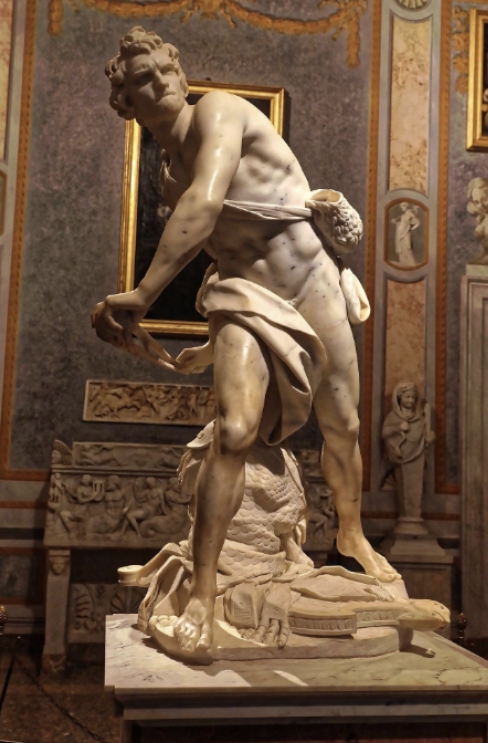
Gianlorenzo Bernini, David, 1623–24
example of Baroque style Italy, statuary. Active stance. Statue captures a moment in time just before David will start moving. David twists his body as far as it will go as he prepares to let fly his slingshot. The viewer must walk around the statue to see this
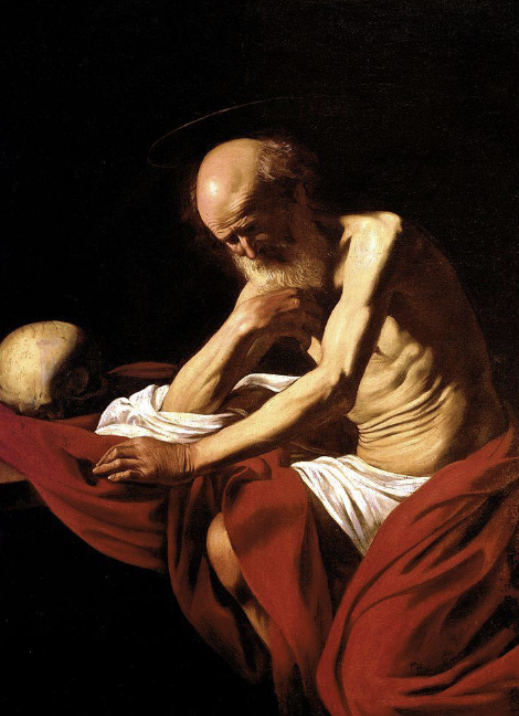
Caravaggio, St. Jerome in Meditation,1605
example of a baroque style Italy painting. Theatrical spotlighting. Caravaggio is known for tenebrism. uses deep darks in the background and shadows and contrasts it with really light highlights.
Tenebrism
Caravaggio is well known for using this technique. the use of deep darks (especially in the background) with bright highlights illustrating a stark contrast.
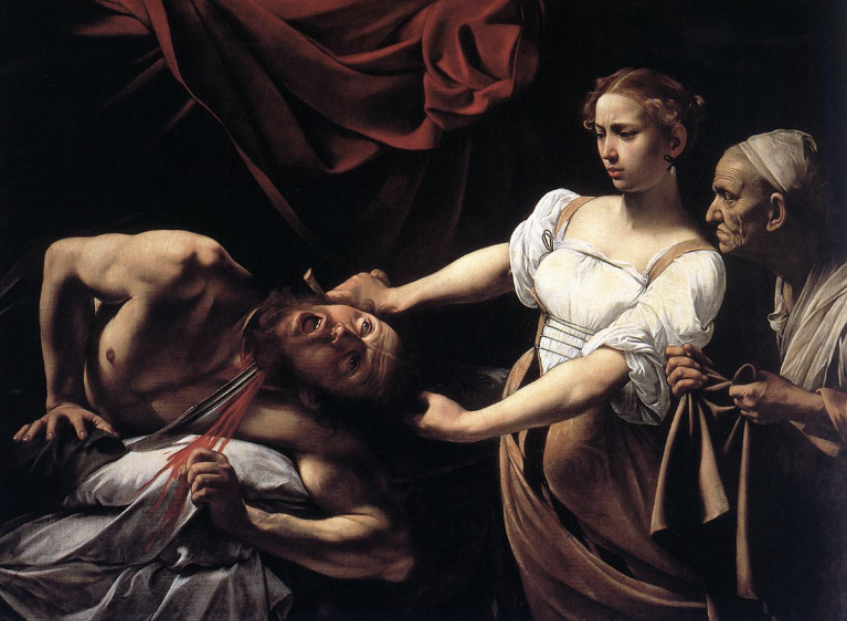
Caravaggio, Judith Beheading Holofernes, c. 1598-99
example of a baroque style Italy painting. illustrates the story of the beheading of Holofernes. Judith’s sword bearing arm is really illuminated. her arms are stretched out taught showing she doesn’t want to do this and is disgusted by this action.
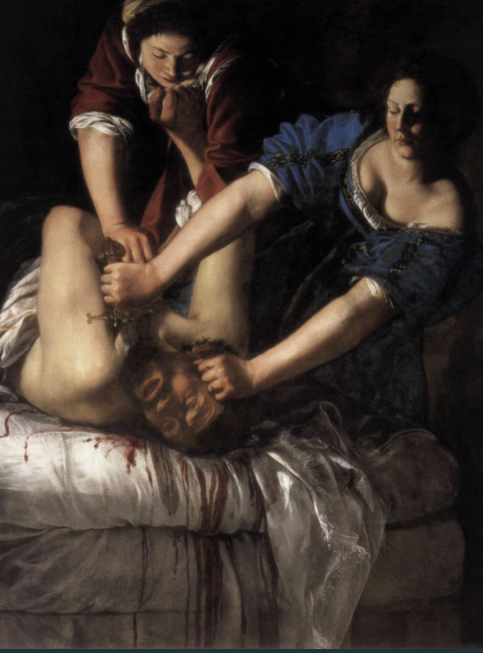
Artemisia Gentileschi, Judith and Holofernes, c. 1611–12
example of a baroque style Italy painting. illustrates the story of the beheading of Holofernes. more female rage in hers comparted to Carvaggio’s. in her version Judith’s maid who is younger is helping her. determination and energy is depicted. the blood in this painting is more accurate.
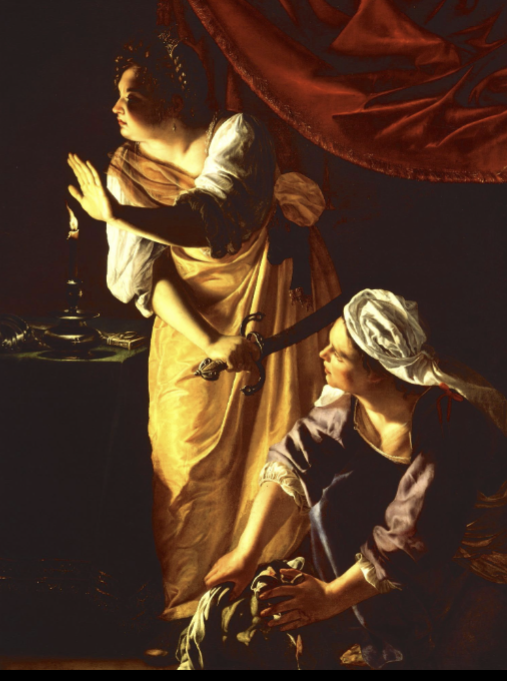
Artemisia Gentileschi, Judith and Her Maidservant with the Head of Holofernes, c. 1623–25
example of a baroque style Italy painting. illustrates the story of the beheading of Holofernes. Candle-lit scenes were popular in the 17th century. They create drama and keep the focus on the key figure(s)
 Note
Note  Flashcards (179)